


WEBVTT
00:00:00.000 --> 00:00:14.910
In a lot of ways, joining an intentional community is sort of a self selecting process. The people that want to join are going to be the ones that are most appropriate. If somebody doesn't want that kind of arrangement, this and this, I really am not interested in that.
00:00:16.309 --> 00:00:52.640
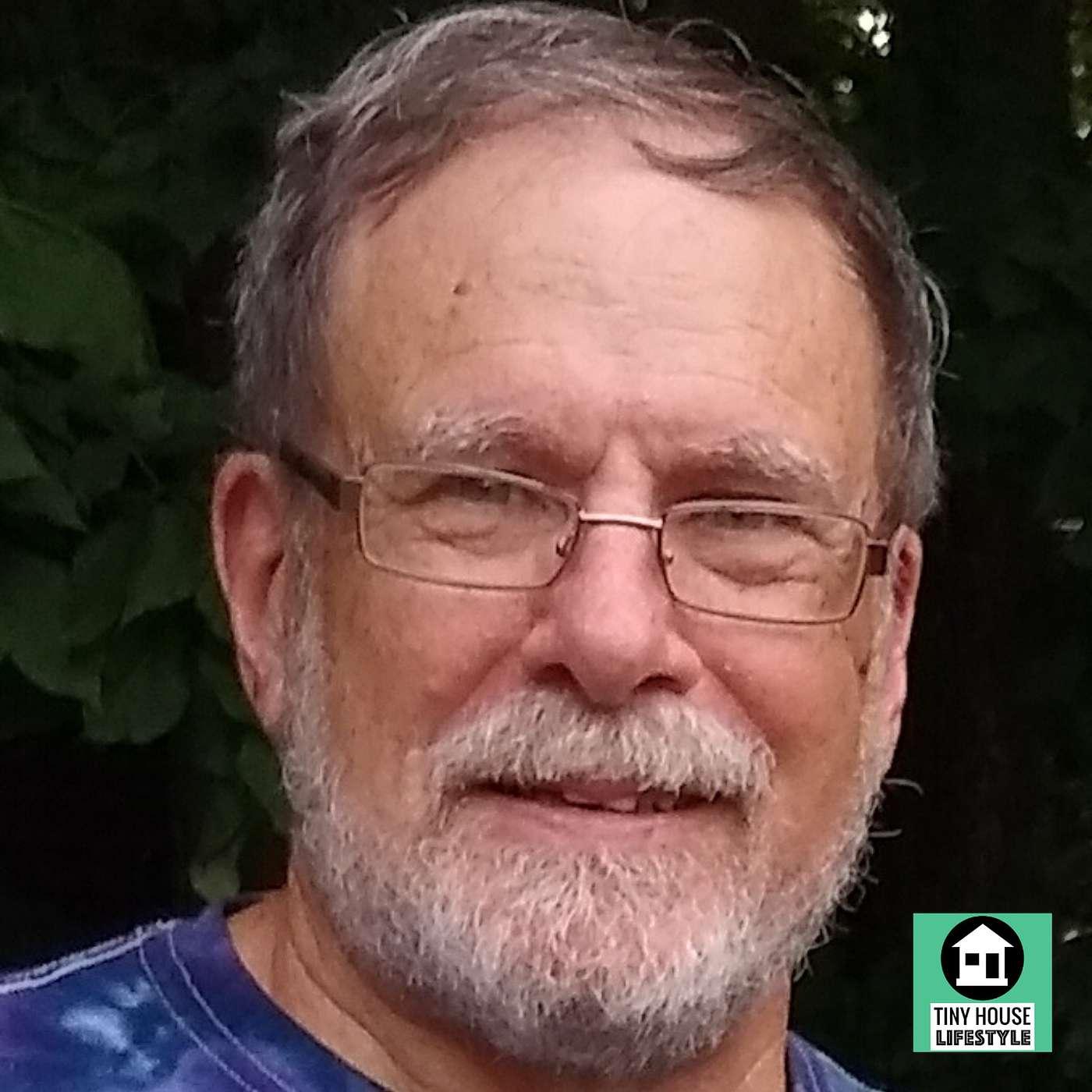
Welcome to the Tiny House Lifestyle Podcast, the show where you learn how to plan, build and live the tiny lifestyle. I'm your host, Ethan Waldman, and this is episode 214 with Mike Moore. Today, you'll get the inside scoop on what it's like to live in, and to be a founding member of an intentional community. We cover everything from how to come up with the money to buy the land, how to come up with the rules, how to choose new members and more. My guest Mike Moore has lived in community for over 25 years, and he lived in a ground bound Tiny House designed by the one and only Jay Shafer. I hope you stick around.
00:00:54.229 --> 00:01:52.939
I want to tell you about something that I think will be super helpful as you plan, design and build your tiny house. Tiny House Decisions is a guide that I wish I had when I was building my tiny house. It comes in three different packages to help you on your unique Tiny House journey. And if you're struggling to just figure out the systems for your tiny house, you know like how you're going to heat it, how you're going to plumb it, you know what construction technique are you going to use like SIPs or stick framing or steel framing, Tiny House Decisions will take you through all these processes systematically and help you come up with a design that works for you. Right now I'm offering 20% off any package of Tiny House Decisions for listeners of the show, you can head over to thetinyhouse.net/THD to learn more and use the coupon code tiny at checkout for 20% off any package. Again, that's thetinyhouse.net/THD and use the coupon code tiny for 20% off.
00:02:07.549 --> 00:02:23.090
Mike Moore is one of the earlier proponents of the modern tiny house movement. He built his first tiny on a foundation in 2005, designed by Jay Shafer.
00:02:16.909 --> 00:02:49.219
This was located at Potluck Farm, an intentional community of 13 families on 170 acres in Rougemont, North Carolina. In 2017, he moved into his second tiny just next door at Elderberry Cohousing. Elderberry consists of 18 households on 11 acres, and was designed for those 50 and up. Mike brings over 25 years of experience with intentional communities and tiny house living to the discussion.
00:02:49.639 --> 00:02:54.379
Mike more welcome to the show.
00:02:49.639 --> 00:03:07.490
I'm glad I'm glad to have you here. Excited to talk all about intentional communities and cohousing. So I guess let's start with Potluck Farm, can you can you tell us more about what potluck farm is maybe how it got its start?
00:03:07.810 --> 00:04:22.839
Sure. It started about four or four or five families in the late 80s. All friends and co workers who would get together about once a month just to have potlucks. They also did a week at the beach at Thanksgiving every year. And they would just sit around and of course and talking about,"Well, let's we should buy some land." And around 1990 I believe they quit talking and did it and bought about 120 acres, pooled their money and bought that that piece of land. It has since grown to 170 acres and is now 13 families. And it's been going for over 30 some years also still going to the beach every year. So legend has it that the the the start of it was born in a in a hot tub, but I don't have any idea if that's really true or not. They changed people over the years here and there. But some of the original folks are still there. I came along in about 1987 or '88, possibly.
00:04:15.789 --> 00:04:53.079
That was back in my married days. And we bought one of the three acre lots and first put a manufactured home a trailer on there for a couple years and then built up a conventional home of about 1800 square feet or so finished. And then we split in 2004 and that's where I had to leave the community for a short period of time but they wanted me back and so that's when I built my first tiny.
00:04:53.889 --> 00:05:09.459
That must be difficult and that's something that a community has to deal with when you know when a marriage breaks up where people break up, you know, how, how is it decided who kind of who gets to stay? And who gets to leave, leave? Or do both people stay?
00:05:09.730 --> 00:06:02.110
Well, it usually is, at least in my case. And I I'm certainly not the only one that went through this experience there. I can get into that a little bit. But it was an amicable type situation. So my, my wife got the house. And a little further background, there's at least I think, three couples over the years that have split up, and there was one home, sort of an extra home on the on the land that we used as sort of a community building that became sort of like the lost boy's home, so that anybody who was going out of a relationship usually stayed there for a few months before they found something new to, to go to. But most of the splits that I can think of were amicable. And so it just worked out as it would in everyday life.
00:06:02.589 --> 00:06:13.389
That's good to hear that it's amicable. And, you know, I think something that appeals to a lot of people but also scares a lot of people about intentional communities.
00:06:13.420 --> 00:06:24.519
It is that kind of needing to get along with and work with all of your neighbors and come to come to agreements. I've heard that there are a lot of meetings.
00:06:27.279 --> 00:06:53.110
Yeah, if you're not a meeting fan, it can be a little difficult. Of course, over the years, you get better at meetings. And you know with 30 years of experience at Potluck, they've gotten pretty good at meetings. There are monthly meetings, usually they do a fun meeting one month, and the next month might be business. And of course at the start of any community, there's going to be a lot of meetings and all those are business.
00:06:53.110 --> 00:06:53.620
Okay,
00:06:53.829 --> 00:06:54.220
so,
00:06:54.699 --> 00:07:10.750
Right. All of those meetings are business. I'm curious. You know, it sounds like you weren't around for the start of Potluck, but that you are, you have been a part of the founding of of Elderberry.
00:07:07.959 --> 00:07:10.750
Right, is that correct?
00:07:10.779 --> 00:07:13.600
That's correct.
00:07:10.779 --> 00:07:41.110
What, what the, the way that Potluck evolved was, I had a cleaning business, and I cleaned the homes of several of those members of Potluck before the actual building of homes out at the property began. And so I would always see the notices for the potlucks and the meetings and I'd say, "Well, what's this all about?" And, and so that's how sort of I got into Potluck.
00:07:35.800 --> 00:07:42.550
Elderberry was started in about 2007.
00:07:43.269 --> 00:07:43.810
Okay.
00:07:44.050 --> 00:07:45.550
And I was part of that at that point.
00:07:46.060 --> 00:07:50.410
Interesting.
00:07:46.060 --> 00:07:55.149
Okay. And And can you talk about some of the differences between Elderberry and Potluck?
00:07:55.389 --> 00:08:11.829
Yeah, there's a lot of differences and a lot of similarities because, of course, the some of the, the original founders of Elderberry came from Potluck. But first of all is is we are not intergenerational at at Elderberry.
00:08:11.860 --> 00:08:12.160
Okay,
00:08:12.240 --> 00:08:16.980
We're all 50 and up.
00:08:12.240 --> 00:08:43.919
So it became a place where the kids have grown and gone. And we wanted less to take care of and smaller spaces. But the there are a lot of really probably more similarities. I mean, we share some equipment, and we share some land with them. We share a community building with them. All kinds of resources, like paths and ponds and orchards and stuff are shared.
00:08:39.870 --> 00:08:53.879
So there's probably more in common than not, plus the fact that we're only probably, I guess it's about 200 yards away.
00:08:48.629 --> 00:08:56.970
So from each other, so it's more like sister communities than adversarial.
00:08:58.620 --> 00:09:06.690
Adversarial. You have a community to play when when you all want to, like play baseball against one another. To as true.
00:09:07.799 --> 00:09:23.759
Although it's funny, I don't know how many of us or into the sports thing. We do occasionally get a member that's, that's into like March Madness or something and then we don't know what to do with them.
00:09:19.710 --> 00:09:26.100
But, but we're more on the order of croquet and shuffleboard.
00:09:28.559 --> 00:09:38.610
I'm more of a music guy myself. And so tell us about the tiny house that that you had designed by Jay Shafer.
00:09:39.090 --> 00:09:51.960
Well, when I was I had left Potluck, I was gone about a year and the members of Potluck wanted me back and I wanted to be back but there basically were no lots left.
00:09:52.740 --> 00:09:53.220
Okay.
00:09:53.730 --> 00:10:04.080
There were there was quite a bit of land. There's about 100 acres that we don't use. In fact, most of it's in a Land Conservancy at this point.
00:10:00.000 --> 00:10:12.779
But there, there was one three acre spot. It was a very odd shaped lot, very narrow. And of course, I'd been looking at the tiny house stuff for some time.
00:10:13.320 --> 00:10:13.799
And,
00:10:13.980 --> 00:10:14.460
okay,
00:10:14.850 --> 00:10:20.610
so we worked out a deal where I just, instead of buying that lot, I leased it.
00:10:20.879 --> 00:10:21.389
Okay,
00:10:21.480 --> 00:10:38.909
on a long term lease and for very little amount of money. And then I went ahead with my plans with Jay. And he drew up ah, it was actually one of his homes that was about for him at that time was sort of large it was like 100.
00:10:38.940 --> 00:10:39.419
Okay,
00:10:39.870 --> 00:10:58.529
I think it was 10x12. Most of his were at that point, were under 100. But I asked him to scale it up for me a little bit. And so it grew eventually to about, I think 16x22. So around 350 was the footprint, and then there was a loft.
00:10:58.590 --> 00:10:59.039
Okay.
00:10:59.610 --> 00:11:07.289
So and went ahead and had no problems with planning and zoning. And in the rural county I'm in. So that that worked out.
00:11:08.250 --> 00:11:11.879
And this was a stationary, a foundation built house?
00:11:12.509 --> 00:11:20.190
Yeah, I've always been more attracted to the permanent location type stuff than the on wheels.
00:11:20.340 --> 00:11:21.299
Yeah, yeah.
00:11:21.690 --> 00:11:34.139
And I continue I have with all the groups I'm belong to it can continue. I have to sort of fight for that position. Because most people want to go towards something that's movable.
00:11:34.539 --> 00:11:42.789
Yeah. Well, what was the regulatory journey like, like in setting up Elderberry,
00:11:43.600 --> 00:11:55.750
In setting up Elderberry that that was, that was interesting. This is a mostly rural county, I think the county seat has about a town of 10,000 people.
00:11:55.899 --> 00:11:56.320
Okay,
00:11:56.350 --> 00:12:28.059
So that was in 2007, or 2008. And with the aging population of not just that county, but everywhere. They were sort of looking for some profit, not process, but some kind of accommodations for their their aging population. And we came along and said, "Well, we've got a great idea." And so we worked with them to create what's called a cluster zone.
00:12:28.629 --> 00:12:35.590
And it was a whole new concept for them and us. And it basically what they wanted to do was they don't,
00:12:35.620 --> 00:12:35.980
okay,
00:12:36.009 --> 00:13:01.179
they don't want a lot of that rural land disturbed. And we wanted to pull everything closer together anyway. So it, we have quite a bit of our 10 Acres is devoted to not only septic and wells, but gardens and stuff that that sort of keeps things intact, and the houses take up very little of that. So it worked out that we could just work together with the county and come up with something.
00:13:01.870 --> 00:13:19.870
Right so you, that's great that you it sounds like you've found kind of mutually beneficial, or just the town, the county was interested in not using the land and you were interested in building the community. And so you could you come up with kind of a special zone to make that happen.
00:13:20.309 --> 00:13:38.730
Several people here who are quite skilled at working with those kind of political entities, that helped a lot, several people, I don't know how to describe it actually got people who work in in HR type stuff, and just are very good at those interpersonal skills to get that done.
00:13:39.779 --> 00:13:59.100
So we're actually we've got some great questions from Tiny House Engage, which is in an online community that I run. And so the first question is, in regards to intentional communities, you think there should be an interview and voting process for prospective residents and their dogs?
00:14:02.659 --> 00:15:34.429
I don't think we ever considered the animal interviews, there is a process that we have devised to, to get to know members or prospective members. And in a lot of ways, joining an intentional community is sort of a self selecting process. The people that want to join are going to be the ones that are most appropriate. If somebody doesn't want that kind of arrangement. They're going to come out and look and say, "Oh, you do this and this, I really am not interested in that." So the way we framed it over at Potluck, we had one resident who's a single woman. And the the question we always posed in our conversations was, "Well, what about Marge's boyfriend. If Marge decides to pick up somebody from some bar in Durham, and he wants to live out here and he's you know, he's got a um..." We came up with this fictional boyfriend that was just a terrible person. He never showed up. So I guess we were okay. But, but yeah, and there's Elderberry is slightly different is probably a little bit more formal than that. But there's several, like, meetings that people come to before they are accepted as members. And, and advance, and they they come to a maybe a couple of work days or something like that. And then we, we get together and see if it if it's going to work out.
00:15:34.429 --> 00:15:39.350
But it's informal, but but there's still a selection process.
00:15:39.379 --> 00:15:51.830
Yeah. Of the people who, I guess apply, they're not applying, but of the people who express interest, you know, what, what percentage would you say, you know, gets gets accepted?
00:15:56.039 --> 00:16:36.840
I'd say probably 80% to 90%. It's pretty obvious early on if it's a good match or not. If somebody comes out here and finds out that after a business meeting that they just can't deal with consensus, and, and that whole process of making decisions, which is can sometimes be quite lengthy and involved and, and torturous at times. They'll say, Well, you know what, maybe this isn't for me. But I'd say most of them get through the process fairly well.
00:16:32.669 --> 00:16:51.450
And there is a number of people who once they join, and even maybe buy a house here, maybe a year down the line, they find out there's something about it that just isn't for them, and they'll move on. That's, that's just like anywhere else.
00:16:51.750 --> 00:17:02.340
Yeah. And so then they, if they buy a house in the community, how does it work? You know, how does that work? If they decide to move on?
00:17:02.759 --> 00:17:16.109
We sell, we don't deal with a Realtor. We do, for various reasons, we, we are they're sort of the Realtor ourselves. So they save that money on the Realtor commission.
00:17:17.130 --> 00:17:40.920
We also created something called a legacy clause. And I think this is, it may not be unique to our situation, but I don't know of many cohousing groups that do this. When somebody sells their home, they keep, of course, most of the proceeds, but of the profit that they make on the home, they keep 25% and Elderberry keeps 75%
00:17:41.099 --> 00:17:42.089
Oh, okay.
00:17:42.119 --> 00:18:02.730
There's a number of reasons we do that. But the one mostly is that we're trying to keep the cost of houses down for for the new buyers. And encourage, it's, I wouldn't call us affordable housing necessarily. We do sell a little bit less than the going rate.
00:17:57.150 --> 00:18:08.220
But these days, that's still unaffordable for a lot of a lot of people, especially those just starting out.
00:18:09.410 --> 00:18:12.890
Yeah, that's, that's really smart. And that's an interesting way to do it.
00:18:12.920 --> 00:18:33.980
Yeah, it helps the financial viability of our community that we can we have money now saved for, you know, things we need. And if, if there came a time when some people needed some money, or for whatever reason, we can we can figure out how to do that a little bit easier. So we're find very financially stable that way.
00:18:35.509 --> 00:19:23.569
I'd like to tell you a little bit more about Tiny House Decisions, my signature guide and the resource that I wish I had when I was building my tiny house. It starts with the big decisions, which is, you know, should you build a tiny house yourself or with help? Is a prebuilt shell a good idea? Is a house on wheels better than on the ground and what works better for you? Deciding on the overall size, deciding on whether you should use custom plans or pre made plans, different types of trailers and more. Then in in Part 2, we get into the systems- so heat, water, showers, hot water, toilets, electrical, refrigeration, ventilation, and we're only two thirds of the way through the book at this point.
00:19:20.539 --> 00:19:58.880
From systems we go into construction decisions, talking about nails versus screws, SIPs versus stick framed versus advanced framing versus metal framing. We talk about how to construct a subfloor, sheathing, roofing materials, insulation, windows, flooring, kitchen - I know I'm just reading off the table of contents, but I just want to give you a sense of how comprehensive Tiny House Decisions is. It's a total of 170 pages. It contains tons of full color drawings, diagrams and resources. And it really is the guide that I wish I had when I was building my tiny house.
00:19:59.210 --> 00:20:17.809
Right now I'm offering 20% off any package of Tiny House Decisions using the coupon code tiny, when you head over to thetinyhouse.net/THD. That's THD for Tiny House Decisions. Again, that's coupon code tiny when you check out at thetinyhouse.net/THD.
00:20:19.279 --> 00:20:23.299
Do you have like fixed monthly membership dues?
00:20:23.839 --> 00:20:54.890
Yes, we do. We have monthly assessments. The Potluck assessments are quarterly, they're in fairly low, but for here at Elderberry, their monthly assessment, which right now is a little over $200. I mean, it's a big operation, we have a common house that we gotta maintain, we have all our land and, and stuff that and equipment that needs to be maintained. So and in 10, 20 years down the road, when things start to wear out, we have to have money for replacing that.
00:20:55.309 --> 00:21:02.450
So those assessments go toward toward almost all maintenance of all the land and possessions that we've got.
00:21:02.000 --> 00:21:11.210
Got it. And then the land itself is that owned outright by the by Elderberry, essentially?
00:21:11.630 --> 00:21:25.640
There's some of it, that is elderberry community owned. And I haven't done the math on this lately. And then the lot that your house sits on, is owned by the property owner.
00:21:26.059 --> 00:21:56.299
That's an individual or a couple or whatever. But the lots are not very big. We own the Elderberry proper site is I think 11 acres. And there's 18 homes, on that 11 acres. And so, but the lots are only 24x80. So that's fairly small. So it'd be possible to do the math, but I don't want to really do that.
00:21:57.529 --> 00:22:02.720
But there's at least six or eight acres of that that was communally owned.
00:22:02.900 --> 00:22:10.519
Yeah. So with the lots being smaller are many of the houses, small or tiny houses?
00:22:11.240 --> 00:22:29.450
They range. Mine's the smallest and is what some people would call the only true tiny house. We have several at around 700, 800, 900. The largest of the 18 is there are a few that are around 1200.
00:22:29.960 --> 00:22:32.029
Okay, so small but not tiny.
00:22:32.000 --> 00:22:34.880
Much smaller than the average American home.
00:22:35.539 --> 00:22:35.960
Right.
00:22:39.319 --> 00:22:51.529
So this is another question from from our community online here is how does Elderberry handle conflict between residents and or residents who don't step up and work to maintain the community?
00:22:52.019 --> 00:23:33.839
That's a rough one or a tough one for almost all cohousing communities. For conflict, we have actually a formal process. Some, some communities allow, in the consensus process, allow blocking, where if one person doesn't want to do something, or does want to do something, and the rest don't, then that sort of stops everything. We don't quite go that far. We don't allow blocking. But we do have a mediation process that we go through with people that's contained within the community.
00:23:28.319 --> 00:23:37.170
If that doesn't work, then there can be a more formal type of mediation process.
00:23:37.559 --> 00:23:38.039
Okay.
00:23:38.700 --> 00:23:53.009
But essentially, it comes down to if the whole community decides that something after we've been through all the mediation processes, that something is still should be done to the best of the community, then we'll go ahead with it.
00:23:53.309 --> 00:23:53.880
That's good.
00:23:54.329 --> 00:24:05.099
But I don't think that has we've really had to do that ever. Conflicts arise.
00:23:58.829 --> 00:24:09.900
That's just life. And so you, you figure out hopefully adult ways of dealing with it.
00:24:10.079 --> 00:24:10.410
Yeah.
00:24:11.680 --> 00:24:49.210
You mentioned I want to go back to one thing, you said that about the work. That is tough, because you've got a couple of thought processes going on there. One is the whole idea of fairness and in what's equal or what's right. You got a lot of right and wrong revolving around that one. And we have, we haven't, some communities will have a an actual work log, where they'll they'll determine hours and if you don't work a certain number of hours, you do certain things. We don't have that.
00:24:49.750 --> 00:25:36.819
We're a little more laid back than that. There are so many ways that people can contribute to a community that the ones that are most visible, of course, are the ones that everybody sees every day when people are out working in the garden, or they're out constructing something or working on the land. But the ones behind the scenes that are hard to see are a little more difficult to follow. And that's things like taking care of the books or stuff, just a lot of behind the scenes stuff that that people don't see. And so when people think that somebody isn't contributing, they may be it's just it's, it might be something that you don't see.
00:25:37.390 --> 00:25:58.420
And people's level of contribution can change in an acute way, or in a long term way. For example, if they're if they're compromised by some kind of health situation or a family situation where that week they can't do something or that you're they can't do something, you have to take all those things into account.
00:25:59.189 --> 00:26:15.868
So I think it was in an interview, you mentioned that there, there are too many traditional Tiny House tours out there. What, what have you what have you not seen tours of yet that you would like to see?
00:26:20.579 --> 00:26:31.740
Oh, geez. Well, in the early days, I probably looked at everything that was available, because there just wasn't that much available.
00:26:32.400 --> 00:26:33.269
That makes sense.
00:26:33.930 --> 00:26:41.130
I'd love to see. Of course, I'm prejudiced. But I'd love to see more homes on foundations, I suppose.
00:26:41.430 --> 00:26:41.940
Yeah.
00:26:42.619 --> 00:27:10.940
I'm probably most tired of the van conversions. I think there's a lot of that stuff after a while that just sort of blends together for me, but, but I certainly would like to see more of the houses on foundation, maybe some more alternative building methods rather than stick belt. But I really can't complain too much.
00:27:08.029 --> 00:27:26.750
I only I went through so many years where there was no information out there. And now there's like almost too much. So I guess that's just the hazard of it becoming mainstream, or at least a little more mainstream than it used to be?
00:27:27.289 --> 00:27:50.180
Yeah, it's definitely become very much more mainstream. With, you know, with the fact that Elderberry is a community for for folks who are 50 and up, what kind of accommodations, you know, are made for ADA requirements, or just other features that make it easier for folks to age in place, they're
00:27:51.710 --> 00:27:58.880
The first thing we did was was make, with one or two exceptions, we made all the houses ground level accessible.
00:28:00.319 --> 00:28:30.440
We we did have a few requirements around eye universal design, not many, and a number of guidelines for that there. One of the requirements, besides the ground level access was wider doorways, three foot doorways, if you can't see the door behind me too well, but that's the door to my bathroom, and it's a 36 inch wide door.
00:28:25.279 --> 00:29:20.089
But there were several, though, that weren't necessarily required. But they were strongly suggested. One for example is we I don't think we have a requirement for grab bars and stuff in the bathroom. But we do have one that the blocking for to support those types of things can be in the walls. So in case somebody wouldn't need it, they wouldn't have to tear out a wall. They just put up a grab bar. It just so happened that I decided to work in quite a few universal design things in my house that some of the other houses do not. One of the things was one of the things we did require was a five foot turning circle in the bathroom.
00:29:20.329 --> 00:29:20.690
Yep.
00:29:20.779 --> 00:30:03.710
So if there's a wheelchair in there, you could actually turn it around and get out. Besides that, I went ahead and put in I think there are about eight or nine grab bars in my bathroom because I have for a tiny house. I have a huge bathroom. And so there's a I have a separate tower and our shower and tub. They both have the bars, there's a bars by the toilet. There's access under the sink for a wheelchair. So I tried to do that throughout the house. And Universal Design is a little bit different than accessible design. But I did a lot of that in my house. Besides the bathroom, I only have one other room.
00:30:03.740 --> 00:30:04.009
Okay.
00:30:04.009 --> 00:30:19.400
It's a sort of a multipurpose room. And there's a Murphy bed. But even with the Murphy bed down, I have, I can actually get a wheelchair in this in this part of the house, the main major room and move around okay, and have access to that bed.
00:30:19.490 --> 00:30:20.420
That's fantastic.
00:30:20.660 --> 00:30:30.950
So there's just something personally I want to do I don't think everybody else has gone that far. And I don't need any of it yet. But there may come a time when I do.
00:30:31.640 --> 00:30:37.940
And it'll be a lot lot easier if you do need it with the with the design decisions you've made.
00:30:37.940 --> 00:30:37.970
Mmhmm.
00:30:39.440 --> 00:30:59.210
Very cool. I'm curious. I don't want to ask you the same question two different ways or I guess two different questions. The first would be, what advice would you have to somebody who's interested in living in an intentional community or cohousing when they're evaluating a community?
00:30:59.240 --> 00:31:05.420
You know, what, what kinds of things would you tell them to kind of pay attention to?
00:31:08.599 --> 00:31:35.359
I think the first thing they need to pay attention to is is personal, like what do they want? You know, if we're mostly a rural community, and if something you like is a grocery store that's two minutes away, then this community isn't for you. But there's all kinds of different communities. In fact, this area of North Carolina is sort of a hotbed for cohousing.
00:31:35.359 --> 00:32:06.380
We've got at least six or eight or ten cohousing units in the Durham Raleigh area. I think we may be one of the few that's this rural. But if you want the the benefits of being close to and part of a city that you can attend lots of concerts and walk around and downtown and get all the restaurants and not have to drive a half an hour to get there, then you would be looking for something in of that kind.
00:32:06.799 --> 00:32:07.160
Right.
00:32:07.430 --> 00:32:17.359
Other things might be you want a community with kids, you want an intergenerational community. So you have to sort of take stock of what you want and see, see what matches up.
00:32:17.359 --> 00:32:30.650
Okay. And then the other side of my question is for somebody who's maybe interested in starting an intentional community or cohousing community, what advice do you have for them?
00:32:31.650 --> 00:32:39.390
Ooh. Well, I'm torn.
00:32:31.650 --> 00:32:49.470
I think if people knew all the work that would go into making a cohousing community, most of them would probably not get started. You have to be clear about how you're going to finance itt, of course.
00:32:49.920 --> 00:32:50.400
Yeah.
00:32:51.450 --> 00:33:44.190
The joy of working in a group is that are a lot more things are possible than working on your own. If, if, for example, if you wanted to buy a lot somewhere and put up a tiny house, that might, you might have trouble doing that financially. But if you've got a group of people, some of whom have more money than others, which is going to be inevitable, then there might be ways that you can work out arrangements where those who have more resources can help those who don't. But it's extremely hard work. And the work doesn't stop just because you you build a community and are living in a community. The building goes on emotionally and physically forever.
00:33:44.309 --> 00:33:44.730
Right.
00:33:45.359 --> 00:33:48.660
It's just, that's the part of working with people.
00:33:50.130 --> 00:34:12.000
And it's not for everybody, you know, some people don't want that. And that's fine. You know, if they, I don't know, I tend to lean away from that whole concept of pulling yourself up by your own bootstraps and do it on your own. And that's fine if somebody doesn't want to live 10 feet away from somebody.
00:34:12.090 --> 00:34:12.659
Yeah.
00:34:13.079 --> 00:34:48.179
But we all need help occasionally. And you got to have your support systems somehow. So whether it's family or church or or nature or whatever, you got to have that support system. I've held many jobs over the years and I've never been in any job that was a big moneymaker. So I I could not have normally have joined just joined a group like this because I couldn't afford it. But and and banks aren't necessarily going to just give you the money you need.
00:34:48.179 --> 00:34:48.539
Yeah.
00:34:48.630 --> 00:34:56.610
So there you have to work around those issues. And so I found people that were - believed in me and were willing to loan me money.
00:34:57.630 --> 00:35:00.929
Nice. Nice.
00:34:57.630 --> 00:35:04.920
That's That's wonderful. And that's something that you can't necessarily get from a bank.
00:35:05.219 --> 00:35:05.579
Yeah.
00:35:06.269 --> 00:35:08.969
You need. You need a community. You need the people.
00:35:09.000 --> 00:35:10.949
No. Yeah, not usually.
00:35:12.480 --> 00:35:28.230
Yeah, well, one thing that I like to ask, you know, all of my guests is, are there any resources that have inspired you or helped you in learning about cohousing or intentional communities that that you can share with our listeners?
00:35:28.809 --> 00:35:42.940
There's probably all kinds of books out there of which I know very few of the people that started cohousing in this country, have Durant and McCormick have a few books out.
00:35:43.150 --> 00:35:43.599
Okay.
00:35:44.409 --> 00:35:50.469
That are helpful.
00:35:44.409 --> 00:35:57.340
But mostly, I would say, since it's sort of a people based type philosophy that I mean, it's just finding your tribe.
00:35:57.460 --> 00:35:57.849
Yeah.
00:35:58.239 --> 00:36:09.820
So, you know, I see a lot of people who want to start Tiny House communities.
00:36:03.760 --> 00:36:25.510
But I think it's fairly difficult or even more difficult to start one, or that's the only your only focus. It's, it's not just a house that you're dealing with, you're dealing with people.
00:36:25.750 --> 00:36:26.139
Yeah.
00:36:26.329 --> 00:37:21.139
And that takes a lot of hard work. As far as tiny houses themselves, you know, there are plenty of resources out there. Some ones for me, or certainly, Lloyd Kahn of Shelter Publications. Lester Walker's book of tiny houses, and then of course in the modern movement Jay and, and some of the early folks in that Dee Williams, Jays first customer and and then it a few years later after that, there were people that that picked it up as far as the social media and start doing blogs like Kent Griswold and Michael Janzen and Ryan Mitchell. Macy Miller is another one that I liked a lot. Her stuff.
00:37:22.639 --> 00:37:26.360
Well, Mike Moore, thank you so much for being a guest on the show today. I really enjoyed this.
00:37:26.840 --> 00:37:27.619
Well, thank you.
00:37:28.820 --> 00:37:42.469
Thank you so much to my guest Mike Moore for being a guest on the show today. You can find the show notes, including a complete transcript and more over at thetinyhouse.net/214. Again, that's thetinyhouse.net/214.
00:37:43.010 --> 00:37:49.940
That is all for this week. I'm your host, Ethan Waldman, and I'll be back next week with another episode of the Tiny House Lifestyle Podcast.
00:00:00.000 --> 00:00:14.910
In a lot of ways, joining an intentional community is sort of a self selecting process. The people that want to join are going to be the ones that are most appropriate. If somebody doesn't want that kind of arrangement, this and this, I really am not interested in that.
00:00:16.309 --> 00:00:52.640
Welcome to the Tiny House Lifestyle Podcast, the show where you learn how to plan, build and live the tiny lifestyle. I'm your host, Ethan Waldman, and this is episode 214 with Mike Moore. Today, you'll get the inside scoop on what it's like to live in, and to be a founding member of an intentional community. We cover everything from how to come up with the money to buy the land, how to come up with the rules, how to choose new members and more. My guest Mike Moore has lived in community for over 25 years, and he lived in a ground bound Tiny House designed by the one and only Jay Shafer. I hope you stick around.
00:00:54.229 --> 00:01:52.939
I want to tell you about something that I think will be super helpful as you plan, design and build your tiny house. Tiny House Decisions is a guide that I wish I had when I was building my tiny house. It comes in three different packages to help you on your unique Tiny House journey. And if you're struggling to just figure out the systems for your tiny house, you know like how you're going to heat it, how you're going to plumb it, you know what construction technique are you going to use like SIPs or stick framing or steel framing, Tiny House Decisions will take you through all these processes systematically and help you come up with a design that works for you. Right now I'm offering 20% off any package of Tiny House Decisions for listeners of the show, you can head over to thetinyhouse.net/THD to learn more and use the coupon code tiny at checkout for 20% off any package. Again, that's thetinyhouse.net/THD and use the coupon code tiny for 20% off.
00:02:07.549 --> 00:02:23.090
Mike Moore is one of the earlier proponents of the modern tiny house movement. He built his first tiny on a foundation in 2005, designed by Jay Shafer.
00:02:16.909 --> 00:02:49.219
This was located at Potluck Farm, an intentional community of 13 families on 170 acres in Rougemont, North Carolina. In 2017, he moved into his second tiny just next door at Elderberry Cohousing. Elderberry consists of 18 households on 11 acres, and was designed for those 50 and up. Mike brings over 25 years of experience with intentional communities and tiny house living to the discussion.
00:02:49.639 --> 00:02:54.379
Mike more welcome to the show.
00:02:49.639 --> 00:03:07.490
I'm glad I'm glad to have you here. Excited to talk all about intentional communities and cohousing. So I guess let's start with Potluck Farm, can you can you tell us more about what potluck farm is maybe how it got its start?
00:03:07.810 --> 00:04:22.839
Sure. It started about four or four or five families in the late 80s. All friends and co workers who would get together about once a month just to have potlucks. They also did a week at the beach at Thanksgiving every year. And they would just sit around and of course and talking about,"Well, let's we should buy some land." And around 1990 I believe they quit talking and did it and bought about 120 acres, pooled their money and bought that that piece of land. It has since grown to 170 acres and is now 13 families. And it's been going for over 30 some years also still going to the beach every year. So legend has it that the the the start of it was born in a in a hot tub, but I don't have any idea if that's really true or not. They changed people over the years here and there. But some of the original folks are still there. I came along in about 1987 or '88, possibly.
00:04:15.789 --> 00:04:53.079
That was back in my married days. And we bought one of the three acre lots and first put a manufactured home a trailer on there for a couple years and then built up a conventional home of about 1800 square feet or so finished. And then we split in 2004 and that's where I had to leave the community for a short period of time but they wanted me back and so that's when I built my first tiny.
00:04:53.889 --> 00:05:09.459
That must be difficult and that's something that a community has to deal with when you know when a marriage breaks up where people break up, you know, how, how is it decided who kind of who gets to stay? And who gets to leave, leave? Or do both people stay?
00:05:09.730 --> 00:06:02.110
Well, it usually is, at least in my case. And I I'm certainly not the only one that went through this experience there. I can get into that a little bit. But it was an amicable type situation. So my, my wife got the house. And a little further background, there's at least I think, three couples over the years that have split up, and there was one home, sort of an extra home on the on the land that we used as sort of a community building that became sort of like the lost boy's home, so that anybody who was going out of a relationship usually stayed there for a few months before they found something new to, to go to. But most of the splits that I can think of were amicable. And so it just worked out as it would in everyday life.
00:06:02.589 --> 00:06:13.389
That's good to hear that it's amicable. And, you know, I think something that appeals to a lot of people but also scares a lot of people about intentional communities.
00:06:13.420 --> 00:06:24.519
It is that kind of needing to get along with and work with all of your neighbors and come to come to agreements. I've heard that there are a lot of meetings.
00:06:27.279 --> 00:06:53.110
Yeah, if you're not a meeting fan, it can be a little difficult. Of course, over the years, you get better at meetings. And you know with 30 years of experience at Potluck, they've gotten pretty good at meetings. There are monthly meetings, usually they do a fun meeting one month, and the next month might be business. And of course at the start of any community, there's going to be a lot of meetings and all those are business.
00:06:53.110 --> 00:06:53.620
Okay,
00:06:53.829 --> 00:06:54.220
so,
00:06:54.699 --> 00:07:10.750
Right. All of those meetings are business. I'm curious. You know, it sounds like you weren't around for the start of Potluck, but that you are, you have been a part of the founding of of Elderberry.
00:07:07.959 --> 00:07:10.750
Right, is that correct?
00:07:10.779 --> 00:07:13.600
That's correct.
00:07:10.779 --> 00:07:41.110
What, what the, the way that Potluck evolved was, I had a cleaning business, and I cleaned the homes of several of those members of Potluck before the actual building of homes out at the property began. And so I would always see the notices for the potlucks and the meetings and I'd say, "Well, what's this all about?" And, and so that's how sort of I got into Potluck.
00:07:35.800 --> 00:07:42.550
Elderberry was started in about 2007.
00:07:43.269 --> 00:07:43.810
Okay.
00:07:44.050 --> 00:07:45.550
And I was part of that at that point.
00:07:46.060 --> 00:07:50.410
Interesting.
00:07:46.060 --> 00:07:55.149
Okay. And And can you talk about some of the differences between Elderberry and Potluck?
00:07:55.389 --> 00:08:11.829
Yeah, there's a lot of differences and a lot of similarities because, of course, the some of the, the original founders of Elderberry came from Potluck. But first of all is is we are not intergenerational at at Elderberry.
00:08:11.860 --> 00:08:12.160
Okay,
00:08:12.240 --> 00:08:16.980
We're all 50 and up.
00:08:12.240 --> 00:08:43.919
So it became a place where the kids have grown and gone. And we wanted less to take care of and smaller spaces. But the there are a lot of really probably more similarities. I mean, we share some equipment, and we share some land with them. We share a community building with them. All kinds of resources, like paths and ponds and orchards and stuff are shared.
00:08:39.870 --> 00:08:53.879
So there's probably more in common than not, plus the fact that we're only probably, I guess it's about 200 yards away.
00:08:48.629 --> 00:08:56.970
So from each other, so it's more like sister communities than adversarial.
00:08:58.620 --> 00:09:06.690
Adversarial. You have a community to play when when you all want to, like play baseball against one another. To as true.
00:09:07.799 --> 00:09:23.759
Although it's funny, I don't know how many of us or into the sports thing. We do occasionally get a member that's, that's into like March Madness or something and then we don't know what to do with them.
00:09:19.710 --> 00:09:26.100
But, but we're more on the order of croquet and shuffleboard.
00:09:28.559 --> 00:09:38.610
I'm more of a music guy myself. And so tell us about the tiny house that that you had designed by Jay Shafer.
00:09:39.090 --> 00:09:51.960
Well, when I was I had left Potluck, I was gone about a year and the members of Potluck wanted me back and I wanted to be back but there basically were no lots left.
00:09:52.740 --> 00:09:53.220
Okay.
00:09:53.730 --> 00:10:04.080
There were there was quite a bit of land. There's about 100 acres that we don't use. In fact, most of it's in a Land Conservancy at this point.
00:10:00.000 --> 00:10:12.779
But there, there was one three acre spot. It was a very odd shaped lot, very narrow. And of course, I'd been looking at the tiny house stuff for some time.
00:10:13.320 --> 00:10:13.799
And,
00:10:13.980 --> 00:10:14.460
okay,
00:10:14.850 --> 00:10:20.610
so we worked out a deal where I just, instead of buying that lot, I leased it.
00:10:20.879 --> 00:10:21.389
Okay,
00:10:21.480 --> 00:10:38.909
on a long term lease and for very little amount of money. And then I went ahead with my plans with Jay. And he drew up ah, it was actually one of his homes that was about for him at that time was sort of large it was like 100.
00:10:38.940 --> 00:10:39.419
Okay,
00:10:39.870 --> 00:10:58.529
I think it was 10x12. Most of his were at that point, were under 100. But I asked him to scale it up for me a little bit. And so it grew eventually to about, I think 16x22. So around 350 was the footprint, and then there was a loft.
00:10:58.590 --> 00:10:59.039
Okay.
00:10:59.610 --> 00:11:07.289
So and went ahead and had no problems with planning and zoning. And in the rural county I'm in. So that that worked out.
00:11:08.250 --> 00:11:11.879
And this was a stationary, a foundation built house?
00:11:12.509 --> 00:11:20.190
Yeah, I've always been more attracted to the permanent location type stuff than the on wheels.
00:11:20.340 --> 00:11:21.299
Yeah, yeah.
00:11:21.690 --> 00:11:34.139
And I continue I have with all the groups I'm belong to it can continue. I have to sort of fight for that position. Because most people want to go towards something that's movable.
00:11:34.539 --> 00:11:42.789
Yeah. Well, what was the regulatory journey like, like in setting up Elderberry,
00:11:43.600 --> 00:11:55.750
In setting up Elderberry that that was, that was interesting. This is a mostly rural county, I think the county seat has about a town of 10,000 people.
00:11:55.899 --> 00:11:56.320
Okay,
00:11:56.350 --> 00:12:28.059
So that was in 2007, or 2008. And with the aging population of not just that county, but everywhere. They were sort of looking for some profit, not process, but some kind of accommodations for their their aging population. And we came along and said, "Well, we've got a great idea." And so we worked with them to create what's called a cluster zone.
00:12:28.629 --> 00:12:35.590
And it was a whole new concept for them and us. And it basically what they wanted to do was they don't,
00:12:35.620 --> 00:12:35.980
okay,
00:12:36.009 --> 00:13:01.179
they don't want a lot of that rural land disturbed. And we wanted to pull everything closer together anyway. So it, we have quite a bit of our 10 Acres is devoted to not only septic and wells, but gardens and stuff that that sort of keeps things intact, and the houses take up very little of that. So it worked out that we could just work together with the county and come up with something.
00:13:01.870 --> 00:13:19.870
Right so you, that's great that you it sounds like you've found kind of mutually beneficial, or just the town, the county was interested in not using the land and you were interested in building the community. And so you could you come up with kind of a special zone to make that happen.
00:13:20.309 --> 00:13:38.730
Several people here who are quite skilled at working with those kind of political entities, that helped a lot, several people, I don't know how to describe it actually got people who work in in HR type stuff, and just are very good at those interpersonal skills to get that done.
00:13:39.779 --> 00:13:59.100
So we're actually we've got some great questions from Tiny House Engage, which is in an online community that I run. And so the first question is, in regards to intentional communities, you think there should be an interview and voting process for prospective residents and their dogs?
00:14:02.659 --> 00:15:34.429
I don't think we ever considered the animal interviews, there is a process that we have devised to, to get to know members or prospective members. And in a lot of ways, joining an intentional community is sort of a self selecting process. The people that want to join are going to be the ones that are most appropriate. If somebody doesn't want that kind of arrangement. They're going to come out and look and say, "Oh, you do this and this, I really am not interested in that." So the way we framed it over at Potluck, we had one resident who's a single woman. And the the question we always posed in our conversations was, "Well, what about Marge's boyfriend. If Marge decides to pick up somebody from some bar in Durham, and he wants to live out here and he's you know, he's got a um..." We came up with this fictional boyfriend that was just a terrible person. He never showed up. So I guess we were okay. But, but yeah, and there's Elderberry is slightly different is probably a little bit more formal than that. But there's several, like, meetings that people come to before they are accepted as members. And, and advance, and they they come to a maybe a couple of work days or something like that. And then we, we get together and see if it if it's going to work out.
00:15:34.429 --> 00:15:39.350
But it's informal, but but there's still a selection process.
00:15:39.379 --> 00:15:51.830
Yeah. Of the people who, I guess apply, they're not applying, but of the people who express interest, you know, what, what percentage would you say, you know, gets gets accepted?
00:15:56.039 --> 00:16:36.840
I'd say probably 80% to 90%. It's pretty obvious early on if it's a good match or not. If somebody comes out here and finds out that after a business meeting that they just can't deal with consensus, and, and that whole process of making decisions, which is can sometimes be quite lengthy and involved and, and torturous at times. They'll say, Well, you know what, maybe this isn't for me. But I'd say most of them get through the process fairly well.
00:16:32.669 --> 00:16:51.450
And there is a number of people who once they join, and even maybe buy a house here, maybe a year down the line, they find out there's something about it that just isn't for them, and they'll move on. That's, that's just like anywhere else.
00:16:51.750 --> 00:17:02.340
Yeah. And so then they, if they buy a house in the community, how does it work? You know, how does that work? If they decide to move on?
00:17:02.759 --> 00:17:16.109
We sell, we don't deal with a Realtor. We do, for various reasons, we, we are they're sort of the Realtor ourselves. So they save that money on the Realtor commission.
00:17:17.130 --> 00:17:40.920
We also created something called a legacy clause. And I think this is, it may not be unique to our situation, but I don't know of many cohousing groups that do this. When somebody sells their home, they keep, of course, most of the proceeds, but of the profit that they make on the home, they keep 25% and Elderberry keeps 75%
00:17:41.099 --> 00:17:42.089
Oh, okay.
00:17:42.119 --> 00:18:02.730
There's a number of reasons we do that. But the one mostly is that we're trying to keep the cost of houses down for for the new buyers. And encourage, it's, I wouldn't call us affordable housing necessarily. We do sell a little bit less than the going rate.
00:17:57.150 --> 00:18:08.220
But these days, that's still unaffordable for a lot of a lot of people, especially those just starting out.
00:18:09.410 --> 00:18:12.890
Yeah, that's, that's really smart. And that's an interesting way to do it.
00:18:12.920 --> 00:18:33.980
Yeah, it helps the financial viability of our community that we can we have money now saved for, you know, things we need. And if, if there came a time when some people needed some money, or for whatever reason, we can we can figure out how to do that a little bit easier. So we're find very financially stable that way.
00:18:35.509 --> 00:19:23.569
I'd like to tell you a little bit more about Tiny House Decisions, my signature guide and the resource that I wish I had when I was building my tiny house. It starts with the big decisions, which is, you know, should you build a tiny house yourself or with help? Is a prebuilt shell a good idea? Is a house on wheels better than on the ground and what works better for you? Deciding on the overall size, deciding on whether you should use custom plans or pre made plans, different types of trailers and more. Then in in Part 2, we get into the systems- so heat, water, showers, hot water, toilets, electrical, refrigeration, ventilation, and we're only two thirds of the way through the book at this point.
00:19:20.539 --> 00:19:58.880
From systems we go into construction decisions, talking about nails versus screws, SIPs versus stick framed versus advanced framing versus metal framing. We talk about how to construct a subfloor, sheathing, roofing materials, insulation, windows, flooring, kitchen - I know I'm just reading off the table of contents, but I just want to give you a sense of how comprehensive Tiny House Decisions is. It's a total of 170 pages. It contains tons of full color drawings, diagrams and resources. And it really is the guide that I wish I had when I was building my tiny house.
00:19:59.210 --> 00:20:17.809
Right now I'm offering 20% off any package of Tiny House Decisions using the coupon code tiny, when you head over to thetinyhouse.net/THD. That's THD for Tiny House Decisions. Again, that's coupon code tiny when you check out at thetinyhouse.net/THD.
00:20:19.279 --> 00:20:23.299
Do you have like fixed monthly membership dues?
00:20:23.839 --> 00:20:54.890
Yes, we do. We have monthly assessments. The Potluck assessments are quarterly, they're in fairly low, but for here at Elderberry, their monthly assessment, which right now is a little over $200. I mean, it's a big operation, we have a common house that we gotta maintain, we have all our land and, and stuff that and equipment that needs to be maintained. So and in 10, 20 years down the road, when things start to wear out, we have to have money for replacing that.
00:20:55.309 --> 00:21:02.450
So those assessments go toward toward almost all maintenance of all the land and possessions that we've got.
00:21:02.000 --> 00:21:11.210
Got it. And then the land itself is that owned outright by the by Elderberry, essentially?
00:21:11.630 --> 00:21:25.640
There's some of it, that is elderberry community owned. And I haven't done the math on this lately. And then the lot that your house sits on, is owned by the property owner.
00:21:26.059 --> 00:21:56.299
That's an individual or a couple or whatever. But the lots are not very big. We own the Elderberry proper site is I think 11 acres. And there's 18 homes, on that 11 acres. And so, but the lots are only 24x80. So that's fairly small. So it'd be possible to do the math, but I don't want to really do that.
00:21:57.529 --> 00:22:02.720
But there's at least six or eight acres of that that was communally owned.
00:22:02.900 --> 00:22:10.519
Yeah. So with the lots being smaller are many of the houses, small or tiny houses?
00:22:11.240 --> 00:22:29.450
They range. Mine's the smallest and is what some people would call the only true tiny house. We have several at around 700, 800, 900. The largest of the 18 is there are a few that are around 1200.
00:22:29.960 --> 00:22:32.029
Okay, so small but not tiny.
00:22:32.000 --> 00:22:34.880
Much smaller than the average American home.
00:22:35.539 --> 00:22:35.960
Right.
00:22:39.319 --> 00:22:51.529
So this is another question from from our community online here is how does Elderberry handle conflict between residents and or residents who don't step up and work to maintain the community?
00:22:52.019 --> 00:23:33.839
That's a rough one or a tough one for almost all cohousing communities. For conflict, we have actually a formal process. Some, some communities allow, in the consensus process, allow blocking, where if one person doesn't want to do something, or does want to do something, and the rest don't, then that sort of stops everything. We don't quite go that far. We don't allow blocking. But we do have a mediation process that we go through with people that's contained within the community.
00:23:28.319 --> 00:23:37.170
If that doesn't work, then there can be a more formal type of mediation process.
00:23:37.559 --> 00:23:38.039
Okay.
00:23:38.700 --> 00:23:53.009
But essentially, it comes down to if the whole community decides that something after we've been through all the mediation processes, that something is still should be done to the best of the community, then we'll go ahead with it.
00:23:53.309 --> 00:23:53.880
That's good.
00:23:54.329 --> 00:24:05.099
But I don't think that has we've really had to do that ever. Conflicts arise.
00:23:58.829 --> 00:24:09.900
That's just life. And so you, you figure out hopefully adult ways of dealing with it.
00:24:10.079 --> 00:24:10.410
Yeah.
00:24:11.680 --> 00:24:49.210
You mentioned I want to go back to one thing, you said that about the work. That is tough, because you've got a couple of thought processes going on there. One is the whole idea of fairness and in what's equal or what's right. You got a lot of right and wrong revolving around that one. And we have, we haven't, some communities will have a an actual work log, where they'll they'll determine hours and if you don't work a certain number of hours, you do certain things. We don't have that.
00:24:49.750 --> 00:25:36.819
We're a little more laid back than that. There are so many ways that people can contribute to a community that the ones that are most visible, of course, are the ones that everybody sees every day when people are out working in the garden, or they're out constructing something or working on the land. But the ones behind the scenes that are hard to see are a little more difficult to follow. And that's things like taking care of the books or stuff, just a lot of behind the scenes stuff that that people don't see. And so when people think that somebody isn't contributing, they may be it's just it's, it might be something that you don't see.
00:25:37.390 --> 00:25:58.420
And people's level of contribution can change in an acute way, or in a long term way. For example, if they're if they're compromised by some kind of health situation or a family situation where that week they can't do something or that you're they can't do something, you have to take all those things into account.
00:25:59.189 --> 00:26:15.868
So I think it was in an interview, you mentioned that there, there are too many traditional Tiny House tours out there. What, what have you what have you not seen tours of yet that you would like to see?
00:26:20.579 --> 00:26:31.740
Oh, geez. Well, in the early days, I probably looked at everything that was available, because there just wasn't that much available.
00:26:32.400 --> 00:26:33.269
That makes sense.
00:26:33.930 --> 00:26:41.130
I'd love to see. Of course, I'm prejudiced. But I'd love to see more homes on foundations, I suppose.
00:26:41.430 --> 00:26:41.940
Yeah.
00:26:42.619 --> 00:27:10.940
I'm probably most tired of the van conversions. I think there's a lot of that stuff after a while that just sort of blends together for me, but, but I certainly would like to see more of the houses on foundation, maybe some more alternative building methods rather than stick belt. But I really can't complain too much.
00:27:08.029 --> 00:27:26.750
I only I went through so many years where there was no information out there. And now there's like almost too much. So I guess that's just the hazard of it becoming mainstream, or at least a little more mainstream than it used to be?
00:27:27.289 --> 00:27:50.180
Yeah, it's definitely become very much more mainstream. With, you know, with the fact that Elderberry is a community for for folks who are 50 and up, what kind of accommodations, you know, are made for ADA requirements, or just other features that make it easier for folks to age in place, they're
00:27:51.710 --> 00:27:58.880
The first thing we did was was make, with one or two exceptions, we made all the houses ground level accessible.
00:28:00.319 --> 00:28:30.440
We we did have a few requirements around eye universal design, not many, and a number of guidelines for that there. One of the requirements, besides the ground level access was wider doorways, three foot doorways, if you can't see the door behind me too well, but that's the door to my bathroom, and it's a 36 inch wide door.
00:28:25.279 --> 00:29:20.089
But there were several, though, that weren't necessarily required. But they were strongly suggested. One for example is we I don't think we have a requirement for grab bars and stuff in the bathroom. But we do have one that the blocking for to support those types of things can be in the walls. So in case somebody wouldn't need it, they wouldn't have to tear out a wall. They just put up a grab bar. It just so happened that I decided to work in quite a few universal design things in my house that some of the other houses do not. One of the things was one of the things we did require was a five foot turning circle in the bathroom.
00:29:20.329 --> 00:29:20.690
Yep.
00:29:20.779 --> 00:30:03.710
So if there's a wheelchair in there, you could actually turn it around and get out. Besides that, I went ahead and put in I think there are about eight or nine grab bars in my bathroom because I have for a tiny house. I have a huge bathroom. And so there's a I have a separate tower and our shower and tub. They both have the bars, there's a bars by the toilet. There's access under the sink for a wheelchair. So I tried to do that throughout the house. And Universal Design is a little bit different than accessible design. But I did a lot of that in my house. Besides the bathroom, I only have one other room.
00:30:03.740 --> 00:30:04.009
Okay.
00:30:04.009 --> 00:30:19.400
It's a sort of a multipurpose room. And there's a Murphy bed. But even with the Murphy bed down, I have, I can actually get a wheelchair in this in this part of the house, the main major room and move around okay, and have access to that bed.
00:30:19.490 --> 00:30:20.420
That's fantastic.
00:30:20.660 --> 00:30:30.950
So there's just something personally I want to do I don't think everybody else has gone that far. And I don't need any of it yet. But there may come a time when I do.
00:30:31.640 --> 00:30:37.940
And it'll be a lot lot easier if you do need it with the with the design decisions you've made.
00:30:37.940 --> 00:30:37.970
Mmhmm.
00:30:39.440 --> 00:30:59.210
Very cool. I'm curious. I don't want to ask you the same question two different ways or I guess two different questions. The first would be, what advice would you have to somebody who's interested in living in an intentional community or cohousing when they're evaluating a community?
00:30:59.240 --> 00:31:05.420
You know, what, what kinds of things would you tell them to kind of pay attention to?
00:31:08.599 --> 00:31:35.359
I think the first thing they need to pay attention to is is personal, like what do they want? You know, if we're mostly a rural community, and if something you like is a grocery store that's two minutes away, then this community isn't for you. But there's all kinds of different communities. In fact, this area of North Carolina is sort of a hotbed for cohousing.
00:31:35.359 --> 00:32:06.380
We've got at least six or eight or ten cohousing units in the Durham Raleigh area. I think we may be one of the few that's this rural. But if you want the the benefits of being close to and part of a city that you can attend lots of concerts and walk around and downtown and get all the restaurants and not have to drive a half an hour to get there, then you would be looking for something in of that kind.
00:32:06.799 --> 00:32:07.160
Right.
00:32:07.430 --> 00:32:17.359
Other things might be you want a community with kids, you want an intergenerational community. So you have to sort of take stock of what you want and see, see what matches up.
00:32:17.359 --> 00:32:30.650
Okay. And then the other side of my question is for somebody who's maybe interested in starting an intentional community or cohousing community, what advice do you have for them?
00:32:31.650 --> 00:32:39.390
Ooh. Well, I'm torn.
00:32:31.650 --> 00:32:49.470
I think if people knew all the work that would go into making a cohousing community, most of them would probably not get started. You have to be clear about how you're going to finance itt, of course.
00:32:49.920 --> 00:32:50.400
Yeah.
00:32:51.450 --> 00:33:44.190
The joy of working in a group is that are a lot more things are possible than working on your own. If, if, for example, if you wanted to buy a lot somewhere and put up a tiny house, that might, you might have trouble doing that financially. But if you've got a group of people, some of whom have more money than others, which is going to be inevitable, then there might be ways that you can work out arrangements where those who have more resources can help those who don't. But it's extremely hard work. And the work doesn't stop just because you you build a community and are living in a community. The building goes on emotionally and physically forever.
00:33:44.309 --> 00:33:44.730
Right.
00:33:45.359 --> 00:33:48.660
It's just, that's the part of working with people.
00:33:50.130 --> 00:34:12.000
And it's not for everybody, you know, some people don't want that. And that's fine. You know, if they, I don't know, I tend to lean away from that whole concept of pulling yourself up by your own bootstraps and do it on your own. And that's fine if somebody doesn't want to live 10 feet away from somebody.
00:34:12.090 --> 00:34:12.659
Yeah.
00:34:13.079 --> 00:34:48.179
But we all need help occasionally. And you got to have your support systems somehow. So whether it's family or church or or nature or whatever, you got to have that support system. I've held many jobs over the years and I've never been in any job that was a big moneymaker. So I I could not have normally have joined just joined a group like this because I couldn't afford it. But and and banks aren't necessarily going to just give you the money you need.
00:34:48.179 --> 00:34:48.539
Yeah.
00:34:48.630 --> 00:34:56.610
So there you have to work around those issues. And so I found people that were - believed in me and were willing to loan me money.
00:34:57.630 --> 00:35:00.929
Nice. Nice.
00:34:57.630 --> 00:35:04.920
That's That's wonderful. And that's something that you can't necessarily get from a bank.
00:35:05.219 --> 00:35:05.579
Yeah.
00:35:06.269 --> 00:35:08.969
You need. You need a community. You need the people.
00:35:09.000 --> 00:35:10.949
No. Yeah, not usually.
00:35:12.480 --> 00:35:28.230
Yeah, well, one thing that I like to ask, you know, all of my guests is, are there any resources that have inspired you or helped you in learning about cohousing or intentional communities that that you can share with our listeners?
00:35:28.809 --> 00:35:42.940
There's probably all kinds of books out there of which I know very few of the people that started cohousing in this country, have Durant and McCormick have a few books out.
00:35:43.150 --> 00:35:43.599
Okay.
00:35:44.409 --> 00:35:50.469
That are helpful.
00:35:44.409 --> 00:35:57.340
But mostly, I would say, since it's sort of a people based type philosophy that I mean, it's just finding your tribe.
00:35:57.460 --> 00:35:57.849
Yeah.
00:35:58.239 --> 00:36:09.820
So, you know, I see a lot of people who want to start Tiny House communities.
00:36:03.760 --> 00:36:25.510
But I think it's fairly difficult or even more difficult to start one, or that's the only your only focus. It's, it's not just a house that you're dealing with, you're dealing with people.
00:36:25.750 --> 00:36:26.139
Yeah.
00:36:26.329 --> 00:37:21.139
And that takes a lot of hard work. As far as tiny houses themselves, you know, there are plenty of resources out there. Some ones for me, or certainly, Lloyd Kahn of Shelter Publications. Lester Walker's book of tiny houses, and then of course in the modern movement Jay and, and some of the early folks in that Dee Williams, Jays first customer and and then it a few years later after that, there were people that that picked it up as far as the social media and start doing blogs like Kent Griswold and Michael Janzen and Ryan Mitchell. Macy Miller is another one that I liked a lot. Her stuff.
00:37:22.639 --> 00:37:26.360
Well, Mike Moore, thank you so much for being a guest on the show today. I really enjoyed this.
00:37:26.840 --> 00:37:27.619
Well, thank you.
00:37:28.820 --> 00:37:42.469
Thank you so much to my guest Mike Moore for being a guest on the show today. You can find the show notes, including a complete transcript and more over at thetinyhouse.net/214. Again, that's thetinyhouse.net/214.
00:37:43.010 --> 00:37:49.940
That is all for this week. I'm your host, Ethan Waldman, and I'll be back next week with another episode of the Tiny House Lifestyle Podcast.
