

OM DENNE EPISODE

Erica, who has a beautiful face and speaks with a synthesised voice, is one of the most advanced and autonomous androids in the world.
The human-like robot was created in Japan in 2014 and was developed to be capable of conversational interaction. Since then, a total of four models have been engineered. She is unable to walk, but, in the summer of 2017, Erica (short for Erato Intelligent Conversational Android) was given an upgrade so she could move her arms, along with her head, neck and shoulders.
"We are creating this new kind of entity that's not really a person but we can interact with it like a person ... It's not alive, it's there. And you do socially connect with it on a subconscious level. This is why robots that have a human form really are different from other robots. You don't bond in the same way with a vacuum cleaner," says Dylan Glas, guest associate professor at Osaka University, who has spent three years working on Erica.
The use of robots in manufacturing is growing. According to the International Federation of Robotics, 1.7 million robots will be in service worldwide by 2020, with the leading robotics countries being China, South Korea, Japan and the US.
There's fear in some countries around the world that robotics will eventually replace humans, but, in Japan, hopes are high that human-like robots can solve some of their problems.
Japan's population is rapidly declining, and, according to the United Nations, its population is the oldest in the world. One of the suggested solutions is to replace workers with robots and use robots to take care of the elderly.
TechKnow travels to Kyoto to meet social robots and the scientists behind them.
- Subscribe to our channel: http://aje.io/AJSubscribe
- Follow us on Twitter: https://twitter.com/AJEnglish
- Find us on Facebook: https://www.facebook.com/aljazeera
- Check our website: http://www.aljazeera.com/
The human-like robot was created in Japan in 2014 and was developed to be capable of conversational interaction. Since then, a total of four models have been engineered. She is unable to walk, but, in the summer of 2017, Erica (short for Erato Intelligent Conversational Android) was given an upgrade so she could move her arms, along with her head, neck and shoulders.
"We are creating this new kind of entity that's not really a person but we can interact with it like a person ... It's not alive, it's there. And you do socially connect with it on a subconscious level. This is why robots that have a human form really are different from other robots. You don't bond in the same way with a vacuum cleaner," says Dylan Glas, guest associate professor at Osaka University, who has spent three years working on Erica.
The use of robots in manufacturing is growing. According to the International Federation of Robotics, 1.7 million robots will be in service worldwide by 2020, with the leading robotics countries being China, South Korea, Japan and the US.
There's fear in some countries around the world that robotics will eventually replace humans, but, in Japan, hopes are high that human-like robots can solve some of their problems.
Japan's population is rapidly declining, and, according to the United Nations, its population is the oldest in the world. One of the suggested solutions is to replace workers with robots and use robots to take care of the elderly.
TechKnow travels to Kyoto to meet social robots and the scientists behind them.
- Subscribe to our channel: http://aje.io/AJSubscribe
- Follow us on Twitter: https://twitter.com/AJEnglish
- Find us on Facebook: https://www.facebook.com/aljazeera
- Check our website: http://www.aljazeera.com/
Engelsk
USA
I DENNE EPISODE
UDSKRIFT 🔗
Are you the producer of this podcast?
Add a podcast transcript
Need Audio-to-Text?
Transcribe with Listen411 in Just 60 Seconds
SØK BLANT TIDLIGERE EPISODER
Søk etter gamle episoder av TechKnow.
ANDRE EPISODE I DENNE PODKAST

The latest World Health Organization data indicates that 1.9 billion people worldwide are overweight, with 600 million considered obese. Sugar, in the form of processed, high-in-sugar foods are largely to blame.
Scientists around the world are making a desperate plea to stop an epidemic of obesity…

From space, the Earth is a big blue planet covered 70 percent in water. However, a closer look reveals that only two and a half percent of that is fresh water, with only one percent being easily accessible to keep our 6.8 billion inhabitants alive and well.
On TechKnow, we explore the possible sol…

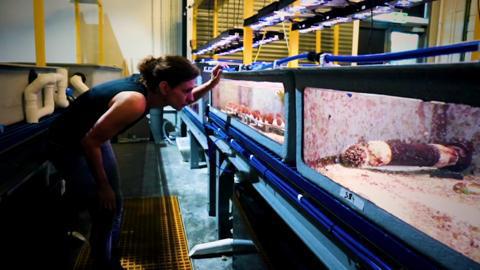
Coral reefs are the 'rain forests of the sea', prized for their beauty and resources the world over. They are also one of the earth's most vulnerable ecosystems threatened by climate change. And no place better symbolises their importance and their plight than Australia's Great Barrier Reef.
TechK…
- Subscribe to our channel: http://aje.io/AJSubscribe
- Follow us on Twitter: https://twitter.com/AJEnglish
- Find us on Facebook: https://www.facebook.com/aljazeera
- Check our website: http://www.aljazeera.com/

Exploring the correlation between sugar intake and heart disease in young adults.
- Subscribe to our channel: http://aje.io/AJSubscribe
- Follow us on Twitter: https://twitter.com/AJEnglish
- Find us on Facebook: https://www.facebook.com/aljazeera
- Check our website: http://www.aljazeera.com/
Ansvarsfraskrivelse: Podkasten og kunstværket, det finnes indlejret på denne siden, er fra Al Jazeera English, som tilhører dens eier og ikke er tilknyttet eller godkjent av Listen Notes, Inc.
REDIG
Takk fordi du hjelper med å holde podkast-databasen oppdatert.
