

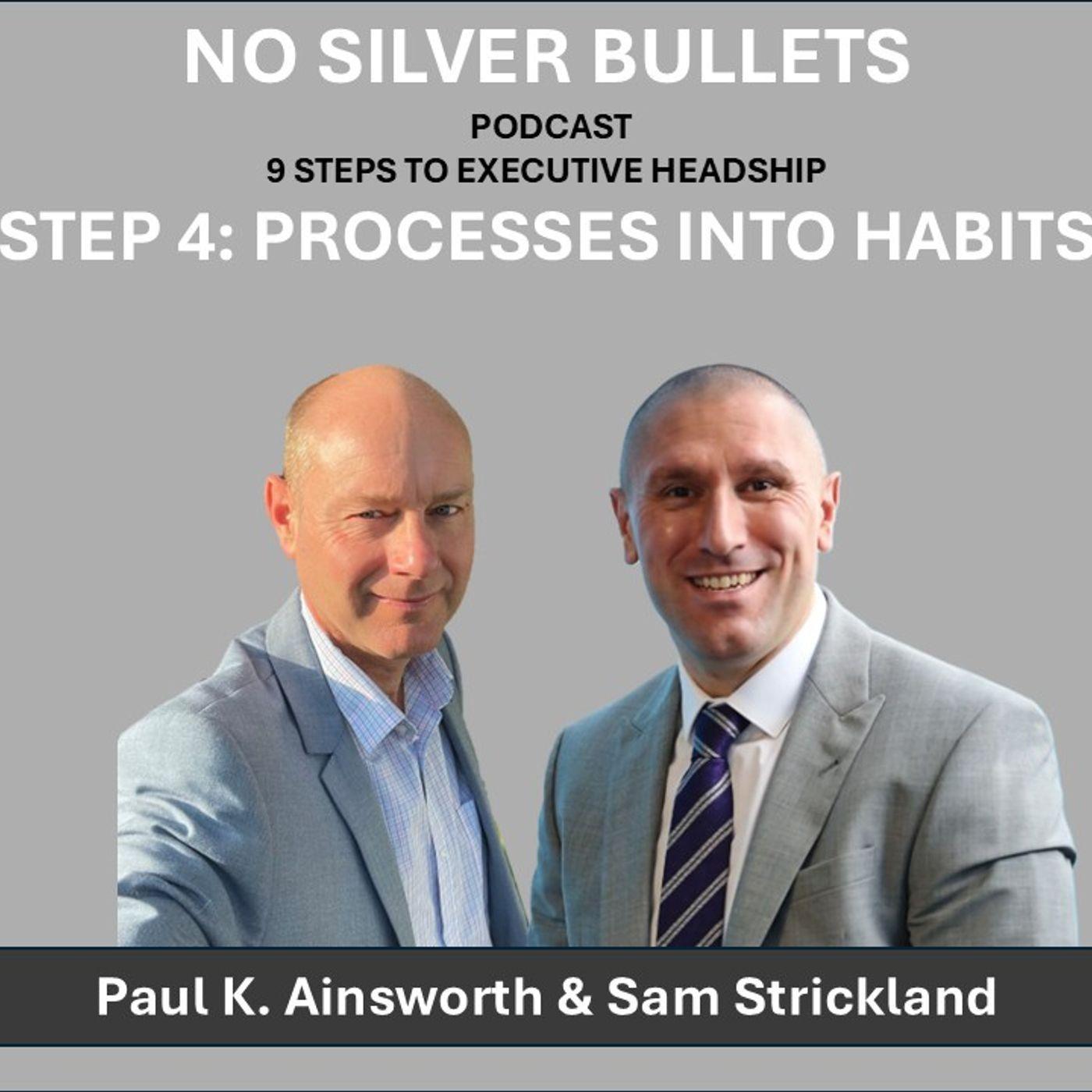
Paul Ainsworth: That's Sam Strickland, Principal, CEO and author, talking about transforming behaviour as part of step four of my new book, The Nine Steps to Executive Headship. This episode was recorded in December 2025 prior to the publication of the White Paper. Please like, subscribe to and share this podcast with your colleagues. Now, let's listen to more of Sam's advice. Welcome to the No Silver Bullets podcast and in this series we are focusing on the nine steps to executive headship. I am delighted to be joined by Sam Strickland who is the principal of the Dustin School which is a 2000 pupil, 4 to 19, all through school situated just outside Northampton. The Dustin School is also a DfE behaviour hub and the centre of the Luminary Educational Trust. I'm sure Sam will tell us more about the Dustin School and his trust later. Sam is also an acclaimed author, having written four books, Education Exposed 1 and 2 sit on my bookshelf, and also 'The Behaviour Manual' and 'They don't behave for me.' I'm especially pleased to have his expertise in leading behaviour for our discussion today because I know it is something that so many executive heads are concerned about. Hi Sam.
Sam: Hi there, how are you?
Paul Ainsworth: Yeah, good, thank you. Thanks so much for joining us. And today we're going to focus our conversation on step four, which is turning processes into habits. So Sam, let's jump in. What does turning processes into habits mean to you as the Principal of an all through school? And what elements of school life would you consider this encompasses?
Sam: Yeah, if you take ⁓ processes first, processes can potentially kind of... If you're not careful, just end up being a policy or words on a page or a document that's circulated around this is how we expect people to do things. And that kind of, I guess that transition of shifting it from a codified document to actually a living, breathing reality, which is what you want it to be ultimately, where that shift takes place is the training, the support, the advice, the guidance, the coaching, the mentoring that you give to all stakeholders. within your establishment because it has to be, I'm thinking to an all through school as well, from as young as four all the way through up to the age of 18, you have to narrate to the pupils precisely what you want, how you want it, and crucially why. Because children will always ask you, there will always be a pupil, why do we have to do this? And if you can't explain the why, kids will then go, well this is stupid, this is pointless. And actually staff are the same. Okay, want us, I'm gonna be flippant now, you want us to stand at the door to meet and greet the kids, why? If you can't narrate that why, they aren't going to do it because they're not going to believe in it. So that shift, I guess, from process to habit is actually making your words, as it were, on a page a living, breathing thing that is habitual, that everybody does, broadly speaking, in the same way. In an ideal universe, everybody does it in precisely the same way. I think the reality, though, of working in schools, especially big ones with 200 plus staff, is to get that absolute level of uber consistency that everybody does it in the same way, you'd almost be turning people into robots. You've got your own personality and take on life, but the general thrust of it needs to be there, that people are enacting those routines, those processes as you want them in a day-to-day, week-by-week, month-by-month, turn-by-turn manner, ultimately. In terms of the kind of the second part of your question, the elements of school life where this encompasses. I don't mean this is kind of a fudged answer, but it's everything, actually. If we kind of bring this to behaviour, I think people's mindsets instantly go to punitive, sanction-orientated and quite a cold kind of sense of what school might be about. But behaviour means everything. It means the positive behaviours that you want to see pupils and staff engaged in, the levels of professionalism that you want from people, how you want people, as in staff, to interact and speak to one another, and in the same regard, how you want them to speak and interact with the children and how they interact. interact with parents. it's all of those micro behaviours actually form part of this kind of bigger picture in terms of what these processes becoming habitual habits encompasses in a broad sense.
Paul Ainsworth: Oh, what a great start, Sam. So many colleagues have talked about the why and you're making the why really practical there. So let's just widen our lens for a moment and tell our listeners a little bit about your school and your role. Your role would be described as an executive head by many people, know, being a head teacher of an all through school from four to 19. So could you tell us a little bit about your responsibilities in that role and maybe how it varies to being the head teacher of a standalone secondary school or the standalone primary school?
Sam: Yeah, and I'm able to compare it through my own career, having been a head teacher in a multi-academy trust. And in no way is anything I'm about to say disparaging of people that are heads in MATs I think that role potentially, depending on the structures within a MAT is quite different to in a standalone academy or school in its own right. ⁓ So from own experience, having been head in a multi-academy trust, my role was more to focus in and hone in on safeguarding. behaviour, teaching, learning. By and large they were the big elements of that role and I guess the wider bits which I'll come to in a moment about being in charge of a SAT I didn't really have to think about because there an executive leader above me, was a CEO above me, there, you've a localised governing body, you've got the trust board and you've got the members. So that's a very different kind of structure and a central team, of course, that might come in and deal with, ⁓ I think the MATs that I've supported nationally ⁓ for behaviour, they've got central people for history, for geography, who come in to support with those curricular areas, ⁓ acting, I guess in old-fashioned money, a bit like an SLE in many regards. Transcending that into the SAT universe, the world that I occupy. My role's really quite varied, if I'm to be really honest with you. And it's evolved over time since I've been here. I started here in April of 2017 with a school that was in a real mess, with a falling number on roll. The primary phase only went up to the end of year one. And I guess in my time, I've had to lead three different types of school. We've had to do the rapid transformation school to get it out of the mess that it was in, was bottom 20 % nationally for basically everything and a myriad of other issues. Then a, not that anyone could have ever predicted this, a pandemic school where you have to lead in a very different way and in a way that I don't normally naturally kind of lead in. I just had to do it because I had to do it, but during the pandemic, it almost was quite dictatorial in many regards. It was high speed decisions and it wasn't consultative in the way that I like to be. And then kind of a post pandemic, whatever that is, is to get the school back on the school improvement trajectory and really moving at pace again to be where we kind of now are. But my role, it kind of spans in many regards because my role's got a number of hybrid functions. On one front, I am the principal of... the secondary face of the school, because I have a head of primary, but equally I'm the executive leader of the entire All Through, and then from a trust perspective, even though we're a single academy trust, I am viewed as the CEO of the trust. So I kind of hop step between a number of different elements here. And in any given day, my kind of my mindset and focus can shift from being almost like a glorified vice principal and in no way taking anything away from what vice principals have to do. But I might have to deal with what might be typical vice principal issues and matters. So it might be to do with teaching, learning. It might be to do with behaviour. It might be to do with safeguarding. So you've got that side of things. You've then got outright staffing, which is more kind of principal stroke executive leaders type of stuff and so it's recruitment it might be having to deal with a major staffing issue which brings you know, there's a whole myriad of different elements in there of course and Another element to deal with the school finances. ⁓ I'm the accounting officer for the entire establishment ⁓ we have about a 14 million pound budget ⁓ of the size and scale of the school with over 2000 children. ⁓ comparable to some moderate sized MATs In fact, that's bigger than some moderate sized MATs ⁓ within that as well, health and safety, governance, compliance, Academy Trust handbook, all of those other elements there. I'm then the first port of called in terms of the trust board and the chair of the trust. On a fortnightly basis, I have a kit meeting with the chair of the trust to talk about the school, different elements of the school, but also the outward facing side of the trust and where we're going in terms of that directory of travel. Then another element of my role is, the outward facing and it's a real privilege and I don't mean again any of this to sound sort of negative you know because it's more work but it is a real privilege to be outward facing and to support the sector and to be asked to support other schools, local authorities, ITT providers, multi-academy trusts with training whether that's for trainee teachers, whether that's on behaviour, culture, curriculum, leadership development. asked to do that kind of work, but that is a huge privilege. part of that as well is about getting the profile of the trust out there in the wider domain, ultimately. And then another element of my role, again, part of that outward facing is, I guess, it's almost borderline political, I suppose, but it is the meeting with your local key stakeholders, so people from the local authority, whether that's the admissions team or the safeguarding team. they've got quite important roles to play with schools in any area, kind of geographically. Local councillors, parish council, local MPs, local press, ⁓ national media as well. They're all elements that you have to accept are part of the territory and part of the job, ultimately, especially being an executive or a leader or a CEO in many regards. And then the other added dimension within all of this is... my trustees want us to grow. So it's looking at how we set about doing that. The growth plan, the service level offering, trying to engage with other stakeholders that might be interested in joining with us. And some of that as well involves me sitting under the trust boards. And again, there's an altruistic element to that of giving back, but also there's an element of showing that the school and the trust are actually giving to the sector, we're not a drain on the oxygen supply, so to speak. So it's quite a varied role. really, in any given day, you can kind of transcend all of those different states from one hour to the next. It goes from a budgetary issue to Johnny's not got a red pen. I'm being flippant, but not.
Paul Ainsworth: I think that's really interesting. It's the kind of wealth of role that executive heads have. If you're in the independent sector and working in a 4 to 19 school, two sites, we'd see that as an executive head straight away. You've also got the behaviour hub and, you know, again, you're not just focusing on one building with one group of pupils doing one thing. And that's why I think it's really interesting to have you involved in this conversation, Sam. You spoke about governance there. was speaking to Emma Knight on this podcast as well. And she said, you know, said a great thing for all the executive heads to be trying to be part of all the federation boards or in your case, trust boards as a really good learning process. you know, thanks for kind of explaining a little bit about the Dustin School. And I've had the pleasure of visiting the school a number of times. And if you ever get the chance, I'd really urge you to do so. But let's return to our main topic. where I kind of really want to use your skills and knowledge to help my listeners. So what type of processes have you built across your school? And I'm really interested in those, which I know you've got, those consistent behaviour systems that I'm sure will go from four to 19, those teaching processes and those leadership habits. Can you tell us a little bit about those?
Sam: Yeah, so if I take teaching and learning first, then I'll do the behaviour side, then I'll do leadership. So from a teaching and learning perspective, kind of the infancy of my tenure here, we talked a lot behind closed doors with other leaders and primary phase leaders about what do we do? Do we have hard, fast... policies around teaching and learning and what's said on the page of that policy has to run through the whole school. And there's this, I guess there's something compelling about doing that. I'm not saying you shouldn't have a policy, of course you should. But where we got to, and we spent a lot of time talking about this in real depth, is actually having guiding principles which hang against a policy. Because the reality is, especially in an all through, we've got the full bandwidth The way that early years works compared to year two, compared to year six, compared to year nine, compared to year 13, are fundamentally different. What we talked about is that incremental developmental approach over time for a child as they go through their journey, because our ideal scenario is you join age four and you leave age 18. What does that journey look like and are we equipping you with the skills, the knowledge, the acquisition of being a, not just the knowledge itself, but the ability to apply that knowledge and educate you in a wider, broader sense to be a well-rounded human being and citizen as you go through the school and building on that from one year, one key stage to the next. that learning obviously is recursive and we're able to build on prior learning. But the teaching and learning approaches have to be appropriate to that age stage and face. And again, we've supported a number of all throughs which have these hard fast policies where it's Rosenshine throughout the school or retrieval practice throughout the school. I'm not slamming those two things because they've absolutely got their place, ⁓ but you've got to be really careful with that, I would argue, in terms of what it looks like through your whole school. are certain learning behaviours ⁓ will look the same through the school, but broadly speaking, we've made it so it's age stage phase appropriate. ⁓ in terms of behaviour, we... Again, we spent quite a lot of time thinking about what do we do on this front. And this school was an absolute mess when I joined. And we went very left field to begin with. We got rid of the decentralised sanction system that the school had because kids ultimately were not turning up to detentions because Johnny, it's always Johnny, got five detentions a day. Where does he go at lunchtime? Which teacher does he go to first? Well, he doesn't go to any because there's just so many. What's the point? everyone's just going to chase me. And everything was geared around when I joined the negative side, as opposed to what the positives. So once we did a whole recalibration actually of the school's mission statement, the vision, the values, and that goes back to that why this is what we're about. Any change that we're going to make has to hang against that. And if it doesn't, we're not making those changes because we can't justify and explain why we're doing what we're doing. But we, against our three core values, and we have three for the primary and three for the secondary, they broadly mean the same thing, but they're using different words, because again, age, stage, and phase. So we have care, challenge, and succeed in the primary, and resilience, respect, and aspiration in the secondary. But what we talk holistically about across both phases is to be the best version of yourself. Which means, can't you, boom. whichever phase, all children understand that aspect. But what we've done for both phases is to link all the positive behaviours that we do want to see our children exhibit linked against the values and then if pupils fall foul of those positive behaviours because they're doing the wrong things, that's where they will accrue either against the primary phase model of Good to Be Green, a card, a yellow card, a red card at its worst, or secondary phase, a behaviour point. If pupils accrue two behaviour points or more in a day, they get a same day centralised detention, ultimately. So what we've managed to achieve here in the school, and I'm probably not doing this justice in many regards, is to create what is outwardly a really simplistic, simple to understand behaviour system and approach built around a number of clear routines and clear expectations, but around positive behaviours linked to our values. the system of rewards that goes with that is also interlinked. So if I do all the right things, I get rewarded for it in the right of ways. We're not just going to reward a for turning to page three, which we expect them to do. They've got to obviously do something special for that, so to speak. But we have a ⁓ system ultimately staff can understand, parents can understand and children can understand. And it's grounded in just three simple expectations, whether it's in the primary or the secondary phase. And again, my view with anything you're trying to do, teaching, learning or behaviour, whatever it might be, is keep it simple. And less is more in many regards, because I think about the cognitive overload for teaching staff. It would be so easy to have 20 school rules, Staff aren't going to remember those. They're not going remember to remember. So they're not going to enforce them if they can't remember them. And they might not even believe in them. So it's keeping things really, really simple and values driven. Then into leadership development and kind of how that works, kind of the third part of your question. The leadership team here have grown and developed with me while I've been in post over the last nine-ish years. They were when I joined and not disparagingly at all, relatively inexperienced and the model that I've adopted with them is one of coaching, mentoring, supporting them in the first phase when we were doing the rapid transformation of the school to then being able to create more of a line management based approach which would probably be more typical of your normal established I guess, whereby your vice principals are line managing your assistant principals. Your assistant principals are line managing your middle leaders and so on and so forth. So it's more of a traditional model ultimately. But what we've also done here is to change the way in which senior leadership roles and remits work. So when I joined, you had basically a team of by and large assistant principals with two vice principals and everybody bar one was in charge of teaching and learning. It's just a classic model from about 10 years ago. So the way we've crafted it here is that you've got a deputy head and head of primary phase. Then for each key stage, if I go for the VP aspect, there is a vice principal that oversees each key stage of the school and acts effectively like a head teacher of a mini school. I say a mini school, key stage three's got about 780 pupils in it, so it's bigger than some of the schools in the country. ⁓ then got a vice principal who's your outright DSL and a vice principal who's our Director of Education.
Paul Ainsworth: And that kind of links really well with what I've talked about in some other conversations about that unleashing capacity, about how you set up your leadership team and how you make use of it. And also really interesting the way you're talking about the vision and the values and having slightly different values across your schools, but the mirroring each other. I'm sure listeners will be thinking about would that be appropriate in the schools that they're leading? So thanks for for highlighting those, Sam. So then in terms of building that consistency, you know, you've highlighted 790 children in Key Stage 3 alone. You've got a set of guidelines, you've got values, you've got a vision. How do you build that consistency? For many colleagues, they'd see your school as two schools, maybe even three schools if you count the six forms of centre on its own. So how do you build that consistency? And what were the barriers to it, know, initially?
Sam: Yeah, and that's a brilliant question. So first and foremost, and I appreciate when I joined there was a falling number on roll, but we kind of knew if we got things right, there was the potential for it to be a 2000 plus strong school, which is what it now is. We wanted to make what is a very big school, a very big establishment feel small, ultimately. And we wanted to create a sense of... staff in whichever phase of the school they walked into whilst we've got. obviously clear guiding principles in each phase, still a sense of this is what the Dustin School is. we still know we're in the Dustin School and part of the Luminar Education Trust. But to build that consistency, there's been a number of kind of key elements really. The first aspect right at the start was on one front, if I'm going to be, I guess a bit blunt, had to break everything. It was already broken and it just needed to basically be mothballed. What was in place was not fit for purpose. didn't work, needed a flamethrower put into it. And I deliberately in the first phase met with, and I do this every year to be fair, but met with every single member of staff, spoke to them about them, their role, their area of responsibility, their professional development ⁓ what's good, what's bad about and different about the school, why are they leaving, why are they staying, because a third of the staff were leaving as I ⁓ ⁓ what do you actually need to do your job? And I did a similar thing with groups ⁓ children as well. The second, kind of then the, I guess the up-fronting bit is the second seven weeks in post in that kind of second half of the summer term was to train everybody in a brand new model of student care. So this is how we want you to top and tell your lessons. This is how we want you to act as a tutor or a class teacher. This is how we want you to talk to children. This is how we want you to de-escalate issues. We don't want you to shout at kids and we want you to build relationships. But there will be a structure around that to allow you to teach. Once it all takes effect, disruption free or as close to disruption free as we can, because that's one of my big guiding principles for the whole school is staff have to be able to teach disruption free, otherwise they can't teach. They become bouncers ultimately. Then after that launch with staff and that systematic kind of building of training over seven weeks in effect, we mirrored it with the pupils. So obviously you've got legacy kids in this school who know the previous regime and have got ingrained behaviours and it's systematically repeating every week in assemblies to those pupils, this is what's coming, this is what we're expecting, this is what it's going to look like. Then when we got to September, the whole of that first kind of set of training days for staff was basically repeat of all the training from the summer, from that second half of the summer term, because staff forget. And I don't mean that badly, also, especially in the first phase, staff will think to themselves, did you really mean what you said? Is it really gonna stick? Are you gonna change your mind again? Especially if that's what they've been used to beforehand. And then what we then did in terms of the kids is we brought one year group in at a time. And don't get me wrong, there was a little bit of flak from parents because he has this big staggered start. Why are they not all in at the same time? But actually what we're doing is really training the kids now explicitly in all of the behaviours we're expecting to see from them. And we saw within a week of doing that quite a seismic shift in behaviour and culture across the school. It kind of flipped 180. The hard bit then, because I think you can flip of School 180 quite quickly is ensuring that that then maintains and is embedded and is consistent. That's where the hard work really kicks in. Because you're then looking at 18 to 24 months to really bed down the culture that you want. And then I call it topping and tailing, but you've got to make sure your eldest year groups in the school are where they need to be because however we strip it, they've got to go and sit public exams that determine their life. Chances ultimately and then kind of the tailing is how you bring the new pupils into your school So that they are all they know is the culture that you want and it almost becomes like a squashing or squeezing effect across your school Then within that as well was to then map out really clearly all of the briefing sessions throughout the year ⁓ I wanted to make all of our briefings into training sessions. And in the first year in charge, it was purely about culture and nothing else. And our entire school improvement plan was just school culture. And that was it. And the other bit within that was management. We suspended for the whole of that entire term, September to Christmas. And this is a double RI school. So it a bit of a, you know, outwardly quite a brave thing to do, maybe stupid thing to do. don't know. It depends on your perception. But my line to my senior team was there is no point in having routine line management meetings while Rome is on fire. Because we're going to be talking about spreadsheets and bits of paper and we've got kids potentially not learning properly. So we have to have this school fully hankered down before we can start having those meetings in the day like you would do in a normal school so to speak. If we're going to have to meet it's going to have to either be before or after school. But I need you all on board with that. thankfully my senior team were really on board. wanted to get this school absolutely turned around and flipped on its heads have worked relentlessly with me to ensure that that happened ultimately. ⁓ think then kind of moving forwards, ⁓ about constant repetition of the things that you value, the things that you expect to see, want to see. ⁓ know in the course of an academic year, things slip normally around November, third Monday of January where no one wants to come to work, ⁓ of the back end of March, middle of May middle of June because everyone's tired and that's where your routines easily start to kind of slip. So we know we've got to kind of up the ante in those particular windows, have more reminders, more training for staff in terms of briefings, greater visibility of leaders than we might routinely do because in any given lesson of the day there's always four leaders walking the school. In those windows we up that so there's more people visible to ensure that everybody maintains the routines and expectations that we have. But I think in a simple answer to your question, it's about dogged relentlessness in terms of ensuring your behaviour approaches and routines are ingrained in habitual. And the moment you think you've cracked it and you take your foot off the gas, it will all fall apart.
Paul Ainsworth: I think one the things that will come through to any listener is how much you deal with processes and really get into the detail. don't take, I know from conversations with you in the past, Sam, you don't take things for granted. The minute you take them for granted, not going to happen. Now you'll take that experience, which is a wonderful experience, and the school is an amazing place. How do you then use that when you're, you know, in your advice work, you must spend time advising, you know, executive heads or CEOs of small MATs that trying to develop behaviour systems. How do you go about that? Where's your kind of starting point? How do you advise those colleagues?
Sam: Yeah, I mean... The starting point for supporting anybody has to be to go to see the establishment in action. I think it's good to have a pre-meeting conversation on Teams, Zoom, whatever it might be to get a of a feel from the perspective of the leader. It's good to have a look at policies so you've got a sense of, well, this is what they're about and what they expect. But actually going in and seeing it for a day, I don't mean like an Ofsted inspector, and I don't want to talk about Ofsted because that's not fair. what this is about, but actually going in to see how the school day starts, how do children transition into assembly, to break, to lunch, from lesson to lesson, or if it's a primary school, how do they enter at the start of the day, after break, after lunch, where all those kind of more looser elements of the day take place. What do the learning behaviours look like in lessons? Getting to talk to staff, what training support, advice, guidance are you given in and around the expectations of the establishment? from the moment you join this school to all the way through your time in this school, talking to groups of children as well, is getting that information, intelligence gathering is really, really important. And that then I think allows you to then think about what are the things that the school leaders need to work on ultimately. That could be challenging at times. ⁓ And some of the feedback you give, I mean, I always frame it, how honest do want me to be? and not because I would ever be disingenuous of the feedback, but are you going to be broad-shouldered enough to take this in the spirit of what it is? None of this is personal, but this is what I've seen. And then make of this what you will. And if you want further support in terms of how to implement the advice, I'm happy to give that as well.
Paul Ainsworth: One of the things that colleagues talked to me about is that, but I'm in one school and I'm worried about the behaviour in the other school. And you must sometimes feel like that when you're maybe in the secondary school and primary school and vice versa. Have you got any tips for leaders on that? It's almost the setting up things for when they're not there, isn't it?
Sam: It is, yeah, you've got to be confident of all the leaders in place. able to respond to deal with and proactively preempt issues that might arise before they arise. There's that side. But then if there is slippage, I guess you've got to be comfortable in your own skin here that the other leader in the, let's just say you've got two schools, Leader A has got their place running like a Rolls Royce. I can leave them alone for four of the five days of the week and I've just got to have the confidence that they will do that. That's devolved leadership, isn't it, ultimately? Because I know I've got to go and base myself in school B where there are big problems. Because we need to get school B to be of a similar ilk to school A. I think you've got to take those brave leadership decisions ultimately. You've got to go to where the problems are to resolve them. You can't just sit in the other school that's really hunky-dory and hope the other one sorts itself out if it's not actually sorting itself out. There will inevitably be an issue. And I guess it's, you've got to walk that school to understand what the issue is, have an open, honest conversation with the leader in charge to actually crack what the problem is, and then come up with the solutions. it might be it's a training issue, it might be a capacity issue, it might be there's been lots of staff absence, who knows, it could be a multitude of reasons, of course, but you've got to understand the what, and then what to do about it.
Paul Ainsworth: That's really wise and again it's giving leaders that confidence that yes there is an equity about being executive head but an equity is given the support where it's needed not half and half you know where the support is needed most. So just kind of going wider you know you're giving some great ⁓ in in the kind of process and habits but what's your general advice would you give to those colleagues who are either new or aspiring executive heads from your your experience of being principal and leading the behavioural hub. What's your wider advice?
Sam: Yeah, I guess in the first instance, you need to know your staffing body and you need to know your context and your setting. And I I talk about this in some of my leadership books, but no two settings are the same. ⁓ And I know that some MATs might want a McDonald's or M &S style approach, but there's still the reality of contextualised local factors to the community that you're serving. will still be nuances to where you are. will invariably there will be issues to do with the geography of the school building. It may well be that the dynamic of the staffing body is that you've got 80 % predominantly of your staff are ECTs or it might be flipping on its 80 % of your staffing body are UPS3. ⁓ You've got to understand the leadership team and what are their roles, what are their remits, do those roles and remits play to their strengths? How experienced are those people? What training support do they need to enact the things that you want ultimately? guess what I'm trying to say here in a simplistic sense is ⁓ the environment you're walking into and know every element around it is the first thing you should do before you start making changes. And appreciate, because some people throw back, but what if it's an RI school and you've know, in old money and you've got Ofsted breathing down your neck or it's an inadequate school. I mean, the school I took over was requires improvement, double requires improvement to be fair, with a projected progress eight score for the first year 10 going into year 11, 15 months from when I joined of minus 1.8, with an Ofsted inspection on day five, a letter from the DFE on day four telling me the school's a disaster zone and we're sending a team from the DFE to inspect your school in September. every weight of pressure you could imagine was bearing down on me and it would have been really easy to do I think the seductive things that we end up doing in the sector but actually they're the wrong things to do and don't actually make long-term longitudinal change. So I think the other aspect here for a brand new leader is once you've kind of understood your environment and what it needs have a really clear plan. I would have a three or five year vision of where you want to go for and that's obviously not the end because there's always more to do but where do you want it to be three to five years down the line? What are the sensible strategic incremental steps that are going to allow you to get to those particular points? And then within that, and I think this is often forgotten with school improvement, remember what it is like to be a full-time classroom teacher teaching pretty much all day, every day in terms of the bandwidth and capacity to enact any changes that you want, because classroom teachers not meant, again, disparagingly, their focus is on, I would say, as a history teacher through and through delivering history, delivering that curriculum really well, and making sure I get through day. That would be my priority as a history teacher. So anything else that you want me to do, it's got to be sensible and rational and I've got to understand the why and it's got to be achievable. And it's thinking in those terms to ensure that your school improvement changes stick ultimately. I think it's important within that that you do have benchmarks and targets for where you want things to go. They should be aspirational. It's a bit like being the cox of a rowing team. You're not going to ask people to give you 50 % because you'll get 30%. So what is it that you want from staff? being, obviously being realistic within that, but it's the narration of that. And then I think within that, it's then unpacking what the training and support looks like to help staff to do what it is that you want. So there's a lot there to unpack. If I was going to rewind, if you've got the grace of time, and this is, I guess this is a bit sad, but this is what I did once I got the job here. And I didn't know how bad this school was till I walked through the front door. But I got the job in October. of 2016 and over that kind of six month window before joining once a week every week on a kind Sunday tea time or just after tea I spent an hour I've still got the journal that I everything in mapping out what would my ideal ⁓ PE department look like, ideal to safeguarding, ideal to the UCAS process, ideal to early years as much as I can, although I'm not an early years specialist. And I did that because I wanted to have an opinion and a view, because I knew that in meeting staff, head of PE is gonna say to me, what do you want for this school? What do you want PE to look like here? And you can't sit there and go, dunno, I've never been a PE teacher, never been a head of PE. You tell me, because you lose all credibility. So I think you've gotta have a view of what you want every of your school to look like, whether you get there or not is a different story but at least you've got a vision and then of course it's the alignment of those particular colleagues with you on that vision.
Paul Ainsworth: ⁓ that's brilliant, Sam. I don't think executive heads spend enough time thinking about where the federation is going to be in three to five years. I think they think about individual schools, but not the entity. And that leads on really nicely to my last my last question, Sam. What are the possible next steps for you? Dustin's School, Luminary Trust. What's kind of on your intray as we sit here today?
Sam: Yeah, I mean things on my intro at the moment. a pressure, a demand, it depends how you want to put it really, for the school to grow, ⁓ to on even more pupils. ⁓ So have officially 240 enrol in every year group in the secondary phase. ⁓ We have bulge classes in every year group, so we've almost got 280 pupils in every year. ⁓ And been asked if we would consider going up to a 300 PAN So there's side, there's managing our internal growth. And we've seen a big explosion in sixth form numbers, which we are projecting through applications that have come through, so it's grounded in fact, that to happen again next September. So almost a 50 % increase in the overall size of the entire sixth form. So there's that side. There's maintaining and then developing and building on the educational standards that we've achieved here. I don't take any of those lightly because... ⁓ You're always, I sort of said this to you flippantly before we started the podcast, you're always half a second from a disaster really. Equally internally, there's... There's a need to think about, and for the right of reasons, the roles and remits of my senior team to help to support them to grow professionally even further still. And they are brilliant, but I guess it's what's next for all of them and keeping those people as well and keeping them interested because we've got some really experienced people. And then outwardly, it's... furthering the name of the Luminar Education Trust and the trust's ambition and aspiration is to grow ultimately. So there's a big body of work around that. I guess from my own perspective, it's to continue to hopefully be able to offer and help to serve the educational ecosystem as it were, where I'm asked to and where I've got the capacity to do so as well as running this establishment.
Paul Ainsworth: thanks so much, Sam. Thank you for sharing your thoughts on Step Forward and Nine Steps to Executive Headship. I'd strongly advise any listeners to root out your books. ⁓ you ever get the chance to visit Dustin's School, I've certainly been to research Ed Northampton there before. It's a really inspirational place. But thank you so much for your time today, Sam. I really appreciate it.
Sam: Thank you.
Sam: Hi there, how are you?
Paul Ainsworth: Yeah, good, thank you. Thanks so much for joining us. And today we're going to focus our conversation on step four, which is turning processes into habits. So Sam, let's jump in. What does turning processes into habits mean to you as the Principal of an all through school? And what elements of school life would you consider this encompasses?
Sam: Yeah, if you take ⁓ processes first, processes can potentially kind of... If you're not careful, just end up being a policy or words on a page or a document that's circulated around this is how we expect people to do things. And that kind of, I guess that transition of shifting it from a codified document to actually a living, breathing reality, which is what you want it to be ultimately, where that shift takes place is the training, the support, the advice, the guidance, the coaching, the mentoring that you give to all stakeholders. within your establishment because it has to be, I'm thinking to an all through school as well, from as young as four all the way through up to the age of 18, you have to narrate to the pupils precisely what you want, how you want it, and crucially why. Because children will always ask you, there will always be a pupil, why do we have to do this? And if you can't explain the why, kids will then go, well this is stupid, this is pointless. And actually staff are the same. Okay, want us, I'm gonna be flippant now, you want us to stand at the door to meet and greet the kids, why? If you can't narrate that why, they aren't going to do it because they're not going to believe in it. So that shift, I guess, from process to habit is actually making your words, as it were, on a page a living, breathing thing that is habitual, that everybody does, broadly speaking, in the same way. In an ideal universe, everybody does it in precisely the same way. I think the reality, though, of working in schools, especially big ones with 200 plus staff, is to get that absolute level of uber consistency that everybody does it in the same way, you'd almost be turning people into robots. You've got your own personality and take on life, but the general thrust of it needs to be there, that people are enacting those routines, those processes as you want them in a day-to-day, week-by-week, month-by-month, turn-by-turn manner, ultimately. In terms of the kind of the second part of your question, the elements of school life where this encompasses. I don't mean this is kind of a fudged answer, but it's everything, actually. If we kind of bring this to behaviour, I think people's mindsets instantly go to punitive, sanction-orientated and quite a cold kind of sense of what school might be about. But behaviour means everything. It means the positive behaviours that you want to see pupils and staff engaged in, the levels of professionalism that you want from people, how you want people, as in staff, to interact and speak to one another, and in the same regard, how you want them to speak and interact with the children and how they interact. interact with parents. it's all of those micro behaviours actually form part of this kind of bigger picture in terms of what these processes becoming habitual habits encompasses in a broad sense.
Paul Ainsworth: Oh, what a great start, Sam. So many colleagues have talked about the why and you're making the why really practical there. So let's just widen our lens for a moment and tell our listeners a little bit about your school and your role. Your role would be described as an executive head by many people, know, being a head teacher of an all through school from four to 19. So could you tell us a little bit about your responsibilities in that role and maybe how it varies to being the head teacher of a standalone secondary school or the standalone primary school?
Sam: Yeah, and I'm able to compare it through my own career, having been a head teacher in a multi-academy trust. And in no way is anything I'm about to say disparaging of people that are heads in MATs I think that role potentially, depending on the structures within a MAT is quite different to in a standalone academy or school in its own right. ⁓ So from own experience, having been head in a multi-academy trust, my role was more to focus in and hone in on safeguarding. behaviour, teaching, learning. By and large they were the big elements of that role and I guess the wider bits which I'll come to in a moment about being in charge of a SAT I didn't really have to think about because there an executive leader above me, was a CEO above me, there, you've a localised governing body, you've got the trust board and you've got the members. So that's a very different kind of structure and a central team, of course, that might come in and deal with, ⁓ I think the MATs that I've supported nationally ⁓ for behaviour, they've got central people for history, for geography, who come in to support with those curricular areas, ⁓ acting, I guess in old-fashioned money, a bit like an SLE in many regards. Transcending that into the SAT universe, the world that I occupy. My role's really quite varied, if I'm to be really honest with you. And it's evolved over time since I've been here. I started here in April of 2017 with a school that was in a real mess, with a falling number on roll. The primary phase only went up to the end of year one. And I guess in my time, I've had to lead three different types of school. We've had to do the rapid transformation school to get it out of the mess that it was in, was bottom 20 % nationally for basically everything and a myriad of other issues. Then a, not that anyone could have ever predicted this, a pandemic school where you have to lead in a very different way and in a way that I don't normally naturally kind of lead in. I just had to do it because I had to do it, but during the pandemic, it almost was quite dictatorial in many regards. It was high speed decisions and it wasn't consultative in the way that I like to be. And then kind of a post pandemic, whatever that is, is to get the school back on the school improvement trajectory and really moving at pace again to be where we kind of now are. But my role, it kind of spans in many regards because my role's got a number of hybrid functions. On one front, I am the principal of... the secondary face of the school, because I have a head of primary, but equally I'm the executive leader of the entire All Through, and then from a trust perspective, even though we're a single academy trust, I am viewed as the CEO of the trust. So I kind of hop step between a number of different elements here. And in any given day, my kind of my mindset and focus can shift from being almost like a glorified vice principal and in no way taking anything away from what vice principals have to do. But I might have to deal with what might be typical vice principal issues and matters. So it might be to do with teaching, learning. It might be to do with behaviour. It might be to do with safeguarding. So you've got that side of things. You've then got outright staffing, which is more kind of principal stroke executive leaders type of stuff and so it's recruitment it might be having to deal with a major staffing issue which brings you know, there's a whole myriad of different elements in there of course and Another element to deal with the school finances. ⁓ I'm the accounting officer for the entire establishment ⁓ we have about a 14 million pound budget ⁓ of the size and scale of the school with over 2000 children. ⁓ comparable to some moderate sized MATs In fact, that's bigger than some moderate sized MATs ⁓ within that as well, health and safety, governance, compliance, Academy Trust handbook, all of those other elements there. I'm then the first port of called in terms of the trust board and the chair of the trust. On a fortnightly basis, I have a kit meeting with the chair of the trust to talk about the school, different elements of the school, but also the outward facing side of the trust and where we're going in terms of that directory of travel. Then another element of my role is, the outward facing and it's a real privilege and I don't mean again any of this to sound sort of negative you know because it's more work but it is a real privilege to be outward facing and to support the sector and to be asked to support other schools, local authorities, ITT providers, multi-academy trusts with training whether that's for trainee teachers, whether that's on behaviour, culture, curriculum, leadership development. asked to do that kind of work, but that is a huge privilege. part of that as well is about getting the profile of the trust out there in the wider domain, ultimately. And then another element of my role, again, part of that outward facing is, I guess, it's almost borderline political, I suppose, but it is the meeting with your local key stakeholders, so people from the local authority, whether that's the admissions team or the safeguarding team. they've got quite important roles to play with schools in any area, kind of geographically. Local councillors, parish council, local MPs, local press, ⁓ national media as well. They're all elements that you have to accept are part of the territory and part of the job, ultimately, especially being an executive or a leader or a CEO in many regards. And then the other added dimension within all of this is... my trustees want us to grow. So it's looking at how we set about doing that. The growth plan, the service level offering, trying to engage with other stakeholders that might be interested in joining with us. And some of that as well involves me sitting under the trust boards. And again, there's an altruistic element to that of giving back, but also there's an element of showing that the school and the trust are actually giving to the sector, we're not a drain on the oxygen supply, so to speak. So it's quite a varied role. really, in any given day, you can kind of transcend all of those different states from one hour to the next. It goes from a budgetary issue to Johnny's not got a red pen. I'm being flippant, but not.
Paul Ainsworth: I think that's really interesting. It's the kind of wealth of role that executive heads have. If you're in the independent sector and working in a 4 to 19 school, two sites, we'd see that as an executive head straight away. You've also got the behaviour hub and, you know, again, you're not just focusing on one building with one group of pupils doing one thing. And that's why I think it's really interesting to have you involved in this conversation, Sam. You spoke about governance there. was speaking to Emma Knight on this podcast as well. And she said, you know, said a great thing for all the executive heads to be trying to be part of all the federation boards or in your case, trust boards as a really good learning process. you know, thanks for kind of explaining a little bit about the Dustin School. And I've had the pleasure of visiting the school a number of times. And if you ever get the chance, I'd really urge you to do so. But let's return to our main topic. where I kind of really want to use your skills and knowledge to help my listeners. So what type of processes have you built across your school? And I'm really interested in those, which I know you've got, those consistent behaviour systems that I'm sure will go from four to 19, those teaching processes and those leadership habits. Can you tell us a little bit about those?
Sam: Yeah, so if I take teaching and learning first, then I'll do the behaviour side, then I'll do leadership. So from a teaching and learning perspective, kind of the infancy of my tenure here, we talked a lot behind closed doors with other leaders and primary phase leaders about what do we do? Do we have hard, fast... policies around teaching and learning and what's said on the page of that policy has to run through the whole school. And there's this, I guess there's something compelling about doing that. I'm not saying you shouldn't have a policy, of course you should. But where we got to, and we spent a lot of time talking about this in real depth, is actually having guiding principles which hang against a policy. Because the reality is, especially in an all through, we've got the full bandwidth The way that early years works compared to year two, compared to year six, compared to year nine, compared to year 13, are fundamentally different. What we talked about is that incremental developmental approach over time for a child as they go through their journey, because our ideal scenario is you join age four and you leave age 18. What does that journey look like and are we equipping you with the skills, the knowledge, the acquisition of being a, not just the knowledge itself, but the ability to apply that knowledge and educate you in a wider, broader sense to be a well-rounded human being and citizen as you go through the school and building on that from one year, one key stage to the next. that learning obviously is recursive and we're able to build on prior learning. But the teaching and learning approaches have to be appropriate to that age stage and face. And again, we've supported a number of all throughs which have these hard fast policies where it's Rosenshine throughout the school or retrieval practice throughout the school. I'm not slamming those two things because they've absolutely got their place, ⁓ but you've got to be really careful with that, I would argue, in terms of what it looks like through your whole school. are certain learning behaviours ⁓ will look the same through the school, but broadly speaking, we've made it so it's age stage phase appropriate. ⁓ in terms of behaviour, we... Again, we spent quite a lot of time thinking about what do we do on this front. And this school was an absolute mess when I joined. And we went very left field to begin with. We got rid of the decentralised sanction system that the school had because kids ultimately were not turning up to detentions because Johnny, it's always Johnny, got five detentions a day. Where does he go at lunchtime? Which teacher does he go to first? Well, he doesn't go to any because there's just so many. What's the point? everyone's just going to chase me. And everything was geared around when I joined the negative side, as opposed to what the positives. So once we did a whole recalibration actually of the school's mission statement, the vision, the values, and that goes back to that why this is what we're about. Any change that we're going to make has to hang against that. And if it doesn't, we're not making those changes because we can't justify and explain why we're doing what we're doing. But we, against our three core values, and we have three for the primary and three for the secondary, they broadly mean the same thing, but they're using different words, because again, age, stage, and phase. So we have care, challenge, and succeed in the primary, and resilience, respect, and aspiration in the secondary. But what we talk holistically about across both phases is to be the best version of yourself. Which means, can't you, boom. whichever phase, all children understand that aspect. But what we've done for both phases is to link all the positive behaviours that we do want to see our children exhibit linked against the values and then if pupils fall foul of those positive behaviours because they're doing the wrong things, that's where they will accrue either against the primary phase model of Good to Be Green, a card, a yellow card, a red card at its worst, or secondary phase, a behaviour point. If pupils accrue two behaviour points or more in a day, they get a same day centralised detention, ultimately. So what we've managed to achieve here in the school, and I'm probably not doing this justice in many regards, is to create what is outwardly a really simplistic, simple to understand behaviour system and approach built around a number of clear routines and clear expectations, but around positive behaviours linked to our values. the system of rewards that goes with that is also interlinked. So if I do all the right things, I get rewarded for it in the right of ways. We're not just going to reward a for turning to page three, which we expect them to do. They've got to obviously do something special for that, so to speak. But we have a ⁓ system ultimately staff can understand, parents can understand and children can understand. And it's grounded in just three simple expectations, whether it's in the primary or the secondary phase. And again, my view with anything you're trying to do, teaching, learning or behaviour, whatever it might be, is keep it simple. And less is more in many regards, because I think about the cognitive overload for teaching staff. It would be so easy to have 20 school rules, Staff aren't going to remember those. They're not going remember to remember. So they're not going to enforce them if they can't remember them. And they might not even believe in them. So it's keeping things really, really simple and values driven. Then into leadership development and kind of how that works, kind of the third part of your question. The leadership team here have grown and developed with me while I've been in post over the last nine-ish years. They were when I joined and not disparagingly at all, relatively inexperienced and the model that I've adopted with them is one of coaching, mentoring, supporting them in the first phase when we were doing the rapid transformation of the school to then being able to create more of a line management based approach which would probably be more typical of your normal established I guess, whereby your vice principals are line managing your assistant principals. Your assistant principals are line managing your middle leaders and so on and so forth. So it's more of a traditional model ultimately. But what we've also done here is to change the way in which senior leadership roles and remits work. So when I joined, you had basically a team of by and large assistant principals with two vice principals and everybody bar one was in charge of teaching and learning. It's just a classic model from about 10 years ago. So the way we've crafted it here is that you've got a deputy head and head of primary phase. Then for each key stage, if I go for the VP aspect, there is a vice principal that oversees each key stage of the school and acts effectively like a head teacher of a mini school. I say a mini school, key stage three's got about 780 pupils in it, so it's bigger than some of the schools in the country. ⁓ then got a vice principal who's your outright DSL and a vice principal who's our Director of Education.
Paul Ainsworth: And that kind of links really well with what I've talked about in some other conversations about that unleashing capacity, about how you set up your leadership team and how you make use of it. And also really interesting the way you're talking about the vision and the values and having slightly different values across your schools, but the mirroring each other. I'm sure listeners will be thinking about would that be appropriate in the schools that they're leading? So thanks for for highlighting those, Sam. So then in terms of building that consistency, you know, you've highlighted 790 children in Key Stage 3 alone. You've got a set of guidelines, you've got values, you've got a vision. How do you build that consistency? For many colleagues, they'd see your school as two schools, maybe even three schools if you count the six forms of centre on its own. So how do you build that consistency? And what were the barriers to it, know, initially?
Sam: Yeah, and that's a brilliant question. So first and foremost, and I appreciate when I joined there was a falling number on roll, but we kind of knew if we got things right, there was the potential for it to be a 2000 plus strong school, which is what it now is. We wanted to make what is a very big school, a very big establishment feel small, ultimately. And we wanted to create a sense of... staff in whichever phase of the school they walked into whilst we've got. obviously clear guiding principles in each phase, still a sense of this is what the Dustin School is. we still know we're in the Dustin School and part of the Luminar Education Trust. But to build that consistency, there's been a number of kind of key elements really. The first aspect right at the start was on one front, if I'm going to be, I guess a bit blunt, had to break everything. It was already broken and it just needed to basically be mothballed. What was in place was not fit for purpose. didn't work, needed a flamethrower put into it. And I deliberately in the first phase met with, and I do this every year to be fair, but met with every single member of staff, spoke to them about them, their role, their area of responsibility, their professional development ⁓ what's good, what's bad about and different about the school, why are they leaving, why are they staying, because a third of the staff were leaving as I ⁓ ⁓ what do you actually need to do your job? And I did a similar thing with groups ⁓ children as well. The second, kind of then the, I guess the up-fronting bit is the second seven weeks in post in that kind of second half of the summer term was to train everybody in a brand new model of student care. So this is how we want you to top and tell your lessons. This is how we want you to act as a tutor or a class teacher. This is how we want you to talk to children. This is how we want you to de-escalate issues. We don't want you to shout at kids and we want you to build relationships. But there will be a structure around that to allow you to teach. Once it all takes effect, disruption free or as close to disruption free as we can, because that's one of my big guiding principles for the whole school is staff have to be able to teach disruption free, otherwise they can't teach. They become bouncers ultimately. Then after that launch with staff and that systematic kind of building of training over seven weeks in effect, we mirrored it with the pupils. So obviously you've got legacy kids in this school who know the previous regime and have got ingrained behaviours and it's systematically repeating every week in assemblies to those pupils, this is what's coming, this is what we're expecting, this is what it's going to look like. Then when we got to September, the whole of that first kind of set of training days for staff was basically repeat of all the training from the summer, from that second half of the summer term, because staff forget. And I don't mean that badly, also, especially in the first phase, staff will think to themselves, did you really mean what you said? Is it really gonna stick? Are you gonna change your mind again? Especially if that's what they've been used to beforehand. And then what we then did in terms of the kids is we brought one year group in at a time. And don't get me wrong, there was a little bit of flak from parents because he has this big staggered start. Why are they not all in at the same time? But actually what we're doing is really training the kids now explicitly in all of the behaviours we're expecting to see from them. And we saw within a week of doing that quite a seismic shift in behaviour and culture across the school. It kind of flipped 180. The hard bit then, because I think you can flip of School 180 quite quickly is ensuring that that then maintains and is embedded and is consistent. That's where the hard work really kicks in. Because you're then looking at 18 to 24 months to really bed down the culture that you want. And then I call it topping and tailing, but you've got to make sure your eldest year groups in the school are where they need to be because however we strip it, they've got to go and sit public exams that determine their life. Chances ultimately and then kind of the tailing is how you bring the new pupils into your school So that they are all they know is the culture that you want and it almost becomes like a squashing or squeezing effect across your school Then within that as well was to then map out really clearly all of the briefing sessions throughout the year ⁓ I wanted to make all of our briefings into training sessions. And in the first year in charge, it was purely about culture and nothing else. And our entire school improvement plan was just school culture. And that was it. And the other bit within that was management. We suspended for the whole of that entire term, September to Christmas. And this is a double RI school. So it a bit of a, you know, outwardly quite a brave thing to do, maybe stupid thing to do. don't know. It depends on your perception. But my line to my senior team was there is no point in having routine line management meetings while Rome is on fire. Because we're going to be talking about spreadsheets and bits of paper and we've got kids potentially not learning properly. So we have to have this school fully hankered down before we can start having those meetings in the day like you would do in a normal school so to speak. If we're going to have to meet it's going to have to either be before or after school. But I need you all on board with that. thankfully my senior team were really on board. wanted to get this school absolutely turned around and flipped on its heads have worked relentlessly with me to ensure that that happened ultimately. ⁓ think then kind of moving forwards, ⁓ about constant repetition of the things that you value, the things that you expect to see, want to see. ⁓ know in the course of an academic year, things slip normally around November, third Monday of January where no one wants to come to work, ⁓ of the back end of March, middle of May middle of June because everyone's tired and that's where your routines easily start to kind of slip. So we know we've got to kind of up the ante in those particular windows, have more reminders, more training for staff in terms of briefings, greater visibility of leaders than we might routinely do because in any given lesson of the day there's always four leaders walking the school. In those windows we up that so there's more people visible to ensure that everybody maintains the routines and expectations that we have. But I think in a simple answer to your question, it's about dogged relentlessness in terms of ensuring your behaviour approaches and routines are ingrained in habitual. And the moment you think you've cracked it and you take your foot off the gas, it will all fall apart.
Paul Ainsworth: I think one the things that will come through to any listener is how much you deal with processes and really get into the detail. don't take, I know from conversations with you in the past, Sam, you don't take things for granted. The minute you take them for granted, not going to happen. Now you'll take that experience, which is a wonderful experience, and the school is an amazing place. How do you then use that when you're, you know, in your advice work, you must spend time advising, you know, executive heads or CEOs of small MATs that trying to develop behaviour systems. How do you go about that? Where's your kind of starting point? How do you advise those colleagues?
Sam: Yeah, I mean... The starting point for supporting anybody has to be to go to see the establishment in action. I think it's good to have a pre-meeting conversation on Teams, Zoom, whatever it might be to get a of a feel from the perspective of the leader. It's good to have a look at policies so you've got a sense of, well, this is what they're about and what they expect. But actually going in and seeing it for a day, I don't mean like an Ofsted inspector, and I don't want to talk about Ofsted because that's not fair. what this is about, but actually going in to see how the school day starts, how do children transition into assembly, to break, to lunch, from lesson to lesson, or if it's a primary school, how do they enter at the start of the day, after break, after lunch, where all those kind of more looser elements of the day take place. What do the learning behaviours look like in lessons? Getting to talk to staff, what training support, advice, guidance are you given in and around the expectations of the establishment? from the moment you join this school to all the way through your time in this school, talking to groups of children as well, is getting that information, intelligence gathering is really, really important. And that then I think allows you to then think about what are the things that the school leaders need to work on ultimately. That could be challenging at times. ⁓ And some of the feedback you give, I mean, I always frame it, how honest do want me to be? and not because I would ever be disingenuous of the feedback, but are you going to be broad-shouldered enough to take this in the spirit of what it is? None of this is personal, but this is what I've seen. And then make of this what you will. And if you want further support in terms of how to implement the advice, I'm happy to give that as well.
Paul Ainsworth: One of the things that colleagues talked to me about is that, but I'm in one school and I'm worried about the behaviour in the other school. And you must sometimes feel like that when you're maybe in the secondary school and primary school and vice versa. Have you got any tips for leaders on that? It's almost the setting up things for when they're not there, isn't it?
Sam: It is, yeah, you've got to be confident of all the leaders in place. able to respond to deal with and proactively preempt issues that might arise before they arise. There's that side. But then if there is slippage, I guess you've got to be comfortable in your own skin here that the other leader in the, let's just say you've got two schools, Leader A has got their place running like a Rolls Royce. I can leave them alone for four of the five days of the week and I've just got to have the confidence that they will do that. That's devolved leadership, isn't it, ultimately? Because I know I've got to go and base myself in school B where there are big problems. Because we need to get school B to be of a similar ilk to school A. I think you've got to take those brave leadership decisions ultimately. You've got to go to where the problems are to resolve them. You can't just sit in the other school that's really hunky-dory and hope the other one sorts itself out if it's not actually sorting itself out. There will inevitably be an issue. And I guess it's, you've got to walk that school to understand what the issue is, have an open, honest conversation with the leader in charge to actually crack what the problem is, and then come up with the solutions. it might be it's a training issue, it might be a capacity issue, it might be there's been lots of staff absence, who knows, it could be a multitude of reasons, of course, but you've got to understand the what, and then what to do about it.
Paul Ainsworth: That's really wise and again it's giving leaders that confidence that yes there is an equity about being executive head but an equity is given the support where it's needed not half and half you know where the support is needed most. So just kind of going wider you know you're giving some great ⁓ in in the kind of process and habits but what's your general advice would you give to those colleagues who are either new or aspiring executive heads from your your experience of being principal and leading the behavioural hub. What's your wider advice?
Sam: Yeah, I guess in the first instance, you need to know your staffing body and you need to know your context and your setting. And I I talk about this in some of my leadership books, but no two settings are the same. ⁓ And I know that some MATs might want a McDonald's or M &S style approach, but there's still the reality of contextualised local factors to the community that you're serving. will still be nuances to where you are. will invariably there will be issues to do with the geography of the school building. It may well be that the dynamic of the staffing body is that you've got 80 % predominantly of your staff are ECTs or it might be flipping on its 80 % of your staffing body are UPS3. ⁓ You've got to understand the leadership team and what are their roles, what are their remits, do those roles and remits play to their strengths? How experienced are those people? What training support do they need to enact the things that you want ultimately? guess what I'm trying to say here in a simplistic sense is ⁓ the environment you're walking into and know every element around it is the first thing you should do before you start making changes. And appreciate, because some people throw back, but what if it's an RI school and you've know, in old money and you've got Ofsted breathing down your neck or it's an inadequate school. I mean, the school I took over was requires improvement, double requires improvement to be fair, with a projected progress eight score for the first year 10 going into year 11, 15 months from when I joined of minus 1.8, with an Ofsted inspection on day five, a letter from the DFE on day four telling me the school's a disaster zone and we're sending a team from the DFE to inspect your school in September. every weight of pressure you could imagine was bearing down on me and it would have been really easy to do I think the seductive things that we end up doing in the sector but actually they're the wrong things to do and don't actually make long-term longitudinal change. So I think the other aspect here for a brand new leader is once you've kind of understood your environment and what it needs have a really clear plan. I would have a three or five year vision of where you want to go for and that's obviously not the end because there's always more to do but where do you want it to be three to five years down the line? What are the sensible strategic incremental steps that are going to allow you to get to those particular points? And then within that, and I think this is often forgotten with school improvement, remember what it is like to be a full-time classroom teacher teaching pretty much all day, every day in terms of the bandwidth and capacity to enact any changes that you want, because classroom teachers not meant, again, disparagingly, their focus is on, I would say, as a history teacher through and through delivering history, delivering that curriculum really well, and making sure I get through day. That would be my priority as a history teacher. So anything else that you want me to do, it's got to be sensible and rational and I've got to understand the why and it's got to be achievable. And it's thinking in those terms to ensure that your school improvement changes stick ultimately. I think it's important within that that you do have benchmarks and targets for where you want things to go. They should be aspirational. It's a bit like being the cox of a rowing team. You're not going to ask people to give you 50 % because you'll get 30%. So what is it that you want from staff? being, obviously being realistic within that, but it's the narration of that. And then I think within that, it's then unpacking what the training and support looks like to help staff to do what it is that you want. So there's a lot there to unpack. If I was going to rewind, if you've got the grace of time, and this is, I guess this is a bit sad, but this is what I did once I got the job here. And I didn't know how bad this school was till I walked through the front door. But I got the job in October. of 2016 and over that kind of six month window before joining once a week every week on a kind Sunday tea time or just after tea I spent an hour I've still got the journal that I everything in mapping out what would my ideal ⁓ PE department look like, ideal to safeguarding, ideal to the UCAS process, ideal to early years as much as I can, although I'm not an early years specialist. And I did that because I wanted to have an opinion and a view, because I knew that in meeting staff, head of PE is gonna say to me, what do you want for this school? What do you want PE to look like here? And you can't sit there and go, dunno, I've never been a PE teacher, never been a head of PE. You tell me, because you lose all credibility. So I think you've gotta have a view of what you want every of your school to look like, whether you get there or not is a different story but at least you've got a vision and then of course it's the alignment of those particular colleagues with you on that vision.
Paul Ainsworth: ⁓ that's brilliant, Sam. I don't think executive heads spend enough time thinking about where the federation is going to be in three to five years. I think they think about individual schools, but not the entity. And that leads on really nicely to my last my last question, Sam. What are the possible next steps for you? Dustin's School, Luminary Trust. What's kind of on your intray as we sit here today?
Sam: Yeah, I mean things on my intro at the moment. a pressure, a demand, it depends how you want to put it really, for the school to grow, ⁓ to on even more pupils. ⁓ So have officially 240 enrol in every year group in the secondary phase. ⁓ We have bulge classes in every year group, so we've almost got 280 pupils in every year. ⁓ And been asked if we would consider going up to a 300 PAN So there's side, there's managing our internal growth. And we've seen a big explosion in sixth form numbers, which we are projecting through applications that have come through, so it's grounded in fact, that to happen again next September. So almost a 50 % increase in the overall size of the entire sixth form. So there's that side. There's maintaining and then developing and building on the educational standards that we've achieved here. I don't take any of those lightly because... ⁓ You're always, I sort of said this to you flippantly before we started the podcast, you're always half a second from a disaster really. Equally internally, there's... There's a need to think about, and for the right of reasons, the roles and remits of my senior team to help to support them to grow professionally even further still. And they are brilliant, but I guess it's what's next for all of them and keeping those people as well and keeping them interested because we've got some really experienced people. And then outwardly, it's... furthering the name of the Luminar Education Trust and the trust's ambition and aspiration is to grow ultimately. So there's a big body of work around that. I guess from my own perspective, it's to continue to hopefully be able to offer and help to serve the educational ecosystem as it were, where I'm asked to and where I've got the capacity to do so as well as running this establishment.
Paul Ainsworth: thanks so much, Sam. Thank you for sharing your thoughts on Step Forward and Nine Steps to Executive Headship. I'd strongly advise any listeners to root out your books. ⁓ you ever get the chance to visit Dustin's School, I've certainly been to research Ed Northampton there before. It's a really inspirational place. But thank you so much for your time today, Sam. I really appreciate it.
Sam: Thank you.
