

► Tell us about you and your podcast
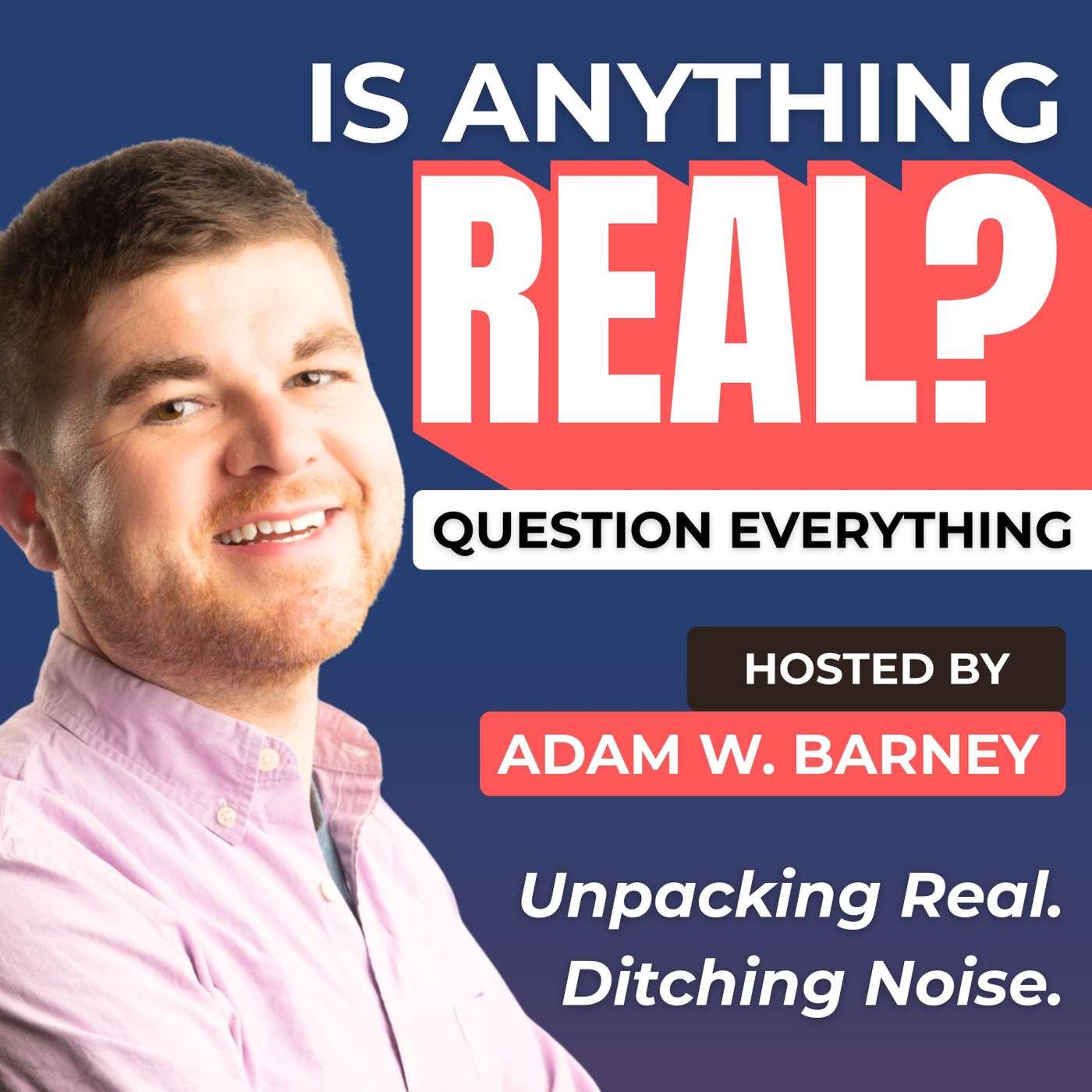
I’m Adam W. Barney, an executive and transition leadership coach, author, and recovering marketing and technology guy. Before coaching, I spent more than 20 years working with companies ranging from Microsoft, Digitas, and Akamai Technologies to venture-backed startups. Since starting my coaching practice in 2021, I’ve coached more than 300 entrepreneurs and leaders.
Is Anything Real? grew out of something I kept noticing in that work: smart people are surrounded by advice about how they’re supposed to lead, grow, build companies, manage their careers, and live their lives. A lot of it sounds great. Much less of it survives contact with reality.
So the premise of the show is pretty simple: What’s real? What’s noise? What have we accepted as true that maybe deserves another look?
I talk with founders, executives, operators, authors, coaches, and other interesting humans who have actually lived the things we’re discussing. The listeners tend to be entrepreneurs and leaders who are curious, skeptical of easy answers, and interested in getting underneath the polished version of success.
I’m not trying to produce another podcast where a guest gives the same five talking points they’ve given on 20 other shows. The fun starts when we get past those.
► Why & how did you start this podcast?
I’ve always loved good conversations, especially the ones where somebody says something that makes you stop and reconsider an assumption you didn’t even realize you were carrying.
Coaching gave me a front-row seat to a lot of those moments. I kept seeing a gap between the conventional wisdom people were consuming and what was actually happening inside businesses, careers, and people’s lives.
That became the seed for Is Anything Real? I wanted a format where I could bring smart people together and challenge ideas without turning everything into a debate. Sometimes the guest changes my mind. Sometimes I push back. Sometimes we discover halfway through that the interesting question isn’t the one either of us thought we were going to discuss.
That’s become a big part of the show for me. I prepare heavily, but I don’t want the conversation to feel prepared.
The goal isn’t to manufacture certainty. It’s to get closer to what’s actually true and give listeners something useful to think about or do differently afterward.
Gjør podkastproduksjon enklere å forstå
Motta en gratis ukentlig e-post der podkastere deler kreative erfaringer. Hold deg oppdatert og inspirert.
► How'd you find the time and funding to do this podcast?
The glamorous answer is that I built an elegant media operation with unlimited resources. The real answer is that I make the time.
I run a coaching business, write, speak, have a family, and host the show, so the podcast has to fit into a real life rather than an imaginary content-creator life where there are somehow 37 hours in every day.
I fund the show myself and try to keep the operation intentionally lean. That has actually been useful because it forces me to ask what genuinely makes the show better versus what just makes podcasting more complicated.
I also keep the interviews relatively short. I’d rather have 20 or 30 minutes of a conversation with some tension and a clear idea than stretch something to an hour because podcasts are “supposed” to be long.
The biggest investment is probably preparation. I want to understand enough about a guest to recognize the interesting thread when it appears and be willing to abandon whatever question I thought I was going to ask next.
► What do you gain from podcasting?
The biggest return has been relationships and ideas. I don’t think about the show primarily as an advertising vehicle. It has become a platform for meeting people I probably wouldn’t otherwise meet and having conversations that influence my coaching, writing, speaking, and thinking.
Some of the concepts I now use in my work have gotten sharper because I’ve had to explain them, challenge them, and hear how others respond. And guests regularly introduce me to an industry, experience, or point of view I knew much less about going in.
There’s also something valuable about creating a reason to call someone interesting and say, essentially, “I think you see something differently. Want to talk about it?”
Podcasting gives you permission to be curious for a living. For me, that’s a pretty good return.
► How does your podcasting process look like?
I’ve built a pretty intentional process around the show, especially when it comes to guests.
I get a strong flow of potential guests through direct outreach, referrals, PR pitches, and several podcast-matching platforms. I vet them using a scoring system I developed around things like credibility, fit with the show, audience, and the potential quality of the conversation. I’m not interested in booking someone just because they’re available or have something to promote.
Before recording, I almost always invite the guest to a 15-minute qualifier call. It gives us a chance to get to know each other, establish a few ground rules, and figure out where the most interesting conversation actually is. I do my research beforehand, but that short conversation often reveals the question or tension I wouldn’t have found in a bio or media kit.
For recording, I use an Audio-Technica AT2000 microphone, an external 4K webcam, and StreamYard. I edit the episodes in VEED and distribute them through Transistor to the major podcast platforms.
Once an episode is ready, I share the episode details and promotional assets with the guest through a Google Drive asset folder and tracking sheet so we can coordinate promotion when it goes live.
The funny thing is that the more structured I’ve made everything around the conversation, the more spontaneous the actual conversation can be. By the time we hit record, we know why we’re there, but neither of us knows exactly where it’s going. That’s usually when the good stuff happens.
► How do you market your show?
I’m still experimenting, which is probably the most truthful answer.
Episodes are distributed through the major podcast platforms and YouTube, and I use LinkedIn and other social channels to share conversations and clips. Guests are also an important part of discovery, particularly when an episode gives them something they’re genuinely excited to share rather than another generic appearance to promote.
I’m increasingly thinking about marketing the show less as “promoting episodes” and more as building a recognizable point of view around the show itself.
Is Anything Real? should mean something before someone even presses play: curiosity, useful skepticism, real experience over theory, and a willingness to question the thing everybody else has decided is obviously true.
I think that kind of consistency compounds. A clip might introduce someone to one episode. A clear editorial identity gives them a reason to come back.
► What advice would you share with aspiring (new) podcasters?
Stop trying to sound like a podcaster. That’s probably the biggest thing I’ve learned.
You don’t need the perfect radio voice. You don’t need to ask every guest how they got started. You definitely don’t need to make every conversation 60 minutes because somebody told you that’s what podcasts are.
Figure out what conversation you are unusually qualified or unusually curious to have, and build around that.
Prepare enough that you can stop looking at your questions. Listen closely enough that you’re willing to follow an answer somewhere unexpected. And don’t be afraid of a little tension. Respectful disagreement is often far more interesting than two people spending an hour agreeing with each other.
I’d also focus less on collecting guests and more on creating relationships. Some of the most interesting things that have come from Is Anything Real? happened after I stopped recording.
Finally, make the show you would actually listen to. That sounds obvious. I’m not sure it is.
► Where can we learn more about you & your podcasts?
You can learn more about me, my coaching work, writing, and Is Anything Real? through my website and follow the show on the major podcast platforms.
I’m also active on LinkedIn, where I write about leadership, entrepreneurship, energy, transition, and some of the conventional wisdom I think deserves a second look.
And if you find Is Anything Real?, send me the thing you think everyone believes that might not actually be true. Those tend to make the best conversations.
https://isanythingreal.adamwbarney.com/
https://www.linkedin.com/in/adamwbarney/
https://www.instagram.com/isanythingreal_pod/
https://www.facebook.com/IsAnythingRealPodcast/
https://www.adamwbarney.com/