

ဤအပိုင်းအကြောင်း
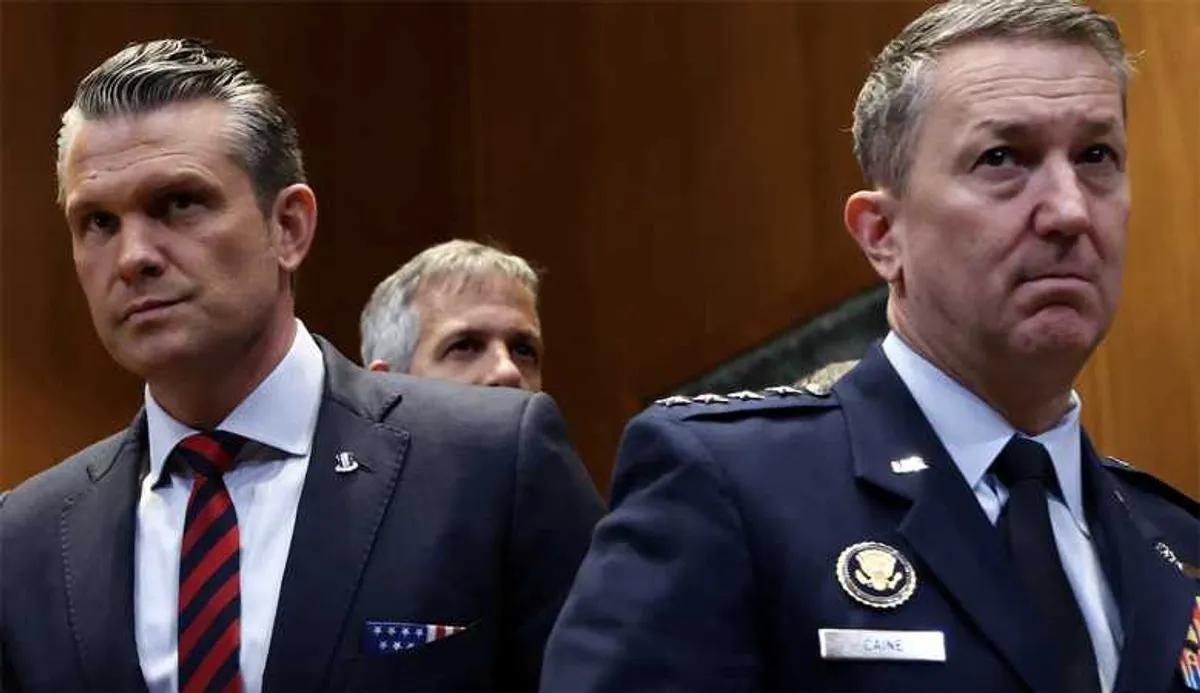
Defense Secretary of Defense Pete Hegseth, left, and Gen. Dan Caine, chairman of the Joint Chiefs of Staff, arrive Tuesday for testimony before the Senate Appropriations Subcommittee on Defense. (Kevin Lamarque/Reuters)
The Pentagon’s Purge Has a Chain of Command
Hegseth Holds the Power
The Pentagon’s turmoil is not an atmospheric disturbance. Defense Secretary Pete Hegseth is using institutional authority to purge career officers, restrict where officers may study, police what they may write in academic papers, and subject personnel to sweeping polygraph tests. These are deliberate decisions imposed from the top, not symptoms of bureaucratic “confusion.”
The consequences are equally concrete: experienced officers removed, professional independence narrowed, and senior ranks trained to regard scrutiny as disloyalty. When officials will speak only anonymously for fear of retribution, the climate of intimidation is already doing its work.
Help fuel the work. Independent analysis doesn’t fund itself:☕ Buy us a coffee
Caine’s Silence Is a Choice
Gen. Dan Caine’s formal role is advisory, but that does not make him powerless. As chairman of the Joint Chiefs of Staff, he occupies the military’s most prominent professional position and has privileged access to both Hegseth and President Donald Trump. If he believes these measures are damaging the force, he has channels unavailable to the officers now questioning him from below.
Caine has declined to disclose what advice he provided on disputed personnel decisions, and his spokesman would not address the matter. Confidential military advice has legitimate limits. But opacity also shields accommodation. From the evidence available, it cannot be known whether Caine objected privately. What can be seen is that Hegseth’s campaign continues while the chairman’s public posture remains guarded.
The Blame Is Drifting Downward
The framing around whether Caine “has what it takes” risks turning an abuse of civilian authority into a character test for one uniformed officer. Caine’s conduct deserves scrutiny, particularly if his restraint helps normalize the purge. But Hegseth is the official issuing the orders, and Trump is the president under whom he exercises that power.
The officers expressing doubt did not create this crisis. Nor is their unease the principal story. The story is that Pentagon leadership has made dissent professionally dangerous, then allowed anxiety among subordinates to become evidence of organizational disorder rather than evidence of coercion from above.
Secrecy for the Ranks, Exemption at the Top
Hegseth’s polygraph campaign is presented as protection against leaks that supposedly endanger lives. Yet Caine reportedly did not undergo the same gauntlet. That disparity exposes the political function of the policy: surveillance descends through the hierarchy while discretion remains concentrated at its summit.
A genuine security process applies defined standards to defined risks. A loyalty apparatus uses selective enforcement, ominous rhetoric, and uncertainty to make officials fear that ordinary communication could end their careers. Based on the reporting, Hegseth’s program bears the marks of the latter—even if its architects continue to describe it as operational necessity.
Culture War as Command Failure
The purge is unfolding while, according to the reporting, an extended war with Iran is straining deployments, exhausting sailors, and exposing shortages of critical missile interceptors. These are not secondary concerns. They bear directly on whether the military can sustain one conflict while responding to another.
Hegseth’s culture-war agenda diverts senior attention from those constraints and replaces professional trust with internal suspicion. This is not merely ideological vandalism inside a large bureaucracy. It is a readiness cost imposed by political leadership at a moment when the force is already under pressure.
The System Rewards Submission
The larger pattern is familiar: an official uses personnel power to weaken professional constraints, calls the resulting fear a security measure, and leaves subordinates to debate whether someone else should have stopped him. Responsibility becomes diffuse precisely when authority is most concentrated.
Caine may be failing an institutional test. But fixation on his courage should not obscure the structure protecting the assault. Hegseth acts; Trump retains him; senior officers calculate the price of resistance; anonymous critics absorb the risk. That is how politicization advances inside institutions—not through mystery, but through clear authority, selective punishment, and the disciplined refusal of powerful people to name what they are doing.
Thanks to Raw Story
Source: Top general under fire from his own ranks as Hegseth chaos creates ‘climate of mistrust’
Systemic Error is a reader-supported publication. To receive new posts and support my work, consider becoming a free or paid subscriber.
We warned them.We told them.We shouted from the rooftops.We plead.We begged.They didn’t listen.Now, we all will suffer.Y’all know what to do, right?VOTE BLUE! 💙Vote as if your life — nay, our country — depend on it.Because, this time, and every time, it does.
Get full access to Systemic Error at paulstsmith.substack.com/subscribe


