

Josh Rees: You're listening to a sponsored episode of The Top Line. Welcome everyone. You're listening to The Top Line brought to you by Fierce Pharma and Fierce BileTech. I'm your host, Irena Wolf. In episode one, we discuss what it really means to put patients first. In today's episode, we're looking at one of the biggest shifts happening across Pharma right now. The move from asking, is this product approved? to is this product valued? As payers sharpen their focus on long-term outcomes, real-world performance, and economic value, communicating evidence clearly and creatively has never been more important. Today's conversation is powered by RTI Health Solutions, a global research partner delivering the evidence and insights life science leaders need to make better decisions. RTI Health Solutions brings together experts in health economics, real-the-world evidence, medical affairs, and scientific communications, integrating rigorous research with clear, compelling storytelling to help clients demonstrate value across the product life cycle. I'm happy to introduce our three speakers for today. First up is Kate Lilithman, Director of Scientific Strategy and Evidence Planning at RTI Health Solutions. Kate has nearly 20 years of experience in medical communications with a particular focus on delivering high-quality methodologically sound communication and evidence generations to plants. Welcome, Kate. Thanks for joining us today. Thank you. Excited to be here. Excited to have you join us. We're also joined by Sarah Muzzetti Jenkins, a principal medical writer whose background spans oncology research, science communication, and medical writing with deep experience translating complex scientific data into stories that resonate with clinicians, payers, and patients. Welcome Sarah. Thank you. I'm so happy to be here. And rounding out the group is Jason Crouch, a graphic designer with more than twenty years of experience in pharmaceutical and scientific design, specializing in visual storytelling and data visualization to make insights instantly understandable. Welcome Jason. Hi there. Glad to be here too. Glad to have all of you all today. Together, Kate, Sarah, and Jason helped turn clinical and economic and real world data into compelling value stories, the kind that help payers, clinicians, and patients see the real impact behind the numbers. Well, we're just gonna jump right in. So H E O R and real World Evidence are playing a bigger role than ever in access decisions. What's driving that shift and Why does communicating this evidence clearly matter so much today? Yeah. So we are seeing a clear shift across therapeutic areas like oncology, respiratory, and rare disease, where pairs are looking increasingly at long-term value, system impact, and real world performance. And that shift is reinforced at a policy level. Regulatory and HTA authorities are issuing guidance that recognizes real world evidence as a core input into decision making. RWE is no longer viewed as supplementary. It's become essential. So, with greater pressure on budgets and more scrutiny on price, the central question is no longer: does this intervention work? But rather, does it work for real patients over time and does it deliver value at a system level? It's not just clinical efficacy, it's durability, adherence, downstream costs, and impact. And at the same time, the scope of evidence has expanded. Decision makers are drawing on more diverse data sources, including electronic health records, registries, patient-generated data, all supported by increasingly sophisticated analytics. So the goal is a more complete picture of how treatments perform in routine care. And our team has learned that value best lands when you connect evidence to its real-world implications. If you simply throw a model or a data set at someone without context, it doesn't move the conversation. But if you say, here's how this changes hospitalizations or caregiver burden or time away from work, suddenly it clicks. So this evolution makes clear communication critical because value can only be assessed when evidence is connected to how care is actually delivered and experienced. Even strong evidence can fall flat if it doesn't tell a story that aligns with how decisions are being made today. Yeah, this is a consistent thing we're seeing across therapeutic areas. People are asking questions like, Why should I trust this data? How does it compare with what I'm seeing in my own population? And what decisions should this actually inform? The expectation for more robust context is being reinforced by how evidence is now reviewed, with a much greater emphasis on outcomes that reflect routine care, long-term impact, and real patient experience. Connecting clinical outcomes with burden of illness, quality of life, and resource use makes the evidence more actionable. It allows decision makers to understand how a therapy is likely to perform once it's used in everyday practice or across different patient populations and care settings. This is where HEOR and real world evidence really add value. They help translate trial results into something that feels relevant, practical, and grounded in reality. So when you're building a value story, how do you turn complex HEOR or real-world data into narratives that really resonate with different audiences, especially payers, clinicians, and patients? Yeah, that's a great question. So I would say understanding our audience is more crucial for effective communications than ever before. We often start with a single, very robust data set, but the expectations around how that evidence is presented have changed. Our role in medical communications is to make sure the evidence is presented in a way That clearly lines up with the questions decision makers need answered. That means that while the science itself stays the same, the emphasis may shift. Clinicians tend to focus on outcomes and safety and practice. Payers focus on system impact and sustainability, and patients tend to focus on daily functioning and quality of life. Clarity then comes from structuring the story around those needs, starting with the unmet need and context. And moving through impact, evidence, and outcomes rather than leading with complex models or dense tables. We're also seeing exciting shifts in how evidence is shared beyond traditional publications. Graphical abstracts, plain language summaries, and other companion materials are increasingly common, particularly as journals and HTA bodies encourage broader accessibility and patient inclusion. These formats allow the same evidence base to reach and resonate with different audiences, all without compromising scientific integrity. We touched on this a lot in the previous episode, what patients first really means, where the focus was on how patient perspectives should shape not only what evidence we generate, but how we communicate it. So stakeholder mapping is not about simplifying evidence. It's about aligning it to the decision environment. And as expectations around evidence quality rise, credibility increasingly comes from focus and from relevance rather than volume. So being selective about what to highlight, what to leave out helps to ensure that the evidence answers the specific questions each audience is trying to resolve. What really elevates a value story is clarity, not making the science simpler, but making the meaning more accessible and more direct. Payers don't need every sensitivity analysis, clinicians don't need to see every economic assumption, and patients certainly don't need to be overwhelmed by technical language in order to detect impact. A lot of the precision actually comes from what we intentionally leave out. Curating a story builds credibility. And when you show that you understand your audience's priorities and that you respect their time, you build trust and support actionable decisions. So ultimately, Strong value stories do not dilute evidence. They organize it. So its meaning is immediately clear to the people making decisions. So when clinical trials don't answer every question pairs care about, HEOR teams often step in to fill evidence gaps. So how do you communicate that additional evidence in a way that still feels clear, credible, and connected to the clinical story? So clinical trial data are foundational, but they can't answer every question decision makers need to address. And what we're seeing now is a much stronger expectation that evidence explains how a therapy is likely to perform once it moves into routine care across broader and more heterogeneous populations than we see in clinical trials. That expectation is reflected in how evidence is reviewed now. Payers and HTA authorities are looking for continuity between trial findings and real world experience, particularly when assessing comparative effectiveness, long-term outcomes. an impact on patients and healthcare systems. The key is ensuring that supplemental HUR or RWE is clearly anchored to the clinical narrative. When evidence like burden of illness studies, indirect comparisons, and registry data is framed as a logical extension of the clinical evidence, it reinforces rather than distracts from the core story. These studies help answer the practical questions trials were not designed to address, like how a therapy compares in the absence of head to head data, Or how outcomes evolve in everyday practice. Credibility comes from coherence, and decision makers are not looking for more disconnected analyses. They're looking for joined up evidence story that links clinical efficacy to real-world use and real-world impact. Context really is everything. When HEOR is framed as completing the picture rather than competing with clinical trial data, it becomes much easier for stakeholders to understand. why it exists and how it should be used. Real world and HEOR evidence helps explain variations in outcomes, treatment patterns, and patient experience that trials are simply not designed to capture. What I really love about HEOR is the depth that it adds. The research we share ranges across how therapies are used in practice, how patients engage with treatment over time, and where unmet needs or gaps in care remain. This kind of evidence is valuable because it reflects the complexity of real healthcare systems and real patient journeys rather than idealized trial conditions. That perspective often becomes the moment where evidence truly resonates. It helps decision makers move beyond efficacy alone and understand how a therapy fits into everyday life across different populations, settings, and stages of disease. So HOR evidence and RWE work best when they extend the clinical story into real world use and help decision makers see how all parts of the evidence base connect. And we can't forget about design, right? Because design plays a huge role in how evidence is understood. So how do writers and designers work together to make HEOR and real world evidence findings clear, credible, and easy to act on? ⁓ yeah. For me, ⁓ early collaboration and strong relationships with the writers and designers is fundamental. As a designer, my initial goal is to fully understand both the data and the story. I tend to ask the writer to walk me through in kind of layman's terms or plain language, because they're the experts and that gives me the understanding and shared understanding to enable me to kind of support that message effectively. Combining real world factors alongside clinical data creates a natural opportunity for a designer. To humanise that evidence. This provides strong justification to anchor findings in relatable real life concepts. These guide the audience through a clear narrative journey. Whether the audience is a patient or a payer, the goal for me is to help them connect with the story. I can give a recent example of this where I worked on a brochure that walked a patient through an illness treatment pathway. We use the concept of an underground train map to lead the reader through the literature and link section of the document in an intuitive way. For me, communicating through familiar visual concepts can create an instant connection with the target audience. By providing something they recognize, we can give the audience a level of comfort or confidence to really dig deeper into the complex evidence. Once I have that initial understanding of the story and the data, I follow the same simple key process for any design project where form follows function. Number one being a clear design brief, defining the aims and objectives. And number two, To finding that target audience, whether that's the payer, clinician, or patient, to sign decisions and the types of deliverables and language used must be tailored for each target audience. People often fall into the trap of kind of going straight for the deliverable. The idea isn't the type of deliverable, it's how you're reaching that target audience in the best possible way to get your message across. The above is done hand in hand with the writer from start to finish, from the offset. Too often in our industry and others I've worked in, design can become a neglected kind of bolt-on at the end. And you can clearly see this in the end products. You can have the best data or product in the world, but without that defined target audience or an effective visual story, your message could be unheard. I'm often asked for especially with decks and other deliverables, work your magic or make this look pretty. And that's kind of too late in the day. So that is why it's so critical. And beneficial to work with the writing team, the editors and marketing through that whole process so our clients' work is seen and heard. I couldn't agree more. Getting designers involved from the start makes a world of difference. When we use visuals, it really encourages us to focus on what matters and what we want the reader to know, like you said. And where we're intentional about incorporating visuals from the beginning, we can craft narratives that leave space for figures to complement the writing and vice versa. Some ideas just make far more sense when you see them laid out visually, whether it's comparing data, mapping patient journeys, or summarizing a study design. Well-crafted figures make it so much easier to connect with evidence. That sort of clear, thoughtful design helps everyone, whether you're a payer, a clinician, or a patient, feel more confident in the results. So looking ahead, how do you see the communication of evidence evolving, whether through AI, digital tools? plain language summaries or new ways of helping payers and clinicians see value quickly? I would say that while publications will always remain foundational in this space, we're seeing really exciting growth in formats that help us reach wider audiences. Plain language summaries, visual abstracts, short videos, and other accessible formats are becoming more and more popular, particularly as clinicians and patients have less time to engage with traditional materials. And so we're learning as a field how to maintain the rigor of traditional publications while also ensuring that the people impacted by research can engage with it. These formats help ensure that the same high quality evidence base can reach different audiences in ways that are relevant to how they consume information today. Yeah, I feel that the client's ⁓ expectations are also evolving. Visual engaging deliverables are now the norm. Yes, I agree, Jason. So AI is clearly part. of how evidence communication is evolving, not just in design, but in evidence generation and in practice for that matter. So we think of it as a tool that supports the work rather than something that replaces expertise. AI can be useful for things like exploring large data sets, spotting patterns more quickly, or helping teams get to early insights faster. But their interpretation still matters and that judgment sits with the people who understand the science, the context and the decisions being made. So we're not going to go too deep into AI here because our colleagues will be discussing this in a future episode in this series. And that conversation will dig more into how AI is being used in medical communications, where it can genuinely add value, and where the limitations still exist. But what hasn't changed is the need for rigorous science, thoughtful storytelling, and clear communication. Those fundamentals are what allow new tools and formats to add real value rather than noise. So at the end of the day. Effective H U R and RWE communication is about helping people make better decisions more quickly and with greater confidence. Thank you, Kate, Sarah, and Jason, for this discussion today. Thank you for joining us on this episode of the top line. I'm your host, Irena Low. For more information, you can learn more in our show notes at FiercePharma.com. And that's the bottom line from the top line.
ဤအပိုင်းအကြောင်း
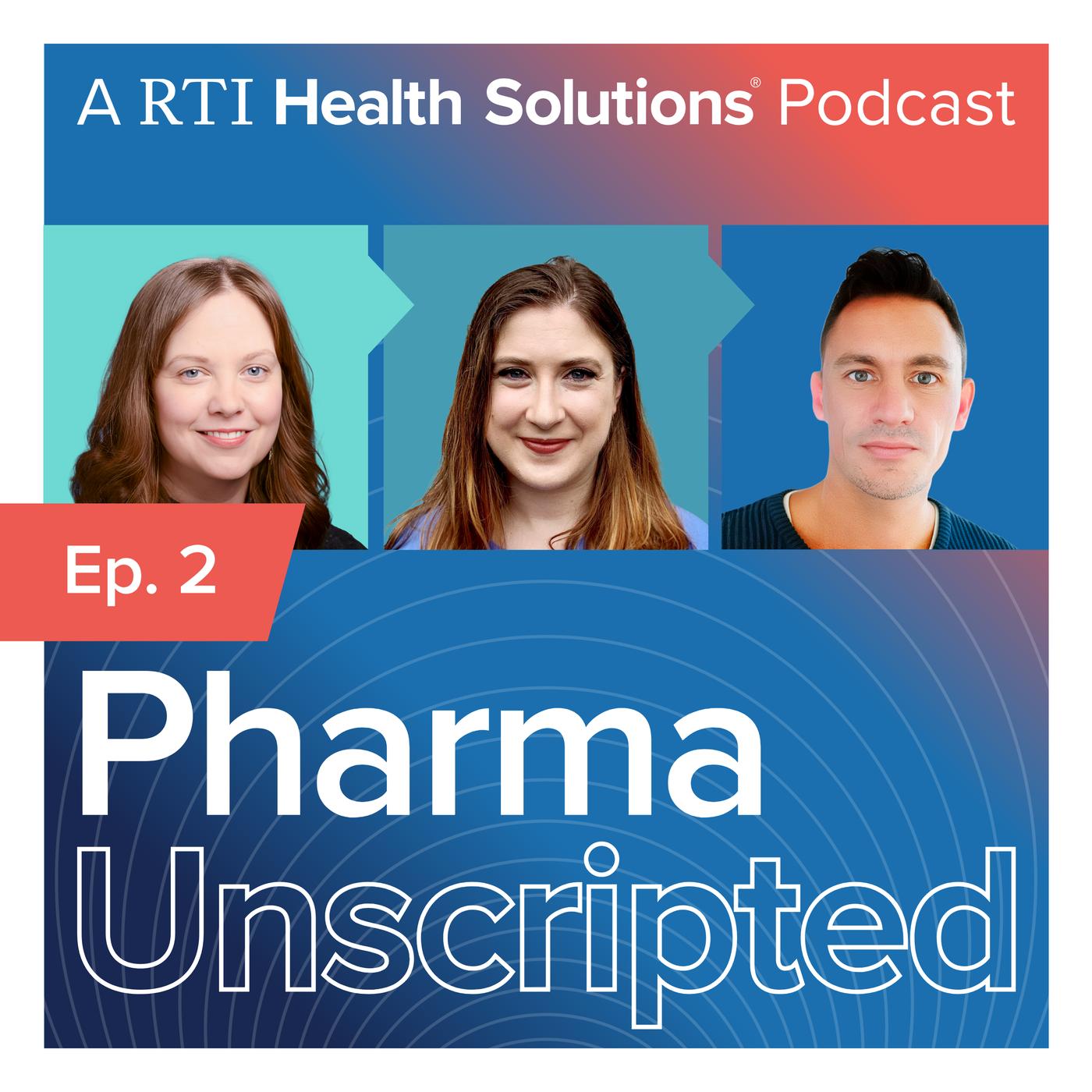
This episode is part two of a three-part series featured on Fierce Pharma’s The Top Line podcast.
Getting a therapy approved is only part of the journey, demonstrating its value is what drives access.
In this episode of Pharma Unscripted, we explore how evidence storytelling is becoming critical in biopharma. From real-world evidence (RWE) to health economics and outcomes research (HEOR), organizations must translate complex data into clear, decision-relevant insights.
As payers and HTA bodies demand stronger value demonstration, how you communicate evidence can directly impact patient access.
Key Topics:
- Evidence storytelling in biopharma
- HEOR and real-world evidence (RWE)
- Value communication for payers and HTAs
- Market access strategy
Guests:
- Kate Lothman, Director of Medical Writing & Publications
- Sara Musetti Jenkins, Principal Medical Writer
- Jason Crouch, Graphic Designer
အင်္ဂလိပ်
အမေရိကန်ပြည်ထောင်စု
ကူးယူချက် 🔗
ပြီးခဲ့သည့် အပိုင်းများကို ရှာဖွေပါ
Pharma Unscripted ၏ ယခင်အပိုင်းများကို ရှာဖွေပါ
မသက်ဆိုင်ကြောင်းရှင်းလင်းချက်: ဤစာမျက်နှာပေါ်တွင် ထည့်သွင်းထားသော ပေါ့တ်ကာစ်နှင့် အနုပညာလက်ရာများသည် ၎င်း၏ပိုင်ရှင်၏ပိုင်ဆိုင်မှုဖြစ်သည့် RTI Health Solutions မှဖြစ်ပြီး Listen Notes, Inc နှင့် ဆက်နွှယ်ခြင်း သို့မဟုတ် ထောက်ခံထားခြင်းမရှိပါ။
ပြင်ဆင်ပါ
ပေါ့ဒ်ကတ်စ် ဒေတာဘေ့စ်ကို နောက်ဆုံးပေါ်အချိန်နှင့်တပြေးညီဖြစ်စေရန် ကူညီပေးသည့်အတွက် ကျေးဇူးတင်ပါသည်။
