

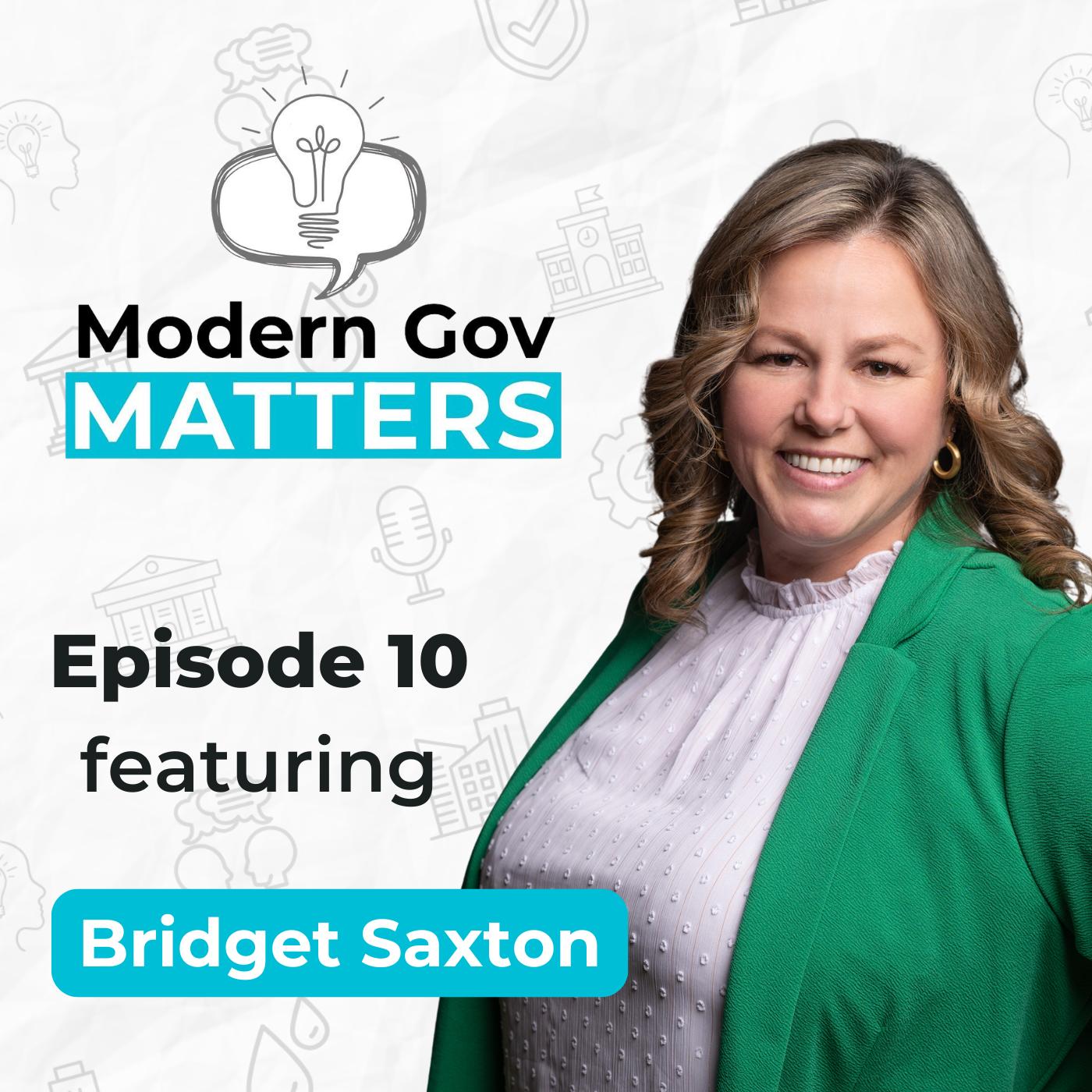
Sarah Loyd: Welcome to Modern Gov Matters. I'm Sarah Lloyd, and this show is all about honest conversations with local government communicators about what's actually working, what's not, and the stuff that keeps you up at night. Modern Gov Matters is presented by CivAll, powered by Social News Desk. Imagine your city grows by 64 % in three years. New residents flooding in, new roads, new schools, new demands, and it falls to one person to make sure the community stays informed. trusting and connected through all of it. Today's guest is that person. Bridget Saxton is the Communications Director for the City of Melissa, Texas, one of the fastest growing cities in the country. And she's going to tell us what that actually looks like. So Bridget, welcome to Modern Gov Matters.
Bridget Saxton: Thanks for having me. I'm excited to be here. As communication directors, we typically are the ones behind the scene, not in front of the camera. So thank you.
Sarah Loyd: Well, I'm glad you put yourself in the hot seat today. We really appreciate it. before we get into the growth stuff, I want to know who you are first. So you came into government communications from kind of an unexpected place. You were a 911 dispatcher. So how does that background shape the way that you approach your job today?
Bridget Saxton: I remember being little and job shadowing my aunt, Jonna. She was a 911 dispatcher and I thought this is the coolest job I think I've ever experienced. And then I just, I had a passion. And then I went into the police academy and became a cop and realized really quickly that wasn't what I wanted to do. It was still behind the scenes, know, answering the calls, communicating in a way mattered being in person without putting my life on the line. I do it daily in different ways but seven years of almost eight years ⁓ 911 dispatching you to triage learn to prioritize and you learn what really Communicating through a phone also helps to pick what you do on a day to day as a comms director or even a social media manager because you're not in front of anybody. You're communicating through graphics or video. Even though you're building a two way conversation, ⁓ it's ⁓ 2D of platform.
Sarah Loyd: So now you're the communications director for a city that's growing faster than almost anywhere in the country. And for people who haven't been to Melissa, where is it and what does the growth actually look like on the ground? What does 64 % in three years feel like?
Bridget Saxton: So Melissa is just north of McKinney. If you don't know where McKinney is, it's just north of Dallas. So we're just barely north of Dallas really, if you look at the grand scheme. The growth, it's one of those things where you have to stop and you look back and you go, oh my gosh. In 2023, the comms department was... dedicated to having an actual department. in, I guess actually in 22, they had started having the conversation and they said, we're going to do it, we're going to do it right. So they not only built the department, but they built in for first a manager. And then they also built in for that first year to hire one extra person. So it was not established as one person. And when I'm relating that to growth, I'm thinking back because when I got here I pulled Facebook stats and in 2022 they made six Facebook posts for the entire year.
Sarah Loyd: Oh my gosh.
Bridget Saxton: Yeah, so sometimes, and we always say sometimes less is more, right? not that much less, we like to see six in a day. ⁓ know, that's a lot ⁓ of in one day, you know, really, mean, we far ⁓ surpass that just a couple of days. So growth As far as communication, it's honestly like, you feel like
Sarah Loyd: Maybe not that little. Mm.
Bridget Saxton: As far as communication, it's honestly like, you feel like you're drowning nine days out of the week which I'm saying nine because it feels like that. It really feels like that. you're drowning nine days out of the week which I'm saying nine because it feels like that. It really feels like that. But really you're just like...
Sarah Loyd: Got nine days packed into a seven day bag. Got nine days packed into a seven day bag.
Bridget Saxton: staying in front of that conversation, the transparency, staying ahead of the growth and looking into the future. So you're typically sitting in the now, you're sitting in the future. as far like you do every day or what that growth feels like, I don't really know. I think I'm numb to it because it's like you just ⁓ move forward, you in the future as you're moving
Sarah Loyd: Yeah. So you've got two very different audiences at the same time. You have longtime residents who probably remember Melissa before all of this growth brand new residents who moved in six months ago with none of that history or context. So how do you talk to both of those audiences at once?
Bridget Saxton: I, you know... ⁓ That's a good question. feel like most of them excited about the growth there. You have a very small number of them that, you know, still want the the the farms and the fields ⁓ the trees. You know, we hear that a lot. Well, where are the trees? It's interesting dynamic because you you look at the growth and you think you certainly did not move to, you know, a neighboring city a metroplex. like a major metroplex, and assume it wasn't going to ever hit there. But I do understand that those two audiences are completely separate. We do a lot of talk and humor. have, I'm gonna use the word because I have a very young staff. My staff is very young and they've rubbed off on me. So I'm gonna apologize ahead of time because I am a middle-aged woman, but I am gonna use some words that typically are meant for younger crowd. Our audience here is very feral. in a funny way. the more humor that you inject into the post, the better it is. Like it just lands better. They take it better. did, what is it, Pepe the prawn or something. And that one just took off and then, you know, just trending audio. And I don't know. I think it's just because of our population is the majority of them are younger than me. So they tend to take to any kind of humor in messaging. So it works. it works across the board for us.
Sarah Loyd: So what platforms tend to work better with that younger audience for you guys?
Bridget Saxton: I here in 23, we did have an Instagram So We ended up I ended up grabbing an Instagram just to take the namesake So we secured it and then when I brought in my second person She's ⁓ and she's ⁓ you know, that's her platform is Instagram But the majority of our conversation happens on Facebook. And I don't know if I contribute that to age. I think I contribute it more to just longevity of the platform.
Sarah Loyd: Yeah, that makes sense. And you mentioned before our interview today that residents tend to come directly to your Facebook page for both good feedback and bad. So me a little bit, what is a ⁓ tough comment thread look like and how do you handle it?
Bridget Saxton: every town, municipality, they have their town dedicated Facebook page. Like ours, it has a name, know, whatever that would be for each town. ⁓ Ours is very, ⁓ very vocal ⁓ There was a bill that passed that said, you know, a third party can't listen in on those conversations anymore if it's a private group. So ⁓ we were able to pay attention to that conversation without having to go and dig and, you know, read every comment. So we were able to stay on top of conversations without having to really try and noticing if there was a pattern or there was something that needed attention. that went away. So we weren't able to do that anymore. And it took a lot of extra time to to dig in. and look into those groups and really kind of pay attention to it. So we tasked with, let's bring the conversation over to us. And at time in 2023, we had about 5,400 followers on Facebook. And I said, know, as that listening tool went away, we need to pivot and we need to bring the conversation to us because we don't wanna be in this external group answering the conversations. That's just not how we operate. So it was a, let's start having the hard conversations. Let's start, even if it... It doesn't feel so great to put it out there or it's controversial or you know, somebody's going to get upset about it. They're going to have opinions. That's what it's for. Transparency isn't always the pretty and the fun. Transparency really takes place when you have to have a hard conversation. You have to say the hard things and you're asking people to have a two-way conversation with you. You're not just speaking at them. You're speaking with them and when you can build that on your own platform, you now can talk to people a place where, one, they feel safe because they're able to come there, have a conversation with you, and you're responding. So it's not just govsplaining at that point. You're talking to people. ⁓ nine times out of 10, people want to be heard, and they want to know they've been heard. So whether that's just, hey, we hear you, we understand it's frustrating, we're very sorry, here's the process, or hey, this is a great point, come visit a city council meeting. let your voice be heard. You So we've built it from 5,400 to I think we're just shy of 15,000 now. And that's just in a very short three years that we've been able to build on that. And it's taken very deliberate practice. And my staff is incredible at answering in a way that doesn't make somebody feel stupid.
Sarah Loyd: Wow, that's amazing. I know you mentioned ⁓ when you got there, you were the ⁓ only person and you added a staff member shortly after that. How much has your staff grown since then?
Bridget Saxton: We're staff of three, myself. I have a digital communication manager and she handles all things digital, which she has a very, very full plate. And that's Taylor. She's... ⁓ Amazing. Everybody needs a Taylor. I mean, everybody does. Sorry you can't have mine. then I have Abel, which is our videographer. And he does all things video, photo, even helps us with campaigns because he's a YouTube nerd. And I love that about him. So things have changed since he's been here with Taylor because ⁓ can sit and strategize together about what works best on each platform.
Sarah Loyd: I know you've mentioned that, know, first two positions were built into the budget. Did you have to actually go in and fight for Abel's position or ⁓ did the city kind of say, oh, we get it? ⁓
Bridget Saxton: Yeah. I think any comms department can understand that when you don't have somebody on staff and you have to complete it anyways, have to have some kind of professional services budget where you're outsourcing for that. So that a pretty strong argument already because they, you you see, ⁓ we're spending this because there is a need for this. And when supporting council's priorities and that looks like a video series, you have to be able to produce that video series, and you know, her and I have not been to school for video production at all. And we're not afraid to say that. So, you know, we went to the experts and was money that we were already spending. So to balance that and to say, hey, we're gonna bring that conversation in house. We're gonna find somebody that has that Melissa heart that can tell that story that ⁓ owns the storytelling. And we're shape that a little easier and
Sarah Loyd: Hahaha
Bridget Saxton: by having one consistent videographer that just looks it. Plus he loves Melissa so it really helps out. Yeah so yes I had to battle a little bit but it wasn't it wasn't too hard because I already had things in place that help support the need.
Sarah Loyd: Yeah, he just gets it. Yeah, that makes sense. So if you could go back to your first week in this role, knowing what you know now, knowing how much Melissa was going to grow, what would you build first?
Bridget Saxton: think, hmm. I would prioritize building like strategy earlier. social media strategy, communication strategy, ⁓ just strategic comm plan, crisis planning. I'm still developing those, they're still in the works. But I think when you have a very solid foundation, ⁓ you have direction for your staff ⁓ and clear for where you're headed as well. So building that foundation and also kind of workflows in place. You don't want to spin your wheels and also if you have workflows or even like an automated form, you're also tracking what kind of requests are coming in. So if you do need to request staff, you have some supporting documents to say, hey, this is how much time our staff is spending on content creation. So if I'm asking for a graphic designer, I have that documentation for their request.
Sarah Loyd: Yeah, so we've already spent this much time, this much money, this much energy not doing other things. We definitely need someone to support us here. Yeah. So you mentioned something about the council members and board volunteers who make hard decisions that the public doesn't always see or understand and how part of your job is helping people understand the full picture. Can you tell me a little bit more about that?
Bridget Saxton: Yeah, exactly. Yeah, I'm passionate about my council. ⁓ have some boards and commissions that really passionate about as well. Our council just spends so much time and energy and They have such a big heart for the community because they live here and they want to see it grow in the right way. And it's evident every time they show up. The time that they take to read a council packet alone, it always amazes me because I've sat as a president on a board before and I know what time that takes and that was nothing close to the council packets that they get. But with state limitations, things really tightening down at a local level, sometimes your council takes already complex decision knowing that they have to make a decision, a builder comes in and they say, I'm building this building and we say, okay, here's the ordinance. Is it going to meet all those requirements? And they go, yeah, yeah, it's going to meet all the requirements. Okay, great. It's like a strip mall, right? Okay, here's our ordinance. You just have to follow those rules. so they go, they slap it together and it's ready to rock and roll and it sits there for a little while. And there's separate offices that are going to be rented out. We don't get to say who's going in those offices. I mean, we have ⁓ say not ⁓ people think. ⁓
Sarah Loyd: Mm-hmm. you
Bridget Saxton: So those are things that people don't realize that we can't say who goes where. If own a land, ⁓ have the right to build on that land. And whether I build an apartment complex, so multi-family, or I build townhomes, I'm going to go through the same process. the council cannot say, you can't build multifamily there. can if I go through the process, you know, and ⁓ it gets very sticky. And sometimes council makes those hard decisions based on what they can and can't do. So they're making the best of a bad situation, right? ⁓ so perception is like, ⁓ well, they're just letting everybody come in here and they're letting anything go and
Sarah Loyd: Yeah.
Bridget Saxton: You know, our job is to say, hey, that's not exactly the narrative that's true. You know, you're entitled to your own opinions, but not your own facts. ⁓ that's where we come in and we're like, hey, maybe you didn't know this. I know this. And I tend to sit in the civic mind. So I'm just a normal citizen all days of the week. And I think I wouldn't understand that if somebody didn't explain that to me, color it out with crayons, because I don't understand that. And I mean, sometimes that's all it is. It's just a conversation about, we make hard decisions with the best of what we have.
Sarah Loyd: All right, Bridget, it is time for our lightning round. So ⁓ just give me the first thing that comes to mind. We have a couple of questions. ⁓ What's your favorite local in Melissa right now?
Bridget Saxton: Probably, okay, there's hope coffee for coffee. They have an amazing.
Sarah Loyd: I feel like everyone who comes on here is either, it's either coffee or a brewery.
Bridget Saxton: Well, ⁓ so Hope Coffee has a really good brisket taco, like a breakfast brisket taco, so I'm obsessed. Yes. And then we just got this new pizza place called Yonks and girl can't get enough. Like just tell me, feed me tacos and tell me I'm pretty all day long. That's be there. ⁓
Sarah Loyd: Right? I respect that. That is now the motto of this podcast, feed me tacos and tell me I'm pretty.
Bridget Saxton: you're so pretty. Here's your taco. I'll fine. Brisket breakfast tacos or pizza. I'm good. ⁓ Yeah.
Sarah Loyd: Yeah,
Bridget Saxton: Yeah.
Sarah Loyd: So what is the most underrated thing Melissa?
Bridget Saxton: Um, probably the people. Um, and I, I say that because like, Melissa people are. I will give you the shirt off my back. I will pay for your vet bill because your dog got hit. will, are you at, and we'll come take you. Like I just, their hearts in this town. They have just ⁓ a community minded, very giving heart kind of community. And I just love that about this city.
Sarah Loyd: Yeah, that's beautiful. my last question, if Melissa had a theme song, what would it be?
Bridget Saxton: Oh my gosh, Uh, all the way up. No, what is that song? that one. Yeah, yeah, yeah. Yes. On Top of the World. People are always happy here.
Sarah Loyd: on top of the world. Yeah, and that's perfect for a city that's growing so fast.
Bridget Saxton: Yeah, I mean, they just they love it here. mean, like life is just good for them. So, know, the ones that are unhappy with growth and want the farmland they're like, you know what, that's okay, we're moving, you know, and that's okay. I mean, it is a growing city and there's no stopping that growth. It's coming whether we like it or not.
Sarah Loyd: Thank so Bridget, this was such a good conversation. Thank you so much for joining me. It sounds like you guys are more ready for the growth than a lot of cities would be. And I really appreciate you being so honest about all of that. And if people want to follow what Melissa is up to or connect with you, where should they go?
Bridget Saxton: ⁓ my gosh, go to our Facebook, MelissaTexasGov. then we have city of Melissa ⁓ on ⁓ Instagram as well.
Sarah Loyd: All right, I look forward to checking out your ⁓ feral audience.
Bridget Saxton: They are. Just be ready.
Sarah Loyd: right. Thank you so much. Modern Gov Matters is presented by CivAll, powered by Social News Desk. If you found this episode helpful or interesting, please share it. And for more episodes, visit moderngovmatters.com. I'm Sarah Loyd and we'll see you in two weeks.
