


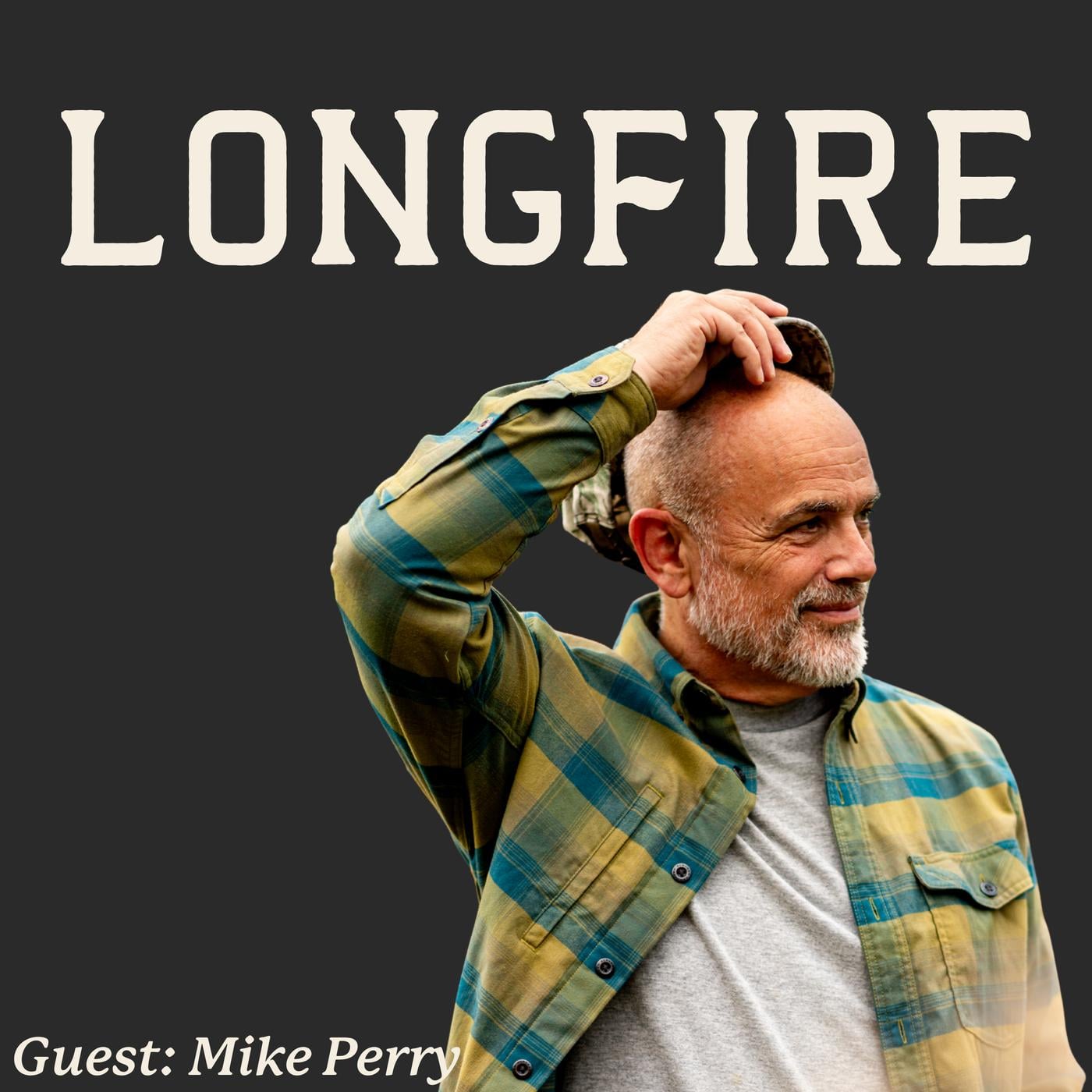
Steve Seger: Mike, welcome to the show.
Michael Perry SneezingCow.com: Hey, I'm glad to be here. Appreciate it.
Steve Seger: Yeah, same. This is gonna be fun. I got a lot of fun questions and topics to hit. Who knows where this is gonna go, but I am looking forward to it. We are gonna jump right into the rapid fire round though. You ready?
Michael Perry SneezingCow.com: Yeah, let her rip.
Steve Seger: All right. first one, favorite writer.
Michael Perry SneezingCow.com: Jim Harrison. He
Steve Seger: Top three books that you would gift to other people.
Michael Perry SneezingCow.com: that one's a little harder for me because I love books, period. but I'll I'll I'll say three that that come to mind immediately. one would be the Bible and not for reasons people might think. I was raised in an obscure fundamentalist Christian sect and I believe differently now, but that the rhythm and the feel and of the of the King James Version informs how I write. a book called All Quiet on the Western Front, I would give because I read that when I was in third grade and it completely changed my idea of good guys and bad guys. And then any one of a hundred and who knows how many Louis Lamore cowboy books, because I grew up reading them. My dad said he lost more man hours to Louis Lemour than to girls, football, and pickup trucks combined.
Steve Seger: You know, I've tried to do for this question, I've tried to say like just top book that you would give to other people, and no one has been able to just pick one usually. So
Michael Perry SneezingCow.com: Yeah.
Steve Seger: that's why I expanded the reach a little bit. I'm glad I did. Those are good responses.
Michael Perry SneezingCow.com: Yeah.
Steve Seger: best deer stand snack.
Michael Perry SneezingCow.com: coffee. So for
Steve Seger: Coffee. Yep.
Michael Perry SneezingCow.com: I went through I've been a coffee guy forever, but for years, a f for a couple of years, I went through a I I I'm a self improvement period where I tried to get off caffeine and I would drink this some sort of ginger tea. And one of my rough neck buddies I was on the fire department with and go hunting with, he found out I was drinking ginger tea on the tea stand and I or on the tree stand and I've never lived it down since. But I'm back I just like coffee. There's something about coffee against the cool crisp morning that's perfect. Even if it does scare the deer away. But I think they like a nice fresh grind.
Steve Seger: Mm-hmm. That's a good answer. favorite season in Wisconsin.
Michael Perry SneezingCow.com: When I was young it was spring because, you know, y the season of love and renewal and all that. summer was always good just because growing up on the farm I liked the work we did and I liked being outside. But then over time I came to really love fall because it was sort of the way to settle in and it and it sort of brought to mind the idea of mortality in a general way. And then finally growing up in northern Wisconsin on a farm where you had to have wood heat, I didn't care for winter for a long time, but as I got older I like winter now because there's a purification to winter. It lets you start over. So once again I didn't answer your question. I picked all four of
Steve Seger: That's all right. What's one thing that you always take with you when you're heading into the woods to hunt?
Michael Perry SneezingCow.com: the the
Steve Seger: Aside from a weapon.
Michael Perry SneezingCow.com: the thing I well I was gonna say if I'm going into bear country, which we are in a a forty-four Ruger Red Hawk mag 44 Mag Ruger Red Hawk. but the thing I don't take is something digital. So when I go deer hunting I take a paper book so that I can't just keep checking full postcode.
Steve Seger: Yeah, I heard you were Pita's favorite favorite hunter.
Michael Perry SneezingCow.com: I was joking Pete's favorite hunter because I do lots of writing and editing in tree stands. And so I once missed one of the biggest bucks I've ever seen in my life, because he caught me reading Alexander Pope's essay on man. And I looked up and there he was, but he had me pegged and I knew I couldn't even flinch. But it was a good book. And there were there were more deer later.
Steve Seger: Yeah. Y do you ever fall asleep when you're out there reading like that too? I mean I I feel like I I might
Michael Perry SneezingCow.com: all the time. Way back when I was first getting started writing, I would, you know, I was trying to sell my writing anywhere I could, and I wrote an article for a a hunting magazine. And I was never the hunter that would could tell you, well, here's how to nail your trophy bucket three hundred yards and I can't parse ammo and I'm not the world's greatest hunter. I'm really kind of a doofus. But I wrote this whole thing based on things that have worked for me as a doofus hunter. And one of my top tips was fall asleep because I've gotten some excellent deer by falling asleep. And then you wake up and as long as you don't jerk or something, you open one eye and you look around and d the deer have come in really close to study
Steve Seger: Hey.
Michael Perry SneezingCow.com: to study this snoring mammal. The trick then
Steve Seger: Mm-hmm.
Michael Perry SneezingCow.com: of course is to get into action without scaring them off. But yeah, sleeping. Sleeping I have a whole piece too. I wrote a book called Population Forty Five and I talk about sleeping on the forest floor while out hunting. And just laying down on the ground and going to sleep and there's just no better no better sleep than being on some some old pine needles underneath a big white pine, sleeping in the woods.
Steve Seger: Yeah. I'll I'll dig into that in a minute. I wanna learn more, but
Michael Perry SneezingCow.com: Yeah.
Steve Seger: I'll finish up the rapid fire round. We still got a few more. No, no, no, no. This is good. I I have
Michael Perry SneezingCow.com: I'm such a bad rapid fire person.
Steve Seger: no structure around this. and these are always like some of the most fun questions for me. So not at all. a day with no responsibilities, how are you gonna spend it?
Michael Perry SneezingCow.com: Man, I'm in a struggle because I excuse me, I love work and I love what I do and so the idea of not having any responsibilities work wise is tough for me. But I would I would just sit and read. I love to read. Reading changed my life as a farm kid. Yeah.
Steve Seger: A meal with three people, alive or dead, who are you gonna pick?
Michael Perry SneezingCow.com: Well, again, I'd like to I'd like to have a meal with that Jesus guy, not necessarily for the reasons people would think, but because I would like to hear it straight from him rather than through all the people who think they're speaking for him. I would like to have a dinner with Whelan Jennings, 'cause he changed my life. And then you know I I I hesitate because I don't want to just jump on the bandwagon, but I I have not been moved in a long time by the death of a celebrity like I was by Dolly Parton. And I would like to sit there and have a meal with her, but I wouldn't say a word. I'd just shut up and listen. Yeah.
Steve Seger: Yep. I like that. That that's a good one. That's that's good timing. Wow. Yeah, I I think she'd be fun just to listen to her entire career, how it unfolded. And there's probably so many stories.
Michael Perry SneezingCow.com: she was she transcended genres, she transcended class and she was a brilliant business person. Yeah, so many things.
Steve Seger: Mm-hmm. this last one is one that I continually ask on my show and it's I'm glad I sent it to you in advance because it's a bit of a jump scare and a bit that I stole from Family Guy. But do you think that you could beat Liam Neeson in a fist fight?
Michael Perry SneezingCow.com: Well, first of all, I would mostly have to attack him in the kneecap area. He's a tall man and I am not.
Steve Seger: Yeah, six four.
Michael Perry SneezingCow.com: Yeah. I'm five, seven and a half on a good day. I
Steve Seger: Ha ha.
Michael Perry SneezingCow.com: yeah, I I don't know. I'm Here's the deal. It depends. He was a boxer, right?
Steve Seger: Mm-hmm.
Michael Perry SneezingCow.com: Yeah, so I worked again. This is supposed to be rapid fire, and I'm completely ignoring that. It's you know what it is?
Steve Seger: I should have changed the name. It's not Rapidfire and that's okay. This is way better.
Michael Perry SneezingCow.com: In my case, it's ramble fire.
Steve Seger: Yeah.
Michael Perry SneezingCow.com: yeah, when I was in college, excuse me, I worked in a roller skating rink and I did security at the roller skating rink. And what that meant is that I had to f s occasionally wrestle fight with a bunch of usually between sixteen to twenty-four year old guys who thought they were hot. And I was never afraid to throw down with anybody. if they were wearing a boxing jacket or a karate jacket or a football jacket or whatever, I just did the old farm boy thing. I just rushed You just rush and shove against the wall and then wait for help to arrive. The only people I wouldn't tussle with was anybody wearing a wrestling shirt. Because wrestlers understand
Steve Seger: Okay. Yeah.
Michael Perry SneezingCow.com: physics and they will put you on your back in a trice. So if I had to fight Liam Neeson, I would go in low and just drive, drive, drive like I did when I played football and then hope for the best.
Steve Seger: Mm-hmm. Yeah, those wrestlers, I always look for the the cauliflower ear thing. You ever bump into a guy? Don't mess with him.
Michael Perry SneezingCow.com: Yeah. That guy you just you no, you just need to walk away.
Steve Seger: Yeah, yeah. He's gonna he's gonna kick your butt if you poke him. But yeah, that that's a bit that I love from Family Guy. And I'm just gonna keep asking it until eventually he's gonna get wind and have to come onto the show and answer for himself.
Michael Perry SneezingCow.com: Course.
Steve Seger: but that was a fun rapid fire round and I I know it's long winded, but it's one of my favorite parts. That's why I've moved it to the front. I think a fun place would a fun place to start might be talking a little bit more about your book. population four eighty five. you kind of alluded a little bit to what it's about. I have not read it, but I would love to learn a little bit what it's about and kind of what inspired it too.
Michael Perry SneezingCow.com: Well, first of all, I love it when people say they haven't read it because I've had a weird career. I'm not famous. I'm not a million seller. I just sort of have built enough of an audience that I've been able to make a living and I still have to hustle, but I can do it. And that book I definitely owe a lot to that book. but I am in a position, as I said, I'm not famous. So I le I I'll meet people and they'll say, Well, you're a you're a writer, right? And and you say, Yeah, what have you What have you written? And I usually say population 45 because that's my most well-known book. And and they say, Well, I haven't read it. And that's fine. but it happened so often that I had to come up with a an answer because it's a little bit awkward. And so when someone would say, Well, I haven't read your book, and I I said, That's all right. Millions of people haven't. And That's a great answer because A, it's true, and B, it's humorous and it deflates the moment. We can all relax and it's fine that you didn't. And it worked great for many years until one time someone said that to me and my good friend Frank was with me, who's known me forever and isn't that impressed with me. And I said, Well, millions of people haven't. And he leaned over and he goes, You know, actually it would be billions. Like, okay, well, true,
Steve Seger: Yeah. Yeah.
Michael Perry SneezingCow.com: but that seems a little harsh. But yeah, that book, I was a farm kid, grew up on a farm in in northwestern Wisconsin, grew up milking cows, baling hay. I just I have a scratch on my arm. I don't know if you I don't know if it'll show up. yeah, there it is. Yeah.
Steve Seger: I see it. Yeah.
Michael Perry SneezingCow.com: I was baling hay two days ago for my brother. My brother had an operation, so I was up north bailing hay. And I just grew up with that life in the winter we logged, so I grew up skidding logs and slinging slabs on a on a sawmill. And then when I was sixteen I started working summers on a ranch in Wyoming and that's how I put myself through college. I worked on this Wyoming ranch every summer for five years and I I put my cowboy wages toward my tuition. I went to nursing school. I always like to say I was the only cowboy in all of Wyoming who was going to nursing school. And sometimes the other cowboys said mean things to me, but it just toughened me up.
Steve Seger: Yeah.
Michael Perry SneezingCow.com: Then I I got my nursing degree, I started working as a nurse and I really liked it. But I had been I'd loved books since I w my mom taught me to read when I was four. She bought a phonics book and just sat down with me and taught me to read because she saw how much I loved books. And so I grew up with this very blue-collar login farming life, but reading, reading, reading, including piles and piles of Louis Lamar Cowboy books. But it just never that's right. But it just never
Steve Seger: Mm-hmm. Logging those hours. Yeah.
Michael Perry SneezingCow.com: occurred to me until I was out of college. That someone with my background could write a book. To me, authors were that was a capital A and they were from places far away and mysterious. But anyway, I started writing and I just started writing used car ads for the local radio station. I wrote, you know, little columns for the local newspaper. I tried to sell my stuff to magazines, and I finally got to where I was making a living at it barely. And I wound up writing I moved back to my hometown. New Auburn, Wisconsin. Population 485. And anyways, I moved back there and I'm not much of a joiner. I'm a loner. I really keep to myself. I'm happy on my own. And when I moved back to my old hometown, having been away for twelve years, I didn't you know I didn't belong to any of the local churches. I don't drink, so I didn't go into any of the local taverns, I don't play softball, I don't bowl, and even though I live in Wisconsin, I can't polka. So I didn't really have much to do socially and yet I wanted to somehow contribute to the community. And so I joined the local volunteer fire department. I was already an EMT. I'd been working on ambulance for years, but I joined the volunteer fire department and rescue service, started making ambulance calls, and then also got my firefighter one, firefighter two, and started making calls on the fire department. I work with a lot of folks in New York and LA and they'll find out that I'm on the I'm still on the local fire department, just make a few calls a year, but I do what I can when I'm around and they'll find out I'm on the fire department. They say, you must be very brave and noble. And I always go, not especially. Yeah.
Steve Seger: No, I definitely am. Yeah.
Michael Perry SneezingCow.com: And then I definitely I tell them, like when I moved back to New Auburn my two brothers and my mom were already on the fire department. So It's not about being brave or noble. It's like not being the only one who doesn't have any stories at Sunday Supper, you know? So it's just
Steve Seger: Yeah.
Michael Perry SneezingCow.com: something you do when you're where I'm from. So I've
Steve Seger: Your mom was on it too?
Michael Perry SneezingCow.com: Yeah, man. My mom and I and my one brother, we took our EMT class together and she made hundreds and hundreds of calls right up until i well into her seventies. Yeah. Yeah, she was great. Yeah. So I write about that quite a bit in in the book Population Forty Five, 'cause she was a very devout woman. She wore her hair up and she wore skirts and so we'd be in the midst of these hellacious accident scenes and there she'd be just quietly doing what EMTs do. She was a great mom, yeah. I wrote a lot about her in population forty five. I also wrote a book called Coop. And that book has a lot about my parents. You know, I've already alluded to I had an unusual childhood and I said I was raised in an obscure fundamentalist Christian sect and it sounds creepy and weird. It was, it was lovely and beautiful, and I've moved on. I'm not part of that anymore, but I I am grateful every day for the parents I had.
Steve Seger: Mm-hmm.
Michael Perry SneezingCow.com: So, anyways, yeah, my mom was on the fire department. So I just moved back. I I d I just moved back because I wanted to move back to my hometown. I wanted to be five or ten minutes from my deer stand. And I didn't have a plan to write a book about it, but I'd been there about six, six years or so, and I'd written an essay for GQ magazine or Esquire magazine and then I think some other well-known magazine about being a volunteer firefighter in a rural area and about being an EMT in a rural area. And an agent in New York City saw those and said, Could you write a book about that? And I said, Yeah, of course, which is what you always say when you're self-employed. Someone says, Could you do X? You go, Of course. Then you figure
Steve Seger: Why not? Yeah.
Michael Perry SneezingCow.com: it out. And so I ended up writing this book that became Population 485. And Honestly, it's just that old can you go home again book. It's been written a million times by many different people, many different ways. And in my case, I just wrote about going back home after being away for twelve years. And part of the story is I wasn't the same guy when I went back as when I left. I I always like to say that when I left New Auburn, I was a farm boy, a good student, and a fair defensive end. And I returned twelve years later a long-haired writer with soft hands and a nursing degree. So there was a certain amount of street cred to recover with some of my buddies in the deer hunting crowd.
Steve Seger: Yeah.
Michael Perry SneezingCow.com: And since then, unfortunately, long hair is no longer an issue. But
Steve Seger: Yeah.
Michael Perry SneezingCow.com: anyways, we yeah, that so I just wrote that book was just about kind of one call at a time, you know, one fire call, one ambulance call, rediscovering the place and the that I was from and the people who raised me. And like I said, it was never a million seller, it was never on the New York Times list, but that book Man, man, it is it just has had a life of its own. It's been o out for over twenty years. And I'm still I'll be giving two talks this month based on that book. And it just keeps slowly and quietly and steadily selling. And then the coolest thing, just this year, it got optioned to be produced as a Broadway musical, which is if you if you if you think of a kid growing up in rural Wisconsin shoveling Calmoner. And then someone options your book to be a Broadway musical. I mean, this journey that I've happened into, wandered into, has just been amazing. Now quickly I have to say that the distance and I talked to the guy, one of the guys who produced Hamilton, not not Lynn Manuel, but his partner and his business partner, and I've had some meetings with him about this about this musical. And it the it is a wow. It's amazing. And I none of this is anything but great. But he also said, just so you know, the distance from optioning a book to be produced
Steve Seger: Mm-hmm.
Michael Perry SneezingCow.com: as a Broadway musical to it actually making it to Broadway is about five to seven years and about fifteen million dollars. So it's a process. And we are at the yeah,
Steve Seger: Yeah.
Michael Perry SneezingCow.com: we're at the very beginning. And but wow, it's
Steve Seger: Yeah.
Michael Perry SneezingCow.com: just been really cool and meeting with some amazing people. I I'm a back forty guy. I mean, I'm sitting here on a a small acreage, but we got a back forty out here and I'm not a farmer. I grew up farming and like I said, I was bailing hay two days ago. But I knew early on I loved rural life. I loved farming, but I didn't my brothers will tell you it's a good thing I learned how to type. 'Cause I
Steve Seger: Yeah.
Michael Perry SneezingCow.com: I can operate equipment well and I can stack hay bales, do that, but I can't fix I have no mechanical abilities and I don't understand electricity and things like that. So
Steve Seger: Mm-hmm.
Michael Perry SneezingCow.com: but anyways, I just I just feel really fortunate to be to be doing what I'm doing. And as I said, I'm a pretty much a back forty sort of guy. But I very much enjoy working with creatives and folks, you know, I work with dancers and I just got done working with a Grammy-winning musician. And I just I go to LA and work with folks there and I go to New York and I work with folks there. And I bring them here to rural Wisconsin and they work with me and One of the things I like about that is it's really easy and I I have plenty of things I make fun of my coastal friends for, things they think they know better than than we do and they don't. But I've also learned so much from them and they have their own lives and their own creativity. And so one of the things I'm grateful for is that I just I stumbled into this life where I get to still I'm five minutes from my deer stand where I'm sitting right now, but I also get to work with people from completely different walks of life and I enjoy that. Yeah.
Steve Seger: Yeah. What's back forty mean?
Michael Perry SneezingCow.com: Yeah, see, there you go. back forty. Well, if you grew up like I did, back in the old old days, I believe a farm was defined as forty acres. and then
Steve Seger: okay, that's the minimum.
Michael Perry SneezingCow.com: yeah, and and in my case I learned the term not so much for that, but because I think my dad had a hundred and sixty acres, or was it a hundred and twenty? But the back forty was you had to go aways to get you were bailing hay in the back forty today, which meant not the field right next to the barn.
Steve Seger: Yeah. Way out there.
Michael Perry SneezingCow.com: Yeah. Or the sheep during the winter we'd Yeah, the sheep we'd put out in the back forty. So the back forty j it just kind of is a reference to the part you don't see from the road. Yeah.
Steve Seger: Interesting. How and how did you end up in Wyoming? And what part of Wyoming were you in too?
Michael Perry SneezingCow.com: Well, way back when my d my dad was a city kid and but he always wanted to farm and he that's the very short version. I talk a lot more about how he came to do what he does and be the unusual oddball farmer that he is. In the book Coop I write a lot about his journey. But he was a city kid, but he th part of the deal was this this church that I was raised in, he was kind of a he was a minor troublemaker when he was young and then he met my mom and and she kinda got him on Oops. That's really professional. You know
Steve Seger: It's okay.
Michael Perry SneezingCow.com: that is the alarm reminding me that I have this podcast today before I realized that it was on Eastern time, not Central. So there you go. That's just cinema verite for you there.
Steve Seger: It's all good.
Michael Perry SneezingCow.com: Anyway, so my dad's a city kid. He he he meets my mom. She puts him on the straight and narrow. And he gets a job one summer out in Wyoming with some folks who were part of this church that I was raised in. And growing up, he just worked there the one summer, but growing up, he had all these wonderful stories about working on this ranch in Wyoming. And for a farm kid from Wisconsin, that just sounded so wonderful and exciting and mysterious. Plus, I'd been reading all those Louis Lamore cowboy books. So I just hungered. To see the West. And my mom and dad, and again, I keep saying this, but in the book Coop, I write a lot about my mom and dad. People say, How many brothers and sisters do you have? And I always have to say, Let me check. Because my mom and dad, they had me and my two brothers, and then I have three adopted sisters, but they took care of legions of children over the years. Some for their some who were very, very ill, who were with us for six or seven years and and And that that was the length of their life. some of them with very serious medical needs, because my mom was a nurse, so our big old farmhouse was kind of like a hospital ward growing up. That was just natural. That's just how we grew up.
Steve Seger: Mm-hmm.
Michael Perry SneezingCow.com: And I had one sister who who was terminally ill. And dad had to sell the cows in order to help take care of her 24 hours around the clock. And she died when I was sixteen, the summer that I was sixteen. And It was the first time dad didn't have chores twice a day with milk and cows. And he was gonna build the herd back then, but he said, you know, you've always wanted to go to Wyoming and I realize now as an adult he needed to go away and grieve is a big part of it. But
Steve Seger: Yeah. Yeah.
Michael Perry SneezingCow.com: he said, This is the one time I can take you. And so he and I went out to Wyoming and he showed me the ranch where he had worked, and I just and the last day we were there, the boss of the ranch said We were all sitting in his house and he said, Hey, we need a kid, we need somebody to run a a hay swath or a big machine that cuts hay this summer on the hay crew. Could is that something you could do? And he directed the question to me. Well, I immediately looked at my dad because I grew up my dad didn't overwork us. We we we did milk and we cleaned calf pens. We worked hard, but we were not misused. but in my 16-year-old head, I was thinking, well, he can't farm without me. And also he and I had started we'd hit that point where we butted heads for about the next fifteen years. Now it was a very Scandinavian butting of heads. Anyone from the outside wouldn't realize that we weren't getting along and I never lost my love and respect for him. But we definitely saw the world differently and I wanted to go do these things and well, I looked at my dad and I said, Well, I don't know What do you think? And he said, Well, let's we'll talk it over. And so that night, before we went to bed in the guest room where they'd set up for us, he said, Well, you know, what do you think? And I Well, I'd love to do it, but I know that you need help back home. And he said, I think this is a good time. You should do that. So that's how I got the job. And I worked there for the next five years. I was in my late 30s before one night we were at a family get together, and I started telling my Wyoming stories. And I looked at him and I said, Wait a minute. You knew you were gonna leave me out there before you even left the farm. And he just smiled. Yeah.
Steve Seger: It sounds like it. Yeah. Yeah. my god, that's cool.
Michael Perry SneezingCow.com: Turns out I wasn't quite as indispensable as I thought.
Steve Seger: At at what point did you become terminally self employed? I heard you throw that term out when I was prepping for this.
Michael Perry SneezingCow.com: Yeah, I have my two brothers and I we joke about that because my one brother's a farmer and a logger and he wanted to farm since he was a kid. I mean, he homeschooled part of his high school just so that he could work at the feed mill for some of his classes. And then
Steve Seger: Okay, there you go.
Michael Perry SneezingCow.com: and my other brother is a jack of all trades. He was the valedictorian of his class, did one year of college, it wasn't for him, and now Like I always joke, I say he's it's not a joke, it's true. he's he can do anything. He's a welder, he's got you know, he can weld, he can build things with wood. he's got heavy equipment, he's got his own dump truck, he's got a bulldozer, he's got a backhoe, he's got equipment trailer, he he's got a sawmill, he's a sawyer, he loads his own ammo, he's a better shot than I am. He always wanted to be a pilot, so he got his pilot's license. Then he wo
Steve Seger: He's a Swiss army knife. This guy can do anything.
Michael Perry SneezingCow.com: Well, and then he wanted then he he got his pilot's license, then he wanted an airplane, so he bought an old airplane, he fixed it up, and then he since he had his pilot's license on an airplane, he wanted airport, so he took his bulldozer and he made airport. And then I always
Steve Seger: Yeah.
Michael Perry SneezingCow.com: at this point I always stop and go, Whereas I am a really fast typer, right? So I just can't compete with these guys. But one of the things that's interesting is I liked working as a nurse, but Since the age of 16, I've just held one job after another. And I thought I was gonna settle into being a nurse, but then this writing thing happened, which was a complete accident. But even after the writing, I mean, I wrote for all kinds of different people, different publications. And then now publishing is in a state of decline and turmoil. And so, you know, I do some speaking, I have a band, you know, and then and I I still mainly it it all starts with writing. But so when I say terminally unemployed, my brothers and I always joke, like, We're some of the hardest working people we know, but we also go sometimes people say, you guys are it's really something how you've made these careers for yourself. And we just go, basically it just means we don't work well with others. So we're just terminally unemployable. Yeah.
Steve Seger: Yeah. I is the the decline in publishing, is that due to the digital world becoming bigger and broader?
Michael Perry SneezingCow.com: Yeah, it's it's everything. I mean, it started right about when I first got my first book deal. My population forty five, let's see, that came out in two thousand two. I remember at the time there was this little company called Amazon. And everyone's like, I don't know what's gonna happen with that. And you know, Amazon changed book publishing and d and then self publishing. I got started by self publishing. I I self published four books before I got a quote unquote book deal. And two of those books were pretty awful. Two of them were okay. But back then it was a chore because you had to find someone who knew how to do layout. You had to find a printer, then you had to try and print them in such a way that they didn't look awful, but you could afford to even print them because you're broke. And then I had to go try and sell them by hand and everything. Well, so it starts kind of with for me, it starts kind of with Amazon that Amazon really killed a big wide swath of independent booksellers. And what independent booksellers were good for me was they hand sold. So what part of the reason Population 485 never showed up on the charts but did so well is because little independent booksellers all across America, beginning in the Midwest, but then radiating out, someone would come in and they'd just say, You're if you're from the Midwest, if you're a volunteer firefighter, if you have relatives who farmed, you you're gonna love this book. And so Amazon started to kill off the indies and then To fast forward, yeah, AI. I mean, Amazon is flooded now with books. You can write a book in 30 seconds because people are just generating AI books and putting them up on Amazon for sale. And then there's the phones. I mean, we're all nobody's reading anymore. And people and you know, and I got my start by writing for magazines. Magazines don't exist anymore. And when I say that, people always go, yeah, I see them in the in the airport or whatever at the dentist's office. I go, No, trust me, as someone who made a living writing for them, they they actually don't exist. so yeah, all of those things, but the the phone and the scrolling and and social media is probably the biggest thing. It people are truly losing the ability to read. It's not that they can't read language, they just to sit quietly with a book. And I'm very pragmatic about this stuff. I I w you know, I would love to have been a writer in the thirties or forties when you could write a novel that changed the course of p of national events. Those days are gone. But I'm a very much a pragmatist. growing up, my dad, the old timers who taught him how to farm, my dad had a dairy, it was a dairy farm, but we had a small dairy herd, and then he had a bunch of sheep, and then we logged in the winter, as I mentioned before. And the reasoning for that was the old timers taught him they see they said the milk check will be your main source of income. The logging is good because you do it in the winter when everything's froze up and you can't do other stuff anyway, plus the ground's frozen, so you can skid logs. And then the sheep on a good year between the lambs and the wool, you might cover your property taxes. And so I just took that mindset with me into the arts where I didn't come to it as a capital A artist. I came to it as a farm kid who was just so excited to find out that someone like me would be allowed to write books and write essays and try to make a living at it. But I also knew that when publishing started to change, that I could be angry, I could be upset. Look. AI, I don't know if I'm if my writing career will survive AI. But rather than get angry or sad or worried about it, I'm just trying to, you know, keep several things going. Well, to put it in business terms, multiple revenue streams.
Steve Seger: Mm.
Michael Perry SneezingCow.com: But it the thing that that that keeps me going and keeps me happy is no matter what I'm doing, if I'm talking to you, if I'm doing a one-man humor show at a theater, if I'm doing a corporate speaking gig, because I do those. None of it happens if I don't sit down all alone in this little room and write. And I still write books. You don't stop doing what you do. You just find ways to to navigate.
Steve Seger: What does your process from like start to finish look like when you're trying to put together a book? Like how long does it take and how long do you write each day?
Michael Perry SneezingCow.com: The how long thing is hard to answer because it people always ask me how long does it take you to write a book? And I've had some books that I wrote in six months, and I've had other books that I'm still working on after six, eight years. And that is not a matter of a writer's block or inspiration. It's a matter of when you're self-employed as a writer, when you're freelance, people say, How do you choose which project you're gonna work on? And I just say, Well, I learned that being on the ambulance. You do triage. What has to be done today?
Steve Seger: Mm-hmm.
Michael Perry SneezingCow.com: And so for me, that's you know, the deadlines dictate what I'm working on. And then and I have weekly deadlines and I have yearly deadlines and monthly deadline. You know, just depends on the project. so my process is I was I have a hard time using that word because if you saw me work, you wouldn't call it a process. You would call it you can do better.
Steve Seger: Yeah.
Michael Perry SneezingCow.com: but when I'm working on something, you know, once I decide like I wrote an essay recently called Hogs in Honor. And I was in Alabama hog hunting. And I was sitting in a in a in a stand there. And I just from a practical standpoint, I was visiting a friend and he was taking me hog hunting, but from a practical standpoint, I wanted to make sure the trip was tax deductible. So I thought I need to work on some writing while I'm here and then sell it so I can prove that I actually was on a business trip. And So my process there is I'm sitting in that tree stand. I was reading an auto autobiography of General James Mad Dog Mattis. And but I'm also being reflective and poetic and thoughtful, you know, that part of me that's very happy in the coffee shop. And so I just happen to be in a in a tree stand in Alabama. And so I just start It in that in that case I got out my notebook, which in this case is actually on an iPad, but I have a pen, and I just start ri free writing every thought that comes to mind, every what the trees look like, what I'm hearing, why aren't the pigs here? They're supposed to be here. and then I will just do stuff like that. And then I realized that what the what I wanted to do was to try and write about a high concept, which is honor and what what does honor even mean in in the current age? And But then I also wanted to keep it very grounded and you know, talk about the fact that I'm sitting here with a 270 rifle hoping to shoot a shoot a pig, you know, and and
Steve Seger: Mm-hmm.
Michael Perry SneezingCow.com: so try and keep those the the kind of the intellectual philosophical part going, but also the very grounded, very we're just folks finding our way element of it going. So I just write everything I can think of. And then what happens once you get the concept for a book or an essay like that, what happens with me is what I call the blue Volkswagen effect. And back when little Beetle Volkswagens, when I was a kid, th they weren't even as common as they are to now. I know their popularity sort of fluctuates, but we had a thing called Slugbug, and I don't know if you ever grew up playing that. But Slug Bug was if you're riding around in a car and you see a Volkswagen Beetle. You say slugbug blue or slugbug orange, whatever color it is, and you hit your friend in the arm.
Steve Seger: like we called it punch buggy. No, no punch backs. You get you get them real good. Yeah.
Michael Perry SneezingCow.com: There you go. Same. Yeah, see, that's great. I love yeah. Regional dialect still survives. I love that. So the the blue Volkswagen effect is is corollary to that, which is you never notice a blue Volkswagen until you get a blue Volkswagen, and then you see them everywhere. I wrote a
Steve Seger: yeah.
Michael Perry SneezingCow.com: I wrote a book called Truck, a Love Story, which is about my 1951 International Harvester pickup truck. And that particular model. I'm not a gearhead, but because I have one of those, I notice the one, you know, wherever I see one parked in the brush or maybe at a car show, like, there's one. And I I would never notice it if I didn't have one. So once I start writing an essay or a book, that that blue Volkswagen effect for me is that once you have that concept in mind, everything you see starts to be somehow connected to hog hunting or honor or concepts of honor or how these things intertwine. And so You just sort of take it from there. Like I went then in between starting that essay and finishing it. I went to a Milwaukee Brewers baseball game and sat in the stands with a good buddy of mine whose nickname is Boozy. And I wound up finding two connections to that essay while we were at a brewers game. And that doesn't make any sense, except that there was a guy behind me who was a c a complete jerk, a drunken idiot, but
Steve Seger: Yeah.
Michael Perry SneezingCow.com: he kept bragging to his friends about how when anyone hassled him at work. He'd say, I'm punching out and we're going to the woods. And w so he implied that he's gonna beat the I don't know how he ne Liam Neeson would crush this dude, believe me. But anyway.
Steve Seger: Yeah, I love that Liam Neeson shout out mid story. Yeah, I love that.
Michael Perry SneezingCow.com: A little call back for you there. So but anyway, this guy just kept saying he was gonna clock out and go to the woods. And what what struck me and my buddy Boozy was that this guy's an idiot. I don't know if he actually did fight, but what I found fascinating is that for being such an idiot, and he said things that were in the piece I expand a little bit. Like it wasn't even funny, some of the stuff he was saying. But I said, here's this guy who's obviously a useless idiot. But Before he fights with you, he's gonna clock out because he's not gonna beat you up on company time, right? So it's so right.
Steve Seger: Yeah.
Michael Perry SneezingCow.com: So I'm like, that's a form of honor. This guy actually has an honor code. And so that's an example of where that made it then into the essay. And obviously, when I'm sitting sitting in the in the stand in Alabama, that's I don't that that hasn't even transpired yet. So the blue Volkswagen effect, once you start seeing that. The other two things I'll try to stop talking about my process. The other two things that I just say that that happen are I do work in what I call chunks. So I just am writing and writing and writing blue Volkswagen things, throw them all into one big pile. And then I actually I'm very you maybe have noticed this, I'm very, very scattered and tangential. So I really struggle to sit down and write and keep everything on the screen. So I will actually print out this huge file of all these chunks and pieces and tangents, and then I lay them out on big tables and cut them up with scissors and move them around and actually sort them. I call it a game of desperate literary solitaire. And again, it's amazing just by physically moving pieces around, connections suggest themselves that you would never see if all you're doing is scrolling back and forth on the screen. So that's a pretty major step. And what I do is then when then I make, you know, bigger and bigger chunks. I'm like, these five chunks belong together. Then that chunk goes with these other five, you know, and I you start getting some sort of flow and sequencing. And then finally, the last thing that I my very, very, very favorite part of writing is revision. A lot of people hate revision or they they're offended when an editor suggests changes. I love, I would sit my gateway drug was poetry. And I loved writing poetry, and it was awful, and I wasn't a very good poet, but I read a lot of good poets. And the way there's a Welsh poet called named Dillis Dylan Thomas and I quote him all the time. He said he chose words for their taste over their meaning. And I love that idea. You know, if if a word comes to mind, put it down. If it's the wrong word, you can change it later, but it might send you in the direction of a more delicious word. And so I love revising. I will s I would love to spend three days with one line and see you know, when we move a word back three words, how does that change the meaning? if you move it forward, does it make the line funnier? If you cut it completely, does the rhythm get better? and then the last thing I'll say about writing, because this is kind of a callback too, to talking about city folk versus country folk and all that. I wrote this long essay called Bailing in America about Bale and Hay being in LA at Universal Studios on Tuesday and Bale and Hay with my dad on the back forty, twenty twenty-four
Steve Seger: yep.
Michael Perry SneezingCow.com: hours later. And I wrote about it's easy to make fun of The coastal people, but a lot of them have been very good to me. And and yet I love to come back home and hang out with my firefighter buddies and their big coal rolling pickup trucks. And but one of the other things I've always dealt with, being just a simple farm kid, but loves to read and loves words, there's this dilemma about choosing big fancy words. And on the one hand, I'm I'm very weary of people making fun of smart people, right? I think we could use a few experts. And I do think I've had people say, I don't know nothing about nothing. And I'm like, you do know you know a lot about a lot and we need what you know. So stop self-deprecating yourself. And and that's a very cultural thing. And I think in population 45 I wrote about I I tend to dismiss anything more complicated than a bag of feed, I think is the l line that I use. But in truth we suffer for pretending that knowledge and intelligence aren't important. now on the other hand, we suffer when it all gets locked into an ivory tower and they won't you go back and forth between the two. Anyway, once again, I'm off course. What I what I finally I get criticized sometimes, and you can go you can go on Amazon and look at my one star reviews. I've got plenty of And not everybody thinks I'm a genius, as it turns out. But
Steve Seger: Do you actually read like when you get like that?
Michael Perry SneezingCow.com: I did an entire show for one year. I I had my assistant gather every one star review I ever got, put them all in one file, and then I went through and I read And frankly, it 'cause I knew it would be funny to do a show about them, but I gotta say, like by page seven I was feeling a little bit hurt. It's like, yeah.
Steve Seger: It's Pearson. Yeah. Owl.
Michael Perry SneezingCow.com: No, yeah, I did a show called Half a Star where I went around little theaters around Wisconsin and I just I read my one star reviews and then reacted to them or added to them or said what I thought and yeah. But one of the criticisms I get is people say, he wants to act like he's just a regular good old boy or you know, blue collar, and yet he uses all these fancy words. Now, if you use a fancy word to show off, and sometimes I definitely overdo it, but when someone says to me, he wants to act like he's a regular guy, but he uses a fancy word, well, number one, you didn't insult me, you just insulted my neighbors. And then secondly, If it's the right word and it's tasty and beautiful, and if it's got great rhythm and it fits the line, well then I'm gonna use it. Cause and usually it's in context, you can figure out what it means. But I've also had people say to me, Well, I I read your book, but I had to look words up in the dictionary, and I always go, where do you think I found them? It's like that's that's where
Steve Seger: Yeah.
Michael Perry SneezingCow.com: words live. And then, but the final statement I'll make, believe it or not. On the big words is I finally came up with a saying that expresses what I feel, which is why let the fancy people hog all the fancy words. So there you go.
Steve Seger: I like it. Yeah. Yeah. I like that. there's one more question I w I wanted to ask before we wrap on up here, but can you help me understand like what each bucket of your business is? I I know you've kind of talked about it briefly for each, but I'd be interested in understanding like you have speaking, you have writing. can you just walk through everything?
Michael Perry SneezingCow.com: Yeah, I mean all of it builds off my childhood and college years, which pretty much everybody's does. Those experiences shaped me, informed me. That's who I am, for better or worse. And then after that, I started out just as a freelance writer selling, as I said, scraps of anything. I wrote chapters for medical legal textbooks. I wrote radio copy. I wrote anything. And so it was a lot of prose writing and writing for magazines. And then when I got a book deal, then ever since then I've had book deals. But to bring you right to the present, because of the changes, my primary income remains writing based. If I don't write and if I don't make new material, then I got a problem. Thankfully that's my favorite thing in the world. But publishing has changed so much that I still have book deals. I have a book under contract with HarperCollins right now, you know, one of the big old legacy publishers. I have another book under I have two other books under contract with publishers, so three books under contact with publishers. But then I also, in back, I self-publish a lot of books now. And for instance, I just did a little novella called 40 Acres Deep, which was about a farmer trying to hang on. It's one of the darkest books I've ever written. And the New York publishers weren't interested. And I get it. I wasn't upset about that. It's like this isn't their thing. They wouldn't know how to promote it. So I self-published that book and it sold thousands of copies. We just reprinted more and and the Beauty of self-publishing is I don't sell as many books. I don't get the promotion that a big publisher can give me. But when I sell that book, instead of getting 9 to 12% royalty rate every six months based on someone else's accounting, when I sell that book, I get the vast preponderance of the price. And not only that, it's in my bank account within 24 hours. So to be very, it's I wrote, you know, 40 Acres Deep is one of the most artful, heartfelt books I've written ever. And yet I can tell you it also there's a business side to it, which is so that so it's contracted books, self-publishing. Then I was writing a newspaper column for years that I got paid a decent wage for, but I could tell that it was going to disappear because of what's happening to the newspaper industry. So I set up a substack two years ahead of time. And I so I have a substack that once in a while the issues are free, but the rest of it is a paid subscription. And that's a revenue stream. Not enough to live off, but significant to our family. And then the speaking and the performing just came as an offshoot of I'm very shy. You wouldn't know it, listen to me now. But I prefer to never come out into public. But years ago I learned that if you want to sell books and you're not selling a million, you have to be able to get up in front of people and talk about your books. But you have to do it in an interesting and engaging way. And so I just go to what you've seen, like a lot of humor, very informal. I'm not the fancy guy. So that then morphed into corporate speaking gigs. That morphed into I speak to a lot of firefighting groups. I speak to volunteer ambulance services. I speak to teachers, dentists, whatever. And then I also do one man shows in theaters where it's just me telling stories. And then finally I have a band and we only do about 10 or 15 shows a year, but I'm very businesslike about that. I write all the songs, I do all the singing, and I hire the band and we go out and do a little circuit and When my wife heard I had a band, she said that sounds great, as long as within a year it's profitable.
Steve Seger: okay. She lit the fire. Did it w I mean
Michael Perry SneezingCow.com: Yeah. So
Steve Seger: it was profitable within a year? Yeah.
Michael Perry SneezingCow.com: Yeah, because I started small. It was just me and one guy and then we added a bass player and then we added a guitar player. And now I got a five to six piece band and we just arrange it so that, you know, we have a guarantee and if you want us to play, here's how much it costs. And sometimes people say, Well, I can get so and so for a lot cheaper and I just say happily, y you should you should call them then. I I'm not mad about it. It's just I got I got health insurance to pay for and one kid that's still gotta get through college. So yeah. I don't really know what I'm doing. I'm just making it up as I go along, but yeah.
Steve Seger: Mm-hmm. Well, Mike, this was fun. Thank you for taking the time here. This was really cool. Where can my listener here find you and your everything
Michael Perry SneezingCow.com: Yeah, just
Steve Seger: you got going on?
Michael Perry SneezingCow.com: the best place to start is just go to sneezing cow dot com and you'll just there's a little if you scroll down, there's a little basic summary of everything that's at hand, including the sub stack and including the books. And yeah, sneezing cow dot com. That's the place.
Steve Seger: Mm-hmm.
Michael Perry SneezingCow.com: And if you go there, you'll understand. If you look around the store page, you'll understand why it's called sneezing cow.com.
Steve Seger: I will link it all in the description here.
Michael Perry SneezingCow.com: I appreciate that.
Steve Seger: Mike, you have a good one. This was fun, all right.
Michael Perry SneezingCow.com: All right. See you later.
Steve Seger: Yeah.
Michael Perry SneezingCow.com: Hey, I'm glad to be here. Appreciate it.
Steve Seger: Yeah, same. This is gonna be fun. I got a lot of fun questions and topics to hit. Who knows where this is gonna go, but I am looking forward to it. We are gonna jump right into the rapid fire round though. You ready?
Michael Perry SneezingCow.com: Yeah, let her rip.
Steve Seger: All right. first one, favorite writer.
Michael Perry SneezingCow.com: Jim Harrison. He
Steve Seger: Top three books that you would gift to other people.
Michael Perry SneezingCow.com: that one's a little harder for me because I love books, period. but I'll I'll I'll say three that that come to mind immediately. one would be the Bible and not for reasons people might think. I was raised in an obscure fundamentalist Christian sect and I believe differently now, but that the rhythm and the feel and of the of the King James Version informs how I write. a book called All Quiet on the Western Front, I would give because I read that when I was in third grade and it completely changed my idea of good guys and bad guys. And then any one of a hundred and who knows how many Louis Lamore cowboy books, because I grew up reading them. My dad said he lost more man hours to Louis Lemour than to girls, football, and pickup trucks combined.
Steve Seger: You know, I've tried to do for this question, I've tried to say like just top book that you would give to other people, and no one has been able to just pick one usually. So
Michael Perry SneezingCow.com: Yeah.
Steve Seger: that's why I expanded the reach a little bit. I'm glad I did. Those are good responses.
Michael Perry SneezingCow.com: Yeah.
Steve Seger: best deer stand snack.
Michael Perry SneezingCow.com: coffee. So for
Steve Seger: Coffee. Yep.
Michael Perry SneezingCow.com: I went through I've been a coffee guy forever, but for years, a f for a couple of years, I went through a I I I'm a self improvement period where I tried to get off caffeine and I would drink this some sort of ginger tea. And one of my rough neck buddies I was on the fire department with and go hunting with, he found out I was drinking ginger tea on the tea stand and I or on the tree stand and I've never lived it down since. But I'm back I just like coffee. There's something about coffee against the cool crisp morning that's perfect. Even if it does scare the deer away. But I think they like a nice fresh grind.
Steve Seger: Mm-hmm. That's a good answer. favorite season in Wisconsin.
Michael Perry SneezingCow.com: When I was young it was spring because, you know, y the season of love and renewal and all that. summer was always good just because growing up on the farm I liked the work we did and I liked being outside. But then over time I came to really love fall because it was sort of the way to settle in and it and it sort of brought to mind the idea of mortality in a general way. And then finally growing up in northern Wisconsin on a farm where you had to have wood heat, I didn't care for winter for a long time, but as I got older I like winter now because there's a purification to winter. It lets you start over. So once again I didn't answer your question. I picked all four of
Steve Seger: That's all right. What's one thing that you always take with you when you're heading into the woods to hunt?
Michael Perry SneezingCow.com: the the
Steve Seger: Aside from a weapon.
Michael Perry SneezingCow.com: the thing I well I was gonna say if I'm going into bear country, which we are in a a forty-four Ruger Red Hawk mag 44 Mag Ruger Red Hawk. but the thing I don't take is something digital. So when I go deer hunting I take a paper book so that I can't just keep checking full postcode.
Steve Seger: Yeah, I heard you were Pita's favorite favorite hunter.
Michael Perry SneezingCow.com: I was joking Pete's favorite hunter because I do lots of writing and editing in tree stands. And so I once missed one of the biggest bucks I've ever seen in my life, because he caught me reading Alexander Pope's essay on man. And I looked up and there he was, but he had me pegged and I knew I couldn't even flinch. But it was a good book. And there were there were more deer later.
Steve Seger: Yeah. Y do you ever fall asleep when you're out there reading like that too? I mean I I feel like I I might
Michael Perry SneezingCow.com: all the time. Way back when I was first getting started writing, I would, you know, I was trying to sell my writing anywhere I could, and I wrote an article for a a hunting magazine. And I was never the hunter that would could tell you, well, here's how to nail your trophy bucket three hundred yards and I can't parse ammo and I'm not the world's greatest hunter. I'm really kind of a doofus. But I wrote this whole thing based on things that have worked for me as a doofus hunter. And one of my top tips was fall asleep because I've gotten some excellent deer by falling asleep. And then you wake up and as long as you don't jerk or something, you open one eye and you look around and d the deer have come in really close to study
Steve Seger: Hey.
Michael Perry SneezingCow.com: to study this snoring mammal. The trick then
Steve Seger: Mm-hmm.
Michael Perry SneezingCow.com: of course is to get into action without scaring them off. But yeah, sleeping. Sleeping I have a whole piece too. I wrote a book called Population Forty Five and I talk about sleeping on the forest floor while out hunting. And just laying down on the ground and going to sleep and there's just no better no better sleep than being on some some old pine needles underneath a big white pine, sleeping in the woods.
Steve Seger: Yeah. I'll I'll dig into that in a minute. I wanna learn more, but
Michael Perry SneezingCow.com: Yeah.
Steve Seger: I'll finish up the rapid fire round. We still got a few more. No, no, no, no. This is good. I I have
Michael Perry SneezingCow.com: I'm such a bad rapid fire person.
Steve Seger: no structure around this. and these are always like some of the most fun questions for me. So not at all. a day with no responsibilities, how are you gonna spend it?
Michael Perry SneezingCow.com: Man, I'm in a struggle because I excuse me, I love work and I love what I do and so the idea of not having any responsibilities work wise is tough for me. But I would I would just sit and read. I love to read. Reading changed my life as a farm kid. Yeah.
Steve Seger: A meal with three people, alive or dead, who are you gonna pick?
Michael Perry SneezingCow.com: Well, again, I'd like to I'd like to have a meal with that Jesus guy, not necessarily for the reasons people would think, but because I would like to hear it straight from him rather than through all the people who think they're speaking for him. I would like to have a dinner with Whelan Jennings, 'cause he changed my life. And then you know I I I hesitate because I don't want to just jump on the bandwagon, but I I have not been moved in a long time by the death of a celebrity like I was by Dolly Parton. And I would like to sit there and have a meal with her, but I wouldn't say a word. I'd just shut up and listen. Yeah.
Steve Seger: Yep. I like that. That that's a good one. That's that's good timing. Wow. Yeah, I I think she'd be fun just to listen to her entire career, how it unfolded. And there's probably so many stories.
Michael Perry SneezingCow.com: she was she transcended genres, she transcended class and she was a brilliant business person. Yeah, so many things.
Steve Seger: Mm-hmm. this last one is one that I continually ask on my show and it's I'm glad I sent it to you in advance because it's a bit of a jump scare and a bit that I stole from Family Guy. But do you think that you could beat Liam Neeson in a fist fight?
Michael Perry SneezingCow.com: Well, first of all, I would mostly have to attack him in the kneecap area. He's a tall man and I am not.
Steve Seger: Yeah, six four.
Michael Perry SneezingCow.com: Yeah. I'm five, seven and a half on a good day. I
Steve Seger: Ha ha.
Michael Perry SneezingCow.com: yeah, I I don't know. I'm Here's the deal. It depends. He was a boxer, right?
Steve Seger: Mm-hmm.
Michael Perry SneezingCow.com: Yeah, so I worked again. This is supposed to be rapid fire, and I'm completely ignoring that. It's you know what it is?
Steve Seger: I should have changed the name. It's not Rapidfire and that's okay. This is way better.
Michael Perry SneezingCow.com: In my case, it's ramble fire.
Steve Seger: Yeah.
Michael Perry SneezingCow.com: yeah, when I was in college, excuse me, I worked in a roller skating rink and I did security at the roller skating rink. And what that meant is that I had to f s occasionally wrestle fight with a bunch of usually between sixteen to twenty-four year old guys who thought they were hot. And I was never afraid to throw down with anybody. if they were wearing a boxing jacket or a karate jacket or a football jacket or whatever, I just did the old farm boy thing. I just rushed You just rush and shove against the wall and then wait for help to arrive. The only people I wouldn't tussle with was anybody wearing a wrestling shirt. Because wrestlers understand
Steve Seger: Okay. Yeah.
Michael Perry SneezingCow.com: physics and they will put you on your back in a trice. So if I had to fight Liam Neeson, I would go in low and just drive, drive, drive like I did when I played football and then hope for the best.
Steve Seger: Mm-hmm. Yeah, those wrestlers, I always look for the the cauliflower ear thing. You ever bump into a guy? Don't mess with him.
Michael Perry SneezingCow.com: Yeah. That guy you just you no, you just need to walk away.
Steve Seger: Yeah, yeah. He's gonna he's gonna kick your butt if you poke him. But yeah, that that's a bit that I love from Family Guy. And I'm just gonna keep asking it until eventually he's gonna get wind and have to come onto the show and answer for himself.
Michael Perry SneezingCow.com: Course.
Steve Seger: but that was a fun rapid fire round and I I know it's long winded, but it's one of my favorite parts. That's why I've moved it to the front. I think a fun place would a fun place to start might be talking a little bit more about your book. population four eighty five. you kind of alluded a little bit to what it's about. I have not read it, but I would love to learn a little bit what it's about and kind of what inspired it too.
Michael Perry SneezingCow.com: Well, first of all, I love it when people say they haven't read it because I've had a weird career. I'm not famous. I'm not a million seller. I just sort of have built enough of an audience that I've been able to make a living and I still have to hustle, but I can do it. And that book I definitely owe a lot to that book. but I am in a position, as I said, I'm not famous. So I le I I'll meet people and they'll say, Well, you're a you're a writer, right? And and you say, Yeah, what have you What have you written? And I usually say population 45 because that's my most well-known book. And and they say, Well, I haven't read it. And that's fine. but it happened so often that I had to come up with a an answer because it's a little bit awkward. And so when someone would say, Well, I haven't read your book, and I I said, That's all right. Millions of people haven't. And That's a great answer because A, it's true, and B, it's humorous and it deflates the moment. We can all relax and it's fine that you didn't. And it worked great for many years until one time someone said that to me and my good friend Frank was with me, who's known me forever and isn't that impressed with me. And I said, Well, millions of people haven't. And he leaned over and he goes, You know, actually it would be billions. Like, okay, well, true,
Steve Seger: Yeah. Yeah.
Michael Perry SneezingCow.com: but that seems a little harsh. But yeah, that book, I was a farm kid, grew up on a farm in in northwestern Wisconsin, grew up milking cows, baling hay. I just I have a scratch on my arm. I don't know if you I don't know if it'll show up. yeah, there it is. Yeah.
Steve Seger: I see it. Yeah.
Michael Perry SneezingCow.com: I was baling hay two days ago for my brother. My brother had an operation, so I was up north bailing hay. And I just grew up with that life in the winter we logged, so I grew up skidding logs and slinging slabs on a on a sawmill. And then when I was sixteen I started working summers on a ranch in Wyoming and that's how I put myself through college. I worked on this Wyoming ranch every summer for five years and I I put my cowboy wages toward my tuition. I went to nursing school. I always like to say I was the only cowboy in all of Wyoming who was going to nursing school. And sometimes the other cowboys said mean things to me, but it just toughened me up.
Steve Seger: Yeah.
Michael Perry SneezingCow.com: Then I I got my nursing degree, I started working as a nurse and I really liked it. But I had been I'd loved books since I w my mom taught me to read when I was four. She bought a phonics book and just sat down with me and taught me to read because she saw how much I loved books. And so I grew up with this very blue-collar login farming life, but reading, reading, reading, including piles and piles of Louis Lamar Cowboy books. But it just never that's right. But it just never
Steve Seger: Mm-hmm. Logging those hours. Yeah.
Michael Perry SneezingCow.com: occurred to me until I was out of college. That someone with my background could write a book. To me, authors were that was a capital A and they were from places far away and mysterious. But anyway, I started writing and I just started writing used car ads for the local radio station. I wrote, you know, little columns for the local newspaper. I tried to sell my stuff to magazines, and I finally got to where I was making a living at it barely. And I wound up writing I moved back to my hometown. New Auburn, Wisconsin. Population 485. And anyways, I moved back there and I'm not much of a joiner. I'm a loner. I really keep to myself. I'm happy on my own. And when I moved back to my old hometown, having been away for twelve years, I didn't you know I didn't belong to any of the local churches. I don't drink, so I didn't go into any of the local taverns, I don't play softball, I don't bowl, and even though I live in Wisconsin, I can't polka. So I didn't really have much to do socially and yet I wanted to somehow contribute to the community. And so I joined the local volunteer fire department. I was already an EMT. I'd been working on ambulance for years, but I joined the volunteer fire department and rescue service, started making ambulance calls, and then also got my firefighter one, firefighter two, and started making calls on the fire department. I work with a lot of folks in New York and LA and they'll find out that I'm on the I'm still on the local fire department, just make a few calls a year, but I do what I can when I'm around and they'll find out I'm on the fire department. They say, you must be very brave and noble. And I always go, not especially. Yeah.
Steve Seger: No, I definitely am. Yeah.
Michael Perry SneezingCow.com: And then I definitely I tell them, like when I moved back to New Auburn my two brothers and my mom were already on the fire department. So It's not about being brave or noble. It's like not being the only one who doesn't have any stories at Sunday Supper, you know? So it's just
Steve Seger: Yeah.
Michael Perry SneezingCow.com: something you do when you're where I'm from. So I've
Steve Seger: Your mom was on it too?
Michael Perry SneezingCow.com: Yeah, man. My mom and I and my one brother, we took our EMT class together and she made hundreds and hundreds of calls right up until i well into her seventies. Yeah. Yeah, she was great. Yeah. So I write about that quite a bit in in the book Population Forty Five, 'cause she was a very devout woman. She wore her hair up and she wore skirts and so we'd be in the midst of these hellacious accident scenes and there she'd be just quietly doing what EMTs do. She was a great mom, yeah. I wrote a lot about her in population forty five. I also wrote a book called Coop. And that book has a lot about my parents. You know, I've already alluded to I had an unusual childhood and I said I was raised in an obscure fundamentalist Christian sect and it sounds creepy and weird. It was, it was lovely and beautiful, and I've moved on. I'm not part of that anymore, but I I am grateful every day for the parents I had.
Steve Seger: Mm-hmm.
Michael Perry SneezingCow.com: So, anyways, yeah, my mom was on the fire department. So I just moved back. I I d I just moved back because I wanted to move back to my hometown. I wanted to be five or ten minutes from my deer stand. And I didn't have a plan to write a book about it, but I'd been there about six, six years or so, and I'd written an essay for GQ magazine or Esquire magazine and then I think some other well-known magazine about being a volunteer firefighter in a rural area and about being an EMT in a rural area. And an agent in New York City saw those and said, Could you write a book about that? And I said, Yeah, of course, which is what you always say when you're self-employed. Someone says, Could you do X? You go, Of course. Then you figure
Steve Seger: Why not? Yeah.
Michael Perry SneezingCow.com: it out. And so I ended up writing this book that became Population 485. And Honestly, it's just that old can you go home again book. It's been written a million times by many different people, many different ways. And in my case, I just wrote about going back home after being away for twelve years. And part of the story is I wasn't the same guy when I went back as when I left. I I always like to say that when I left New Auburn, I was a farm boy, a good student, and a fair defensive end. And I returned twelve years later a long-haired writer with soft hands and a nursing degree. So there was a certain amount of street cred to recover with some of my buddies in the deer hunting crowd.
Steve Seger: Yeah.
Michael Perry SneezingCow.com: And since then, unfortunately, long hair is no longer an issue. But
Steve Seger: Yeah.
Michael Perry SneezingCow.com: anyways, we yeah, that so I just wrote that book was just about kind of one call at a time, you know, one fire call, one ambulance call, rediscovering the place and the that I was from and the people who raised me. And like I said, it was never a million seller, it was never on the New York Times list, but that book Man, man, it is it just has had a life of its own. It's been o out for over twenty years. And I'm still I'll be giving two talks this month based on that book. And it just keeps slowly and quietly and steadily selling. And then the coolest thing, just this year, it got optioned to be produced as a Broadway musical, which is if you if you if you think of a kid growing up in rural Wisconsin shoveling Calmoner. And then someone options your book to be a Broadway musical. I mean, this journey that I've happened into, wandered into, has just been amazing. Now quickly I have to say that the distance and I talked to the guy, one of the guys who produced Hamilton, not not Lynn Manuel, but his partner and his business partner, and I've had some meetings with him about this about this musical. And it the it is a wow. It's amazing. And I none of this is anything but great. But he also said, just so you know, the distance from optioning a book to be produced
Steve Seger: Mm-hmm.
Michael Perry SneezingCow.com: as a Broadway musical to it actually making it to Broadway is about five to seven years and about fifteen million dollars. So it's a process. And we are at the yeah,
Steve Seger: Yeah.
Michael Perry SneezingCow.com: we're at the very beginning. And but wow, it's
Steve Seger: Yeah.
Michael Perry SneezingCow.com: just been really cool and meeting with some amazing people. I I'm a back forty guy. I mean, I'm sitting here on a a small acreage, but we got a back forty out here and I'm not a farmer. I grew up farming and like I said, I was bailing hay two days ago. But I knew early on I loved rural life. I loved farming, but I didn't my brothers will tell you it's a good thing I learned how to type. 'Cause I
Steve Seger: Yeah.
Michael Perry SneezingCow.com: I can operate equipment well and I can stack hay bales, do that, but I can't fix I have no mechanical abilities and I don't understand electricity and things like that. So
Steve Seger: Mm-hmm.
Michael Perry SneezingCow.com: but anyways, I just I just feel really fortunate to be to be doing what I'm doing. And as I said, I'm a pretty much a back forty sort of guy. But I very much enjoy working with creatives and folks, you know, I work with dancers and I just got done working with a Grammy-winning musician. And I just I go to LA and work with folks there and I go to New York and I work with folks there. And I bring them here to rural Wisconsin and they work with me and One of the things I like about that is it's really easy and I I have plenty of things I make fun of my coastal friends for, things they think they know better than than we do and they don't. But I've also learned so much from them and they have their own lives and their own creativity. And so one of the things I'm grateful for is that I just I stumbled into this life where I get to still I'm five minutes from my deer stand where I'm sitting right now, but I also get to work with people from completely different walks of life and I enjoy that. Yeah.
Steve Seger: Yeah. What's back forty mean?
Michael Perry SneezingCow.com: Yeah, see, there you go. back forty. Well, if you grew up like I did, back in the old old days, I believe a farm was defined as forty acres. and then
Steve Seger: okay, that's the minimum.
Michael Perry SneezingCow.com: yeah, and and in my case I learned the term not so much for that, but because I think my dad had a hundred and sixty acres, or was it a hundred and twenty? But the back forty was you had to go aways to get you were bailing hay in the back forty today, which meant not the field right next to the barn.
Steve Seger: Yeah. Way out there.
Michael Perry SneezingCow.com: Yeah. Or the sheep during the winter we'd Yeah, the sheep we'd put out in the back forty. So the back forty j it just kind of is a reference to the part you don't see from the road. Yeah.
Steve Seger: Interesting. How and how did you end up in Wyoming? And what part of Wyoming were you in too?
Michael Perry SneezingCow.com: Well, way back when my d my dad was a city kid and but he always wanted to farm and he that's the very short version. I talk a lot more about how he came to do what he does and be the unusual oddball farmer that he is. In the book Coop I write a lot about his journey. But he was a city kid, but he th part of the deal was this this church that I was raised in, he was kind of a he was a minor troublemaker when he was young and then he met my mom and and she kinda got him on Oops. That's really professional. You know
Steve Seger: It's okay.
Michael Perry SneezingCow.com: that is the alarm reminding me that I have this podcast today before I realized that it was on Eastern time, not Central. So there you go. That's just cinema verite for you there.
Steve Seger: It's all good.
Michael Perry SneezingCow.com: Anyway, so my dad's a city kid. He he he meets my mom. She puts him on the straight and narrow. And he gets a job one summer out in Wyoming with some folks who were part of this church that I was raised in. And growing up, he just worked there the one summer, but growing up, he had all these wonderful stories about working on this ranch in Wyoming. And for a farm kid from Wisconsin, that just sounded so wonderful and exciting and mysterious. Plus, I'd been reading all those Louis Lamore cowboy books. So I just hungered. To see the West. And my mom and dad, and again, I keep saying this, but in the book Coop, I write a lot about my mom and dad. People say, How many brothers and sisters do you have? And I always have to say, Let me check. Because my mom and dad, they had me and my two brothers, and then I have three adopted sisters, but they took care of legions of children over the years. Some for their some who were very, very ill, who were with us for six or seven years and and And that that was the length of their life. some of them with very serious medical needs, because my mom was a nurse, so our big old farmhouse was kind of like a hospital ward growing up. That was just natural. That's just how we grew up.
Steve Seger: Mm-hmm.
Michael Perry SneezingCow.com: And I had one sister who who was terminally ill. And dad had to sell the cows in order to help take care of her 24 hours around the clock. And she died when I was sixteen, the summer that I was sixteen. And It was the first time dad didn't have chores twice a day with milk and cows. And he was gonna build the herd back then, but he said, you know, you've always wanted to go to Wyoming and I realize now as an adult he needed to go away and grieve is a big part of it. But
Steve Seger: Yeah. Yeah.
Michael Perry SneezingCow.com: he said, This is the one time I can take you. And so he and I went out to Wyoming and he showed me the ranch where he had worked, and I just and the last day we were there, the boss of the ranch said We were all sitting in his house and he said, Hey, we need a kid, we need somebody to run a a hay swath or a big machine that cuts hay this summer on the hay crew. Could is that something you could do? And he directed the question to me. Well, I immediately looked at my dad because I grew up my dad didn't overwork us. We we we did milk and we cleaned calf pens. We worked hard, but we were not misused. but in my 16-year-old head, I was thinking, well, he can't farm without me. And also he and I had started we'd hit that point where we butted heads for about the next fifteen years. Now it was a very Scandinavian butting of heads. Anyone from the outside wouldn't realize that we weren't getting along and I never lost my love and respect for him. But we definitely saw the world differently and I wanted to go do these things and well, I looked at my dad and I said, Well, I don't know What do you think? And he said, Well, let's we'll talk it over. And so that night, before we went to bed in the guest room where they'd set up for us, he said, Well, you know, what do you think? And I Well, I'd love to do it, but I know that you need help back home. And he said, I think this is a good time. You should do that. So that's how I got the job. And I worked there for the next five years. I was in my late 30s before one night we were at a family get together, and I started telling my Wyoming stories. And I looked at him and I said, Wait a minute. You knew you were gonna leave me out there before you even left the farm. And he just smiled. Yeah.
Steve Seger: It sounds like it. Yeah. Yeah. my god, that's cool.
Michael Perry SneezingCow.com: Turns out I wasn't quite as indispensable as I thought.
Steve Seger: At at what point did you become terminally self employed? I heard you throw that term out when I was prepping for this.
Michael Perry SneezingCow.com: Yeah, I have my two brothers and I we joke about that because my one brother's a farmer and a logger and he wanted to farm since he was a kid. I mean, he homeschooled part of his high school just so that he could work at the feed mill for some of his classes. And then
Steve Seger: Okay, there you go.
Michael Perry SneezingCow.com: and my other brother is a jack of all trades. He was the valedictorian of his class, did one year of college, it wasn't for him, and now Like I always joke, I say he's it's not a joke, it's true. he's he can do anything. He's a welder, he's got you know, he can weld, he can build things with wood. he's got heavy equipment, he's got his own dump truck, he's got a bulldozer, he's got a backhoe, he's got equipment trailer, he he's got a sawmill, he's a sawyer, he loads his own ammo, he's a better shot than I am. He always wanted to be a pilot, so he got his pilot's license. Then he wo
Steve Seger: He's a Swiss army knife. This guy can do anything.
Michael Perry SneezingCow.com: Well, and then he wanted then he he got his pilot's license, then he wanted an airplane, so he bought an old airplane, he fixed it up, and then he since he had his pilot's license on an airplane, he wanted airport, so he took his bulldozer and he made airport. And then I always
Steve Seger: Yeah.
Michael Perry SneezingCow.com: at this point I always stop and go, Whereas I am a really fast typer, right? So I just can't compete with these guys. But one of the things that's interesting is I liked working as a nurse, but Since the age of 16, I've just held one job after another. And I thought I was gonna settle into being a nurse, but then this writing thing happened, which was a complete accident. But even after the writing, I mean, I wrote for all kinds of different people, different publications. And then now publishing is in a state of decline and turmoil. And so, you know, I do some speaking, I have a band, you know, and then and I I still mainly it it all starts with writing. But so when I say terminally unemployed, my brothers and I always joke, like, We're some of the hardest working people we know, but we also go sometimes people say, you guys are it's really something how you've made these careers for yourself. And we just go, basically it just means we don't work well with others. So we're just terminally unemployable. Yeah.
Steve Seger: Yeah. I is the the decline in publishing, is that due to the digital world becoming bigger and broader?
Michael Perry SneezingCow.com: Yeah, it's it's everything. I mean, it started right about when I first got my first book deal. My population forty five, let's see, that came out in two thousand two. I remember at the time there was this little company called Amazon. And everyone's like, I don't know what's gonna happen with that. And you know, Amazon changed book publishing and d and then self publishing. I got started by self publishing. I I self published four books before I got a quote unquote book deal. And two of those books were pretty awful. Two of them were okay. But back then it was a chore because you had to find someone who knew how to do layout. You had to find a printer, then you had to try and print them in such a way that they didn't look awful, but you could afford to even print them because you're broke. And then I had to go try and sell them by hand and everything. Well, so it starts kind of with for me, it starts kind of with Amazon that Amazon really killed a big wide swath of independent booksellers. And what independent booksellers were good for me was they hand sold. So what part of the reason Population 485 never showed up on the charts but did so well is because little independent booksellers all across America, beginning in the Midwest, but then radiating out, someone would come in and they'd just say, You're if you're from the Midwest, if you're a volunteer firefighter, if you have relatives who farmed, you you're gonna love this book. And so Amazon started to kill off the indies and then To fast forward, yeah, AI. I mean, Amazon is flooded now with books. You can write a book in 30 seconds because people are just generating AI books and putting them up on Amazon for sale. And then there's the phones. I mean, we're all nobody's reading anymore. And people and you know, and I got my start by writing for magazines. Magazines don't exist anymore. And when I say that, people always go, yeah, I see them in the in the airport or whatever at the dentist's office. I go, No, trust me, as someone who made a living writing for them, they they actually don't exist. so yeah, all of those things, but the the phone and the scrolling and and social media is probably the biggest thing. It people are truly losing the ability to read. It's not that they can't read language, they just to sit quietly with a book. And I'm very pragmatic about this stuff. I I w you know, I would love to have been a writer in the thirties or forties when you could write a novel that changed the course of p of national events. Those days are gone. But I'm a very much a pragmatist. growing up, my dad, the old timers who taught him how to farm, my dad had a dairy, it was a dairy farm, but we had a small dairy herd, and then he had a bunch of sheep, and then we logged in the winter, as I mentioned before. And the reasoning for that was the old timers taught him they see they said the milk check will be your main source of income. The logging is good because you do it in the winter when everything's froze up and you can't do other stuff anyway, plus the ground's frozen, so you can skid logs. And then the sheep on a good year between the lambs and the wool, you might cover your property taxes. And so I just took that mindset with me into the arts where I didn't come to it as a capital A artist. I came to it as a farm kid who was just so excited to find out that someone like me would be allowed to write books and write essays and try to make a living at it. But I also knew that when publishing started to change, that I could be angry, I could be upset. Look. AI, I don't know if I'm if my writing career will survive AI. But rather than get angry or sad or worried about it, I'm just trying to, you know, keep several things going. Well, to put it in business terms, multiple revenue streams.
Steve Seger: Mm.
Michael Perry SneezingCow.com: But it the thing that that that keeps me going and keeps me happy is no matter what I'm doing, if I'm talking to you, if I'm doing a one-man humor show at a theater, if I'm doing a corporate speaking gig, because I do those. None of it happens if I don't sit down all alone in this little room and write. And I still write books. You don't stop doing what you do. You just find ways to to navigate.
Steve Seger: What does your process from like start to finish look like when you're trying to put together a book? Like how long does it take and how long do you write each day?
Michael Perry SneezingCow.com: The how long thing is hard to answer because it people always ask me how long does it take you to write a book? And I've had some books that I wrote in six months, and I've had other books that I'm still working on after six, eight years. And that is not a matter of a writer's block or inspiration. It's a matter of when you're self-employed as a writer, when you're freelance, people say, How do you choose which project you're gonna work on? And I just say, Well, I learned that being on the ambulance. You do triage. What has to be done today?
Steve Seger: Mm-hmm.
Michael Perry SneezingCow.com: And so for me, that's you know, the deadlines dictate what I'm working on. And then and I have weekly deadlines and I have yearly deadlines and monthly deadline. You know, just depends on the project. so my process is I was I have a hard time using that word because if you saw me work, you wouldn't call it a process. You would call it you can do better.
Steve Seger: Yeah.
Michael Perry SneezingCow.com: but when I'm working on something, you know, once I decide like I wrote an essay recently called Hogs in Honor. And I was in Alabama hog hunting. And I was sitting in a in a in a stand there. And I just from a practical standpoint, I was visiting a friend and he was taking me hog hunting, but from a practical standpoint, I wanted to make sure the trip was tax deductible. So I thought I need to work on some writing while I'm here and then sell it so I can prove that I actually was on a business trip. And So my process there is I'm sitting in that tree stand. I was reading an auto autobiography of General James Mad Dog Mattis. And but I'm also being reflective and poetic and thoughtful, you know, that part of me that's very happy in the coffee shop. And so I just happen to be in a in a tree stand in Alabama. And so I just start It in that in that case I got out my notebook, which in this case is actually on an iPad, but I have a pen, and I just start ri free writing every thought that comes to mind, every what the trees look like, what I'm hearing, why aren't the pigs here? They're supposed to be here. and then I will just do stuff like that. And then I realized that what the what I wanted to do was to try and write about a high concept, which is honor and what what does honor even mean in in the current age? And But then I also wanted to keep it very grounded and you know, talk about the fact that I'm sitting here with a 270 rifle hoping to shoot a shoot a pig, you know, and and
Steve Seger: Mm-hmm.
Michael Perry SneezingCow.com: so try and keep those the the kind of the intellectual philosophical part going, but also the very grounded, very we're just folks finding our way element of it going. So I just write everything I can think of. And then what happens once you get the concept for a book or an essay like that, what happens with me is what I call the blue Volkswagen effect. And back when little Beetle Volkswagens, when I was a kid, th they weren't even as common as they are to now. I know their popularity sort of fluctuates, but we had a thing called Slugbug, and I don't know if you ever grew up playing that. But Slug Bug was if you're riding around in a car and you see a Volkswagen Beetle. You say slugbug blue or slugbug orange, whatever color it is, and you hit your friend in the arm.
Steve Seger: like we called it punch buggy. No, no punch backs. You get you get them real good. Yeah.
Michael Perry SneezingCow.com: There you go. Same. Yeah, see, that's great. I love yeah. Regional dialect still survives. I love that. So the the blue Volkswagen effect is is corollary to that, which is you never notice a blue Volkswagen until you get a blue Volkswagen, and then you see them everywhere. I wrote a
Steve Seger: yeah.
Michael Perry SneezingCow.com: I wrote a book called Truck, a Love Story, which is about my 1951 International Harvester pickup truck. And that particular model. I'm not a gearhead, but because I have one of those, I notice the one, you know, wherever I see one parked in the brush or maybe at a car show, like, there's one. And I I would never notice it if I didn't have one. So once I start writing an essay or a book, that that blue Volkswagen effect for me is that once you have that concept in mind, everything you see starts to be somehow connected to hog hunting or honor or concepts of honor or how these things intertwine. And so You just sort of take it from there. Like I went then in between starting that essay and finishing it. I went to a Milwaukee Brewers baseball game and sat in the stands with a good buddy of mine whose nickname is Boozy. And I wound up finding two connections to that essay while we were at a brewers game. And that doesn't make any sense, except that there was a guy behind me who was a c a complete jerk, a drunken idiot, but
Steve Seger: Yeah.
Michael Perry SneezingCow.com: he kept bragging to his friends about how when anyone hassled him at work. He'd say, I'm punching out and we're going to the woods. And w so he implied that he's gonna beat the I don't know how he ne Liam Neeson would crush this dude, believe me. But anyway.
Steve Seger: Yeah, I love that Liam Neeson shout out mid story. Yeah, I love that.
Michael Perry SneezingCow.com: A little call back for you there. So but anyway, this guy just kept saying he was gonna clock out and go to the woods. And what what struck me and my buddy Boozy was that this guy's an idiot. I don't know if he actually did fight, but what I found fascinating is that for being such an idiot, and he said things that were in the piece I expand a little bit. Like it wasn't even funny, some of the stuff he was saying. But I said, here's this guy who's obviously a useless idiot. But Before he fights with you, he's gonna clock out because he's not gonna beat you up on company time, right? So it's so right.
Steve Seger: Yeah.
Michael Perry SneezingCow.com: So I'm like, that's a form of honor. This guy actually has an honor code. And so that's an example of where that made it then into the essay. And obviously, when I'm sitting sitting in the in the stand in Alabama, that's I don't that that hasn't even transpired yet. So the blue Volkswagen effect, once you start seeing that. The other two things I'll try to stop talking about my process. The other two things that I just say that that happen are I do work in what I call chunks. So I just am writing and writing and writing blue Volkswagen things, throw them all into one big pile. And then I actually I'm very you maybe have noticed this, I'm very, very scattered and tangential. So I really struggle to sit down and write and keep everything on the screen. So I will actually print out this huge file of all these chunks and pieces and tangents, and then I lay them out on big tables and cut them up with scissors and move them around and actually sort them. I call it a game of desperate literary solitaire. And again, it's amazing just by physically moving pieces around, connections suggest themselves that you would never see if all you're doing is scrolling back and forth on the screen. So that's a pretty major step. And what I do is then when then I make, you know, bigger and bigger chunks. I'm like, these five chunks belong together. Then that chunk goes with these other five, you know, and I you start getting some sort of flow and sequencing. And then finally, the last thing that I my very, very, very favorite part of writing is revision. A lot of people hate revision or they they're offended when an editor suggests changes. I love, I would sit my gateway drug was poetry. And I loved writing poetry, and it was awful, and I wasn't a very good poet, but I read a lot of good poets. And the way there's a Welsh poet called named Dillis Dylan Thomas and I quote him all the time. He said he chose words for their taste over their meaning. And I love that idea. You know, if if a word comes to mind, put it down. If it's the wrong word, you can change it later, but it might send you in the direction of a more delicious word. And so I love revising. I will s I would love to spend three days with one line and see you know, when we move a word back three words, how does that change the meaning? if you move it forward, does it make the line funnier? If you cut it completely, does the rhythm get better? and then the last thing I'll say about writing, because this is kind of a callback too, to talking about city folk versus country folk and all that. I wrote this long essay called Bailing in America about Bale and Hay being in LA at Universal Studios on Tuesday and Bale and Hay with my dad on the back forty, twenty twenty-four
Steve Seger: yep.
Michael Perry SneezingCow.com: hours later. And I wrote about it's easy to make fun of The coastal people, but a lot of them have been very good to me. And and yet I love to come back home and hang out with my firefighter buddies and their big coal rolling pickup trucks. And but one of the other things I've always dealt with, being just a simple farm kid, but loves to read and loves words, there's this dilemma about choosing big fancy words. And on the one hand, I'm I'm very weary of people making fun of smart people, right? I think we could use a few experts. And I do think I've had people say, I don't know nothing about nothing. And I'm like, you do know you know a lot about a lot and we need what you know. So stop self-deprecating yourself. And and that's a very cultural thing. And I think in population 45 I wrote about I I tend to dismiss anything more complicated than a bag of feed, I think is the l line that I use. But in truth we suffer for pretending that knowledge and intelligence aren't important. now on the other hand, we suffer when it all gets locked into an ivory tower and they won't you go back and forth between the two. Anyway, once again, I'm off course. What I what I finally I get criticized sometimes, and you can go you can go on Amazon and look at my one star reviews. I've got plenty of And not everybody thinks I'm a genius, as it turns out. But
Steve Seger: Do you actually read like when you get like that?
Michael Perry SneezingCow.com: I did an entire show for one year. I I had my assistant gather every one star review I ever got, put them all in one file, and then I went through and I read And frankly, it 'cause I knew it would be funny to do a show about them, but I gotta say, like by page seven I was feeling a little bit hurt. It's like, yeah.
Steve Seger: It's Pearson. Yeah. Owl.
Michael Perry SneezingCow.com: No, yeah, I did a show called Half a Star where I went around little theaters around Wisconsin and I just I read my one star reviews and then reacted to them or added to them or said what I thought and yeah. But one of the criticisms I get is people say, he wants to act like he's just a regular good old boy or you know, blue collar, and yet he uses all these fancy words. Now, if you use a fancy word to show off, and sometimes I definitely overdo it, but when someone says to me, he wants to act like he's a regular guy, but he uses a fancy word, well, number one, you didn't insult me, you just insulted my neighbors. And then secondly, If it's the right word and it's tasty and beautiful, and if it's got great rhythm and it fits the line, well then I'm gonna use it. Cause and usually it's in context, you can figure out what it means. But I've also had people say to me, Well, I I read your book, but I had to look words up in the dictionary, and I always go, where do you think I found them? It's like that's that's where
Steve Seger: Yeah.
Michael Perry SneezingCow.com: words live. And then, but the final statement I'll make, believe it or not. On the big words is I finally came up with a saying that expresses what I feel, which is why let the fancy people hog all the fancy words. So there you go.
Steve Seger: I like it. Yeah. Yeah. I like that. there's one more question I w I wanted to ask before we wrap on up here, but can you help me understand like what each bucket of your business is? I I know you've kind of talked about it briefly for each, but I'd be interested in understanding like you have speaking, you have writing. can you just walk through everything?
Michael Perry SneezingCow.com: Yeah, I mean all of it builds off my childhood and college years, which pretty much everybody's does. Those experiences shaped me, informed me. That's who I am, for better or worse. And then after that, I started out just as a freelance writer selling, as I said, scraps of anything. I wrote chapters for medical legal textbooks. I wrote radio copy. I wrote anything. And so it was a lot of prose writing and writing for magazines. And then when I got a book deal, then ever since then I've had book deals. But to bring you right to the present, because of the changes, my primary income remains writing based. If I don't write and if I don't make new material, then I got a problem. Thankfully that's my favorite thing in the world. But publishing has changed so much that I still have book deals. I have a book under contract with HarperCollins right now, you know, one of the big old legacy publishers. I have another book under I have two other books under contract with publishers, so three books under contact with publishers. But then I also, in back, I self-publish a lot of books now. And for instance, I just did a little novella called 40 Acres Deep, which was about a farmer trying to hang on. It's one of the darkest books I've ever written. And the New York publishers weren't interested. And I get it. I wasn't upset about that. It's like this isn't their thing. They wouldn't know how to promote it. So I self-published that book and it sold thousands of copies. We just reprinted more and and the Beauty of self-publishing is I don't sell as many books. I don't get the promotion that a big publisher can give me. But when I sell that book, instead of getting 9 to 12% royalty rate every six months based on someone else's accounting, when I sell that book, I get the vast preponderance of the price. And not only that, it's in my bank account within 24 hours. So to be very, it's I wrote, you know, 40 Acres Deep is one of the most artful, heartfelt books I've written ever. And yet I can tell you it also there's a business side to it, which is so that so it's contracted books, self-publishing. Then I was writing a newspaper column for years that I got paid a decent wage for, but I could tell that it was going to disappear because of what's happening to the newspaper industry. So I set up a substack two years ahead of time. And I so I have a substack that once in a while the issues are free, but the rest of it is a paid subscription. And that's a revenue stream. Not enough to live off, but significant to our family. And then the speaking and the performing just came as an offshoot of I'm very shy. You wouldn't know it, listen to me now. But I prefer to never come out into public. But years ago I learned that if you want to sell books and you're not selling a million, you have to be able to get up in front of people and talk about your books. But you have to do it in an interesting and engaging way. And so I just go to what you've seen, like a lot of humor, very informal. I'm not the fancy guy. So that then morphed into corporate speaking gigs. That morphed into I speak to a lot of firefighting groups. I speak to volunteer ambulance services. I speak to teachers, dentists, whatever. And then I also do one man shows in theaters where it's just me telling stories. And then finally I have a band and we only do about 10 or 15 shows a year, but I'm very businesslike about that. I write all the songs, I do all the singing, and I hire the band and we go out and do a little circuit and When my wife heard I had a band, she said that sounds great, as long as within a year it's profitable.
Steve Seger: okay. She lit the fire. Did it w I mean
Michael Perry SneezingCow.com: Yeah. So
Steve Seger: it was profitable within a year? Yeah.
Michael Perry SneezingCow.com: Yeah, because I started small. It was just me and one guy and then we added a bass player and then we added a guitar player. And now I got a five to six piece band and we just arrange it so that, you know, we have a guarantee and if you want us to play, here's how much it costs. And sometimes people say, Well, I can get so and so for a lot cheaper and I just say happily, y you should you should call them then. I I'm not mad about it. It's just I got I got health insurance to pay for and one kid that's still gotta get through college. So yeah. I don't really know what I'm doing. I'm just making it up as I go along, but yeah.
Steve Seger: Mm-hmm. Well, Mike, this was fun. Thank you for taking the time here. This was really cool. Where can my listener here find you and your everything
Michael Perry SneezingCow.com: Yeah, just
Steve Seger: you got going on?
Michael Perry SneezingCow.com: the best place to start is just go to sneezing cow dot com and you'll just there's a little if you scroll down, there's a little basic summary of everything that's at hand, including the sub stack and including the books. And yeah, sneezing cow dot com. That's the place.
Steve Seger: Mm-hmm.
Michael Perry SneezingCow.com: And if you go there, you'll understand. If you look around the store page, you'll understand why it's called sneezing cow.com.
Steve Seger: I will link it all in the description here.
Michael Perry SneezingCow.com: I appreciate that.
Steve Seger: Mike, you have a good one. This was fun, all right.
Michael Perry SneezingCow.com: All right. See you later.
Steve Seger: Yeah.
