
ဤအပိုင်းအကြောင်း
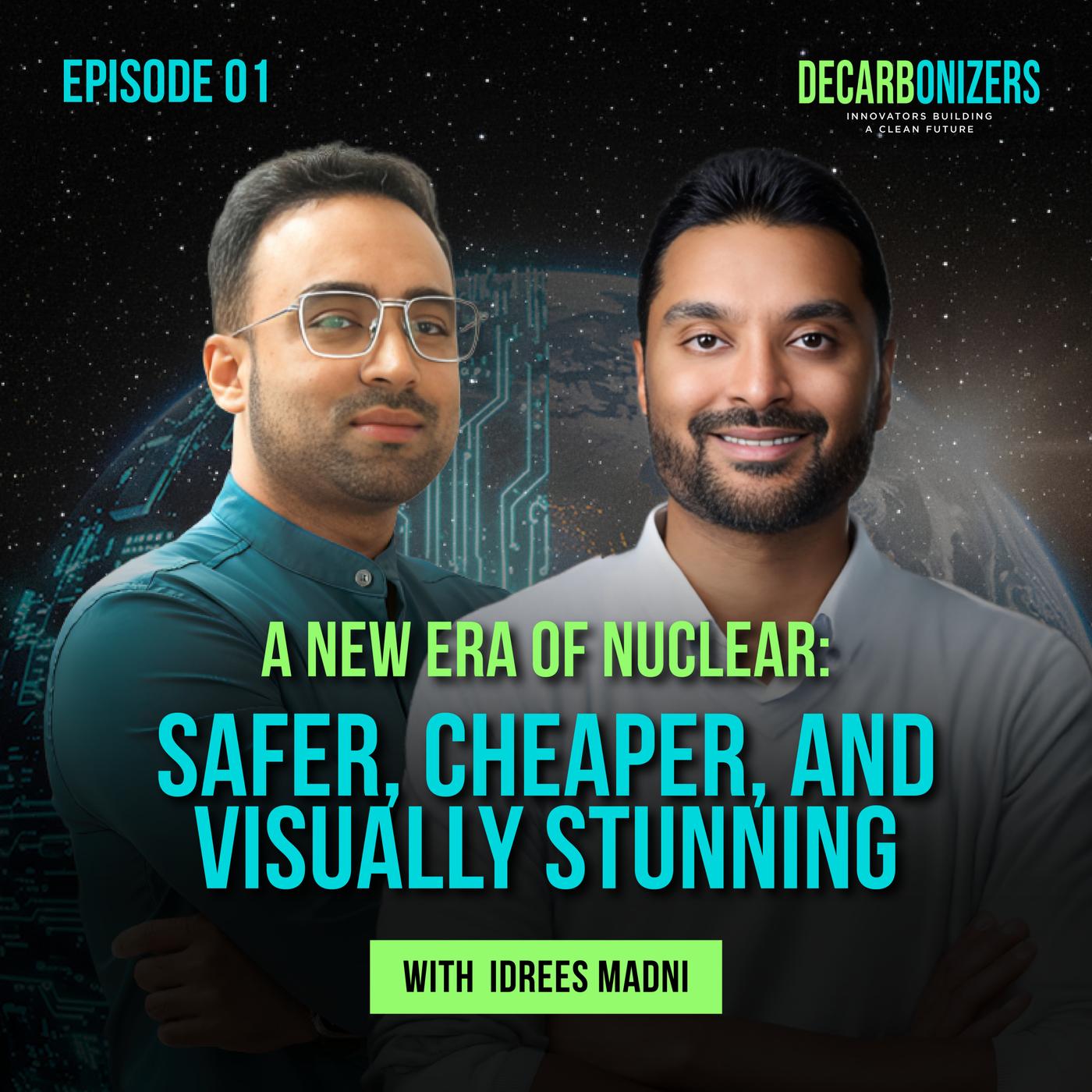
What if nuclear energy didn’t mean 10-year construction timelines, multi-billion-dollar budgets, and massive gray concrete towers on the skyline? What if reactors could be built in factories, shipped where they’re needed, installed in months, and designed so beautifully you wouldn’t mind seeing one nearby?
In this premiere episode of Decarbonizers, host Idrees Madni sits down with Yasir, co-founder and CTO of Aalo Atomics, to unpack a bold new vision for nuclear power. Yasir’s story starts in Bangladesh, studying by candlelight during daily power outages. That early frustration turned into curiosity, then into a career. He went from taking apart stereos as a kid, to joining Westinghouse as Fukushima reshaped the industry, to leading advanced reactor design at Idaho National Laboratory, and eventually launching Aalo Atomics to fix what traditional nuclear got wrong.
He explains how “economies of scale” quietly became “economies of size,” making plants slower and more expensive. Microreactors flip that model to “economies of numbers,” small, repeatable, factory-built systems. With liquid metal cooling and physics-based safety, these designs aim for true “walk-away safe” operation. Even nuclear waste gets a fresh look, reframed as a manageable engineering challenge rather than an unsolvable crisis.
From powering AI data centers to creating beautiful, community-friendly plants and enabling modern “micro Bell Labs,” this episode reimagines nuclear as fast, scalable, and human-centered. Not a relic of the past, but a serious contender for a decarbonized future.
If you care about the future of clean power, advanced technology, or rebuilding infrastructure at scale, this episode is a must listen.
Key Takeaways
Why nuclear energy has a speed and cost problem, not a physics problem
The difference between scaling by size versus scaling by manufacturing volume
How microreactors can be built as products instead of mega construction projects
Why Aalo is targeting AI data centers first
How physics-based safety reduces complexity and cost
Why nuclear waste is more manageable than most people think
The vision for factory-built reactors producing a gigawatt per year
How decentralized nuclear could reduce grid dependence
Why learning velocity is a founder’s greatest advantage
In This Episode:
[00:00:00] - Dynamic Intro
[00:01:27] - Introduction
[00:02:18] - Early Inspiration in Bangladesh
[00:03:39] - Climate Change Realities
[00:04:52] - Discovering Nuclear Energy
[00:06:58] - Career at Westinghouse
[00:09:33] - Learning from Large-Scale Projects
[00:11:58] - The Arctic Inspiration.
[00:14:14] - Defining "Micro Reactors"
[00:19:10] - The Marvel Program
[00:23:09] - Market Focus: AI Data Centers.
[00:24:12] - Pod Architecture.
[00:26:00] - Liquid Metal Cooling
[00:32:48] - Addressing Nuclear Waste
[00:38:28] - Mass Manufacturing Goals
[00:39:55] - Speed of Deployment
[00:43:52] - Cost Forecast
[00:46:17] - The "Mini Bell Labs" Idea
Our Guest
Yasir Arafat is the co-founder and CTO of Aalo, an advanced nuclear energy company building factory-manufactured microreactors designed for rapid deployment. A former Westinghouse engineer and leader of the Department of Energy’s MARVEL microreactor program at Idaho National Laboratory, Yasir is focused on solving nuclear’s biggest barriers: speed, cost, and scalability. His mission is to deliver reliable, carbon-free energy through mass production and innovative plant architecture.
Resources and Links
Yasir Arafat
Idrees Madni