


WEBVTT
00:00:05.280 --> 00:00:16.079
Hello and welcome to Inside Applied Data Governance, a podcast where the practitioners who built the ADG program share what real-world data governance actually looks like.
00:00:16.399 --> 00:00:22.800
Whether you're just starting out in data governance or you've been working in the field for years, this podcast is for you.
00:00:23.120 --> 00:00:30.879
Will you learn real-life lessons and practical advice on the people behind the Applied Data Governance Practitioner Certification?
00:00:31.280 --> 00:00:38.719
To learn more about the ADGP Certification Program, visit training.dataversity.net.
00:00:42.640 --> 00:00:51.039
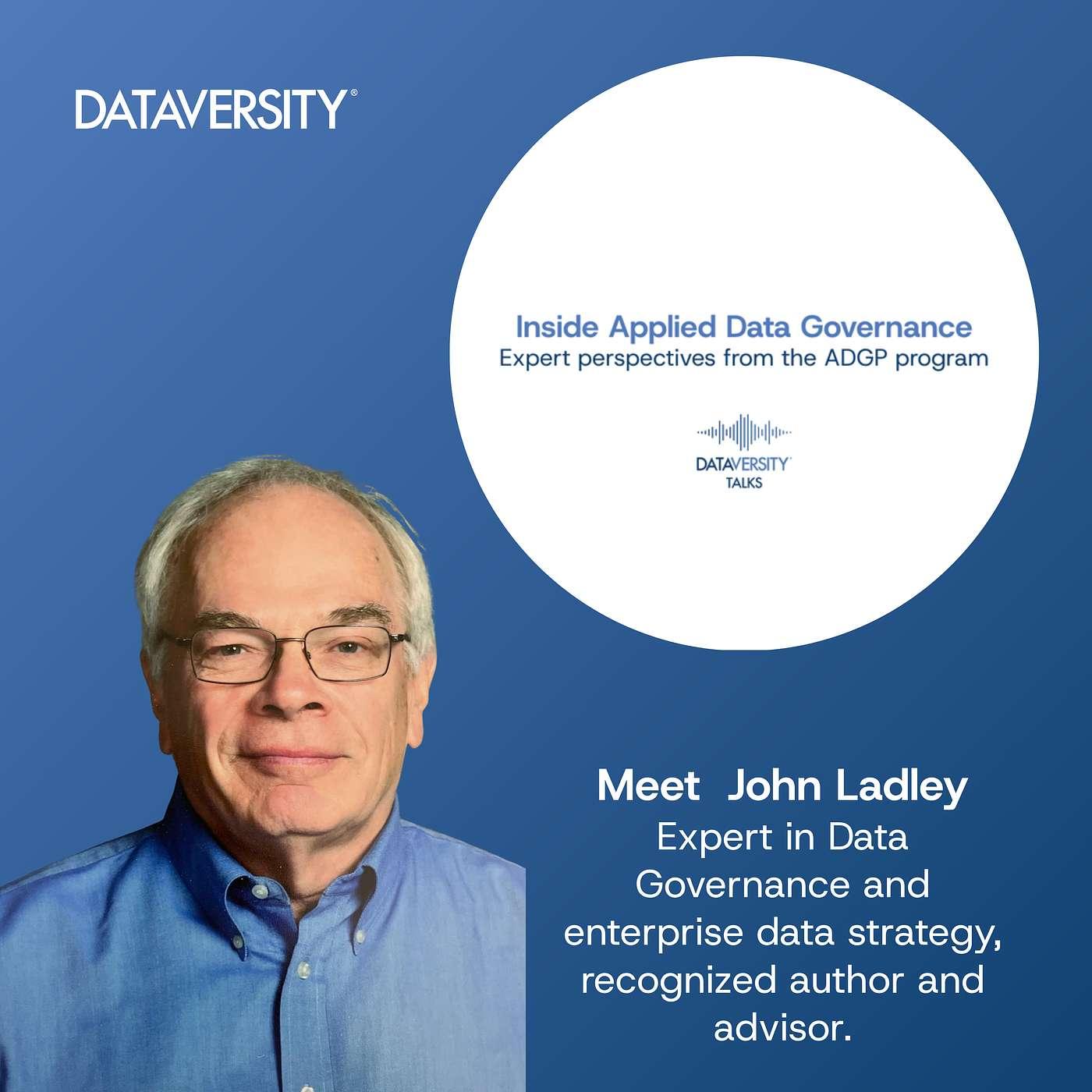
I'm your host, Barbara Neshaw, and today we're talking to John Ladley, one of the key contributors to the ADGP certification.
00:00:51.439 --> 00:00:56.079
About proving value and sustaining momentum for data governance.
00:00:56.560 --> 00:00:58.159
Let's jump right in.
00:01:00.079 --> 00:01:02.159
Hi, John, and welcome to the show.
00:01:02.479 --> 00:01:03.759
Hello, Barbara.
00:01:03.840 --> 00:01:04.400
How are you?
00:01:04.560 --> 00:01:08.480
Good to see you again and talk about data governance again.
00:01:08.879 --> 00:01:10.640
It is wonderful to talk about it.
00:01:10.799 --> 00:01:13.599
I'm so excited to hear all of your insights.
00:01:13.760 --> 00:01:18.480
But before we dive in, let's just talk a little bit about you and your background.
00:01:18.719 --> 00:01:23.359
So the first thing, just tell us about you and um your role in data governance.
00:01:23.680 --> 00:01:35.519
Yeah, the role in data governance, I have been connected with the data corner of technology since the late 1980s, actually.
00:01:36.079 --> 00:01:40.239
And um just kind of evolved along the way.
00:01:40.400 --> 00:01:51.680
Uh along the way, I got to a point in the mid-2s that the literature out there was abysmal.
00:01:52.799 --> 00:01:55.359
Uh it was not useful.
00:01:56.560 --> 00:01:59.200
Uh some of the literature we had was harmful.
00:01:59.359 --> 00:02:11.520
So I started to roll up my sleeves and wade deeper into it, less of a practitioner, more of a um educator, I guess, and researcher.
00:02:12.080 --> 00:02:16.960
And I ended up writing uh two editions of uh a book.
00:02:17.120 --> 00:02:22.639
The long title is Data Governance, How to Deploy Blah, blah, blah, blah, blah, a data governance program.
00:02:23.199 --> 00:02:36.800
Um uh third edition is on hold right now due to AI and figuring out how to stuff all that AI stuff into the same number of pages we're allowed to have.
00:02:36.960 --> 00:02:39.439
So, but um that's how I got into it.
00:02:39.520 --> 00:02:45.599
I you know, I've been more than anything, I will tell people I am a practitioner.
00:02:46.240 --> 00:02:49.840
Uh, everything I talk about is something I've done.
00:02:50.000 --> 00:02:59.199
In fact, I will not talk about something, or I will not relay a concept I've heard unless it's actually been tried in the field.
00:03:00.960 --> 00:03:03.759
Okay, thank you very much for that introduction, John.
00:03:04.080 --> 00:03:07.280
Great to find out some more details about you.
00:03:07.840 --> 00:03:10.639
Are you ready to start talking more about data governance?
00:03:10.879 --> 00:03:11.919
I was born ready.
00:03:12.080 --> 00:03:12.960
Let's do it.
00:03:13.840 --> 00:03:14.479
All right.
00:03:14.800 --> 00:03:16.960
Well, let's kick off here with our first question.
00:03:17.199 --> 00:03:24.479
From your perspective, why is establishing value and ROI for data governance so important for organizations?
00:03:25.520 --> 00:03:37.759
Well, we said in the prior two podcasts, you've got to talk about governing data from a standpoint of value and benefit to the organization.
00:03:38.319 --> 00:03:43.680
Um, even though it is at its philosophical roots, it's an overhead function.
00:03:43.919 --> 00:03:54.639
It's something we want to disappear, we want it into the background noise of an organization, it still needs to have perceptive or perceived value.
00:03:55.439 --> 00:03:55.680
Okay.
00:03:56.800 --> 00:04:05.039
So, and the only way an organization understands that is to talk about it in numerical terms, whether you like it or not.
00:04:05.199 --> 00:04:10.319
It's like we talked about if we want to communicate with leadership, they don't need to learn techno babble.
00:04:10.400 --> 00:04:11.759
We have to learn business talk.
00:04:11.919 --> 00:04:14.400
Well, we also have to learn to talk in terms of metrics.
00:04:14.479 --> 00:04:24.959
We have to learn to talk in terms of well, we did these certain data oversight capabilities, which enabled certain business things, and that added value to the organization.
00:04:25.199 --> 00:04:25.519
Right?
00:04:25.600 --> 00:04:26.959
You need to tie it.
00:04:27.120 --> 00:04:38.079
Um, you know, remember direct bottom line benefit of an overhead function is from an accounting standpoint not permitted.
00:04:38.560 --> 00:04:42.319
That's something that most talking heads won't talk about.
00:04:42.399 --> 00:04:44.160
They'll say, oh, yeah, we can do ROI.
00:04:44.319 --> 00:04:45.680
Like we're a big consulting firm.
00:04:45.759 --> 00:04:48.800
We'll do we'll do ROI on your governance program.
00:04:48.879 --> 00:04:50.319
We'll show you 20% a year.
00:04:51.360 --> 00:04:53.759
Lion, Lion, Lion.
00:04:54.000 --> 00:04:56.079
No, that means they don't understand it's an overhead fund.
00:04:56.240 --> 00:05:01.120
They're treating it as another project that's got an ROI on it, you know, with a cash flow or something.
00:05:01.439 --> 00:05:13.839
You are enabling other resources, and your value comes from seamlessly and efficiently and cost-effectively enabling these other capabilities.
00:05:14.079 --> 00:05:21.439
And any good business person will tell you that a good back office team is invaluable to the front lines, right?
00:05:21.680 --> 00:05:24.959
And it they can be measured, but there's lots of measurements out there.
00:05:25.279 --> 00:05:28.240
So you've got to be able to put numbers on this stuff.
00:05:28.560 --> 00:05:32.560
Because if you can't, what story are you going to tell?
00:05:33.759 --> 00:05:34.240
True.
00:05:34.399 --> 00:05:39.759
I mean, definitely have to be able to say that to leadership and to show the value of it.
00:05:40.240 --> 00:05:45.120
Um, why was it so important to include in the ADG body of knowledge?
00:05:45.920 --> 00:05:48.160
Because data people don't know how to do it.
00:05:48.480 --> 00:05:48.959
All right.
00:05:49.120 --> 00:05:53.839
I um I remember when I first started to do a talk on metrics.
00:05:54.000 --> 00:06:00.560
I used to do a half day or a full-day talk on data management metrics.
00:06:00.959 --> 00:06:03.680
I think it was 10 or 15 years ago.
00:06:04.319 --> 00:06:10.879
And a bunch of people in there, and everyone wants to hear about this because I was, you know, oh, I get I'm gonna learn metrics.
00:06:10.959 --> 00:06:12.959
I can finally talk to leadership.
00:06:13.120 --> 00:06:21.519
And I and and I start out with, well, um, we need to know the concept of net present value.
00:06:23.519 --> 00:06:33.839
Okay, which is the value of a of an asset now um compared to its future value at a predictable rate of return over a period of time.
00:06:35.519 --> 00:06:40.079
And the whole room just went deer in the headlights.
00:06:42.399 --> 00:06:44.079
Because they're like, this is finance.
00:06:44.240 --> 00:06:45.040
I go, uh-huh.
00:06:45.439 --> 00:06:48.000
You said you wanted an ROI, you wanted metrics.
00:06:48.160 --> 00:06:53.759
That's your CEO isn't gonna waive financial metrics.
00:06:53.920 --> 00:06:57.279
Oh, I want a good metric, but don't worry about that bottom line stuff.
00:06:57.360 --> 00:06:59.519
I I I'll just waive that for today.
00:07:00.240 --> 00:07:02.319
No, that's not how they work.
00:07:02.720 --> 00:07:22.480
Okay, and and and and I end up for the first few years, I ended up doing basic uh financial concepts present value, future value, cash flows, depreciation, tax consequences, right?
00:07:22.800 --> 00:07:27.120
Tax credit versus tax deduction, things like that.
00:07:27.519 --> 00:07:45.040
Um, and uh and then uh I discovered that I had to explain what a balance sheet or an income statement was to a lot of people because they just been doing their data thing, great, loving it, having a great time, but now they were told to go talk to leadership.
00:07:45.759 --> 00:07:49.120
Leadership wants to talk about the income statement.
00:07:49.279 --> 00:07:51.680
And if you don't know what that is, they're not gonna talk to you.
00:07:51.839 --> 00:07:53.279
So that's why it's important.
00:07:53.439 --> 00:08:09.360
We had to put that in the body of knowledge, because again, it's not so much the letters after your name from taking the exam, it's what you can do with that, and it's the stuff you need to have to be successful.
00:08:10.319 --> 00:08:11.120
Yeah, definitely.
00:08:11.279 --> 00:08:18.879
It also shows how interconnected everything is whenever you're looking at governance with all the other functions within an organization.
00:08:21.839 --> 00:08:28.639
If you join our webinars, you already know strong data governance is what makes everything else possible.
00:08:29.120 --> 00:08:30.000
Exactly.
00:08:30.160 --> 00:08:39.440
And if you're ready to build or mature your governance practice, the Dataversity Training Center is where you'll find the deep dive courses that actually show you how to do it.
00:08:39.759 --> 00:08:48.960
And once you've built that foundation, the applied data governance certification helps you prove you can turn governance principles into real organizational impact.
00:08:49.600 --> 00:08:58.480
Then bring it all together with the community at DGIQ plus EDW 2026, where the governance leaders share what really works.
00:08:58.720 --> 00:09:02.879
Start strengthening your governance journey at dataversity.net.
00:09:05.919 --> 00:09:08.000
That leads us to our next question.
00:09:08.320 --> 00:09:17.519
What is most commonly misunderstood or underestimated about the success measures of data governance?
00:09:17.919 --> 00:09:24.960
The misunderstanding is that going after the easy metrics, which is important, they still need to be there.
00:09:25.039 --> 00:09:28.240
And sometimes it's hard to collect data for things.
00:09:28.799 --> 00:09:34.799
But understand that the easiest metrics have no relevance to leadership.
00:09:35.039 --> 00:09:44.879
They are for your use to show that you're making progress along your uh uh rollout of your capabilities.
00:09:45.120 --> 00:09:45.440
Okay.
00:09:45.679 --> 00:09:49.120
It's more of a program management uh metric.
00:09:49.279 --> 00:09:51.200
Uh we had 18 users at the meeting.
00:09:51.279 --> 00:09:53.519
We had 14 people go to data steward training.
00:09:53.600 --> 00:09:56.080
We've loaded 85 elements into the catalog.
00:09:56.240 --> 00:10:02.159
Those are all fine and dandy, but they are all progress metrics.
00:10:02.320 --> 00:10:05.600
They aren't metrics of effectiveness or value.
00:10:06.480 --> 00:10:09.919
And we still need to come up with those, all right?
00:10:10.320 --> 00:10:12.799
And that's where they hit the wall.
00:10:13.360 --> 00:10:16.720
Because you have to look at the balance sheet.
00:10:16.960 --> 00:10:21.919
My my the way the best way for me to answer this is to give, to tell a very short story, if I may.
00:10:22.080 --> 00:10:22.320
Okay?
00:10:22.639 --> 00:10:23.279
Please do.
00:10:23.519 --> 00:10:38.720
I was brought into an organization to uh justify or unjustify the existence of a business intelligence department because the a new leadership team had said that it was ineffective.
00:10:39.600 --> 00:10:55.039
But the person who was in charge there, who had survived the purge of C old leadership team, was the CIO, had survived the purge, said, Well, I they've always I've always thought they've done a good job, but I've got a lot of heat on me, John.
00:10:55.200 --> 00:11:02.159
So I need you to come in here and show me where these people complaining are um uh are correct.
00:11:02.320 --> 00:11:04.559
And if I have to, I'll I'll have to close them down.
00:11:04.720 --> 00:11:05.679
Oh, okay.
00:11:06.159 --> 00:11:07.120
We can do that.
00:11:07.279 --> 00:11:14.720
So I had to look for the value of business intelligence or the value of how this company used data.
00:11:15.440 --> 00:11:27.759
Um, and I did uh, and we, you know, they started with, well, we've got uh 20 people in the data warehouse team, and we've got um um so many terabytes in the data warehouse and all these things.
00:11:27.840 --> 00:11:29.679
And I was like, no, no, no, no, no, no, no.
00:11:29.759 --> 00:11:31.360
That doesn't show value.
00:11:31.919 --> 00:11:56.159
Um so long story short, I went and generated a bunch of performance metrics that were tied to business activity, and I connected the use of data in all the operational areas and their success, judged by their own department metrics, which went, which is how you did management by your MBOs, your bonus calculations.
00:11:56.399 --> 00:11:58.080
Those are based on business performance.
00:11:58.240 --> 00:12:09.039
So we married data use metrics to to uh executives achieving their bonuses and and and performance within these areas.
00:12:09.279 --> 00:12:22.080
And then we took the 40 or 50 KPIs of this organization and we and we we graphed uh the counts and the metrics and all this kind of stuff um to business performance.
00:12:22.559 --> 00:12:32.960
And um we ended up with this picture, and I ended up put it all in one graph, did some monkeying around with the scales and stuff.
00:12:33.120 --> 00:12:36.960
And what I showed on one graph was business performance was declining.
00:12:37.200 --> 00:12:40.639
This organization had had three really crap years.
00:12:41.519 --> 00:12:45.360
I mean, this are there was a reason there was a new team in.
00:12:45.519 --> 00:12:45.840
Okay.
00:12:46.559 --> 00:12:50.879
Okay, but the new team was they weren't impressing anybody either.
00:12:50.960 --> 00:12:54.000
It was like the Tottenham hotspurs of data management.
00:12:54.240 --> 00:12:56.720
You have to be a football fan to understand that one.
00:12:57.039 --> 00:12:58.240
Yeah, I don't know what that means.
00:12:58.559 --> 00:12:59.279
That's okay.
00:12:59.360 --> 00:13:02.559
Uh right now there's some guy in England just laughing his butt off.
00:13:02.639 --> 00:13:04.080
Okay, just we'll just go with that.
00:13:04.320 --> 00:13:13.919
All right, anyway, um the use of the data warehouse was constant and the investment was constant.
00:13:14.720 --> 00:13:27.039
But the telling metrics were that the downloading of data and building departmental data stores, which we sniffed out, was rising up.
00:13:27.600 --> 00:13:45.759
And at the end of the day, we showed that the value of the organization had decreased, while at the same time, all the executives, the old team and the new team, had helped themselves to all the raw data they wanted to get to because they had said the data warehouse team is no good.
00:13:45.919 --> 00:13:48.639
So we'll get it ourselves, and they did.
00:13:50.799 --> 00:13:56.000
And it turned out that it didn't matter that the best data was in the data warehouse.
00:13:56.399 --> 00:13:59.039
The data they were using was horrible.
00:13:59.519 --> 00:14:03.200
And at the end of the day, it was there was no trouble with the data or the data warehouse.
00:14:03.360 --> 00:14:07.120
The problem was that they had another team in there that didn't know how to run the company.
00:14:07.600 --> 00:14:16.799
It turned out that private equity was behind this company, and the private equity people don't bring in people that know how to run a company, they bring in people that know how to dismantle a company.
00:14:17.440 --> 00:14:17.679
Right?
00:14:17.840 --> 00:14:21.200
And no one had told me that till I started to sniff around.
00:14:21.440 --> 00:14:21.840
Right.
00:14:22.000 --> 00:14:30.000
And so you can explicitly show the connection of data use and data management and data governance to financial return.
00:14:30.080 --> 00:14:30.720
You can do it.
00:14:30.879 --> 00:14:32.000
I've done it.
00:14:32.320 --> 00:14:33.679
Takes a little education.
00:14:33.840 --> 00:14:34.720
That's the problem.
00:14:34.879 --> 00:14:37.279
We don't educate people yet.
00:14:37.440 --> 00:14:46.720
But but uh the two or three people that have worked with me and learned have left the room going, OMG, this is I'm in a new world right now.
00:14:47.600 --> 00:15:00.960
Yeah, that's a great example and great story because I know in my previous life we used a lot of those metrics where, oh, this is how many people we trained, and this is how many people are engaging with this, and how many new definitions we have.
00:15:01.039 --> 00:15:04.960
And it's a starting point, but it never really resonated on the impact.
00:15:05.279 --> 00:15:08.080
Remember the carpenter metaphor from our first podcast.
00:15:08.320 --> 00:15:08.639
Yes.
00:15:08.960 --> 00:15:09.919
That's like the carpenter.
00:15:10.000 --> 00:15:11.759
You say, Hey, how long till my house is ready?
00:15:11.919 --> 00:15:14.320
Well, today I cut five boards.
00:15:15.679 --> 00:15:18.720
I'm sorry, I asked, when will my house be ready?
00:15:18.960 --> 00:15:20.960
I cut five boards.
00:15:21.440 --> 00:15:23.519
And I'm proud of myself for cutting five boards.
00:15:23.759 --> 00:15:24.480
I'm very proud.
00:15:24.559 --> 00:15:24.799
Yeah.
00:15:24.960 --> 00:15:27.360
It's like having a six-year-old on the team.
00:15:27.679 --> 00:15:30.000
Daddy gave me a saw and I did six boards.
00:15:30.080 --> 00:15:30.639
I'm special.
00:15:30.799 --> 00:15:31.120
All right.
00:15:32.480 --> 00:15:33.360
That's so funny.
00:15:33.600 --> 00:15:36.080
Oh, when are you gonna put the roof on?
00:15:36.240 --> 00:15:38.000
That's what I right okay.
00:15:38.159 --> 00:15:38.720
Moving on.
00:15:40.320 --> 00:15:46.080
Yeah, sometimes there's a need for restarting or revitalizing a data governance program.
00:15:46.720 --> 00:15:48.639
What does that look like in an organization?
00:15:48.960 --> 00:15:50.879
Well, you've tried once or twice.
00:15:51.360 --> 00:16:05.120
And you know, when I tell the, you know, when I do the data governance boot camp now and I I'm doing something at Enterprise Data World here in uh May, uh, an advanced concepts thing, I say, look, most of you are on your second or third go at this, right?
00:16:05.440 --> 00:16:12.159
Well, the first thing you need to do is is why are you trying to a second and third time, all right?
00:16:12.799 --> 00:16:23.200
Um uh um and based on that, how they ended up there is what you need to do to revitalize it.
00:16:23.279 --> 00:16:25.679
Um, so there might have been no alignment.
00:16:25.840 --> 00:16:30.000
We just started to to buy stuff and and do semantical stuff.
00:16:30.159 --> 00:16:33.039
Yay! All right, but business didn't care.
00:16:33.279 --> 00:16:42.399
You might have um uh uh tried to help uh master data management project or someone else and app dev didn't really let you get involved.
00:16:42.480 --> 00:16:44.480
There's lots of lots of reasons these things.
00:16:44.559 --> 00:16:46.480
You ignored culture entirely, right?
00:16:46.559 --> 00:16:47.840
That's the big one, right?
00:16:48.320 --> 00:17:02.559
So um so when when I see that someone is going second, third, fourth, fifth time in one case uh for an organization, um I look for I see two or three big things.
00:17:02.720 --> 00:17:07.440
I see lack of alignment, total ignoring culture, all right.
00:17:07.759 --> 00:17:17.039
And I see a third thing is usually a failure to understand how big the gap was between what you can do and what you need to do to be successful.
00:17:17.200 --> 00:17:19.200
And organizations go, yeah, we can do that.
00:17:19.279 --> 00:17:23.200
And then when you go in and independently assess that, you go, No, you can't.
00:17:23.440 --> 00:17:24.640
You cannot do that.
00:17:24.799 --> 00:17:26.319
You know, not in a million years.
00:17:26.480 --> 00:17:28.640
We have got to set our sights a lot lower.
00:17:28.799 --> 00:17:31.200
So that's that's how that works out.
00:17:31.759 --> 00:17:32.319
Good.
00:17:32.640 --> 00:17:33.039
All right.
00:17:33.279 --> 00:17:38.799
What advice would you give to someone who's responsible for this area of governance?
00:17:39.759 --> 00:17:48.640
Understand what makes an organization be successful, and it isn't knocking down tasks on a project plan.
00:17:49.279 --> 00:17:54.559
Understand what success looks like to your leadership team, understand what they want to see.
00:17:54.799 --> 00:17:55.440
All right.
00:17:55.920 --> 00:18:04.799
Um uh uh uh again, the metrics we talked about, like counts and stuff, those are important for progress.
00:18:05.200 --> 00:18:06.480
You do need to measure.
00:18:06.799 --> 00:18:12.000
Also, uh, if you're counting people coming to meetings and that number goes down, that's a big indicator.
00:18:12.079 --> 00:18:19.200
Those are all important program operational things, but they're not speaking the language of leadership.
00:18:19.440 --> 00:18:20.000
All right.
00:18:20.319 --> 00:18:24.240
Learn that language of leadership and start to speak to that.
00:18:24.400 --> 00:18:26.880
That's the one piece of advice I would give.
00:18:27.279 --> 00:18:29.440
That's very important advice.
00:18:30.079 --> 00:18:33.039
Communication, as we've mentioned, is extremely important.
00:18:34.240 --> 00:18:40.960
Next question: why is ROA ROI so difficult to articulate in a governance program?
00:18:41.519 --> 00:18:44.000
Um, the talking heads oversimplify it.
00:18:44.319 --> 00:18:46.720
Talking head will say, Oh, you have to have an ROI.
00:18:46.799 --> 00:18:53.279
You know, it's obvious you have to have an ROI, you know, and but then um, you know, if I press them, they go, I go, well, what is the ROI?
00:18:53.680 --> 00:18:57.279
They go, well, you know, you do something and you make some more money.
00:18:57.359 --> 00:18:59.440
I said, well, tell them, show me the process to get there.
00:18:59.599 --> 00:19:00.160
Anyway.
00:19:00.799 --> 00:19:03.039
And then they go, well, um, I gotta go.
00:19:03.119 --> 00:19:04.400
I'm gonna call right now.
00:19:05.599 --> 00:19:23.039
Um here's the thing: ROI in the simple state, it's not the ROI of we're going to build a factory, and the factory is going to build more cars, and it will be an ROI on the factory and all that capital investment because we're gonna sell more cars.
00:19:23.279 --> 00:19:24.559
It's not that simple.
00:19:24.720 --> 00:19:26.799
That's not the ROI you're looking for.
00:19:27.039 --> 00:19:36.720
What you're looking for is the benefit of enabling the exploitation, the efficient exploitation of a resource called data.
00:19:36.960 --> 00:19:37.200
Okay.
00:19:37.680 --> 00:19:44.240
Now that means you are assessing, in many cases, the efficacy of an overhead capability.
00:19:44.480 --> 00:19:47.759
It's not a line function, it's a staff function.
00:19:47.920 --> 00:19:55.759
And if you don't know what I mean by those two things, then go look them the hell up, because that's how you talk to business, okay?
00:19:56.000 --> 00:19:58.880
So if you're in a staff function, you're overhead.
00:19:59.119 --> 00:20:01.359
But overhead can look marketing.
00:20:01.519 --> 00:20:03.359
What's the value of marketing?
00:20:04.640 --> 00:20:05.839
It's sales.
00:20:06.319 --> 00:20:06.880
Wow.
00:20:07.119 --> 00:20:07.519
Yeah.
00:20:07.680 --> 00:20:09.279
Well, no, mind share.
00:20:10.079 --> 00:20:15.359
The objective of of the sales department or sales, marketing is mind share.
00:20:15.519 --> 00:20:18.319
And how do you evaluate the ROI of marketing?
00:20:18.480 --> 00:20:25.039
Oh, wow, we mailed out a lot of campaigns and we sent out mailing, or we did a coupon, or we did a thing like that.
00:20:25.279 --> 00:20:30.079
Marketing is measured, but it's a very sophisticated form of measurement.
00:20:30.240 --> 00:20:35.680
And the return on marketing is is as a result of looking what marketing has enabled.
00:20:35.839 --> 00:20:40.319
In other words, marketing gave the salesperson more tools, and that salesperson was enabled.
00:20:40.400 --> 00:20:42.880
So there is a connect the dots function here.
00:20:43.039 --> 00:20:46.319
That ROI comes from a connect the dots function.
00:20:46.480 --> 00:20:46.799
All right.
00:20:46.960 --> 00:20:49.839
And that's the part people don't know how to calculate that.
00:20:50.000 --> 00:20:50.400
All right.
00:20:50.480 --> 00:20:53.759
And now I tell them the one simple answer is well, where do I look that up?
00:20:53.920 --> 00:21:00.720
If you want to read more about it, the the Nolan, the Kaplan and Norton book, strategy maps, is your primer for that.
00:21:00.880 --> 00:21:01.119
Okay.
00:21:01.839 --> 00:21:10.880
Um, um, and then you'll learn how to really articulate benefits than just, you know, you know, spend some money and get 10% return on the investment.
00:21:10.960 --> 00:21:12.160
That's that's Bush Leak.
00:21:12.319 --> 00:21:14.240
You gotta go, you gotta go past that.
00:21:15.200 --> 00:21:16.160
Very good.
00:21:16.480 --> 00:21:26.079
You know, out of all of these ROIs and values and things that we've talked about, what signals you that a data governance program might need to be revitalized?
00:21:26.400 --> 00:21:28.319
Well, that's where those counts come in.
00:21:28.640 --> 00:21:30.480
People stop showing up in meetings.
00:21:30.559 --> 00:21:31.039
All right.
00:21:31.279 --> 00:21:39.680
You were doing three elements a week on the catalog, and now you're doing one element a month because no one's coming to the meetings or whatever like that.
00:21:39.839 --> 00:21:44.319
You know, you had this much budget last year, you have this much budget this year, and it's 10% less.
00:21:44.480 --> 00:21:44.799
Oh, yeah.
00:21:44.960 --> 00:21:47.599
Those are things that are dead thing.
00:21:47.759 --> 00:22:06.400
Um, also, uh um, I call it the the uh grousing index, where people say, Oh, I've been banging my head on this for four years and they're not listening, and I can't get across, and I have a peer who's an app dev, and and they're just like totally crazy and they won't listen to me, and they don't even invite me to meeting.
00:22:06.640 --> 00:22:15.119
All of that stuff are all indicators to me that you're in a lot of trouble because you don't have engagement and you're not working with your culture.
00:22:15.359 --> 00:22:26.319
And so those scream to me that we need to reload the program, that wherever it's going, you we need to stop dead in our tracks, reload, and do it again.
00:22:26.559 --> 00:22:27.279
Okay, great.
00:22:27.680 --> 00:22:28.960
Like I said, very great insight.
00:22:29.039 --> 00:22:30.319
All of this has been wonderful.
00:22:30.559 --> 00:22:32.079
We have one last question.
00:22:32.400 --> 00:22:38.559
What kinds of value are often invisible early, but critical long term?
00:22:39.359 --> 00:22:56.400
Uh trust, uh um engagement, um, understanding of the culture, uh, a good set of business metrics and business-related metrics that tie you to business results.
00:22:56.640 --> 00:22:59.359
Uh, those things take a long time to percolate.
00:22:59.599 --> 00:23:00.799
That's pretty much it.
00:23:01.039 --> 00:23:01.759
Okay, that's true.
00:23:01.839 --> 00:23:03.440
Yeah, definitely trust.
00:23:03.680 --> 00:23:05.680
Thank you very much, John, for joining us.
00:23:05.759 --> 00:23:07.359
This has been very insightful.
00:23:07.599 --> 00:23:12.160
You've enjoyed, and I'm sure our listeners have enjoyed as well all of your insights.
00:23:12.559 --> 00:23:13.599
Pleasure being here.
00:23:13.839 --> 00:23:17.920
And um, by all means, uh forget the initials on your title.
00:23:18.000 --> 00:23:22.799
Uh, go take your certification under the ADGP and be a smarter person.
00:23:23.200 --> 00:23:24.000
Thank you.
00:23:28.319 --> 00:23:39.680
And for our listeners, if you'd like to learn more about the ADGP certification program and the applied data governance body of knowledge, visit training.dataversity.net.
00:23:40.559 --> 00:23:47.039
Until next time, I'm Barbara Neshaw, and this has been Inside Applied Data Governance.
00:00:05.280 --> 00:00:16.079
Hello and welcome to Inside Applied Data Governance, a podcast where the practitioners who built the ADG program share what real-world data governance actually looks like.
00:00:16.399 --> 00:00:22.800
Whether you're just starting out in data governance or you've been working in the field for years, this podcast is for you.
00:00:23.120 --> 00:00:30.879
Will you learn real-life lessons and practical advice on the people behind the Applied Data Governance Practitioner Certification?
00:00:31.280 --> 00:00:38.719
To learn more about the ADGP Certification Program, visit training.dataversity.net.
00:00:42.640 --> 00:00:51.039
I'm your host, Barbara Neshaw, and today we're talking to John Ladley, one of the key contributors to the ADGP certification.
00:00:51.439 --> 00:00:56.079
About proving value and sustaining momentum for data governance.
00:00:56.560 --> 00:00:58.159
Let's jump right in.
00:01:00.079 --> 00:01:02.159
Hi, John, and welcome to the show.
00:01:02.479 --> 00:01:03.759
Hello, Barbara.
00:01:03.840 --> 00:01:04.400
How are you?
00:01:04.560 --> 00:01:08.480
Good to see you again and talk about data governance again.
00:01:08.879 --> 00:01:10.640
It is wonderful to talk about it.
00:01:10.799 --> 00:01:13.599
I'm so excited to hear all of your insights.
00:01:13.760 --> 00:01:18.480
But before we dive in, let's just talk a little bit about you and your background.
00:01:18.719 --> 00:01:23.359
So the first thing, just tell us about you and um your role in data governance.
00:01:23.680 --> 00:01:35.519
Yeah, the role in data governance, I have been connected with the data corner of technology since the late 1980s, actually.
00:01:36.079 --> 00:01:40.239
And um just kind of evolved along the way.
00:01:40.400 --> 00:01:51.680
Uh along the way, I got to a point in the mid-2s that the literature out there was abysmal.
00:01:52.799 --> 00:01:55.359
Uh it was not useful.
00:01:56.560 --> 00:01:59.200
Uh some of the literature we had was harmful.
00:01:59.359 --> 00:02:11.520
So I started to roll up my sleeves and wade deeper into it, less of a practitioner, more of a um educator, I guess, and researcher.
00:02:12.080 --> 00:02:16.960
And I ended up writing uh two editions of uh a book.
00:02:17.120 --> 00:02:22.639
The long title is Data Governance, How to Deploy Blah, blah, blah, blah, blah, a data governance program.
00:02:23.199 --> 00:02:36.800
Um uh third edition is on hold right now due to AI and figuring out how to stuff all that AI stuff into the same number of pages we're allowed to have.
00:02:36.960 --> 00:02:39.439
So, but um that's how I got into it.
00:02:39.520 --> 00:02:45.599
I you know, I've been more than anything, I will tell people I am a practitioner.
00:02:46.240 --> 00:02:49.840
Uh, everything I talk about is something I've done.
00:02:50.000 --> 00:02:59.199
In fact, I will not talk about something, or I will not relay a concept I've heard unless it's actually been tried in the field.
00:03:00.960 --> 00:03:03.759
Okay, thank you very much for that introduction, John.
00:03:04.080 --> 00:03:07.280
Great to find out some more details about you.
00:03:07.840 --> 00:03:10.639
Are you ready to start talking more about data governance?
00:03:10.879 --> 00:03:11.919
I was born ready.
00:03:12.080 --> 00:03:12.960
Let's do it.
00:03:13.840 --> 00:03:14.479
All right.
00:03:14.800 --> 00:03:16.960
Well, let's kick off here with our first question.
00:03:17.199 --> 00:03:24.479
From your perspective, why is establishing value and ROI for data governance so important for organizations?
00:03:25.520 --> 00:03:37.759
Well, we said in the prior two podcasts, you've got to talk about governing data from a standpoint of value and benefit to the organization.
00:03:38.319 --> 00:03:43.680
Um, even though it is at its philosophical roots, it's an overhead function.
00:03:43.919 --> 00:03:54.639
It's something we want to disappear, we want it into the background noise of an organization, it still needs to have perceptive or perceived value.
00:03:55.439 --> 00:03:55.680
Okay.
00:03:56.800 --> 00:04:05.039
So, and the only way an organization understands that is to talk about it in numerical terms, whether you like it or not.
00:04:05.199 --> 00:04:10.319
It's like we talked about if we want to communicate with leadership, they don't need to learn techno babble.
00:04:10.400 --> 00:04:11.759
We have to learn business talk.
00:04:11.919 --> 00:04:14.400
Well, we also have to learn to talk in terms of metrics.
00:04:14.479 --> 00:04:24.959
We have to learn to talk in terms of well, we did these certain data oversight capabilities, which enabled certain business things, and that added value to the organization.
00:04:25.199 --> 00:04:25.519
Right?
00:04:25.600 --> 00:04:26.959
You need to tie it.
00:04:27.120 --> 00:04:38.079
Um, you know, remember direct bottom line benefit of an overhead function is from an accounting standpoint not permitted.
00:04:38.560 --> 00:04:42.319
That's something that most talking heads won't talk about.
00:04:42.399 --> 00:04:44.160
They'll say, oh, yeah, we can do ROI.
00:04:44.319 --> 00:04:45.680
Like we're a big consulting firm.
00:04:45.759 --> 00:04:48.800
We'll do we'll do ROI on your governance program.
00:04:48.879 --> 00:04:50.319
We'll show you 20% a year.
00:04:51.360 --> 00:04:53.759
Lion, Lion, Lion.
00:04:54.000 --> 00:04:56.079
No, that means they don't understand it's an overhead fund.
00:04:56.240 --> 00:05:01.120
They're treating it as another project that's got an ROI on it, you know, with a cash flow or something.
00:05:01.439 --> 00:05:13.839
You are enabling other resources, and your value comes from seamlessly and efficiently and cost-effectively enabling these other capabilities.
00:05:14.079 --> 00:05:21.439
And any good business person will tell you that a good back office team is invaluable to the front lines, right?
00:05:21.680 --> 00:05:24.959
And it they can be measured, but there's lots of measurements out there.
00:05:25.279 --> 00:05:28.240
So you've got to be able to put numbers on this stuff.
00:05:28.560 --> 00:05:32.560
Because if you can't, what story are you going to tell?
00:05:33.759 --> 00:05:34.240
True.
00:05:34.399 --> 00:05:39.759
I mean, definitely have to be able to say that to leadership and to show the value of it.
00:05:40.240 --> 00:05:45.120
Um, why was it so important to include in the ADG body of knowledge?
00:05:45.920 --> 00:05:48.160
Because data people don't know how to do it.
00:05:48.480 --> 00:05:48.959
All right.
00:05:49.120 --> 00:05:53.839
I um I remember when I first started to do a talk on metrics.
00:05:54.000 --> 00:06:00.560
I used to do a half day or a full-day talk on data management metrics.
00:06:00.959 --> 00:06:03.680
I think it was 10 or 15 years ago.
00:06:04.319 --> 00:06:10.879
And a bunch of people in there, and everyone wants to hear about this because I was, you know, oh, I get I'm gonna learn metrics.
00:06:10.959 --> 00:06:12.959
I can finally talk to leadership.
00:06:13.120 --> 00:06:21.519
And I and and I start out with, well, um, we need to know the concept of net present value.
00:06:23.519 --> 00:06:33.839
Okay, which is the value of a of an asset now um compared to its future value at a predictable rate of return over a period of time.
00:06:35.519 --> 00:06:40.079
And the whole room just went deer in the headlights.
00:06:42.399 --> 00:06:44.079
Because they're like, this is finance.
00:06:44.240 --> 00:06:45.040
I go, uh-huh.
00:06:45.439 --> 00:06:48.000
You said you wanted an ROI, you wanted metrics.
00:06:48.160 --> 00:06:53.759
That's your CEO isn't gonna waive financial metrics.
00:06:53.920 --> 00:06:57.279
Oh, I want a good metric, but don't worry about that bottom line stuff.
00:06:57.360 --> 00:06:59.519
I I I'll just waive that for today.
00:07:00.240 --> 00:07:02.319
No, that's not how they work.
00:07:02.720 --> 00:07:22.480
Okay, and and and and I end up for the first few years, I ended up doing basic uh financial concepts present value, future value, cash flows, depreciation, tax consequences, right?
00:07:22.800 --> 00:07:27.120
Tax credit versus tax deduction, things like that.
00:07:27.519 --> 00:07:45.040
Um, and uh and then uh I discovered that I had to explain what a balance sheet or an income statement was to a lot of people because they just been doing their data thing, great, loving it, having a great time, but now they were told to go talk to leadership.
00:07:45.759 --> 00:07:49.120
Leadership wants to talk about the income statement.
00:07:49.279 --> 00:07:51.680
And if you don't know what that is, they're not gonna talk to you.
00:07:51.839 --> 00:07:53.279
So that's why it's important.
00:07:53.439 --> 00:08:09.360
We had to put that in the body of knowledge, because again, it's not so much the letters after your name from taking the exam, it's what you can do with that, and it's the stuff you need to have to be successful.
00:08:10.319 --> 00:08:11.120
Yeah, definitely.
00:08:11.279 --> 00:08:18.879
It also shows how interconnected everything is whenever you're looking at governance with all the other functions within an organization.
00:08:21.839 --> 00:08:28.639
If you join our webinars, you already know strong data governance is what makes everything else possible.
00:08:29.120 --> 00:08:30.000
Exactly.
00:08:30.160 --> 00:08:39.440
And if you're ready to build or mature your governance practice, the Dataversity Training Center is where you'll find the deep dive courses that actually show you how to do it.
00:08:39.759 --> 00:08:48.960
And once you've built that foundation, the applied data governance certification helps you prove you can turn governance principles into real organizational impact.
00:08:49.600 --> 00:08:58.480
Then bring it all together with the community at DGIQ plus EDW 2026, where the governance leaders share what really works.
00:08:58.720 --> 00:09:02.879
Start strengthening your governance journey at dataversity.net.
00:09:05.919 --> 00:09:08.000
That leads us to our next question.
00:09:08.320 --> 00:09:17.519
What is most commonly misunderstood or underestimated about the success measures of data governance?
00:09:17.919 --> 00:09:24.960
The misunderstanding is that going after the easy metrics, which is important, they still need to be there.
00:09:25.039 --> 00:09:28.240
And sometimes it's hard to collect data for things.
00:09:28.799 --> 00:09:34.799
But understand that the easiest metrics have no relevance to leadership.
00:09:35.039 --> 00:09:44.879
They are for your use to show that you're making progress along your uh uh rollout of your capabilities.
00:09:45.120 --> 00:09:45.440
Okay.
00:09:45.679 --> 00:09:49.120
It's more of a program management uh metric.
00:09:49.279 --> 00:09:51.200
Uh we had 18 users at the meeting.
00:09:51.279 --> 00:09:53.519
We had 14 people go to data steward training.
00:09:53.600 --> 00:09:56.080
We've loaded 85 elements into the catalog.
00:09:56.240 --> 00:10:02.159
Those are all fine and dandy, but they are all progress metrics.
00:10:02.320 --> 00:10:05.600
They aren't metrics of effectiveness or value.
00:10:06.480 --> 00:10:09.919
And we still need to come up with those, all right?
00:10:10.320 --> 00:10:12.799
And that's where they hit the wall.
00:10:13.360 --> 00:10:16.720
Because you have to look at the balance sheet.
00:10:16.960 --> 00:10:21.919
My my the way the best way for me to answer this is to give, to tell a very short story, if I may.
00:10:22.080 --> 00:10:22.320
Okay?
00:10:22.639 --> 00:10:23.279
Please do.
00:10:23.519 --> 00:10:38.720
I was brought into an organization to uh justify or unjustify the existence of a business intelligence department because the a new leadership team had said that it was ineffective.
00:10:39.600 --> 00:10:55.039
But the person who was in charge there, who had survived the purge of C old leadership team, was the CIO, had survived the purge, said, Well, I they've always I've always thought they've done a good job, but I've got a lot of heat on me, John.
00:10:55.200 --> 00:11:02.159
So I need you to come in here and show me where these people complaining are um uh are correct.
00:11:02.320 --> 00:11:04.559
And if I have to, I'll I'll have to close them down.
00:11:04.720 --> 00:11:05.679
Oh, okay.
00:11:06.159 --> 00:11:07.120
We can do that.
00:11:07.279 --> 00:11:14.720
So I had to look for the value of business intelligence or the value of how this company used data.
00:11:15.440 --> 00:11:27.759
Um, and I did uh, and we, you know, they started with, well, we've got uh 20 people in the data warehouse team, and we've got um um so many terabytes in the data warehouse and all these things.
00:11:27.840 --> 00:11:29.679
And I was like, no, no, no, no, no, no, no.
00:11:29.759 --> 00:11:31.360
That doesn't show value.
00:11:31.919 --> 00:11:56.159
Um so long story short, I went and generated a bunch of performance metrics that were tied to business activity, and I connected the use of data in all the operational areas and their success, judged by their own department metrics, which went, which is how you did management by your MBOs, your bonus calculations.
00:11:56.399 --> 00:11:58.080
Those are based on business performance.
00:11:58.240 --> 00:12:09.039
So we married data use metrics to to uh executives achieving their bonuses and and and performance within these areas.
00:12:09.279 --> 00:12:22.080
And then we took the 40 or 50 KPIs of this organization and we and we we graphed uh the counts and the metrics and all this kind of stuff um to business performance.
00:12:22.559 --> 00:12:32.960
And um we ended up with this picture, and I ended up put it all in one graph, did some monkeying around with the scales and stuff.
00:12:33.120 --> 00:12:36.960
And what I showed on one graph was business performance was declining.
00:12:37.200 --> 00:12:40.639
This organization had had three really crap years.
00:12:41.519 --> 00:12:45.360
I mean, this are there was a reason there was a new team in.
00:12:45.519 --> 00:12:45.840
Okay.
00:12:46.559 --> 00:12:50.879
Okay, but the new team was they weren't impressing anybody either.
00:12:50.960 --> 00:12:54.000
It was like the Tottenham hotspurs of data management.
00:12:54.240 --> 00:12:56.720
You have to be a football fan to understand that one.
00:12:57.039 --> 00:12:58.240
Yeah, I don't know what that means.
00:12:58.559 --> 00:12:59.279
That's okay.
00:12:59.360 --> 00:13:02.559
Uh right now there's some guy in England just laughing his butt off.
00:13:02.639 --> 00:13:04.080
Okay, just we'll just go with that.
00:13:04.320 --> 00:13:13.919
All right, anyway, um the use of the data warehouse was constant and the investment was constant.
00:13:14.720 --> 00:13:27.039
But the telling metrics were that the downloading of data and building departmental data stores, which we sniffed out, was rising up.
00:13:27.600 --> 00:13:45.759
And at the end of the day, we showed that the value of the organization had decreased, while at the same time, all the executives, the old team and the new team, had helped themselves to all the raw data they wanted to get to because they had said the data warehouse team is no good.
00:13:45.919 --> 00:13:48.639
So we'll get it ourselves, and they did.
00:13:50.799 --> 00:13:56.000
And it turned out that it didn't matter that the best data was in the data warehouse.
00:13:56.399 --> 00:13:59.039
The data they were using was horrible.
00:13:59.519 --> 00:14:03.200
And at the end of the day, it was there was no trouble with the data or the data warehouse.
00:14:03.360 --> 00:14:07.120
The problem was that they had another team in there that didn't know how to run the company.
00:14:07.600 --> 00:14:16.799
It turned out that private equity was behind this company, and the private equity people don't bring in people that know how to run a company, they bring in people that know how to dismantle a company.
00:14:17.440 --> 00:14:17.679
Right?
00:14:17.840 --> 00:14:21.200
And no one had told me that till I started to sniff around.
00:14:21.440 --> 00:14:21.840
Right.
00:14:22.000 --> 00:14:30.000
And so you can explicitly show the connection of data use and data management and data governance to financial return.
00:14:30.080 --> 00:14:30.720
You can do it.
00:14:30.879 --> 00:14:32.000
I've done it.
00:14:32.320 --> 00:14:33.679
Takes a little education.
00:14:33.840 --> 00:14:34.720
That's the problem.
00:14:34.879 --> 00:14:37.279
We don't educate people yet.
00:14:37.440 --> 00:14:46.720
But but uh the two or three people that have worked with me and learned have left the room going, OMG, this is I'm in a new world right now.
00:14:47.600 --> 00:15:00.960
Yeah, that's a great example and great story because I know in my previous life we used a lot of those metrics where, oh, this is how many people we trained, and this is how many people are engaging with this, and how many new definitions we have.
00:15:01.039 --> 00:15:04.960
And it's a starting point, but it never really resonated on the impact.
00:15:05.279 --> 00:15:08.080
Remember the carpenter metaphor from our first podcast.
00:15:08.320 --> 00:15:08.639
Yes.
00:15:08.960 --> 00:15:09.919
That's like the carpenter.
00:15:10.000 --> 00:15:11.759
You say, Hey, how long till my house is ready?
00:15:11.919 --> 00:15:14.320
Well, today I cut five boards.
00:15:15.679 --> 00:15:18.720
I'm sorry, I asked, when will my house be ready?
00:15:18.960 --> 00:15:20.960
I cut five boards.
00:15:21.440 --> 00:15:23.519
And I'm proud of myself for cutting five boards.
00:15:23.759 --> 00:15:24.480
I'm very proud.
00:15:24.559 --> 00:15:24.799
Yeah.
00:15:24.960 --> 00:15:27.360
It's like having a six-year-old on the team.
00:15:27.679 --> 00:15:30.000
Daddy gave me a saw and I did six boards.
00:15:30.080 --> 00:15:30.639
I'm special.
00:15:30.799 --> 00:15:31.120
All right.
00:15:32.480 --> 00:15:33.360
That's so funny.
00:15:33.600 --> 00:15:36.080
Oh, when are you gonna put the roof on?
00:15:36.240 --> 00:15:38.000
That's what I right okay.
00:15:38.159 --> 00:15:38.720
Moving on.
00:15:40.320 --> 00:15:46.080
Yeah, sometimes there's a need for restarting or revitalizing a data governance program.
00:15:46.720 --> 00:15:48.639
What does that look like in an organization?
00:15:48.960 --> 00:15:50.879
Well, you've tried once or twice.
00:15:51.360 --> 00:16:05.120
And you know, when I tell the, you know, when I do the data governance boot camp now and I I'm doing something at Enterprise Data World here in uh May, uh, an advanced concepts thing, I say, look, most of you are on your second or third go at this, right?
00:16:05.440 --> 00:16:12.159
Well, the first thing you need to do is is why are you trying to a second and third time, all right?
00:16:12.799 --> 00:16:23.200
Um uh um and based on that, how they ended up there is what you need to do to revitalize it.
00:16:23.279 --> 00:16:25.679
Um, so there might have been no alignment.
00:16:25.840 --> 00:16:30.000
We just started to to buy stuff and and do semantical stuff.
00:16:30.159 --> 00:16:33.039
Yay! All right, but business didn't care.
00:16:33.279 --> 00:16:42.399
You might have um uh uh tried to help uh master data management project or someone else and app dev didn't really let you get involved.
00:16:42.480 --> 00:16:44.480
There's lots of lots of reasons these things.
00:16:44.559 --> 00:16:46.480
You ignored culture entirely, right?
00:16:46.559 --> 00:16:47.840
That's the big one, right?
00:16:48.320 --> 00:17:02.559
So um so when when I see that someone is going second, third, fourth, fifth time in one case uh for an organization, um I look for I see two or three big things.
00:17:02.720 --> 00:17:07.440
I see lack of alignment, total ignoring culture, all right.
00:17:07.759 --> 00:17:17.039
And I see a third thing is usually a failure to understand how big the gap was between what you can do and what you need to do to be successful.
00:17:17.200 --> 00:17:19.200
And organizations go, yeah, we can do that.
00:17:19.279 --> 00:17:23.200
And then when you go in and independently assess that, you go, No, you can't.
00:17:23.440 --> 00:17:24.640
You cannot do that.
00:17:24.799 --> 00:17:26.319
You know, not in a million years.
00:17:26.480 --> 00:17:28.640
We have got to set our sights a lot lower.
00:17:28.799 --> 00:17:31.200
So that's that's how that works out.
00:17:31.759 --> 00:17:32.319
Good.
00:17:32.640 --> 00:17:33.039
All right.
00:17:33.279 --> 00:17:38.799
What advice would you give to someone who's responsible for this area of governance?
00:17:39.759 --> 00:17:48.640
Understand what makes an organization be successful, and it isn't knocking down tasks on a project plan.
00:17:49.279 --> 00:17:54.559
Understand what success looks like to your leadership team, understand what they want to see.
00:17:54.799 --> 00:17:55.440
All right.
00:17:55.920 --> 00:18:04.799
Um uh uh uh again, the metrics we talked about, like counts and stuff, those are important for progress.
00:18:05.200 --> 00:18:06.480
You do need to measure.
00:18:06.799 --> 00:18:12.000
Also, uh, if you're counting people coming to meetings and that number goes down, that's a big indicator.
00:18:12.079 --> 00:18:19.200
Those are all important program operational things, but they're not speaking the language of leadership.
00:18:19.440 --> 00:18:20.000
All right.
00:18:20.319 --> 00:18:24.240
Learn that language of leadership and start to speak to that.
00:18:24.400 --> 00:18:26.880
That's the one piece of advice I would give.
00:18:27.279 --> 00:18:29.440
That's very important advice.
00:18:30.079 --> 00:18:33.039
Communication, as we've mentioned, is extremely important.
00:18:34.240 --> 00:18:40.960
Next question: why is ROA ROI so difficult to articulate in a governance program?
00:18:41.519 --> 00:18:44.000
Um, the talking heads oversimplify it.
00:18:44.319 --> 00:18:46.720
Talking head will say, Oh, you have to have an ROI.
00:18:46.799 --> 00:18:53.279
You know, it's obvious you have to have an ROI, you know, and but then um, you know, if I press them, they go, I go, well, what is the ROI?
00:18:53.680 --> 00:18:57.279
They go, well, you know, you do something and you make some more money.
00:18:57.359 --> 00:18:59.440
I said, well, tell them, show me the process to get there.
00:18:59.599 --> 00:19:00.160
Anyway.
00:19:00.799 --> 00:19:03.039
And then they go, well, um, I gotta go.
00:19:03.119 --> 00:19:04.400
I'm gonna call right now.
00:19:05.599 --> 00:19:23.039
Um here's the thing: ROI in the simple state, it's not the ROI of we're going to build a factory, and the factory is going to build more cars, and it will be an ROI on the factory and all that capital investment because we're gonna sell more cars.
00:19:23.279 --> 00:19:24.559
It's not that simple.
00:19:24.720 --> 00:19:26.799
That's not the ROI you're looking for.
00:19:27.039 --> 00:19:36.720
What you're looking for is the benefit of enabling the exploitation, the efficient exploitation of a resource called data.
00:19:36.960 --> 00:19:37.200
Okay.
00:19:37.680 --> 00:19:44.240
Now that means you are assessing, in many cases, the efficacy of an overhead capability.
00:19:44.480 --> 00:19:47.759
It's not a line function, it's a staff function.
00:19:47.920 --> 00:19:55.759
And if you don't know what I mean by those two things, then go look them the hell up, because that's how you talk to business, okay?
00:19:56.000 --> 00:19:58.880
So if you're in a staff function, you're overhead.
00:19:59.119 --> 00:20:01.359
But overhead can look marketing.
00:20:01.519 --> 00:20:03.359
What's the value of marketing?
00:20:04.640 --> 00:20:05.839
It's sales.
00:20:06.319 --> 00:20:06.880
Wow.
00:20:07.119 --> 00:20:07.519
Yeah.
00:20:07.680 --> 00:20:09.279
Well, no, mind share.
00:20:10.079 --> 00:20:15.359
The objective of of the sales department or sales, marketing is mind share.
00:20:15.519 --> 00:20:18.319
And how do you evaluate the ROI of marketing?
00:20:18.480 --> 00:20:25.039
Oh, wow, we mailed out a lot of campaigns and we sent out mailing, or we did a coupon, or we did a thing like that.
00:20:25.279 --> 00:20:30.079
Marketing is measured, but it's a very sophisticated form of measurement.
00:20:30.240 --> 00:20:35.680
And the return on marketing is is as a result of looking what marketing has enabled.
00:20:35.839 --> 00:20:40.319
In other words, marketing gave the salesperson more tools, and that salesperson was enabled.
00:20:40.400 --> 00:20:42.880
So there is a connect the dots function here.
00:20:43.039 --> 00:20:46.319
That ROI comes from a connect the dots function.
00:20:46.480 --> 00:20:46.799
All right.
00:20:46.960 --> 00:20:49.839
And that's the part people don't know how to calculate that.
00:20:50.000 --> 00:20:50.400
All right.
00:20:50.480 --> 00:20:53.759
And now I tell them the one simple answer is well, where do I look that up?
00:20:53.920 --> 00:21:00.720
If you want to read more about it, the the Nolan, the Kaplan and Norton book, strategy maps, is your primer for that.
00:21:00.880 --> 00:21:01.119
Okay.
00:21:01.839 --> 00:21:10.880
Um, um, and then you'll learn how to really articulate benefits than just, you know, you know, spend some money and get 10% return on the investment.
00:21:10.960 --> 00:21:12.160
That's that's Bush Leak.
00:21:12.319 --> 00:21:14.240
You gotta go, you gotta go past that.
00:21:15.200 --> 00:21:16.160
Very good.
00:21:16.480 --> 00:21:26.079
You know, out of all of these ROIs and values and things that we've talked about, what signals you that a data governance program might need to be revitalized?
00:21:26.400 --> 00:21:28.319
Well, that's where those counts come in.
00:21:28.640 --> 00:21:30.480
People stop showing up in meetings.
00:21:30.559 --> 00:21:31.039
All right.
00:21:31.279 --> 00:21:39.680
You were doing three elements a week on the catalog, and now you're doing one element a month because no one's coming to the meetings or whatever like that.
00:21:39.839 --> 00:21:44.319
You know, you had this much budget last year, you have this much budget this year, and it's 10% less.
00:21:44.480 --> 00:21:44.799
Oh, yeah.
00:21:44.960 --> 00:21:47.599
Those are things that are dead thing.
00:21:47.759 --> 00:22:06.400
Um, also, uh um, I call it the the uh grousing index, where people say, Oh, I've been banging my head on this for four years and they're not listening, and I can't get across, and I have a peer who's an app dev, and and they're just like totally crazy and they won't listen to me, and they don't even invite me to meeting.
00:22:06.640 --> 00:22:15.119
All of that stuff are all indicators to me that you're in a lot of trouble because you don't have engagement and you're not working with your culture.
00:22:15.359 --> 00:22:26.319
And so those scream to me that we need to reload the program, that wherever it's going, you we need to stop dead in our tracks, reload, and do it again.
00:22:26.559 --> 00:22:27.279
Okay, great.
00:22:27.680 --> 00:22:28.960
Like I said, very great insight.
00:22:29.039 --> 00:22:30.319
All of this has been wonderful.
00:22:30.559 --> 00:22:32.079
We have one last question.
00:22:32.400 --> 00:22:38.559
What kinds of value are often invisible early, but critical long term?
00:22:39.359 --> 00:22:56.400
Uh trust, uh um engagement, um, understanding of the culture, uh, a good set of business metrics and business-related metrics that tie you to business results.
00:22:56.640 --> 00:22:59.359
Uh, those things take a long time to percolate.
00:22:59.599 --> 00:23:00.799
That's pretty much it.
00:23:01.039 --> 00:23:01.759
Okay, that's true.
00:23:01.839 --> 00:23:03.440
Yeah, definitely trust.
00:23:03.680 --> 00:23:05.680
Thank you very much, John, for joining us.
00:23:05.759 --> 00:23:07.359
This has been very insightful.
00:23:07.599 --> 00:23:12.160
You've enjoyed, and I'm sure our listeners have enjoyed as well all of your insights.
00:23:12.559 --> 00:23:13.599
Pleasure being here.
00:23:13.839 --> 00:23:17.920
And um, by all means, uh forget the initials on your title.
00:23:18.000 --> 00:23:22.799
Uh, go take your certification under the ADGP and be a smarter person.
00:23:23.200 --> 00:23:24.000
Thank you.
00:23:28.319 --> 00:23:39.680
And for our listeners, if you'd like to learn more about the ADGP certification program and the applied data governance body of knowledge, visit training.dataversity.net.
00:23:40.559 --> 00:23:47.039
Until next time, I'm Barbara Neshaw, and this has been Inside Applied Data Governance.
