
MENGENAI EPISOD INI
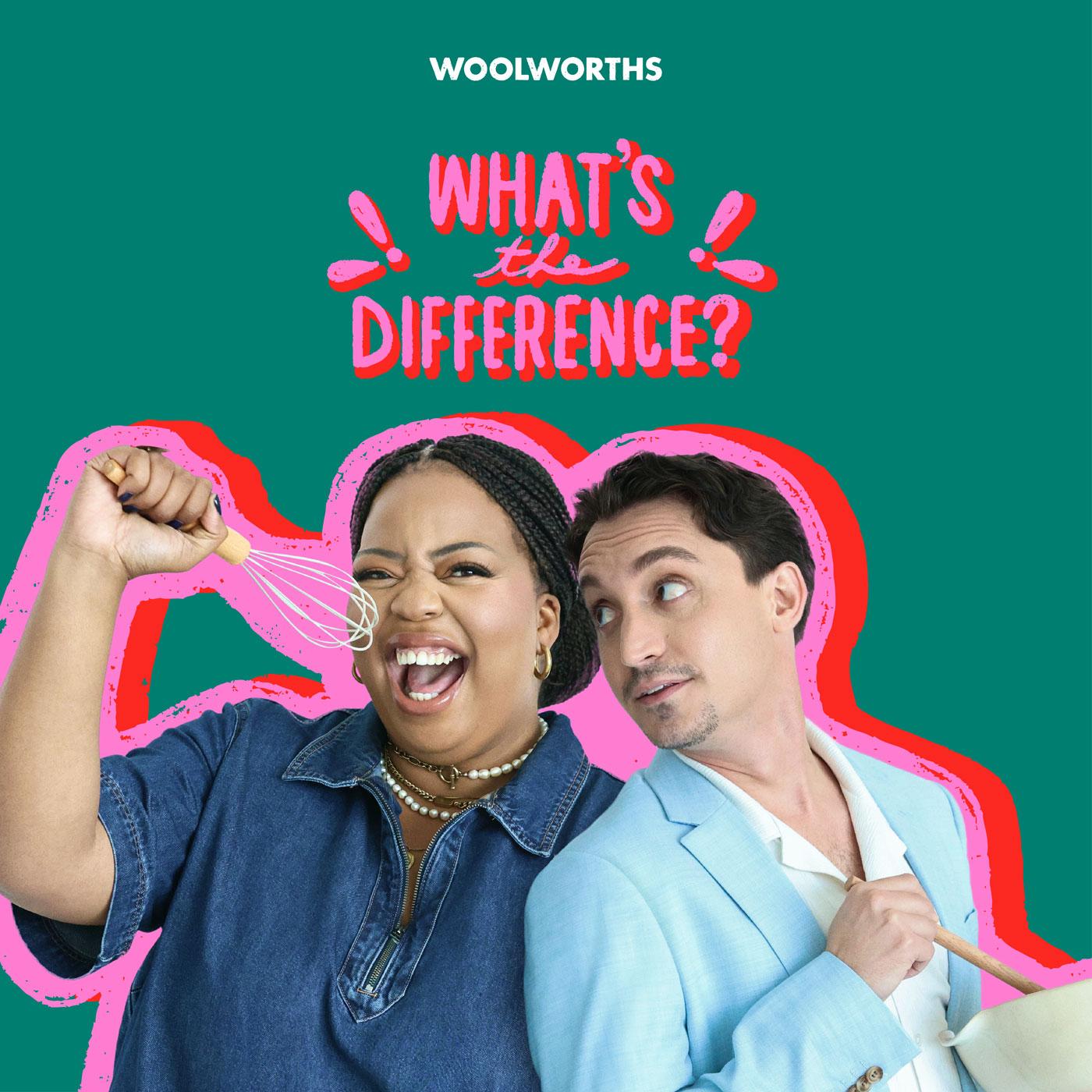
What does “free range” actually mean – and who checks? There is no legal definition of free range in South Africa, so what should you look for when you buy eggs? Farmer Khaya Burwana and Woolworths category manager for seafood and poultry, Ebrahim Moosajee, join hosts Sibongile Mafu and Steve Steinfeld to unpack free-range farming, egg quality and the journey from coop to carton.
In Season 2, Episode 2 of What’s the Difference? A Woolies Food Podcast, we crack open the world of free-range eggs. From stocking densities and chicken welfare to yolk colour, refrigeration and the float test, the conversation connects farming practices with everyday shopping choices.
Khaya shares how he swapped a master’s in IT for 100 chickens and a rented farm in Mfuleni, his work introducing hydroponic farming to schools, and what the Woolworths Youth Makers programme has done for his business. Ebrahim takes us behind the scenes of Woolworths’ free-range standards – including why the team put toys and music in chicken coops, why Woolworths moved the eggs into the fridge, and why a darker yolk doesn’t always mean a better egg.
Subscribe for more conversations about food, and tell us in the comments: do you store your eggs in the fridge or on the counter?
Episode details
What’s the Difference? A Woolies Food Podcast
Season 2, Episode 2
Brought to you by Woolworths.
Produced by Pop24
Published by Woolworths TASTE
Hosts: Sibongile Mafu and Steve Steinfeld
Guests: Khaya Burwana, farmer and founder of AgriKey Farming; Ebrahim Moosajee, Category Manager: Poultry and Seafood, Woolworths
#FreeRange #Eggs #WhatsTheDifference
Links
Woolworths: Need to know – Free Range Chicken: https://www.woolworths.co.za/content/article/chicken/need-to-know-free-range-chicken/_/A-cmp202758
Woolworths: Our Five Freedoms of Free Range: https://www.woolworths.co.za/content/howto/our-five-freedoms-of-free-range/_/A-cmp210687
Woolworths Youth Makers: Khaya: https://www.woolworths.co.za/content/article/youth-makers-khaya/_/A-cmp214843
AgriKey Farming website: https://www.agrikey-farming.co.za/
Show notes
In this episode
Hosts Sibongile Mafu and Steve Steinfeld welcome farmer Khaya Burwana and Woolworths category manager Ebrahim Moosajee for a conversation about free-range eggs, animal welfare and the journey from farm to shelf. Together, they explore what free range actually means in South Africa, how Woolworths sets and audits its standards, and how a young farmer from the Eastern Cape is using technology and education to change the way communities think about food.
How did Khaya go from IT to farming?
Khaya grew up in a rural area near King William’s Town in the Eastern Cape, where looking after livestock was part of daily life. After moving to Cape Town at age 10, he noticed the opportunity in poultry through his mother, an informal trader who bought and sold chickens. Despite holding a master’s in IT, Khaya felt called to farming. In 2021, he started AgriKey Farming in Mfuleni with 100 chickens on a rented farm, and the business has grown and diversified since.
Why does Khaya advocate for young people in farming?
Khaya challenges the stereotype of the old-fashioned farmer by showing that farming can be modern, efficient and technology-driven. He uses automated irrigation, hydroponic structures and social media to run and market his business. He is passionate about showing young people that farming is not just manual labour but can incorporate technology, entrepreneurship and innovation.
What has the Woolworths Youth Makers programme done for Khaya?
As a Youth Makers recipient, Khaya received a cash grant, mentorship from Woolworths experts and the opportunity to showcase his products nationwide. The mentorship helped him professionalise his business – from tracking his best-performing products by percentage to improving how he sets up his stall and markets his brand. The association with Woolworths also opened doors and built credibility in rooms where a young farmer might not otherwise be taken seriously.
What does free range mean in South Africa?
Ebrahim explains that there is no legislated definition of free range in South Africa. As a responsible retailer, Woolworths has developed its own standards based on international research and best practice. These include stocking densities, minimum outdoor ranging space, access to food and water, and the ability for birds to display natural behaviour.
What is Woolworths’ free-range eggs journey?
Woolworths stopped selling whole eggs from caged hens in 2004 – 20 years ago. By the mid-2010s, the retailer had converted all products containing eggs to use only free-range eggs, including liquid and powdered egg ingredients in private label foods. This was not an easy journey: it required taking long-standing generational farmers on a journey to adopt new welfare standards.
Why did Woolworths move eggs into the fridge?
Refrigeration improves egg quality and extends shelf life. Woolworths measures egg quality using the Haugh value – the strength of the albumen around the yolk. Refrigerated eggs maintain better integrity than eggs kept at room temperature, meaning less food waste for consumers. Woolworths does not wash its eggs, preserving the natural coating (bloom) that protects against bacteria. Every egg is date-stamped and traceable to the farm and date of lay.
How should you store and handle eggs at home?
Keep eggs in the fridge from purchase. For poaching or frying, take them straight from the fridge. For baking, bring eggs to room temperature by placing them under warm water for 5-10 minutes – don’t leave them out for more than two hours. Don’t wash eggs; the natural coating protects against bacteria. Quick freshness test: place the egg in water – if it sinks it’s fresh, if it floats, throw it away.
Does a darker yolk mean a better egg?
No. Some producers add colour to chicken feed to create the dark yellow yolk that consumers associate with freshness. Woolworths feeds its chickens natural ingredients like marigold, which gives a natural colour variation. Ebrahim notes that when a yolk is bright orange, that may actually be a sign to be concerned.
How does Woolworths manage supply and demand for eggs?
Eggs are one of Woolworths’ highest-volume products. The team plans bird placements around seasonal demand cycles, including an influx of European visitors to the Western Cape in summer who are big free-range customers. When there is a surplus, eggs are converted into liquid format for use in other products. During avian influenza outbreaks, Woolworths chooses not to source from non-free range suppliers to fill gaps, even at better prices.
Also discussed
- The gut-brain connection in chickens: happy, stress-free chickens produce better quality eggs
- Egg traceability: every Woolworths egg can be traced back to the farm, date and site of lay
- Supply and demand during Easter and other high-demand periods
- The role of the EPWP Entrepreneurship Training Programme in Khaya’s business growth
- Khaya’s brand story: quality, free range and building trust with customers
- Food security, food education and normalising food production in urban communities