
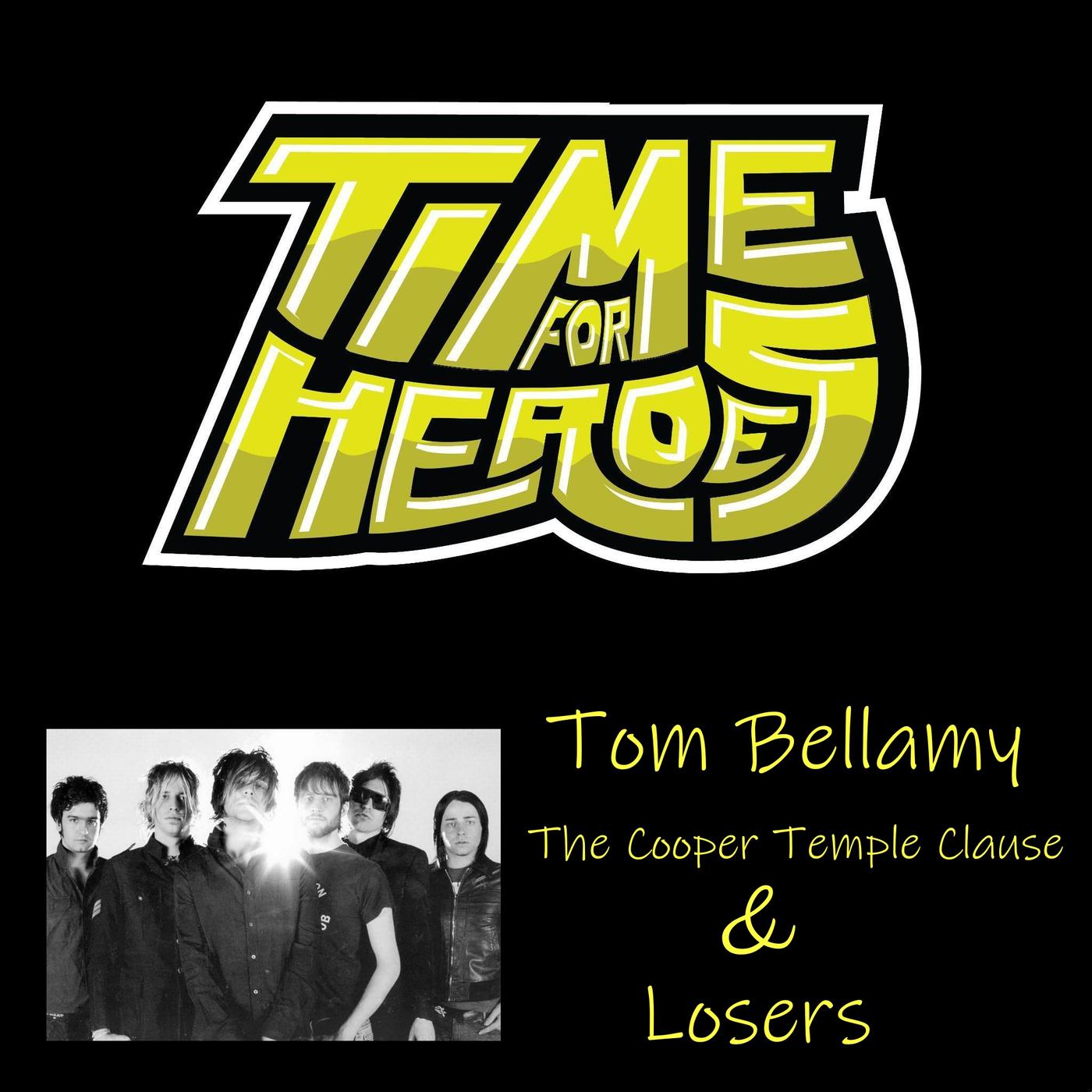
Tom: Hello, I am Tom Bellamy and you're listening to the Time for Heroes podcast.
TFH: Tom Bellamy, formerly of the Cooper Temple Clause, now in your new project Losers. We're going to talk about all of this. But what I'd to do at the start is go right back to what life was like for a young Tom growing up.
Tom: Young Tom growing up was pretty, it was kind of a bit boring outside of Reading, not much to do. We luckily, me and five other friends managed to entertain ourselves through music. Yeah, we were really inspired by the Reading Festival, of course. So yeah, I met Ben Gortree. the singer of the Coup de Temps and Clauses when I was 11. And that set me off on a musical journey. yeah, I mean, when we went to go and see Red Hot Chili Peppers at Reading Festival in 1994, that just changed everything for us. yeah, we started a band, I guess, and we just played every day pretty much in our little pig farm. And throughout the years, we found new members. Dan Fisher, the main lyricist, and Kieran Mahon. They popped up around the age of about 13 and then Did Hammond. We found him aged about 15 and John the drummer, same thing. yeah, was a good time. There was no distractions back then. We just loved music. That's all we wanted to do. There was nothing else that we wanted to do and that gave us such focus. that we were really so tight by the time that anyone kind of saw us It was amazing how quickly it came together, so yeah, really enjoyable teenage years, actually, with the boys.
TFH: Obviously touching on the Redding Festival and you had seen Red Hot Chilli Peppers, what sort of influences, what sort of bands were you into back then?
Tom: I mean me personally, I was brought up on Led Zeppelin, Jimi Hendrix, they were sort of my dad's things. He was also into sort of some soul, so he had records by Blood Sweat and Tears which I really liked, all sorts. Yeah, of course like stuff like Beatles and the Stones being British and having parents that were into that as well. But then when Britpop came around and grunge, just got heavily into that, absolutely loved Nirvana when that Nevermind record came out. I remember hearing Smells Like Teen Spirit for the first time, just thinking like, why is this? And then, I really got into the Britpop thing with Blur and Oasis, everything really. And then meeting the boys from the Coopers, they all had different influences as well. Ziddizz was really into his hip hop, so he introduced us to that side and we just had all of it really. Bristol scene with massive attack and caught his head. So yeah, was one big pot.
TFH: I guess having like obviously sixes and so much different influences, did that kind of take all those influences? How did you fit that into your Cooper Temple Clause sound?
Tom: Well that was the thing, we all brought our own little piece of the pie. So it was kind of nice that there wasn't just one person leading with one influence. I think that's why it was quite interesting. It was a bit of a double edged sword because lots of people didn't know where to put us actually, whether we were a rock band or a indie band or yeah, alternative.
TFH: Mm-hmm.
Tom: But it was kind of nice because we all had our say actually and it was a bit... democratic process and maybe it took a little bit longer, we just took our time and we're very patient with each other and it just seemed to work. Massive, massive difference to working in the past few years just by myself or with one other person. It's really hard. in comparison when you're there with six people it just seems so easy because you're just there in the moment and you can make changes really quickly and yeah we just really benefited I think from so many different influences.
TFH: Informing and reading, what was the music scene like? What was the live scene like back then?
Tom: It was pretty vibey actually, yeah, it was cool. There was a healthy competition between the bands, but yeah, we used to go out every Friday and Saturday night into the Three B's, this pub where a lot of the bands would meet up, and the Purple Turtle, which was also like where people would go after hours, and it was really cool, like, it was an amazing scene. I remember it fondly. I seem to remember being, yeah, supported. People were quite supportive. I'm sure there was things behind the scenes that we didn't hear about, but yeah, it was nice to sort of like push that scene forward. Yeah, really fun memories.
TFH: So early releases obviously July 2000 you brought out the Crayon demos the following year. You brought out Series A EPs, the Hardware EP, Way Out West, the Warfare EP. Then you re-released both of them and then Let's Kill Music was released in September 2001. So how was that then, your early releases, and how much interest were you getting for labels and such at that time?
Tom: The early releases were so, so exciting because we had actually a lot of support from the record label because they'd seen that we'd grown things with fans, you know, from sort of grassroot levels. And they really let us, you know, have some fun with the fans, sending them things regularly through the posts and
TFH: Mm-hmm.
Tom: yeah. We just built a lovely community really early on, which I guess is sort of almost impossible to do these days. But I guess we managed to do that through the touring early on. again, we had a bit of financial support to do that. mean, bands were given money back then, and then you could go around and play because the record label had seen that we could really play. You we were really interesting to watch live. because we'd just spent so many years playing together. they immediately saw that it was kind of a no brainer to just stick us in a van and send us off around the country. And we were so passionate and up for it. We just picked up fans all over the place. And yeah, I remember when we went over to Japan, I think just as we were about to release our first EP. And there were so many people that were behind this even then. We were amazed at how it just kind of connected with people.
TFH: You're right, you say, the sound was completely different from anything else that I'd heard at that time. Obviously it was a few months later that I'd seen you for the first time. Now I'm not sure if I'd seen you as an NME, a feature NME, and was all the new bands and the thing that they talked about then was your hair or your hairstyles back then. And then it was soon after that I seen you supporting Embrace at the Bar of Lands. and I got a was it like a seven inch and it had way out west it had let's kill music you know that I still got it up in the loft somewhere but
Tom: Nice.
TFH: that's kind of that was my first dealings with yous and I fell in love with yous that night at the Barrowlands so mean, like embrace, like the sound of embrace and the sound of Cupertempel Claws, they don't sound similar. And anyway, so how was that tour with them?
Tom: Yeah, that was the, like I said, that was the problem with our band that we never seemed to fit in anywhere. and I remember when we got offered that tour and we, we were talking about it thinking like, are we, are we going to be too heavy for embrace? Like, are we going to, are we going to work with the crowd? but we were just open to, to anything back then. And so we thought we'd give it a go, you know, and obviously really, honored to, to be on that. that tour and the crowd just really got it. They got behind us. I think we were quite surprised and yeah, the Embrace boys were so kind and giving. They really looked after us and we had a great tour. Yeah, I think we went into it with sort of no expectations and came out just feeling really proud and honoured that we'd been able to play to so many new fans who got it.
TFH: Yeah, I he's absolutely smashed it. I find Embrace a knack at picking good support bands because I can't mind if it was the year before or the year after. I've seen Alfie, a Manchester band, support them. And again, completely different for yous. Again, completely different for Embrace. A lot more lo-fi. in the moldy badly drawn boy and again another band that I followed continually for them so I embraced an act of picking them. Obviously following that then, the following year Start of the year January he's released film maker, Been Training Dogs. It went to number 20 in the charts. for a band of your stature, how was that kind of getting into the top 20 so early?
Tom: Yeah, I mean, those days we were just completely blown away by getting into the charts. I mean, we never thought we would be bothering the charts. So to get that high just really showed the power of the fans. Yeah, because the music wasn't necessarily crossover music, but it also showed Yeah, the appetite of the people at that time and bands were there in the forefront of the music scene and people were just really into that style of music. So it was really connecting with an audience. yeah, mean, Let's Go Music went in at 41. That was quite a funny story because we were almost celebrating a little bit too early and the champagne had popped. And then it went in at number 41. But yeah, the follow-up
TFH: You
Tom: filmmaker. Yeah, to go in that high was just incredible. It's just incredible feeling.
TFH: And then the following month the album came out, See Us Through and Leave, that went to number 27 and in the liner notes used Fank, Westlife and Five. So obviously that was part of the label back then.
Tom: Yeah, I mean the RCA label was a bit of a pop label I think at that time. The guy that signed us was actually the guy that signed Take That. So I'm not sure what he saw in us. But yeah, that was a little tongue in cheek thank you to
TFH: Ma-
Tom: those bands.
TFH: Yeah, must have in the hairstyle sign, it must have in the hairstyle that you signed.
Tom: Maybe. It was something. It was something about six young, pretty boys from wedding.
TFH: So again, then next release May, May, Who Needs Enemies, that got to number 22. And then Stand Alone, Single Aim, came out in September. Yeah, whenever my wife hears me playing your music, she says it's like funeral music. She doesn't get it at all, which don't take that the wrong way because I take it as a compliment because if
Tom: Ha ha.
TFH: she liked the music that I like, then I'd be doing something wrong.
Tom: There you go. I mean, every we we I it was quite divisive
TFH: sure.
Tom: our music. Like pe some people loved it, some people hated it, but I think that's the key in life, isn't it? If you're doing something that some people love and some people hate, then keep going because that's what's really that's what matters, isn't it? No one wants bland music in the middle that doesn't make anyone feel anything.
TFH: Yeah, so the following year 2003, I seen you playing at Tea in the Park and I can remind you it was one of the best years weather wise, was roasting hot. and I can't mind watching you, your set was amazing and you were chucking cans of Tenants into the audience, you were chucking your rider into the audience. I was quite a good bit away from the stage but I can't mind just putting my hand up and I caught one, like dead on in my hand. And yeah, and as
Tom: Did you really? Congratulations.
TFH: I say, that year was roasting right and I I kept that can. full weekend. probably, I nearly died of dehydration.
Tom: Yeah.
TFH: I said really just to drink that can. So aye, but he's done Tean the Park a couple of times today. You think obviously the initial tour we embrace at the Barrowlands, do think that helped grow your audience up here because it was packed out here to a Tean the Park occasions.
Tom: Yeah. Yeah, Tea in the Park was fantastic. I've got very fond memories of that as well. Yeah, I remember that day. I remember think I remember seeing Ben throwing those cans out, just thinking, my God, like we're gonna end up in serious trouble here because I d don't think that would be allowed these days. but yeah, definitely like every time we
TFH: Yeah
Tom: we toured and managed to get more people like, you know, following us and yeah, those tea in the park gigs, there was always amazing audiences.
TFH: You can still get them, they're still out there on YouTube as well. watched one just last week man, was brilliant. Just take me back to that time.
Tom: Yeah.
TFH: Obviously later on that year you released the second album, Kick Up The Fires and Let The Flames Break Loose. Now that came out the same time as the Stroke's second album, Room On Fire. So I'm not sure if it was the first album, maybe at the same time as the Strokes first album as well. I don't know if there's that connection there, but how did you feel kind of
Tom: I was
TFH: like when the Strokes came about?
Tom: I love the strokes, absolutely loved them. I remember s sitting in the bath in the in the residential studio that we were in in Gr Great Linford Manor, listening to Hard to Explain, which was one of their first DPs, and thinking, Wow, this is this is pretty cool. This is this has got something. Yeah, I mean they they were really impactful when they came out. I saw them, I was lucky enough to see them And the Libertines in Brighton, both of them, you know, in a room of like a hundred people. And yeah, it felt really, really vibey when it came out. And yeah, that I mean, I think they were also on on RCA. but just that that first album's incredible. And I actually got to meet Julian Casablanca's in Berlin when was that? Must have been about ten years ago now or something. And I had to thank him actually because
TFH: Mm-hmm.
Tom: there was some enemy award show or something where a photographer had photographed me thinking it was Julian Casablancas. and so
TFH: Ha ha!
Tom: I think it was two or three times in the Sun newspaper around about that time when there were stories about Julian Casablancas. It was talking about him, but it was my photo. And so I was on like, you know, page page five or six of the sun. and yeah, so I said to him, I like, Thanks, mate, because you know, you've sort of made my face famous. I'm apparently I'm I'm quite famous now and and so he was laughing. and he was a really nice guy.
TFH: Well, mean, so that second album as well, I mean, that went to number five in the chart. So at that point, were flying. Towards the end of the year, Blind Pilots was released and then kind of with a couple of years, obviously you mentioned the Levitin. So what sort of relationship did you have with the Levitin at that point?
Tom: I mean w as a band we weren't sort of hanging out with them that much, but Dids was. I mean Dids was a lot a lot more sociable, I guess, in those days and he was up for just anything.
TFH: Mm-hmm.
Tom: He was sort of the party animal. And yeah, he he formed quite a close relationship with with Carl and and then obviously stepped
TFH: Mm-hmm
Tom: in when Pete had to st leave the band for whatever reason or so. yeah. It was it was Dids really, you know, and and and he wanted to go and and that was cool and yeah, they were also just a great band for the scene, weren't they? They just they were really doing a lot of of good for the for the music scene.
TFH: When Dad's left, yous... I don't know how to put it. How was the feeling when the band, when he decided to join Dirty Pretty Vins? Did you get your blessing or were yous annoyed about it? And how did that kind of then change the band dynamic going forward?
Tom: I think there was some mixed feelings when he left within the band. I mean, I was really happy for him. I think I'm I'm always happy for people to do whatever makes them happy in life, you know. I'm all about flow and you know, letting things happen because, you know, that's the way th the what for whatever reason things need to ha happen. So he went and I was alright with it and we just had to Change things around. We were lucky that, you know, there were still five of us in the band, which is still more than most bands have. So we were we were all playing different instruments anyway. So, you know, of course it changed the dynamic and we missed him hugely because he's just such a big character. but, you know, to be honest, when he left, things were difficult in our camp anyway, at that at that point. in terms of yeah, the studio side, like, you know, when we began. Making music. It was all of us in the room together. There was no pressure. We had loads of time. and yeah, at that point there was just a a really a lot of pressure on us to deliver. And we ended up getting separated because we thought that was a a way that we would be able to sort of pump out some tunes quicker. But it just it just I guess it lost some of the magic in that we
TFH: Hmm.
Tom: weren't Together so much, you know.
TFH: I mean, the first album is still a good album, but did you feel as if at that point the traction had gone?
Tom: Absolutely. Yeah, yeah. We felt it as a band. we we were trying to mu write music that unfortunately wasn't connecting with the label. And you know, then they got producers in which basically took the songs and sort of they were trying to make them more palatable, I guess. and it just it just didn't really connect. You know, there there are some good songs on that album that I'm really fond of, but music is about connection and it didn't connect. You know and and that's okay. yeah.
TFH: And then at what point did you decide to call it day and who kind of made the call on that? Was that a collective decision? Or was it something that you all kind of knew within yourselves?
Tom: Dan made a decision in the end. Dan Fisher, he decided we'd had this tour. and at the end of the tour he decided it was gonna be the the last tour. And you know, he told us we obviously we were we were gutted, but yeah, that was his decision that was made and and so and so so be it. we had an amazing, amazing seven years. And I I don't regret a thing.
TFH: Yeah, and I mean you saw when Owen and done other things obviously you were your remixing and stuff and then obviously losers which are going to come on to talk about but John was doing some work with CSS for a bit which was another band I was quite into another kind of different sort of sounding band. Ben and Ciaran had their type 2 era and Dan was doing Red Kite. So you were all kind of kept busy with other projects. So for yourself, like kind of getting into DJing and remixing, was that a natural step for the stuff you've been doing with the Coopers?
Tom: Yeah, absolutely. I was really getting into bands like Soul Wax at the time, who were remixing their own stuff, and I just thought, wow, that's that's pretty cool actually, because the the label wasn't really letting us do what we wanted to do, and I thought actually, well, this is a way of me being able to do what I want to do and without them having any say about it. So I just started producing not knowing anything about music production and Eddie Temple Morris. heard some of my remixes and he got in contact and that's how Loser started because we started doing remixes together and he kept on pushing me and and encouraging me even though I I was telling him that I didn't know how to, you know, produce music. Although yeah, it just it just happened over time and and yeah and then because of that I just became a lot more confident in the produ producer's chair. And and then yeah, I produced Dan's red kite album for him, which I really, really love. I think it's such an amazing album. And and then I did some other work with with some other bands. and yeah, I'm still making music with Losers now.
TFH: Yeah, because I I just only discovered Losers maybe a few years back. But the debut album Beautiful Losers is sublime. love it. My favorite track is Flush with Razah Ahmed. So
Tom: Yeah.
TFH: how did that go then, kind of working with all these other kind of vocalists and stuff on your specifically on the first album?
Tom: Yeah, that was that was really interesting because I'd only ever worked with the Coopers, I was only ever working with people that I knew really well. And then Eddie was introducing these other vocalists from from elsewhere. And I must admit, like I was I was bricking it because, you know, having Brian Mulco come down to do a a vo vocal in our pig farm or whatever, I just I just thought, my God, I'm so out of my depth here. What am I doing? Like I I should be playing or singing, not the other way around. Like I I was suddenly in control. And I remember actually let there were some gremlins that came out that day when he came down to the studio and Eddie had to take him out for a drive while I sort of s fixed the technical problems in the studio. And I just thought, my god, like what am I doing? I'm so out of my depth. but then we fixed it and he did his take. I think he did two takes. And that was it, and then walked out. And I remember thinking like, wow, like what a professional. and and then yeah, working with Riz, of course, like back then he wasn't so well known. Eddie Eddie was so well connected to to so many people, and he'd been so kind to so many people that everyone was always up for just helping out and doing stuff for Eddie in return. So, you know, we sent Rez that that track and he loved it and he sent the vocal back and we just plopped it in and Yeah, just r really great tracks. And also the video for that track. I was, you know, a friend of Eddie's that just loved the track and just wanted to to do the video and it was just really interesting to, yeah, work with people from different backgrounds actually.
TFH: And to the point where that album Beautiful Lose came out in 2010, 2014 and So We Shall Never Park came out, 2016, How To Ruin Other People's Futures, and up to this point, 2021, in a bit Covid time. an EP and then you start releasing new music. So obviously get busy and now you're in Berlin. How long you been in Berlin?
Tom: I've been here eleven years now. and I absolutely love it. Yeah, we came over just for a few months to look after a residential studio. this there was this band IMX, that were in this place and they decided to go to America and we we were basically house sitting for them, so we got to use their studio, which was just absolutely amazing. Just had this huge lounge with a grand piano in it and a trapdoor that came down into this studio and We were just in heaven. We just couldn't believe it. so we made quite a lot of music back then actually. And and there's still a lot of that that hasn't seen the light of day. So yeah, really excited just to get some of that music out as well.
TFH: So what's plans then for obviously you released Passenger last month, so what's the plans then going forward for new music coming?
Tom: so yeah, we've got so much in the pipeline. I guess I guess I got a bit burnt out around about twenty twenty-one and I I really struggled with my tinnitus and my my ear and I just thought, you know, enough's enough and wanted to just have a break. And then at the start of this year or maybe the end of last year, I just, you know, went through some stuff and just thought, My God, there's there's so much stuff that we did and put in so much work and Yeah, now there's enough material to just keep drip feeding, you know, a track a month for quite a long time actually. So, it's a really nice place to be because yeah, like I say, my my ears not in a good way to be making too much new music, but I can be editing stuff and arranging stuff that we we created back in the day. and yeah, it means that I can concentrate on connecting with people and you know, the marketing side which I was ne never too keen on and seeing if yeah it can build a community again.
TFH: So obviously you mentioned the tinnitus because I can mind hearing you on the Sound Effects podcast with Katie, can't remember her name. And that was a really good podcast because it's something that's not really spoken about. So how does tinnitus affect you in... Obviously that podcast with Katie was maybe, I don't know, four or five years ago. How has it progressed? Has it got better? Can it be reversed? Or is it something you need to manage all the time now?
Tom: I I mean to begin with it was absolutely terrifying. It was my worst nightmare. and since then I've kind of made friends with it. It's like it's like my on button now. It's like I when I hear that I I know that I'm alive. and it gets worse when I'm stressed, it gets worse when I listen to loud music. But yeah, it's it's manageable. I can't see there being any cure anytime soon. I just I mean, the worst part about it is that I I don't see any live music anymore. I've tried a little bit over the past few years, but it's it's just too dangerous for me now. So that's that's really sad for me. I've got high hopes for AI sorting something out, one day. You never know. and of course,
TFH: Mm.
Tom: you know, making music I just I it's just my life, my passion. So I gotta keep it quiet, but I can't. This is the problem, you see. I just I c I can't not have it loud just 'cause it's more fun, isn't it? So
TFH: I guess, obviously, one of my final questions was going to be the chance of a Cooper Temple Closers reunion. Anytime because you see all these bands coming back with 20th anniversary, 30th anniversary tours and whatever. But obviously with how loud it is and how rock it is live, that probably puts to bed that kind of option. I take it.
Tom: Well yeah. I think if there was ever a chance that we got to play again, I would have to strap something seriously thick to my ears to to stop any sound getting in. I mean I'd be up for anything really. I'd love to I'd love to get that band back on stage again, but there's you know, there's there's there's six of us in that band and you know, we're in different countries or whatever. it's I can see how much the the fans want something and you know I did that post the other day where I was stood next to my my parents' house in Winnish with the the Cooper's front cover or whatever and you know I I can I can
TFH: Yeah.
Tom: see that people want some Cooper's things. So may maybe if there's something that we can we can give. I think there's probably a twenty fifth anniversary coming up of that record. I don't know, but to play live, it's very, very slim chance, which is it is what it is.
TFH: Yeah, I mean I've very nearly had a heart attack when I seen that post show. Anything that you could give is man, because that's just the thing, that no matter who I speak to in the podcast, like... The passage of time does not make fans eager for stuff. 25
Tom: Yeah.
TFH: years doesn't mean we forgot about you. It's
Tom: that's very straight.
TFH: good having losers there as well because there's still that connection. I'm eager to see what the next release is. the other fans are the same so I just keep doing what you're doing in that aspect. The last part of the podcast obviously I mentioned to start, time for heroes, I asked my guests to pick four heroes to come for dinner, dead or alive, whatever aspect of life you want, why are they your heroes and what are you cooking for them as well.
Tom: Ha ha. I my heroes I guess it's more interesting to have like dead people, isn't it? Because you just it's God. I don't know why. This just appeals to me. I I mean my heroes when I was growing up, as I said before, Jimi Hendrix, Kurt Cobain. so I think I'd have to have them at the table.
TFH: Mm-hmm.
Tom: who else would I like to have there? Who else were my heroes when I was growing up? I'd I'd I mean my favourite albums would probably I always say Beck Odolet to people actually. I'd I'd I'd love to know what he's like. and I guess we've got to have a female in there, haven't we? So who would that be? Gotta gotta have s just someone completely different. Maybe we can get the Queen in there or something.
TFH: And work with your co- yeah.
Tom: and what would I cook? I would probably cook. I mean, I'm I'm I'm a big fan of stone baked pizza here in the garden in Berlin. that's that's my favourite thing to do. And I'd I'd love to see the Queen eating some some pizza because I can imagine that she probably doesn't have that much pizza. and
TFH: you
Tom: yeah, I think that would be I think that would be a good mix.
TFH: Well, that's a brilliant bunch of guests. It's been an absolute pleasure speaking to you today, Tom. I know we've been messaging back and forth for a few weeks trying to sort it, and we've had to deal with some technical problems today as well, but we've got there and it's been an absolute pleasure talking to you. When is the next single out? Is it a couple of weeks?
Tom: The next one's actually gonna come out tomorrow. It's called Daring to Begin. So yeah, really excited about this one. And apparently Chris Hawkins at BBC six is gonna play it as well. So I'm I'm hoping that maybe he'll play it this week. and yeah, I also just wanted to say thank you so much for getting in in contact and for helping us to to get our voices out there and yeah, I really appreciate it, Martin.
TFH: Brilliant. So for the listeners obviously, Daring to Begin will be out by the time the podcast comes out. once you've listened to this, make sure you go and listen to Daring to Begin. It will be on all streaming platforms and such. So aye, congratulations with everything that goes with that, Tom. But aye, absolute pleasure speaking to you.
Tom: Thank you so much. And yeah, best of luck with the podcast. I'll I'll be looking out for you.
TFH: Tom Bellamy, formerly of the Cooper Temple Clause, now in your new project Losers. We're going to talk about all of this. But what I'd to do at the start is go right back to what life was like for a young Tom growing up.
Tom: Young Tom growing up was pretty, it was kind of a bit boring outside of Reading, not much to do. We luckily, me and five other friends managed to entertain ourselves through music. Yeah, we were really inspired by the Reading Festival, of course. So yeah, I met Ben Gortree. the singer of the Coup de Temps and Clauses when I was 11. And that set me off on a musical journey. yeah, I mean, when we went to go and see Red Hot Chili Peppers at Reading Festival in 1994, that just changed everything for us. yeah, we started a band, I guess, and we just played every day pretty much in our little pig farm. And throughout the years, we found new members. Dan Fisher, the main lyricist, and Kieran Mahon. They popped up around the age of about 13 and then Did Hammond. We found him aged about 15 and John the drummer, same thing. yeah, was a good time. There was no distractions back then. We just loved music. That's all we wanted to do. There was nothing else that we wanted to do and that gave us such focus. that we were really so tight by the time that anyone kind of saw us It was amazing how quickly it came together, so yeah, really enjoyable teenage years, actually, with the boys.
TFH: Obviously touching on the Redding Festival and you had seen Red Hot Chilli Peppers, what sort of influences, what sort of bands were you into back then?
Tom: I mean me personally, I was brought up on Led Zeppelin, Jimi Hendrix, they were sort of my dad's things. He was also into sort of some soul, so he had records by Blood Sweat and Tears which I really liked, all sorts. Yeah, of course like stuff like Beatles and the Stones being British and having parents that were into that as well. But then when Britpop came around and grunge, just got heavily into that, absolutely loved Nirvana when that Nevermind record came out. I remember hearing Smells Like Teen Spirit for the first time, just thinking like, why is this? And then, I really got into the Britpop thing with Blur and Oasis, everything really. And then meeting the boys from the Coopers, they all had different influences as well. Ziddizz was really into his hip hop, so he introduced us to that side and we just had all of it really. Bristol scene with massive attack and caught his head. So yeah, was one big pot.
TFH: I guess having like obviously sixes and so much different influences, did that kind of take all those influences? How did you fit that into your Cooper Temple Clause sound?
Tom: Well that was the thing, we all brought our own little piece of the pie. So it was kind of nice that there wasn't just one person leading with one influence. I think that's why it was quite interesting. It was a bit of a double edged sword because lots of people didn't know where to put us actually, whether we were a rock band or a indie band or yeah, alternative.
TFH: Mm-hmm.
Tom: But it was kind of nice because we all had our say actually and it was a bit... democratic process and maybe it took a little bit longer, we just took our time and we're very patient with each other and it just seemed to work. Massive, massive difference to working in the past few years just by myself or with one other person. It's really hard. in comparison when you're there with six people it just seems so easy because you're just there in the moment and you can make changes really quickly and yeah we just really benefited I think from so many different influences.
TFH: Informing and reading, what was the music scene like? What was the live scene like back then?
Tom: It was pretty vibey actually, yeah, it was cool. There was a healthy competition between the bands, but yeah, we used to go out every Friday and Saturday night into the Three B's, this pub where a lot of the bands would meet up, and the Purple Turtle, which was also like where people would go after hours, and it was really cool, like, it was an amazing scene. I remember it fondly. I seem to remember being, yeah, supported. People were quite supportive. I'm sure there was things behind the scenes that we didn't hear about, but yeah, it was nice to sort of like push that scene forward. Yeah, really fun memories.
TFH: So early releases obviously July 2000 you brought out the Crayon demos the following year. You brought out Series A EPs, the Hardware EP, Way Out West, the Warfare EP. Then you re-released both of them and then Let's Kill Music was released in September 2001. So how was that then, your early releases, and how much interest were you getting for labels and such at that time?
Tom: The early releases were so, so exciting because we had actually a lot of support from the record label because they'd seen that we'd grown things with fans, you know, from sort of grassroot levels. And they really let us, you know, have some fun with the fans, sending them things regularly through the posts and
TFH: Mm-hmm.
Tom: yeah. We just built a lovely community really early on, which I guess is sort of almost impossible to do these days. But I guess we managed to do that through the touring early on. again, we had a bit of financial support to do that. mean, bands were given money back then, and then you could go around and play because the record label had seen that we could really play. You we were really interesting to watch live. because we'd just spent so many years playing together. they immediately saw that it was kind of a no brainer to just stick us in a van and send us off around the country. And we were so passionate and up for it. We just picked up fans all over the place. And yeah, I remember when we went over to Japan, I think just as we were about to release our first EP. And there were so many people that were behind this even then. We were amazed at how it just kind of connected with people.
TFH: You're right, you say, the sound was completely different from anything else that I'd heard at that time. Obviously it was a few months later that I'd seen you for the first time. Now I'm not sure if I'd seen you as an NME, a feature NME, and was all the new bands and the thing that they talked about then was your hair or your hairstyles back then. And then it was soon after that I seen you supporting Embrace at the Bar of Lands. and I got a was it like a seven inch and it had way out west it had let's kill music you know that I still got it up in the loft somewhere but
Tom: Nice.
TFH: that's kind of that was my first dealings with yous and I fell in love with yous that night at the Barrowlands so mean, like embrace, like the sound of embrace and the sound of Cupertempel Claws, they don't sound similar. And anyway, so how was that tour with them?
Tom: Yeah, that was the, like I said, that was the problem with our band that we never seemed to fit in anywhere. and I remember when we got offered that tour and we, we were talking about it thinking like, are we, are we going to be too heavy for embrace? Like, are we going to, are we going to work with the crowd? but we were just open to, to anything back then. And so we thought we'd give it a go, you know, and obviously really, honored to, to be on that. that tour and the crowd just really got it. They got behind us. I think we were quite surprised and yeah, the Embrace boys were so kind and giving. They really looked after us and we had a great tour. Yeah, I think we went into it with sort of no expectations and came out just feeling really proud and honoured that we'd been able to play to so many new fans who got it.
TFH: Yeah, I he's absolutely smashed it. I find Embrace a knack at picking good support bands because I can't mind if it was the year before or the year after. I've seen Alfie, a Manchester band, support them. And again, completely different for yous. Again, completely different for Embrace. A lot more lo-fi. in the moldy badly drawn boy and again another band that I followed continually for them so I embraced an act of picking them. Obviously following that then, the following year Start of the year January he's released film maker, Been Training Dogs. It went to number 20 in the charts. for a band of your stature, how was that kind of getting into the top 20 so early?
Tom: Yeah, I mean, those days we were just completely blown away by getting into the charts. I mean, we never thought we would be bothering the charts. So to get that high just really showed the power of the fans. Yeah, because the music wasn't necessarily crossover music, but it also showed Yeah, the appetite of the people at that time and bands were there in the forefront of the music scene and people were just really into that style of music. So it was really connecting with an audience. yeah, mean, Let's Go Music went in at 41. That was quite a funny story because we were almost celebrating a little bit too early and the champagne had popped. And then it went in at number 41. But yeah, the follow-up
TFH: You
Tom: filmmaker. Yeah, to go in that high was just incredible. It's just incredible feeling.
TFH: And then the following month the album came out, See Us Through and Leave, that went to number 27 and in the liner notes used Fank, Westlife and Five. So obviously that was part of the label back then.
Tom: Yeah, I mean the RCA label was a bit of a pop label I think at that time. The guy that signed us was actually the guy that signed Take That. So I'm not sure what he saw in us. But yeah, that was a little tongue in cheek thank you to
TFH: Ma-
Tom: those bands.
TFH: Yeah, must have in the hairstyle sign, it must have in the hairstyle that you signed.
Tom: Maybe. It was something. It was something about six young, pretty boys from wedding.
TFH: So again, then next release May, May, Who Needs Enemies, that got to number 22. And then Stand Alone, Single Aim, came out in September. Yeah, whenever my wife hears me playing your music, she says it's like funeral music. She doesn't get it at all, which don't take that the wrong way because I take it as a compliment because if
Tom: Ha ha.
TFH: she liked the music that I like, then I'd be doing something wrong.
Tom: There you go. I mean, every we we I it was quite divisive
TFH: sure.
Tom: our music. Like pe some people loved it, some people hated it, but I think that's the key in life, isn't it? If you're doing something that some people love and some people hate, then keep going because that's what's really that's what matters, isn't it? No one wants bland music in the middle that doesn't make anyone feel anything.
TFH: Yeah, so the following year 2003, I seen you playing at Tea in the Park and I can remind you it was one of the best years weather wise, was roasting hot. and I can't mind watching you, your set was amazing and you were chucking cans of Tenants into the audience, you were chucking your rider into the audience. I was quite a good bit away from the stage but I can't mind just putting my hand up and I caught one, like dead on in my hand. And yeah, and as
Tom: Did you really? Congratulations.
TFH: I say, that year was roasting right and I I kept that can. full weekend. probably, I nearly died of dehydration.
Tom: Yeah.
TFH: I said really just to drink that can. So aye, but he's done Tean the Park a couple of times today. You think obviously the initial tour we embrace at the Barrowlands, do think that helped grow your audience up here because it was packed out here to a Tean the Park occasions.
Tom: Yeah. Yeah, Tea in the Park was fantastic. I've got very fond memories of that as well. Yeah, I remember that day. I remember think I remember seeing Ben throwing those cans out, just thinking, my God, like we're gonna end up in serious trouble here because I d don't think that would be allowed these days. but yeah, definitely like every time we
TFH: Yeah
Tom: we toured and managed to get more people like, you know, following us and yeah, those tea in the park gigs, there was always amazing audiences.
TFH: You can still get them, they're still out there on YouTube as well. watched one just last week man, was brilliant. Just take me back to that time.
Tom: Yeah.
TFH: Obviously later on that year you released the second album, Kick Up The Fires and Let The Flames Break Loose. Now that came out the same time as the Stroke's second album, Room On Fire. So I'm not sure if it was the first album, maybe at the same time as the Strokes first album as well. I don't know if there's that connection there, but how did you feel kind of
Tom: I was
TFH: like when the Strokes came about?
Tom: I love the strokes, absolutely loved them. I remember s sitting in the bath in the in the residential studio that we were in in Gr Great Linford Manor, listening to Hard to Explain, which was one of their first DPs, and thinking, Wow, this is this is pretty cool. This is this has got something. Yeah, I mean they they were really impactful when they came out. I saw them, I was lucky enough to see them And the Libertines in Brighton, both of them, you know, in a room of like a hundred people. And yeah, it felt really, really vibey when it came out. And yeah, that I mean, I think they were also on on RCA. but just that that first album's incredible. And I actually got to meet Julian Casablanca's in Berlin when was that? Must have been about ten years ago now or something. And I had to thank him actually because
TFH: Mm-hmm.
Tom: there was some enemy award show or something where a photographer had photographed me thinking it was Julian Casablancas. and so
TFH: Ha ha!
Tom: I think it was two or three times in the Sun newspaper around about that time when there were stories about Julian Casablancas. It was talking about him, but it was my photo. And so I was on like, you know, page page five or six of the sun. and yeah, so I said to him, I like, Thanks, mate, because you know, you've sort of made my face famous. I'm apparently I'm I'm quite famous now and and so he was laughing. and he was a really nice guy.
TFH: Well, mean, so that second album as well, I mean, that went to number five in the chart. So at that point, were flying. Towards the end of the year, Blind Pilots was released and then kind of with a couple of years, obviously you mentioned the Levitin. So what sort of relationship did you have with the Levitin at that point?
Tom: I mean w as a band we weren't sort of hanging out with them that much, but Dids was. I mean Dids was a lot a lot more sociable, I guess, in those days and he was up for just anything.
TFH: Mm-hmm.
Tom: He was sort of the party animal. And yeah, he he formed quite a close relationship with with Carl and and then obviously stepped
TFH: Mm-hmm
Tom: in when Pete had to st leave the band for whatever reason or so. yeah. It was it was Dids really, you know, and and and he wanted to go and and that was cool and yeah, they were also just a great band for the scene, weren't they? They just they were really doing a lot of of good for the for the music scene.
TFH: When Dad's left, yous... I don't know how to put it. How was the feeling when the band, when he decided to join Dirty Pretty Vins? Did you get your blessing or were yous annoyed about it? And how did that kind of then change the band dynamic going forward?
Tom: I think there was some mixed feelings when he left within the band. I mean, I was really happy for him. I think I'm I'm always happy for people to do whatever makes them happy in life, you know. I'm all about flow and you know, letting things happen because, you know, that's the way th the what for whatever reason things need to ha happen. So he went and I was alright with it and we just had to Change things around. We were lucky that, you know, there were still five of us in the band, which is still more than most bands have. So we were we were all playing different instruments anyway. So, you know, of course it changed the dynamic and we missed him hugely because he's just such a big character. but, you know, to be honest, when he left, things were difficult in our camp anyway, at that at that point. in terms of yeah, the studio side, like, you know, when we began. Making music. It was all of us in the room together. There was no pressure. We had loads of time. and yeah, at that point there was just a a really a lot of pressure on us to deliver. And we ended up getting separated because we thought that was a a way that we would be able to sort of pump out some tunes quicker. But it just it just I guess it lost some of the magic in that we
TFH: Hmm.
Tom: weren't Together so much, you know.
TFH: I mean, the first album is still a good album, but did you feel as if at that point the traction had gone?
Tom: Absolutely. Yeah, yeah. We felt it as a band. we we were trying to mu write music that unfortunately wasn't connecting with the label. And you know, then they got producers in which basically took the songs and sort of they were trying to make them more palatable, I guess. and it just it just didn't really connect. You know, there there are some good songs on that album that I'm really fond of, but music is about connection and it didn't connect. You know and and that's okay. yeah.
TFH: And then at what point did you decide to call it day and who kind of made the call on that? Was that a collective decision? Or was it something that you all kind of knew within yourselves?
Tom: Dan made a decision in the end. Dan Fisher, he decided we'd had this tour. and at the end of the tour he decided it was gonna be the the last tour. And you know, he told us we obviously we were we were gutted, but yeah, that was his decision that was made and and so and so so be it. we had an amazing, amazing seven years. And I I don't regret a thing.
TFH: Yeah, and I mean you saw when Owen and done other things obviously you were your remixing and stuff and then obviously losers which are going to come on to talk about but John was doing some work with CSS for a bit which was another band I was quite into another kind of different sort of sounding band. Ben and Ciaran had their type 2 era and Dan was doing Red Kite. So you were all kind of kept busy with other projects. So for yourself, like kind of getting into DJing and remixing, was that a natural step for the stuff you've been doing with the Coopers?
Tom: Yeah, absolutely. I was really getting into bands like Soul Wax at the time, who were remixing their own stuff, and I just thought, wow, that's that's pretty cool actually, because the the label wasn't really letting us do what we wanted to do, and I thought actually, well, this is a way of me being able to do what I want to do and without them having any say about it. So I just started producing not knowing anything about music production and Eddie Temple Morris. heard some of my remixes and he got in contact and that's how Loser started because we started doing remixes together and he kept on pushing me and and encouraging me even though I I was telling him that I didn't know how to, you know, produce music. Although yeah, it just it just happened over time and and yeah and then because of that I just became a lot more confident in the produ producer's chair. And and then yeah, I produced Dan's red kite album for him, which I really, really love. I think it's such an amazing album. And and then I did some other work with with some other bands. and yeah, I'm still making music with Losers now.
TFH: Yeah, because I I just only discovered Losers maybe a few years back. But the debut album Beautiful Losers is sublime. love it. My favorite track is Flush with Razah Ahmed. So
Tom: Yeah.
TFH: how did that go then, kind of working with all these other kind of vocalists and stuff on your specifically on the first album?
Tom: Yeah, that was that was really interesting because I'd only ever worked with the Coopers, I was only ever working with people that I knew really well. And then Eddie was introducing these other vocalists from from elsewhere. And I must admit, like I was I was bricking it because, you know, having Brian Mulco come down to do a a vo vocal in our pig farm or whatever, I just I just thought, my God, I'm so out of my depth here. What am I doing? Like I I should be playing or singing, not the other way around. Like I I was suddenly in control. And I remember actually let there were some gremlins that came out that day when he came down to the studio and Eddie had to take him out for a drive while I sort of s fixed the technical problems in the studio. And I just thought, my god, like what am I doing? I'm so out of my depth. but then we fixed it and he did his take. I think he did two takes. And that was it, and then walked out. And I remember thinking like, wow, like what a professional. and and then yeah, working with Riz, of course, like back then he wasn't so well known. Eddie Eddie was so well connected to to so many people, and he'd been so kind to so many people that everyone was always up for just helping out and doing stuff for Eddie in return. So, you know, we sent Rez that that track and he loved it and he sent the vocal back and we just plopped it in and Yeah, just r really great tracks. And also the video for that track. I was, you know, a friend of Eddie's that just loved the track and just wanted to to do the video and it was just really interesting to, yeah, work with people from different backgrounds actually.
TFH: And to the point where that album Beautiful Lose came out in 2010, 2014 and So We Shall Never Park came out, 2016, How To Ruin Other People's Futures, and up to this point, 2021, in a bit Covid time. an EP and then you start releasing new music. So obviously get busy and now you're in Berlin. How long you been in Berlin?
Tom: I've been here eleven years now. and I absolutely love it. Yeah, we came over just for a few months to look after a residential studio. this there was this band IMX, that were in this place and they decided to go to America and we we were basically house sitting for them, so we got to use their studio, which was just absolutely amazing. Just had this huge lounge with a grand piano in it and a trapdoor that came down into this studio and We were just in heaven. We just couldn't believe it. so we made quite a lot of music back then actually. And and there's still a lot of that that hasn't seen the light of day. So yeah, really excited just to get some of that music out as well.
TFH: So what's plans then for obviously you released Passenger last month, so what's the plans then going forward for new music coming?
Tom: so yeah, we've got so much in the pipeline. I guess I guess I got a bit burnt out around about twenty twenty-one and I I really struggled with my tinnitus and my my ear and I just thought, you know, enough's enough and wanted to just have a break. And then at the start of this year or maybe the end of last year, I just, you know, went through some stuff and just thought, My God, there's there's so much stuff that we did and put in so much work and Yeah, now there's enough material to just keep drip feeding, you know, a track a month for quite a long time actually. So, it's a really nice place to be because yeah, like I say, my my ears not in a good way to be making too much new music, but I can be editing stuff and arranging stuff that we we created back in the day. and yeah, it means that I can concentrate on connecting with people and you know, the marketing side which I was ne never too keen on and seeing if yeah it can build a community again.
TFH: So obviously you mentioned the tinnitus because I can mind hearing you on the Sound Effects podcast with Katie, can't remember her name. And that was a really good podcast because it's something that's not really spoken about. So how does tinnitus affect you in... Obviously that podcast with Katie was maybe, I don't know, four or five years ago. How has it progressed? Has it got better? Can it be reversed? Or is it something you need to manage all the time now?
Tom: I I mean to begin with it was absolutely terrifying. It was my worst nightmare. and since then I've kind of made friends with it. It's like it's like my on button now. It's like I when I hear that I I know that I'm alive. and it gets worse when I'm stressed, it gets worse when I listen to loud music. But yeah, it's it's manageable. I can't see there being any cure anytime soon. I just I mean, the worst part about it is that I I don't see any live music anymore. I've tried a little bit over the past few years, but it's it's just too dangerous for me now. So that's that's really sad for me. I've got high hopes for AI sorting something out, one day. You never know. and of course,
TFH: Mm.
Tom: you know, making music I just I it's just my life, my passion. So I gotta keep it quiet, but I can't. This is the problem, you see. I just I c I can't not have it loud just 'cause it's more fun, isn't it? So
TFH: I guess, obviously, one of my final questions was going to be the chance of a Cooper Temple Closers reunion. Anytime because you see all these bands coming back with 20th anniversary, 30th anniversary tours and whatever. But obviously with how loud it is and how rock it is live, that probably puts to bed that kind of option. I take it.
Tom: Well yeah. I think if there was ever a chance that we got to play again, I would have to strap something seriously thick to my ears to to stop any sound getting in. I mean I'd be up for anything really. I'd love to I'd love to get that band back on stage again, but there's you know, there's there's there's six of us in that band and you know, we're in different countries or whatever. it's I can see how much the the fans want something and you know I did that post the other day where I was stood next to my my parents' house in Winnish with the the Cooper's front cover or whatever and you know I I can I can
TFH: Yeah.
Tom: see that people want some Cooper's things. So may maybe if there's something that we can we can give. I think there's probably a twenty fifth anniversary coming up of that record. I don't know, but to play live, it's very, very slim chance, which is it is what it is.
TFH: Yeah, I mean I've very nearly had a heart attack when I seen that post show. Anything that you could give is man, because that's just the thing, that no matter who I speak to in the podcast, like... The passage of time does not make fans eager for stuff. 25
Tom: Yeah.
TFH: years doesn't mean we forgot about you. It's
Tom: that's very straight.
TFH: good having losers there as well because there's still that connection. I'm eager to see what the next release is. the other fans are the same so I just keep doing what you're doing in that aspect. The last part of the podcast obviously I mentioned to start, time for heroes, I asked my guests to pick four heroes to come for dinner, dead or alive, whatever aspect of life you want, why are they your heroes and what are you cooking for them as well.
Tom: Ha ha. I my heroes I guess it's more interesting to have like dead people, isn't it? Because you just it's God. I don't know why. This just appeals to me. I I mean my heroes when I was growing up, as I said before, Jimi Hendrix, Kurt Cobain. so I think I'd have to have them at the table.
TFH: Mm-hmm.
Tom: who else would I like to have there? Who else were my heroes when I was growing up? I'd I'd I mean my favourite albums would probably I always say Beck Odolet to people actually. I'd I'd I'd love to know what he's like. and I guess we've got to have a female in there, haven't we? So who would that be? Gotta gotta have s just someone completely different. Maybe we can get the Queen in there or something.
TFH: And work with your co- yeah.
Tom: and what would I cook? I would probably cook. I mean, I'm I'm I'm a big fan of stone baked pizza here in the garden in Berlin. that's that's my favourite thing to do. And I'd I'd love to see the Queen eating some some pizza because I can imagine that she probably doesn't have that much pizza. and
TFH: you
Tom: yeah, I think that would be I think that would be a good mix.
TFH: Well, that's a brilliant bunch of guests. It's been an absolute pleasure speaking to you today, Tom. I know we've been messaging back and forth for a few weeks trying to sort it, and we've had to deal with some technical problems today as well, but we've got there and it's been an absolute pleasure talking to you. When is the next single out? Is it a couple of weeks?
Tom: The next one's actually gonna come out tomorrow. It's called Daring to Begin. So yeah, really excited about this one. And apparently Chris Hawkins at BBC six is gonna play it as well. So I'm I'm hoping that maybe he'll play it this week. and yeah, I also just wanted to say thank you so much for getting in in contact and for helping us to to get our voices out there and yeah, I really appreciate it, Martin.
TFH: Brilliant. So for the listeners obviously, Daring to Begin will be out by the time the podcast comes out. once you've listened to this, make sure you go and listen to Daring to Begin. It will be on all streaming platforms and such. So aye, congratulations with everything that goes with that, Tom. But aye, absolute pleasure speaking to you.
Tom: Thank you so much. And yeah, best of luck with the podcast. I'll I'll be looking out for you.