


MENGENAI EPISOD INI
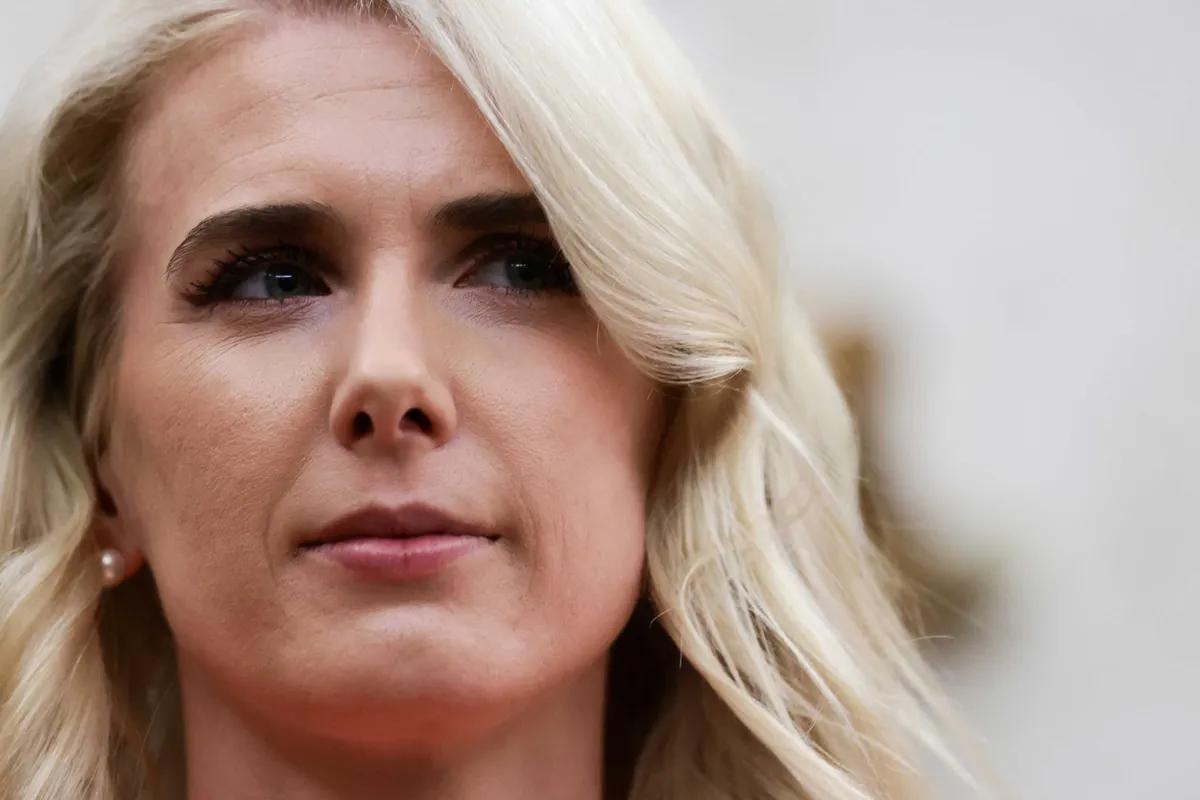
U.S. President Donald Trump’s executive assistant Natalie Harp listens as Trump speaks during a meeting with travel executives in the Oval Office at the White House in Washington, D.C., U.S., September 2, 2026. REUTERS/Evelyn Hockstein
What happened
RawStory reports that Natalie Harp, now a close White House aide to President Donald Trump, began attending megachurch pastor David Jeremiah’s sermons around age 13. Her estranged brother, Preston Harp, described Jeremiah’s church as wealthy, Republican-financed and doctrinally rigid. The reporting establishes her long exposure to Jeremiah’s ministry, but it does not establish that he personally caused her later devotion to Trump.
The article also examines Jeremiah’s role in a June 21, 2016 meeting between Trump and roughly 1,000 pastors in New York City. Religion professor J. Derrick Lemons argues that vetted questions—including Jeremiah’s question about Israel—helped evangelical leaders reconcile Trump’s personal history with their political objectives and then sell his candidacy to their congregations.
Help fuel the work. Independent analysis doesn’t fund itself:☕ Buy us a coffee
RawStory further recounts a former ministry executive’s allegation that Turning Point bought about $250,000 of Jeremiah’s books to boost bestseller rankings. The former executive called the practice deceptive and unethical; Jeremiah defended marketing his books without confirming or denying the specific allegation.
The power was in the pulpit
Harp is the article’s connective tissue, but Jeremiah and the assembled evangelical leaders held the relevant institutional power. They controlled churches, media platforms, schools and trusted religious networks capable of reaching millions. Trump’s campaign possessed electoral ambition; these pastors possessed access to a bloc of voters he needed.
The 2016 meeting mattered because it offered something more valuable than a formal endorsement: moral clearance. According to Lemons, the questions were vetted by Trump, and the obvious conflicts between his biography and the pastors’ professed standards were excluded. The pastors were not hapless believers confused by an unconventional candidate. They participated in a controlled presentation that made support for him easier to justify.
The decision was accommodation
Jeremiah had agency. He reportedly joined a meeting structured to protect Trump from difficult questions and asked one that allowed the candidate to give an uncomplicated assurance of support for Israel. Whatever Jeremiah’s later discomfort with Trump, that does not erase his role at the moment when evangelical hesitation carried political leverage.
The key choice was not whether pastors loved every aspect of Trump. It was whether they would apply their stated moral standards when doing so imposed a political cost. The account presented here indicates that influential pastors instead helped convert a liability into permission.
Harp is not the institution
The article’s emphasis on Harp’s adolescent religious formation risks shrinking a political operation into a personality profile. Her conduct around Trump—carrying his printouts, writing effusive letters and remaining constantly near him—is striking. But her proximity is not the source of the machinery described in the story.
Focusing on one unusually devoted aide can misdirect attention from the institutions that trained audiences to accept obedience as conviction. Harp did not convene the pastors, vet their questions or command a media ministry earning a reported $65 million to $100 million annually. The powerful actors were the men with pulpits, money, broadcasting reach and electoral access.
Marketing dressed as discernment
Lemons compared the pastors’ operation to multilevel marketing: influential leaders accepted the product, then promoted it through their own networks. That description exposes the political mechanism. Authority flowed downward while accountability disappeared upward. Congregants heard reassurance from trusted pastors; the candidate received support without submitting to the scrutiny those pastors could have imposed.
The book-buying allegation points to a parallel structure, though it remains an allegation attributed to former chief financial officer George Hale. In both accounts, reputation is not merely earned in public view; it is manufactured through institutions capable of making popularity appear organic. Bestseller status creates authority. Pastoral approval creates legitimacy. Scale then disguises the decisions that produced it.
The system rewards the conversion brokers
The broader pattern is not that religious voters were duped by a single sermon or that Harp’s childhood church mechanically determined her politics. The evidence does not support either claim. It shows something more concrete: political candidates can overcome moral liabilities when institutional gatekeepers recast compromise as principle and distribute that permission through trusted networks.
That is the systemic error. Coverage becomes fascinated with the conspicuous devotee while the brokers of legitimacy recede into the background. Harp may embody the result, but the consequential power belonged to the institutions that made political submission marketable as religious judgment.
Thanks to Raw Story
Source: Natalie Harp’s first devotion wasn’t Trump — it was a hellfire pastor who helped him win
Systemic Error is a reader-supported publication. To receive new posts and support my work, consider becoming a free or paid subscriber.
We warned them.We told them.We shouted from the rooftops.We plead.We begged.They didn’t listen.Now, we all will suffer.Y’all know what to do, right?VOTE BLUE! 💙Vote as if your life — nay, our country — depend on it.Because, this time, and every time, it does.
This is a public episode. If you'd like to discuss this with other subscribers or get access to bonus episodes, visit paulstsmith.substack.com/subscribe


