


WEBVTT
00:00:00.239 --> 00:00:04.400
Thanks for joining me in Robin's Nest, where compassion and conversation meet.
00:00:04.559 --> 00:00:05.759
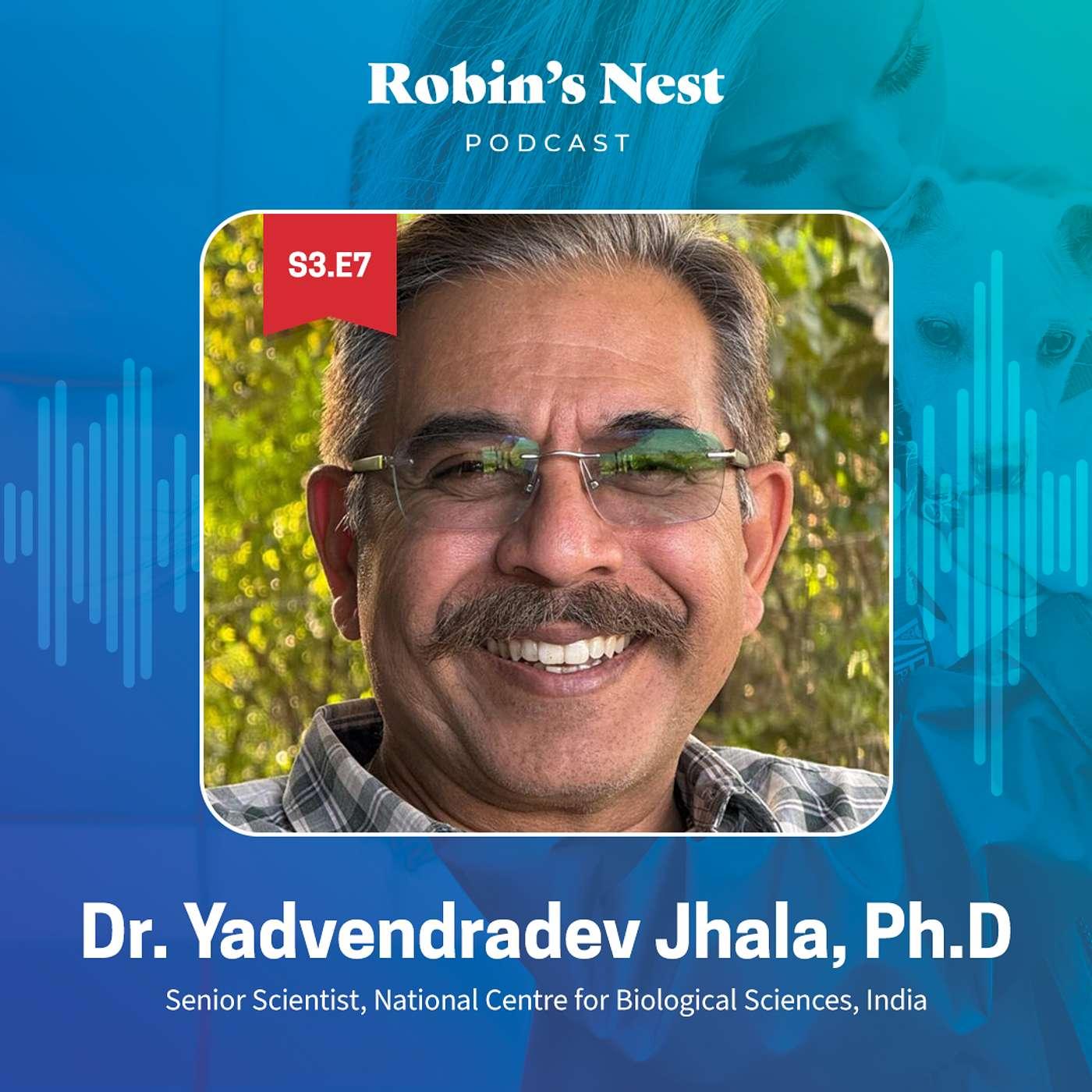
My guest today is Dr.
00:00:05.919 --> 00:00:12.080
Jala, one of the world's leading wildlife scientists and a true hero for endangered species.
00:00:12.320 --> 00:00:22.160
From leading India's tiger recovery to bringing cheetahs back after 70 years of extinction, his groundbreaking work has changed the future for wildlife across the globe.
00:00:22.320 --> 00:00:25.039
I can't wait for you to hear his incredible story.
00:00:25.359 --> 00:00:26.960
Welcome to Robin's Nest.
00:00:27.199 --> 00:00:33.840
Many of us feel a deep bond with animals, from the pets we cherish at home to the endangered species in nature.
00:00:34.079 --> 00:00:40.640
Join us for lively informative conversations where together we will build a more humane world.
00:00:41.280 --> 00:00:48.799
I'm so excited about this episode of Robin's Nest because I have one of my personal heroes on this episode.
00:00:48.960 --> 00:00:54.479
We're talking about tigers and cheetahs, and we're talking about bringing them back from extinction.
00:00:54.719 --> 00:01:01.119
This is the one gentleman who has a personal story to tell about how he's made a huge difference.
00:01:01.280 --> 00:01:01.520
Dr.
00:01:01.679 --> 00:01:03.920
Jala, welcome to this episode of Robin's Nest.
00:01:04.239 --> 00:01:05.040
Thank you so much, Robin.
00:01:05.120 --> 00:01:06.159
It's a big honor to be here.
00:01:06.400 --> 00:01:10.959
Oh well, and also congratulations to you for being a Keisling Prize finalist.
00:01:11.519 --> 00:01:13.760
I think it's it's something which I didn't expect.
00:01:13.920 --> 00:01:17.040
And it's uh it's it's really wonderful to be here.
00:01:17.280 --> 00:01:20.159
Oh, well, we're thrilled to have you here at Fair Oaks Farms.
00:01:20.400 --> 00:01:20.640
Dr.
00:01:20.799 --> 00:01:29.359
Jala, can you please describe your love for animals and particularly your love for one species that we all have such affection for?
00:01:30.079 --> 00:01:39.280
Well, uh it's been a childhood passion, and uh as I recollect in my first grade, my you know, teacher asked us to write down what we wanted to be in the future.
00:01:39.840 --> 00:01:42.000
And uh I said I wanted to be a zookeeper.
00:01:42.719 --> 00:01:46.719
And so the transition from first grade to where I am today was uh not difficult.
00:01:47.120 --> 00:01:55.519
And it's a sort of a a life dream come true, and it's uh it's a life full of fun and uh with a mission and a purpose.
00:01:55.680 --> 00:01:58.560
Uh, what better purpose than to conserve species on this planet?
00:01:58.799 --> 00:01:59.200
Yes.
00:01:59.439 --> 00:02:03.439
So it's very rewarding, and if I was given a chance, I'd do it all over again.
00:02:03.760 --> 00:02:04.879
That's wonderful.
00:02:05.120 --> 00:02:13.599
Well, talk to me about the one uh effort that you've done was tigers, because tigers, by the way, we all know and love tigers.
00:02:13.840 --> 00:02:16.159
What's happened to tigers in your career?
00:02:16.639 --> 00:02:16.800
Right.
00:02:16.960 --> 00:02:20.639
So um well, India had done a lot for conservation of tigers.
00:02:20.719 --> 00:02:24.319
Uh we started off in the early 70s, the tiger conservation.
00:02:24.639 --> 00:02:30.960
Project Tiger was launched in 1973, and the Wildlife Protection Act in India was enacted in 1972.
00:02:31.360 --> 00:02:39.759
So we thought we'd achieved everything without accounting for our neighbors who were becoming rich, and poaching took the toll.
00:02:40.000 --> 00:02:45.759
So in India we had extinguished the market for tigers because trophy hunting was not permitted by the law.
00:02:46.080 --> 00:02:52.080
But uh, when the tiger populations in Southeast Asia and China were exhausted, the poachers turned their eyes to India.
00:02:52.319 --> 00:02:57.280
And while we thought our tiger populations were doing really well, they were decimated with poaching.
00:02:57.520 --> 00:03:05.599
So it was not until we lost all our tigers in a tiger reserve near Delhi, Sariska, that this actual crisis come into light.
00:03:05.759 --> 00:03:09.759
And the Prime Minister of India at that point in time appointed a task force.
00:03:10.080 --> 00:03:11.120
And what year was that?
00:03:11.439 --> 00:03:13.039
This was in 2005.
00:03:13.360 --> 00:03:14.960
2005, yes.
00:03:15.199 --> 00:03:20.879
So uh the official record of tigers in Sariska was seven, uh 19 tigers when there were none.
00:03:21.120 --> 00:03:24.719
So officially, you know, so there was paper tigers across the country.
00:03:24.800 --> 00:03:27.360
We we believed we had 3,500 tigers.
00:03:27.599 --> 00:03:36.800
The tiger task force then mandated me and my team to actually develop a scientific monitoring protocol for the entire country to assess tiger populations.
00:03:37.039 --> 00:03:48.879
And since then, every four years, uh my team and myself, we have been leading that project and counting tigers basically with uh tigers take their own photographs by selfies through remote cameras.
00:03:49.199 --> 00:03:52.080
And I love a tiger selfie.
00:03:52.400 --> 00:04:03.520
And then uh we identify them using artificial intelligence and pattern recognition software uh from their stripes, sort of fingerprinting them, and this allows us to count them through statistical models.
00:04:03.759 --> 00:04:09.840
So we found that the official figure was 3,500 tigers in India, but we had only about 1400 left.
00:04:10.159 --> 00:04:11.039
Unbelievable.
00:04:11.280 --> 00:04:31.600
So that was in 2006, and since then a lot of my research has contributed to changing policy of how to conserve tigers, what are the size of tiger reserves, the core and the buffer strategy, and having people being moved out of tiger reserves so that you have high-density tigers and people not mixing and creating conflict.
00:04:31.839 --> 00:04:32.240
Yes.
00:04:32.399 --> 00:04:36.319
But the people had to be awarded and rewarded for moving out.
00:04:36.959 --> 00:04:42.000
You can't evict them, you know, you can't throw them out because they have their lives uh which have been in ingrained with the forest.
00:04:42.160 --> 00:04:49.759
So the government of India offered a compensation of uh 20,000 US dollars, which is about 10 years of salary.
00:04:50.079 --> 00:04:50.480
Wow.
00:04:50.800 --> 00:04:53.680
For an individual to move out voluntarily.
00:04:53.920 --> 00:04:59.839
And that created about 75,000 square kilometers of inviolate space for tigers.
00:05:00.160 --> 00:05:14.079
Um first of all, I just want to back up a minute and and make sure that our everyone who's in Robin's Nest today understands that the government led the way to create this incentive model to allow tigers to have their own habitat.
00:05:14.319 --> 00:05:15.600
This is incredible.
00:05:15.680 --> 00:05:18.079
And I don't think many of us have heard that story before.
00:05:18.160 --> 00:05:22.319
So you sharing it on Robin's Nest will allow so many of us to take lessons learned.
00:05:22.480 --> 00:05:32.720
But you were one of the ones to champion this and to advocate for this policy change and for the government to pay what is how many years worth of income for these stuff?
00:05:33.279 --> 00:05:39.279
14 years of minimum wage income to move out for every adult in the family.
00:05:39.519 --> 00:05:49.120
So if you have three kids who are adults and you have husband and wife, then you get four packages, and that's a lot of money for a tribe dweller to be more in the forest.
00:05:49.600 --> 00:05:58.959
And and that creates space for biodiversity because tigers being the apex of the food chain, keystone species, they can only exist if you have the entire trophic level intact.
00:05:59.120 --> 00:05:59.439
Yes.
00:05:59.680 --> 00:06:05.600
And so if tigers are there, then you have the ungulates, and then you have the vegetation, and then you have the forests and the soil.
00:06:05.839 --> 00:06:06.079
Yes.
00:06:06.319 --> 00:06:09.439
So they act as a sort of an umbrella species for conservation.
00:06:09.680 --> 00:06:11.839
And that is the philosophy of tiger conservation.
00:06:11.920 --> 00:06:20.079
It is not a single species focused conservation, but with the tigers, you protect the entire ecosystems and the ecosystem services which come out of it.
00:06:20.319 --> 00:06:26.959
So that has come out through, and then um these policy changes came in, and today we have close to about 3,700 tigers in India.
00:06:27.279 --> 00:06:30.480
You've more than doubled since your first census, your first survey.
00:06:30.720 --> 00:06:30.879
Absolutely.
00:06:31.120 --> 00:06:32.560
And that's huge congratulations.
00:06:32.879 --> 00:06:33.120
Thank you.
00:06:33.519 --> 00:06:36.240
Because that's uh that is that is so significant.
00:06:36.399 --> 00:06:51.920
And you know, when we think about this, we're uh, you know, countries can do the same, they can follow this model, and you are incentive the government is incentivizing families uh to uh do the right thing and to allow the habitat to be there, and you've doubled the population, more than doubled.
00:06:52.319 --> 00:06:56.720
So uh my research has shown that tigers and people still need to coexist.
00:06:56.800 --> 00:07:05.279
So you have high density tiger populations in tiger reserves, but we have 40% of our tigers outside of the tiger reserves, sharing space with people.
00:07:05.680 --> 00:07:06.959
40% is a large number.
00:07:07.279 --> 00:07:08.079
That's a lot of tigers.
00:07:08.560 --> 00:07:11.120
That's a lot of human animal conflict opportunities.
00:07:11.360 --> 00:07:14.480
So when you live with people in large carnivores, there's bound to be conflict.
00:07:14.959 --> 00:07:23.120
But wherever there's more prosperity and low poverty, coexistence is better off because it's poverty which drives conflict.
00:07:23.600 --> 00:07:28.639
Poor people go into the forest to extract forest resources and come in contact with tigers.
00:07:28.879 --> 00:07:36.959
If your livelihoods change, right, and you don't need forest and bioresources, then you don't come in contact with tigers and you can coexist peacefully.
00:07:37.040 --> 00:07:39.439
You need proper housing, proper toilet facilities.
00:07:39.600 --> 00:07:39.759
Yes.
00:07:40.000 --> 00:07:45.360
Your children don't need to, you know, go into the forest to collect fuel wood, then the conflicts get minimized.
00:07:45.519 --> 00:07:49.120
So prosperity brings in coexistence.
00:07:49.360 --> 00:07:56.639
So I was just in India as we were speaking uh just a few weeks ago, and I learned that there is such a rise in the middle class now in India.
00:07:56.879 --> 00:07:57.199
Absolutely.
00:07:57.519 --> 00:08:04.720
That that prosperity is real and it's happening now, and that again is allowing the animals to rebound in nature.
00:08:05.040 --> 00:08:06.079
Absolutely, absolutely.
00:08:06.240 --> 00:08:10.319
So the India is getting more and more prosperous, and and coexistence is going to be the norm.
00:08:10.639 --> 00:08:12.959
Uh also the attitude of the people matter.
00:08:13.360 --> 00:08:20.319
So if you you can have coexistence, but we also lose about 50 individuals, 50 humans to tigers every year in the country.
00:08:21.040 --> 00:08:21.600
Oh wow.
00:08:21.839 --> 00:08:22.079
Yes.
00:08:22.240 --> 00:08:26.160
But compared to snake bites, which is close to about 50,000.
00:08:26.399 --> 00:08:26.720
Oh.
00:08:26.959 --> 00:08:27.199
Right.
00:08:27.360 --> 00:08:29.680
And car accidents, about 150,000.
00:08:29.839 --> 00:08:30.639
Oh my goodness.
00:08:30.879 --> 00:08:40.480
So in in in scale, comparison of scale, tiger deaths are minimal, but it is the tolerance of the people of India which allows these large carnivores to actually coexist.
00:08:40.639 --> 00:08:42.080
The retaliation is not there.
00:08:42.320 --> 00:08:42.879
That's one thing.
00:08:43.120 --> 00:08:44.480
It is taken as a matter of fate.
00:08:44.720 --> 00:08:45.200
That's one thing.
00:08:45.600 --> 00:08:47.519
Tigers need space as much as people do.
00:08:47.600 --> 00:08:53.279
And if you have that kind of attitude, only then can you have a large carnivore living amidst people.
00:08:54.000 --> 00:08:54.559
Yes.
00:08:54.799 --> 00:09:05.679
And as you said, that carnivore living amongst peoples allowing, as the apex creature, so much to happen uh in that area of positive for biodiversity.
00:09:06.080 --> 00:09:06.639
Absolutely.
00:09:06.879 --> 00:09:07.440
Absolutely.
00:09:07.600 --> 00:09:11.360
So uh well, of course, there is there's bound to be conflict when tigers are there.
00:09:11.519 --> 00:09:14.960
But it's the management of this conflict which uh is the crux of the whole problem.
00:09:15.200 --> 00:09:15.360
Yes.
00:09:15.600 --> 00:09:22.399
Uh government pays compensation for loss of human lives and cattle killed by tigers, lions as well as leopards.
00:09:23.120 --> 00:09:25.360
So that helps ameliorate.
00:09:25.440 --> 00:09:32.320
Of course, there's nothing to compensate for a loss of human life, but uh at least it takes the ease off, you know, to some extent.
00:09:32.720 --> 00:09:36.320
So when I was in India, I was warned not to go into the bushes for the snakes.
00:09:36.559 --> 00:09:37.039
Absolutely.
00:09:37.200 --> 00:09:41.919
And I wasn't so worried about the tiger, I wasn't worried about a tiger conflict, but I was worried about those snakes.
00:09:42.000 --> 00:09:43.840
And you're saying 150,000 deaths?
00:09:43.919 --> 00:09:44.399
Did I hear that?
00:09:44.480 --> 00:09:45.279
Uh 50,000 for sets.
00:09:45.519 --> 00:09:46.639
50,000 for snakes, 100.
00:09:46.799 --> 00:09:47.679
150,000 with cars.
00:09:48.240 --> 00:09:48.960
Yeah, for car accidents.
00:09:49.440 --> 00:09:49.679
Yes.
00:09:49.840 --> 00:09:53.600
Well, uh, the snakes are quite something, so we'll save that for a whole nother episode.
00:09:54.879 --> 00:09:55.440
Of those.
00:09:55.679 --> 00:09:57.679
I want to pivot to cheetahs.
00:09:57.919 --> 00:10:00.720
Talk to me, please, about your incredible work with cheetahs.
00:10:01.120 --> 00:10:06.080
So it's been a you know a fascination of a lifetime to bring back the cheetah into India.
00:10:06.159 --> 00:10:09.039
Uh the cheetah, as you know, is an Indian Sanskrit name.
00:10:09.360 --> 00:10:15.440
So the species itself is named um from the Indian word uh cheetah, which means the spotted one.
00:10:15.679 --> 00:10:19.200
But we unfortunately lost the cheetah after India became independent.
00:10:19.279 --> 00:10:22.879
Okay, so this is the first large carnivore which independent India lost.
00:10:23.360 --> 00:10:33.840
And I think it's uh when countries have the moral obligation and the social standing and the economic resources, then we should restore what humans have done, you know?
00:10:33.919 --> 00:10:34.159
Yes.
00:10:34.320 --> 00:10:36.639
And cheetahs were lost in India because of human causes.
00:10:36.799 --> 00:10:39.600
Loss of habitat, hunting, loss of prey.
00:10:39.759 --> 00:10:46.960
And now we have areas in India which are inviolate, there's enough prey, and the threats which cause their extinctions have been abated.
00:10:47.440 --> 00:10:48.799
So it was time to bring them back.
00:10:49.039 --> 00:10:52.080
And we did that after 75 years of their extinction.
00:10:52.320 --> 00:10:56.240
We brought the first animals from Namibia and then the second batch from South Africa.
00:10:56.480 --> 00:10:56.960
Yes.
00:10:57.200 --> 00:10:59.200
So, well, they're doing reasonably well.
00:10:59.279 --> 00:11:05.200
Um this be just three years, so only time will tell once they establish themselves successfully as part of the ecosystem.
00:11:05.360 --> 00:11:07.679
But we have had several litters born in India.
00:11:07.919 --> 00:11:08.799
That's a big deal.
00:11:09.039 --> 00:11:19.840
And uh the we we expected cheetahs to die from poachers, snares, and road accidents and conflict with humans, but no animal has been lost due to any of these causes.
00:11:20.080 --> 00:11:23.360
So that is a big um uh positive step.
00:11:23.440 --> 00:11:29.759
Uh, hopefully the cheetahs should establish themselves uh pretty soon as a part of a functional system, ecosystem.
00:11:30.080 --> 00:11:43.120
So I'd like to celebrate the cheetah because you know, when you think about India, you think about the romanticism of the cheetah and the uh the history of the cheetah is so uh uh integral to the culture.
00:11:43.440 --> 00:11:45.519
So I love that you're bringing them back.
00:11:45.919 --> 00:11:50.080
We have brought them back, um, and we got the Prime Minister to release the first three animals.
00:11:50.320 --> 00:11:51.440
Oh, especially yes.
00:11:51.519 --> 00:11:54.159
So you need you have the political will for the conservation.
00:11:54.399 --> 00:11:54.559
Yes.
00:11:54.799 --> 00:11:57.200
And once you have the political will, you have the funding.
00:11:57.360 --> 00:11:58.399
So it looks good.
00:11:58.559 --> 00:12:04.320
Uh you know, we hope that the cheetah establishes as a functional part of the ecosystem in India.
00:12:04.720 --> 00:12:09.919
What do you say to those who question on whether or not a cheetah is a cheetah is a cheetah?
00:12:10.159 --> 00:12:13.919
You're bringing back African cheetahs to India.
00:12:14.080 --> 00:12:16.879
Is there a subspecies issue there?
00:12:17.120 --> 00:12:20.000
Or does it look like it is going along beautifully?
00:12:20.559 --> 00:12:23.279
No, there is definitely a sub-issue, a subspecies issue.
00:12:23.360 --> 00:12:30.480
We had uh Asinonyx jubatus venaticus in India, but that subspecies is not available anymore for a reintroduction.
00:12:30.639 --> 00:12:30.799
Yes.
00:12:30.960 --> 00:12:33.679
So you bring in the next best possible option.
00:12:34.000 --> 00:12:42.240
And the southern African cheetahs is the only population which can sustain an offtake of up to a hundred animals without affecting the source population.
00:12:42.320 --> 00:12:44.639
The rest of the cheetahs are very few.
00:12:44.799 --> 00:12:52.159
And taking off about a hundred animals for a reintroduction, which you would probably require, is not going to be possible in other populations or other subspecies.
00:12:52.639 --> 00:12:59.039
Secondly, the southern African species, subspecies, Jubatis Jubatis, is the genetically most diverse.
00:12:59.120 --> 00:13:01.840
It's the ancestor of all subspecies of cheetahs.
00:13:01.919 --> 00:13:03.919
That's where the cheetahs actually originated from.
00:13:04.080 --> 00:13:10.559
So they're genetically diverse, and when you want to do a reintroduction, you want a large gene pool so that they adapt to the new environment.
00:13:10.799 --> 00:13:19.279
We had an issue of bringing in from the southern hemisphere into the northern hemisphere because they developed a winter fur when it was hot summer there.
00:13:19.360 --> 00:13:19.519
Yes.
00:13:19.679 --> 00:13:26.159
And it'll take several years before they can adapt to the change in the photo period and then you know the hormonal changes.
00:13:26.399 --> 00:13:30.480
And once the next generation is born in India, I think they will adapt pretty well.
00:13:30.720 --> 00:13:34.559
So they are a different subspecies, but they are cheetahs, all right?
00:13:34.720 --> 00:13:39.840
And uh they hunt antelopes and deer as much as they were doing earlier.
00:13:40.320 --> 00:13:48.480
So our critics were saying that they will not be able to take to the new cray base, but they took like just fish to water and they started killing the first day they were released.
00:13:48.639 --> 00:13:54.960
So the cheetahs are doing pretty well, and I don't expect any problems in terms of their adaptation given time.
00:13:55.440 --> 00:14:00.320
Um, the issue would be that we don't have the vast wilderness areas like Africa has.
00:14:00.559 --> 00:14:00.879
Yes.
00:14:01.120 --> 00:14:03.600
So this will be a managed metapopulation.
00:14:03.919 --> 00:14:10.559
So it's not we don't have hundreds and thousands of square kilometers of wilderness, but hundreds of square kilometers of wilderness.
00:14:10.879 --> 00:14:12.960
So cheetahs require a lot of space.
00:14:13.120 --> 00:14:19.519
So in any one population, we'll not have a long-term viable population unless we manage it as a metapopulation.
00:14:19.679 --> 00:14:25.759
And I suppose that's going to be the norm in many parts of the planet where large carnivores are going to be conserved.
00:14:25.919 --> 00:14:26.240
Absolutely.
00:14:26.559 --> 00:14:34.080
And I think we need to use the best of science and conservation know-how to make and rewild the species in this planet.
00:14:34.159 --> 00:14:40.559
And if we don't do that and we stick to the purists' view, I think we'll be fighting a losing battle against conservation.
00:14:40.799 --> 00:14:43.039
So you've said something very interesting.
00:14:43.120 --> 00:14:54.960
I just want you to go back to repeat that because there are um those quote-unquote ivory tower perspectives on conservation, and then there's the practical boots on the ground, let's make this work.
00:14:55.120 --> 00:14:58.960
So please go back into that a little bit more if you could dive in into that.
00:14:59.279 --> 00:14:59.440
Yeah.
00:14:59.600 --> 00:15:06.080
So we have our critics who were saying that cheetahs will not actually take to the new prey base and they would only need antelope to hunt.
00:15:06.159 --> 00:15:14.080
But the first day they were released uh into the Bomas and had natural prey, they started killing cheetal deer like they would have killed bushbuck or whatever else, you know.
00:15:14.320 --> 00:15:14.559
Yes.
00:15:14.960 --> 00:15:16.000
That was not a problem.
00:15:16.320 --> 00:15:20.559
The problem does arise when we bring in animals from the southern hemisphere to the northern hemisphere.
00:15:20.639 --> 00:15:22.799
It takes them a while to adjust to the photo period.
00:15:23.120 --> 00:15:31.919
So they had a mismatch between their winter fur coming in in the middle of the summer in India and of course the monsoon that they had never experienced before.
00:15:32.080 --> 00:15:34.240
So we lost a few animals due to that.
00:15:34.559 --> 00:15:38.799
But the next year onwards, I think we've not lost a single animal due to this uh.
00:15:40.080 --> 00:15:48.159
So we have a different, we have a subspecies issue, no doubt, but we've done the best we can to bring back an element which was lost in our ecosystem.
00:15:48.320 --> 00:15:50.080
And I believe we need to think out of the box.
00:15:50.240 --> 00:15:56.080
It is not that we need to stick to the purest point of view all the time, but be practical when we do rewilding.
00:15:56.480 --> 00:16:08.960
And in this case, the African cheetah brought into India is the same species, a different subspecies, but it has the same ecological traits to fit into the ecosystem, which the element which we have lost.
00:16:09.200 --> 00:16:09.519
Yes.
00:16:09.759 --> 00:16:21.200
And uh, I think today we if you want to conserve large carnivores in an Anthropocene with so many people, 1.6 billion people in the mid-subcontinent, something novel has to be done.
00:16:21.519 --> 00:16:28.399
And we have the space, but it is going to be a managed metapopulation, not a sustainable single viable population.
00:16:28.639 --> 00:16:28.799
Yes.
00:16:29.039 --> 00:16:34.960
And these concepts of conservation biology need to be used to the best of our ability to rewild the planet.
00:16:35.279 --> 00:16:36.399
Yes, yes.
00:16:36.559 --> 00:16:42.799
And re their benefits to rewilding absolutely uh outweigh any of those.
00:16:43.919 --> 00:16:49.279
I think the worst uh yeah, the worst problem with conservation is us conservationists.
00:16:49.600 --> 00:16:56.559
Ah so it's not it's not it's not the politicians nor the bureaucrats nor the industrial industrialists.
00:16:56.639 --> 00:17:05.440
You get support from all these firms, but we critique each other to such an extent that we don't allow conservation to happen because of our purest views sometimes.
00:17:05.680 --> 00:17:11.680
And I think we need to introspect amongst ourselves and see how best to do conservation in a particular scenario.
00:17:11.839 --> 00:17:16.720
It's a case-by-case basis, based on the broad principles of conservation science.
00:17:16.880 --> 00:17:17.119
Yes.
00:17:17.359 --> 00:17:20.960
And not be stuck in our dogma to do this is the only way to do it.
00:17:21.039 --> 00:17:22.480
There are multiple ways to do things.
00:17:22.640 --> 00:17:22.880
Absolutely.
00:17:23.200 --> 00:17:25.440
And all of them need to be explored today on this planet.
00:17:25.759 --> 00:17:33.920
What I love is your creativity and your passion, and importantly, stepping up early on as a champion for animals who had no voice.
00:17:34.160 --> 00:17:53.759
I loved your reference to paper tigers, uh, the false number of tigers that were recorded decades ago, and now you have real baselines, real improvements, and importantly, you have achieved systemic change with the government backing your efforts.
00:17:53.920 --> 00:17:57.519
And that is no small feat for those of us boots on the ground.
00:17:57.680 --> 00:18:02.880
It does take a practical uh approach to actually having a win for the animals.
00:18:02.960 --> 00:18:03.599
Thank you so much.
00:18:03.759 --> 00:18:08.079
As a Keysling Prize finalist, what does this mean to you?
00:18:08.240 --> 00:18:09.440
You are a finalist.
00:18:09.519 --> 00:18:19.279
There are applications from all over the world, and you and several others were named a finalist for this prestigious International Prize for Species Conservation.
00:18:19.680 --> 00:18:21.839
To be very frank, I didn't expect to be here today.
00:18:22.000 --> 00:18:23.519
And it's a big honor to be here.
00:18:23.680 --> 00:18:40.000
And I believe that till date my uh awards have been, you know, seeing doubling of tiger numbers, the first chicks of the great Indian bustard being born um in captivity for a conservation breeding program that I started, and the first black puck which was hunted by the cheetah on the Indian soil.
00:18:40.160 --> 00:18:40.400
Yes.
00:18:40.640 --> 00:18:45.839
But being recognized by colleagues, uh, I think it's definitely feels nice.
00:18:46.079 --> 00:18:46.319
Yes.
00:18:46.559 --> 00:18:51.440
And it's I think it uh let's see the best person wins, whoever's contributed the most.
00:18:51.680 --> 00:18:54.319
But uh it's a big honor to be sitting here with you and chatting.
00:18:54.640 --> 00:18:59.119
Oh well, it's an honor to know you, and I congratulate you on all your successes.
00:18:59.279 --> 00:19:06.400
And importantly, it serves as a great opportunity for us to explore what it takes for systemic change.
00:19:06.640 --> 00:19:16.960
He's a real life example on a huge scale, and I encourage all of us listening to Robin's Nest to see how we can do our part in our own world and then expand it even broader.
00:19:17.200 --> 00:19:18.079
Thanks so much for being here.
00:19:18.319 --> 00:19:19.119
Thank you so much, Robin.
00:19:19.519 --> 00:19:22.960
Thanks so much for listening to this week's episode of Robin's Nest.
00:19:23.039 --> 00:19:25.119
Please like, subscribe, and follow.
00:19:25.200 --> 00:19:28.799
And thanks for all you do to build a more humane world.
