
MENGENAI EPISOD INI
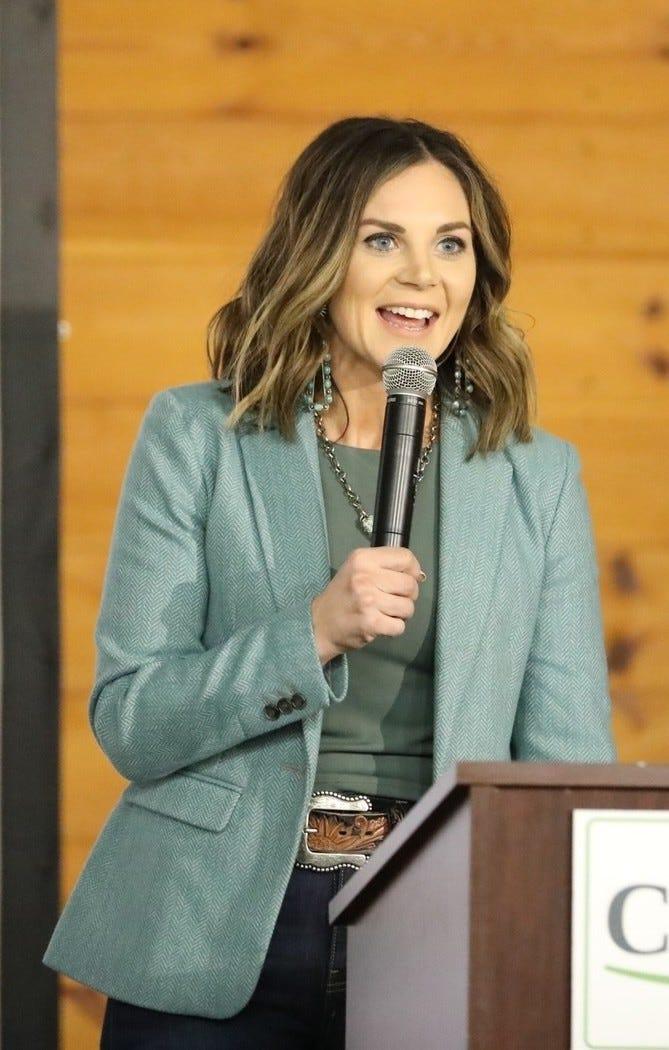
Amanda Radke, a grassroots property rights activist, joins Dave Roetman to discuss American Land and Legacy, the new landowner organization she helped start, and the property rights rally held at the Capitol Rotunda the day before the 2026 session. Radke explains HJR 5001, sponsored by Representative Spencer Gosch and Senator Mark Lapka, a proposed constitutional amendment to bar eminent domain for private economic development, citing the Kelo decision. She reports it passed the House 62 to 5 but calls an amendment adding the word “solely” hostile. She also describes SB 88, the Bosley bill, which would repeal the invasive survey law from 1185 after a unanimous South Dakota Supreme Court ruling, and recounts the fence line case of Charles and Heather Maude and Attorney General Marty Jackley’s help in avoiding a North Dakota lawsuit over HB 1052.
Topics: American Land and Legacy, property rights rally, HJR 5001, eminent domain, Kelo decision, SB 88 Bosley bill, invasive surveying, HB 1052, carbon pipelines, data centers, Maude family fence dispute
“My message to the people of South Dakota whether you are on a rural area or an urban area is George Washington said it best that freedom and property rights go hand in hand, you can’t have one without the other. Your American Dream, your ability to own property, whether that is land or a home is a fundamental God given inherent right that is protected under the Constitution. For myself and so many others, we are committed to making sure you can be in your home, you can stand on your own ground and you don’t have to feel like a sitting duck waiting for somebody else to seize what is not theirs.” - Amanda Radke
HJR 5001 proposing and submitting to the voters at the next general election an amendment to the Constitution of the State of South Dakota, prohibiting the transfer of private property to a non-governmental entity for the purpose of economic development or increased tax revenue and requiring a declaration of necessity.
SB 88 clarify the procedure for a potential condemnor to examine real property absent the property owner's permission.
Case Dismissed on SD Ranch Family Indicted on Fencing Issue
HB 1052 (2025 law passed and signed) prohibit the exercise of eminent domain for a pipeline that carries carbon oxide.
Attorney General Jackley Appreciates North Dakota AG Wrigley’s Decision Not to Sue South Dakota
Amanda Radke
Full transcript
About this transcript: It was machine-transcribed in-house and then edited for readability. Filler words and false starts are removed, and the meaning is unchanged. [?] marks a word or phrase we’re unsure of. Timestamps are approximate.
[00:00]
Dave Roetman: This is the Making Waves Podcast. My name is Dave Roetman. We’re here with Amanda Radke, a grassroots activist and leader. Welcome, Amanda. Thanks for having me. Thanks for being on. I understand that you started a new organization. Could you tell us a little bit about that?
Amanda Radke: Yeah, sure. Well, I just got to say it’s been a while since we’ve been able to reconnect. You had interviewed us early on in our RL 21 fight, which of course was a victorious achievement in defeating that bad bill in 65 of 66 counties with 60% of the vote. And so appreciate your support back then. As we’ve moved forward in this land owner fight with many property rights battles that we’ve kind of walked through the fire on and are on the other side, we felt it was maybe important to start getting organized beyond just, how we’ve been kind of just battling it as we come.
And so we’ve started an organization called American Land and Legacy, which is basically just going to be a land page for landowners to be able to communicate and get updates on bills and to understand where there’s action items and so that kind of rolled out here a few weeks ago and in conjunction with our fourth property rights rally that we hosted at the Capitol Rotunda which you know with the passage of HB 1052 to eliminate eminent domain for CO2 pipelines, which we’ve heard from so many people in states across the country that are emulating that legislation.
We didn’t realize the impact we would have. In fact, Iowa is using the same language right now that they’re considering in the Senate as we speak. But we had this fourth rally, and I thought, maybe now that that immediate threat is gone for so many people that maybe this movement would quiet down but it continues to grow and pick up steam and it was our second largest rally and the best part about it was is that there were I would say 50 percent of the people in attendance were brand new faces that we had never seen before.
A lot more West River people they’re realizing that there are a lot of threats and encroachments on their property rights coming down the pike as well. And so it’s been very encouraging to see the momentum grow and the conversations continue and really it’s uniting people, I believe, in every corner of the state of South Dakota.
Dave Roetman: That is wonderful to hear. I say it all the time is that the price of liberty is eternal vigilance and you cannot just vote, every couple of years. And expect that there’s going to be good outcomes, you have to watch the watchmen. And you have to be holding the feet to the fire of legislators and you have to see what they’re doing. So that’s wonderful that you’ve got that organization and that you’re continuing the fight.
Amanda Radke: Yeah, and we still, some of us chuckle, when some of the farmers that were impacted early on by this pipeline first showed up to Pierre, they wore plaid shirts and blue jeans. And there was even an article written about them about how the farmers were breaking decorum in the Capitol. So that’s forward [?] artwork [?] They got to the Capitol, they realized that really a lot of the politicians were really owned by the donor class and the lobbyists and they didn’t care.
And yet they’ll campaign on agriculture and that farming and ranching is the backbone of their state, but yet they didn’t want the farmers and ranchers at the Capitol. And so I think the farmers and ranchers of the state have a lot to be proud of. They’ve achieved a lot. They’ve changed the conversation in Pierre. They’ve changed the legislative makeup of our elected officials in Pierre in a lot of ways. And so I’m just proud of the agricultural community.
And really now I’m seeing with so many projects coming down the pike, including things like data centers coming into the Sioux Falls and Brandon area, that this conversation is going. Into urban areas where the message is pretty clear. We’re not against projects. We just want the opportunity for local control to be upheld, for community members to be able to have the conversations and be able to have that input to express their concerns, and ultimately for property rights to be protected.
And so it’s urban, rural. It truly is connecting so many great people and so I smile because it’s just that momentum is just picking up steam and I’m excited to see what the people of South Dakota can get done next.
Dave Roetman: As a man who lives in Sioux Falls I can tell you that property rights is an issue in urban areas. It’s not just rural. There are different threats to property in the rural areas as opposed to urban. But the principles remain the same and the solutions I think remain the same and I think that you’re absolutely right. It’s picking up steam all over the country as you’ve noticed. Let’s talk a little bit about what’s happening now in the legislative session.
I understand that you recently testified in the legislature. Could you tell us which bill you testified about and what was the outcome?
Amanda Radke: Sure, so the bill is House Joint Resolution 5001 sponsored by Representative Spencer Gosch in the House and then Senator Mark Lapka and really it focuses on eliminating eminent domain for private gain that goes all the way back to that Kelo versus New London decision at the Supreme Court that split decision that I really think one day will be overturned.
[05:00]
If folks want to learn more about that case, I would encourage them to go watch the movie Little Pink House on Amazon Prime. It is a true story of a woman who lived in an urban area in a little pink house and a Pfizer manufacturing company wanted to develop and build a business there. And that went all the way to the Supreme Court where they determined that for the economic development of the community, they could seize through condemnation, her little pink house and a whole host of houses as well.
And so her house was condemned, it was tore down, and then Pfizer never actually built and it’s a bare lot now. And so it continues the conversation now to here and today, if you have a corner lot in Sioux Falls. And a strip mall or a convenience store wants to come in and the government can justify under economic development or increasing the tax base that this company can make more money and add more value than you can the homeowner.
Right now as it sits that is something that can happen and has happened in the state of South Dakota as we’ve seen by the 160 landowners that were condemned for a Green New Deal carbon sequestration pipeline. 5001 seeks to not change the constitution but fortify within our state constitution what the founding fathers intended when they talked about property rights and so over time we’ve seen that distorted to be used for things like economic development and we wanted to get back to the basics and so one of the misnomers is that people think it’s all encompassing.
It doesn’t impact utilities like water or electricity. It doesn’t impact those very basic things that people need to heat their homes and to survive. It would perhaps touch things like data centers. A lot of people don’t realize that those data centers are going to have a huge footprint across the country. So against the data centers themselves, but as a property rights advocate, I’m very well aware that they’re going to need water, electricity, their fiber optic cables, they want to go coast to coast.
That is going to require either the use of eminent domain or working with the landowners and the community members to get access for those infrastructure build-outs. And so it was interesting. In committee that day, we passed it 10 to three. The three no’s were Healy, Jamison, and Reich. And Jamison specifically did ask about the data center usage of eminent domain in his questions. And Representative Gosch answered it very well. What I thought was, of course, they can have access to these utilities.
But with 5001, they’re going to have to work with the community to get those utilities to their private company.
Dave Roetman: HJR 5001, that is a joint resolution. So both House and Senate would have to pass that and what would it do?
Amanda Radke: Sure. So yes, like you said, both the House and Senate would have to pass it. It doesn’t require a signature of the governor. But it would limit the use of eminent domain for things that are like well-known public use. And so no longer could a private company under the guise of I can increase the tax base and bring more employees into the state and all of those things and jargon we hear coming out of the capital sometimes that wouldn’t be a reasonable use for eminent domain.
Okay fair enough. We do have an update on 5001 it was on the house floor yesterday so I can give an update there it passed on the house with a 62 A huge margin coming out of the House. One thing I want people to be aware of though is Representative Will Mortenson came with an amendment. That amendment was to add the word solely back into the resolution. We see this as a hostile amendment, unfortunately, in talks with Constitu- [?] It is a double negative, but it opens up the envelope or the threshold of who could or could not use eminent domain.
And so it was interesting to see that folks that were wildly against this resolution, all of a sudden turned into a green vote. People like Reich and Jamison, your Drew Petersons, the people that have been really against us on this property rights fight were suddenly green light go. And so it makes us question that use of the word solely. And so as it moves into the Senate. Which we anticipate it will go to state affairs.
We’re going to work on getting that amendment taken off. And so removing that word solely, of course, then that that creates some steps for this ballot initiative or this joint resolution, I should say.
[10:00]
But that’s kind of the political jockeying going on in Pierre. And I guess if I could you know, just speculate on it a little bit. It is an election year. It is a hot button issue. I know some of these people who have not been on our side who were still cleaning up some of the messes they created with Summit Carbon Solution, which SB 88 is one of those messes we need to clean up.
It’s interesting to see them get on the right side of history. I have a feeling if they could have added the word the or is or bananas, just so that they could lay claim to this resolution, they would have done that, not because it made the policy better, but because of the political ramifications of being able to own an issue and rewrite history. But my message to those legislators is we don’t forget the pain that was inflicted upon the people of South Dakota based on really bad policy decisions that were made at the Capitol.
We. We are going to work diligently to get this resolution back to its original intent and original language. We have over a thousand hours of research and work on it with more than a dozen lawyers and constitutional lawyers on it and it just got a little interesting on the House floor yesterday with that unexpected amendment.
Dave Roetman: Welcome to politics.
Amanda Radke: Yes, I guess so and that’s I guess, you know from a farmer rancher perspective I think we’ve had to learn very much the hard way that you walk into Pierre. There’s a lot of special interest groups I mean on the how the day of the house vote. I mean the lobbyists were scurrying everywhere There was definitely a lot of activity not everything’s black and white and not everything’s easy to see for the general public, but once your eyes are kind of open to that, you do realize, man, if you don’t show up to Pierre, if you don’t advocate for your own interests, there are things going on behind the scenes that really, really could be detrimental to your way of life.
And so again, I see this amendment as hostile. I see it as a threat to farmers and ranchers. And landowners, and we’re going to see what Senator Lapka can get done on the Senate side to correct this grave error that was made on the House, despite a huge win of a 62 to 5 vote.
Dave Roetman: This will be interesting yes for sure but you mentioned sp 88 could you tell us what that is and what’s being called yes.
Amanda Radke: So at our landowner rally, Senator Lapka announced the Bosley Bill and Jared and Tara Bosley were there at the rally to accept, the language of the bill and essentially what it does is it cleans up a mess. That mess was created by again Will Mortenson and Casey Crabtree who carried a bill called 1185 which was a part their original landowner bill of rights package that they sold to the people that included SB 201 which the people of South Dakota wildly rejected in a referral.
So this 1185 for people who don’t remember was a bill that basically said a private company could come onto your land and not just survey like put some flags out or measure some things, but invasively surveying. Summit Carbon Solutions came on to Jared Bosley’s land. They drove through feedlots, they trampled over trees, killed trees and shelter belts, and they even bore a 90-foot hole in his field for a pipeline that was supposed to go four feet deep in the ground.
Armed security surrounded their farm. They walked into his house and his shop while his wife was home alone in the shower. It was a bad deal that of course gained national media attention. Jared, it was challenged and in a unanimous Supreme Court decision, our South Dakota Supreme Court determined that that invasive surveying done by a private company onto a family that just wanted to say no thank you that that was illegal and unconstitutional.
Now the problem is 1185 was passed. 1185 allowed for that invasive type surveying as long as they gave the landowner $500. Now we did not like it at the time we protested it very hard but we lost that battle but as it stands today 1185 is an unconstitutional law on the books and so SB 88 the Bosley bill is a cleanup bill that would remove that from the laws of the land and would ensure that nothing that like what happened to Jared ever happens again to anybody else in the state of South Dakota.
Dave Roetman: Yeah, that was pretty obvious that there was an intimidation tactic coming on doing [?] that land like that. Yes.
Amanda Radke: Absolutely. Now, where’s SB 88 standing right now? It it’s sitting waiting to go to its committee hearing it will be in commerce and energy so it will go to the senate commerce and energy first so it will be interesting you know grab the popcorn casey crabtree is the chairman of that and so Jared Bosley will be there to testify that day and i really look at it as we’re righting some wrongs and this is a wrong and if the legislature you know it is their job to pass constitutional laws and should not take care of this mistake it would be the burden of the landowners to take it to court it take three four years 750,000 to a million dollars to fight it and so really dramatic and side story aside, this is just a responsible cleanup bill that would align our state statute with the South Dakota Supreme Court in a unanimous decision.
[15:00]
Dave Roetman: You mentioned the property rights rally. I wasn’t there. Could you tell us a little bit details about what actually happened?
Amanda Radke: Yes, yes, so it was the day before the session kicked off. We invited legislators and there was a ton of media there. We had about 400 people there. Myself spoke, Senator Lapka spoke, Speaker Pro Tem Karla Lems also presented, Jared Bosley spoke, and then we had Charles and Heather Maude as well from western South Dakota. Who, of course, faced a very traumatic property rights battle of their own with a fence line dispute.
Oh, yes, I read about.
Dave Roetman: That. Yes, that was absurd.
Amanda Radke: Absolutely. And again, that should have never happened in the state of South Dakota, and this was... Over regulatory, over zealous bureaucrat, kind of on a mission and a power trip. I agree. It’s really been great to see the Trump administration kind of, coming down on some of these overzealous bureaucrats that have been behaving this way. The Maudes are not a unique story. We are learning that that kind of abuse to landowners has been happening all across the country.
That’s what American Land and Legacy exists to help those people too. I I’ve gotten calls from people. From Maryland all the way to Washington state of stories that you wouldn’t believe could happen in the United States of America to a landowner on their own property. But so it was great to have Charles there that day with his kids. Heather was at home, farrowing out pigs, so she couldn’t be there. And then we also had Senator Lauren Nelson speak and Attorney General Marty Jackley.
And then you just had her on the show, Senator Voita as well. So it was a great mix of some really great property rights advocates and elected officials.
Dave Roetman: Just for our listeners’ information, not everybody might know about this property line fence issue, the Maudes. Could you just explain it just briefly?
Amanda Radke: So, the Maudes have been ranching on this land for over a hundred years and a bureaucrat came and, I’m going to mess up the very fine details on this, but in short, there was a fence line dispute as in like, well, the way the land was surveyed, the fence line wasn’t where it was supposed to be, which you know, things shift over time. This is kind of along the water. It’s just.
And the Maudes had agreed, let’s meet in two weeks, we will provide a resolution to this, we’ll work it out. And before that two weeks was up, they were being charged with a huge fine and 20 years in jail. And so it became, quite literally a fight for their very lives. And so I’m glad that they got the resolution that they did a great group of conservative legislators went out to the ranch, including Jon Hansen, Karla Lems, Liz May, Julie Auch.
There was a whole slew of them that went out there. And within a couple of weeks of that ranch visit, pretty soon the Maudes are standing with USDA Secretary Rollins in Washington, DC, and those charges were being dropped. I think that’s a testament to number one the advocacy of the people not just in South Dakota but across the nation you know crying foul that this shouldn’t be happening to raise that the awareness and then of course really good elected officials who actually care about the people of South Dakota they showed up they listened and they used every connection and every resource they had to make sure that that story of Charles and Heather Maude was heard in Washington DC.
Dave Roetman: And this fence had been there for decades. Yeah. If anybody’s been out West River it’s pretty easy to It’s grassland. It’s pretty easy to get off a little bit. And if you go two degrees and you go half a mile, you can put your fence on the wrong property. That’s not that hard. We didn’t have satellites back then when they built this fence. And that’s what this bureaucrat used as a satellite to determine, oh, this fence is in the wrong place.
And we’re going to criminally charge these people who inherited this ranch from decades ago. It was absurd overreach on the bureaucrat’s part. Absolutely.
Amanda Radke: And I’m just thankful that they’re getting the resolution that they needed and the relief. But again, it just should have never happened. Should never have happened. You can’t ever take away those years, the money fighting it, the legal battles, the stress, those kids especially. I guess I got to give a special shout out to Lyle Maude. He’s their young son.
[20:00]
And they had so much going on at the ranch and Charles, his dad, who I went to college with. So I’ve known for years and years, but he said, Lyle said, we are not missing this property rights rally. If he had been old enough to drive the pickup himself, he was going to get to Pierre. So I think Lyle will be the future governor of South Dakota. Cause that guy he’s seen the fight and he’s now a part of it and he wants to be.
Engaged. So that’s really cool to see. That’s wonderful because our system.
Dave Roetman: Our constitutional republic depends upon ordinary citizens being involved.
Amanda Radke: And your listeners might also be interested of why we asked Attorney General Marty Jackley to speak as well. Not many people might know, but this summer we faced a lot of property rights challenges from The Big Beautiful Bill had a provision in it to allow federal preemption for CO2 pipelines as well as a $10 million pay-to-play. So there was a group of us that went out to Washington, D.C. To advocate for South Dakota landowners on that issue.
Shortly after that, Congressman Dusty Johnson had introduced a bill called H.R. 4135, which would have tracked from a federal level a one-size-fits-all kind of top-down permitting process for data centers and carbon pipelines and so we faced that fight and then shortly after that we hear word from the North Dakota Attorney General who wanted to sue the state of South Dakota over HB 1052 and it was Marty Jackley that went to bat for He talked to the Attorney General up there in North Dakota and was able to work that out without a lawsuit going on that would have undone all the work that so many people poured into to get HB 1052 across the finish line.
Dave Roetman: Wow. All right. Well, good for him. Yeah. Do you have any final thoughts?
Amanda Radke: I appreciate your coverage of so many political issues across the state of South Dakota and the opportunity to talk today. I guess my message to the people of South Dakota, whether you’re in a rural area or an urban area, is George Washington said it best, that freedom and property rights go hand in hand. You can’t have one without the other. Pinpoint your American dream, your ability to own property, whether that’s land or a home, is a fundamental God-given inherent right that’s protected under the Constitution.
And for myself and so many others, we are committed to making sure you can be in your home, you can stand on your own ground, and you don’t have to feel like a sitting duck waiting for somebody else to seize what’s not theirs. So that’s my commitment and if folks want updates on this particular issue, they can go sign up at americanlandandlegacy.org.
Dave Roetman: We will put a link there in the email. Those are stirring words. Thank you so much. Well, thank you. This has been the Making Waves podcast. My name is Dave Roetman. We’ve been here with Amanda Radke. Thanks, Amanda. Thank you.
This is a public episode. If you would like to discuss this with other subscribers or get access to bonus episodes, visit daveroetman.substack.com