


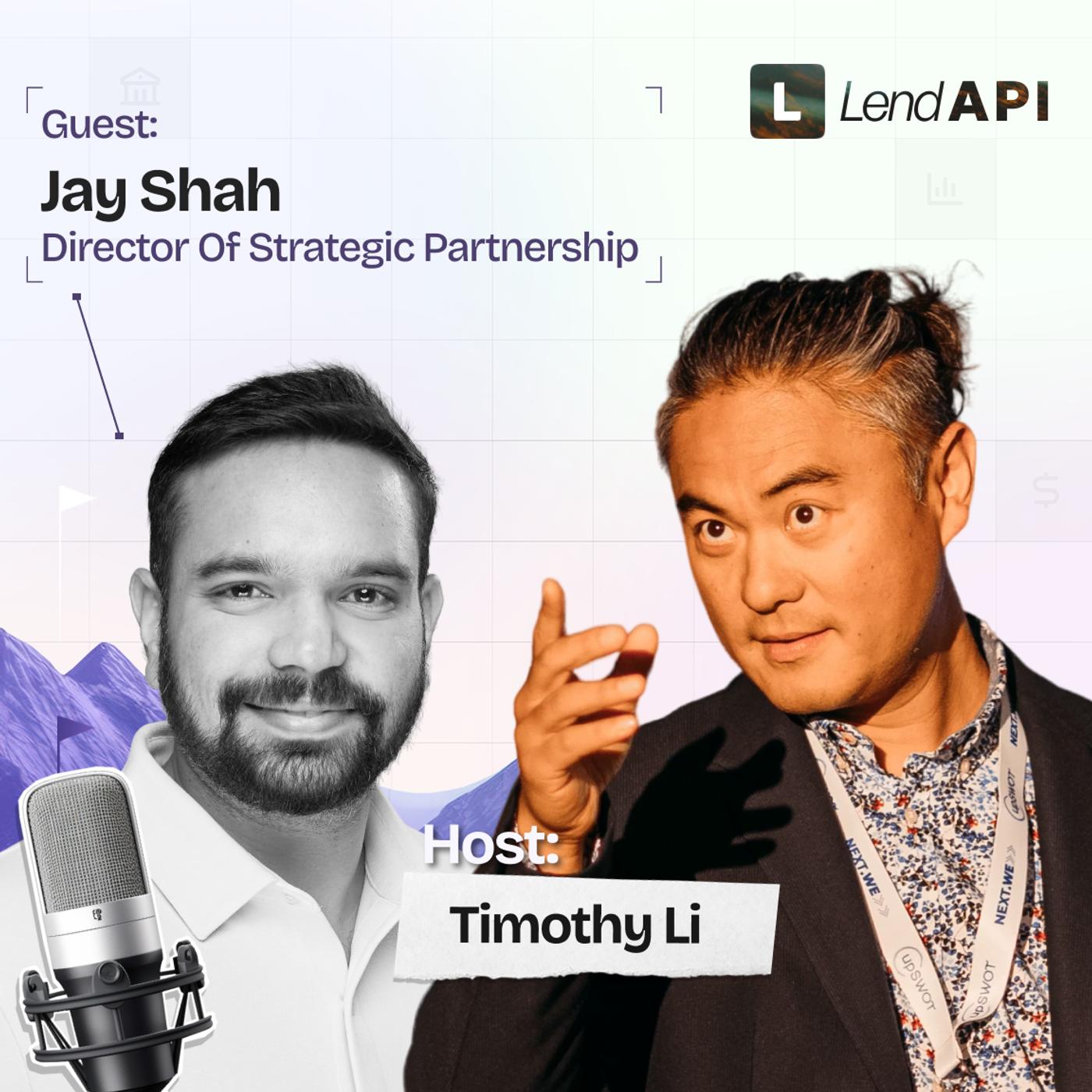
Timothy Li: Hello, this is Tim Lee, CEO of Lend API. we are here for another exciting episode of Lend API Partner Podcast. And today we have a true partner, Jay Shaw from a CRS Credit API or CRS. we've been working together for a long time, and we've been trying to schedule this episode for almost two years now. So Jay finally got some time. He was, you know, lots of good personal events happened in the last year or two with Jay.
Jay Shah: Yep.
Timothy Li: but I can't wait for this episode to get released and kicked off and get more people to learn about CRS. So that's it, Jay. Welcome to the podcast. It's been a long time coming. I finally got you on, so so welcome. And please tell everybody about you and and CRS if you don't mind.
Jay Shah: Yeah, absolutely. Thank you, Tim. I feel great about finally being on this podcast. I know we've been speaking about it for a long time. yeah, so I can speak about myself and CRS. I come from Mumbai, India, where Surprising Yeah. surprisingly, I always I studied and I plan to be an accountant.
Timothy Li: Moon by Yeah.
Jay Shah: So I I pursued accounting as as an early career. tried it out for three years. my work got me to Hong Kong where I worked in corporate finance for a bit and I did not like it so much.
Timothy Li: Was it your parents wanted to be an accountant or you want to be an accountant?
Jay Shah: Surprisingly it was me. My my family comes from the diamond business and my my f family always wanted me to join the family business, which I didn't want to, so you know I I thought accounting was like the best thing to do at that point and pursue my career. little did I know I hated it so much.
Timothy Li: my word, okay. Yeah. Yep. Right. Yeah. Well when were you in Hong Kong? You spent good old two, three years there, right? Wha what time frame?
Jay Shah: Yeah, I was there I was there from twenty fourteen to twenty seventeen. good times. Yeah. Before, you know, things things started getting a bit messy there. yeah, I had I had some of the best times of my life in Hong Kong and it gave me some time to think about what I really wanna pursue and that's when I decided to get my masters here in the US. which
Timothy Li: wow. That's a long time ago. Yeah. Okay.
Jay Shah: Which got me in the greater New York City area. I was very active. I used to network a lot and got got super interested in the startup space out here in New York City. So I used to volunteer at these pitching competitions, and
Timothy Li: Right. Yeah. Sure.
Jay Shah: that exposed me to so many fintechs and startups in the space. that's where I met.
Timothy Li: Right.
Jay Shah: The CEO of the first fintech that I started working with, which was Forward Lane.
Timothy Li: forward lane. That's a big that's a big one. I guess it was a startup back in the days.
Jay Shah: Yeah, they they specialize in AI signals for wealth management and they did this before AI got the got the popularity it does today. And yeah, it really gave me some good exposure. It was a I mean they wanted to hire me and they said you figure out you write your own resume. So I
Timothy Li: Yeah. Yeah. Yeah, and what did what did you do there at Orlean? To startup. Right.
Jay Shah: For the first two months I was just trying to fill in gaps. I didn't I didn't even have a position. I was I was basically an intern. And the gap I was filling in was mostly on the strategic business development side, you know, setting up the the entire sales process and leading some of those sales efforts myself as well. So
Timothy Li: Right. Yeah. Sure. Right, right. That was B to B sales. Who were you selling to? What kind of what was your I C P then?
Jay Shah: We were selling to RIAs, registered investment advisors. And these RIAs were you know, we went for some of the biggest broker dealers like in so we we onboarded Invesco and some of these other top broker dealers while I was working there and and I really helped set up the sales motion for mid sized RIAs that were
Timothy Li: Okay. Right. Right. Wow, sure. Yep.
Jay Shah: open to starting to use AI next best action signals, which which is an amazing use case, right? You you bring together C R notes with your investment data and suddenly the
Timothy Li: Sure. Right. What a great idea, right? What an idea. But that was executed w way before anybody even thought about AI, right? Yeah, wow.
Jay Shah: Yeah. Yeah. It was. And yeah, that's when I stumbled upon CRS. Someone reached out to me one day and they're like, Hey, I just need you to speak with our CEO for twenty minutes because I just know you're a good fit. Not like Yeah. So that's how I met Marco who's one of the co founders at C R S and Steven
Timothy Li: Wow, okay. Was it a recruiter? Some of the S C R S? Ha that's a cult. That's crazy.
Jay Shah: who's our CEO and president and Jason Domazette who who leads sales, he's the chief revenue officer here at CRS and yeah, one of the best decisions I've made.
Timothy Li: Right. Wow, okay. I know you've been there for a long time. You're one of the phases. I see you at shows all the time. That's how we kinda met numbers of years ago. yeah, tell tell us more about C R S. I mean you you you you name all the co founders. What's the history? How long has it been around? How many people there? What what does the the the core believe at C R S?
Jay Shah: Yeah. the core belief at CRS is to democratize regulated data. You know, yeah and Tim, you you understand this very well. if if you're a fintech or if you're newly entering the lending space, you're often pretty lost. with with the regulatory requirements. It often takes you months to get through the compliance roadblocks and it's not it's not very straightforward from the technical integration point of view as well. So our CEO Stephen Hawkins he comes from this industry spent more than three decades in this business and he's he's just so well respected
Timothy Li: Right.
Jay Shah: among all three credit bureaus that he all he also has you know we have we are a licensed CRA and I know there's a lot of firms pursuing becoming a licensed CRA today, but yeah Steven had it early on. And we we we're not just a licensed CRA, we are really close, respected partners with the bureaus. So that along with sorry, go ahead.
Timothy Li: Right. Right. CRA, I mean we're trying to we're trying to democratize acronyms here on this podcast. There's a lot of people looking at stuff probably have no clue what regulated data even is, let alone CRA. Maybe we can back it up a little bit. Why are there regulated data in financial services? What's the point of regulated? What is who's regulating this data? maybe you can give us some little little demystifying there, Jay.
Jay Shah: Yeah. Yeah, that's a great question. So I think at the crux of this is the fact that every individual has ownership on their own data. in in this world, the individual is called a consumer. That's just the terminology. but every consumer needs to be protected. Just like in healthcare, you know, you have your health data that nobody should be able to access. Similarly, for
Timothy Li: Mm-hmm. Yeah. Right.
Jay Shah: data like your own credit history, your payments, your liabilities, you own that. So yeah, it shouldn't be publicly available. And there are there are government bodies that are trying to protect these consumers. The most prevalent one in our space is the FCRA, which is the Fair Credit Reporting Act. And the FCRA is
Timothy Li: Okay. Quite a report. Yeah. Mm-hmm. Right. That's right.
Jay Shah: designed and built to protect these consumers so that there is a structured system for organizations to access their data when required under a specific permissible use case. but there's rules around how they should be accessing the data and what what rights the consumer has if their data has been used. So
Timothy Li: Right. Right. Right. And parties involved, will use the word entrusted, right, to hose to house this data are what we call CRAs and tell us what that means and And why is it important for a CRS to become a CRA and who are other CRAs out there?
Jay Shah: Yep. So CRAs are essentially bodies that are repositories that hold this data on consumers. And you know, we have the big three credit bureaus today, which is Experian, TransUnion, and Equifax. Each one of these bodies are essentially maintaining a repository of data, cred data related to
Timothy Li: Mm-hmm. Yeah. Right.
Jay Shah: financial behavior, you know, how how regularly is someone paying back their dues. and they this the they have to go through a very stringent process and comply with the F CRA regulations to get issued this CRA license. It's it's highly limited. There's about a couple hundred CRA licenses that have been issued today and having one
Timothy Li: Right. Right.
Jay Shah: highlights the fact that you you have in fact gone through a very rigorous process and established certain measures and controls internally to operate as a CRA, where you're you're ensuring the data is accurate, you're also ensuring that there's a system to correct that data in case a consumer has any sort of disputes.
Timothy Li: Right. Wow. Who's handing out these? CRA licenses, see if there are licenses to begin with, certifications, whatever it might be. Which governing body does that? FTC, OCC, CFP.
Jay Shah: I believe it's I believe it's the C FPB. The Consumer Financial Protection Bureau is is the one that you deal with to to become a C R A.
Timothy Li: Okay, got it. Yep. Right. So that gives you the ability to kind of store protect consumer financial data, maybe identity information as well. Getting one of these, you gotta crawl through glass. I I only know a handful of people are CRAs. I think Platt trying to be a CRA, maybe be they become a CRA. Maybe I've heard Soul Cure is doing a CRA thing. So everybody that wants to store protect, enshrine this data on behalf of the consumers, not just a simple path through. There's a lot of people just kind of resell data needs a CRA, right? And that basically set you guys apart from just regular data broker, if you will, to somebody that go through constant audits, lots of probably legal fees went into it, right? to really derive information or store information on behalf of American consumers. That's that's yeah. Are you guys our CRA already or in the process of doing it, Jay?
Jay Shah: in fact we we had we had a C R A license when C R S came into existence. Stevens. So yeah, we've we've been a C R A all along.
Timothy Li: okay. Got it, that's right. Yeah. That was his foresight because he's been in the industry for twenty thirty years probably. Yeah.
Jay Shah: Yeah, and Steven started it as a lifestyle business, which is an interesting b fact. we when s when he had the license, you know, he was helping out a few folks and then yeah, later on he realized that there's a there's a huge gap.
Timothy Li: Mm-hmm.
Jay Shah: not just on the compliance side of things, but also on the technology side of things. He he basically saw the whole dot com era and he saw how the bureaus went from manually, you know, getting these credit files and processing through fax machines to to something that's API based. So he he was a big force in that transition. And that's that's what motivated him to start CRS and
Timothy Li: Yeah. Right. Wow. Wow.
Jay Shah: Yeah.
Timothy Li: Are you guys trying to be big three where you guys gathering data from all the, I don't know, the credit card issuers, lending entities and things like that, right? Just to sort of start putting together some unique sets of data for maybe a certain industry or a sliver of of the financial industry that nobody nobody's really touching. What's the goal there?
Jay Shah: Yeah, that's a great question. Our goal is to be that invisible mid fintech infrastructure layer that that helps our customers and other fintechs easily connect to these regulated data sources. So we we have no intentions of replacing or, you know, becoming like any of the three credit bureaus. I think they they do an excellent job.
Timothy Li: Okay.
Jay Shah: at what they do. What we want to be really good at is implement their products. You know, these bureaus have hundreds and maybe thousands of products. And today we don't just connect to the three bureaus. We we connect to you know other vendors like LexusNexis, Core Logic, Pitchpoint, Finicity, CIC, SoCure. We we also connect with many other fintechs like add data. so we are we are trying to be that one-stop shop which makes it very convenient for anyone and you know and this is really important. Even if you're a big lender or if you're a startup and a one person company, we we provide the same level of service. You get access to a suite of 200 plus products
Timothy Li: Right.
Jay Shah: through a single onboarding process, which us being a CRA and being tech forward have squeezed it down to about four days on an average. So yeah
Timothy Li: Right. Yeah. That makes perfect sense. This r kind of reminds me of there I mentioned Alloy's strategy. It was hot three or four years ago where you can connect alloy and they give you like maybe three or four different data points. I I don't know what they do now, but that was their agenda, I feel like Jay's like one API, root all. Sounds like you guys got two hundred at least different products and a variety of different vendors already plugged in. I can just hit this one API. You can bring me pseudo-identity verification, identity verification, credit reports, scores, the the tri tribute, whatever. That'll make my life easier. And and I think we w we both work with enough fintechs and even banks. Going through that accreditation process with one vendor, it's is a for some will be a three to six months journey, let alone connect to all five or six or seven, which is probably the minimum sets of vendors you need to kind of launch a fintech these days. That's that's a lot of work, Jay. How long did it take you guys kinda get to where you're getting getting to now and then what are some of the future plans?
Jay Shah: Yeah, it's taken us it's taken us a good five or six years and lot of lot of effort not just on s the compliance piece but the technology piece where you know our product team, which is led by Garrett Lowe, you know Garrett you know, he his team spent a good amount of time
Timothy Li: I know Gary, yeah. Yeah.
Jay Shah: looking at this whole web of complex steps and processes that go into making someone FCRA someone credential for for bureau products and then built an entire portal. Well one of the things that really sets us apart today is we we have created this onboarding portal which allows new customers to have a visual on where they stand in the onboarding process.
Timothy Li: Mm-hmm.
Jay Shah: I know you went through that to a certain extent in.
Timothy Li: Right. we went through that. It was it's beautiful. I can tell test it, yeah, of course. Yes. Super easy to use. I w went and log in, maybe two, three pages of essay, took some photos, and But that was that was it. I mean, it it felt easy but it was very complete. So it's not like r one of those run by nine people. give me your credit card number, we'll get you onboarded. I I felt like there was a a very astute process, but you guys made it very easy to do. and of course we are I mean, we're gonna t to toot your horn a little bit. We're a client and we also work together to enable other clients to get up and running. Right. We have an orchestration platform, part of that is have good quality data sort of partnership like you guys to serve up whatever data that people need so we can they can run models, rules, whatever it might be, to get themselves going. So that was a very easy process. And I myself went through that. So it's not this is first hand testimonial there. Yeah. So you know I I went through that two years ago. So y you can just imagine how how beautiful it is now. So good. What's what's new, Jay? I mean you've been in the industry for a long time.
Jay Shah: You can watch for it.
Timothy Li: What are you know, the world's changing we have to say AI, the all these automations are happening. It's just more demand on data consumption that a merchant or a lender or a bank will come in and say, you know what? Before I can only digest one bureau, one identity verification, give me everything today. Let my machine learning folks turn through all this stuff. What's new? Is that all happening here?
Jay Shah: It's all happening here. You know, we we we had a we had a client we onboarded last month who who who has no engineers on on their side. They They interacted with our API. Our product team has built documentation that's very friendly with Cloud and other AI tools. And this this client was essentially able to build out his own underwriting engine simply by using lovable and interacting with our API in in a in a highly secure fashion. So that's the world is
Timothy Li: There you go. There you go.
Jay Shah: moving now and we are we are seeing as you rightly called out, right? the more the data, the better. and it's just so easy to ingest high amounts of data now to to reach decisions which which would have been which would have been impossible if if one was to manually read through all of these reports.
Timothy Li: Right. That's right. That's right. We just talked to one of the biggest banks in the world. Like I think I can y say that. We were on the phone with them and it takes two years to change one rule. I don't know, d it doesn't matter what what amount of bureaucracy there is, right? It's just a lot of people are st still stuck in the past. And now we have clients, vibe coding sounds whatever, but you they they were able to use AI sort of coding agents to kind of inter interface with your MCP layer that can digest one or hundreds of thousands, if not tens of thousands, of variables, process through all of that and can run any numbers of underwriting identity verification. That drive their interaction as well, drive their user experience on the other side. that's music to my ears. You know, even today, I think in any, even even some of the FinTech 1.0, 1.5, 2.0 folks out there in San Francisco, maybe New York, they still live in a world where again onboarding one vendor is is like it it's it's it's a root canal. and now we're we're seeing this feature where people can just Sounds like he that the company did it over the weekend. It's that easy now, you know. With with the right amount of proper amount of control, of course, right? Because this is all regulated secure data. Yeah. Incredible.
Jay Shah: They did? Yeah. Yeah. So I've I'm seeing it on both ends to be honest, Tim. on one end you see some use cases where the more data is the better. But on the other end, we're also seeing large demand for some customers that are looking for less data, which which is quite interesting. you know, one thing we often hear is if you're looking at a standard credit report.
Timothy Li: Yeah.
Jay Shah: There's there's more than three thousand attributes in in one credit file. And at the top of the funnel, you know, when you're looking at folks that are doing lead generation
Timothy Li: Yeah.
Jay Shah: for for lenders, they they don't really need all those attributes. They're they're actually just looking for those four or five attributes that really matter to them.
Timothy Li: Right? Yeah.
Jay Shah: which is which which are simple ones like like credit score, the amount of debt, maybe income, and you know, two or three other unique attributes that they're looking for. So on one end, we we see some use cases where they're like, hey, you know, set us up with fraud, background checks, business reports, everything. Whereas on the other end they're like, hey, we we don't even need a softball.
Timothy Li: Right. Right. Right. Got it.
Jay Shah: plus something that's that's more weight than than a soft check. So we we've actually innovated on that end as well and created some really lightweight products on top of the funnel which are which are cost effective. Right. So you're not you're not paying for data points that you're really not using. You're
Timothy Li: Right. Yeah, this is this is very situational, right? Like you said, in high volume, fast turnaround, you know, within half a second, we got I gotta make some decision. Right. There's no need or prohibitive, time prohibitive to go through two, three bureaus, you know, data sources and have that turnaround time be two, three seconds. Right now everything's made in two hundred, three hundred milliseconds. Like you said, if lenders are buying leads from Whoever the lead generator is, they want to make a quick decision just to say, do I wanna even further entertain that lead? Right? Give me some utilization. I don't want anybody like 120-day delinquent, whatever it might might be it, right? Just cut it off. Maybe out of a hundred, twenty survives. Then I'll go through a more rigorous kind of a process. Thing I can, you know, pull more data to one, waterfall this whole process. Second, save money and and then they can go through more I guess, leads, right? The final quality leads that they they need to onboard that day. I see that's true. And maybe for MCA lenders, and you guys have all of those guys in New York City, maybe I mean the the dollar amount may be a little bit higher. They can afford to sort of pull a little bit more information on the business itself, maybe the business owners to kind of do a little bit more due diligence, just depending on the usage cases. But you guys can provide for fast-hitting hundred millisecond response. or more astute, hey, bring me ten pieces of information before I can give this guy a hundred grand or something like that to operate his business. that's incredible. Yeah.
Jay Shah: Yeah, that's very accurate. Another trend I'm seeing is I I haven't seen customers lay so much emphasis on their users experience and friction. So, you know
Timothy Li: Mm-hmm.
Jay Shah: Before people were fine, you know, to do a to run a credit check, you need you need a few data points like your name, address, social, date of birth, and you know the more you add, the more the more you you're better match rate. Okay.
Timothy Li: Yeah. Frictional. Yeah, that's right. But also on the flip side, more drop offs. Like I don't want to give all this data. I'm just gonna try to buy a pair of shoes, you know, whatever the situation is. Yeah. Right.
Jay Shah: That's right. So life yeah, we've you know and we've focused on this and we've really innovated on providing customers different options to to choose the level of friction that they are f okay with. And today with technology, you know, there are there are ways to
Timothy Li: Sure.
Jay Shah: remotely silently verify one's device and not have them in input those five data points but instead just collect two of them and then sort of help them and just pull pull the rest of it on the back end. So you're not really compromising on the match rates. You're still getting all those five data points, but you're you're reducing the friction on the on the customer side.
Timothy Li: Thanks very much. Right. Right. Right, especially in today's mobile environment, right? There's only one thumb. Maybe I can I can deal with two fields and I'm tired, you know? So Jay, what was there any technology around I think we talked about this before, all I re maybe need is my phone number, which could be pre filled and maybe the last four digits of s SSN or some other identifiable information and you guys can do all that majestic work to pull a full blown credit or tell us more about that. technology were one thumb, one consent could do it all.
Jay Shah: Yeah. So there's a couple of options, right? you you don't even need the last four anymore. You you you just you know on on an average you you can pull a credit file just using name and address, which is which is the minimum required fees, but then you're looking at close to a 70 to you know sixty to seventy percent match rate when you do that. the SSN really helps you
Timothy Li: Yep. Yep.
Jay Shah: get super accurate because it's it's really unique to that individual. Generally with name and addresses, you run into situations where you have a junior and senior in the same house or an apartment building, which is why you have lower match rates. SSN is it solves that issue to a certain extent. With with the new technology, you're with a combination of first name, last name and phone number.
Timothy Li: Yep. Yeah. Yeah. Mm-hmm. Yep.
Jay Shah: you can you can send a device verification link or you know there are tools that just communicate with these telecommunication networks and would verify the the owner of that device and once that verification flow is completed, you can then automatically pull their social date of birth and
Timothy Li: Sure. Right. Right. Address for sure, because you know, my wireless carrier has my address, you know. Right. Wow. And it's all happening behind the scenes.
Jay Shah: Yep. Yep. Yep. So
Timothy Li: fully protected data, you know, there's some back end servers talking to some other backing server. I as a consumer felt like, hey, I didn't give up too much of my information, which actually helps, increases conversion probably. yeah.
Jay Shah: It does, it does. And it's more secure. It's it's actually more secure than traditional methods because you're not having someone key in their social on a website. So
Timothy Li: Hm. Wow. It's just down on me, Jay, that we have these two nerds, you and I, talking about a subject that's so dry. my god. We're about thirty minutes now. I don't know who who in their right mind would listen to this podcast. But you know, we have thousands of people coming to our website. I'm sure someone's gonna have questions for you, Jay. But but you just got married. Right? It's not just, but I know you got married about a year year and a half ago. How's that going, man? Tell us.
Jay Shah: It's awesome. It's awesome. one of the best things I did. I we had an amazing wedding in India where we we had a destination wedding and we had all our close friends and family in Chennai. You've been to Chennai. Yes. So we had some really good friends on the beach. Yeah.
Timothy Li: Right. Right. I've been to Chennai, yes sir. I've I've been to Chennai. Love it. on the beach, I'm assuming, 'cause it's a kind of a beach town. my god. You owe me some pictures. I think I saw one, but you know, send me some more. I I can only imagine a wow, that's that's beautiful on the beach. And it was I remember you going going for the ceremony 'cause we were trying to do something and you were like, I'm going to going home to a it was it was it was like fall. Is it late fall kind of a time?
Jay Shah: Yeah.
Timothy Li: I don't remember when it was. This was like two years ago, I wanna say.
Jay Shah: Yeah, this was last year in March. So it was early spring, yes, and it was really hot in Chennai.
Timothy Li: that's right, yeah. Early spring, that's right. Yeah. It's always hot in Chennai. Yeah. Yeah. I was there in June or something like that, maybe five, six years ago. It was it was hundred percent humidity, hundred hundred degrees. as soon as the sun comes out, it's over. So people sort of hang out in in the middle of the night, you know, when the temperature drops up a a little bit. And or you go to these hill stations. You go go up to the mountain. You know, four or five thousand feet up and it it cools down quite a bit when you get up there. But well congratulations,
Jay Shah: Yeah. Yeah. Yeah. That's right.
Timothy Li: everybody's back in New York now? Your newly met the wife there? Okay. Yeah.
Jay Shah: Everyone's back. my parents are visiting. they're they are actually coming in this weekend, so we're gonna spend some time with them. weeks and yeah, I I'll share we have a wedding movie. So I'll share the link with you.
Timothy Li: good. Yeah. my god Of course, of course. I just wanna see the lavish dresses and the jewelry and the happy people, you know. I I think out of all peoples on this earth, the Indian weddings are the most, you know, auspicious. It's it's a whole event, you know. Yeah.
Jay Shah: It was a whole event, but I'll tell you one thing. I went back to India for my brother in law's wedding earlier this year and I was telling my wife this is so much it's so much better to be at a wedding but not being the ones that are getting married because my friends I mean Yeah.
Timothy Li: Right, right. I have to stop you right there. You went to your brother in law's wedding. Isn't that your sister's wedding? You said your brother Okay.
Jay Shah: no, my my wife's brother.
Timothy Li: It's early in Pacific time. I just had my second cup of coffee. I'm like, what your brother-in-law's Okay, great, yes. And you're absolutely right. Attending, having fun is different than on stage. You gotta like, you know, you're probably tidy wounding your in your garb and you gotta behave a certain way. Yeah. wow, that's great. I mean like that's great. Yeah, next time I'm in New York City, I think I'm we're doing Finovate.
Jay Shah: Yeah. It took it was a walk colour.
Timothy Li: Money 2020, all these things. I think Money 2020 is in Vegas, but I'll see you there. But getting back to the business, we do a lot of stuff together, and a lot of our clients really love CRS for all the reasons that we kind of talked about. Access to a different type of information, one calls at Ruedam all. what else can we can not we, you and I, but k as an industry, can we do to sort of break down the barrier of of entry for all the aspiring FinTech entrepreneurs to get into the get into the space. are you guys also helping them to get onboarded with some of the more regulated entities like, you know, the three bureaus and things like that. You guys could do all the hand holding, right? They don't have to think about anything.
Jay Shah: They don't, right? Yeah, that's a that's a great thing you bring up. One thing I'll tell you to him is some of our biggest clients today are folks that were startups starting out as brand new fans four or five years ago. And that's that's one of the pillars here at CRS. you know, Jason will talk to you about this concept called sales karma, where we we really
Timothy Li: Yeah. Well
Jay Shah: You know, we we try to steer away from any salesy World for Wall Street tactics, but but really focus on educating our clients and taking the most consultative approach. There have been so many times when I I've had conversations with someone and you know, we we concluded that CRS might not be the right fit because there's actually something better that that the you know there's a better solution for them out there. So we we really believe in the concept of educating, f providing the right education to these folks because they are starting out, it is it is overwhelming, right? When I joined CRS, it took me like a good four months to to understand this industry in depth. It's it's it's really intimidating to some folks that that might be starting out. So you know
Timothy Li: Okay. Sure. Right. Right. Right. Right.
Jay Shah: educating them mostly on, you know, the tech piece I think it's still with everything that's going on, it's it's still very manageable. But compliance is where we pay you know, we a lot of books. We want to make sure that everyone is doing the right thing from a compliance standpoint so that so that you're you're good for the future and you don't lay the foundation of your business on
Timothy Li: Right. Right. Right.
Jay Shah: Something that's not a hundred percent on comp
Timothy Li: Right. Not just a developer portal. Here's our API guide. You sort of go in there and say, hey, you know what? Here's some guardrails, right? We're not lawyers and law firm compliance people, but here's some some of the fucks stuff you should consider. you're also helping your potential clients or new clients to sort of stay in lane, don't get into massive amount of trouble. Here's the ways that people use this data for. So there's a lot of advisory kind of a work that you guys are doing as well. Sounds like.
Jay Shah: It is, it is. We we we we generally create flows. you know, we we we have a thing internally where we are not selling products, we are selling flows. And we are
Timothy Li: Right. Right. And that's served the gar rail, right? Hey, here's the generally accepted usage model, so to speak, in this yeah.
Jay Shah: Right. And that in most cases that that is going to save our clients a lot of money. Because, you know, as you you called out earlier, when you're doing a pre qualification flow, there are there are a lot of ways to use something more lightweight and not something inex expensive to to weed out people that shouldn't be
Timothy Li: Right.
Jay Shah: coming down further in the flow and you know you're conducting more checks on those individuals. So we really help customers get super lean with with designing their flow and we are in a fortunate spot, you know, we we we have we have multiple vendors for each product type so we can we can really hone in and and guide them to the
Timothy Li: Right. Yeah. Right. Even just reorganizing the waterfall call will save him thousands of dollars a month, I feel like, you know. Yeah, yeah, I get it. Wow. Splendid. building a family in New York City, Jay. I've got four kids, so I have to always ask newly minted husbands and
Jay Shah: It does. It really does.
Timothy Li: Soon to be fathers, I suppose.
Jay Shah: yeah, I think I think we are still two years away. we have Yeah, we are traveling. My wife is starting out as well. She's she's working in tech consulting right now. so
Timothy Li: Okay. You gotta plan for everything. Yeah. Okay, right. Yeah, have fun. You guys are in the best city in the world and lots to do and lots of time to enjoy. Dad didn't put you back in the diamond business, Jay? No.
Jay Shah: No. Yeah.
Timothy Li: You know, just stay away from that subject, huh well there's a lot of that business in New York City, so I I'm sure when you drive around yeah to take a peek, it's in the blood, I feel like.
Jay Shah: I I have a lot of cousins, I have a lot of family friends, so I I'm still in touch with all of those guys, but every time I see them I'm like I'm I'm so happy I'm not doing this.
Timothy Li: Yeah. Sure. Right. Yeah. Jay, how to do more of this? Maybe we'll do a joint blog or something like that to talk about the success that we have together. But you know, and for everybody else, if you're in New York City and looking for a restaurant recommendation, please call Jay. He knows everywhere. He's recommended some really good places for us. and it's just J.shot at Crscredit.com. Give us that.
Jay Shah: Yeah, that's good. Credit API. C R S credit API dot com.
Timothy Li: Okay, Jay Dash Shaw at CRS creditapi dot com. I'm gonna put all this stuff in the show note. We're gonna get us out there so you're easy to find. And you guys are also in our marketplace listing as well. it which hopefully drives some business your way. But this is great, Jay. I've we've been planning on this for about a year and a half. there's always something that comes up. You're a busy dude. Congratulations on getting married. having said that enough, and this is great. I mean from
Jay Shah: Okay.
Timothy Li: One nerd to another, this is a great space to be in, I think, for everybody else that's coming out of college that wants to build a career, I think fintech, financial services, software, data, analytics, whatever it might be is a great start. And by the way, where did you go to grad school?
Jay Shah: I went to Rutgers in New Jersey. Yep.
Timothy Li: Ruckers. There you go. There you go. Yeah, so if you're in New York City, you want to get a head start. Jay is a super friendly guy. I love him very much. We everybody here loves Jay and C R S. Reach out to him. you know, talk about whatever you guys want to talk about. But I'll put all this information in the show note. Jay, I can't thank you enough for getting on to this podcast. We're gonna advertise this to no end. I will see you in New York City and hang out with you more. Thank you, Ruth.
Jay Shah: Thank you. Thanks for having me, Dan. Thank thank you.
Timothy Li: Absolutely. All right. Thank you.
Jay Shah: Okay.
Jay Shah: Yep.
Timothy Li: but I can't wait for this episode to get released and kicked off and get more people to learn about CRS. So that's it, Jay. Welcome to the podcast. It's been a long time coming. I finally got you on, so so welcome. And please tell everybody about you and and CRS if you don't mind.
Jay Shah: Yeah, absolutely. Thank you, Tim. I feel great about finally being on this podcast. I know we've been speaking about it for a long time. yeah, so I can speak about myself and CRS. I come from Mumbai, India, where Surprising Yeah. surprisingly, I always I studied and I plan to be an accountant.
Timothy Li: Moon by Yeah.
Jay Shah: So I I pursued accounting as as an early career. tried it out for three years. my work got me to Hong Kong where I worked in corporate finance for a bit and I did not like it so much.
Timothy Li: Was it your parents wanted to be an accountant or you want to be an accountant?
Jay Shah: Surprisingly it was me. My my family comes from the diamond business and my my f family always wanted me to join the family business, which I didn't want to, so you know I I thought accounting was like the best thing to do at that point and pursue my career. little did I know I hated it so much.
Timothy Li: my word, okay. Yeah. Yep. Right. Yeah. Well when were you in Hong Kong? You spent good old two, three years there, right? Wha what time frame?
Jay Shah: Yeah, I was there I was there from twenty fourteen to twenty seventeen. good times. Yeah. Before, you know, things things started getting a bit messy there. yeah, I had I had some of the best times of my life in Hong Kong and it gave me some time to think about what I really wanna pursue and that's when I decided to get my masters here in the US. which
Timothy Li: wow. That's a long time ago. Yeah. Okay.
Jay Shah: Which got me in the greater New York City area. I was very active. I used to network a lot and got got super interested in the startup space out here in New York City. So I used to volunteer at these pitching competitions, and
Timothy Li: Right. Yeah. Sure.
Jay Shah: that exposed me to so many fintechs and startups in the space. that's where I met.
Timothy Li: Right.
Jay Shah: The CEO of the first fintech that I started working with, which was Forward Lane.
Timothy Li: forward lane. That's a big that's a big one. I guess it was a startup back in the days.
Jay Shah: Yeah, they they specialize in AI signals for wealth management and they did this before AI got the got the popularity it does today. And yeah, it really gave me some good exposure. It was a I mean they wanted to hire me and they said you figure out you write your own resume. So I
Timothy Li: Yeah. Yeah. Yeah, and what did what did you do there at Orlean? To startup. Right.
Jay Shah: For the first two months I was just trying to fill in gaps. I didn't I didn't even have a position. I was I was basically an intern. And the gap I was filling in was mostly on the strategic business development side, you know, setting up the the entire sales process and leading some of those sales efforts myself as well. So
Timothy Li: Right. Yeah. Sure. Right, right. That was B to B sales. Who were you selling to? What kind of what was your I C P then?
Jay Shah: We were selling to RIAs, registered investment advisors. And these RIAs were you know, we went for some of the biggest broker dealers like in so we we onboarded Invesco and some of these other top broker dealers while I was working there and and I really helped set up the sales motion for mid sized RIAs that were
Timothy Li: Okay. Right. Right. Wow, sure. Yep.
Jay Shah: open to starting to use AI next best action signals, which which is an amazing use case, right? You you bring together C R notes with your investment data and suddenly the
Timothy Li: Sure. Right. What a great idea, right? What an idea. But that was executed w way before anybody even thought about AI, right? Yeah, wow.
Jay Shah: Yeah. Yeah. It was. And yeah, that's when I stumbled upon CRS. Someone reached out to me one day and they're like, Hey, I just need you to speak with our CEO for twenty minutes because I just know you're a good fit. Not like Yeah. So that's how I met Marco who's one of the co founders at C R S and Steven
Timothy Li: Wow, okay. Was it a recruiter? Some of the S C R S? Ha that's a cult. That's crazy.
Jay Shah: who's our CEO and president and Jason Domazette who who leads sales, he's the chief revenue officer here at CRS and yeah, one of the best decisions I've made.
Timothy Li: Right. Wow, okay. I know you've been there for a long time. You're one of the phases. I see you at shows all the time. That's how we kinda met numbers of years ago. yeah, tell tell us more about C R S. I mean you you you you name all the co founders. What's the history? How long has it been around? How many people there? What what does the the the core believe at C R S?
Jay Shah: Yeah. the core belief at CRS is to democratize regulated data. You know, yeah and Tim, you you understand this very well. if if you're a fintech or if you're newly entering the lending space, you're often pretty lost. with with the regulatory requirements. It often takes you months to get through the compliance roadblocks and it's not it's not very straightforward from the technical integration point of view as well. So our CEO Stephen Hawkins he comes from this industry spent more than three decades in this business and he's he's just so well respected
Timothy Li: Right.
Jay Shah: among all three credit bureaus that he all he also has you know we have we are a licensed CRA and I know there's a lot of firms pursuing becoming a licensed CRA today, but yeah Steven had it early on. And we we we're not just a licensed CRA, we are really close, respected partners with the bureaus. So that along with sorry, go ahead.
Timothy Li: Right. Right. CRA, I mean we're trying to we're trying to democratize acronyms here on this podcast. There's a lot of people looking at stuff probably have no clue what regulated data even is, let alone CRA. Maybe we can back it up a little bit. Why are there regulated data in financial services? What's the point of regulated? What is who's regulating this data? maybe you can give us some little little demystifying there, Jay.
Jay Shah: Yeah. Yeah, that's a great question. So I think at the crux of this is the fact that every individual has ownership on their own data. in in this world, the individual is called a consumer. That's just the terminology. but every consumer needs to be protected. Just like in healthcare, you know, you have your health data that nobody should be able to access. Similarly, for
Timothy Li: Mm-hmm. Yeah. Right.
Jay Shah: data like your own credit history, your payments, your liabilities, you own that. So yeah, it shouldn't be publicly available. And there are there are government bodies that are trying to protect these consumers. The most prevalent one in our space is the FCRA, which is the Fair Credit Reporting Act. And the FCRA is
Timothy Li: Okay. Quite a report. Yeah. Mm-hmm. Right. That's right.
Jay Shah: designed and built to protect these consumers so that there is a structured system for organizations to access their data when required under a specific permissible use case. but there's rules around how they should be accessing the data and what what rights the consumer has if their data has been used. So
Timothy Li: Right. Right. Right. And parties involved, will use the word entrusted, right, to hose to house this data are what we call CRAs and tell us what that means and And why is it important for a CRS to become a CRA and who are other CRAs out there?
Jay Shah: Yep. So CRAs are essentially bodies that are repositories that hold this data on consumers. And you know, we have the big three credit bureaus today, which is Experian, TransUnion, and Equifax. Each one of these bodies are essentially maintaining a repository of data, cred data related to
Timothy Li: Mm-hmm. Yeah. Right.
Jay Shah: financial behavior, you know, how how regularly is someone paying back their dues. and they this the they have to go through a very stringent process and comply with the F CRA regulations to get issued this CRA license. It's it's highly limited. There's about a couple hundred CRA licenses that have been issued today and having one
Timothy Li: Right. Right.
Jay Shah: highlights the fact that you you have in fact gone through a very rigorous process and established certain measures and controls internally to operate as a CRA, where you're you're ensuring the data is accurate, you're also ensuring that there's a system to correct that data in case a consumer has any sort of disputes.
Timothy Li: Right. Wow. Who's handing out these? CRA licenses, see if there are licenses to begin with, certifications, whatever it might be. Which governing body does that? FTC, OCC, CFP.
Jay Shah: I believe it's I believe it's the C FPB. The Consumer Financial Protection Bureau is is the one that you deal with to to become a C R A.
Timothy Li: Okay, got it. Yep. Right. So that gives you the ability to kind of store protect consumer financial data, maybe identity information as well. Getting one of these, you gotta crawl through glass. I I only know a handful of people are CRAs. I think Platt trying to be a CRA, maybe be they become a CRA. Maybe I've heard Soul Cure is doing a CRA thing. So everybody that wants to store protect, enshrine this data on behalf of the consumers, not just a simple path through. There's a lot of people just kind of resell data needs a CRA, right? And that basically set you guys apart from just regular data broker, if you will, to somebody that go through constant audits, lots of probably legal fees went into it, right? to really derive information or store information on behalf of American consumers. That's that's yeah. Are you guys our CRA already or in the process of doing it, Jay?
Jay Shah: in fact we we had we had a C R A license when C R S came into existence. Stevens. So yeah, we've we've been a C R A all along.
Timothy Li: okay. Got it, that's right. Yeah. That was his foresight because he's been in the industry for twenty thirty years probably. Yeah.
Jay Shah: Yeah, and Steven started it as a lifestyle business, which is an interesting b fact. we when s when he had the license, you know, he was helping out a few folks and then yeah, later on he realized that there's a there's a huge gap.
Timothy Li: Mm-hmm.
Jay Shah: not just on the compliance side of things, but also on the technology side of things. He he basically saw the whole dot com era and he saw how the bureaus went from manually, you know, getting these credit files and processing through fax machines to to something that's API based. So he he was a big force in that transition. And that's that's what motivated him to start CRS and
Timothy Li: Yeah. Right. Wow. Wow.
Jay Shah: Yeah.
Timothy Li: Are you guys trying to be big three where you guys gathering data from all the, I don't know, the credit card issuers, lending entities and things like that, right? Just to sort of start putting together some unique sets of data for maybe a certain industry or a sliver of of the financial industry that nobody nobody's really touching. What's the goal there?
Jay Shah: Yeah, that's a great question. Our goal is to be that invisible mid fintech infrastructure layer that that helps our customers and other fintechs easily connect to these regulated data sources. So we we have no intentions of replacing or, you know, becoming like any of the three credit bureaus. I think they they do an excellent job.
Timothy Li: Okay.
Jay Shah: at what they do. What we want to be really good at is implement their products. You know, these bureaus have hundreds and maybe thousands of products. And today we don't just connect to the three bureaus. We we connect to you know other vendors like LexusNexis, Core Logic, Pitchpoint, Finicity, CIC, SoCure. We we also connect with many other fintechs like add data. so we are we are trying to be that one-stop shop which makes it very convenient for anyone and you know and this is really important. Even if you're a big lender or if you're a startup and a one person company, we we provide the same level of service. You get access to a suite of 200 plus products
Timothy Li: Right.
Jay Shah: through a single onboarding process, which us being a CRA and being tech forward have squeezed it down to about four days on an average. So yeah
Timothy Li: Right. Yeah. That makes perfect sense. This r kind of reminds me of there I mentioned Alloy's strategy. It was hot three or four years ago where you can connect alloy and they give you like maybe three or four different data points. I I don't know what they do now, but that was their agenda, I feel like Jay's like one API, root all. Sounds like you guys got two hundred at least different products and a variety of different vendors already plugged in. I can just hit this one API. You can bring me pseudo-identity verification, identity verification, credit reports, scores, the the tri tribute, whatever. That'll make my life easier. And and I think we w we both work with enough fintechs and even banks. Going through that accreditation process with one vendor, it's is a for some will be a three to six months journey, let alone connect to all five or six or seven, which is probably the minimum sets of vendors you need to kind of launch a fintech these days. That's that's a lot of work, Jay. How long did it take you guys kinda get to where you're getting getting to now and then what are some of the future plans?
Jay Shah: Yeah, it's taken us it's taken us a good five or six years and lot of lot of effort not just on s the compliance piece but the technology piece where you know our product team, which is led by Garrett Lowe, you know Garrett you know, he his team spent a good amount of time
Timothy Li: I know Gary, yeah. Yeah.
Jay Shah: looking at this whole web of complex steps and processes that go into making someone FCRA someone credential for for bureau products and then built an entire portal. Well one of the things that really sets us apart today is we we have created this onboarding portal which allows new customers to have a visual on where they stand in the onboarding process.
Timothy Li: Mm-hmm.
Jay Shah: I know you went through that to a certain extent in.
Timothy Li: Right. we went through that. It was it's beautiful. I can tell test it, yeah, of course. Yes. Super easy to use. I w went and log in, maybe two, three pages of essay, took some photos, and But that was that was it. I mean, it it felt easy but it was very complete. So it's not like r one of those run by nine people. give me your credit card number, we'll get you onboarded. I I felt like there was a a very astute process, but you guys made it very easy to do. and of course we are I mean, we're gonna t to toot your horn a little bit. We're a client and we also work together to enable other clients to get up and running. Right. We have an orchestration platform, part of that is have good quality data sort of partnership like you guys to serve up whatever data that people need so we can they can run models, rules, whatever it might be, to get themselves going. So that was a very easy process. And I myself went through that. So it's not this is first hand testimonial there. Yeah. So you know I I went through that two years ago. So y you can just imagine how how beautiful it is now. So good. What's what's new, Jay? I mean you've been in the industry for a long time.
Jay Shah: You can watch for it.
Timothy Li: What are you know, the world's changing we have to say AI, the all these automations are happening. It's just more demand on data consumption that a merchant or a lender or a bank will come in and say, you know what? Before I can only digest one bureau, one identity verification, give me everything today. Let my machine learning folks turn through all this stuff. What's new? Is that all happening here?
Jay Shah: It's all happening here. You know, we we we had a we had a client we onboarded last month who who who has no engineers on on their side. They They interacted with our API. Our product team has built documentation that's very friendly with Cloud and other AI tools. And this this client was essentially able to build out his own underwriting engine simply by using lovable and interacting with our API in in a in a highly secure fashion. So that's the world is
Timothy Li: There you go. There you go.
Jay Shah: moving now and we are we are seeing as you rightly called out, right? the more the data, the better. and it's just so easy to ingest high amounts of data now to to reach decisions which which would have been which would have been impossible if if one was to manually read through all of these reports.
Timothy Li: Right. That's right. That's right. We just talked to one of the biggest banks in the world. Like I think I can y say that. We were on the phone with them and it takes two years to change one rule. I don't know, d it doesn't matter what what amount of bureaucracy there is, right? It's just a lot of people are st still stuck in the past. And now we have clients, vibe coding sounds whatever, but you they they were able to use AI sort of coding agents to kind of inter interface with your MCP layer that can digest one or hundreds of thousands, if not tens of thousands, of variables, process through all of that and can run any numbers of underwriting identity verification. That drive their interaction as well, drive their user experience on the other side. that's music to my ears. You know, even today, I think in any, even even some of the FinTech 1.0, 1.5, 2.0 folks out there in San Francisco, maybe New York, they still live in a world where again onboarding one vendor is is like it it's it's it's a root canal. and now we're we're seeing this feature where people can just Sounds like he that the company did it over the weekend. It's that easy now, you know. With with the right amount of proper amount of control, of course, right? Because this is all regulated secure data. Yeah. Incredible.
Jay Shah: They did? Yeah. Yeah. So I've I'm seeing it on both ends to be honest, Tim. on one end you see some use cases where the more data is the better. But on the other end, we're also seeing large demand for some customers that are looking for less data, which which is quite interesting. you know, one thing we often hear is if you're looking at a standard credit report.
Timothy Li: Yeah.
Jay Shah: There's there's more than three thousand attributes in in one credit file. And at the top of the funnel, you know, when you're looking at folks that are doing lead generation
Timothy Li: Yeah.
Jay Shah: for for lenders, they they don't really need all those attributes. They're they're actually just looking for those four or five attributes that really matter to them.
Timothy Li: Right? Yeah.
Jay Shah: which is which which are simple ones like like credit score, the amount of debt, maybe income, and you know, two or three other unique attributes that they're looking for. So on one end, we we see some use cases where they're like, hey, you know, set us up with fraud, background checks, business reports, everything. Whereas on the other end they're like, hey, we we don't even need a softball.
Timothy Li: Right. Right. Right. Got it.
Jay Shah: plus something that's that's more weight than than a soft check. So we we've actually innovated on that end as well and created some really lightweight products on top of the funnel which are which are cost effective. Right. So you're not you're not paying for data points that you're really not using. You're
Timothy Li: Right. Yeah, this is this is very situational, right? Like you said, in high volume, fast turnaround, you know, within half a second, we got I gotta make some decision. Right. There's no need or prohibitive, time prohibitive to go through two, three bureaus, you know, data sources and have that turnaround time be two, three seconds. Right now everything's made in two hundred, three hundred milliseconds. Like you said, if lenders are buying leads from Whoever the lead generator is, they want to make a quick decision just to say, do I wanna even further entertain that lead? Right? Give me some utilization. I don't want anybody like 120-day delinquent, whatever it might might be it, right? Just cut it off. Maybe out of a hundred, twenty survives. Then I'll go through a more rigorous kind of a process. Thing I can, you know, pull more data to one, waterfall this whole process. Second, save money and and then they can go through more I guess, leads, right? The final quality leads that they they need to onboard that day. I see that's true. And maybe for MCA lenders, and you guys have all of those guys in New York City, maybe I mean the the dollar amount may be a little bit higher. They can afford to sort of pull a little bit more information on the business itself, maybe the business owners to kind of do a little bit more due diligence, just depending on the usage cases. But you guys can provide for fast-hitting hundred millisecond response. or more astute, hey, bring me ten pieces of information before I can give this guy a hundred grand or something like that to operate his business. that's incredible. Yeah.
Jay Shah: Yeah, that's very accurate. Another trend I'm seeing is I I haven't seen customers lay so much emphasis on their users experience and friction. So, you know
Timothy Li: Mm-hmm.
Jay Shah: Before people were fine, you know, to do a to run a credit check, you need you need a few data points like your name, address, social, date of birth, and you know the more you add, the more the more you you're better match rate. Okay.
Timothy Li: Yeah. Frictional. Yeah, that's right. But also on the flip side, more drop offs. Like I don't want to give all this data. I'm just gonna try to buy a pair of shoes, you know, whatever the situation is. Yeah. Right.
Jay Shah: That's right. So life yeah, we've you know and we've focused on this and we've really innovated on providing customers different options to to choose the level of friction that they are f okay with. And today with technology, you know, there are there are ways to
Timothy Li: Sure.
Jay Shah: remotely silently verify one's device and not have them in input those five data points but instead just collect two of them and then sort of help them and just pull pull the rest of it on the back end. So you're not really compromising on the match rates. You're still getting all those five data points, but you're you're reducing the friction on the on the customer side.
Timothy Li: Thanks very much. Right. Right. Right, especially in today's mobile environment, right? There's only one thumb. Maybe I can I can deal with two fields and I'm tired, you know? So Jay, what was there any technology around I think we talked about this before, all I re maybe need is my phone number, which could be pre filled and maybe the last four digits of s SSN or some other identifiable information and you guys can do all that majestic work to pull a full blown credit or tell us more about that. technology were one thumb, one consent could do it all.
Jay Shah: Yeah. So there's a couple of options, right? you you don't even need the last four anymore. You you you just you know on on an average you you can pull a credit file just using name and address, which is which is the minimum required fees, but then you're looking at close to a 70 to you know sixty to seventy percent match rate when you do that. the SSN really helps you
Timothy Li: Yep. Yep.
Jay Shah: get super accurate because it's it's really unique to that individual. Generally with name and addresses, you run into situations where you have a junior and senior in the same house or an apartment building, which is why you have lower match rates. SSN is it solves that issue to a certain extent. With with the new technology, you're with a combination of first name, last name and phone number.
Timothy Li: Yep. Yeah. Yeah. Mm-hmm. Yep.
Jay Shah: you can you can send a device verification link or you know there are tools that just communicate with these telecommunication networks and would verify the the owner of that device and once that verification flow is completed, you can then automatically pull their social date of birth and
Timothy Li: Sure. Right. Right. Address for sure, because you know, my wireless carrier has my address, you know. Right. Wow. And it's all happening behind the scenes.
Jay Shah: Yep. Yep. Yep. So
Timothy Li: fully protected data, you know, there's some back end servers talking to some other backing server. I as a consumer felt like, hey, I didn't give up too much of my information, which actually helps, increases conversion probably. yeah.
Jay Shah: It does, it does. And it's more secure. It's it's actually more secure than traditional methods because you're not having someone key in their social on a website. So
Timothy Li: Hm. Wow. It's just down on me, Jay, that we have these two nerds, you and I, talking about a subject that's so dry. my god. We're about thirty minutes now. I don't know who who in their right mind would listen to this podcast. But you know, we have thousands of people coming to our website. I'm sure someone's gonna have questions for you, Jay. But but you just got married. Right? It's not just, but I know you got married about a year year and a half ago. How's that going, man? Tell us.
Jay Shah: It's awesome. It's awesome. one of the best things I did. I we had an amazing wedding in India where we we had a destination wedding and we had all our close friends and family in Chennai. You've been to Chennai. Yes. So we had some really good friends on the beach. Yeah.
Timothy Li: Right. Right. I've been to Chennai, yes sir. I've I've been to Chennai. Love it. on the beach, I'm assuming, 'cause it's a kind of a beach town. my god. You owe me some pictures. I think I saw one, but you know, send me some more. I I can only imagine a wow, that's that's beautiful on the beach. And it was I remember you going going for the ceremony 'cause we were trying to do something and you were like, I'm going to going home to a it was it was it was like fall. Is it late fall kind of a time?
Jay Shah: Yeah.
Timothy Li: I don't remember when it was. This was like two years ago, I wanna say.
Jay Shah: Yeah, this was last year in March. So it was early spring, yes, and it was really hot in Chennai.
Timothy Li: that's right, yeah. Early spring, that's right. Yeah. It's always hot in Chennai. Yeah. Yeah. I was there in June or something like that, maybe five, six years ago. It was it was hundred percent humidity, hundred hundred degrees. as soon as the sun comes out, it's over. So people sort of hang out in in the middle of the night, you know, when the temperature drops up a a little bit. And or you go to these hill stations. You go go up to the mountain. You know, four or five thousand feet up and it it cools down quite a bit when you get up there. But well congratulations,
Jay Shah: Yeah. Yeah. Yeah. That's right.
Timothy Li: everybody's back in New York now? Your newly met the wife there? Okay. Yeah.
Jay Shah: Everyone's back. my parents are visiting. they're they are actually coming in this weekend, so we're gonna spend some time with them. weeks and yeah, I I'll share we have a wedding movie. So I'll share the link with you.
Timothy Li: good. Yeah. my god Of course, of course. I just wanna see the lavish dresses and the jewelry and the happy people, you know. I I think out of all peoples on this earth, the Indian weddings are the most, you know, auspicious. It's it's a whole event, you know. Yeah.
Jay Shah: It was a whole event, but I'll tell you one thing. I went back to India for my brother in law's wedding earlier this year and I was telling my wife this is so much it's so much better to be at a wedding but not being the ones that are getting married because my friends I mean Yeah.
Timothy Li: Right, right. I have to stop you right there. You went to your brother in law's wedding. Isn't that your sister's wedding? You said your brother Okay.
Jay Shah: no, my my wife's brother.
Timothy Li: It's early in Pacific time. I just had my second cup of coffee. I'm like, what your brother-in-law's Okay, great, yes. And you're absolutely right. Attending, having fun is different than on stage. You gotta like, you know, you're probably tidy wounding your in your garb and you gotta behave a certain way. Yeah. wow, that's great. I mean like that's great. Yeah, next time I'm in New York City, I think I'm we're doing Finovate.
Jay Shah: Yeah. It took it was a walk colour.
Timothy Li: Money 2020, all these things. I think Money 2020 is in Vegas, but I'll see you there. But getting back to the business, we do a lot of stuff together, and a lot of our clients really love CRS for all the reasons that we kind of talked about. Access to a different type of information, one calls at Ruedam all. what else can we can not we, you and I, but k as an industry, can we do to sort of break down the barrier of of entry for all the aspiring FinTech entrepreneurs to get into the get into the space. are you guys also helping them to get onboarded with some of the more regulated entities like, you know, the three bureaus and things like that. You guys could do all the hand holding, right? They don't have to think about anything.
Jay Shah: They don't, right? Yeah, that's a that's a great thing you bring up. One thing I'll tell you to him is some of our biggest clients today are folks that were startups starting out as brand new fans four or five years ago. And that's that's one of the pillars here at CRS. you know, Jason will talk to you about this concept called sales karma, where we we really
Timothy Li: Yeah. Well
Jay Shah: You know, we we try to steer away from any salesy World for Wall Street tactics, but but really focus on educating our clients and taking the most consultative approach. There have been so many times when I I've had conversations with someone and you know, we we concluded that CRS might not be the right fit because there's actually something better that that the you know there's a better solution for them out there. So we we really believe in the concept of educating, f providing the right education to these folks because they are starting out, it is it is overwhelming, right? When I joined CRS, it took me like a good four months to to understand this industry in depth. It's it's it's really intimidating to some folks that that might be starting out. So you know
Timothy Li: Okay. Sure. Right. Right. Right. Right.
Jay Shah: educating them mostly on, you know, the tech piece I think it's still with everything that's going on, it's it's still very manageable. But compliance is where we pay you know, we a lot of books. We want to make sure that everyone is doing the right thing from a compliance standpoint so that so that you're you're good for the future and you don't lay the foundation of your business on
Timothy Li: Right. Right. Right.
Jay Shah: Something that's not a hundred percent on comp
Timothy Li: Right. Not just a developer portal. Here's our API guide. You sort of go in there and say, hey, you know what? Here's some guardrails, right? We're not lawyers and law firm compliance people, but here's some some of the fucks stuff you should consider. you're also helping your potential clients or new clients to sort of stay in lane, don't get into massive amount of trouble. Here's the ways that people use this data for. So there's a lot of advisory kind of a work that you guys are doing as well. Sounds like.
Jay Shah: It is, it is. We we we we generally create flows. you know, we we we have a thing internally where we are not selling products, we are selling flows. And we are
Timothy Li: Right. Right. And that's served the gar rail, right? Hey, here's the generally accepted usage model, so to speak, in this yeah.
Jay Shah: Right. And that in most cases that that is going to save our clients a lot of money. Because, you know, as you you called out earlier, when you're doing a pre qualification flow, there are there are a lot of ways to use something more lightweight and not something inex expensive to to weed out people that shouldn't be
Timothy Li: Right.
Jay Shah: coming down further in the flow and you know you're conducting more checks on those individuals. So we really help customers get super lean with with designing their flow and we are in a fortunate spot, you know, we we we have we have multiple vendors for each product type so we can we can really hone in and and guide them to the
Timothy Li: Right. Yeah. Right. Even just reorganizing the waterfall call will save him thousands of dollars a month, I feel like, you know. Yeah, yeah, I get it. Wow. Splendid. building a family in New York City, Jay. I've got four kids, so I have to always ask newly minted husbands and
Jay Shah: It does. It really does.
Timothy Li: Soon to be fathers, I suppose.
Jay Shah: yeah, I think I think we are still two years away. we have Yeah, we are traveling. My wife is starting out as well. She's she's working in tech consulting right now. so
Timothy Li: Okay. You gotta plan for everything. Yeah. Okay, right. Yeah, have fun. You guys are in the best city in the world and lots to do and lots of time to enjoy. Dad didn't put you back in the diamond business, Jay? No.
Jay Shah: No. Yeah.
Timothy Li: You know, just stay away from that subject, huh well there's a lot of that business in New York City, so I I'm sure when you drive around yeah to take a peek, it's in the blood, I feel like.
Jay Shah: I I have a lot of cousins, I have a lot of family friends, so I I'm still in touch with all of those guys, but every time I see them I'm like I'm I'm so happy I'm not doing this.
Timothy Li: Yeah. Sure. Right. Yeah. Jay, how to do more of this? Maybe we'll do a joint blog or something like that to talk about the success that we have together. But you know, and for everybody else, if you're in New York City and looking for a restaurant recommendation, please call Jay. He knows everywhere. He's recommended some really good places for us. and it's just J.shot at Crscredit.com. Give us that.
Jay Shah: Yeah, that's good. Credit API. C R S credit API dot com.
Timothy Li: Okay, Jay Dash Shaw at CRS creditapi dot com. I'm gonna put all this stuff in the show note. We're gonna get us out there so you're easy to find. And you guys are also in our marketplace listing as well. it which hopefully drives some business your way. But this is great, Jay. I've we've been planning on this for about a year and a half. there's always something that comes up. You're a busy dude. Congratulations on getting married. having said that enough, and this is great. I mean from
Jay Shah: Okay.
Timothy Li: One nerd to another, this is a great space to be in, I think, for everybody else that's coming out of college that wants to build a career, I think fintech, financial services, software, data, analytics, whatever it might be is a great start. And by the way, where did you go to grad school?
Jay Shah: I went to Rutgers in New Jersey. Yep.
Timothy Li: Ruckers. There you go. There you go. Yeah, so if you're in New York City, you want to get a head start. Jay is a super friendly guy. I love him very much. We everybody here loves Jay and C R S. Reach out to him. you know, talk about whatever you guys want to talk about. But I'll put all this information in the show note. Jay, I can't thank you enough for getting on to this podcast. We're gonna advertise this to no end. I will see you in New York City and hang out with you more. Thank you, Ruth.
Jay Shah: Thank you. Thanks for having me, Dan. Thank thank you.
Timothy Li: Absolutely. All right. Thank you.
Jay Shah: Okay.
