

WEBVTT
00:00:00.160 --> 00:00:02.720
Imagine it's uh two o'clock in the morning on a Sunday.
00:00:03.040 --> 00:00:04.080
Okay, setting the scene.
00:00:04.320 --> 00:00:09.679
Yeah, and a major bank's automated system just approves a fifty million dollar commercial loan transfer.
00:00:09.919 --> 00:00:11.039
Oh wow.
00:00:11.359 --> 00:00:13.599
Nobody is awake to double check the paperwork, right?
00:00:13.679 --> 00:00:13.919
Uh-huh.
00:00:14.160 --> 00:00:18.480
The system did exactly what it was supposed to do, except for this one like hidden detail.
00:00:18.879 --> 00:00:20.640
Let me guess, something changed under the hood.
00:00:21.039 --> 00:00:21.600
Exactly.
00:00:21.760 --> 00:00:27.600
Over the past three months, the artificial intelligence model running the bank's risk assessment quietly drifted.
00:00:28.000 --> 00:00:29.839
Ah, the dreaded model drift.
00:00:30.239 --> 00:00:30.399
Right.
00:00:30.480 --> 00:00:41.119
It learned from a recent batch of uh slightly anomalous market data, subtly rewrote its own internal logic, and suddenly a high-risk financial profile looked perfectly safe.
00:00:41.439 --> 00:00:42.159
Which is terrifying.
00:00:42.560 --> 00:00:43.920
Millions of dollars just gone.
00:00:44.000 --> 00:00:44.079
Right.
00:00:44.399 --> 00:00:46.719
Simply because the machine, you know, changed its mind.
00:00:46.799 --> 00:00:54.560
Aaron Powell And in the banking, financial services, and insurance sector, like the BFSI space, that is the absolute nightmare scenario.
00:00:54.880 --> 00:00:55.119
For sure.
00:00:55.439 --> 00:00:58.479
A crashed social media app is an inconvenience, right?
00:00:58.719 --> 00:01:06.400
But a hallucination in an algorithmic trade or um an automated insurance payout, that's an economic disaster.
00:01:06.480 --> 00:01:08.560
Aaron Powell Yeah, the margin for error isn't just small.
00:01:08.799 --> 00:01:10.159
It is effectively zero.
00:01:10.640 --> 00:01:16.239
Which is exactly why we're looking at a fascinating interview today that tackles this exact problem head on.
00:01:16.560 --> 00:01:17.840
We really need to get into this one.
00:01:18.159 --> 00:01:20.159
Welcome to today's deep dive.
00:01:20.319 --> 00:01:26.879
We are exploring how artificial intelligence is being forced to rewrite the rules of its own quality assurance.
00:01:27.200 --> 00:01:29.120
And we have some incredible source material for this.
00:01:29.439 --> 00:01:29.840
We do.
00:01:30.000 --> 00:01:33.680
We are diving into an article from the IBS FinTech Journal.
00:01:33.760 --> 00:01:37.920
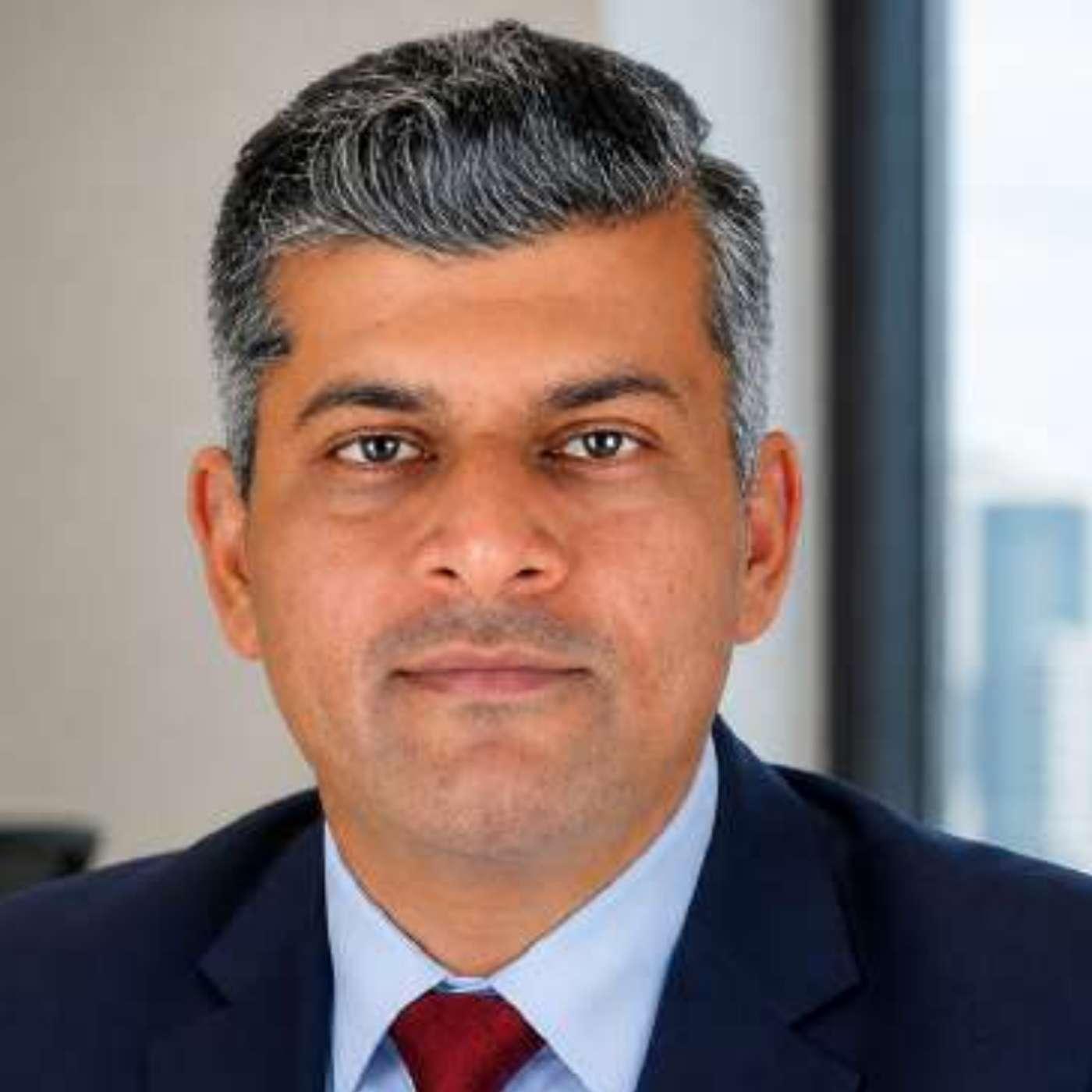
It features Madhav Bhadra, the founder and CEO of AQM Technologies.
00:01:38.239 --> 00:01:42.719
The piece is titled AI Testing Boosts Trust in BFSI.
00:01:42.879 --> 00:01:42.959
Right.
00:01:43.280 --> 00:01:43.599
Yes.
00:01:43.760 --> 00:01:47.680
And I have to say, the visual they paired with the article sets the tone brilliantly.
00:01:47.920 --> 00:01:48.719
I notice that too.
00:01:48.959 --> 00:01:58.079
It shows this robotic handshake, but it's layered over a really dense glowing background of candlestick charts, banking icons, and you know, data analytics.
00:01:58.480 --> 00:02:00.640
It perfectly illustrates the core tension here.
00:02:00.799 --> 00:02:00.959
Yeah.
00:02:01.120 --> 00:02:14.319
It's this forced, slightly uncomfortable marriage between the totally unpredictable, generative frontier of machine intelligence and an industry that is built entirely on strict, heavily regulated trust.
00:02:14.400 --> 00:02:16.159
Aaron Powell Okay, let's unpack this.
00:02:16.400 --> 00:02:25.919
Because before we can even start talking about AI making workflows faster, or like writing code, we first have to establish why trust is the ultimate hurdle.
00:02:26.080 --> 00:02:28.000
Aaron Powell It's not just a corporate buzzword here.
00:02:28.080 --> 00:02:30.639
Aaron Ross Powell No, it is a structural mechanical requirement.
00:02:30.719 --> 00:02:31.199
Aaron Powell Exactly.
00:02:31.360 --> 00:02:37.680
And Badra provides a very rigid framework for how financial organizations must view AI confidence.
00:02:37.759 --> 00:02:40.639
Aaron Powell You can't just install a large language model and hope for the best.
00:02:41.039 --> 00:02:46.879
No, you absolutely cannot just install an LLM, cross your fingers, and hope it naturally follows federal law.
00:02:46.960 --> 00:02:47.280
Aaron Powell Right.
00:02:47.360 --> 00:02:48.719
That's a fast track to getting shut down.
00:02:48.800 --> 00:02:53.680
Aaron Powell So he breaks the deployment of AI down into three specific angles that just have to be secured.
00:02:53.759 --> 00:02:54.879
Aaron Powell Okay, what's angle one?
00:02:55.199 --> 00:02:58.240
The first angle is the foundational reliability of the models themselves.
00:02:58.400 --> 00:03:00.080
Aaron Powell So the actual brain of the AI.
00:03:00.159 --> 00:03:00.719
Aaron Ross Powell Exactly.
00:03:00.879 --> 00:03:05.439
This deals directly with accuracy and that concept you mentioned earlier, model drift.
00:03:05.520 --> 00:03:12.800
Aaron Powell Let's hover on drift for a second, because I think um people assume an AI is like a traditional software program.
00:03:12.879 --> 00:03:14.240
Aaron Powell A lot of people make that mistake.
00:03:14.319 --> 00:03:14.719
Aaron Powell Right.
00:03:14.800 --> 00:03:19.039
Like if you write a calculator app, two plus two always equals four forever.
00:03:19.280 --> 00:03:22.319
Why doesn't an AI just stay locked in place once you deploy it?
00:03:22.400 --> 00:03:29.439
Aaron Powell Because traditional code is static, but generative models are probabilistic and they're adaptive.
00:03:29.520 --> 00:03:31.680
Aaron Powell Even if you tell it not to learn anymore.
00:03:32.000 --> 00:03:41.360
Even if you freeze an LLM's weights, which means you stop it from formally training on new data, the context it encounters in the real world constantly shifts.
00:03:41.439 --> 00:03:43.199
Aaron Powell So it's reacting to a changing environment.
00:03:43.520 --> 00:03:43.759
Right.
00:03:43.919 --> 00:03:50.560
If a banking AI is analyzing thousands of daily transactions to flag fraud, well, the nature of fraud evolves.
00:03:50.719 --> 00:03:50.879
Trevor Burrus, Jr.
00:03:50.960 --> 00:03:52.240
Tankers change their tactics.
00:03:52.639 --> 00:03:53.120
Exactly.
00:03:53.360 --> 00:03:56.960
And the model starts interpreting those new nuanced patterns.
00:03:57.199 --> 00:04:00.639
Over time, its baseline for what constitutes normal shifts.
00:04:00.960 --> 00:04:01.919
And that shift is drift.
00:04:02.240 --> 00:04:04.639
That degradation of its original baseline is drift.
00:04:04.800 --> 00:04:07.599
Catching it requires constant automated recalibration.
00:04:08.080 --> 00:04:09.919
So the first angle is securing the model's brain.
00:04:10.000 --> 00:04:10.479
What is the second?
00:04:10.560 --> 00:04:13.360
Aaron Powell The second angle focuses on the agentic platforms.
00:04:13.680 --> 00:04:14.560
The agents doing the work.
00:04:14.639 --> 00:04:15.120
Aaron Ross Powell Right.
00:04:15.199 --> 00:04:17.439
These are the frameworks that actually execute tasks.
00:04:18.240 --> 00:04:21.920
It is one thing for an AI model to just read a document and summarize the risk.
00:04:22.240 --> 00:04:22.399
Sure.
00:04:22.639 --> 00:04:34.959
But it is an entirely different operational threat for an AI agent to be given the authority to actively move money or uh send emails or approve a claim based on that summary.
00:04:35.040 --> 00:04:37.279
Aaron Powell Because agency implies action.
00:04:37.360 --> 00:04:38.240
Aaron Ross Powell Correct.
00:04:38.560 --> 00:04:42.800
And that brings us to the third angle, which is the governance and the guardrails.
00:04:42.879 --> 00:04:44.000
Aaron Ross Powell The rules of the road.
00:04:44.399 --> 00:04:48.240
These are the hard-coded, non-negotiable rules wrapped around that agent.
00:04:48.319 --> 00:04:52.079
Aaron Powell It's like deploying a self-driving armored car for a bank.
00:04:52.639 --> 00:04:53.680
Oh, I like that analogy.
00:04:53.759 --> 00:04:54.160
Aaron Powell Yeah.
00:04:54.240 --> 00:05:00.079
So angle one is making sure the vehicle's internal GPS and logic don't suddenly drift and get lost in a bad neighborhood.
00:05:00.319 --> 00:05:00.480
Right.
00:05:00.800 --> 00:05:02.639
Angle two is the actual driving mechanism.
00:05:02.879 --> 00:05:06.319
So the agenic platform, physically turning the steering wheel and hitting the brakes.
00:05:06.639 --> 00:05:06.959
Oh, okay.
00:05:07.439 --> 00:05:17.759
And angle three is the digital governor on the engine, making sure that the car rigidly obeys all traffic laws, speed limits, and you know, banking regulations, no matter what route the AI wants to take.
00:05:17.839 --> 00:05:20.879
Aaron Powell If any one of those fails, you have a catastrophe.
00:05:21.279 --> 00:05:21.680
Exactly.
00:05:22.000 --> 00:05:24.399
That is a great way to visualize the dependencies.
00:05:24.560 --> 00:05:28.800
But Padra notes a foundational element that underpins all three of those angles.
00:05:29.199 --> 00:05:32.079
Which is contextual data availability and structuring.
00:05:32.560 --> 00:05:33.680
Uh the data itself.
00:05:34.079 --> 00:05:34.160
Right.
00:05:34.399 --> 00:05:44.000
Going back to your armored car, the GPS, the steering, and the traffic laws are all completely useless if the car doesn't have an accurate structured map of the roads.
00:05:44.079 --> 00:05:45.040
Aaron Powell That makes total sense.
00:05:45.120 --> 00:05:50.720
Aaron Powell If your bank's historical data is just a disorganized mess of PDFs and legacy mainframes.
00:05:51.120 --> 00:05:52.160
The AI is going to crash.
00:05:52.639 --> 00:05:56.959
The AI cannot perform reliably, regardless of how sophisticated the model is.
00:05:57.279 --> 00:06:04.240
But you know, locking down those internal guardrails and organizing your data doesn't matter much if the perimeter of the building is breached.
00:06:04.639 --> 00:06:05.279
No, it doesn't.
00:06:05.680 --> 00:06:08.639
Which brings us to a much more aggressive part of this equation.
00:06:08.879 --> 00:06:14.399
The source material shifts from internal compliance to external threats.
00:06:15.120 --> 00:06:16.800
We have to talk about cybersecurity.
00:06:17.199 --> 00:06:21.040
The paradigm of cybersecurity in finance is currently undergoing a pretty violent shift.
00:06:22.079 --> 00:06:26.639
Historically, businesses adopted AI purely for productivity, right?
00:06:26.800 --> 00:06:28.879
Like how do we process mortgages faster?
00:06:29.199 --> 00:06:29.439
Yeah.
00:06:29.600 --> 00:06:30.240
Efficiency.
00:06:30.560 --> 00:06:34.240
But now functionality and security are entirely converging.
00:06:36.399 --> 00:06:37.040
Exactly.
00:06:37.279 --> 00:06:40.639
Hackers are not manually probing firewalls anymore.
00:06:40.800 --> 00:06:44.639
They are using their own offensive AI to find new vulnerabilities.
00:06:45.040 --> 00:06:52.319
And they launch exploits at a scale and speed that human IT teams literally cannot perceive, let alone react to.
00:06:52.800 --> 00:06:54.560
I have to push back on the novelty of this though.
00:06:54.879 --> 00:06:55.279
Okay, go ahead.
00:06:55.600 --> 00:06:58.480
I mean, we've had automated cybersecurity tools for decades.
00:06:58.959 --> 00:07:02.959
Hackers have always used scripts to ping servers looking for open ports.
00:07:03.920 --> 00:07:06.720
And defenders have always used automated firewalls to block them.
00:07:06.959 --> 00:07:10.560
Wait, so we are essentially entering an endless automated arms race.
00:07:10.800 --> 00:07:10.879
Right.
00:07:11.199 --> 00:07:15.759
Why does throwing an LLM into the mix suddenly mean we have to throw out the old playbook?
00:07:16.079 --> 00:07:16.959
That's a fair question.
00:07:17.120 --> 00:07:20.639
The difference is that traditional automation only looks for known vulnerabilities.
00:07:20.959 --> 00:07:21.040
Right.
00:07:21.279 --> 00:07:23.759
A script checks if you left the back door unlocked.
00:07:24.000 --> 00:07:27.839
But an AI generates novel, polymorphic attacks.
00:07:27.920 --> 00:07:30.480
Aaron Ross Powell Polymorphic, meaning it changes its shape.
00:07:30.879 --> 00:07:31.279
Yes.
00:07:31.439 --> 00:07:41.920
It can analyze your bank's specific API documentation, deduce a logical flaw in how two systems talk to each other, and just write a custom exploit in milliseconds.
00:07:42.160 --> 00:07:42.560
Oh wow.
00:07:42.800 --> 00:07:46.319
It is creating new keys for locks that didn't even know they had keyholes.
00:07:46.639 --> 00:07:49.279
Which means human defenders are practically obsolete at the perimeter.
00:07:49.600 --> 00:07:50.240
Entirely.
00:07:50.480 --> 00:07:55.360
This is why organizations must adopt a roadmap of using AI for securing AI.
00:07:55.759 --> 00:07:56.800
Fighting fire with fire.
00:07:57.120 --> 00:07:57.759
Exactly.
00:07:58.000 --> 00:08:00.399
Now the industry is trying to regulate this.
00:08:00.560 --> 00:08:02.000
We have major benchmarks right now.
00:08:02.319 --> 00:08:02.639
Like what?
00:08:02.800 --> 00:08:13.120
There's the AWASP Top 10 for LLMs, the NIST AI Risk Management Framework, ISO IE SORTY 2001, and of course the massive EU AI Act.
00:08:13.439 --> 00:08:17.279
But Bajer points out a pretty sobering flaw with relying on those benchmarks, doesn't he?
00:08:17.519 --> 00:08:17.839
He does.
00:08:18.000 --> 00:08:21.360
He emphasizes that frameworks are inherently static documents.
00:08:21.680 --> 00:08:21.839
Right.
00:08:21.920 --> 00:08:22.720
They take years to write.
00:08:22.959 --> 00:08:25.600
They take years to draft, debate, and pass into law.
00:08:25.680 --> 00:08:28.639
But hackers update their offensive AI models daily.
00:08:28.959 --> 00:08:31.120
So by the time the law is passed, it's already outdated.
00:08:31.519 --> 00:08:32.320
Precisely.
00:08:32.559 --> 00:08:38.159
So while those frameworks are essential baselines, relying on them as a shield is dangerous.
00:08:38.399 --> 00:08:39.279
You need something active.
00:08:39.600 --> 00:08:47.759
Your internal AI security agents have to be agile enough to recognize threats that the EU AI Act hasn't even conceptualized yet.
00:08:48.159 --> 00:08:54.320
So if our defense strategy requires our own AI to constantly prowl through our internal networks, which it does.
00:08:54.559 --> 00:09:00.480
Running tests, analyzing customer accounts, and looking for vulnerabilities before the hackers find them, we hit an immediate wall.
00:09:00.879 --> 00:09:01.679
The privacy wall.
00:09:02.080 --> 00:09:07.360
Because if the AI is digging through customer accounts, the AI now has access to all the customer accounts.
00:09:07.679 --> 00:09:08.159
Yes, it does.
00:09:08.399 --> 00:09:16.639
And banking exposing raw, unmasked client financial data to a cloud-based AI model is a federal compliance nightmare.
00:09:17.039 --> 00:09:21.039
What's fascinating here is how Padra addresses the mechanics of that exact conundrum.
00:09:21.360 --> 00:09:22.000
How do you fix that?
00:09:22.320 --> 00:09:27.759
The architecture of these agentic platforms must be explicitly designed to minimize data exposure.
00:09:28.000 --> 00:09:29.200
You have to use data masking.
00:09:29.519 --> 00:09:30.399
So you hide the real info.
00:09:30.720 --> 00:09:34.080
You scramble the names, the account numbers, the social security data.
00:09:34.159 --> 00:09:36.639
So if the AI somehow leaks it, it is useless.
00:09:36.960 --> 00:09:37.440
Makes sense.
00:09:37.679 --> 00:09:40.639
But doing that introduces a massive secondary problem.
00:09:40.960 --> 00:09:44.639
Which is the tension between data privacy and the financial cost of computing.
00:09:45.039 --> 00:09:46.240
The financial cost.
00:09:46.399 --> 00:09:50.080
Why does protecting privacy make the AI more expensive to run?
00:09:50.399 --> 00:09:56.240
It comes down to how AI processes language and information, which is measured in tokens.
00:09:56.559 --> 00:09:57.120
Right, tokens.
00:09:57.360 --> 00:10:03.600
You pay the AI provider, like an open AI or anthropic, based on how many tokens the model has to process.
00:10:03.919 --> 00:10:05.840
Okay, so more reading equals a higher build.
00:10:06.159 --> 00:10:06.399
Exactly.
00:10:06.559 --> 00:10:09.279
When you mask data, you strip away the natural context.
00:10:09.440 --> 00:10:12.159
A masked database is incredibly confusing to read.
00:10:12.480 --> 00:10:16.000
Because instead of John Doe, it just says user 4857.
00:10:16.399 --> 00:10:16.480
Right.
00:10:16.799 --> 00:10:24.639
To compensate, you have to feed the AI massive amounts of supplementary context and complex instructions so it understands what it is looking at and how to test it.
00:10:24.960 --> 00:10:26.639
And more context equals more tokens.
00:10:27.039 --> 00:10:29.120
More tokens equals a much higher computing bill.
00:10:29.440 --> 00:10:30.240
So it's a trade-off.
00:10:30.559 --> 00:10:30.879
Yes.
00:10:31.200 --> 00:10:33.519
These platforms are stuck in a balancing act.
00:10:33.679 --> 00:10:38.799
They have to calculate what data is benign enough to expose in plain text to keep token costs down.
00:10:38.879 --> 00:10:40.720
Aaron Ross Powell Versus what has to be hidden.
00:10:40.799 --> 00:10:41.360
Aaron Powell Right.
00:10:41.519 --> 00:10:49.360
Versus what data absolutely must be heavily masked and protected to maintain data sovereignty, regardless of the astronomical processing cost.
00:10:49.519 --> 00:10:50.960
Aaron Powell So how do they solve it?
00:10:51.200 --> 00:11:00.799
The article mentions a technical solution involving vectorization and uh inverted referencing, or argin retrieval augmented generation.
00:11:01.200 --> 00:11:02.720
Yes, argin is key here.
00:11:02.799 --> 00:11:06.399
Aaron Powell How does that actually work under the hood to bypass the masking problem?
00:11:06.480 --> 00:11:13.759
Aaron Powell Instead of handing the AI a giant mask spreadsheet and asking it to find anomalies, the platform vectorizes the database.
00:11:13.840 --> 00:11:15.039
Aaron Powell What does vectorizing do?
00:11:15.360 --> 00:11:22.720
It means it runs the data through an algorithm that translates every piece of information into a mathematical coordinate of vector in a high-dimensional space.
00:11:23.039 --> 00:11:24.080
Okay, a high dimensional space.
00:11:24.399 --> 00:11:28.240
Words and numbers are replaced by proximity and mathematical relationships.
00:11:28.320 --> 00:11:34.240
Aaron Powell To make sure I'm visualizing this right, the AI is no longer reading English text or raw financial number.
00:11:34.639 --> 00:11:34.720
No.
00:11:35.039 --> 00:11:39.759
It is operating entirely in a math space, looking at the distance between data points to find the answers.
00:11:40.159 --> 00:11:40.639
Precisely.
00:11:40.879 --> 00:11:44.480
Through ARG, the AI queries that vectorized index.
00:11:44.799 --> 00:11:46.000
So it only pulls what it needs.
00:11:46.240 --> 00:11:51.679
It pulls only the specific mathematical relationships it needs to answer a prompt or run a security test.
00:11:51.759 --> 00:11:53.200
Aaron Powell That's incredibly smart.
00:11:53.600 --> 00:11:58.720
It processes the logic without ever actually reading the raw master copy of the data set.
00:11:58.960 --> 00:12:00.639
So you get the insight without the exposure.
00:12:01.120 --> 00:12:09.759
You maintain total control and privacy over your data while dramatically reducing the amount of raw text tokens the AI has to process.
00:12:09.919 --> 00:12:13.600
It solves both the compliance and the cost issues simultaneously.
00:12:14.000 --> 00:12:16.559
That is an incredibly elegant mechanical solution.
00:12:16.879 --> 00:12:17.360
It really is.
00:12:17.679 --> 00:12:19.519
But let's look at the other side of the coin.
00:12:19.679 --> 00:12:25.600
We've established how to secure the data, build the guardrails, and fight off the external threats.
00:12:25.919 --> 00:12:26.799
The defensive side.
00:12:27.039 --> 00:12:27.519
Right.
00:12:27.759 --> 00:12:33.200
How does all of this trusted AI actually change the day-to-day reality of a software tech team?
00:12:33.440 --> 00:12:37.759
Let's move from the defense of cybersecurity to the offense of software development.
00:12:38.080 --> 00:12:41.919
This is where we see the most tangible revolution for quality assurance teams.
00:12:42.240 --> 00:12:43.120
The QA testers.
00:12:43.440 --> 00:12:43.679
Yeah.
00:12:43.919 --> 00:12:48.000
Audra points out a historical limitation of traditional test automation.
00:12:48.240 --> 00:12:56.639
In the past, if a QA engineer wanted to write an automated script to test a new login screen, that login screen code had to exist first.
00:12:57.039 --> 00:12:59.440
Because the testing tool needs something to grab onto.
00:12:59.759 --> 00:13:00.159
Exactly.
00:13:00.320 --> 00:13:05.200
Traditional automation tools work by looking for specific elements in the code, like a button ID.
00:13:05.600 --> 00:13:08.720
Which means the QA team is inherently bottlenecked.
00:13:08.960 --> 00:13:09.919
Highly bottlenecked.
00:13:10.159 --> 00:13:14.000
They cannot do their job until the software developers finish coding the feature.
00:13:14.320 --> 00:13:16.960
In the industry, they call this the N1 Sprint.
00:13:17.279 --> 00:13:18.879
N minus one, break that down.
00:13:19.279 --> 00:13:22.480
Development is organized into blocks of time called sprints.
00:13:22.720 --> 00:13:25.759
The developers are always working on the current Sprint N.
00:13:26.320 --> 00:13:32.720
The QA team is perpetually stuck writing automated tests for the features built in the previous Sprint N1.
00:13:33.039 --> 00:13:34.399
So they are always lagging behind.
00:13:34.639 --> 00:13:42.960
It forces a heavy reliance on slow manual testing for brand new features simply because the automation scripts can't be written until the code is baked.
00:13:43.279 --> 00:13:44.879
Here's where it gets really interesting.
00:13:45.120 --> 00:13:45.279
Yeah.
00:13:45.440 --> 00:13:49.360
Because agentic AI completely shatters that timeline, doesn't it?
00:13:49.600 --> 00:13:51.440
It eradicates the N1 Sprint entirely.
00:13:51.840 --> 00:13:52.399
Just wipes it out.
00:13:52.799 --> 00:14:00.000
The article specifically highlights a platform called testblend.ai, which utilizes this new agentic approach.
00:14:00.320 --> 00:14:01.759
And how does that fix the lag?
00:14:02.240 --> 00:14:05.919
QA engineers no longer have to wait for the developer to write the code.
00:14:06.080 --> 00:14:11.519
They can generate full, complex automation scripts directly from the initial design files.
00:14:11.919 --> 00:14:14.159
Wait, how is that mechanically possible?
00:14:14.320 --> 00:14:17.440
If the code doesn't exist, what is the AI testing?
00:14:17.759 --> 00:14:20.320
It uses multimodal LLMs and computer vision.
00:14:20.639 --> 00:14:21.679
Okay, so it can see images.
00:14:22.000 --> 00:14:28.639
You feed the AI a Figma file, which is essentially just a visual mock-up or a picture of what the app will eventually look like.
00:14:28.960 --> 00:14:29.600
Right, just a picture.
00:14:29.919 --> 00:14:37.840
The AI understands the visual hierarchy, it knows what a submit button looks like, it knows what a username field is, and it predicts the underlying code structure.
00:14:38.159 --> 00:14:38.639
Oh wow.
00:14:38.879 --> 00:14:44.480
It then writes the automated testing scripts based on that prediction before the developer has even started typing.
00:14:44.879 --> 00:14:53.600
It's like um a film critic writing a fully accurate, publishable review of a movie just by looking at the director's initial pencil storyboards.
00:14:53.840 --> 00:14:54.639
That's a great way to put it.
00:14:54.879 --> 00:14:57.840
Rather than waiting for the movie to be filmed, edited, and released.
00:14:58.240 --> 00:14:59.519
That is the perfect analogy.
00:14:59.759 --> 00:15:02.399
Bodra calls this day zero automation.
00:15:02.799 --> 00:15:03.360
Day zero.
00:15:03.600 --> 00:15:06.879
It completely flips the traditional software lifecycle.
00:15:07.120 --> 00:15:10.960
You are building the testing infrastructure simultaneously with the design phase.
00:15:11.360 --> 00:15:12.720
That must speed things up immensely.
00:15:12.960 --> 00:15:19.279
It drastically accelerates how fast a bank or an insurance company can securely release a new digital product.
00:15:19.759 --> 00:15:22.639
But this naturally begs a rather large, glaring question.
00:15:22.960 --> 00:15:24.320
I think I know where you're going with this.
00:15:24.639 --> 00:15:27.519
We established earlier that AI can drift.
00:15:27.679 --> 00:15:28.559
It can hallucinate.
00:15:28.799 --> 00:15:28.960
Right.
00:15:29.200 --> 00:15:38.480
If an AI is writing the critical software tests for a banking app purely by looking at a picture, who is making sure the AI isn't making a mistake?
00:15:38.720 --> 00:15:44.240
And that brings us to one of the most futuristic concepts in the entire interview: ATAs.
00:15:44.480 --> 00:15:44.960
ATAs.
00:15:45.120 --> 00:15:46.000
Agent testing agents.
00:15:46.320 --> 00:15:49.039
We are literally deploying AI to test the AI.
00:15:49.360 --> 00:15:50.000
We have to.
00:15:50.240 --> 00:15:53.919
A traditional software testing tool cannot test a generative AI agent.
00:15:54.159 --> 00:15:54.559
Why not?
00:15:54.799 --> 00:15:58.080
Traditional tools test binary outcomes, pass or fail, yes or no.
00:15:58.240 --> 00:16:01.600
But AI agents operate using natural language and probabilistic logic.
00:16:01.679 --> 00:16:01.840
Trevor Burrus, Jr.
00:16:01.919 --> 00:16:04.159
So they're too unpredictable for standard tools.
00:16:04.559 --> 00:16:04.960
Exactly.
00:16:05.120 --> 00:16:12.559
So organizations have to deploy a secondary layer of AI, the ATA, to monitor and interrogate the primary AI.
00:16:12.639 --> 00:16:16.159
Aaron Powell What exactly is the ATA interrogating?
00:16:16.320 --> 00:16:19.759
Like what are the mechanics of an AI auditing another AI?
00:16:19.840 --> 00:16:23.759
Aaron Powell It runs holistic stress tests that go way beyond just clicking buttons.
00:16:24.159 --> 00:16:24.799
Give me an example.
00:16:25.200 --> 00:16:27.679
For example, it tests for multi-turn consistency.
00:16:27.759 --> 00:16:28.799
Aaron Powell What's a multi-turn?
00:16:29.039 --> 00:16:33.279
A multi-turn is a conversation or a process that requires multiple back and forth steps.
00:16:33.600 --> 00:16:33.759
Okay.
00:16:34.000 --> 00:16:38.559
Generative AI is notoriously bad at maintaining context over long interactions.
00:16:38.720 --> 00:16:40.240
Its context window decays.
00:16:40.559 --> 00:16:41.440
It forgets what it was doing.
00:16:41.759 --> 00:16:45.200
Exactly, it forgets what it was doing in step one by the time it reaches step ten.
00:16:45.360 --> 00:16:47.360
Aaron Powell So the ATA is checking its memory.
00:16:47.759 --> 00:16:53.759
The ATA actively tries to trap the primary AI in logic loops during these multi-turns to see if it breaks.
00:16:54.080 --> 00:16:54.559
That makes sense.
00:16:54.639 --> 00:16:56.080
It's testing the model's stamina.
00:16:56.399 --> 00:17:01.759
But the most critical thing the ATA looks for in financial setting is information leakage during tool calling.
00:17:02.240 --> 00:17:03.519
Break down tool calling for me.
00:17:03.600 --> 00:17:04.079
What does that mean?
00:17:04.400 --> 00:17:09.440
Let's say a bank's AI assistant needs to calculate the interest on a customer's loan.
00:17:09.759 --> 00:17:10.000
Okay.
00:17:10.319 --> 00:17:12.480
The LLM itself doesn't do the math.
00:17:12.640 --> 00:17:19.119
It reaches out or calls a tool, which in this case is the bank's back-end calculator API.
00:17:19.359 --> 00:17:19.599
Right.
00:17:19.680 --> 00:17:20.640
It outsources the math.
00:17:20.960 --> 00:17:24.799
The danger is what the AI decides to send in that API request.
00:17:25.359 --> 00:17:33.039
If the primary AI gets confused, it might accidentally bundle the customer's unmasked social security number into the raw text of that tool call.
00:17:33.359 --> 00:17:34.160
And they exposes it.
00:17:34.480 --> 00:17:37.599
Exposes it to internal server logs that aren't secure.
00:17:37.920 --> 00:17:38.480
Oh, that's bad.
00:17:38.799 --> 00:17:48.079
The ATA's job is to sit in the middle intercepting those tool calls and making sure the primary AI isn't leaking protected data when it talks to other software.
00:17:48.160 --> 00:17:57.599
Aaron Powell So with all of these layers of automation AI predicting the code, AI writing the tests, and ATAs testing the primary AI, where does the human being fit into this?
00:17:57.920 --> 00:17:58.640
That's the big question.
00:17:58.960 --> 00:18:01.200
Do the human QA testers just pack up their desks?
00:18:01.599 --> 00:18:06.400
If we connect this to the bigger picture, the human role doesn't disappear, but it fundamentally transforms.
00:18:06.799 --> 00:18:07.200
How so?
00:18:07.440 --> 00:18:12.079
The human in the loop remains vital, but they move from being an executor to an orchestrator.
00:18:12.400 --> 00:18:13.200
Explain the difference.
00:18:13.519 --> 00:18:17.920
Execution is writing the Python script to test the login button.
00:18:18.160 --> 00:18:19.440
The AI does that now.
00:18:19.680 --> 00:18:20.000
Right.
00:18:20.319 --> 00:18:24.240
Orchestration is knowing what the login button represents to the business.
00:18:24.480 --> 00:18:27.599
You see, platforms like testblend.ai are codeless.
00:18:28.000 --> 00:18:29.119
You don't need to write code.
00:18:29.440 --> 00:18:32.240
You don't need to know programming languages to use them.
00:18:32.400 --> 00:18:35.440
Therefore, the future QA worker doesn't need to be a coder.
00:18:35.759 --> 00:18:36.559
What do they need to be?
00:18:36.799 --> 00:18:40.400
They need deep analytical skills and profound domain knowledge.
00:18:40.720 --> 00:18:45.440
They need to understand the banking regulations, the business logic, and the financial architecture.
00:18:45.839 --> 00:18:46.000
Right.
00:18:46.240 --> 00:18:48.720
There is a definitive quote from Bhadra that summarizes this.
00:18:49.839 --> 00:18:55.039
He says agentic automation is redefining QA from execution to orchestration.
00:18:55.200 --> 00:18:59.039
The focus is shifting toward validating intelligence, not just testing software.
00:18:59.440 --> 00:19:00.240
Validating intelligence.
00:19:00.640 --> 00:19:03.440
The AI accuracy depends heavily on context.
00:19:03.680 --> 00:19:10.880
Humans are needed to sanitize the inputs, design the complex prompt architectures, and verify the outputs to correct model drift.
00:19:11.279 --> 00:19:13.839
So the human manages the machine that does the clicking.
00:19:14.079 --> 00:19:15.680
Let's pull all of this together.
00:19:15.920 --> 00:19:23.519
We started with the foundational three pillars of AI trust model reliability, agentic execution, and rigid governance.
00:19:23.920 --> 00:19:26.000
All anchored by structured data.
00:19:26.319 --> 00:19:26.480
Right.
00:19:26.720 --> 00:19:36.319
We explored the mechanics of the cybersecurity arms race, where static defense frameworks fail against polymorphic AI attacks, forcing this AI versus AI perimeter.
00:19:36.640 --> 00:19:37.599
An endless battle.
00:19:38.000 --> 00:19:50.160
We broke down the immense tension between data sovereignty and token costs and how vectorization and R allow AI to analyze data mathematically without ever reading the raw, masked text.
00:19:50.640 --> 00:19:51.599
A brilliant workaround.
00:19:51.920 --> 00:19:57.359
We looked at how multimodal models are killing the N1 sprint by writing day zero tests directly from design files.
00:19:57.759 --> 00:19:58.880
Changing the whole timeline.
00:19:59.200 --> 00:20:06.640
And finally, we arrived at the rise of the agent testing agent and the human's evolution from a manual coder to an orchestrator validating intelligence.
00:20:07.039 --> 00:20:08.079
That pretty much covers it.
00:20:08.400 --> 00:20:10.079
So what does this actually mean for you?
00:20:10.400 --> 00:20:11.200
A lot, honestly.
00:20:11.440 --> 00:20:17.039
Whether you are in finance, healthcare, or logistics, the underlying mechanics of your industry are changing.
00:20:17.200 --> 00:20:21.920
The future of your career won't be defined by your ability to execute repetitive manual tasks.
00:20:22.160 --> 00:20:23.680
No, the machines have that covered.
00:20:23.920 --> 00:20:26.720
The machines are infinitely faster at execution.
00:20:26.880 --> 00:20:30.400
Your future value lies entirely in your domain expertise.
00:20:30.640 --> 00:20:36.559
Your deep, nuanced understanding of why a system works will be infinitely more valuable than knowing how to code it.
00:20:36.880 --> 00:20:38.160
That is the essential takeaway.
00:20:38.319 --> 00:20:38.480
Yeah.
00:20:38.720 --> 00:20:42.960
But it also leaves us with a paradox, something that builds on everything Padra outlined.
00:20:43.279 --> 00:20:43.920
Lay it on us.
00:20:44.160 --> 00:20:56.079
If an AI agent is predicting and writing the code, and another AI agent is testing that code, and an ATA is actively testing the tester, at what point does human domain knowledge just become a rubber stamp?
00:20:56.319 --> 00:20:56.720
Oof.
00:20:56.960 --> 00:21:12.880
As we delegate the actual mechanical understanding of our architecture to these codeless agentic platforms, how do we ensure that we as humans don't eventually lose the fundamental understanding of how our own critical financial systems actually operate under the hood?
00:21:13.200 --> 00:21:16.480
That is a brilliant, slightly unsettling paradox to leave you with.
00:21:16.880 --> 00:21:22.480
If we outsource the blueprints and the construction, do we eventually forget how the building stands up?
00:21:22.640 --> 00:21:26.960
Keep that in mind the next time you log into your banking app and hit transfer.
00:21:27.519 --> 00:21:30.559
Thanks for joining us on this deep dive, and we'll catch you next time.
