


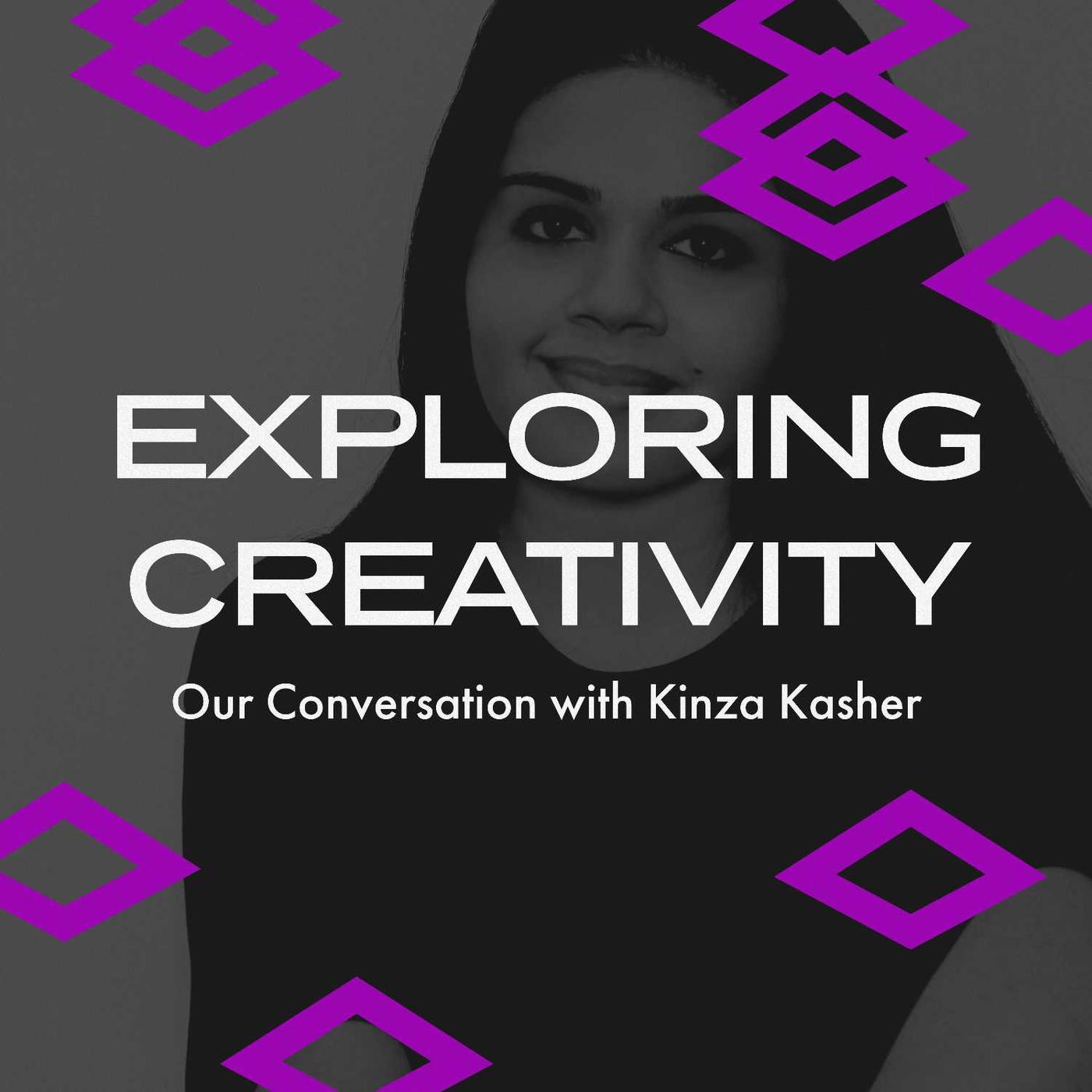
Michael: This is Michael Morgan and welcome to Exploring Creativity. I've been hosting these conversations for over a year now, but the goal of uncovering new insights into the creative process, my goal is to help creative people make the best work of their lives.
These conversations have fundamentally changed how I create and I hope they'll do the same.
Today's episode like last week's is another special episode. It's out of the chronological sequence from our last long batch of episodes. But it's something I wanted to release sooner than later. today. I'm speaking with Kenzie casher, she's a senior research and design consultant at Deloitte.
She is an adjunct professor at Farmingdale state college. She's an entrepreneur who created and sold a device, which helps patients with Ms. Receive better care. And she's a mentor to students at the school of visual arts. Having spoken to her many times, I know that she's even more than that.
Um, she is a creative individual. Many aspects of her life, not just the ones I mentioned. And I'm sure we'll get into a little bit of that as well.
Uh, what's really interesting about her and I is that we both taught the same course on interaction design at Farmingdale state college. I say the same course because it's numbered and labeled the same, but they were obviously very different courses as we have different styles and different ideas on how to help education.
And so her and I would speak regularly about education, how to best serve students. Um, What the best ideal form of, uh, college might look like for designers. And as we were speaking last week, I said, you know, why don't we get on air and continue this conversation? So I think this is a great platform to talk about creativity, uh, to talk about design, which is a form of creativity that I'm super passionate about.
And it's also a great platform for me to introduce you to people that I'm honored to consider friends and collaborators and colleagues. So I want to welcome Kenza to the show.
Kinza: Hi, thank you so much for having
Michael: me. You're very welcome. Thanks for joining. Um, I wanted to start off with a little bit of a story, something that, you know, because I've admitted it to you one time for, um, and admitted it to your class one time before, but.
Uh, I think it's an important story because I think we often, um, compare ourselves to others, uh, kind of project things onto others, assume things about other people that are doing things that are similar to you. Uh, it sounds a lot like comparison and competition, but anyway, um, so the story is that way back when I don't even remember when, um, our mutual friend and mentor Jack Harris who got us both the job at Farmingdale would mention you all the time, what a great student you were and how talented you were, and you were selling, you sold a business and all this stuff.
I remember just feeling like, wow, this person sounds amazing. I feel like I can never even achieve anything nearly as amazing as what they've done. Um, and I always just felt, you know, he had such admiration for you. I said, wow. Like I felt so small in comparison and it was completely a me thing. And, um, I remember when we first spoke like the F like leading up to our first conversation, I had that somewhere in my head, obviously I had gotten a little bit over it, um, to even be able to have a conversation with you.
Right. But at the same time, it was still there. And after we spoke the first time, I remember that just disappearing. And it was just a nice reminder. And I mean, this, that story of you had, uh, I had known about you, I guess since shortly after college. So like, this was like a young version of me thought, but it's interesting how we carry these things forward and specifically comparison.
With the people that are doing similar things to us. So I wanted to open up the episode with that story. Um, and this it admitting of, um, something that I was kind of ashamed about, you know, but something that I think is very human and common and I speak about it to kind of let it go, let it free and say like, I'm so glad that I was able to get over it because you're here now and, and getting to know you has been such a rewarding experience.
Kinza: Oh my gosh. Um, I, first of all, everything that Jack told you basically doubling. And apply that to yourself. And we may not have had the same list of like, you know, checkmark of like achievements and stuff like that, but like, definitely like similar and if not more you in caliber. So I had a similar sort of like, you know, again, impression and understanding of you because Jack had some of the really like, you know, talked about you.
And I think you were also our senior in Farmingdale, and I think you may have visited class ones as well to just sort of like critique work and stuff like that. And so like again, Jack had hyped. So much. And I was like, all right, like literally the same comparison bullet as you were, when he had first reached out to me.
And he was like, yeah. So the other part of this course is actually going to talk about like, Michael and I'm like, oh, you have to meet this mic all yay. You know, like, but at the same time it was like, all right, like, you know, I wonder what that first conversation is going to be like. And like, you know, I've heard so much about you.
So, but to kind of bring it back to the point of late what you were saying, I think it's all us. And it's like this very human moment of thinking, like, who's this person and you know, all this like imagery that we create about that person, um, based on like, again, what we've heard about them, et cetera. And when you talk to them, I feel like, you know, the best.
Bart is that you can either feel the wall, come down and see them as, you know, the human being that they are, which is awesome. Or yes, like in some cases where I have seen, you know, people being exactly what they are, they're like, yeah, I am this person and you never get to, like, you have, don't be real with them.
But I think that did not happen with us. I feel like just by you breaking down that like I, and being vulnerable and like saying that I feel like made me say that. And like immediately I feel like we connected. Cause like that was out of the way and now we could start being real right. So I think like that was like the best.
So thanks for doing that. And I think that is such a giant lesson in like, just being yourself and being good. Right. You know, style of vulnerable and sort of like saying like, this is what I really feel. Let me see how the world reacts to it. Um, so thank you.
Michael: Well, thank you. Um, and the right style of vulnerable, I always take notes of certain quotes and things.
People say that is that that's a good one. I'm writing that down. Um, yeah. You know, it has me thinking, as you were saying it, like how many people must be doing this, like right now in this moment, people having conversations that might feel inferior or superior to another person or vice versa and like they're in conversation, but they're not like they're, they're afraid to admit that.
Yeah. Um, and I think. In a way, what I've learned and why I did that is that like, you know, a lot of people I know that are in the creative fields specifically, or some of them are very successful people. And I know people it's like, I know people that look up to them, but I just see them as a friend. And so it's like, when I see it from the outside, I'm like, oh, wow.
Like if only they knew, like they would probably be best friends, you know? And like, but it's so hard to get to that point of saying, Hey, like, I think you're really great at this. Ultimately what it is is like, Hey, I think you're great at this thing. Um, I think I could be better at that thing. And that's why I'm not that thing.
Um, and like there's so much I could learn from you is the same way of saying it instead of keeping it in and just being like, ah, that person, like, why can't I be as good as them or whatever story you want to make up. Um, and said being like, Hey, I admire this about you. I think this is really great about you.
And, um, You know, leaving it at that, not even comparing it to the self, just like, I think this is great about you is a great way to kind of just diffuse that insecurity that is just going to happen. It happens, you know,
Kinza: Totally. And you know, what's funny about that is that I feel like almost 95% of the time, if I've ever done that with the person, they might not acknowledge that about themselves.
They'd be like, oh, interesting. Like I would actually think like, it's my biggest insecurity or whatever, like no joke, like, I mean, so some of my qualities at the school of visual arts, like a lot of us, I would say like 50%, if not more of us are like, you know, um, international students. And they come from like all sorts of walks of life and countries and, you know, and, um, no joke, like I, you know, one of these, like one of my friends, very good friends, um, you know, she had a really great style of just like, you know, telling stories and, you know, making sort of like a point, um, by bringing these personal experiences and like, you know, really being a, you know, a great Janice.
Storyteller. And I told the present, I'm like, listen, when I'm listening to you, it feels like, you know, you brought me into your world and it's like, beautiful. And she literally, almost like thought she like looked at me and she was like, if you're being serious, thank you. But I feel like because English is not my second language.
And like, I don't really know how to pronounce certain words and stuff like that. It's my biggest insecurity. And I'm like, who cares? Right? Like, I mean, it's crazy because some of the things that we just think like our weaknesses are actually our strengths and like, we need that external or that third-party to let us know, know that it's actually like one of your strongest
Michael: points.
So that's such a good point. I was just to be geeky about this for a second. I was just watching the Obi wan Kenobi TV show comes out every Wednesday. This is sponsored by Disney. So shout out Disney. Um, so there's a scene in the latest episode where Layla says to obiwan, what does the force feel like?
And he's like, you know, when you're in the dark and you're very scared and you turn the light on how you feel. And I was like, he's like, that's what it feels like. And I was just thinking like how beautiful that statement is like that line, whoever wrote it, like, that's amazing, but also like, that's how it felt when I said that to you, how I felt when I was able to say it was just like, let me just like, turn the light on here.
Let me get rid of this sort of feeling. And it's amazing what it does to a room to your point. Like someone that says, oh, you know, I actually. Didn't I felt the same way and I'm feeling the same way right now, or like, oh, I didn't actually like that about myself. And that's why maybe they got good at it because they spend so much time thinking about it, you know?
Um, but I think it really, it warms a room and it makes, makes me feel great to be in a place where that can happen. Yeah.
Kinza: Yeah. And I think there's also a piece of like bringing your, I guess, ego down a little bit. I feel like. I've been in small, you know, one room agencies and like, again, big giant corporations and then giant like agencies.
And I feel like all these titles and all of these like levels and all these, you know, positions, certain income brackets come with such a big ego attached. And it's funny because we're all doing the same thing, which is like, you know, bits and pieces and branches of design. And I think like when you kind of like strip all of that away and just say like, you know, we've been through the similar struggles we've been through sort of like the similar learnings.
I was once also a student that was working day and night on my portfolio and like pondering on like, you know, a sentence or two. Wondering if somebody on the other end, a recruiter or whatever was going to, you know, see it, you know, like it honestly comes down to kind of like stripping away all of that, like BS that we tack on to all of these things, we call him for it and just say like, wow, like genuinely, I really think you're awesome at that.
Or you're great at that. Or like one, like even now you just said like, Hey, I take down quotes of like, things people say in, I might've just said it in a forgotten it, but you actually took the time to like write it down. I think like those sort of like moments of acknowledgement and consideration are what honestly said.
Some of them were, I wanna say like, you know, human, creative people apart that I've, at least I've met and honest, I'm not good at that. I feel like sometimes what happens is that because we business it by everything, including, you know, creativity. I have to constantly remind myself that like I'm a creator first in the business versus in second.
And, um, it's unfortunate that like, that you have to go hand in hand in order to be profitable. And I'm like air quoting this. But I think like, you know, it's conversations like these it's platforms like these, which I thank you for creating do kind of remind us that now the two can, the do need to sometimes be looked at separately if you know what I
Michael: mean.
Definitely. And I totally know what you mean. And it's actually, I believe, I wish I had like sound effects on the show, but I believe that like, you're the first designer I've had on the show. So. Um, I would say all the guests like ours are really, our experiences are the most similar with an education and design.
So I totally get what you mean. I think there's like a commercialization of design, which like it's great. People are able to afford things they need by way of design and business and all that. That's cool. Um, but I think we've gotten really good at figuring out how to commercialize things and optimize things.
And there's this beauty and artfulness that exists within design that often gets forgotten of or forgotten about, or, or just kind of paved over because of other incentives that creating spaces to, um, think about it, talk about it, develop it, cultivate it in a community, I think is like, those are. I guess increasingly becoming more important than they ever have been.
And so, um, you're very welcome for creating a space. I'm happy that you're here and we can do this together. Um, so as we're speaking, um, I did was like, oh, did we talk about design? Maybe a little, maybe we'll get there. I want it to start talking about education with a topic that I actually thought of as we were like admitting our, our insecurities and, um, which is the myth of the teacher.
I think that like when we were younger, you know, you, you see a teacher and they're like the all-knowing being, or the holder of grades or some mythology that we have, um, obviously in my classes as, as you've seen, when I spoke to your class, um, and I'm sure you've experienced as well. And this is what I want to hear about like, Uh, humanizing element that I'm trying to bring to the classroom where it's like, Hey, I'm, I'm just a few steps ahead.
And like, here's some things that like, I'm not good at or great at or okay. At. And like, here's where you're great. And let's just move, let's keep going forward, you know? But, um, as an educator, now I can formally say that you're an educator now. That's pretty cool. Um, how have you seen that myth kind of play out in your classrooms and how, what have you done to, to circumvent it?
Kinza: Yeah, so it's funny. I feel like the universe just like gives you. Funny ways of addressing things. So it was the first day of class and everybody had sort of filed into the virtual room and, um, and I was just like waiting. I was like, Hey, hi everyone. Hello? And like, everybody was just like, you know, just there and, and a few minutes go by and I'm like, okay, let's get started.
And everybody's just like, looking at me like, who is this? Like the person? And she's like, and I'm like, hi, I'm professor Kasha. So like the first time that I'm introducing myself, Oh, you're the professor. We were just kind of waiting for somebody to come in and like be the professor. Oh no, I'm not a student ever professor.
And so it was like really funny because it was one of those moments where like, yeah, like I was in their spot just like a few years ago and I completely get their confusion, you know? And I think like, it's, I thought it was such a funny way to like begin my first official semester ever, you know, teaching human beings.
And I think like, do your Boyne of like, how do you confront like all these questions and like humanizing, you know, what it means to be like, you know, a professor and have that attached to your name and everything. So I think a couple of things like played out and smell well. That was one of the moments that happened in beginnings that sort of set that tone.
But I think like, There were a couple of things that we did. I started the class with all weather report.
I said, how are you doing right. And, um, it wasn't always like, you know, how are you doing in class or in school? I was genuinely asking, even though that's what this started to answer it, I would genuinely ask them like, how are you doing. Is it stressful what's happening. And I got to learn about students, like I'm finding a new job or I'm like, you know, dealing with like X ting at home, that's impacting whatever it's inspired me in whatever way.
So, you know, those weather reports turned out to be some of those like key moments where we connected and we kind of like develop it. I want to say like a trust and a bond between, you know, each other in which I was able to, I feel like Bush again, new ideas to them, and then being more like accepting of those ideas.
understanding them as well. Like not just continuing to sleep, wishing my sort of like planned agenda, but then also inviting their thoughts and feedback continuously, continuously.
Kinza: And that also included honestly, like scheduled one-on-one calls throughout the semester. So I could like hear about like, what struggles were they facing? Is there anything that I could help with in terms of their project idea or like the class content that was being, you know, but tourism, it also honestly, like one of those calls turn into what have you got for your, you know, God planned for your future goals?
Um, that was interesting because I got to hear about like each and every student's like, you know, Hey, my biggest aspiration in life is to have my own studio or like I want to work for like X agency or like. I want to just be a freelancer all my life. So it was very cool for me to understand, like, you know, and some of them did not have any and that's okay.
Even just sort of like addressing the fact or. Getting to know that they didn't have anything plan was still totally fine to your right. Um, so it was about creating those human moments in which I got to know them a little bit, like not just about like, you know, their homework to their homework, but then like more about like, you know, what have they got for plan for their future or like, you know, what's working for them.
What's not et cetera.
Michael: there's a few threads here that I wanted to cover. I mean, we started, uh, I started by asking, what are the myths of the teacher? What are the things that the teacher, the students project onto the teacher that they don't know, what is the teacher? What is the point of a teacher? What is the value of a teacher? And I think that like, um, you mentioned like teacher as a researcher, like they're in this environment with people trying to first, they're trying to like curate a good experience, which is what you were talking about.
Right. How do we make a great experience? But part of that is not just like, here's an experience and everyone's going to do it. You need to really be intuiting how they're feeling. So you as researcher talking to them individually, like molding the class form to fit all of those individuals and then being the facilitator, like leading the charge, leading, um, I thought and conversation and ideas, but also being able to like pass that facility, not pass the facilitation part off, but know when the students have great ideas as well.
And like, they also, like maybe they have a seed of an idea that isn't fully developed or like a big question that they've never really wrangled with before. And I think you cute into like the teacher as facilitator is, and we're changing the form of the class comes in is noticing that, being able to say, oh, like, that's a big question.
Let's talk about it. Let, let me help them frame it or reframe it in a way. So, um, yeah. Myth of the teacher. For me was like, demystifying the teacher. What does it mean to be like, what is it actually like? Are they the all-knowing being, or are they something else? Um, and I think to your point that there are a lot more, there's a lot of elements, including the fact that we're humans that have insecurities and comparisons and complexities as well.
Um, when, before we started, I had said, you know, when we were in college, it would have been so cool to have an episode where we could listen to like two teachers that we knew, or one teacher that we knew speak about teaching, uh, before we even had the class, it'd be so cool to know. Um, and so, you know, I want this episode to be in many ways, a message to past and future students of ours, um, and also a cool marker in time for where we're at as educators.
When I finished teaching the most recent class, I posted it to LinkedIn to let everyone know that I was done. Celebrate, get some likes, some shares, and someone commented and said, what was your biggest takeaway from teaching?
Michael: And I sat with that for days. I'm still sitting with that. It's on my to-do list of writing an actual response to it. I have a long, long response. I'm curious to, uh, for you, what were your biggest takeaways from teaching?
Kinza: Yeah, my gosh. And you're only giving me like a minute while you sit with it, right.
Michael: For like way long enough to answer right away.
Kinza: Um, lucky for you. I've been thinking about it since I ended up teaching, which is like a week now, but, um, so funnily enough, I also had like a debriefing goal, the Jack, and it was like really funny. Um, but anyway, that's what the stuff we do, right? Like we constantly like analyze what we did, but I want to say like, think, like, I think a couple of different things, I feel like.
My biggest takeaway is that these kids don't realize that like, yes, we were in the same spot. Like they were just a few years. Right. Um, but it also took like a lot of, I want to say, like, um, you know, pushing and shoving and hard work and, you know, like, it's easy for some of them to say like, oh, you know, cool that you guys were just here and doing this.
Um, and I'm not saying like, you know, that people don't do that. People obviously do that, but I feel like, you know, allowing them to understand that competition is real, you know, like in the way that people are the world, like teaches us, um, kind of like, um, you know, just wishing true. That is real. I think like it's also like.
They're also not very well equipped. Um, if that makes sense. So like my biggest takeaway was that like, you know, make it like, actually do exactly what you were just saying, not mystify how to get somewhere. So, you know, like one of the biggest things like I tried to do at every single step was, you know, show that, you know, okay, so maybe after graduating my undergrad, I did this, I did this, this, and then I went to grad school and I did this and had learned this and blah, blah, blah.
And like the value of meeting such and such people are going to such and such conference was X, Y, and Z. So kind of like actually connecting actions to outcomes. And then like where those pathways led me, allow them to kind of deconstruct and demystify. How we got from like, you know, oh my gosh. From like school to like here.
Right. And in all honesty, I said like, and I have a long ways to go as well. Right. Like, it's not that we're here and now we're embedding knowledge. Do you mean, I guess, because we feel like we've achieved some status. It's really not that it's basically that, like, we feel like we've learned an X amount and we're ready to share an X amount, but there is like, you know, there's always going to be like, again, like a Y amount for me to learn and be better and become better.
And so. Yeah, like Dayco is include that as students, unfortunately like are given a lot of like theory content and not a lot of like, you know, actionable content. And I think like, especially in this like sort of highly, highly digital resource filled world, it's so important for us to say like, Hey, it's not a mystery.
You can also do this. And of course, like chart your own path, but this is how I did it. Um, some of those glasses even included like things like, Hey, if you see as like, you know, a beautiful piece of strategy or design work here are all the 10 or 20 messy boards behind it. And I actually went ahead and like shared my screen to show them that word so that it kind of like, they're not left wondering, right.
They're not like left sort of guessing. Um, it's right there in front of them. And I think what sets somebody apart though, and that's the piece where I feel like. I will bring it back full circle to whoever started that. Like, yes, it is, you know, hard work is that the beast that sets people apart is that how much you can demystify all of these actionable steps, all you want, but how much each student or person wants to take it further and explore on their own and develop on their own is really on their own dime.
And, you know, I guess, desire. So I feel like that would be my second half of my takeaway is like you can push and push and push and be good. Um, but you can only help students or individuals as much as they want to help themselves.
Michael: Yeah. That's such a big one. And one that I thoroughly felt this time more than any other time I've taught, which is like, you can, like people are giving and they might even be giving as much as they can give, but like that effort to outcome, like you said, The amount of effort they're giving or the places that are giving effort is not resulting in the right outcomes or the outcomes they want.
And the feedback you can give is only gonna steer them so much, or hopefully it can steer them in the right direction. Sometimes it, you know, they resisted or, or whatever. And so, you know, um, you can only do so much, I think is, is really important because, um, as a teacher, I think something that students don't realize is like, you're managing the emotions, the processes, the, uh, philosophies of each individual student.
And you're managing that in your head of like, okay, this is the way that person views the world is the way that person views the world. And I'm going to help deliver something to them that will help them. Um, it's a lot more than just like, here is the content and I'm going to redo the content. And when you read it, you will all equally be as good as each other and everything will be great.
It's like, there's so many more complexities. And, um, you know, it's good that we're talking about some of those, because I don't want to bore students that are listening. Like, oh yeah, we all have a bed. We all do have it bad. I think being a student can be really difficult, especially seeing when they had all these finals due at once.
And I was like, all right, I'm going to move the finals or a different day or something like, and teachers have it difficult as well. You know, like time pressure is preparation and trying to show up for everyone. So, um, yeah, I think being, you know, self-compassionate really is the key, but also, um, helping both sides understand that this is like, it's worked for both of us.
Uh, and we're ultimately trying to like get people to be in the best possible place. They can. That's a great.
Kinza: Yeah. Yeah. And I think like one of the, like one of the, I feel like keep wondering as I came out of my deeper from call again to Jack, was that, you know, I was kind of like fretting about like what grades to give, what, you know, um, and again, what give or take goes there.
And there was a great point like that, you know, he made, which was like, you know, it's not really, you know, these grades are not going to matter. Once the duke go ahead and apply for their first job or internship or stuff like that. It's about like, you know, how much effort is somebody really willing to put in there to show like, you know, what are the game of the law?
And again, to excite the other person to say like, okay, I want to work with this person. Right. And I think like, that's something that's not lost on me, honestly. Like even when I'm not getting grades, you know, in the professional world, right? Like the amount of like, you know, work, we can like show and the amount of excitement we can create with the creativity that we, um, you know, display, I think like, In a funny way is equal to that sentiment.
And so, yeah, like any students that do listen to this afterward, it's like, you know, I would say that I wouldn't say like, worry less about the grades because that's the, again, that's the currency of being in school. Like, you know, like that's like the outcome you're looking for
Michael: the requirements.
Kinza: For sure.
I don't want to be put it on like, you know, some quotes and she told us not to worry about grades, not true. I think like in the end, when I sort of sat back, I looked at everybody's effort. I actually looked at from like, you know, um, how much work did it put in, um, how many classes, you know, that the show up, but, you know, energy and excitement with, um, or even like being the real self, you know, if they faced issues and challenges, were they real about it or did they just kind of like, let it go by?
Um, how many times did they show up for like a fellow classmate and collaborated with them? If they felt like, you know, okay, they're probably facing a challenging time. Let me, and there were a couple of students that were there saw that in another group was like facing a challenge and this stepped up and that's amazing.
Right? Like those are, I feel like the kinds of things that as a designer or a creative, like we're a community people and we can't like not be emotionally intelligent, you know? So I think like that counts a lot and that's like,
Michael: More than a grade. Yeah. There there's something that goes in between all of the assignments and the work.
And it's, you know, they call it participation on syllabus or whatever, but like, you know, participation, when I really sat to give that grade, it was about that. It's like the show up points, like, what does this score you get for showing up and how do you present yourself to the world? And, um, I think, you know, with, with grading and teaching you as a teacher, you have to explain all of that stuff ideally beforehand.
So they know, okay, I can do this. And some people's default mode is better. Just baseline level is like, they're just naturally better at showing up or presenting themselves better, faster. Right. So there's that too. Um, but I think it led to a lot of meaningful conversations about one of the things we talked about a lot in my class was what does it mean to be a professional?
Um, And having them answer that over several weeks and presenting, uh, examples of that, of like real world examples of it. In real time, like we were working with a client in our class and showing like things the client was doing that was very professional quote, unquote, why did that, why did that feel professional?
The way they named files the timeliness of it, these sorts of things that are like, it's not just getting something done, but it's also how it's done. You know, if you sloppily name a file, if it takes you three days to return an email, you could maybe deliver at the end date, but the way you went about it sets a tone and like you, then it gets to the rubric and it says participation.
And it's like, what the hell does that mean? But to me, and it seems like to you, it means all of that other stuff, that extra it's extra effort, it's extra energy, but it's really ultimately extra thoughtfulness that you're bringing to. What you're doing, um, and care and thoughtfulness. These are human attributes.
They're not things that you necessarily even need to learn. Like you're naming a file either way. So it's like, are you considering it? Or are you just doing it really quick? Like if every, every step you make, you just asked that question, it's kind of you'll know. And there's times where you can say, ah, screw it.
Like, I don't need to do that, but I'll do the next thing, you know? Um, but to me, yeah, that's definitely how I grade a participation. It actually skewed people's grades quite a bit. Um, I have a larger class, so I could speak about students a little bit more abstractly and no one will know, but it definitely grades a bit, um, where the participation score was like way lower than a lot of other people.
Um, you know, so I think, and honestly, if I could only grade on one score, it'd probably just be that and like, you know, the final and how it. Requirements, you know, that, which is just listening skills ultimately. Um, cool. So covered grading. We talked about the myth of the teacher and the myth of the student in a way or the responsibility of the student.
Um, I'm curious, what do you think students can do to be more creative or to hold themselves back less? Like what have you seen that you felt like was holding students back, um, in the class from being that great student from being their like best creative self?
Kinza: Yeah. I think like some of that I like sort of started to talk about or talks a bit about it, like in my earlier answer, but for sure, like.
Kind of constantly challenging yourself to be open to new things. Um, you know, if like I saw that like, again by week eight or nine or 10 refined Lulu, Abassi sort of question of like, but I wonder, what am I going to use to make X, Y, or Z? And I'm like, it's not my job to tell you that, you know, like you can, you can sort of like sense, like, you know, my God, why isn't, why isn't this person like helping me determine what doula should use to execute X.
Right. Because again, I think it's sort sorta like, has that connotation of like, um, you know, commercialization that we just talked about, right? It's like, we are meant to kind of deliver and execute so that we get paid for whatever we do or whatever. We kind of like, you know, deliver in print or web or experience to whatever.
And so I think that. One of the things was basically just, you know, encouraging students to open up their minds, um, and open up their sort of like, you know, S skills do absorb new things and welcome them to accept that there's other ways of like maybe looking at design or looking at research and, you know, we found that some people love the research part and some people love the design part.
Some people were super awesome at putting like, you know, beautiful, like sort of synthesis boards together. Um, but you know, and then there's were grade like the, you know, gorgeous digital designs that they did. Um, so everybody had like bits and pieces that they liked and liked more than others they were completely uncomfortable with.
But I think like how to kind of like push herself to be more creative. Um, really lies in like allowing yourself to be uncomfortable, to at least try other things that may not be core to your skillset, especially when you're being like, given the space and design school to do so. Right. Like explore and learn.
And so I think like, yes, we always have time constraints. You know, deadlines and whatnot, but you know, if bland, right. Um, I think like, you know, students do have the chance to accept that, you know, uncomfortability discomfort and then kind of like learn from it. So, and like I saw some of my students do their best creative work when they just accepted the fact that like, they were going to learn this and do this.
And they sort of just got like, they were like, here you go. I tried this, this, I feel good about this. I have questions about what do you think? And I think that's where, like you start to really do some really good creative work because they're meeting me halfway and I'm meeting them halfway and we're learning and creating new things to get.
Michael: Um, a lot of great points there. Like, you know, how does one and, you know, we're using the word student here, but really we're always students in T another myth of the teacher is that teachers, our students back, we were probably learning 10 times as much to even deliver material. You know? So, but that said, like, when we say student here, it's both the students that are actual students by title, um, and anyone trying to get better and enhance their creative work.
And I think to your point, this is openness is where you started, like being open to the idea, the fact that there could be just the fact that there could be new ideas, like, and you could achieve those that's part one. And then you're saying navigating that discomfort. It's like, all right, I know that there's like new goals that I've never even been to, and it's going to be uncomfortable to get there, but I'm willing to sit with that discomfort.
And then this idea of new skillsets, you said outside of your current skillset, um, a lot of times we kind of get fixed into like the idea of, well, I'm a audio producer, I'm a designer, so I can learn these skills, but it's like the audio producer that I see, that's like learning video editing or the mix engineer, that's learning graphic design or the designer.
That's learning songwriting that like, and they're incorporating those things in their work where like, you really see like, wow, this person is like, is just building a world, something that's interesting. And they're expressing themselves even more. Um, and then, um, Uh, you were saying how, when people were, were exploring this, they brought, came back with so many questions and this idea of just questioning that's something, you know, if you want to, here's a cheat for any future student.
Like if you want a hundred percent participation, um, follow what I just said, but also like, um, the questioning that is like, when a student get asked to me a great question, I'm like, here we go. Like, we're in it. You know, like you're actually asking because you want to know. And there's no way you could have formulated that question just like on the fly.
Like you really did some things and your you've tried some things and now you're asking questions. So all, really, those were four really great ways through which people could, um, enhance their creativity, whether they're students or just any other creative person. Uh, I idea how you would answer that. I was like, damn if someone asks me that on the fly, not really sure what I would say.
So that was, that was impressive.
Just feeling insecure around you again.
Kinza: Well, I was just gonna say, it's just easy to come home with all these great ideas, if you're surrounded by good ideas, you know what I mean? So like, I think like it's the energy of this conversation, so it's, it's all you, Michael, you just don't know.
Michael: Well, I think that's such a good point. And having recently moved, I moved like this weekend.
Um, the change of environment is drastic and I don't want to get into it. Um, but totally different environment. And how you like the people you're around the questions they ask the behaviors, they have the things they do, the things they're interested in, all of that affects you and what you make as a result, because you're making a thing.
So if you're at the center of that, you know, it's going to affect that. So, um, while I appreciate the love at the same time, it's like, it is that environment, right? It's, it's the right people in the right place doing the right work. That really leads to that. Again, I want to go back to that, like myth of the teacher method, the classroom, even, which is like, what is the classroom?
It's just a space for a period of time that we can ideally get better at the thing we're trying to get better at. And if you just view it as that, it's like, that's an amazing and fun place to be.
Kinza: Totally. Yeah. Oh my gosh. So true. And I know that like, you know, just to give you an example, I know that we, like, you know, had like virtual classrooms this semester and everything, and, you know, maybe we go back to in-person, but, um, you know, we all, as a world got challenged when we all had to shift our, like, you know, ways of learning into.
Just zoom screens overnight and, you know, that's huge. And one of the things I heard from the students was it's been hard to learn over screens. And I asked them like, you know, what did you guys do in doc dials sort of classes, such as drawing and painting and stuff. And, you know, they were literally drawing and taking pictures and like sending the for feedback or like, you know, who their professors who would give feedback on like, you know, digital screens and send that back.
And it's crazy. Right? Like just, I just, honestly, all I had to do with that danger is that human beings are amazing resilient creatures that can adapt to so much. So like, you know, yay us. Yay us. But, but then yeah. Yeah. The other thing was like, you know, we, we just to kind of like loo back on your thing of, you know, classrooms, I think yes.
Like we use digital tools such as Miro and stuff to, you know, create one space where we would. Collaborate with ideas and look at either each other's ideas, even like add onto them as the other person is speaking. So there was a really, you know, no matter if you like build a community digitally or in-person or hybrid, increasingly I think like the whole point is that, how are you engaging with the other person and adding value in their communication and creating that energy to kind of like, again, like give an idea and get an idea and keep on just building that ideas sort of Jenga building, you know, like that's what happens in our conversations and which is why we can never like, sort of keep it to, you know, whatever our schedule diamonds.
Michael: No, no, definitely. And it's like why I started my class off just asking the students like kind of flipping the skirts and being like, what's the point of a teacher? I was just curious everyone, like, can you answer this to your teacher? Like, what's the point? Like, why am I here? You know, like, why can't you learn this on your own?
Well, like, obviously there's some reason. Cause if there wasn't, I wouldn't be like, so like let's identify this and know it, and then I can be responsible for that. Or at least maybe, um, no one was sure really now, um, you know, helping a lot of it had to do with the human element of like being able to see the individual as the individual, you know, the hardest task of a teacher is like, Kinzel learns different than Michael.
We're interested in different things. We're pursuing the same thing, but maybe not even it's like, well, I want to be a freelancer. I want to work at an agency. It's like, are we even pursuing? Like, but having someone that's cute into us and the things oh, he loves working with. She doesn't like using any type, like knowing those things over time and building that, um, understanding is something that like you can't do on a, you know, pick, choose your learning website.
You know, those are awesome too, but that's like, one of the big gaps is like, there isn't that emotional and, uh, intellectual engagement with the individual. And so, you know, I think having, I really wanted the students to hold me accountable as much as I want them to be held accountable, you know? And I think it's important to create that, that dynamic, you know?
Um, and that's what I learned and was like, okay, that's a challenge. And I tried to meet it as did you. And it's a very, very difficult challenge. It's yeah. The question for you. Did, did like family members, friends, people that like never taught before they did, they kind of view it as like, oh, it's pretty easy.
Or I hear it's hard. Like, what was their like response?
Kinza: Oh my God. Yeah. Well, everybody had that corny joke of like, oh my gosh, professor. And I'm like my, yeah. Whatever, like, whatever. Right. Like, yeah, after that, like bingo things, it was like, you know, it was yes. Like it was two people or like people who just have never talked before and stuff like that.
It's like, You know? Oh, so it literally came down to the following. Oh. So do you have like, you know, a curriculum, like, do you, do you give bad grades if people don't turn in their homework? Like, why do you think is a bad grade? I had to confront that. Right. Like, um, and then, uh, you know, do you have a favorite student?
You know, like there was like very on the surface questions, things that like, honestly, I didn't even like gum sort of like face to face with an actual class. Right. Cause they're really surface level things. It's like, okay. So, you know, is it about, uh, is it like, you know, you just go there and lecture and then do you give homework, right?
Yeah. So many more complicated sort of layers underneath each of those things, like, do I have a favorite student? Like, I would answer that. Right. Like, you know, so it's like, yes, of course, like there are again different, like homework means, you know, thinking about something and maybe putting thoughts on like, you know, paper and then actually presenting it.
Or it might just mean like goals, listen to this YouTube video or like go find, you know, a thing, an actual, you know, like physical thing that inspires you. Like, again, it could mean so many different things, but yes, we'll have sort of like, you know, it's oversimplified what teaching is. And I think like, I don't know what teaching is.
Like, I don't think I'd know that after like, you know, even 10 semesters, but I do think it's not just like, you know, lectures, homework, bad grades, favorite students. I think it's like much more than that. And that's me oversimplifying it
Michael: now, but I love that, that quote right there. It's so true. No, I just, I remember prepping for the class at my dad's place and him being like, wow, you're working so hard on this.
Like what's, what's taking so long to prepare for this class. And I sat and I talked to them and explained to him, like all the phases I was going through to prepare and do the research and like plan the days and the sequencing and like, um, he was like, oh wow. Like, I, I remember him like having this realization, like, and like seeing like his simple conception of teaching versus like.
How much, like technically there is to do and philosophically there is to do, and then just the emotional part of like actually managing the class and, um, you know, all of those, keeping all those mental models in your head in a way.
Kinza: No, because it's a responsibility. These are. Some of the first impressions, these human beings that are ever going to intake, you know, and probably remember her, because I know that like, there are just some key sort of like, you know, um, skills and key sort of even theories or key even beliefs that I remember from my teachers who taught some things and dotted so well that they stayed with me and became part of like, you know, again, my design principles or like my sort of tool set.
Right. And I, I felt that responsibility because I was like, I, you know, yes, you can backtrack and say, oh guys, I made a typo mistake or something and you can correct those. But you know, there's a key, like, you know, a moment rubber transferring this information. Do you like other human beings? You know, essentially seeing if it resonates and if it doesn't resonate, that's on me.
That's like, you know, am I a good communicator or not? Am I communicating the right things? This information is gonna stay with them and shape the way to think about something if they don't want, like, if they hate everything I'm teaching, maybe I'd like robbed them of the chance of learning something that may have changed their life.
And I think like that's a big responsibility
Michael: for sure. Yeah. And it's not one to be taken lightly. I mean, I remember having similar realizations and just being like, wow, this is a real responsibility to show up. Um, I want to talk about mentors and significant people in your life. Um, because I think teachers come in different forms.
There's the teacher in the classroom. There's also the teachers outside of that. Um, And you can choose from anywhere, but I'm curious, who are the significant people in your life that have influenced or stimulated your thinking and attitudes about how you work?
Kinza: Yeah, I think there's a couple of different I have in my life.
What I like to call a board of directors. And I can't tell you if by. Out of like, you know, a dream that, that just dreamt up once or something that I read. I'm not sure. I've always had this board of directors in my life and for like different pieces of it. And I feel like everything value and entrepreneurship related, I'll always look to my dad because he created a, one of Foxtons young, like first are, um, at these city that we lived like first, um, creative agency that did basically bold advertising, um, in a country where, uh, you know, uh, models that didn't have their head covered.
For example, weren't a thing. And he went that way and he was like, no, creativity should be more than that. And, you know, he took on that challenge and was absolutely challenged. So many diamonds by like, you know, groups who thought that this was scandalous and his business should be shut down and blah, blah, blah, blah.
But, you know, he stood his ground because he thought creativity meant much more than what. 99% of the people are doing, and he chose to be that 1%. And so like, he will always be like in that sort of area of my life, you know, one of my mentors, um, the other one in undergrad definitely absolutely. Was Jack Harris, um, and is continues to be actually, he's now permeated in other places in my life.
But, um, for sure like that guy, I hold him a lot and I owed him a lot in terms of like all that extra time. He gave me outside of class to shape my thinking as to like, you know, um, more as possible beyond the class. I went to him and like, Incoherent ideas about what I want my future to be. And he basically told me that all of these incoherent thoughts are valid.
Right. And that's a lot, that's a, that's like everything to a student who is not only an immigrant and doesn't know how the hell things work, you know, in a new country. Um, uh, you know, but also for like somebody who, who wants more than a job in her life. Right. Like I, um, everybody who knows me well knows that like, you know, my goal or like, you know, how, and again, like I shared with you, that's an under conversation, but like, you know, it's to it's to like, you know, be an owner or multiple businesses that students stand for the values that, you know, I do.
So Jack was basically the person who was only. All of this is possible. And, um, and that's a big thing and he continued to support me, not only in that, but then also like writing recommendation letters for graduate school and being my actual thesis advisor in graduate school, in school of visual arts. Um, he was with me for a year and more, he actually signed on to do you know, that sort of like advisorship, like way before anybody else had a mentor or a thesis advisor.
So that meant the world to me, um, an actual graduate school, like I will always always look up to, um, Criswell Lapin. Um, he is a he's head of design at Vixen kin a. And awesome deck company. And, um, I feel like, you know, in addition to his, um, awesome humor, um, and just the right nudges at the right time, um, he actually, you know, uh, breathes life into, um, my new consulting company, which I founded with two colleagues at SBA.
He became our first client, um, and continue to give us work and, you know, just sort of like put his, you know, like client cap on and a mentor cap on at the right times. Right. And basically led, you know, our growth from like, again, just like a, you know, a newly founded company to one that was revenue generating.
And that was awesome. So, you know, The best part. And there's so many others that I'm just not mentioning. Um, there was actually a professor Kim Wilde also at Farmingdale, who just said one thing. Um, and that like made me realize how important it was to push myself out of my comfort zone. And she was like, you know what guys, like, if you, if you have to do one thing, it is to kind of like, you know, go in and get a job somewhere.
That's going to teach you what you think you need to know about design. And that meant for me that I was going to push myself out of like certain like areas and go to the other side of the state and get a job. Right. So again, like all these, like people on my little board of directors that, and so many more than I'm not talking about, but I didn't mention the big names that have continuously.
I am up until this point. And, um, I loved them all and I would not be here without them.
Michael: I want to ask cause that's a beautiful tribute to three people. And what they've done for you thus far on shown you and taught you thus far, I'm curious for people that are thinking, I would love that I need a mentor.
I would love someone to help guide me. Like what do I do? Where do I go? How do I know they're the right person? Like, what would you recommend based on your own expenses?
Kinza: Um, go and bug them until they basically tell you to either off or say, okay, I have no option, but delay, you know, give this person my shit.
Cause that's what I did with everybody. I, I remember I, especially with Jack, like. Like I used to be in a class that I was absolutely like learning nothing from, and I'm never going to tell you what glass stuff, but like I used to actually say, oh, you know, I'm going to excuse myself and go to like, I don't know, oh, get a snack or ladies room or whatever.
And I would actually go in like, knock on Jack's room and be like, do you have a minute? And that minute turned into like 60 minutes because I just like, you know, again, it was just there and sharing my dreams and he was there and he was like, you know, talking about all the things from like, yes, sure.
Design, but then business and then his life experience and then, you know, like life and what it means to have good values and, you know, um, how to actually learn from mistakes and apply them, or don't apply them, like everything, everything. And like, it basically meant that this person was, you know, giving me their time, which is the rarest thing.
In this world and will continue to becoming increasingly rare, um, that dime is never going to increase. It's only going to decrease on people's calendars. And so anybody who's looking to find a mentor, just make sure that that person embodies, um, all the values that you either strive for all the goals that you either strive for.
Um, and, and yeah, ask for their time whether it's like literally a minute, because I've done that or, or, or 60 minutes or days do that because you know, they've done that. They've done what you are setting out to do and setting your goal to be. I will also send other thing. I've asked people to be my mentors formerly, and that has never worked out.
It's probably because I asked them all these people, I just like, sort of, they adopted me as their mentees and I, their mentor, but on like, sorry, then my mentor. But like, it, it genuinely gained from like relationships and a sharing of like thoughts and ideas and conversations that like, you know, um, got accepted at both sides on some levels.
And I think like, um, it's important to know that like not, everybody's going to be your mentor and, and it's. Okay.
Michael: Hmm. Why do you think is a challenging one? Why do you think they wanted you as a mentee? What about young? You did they see looking back?
Kinza: Um, oh my God. Okay. I I've always called myself just like super lucky.
Honestly, I haven't super lucky. I will say this. I will say the following. Um, I think that I was always upfront about. Uh, what I thought I wasn't good at and what I needed their help with or what I thought that I could learn from them. So like with Criswell, for example, right. Like I was going to start teaching and I was like, Chris, well, you've taught like, you know, me, you have taught for like forever at SBA.
Like, I'm going to know what you know about teaching. And I want to learn from you because I have so much respect for you. And. And he was like there. And like, I remember like his first sentence was, first of all, I'm really sorry that you have started, that you've accepted you to one job in the world that it was going to be like really unrewarding, like, well, thank you for that.
Like but it's true. You know, he, yes. He gave me actionable steps and like, you know, so, and then the same thing with Jack, like I have had, um, Insecurities that I've like brought up to him and said, you may not know what to do with this. And, you know, as our sort of like, you know, like relationship developed, it was more and more about like, even like life valleys that we shared, not necessarily just career or industry related.
Right. Which is awesome. So I feel like it's, it's always been like, see, I feel like for a mentor or mentee relationship to happen, there is somebody who needs, who wants to learn something. And then there's somebody who has the ability to teach it, or at least like, you know, that's the understanding. But I think like in the best, like sort of, you know, the relationships that I've had is like, I've had them tell me that old, you know, like, Uh, I've I thanks for bringing up X conversation, but like that idea resonated or didn't.
And so like, I would like to think that I am, and I've actually also asked, I've said like, what can I do in exchange for your generosity? I have asked that, um, and they're awesome. I don't think they've ever taken me up on that offer, but at least the option is there because I do know that I'm not being done for this time.
It is like amazing that they're important or this knowledge and wisdom that they've learned through their hard work. And I always appreciate them. So I hope that like that's enough, but they have to live. They have to let me know what it is and, you know,
Michael: uh, that's a great answer. And I think, you know, a lot of the listeners of the podcast are actually in the music industry, a lot of young audio engineers, um, but also creatives.
Uh, I've heard a lot of, uh, And engineers tell me their significant others will listen with them that are also in creative disciplines, that aren't audio, but, um, which I think is really cute. And, um, we're going to be doing an episode for those people. Um, soon boilers though, but, um, the, uh, I bring this up because that industry there's a lot of young people that are like trying to figure it out.
And there aren't really schooling programs for them to go to per se, that like net like that have like the outcomes they want. But there are individuals that have the send. I think, um, you brought up a lot of good points about how do you approach those people that you lead Meyer that you look up to you that you want to learn from without like being or about missing the mark somehow.
So I think that that's a great point. I wanted to, um, conclude the interview with a question that I'm going to be asking every day. Until I decide that I'm not going to be doing that. Um, uh, our listeners should know is a very iterative, uh, podcast. I decide, and, and we, we change as needed, but this is the last question.
It's been the last question for several episodes and I love it. I love hearing about this, which is, imagine you're writing a book about creativity for your, your younger self, the same person we were talking about, looking for a mentor. What are the main points that you would include if they were in your classroom and you're teaching them?
Kinza: Um, all these heavy questions. Right. Um, so I think like, and in brewer, like I guess Ginza fashion, I will always like, self-reflect a little bit while answering this question about like where I am, where I wasn't, where I want to go, because I I'm going to go back to your point. We're always going to be students, right.
There's always going to be things that I'm going to try and get better at. Um, and obviously where I'm right now is a lot better than where I was like, let's say in undergrad design school, younger self that you're probably talking about here. Right? So I will say the following because I feel like for the longest time, especially when I started school, I had always had this like list that was divided up by like quarters of the year.
Um, and I'd have goals for each quarter of that year. Um, and what happened was that it was going pretty well for me until, um, up about like 2019 when I graduated grad school. 'cause after that I had achieved, like what had appeared to be like, you know, one of my biggest goals in the eight to nine years that I'd been doing this for, um, and this list had started, um, the year that I had come here to the U S, which was 2010.
Um, and so, you know, that was like the end of like high school for me. And so I realized that, you know, I had certain goals and, you know, a lot of them always, always, actually, always I prioritize academics. And so like, you can imagine when I hit that goal at the end, I was like, okay, where do I go from here now?
Right. But that had included also like jobs and again, like some entrepreneurial, like, you know, um, ventures that like I learned a lot from and decided to continue and some, I just had to stop and stuff like that. Right. So all of that was also happening. So for the longest time I had this
Michael: list, it's just to find out what were the, what were the goals that you had on that.
Kinza: So it was it's funny because I've actually kept a lot of the lists in a funny way. Um, so it always started from, so if, if, for example, um, it was done in grad school. I remember like a very, um, uh, point that was a turning point for me was like, you know, it was, I think, um, the F the second year, and I was like, need to have an at like, quarter to like, by the end of may or whatever, like, I would have an internship or like, you know, I would have like, you know, straight A's and then I would have like, you know, my first freelance spaying gig, um, and that during the view, then four gigs or five gigs or whatever, by like, you know, like third year or fourth year.
And so I would be doing those kinds of things. And then like, it was get a job in the city was a big one. I remember. Then, you know, get my, get my first like six figure job was a thing. Um, between somewhere then it was like, you know, apply for grad school, get into grad school, get into grad school that I really liked SVA was my top choice for what I wanted to do, because it was adopt choice in the industry.
And I did that, um, somewhere in the middle, I wanted to definitely do like both of my thesis for my bachelor's and my master's. Um, I wanted them to be a real thing. It's not just student projects and so, and ended up making both of them real things. Um, one of them, which is like currently running under me, the other I sold.
Um, and, uh, and yeah, so stuff like that, but, um, I don't, I don't even know why I ended up here, but I think like the reason I even brought up
Michael: I'm fascinated by this part, even though I'd asked a separate question, but want to get back to, at some point, I love this idea. Um, and it explains so much about how you've accomplished so much, um, this quarterly goal list.
So I need to know the process here. This is every year you're sitting down to do it, or like every quarter you're sitting a quarter ahead or how are we planning this? I must know I'm to start doing this.
Kinza: That's awesome. Um, it's funny. Okay. So yeah, so every December, I want to say 20 20th to the 31st, um, I would rip out a piece of paper and actually write down like yep.
Q1, Q2, Q3, Q4, and, um, and do this. And, um, you know, and then sometimes there would be years where like I'd shared with my family or a chair would like, like, for example, I remember it was start of 2021 and I was at Jack's house. I liked in January and I just done this and I was like, I'm just telling you, I'm starting to do X and all, all that.
Wha
These conversations have fundamentally changed how I create and I hope they'll do the same.
Today's episode like last week's is another special episode. It's out of the chronological sequence from our last long batch of episodes. But it's something I wanted to release sooner than later. today. I'm speaking with Kenzie casher, she's a senior research and design consultant at Deloitte.
She is an adjunct professor at Farmingdale state college. She's an entrepreneur who created and sold a device, which helps patients with Ms. Receive better care. And she's a mentor to students at the school of visual arts. Having spoken to her many times, I know that she's even more than that.
Um, she is a creative individual. Many aspects of her life, not just the ones I mentioned. And I'm sure we'll get into a little bit of that as well.
Uh, what's really interesting about her and I is that we both taught the same course on interaction design at Farmingdale state college. I say the same course because it's numbered and labeled the same, but they were obviously very different courses as we have different styles and different ideas on how to help education.
And so her and I would speak regularly about education, how to best serve students. Um, What the best ideal form of, uh, college might look like for designers. And as we were speaking last week, I said, you know, why don't we get on air and continue this conversation? So I think this is a great platform to talk about creativity, uh, to talk about design, which is a form of creativity that I'm super passionate about.
And it's also a great platform for me to introduce you to people that I'm honored to consider friends and collaborators and colleagues. So I want to welcome Kenza to the show.
Kinza: Hi, thank you so much for having
Michael: me. You're very welcome. Thanks for joining. Um, I wanted to start off with a little bit of a story, something that, you know, because I've admitted it to you one time for, um, and admitted it to your class one time before, but.
Uh, I think it's an important story because I think we often, um, compare ourselves to others, uh, kind of project things onto others, assume things about other people that are doing things that are similar to you. Uh, it sounds a lot like comparison and competition, but anyway, um, so the story is that way back when I don't even remember when, um, our mutual friend and mentor Jack Harris who got us both the job at Farmingdale would mention you all the time, what a great student you were and how talented you were, and you were selling, you sold a business and all this stuff.
I remember just feeling like, wow, this person sounds amazing. I feel like I can never even achieve anything nearly as amazing as what they've done. Um, and I always just felt, you know, he had such admiration for you. I said, wow. Like I felt so small in comparison and it was completely a me thing. And, um, I remember when we first spoke like the F like leading up to our first conversation, I had that somewhere in my head, obviously I had gotten a little bit over it, um, to even be able to have a conversation with you.
Right. But at the same time, it was still there. And after we spoke the first time, I remember that just disappearing. And it was just a nice reminder. And I mean, this, that story of you had, uh, I had known about you, I guess since shortly after college. So like, this was like a young version of me thought, but it's interesting how we carry these things forward and specifically comparison.
With the people that are doing similar things to us. So I wanted to open up the episode with that story. Um, and this it admitting of, um, something that I was kind of ashamed about, you know, but something that I think is very human and common and I speak about it to kind of let it go, let it free and say like, I'm so glad that I was able to get over it because you're here now and, and getting to know you has been such a rewarding experience.
Kinza: Oh my gosh. Um, I, first of all, everything that Jack told you basically doubling. And apply that to yourself. And we may not have had the same list of like, you know, checkmark of like achievements and stuff like that, but like, definitely like similar and if not more you in caliber. So I had a similar sort of like, you know, again, impression and understanding of you because Jack had some of the really like, you know, talked about you.
And I think you were also our senior in Farmingdale, and I think you may have visited class ones as well to just sort of like critique work and stuff like that. And so like again, Jack had hyped. So much. And I was like, all right, like literally the same comparison bullet as you were, when he had first reached out to me.
And he was like, yeah. So the other part of this course is actually going to talk about like, Michael and I'm like, oh, you have to meet this mic all yay. You know, like, but at the same time it was like, all right, like, you know, I wonder what that first conversation is going to be like. And like, you know, I've heard so much about you.
So, but to kind of bring it back to the point of late what you were saying, I think it's all us. And it's like this very human moment of thinking, like, who's this person and you know, all this like imagery that we create about that person, um, based on like, again, what we've heard about them, et cetera. And when you talk to them, I feel like, you know, the best.
Bart is that you can either feel the wall, come down and see them as, you know, the human being that they are, which is awesome. Or yes, like in some cases where I have seen, you know, people being exactly what they are, they're like, yeah, I am this person and you never get to, like, you have, don't be real with them.
But I think that did not happen with us. I feel like just by you breaking down that like I, and being vulnerable and like saying that I feel like made me say that. And like immediately I feel like we connected. Cause like that was out of the way and now we could start being real right. So I think like that was like the best.
So thanks for doing that. And I think that is such a giant lesson in like, just being yourself and being good. Right. You know, style of vulnerable and sort of like saying like, this is what I really feel. Let me see how the world reacts to it. Um, so thank you.
Michael: Well, thank you. Um, and the right style of vulnerable, I always take notes of certain quotes and things.
People say that is that that's a good one. I'm writing that down. Um, yeah. You know, it has me thinking, as you were saying it, like how many people must be doing this, like right now in this moment, people having conversations that might feel inferior or superior to another person or vice versa and like they're in conversation, but they're not like they're, they're afraid to admit that.
Yeah. Um, and I think. In a way, what I've learned and why I did that is that like, you know, a lot of people I know that are in the creative fields specifically, or some of them are very successful people. And I know people it's like, I know people that look up to them, but I just see them as a friend. And so it's like, when I see it from the outside, I'm like, oh, wow.
Like if only they knew, like they would probably be best friends, you know? And like, but it's so hard to get to that point of saying, Hey, like, I think you're really great at this. Ultimately what it is is like, Hey, I think you're great at this thing. Um, I think I could be better at that thing. And that's why I'm not that thing.
Um, and like there's so much I could learn from you is the same way of saying it instead of keeping it in and just being like, ah, that person, like, why can't I be as good as them or whatever story you want to make up. Um, and said being like, Hey, I admire this about you. I think this is really great about you.
And, um, You know, leaving it at that, not even comparing it to the self, just like, I think this is great about you is a great way to kind of just diffuse that insecurity that is just going to happen. It happens, you know,
Kinza: Totally. And you know, what's funny about that is that I feel like almost 95% of the time, if I've ever done that with the person, they might not acknowledge that about themselves.
They'd be like, oh, interesting. Like I would actually think like, it's my biggest insecurity or whatever, like no joke, like, I mean, so some of my qualities at the school of visual arts, like a lot of us, I would say like 50%, if not more of us are like, you know, um, international students. And they come from like all sorts of walks of life and countries and, you know, and, um, no joke, like I, you know, one of these, like one of my friends, very good friends, um, you know, she had a really great style of just like, you know, telling stories and, you know, making sort of like a point, um, by bringing these personal experiences and like, you know, really being a, you know, a great Janice.
Storyteller. And I told the present, I'm like, listen, when I'm listening to you, it feels like, you know, you brought me into your world and it's like, beautiful. And she literally, almost like thought she like looked at me and she was like, if you're being serious, thank you. But I feel like because English is not my second language.
And like, I don't really know how to pronounce certain words and stuff like that. It's my biggest insecurity. And I'm like, who cares? Right? Like, I mean, it's crazy because some of the things that we just think like our weaknesses are actually our strengths and like, we need that external or that third-party to let us know, know that it's actually like one of your strongest
Michael: points.
So that's such a good point. I was just to be geeky about this for a second. I was just watching the Obi wan Kenobi TV show comes out every Wednesday. This is sponsored by Disney. So shout out Disney. Um, so there's a scene in the latest episode where Layla says to obiwan, what does the force feel like?
And he's like, you know, when you're in the dark and you're very scared and you turn the light on how you feel. And I was like, he's like, that's what it feels like. And I was just thinking like how beautiful that statement is like that line, whoever wrote it, like, that's amazing, but also like, that's how it felt when I said that to you, how I felt when I was able to say it was just like, let me just like, turn the light on here.
Let me get rid of this sort of feeling. And it's amazing what it does to a room to your point. Like someone that says, oh, you know, I actually. Didn't I felt the same way and I'm feeling the same way right now, or like, oh, I didn't actually like that about myself. And that's why maybe they got good at it because they spend so much time thinking about it, you know?
Um, but I think it really, it warms a room and it makes, makes me feel great to be in a place where that can happen. Yeah.
Kinza: Yeah. And I think there's also a piece of like bringing your, I guess, ego down a little bit. I feel like. I've been in small, you know, one room agencies and like, again, big giant corporations and then giant like agencies.
And I feel like all these titles and all of these like levels and all these, you know, positions, certain income brackets come with such a big ego attached. And it's funny because we're all doing the same thing, which is like, you know, bits and pieces and branches of design. And I think like when you kind of like strip all of that away and just say like, you know, we've been through the similar struggles we've been through sort of like the similar learnings.
I was once also a student that was working day and night on my portfolio and like pondering on like, you know, a sentence or two. Wondering if somebody on the other end, a recruiter or whatever was going to, you know, see it, you know, like it honestly comes down to kind of like stripping away all of that, like BS that we tack on to all of these things, we call him for it and just say like, wow, like genuinely, I really think you're awesome at that.
Or you're great at that. Or like one, like even now you just said like, Hey, I take down quotes of like, things people say in, I might've just said it in a forgotten it, but you actually took the time to like write it down. I think like those sort of like moments of acknowledgement and consideration are what honestly said.
Some of them were, I wanna say like, you know, human, creative people apart that I've, at least I've met and honest, I'm not good at that. I feel like sometimes what happens is that because we business it by everything, including, you know, creativity. I have to constantly remind myself that like I'm a creator first in the business versus in second.
And, um, it's unfortunate that like, that you have to go hand in hand in order to be profitable. And I'm like air quoting this. But I think like, you know, it's conversations like these it's platforms like these, which I thank you for creating do kind of remind us that now the two can, the do need to sometimes be looked at separately if you know what I
Michael: mean.
Definitely. And I totally know what you mean. And it's actually, I believe, I wish I had like sound effects on the show, but I believe that like, you're the first designer I've had on the show. So. Um, I would say all the guests like ours are really, our experiences are the most similar with an education and design.
So I totally get what you mean. I think there's like a commercialization of design, which like it's great. People are able to afford things they need by way of design and business and all that. That's cool. Um, but I think we've gotten really good at figuring out how to commercialize things and optimize things.
And there's this beauty and artfulness that exists within design that often gets forgotten of or forgotten about, or, or just kind of paved over because of other incentives that creating spaces to, um, think about it, talk about it, develop it, cultivate it in a community, I think is like, those are. I guess increasingly becoming more important than they ever have been.
And so, um, you're very welcome for creating a space. I'm happy that you're here and we can do this together. Um, so as we're speaking, um, I did was like, oh, did we talk about design? Maybe a little, maybe we'll get there. I want it to start talking about education with a topic that I actually thought of as we were like admitting our, our insecurities and, um, which is the myth of the teacher.
I think that like when we were younger, you know, you, you see a teacher and they're like the all-knowing being, or the holder of grades or some mythology that we have, um, obviously in my classes as, as you've seen, when I spoke to your class, um, and I'm sure you've experienced as well. And this is what I want to hear about like, Uh, humanizing element that I'm trying to bring to the classroom where it's like, Hey, I'm, I'm just a few steps ahead.
And like, here's some things that like, I'm not good at or great at or okay. At. And like, here's where you're great. And let's just move, let's keep going forward, you know? But, um, as an educator, now I can formally say that you're an educator now. That's pretty cool. Um, how have you seen that myth kind of play out in your classrooms and how, what have you done to, to circumvent it?
Kinza: Yeah, so it's funny. I feel like the universe just like gives you. Funny ways of addressing things. So it was the first day of class and everybody had sort of filed into the virtual room and, um, and I was just like waiting. I was like, Hey, hi everyone. Hello? And like, everybody was just like, you know, just there and, and a few minutes go by and I'm like, okay, let's get started.
And everybody's just like, looking at me like, who is this? Like the person? And she's like, and I'm like, hi, I'm professor Kasha. So like the first time that I'm introducing myself, Oh, you're the professor. We were just kind of waiting for somebody to come in and like be the professor. Oh no, I'm not a student ever professor.
And so it was like really funny because it was one of those moments where like, yeah, like I was in their spot just like a few years ago and I completely get their confusion, you know? And I think like, it's, I thought it was such a funny way to like begin my first official semester ever, you know, teaching human beings.
And I think like, do your Boyne of like, how do you confront like all these questions and like humanizing, you know, what it means to be like, you know, a professor and have that attached to your name and everything. So I think a couple of things like played out and smell well. That was one of the moments that happened in beginnings that sort of set that tone.
But I think like, There were a couple of things that we did. I started the class with all weather report.
I said, how are you doing right. And, um, it wasn't always like, you know, how are you doing in class or in school? I was genuinely asking, even though that's what this started to answer it, I would genuinely ask them like, how are you doing. Is it stressful what's happening. And I got to learn about students, like I'm finding a new job or I'm like, you know, dealing with like X ting at home, that's impacting whatever it's inspired me in whatever way.
So, you know, those weather reports turned out to be some of those like key moments where we connected and we kind of like develop it. I want to say like a trust and a bond between, you know, each other in which I was able to, I feel like Bush again, new ideas to them, and then being more like accepting of those ideas.
understanding them as well. Like not just continuing to sleep, wishing my sort of like planned agenda, but then also inviting their thoughts and feedback continuously, continuously.
Kinza: And that also included honestly, like scheduled one-on-one calls throughout the semester. So I could like hear about like, what struggles were they facing? Is there anything that I could help with in terms of their project idea or like the class content that was being, you know, but tourism, it also honestly, like one of those calls turn into what have you got for your, you know, God planned for your future goals?
Um, that was interesting because I got to hear about like each and every student's like, you know, Hey, my biggest aspiration in life is to have my own studio or like I want to work for like X agency or like. I want to just be a freelancer all my life. So it was very cool for me to understand, like, you know, and some of them did not have any and that's okay.
Even just sort of like addressing the fact or. Getting to know that they didn't have anything plan was still totally fine to your right. Um, so it was about creating those human moments in which I got to know them a little bit, like not just about like, you know, their homework to their homework, but then like more about like, you know, what have they got for plan for their future or like, you know, what's working for them.
What's not et cetera.
Michael: there's a few threads here that I wanted to cover. I mean, we started, uh, I started by asking, what are the myths of the teacher? What are the things that the teacher, the students project onto the teacher that they don't know, what is the teacher? What is the point of a teacher? What is the value of a teacher? And I think that like, um, you mentioned like teacher as a researcher, like they're in this environment with people trying to first, they're trying to like curate a good experience, which is what you were talking about.
Right. How do we make a great experience? But part of that is not just like, here's an experience and everyone's going to do it. You need to really be intuiting how they're feeling. So you as researcher talking to them individually, like molding the class form to fit all of those individuals and then being the facilitator, like leading the charge, leading, um, I thought and conversation and ideas, but also being able to like pass that facility, not pass the facilitation part off, but know when the students have great ideas as well.
And like, they also, like maybe they have a seed of an idea that isn't fully developed or like a big question that they've never really wrangled with before. And I think you cute into like the teacher as facilitator is, and we're changing the form of the class comes in is noticing that, being able to say, oh, like, that's a big question.
Let's talk about it. Let, let me help them frame it or reframe it in a way. So, um, yeah. Myth of the teacher. For me was like, demystifying the teacher. What does it mean to be like, what is it actually like? Are they the all-knowing being, or are they something else? Um, and I think to your point that there are a lot more, there's a lot of elements, including the fact that we're humans that have insecurities and comparisons and complexities as well.
Um, when, before we started, I had said, you know, when we were in college, it would have been so cool to have an episode where we could listen to like two teachers that we knew, or one teacher that we knew speak about teaching, uh, before we even had the class, it'd be so cool to know. Um, and so, you know, I want this episode to be in many ways, a message to past and future students of ours, um, and also a cool marker in time for where we're at as educators.
When I finished teaching the most recent class, I posted it to LinkedIn to let everyone know that I was done. Celebrate, get some likes, some shares, and someone commented and said, what was your biggest takeaway from teaching?
Michael: And I sat with that for days. I'm still sitting with that. It's on my to-do list of writing an actual response to it. I have a long, long response. I'm curious to, uh, for you, what were your biggest takeaways from teaching?
Kinza: Yeah, my gosh. And you're only giving me like a minute while you sit with it, right.
Michael: For like way long enough to answer right away.
Kinza: Um, lucky for you. I've been thinking about it since I ended up teaching, which is like a week now, but, um, so funnily enough, I also had like a debriefing goal, the Jack, and it was like really funny. Um, but anyway, that's what the stuff we do, right? Like we constantly like analyze what we did, but I want to say like, think, like, I think a couple of different things, I feel like.
My biggest takeaway is that these kids don't realize that like, yes, we were in the same spot. Like they were just a few years. Right. Um, but it also took like a lot of, I want to say, like, um, you know, pushing and shoving and hard work and, you know, like, it's easy for some of them to say like, oh, you know, cool that you guys were just here and doing this.
Um, and I'm not saying like, you know, that people don't do that. People obviously do that, but I feel like, you know, allowing them to understand that competition is real, you know, like in the way that people are the world, like teaches us, um, kind of like, um, you know, just wishing true. That is real. I think like it's also like.
They're also not very well equipped. Um, if that makes sense. So like my biggest takeaway was that like, you know, make it like, actually do exactly what you were just saying, not mystify how to get somewhere. So, you know, like one of the biggest things like I tried to do at every single step was, you know, show that, you know, okay, so maybe after graduating my undergrad, I did this, I did this, this, and then I went to grad school and I did this and had learned this and blah, blah, blah.
And like the value of meeting such and such people are going to such and such conference was X, Y, and Z. So kind of like actually connecting actions to outcomes. And then like where those pathways led me, allow them to kind of deconstruct and demystify. How we got from like, you know, oh my gosh. From like school to like here.
Right. And in all honesty, I said like, and I have a long ways to go as well. Right. Like, it's not that we're here and now we're embedding knowledge. Do you mean, I guess, because we feel like we've achieved some status. It's really not that it's basically that, like, we feel like we've learned an X amount and we're ready to share an X amount, but there is like, you know, there's always going to be like, again, like a Y amount for me to learn and be better and become better.
And so. Yeah, like Dayco is include that as students, unfortunately like are given a lot of like theory content and not a lot of like, you know, actionable content. And I think like, especially in this like sort of highly, highly digital resource filled world, it's so important for us to say like, Hey, it's not a mystery.
You can also do this. And of course, like chart your own path, but this is how I did it. Um, some of those glasses even included like things like, Hey, if you see as like, you know, a beautiful piece of strategy or design work here are all the 10 or 20 messy boards behind it. And I actually went ahead and like shared my screen to show them that word so that it kind of like, they're not left wondering, right.
They're not like left sort of guessing. Um, it's right there in front of them. And I think what sets somebody apart though, and that's the piece where I feel like. I will bring it back full circle to whoever started that. Like, yes, it is, you know, hard work is that the beast that sets people apart is that how much you can demystify all of these actionable steps, all you want, but how much each student or person wants to take it further and explore on their own and develop on their own is really on their own dime.
And, you know, I guess, desire. So I feel like that would be my second half of my takeaway is like you can push and push and push and be good. Um, but you can only help students or individuals as much as they want to help themselves.
Michael: Yeah. That's such a big one. And one that I thoroughly felt this time more than any other time I've taught, which is like, you can, like people are giving and they might even be giving as much as they can give, but like that effort to outcome, like you said, The amount of effort they're giving or the places that are giving effort is not resulting in the right outcomes or the outcomes they want.
And the feedback you can give is only gonna steer them so much, or hopefully it can steer them in the right direction. Sometimes it, you know, they resisted or, or whatever. And so, you know, um, you can only do so much, I think is, is really important because, um, as a teacher, I think something that students don't realize is like, you're managing the emotions, the processes, the, uh, philosophies of each individual student.
And you're managing that in your head of like, okay, this is the way that person views the world is the way that person views the world. And I'm going to help deliver something to them that will help them. Um, it's a lot more than just like, here is the content and I'm going to redo the content. And when you read it, you will all equally be as good as each other and everything will be great.
It's like, there's so many more complexities. And, um, you know, it's good that we're talking about some of those, because I don't want to bore students that are listening. Like, oh yeah, we all have a bed. We all do have it bad. I think being a student can be really difficult, especially seeing when they had all these finals due at once.
And I was like, all right, I'm going to move the finals or a different day or something like, and teachers have it difficult as well. You know, like time pressure is preparation and trying to show up for everyone. So, um, yeah, I think being, you know, self-compassionate really is the key, but also, um, helping both sides understand that this is like, it's worked for both of us.
Uh, and we're ultimately trying to like get people to be in the best possible place. They can. That's a great.
Kinza: Yeah. Yeah. And I think like one of the, like one of the, I feel like keep wondering as I came out of my deeper from call again to Jack, was that, you know, I was kind of like fretting about like what grades to give, what, you know, um, and again, what give or take goes there.
And there was a great point like that, you know, he made, which was like, you know, it's not really, you know, these grades are not going to matter. Once the duke go ahead and apply for their first job or internship or stuff like that. It's about like, you know, how much effort is somebody really willing to put in there to show like, you know, what are the game of the law?
And again, to excite the other person to say like, okay, I want to work with this person. Right. And I think like, that's something that's not lost on me, honestly. Like even when I'm not getting grades, you know, in the professional world, right? Like the amount of like, you know, work, we can like show and the amount of excitement we can create with the creativity that we, um, you know, display, I think like, In a funny way is equal to that sentiment.
And so, yeah, like any students that do listen to this afterward, it's like, you know, I would say that I wouldn't say like, worry less about the grades because that's the, again, that's the currency of being in school. Like, you know, like that's like the outcome you're looking for
Michael: the requirements.
Kinza: For sure.
I don't want to be put it on like, you know, some quotes and she told us not to worry about grades, not true. I think like in the end, when I sort of sat back, I looked at everybody's effort. I actually looked at from like, you know, um, how much work did it put in, um, how many classes, you know, that the show up, but, you know, energy and excitement with, um, or even like being the real self, you know, if they faced issues and challenges, were they real about it or did they just kind of like, let it go by?
Um, how many times did they show up for like a fellow classmate and collaborated with them? If they felt like, you know, okay, they're probably facing a challenging time. Let me, and there were a couple of students that were there saw that in another group was like facing a challenge and this stepped up and that's amazing.
Right? Like those are, I feel like the kinds of things that as a designer or a creative, like we're a community people and we can't like not be emotionally intelligent, you know? So I think like that counts a lot and that's like,
Michael: More than a grade. Yeah. There there's something that goes in between all of the assignments and the work.
And it's, you know, they call it participation on syllabus or whatever, but like, you know, participation, when I really sat to give that grade, it was about that. It's like the show up points, like, what does this score you get for showing up and how do you present yourself to the world? And, um, I think, you know, with, with grading and teaching you as a teacher, you have to explain all of that stuff ideally beforehand.
So they know, okay, I can do this. And some people's default mode is better. Just baseline level is like, they're just naturally better at showing up or presenting themselves better, faster. Right. So there's that too. Um, but I think it led to a lot of meaningful conversations about one of the things we talked about a lot in my class was what does it mean to be a professional?
Um, And having them answer that over several weeks and presenting, uh, examples of that, of like real world examples of it. In real time, like we were working with a client in our class and showing like things the client was doing that was very professional quote, unquote, why did that, why did that feel professional?
The way they named files the timeliness of it, these sorts of things that are like, it's not just getting something done, but it's also how it's done. You know, if you sloppily name a file, if it takes you three days to return an email, you could maybe deliver at the end date, but the way you went about it sets a tone and like you, then it gets to the rubric and it says participation.
And it's like, what the hell does that mean? But to me, and it seems like to you, it means all of that other stuff, that extra it's extra effort, it's extra energy, but it's really ultimately extra thoughtfulness that you're bringing to. What you're doing, um, and care and thoughtfulness. These are human attributes.
They're not things that you necessarily even need to learn. Like you're naming a file either way. So it's like, are you considering it? Or are you just doing it really quick? Like if every, every step you make, you just asked that question, it's kind of you'll know. And there's times where you can say, ah, screw it.
Like, I don't need to do that, but I'll do the next thing, you know? Um, but to me, yeah, that's definitely how I grade a participation. It actually skewed people's grades quite a bit. Um, I have a larger class, so I could speak about students a little bit more abstractly and no one will know, but it definitely grades a bit, um, where the participation score was like way lower than a lot of other people.
Um, you know, so I think, and honestly, if I could only grade on one score, it'd probably just be that and like, you know, the final and how it. Requirements, you know, that, which is just listening skills ultimately. Um, cool. So covered grading. We talked about the myth of the teacher and the myth of the student in a way or the responsibility of the student.
Um, I'm curious, what do you think students can do to be more creative or to hold themselves back less? Like what have you seen that you felt like was holding students back, um, in the class from being that great student from being their like best creative self?
Kinza: Yeah. I think like some of that I like sort of started to talk about or talks a bit about it, like in my earlier answer, but for sure, like.
Kind of constantly challenging yourself to be open to new things. Um, you know, if like I saw that like, again by week eight or nine or 10 refined Lulu, Abassi sort of question of like, but I wonder, what am I going to use to make X, Y, or Z? And I'm like, it's not my job to tell you that, you know, like you can, you can sort of like sense, like, you know, my God, why isn't, why isn't this person like helping me determine what doula should use to execute X.
Right. Because again, I think it's sort sorta like, has that connotation of like, um, you know, commercialization that we just talked about, right? It's like, we are meant to kind of deliver and execute so that we get paid for whatever we do or whatever. We kind of like, you know, deliver in print or web or experience to whatever.
And so I think that. One of the things was basically just, you know, encouraging students to open up their minds, um, and open up their sort of like, you know, S skills do absorb new things and welcome them to accept that there's other ways of like maybe looking at design or looking at research and, you know, we found that some people love the research part and some people love the design part.
Some people were super awesome at putting like, you know, beautiful, like sort of synthesis boards together. Um, but you know, and then there's were grade like the, you know, gorgeous digital designs that they did. Um, so everybody had like bits and pieces that they liked and liked more than others they were completely uncomfortable with.
But I think like how to kind of like push herself to be more creative. Um, really lies in like allowing yourself to be uncomfortable, to at least try other things that may not be core to your skillset, especially when you're being like, given the space and design school to do so. Right. Like explore and learn.
And so I think like, yes, we always have time constraints. You know, deadlines and whatnot, but you know, if bland, right. Um, I think like, you know, students do have the chance to accept that, you know, uncomfortability discomfort and then kind of like learn from it. So, and like I saw some of my students do their best creative work when they just accepted the fact that like, they were going to learn this and do this.
And they sort of just got like, they were like, here you go. I tried this, this, I feel good about this. I have questions about what do you think? And I think that's where, like you start to really do some really good creative work because they're meeting me halfway and I'm meeting them halfway and we're learning and creating new things to get.
Michael: Um, a lot of great points there. Like, you know, how does one and, you know, we're using the word student here, but really we're always students in T another myth of the teacher is that teachers, our students back, we were probably learning 10 times as much to even deliver material. You know? So, but that said, like, when we say student here, it's both the students that are actual students by title, um, and anyone trying to get better and enhance their creative work.
And I think to your point, this is openness is where you started, like being open to the idea, the fact that there could be just the fact that there could be new ideas, like, and you could achieve those that's part one. And then you're saying navigating that discomfort. It's like, all right, I know that there's like new goals that I've never even been to, and it's going to be uncomfortable to get there, but I'm willing to sit with that discomfort.
And then this idea of new skillsets, you said outside of your current skillset, um, a lot of times we kind of get fixed into like the idea of, well, I'm a audio producer, I'm a designer, so I can learn these skills, but it's like the audio producer that I see, that's like learning video editing or the mix engineer, that's learning graphic design or the designer.
That's learning songwriting that like, and they're incorporating those things in their work where like, you really see like, wow, this person is like, is just building a world, something that's interesting. And they're expressing themselves even more. Um, and then, um, Uh, you were saying how, when people were, were exploring this, they brought, came back with so many questions and this idea of just questioning that's something, you know, if you want to, here's a cheat for any future student.
Like if you want a hundred percent participation, um, follow what I just said, but also like, um, the questioning that is like, when a student get asked to me a great question, I'm like, here we go. Like, we're in it. You know, like you're actually asking because you want to know. And there's no way you could have formulated that question just like on the fly.
Like you really did some things and your you've tried some things and now you're asking questions. So all, really, those were four really great ways through which people could, um, enhance their creativity, whether they're students or just any other creative person. Uh, I idea how you would answer that. I was like, damn if someone asks me that on the fly, not really sure what I would say.
So that was, that was impressive.
Just feeling insecure around you again.
Kinza: Well, I was just gonna say, it's just easy to come home with all these great ideas, if you're surrounded by good ideas, you know what I mean? So like, I think like it's the energy of this conversation, so it's, it's all you, Michael, you just don't know.
Michael: Well, I think that's such a good point. And having recently moved, I moved like this weekend.
Um, the change of environment is drastic and I don't want to get into it. Um, but totally different environment. And how you like the people you're around the questions they ask the behaviors, they have the things they do, the things they're interested in, all of that affects you and what you make as a result, because you're making a thing.
So if you're at the center of that, you know, it's going to affect that. So, um, while I appreciate the love at the same time, it's like, it is that environment, right? It's, it's the right people in the right place doing the right work. That really leads to that. Again, I want to go back to that, like myth of the teacher method, the classroom, even, which is like, what is the classroom?
It's just a space for a period of time that we can ideally get better at the thing we're trying to get better at. And if you just view it as that, it's like, that's an amazing and fun place to be.
Kinza: Totally. Yeah. Oh my gosh. So true. And I know that like, you know, just to give you an example, I know that we, like, you know, had like virtual classrooms this semester and everything, and, you know, maybe we go back to in-person, but, um, you know, we all, as a world got challenged when we all had to shift our, like, you know, ways of learning into.
Just zoom screens overnight and, you know, that's huge. And one of the things I heard from the students was it's been hard to learn over screens. And I asked them like, you know, what did you guys do in doc dials sort of classes, such as drawing and painting and stuff. And, you know, they were literally drawing and taking pictures and like sending the for feedback or like, you know, who their professors who would give feedback on like, you know, digital screens and send that back.
And it's crazy. Right? Like just, I just, honestly, all I had to do with that danger is that human beings are amazing resilient creatures that can adapt to so much. So like, you know, yay us. Yay us. But, but then yeah. Yeah. The other thing was like, you know, we, we just to kind of like loo back on your thing of, you know, classrooms, I think yes.
Like we use digital tools such as Miro and stuff to, you know, create one space where we would. Collaborate with ideas and look at either each other's ideas, even like add onto them as the other person is speaking. So there was a really, you know, no matter if you like build a community digitally or in-person or hybrid, increasingly I think like the whole point is that, how are you engaging with the other person and adding value in their communication and creating that energy to kind of like, again, like give an idea and get an idea and keep on just building that ideas sort of Jenga building, you know, like that's what happens in our conversations and which is why we can never like, sort of keep it to, you know, whatever our schedule diamonds.
Michael: No, no, definitely. And it's like why I started my class off just asking the students like kind of flipping the skirts and being like, what's the point of a teacher? I was just curious everyone, like, can you answer this to your teacher? Like, what's the point? Like, why am I here? You know, like, why can't you learn this on your own?
Well, like, obviously there's some reason. Cause if there wasn't, I wouldn't be like, so like let's identify this and know it, and then I can be responsible for that. Or at least maybe, um, no one was sure really now, um, you know, helping a lot of it had to do with the human element of like being able to see the individual as the individual, you know, the hardest task of a teacher is like, Kinzel learns different than Michael.
We're interested in different things. We're pursuing the same thing, but maybe not even it's like, well, I want to be a freelancer. I want to work at an agency. It's like, are we even pursuing? Like, but having someone that's cute into us and the things oh, he loves working with. She doesn't like using any type, like knowing those things over time and building that, um, understanding is something that like you can't do on a, you know, pick, choose your learning website.
You know, those are awesome too, but that's like, one of the big gaps is like, there isn't that emotional and, uh, intellectual engagement with the individual. And so, you know, I think having, I really wanted the students to hold me accountable as much as I want them to be held accountable, you know? And I think it's important to create that, that dynamic, you know?
Um, and that's what I learned and was like, okay, that's a challenge. And I tried to meet it as did you. And it's a very, very difficult challenge. It's yeah. The question for you. Did, did like family members, friends, people that like never taught before they did, they kind of view it as like, oh, it's pretty easy.
Or I hear it's hard. Like, what was their like response?
Kinza: Oh my God. Yeah. Well, everybody had that corny joke of like, oh my gosh, professor. And I'm like my, yeah. Whatever, like, whatever. Right. Like, yeah, after that, like bingo things, it was like, you know, it was yes. Like it was two people or like people who just have never talked before and stuff like that.
It's like, You know? Oh, so it literally came down to the following. Oh. So do you have like, you know, a curriculum, like, do you, do you give bad grades if people don't turn in their homework? Like, why do you think is a bad grade? I had to confront that. Right. Like, um, and then, uh, you know, do you have a favorite student?
You know, like there was like very on the surface questions, things that like, honestly, I didn't even like gum sort of like face to face with an actual class. Right. Cause they're really surface level things. It's like, okay. So, you know, is it about, uh, is it like, you know, you just go there and lecture and then do you give homework, right?
Yeah. So many more complicated sort of layers underneath each of those things, like, do I have a favorite student? Like, I would answer that. Right. Like, you know, so it's like, yes, of course, like there are again different, like homework means, you know, thinking about something and maybe putting thoughts on like, you know, paper and then actually presenting it.
Or it might just mean like goals, listen to this YouTube video or like go find, you know, a thing, an actual, you know, like physical thing that inspires you. Like, again, it could mean so many different things, but yes, we'll have sort of like, you know, it's oversimplified what teaching is. And I think like, I don't know what teaching is.
Like, I don't think I'd know that after like, you know, even 10 semesters, but I do think it's not just like, you know, lectures, homework, bad grades, favorite students. I think it's like much more than that. And that's me oversimplifying it
Michael: now, but I love that, that quote right there. It's so true. No, I just, I remember prepping for the class at my dad's place and him being like, wow, you're working so hard on this.
Like what's, what's taking so long to prepare for this class. And I sat and I talked to them and explained to him, like all the phases I was going through to prepare and do the research and like plan the days and the sequencing and like, um, he was like, oh wow. Like, I, I remember him like having this realization, like, and like seeing like his simple conception of teaching versus like.
How much, like technically there is to do and philosophically there is to do, and then just the emotional part of like actually managing the class and, um, you know, all of those, keeping all those mental models in your head in a way.
Kinza: No, because it's a responsibility. These are. Some of the first impressions, these human beings that are ever going to intake, you know, and probably remember her, because I know that like, there are just some key sort of like, you know, um, skills and key sort of even theories or key even beliefs that I remember from my teachers who taught some things and dotted so well that they stayed with me and became part of like, you know, again, my design principles or like my sort of tool set.
Right. And I, I felt that responsibility because I was like, I, you know, yes, you can backtrack and say, oh guys, I made a typo mistake or something and you can correct those. But you know, there's a key, like, you know, a moment rubber transferring this information. Do you like other human beings? You know, essentially seeing if it resonates and if it doesn't resonate, that's on me.
That's like, you know, am I a good communicator or not? Am I communicating the right things? This information is gonna stay with them and shape the way to think about something if they don't want, like, if they hate everything I'm teaching, maybe I'd like robbed them of the chance of learning something that may have changed their life.
And I think like that's a big responsibility
Michael: for sure. Yeah. And it's not one to be taken lightly. I mean, I remember having similar realizations and just being like, wow, this is a real responsibility to show up. Um, I want to talk about mentors and significant people in your life. Um, because I think teachers come in different forms.
There's the teacher in the classroom. There's also the teachers outside of that. Um, And you can choose from anywhere, but I'm curious, who are the significant people in your life that have influenced or stimulated your thinking and attitudes about how you work?
Kinza: Yeah, I think there's a couple of different I have in my life.
What I like to call a board of directors. And I can't tell you if by. Out of like, you know, a dream that, that just dreamt up once or something that I read. I'm not sure. I've always had this board of directors in my life and for like different pieces of it. And I feel like everything value and entrepreneurship related, I'll always look to my dad because he created a, one of Foxtons young, like first are, um, at these city that we lived like first, um, creative agency that did basically bold advertising, um, in a country where, uh, you know, uh, models that didn't have their head covered.
For example, weren't a thing. And he went that way and he was like, no, creativity should be more than that. And, you know, he took on that challenge and was absolutely challenged. So many diamonds by like, you know, groups who thought that this was scandalous and his business should be shut down and blah, blah, blah, blah.
But, you know, he stood his ground because he thought creativity meant much more than what. 99% of the people are doing, and he chose to be that 1%. And so like, he will always be like in that sort of area of my life, you know, one of my mentors, um, the other one in undergrad definitely absolutely. Was Jack Harris, um, and is continues to be actually, he's now permeated in other places in my life.
But, um, for sure like that guy, I hold him a lot and I owed him a lot in terms of like all that extra time. He gave me outside of class to shape my thinking as to like, you know, um, more as possible beyond the class. I went to him and like, Incoherent ideas about what I want my future to be. And he basically told me that all of these incoherent thoughts are valid.
Right. And that's a lot, that's a, that's like everything to a student who is not only an immigrant and doesn't know how the hell things work, you know, in a new country. Um, uh, you know, but also for like somebody who, who wants more than a job in her life. Right. Like I, um, everybody who knows me well knows that like, you know, my goal or like, you know, how, and again, like I shared with you, that's an under conversation, but like, you know, it's to it's to like, you know, be an owner or multiple businesses that students stand for the values that, you know, I do.
So Jack was basically the person who was only. All of this is possible. And, um, and that's a big thing and he continued to support me, not only in that, but then also like writing recommendation letters for graduate school and being my actual thesis advisor in graduate school, in school of visual arts. Um, he was with me for a year and more, he actually signed on to do you know, that sort of like advisorship, like way before anybody else had a mentor or a thesis advisor.
So that meant the world to me, um, an actual graduate school, like I will always always look up to, um, Criswell Lapin. Um, he is a he's head of design at Vixen kin a. And awesome deck company. And, um, I feel like, you know, in addition to his, um, awesome humor, um, and just the right nudges at the right time, um, he actually, you know, uh, breathes life into, um, my new consulting company, which I founded with two colleagues at SBA.
He became our first client, um, and continue to give us work and, you know, just sort of like put his, you know, like client cap on and a mentor cap on at the right times. Right. And basically led, you know, our growth from like, again, just like a, you know, a newly founded company to one that was revenue generating.
And that was awesome. So, you know, The best part. And there's so many others that I'm just not mentioning. Um, there was actually a professor Kim Wilde also at Farmingdale, who just said one thing. Um, and that like made me realize how important it was to push myself out of my comfort zone. And she was like, you know what guys, like, if you, if you have to do one thing, it is to kind of like, you know, go in and get a job somewhere.
That's going to teach you what you think you need to know about design. And that meant for me that I was going to push myself out of like certain like areas and go to the other side of the state and get a job. Right. So again, like all these, like people on my little board of directors that, and so many more than I'm not talking about, but I didn't mention the big names that have continuously.
I am up until this point. And, um, I loved them all and I would not be here without them.
Michael: I want to ask cause that's a beautiful tribute to three people. And what they've done for you thus far on shown you and taught you thus far, I'm curious for people that are thinking, I would love that I need a mentor.
I would love someone to help guide me. Like what do I do? Where do I go? How do I know they're the right person? Like, what would you recommend based on your own expenses?
Kinza: Um, go and bug them until they basically tell you to either off or say, okay, I have no option, but delay, you know, give this person my shit.
Cause that's what I did with everybody. I, I remember I, especially with Jack, like. Like I used to be in a class that I was absolutely like learning nothing from, and I'm never going to tell you what glass stuff, but like I used to actually say, oh, you know, I'm going to excuse myself and go to like, I don't know, oh, get a snack or ladies room or whatever.
And I would actually go in like, knock on Jack's room and be like, do you have a minute? And that minute turned into like 60 minutes because I just like, you know, again, it was just there and sharing my dreams and he was there and he was like, you know, talking about all the things from like, yes, sure.
Design, but then business and then his life experience and then, you know, like life and what it means to have good values and, you know, um, how to actually learn from mistakes and apply them, or don't apply them, like everything, everything. And like, it basically meant that this person was, you know, giving me their time, which is the rarest thing.
In this world and will continue to becoming increasingly rare, um, that dime is never going to increase. It's only going to decrease on people's calendars. And so anybody who's looking to find a mentor, just make sure that that person embodies, um, all the values that you either strive for all the goals that you either strive for.
Um, and, and yeah, ask for their time whether it's like literally a minute, because I've done that or, or, or 60 minutes or days do that because you know, they've done that. They've done what you are setting out to do and setting your goal to be. I will also send other thing. I've asked people to be my mentors formerly, and that has never worked out.
It's probably because I asked them all these people, I just like, sort of, they adopted me as their mentees and I, their mentor, but on like, sorry, then my mentor. But like, it, it genuinely gained from like relationships and a sharing of like thoughts and ideas and conversations that like, you know, um, got accepted at both sides on some levels.
And I think like, um, it's important to know that like not, everybody's going to be your mentor and, and it's. Okay.
Michael: Hmm. Why do you think is a challenging one? Why do you think they wanted you as a mentee? What about young? You did they see looking back?
Kinza: Um, oh my God. Okay. I I've always called myself just like super lucky.
Honestly, I haven't super lucky. I will say this. I will say the following. Um, I think that I was always upfront about. Uh, what I thought I wasn't good at and what I needed their help with or what I thought that I could learn from them. So like with Criswell, for example, right. Like I was going to start teaching and I was like, Chris, well, you've taught like, you know, me, you have taught for like forever at SBA.
Like, I'm going to know what you know about teaching. And I want to learn from you because I have so much respect for you. And. And he was like there. And like, I remember like his first sentence was, first of all, I'm really sorry that you have started, that you've accepted you to one job in the world that it was going to be like really unrewarding, like, well, thank you for that.
Like but it's true. You know, he, yes. He gave me actionable steps and like, you know, so, and then the same thing with Jack, like I have had, um, Insecurities that I've like brought up to him and said, you may not know what to do with this. And, you know, as our sort of like, you know, like relationship developed, it was more and more about like, even like life valleys that we shared, not necessarily just career or industry related.
Right. Which is awesome. So I feel like it's, it's always been like, see, I feel like for a mentor or mentee relationship to happen, there is somebody who needs, who wants to learn something. And then there's somebody who has the ability to teach it, or at least like, you know, that's the understanding. But I think like in the best, like sort of, you know, the relationships that I've had is like, I've had them tell me that old, you know, like, Uh, I've I thanks for bringing up X conversation, but like that idea resonated or didn't.
And so like, I would like to think that I am, and I've actually also asked, I've said like, what can I do in exchange for your generosity? I have asked that, um, and they're awesome. I don't think they've ever taken me up on that offer, but at least the option is there because I do know that I'm not being done for this time.
It is like amazing that they're important or this knowledge and wisdom that they've learned through their hard work. And I always appreciate them. So I hope that like that's enough, but they have to live. They have to let me know what it is and, you know,
Michael: uh, that's a great answer. And I think, you know, a lot of the listeners of the podcast are actually in the music industry, a lot of young audio engineers, um, but also creatives.
Uh, I've heard a lot of, uh, And engineers tell me their significant others will listen with them that are also in creative disciplines, that aren't audio, but, um, which I think is really cute. And, um, we're going to be doing an episode for those people. Um, soon boilers though, but, um, the, uh, I bring this up because that industry there's a lot of young people that are like trying to figure it out.
And there aren't really schooling programs for them to go to per se, that like net like that have like the outcomes they want. But there are individuals that have the send. I think, um, you brought up a lot of good points about how do you approach those people that you lead Meyer that you look up to you that you want to learn from without like being or about missing the mark somehow.
So I think that that's a great point. I wanted to, um, conclude the interview with a question that I'm going to be asking every day. Until I decide that I'm not going to be doing that. Um, uh, our listeners should know is a very iterative, uh, podcast. I decide, and, and we, we change as needed, but this is the last question.
It's been the last question for several episodes and I love it. I love hearing about this, which is, imagine you're writing a book about creativity for your, your younger self, the same person we were talking about, looking for a mentor. What are the main points that you would include if they were in your classroom and you're teaching them?
Kinza: Um, all these heavy questions. Right. Um, so I think like, and in brewer, like I guess Ginza fashion, I will always like, self-reflect a little bit while answering this question about like where I am, where I wasn't, where I want to go, because I I'm going to go back to your point. We're always going to be students, right.
There's always going to be things that I'm going to try and get better at. Um, and obviously where I'm right now is a lot better than where I was like, let's say in undergrad design school, younger self that you're probably talking about here. Right? So I will say the following because I feel like for the longest time, especially when I started school, I had always had this like list that was divided up by like quarters of the year.
Um, and I'd have goals for each quarter of that year. Um, and what happened was that it was going pretty well for me until, um, up about like 2019 when I graduated grad school. 'cause after that I had achieved, like what had appeared to be like, you know, one of my biggest goals in the eight to nine years that I'd been doing this for, um, and this list had started, um, the year that I had come here to the U S, which was 2010.
Um, and so, you know, that was like the end of like high school for me. And so I realized that, you know, I had certain goals and, you know, a lot of them always, always, actually, always I prioritize academics. And so like, you can imagine when I hit that goal at the end, I was like, okay, where do I go from here now?
Right. But that had included also like jobs and again, like some entrepreneurial, like, you know, um, ventures that like I learned a lot from and decided to continue and some, I just had to stop and stuff like that. Right. So all of that was also happening. So for the longest time I had this
Michael: list, it's just to find out what were the, what were the goals that you had on that.
Kinza: So it was it's funny because I've actually kept a lot of the lists in a funny way. Um, so it always started from, so if, if, for example, um, it was done in grad school. I remember like a very, um, uh, point that was a turning point for me was like, you know, it was, I think, um, the F the second year, and I was like, need to have an at like, quarter to like, by the end of may or whatever, like, I would have an internship or like, you know, I would have like, you know, straight A's and then I would have like, you know, my first freelance spaying gig, um, and that during the view, then four gigs or five gigs or whatever, by like, you know, like third year or fourth year.
And so I would be doing those kinds of things. And then like, it was get a job in the city was a big one. I remember. Then, you know, get my, get my first like six figure job was a thing. Um, between somewhere then it was like, you know, apply for grad school, get into grad school, get into grad school that I really liked SVA was my top choice for what I wanted to do, because it was adopt choice in the industry.
And I did that, um, somewhere in the middle, I wanted to definitely do like both of my thesis for my bachelor's and my master's. Um, I wanted them to be a real thing. It's not just student projects and so, and ended up making both of them real things. Um, one of them, which is like currently running under me, the other I sold.
Um, and, uh, and yeah, so stuff like that, but, um, I don't, I don't even know why I ended up here, but I think like the reason I even brought up
Michael: I'm fascinated by this part, even though I'd asked a separate question, but want to get back to, at some point, I love this idea. Um, and it explains so much about how you've accomplished so much, um, this quarterly goal list.
So I need to know the process here. This is every year you're sitting down to do it, or like every quarter you're sitting a quarter ahead or how are we planning this? I must know I'm to start doing this.
Kinza: That's awesome. Um, it's funny. Okay. So yeah, so every December, I want to say 20 20th to the 31st, um, I would rip out a piece of paper and actually write down like yep.
Q1, Q2, Q3, Q4, and, um, and do this. And, um, you know, and then sometimes there would be years where like I'd shared with my family or a chair would like, like, for example, I remember it was start of 2021 and I was at Jack's house. I liked in January and I just done this and I was like, I'm just telling you, I'm starting to do X and all, all that.
Wha
