
이 에피소드에 관해

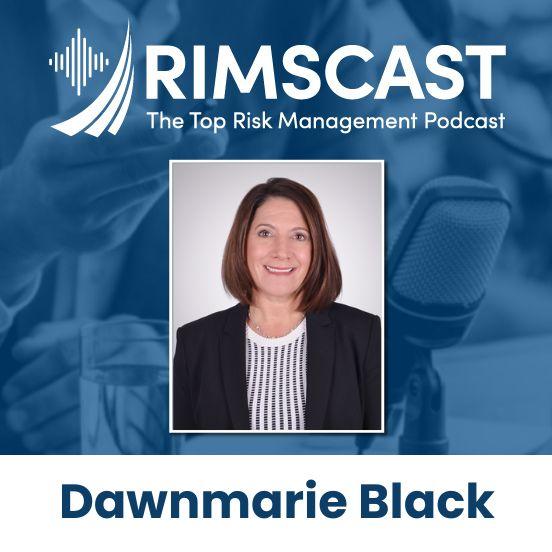
Welcome to RIMScast. Your host is Justin Smulison, Business Content Manager at RIMS, the Risk and Insurance Management Society.
In this episode, Justin interviews Amy C. Waninger, CEO of Lead at Any Level, about her more than a decade in the insurance industry and then moving into leadership development and consulting. They discuss what makes someone effective at leading through uncertainty.
Amy explains what "leading at any level" looks like for someone who doesn't have a leadership title. She delves into navigating change, networking, leadership, and cultivating the talents you choose so you can bring forward the best value you have to offer to others.
Amy talks about the human side of change and how to adapt to it internally before leading others through it. Amy tells about her experience as the closing keynote at the RIMS Texas Regional Conference 2026.
Listen for Amy Waninger's advice for one practical way you can start building a stronger and more intentional professional network.
Key Takeaways:
[:01] About RIMS and RIMScast.
[:16] About this episode of RIMScast. Our guest is Amy Waninger. She was a keynote speaker at the RIMS Texas Regional 2026, and she is here to discuss how networking can provide a path to leadership and opportunities in the risk management profession. Before we get to our interview…
[:51] Webinars: On Nov. 5th, Riskonnect returns to deliver the session "Signal Over Noise: Smarter Risk Analytics."
[:59] Origami Risk returns on December 10th to present "Managing Insurance Programs at Scale: What Complex Portfolios Require." This session was rescheduled from October, and if you were registered for that one, you are automatically registered for the new date in December.
[1:15] We will close out the year with two webinars from the RIMS Advocacy and External Affairs Committees. On November 10th, we will host a session about the "Terrorism Risk Insurance Act and Program: an update on Federal Developments."
[1:31] On December 3rd, we've got "Third-Party Litigation Financing: What Nuclear and Other Verdicts Mean for the Industry and Your Bottom Line." Find all webinars at RIMS.org/webinars.
[1:41] RIMS on YouTube! RIMS is back on YouTube. Our handle is @RIMSOfficialChannel. We've got plenty of videos there, including RIMScast, RIMScast Canada video podcasts, and other informative and entertaining content from RIMS. Subscribe to the channel today!
[1:58] On with the Show! Amy C. Waninger is the author of Moving from Panic to Purpose: Surviving and Thriving During Unrelenting Change at Work, and she was the closing keynote for the RIMS Texas Regional 2026.
[2:13] In this episode, we discuss how risk professionals at all levels can access frameworks that they can use, and the confidence to lead through whatever comes next.
[2:28] Since Amy was an insurance professional for 10 years, she has unique insight into what many of you are going through right now. We'll talk panic, purpose, networking, and leadership today. We're going to have a lot of fun! Let's get started!
[2:44] Interview! Amy C. Waninger, Welcome to RIMScast!
[3:00] Justin says it's a cool opportunity to have Amy on the podcast, as this is the unofficial Networking Month in the U.S.
[3:36] Justin notes that Amy is a former insurance industry professional. She calls herself a recovering insurance nerd.
[3:53] Amy had an IT career first. In her career in information technology and software development, she was in a consulting role for a major insurance carrier for a couple of years. She transitioned into management at that carrier. She was there for almost 10 years.
[4:19] Amy worked in Business Systems and IT Systems across Claims, Underwriting, Analytics, and Actuarial, in both Personal and Commercial lines. She has had exposure to a lot of things. She has a CPCU and "a whole bunch of other letters" after her name in that space.
[4:58] Amy had been working for a very small consulting firm. It was a good insurance year, and Amy joined the insurance company for the bonuses. Then she fell in love with the industry.
[5:29] Amy says when she worked for a major carrier, it was the first time she got real training on what to do as a leader in an organization. Up to that point, she had been reading books and cobbling together her own leadership philosophy.
[5:47] Amy says that seeing that there was good training available to leaders in big organizations was eye-opening to her. That's a big part of why Amy started her own leadership development company.
[6:00] Amy realized that she had been missing out on this information about a cohesive leadership narrative in her career up to that point.
[6:28] Amy says starting a company takes more savings than you think it will. It takes more sales training than you think it will. And it takes a little more stupidity than you want to admit to. But she wouldn't change it for the world. She says she hopes she learns from her mistakes.
[6:50] Amy says entrepreneurship is a big cycle of "try it, fail, try something else."
[7:13] Justin asks what makes someone effective at leading through uncertainty. Amy says, one, being able to couch the change in a larger story that makes sense to people is really important as a leader in change.
[7:26] Amy says, explain here's why this is happening. Here's what it means for us. Here's the opportunity, and here's what it could look like on the other side if we get this right.
[7:41] Amy says from a personal navigation standpoint, leaders need to get their own oxygen flowing before they can help someone else. That is to find a way to respond that is authentic and values-driven, as opposed to reacting from a place of fear.
[8:07] Amy says once people figure out what matters to them most in the change and align their activities and intentions toward what matters to them, then they can start to help others through it.
[8:40] Justin asks what leading at any level looks like for someone who is not in a leadership role in their organization. Amy says she believes that your title does not make you a leader, and you need to lead first.
[8:56] Leadership starts with knowing who you are and what you have to offer, and then pulling that forward at every opportunity so that you are maximizing your value to others, but also building confidence in yourself.
[9:12] Leadership is about seeing an opportunity for what's needed and stepping into that fully, sometimes asking for permission, sometimes asking for forgiveness, depending on your environment.
[9:25] Amy says leadership is stepping into those white spaces where there's a gap and saying I can take this; I can run with this. This is what I can contribute in this moment. That can happen for anybody, no matter where they sit.
[9:39] Amy says she was doing this as an intern, seeing opportunities and stepping up, and speaking up when she saw something that needed a change or attention.
[9:48] Every one of those moments becomes a defining moment in your career when people see your potential and what you have to offer and say Let's give them more opportunity for more white space so that they can make more of a difference.
[10:05] Justin says if you stay at a position or a place long enough, usually you can show your worth, and somebody will give you that opportunity, and more than once.
[10:27] Amy worked in insurance from 2008 to 2019. She was familiar with RIMS, but she was on the IT side, so the education and community she sought out was different from RIMS because she wasn't in risk management, per se.
[10:56] Amy understood the relationship of RIMS to the insurance industry and the evolution of RIMS over time. The risk management role started as the person who buys insurance, and now it's everything from insurance to bonding to cybersecurity and global market forces.
[11:21] Amy says It's fascinating to see the evolution of this role over time.
[11:40] Justin asks Amy what her reaction was to the Texas Regional 2026. The first thing Amy noticed was how many sponsors there were. She says, You know it's going to be a good conference if your sponsors are there, engaged, and excited to be there.
[11:58] Amy says sponsors are how you get the open bar and the good food. Everything follows from drawing in those sponsors. Most of the problems people have in that room can be solved by going and walking the vendor hall.
[12:20] Amy says she attends the same speaker conference every year. This year, she chose to skip some of the educational programming and just go talk to the vendors and sponsors there, to find out what problems they are solving that she may not even know she has.
[12:50] That was as educational to Amy as some of the sessions she missed. She encourages people to do that at a conference. A lot of times, people try not to make eye contact and run through that space. That's a huge mistake. You don't know what solutions are available to you.
[13:09] Amy says the first thing she noticed at the Texas Regional 2026 was the sponsor turnout, and the sponsor engagement and enthusiasm.
[13:16] Amy says the other thing that he noticed was that people tended to talk with the people they came with. It's important to break up those cliques. Make a game of not talking to each other until dinner, and then meeting up and talking about who you met and what you learned.
[13:44] Another game Amy likes to play, if she's there with somebody who is also an introvert like Amy, is to learn as much as she can about that person and their work, and make a game of introducing them to people, so the spotlight's not on her.
[14:16] Amy says another game she plays at conferences is to attach herself to an extrovert, and let them introduce her to everybody. All of the pressure is off. Amy says it's good to team up. If she gamifies a conference, she's in good shape.
[14:47] A Quick Break! Many fantastic RIMS events are coming up in 2026 and 2027. The RIMS ERM Conference 2026 will be held on November 19th and 20th in Columbus, Ohio. The agenda is live, and registration is open. Visit RIMS.org/ERM2026.
[15:10] We're already looking to RISKWORLD 2027, which will be held over four days in New Orleans, Louisiana, from April 18th through the 21st. Member-only registration will open on November 4th, and general registration will open on December 2nd.
[15:28] Get first access to the hotel block! Hotel reservations open on October 28th, ahead of public registration. Sitting this out is the real risk. The registration link is in this episode's show notes.
[15:41] Let's Return to Our Interview with Amy Waninger!
[15:48] Amy's keynote was "Moving from Panic to Purpose: Responding to Changes in Your Career." She shared three messages to take away:
[16:08] 1. If you're overwhelmed by change, you're not alone. Your community is in this room to help you. Make connections here so when you leave here, you don't feel alone.
[16:21] 2. Responding to change is not just a risk management activity. It's an intensely personal, emotional, and physiological activity. If we don't deal with the change inside us, it manifests itself in ways that affect our health and our relationships. We need to do that work.
[16:56] 3. If you understand why a change impacts you, feels emotional, and feels personal, unpack that and find out what matters most to you; that's going to keep you on target and keep you on a healthy path.
[17:22] People coming up to Amy after a keynote to talk about it is deep talk, not small talk. Please come talk to her. Starting a conversation is hard for Amy, but if somebody comes up to her and wants to talk, she will talk all day long. She loves that connection.
[17:51] What Amy misses in small talk is connection. What Amy wants to know is what someone's struggle is and what they are excited about. Who do you want to meet here? What's the problem you are trying to solve? It's hard to get there from small talk.
[18:24] There were people who came up after Amy's keynote, when she was doing a book signing, and they dove into conversations. One gentleman said My wife needs your book because she's dealing with a lot of this right now.
[18:43] Amy says she will have people who have been pushing the emotion of the change down for so long that it's like a dam breaks, and they will come up and hug Amy and cry. They'd never given themselves permission to name their grief, their fear, or their anxiety.
[18:59] Amy says, once we name it, the power of that feeling is gone.
[19:08] Amy gets IT questions from her family only. When Amy left tech in 2019, the new thing was Big Data. No one was talking about AI. All of her tech knowledge is obsolete now. She's fine with that.
[20:04] Justin asks about networking. Amy asks Justin, You know a lot, but do you know everything? Do you have time to learn everything? When you need to go deep, you need somebody else because you can't be an expert in everything you could possibly need to know.
[20:27] Amy says that makes networking a leadership skill. There is not just knowledge we can search for, but institutional knowledge, historical context, and fixations on stuff we don't care about but that someday we will need to know. You need people for that. You can't know all of it.
[20:49] Amy says, more than that, it's about the different perspectives you get when you talk to people, and specifically, to people who are nothing like you, and build those relationships.
[21:02] The more you can talk to people in other departments, with different educational backgrounds, across a wide variety of demographics, you're going to get different perspectives than you can bring to a moment yourself.
[21:18] Amy says being able to draw upon, recollect, and interact with all of those different perspectives gives you a better basis for decision-making. Leaders make decisions that affect others.
[21:33] Justin shares that with his children, 13 and 9, he knows nothing but is expected to know everything. He's supposed to know how to fix the circuit breaker box, but he knows nothing about what it's like to be a middle schooler, as far as his children believe.
[22:19] One More Quick Break! We've got to talk about the Spencer Educational Foundation and scholarship application deadlines. Applications are open for undergraduate scholarships, and they will close on January 15th, 2027. Scholarship awardees will be notified around May 21st.
[22:39] Full-time Master's scholarships will also have a deadline of January 15th, 2027, and awardees will be notified around May 21st. Part-time Master's scholarships will also have a deadline of January 15th, 2027, and awardees will be notified around May 21st.
[22:58] Pre-dissertation Ph.D. candidates, doctoral candidates, and pre-instructor of practice scholarships may begin applying on December 1st, 2026. The deadline is March 1st, 2027, and awardees will be notified around May 21st.
[23:15] In addition to the general Spencer scholarships, all students who apply for a Spencer scholarship will automatically be considered for one of the many named scholarship awards. For more information, check out Spencered.org/scholarships and the link in the show notes.
[23:33] Let's Conclude Our Dialog with Amy Waninger!
[23:41] Justin asks how Amy made the leap from her career in insurance to public speaking. Amy says that at the time, she really wanted to be in the Diversity and Inclusion space. Her original career ambition was to work as a civil rights attorney.
[24:09] Later, Amy learned how much law school would cost and what pro bono meant. Then she went back and got an IT degree. She didn't have the luxury of taking on hundreds of thousands of dollars in debt.
[24:29] Amy says originally her goal was that she wanted to go help people find and get access to the opportunity that they deserve. Then she took a 20-year detour of getting paid to do work. When the carrier she was working for hired a Chief Diversity Officer, she wanted to get there.
[24:59] Amy couldn't find a path to Diversity. But when she looked into what that was, and the leadership philosophy she had cultivated, she saw an intersection.
[25:24] Amy says people who go to school for risk management, actuarial, IT, and accounting don't go to school to learn how to deal with people. They go to school to work with numbers, computers, formulas, and spreadsheets.
[25:43] Then, if they're really good at those jobs, they get promoted into roles where they have to care about what other people feel, think, want, and need. They have to understand someone else's experience in order to motivate them, coach them, and lead them.
[26:05] Amy says ultimately, that intersection is where her work lives now. She left the industry to do this after she found some really unique approaches to leading in those kinds of spaces that she felt others could benefit from.
[26:28] One of those approaches is her networking model. Another is her model for responsiveness to change. Amy realized she could help so many more people if she was out there doing this kind of work, not speaking to a team of 10 or 30, but to a room of hundreds.
[26:45] Amy says if she could publish a book, that could go places she could never get to; those are the things she wanted. That's where that pull began. What kind of impact could she have if she could write and speak on a national stage? Now her work has gone global.
[27:30] Justin asks Amy what took her from writing a book to speaking on stage. Amy says she went to conferences where she saw the best and worst of both worlds. One was people who had dynamic stage presence, but who were regurgitating books she had already read.
[27:56] Amy says she saw people who had incredible content, but had delivery that made you really not care.
[28:03] Amy thought, if she could get the best of both of those: be a dynamic presenter who can engage an audience, and come in with some creative, new, compelling content, that's what she wanted to be in that space. She looked until she found people who were doing that consistently.
[28:26] Amy became a member of the National Speakers Association, pitched to her first conference, just knowing the problem she wanted to solve. The content she created for that conference became her first book.
[28:43] Amy learned to pitch to conferences. In her first year, while she was still full-time employed, she spoke at 35 conferences, virtually or in person. The next year, she had 45 lined up. She said, OK, this is where she wants to be, so she decided to go out on her own.
[29:07] Amy had done Toastmasters in the past. Many jobs ago, at a very small company, Amy started a Toastmasters chapter because she could see the power in being a leader who could engage an audience. It was an important skill for her if she were to continue in leadership.
[29:39] Amy was in speech contests in fifth grade. She has never been afraid of being up in front of people. If she had had talent for those things, she might have been an actor or a Broadway singer.
[30:08] She didn't have Broadway talent, but she can get up in front of people and be herself and tell stories that people can connect to and pull them in in a way that makes them feel they got something valuable out of the time.
[30:24] Amy is not the motivational speaker who makes you feel good at the time, but you walk away wondering what she said. Amy goes in, tells you a story, and tells you how to apply it in your life with a five-point framework, and you come out with notes and a new way of thinking.
[30:52] Amy says there are a lot of different kinds of speakers and there's a place for all of them. She feels so fortunate to be the kind of speaker that she is, and to do it with a RIMS audience in Texas. That was amazing. Justin says we got some great feedback about that.
[31:12] Justin says Toastmasters was excellent. But then COVID happened, and he stopped. Justin has never been afraid of an audience. Justin recommends doing stand-up comedy for building up your confidence. You have no shield except for a microphone stand and a stool.
[31:40] Justin did stand-up comedy for a year. Then a real work opportunity came up, and he couldn't sustain the stand-up anymore. He says, do stand-up three times. If you don't like it after that, you've done it. If you like it, you keep going and build those skills and confidence.
[32:16] Justin says that, at the same time, he was working weekends providing entertainment at karaoke parties. That was his preparation for this sort of format, where he is a show host. You take those skills that you don't realize are building toward something else.
[32:55] Amy read Steve Martin's autobiography a few years ago. When he was young, a mentor told him, "You'll use everything you've ever done." Amy loves that. You're going to pull from every experience you've ever had for whatever's next, and it looks linear in reverse.
[33:16] It looks like all the blocks were there to build this thing that you could never foresee in the beginning. The other side is, you can't draw upon skills you've never developed. To Amy, the thought of stand-up is terrifying because she never developed that skill.
[33:45] Amy says getting up in front of 700 people to deliver a keynote, talk about her book, and tell a deeply personal story about postpartum depression or losing her job a dozen times, or whatever, doesn't bother her at all. That kind of vulnerability she can do. Jokes, on purpose, no.
[34:10] Amy says she uses a lot of humor in her keynotes and workshops, and people say she's funny, but it's an authentic kind of funny. It's not a manufactured "I wrote these jokes" kind of funny.
[14:33] Justin says he sneaks in some ridiculous Dad jokes just to keep people interested.
[34:45] Amy says it's about what skills you want to cultivate, and what you have in your toolbox that you can draw on later.
[35:23] Justin asks Amy about networking. Amy has a book, Network Beyond Bias, and there is a lot in there, but knowing who you are is the start of it. If you were to be the most you that you can be, what would the value be to others? Bring that forward intentionally. It's so important.
[35:53] When Amy first started doing this, she thought her value to others was that she could connect people to each other, to ideas, and to resources. She led with that, and it worked really well.
[36:08] Over nine years, Amy has learned that the best thing she can bring forward is really seeing other people and helping them feel seen. She can do that from the stage, one-on-one, in coaching, and in different environments.
[36:27] She has been intentional about building that skill. It's also intrinsic to who she is. She really does see people, see what they're going through, and see through their struggle, and can hold space for them for just a moment and make them feel safe.
[36:46] Amy says everybody's thing is different and it's not one thing; it's a basket of them. If you know what that is, it helps you walk into a space more confidently. It helps the right people find you. It helps you find the right people.
[37:04] Amy says it helps you get to a place where you want to go even if you don't have a destination in mind.
[37:13] Justin says that's a great sentiment to leave us with today. Amy, it has been such a pleasure to reconnect with you. I look forward to seeing you on LinkedIn. Thank you so much for your time. It's been wonderful.
[37:31] Special thanks again to Amy Waninger for joining us here on RIMScast. Learn more about her and her networking and leadership philosophies at LeadatAnyLevel.com. Remember to use the tips you heard today at your next networking event or RIMS conference.
[37:51] Remember the RIMS ERM Conference 2026 will be held in Columbus, Ohio, November 19th and 20th. Visit RIMS.org/ERM2026 for more information and do register!.
[38:03] Plug Time! Become a RIMS member and get access to the tools, thought leadership, and network you need to succeed. Visit RIMS.org/membership or email membershipdept@RIMS.org for more information.
[38:20] Risk Knowledge is the RIMS searchable content library that provides relevant information for today's risk professionals. Materials include RIMS executive reports, survey findings, contributed articles, industry research, benchmarking data, and more.
[38:27] For the best reporting on the profession of risk management, read Risk Management Magazine at RMMagazine.com. It is written and published by the best minds in risk management.
[38:31] Justin Smulison is the Business Content Manager at RIMS. Please remember to subscribe to RIMScast on your favorite podcasting app. You can email us at Content@RIMS.org.
[39:03] Practice good risk management, stay safe, and thank you again for your continued support!
Links:
RIMS ERM Conference 2026 | November 19‒20 in Columbus, Ohio | Registration Now Open! | www.rims.org/ERM2026
RIMScast Canada — Episodes Now Live — Look for coverage of RIMS Canada 2026!
The Strategic and Enterprise Risk Center
RIMS, the Foundation for Risk Management
Spencer Educational Foundation — Scholarships and Grants | Open Calls and Timelines.
RIMS-Certified Risk Management Professional (RIMS-CRMP) | Insights Video Series Featuring Joe Milan!
RIMS Diversity Equity Inclusion Council
RIMS Risk Management Magazine | Contribute | Q3 2026 Issue Now Available
Sponsor RIMScast — Sales@RIMS.org
https://www.leadatanylevel.com/
Upcoming RIMS-CRMP Virtual Workshops:
Full RIMS-CRMP Prep Course Schedule
See the full calendar of RIMS Virtual Workshops
Upcoming RIMS Webinars:
"Signal Over Noise: Smarter Risk Analytics" | Sponsored by Riskonnect | Nov. 5, 2026
"RIMS Advocacy Presents: Terrorism Risk Insurance Act and Program: An Update on Federal Developments" | Nov. 10, 2026
"Managing Insurance Programs at Scale: What Complex Risk Portfolios Require" | Sponsored by Origami Risk | Dec. 10, 2026
Related RIMScast Episodes:
"Broadcasting and Building Bridges with Mark Romig"
"The Human Side of Risk with Jerome Mayne"
"Reputation and Defense with Jeff McKissack"
Sponsored RIMScast Episodes:
"48 Hours From a Storm: What to Do Before A Hurricane Strikes" | Sponsored by Global Risk Consultants, a TÜV SÜD Company (New!)
"AI-Scale, Risk Ready: Engineering Controls for the New Data Center Boom" | Sponsored by Global Risk Consultants, a TÜV SÜD Company
"Facing Into Risk: Navigating the New Risk Landscape" (New!) | Sponsored by AXA XL
"Secondary Perils, Major Risks: The New Face of Weather-Related Challenges" | Sponsored by AXA XL
"The ART of Risk: Rethinking Risk Through Insight, Design, and Innovation" | Sponsored by Alliant
"Mastering ERM: Leveraging Internal and External Risk Factors" | Sponsored by Diligent
"Cyberrisk: Preparing Beyond 2025" | Sponsored by Alliant
"The New Reality of Risk Engineering: From Code Compliance to Resilience" | Sponsored by AXA XL
"Change Management: AI's Role in Loss Control and Property Insurance" | Sponsored by Global Risk Consultants, a TÜV SÜD Company
"Demystifying Multinational Fronting Insurance Programs" | Sponsored by Zurich
"Understanding Third-Party Litigation Funding" | Sponsored by Zurich
"What Risk Managers Can Learn From School Shootings" | Sponsored by Merrill Herzog
"Simplifying the Challenges of OSHA Recordkeeping" | Sponsored by Medcor
"How Insurance Builds Resilience Against an Active Assailant Attack" | Sponsored by Merrill Herzog
"Third-Party and Cyber Risk Management Tips" | Sponsored by Alliant
RIMS Publications, Content, and Links:
RIMS Membership — Whether you are a new member or need to transition, be a part of the global risk management community!
RIMS-Certified Risk Management Professional (RIMS-CRMP)
RIMS Strategic & Enterprise Risk Center
RIMS-CRMP Stories — Featuring RIMS President Manny Padilla!
RIMS Events, Education, and Services:
Sponsor RIMScast: Contact sales@rims.org or pd@rims.org for more information.
Want to Learn More?
Keep up with the podcast on RIMS.org, and listen on Spotify and Apple Podcasts.
Have a question or suggestion? Email: Content@rims.org.
Join the Conversation!
Follow @RIMSorg on Facebook, Twitter, and LinkedIn.
About our guest: Amy C. Waninger, CEO, Lead at Any Level
Author, Moving from Panic to Purpose
Production and engineering provided by Podfly.