


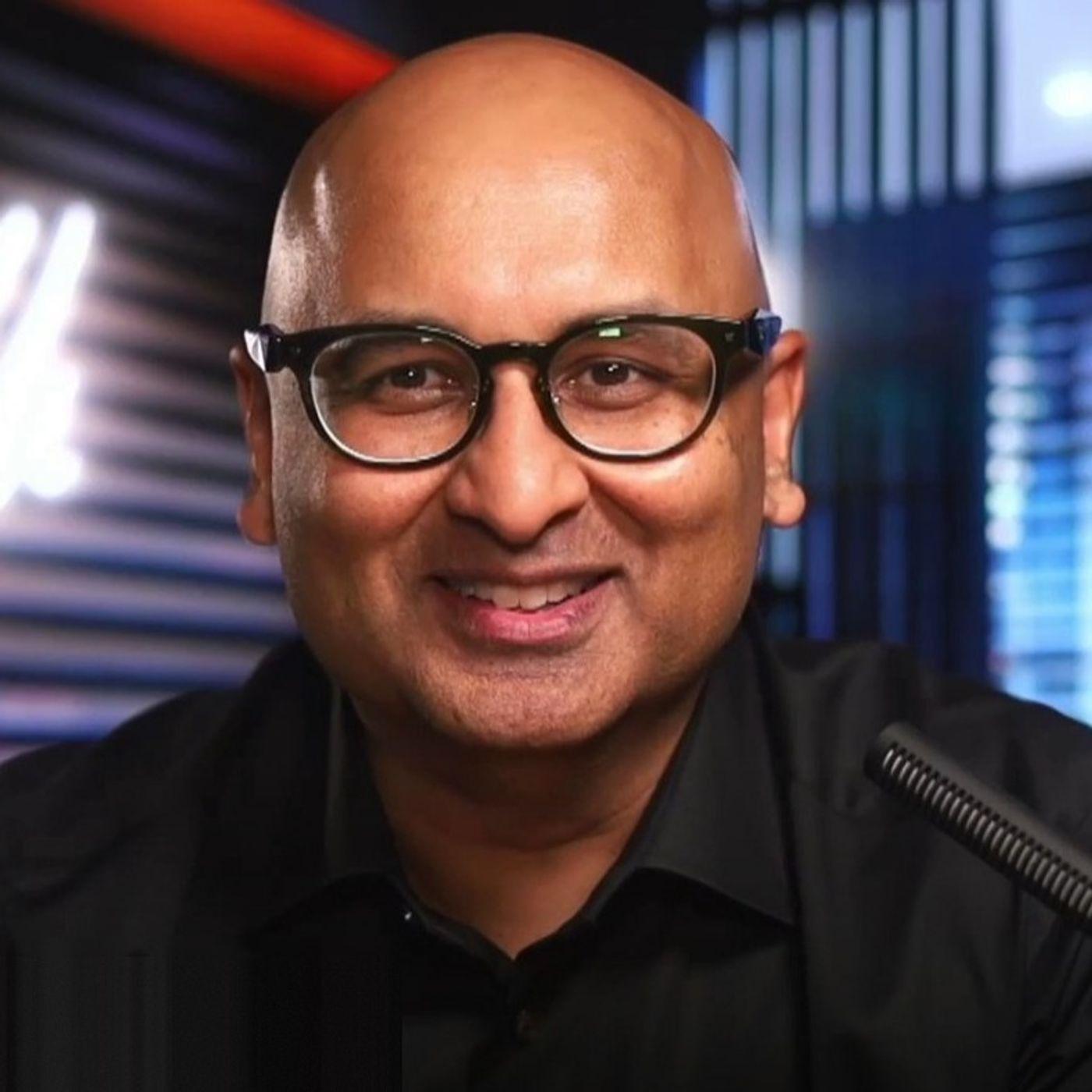
Mark: Welcome everyone to another episode of Me To Me. I'm ⁓ as always, I know I say this on every episode. I'm very excited to have you here with us, especially our guest today, Amir. Amir, it comes from us from the great country of Canada, clear up in Calgary, if I remember correctly, from our call. and so hopefully it's a little cooler there than where we are in northern Utah right now, where it's 90 degrees today. It's a balmy 90. Yeah. So we Amir and I had a great call a couple weeks ago. And so I was really looking forward to having him on. Our focus today is going to be really fall more into pillar two, which is has to do with career. But obviously all of you know that really ties not only just to career, but it ties into connection, right? Because it's all about building those connections that can help us.
Amir Muradali: It's a little bit cooler. Yeah, it's a little bit cooler. Not that cool.
Mark: with our careers. And so Amir, I would love to just have you tell tell a little bit. We've had a couple things here. one thing, back in 2006, you were looking for a transition in your career. And and ⁓ you way the way you and I talked about it before we got on the call is you were begging for interviews and then all of a sudden you had them. And so what what us that that process, what happened there?
Amir Muradali: Yeah.
Mark: Because the way the world is right now, I know there's a lot of people looking for work and we're trying to find the right gigs for ourselves and hopefully this will help us.
Amir Muradali: Yeah, yeah, no, and that's ⁓ that's ⁓ always a great, great place to start because that was really the start of everything that has come to abundance that I've experienced in my career. So I'll just give the punchline now. The amount of the abundance that I felt and the ⁓ in my career ⁓ that ⁓ including know the downturns and the market crash in in in two thousand and eight. Like I you know
Mark: ⁓ yeah.
Amir Muradali: The abundance that I've experienced all came from from that pivot that happened on those within those three months. So ⁓ in back in 2006, I was just actually finishing up my MBA. ⁓ you know, like like how everyone like I was in I was in a 12-month intensive program here in Canada, one of top universities. And the ⁓ against the I mean, the program was fantastic, it was life-changing, it was one of my one of the highlights of my life and in my career. but one of the things that I've found is that when I was trying to land my first job after Miami, which is look what everyone does, you know, like closer beginning halfway through the year. I wasn't getting any interviews. And ⁓ I everyone was getting interviews. People were being pulled out of class, you know, go and have an interview with this company, that company has like people were just getting interviews and I was just like struggling. And I think I applied to like, I'm st ⁓ yeah, I'm still know, right? ⁓
Mark: Right. You're still in clash taking notes. Awesome.
Amir Muradali: And I remember it was just like, at first it kind of bothered me, but then it just it really it starts to make you question a lot of things about yourself. And I thought I was a superstar, but man, like that reality that that hits you square in the face. and so ⁓ I worked with my career counselor because they have a career center in every school. And so I worked with my career counselor and she went through everything with me, you know. sh we did the A to Z of of what do you do with your resume and what have you. And it's like went through everything. it came to a point where, and by the way, I should you know preface this with one of the reasons why it was a difficult difficult task for me at that point is because my cur before my MBA I was an engineer, a research engineer. I was very much ⁓ deep in research. And so making
Mark: Yeah.
Amir Muradali: that hard left from engineering technical research into business was not easy. You know, there is no there's not a whole lot of transferable skills that I can put, which is what we
Mark: Yeah. I was I was gonna think that there's not real a pathway to go here, you're an engineer now. Now let's go run a company. Yeah, that that's a whole different skill set.
Amir Muradali: Right. Yeah. So ⁓ so we tried. I mean, we twisted my my I twisted myself in so many different directions and ways of the resume. It just wasn't working. And I remember ⁓ you know, our like because it was an intensive MBA, like we had classes going on till five and then we had assignments that took us till till midnight. So one of the one of the, you know, when I was on my way home, I kind of sat in the stairwell of my school at like Two o'clock in the morning. I'm sitting there. I had my rejection a rejection letter in my my hand. I was just sitting there just going, and I think it's like number fifty or I I don't know how I was just sitting there going, like, you know, just contemplate, like, why did I do this? Like what am I doing to myself? Like am I kidding myself? You know, am I am I even ⁓ out for business? ⁓ know, and and like I I really had to have that moment with me, or with myself.
Mark: Yeah, exactly.
Amir Muradali: And you know, out of the blue, and I don't know, I was like, call it divine intervention or what have you, but right around that time we were ⁓ in our business strategy class talking about blue ocean strategy. You know, you're a business owner, so you understand like blue ocean strategy, red ocean, right? Like competitors versus blue ocean, you create your own comp your own your own ⁓ industry, just like in the case study we were looking at that time was Cirque du Soleil, right? So Cirque du Soleil came out ⁓ became this billion dollar industry.
Mark: Okay.
Amir Muradali: And it just owned that industry versus all the circuses were out there competing for tickets, right? And so I remember like that case was just going through my head at the back of my mind while I was contemplating this. And I'm like, you know what? I know I had value to offer. Like I really had to, I'm like, I have value to offer, just like Cirque du Soleil. I'm like, I know I have value to offer. It's just not coming through in my applications.
Mark: Right, right. Right.
Amir Muradali: And it's not coming through for some reason. Nobody can see it. So I'm like, I I I give up, I go back to engineering, or fuse everything that I learned in my MBA. And everything that I learned before my MBA, because I did at I really dug into leadership and psychology just so that I could understand having a career and how to work with people and how to work with leaders. ⁓ And so I was really curious about that. So that's why I learned a lot about that. So I took all of that insight and information. I'm like, okay, I need leaders to understand and see and recognize my my value. First question is, what is my value?
Mark: Mm-hmm. have to establish that, definitely.
Amir Muradali: I have to establish that, right? And so at that time what I what I was doing as I was ⁓ my my pitch and my positioning was I'm an engineer with an MBA and eight years work experience. And then I thought to myself, there's an engineer with an MBA and nine years work experience out there. I lose to him or her. Right? If that's all, if that is my pitch, how does that set me up against, how does that position me against that individual? Right? So I'm like, the way I've positioned myself, I'm not thinking, there's no value cut there with there's no value in that statement, right?
Mark: If that's all the criteria that you're looking at, definitely. Right.
Amir Muradali: There's no value in that identity. So I'm like, I needed to to understand what my value is. And my value had to be the thing that I do. Again, what is it that I do and I have done all my life? Right? What is that consistent thread? What is that unique thing? And yeah.
Mark: Now let's let's let's let's pause just for a second here because it ties really well in. for for those people that don't know what Blue Ocean is, right? Because I think there's gonna be people that don't know what that means unless unless you've done the MBA stuff, unless you've read those specific books and articles around that. Explain the Blue Ocean because that ties directly into your finding that value statement.
Amir Muradali: ⁓ right. Yes. Yes. ⁓ so so very in simplest terms, ⁓ the the principle is this Ocean is where you have a number of competitors and all fighting for business. And the way they fight for business, it's the feeding frenzy, right? And the way they fight for business is they cut into their profits, they offer discounts, they offer deals and what have you, right? So it's ⁓ sort like the analogy of cutting off their arms and it's just bloody.
Mark: It's the feeding frenzy. Yep.
Amir Muradali: Right. Is everyone is bleeding, just trying to get that ticket, which is what that circus industry was like. Whereas blue ocean strategy is ⁓ an ocean where there's no competitors. That's your ocean. That's your space. You own it. Right. Fish as much as you want. That's that's your space. Nobody's coming in. You have no competition.
Mark: Yep. Mm-hmm. Right. Right. And so to yeah, to sort of tie in where you were going was create that's where you're identifying beyond you were just describing the I'm an engineer with an MBA with eight years experience, that's the red ocean. But now all of a sudden you're diving in, finding what what you are uniquely good at, which is the blue ocean, which is what you can create from there. So I I'll let you continue on, but I wanted to draw that distinction for our folks.
Amir Muradali: Right. No, I appreciate that. Thank you. And yeah, I have to I have to realize that not not everybody's you know, ⁓ not everybody because it's a 20-year-old concept anyways, it's a 20-year-old ⁓ business theory. So it's ⁓ it's ⁓ it's been out there for it's out there for for a while and probably most people have forgotten anyways. But yeah, absolutely that's that's the thinking. That's that's what I was struggling with. ⁓ So
Mark: It is, it is. Yep.
Amir Muradali: My goal was okay, what is my identity? What is what is it that I do really well? And something that I've done ever since I was a kid. Before I did engineering, before I did my MBA, what is it, what is it that I bring to the table? And something that I naturally do. Because that puts me in like ⁓ superhuman league in in that area, right? and this is how I go it go out ⁓ and separate from everyone else, and therefore I have my blue ocean.
Mark: Yes, it does.
Amir Muradali: Right. so ⁓ so I again what I did is I did a deep life discovery. I looked at all the formative moments of my life, my personal life, my professional life, everything, did the math. I call it doing the math of your life. And I discovered is that I am somebody who's driven to solve complex problems. So it something that I've always done as a kid. I just perfected it. When I went to do my engineering, like in in engineering school, I got my engineering, got my master's in engineering, which is part of engineering. I just learned how to do it better. Right. And then when I did my MBA, I just got to understand problem solving, but in the business context. And so number one solved. I know what my value is. Number two is all right. Where is my value needed? Right.
Mark: Which is part of engineering. Yeah. Mm-hmm.
Amir Muradali: Where where is it needed right now? Where where are the problems? Right? Where what are the challenges out there? So then that that began a deep curiosity and discovery of, okay, well, what are the industries? I looked at several industries and I'm like, what are the industries that have the significant problems? ⁓ how I landed on oil sands and oil sands back in 2006, if you remember, like was going through a massive boom. The oil prices were through the roof, and so there was a lot of projects.
Mark: Right.
Amir Muradali: Happening out in the oil sands here in Alberta ⁓ lot of spend, a lot of expenditures and what have you. So I got really curious about what the problems were that were experiencing in this industry that, you know, don't show up on the internet, but are exp are problems that leaders experience. ⁓ So sparked a curiosity. And from that deep curiosity, then I went around and I spoke with executives, just leaders ⁓ who would to business school. ⁓
Mark: Right.
Amir Muradali: ⁓ to have to give talks and just through connections. I got to speak to ⁓ got to speak to some some other leaders. I like I got understand obviously people in Ontario, they didn't have any understanding of OL Sands, ⁓ but they connections of people in Alberta. Two connections materialized ⁓ I ⁓ with executive Embridge Pipelines and ⁓
Mark: Mm-hmm.
Amir Muradali: ⁓ the managing partner at IBM here. through those conversations, very about what are the challenges that they're seeing, because there's there's smack in the middle. The the the Embridge Pipelines was ⁓ was s was at the heart of the problem because they had to move the product right whatever's whatever's being whatever's being produced in the oil sense they had to move it so ⁓ you know ⁓ challenge is unique they need to
Mark: Right.
Amir Muradali: They need to put together a project that has a 40, 50 year Whereas this was going through a spike, right? And so they they had a very unique challenge. ⁓ I got to understand their challenge. ⁓ spoke to the the partner at IBM, and in the CEO's office ⁓ in ⁓ in every one of Oil Sun's company. ⁓ Both them were just so enamored and so taken aback by just how. ⁓ I guess I was how curious I was, the amount of work that I'd done, the data that I presented them. And that was just the natural curiosity I was bringing to the table. They were so enamored by it. They opened up doors. I mean, the the the executive vice president opened up doors, connected me with the business development team here in Calgary. I to the VPs and I with the VPs and the directors here in business development. They all offered me a job. right after one meeting. There was no job created by I mean there was no job ⁓ basically ⁓ at play. There was no opening. They just wanted to bring me in. And and so so I had a job offer. I remember like because I was staying in Edmonton like my home was actually in Edmonton before I moved to Calgary. But ⁓ I came to Calgary for a day morning meeting was at Embridge. They offered me a position right after a meeting and then in the afternoon I was meeting the partner at IBM and I
Mark: There wasn't an opening for you. Yeah. Yeah. Right.
Amir Muradali: After that meeting, he turned around and he's like, You have to work for me. ⁓ and then and then and then get this mark. He said, You have to work for me. I'm not gonna take no for an answer. You must come here and work for me. And he goes, And by the way, did you bring a resume? I'm like, Yes. And he's like, Can I look at it? He offered me the job before looking at my resume.
Mark: Yeah. Yeah, that's that.
Amir Muradali: And then he looked at my resume and he's like, You've been an engineer in oil the in oil and gas here. And he I said, Yeah. And he goes, Then you have to work for me. Right? He's like, You've got to work for me. So it was Yeah.
Mark: I think there's a couple key points there for for our for everybody that's paying that that's tuned in is you know being able to f no matter Amir's focus obviously was oil sands and getting in with some of these people, but you realize that this can happen anywhere, right? Once you understand your value and where you're at and what you're bringing to the table, then I think Amir, you said it well was that you had curiosity. And so you were asking questions because you're coming from a place of understanding about what you bring. And now you're asking those type questions. So I think approaching it with curiosity was probably the key point, at least from what I'm understanding, that was the key factor in you landing that job or having people start to begin to approach you instead of, and we've all heard it, you know, I've I've applied for 500 jobs and I've gotten so many you suck letters. That's what I call them as you suck letters.
Amir Muradali: Yes. You suck, yeah.
Mark: And ⁓ right. And so, but I hear people say that all the time. But I think if we're just blanketing resumes and we're blanketing things out there, we're gonna get that. But if you're doing the process that you're talking about, working towards the blue ocean, finding your value, and then going it with curiosity with the right people, you're gonna open those doors.
Amir Muradali: Yeah. And but there's another layer here because is it's one thing about what I did. ⁓ the other thing. Here's the other layer that it took me a while to clue in, but once I clued in, it again, this is one of those things that just strikes you in between the eyes. the ⁓ level challenge and problems that executive face.
Mark: Okay.
Amir Muradali: what they're facing constantly on a day-to-day basis. The things that they have to do, the the the the competition that they have to outmaneuver, the people that they have to bring along with them, the board members that they have to try to get aligned, you know, the shareholders that they have to just it's it is there's the if we're talking about problems, I'm talking capital P problems ⁓ leaders
Mark: Right. The stressors that are there are huge. Yeah.
Amir Muradali: executive level leaders face a day-to-day basis. And this is not just oil sands. This was like that was just ⁓ example of a stressor that that all the executive teams are facing at that time. I just happened I just happened to walk in with to your point curiosity, right? And that signals to them is I ⁓ am looking for a job. I am somebody who's looking to help them solve problems.
Mark: Right.
Amir Muradali: I am somebody, I want to help them be successful, whatever that means, whatever that looks like. But that was the signal that they were getting. You know, they weren't getting a signal of I need a job because I got bills to pay, I got a mortgage, I got a student loan, which are all my stressors. Right? Those are my stressors, those are not their stressors, right? So they have no investment in my stressors. But the way I what I tell my clients, and I I it's a it's a very difficult mindset shift to have, is that when you prioritize their stressors over your stressors, your stresses take care get get taken care of. Right. that's something that I've experienced ⁓ and over again. And this is why I call like the the amount of abundance that I've experienced in my career, abundance in terms of opportunities, jobs, things leaders would would create for me, financially abundant. Like it's it's the like I quadrupled how much I made in seven years. That's crazy. That's that's that's that's that's not ⁓ something that happens a but it's ⁓ only ⁓ of know when leaders see you as an as an as a partner to them to help face their challenges and as a partner to them in their future success, they look at you very differently and they they value you very differently.
Mark: That's s that's significant. Yeah, definitely. Right. Yeah. are some of the some of the things that that see in in in moving in the workforce that you're seeing has ⁓ some some impact moving forward, ⁓ especially for people that are out looking for work, right? They're trying to f they're trying to fill that gap.
Amir Muradali: Yeah. Yeah, yeah. And and you know, we were talking you you mentioned AI in our in our call before and ⁓ is this this do you want to talk about AI?
Mark: Uh-huh. Yeah, sure. Yeah. I th that's what I say. Wherever that's at, right? I mean
Amir Muradali: Yeah. right now, I mean, there's lots of things that we're learning about AIA. I just came into the the market. you know, when when it came out, Elon, Mark Zuckerberg, and and all of them laid off like ⁓ you know ⁓ significant of people, a significant amount of staff, ⁓ and didn't affect their their their financials. In fact, it actually improved their financials. And so what that did is that set the precedent for all the other board.
Mark: Right.
Amir Muradali: Board executive executive boards to look at their executive team and said, We want some of that. organize so that we're we're getting some of that, right? and so so there's been a lot of pressure on on executive teams to bring in, operationalize and leverage AI. But what's been happening is obviously it's not been delivering ROI. ⁓ You now we're hearing about companies that are maxing out their tokens within like, you know, within a few, few months.
Mark: Right. Moments.
Amir Muradali: Yeah, moments, right? And so so there's a lot of shifts happening with AI, but it is still a force that has entered into the space. is a hell of a ⁓ technology. It is a massively disruptive technology. And lot of people are are displaced now. And there be a time when we see a little bit of you know, pullback from companies and bring bringing more people back in, but the momentum going forward is going to be, you know, less. You're going to have a lot of these big companies or and companies operating with fewer and fewer people. The so so that's that's kind of where we are at right now. And and for people, you know, I don't know I can I don't know what's going to happen with UBI and how ⁓ the government is going to handle ⁓ number of people who are displaced. And I I know that there's going to be systems in place to make sure that there's a soft landing for everyone. Don't know what that looks like. I will say this is that even AI, even with AI, business is still going to continue. There are still going to be things that need to be accomplished. in fact with AI, there's going to be more opp opportunities. A lot of a lot of new options, a lot of new avenues, a lot of new visions, a lot of new aspirations that can be ⁓ realized. You know, it's gonna it's gonna bring, it's gonna open up the pathway to accomplish kind the the kinds of things that we haven't really fathomed ⁓ this point. But executive teams alone, excuse me. Executive teams alone aren't going to be able to do everything, obviously. And AI is not going to be doing everything on its own. There are going to be there there is going to be a need for people who leaders see yeah.
Mark: Right. There always will be, definitely. There's always going to be a need in that aspect. And and even, you know, I mean, as as we both know, AI's here. It's not going anywhere. It's just a matter of it's a matter of us finding our place, working with that. It's an amazing tool. I use AI almost every day in my job one fashion or another. And I ⁓ thoroughly love it because what it can do as long as it's within certain constraints. ⁓ But I think it's I think it's here
Amir Muradali: Yeah it's here. It's not going anywhere.
Mark: It's here to stay. We just have to be able to work around how we're going to work with this amazing tool that has come available for us.
Amir Muradali: Yeah. Yeah. And and I think forward everyone's gonna have a choice. If they're watching, your viewers are watching. Like I think you're you're gonna have you're gonna be faced with a choice. ⁓ the choice is Do I want to be a driver of success in organizations? Right? With do I do I want to be that asset? Do I want to be that partner and and and help organizations be successful? do I want to start up my own company and a new solution? Because there's with with this new tool, there's a lot of niches ⁓ that possible before.
Mark: Yeah.
Amir Muradali: But now that are going to come to fruition, and now it's possible to create businesses. So a lot of a lot of people are going to switch from having a career to to building their own business, and that's entirely possible. Or you can just decide that you want to sit it out. Right. But I think they're all options. And and I think the the one thing that I would I would remind people if if I could let everyone know is that.
Mark: They're they're all options. Yeah.
Amir Muradali: The choice and the option is not going to be made for you. You have an option. You have the choice. You have the decision. You can do any one of those. And there are tons of people out there, you know, people like myself, coaches, who help you figure out what it is that you want to do. I mean, obviously I help the first group, which is people who want to jump into jump into and be an asset to an organization. I've also helped people start up their own businesses, but that's not necessarily a a thing that that ⁓ I it's a business of mine. I just happen to help some people who we realize they're not assets here, but they would love to be a they would love to to you know start up their own business. So so I helped make them ⁓ yeah, them with their pivot. ⁓ So just want to let folks know is like there are there everyone has an option. You have an option. I personally ⁓ an optimist.
Mark: Right.
Amir Muradali: I'm an AI optimist because I see past the struggle. I see past the the the challenge and I see see a lot of
Mark: Right.
Amir Muradali: A lot of what problems that we have just come to accept are now going to be we're going to realize that, you know, we we don't really need to accept them anymore. These are problems that can be solved easily. And so, so yeah.
Mark: Right. Right. Well, I I couldn't agree with you more. I I I'm as I'm like you, I'm I'm the AI optimist. I think there's gonna be some great things coming. So let me let me let you know. I mean, we're we're coming up on our time for today and and I'd love to have you back again. ⁓ we always dive into this stuff, ⁓ we're gonna end our episode just like we do every episode that we w when we have people on, is what is ⁓ one our listeners can do today? To build deeper connections with those people around.
Amir Muradali: Mm. One thing people can do today, and this is something that it's an exercise that I actually ⁓ get my clients to do, send email to three people closest to you ⁓ and ⁓ them three things that you appreciate and you love about them. Not things not not not
Mark: Okay.
Amir Muradali: ⁓ you know, here's why I think you need to improve, or no critiques. Just here are, you know, I I love and appreciate this about you. I'll and be specific.
Mark: Right.
Amir Muradali: I promise you, in fact, Mark, i like if you you want to do this, I I think it would be it would be incredible. Yeah.
Mark: ⁓ I always do it. Anytime I ask someone that, on the very next day, I'm out there trying to do what they're asking. And it's it's been amazing. I'm I'm definitely gonna do this.
Amir Muradali: And let me start with you, because I'll start this exercise where I'm asking people to do. What I love and appreciate about you, and I've seen this and I've looked at different podcasts. What I love and appreciate about you, Mark, is that you are having real conversations. And and you are are having real conversations with real people about real topics that affect real people. And and is
Mark: Yeah, thank you.
Amir Muradali: is a shining light at at this time when there's a million podcasts out there. And you doing, the work that you are doing is going to people. It ⁓ it's it's going affect people and and it's going to help them understand themselves better. So the message that you're putting out there, the work that you're putting out there is going to hit people when they need it the most. And you are putting out a voice saying, I hear you, I see you. And that is something that I absolutely love and appreciate. I've checked out some of your your podcasts and I absolutely love and appreciate that about you. and I and I love and appreciate that you ⁓ you having to having ⁓ invited me in this this podcast, giving me this opportunity. So so ⁓ thank you for that.
Mark: Well, thank you. That's very kind. Yeah. Awesome. Well, thank you very much. Those are very kind words. And and for those of you that have tuned in with us and and stayed with us this whole time, I hope and pray that you have. we've had a mirror with us today and I think we've had some great we I've really enjoyed our conversation. And what I would encourage you to do is make sure to like and subscribe. You know the normal thing, all the analog, all the all the algorithms that they run. ⁓ We to make sure that we get this out to as many people as possible ⁓ that need these good messages. So ⁓ thank you again everyone for joining us and we will catch you on the next go around. Thanks.
Amir Muradali: Thank you.
Amir Muradali: It's a little bit cooler. Yeah, it's a little bit cooler. Not that cool.
Mark: with our careers. And so Amir, I would love to just have you tell tell a little bit. We've had a couple things here. one thing, back in 2006, you were looking for a transition in your career. And and ⁓ you way the way you and I talked about it before we got on the call is you were begging for interviews and then all of a sudden you had them. And so what what us that that process, what happened there?
Amir Muradali: Yeah.
Mark: Because the way the world is right now, I know there's a lot of people looking for work and we're trying to find the right gigs for ourselves and hopefully this will help us.
Amir Muradali: Yeah, yeah, no, and that's ⁓ that's ⁓ always a great, great place to start because that was really the start of everything that has come to abundance that I've experienced in my career. So I'll just give the punchline now. The amount of the abundance that I felt and the ⁓ in my career ⁓ that ⁓ including know the downturns and the market crash in in in two thousand and eight. Like I you know
Mark: ⁓ yeah.
Amir Muradali: The abundance that I've experienced all came from from that pivot that happened on those within those three months. So ⁓ in back in 2006, I was just actually finishing up my MBA. ⁓ you know, like like how everyone like I was in I was in a 12-month intensive program here in Canada, one of top universities. And the ⁓ against the I mean, the program was fantastic, it was life-changing, it was one of my one of the highlights of my life and in my career. but one of the things that I've found is that when I was trying to land my first job after Miami, which is look what everyone does, you know, like closer beginning halfway through the year. I wasn't getting any interviews. And ⁓ I everyone was getting interviews. People were being pulled out of class, you know, go and have an interview with this company, that company has like people were just getting interviews and I was just like struggling. And I think I applied to like, I'm st ⁓ yeah, I'm still know, right? ⁓
Mark: Right. You're still in clash taking notes. Awesome.
Amir Muradali: And I remember it was just like, at first it kind of bothered me, but then it just it really it starts to make you question a lot of things about yourself. And I thought I was a superstar, but man, like that reality that that hits you square in the face. and so ⁓ I worked with my career counselor because they have a career center in every school. And so I worked with my career counselor and she went through everything with me, you know. sh we did the A to Z of of what do you do with your resume and what have you. And it's like went through everything. it came to a point where, and by the way, I should you know preface this with one of the reasons why it was a difficult difficult task for me at that point is because my cur before my MBA I was an engineer, a research engineer. I was very much ⁓ deep in research. And so making
Mark: Yeah.
Amir Muradali: that hard left from engineering technical research into business was not easy. You know, there is no there's not a whole lot of transferable skills that I can put, which is what we
Mark: Yeah. I was I was gonna think that there's not real a pathway to go here, you're an engineer now. Now let's go run a company. Yeah, that that's a whole different skill set.
Amir Muradali: Right. Yeah. So ⁓ so we tried. I mean, we twisted my my I twisted myself in so many different directions and ways of the resume. It just wasn't working. And I remember ⁓ you know, our like because it was an intensive MBA, like we had classes going on till five and then we had assignments that took us till till midnight. So one of the one of the, you know, when I was on my way home, I kind of sat in the stairwell of my school at like Two o'clock in the morning. I'm sitting there. I had my rejection a rejection letter in my my hand. I was just sitting there just going, and I think it's like number fifty or I I don't know how I was just sitting there going, like, you know, just contemplate, like, why did I do this? Like what am I doing to myself? Like am I kidding myself? You know, am I am I even ⁓ out for business? ⁓ know, and and like I I really had to have that moment with me, or with myself.
Mark: Yeah, exactly.
Amir Muradali: And you know, out of the blue, and I don't know, I was like, call it divine intervention or what have you, but right around that time we were ⁓ in our business strategy class talking about blue ocean strategy. You know, you're a business owner, so you understand like blue ocean strategy, red ocean, right? Like competitors versus blue ocean, you create your own comp your own your own ⁓ industry, just like in the case study we were looking at that time was Cirque du Soleil, right? So Cirque du Soleil came out ⁓ became this billion dollar industry.
Mark: Okay.
Amir Muradali: And it just owned that industry versus all the circuses were out there competing for tickets, right? And so I remember like that case was just going through my head at the back of my mind while I was contemplating this. And I'm like, you know what? I know I had value to offer. Like I really had to, I'm like, I have value to offer, just like Cirque du Soleil. I'm like, I know I have value to offer. It's just not coming through in my applications.
Mark: Right, right. Right.
Amir Muradali: And it's not coming through for some reason. Nobody can see it. So I'm like, I I I give up, I go back to engineering, or fuse everything that I learned in my MBA. And everything that I learned before my MBA, because I did at I really dug into leadership and psychology just so that I could understand having a career and how to work with people and how to work with leaders. ⁓ And so I was really curious about that. So that's why I learned a lot about that. So I took all of that insight and information. I'm like, okay, I need leaders to understand and see and recognize my my value. First question is, what is my value?
Mark: Mm-hmm. have to establish that, definitely.
Amir Muradali: I have to establish that, right? And so at that time what I what I was doing as I was ⁓ my my pitch and my positioning was I'm an engineer with an MBA and eight years work experience. And then I thought to myself, there's an engineer with an MBA and nine years work experience out there. I lose to him or her. Right? If that's all, if that is my pitch, how does that set me up against, how does that position me against that individual? Right? So I'm like, the way I've positioned myself, I'm not thinking, there's no value cut there with there's no value in that statement, right?
Mark: If that's all the criteria that you're looking at, definitely. Right.
Amir Muradali: There's no value in that identity. So I'm like, I needed to to understand what my value is. And my value had to be the thing that I do. Again, what is it that I do and I have done all my life? Right? What is that consistent thread? What is that unique thing? And yeah.
Mark: Now let's let's let's let's pause just for a second here because it ties really well in. for for those people that don't know what Blue Ocean is, right? Because I think there's gonna be people that don't know what that means unless unless you've done the MBA stuff, unless you've read those specific books and articles around that. Explain the Blue Ocean because that ties directly into your finding that value statement.
Amir Muradali: ⁓ right. Yes. Yes. ⁓ so so very in simplest terms, ⁓ the the principle is this Ocean is where you have a number of competitors and all fighting for business. And the way they fight for business, it's the feeding frenzy, right? And the way they fight for business is they cut into their profits, they offer discounts, they offer deals and what have you, right? So it's ⁓ sort like the analogy of cutting off their arms and it's just bloody.
Mark: It's the feeding frenzy. Yep.
Amir Muradali: Right. Is everyone is bleeding, just trying to get that ticket, which is what that circus industry was like. Whereas blue ocean strategy is ⁓ an ocean where there's no competitors. That's your ocean. That's your space. You own it. Right. Fish as much as you want. That's that's your space. Nobody's coming in. You have no competition.
Mark: Yep. Mm-hmm. Right. Right. And so to yeah, to sort of tie in where you were going was create that's where you're identifying beyond you were just describing the I'm an engineer with an MBA with eight years experience, that's the red ocean. But now all of a sudden you're diving in, finding what what you are uniquely good at, which is the blue ocean, which is what you can create from there. So I I'll let you continue on, but I wanted to draw that distinction for our folks.
Amir Muradali: Right. No, I appreciate that. Thank you. And yeah, I have to I have to realize that not not everybody's you know, ⁓ not everybody because it's a 20-year-old concept anyways, it's a 20-year-old ⁓ business theory. So it's ⁓ it's ⁓ it's been out there for it's out there for for a while and probably most people have forgotten anyways. But yeah, absolutely that's that's the thinking. That's that's what I was struggling with. ⁓ So
Mark: It is, it is. Yep.
Amir Muradali: My goal was okay, what is my identity? What is what is it that I do really well? And something that I've done ever since I was a kid. Before I did engineering, before I did my MBA, what is it, what is it that I bring to the table? And something that I naturally do. Because that puts me in like ⁓ superhuman league in in that area, right? and this is how I go it go out ⁓ and separate from everyone else, and therefore I have my blue ocean.
Mark: Yes, it does.
Amir Muradali: Right. so ⁓ so I again what I did is I did a deep life discovery. I looked at all the formative moments of my life, my personal life, my professional life, everything, did the math. I call it doing the math of your life. And I discovered is that I am somebody who's driven to solve complex problems. So it something that I've always done as a kid. I just perfected it. When I went to do my engineering, like in in engineering school, I got my engineering, got my master's in engineering, which is part of engineering. I just learned how to do it better. Right. And then when I did my MBA, I just got to understand problem solving, but in the business context. And so number one solved. I know what my value is. Number two is all right. Where is my value needed? Right.
Mark: Which is part of engineering. Yeah. Mm-hmm.
Amir Muradali: Where where is it needed right now? Where where are the problems? Right? Where what are the challenges out there? So then that that began a deep curiosity and discovery of, okay, well, what are the industries? I looked at several industries and I'm like, what are the industries that have the significant problems? ⁓ how I landed on oil sands and oil sands back in 2006, if you remember, like was going through a massive boom. The oil prices were through the roof, and so there was a lot of projects.
Mark: Right.
Amir Muradali: Happening out in the oil sands here in Alberta ⁓ lot of spend, a lot of expenditures and what have you. So I got really curious about what the problems were that were experiencing in this industry that, you know, don't show up on the internet, but are exp are problems that leaders experience. ⁓ So sparked a curiosity. And from that deep curiosity, then I went around and I spoke with executives, just leaders ⁓ who would to business school. ⁓
Mark: Right.
Amir Muradali: ⁓ to have to give talks and just through connections. I got to speak to ⁓ got to speak to some some other leaders. I like I got understand obviously people in Ontario, they didn't have any understanding of OL Sands, ⁓ but they connections of people in Alberta. Two connections materialized ⁓ I ⁓ with executive Embridge Pipelines and ⁓
Mark: Mm-hmm.
Amir Muradali: ⁓ the managing partner at IBM here. through those conversations, very about what are the challenges that they're seeing, because there's there's smack in the middle. The the the Embridge Pipelines was ⁓ was s was at the heart of the problem because they had to move the product right whatever's whatever's being whatever's being produced in the oil sense they had to move it so ⁓ you know ⁓ challenge is unique they need to
Mark: Right.
Amir Muradali: They need to put together a project that has a 40, 50 year Whereas this was going through a spike, right? And so they they had a very unique challenge. ⁓ I got to understand their challenge. ⁓ spoke to the the partner at IBM, and in the CEO's office ⁓ in ⁓ in every one of Oil Sun's company. ⁓ Both them were just so enamored and so taken aback by just how. ⁓ I guess I was how curious I was, the amount of work that I'd done, the data that I presented them. And that was just the natural curiosity I was bringing to the table. They were so enamored by it. They opened up doors. I mean, the the the executive vice president opened up doors, connected me with the business development team here in Calgary. I to the VPs and I with the VPs and the directors here in business development. They all offered me a job. right after one meeting. There was no job created by I mean there was no job ⁓ basically ⁓ at play. There was no opening. They just wanted to bring me in. And and so so I had a job offer. I remember like because I was staying in Edmonton like my home was actually in Edmonton before I moved to Calgary. But ⁓ I came to Calgary for a day morning meeting was at Embridge. They offered me a position right after a meeting and then in the afternoon I was meeting the partner at IBM and I
Mark: There wasn't an opening for you. Yeah. Yeah. Right.
Amir Muradali: After that meeting, he turned around and he's like, You have to work for me. ⁓ and then and then and then get this mark. He said, You have to work for me. I'm not gonna take no for an answer. You must come here and work for me. And he goes, And by the way, did you bring a resume? I'm like, Yes. And he's like, Can I look at it? He offered me the job before looking at my resume.
Mark: Yeah. Yeah, that's that.
Amir Muradali: And then he looked at my resume and he's like, You've been an engineer in oil the in oil and gas here. And he I said, Yeah. And he goes, Then you have to work for me. Right? He's like, You've got to work for me. So it was Yeah.
Mark: I think there's a couple key points there for for our for everybody that's paying that that's tuned in is you know being able to f no matter Amir's focus obviously was oil sands and getting in with some of these people, but you realize that this can happen anywhere, right? Once you understand your value and where you're at and what you're bringing to the table, then I think Amir, you said it well was that you had curiosity. And so you were asking questions because you're coming from a place of understanding about what you bring. And now you're asking those type questions. So I think approaching it with curiosity was probably the key point, at least from what I'm understanding, that was the key factor in you landing that job or having people start to begin to approach you instead of, and we've all heard it, you know, I've I've applied for 500 jobs and I've gotten so many you suck letters. That's what I call them as you suck letters.
Amir Muradali: Yes. You suck, yeah.
Mark: And ⁓ right. And so, but I hear people say that all the time. But I think if we're just blanketing resumes and we're blanketing things out there, we're gonna get that. But if you're doing the process that you're talking about, working towards the blue ocean, finding your value, and then going it with curiosity with the right people, you're gonna open those doors.
Amir Muradali: Yeah. And but there's another layer here because is it's one thing about what I did. ⁓ the other thing. Here's the other layer that it took me a while to clue in, but once I clued in, it again, this is one of those things that just strikes you in between the eyes. the ⁓ level challenge and problems that executive face.
Mark: Okay.
Amir Muradali: what they're facing constantly on a day-to-day basis. The things that they have to do, the the the the competition that they have to outmaneuver, the people that they have to bring along with them, the board members that they have to try to get aligned, you know, the shareholders that they have to just it's it is there's the if we're talking about problems, I'm talking capital P problems ⁓ leaders
Mark: Right. The stressors that are there are huge. Yeah.
Amir Muradali: executive level leaders face a day-to-day basis. And this is not just oil sands. This was like that was just ⁓ example of a stressor that that all the executive teams are facing at that time. I just happened I just happened to walk in with to your point curiosity, right? And that signals to them is I ⁓ am looking for a job. I am somebody who's looking to help them solve problems.
Mark: Right.
Amir Muradali: I am somebody, I want to help them be successful, whatever that means, whatever that looks like. But that was the signal that they were getting. You know, they weren't getting a signal of I need a job because I got bills to pay, I got a mortgage, I got a student loan, which are all my stressors. Right? Those are my stressors, those are not their stressors, right? So they have no investment in my stressors. But the way I what I tell my clients, and I I it's a it's a very difficult mindset shift to have, is that when you prioritize their stressors over your stressors, your stresses take care get get taken care of. Right. that's something that I've experienced ⁓ and over again. And this is why I call like the the amount of abundance that I've experienced in my career, abundance in terms of opportunities, jobs, things leaders would would create for me, financially abundant. Like it's it's the like I quadrupled how much I made in seven years. That's crazy. That's that's that's that's that's not ⁓ something that happens a but it's ⁓ only ⁓ of know when leaders see you as an as an as a partner to them to help face their challenges and as a partner to them in their future success, they look at you very differently and they they value you very differently.
Mark: That's s that's significant. Yeah, definitely. Right. Yeah. are some of the some of the things that that see in in in moving in the workforce that you're seeing has ⁓ some some impact moving forward, ⁓ especially for people that are out looking for work, right? They're trying to f they're trying to fill that gap.
Amir Muradali: Yeah. Yeah, yeah. And and you know, we were talking you you mentioned AI in our in our call before and ⁓ is this this do you want to talk about AI?
Mark: Uh-huh. Yeah, sure. Yeah. I th that's what I say. Wherever that's at, right? I mean
Amir Muradali: Yeah. right now, I mean, there's lots of things that we're learning about AIA. I just came into the the market. you know, when when it came out, Elon, Mark Zuckerberg, and and all of them laid off like ⁓ you know ⁓ significant of people, a significant amount of staff, ⁓ and didn't affect their their their financials. In fact, it actually improved their financials. And so what that did is that set the precedent for all the other board.
Mark: Right.
Amir Muradali: Board executive executive boards to look at their executive team and said, We want some of that. organize so that we're we're getting some of that, right? and so so there's been a lot of pressure on on executive teams to bring in, operationalize and leverage AI. But what's been happening is obviously it's not been delivering ROI. ⁓ You now we're hearing about companies that are maxing out their tokens within like, you know, within a few, few months.
Mark: Right. Moments.
Amir Muradali: Yeah, moments, right? And so so there's a lot of shifts happening with AI, but it is still a force that has entered into the space. is a hell of a ⁓ technology. It is a massively disruptive technology. And lot of people are are displaced now. And there be a time when we see a little bit of you know, pullback from companies and bring bringing more people back in, but the momentum going forward is going to be, you know, less. You're going to have a lot of these big companies or and companies operating with fewer and fewer people. The so so that's that's kind of where we are at right now. And and for people, you know, I don't know I can I don't know what's going to happen with UBI and how ⁓ the government is going to handle ⁓ number of people who are displaced. And I I know that there's going to be systems in place to make sure that there's a soft landing for everyone. Don't know what that looks like. I will say this is that even AI, even with AI, business is still going to continue. There are still going to be things that need to be accomplished. in fact with AI, there's going to be more opp opportunities. A lot of a lot of new options, a lot of new avenues, a lot of new visions, a lot of new aspirations that can be ⁓ realized. You know, it's gonna it's gonna bring, it's gonna open up the pathway to accomplish kind the the kinds of things that we haven't really fathomed ⁓ this point. But executive teams alone, excuse me. Executive teams alone aren't going to be able to do everything, obviously. And AI is not going to be doing everything on its own. There are going to be there there is going to be a need for people who leaders see yeah.
Mark: Right. There always will be, definitely. There's always going to be a need in that aspect. And and even, you know, I mean, as as we both know, AI's here. It's not going anywhere. It's just a matter of it's a matter of us finding our place, working with that. It's an amazing tool. I use AI almost every day in my job one fashion or another. And I ⁓ thoroughly love it because what it can do as long as it's within certain constraints. ⁓ But I think it's I think it's here
Amir Muradali: Yeah it's here. It's not going anywhere.
Mark: It's here to stay. We just have to be able to work around how we're going to work with this amazing tool that has come available for us.
Amir Muradali: Yeah. Yeah. And and I think forward everyone's gonna have a choice. If they're watching, your viewers are watching. Like I think you're you're gonna have you're gonna be faced with a choice. ⁓ the choice is Do I want to be a driver of success in organizations? Right? With do I do I want to be that asset? Do I want to be that partner and and and help organizations be successful? do I want to start up my own company and a new solution? Because there's with with this new tool, there's a lot of niches ⁓ that possible before.
Mark: Yeah.
Amir Muradali: But now that are going to come to fruition, and now it's possible to create businesses. So a lot of a lot of people are going to switch from having a career to to building their own business, and that's entirely possible. Or you can just decide that you want to sit it out. Right. But I think they're all options. And and I think the the one thing that I would I would remind people if if I could let everyone know is that.
Mark: They're they're all options. Yeah.
Amir Muradali: The choice and the option is not going to be made for you. You have an option. You have the choice. You have the decision. You can do any one of those. And there are tons of people out there, you know, people like myself, coaches, who help you figure out what it is that you want to do. I mean, obviously I help the first group, which is people who want to jump into jump into and be an asset to an organization. I've also helped people start up their own businesses, but that's not necessarily a a thing that that ⁓ I it's a business of mine. I just happen to help some people who we realize they're not assets here, but they would love to be a they would love to to you know start up their own business. So so I helped make them ⁓ yeah, them with their pivot. ⁓ So just want to let folks know is like there are there everyone has an option. You have an option. I personally ⁓ an optimist.
Mark: Right.
Amir Muradali: I'm an AI optimist because I see past the struggle. I see past the the the challenge and I see see a lot of
Mark: Right.
Amir Muradali: A lot of what problems that we have just come to accept are now going to be we're going to realize that, you know, we we don't really need to accept them anymore. These are problems that can be solved easily. And so, so yeah.
Mark: Right. Right. Well, I I couldn't agree with you more. I I I'm as I'm like you, I'm I'm the AI optimist. I think there's gonna be some great things coming. So let me let me let you know. I mean, we're we're coming up on our time for today and and I'd love to have you back again. ⁓ we always dive into this stuff, ⁓ we're gonna end our episode just like we do every episode that we w when we have people on, is what is ⁓ one our listeners can do today? To build deeper connections with those people around.
Amir Muradali: Mm. One thing people can do today, and this is something that it's an exercise that I actually ⁓ get my clients to do, send email to three people closest to you ⁓ and ⁓ them three things that you appreciate and you love about them. Not things not not not
Mark: Okay.
Amir Muradali: ⁓ you know, here's why I think you need to improve, or no critiques. Just here are, you know, I I love and appreciate this about you. I'll and be specific.
Mark: Right.
Amir Muradali: I promise you, in fact, Mark, i like if you you want to do this, I I think it would be it would be incredible. Yeah.
Mark: ⁓ I always do it. Anytime I ask someone that, on the very next day, I'm out there trying to do what they're asking. And it's it's been amazing. I'm I'm definitely gonna do this.
Amir Muradali: And let me start with you, because I'll start this exercise where I'm asking people to do. What I love and appreciate about you, and I've seen this and I've looked at different podcasts. What I love and appreciate about you, Mark, is that you are having real conversations. And and you are are having real conversations with real people about real topics that affect real people. And and is
Mark: Yeah, thank you.
Amir Muradali: is a shining light at at this time when there's a million podcasts out there. And you doing, the work that you are doing is going to people. It ⁓ it's it's going affect people and and it's going to help them understand themselves better. So the message that you're putting out there, the work that you're putting out there is going to hit people when they need it the most. And you are putting out a voice saying, I hear you, I see you. And that is something that I absolutely love and appreciate. I've checked out some of your your podcasts and I absolutely love and appreciate that about you. and I and I love and appreciate that you ⁓ you having to having ⁓ invited me in this this podcast, giving me this opportunity. So so ⁓ thank you for that.
Mark: Well, thank you. That's very kind. Yeah. Awesome. Well, thank you very much. Those are very kind words. And and for those of you that have tuned in with us and and stayed with us this whole time, I hope and pray that you have. we've had a mirror with us today and I think we've had some great we I've really enjoyed our conversation. And what I would encourage you to do is make sure to like and subscribe. You know the normal thing, all the analog, all the all the algorithms that they run. ⁓ We to make sure that we get this out to as many people as possible ⁓ that need these good messages. So ⁓ thank you again everyone for joining us and we will catch you on the next go around. Thanks.
Amir Muradali: Thank you.
