

이 에피소드에 관해
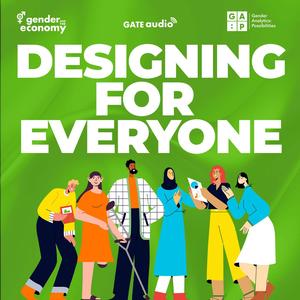
The so called “nudge theory” as popularized by Richard Thaler and Cass Sunstein in their bestselling 2008 book “Nudge,”—is about how to use behavioural interventions to get people to act in their best self interest. But, what does this look like when we think about this in the context of government policy? And, how, in particular, can this concept be mobilized to achieve more equitable policy outcomes? In this episode, we talk to Dilip Soman and Alia Kamlani to answer these questions.
영어
미국
이 에피소드 내
전사 🔗
Are you the producer of this podcast?
Add a podcast transcript
Need Audio-to-Text?
Transcribe with Listen411 in Just 60 Seconds
이 팟캐스트의 다른 에피소드
What do snow plowing, car safety, investment management and face recognition technologies all have in common? They all have impacts that are gendered. Yet, business leaders and policy makers often fail to consider these gendered impacts in the way that they design their policies, products, services…
Nothing about us without us. What does that mean? Well, in the case of product and service design, it means that designers shouldn’t be designing “for” the most marginalized but instead “with” them. Why do toy designers design “toys for girls” and “toys for boys”? Why are products that address the…
One of the hottest topics out there is the rise of artificial intelligence and in particular of generative AI tools such as ChatGPT. Suddenly machines can pass MBA exams, write memos for you, create computer codes, and much much more. At the same time, the conversation around the potential harms, a…
When we think about product and policy analysis and design, we don’t often think about the colonial underpinnings of our work. Many people think of data and design as somehow “neutral” and “objective.” But if we dig deeper, we begin to understand how they can perpetuate inequalities. So, what would…
면책 조항: 이 페이지에 포함된 팟캐스트와 작품은 The Institute for Gender and the Economy에서 가져온 것입니다. 이 팟캐스트는 소유자의 재산이며 Listen Notes, Inc.와 제휴하거나 보증하지 않습니다.
