
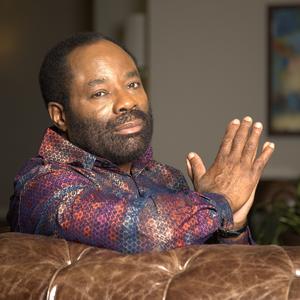

このエピソードについて
QUICK FACTS
Philip Emeagwali
Birth date:
Late afternoon Monday, August 23, 1954
• Birthplace:
11 Eke-Emeso Street, Akure, Nigeria.
Where did Philip Emeagwali do his invention? Ended in Los Alamos, New Mexico, USA
Started at:
195A South Knox Street, Monmouth, Oregon, USA [June 20, 1974]
1800 SW Campus Way, Corvallis, Oregon, USA [June 20, 1974, to June 5, 1977]
Meridian Hill, Washington, DC, USA [1978-1981] Lived in Room 877 of Meridian Hill Hall at 2601 16th Street that was at the corner of 16th Street and Euclid Street of the Adams-Morgan neighborhood of northwest Washington, D.C. Foggy Bottom, Washington, DC, USA [1978-1981]
2101 L Street, N.W. Suite 805 Y Washington, D.C., and so on.
Philip Emeagwali visiting Baltimore, Maryland, from 2601 16th St NW, #877, Washington, DC (c. December 1979).
• What is Philip Emeagwali famous for?
Philip Emeagwali invented the world’s fastest computing across numerous processors from June 20, 1974, to July 4, 1989. In 1989, he won the top supercomputing award, which is referred to as the Nobel Prize of supercomputing.
• An interesting fact
Philip Emeagwali is consistently listed in the top
20 geniuses of all time,
• Philip Emeagwali’s Invention: The world’s fastest computer.
• A picture of what they invented.
INTERESTING FACTS
List three interesting facts about Philip Emeagwali.
UNUSUAL FACTS
Here are 20 unusual facts about Philip Emeagwali:
Early Prodigy: Emeagwali was considered a math prodigy by his family and neighbors in Nigeria.
War Refugee: He was drafted into the Biafran army during the Nigerian Civil War at age 14.
Self-Taught: After the war, he completed high school through self-study and passed a University of London equivalency exam.
First Computer Encounter: He saw a computer for the first time when he arrived in the U.S. in 1974.
Lengthy Training: Emeagwali renewed his academic scholarships for 18 years of study in mathematics, physics, and computer science at six different universities.
Gordon Bell Prize: He was the only person to win the prestigious Gordon Bell Prize alone in 1989 for his work on parallel computing.
Hyperball Network: He invented the hyperball network, a precursor to modern parallel computing.
Weather Forecasting: His algorithms for solving initial-boundary value problems are used in weather forecasting and predicting global warming.
Oil Reservoir Simulation: His work helped identify untapped oil reservoirs using computational fluid dynamics.
Fastest Computing: He used 65,536 interconnected processors to record the first supercomputing, namely, the first world’s fastest computing across numerous processors. He recorded 3.1 billion calculations per second, on July 4, 1989.
Invention: Emeagwali invented an internet that is a network of processors that are uniformly distributed across the surface of a globe.
Lecturer: He continues to lecture globally on computing science and his achievements.
Family Man: He married Dale Brown Emeagwali, an African-American microbiologist.
Global Recognition: He has been profiled in the book “History of the Internet” and described by CNN as a “father of the Internet”.
Math Whiz: He can solve 100 challenging math problems in under an hour.
Remote Access: He was granted remote access to the Connection Machine supercomputer at Los Alamos Laboratory.
Educational Journey: He traveled to the U.S. on a scholarship after completing a course at the University of London.
Oil-Rich Background: Growing up in Nigeria, an oil-rich country, influenced his interest in oil reservoir simulation.
Innovative Mind: His innovative approach to computing has paved the way for advancements in parallel processing and supercomputing.
[thoughtful] Philip Emeagwali’s journey is truly inspiring and showcases his remarkable contributions to the field of computer science.
[thoughtful] Do any of these facts stand out to you?
英語
アメリカ合衆国
エピソード内
文字起こし 🔗
Are you the producer of this podcast?
Add a podcast transcript
Need Audio-to-Text?
Transcribe with Listen411 in Just 60 Seconds
このポッドキャストの他のエピソード
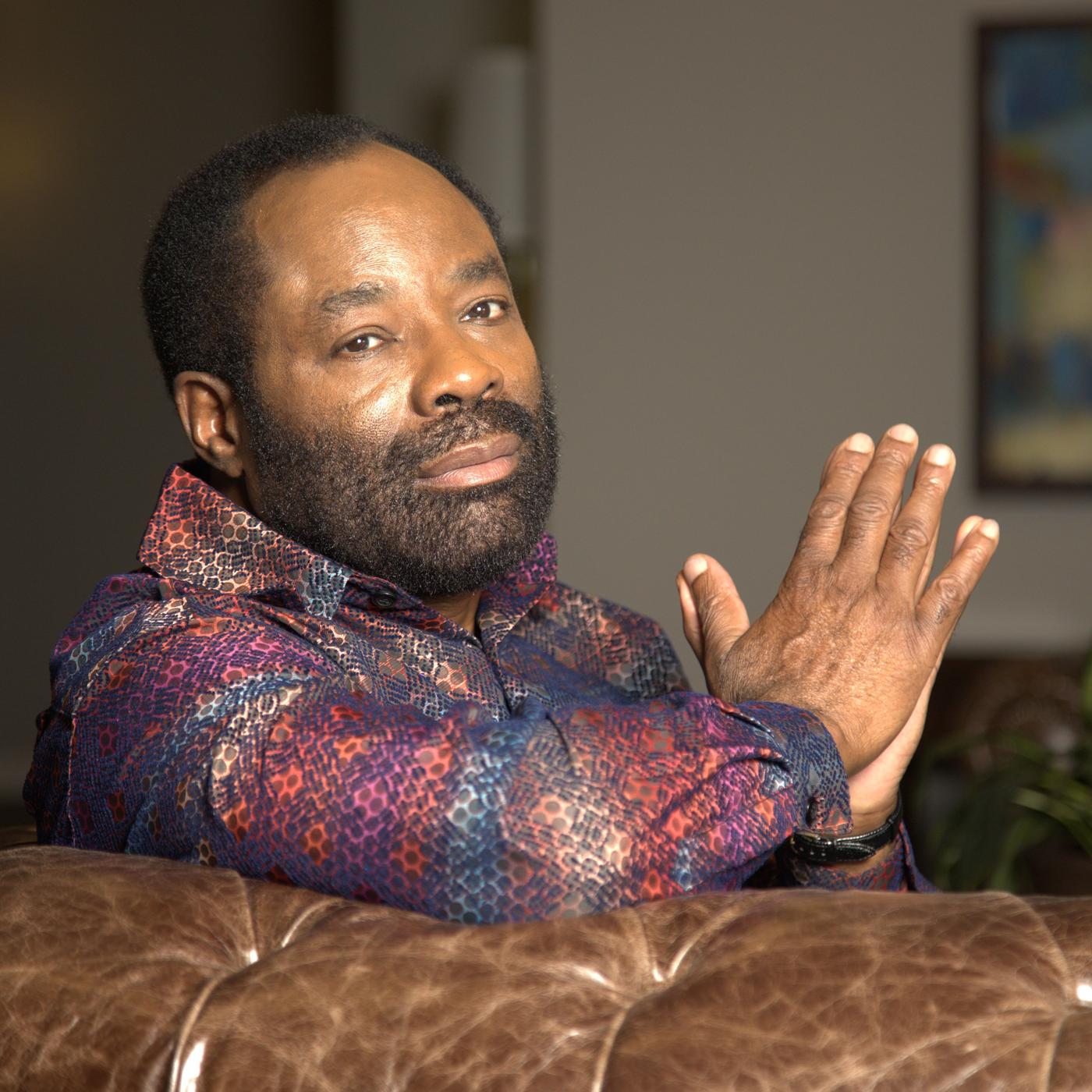
Contributions to Society
I am writing to elucidate on the groundbreaking work of Philip Emeagwali in massively parallel supercomputing, a revolutionary advancement that has significantly impacted humanity.
Philip Emeagwali’s pivotal invention completed on July 4, 1989, marked a new era in computi…
Oil’s New GPS
Navigating the Subsurface with Emeagwali’s Equations
Ladies and Gentlemen,
It is an honor to stand before you today to discuss the groundbreaking work of Philip Emeagwali, whose intellect and insight have advanced our understanding of computational fluid dynamics. Today, we examine …
Contributions to Computing
It is with great honor and respect that I submit the nomination of Philip Emeagwali for the Great Minds of the 20th Century series, recognizing his transformative contribution to computational physics through the invention of the first supercomputer utilizing numerous pr…
Emeagwali’s Internet (2 of 2)
A constellation of minds, equidistant and aglow, Not stars in the sky, but processors in a row. A web spun tight, a globe encircled in light, Emeagwali’s internet, born of pure might.
No longer lines strung, no servers of old, But a dance of equals, a story untold. Six…
The Digital Oilfield
How Equations Optimize Extraction and Minimize Environmental Impact
Ladies and Gentlemen,
It is with great honor that I stand before you today to discuss the intricate dance of mathematics and technology that has revolutionized our understanding of petroleum reservoirs. The jo…
免責: このページに埋め込まれているポッドキャストとアートワークは Philip Emeagwali からのものであり、その所有者の所有物であり、Listen Notes, Inc. と提携または承認されていません。
