

00:00:00
It excites me is the idea that this will be here for the future, for our children and if we get our children to understand the importance of fresh food, then this is a way for them to understand how to create that Oasis here.
Music
00:00:28
Welcome back to Regenerative Champions, the podcast that highlights the narratives of everyday heroes who are transforming our first systems. I am Sherifat Alabi, a graduate student at the Ohio State University. Also with me is Omope.
00:00:45
Hi there. I'm Omope Carter Daboiku also known as Mama O agriculturalist, author, mentor, storyteller and proud practitioner of indigenous regenerative farming techniques. I grew up in Appalachian Ohio in the small river town of Ironton.
00:01:03
Thank you for joining me on this episode, Omope. On every episode of Regenerative Champions, we talk with someone who is not just growing Food. But growing up for the future, our guests are regenerative farmers who work with nature in ways that nourish both people and the planet. So if you ever wondered what it means to farm for the future, or how a single farm can inspire communities, then it is then this conversation is for you.
Music
00:01:43
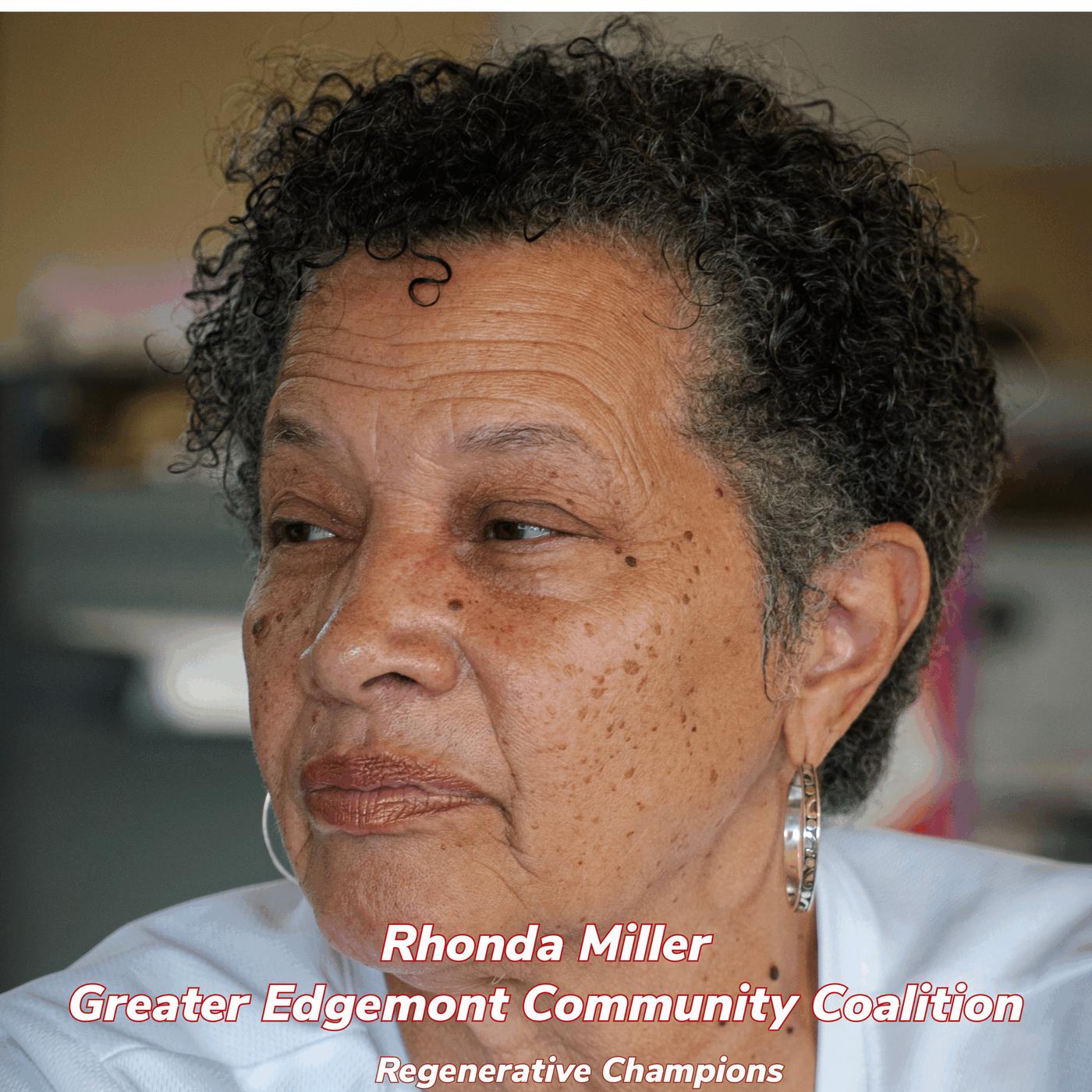
On today's episode, we are in Dayton, OH, and we stop at the Greater Edgmont Community Coalition. It was a great pleasure to talk with our regenerative champion, Rhonda Miller. Rhonda is a board member of the Greater Edgmont Community Coalition. Her passion to farm was to elevate the Edgemont community through urban regenerative agriculture and community education, toward healthy food accessibility and consumption. Please stay tuned as Rhonda and Omope discuss the effort and impact of greater engagement in Dayton.
00:02:29
Describe your farming operation. And so let's start with landowner status.
00:02:34
OK, so we here at the 919, we're in a lease purchase agreement with the City of Dayton, eight other lots. We own those lots here. We're on a 2.5 acre land that we should have purchased by the end of next year.
00:02:50
And how many years of operation have existed?
00:02:54
This operation has been multiple purpose, Started in the late 70s, early 80s and that We are unique because we are a community organization. What we started with is this community organization and they would rent out lots to neighbors to do their own growing there. It has gone through several different phases in the early 90s. It probably wasn't as much a lot of a rental. Because people had moved, businesses had moved, and so they were more of a community organization where they would have different projects for the community, for the youth and the community and then in 2015, when I personally became involved, then we were trying to bring this reviving because we lost our Community building and we have gone through several different phases ourself. We started out just what can we grow and you know, we weren't doing it for the money At the time we were trying to see what we could grow, we were very fortunate to have Central state come by and offer us an educational piece here. So we started the incubator farming program where we started training people to become farmers. And then we also we tried several different produce and it just became this was not living. This was living. This was so we stuck to color green. So for the past Three years we are perfecting our collard green production and we still have the incubator farmer Program and I would also like to add to that that as we move forward with our creating that incubator farmer program and understanding the uniqueness of urban farming especially I don't know everywhere else but in the city of Dayton that those lots where houses that were torn down and put into the ground. This land was industrial land that was torn down, and so we recognise especially through our 200 yard program that we need to train people in the city to understand that we need to regenerate this soil, this soil. You can't just go in there and start growing because you don't know what's in there. You know one of our projects also is the To help we know that sunflowers can Pull some of that out so.
00:05:22
So you got all this land and got these lot, Am I clear in understanding that in the late 70s and early 80s there was still a large interest in backyard gardening and this functioned as the source rights? Would you say that the interest in backyard gardening waned as those/that generation passed away?
00:05:46
Yes, definitely, because that was like his dad's generation. That. And Mr. Price drew stuff in his backyard. The brothers who worked here, they grew in their backyard. But they also taught People or gave people an opportunity to grow here
00:06:04
So the AG went down, the programming educational support programming went out, building rentals for community events went up, and those people didn't know how to farm number of full time.
00:06:18
Doesn't matter how many hours, right? They're just. Well, speak on hours and understanding the value of volunteer our most of Our hours here are volunteer hours. Any paid employees are through the CSU incubator farmer programs. So and those are not full-time positions.
00:06:36
Those are not full time positions. They would be 20 hours a week and for the farm manager, whether that is 1 farm manager or two, and then the advisor is, I don't know how many Hours the advisor 10A week those are the only pay that we have so far. So and with all of that in mind What our goals are, what we are working on now is creating a farm manager that would get paid A nice stipend that would really because the other project is to create a volunteer program and then also with that. It's not just people come here, volunteer, it's a training program for them. Also you need to know how to help us regenerate the soil. You need to know which things to pull that our weeds and which And to leave alone that are growing so. Everything we do, we try to do under the umbrella of education and in that they also this is what is so important about our 200 yard and and when we talk about regenerating soil in that they understand, don't just go to your backyard, start blowing in there. Have it tested. If if not your backyard, let's build some Raised beds here. There are other ways to do because we want people to be able to grow and be healthy and not grow and be getting all the Bad stuff that's in the soil. So that is one of our top priorities when we talk about the uniqueness of an urban agriculture program, that plus the animals, you know, we have groundhogs, you know, different kinds of things That we need to Do to protect your it's just heart wrenching to have Something growing. And then you come out there and it's like ohh yeah, that corn is ready to I say corn because that's that corn and then you look up an animal has just eaten it up you know and knowing that I was gonna have that for dinner tomorrow. You know, those are the kinds of things that people need to understand as they move into urban farming.
00:08:38
The farming journey why is there this continuing desire to grow food on this formerly industrial urban landscape?
00:08:50
I would like to Answer that like What we we still go back to the uniqueness of urban farming and we are not just an urban farm, we are community organization. So we represent the people in the edge of our community. We knew we had to redefine offering people to grow their own food in some kind of way. So for me it is I am so excited about the educational part of all of this. Why we keep This is because, as you all know, you were trained. I wasn't trained. I was a grown mother when my daddy came over and decided, because he came here and worked here, volunteered sometimes here and came over and we started a garden in the backyard for people to understand the importance of Growing your own food or eating fresh foods, you know, as opposed to going to McDonald's every other day. So for me, it's more of representing the community and an educational piece for the entire community, meaning the entire urban Dayton area.
00:09:58
I'm trying to understand or what caught fire in you. Was it becoming a mother, grandmother watching things over time. What was it that made the spark?
00:10:11
I really have to say that came to me Out of the Blue. I was driving down the street. ***** Ross said, Rhonda, I've been tasked with reviving this organization, so I got in there. OK, OK, I'll come start coming to the meetings. But in the meetings were not was not just me, but all of the people in that meeting grew up in this area. I knew what it was like to grow up In this area and I'm not only just the farming part, but rebuilding homes elevate edge my that is my biggest thing.
00:10:52
So farming in Edgemont is an aspect of community development.
00:10:55
Let me say this. Everybody in Edgemont who was around at that time, they would like what they doing down at the garden. My mother, what are y'all doing down at the garden now? You know, they called it the garden. They knew that it was here and they knew the opportunities and what it created for the neighborhood. We are Edgemont and that we represent the Edgemont community for the city of Dayton. City of Dayton has 66 communities. We are one.
00:11:21
What I hear some people farm for profit. Some people farm for fun. It sounds to me that the passion here was fed through an understanding of cultural enrichment and that retaining the knowledge of how to grow one's own healthy food was an aspect of cultural survival from those individuals who had migrated here from agriculture to labor to factory work. What does regenerative agriculture mean from your perspective?
00:12:01
The goal is to get the soil ready for people to be able to grow in there and us to understand that because often wonder if if they just broke that up and just started growing trees out there if that would help to regenerate that soil to What it takes for us to how far we have to go, how much work we have to do to prepare our soil.
00:12:26
OK, So what motivated you to start a regenerative farm?
00:12:29
Ski Ross stopping me on the street out there and and really just I was at the point of retirement and once I came down here I was like, OK, I didn't pay attention like I should have when I was younger, a young mother raising my children because I should have had a garden in my backyard. So what is motivating me is to make sure that we let our young children that this is very important for you to survive training people to know that there are other ways of doing this. We don't always have to go to McDonald's.
00:12:59
What challenges have you faced as farmers?
00:13:03
Me personally, I think I don't have anything to compare it to because I didn't start being a farmer until I came down here. You know? I called it dirt and I had to learn it was soil. But those things that I think from an urban is that most farming is geared toward rural. Yes. So to understand is needed in the UI for urban farmers is it's incumbent upon us to get out there and get that message across. So what like I say, one of the uniqueness is the groundhogs. You know, we're a rural farm, doesn't have that problem because their groundhouse can eat almost anything out there right now. We have the best fed groundhogs in the city of Dayton, and also one of our challenges is help we 3 farmers who sorted out. Then it ended up with two, so we had to kind of cut down on our crop plan them being able to just maintain a little bit of that was challenging, very challenging.
00:14:02
Climate change, how is it impacting or changing your farm and farming practice?
00:14:07
So it limits our time for really working in the field because you know you plan to go out there at 8:00 in the morning and although it says 69° that sun is hot, it is. You wouldn't believe it's 60 some degrees or 70. I was thinking OK 70° I can go out here and work. Oh, if you got in an area that but the sun was shining. It was just it limits your time, really. Being able to get out there and do and enjoy this should also be an enjoyable experience to me. The other part in the education piece is for people to understand that the city is there, ready to help you if you need help, just like water grants. If you have a lot that needs you, show your purpose, you ask them for a water grant and they would Create fountain for you, so there are things that the city has that they will help encourage the city. We got a small grant from them and we're able to purchase a tractor. So with that tractor, we're able to do ours and we can, yes. And then we can help other people. Gregory, when Gregory needs his land Well, you know, we can go out there when the other group, the African group, so we help others. Also, our relationships and I'm gonna go back to what we had talked about the daughters of the American Revolution, where they would they they have donated money to help us with that watering issue going to the Agraria Regenerative Farmer Fellowship and Megan Malone at the city of Dayton who is helping us figure some of the EPA issues, you know the city of Dayton really has worked with us closely. 5 rivers. We could not raise them high enough. Them moving into this community is helping us to regenerate this. The UD students helping us with figuring how to use solar in the back of the field.
00:16:05
They also participated in the design study for the new expansion. So you might not get money from UD, but you get service, yes.
00:16:17
So I've heard you say some things about the future in regards to educating. How does the agricultural strand of Greater Edgemont's mission, how does it look 3, 5-10 years from now?
00:16:33
Right now we have a three-year plan where we plan, hopefully our our popcorn becomes a a larger production even if that Things there's an opportunity to use some land out in Huber Heights if that means going out there. We have new property there getting we want to extend our collard greens where we have more and then our honey. We started with one beehive, we have 5 beehives right now. So we understand it takes Two or three years for that to really form like it's supposed to. So our major crops being our popcorn, collard greens and honey and you know, we look at them, those are the things as we write grants and ask for money, those are the things we want to build up. And then the educational piece where we are growing here, we know there are certain crops we can take to Ohio CAN and sell. So it's just bringing that list town and coming to what we actually.
00:17:35
Uh, you're leveraging urban agriculture that to sustain the community's identity and the vitality of the organization.
00:17:45
Thank you, Rhonda, and Omope for that inspiring conversation.
Music
00:18:01
I hope this conversation left you as inspired as I am that farming is not just about growing food, but about growing connection, resilience and care for the future. If you enjoy this episode. Please take a moment to subscribe, comment and share it with someone who cares about where their food comes from, or someone who needs to hear that change is already happening. This work is supported by the Hall Hunger Initiative, the USDA RCPP Project 2794, and it lead partner, the one.two.five Benefit Corporation. Many thanks also to Joy Rumble at the Ohio State University. Until next time I am Sherifat Alabi, and you can be the next Regenerative Champion.
It excites me is the idea that this will be here for the future, for our children and if we get our children to understand the importance of fresh food, then this is a way for them to understand how to create that Oasis here.
Music
00:00:28
Welcome back to Regenerative Champions, the podcast that highlights the narratives of everyday heroes who are transforming our first systems. I am Sherifat Alabi, a graduate student at the Ohio State University. Also with me is Omope.
00:00:45
Hi there. I'm Omope Carter Daboiku also known as Mama O agriculturalist, author, mentor, storyteller and proud practitioner of indigenous regenerative farming techniques. I grew up in Appalachian Ohio in the small river town of Ironton.
00:01:03
Thank you for joining me on this episode, Omope. On every episode of Regenerative Champions, we talk with someone who is not just growing Food. But growing up for the future, our guests are regenerative farmers who work with nature in ways that nourish both people and the planet. So if you ever wondered what it means to farm for the future, or how a single farm can inspire communities, then it is then this conversation is for you.
Music
00:01:43
On today's episode, we are in Dayton, OH, and we stop at the Greater Edgmont Community Coalition. It was a great pleasure to talk with our regenerative champion, Rhonda Miller. Rhonda is a board member of the Greater Edgmont Community Coalition. Her passion to farm was to elevate the Edgemont community through urban regenerative agriculture and community education, toward healthy food accessibility and consumption. Please stay tuned as Rhonda and Omope discuss the effort and impact of greater engagement in Dayton.
00:02:29
Describe your farming operation. And so let's start with landowner status.
00:02:34
OK, so we here at the 919, we're in a lease purchase agreement with the City of Dayton, eight other lots. We own those lots here. We're on a 2.5 acre land that we should have purchased by the end of next year.
00:02:50
And how many years of operation have existed?
00:02:54
This operation has been multiple purpose, Started in the late 70s, early 80s and that We are unique because we are a community organization. What we started with is this community organization and they would rent out lots to neighbors to do their own growing there. It has gone through several different phases in the early 90s. It probably wasn't as much a lot of a rental. Because people had moved, businesses had moved, and so they were more of a community organization where they would have different projects for the community, for the youth and the community and then in 2015, when I personally became involved, then we were trying to bring this reviving because we lost our Community building and we have gone through several different phases ourself. We started out just what can we grow and you know, we weren't doing it for the money At the time we were trying to see what we could grow, we were very fortunate to have Central state come by and offer us an educational piece here. So we started the incubator farming program where we started training people to become farmers. And then we also we tried several different produce and it just became this was not living. This was living. This was so we stuck to color green. So for the past Three years we are perfecting our collard green production and we still have the incubator farmer Program and I would also like to add to that that as we move forward with our creating that incubator farmer program and understanding the uniqueness of urban farming especially I don't know everywhere else but in the city of Dayton that those lots where houses that were torn down and put into the ground. This land was industrial land that was torn down, and so we recognise especially through our 200 yard program that we need to train people in the city to understand that we need to regenerate this soil, this soil. You can't just go in there and start growing because you don't know what's in there. You know one of our projects also is the To help we know that sunflowers can Pull some of that out so.
00:05:22
So you got all this land and got these lot, Am I clear in understanding that in the late 70s and early 80s there was still a large interest in backyard gardening and this functioned as the source rights? Would you say that the interest in backyard gardening waned as those/that generation passed away?
00:05:46
Yes, definitely, because that was like his dad's generation. That. And Mr. Price drew stuff in his backyard. The brothers who worked here, they grew in their backyard. But they also taught People or gave people an opportunity to grow here
00:06:04
So the AG went down, the programming educational support programming went out, building rentals for community events went up, and those people didn't know how to farm number of full time.
00:06:18
Doesn't matter how many hours, right? They're just. Well, speak on hours and understanding the value of volunteer our most of Our hours here are volunteer hours. Any paid employees are through the CSU incubator farmer programs. So and those are not full-time positions.
00:06:36
Those are not full time positions. They would be 20 hours a week and for the farm manager, whether that is 1 farm manager or two, and then the advisor is, I don't know how many Hours the advisor 10A week those are the only pay that we have so far. So and with all of that in mind What our goals are, what we are working on now is creating a farm manager that would get paid A nice stipend that would really because the other project is to create a volunteer program and then also with that. It's not just people come here, volunteer, it's a training program for them. Also you need to know how to help us regenerate the soil. You need to know which things to pull that our weeds and which And to leave alone that are growing so. Everything we do, we try to do under the umbrella of education and in that they also this is what is so important about our 200 yard and and when we talk about regenerating soil in that they understand, don't just go to your backyard, start blowing in there. Have it tested. If if not your backyard, let's build some Raised beds here. There are other ways to do because we want people to be able to grow and be healthy and not grow and be getting all the Bad stuff that's in the soil. So that is one of our top priorities when we talk about the uniqueness of an urban agriculture program, that plus the animals, you know, we have groundhogs, you know, different kinds of things That we need to Do to protect your it's just heart wrenching to have Something growing. And then you come out there and it's like ohh yeah, that corn is ready to I say corn because that's that corn and then you look up an animal has just eaten it up you know and knowing that I was gonna have that for dinner tomorrow. You know, those are the kinds of things that people need to understand as they move into urban farming.
00:08:38
The farming journey why is there this continuing desire to grow food on this formerly industrial urban landscape?
00:08:50
I would like to Answer that like What we we still go back to the uniqueness of urban farming and we are not just an urban farm, we are community organization. So we represent the people in the edge of our community. We knew we had to redefine offering people to grow their own food in some kind of way. So for me it is I am so excited about the educational part of all of this. Why we keep This is because, as you all know, you were trained. I wasn't trained. I was a grown mother when my daddy came over and decided, because he came here and worked here, volunteered sometimes here and came over and we started a garden in the backyard for people to understand the importance of Growing your own food or eating fresh foods, you know, as opposed to going to McDonald's every other day. So for me, it's more of representing the community and an educational piece for the entire community, meaning the entire urban Dayton area.
00:09:58
I'm trying to understand or what caught fire in you. Was it becoming a mother, grandmother watching things over time. What was it that made the spark?
00:10:11
I really have to say that came to me Out of the Blue. I was driving down the street. ***** Ross said, Rhonda, I've been tasked with reviving this organization, so I got in there. OK, OK, I'll come start coming to the meetings. But in the meetings were not was not just me, but all of the people in that meeting grew up in this area. I knew what it was like to grow up In this area and I'm not only just the farming part, but rebuilding homes elevate edge my that is my biggest thing.
00:10:52
So farming in Edgemont is an aspect of community development.
00:10:55
Let me say this. Everybody in Edgemont who was around at that time, they would like what they doing down at the garden. My mother, what are y'all doing down at the garden now? You know, they called it the garden. They knew that it was here and they knew the opportunities and what it created for the neighborhood. We are Edgemont and that we represent the Edgemont community for the city of Dayton. City of Dayton has 66 communities. We are one.
00:11:21
What I hear some people farm for profit. Some people farm for fun. It sounds to me that the passion here was fed through an understanding of cultural enrichment and that retaining the knowledge of how to grow one's own healthy food was an aspect of cultural survival from those individuals who had migrated here from agriculture to labor to factory work. What does regenerative agriculture mean from your perspective?
00:12:01
The goal is to get the soil ready for people to be able to grow in there and us to understand that because often wonder if if they just broke that up and just started growing trees out there if that would help to regenerate that soil to What it takes for us to how far we have to go, how much work we have to do to prepare our soil.
00:12:26
OK, So what motivated you to start a regenerative farm?
00:12:29
Ski Ross stopping me on the street out there and and really just I was at the point of retirement and once I came down here I was like, OK, I didn't pay attention like I should have when I was younger, a young mother raising my children because I should have had a garden in my backyard. So what is motivating me is to make sure that we let our young children that this is very important for you to survive training people to know that there are other ways of doing this. We don't always have to go to McDonald's.
00:12:59
What challenges have you faced as farmers?
00:13:03
Me personally, I think I don't have anything to compare it to because I didn't start being a farmer until I came down here. You know? I called it dirt and I had to learn it was soil. But those things that I think from an urban is that most farming is geared toward rural. Yes. So to understand is needed in the UI for urban farmers is it's incumbent upon us to get out there and get that message across. So what like I say, one of the uniqueness is the groundhogs. You know, we're a rural farm, doesn't have that problem because their groundhouse can eat almost anything out there right now. We have the best fed groundhogs in the city of Dayton, and also one of our challenges is help we 3 farmers who sorted out. Then it ended up with two, so we had to kind of cut down on our crop plan them being able to just maintain a little bit of that was challenging, very challenging.
00:14:02
Climate change, how is it impacting or changing your farm and farming practice?
00:14:07
So it limits our time for really working in the field because you know you plan to go out there at 8:00 in the morning and although it says 69° that sun is hot, it is. You wouldn't believe it's 60 some degrees or 70. I was thinking OK 70° I can go out here and work. Oh, if you got in an area that but the sun was shining. It was just it limits your time, really. Being able to get out there and do and enjoy this should also be an enjoyable experience to me. The other part in the education piece is for people to understand that the city is there, ready to help you if you need help, just like water grants. If you have a lot that needs you, show your purpose, you ask them for a water grant and they would Create fountain for you, so there are things that the city has that they will help encourage the city. We got a small grant from them and we're able to purchase a tractor. So with that tractor, we're able to do ours and we can, yes. And then we can help other people. Gregory, when Gregory needs his land Well, you know, we can go out there when the other group, the African group, so we help others. Also, our relationships and I'm gonna go back to what we had talked about the daughters of the American Revolution, where they would they they have donated money to help us with that watering issue going to the Agraria Regenerative Farmer Fellowship and Megan Malone at the city of Dayton who is helping us figure some of the EPA issues, you know the city of Dayton really has worked with us closely. 5 rivers. We could not raise them high enough. Them moving into this community is helping us to regenerate this. The UD students helping us with figuring how to use solar in the back of the field.
00:16:05
They also participated in the design study for the new expansion. So you might not get money from UD, but you get service, yes.
00:16:17
So I've heard you say some things about the future in regards to educating. How does the agricultural strand of Greater Edgemont's mission, how does it look 3, 5-10 years from now?
00:16:33
Right now we have a three-year plan where we plan, hopefully our our popcorn becomes a a larger production even if that Things there's an opportunity to use some land out in Huber Heights if that means going out there. We have new property there getting we want to extend our collard greens where we have more and then our honey. We started with one beehive, we have 5 beehives right now. So we understand it takes Two or three years for that to really form like it's supposed to. So our major crops being our popcorn, collard greens and honey and you know, we look at them, those are the things as we write grants and ask for money, those are the things we want to build up. And then the educational piece where we are growing here, we know there are certain crops we can take to Ohio CAN and sell. So it's just bringing that list town and coming to what we actually.
00:17:35
Uh, you're leveraging urban agriculture that to sustain the community's identity and the vitality of the organization.
00:17:45
Thank you, Rhonda, and Omope for that inspiring conversation.
Music
00:18:01
I hope this conversation left you as inspired as I am that farming is not just about growing food, but about growing connection, resilience and care for the future. If you enjoy this episode. Please take a moment to subscribe, comment and share it with someone who cares about where their food comes from, or someone who needs to hear that change is already happening. This work is supported by the Hall Hunger Initiative, the USDA RCPP Project 2794, and it lead partner, the one.two.five Benefit Corporation. Many thanks also to Joy Rumble at the Ohio State University. Until next time I am Sherifat Alabi, and you can be the next Regenerative Champion.
