

ias: Welcome back to Unmaking the Prison Image. I'm Puja Rangan. When we first released this podcast, we conceived of it as a three-episode series exploring the role documentary can play in imagining a world without prisons. We're now sharing a set of additional episodes drawn from a visualizing abolition public symposium held at the Institute of the Arts and Sciences, University of California, Santa Cruz. In this final installment, We close the symposium with concluding reflections from Visualizing Abolition Co-director Gina Dent. Moving through the core themes of the day, Gina invites us to look past carceral viewing habits and continually innovate our abolitionist practices. A couple of notes before we begin. This recording was made before a live audience. Since the sound was designed to be legible for the people in the room first, the audio quality isn't optimal for a podcast. But we've preserved the audience responses and ambience sounds to bring you into the space with us. Technical limitations also meant that we had to edit down some segments. So please know that you're hearing an edited version of Gina's comments. These are not prepared remarks. ⁓ These are some aphoristic thoughts that I had as I moved through the day that are mostly an invitation for us to reflect together. ⁓ So you can call them prompts, you can call them whatever you like. ⁓ I mean the first thing I have to say is that Rachel and I are thrilled to have our first visiting scholar in residence, Pooja Langan, who is It's really exciting for us to be able to have this program supported by Mellon in the way that it has been and it has allowed us to do things that are very much impossible in this current financial climate in the university. So I'm very grateful for that and I'm just incredibly grateful that Pooja not only wanted to come join us, but wanted to come join us with an abolitionist spirit, meaning getting in the ground, working. folks you know digging in wherever joining teaching of a course you know this is a university and despite the fact that I'm trying to convince Adam that we're not all so bad ⁓ for wanting to ⁓ dive into especially leave time and time away from their their primary work and take up such responsibility in another location. So I want to thank you for that and for all the love you've poured into this symposium. say I didn't say it earlier because I I wanna thank Rachel for being my partner in this for we've now been working together f for like nine it's been like I don't know, it's a long time. Depends on how you count it. It's like relationships like what do you count what do you like do you count like the first time whatever. Anyway. So silly because you know we're all going through a pretty it's a pretty hard time. and the reason I've been reflecting so much on on and my joking about the nineteen hundreds is that, you know, even when we look back to twenty twenty and thinking about COVID through the stories today and and the film, As horrible as COVID was and as horrible as the isolation, I felt like there were so many moments of abolitionist opening into like reconsidering how we did things together. You know, when people talk to me about Zoom and remote learning and how terrible it is, I say well most of my disabled students were really thrilled they didn't miss class. Right? So there are a lot of things that we gain in that intensity of that moment, and hopefully we're we're holding on to some of them. And I think one of them is you know, enjoying being together in these ways. One thing I was talking to Gilden and Damu about after our panel this morning, which this day went so fast for me, ⁓ but this morning ⁓ was that I had wanted to point out how their films both were able to avoid ⁓ prison language, you know, the prison dialect. ⁓ and it's something that I thought it was worth just spending a few moments pointing out because So many times when I'm working with people either inside or people who were inside or people who work in programs inside, we speak in acronyms. ⁓ I should say we I really don't do that much. But if I have to, I know the acronyms, right? But It's it's a way that we absorb prison culture without really recognizing it. And so I asked both of them, you know, how did you manage to avoid that in in your films? ⁓ because it was really distinct for me. And I think it's one of the practices of abolitionist filmmaking that we should really just note. It's subtle, you know, because y you're not seeing what you're not seeing. But ⁓ I think it's a part of why the films are successful. And and they both talked about having to like pause and say, could you say that again without the acronym, right? And so I just wanted to lift that up for filmmakers that we've ⁓ been talking to today and also to remind ourselves of all the ways in which we, especially as we start to do work ⁓ with people inside, need to constantly be alert to the ways we are being eaten by prison culture. And There are so many ways that I felt this today. It was such a relief to be in a space where ⁓ we were doing what in the early critical resistance days we used to always talk about, which was we were studying the prison, we weren't studying prisoners, and I'm using that category on purpose, right? It's like we were actually talking about the system. Right, and that was everyone's focus. And so the individual stories were all leading us to think about systemic consequences without getting rid of the individuality, right, that we need in order to create relationship to the story and to allow ourselves to imagine differently. And I I it reminded me there was another sub these are all my side conversations I've been having with people, ⁓ about the the Concept of experience. There's a well-known article for feminist studies scholars called On the Evidence of Experience by Joan Scott. And it was for many years a kind of classic feminist studies text. And the reason it was classic, well, was because it was focused on this kind of fundamental principle in feminist studies that you would lift up the voice of others. And so one of the ways you would do that was you would you would allow person with experience to sort of be the one who teaches you. But it was also a way of misapprehending the relationship between ⁓ re ⁓ representation and experience, right? Assuming that not every experience is in representation. And so I lift that up today And I usually teach that article by being mad about it because the ex the the problem for me with that article was that her negative example about using experience in a in a bad way was the science fiction black gay writer Samuel Delaney. If anyone's ever read Delaney, it would be odd. To imagine Delaney as the person you would actually use as the negative example for how experience would be mobilized as an excuse for other kinds of problems. So I always was ambivalent about that article, but it has in some ways, it did some in some ways control a relationship to thinking about experience for many years in feminist studies. And I want to bring that into our conversation a bit today because I I also feel like we had this wonderful ⁓ experience, I don't want to log everything that was somewhat unusual in a pretty prison studies context, of not assuming that just because someone served time, that then that means that that person knows about everything. Right? So we're not substituting ⁓ experience for knowledge. We're actually selecting makers, creators, ⁓ writers who are actually contributing ⁓ to this discourse in a way that is allowing us to ⁓ know more, think more deeply. And I think we could all feel that sensibility throughout the day where everyone was able to participate and we didn't have this way of looking at ⁓ the other in a in a way that ⁓ is often a part of these environments. And I'm saying this aloud because there are some students here and there are certain habits that are easy to fall into when you first start doing this work that I think it's important for us to kind of draw out and also ⁓ note when we're not actually in that mode. So how do we then you know operate with an idea that experience is important But experience doesn't determine how you're going to analyze that experience, nor will it determine how you would represent your own experience and how you think about your relationship to representation. And I think there was a lot of complex conversation today about ⁓ how one was being represented, including, I know Adama, you said this very clearly, like that you feel differently about filmmaking now. And you've also given me permission to say something which we didn't get to in the panel, which is that. you may not all know that Adamu had to return to prison as a consequence of being punished for the kind of work he did. So I think we also really need to talk about how these uses of people's experience can also create other problems for us. And so on a day where we're mostly thinking about documentary and documentation, you know, what does it mean to think about why, you know, art Creative art nonfiction practices actually really matter a lot in helping us to have deeper understandings of the prison system. So ⁓ I think we were all sort of aware of this today. ⁓ You know, there are a lot of consequences for people for what we say. There are also consequences for our going inside as people who haven't served time or are not currently serving time. And having certain conversations or creating certain relationships inside. And so I I really want just acknowledge that we that I loved all the side conversations we were all having as well, which were also kind of filling in the blanks of all the things that we were all experiencing today, but also didn't necessarily ⁓ draw a full picture of. okay. I realize I'm I'm only two in of my ten, so they're getting shorter now. So one question that came up again and again today that we worked around and that I heard people talking about was what abolition really is and also how hard it is to talk about it now given that so many people identify into it, but also that it by virtue of the fact that we are calling this an abolitionist space, some people won't enter. And so what does that mean for a political practice where you're actually trying to ⁓ get people to think with you about making a different world? And I I wanted to ⁓ go back to the discussion around ⁓ the Racial Justice Act ⁓ Rich Raj has brought up and AB twenty-five forty-two. If you haven't read the text of it, I it's worth reading. ⁓ it's a 2020 act. I think you'll understand why that's the case. And on the one hand, as Raj is pointing out, like, didn't know we needed an an act to actually think that racism was bad, but actually the way in which racism is codified in that act is worth studying further. I'm not going to do it with you today, but I will say that it did does one very particular thing which is pretty important, and that is it breaks the temporality of carceral thinking. So one thing the act allows is a retrospective assessments. And so, you know, one of the problems for legal situations is that you're always having to deal with the ⁓ temporality of the criminal, I'm gonna call it it's how it knows itself, the criminal justice system. Right? And so having to think within the time frame of the particular action that ⁓ triggered incarceration, right, rather than thinking about the long time of that person's life, and this is always something that in abolitionist communities we talk about, but it's something that the legal system has a really difficult time with. Now, in the case of the Racial Justice Act, it's not looking at the time of ⁓ action of the person who's incarcerated. It's looking at the actions of police and ⁓ other officials. But it is important that it breaks that temporality of ⁓ the criminal legal system in a way that is important. And I think that's something that I also want us to lift up. Because I think that media has the capacity, and I think we've been seeing this today, to introduce different forms of temporality. If we think about carceral media as as representing to us how we should be comfortable with the idea of prison and we think of anticarceral media as disrupting that, we also want to break with the temporality of that carceral media. We can't just reflect it back. And I think That's something that I also felt like we were moving in and out of today. You know, what is the temporality of reform versus abolition? And how do we engage with reforms while we're simultaneously doing abolition? ⁓ I'm doing this a little bit fast, partly because of time, also because I feel like this is an audience that understands these things and I'm just flagging them. But I do think that there's so much pulling us. who care about these matters, ⁓ and especially for those who leave their friends and family members inside, to attend to every individual case, to just be completely absorbed in whatever next ⁓ board hearing there is or whatever else. All of that work has to be done. I am not arguing about that. But I think of this community and the communities we're building as places to sustain the other relationship to time. Which we absolutely have to have, otherwise all of those energies are being absorbed back into carcerality. We're really not, you know, we may be making things better for individuals and we need to. ⁓ don't get me wrong, but those kind of incremental decarcerations are not the same as ⁓ transforming the system. So I'm I'm glad to hear so many people here constantly being able to shuttle between those forms of time. And I think we should try to introduce that to more and more people so that people understand also that it's a way of staying motivated and inspired as we do that work because we lose as many of the things that we try to do to ⁓ get individuals released as we win. So how do we actually allow ourselves to move forward? And think the way we're ⁓ consuming different kinds of media can be part of that. The way we do it together can be part of that, but also reminding ourselves that we're trying to build a different way of being in the world. I'm just gonna say that ⁓ I don't think we have a model of how we want to be in the future. And I think that's one of the hardest things. And I don't mean by that that we're just utopian thinkers. I think that we have to build on many different parts of systems that have existed and also build new systems and we need to be doing that at the same time as we are as we're doing everything else and of course that was something that I felt very strongly today that people were able such so dexterous in their ability to move in and out of understanding how what they were doing in the moment contributed to this larger this larger struggle. ⁓ You were in a delegation and we were speaking at the University of Nablus in Palestine and there were a lot of people in the room ⁓ who of course had been incarcerated in Israeli prisons. And so I asked everyone who had been inside or who had a family member inside to raise their hands, and of course the entire room raised their hand. But my next question was what will happen when y we have a free Palestine to prisons? And that was when the answers became, ⁓ you know, we will only use the prisons for the very bad people. And and so it reminded me ⁓ you know when Adama was tentative about saying, Are we talking about revolution? I want to say we absolutely are talking about revolution. And so it is really important to ask the difficult questions even of those you're in alliance with and in solidarity with, and even when They're up against very, very difficult circumstances because we need to ask the questions before. And so I think of prison abolition also as guiding so many of the questions we might ask in any situation. And you know, it's a mandelaism, but it's also I think true that if you want to understand a society, you look at its prisons, and I think we can take those skills to to you know learning about ⁓ how our societies are structured and if we don't ask those questions in advance and if we don't think of ourselves as doing revolutionary work, I think we'll be in trouble. Let me just Yeah. Let me just end by lifting up some of the different things that were said about ⁓ narrative justice, media making, inside and out, ⁓ and and to ⁓ lift up what said about how boring prison is. So people would always ask me, of course, when I would criticize all these other films, they would say, well what would you do as a prison film? I was like, I'm not a filmmaker, but I would make a very boring, you know, it'd be like put the camera there and just like let it run for hours and hours and make people watch it. because you know, honestly the thing that is really hard to explain is that being able to be in programs, Tom was talking about this, other people talked about this today, is a luxury. Being able to do anything that feels useful in a day is a luxury inside. And so realizing that this warehousing which people you know Ruthie Gilmore uses that term, or organized abandonment, another one of her terms. These are these are things that came up today that I feel like we need to ⁓ really remember all the time. And then think about, you know, as even Gilda and Adama were talking about evolving in terms of their filmmaking, and I know Raj was talking about this in terms of advocacy filmmaking. ⁓ you know, how are we going to meet this next moment in more experimental ways? Right? So ⁓ can we actually do anticarceral work through media without succumbing to the conventions of media and even you know narrative arcs and individual stories and heroes and you know cute baby pictures that allow you to understand that someone is quote unquote human. I think these are things that everyone in this room understands that we probably don't want to keep having to make, but how can we push together as a community toward other ⁓ forms of making that can reintroduce abstraction and can reintroduce a relationship to the other Can can, you know, what would it mean instead of ⁓ trying to produce some kind of affinity to say, well, actually my life is quite different from yours, right? How can we be inviting people into a knowledge of the other and to a pausing before knowing? It's it's not that the same gesture will work over time in the same way always. It's how alert are we to constantly innovating? How alert are we to seeing what patterns we have gotten into that are really no longer working for us, that have become the the norms? and I feel like this was a moment to really reflect on ⁓ especially since 2020, but I think you know, at least since you know the this recent phase of abolitionist organizing got launched, you know, how are we going to Be with each other in community in a way that breaks with so many of the requirements of what it is to ⁓ work against the system, but knowing that we are not abandoning people and and working inside the system. ⁓ Keisha said that going inside really that you were a different person, right? You're pre-going inside Keisha and you were post going inside Keisha. And I wanna emphasize that ⁓ Critical Resistance, right after its main first main conference, organized this thing called Go to Prison Week. And the idea of it was that you would get yourself inside whatever way you could, ⁓ mostly to break that border, right? To to enter, because it is the beginning of a new way of relating. But as other people were talking about, dealing with the prison system for that access is always a trade-off. I think my final words, which I think come from the spirit of everything I've felt today, are that ⁓ and Sean definitely said this and Tan definitely said this in terms of not wanting to be doing the same kind of work inside anymore. You know, what does it mean to not be competitive with other people doing different kinds of work in different ways? What might it mean to lift up work that's happening internationally? Claudio informed me, which I did not know, ⁓ that it's actually Abolition Day in Brazil today. ⁓ so happy abolition day in Brazil. and ⁓ and what you know, how can we actually ⁓ not be in the silos that Keisha was also talking about? We all need each other, and I think we get caught up And especially when it becomes an academic pursuit or even a nonprofit I'm running and funders I need to chase, this has become rather unseemly. so how do we how do we remember that in the end ⁓ we have more to do than just ⁓ career build and or compete? And I think that it's It's finally time where there are enough of us that we need to be more challenging about how we engage each other and how we build this community together. So I just wanna thank everyone here that I've encountered for bringing that spirit and I hope that we will ⁓ spread that spirit ⁓ as you go along. And of course I would love for ⁓ to end this by not only thanking you but inviting us all to ⁓ keep trying to ask hard questions of each other throughout the rest of our time in reception and to keep thinking about ⁓ what are the patterns that have been established as if they're the revolutionary radical patterns that already need breaking. Thank you. Making the Prison Image is a production of Visualizing Abolition, a public scholarship initiative at the University of California Santa Cruz, directed by Gina Dent and Rachel Nelson. Learn more at visualizingabolition.edu. We also want to learn from and connect with you. You can reach Puja at pujarangan.com and find Visualizing Abolition on Instagram at UCSC IAS. So please get in touch and follow along. This episode was produced by Alex Moore, Louise Leong, and me Puja Rangan. Eric Maserati E. Abucrumbi is our editor and sound designer. Theme music for visualizing abolition is Pray by Terry Lynn Carrington and Social Science. Our cover art features an image from Christopher Harris's Still Here. Special thanks to Gina Dent and Rachel Nelson for their vision and support. Additional support for unmaking the prison image came from Amos College.
INFORMAZIONI SU QUESTO EPISODIO
In the final live recording from the “Carceral Media Ecologies—And How To Break Them” symposium at UC, Santa Cruz (May 13, 2026), Visualizing Abolition co-director Gina Dent offers closing reflections on themes that emerged across the symposium. Speaking extemporaneously, Dent revisits questions of abolitionist media practice, representation, temporality, collaboration, and revolutionary imagination. Dent returns repeatedly to a central question: how can artists, scholars, organizers, and communities create forms of media that resist carceral logics while building new ways of being together?
Citations
- Joan Scott, “The Evidence of Experience”
- Critical Resistance
- California Racial Justice Act (AB 2542)
Unmaking the Prison Image is a production of Visualizing Abolition, a public scholarship initiative at the University of California, Santa Cruz, directed by Gina Dent and Rachel Nelson. Additional support comes from Amherst College. Full transcripts for all episodes are available at https://ias.ucsc.edu/unmaking-the-prison-image/.
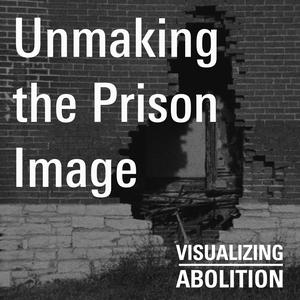
Theme music for Visualizing Abolition is Pray by Terri Lyne Carrington and Social Science. Our cover art features an image from Christopher Harris’s still/here.
Inglese
Stati Uniti
IN QUESTO EPISODIO
TRASCRIZIONE 🔗
CERCA TRA GLI EPISODI PASSATI
Cerca gli episodi passati di Unmaking the Prison Image.
Dichiarazione di non responsabilità: Il podcast e la grafica incorporati in questa pagina provengono da Visualizing Abolition, che è di proprietà del suo proprietario e non è affiliato o approvato da Listen Notes, Inc.
MODIFICA
Grazie, ci hai aiutato a mantenere aggiornato il database dei podcast.
