


WEBVTT
00:00:00.000 --> 00:00:14.480
In large parts of Canada, particularly Lower Mainland BC and Southern Ontario, it seems that the only housing that has been built in the last 10 to 15 years is either small apartments and high-rises or large homes well outside of our major cities.
00:00:14.720 --> 00:00:17.199
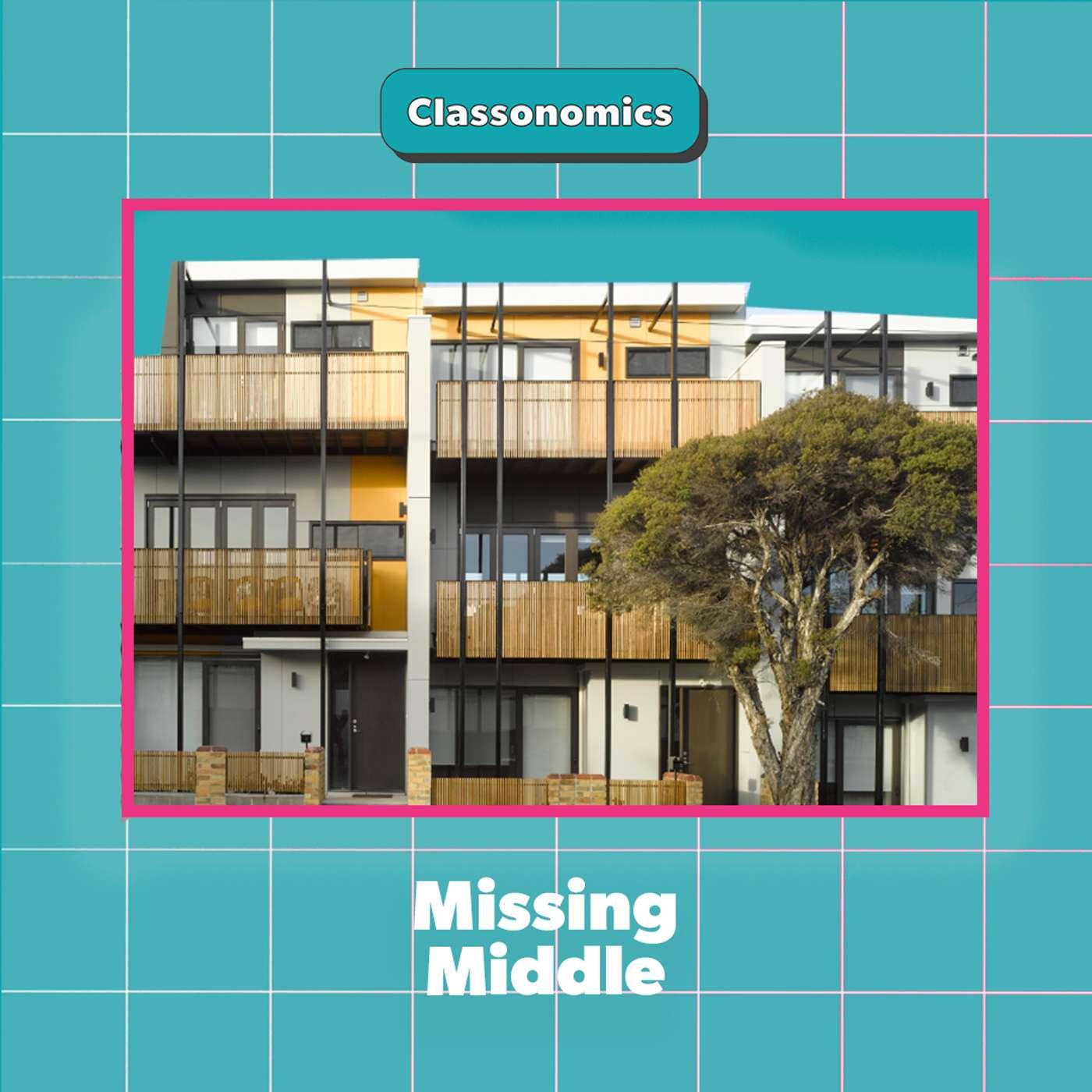
Missing Middle Housing is truly that.
00:00:17.359 --> 00:00:18.160
It's missing.
00:00:18.399 --> 00:00:21.120
Now, today's guest is working hard to change that.
00:00:21.280 --> 00:00:35.280
Adam Modgrane was recently named the Executive Director of More and Better Housing, an organization tasked with finding the ways and means to deliver millions of new affordable, low-carbon, and resilient homes to Canadians everywhere.
00:00:35.439 --> 00:00:43.920
Now, Adam is a longtime resident of Montreal, a city which has historically punched above its weight when it comes to the building of Missing Middle Housing.
00:00:44.079 --> 00:00:46.560
So, Adam, thank you so much for being our guest today.
00:00:46.880 --> 00:00:48.799
Mike, thank you for having me on.
00:00:49.439 --> 00:00:54.079
Classonomics, hosted by Sabrina Mado and Mike Moffat.
00:00:54.960 --> 00:01:01.600
So let's talk about More and Better Housing, an organization that has always had a close affiliation with the Missing Middle Initiative.
00:01:01.759 --> 00:01:06.400
Now, originally your organization was called the Task Force for Housing and Climate.
00:01:06.560 --> 00:01:13.599
It was co-chaired by the former conservative Deputy Prime Minister Lisa Rait and the former mayor of Edmonton, Don Iveson.
00:01:13.760 --> 00:01:16.560
I acted as secretariat for that group.
00:01:16.640 --> 00:01:40.640
And for those of you who don't know what that means, it's basically the secretariat's responsibility is to herd all the members of Task Force, of the task force, which is like herding cats, take all of their great ideas, then you lock yourself in a dark basement with an unlimited supply of coffee, you bang out draft after draft of a final report or final blueprint, and that eventually became the blueprint for more and better housing.
00:01:40.799 --> 00:01:48.319
And that blueprint contained dozens and dozens of recommendations to all three orders of government, many of which have since been implemented.
00:01:48.480 --> 00:01:57.680
Now, there were about a dozen other members of the task force, which included a number of well-known names in housing policy, like Sharice Berta and Richard Joy.
00:01:57.840 --> 00:01:59.200
Adam was one of the members.
00:01:59.359 --> 00:02:03.680
And I remember we also had some guy named Mark from Canada 2020.
00:02:04.000 --> 00:02:05.280
What was his last name again?
00:02:05.439 --> 00:02:06.319
Oh, yeah, Carney.
00:02:06.640 --> 00:02:07.280
Mark Carney.
00:02:07.680 --> 00:02:13.039
You know, I heard he went on to some other job afterwards, you know, prime minister of something or other.
00:02:13.360 --> 00:02:24.159
But anyhow, jokes aside, you know, out of that report, uh, organization was created, which took on the more and better housing branding uh from the blueprint, which you now run.
00:02:24.319 --> 00:02:27.120
So what made you decide to take on this challenge?
00:02:27.520 --> 00:02:38.719
Well, first I want to thank you, Mike, for hurting us cats because I was in there and I know that uh, you know, it's really hard to get 15 people to agree on housing in the best of circumstances.
00:02:38.879 --> 00:02:44.479
Uh and I'm pretty proud of the work we managed to do uh under that stewardship and under that name.
00:02:44.639 --> 00:02:48.800
And I think that's really uh what made me decide to say yes to this.
00:02:48.960 --> 00:02:58.719
And when when you think through about what we managed to do in the short time we had and with the means that we have, it's really impressive that we got so far, but it's not done.
00:02:58.879 --> 00:03:00.240
The work is never done.
00:03:00.400 --> 00:03:13.280
And one of the key areas of you know, difference between the work that we did initially with you and with the other task force members is that we were working off the CMHC recommendation in 2022 to build 5.8 million homes.
00:03:13.360 --> 00:03:21.520
And we wanted to make sure that if we were going to do that, there were going to be low carbon and we would not raise the country to build those homes.
00:03:21.680 --> 00:03:27.840
Uh, and I'm pretty proud that our recommendations led to improved outcomes, but it's not done.
00:03:27.919 --> 00:03:31.919
Uh, and the the world has changed since we put out that first report.
00:03:32.159 --> 00:03:35.280
As you know, and as everyone knows, things are changing very rapidly.
00:03:35.439 --> 00:03:44.719
So the work ahead for me is to take some of that great work and great intents and take them into new directions to adjust for the way that the world is changing before our eyes.
00:03:45.039 --> 00:03:52.719
Yeah, it's it's funny that when you have a blueprint with like 140 recommendations, you might think, like, you know, how could we have possibly missed anything?
00:03:52.800 --> 00:04:01.759
But when I go back and look at it now, I do see things that I wish we had put in that what we didn't, we just missed for one reason or another.
00:04:01.919 --> 00:04:04.879
So, you know, I'm glad you're going to be uh filling in those holes.
00:04:05.120 --> 00:04:15.360
But I want to step back a little bit and not talk so much about the specific policies, but look at a 30,000-foot view of what the organization is trying to accomplish.
00:04:15.520 --> 00:04:29.279
And particularly the word better in the name more and better housing, because you know, one of the challenges I find when I talk about infill or missing middle housing or gentle density, you know, whatever the conversation is, is that people can't visualize it.
00:04:29.439 --> 00:04:42.079
Or even worse, they kind of catastrophize and they get these pictures in their mind of you know, the worst possible scenario of you know, very cramped homes that are less livable than what we have now.
00:04:42.319 --> 00:04:51.199
So, you know, I'm wondering how can we show people that it's possible to build homes differently in a way that actually improves the quality of their life and doesn't diminish it?
00:04:51.519 --> 00:04:54.800
Yeah, well, this is going to be a big part of our activities going forward.
00:04:54.879 --> 00:04:57.680
You know, better housing cannot just be a promise.
00:04:57.839 --> 00:04:58.639
It has to be real.
00:04:58.720 --> 00:05:04.879
It has to feel that's it's something tangible that everyday people can attain, can, can dream about.
00:05:05.199 --> 00:05:18.720
Uh, and the reason why this is necessary is that to deliver that kind of better housing, we probably have to pass some pretty ambitious reforms uh to make dancing, uh dancer housing legal, to improve the building codes and so on.
00:05:18.800 --> 00:05:24.160
And these things, you know, they're they're complex, they take time, and they demand some kind of very committed leadership.
00:05:24.560 --> 00:05:32.639
When you don't see, when you can't imagine what the outcome is for these big swings, uh it's kind of hard to stay focused.
00:05:32.800 --> 00:05:38.959
It's hard to commit to the reform and say, like, this is necessary, we're going to do it, and it's going to change a bunch of things.
00:05:39.439 --> 00:05:47.920
So the plan is to show that better housing is not just an idea, it's a thing that exists right now in communities and neighborhoods in Canada.
00:05:48.160 --> 00:05:50.079
It's actually things that you can see.
00:05:50.160 --> 00:05:52.959
You can move uh to where they are, you can touch them.
00:05:53.279 --> 00:05:58.079
You can look at the pictures of the interiors and go, like, I can see myself living in this.
00:05:58.240 --> 00:06:04.639
I I actually would think that if I moved into this housing, my life would improve in ways big and small.
00:06:04.720 --> 00:06:08.560
Uh so this is what we mean when we talk about more and better housing.
00:06:08.639 --> 00:06:13.279
It's practical, it's real, it's something that is for you, the consumer.
00:06:13.839 --> 00:06:34.800
So I I love that you're giving positive examples here because one of the things that MMI is criticized for, and I actually think fairly, is how negative uh we are and can come across where you know we are often you know telling government or whoever else, hey, there are, you know, there are these 37 things that that you're getting wrong, and you need to sort of raise your game.
00:06:35.199 --> 00:06:49.519
And you're coming from this uh in part saying, no, actually we're getting a lot of things right, and we just need to get more of those things, and and we can do it and we can kind of navigate those issues, which you know gets into the issue of trade-offs.
00:06:49.680 --> 00:07:08.959
Because I find the biggest challenge when it comes to building infill or multiplexes or homes with a lower environmental footprint is this belief that's understandable that people have that going, okay, yeah, you can do that things, but it comes at the cost of affordability in an era where we have an affordability crisis already.
00:07:09.199 --> 00:07:16.560
So, you know, the ethos of more and better housing is, in my view, acknowledging that yes, you know, trade-offs sometimes do exist.
00:07:16.720 --> 00:07:32.879
You know, you're not pretending that in all cases all things are aligned, but there are many situations that by building differently, we can simultaneously make life more affordable for Canadians and at the same time achieve better environmental outcomes.
00:07:33.040 --> 00:07:43.120
So, can you walk us through that uh trade-off and you know how it's it's possible to get better affordability outcomes and better environmental outcomes at the same time?
00:07:43.439 --> 00:07:44.079
Yeah, for sure.
00:07:44.240 --> 00:07:56.000
Uh, for one thing, I will say I appreciate you you um coming to this saying that we are framing things positively because in a previous life I I introduced myself as a problems guy.
00:07:56.079 --> 00:08:00.240
And the only thing all I could think about and talk about really are problems.
00:08:00.480 --> 00:08:07.759
And uh uh, you know, your last question about the trade-offs is really like it this isn't this is uh my thing, thinking about the problems.
00:08:07.839 --> 00:08:09.040
And I think it's a fun question.
00:08:09.120 --> 00:08:16.319
It it it requires thinking through uh a bit more uh, you know, it deserves a bit more air, a bit more time.
00:08:16.560 --> 00:08:29.519
So the plain truth of the matter is that even without any add-ons or requirements, the cheapest housing we can build right now is still pretty expensive compared to the prices of uh 20 years ago.
00:08:29.600 --> 00:08:35.519
Let's say we are paying through to nose for homes that are in, you know, a lot of respects are pretty crummy.
00:08:35.679 --> 00:08:46.080
And when you look at it like that, of course it's going to feel unreasonable to even consider improving the quality of new construction because look, we have trouble finding buyers for even entry-level homes.
00:08:46.720 --> 00:08:47.600
But that's the thing, right?
00:08:48.080 --> 00:08:54.720
Maybe one of the problems with new housing and new construction is not just that it's too expensive, it's that it's not worth it.
00:08:54.799 --> 00:08:56.879
It's not worth the asking price, right?
00:08:57.360 --> 00:09:07.039
Like who wants to pay a million bucks to move in a house that is smaller or maybe uglier or maybe darker than the house they currently have.
00:09:07.440 --> 00:09:11.759
People who have a million dollars to spend on homes usually are not homeless.
00:09:11.840 --> 00:09:15.919
They they're actually living somewhere right now, and they can see the trade-offs.
00:09:16.080 --> 00:09:26.399
They they see the trade-offs at their level, at a consumer level, saying, like, well, I can move into a new a new build, but you know, for a million reasons, I would rather stay where I am.
00:09:26.799 --> 00:09:34.799
And in when you think about it like that, you you actually start to see that it's a false choice between better homes or cheaper homes.
00:09:35.039 --> 00:09:41.759
Like the only way we're going to get people to move into new construction is if we improve the quality of those homes.
00:09:42.240 --> 00:09:59.679
And with the work that we did uh on the blueprint and with the work that we did on the housing and climate task force, what we see is that when you actually get into the details, when you actually start to think through, okay, what would it take to improve the quality of construction, you actually find ways to reduce the cost of construction.
00:09:59.840 --> 00:10:01.840
These two things go together.
00:10:02.000 --> 00:10:15.519
Like if we were to give ourselves a means to build some of the high-quality European flats that we see uh in architectural magazines, uh we would need construction methods that are actually cheaper than the ones we use right now.
00:10:15.679 --> 00:10:24.559
And we could have high ceilings, plenty of natural light, and it would be cheaper to build in some respects than the uh very small condos that we're building right now.
00:10:24.720 --> 00:10:43.519
Uh if we wanted to get high performance materials so that it's easier to heat and cool during the winter and summer, and it's easier to insure because it doesn't catch on fire, uh, this is actually uh something that could be cheaper than the houses we do build right now.
00:10:43.759 --> 00:10:47.039
So, in terms of trade-offs, like I don't want to dodge the question.
00:10:47.120 --> 00:10:51.360
I don't want to say like, ah, it's a solved problem because it's really not a solved problem.
00:10:51.679 --> 00:10:59.519
But the way it grew is actually by making more higher quality housing cheaper than the cheapest housing we have right now.
00:10:59.600 --> 00:11:03.120
And it's exciting work because I do think it's possible, and this is the work ahead.
00:11:03.440 --> 00:11:07.279
Yeah, and it's so I I think this is really exciting work.
00:11:07.360 --> 00:11:18.000
And again, I I like how sort of positive and forward-looking it is that you've created uh this kind of north star around what success looks like, you know, at a 30,000 foot level.
00:11:18.159 --> 00:11:22.879
And then if we go down to the kind of 20,000 foot level, you go, okay, well, how do we get there?
00:11:22.960 --> 00:11:26.000
You know, what those sort of broad areas of focus.
00:11:26.240 --> 00:11:39.039
I've seen that the more and better housing has has five of them, uh, which uh you call game changers, around, you know, how do you create more and better housing that's more abundant, more affordable, more environmentally friendly, and so on.
00:11:39.200 --> 00:11:42.480
So the first of those five is is legalizing density.
00:11:42.559 --> 00:11:44.159
It's a term we use a lot here.
00:11:44.399 --> 00:11:49.679
And I get asked all the time by people going, like, what do you mean by legalized density?
00:11:49.840 --> 00:11:58.879
So I'm gonna do what people do to me, and I'm gonna turn around to you know, reverse you know card and ask you, what do you mean by legalized density?
00:11:58.960 --> 00:12:00.720
And what kind of things do you have in mind?
00:12:00.960 --> 00:12:01.600
Yeah.
00:12:02.000 --> 00:12:05.200
Well, uh, it's a fun job to have, Mike, as you know.
00:12:06.559 --> 00:12:20.320
Well, well, the first the reason this is the first thing we have to consider is that I just I just spoke about like the big, beautiful, uh, naturally lit European flats that I I would love to live in.
00:12:20.559 --> 00:12:23.120
And we we see them and the picture is always great.
00:12:23.200 --> 00:12:28.240
And you know, people inside of those pictures look so happy and their their housing is so solved.
00:12:28.559 --> 00:12:31.360
Uh, and we we go like, well, why don't we have that?
00:12:31.519 --> 00:12:34.080
Like, why don't we try to do the exact same thing?
00:12:34.240 --> 00:12:37.519
Clearly, like people inside of those homes look happier for it.
00:12:37.600 --> 00:13:02.639
Uh, and the answer when we try to build something like that in Canada is always somewhere between, yes, you can build it, but you will spend years arguing with us about whether or not this is actually possible or feasible or desirable, or on the other end of that spectrum, the other answer is no, this is a criminal consideration and you feel you should feel bad for even attempting to build something like that in our community.
00:13:02.960 --> 00:13:06.480
So, you know, it really starts and ends there.
00:13:06.639 --> 00:13:22.480
Like if we don't think that, if we don't give ourselves the means to actually say, like, hey, this is something that's possible because the law says it's possible, then uh it's going to get extremely challenging to actually deliver on improved outcomes in both housing and climate.
00:13:22.799 --> 00:13:37.919
And I I want to say that I I think even people who agree with me and people who are trying to improve uh the legality of denture housing might be shooting themselves in the foot when they're speaking about deregulation.
00:13:38.080 --> 00:13:42.080
Because I don't think that legalizing density is deregulation.
00:13:42.399 --> 00:13:46.799
Like it's not going to be less rules.
00:13:47.360 --> 00:14:02.799
We're not actually cutting back on regulation when when you have a rule in place that says you absolutely cannot build more than one unit per lot, and when you have another rule that says you can build up to four units per lot, that's the same amount of regulation.
00:14:03.120 --> 00:14:11.360
Like the second rule is not less rule, it's the same is the same quantity of words, uh, to if we we want to think about it like that.
00:14:11.600 --> 00:14:23.120
So uh what I would say is that legalizing density is a matter not of removing rules or removing laws, but improving the laws so that they align with our desired outcomes.
00:14:23.360 --> 00:14:30.159
We should want the rules that we give ourselves to work for us and to deliver better and better results as we go along.
00:14:30.799 --> 00:14:34.480
Yeah, so I can I can imagine you kind of uh going around with your red pen.
00:14:34.559 --> 00:14:38.559
I've got a kind of a four-color pen here, you know, crossing out one, replacing it with four.
00:14:38.639 --> 00:14:40.720
And you can say, well, it's not, it's not deregulation.
00:14:40.799 --> 00:14:47.039
And in fact, there's one additional letter in four than there's in one, at least in uh in English.
00:14:47.360 --> 00:14:57.840
And you know, you because we often you know get asked here uh by folks who say, well, you know, can't we create incentives so that builders build X?
00:14:58.080 --> 00:15:03.360
And I find that invariably X is something that's like completely illegal in Canada.
00:15:03.600 --> 00:15:07.759
Like, no, you can't incentivize, you know, breaking the law.
00:15:07.919 --> 00:15:13.440
Uh or you know, if that actually worked, I I think I'd have more questions than answers.
00:15:13.679 --> 00:15:27.600
And if we look at you know the actual areas where you know the the law kind of gets in the way, you know, as it's currently written, do these things, fine, like half the time it's zoning, but the other half the time I think it's building codes.
00:15:27.679 --> 00:15:31.279
And I know building codes is a particular interest and focus of yours.
00:15:31.440 --> 00:15:37.039
So can you give us some examples of things you would like to see changed in Canada's building codes?
00:15:37.360 --> 00:15:37.919
Yeah, yeah.
00:15:38.159 --> 00:15:55.600
A couple of years ago, I think maybe it's one or two year old now, there was a study put out by the Center for Building in North America that showed that elevators that we for a four-story building in Canada are four times as expensive as elevators for four-story buildings in Switzerland.
00:15:55.840 --> 00:15:58.960
Now, Switzerland is not a poor country.
00:15:59.360 --> 00:16:11.279
Uh, you know, if we if we showed numbers that said like, oh, it's pretty cheap to build an elevator like in the middle of the Atlantic where there are no rules and no people, people would go, well, this is besides the point.
00:16:11.360 --> 00:16:14.639
You know, what what should we learn from the middle of the Atlantic?
00:16:14.799 --> 00:16:27.360
But the thing is that uh what when we look overseas, especially in Europe and other places too, we see that in you know, in very tangible ways, a lot of the provisions in our building codes are inflating costs.
00:16:27.440 --> 00:16:48.480
And I will say, like, knowing about the elevator figures is kind of a curse because when you see those numbers, you think about them all the time, and you see how how big a problem it is, because we have so little elevators per capita compared to places like Spain and Greece and Switzerland, uh, which is going to be an issue for our aging population and people with disability.
00:16:48.559 --> 00:16:50.799
And you know, it's not it's not sorcery.
00:16:50.960 --> 00:16:56.080
The reason why we have so little elevators is because they're so expensive to build.
00:16:56.240 --> 00:17:03.600
And the way we get cheaper elevators is by changing the building codes because it's not zoning that makes uh elevators pricey.
00:17:03.759 --> 00:17:05.440
It really is the building code.
00:17:05.599 --> 00:17:07.599
And here again, we have some pretty good news.
00:17:07.680 --> 00:17:15.519
Uh, there was uh a report that was put out, I have it with me uh just recently uh by the Neptus Foundation, and it's worked by Conrad Speckard and Jack Keys.
00:17:15.759 --> 00:17:19.440
Uh, and it's eight recommendations for the Ontario building code.
00:17:19.519 --> 00:17:25.119
And these things are like big swings like single stair, which would really have to start getting right.
00:17:25.279 --> 00:17:31.519
And getting now, like there's no reason for us to wait because it really unlocks a lot of potential for missing little housing.
00:17:32.000 --> 00:17:38.400
Uh, but a couple of other ideas are just not things that are that that weird or exotic.
00:17:38.559 --> 00:17:43.839
Uh just one of the recommendations for Ontario is to copy some of the provisions in Quebec.
00:17:44.160 --> 00:17:55.279
Where in Quebec, if you add a mezzanine on the fourth floor and it's only 40% of the floor area of the third story, your building still counts as a three-story building.
00:17:55.440 --> 00:18:04.160
And that feels so artificial and so uh uninteresting when you you say, like, okay, so this four-story building actually counts as three-story.
00:18:04.559 --> 00:18:05.440
Why would that matter?
00:18:05.599 --> 00:18:07.440
Why would why is that such a game changer?
00:18:07.599 --> 00:18:15.920
And the reason is that when you actually go into four-story and up in our building code, you start to add a thousand costly requirements.
00:18:16.079 --> 00:18:22.799
And you know, it's no surprise that we build very little four-story buildings because you get all of those add-ons.
00:18:23.279 --> 00:18:26.079
So those tweaks here uh are necessary.
00:18:26.240 --> 00:18:43.279
The reason why we frame that as a game changer, adopting better building codes, is that emerging research like the elevator study and the work that is being done on the Ontario building code really shows that the potential for higher quality housing goes through uh actually untangling some of the nuts in our building codes.
00:18:43.519 --> 00:18:56.319
Yeah, and I I find it absolutely wild how much kind of risk aversion there is here, where you kind of we could point out something you know that they're doing in Sweden or or the elevator situation in Switzerland.
00:18:56.480 --> 00:19:00.559
And you know, you get this pushback of like, oh, that's too risky.
00:19:00.720 --> 00:19:05.839
Like, like, you know, like our newspapers are full of you know Swiss elevator tragedies.
00:19:06.000 --> 00:19:14.079
Um, should actually be a really good band name if anybody's uh looking to name an alternative band, but that's uh we'll we'll leave that aside for another time.
00:19:14.400 --> 00:19:24.480
So yeah, I'm really glad that you're uh uh going on this and you know, full full disclosure that uh the Neptus Foundation is is also a funder of the Missing Middle Initiative.
00:19:24.640 --> 00:19:29.200
Uh I want to ask you about the third uh game changer, and that's modern methods of construction.
00:19:29.359 --> 00:19:36.880
So there, you know, we're looking at you know factory-built homes, low-carbon cement, uh mass timber, a lot of different technologies.
00:19:37.119 --> 00:19:40.720
And we know this has been an area of focus for the federal government.
00:19:40.799 --> 00:19:44.799
Uh, it's you know one of the big reasons they created Build Canada homes.
00:19:45.039 --> 00:19:56.559
So, like, what specifically do you want governments, you know, the federal government, provinces, and municipalities to do differently when it comes to modern methods of construction that they aren't currently doing?
00:19:57.039 --> 00:20:00.480
What is really the problem is the lack of standards.
00:20:01.119 --> 00:20:07.680
Because right now, the the industry is not rationalized, the sector is not working with the same rules.
00:20:07.759 --> 00:20:16.880
So that means that every input that comes from prefabrication or industrial scale uh is really a bespoke solution.
00:20:17.039 --> 00:20:21.279
And everyone is trying to make up their own rules about how they work as they go along.
00:20:21.440 --> 00:20:34.160
So that means that when governments put out calls, like they're not specifying, hey, here's what a modern method of construction is, and here is it's supposed to work with other vendors and other providers in that space.
00:20:34.240 --> 00:20:41.759
Uh, and that lack of standard really is keeping everyone from uh really rolling in the same direction and at the same speed.
00:20:42.240 --> 00:21:11.359
So in addition to all of the other policies that would essentially fund or make innovations a safer bet, like tax credits and programs and push and pull strategies for uh all of these brilliant new ideas, uh, I would say the first step and the most important step is designing standards for policy and for industry for everyone to agree on what the wording is, what the inputs and outputs, what are the locking points.
00:21:11.599 --> 00:21:24.640
So if you get a panel from factory X and a panel from factory Y, it can actually work together because they're they are uh adhering to the same standards about where are we putting our screw holes and where uh the thickness of our wall should be.
00:21:24.720 --> 00:21:35.519
Uh, and this is going to do a world of good to make modern methods of construction a real game changer for improving the quality and lowering the cost of the homes that we build.
00:21:35.839 --> 00:21:43.839
You know, I I I've noticed a real thread that that runs through the the first three of these uh because they all deal with standards, all right?
00:21:43.920 --> 00:21:51.119
You look at legalizing density, you look at uh building codes, modern methods of construction, and you've kind of mentioned standards in all of these.
00:21:51.359 --> 00:21:55.759
I I think the fourth one we might pivot a little bit, but you could correct me if I'm wrong.
00:21:55.839 --> 00:21:56.960
And it's always amused me.
00:21:57.119 --> 00:21:59.759
It's a it's a serious game changer, but it's always kind of amusing.
00:22:00.240 --> 00:22:16.480
Me because the you know, once you take out the sort of politics speak of it, it's basically boils down to don't build your house somewhere where it's likely to burn down or flood away, which my mind seems like common sense, but like what's the rule for government here?
00:22:16.880 --> 00:22:21.759
Yeah, this is Don Iveson's uh phrasing, I think, and it's so catchy and it's so real.
00:22:21.839 --> 00:22:33.920
Like just thinking through to where we are right now, like we s we know that uh our homes that we live in right now are exposed to greater and greater uh risk from extreme weather events.
00:22:34.240 --> 00:22:46.880
Like it's not hard to think through that when events like these happen and it puts out a hundred families on the street, it increases pressure on the market, and we have to work twice as hard to make sure that everyone is uh housed safely.
00:22:47.519 --> 00:22:49.279
Uh but let's not do that.
00:22:50.079 --> 00:23:02.160
If we know that the uh housing that we have right now is at risk of being flooded or burned, and it's going to make things worse for not just the people in those homes, but for everyone, relatively speaking.
00:23:02.720 --> 00:23:05.839
We know what we have to know to plan for a changing world.
00:23:05.920 --> 00:23:09.200
So, really, the Ford game changer is to build for a changing world.
00:23:09.279 --> 00:23:17.119
Like we have the data, we have the intelligence, we know what we should do to make sure that the homes that we build are actually safe for the future.
00:23:17.359 --> 00:23:21.599
Nothing is future-proof, but we can do so much better than what we are currently doing.
00:23:21.759 --> 00:23:27.119
And these considerations should be folded into every plan we make about more and better housing.
00:23:27.440 --> 00:23:30.480
Okay, so now we're at uh five of five here.
00:23:30.559 --> 00:23:35.680
And the last game changer is around building far more social and not-for-profit housing.
00:23:35.839 --> 00:23:40.240
And you're not talking about just a little bit, like we're we're talking millions and more units here.
00:23:40.400 --> 00:23:42.559
So I think, you know, I have this question.
00:23:42.799 --> 00:23:53.119
I'm sure a lot of our audience would have this question is you know, how can Canada do that with all the other spending priorities that governments have, you know, from defense to caring for an aging population?
00:23:53.279 --> 00:23:54.640
How can we afford to spend that much?
00:23:54.880 --> 00:23:56.240
Well, you know, I'm a housing guy.
00:23:56.400 --> 00:23:58.720
So of course, my my answer is going to be that.
00:23:58.799 --> 00:24:00.319
I'm gonna think that, I'm gonna say that.
00:24:00.480 --> 00:24:04.640
And what I am going to say is that housing is the most fundamental thing.
00:24:04.799 --> 00:24:11.119
Like, if we don't house ourselves properly, we don't, we have no time, we have no safety to think about other considerations.
00:24:11.279 --> 00:24:13.039
Like it really starts with housing.
00:24:13.279 --> 00:24:18.720
And we've seen in the past decade that housing outcomes throughout Canada have deteriorated.
00:24:18.799 --> 00:24:21.039
Uh, people don't move as much as they want to.
00:24:21.119 --> 00:24:27.599
And really, the most expressive uh expression of this high housing is uh the explosion in homelessness.
00:24:27.920 --> 00:24:36.720
This should be item zero on the to-do list that we need to make sure that everyone is housed in dignity and in safety.
00:24:36.960 --> 00:24:37.839
And we can do that.
00:24:37.920 --> 00:24:47.119
It's it's really not uh so much of a trick to say that this is uh uh priority for us and we're going to do it adequately.
00:24:47.359 --> 00:24:56.400
Now, uh with the current cost of construction, like delivering those millions of new units in community housing, not for profit housing, is too expensive.
00:24:56.799 --> 00:25:01.039
Uh so the real limit is you know, we're going to run out of money.
00:25:01.200 --> 00:25:05.119
It actually does not exist that amount of money that we would need for those millions of new homes.
00:25:05.359 --> 00:25:09.039
But the great news is that uh the other four game changers try to address that.
00:25:09.200 --> 00:25:26.880
So not only should we start uh working to deliver housing for people who most need it right away, all of the other things that we're going to be doing at the same time is going to drive down that cost of construction so that we can deliver more and more of those millions of necessary community nonprofits housing unit.
00:25:27.440 --> 00:25:28.880
So this this is all fantastic.
00:25:28.960 --> 00:25:31.359
So uh so thank you so much, Adam, for being here.
00:25:31.440 --> 00:25:34.559
And uh, if our aunties wants to learn more, where can they find you?
00:25:34.880 --> 00:25:37.920
I am going to be at moreandbetterhousing.ca.
00:25:38.319 --> 00:25:46.880
And uh provided that you know the work that we do is interesting to uh people from coast to coast to coast, uh I would like to show up where you are.
00:25:47.039 --> 00:26:00.000
So if you want to work with us, if you have a policy idea or if there's uh something that you think is necessary and requires attention, I would love to hear from people all around Canada about what their challenges are and what their opportunities are.
00:26:00.079 --> 00:26:02.160
So get in touch, more and betterhousing.ca.
00:26:02.720 --> 00:26:10.640
So thanks again, Adam, for being here, and thanks to our audience for watching and listening and to this episode's producer, Kara Stern, and our editor, Sean Foreman.
00:26:10.799 --> 00:26:19.200
And if you have any thoughts or questions about being on a task force with a future prime minister, please send us an email to missing middle podcast at gmail.com.
00:26:19.359 --> 00:26:20.960
And we'll see you next time.
