


INFORMAZIONI SU QUESTO EPISODIO
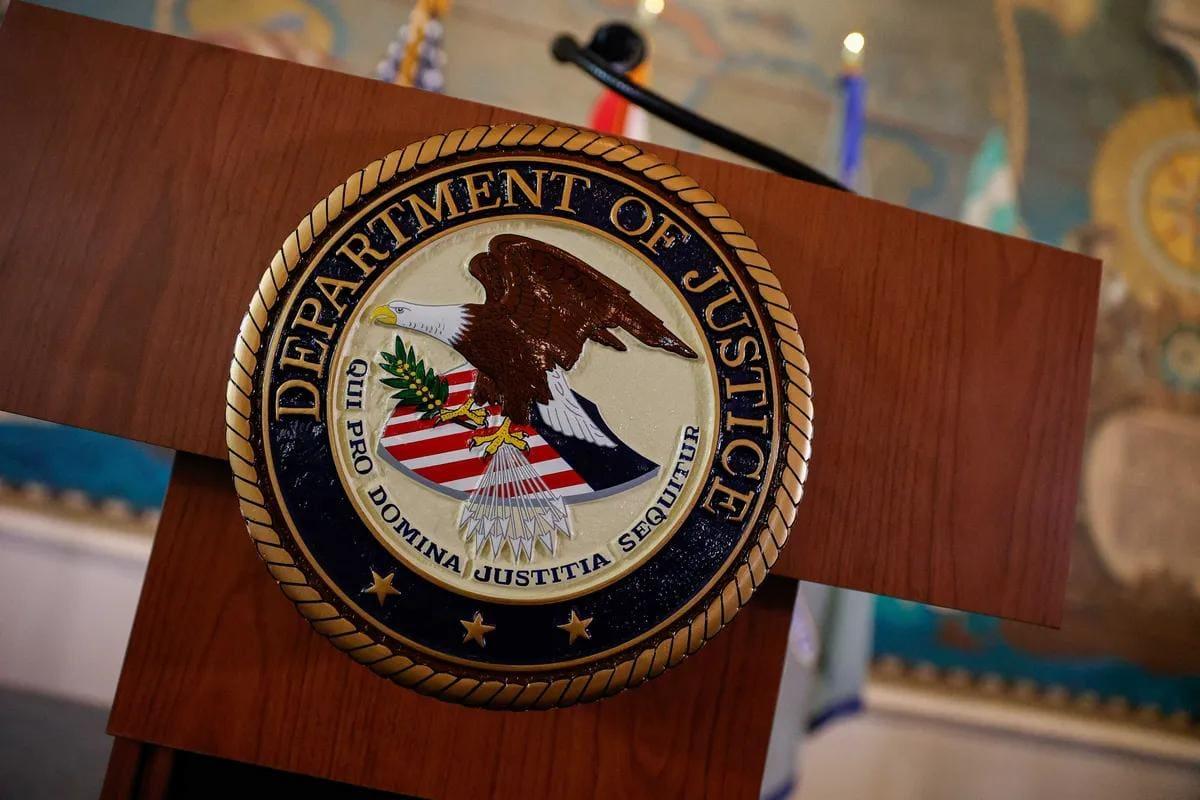
The seal of the U.S. Department of Justice, on the day the DOJ announces criminal charges against former Cuban President Raul Castro, at a ceremony to honor the victims of the 1996 shootdown of Brothers to the Rescue aircraft incident, at Freedom Tower in Miami, Florida, U.S., May 20, 2026. REUTERS/Marco Bello
The Hitler Allegation Is Alarming. The White House’s Press Ban Is the Abuse of Power.
The Decision Came From the Top
Donald Trump barred CNN, MS Now, and Politico from the White House after accusing them of spreading “fake news.” The three organizations challenged the ban in federal court on First Amendment grounds. On September 23, 2026, former Justice Department pardon attorney Liz Oyer identified senior DOJ counsel Michael Velchik as one of the government lawyers defending the administration’s position.
That chain of responsibility matters. Trump imposed the exclusion. The Justice Department chose to defend it. Velchik signed the administration’s response. None of this is an impersonal dispute that simply materialized inside a courthouse.
Help fuel the work. Independent analysis doesn’t fund itself:☕ Buy us a coffee
“Fake News” Is a Pretext, Not a Standard
Calling unfavorable coverage “fake news” does not establish a neutral rule governing White House access. In the account provided, Trump accused three named outlets and then denied them access. The punishment followed the president’s characterization of their journalism.
That is how official retaliation is laundered into administrative discretion: the officeholder assigns a discrediting label, the institution acts on it, and government lawyers later argue that the resulting exclusion is lawful. The press organizations’ lawsuit will test the constitutional claim. The underlying power play is already visible.
A Disturbing Record—and a Necessary Distinction
Oyer said previous Boston Globe reporting showed that Velchik wrote a college essay from Adolf Hitler’s perspective while at Harvard, was instructed to redo it, and later called Mein Kampf his favorite book. On that basis, she described him as an admirer of Hitler and called his role “terrifying.”
Those reported details warrant scrutiny, but Oyer’s conclusion remains her characterization. The evidence presented here does not establish Velchik’s current beliefs, much less prove that those beliefs motivated the government’s legal position.
Precision does not make the allegations trivial. It prevents a serious inquiry into a senior Justice Department lawyer from becoming a vehicle for claims stronger than the available reporting supports.
Biography Must Not Eclipse Institutional Power
The most convenient version of this story is about one government lawyer with an inflammatory personal history. That framing offers the administration an escape hatch. If public attention settles entirely on Velchik, the White House’s decision becomes background scenery and the Justice Department becomes a passive employer embarrassed by a subordinate.
But Velchik did not create the ban described in the reporting. Trump did. And one lawyer does not single-handedly turn a presidential grievance into the formal position of the United States government. The relevant question is not merely why Velchik signed the brief, but why the Justice Department is deploying its authority to defend selective punishment of news organizations.
Oyer called the brief “lunacy from a legal perspective,” but the source provides no details of her legal critique. That judgment therefore cannot substitute for analysis of the filing itself. The documented institutional fact is narrower and still damning: the Civil Division is defending the administration against a First Amendment challenge brought by the excluded outlets.
The Machinery Is the Story
Authoritarian politics is not sustained by rhetoric alone. It requires institutions willing to translate a leader’s hostility into enforceable consequences. Here, a presidential accusation of “fake news” became exclusion from the White House, followed by a Justice Department defense in federal court.
The allegation about Velchik sharpens the concern about who is entrusted with government power. It should not obscure who directed that power or what it is being used to accomplish. Personnel matter. But systems reveal themselves through authorized conduct: the president punishes disfavored media, the government supplies the lawyers, and an attack on press access is repackaged as a litigable exercise of executive authority.
Thanks to Raw Story
Source: Ex-DOJ official makes ‘extremely disturbing’ discovery about Trump media ban lawyer
Systemic Error is a reader-supported publication. To receive new posts and support my work, consider becoming a free or paid subscriber.
We warned them.We told them.We shouted from the rooftops.We plead.We begged.They didn’t listen.Now, we all will suffer.Y’all know what to do, right?VOTE BLUE! 💙Vote as if your life — nay, our country — depend on it.Because, this time, and every time, it does.
This is a public episode. If you'd like to discuss this with other subscribers or get access to bonus episodes, visit paulstsmith.substack.com/subscribe


