

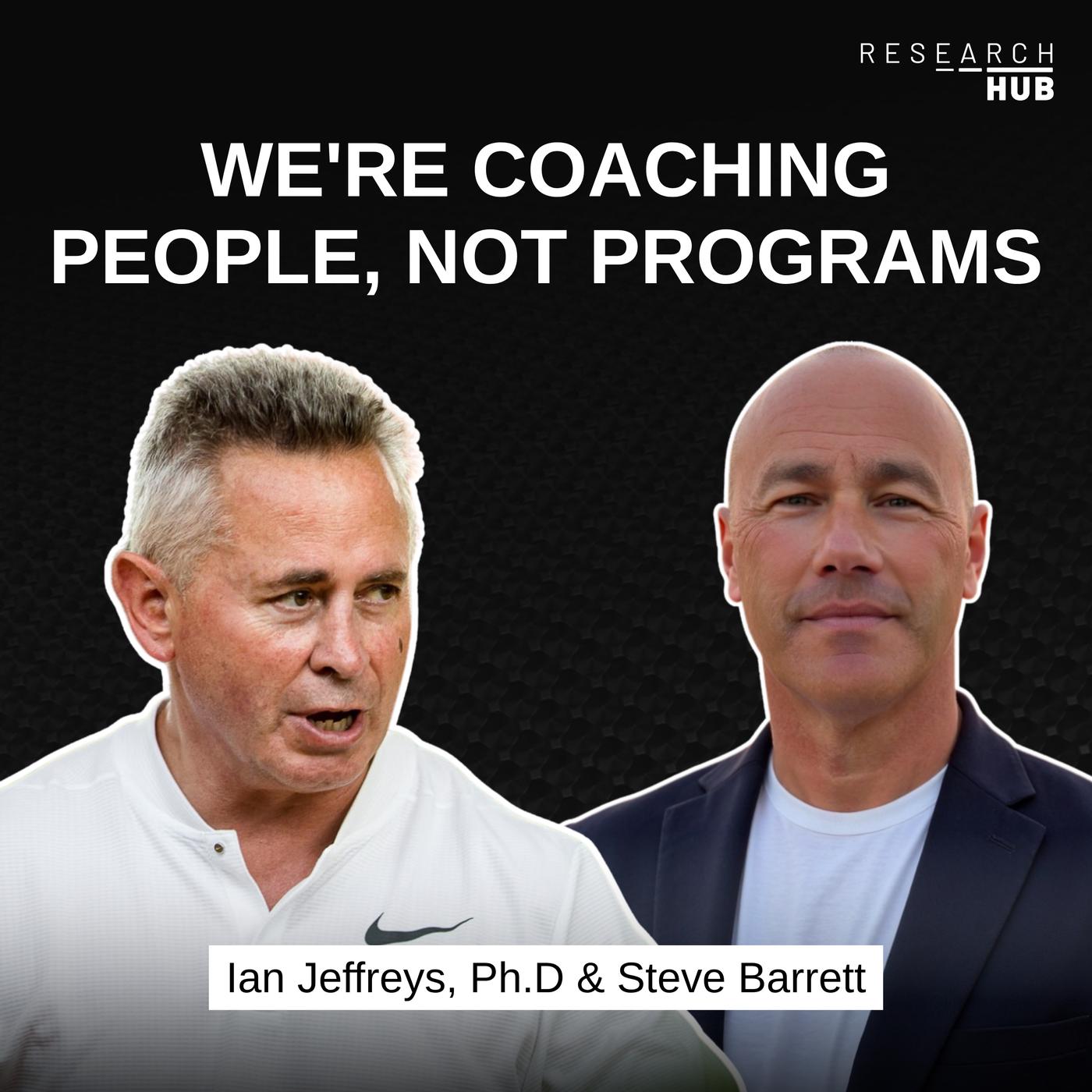
Steve Barrett: So everybody, welcome to the Matrix Research Hub podcast, where we discuss research and trends and how they impact coaches, gym operators, and anyone who is leading people through fitness. I am Steve Barrett, the Global Director of Fitness Programming at Matrix, and I am very pleased to be joined today by Professor Ian Jeffries, who is speaking to us from his native Wales in the United Kingdom. Ian is a professor and esteemed strength and conditioning coach and author with a particular interest in speed and agility. He is a pioneer of modern strength and conditioning methods that look to build competences and skills that relate specifically to the athlete's chosen sports. And for anyone who doesn't know, Ian is also the president of the globally respected National Strength and Conditioning Association. Ian, welcome to the podcast.
Ian Jeffreys: Steve, thank you very much. you for the invite and it's an absolute pleasure to be able to speak to everybody.
Steve Barrett: Fabulous. You're a very busy man. It's taken us a little bit of time to get us all in the same place. So by the wonders of technology, we're able to record this here today. So thank you so much. Really, our goal is to have a really good kind of fireside chat about where we are, maybe where we're going, the differences between strength and conditioning and personal training, how we can impact the commercial gymnasiums in the same way that folks like yourself impact the high performance and professional sports world. So that's pretty much where we're gonna go with this. Cool. Well, let's dive in with my first question.
Ian Jeffreys: Sounds good.
Steve Barrett: we have a global audience on this podcast and ⁓ the majority of them are within the fitness industry. know, they're coaches, instructors, teachers, operators, and many of them are consuming, continuing education because they need to, ⁓ well, because they want to stay up to date, also they need to keep their accreditation valid. And you are the president of one of the big three organizations that develop and accredit training. So that's the 21, NASM, ACSM, and of course yourself, the NSCA. ⁓ How would you sum up the National Strength and Conditioning Association to anyone who's unfamiliar with the organization and give us a sense of the organization's reach?
Ian Jeffreys: It's a great organization. I am unbelievably honored to have been elected as the president, ⁓ standing on the shoulders of giants. And I think the key with the NSCA is you need to understand where it came from. It essentially was, ⁓ it started with the initiative of college strength and conditioning. At that point, we didn't really know what strength and conditioning was, but there was a realization that lifting weights, plyometrics, things like that were having an impact on athlete performance. And Boyd Epley was the pioneer of this, working at the University of Nebraska. And he was making a huge difference to athlete performance levels. As is the want with sports, if one team starts to be successful, people want to know what the secret was. And suddenly everybody was saying, well, how are Nebraska getting stronger? They're getting bigger, they're getting faster, they're beating us from a physical perspective. And that was the impetus for Boyd getting everybody together as what was initially the National Strength Coaches Association. which then became the National Strength and Conditioning Association, where it was realised that it wasn't just strength training that was given these advantages, it all sorts of fitness training. ⁓
Steve Barrett: Are we going back to the 70s or the 80s?
Ian Jeffreys: These are, so, boy probably became the first paid strength and conditioning coach. This is the late sixties, early seventies. And the NSCA was then formed in 1978. And it's coming up to its 50th anniversary. And the reach has expanded within, initially it was very much American football. That was the, you know, the sport that took it on in the first instance. But then. You you look at it where it is today. So many sports are doing strength and conditioning, not just, and this is a big change, not just at elite level anymore, but you see young athletes doing strength and conditioning. see sub elite, you see what we would call recreational athletes, perhaps undertaking strength and conditioning. So the, the reach has expanded in terms of the sports that now use it, the, people that use it. And also it's becoming a worldwide, uh, because there are no secrets anymore with the world as it is. Everybody sees the potential advantages. And so the NSCA now is present in up to 60 countries. So it's got certificates across the globe and its role is to keep Strength and Conditioning moving forward to make sure that as a profession and as Strength and Conditioning professionals, we're at the top of our game. as best we can.
Steve Barrett: Yeah. Well, I have colleagues around the world who are in our business. And obviously we run training courses which support many of our products, both hardware and protocols. And they look to align within their country to the NSCA. So it's seen as a badge of honor to have that accreditation from the organization. And this is all around the world. know, this is into ⁓ into obviously Europe, but going down into the Middle East, etc. So, you know, your your reach is enormous. And like you say, it did start in in the USA, which is where, let's face it, an awful lot of ⁓ fitness industry trends, etc. always, always, always begin. But, but I think it's fantastic. The fact that, you know, the President is is now across this side of the pond. And you know, that's obviously been an enormous
Ian Jeffreys: It is. It is. Yeah.
Steve Barrett: triumph for you and the organization must of course have huge respect because as you say it's elected so ⁓ you know that's that's
Ian Jeffreys: No, I'm very, very honored to be able to hold this position. And, you know, I hope that, as you say, being from outside the U.S. does indicate how we are a global organization. And that's our goal is to elevate the field of strength and conditioning globally.
Steve Barrett: Yeah, yeah. And I know we've spoken briefly in the past, and you've said that, you know, one of the goals of the organization is to kind of defuse information between academia and application, actually being able to deliver this in a strength and conditioning environment, because a lot of research is done in a very academic environment. But your organization endeavors to... and I'm going to say make it more consumable. Would that be right?
Ian Jeffreys: Yeah, I think for many years, one of the overarching goals of the NSEA has been to bridge the gap between theory and practice. We're still a long way away from doing that perfectly, but as long as we've got the goal of doing that, because ultimately... the research and the information that comes through only has an impact when it's applied, when it makes a difference with the end user, whether that be an athlete or somebody trying to start their journey in fitness. We try to use the best information. some of the challenges with anytime we look at performance is we're in the world of complexity. And I think some of the challenges that the fitness industry as a whole and strength and conditioning undoubtedly is we tend to think a little bit too binary. This is better than this. This is the way to do it. That is not the way to do it. And I don't think it's as simple as that. There are so many factors that go into determining the quality of delivery, the program and so on. that when we look for one single best practice, I think it sends us to some extent in the wrong direction. And one of the things I think, ⁓ if we look at technology now, we can measure so much that I think what we need to do a little bit better perhaps is blend the experience, the information that's coming top down, the research, the published stuff.
Steve Barrett: Yes. ⁓
Ian Jeffreys: with the experiences of the practitioner. It's one of those.
Steve Barrett: Totally, totally. And historically, strengthening conditioning was probably something that could be measured in a very binary sense. So, you know, let's go back a decade and it would have been what can you do in the squat rack and what can you do over this distance or round these cones? And we can measure that with a stopwatch and therefore that's where you are. But of course, there's so much more to it. And I think that there is a greater recognition coming through now.
Ian Jeffreys: Yes. ⁓ there is so much more to it.
Steve Barrett: whereby the coach can apply some artistic characteristics to their coaching, philosophy and methods, which will ultimately enhance those measurable things. but they're not measurable in classic strength and conditioning terms.
Ian Jeffreys: No, and this is the interesting thing. If we go back to what I started with with Boyd at the University of Nebraska, it wasn't necessarily the poundages, the classic strength and conditioning measures that were determining whether it was successful or not. It was the on-pitch performance, the fact that the teams were starting to win. And we're into those intangible, those unmeasurable ⁓ elements of it. But it's interesting when I look back and I look at the pathway that strength and conditioning has gone down. And again, in this non-binary world, as I'll call it, some of the things have been unbelievably successful, but also those same things can be a challenge. one of the arguments thrown at strength and conditioning. There's no science behind this stuff. It's just you lot lifting weights. And what we did as a profession is we said, okay, we'll show you. Now we knew this stuff worked because we were seeing it, but we needed external validation. So we went down a very scientific route. It's given us, you know, documentation, so much evidence. but it's also to my mind narrowed our perspective. We've gone away from the things that we perhaps can't measure and focused almost totally on those things that we can measure. So that if you look in strength and conditioning ⁓ literature, for example, you'll see a huge amount of methods, but very little on the role of the coach.
Steve Barrett: Yeah. And it's that artistic, that artistic influence. It's the eye. It's the coach's ⁓ eye we're talking about. There was a particular Olympic Games ⁓ where science to play an awful, a greater role in the buildup for athletes. ⁓ And came away from that Olympic Games far worse than we had performed in previous ones. ⁓ And reckon that it would become it was because they'd become too focused on kind of key performance indicators, KPIs, and they'd over-analyzed and effectively the athletes had sort of lost that raw hunger to perform. And you do get a difference between people on the training ground and on the competitive pitch. know, there's some players who are quite, you know, invisible on the training ground, stick them in a cup final and they're a different beast.
Ian Jeffreys: Yeah, absolutely. Absolutely. And that's a challenge for us, I think, is that science is one of the greatest things that we've done, but it also blinds us sometimes to the things that maybe are not as measurable from a scientific perspective. And again, if you think of our reductionist approach, what we will do, we will always go into an either or.
Steve Barrett: Yeah. Sure.
Ian Jeffreys: the squat or the leg press, this exercise versus this exercise. Whereas in reality, in most of our programs, it's an and both. It's the combinations of all of these things that are far less easily.
Steve Barrett: Yeah.
Ian Jeffreys: to be able to be proven scientifically when you've got all these moving parts. Yet that's the world that we need to make sure that we're comfortable in living in.
Steve Barrett: Now, you have, so to speak, put your money where your mouth is because you've developed your own protocol and you actually wrote a book about this. So you've gone from that sort of squat rack approach to a far more eclectic artistic approach when I think you describe it as developing both attacking and defensive speed. And then the sort of umbrella term is game speed. to me. I'd really love to know if firstly, explain to us, you know, some of this attacking and defensive philosophy, how you can develop it and bring it together with game speed. But I'd love to know if there was a ⁓ eureka where you said, we got to do this different.
Ian Jeffreys: I wouldn't say it was necessarily a single Eureka movement, but it was something that emerged in what I'll call my three lives. My first life ⁓ as a professional rugby player, my second life as a coach, and my third life as a professor, as an academic. And a lot of those are happening at one at the same time. but it was quite interesting to see how perspective shapes what you actually notice. So as a player, I loved the physical part of it. I wanted to get as fast as I possibly could. And it used to frustrate me when athletes that I would struggle against didn't have those physical perspectives. They may not have been the quickest, the biggest, the strongest, but... God, they could play the game. So it was always those anomalies that were in the back of my head, those frustrations, how this physical approach is great, but it isn't everything. And then similarly as a coach where you have to make selections and you'd recommend based on your physical parameters. And as you said earlier, they may not perform. Yet the athletes who, you'd say, well,
Steve Barrett: Yeah.
Ian Jeffreys: Well, on paper, they just don't have these. But suddenly you put them onto the pitch. And what I was realizing is that our academic approach was a little too narrow. We were focusing almost totally on those easily measurable vertical jumps are a 40 yard dashes, a 10 meter dashes and so on. And believing that the game could be predicted based on those. Yet once you widen your
Steve Barrett: Yep.
Ian Jeffreys: lens that little bit, some of these anomalies become self-obvious. The athletes who's got the cognitive skills, the athletes who've got the perceptual skills, the athletes who just have control of the quality of their movement patterns. And what I was seeing is that I couldn't explain performance without relating to context. And anybody who's followed
Steve Barrett: Right. Yeah, because it's all well and good being able to run really fast 40 yards in a test. But when there's people coming at you left, right and center, that's a different world. Who was it that said, Mike Tyson, everyone's got a plan until you get punched in the face. there you go.
Ian Jeffreys: Absolutely. It is a completely different world. That is the classic quote, isn't it? But also that the environment changes from week to week. you know, anybody who follows football, follows rugby will see players who one week look world-beaters because they're space. They may be playing against a pressing team, so they're space behind to run into them. Suddenly the following week against a low block, when there is no space,
Steve Barrett: Yes.
Ian Jeffreys: They look very average. And what we're doing as strength and conditioning coaches sometimes is we're preparing for these wide spaces and not preparing for the athlete who may, it's just a very quick shift and the two meters, that little bit of separation that makes the difference. So I was looking then to say, right, what is determining how good somebody is offensively in this situation, this situation, this situation.
Steve Barrett: Right, right.
Ian Jeffreys: What is determining how people, how effective they are defensively? Because interestingly, if you say the word speed, you say the word agility, to most people from a sports context, they almost automatically go offensive.
Steve Barrett: Right. Yeah. Yeah.
Ian Jeffreys: very seldom that they go defensive. Yet most of our games are equal, you have to be able to play both. Yet we weren't, we were almost ignoring the one side of the ball to the focus totally on the other. So that's where the concept of game speed started to come from. And from that then I looked at, okay, how do we perform these movements? What are the movements? What are the mechanical principles?
Steve Barrett: Right. Right.
Ian Jeffreys: for them, but critically, what are they trying to achieve on the field? How do you use them? And that became the GameSpeed approach, the GameSpeed system.
Steve Barrett: How'd you use them? Yeah. Yeah. Yeah. it's really interesting the actual title there, ⁓ Game Speed, before we started talking, I'm thinking speed as in faster the better. But what you're actually saying is that the speed is dictated by the need. So in fact, sometimes we're going to slow things down and it's going to have a better outcome than just crashing on in there and trying to be as fast as possible.
Ian Jeffreys: Absolutely. Yes. That is one of the uncanny things. Quite often when I'm giving gamespeed workshops or coaching, I tell athletes to slow down, which seems the complete counter argument to gamespeed is slow down. Because quite often it's the ability to change motion, not just having one high level of it that necessarily makes the difference.
Steve Barrett: Yeah. Yeah.
Ian Jeffreys: That was the concept and it's grown and it's nice to see people using some of the concepts around it. And it's getting more kind of headway ⁓ at this point because people are seeing that you can't just translate those classic ⁓ measures into game performance.
Steve Barrett: Sure. Sure. And I think that people can have data overload. I've spoken to people who have got really into their wearable devices and then they've stopped wearing them because it was almost as if it was starting to influence them in a bad way. was too much information. It was telling them how their sleep was and it was like, they kind of knew how their sleep was. So sometimes too much information is kind of a bit paralyzing.
Ian Jeffreys: It can be, and I think another danger in it is the data should be there to inform us, to help us make decisions. It shouldn't necessarily drive decisions. know, one of the earlier elements when heart rate monitoring and GPS monitoring, people got upset with them, but they tried then to beat the figures.
Steve Barrett: Yes. Support. Yeah, yeah. Right.
Ian Jeffreys: And then what you can then do is do needless motion, actually makes you less efficient, but your figures go up. So have you in that instance, the metrics would say you've performed better, but if your efficiency has gone down in doing it, you've probably been less impactful in the field. I think we've always got to be careful that data doesn't necessarily drive actions in and of itself. It informs.
Steve Barrett: Yeah. Sure. Yeah.
Ian Jeffreys: And in that instance, I'm not against it. I think it can be hugely impactful, but we have to have, we have to zoom out and understand the context.
Steve Barrett: Interesting. Yeah, no, fascinating. mean, I've gone from a wearable, which gave me, I'm going to say 50 data points to one that gives me one data point. I'm now, I just have one that does nothing but heart rate doesn't tell me about my sleep, doesn't tell me about my recovery. And to be honest, I'm a lot happier just knowing that I'm working hard enough. And it doesn't know if I'm on a bike or a treadmill or swimming in the sea. It just knows that my heart rate is this. So for me, that simplification has been, you know, real, real lightning of the load.
Ian Jeffreys: There you go. Yeah, and that's what I would encourage coaches to do is to look at which data points are the most impactful for them and feel comfortable in leaving the other ones out. It always fascinates me from a psychological perspective. You hear the stories of people in Amazon warehouses who are tracked at every point. But we're doing that to athletes.
Steve Barrett: Yeah. Yeah, yeah, ⁓ yeah. There's no one on the England or Welsh rugby team who isn't being tracked every single inch they move when they're on a pitch. That little hump on the back is that tracker.
Ian Jeffreys: I would not Absolutely. And have we thought of what, that's it. Have we actually thought through what the psychological impact of that is? Have we taken the time to explain why it's being done? Because if you're confident that the information is there to help you and it's been well explained, I think you're comfortable in doing it. But if you think, well, why am I being watched? What's happening to all this information? You've got two very different scenarios there. And I'm one who really believes in the environment and the culture that it makes a difference. And you take an athlete in that where he sees the data as supportive and the athlete who sees it as, hmm, they're monitoring me all the time. They're checking up on me. What's this being used for?
Steve Barrett: Yeah? ⁓ Yeah.
Ian Jeffreys: You've got two very, very different coaching environments there.
Steve Barrett: we're talking about carrot and stick, aren't we? You know, it's if they don't understand, you know, why they're being asked to do something. You see, this leads me on to another question. And it really is the fact that we're talking about the scientific approach that strength and conditioning has increasingly developed over the last, well, I was going to say decade, but you you've already said it's like 40, 50 years now. You obviously spend a huge amount of time
Ian Jeffreys: We are. We are.
Steve Barrett: with high-performance athletes, professional athletes, and many, many strength and conditioning coaches. I spend more of my time in the commercial fitness sector where personal trainers are probably more common, or definitely more common, than strength and conditioning coaches. Now, with the increase in fitness being, let's say, a sport with the likes of hyrox and other types of fitness racing, do you see an opportunity for strength and conditioning to become more mainstream, to actually be seen in those commercial gyms as a normal thing in the same way that personal training is seen as very normal these days within commercial facilities.
Ian Jeffreys: with without a doubt. I don't think, again, go back to that binary. I don't think those classifications are as separate as you would necessarily make out. If you look at personal trainers, how many are solely personal trainers? You know, there are group environments, there are all sorts of ways of doing it. If we look at strength and conditioning, whereas
Steve Barrett: Workout training is huge.
Ian Jeffreys: Previously, in the initial incarnation, it was elite sports. Now, as we've already said, it's much more ubiquitous to the extent that there are now strength and conditioning coaches working privately. So are they a private, you know, personal trainers or are they strength and conditioning coaches? It's coming together.
Steve Barrett: Sure. Yeah.
Ian Jeffreys: of the interesting things I see is there are far more people now who are aware ⁓ ⁓ not just people training for the... How do I put it? Not the old fashioned ⁓ of just losing a little bit of weight. A lot of people are performing, as you said, hyrox they're doing triathlons and so on. So far more people are ⁓ moving the performance field.
Steve Barrett: Yeah.
Ian Jeffreys: And that's opening up opportunities, whether that's strength and conditioning coaches coming into that field or whether it's personal trainers picking up the skill sets. I think one of the interesting things that we're seeing is if we look at fitness today and we look at fitness, say a decade ago, there's been a big shift, ⁓ much more realization of the impact that strength, for example, can play.
Steve Barrett: when I'm in the gym and I look at the bodies that are surrounding me, ⁓ level of fitness ⁓ commercial gyms is unrecognizable to what it was 10 years ago. ⁓ now see people in commercial gyms who really, really look incredibly fit. And like you say, they're training for things like ⁓ or marathons, and that's not a small undertaking. That's not ⁓ you do. ⁓
Ian Jeffreys: Absolutely. And that needs a much more focused approach, more akin to what we would classically call a strength and conditioning approach with measurable outcomes and so on, periodised programmes, etc.
Steve Barrett: Mmm. Yeah. I was looking for my 2026 challenge, because last year I did some physical challenges. I did a lot of sea swimming and I was thinking, what can I do this year? And I asked a few people and I said, but please don't say Ironman, because I'm looking for a challenge, not an overdraft. So, you know, there are things that people are doing. You if you sign up for an Ironman, not only is that a physical commitment, but it's a financial commitment. So what I'm saying is that the things people are training for in the commercial sector, require, let's almost say professional levels of commitment and therefore it warrants professional support, doesn't it?
Ian Jeffreys: I totally agree with you. So again, what we're saying there is that these old delineations, I think, are going to some extent. And I think we need to be able to learn from each other. One of the criticisms I would have of strength and conditioning to some extent is, as I said earlier, we've lost the role of the coach.
Steve Barrett: Right. interested. Yeah.
Ian Jeffreys: so that we are very, very methods dominated. And some of the best coaches I see are actually from the personal training background because they have to be. It's a market, you know, if you're not a good coach, you don't have those skills of motivation, negotiation and so on, you don't make it as a personal trainer. And...
Steve Barrett: Yeah. Interesting, interesting, because I see strength and conditioning world sector as being having the upper hand when it comes to applying science and understanding performance. But I see the fitness industry and the personal training side of things as probably being superior when it comes to presenting and packaging. So I think what you're saying there is effectively we're in complete agreeance, but there's probably an opportunity for some shared learning. and more unity.
Ian Jeffreys: without a doubt. And I think we've got to take our blinkers off and that learning is going to from ⁓ all sorts of disciplines. You know, we're coaching people ultimately ⁓ and the better that can deal and motivate ⁓ and engender the belief, the ⁓ that sets up the environment, the better coaches become.
Steve Barrett: Well, like you say, you came from a professional sport background and then you went into coaching and now you've gone into academia. So you've developed that coach's eye over the years to be able to look and to be able to respond and ⁓ inform in a way that your athletes can consume the information. Now, of course, these days there's an awful lot more which is coming online. Now, I know that you are famously not on social media. And I'm actually a little bit jealous of that because it is a time lapse. It steals time. But with the rise of unqualified social media influencers and the spread of what I call bro science, how do you see training organizations kind of evolving and being able to cut through that social media noise?
Ian Jeffreys: No, I'm not. It's difficult. I think if we had the answer to that, we'd all be relatively well off. I think what we, part of what things like the NSCA education does is I believe it gives you a good baseline scientific knowledge.
Steve Barrett: Yeah. Yeah.
Ian Jeffreys: If you can then add your experiential knowledge to that, what it allows you to do is when somebody posts something or says something, you've got be, I'm going to admit it. Is there a scientific basis to that? What's that built around? the ally to that then, hmm, I've seen that before. Doesn't tend to work particularly well. And that's how I think you can cut through it. And then you've got to be able to communicate that to your athletes, to your clients and so on. It's not easy because you know, sometimes the glossy new exercise ⁓ will come out and everybody will want to do it yet.
Steve Barrett: for sure. And it's not just online, it also happens in gyms. you know, I generally don't wear my matrix badge when I'm working out five nights a week in different gyms. And I myself have experienced mansplaining many times where, you know, some gym guy will come up to me and start telling me I'm doing it all wrong and I should be doing this, this and this. And I always say, but you don't firstly, you don't know why I'm doing it. You know, this might be my recovery day for a start.
Ian Jeffreys: Yes.
Steve Barrett: or this might be my endurance phase as opposed to my building strength phase.
Ian Jeffreys: ⁓ Absolutely. That's one thing I always tell people is, when you visit and watch a coach, remember that what you are seeing is a snapshot of what you do. And unless you can ascertain why they are doing it, where they are doing it, what the next step is, it's only then that you can really fully understand. Going back with the coming together of the personal trainer and the ⁓ strength and conditioning.
Steve Barrett: Yeah.
Ian Jeffreys: professions. If we have a look at some of the challenges that aging people, for example, have, you have sarcopenia, you have a loss of co-ordinative skills. A lot of that would actually, if we looked at the antidote to a lot of those, you know, reduced range of motions, it would actually be strength and conditioning methods. Because what we know ⁓ from physiological basis is that sarcopenia tends to be fast twitch muscle fibers.
Steve Barrett: Yeah. All right.
Ian Jeffreys: A lot of, if you look at the way that more masters athletes, I have to be careful because I'm in that group, is, we do everything slow. If I could characterize my training that's different, I still sprint. I still do plyometrics. I still lift explosively. A lot of people would say, ⁓ you shouldn't do that. But.
Steve Barrett: Me too. We both are. Yeah.
Ian Jeffreys: from a functional basis, if we look at that health span concept, what we want to do is not just increase our longevity, but increase how well we age. Some of these things in terms of moving through full ranges of motion, being able to handle loads and so on, are very much what we would do strength and conditioning.
Steve Barrett: Yes. ⁓ You know what Ian, it's almost as if you've read my mind here because my next question was really how regular members of the public who, let's say their chosen sport is life. And I was going to ask, you know, what are the biggest wins in your mind for integrating strength and conditioning methods into that mainstream fitness? Now, I'm so chuffed that you've just said about sprinting because personally my choice, my inclusion,
Ian Jeffreys: Yes.
Steve Barrett: would be sprint intensity. It's something I do all the time, three, four times a week, non-negotiable. The reason I do it is for growth hormone production, fast twitch, muscle fiber, maintenance and development, and also the relatively short amount of time it requires to do it. So I do a particular program, which is a protocol on matrix equipment that's called Sprint8. So that's my go-to. I love the fact that you've already kind of said, That's one that you use yourself as well. What else would you look to include for those people whom everyday life is their sport?
Ian Jeffreys: variety I think is one of the things I would recommend. If you look at the way the fitness industry went a few years ago, it tended to do a type of class. You know, whether it was a spin class, whether it was a Zumba class, whether it was a yoga class. So outstanding for developing one element of fitness. What we need is
Steve Barrett: Right.
Ian Jeffreys: a lot of sports people actually need is multiple fitness capacities. So, you know, whilst yoga would be fantastic at range of motion, it's not going to be as effective at, you know, maintaining muscle mass. It's not going to be as effective as, you know, the metabolic elements of fitness. So I think we need to get out of the idea of single classes and think, right, what fitness components do I need? How best
Steve Barrett: Yeah.
Ian Jeffreys: Can I get these? And one of the things that I do with athletes is what I call my ramp warmup. And that came out of necessity of having to deliver multiple fitness goals into a limited time. So I always did range of motion. I always did what we would call agility type movement, speed training, plyometric training, would all be put into that, into that 10, 15 minutes.
Steve Barrett: ⁓ yeah. brain-body connection.
Ian Jeffreys: And it was surprising how much impact it had. And again, just thinking differently about how we structure sessions that we can write. We're going to put a little bit of input in there. This is going to be our explosive input. This is going to be our strength input. This is going to be our mobility input. Can give so many different benefits into a single session.
Steve Barrett: It's different stimulants. if I'm talking to people who are from outside the industry and I get asked loads of questions about what should I do, Steve? How can I get fit? And I talk about commercial facilities and I say, well, you need to treat them like a department store because over in the studio with your yoga, it's a completely different world and environment in the free weight section. But if you use all of the departments,
Ian Jeffreys: Absolutely. Yeah.
Steve Barrett: on regular basis, you'd actually end up with a really rounded ⁓ exposure to different stimulants.
Ian Jeffreys: Exactly. And what that requires is what we would call kind of a strength and conditioning mentality, which is, okay, these are my goals. This is how I'm going to, so it's not some random, I think I'll go and do a little bit of that. go and do a little bit of that. It's directed. It's logical. It's okay. I need to get a little bit stronger. I need to... Allocate maybe three days for that or two days for that and then you just as you say is it's the mix and match the pick and mix ⁓
Steve Barrett: Yeah. And of course, the beauty of working with a strength and conditioning coach or a personal trainer is that you're probably not going to be doing every session with them. The role of the coach is to set you up for success and to a certain extent, make you self-sufficient in parts of your training. So you don't need to be doing that yoga session with your strength and conditioning coach. They just needed to have it built in, prescribed into your program.
Ian Jeffreys: Thanks. And as strength and conditioning coaches, we've always had to do that because, you know, unless we are working with full-time athletes, athletes are going to spend as long away from us as they can. So, you know, when I was working with the national junior rugby team, to me, there was no point me allocating the time I would spend with them on metabolic fitness. They could do that. They were going to
Steve Barrett: No. Which is a luxury.
Ian Jeffreys: get that. So it was what's going to get the biggest benefit in this short period of time and it was the stuff that needed teaching, was movement, speeds and so on and hope and trust that they would do the other things away.
Steve Barrett: Yep. Yep. Yeah, yeah. Sure. So with you for the quality on their own for the quantity. Almost. To really, really simplify it. Wow, Ian, you are just a wealth of information. I mean, we're getting close to the towards the end of our conversation here. So I'd really like to know some words of wisdom. And the word coach has come out a lot in this conversation. Any top tips for coaches?
Ian Jeffreys: That's a nice way of putting it. Yeah. or tips for coaches.
Steve Barrett: Where should their focus be?
Ian Jeffreys: I think for, take away from the coaches, for people who are exercising, I think sometimes the language we use doesn't help. We're going to grind things out. Go back to when we first started exercising, first started playing sport. We used to enjoy it. It used to be fun. And I think that's one of the things we need to bring back into
Steve Barrett: Yeah.
Ian Jeffreys: fitness is that little bit of fun, that little bit of enjoyment, not this, or I'm going to grind a few reps out here. It's going to be no pain, no gain. those mentalities. I don't think they're necessarily conducive to enjoyment. They're not conducive to long lasting fitness, but in terms of coaches, would say number one, don't forget we're coaching people, not programs. Programs are simply a means to an end. The better we work with that sets us up for success. And I think we need to zoom out. We need to zoom out of just this fixation on methods. So ⁓ why would people come ⁓ and with us? What environment we setting up? You know, we become systems thinkers.
Steve Barrett: Yeah.
Ian Jeffreys: and we're looking at all different ways to enhance the experience that people get. The program is one element and yes it needs to have success but I don't think we should ever be... we have to do a certain type of exercise to be successful. What's going to work for us? And I think the third one would be we need to be sharpening the saw, we need to be getting better but
Steve Barrett: Yeah. Yeah.
Ian Jeffreys: I think getting better from a practical perspective, what the Greeks used to call phrenesis, the practical wisdom. And what I encourage people to do is use the best of the external information with what they're learning. It's a very interesting one that if you go to any other ⁓ craft and the artisan craftsman is revered.
Steve Barrett: Yeah.
Ian Jeffreys: Not in our profession.
Steve Barrett: Interesting. It's almost like saying that the coach needs to walk a mile in my shoes or in the client's shoes, isn't it? Because there's a lot of personal trainers out there who are sort of thinking to themselves, I'm going to make my client do this, this, this, this and this. they're a young individual who hasn't got three kids and another job and all these responsibilities.
Ian Jeffreys: Yeah. Yeah, yeah, it's just that one where, you you watch, you go to a craft fair and you'll watch somebody on the lathe and you think, ⁓ my God, that's fantastic. But we don't give the same esteem to the experienced coach and listen to what they've learned from their experience. And I think it's to value that and be comfortable in saying the books say this, but not working for me.
Steve Barrett: Yeah. Yeah.
Ian Jeffreys: And if it's not working for you, be comfortable in saying, no, I'm going to do it a different way.
Steve Barrett: and kind of having the ability to adjust the timeline. So if you think about people who are starting out at fitness and they're going to a gym and they're going to get onboarded to strength, there's kind of three stages to it. And the very first phase, they don't need to know the names of the muscles and they don't need to know the speed of the protocols. They just need to feel the activity. And then as they get a little bit more tuned in to moving those weights,
Ian Jeffreys: Yes!
Steve Barrett: they need to establish a little bit more focus. So they do understand that if they make a particular stimulant, something will happen. And then finally, finally, they need to understand that fatigue is not a bad thing. So it's about understanding that for some people, that process will be quite quick. And for others, it will take a long time for them to build the confidence to accept that, know, fatigue is not a bad thing. It's, you know, something which is
Ian Jeffreys: ⁓
Steve Barrett: doing them good, so to speak. So it's really having that flexibility, isn't it? And the coach having the best interest of their, I'm going to call them client now. So, you know, we often talk about them as an athlete, but they're a client basically, aren't they?
Ian Jeffreys: That's it. Yeah. Yeah, and it goes back to what we said right at the start. We're not looking for one singular answer. We're looking for the answer that works best for the clients that we're coaching in the environment that they're working in and the lifestyle that they're with.
Steve Barrett: Yeah, yeah. Yeah. You know what, Ian, I've really enjoyed this. hope you've found this kind of bouncing around some ideas. I'm from that commercial side of things more so you're from this incredible world, professional sports person, coach, professor. Wow, what a journey. It's been ⁓ wonderful talk to you. And I'm very, very appreciative of you up some because I know your time is very, valuable. ⁓ hopefully everybody on the podcast and who's going to get to watch this is going to get a couple of nuggets of information that can inspire them or motivate them or inform them.
Ian Jeffreys: I hope so. Thank you. Thank you very much.
Steve Barrett: Thank you so much. Everyone, I am Steve Barrett. Thank you so much for joining us here today on the Research Hub podcast. You can find more episodes on the Matrix Fitness Global YouTube channel. Thank you very much.
