WEBVTT
00:00:00.560 -->
00:00:02.080What is up, plant people?
00:00:02.240 -->
00:00:10.960It's time once more for the Planthropology Podcast, the show where we dive into the lives and careers of some very cool plant people to figure out why they do what they do and what keeps them coming back for more.
00:00:11.119 -->
00:00:14.640I'm Vic Rombeliga, your host and your humble guide in this journey through the sciences.
00:00:14.720 -->
00:00:17.760And as always, my friends, I'm so excited to have you back with me today.
00:00:17.920 -->
00:00:22.079I've got a good one for you that I recorded a long, freaking time ago.
00:00:22.239 -->
00:00:32.479So at the end of last year, I got a really exciting email from a couple of creators and scientists and writers that I really very much look up to and respect.
00:00:32.640 -->
00:00:36.479They run a channel and an organization called Let's Botanize.
00:00:36.799 -->
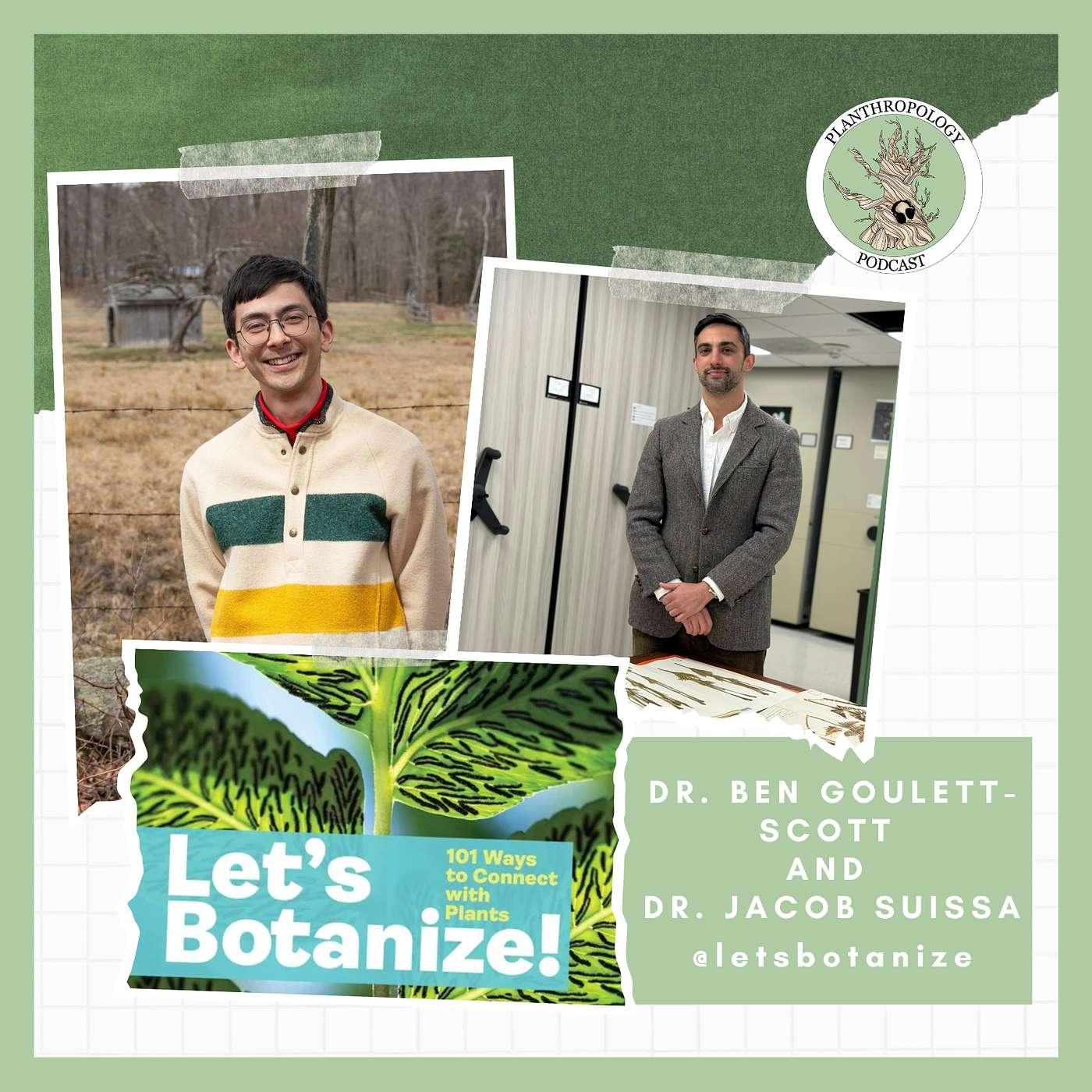
00:00:43.520So Drs Jacob Suisa and Ben Goulay Scott reached out to me at the end of 2025 and said, Hey, we would love to be on your show.
00:00:43.600 -->
00:00:45.920We've got a new book coming up and we want to talk about it.
00:00:46.079 -->
00:00:46.880I said, This is amazing.
00:00:47.039 -->
00:00:48.240I followed y'all for a long time.
00:00:48.320 -->
00:00:49.200I love your work.
00:00:49.359 -->
00:00:50.000Let's do it.
00:00:50.159 -->
00:00:56.399So we recorded in January of 2026, and I was supposed to release this episode in February, and then here we are.
00:00:56.479 -->
00:00:57.200It's fine.
00:00:57.520 -->
00:01:01.600So I want you to know how good this episode is.
00:01:01.679 -->
00:01:06.560And guys, if you're listening and when you listen to this, I'm so sorry it's taken so long for this to get out.
00:01:06.719 -->
00:01:10.079But I genuinely believe that it was worth the wait for everyone listening.
00:01:10.239 -->
00:01:21.840So Jacob and Ben met in graduate school and have been fast friends since, and have bonded over a passion for getting outdoors and loving nature and finding ways to help other people love nature too.
00:01:22.000 -->
00:01:28.480And to that end, they started a great nonprofit called Let's Botanize and a social media channel with the same name.
00:01:28.719 -->
00:01:29.920And now a book with the same name.
00:01:30.079 -->
00:01:32.879Let's botanize 101 Ways to Connect with Plants.
00:01:32.959 -->
00:01:37.120Now, this is available on their website right now or anywhere else you buy books.
00:01:37.200 -->
00:01:38.159So I hope that you will.
00:01:38.239 -->
00:01:40.319We'll talk about that more later in the episode.
00:01:40.480 -->
00:01:41.840They cover it in great detail.
00:01:42.079 -->
00:01:46.719But I felt talking to these guys like I had found two very kindred spirits.
00:01:46.799 -->
00:01:56.879And botanizing, if you don't know, is the hobby of getting outside and cataloging plants, observing plants, taking notes and getting information on plants in their native habitats.
00:01:57.040 -->
00:02:01.120So essentially it's going out and seeing things where they exist.
00:02:01.280 -->
00:02:08.879And it's a great way to learn more about our natural world, to love the ecology and the ecosystems around us, and to combat plant blindness.
00:02:08.960 -->
00:02:12.879So this was such an insightful episode and inspiring for me.
00:02:13.039 -->
00:02:19.039I loved talking to them when we recorded it, and I loved it even more when I was listening to it through to edit this episode.
00:02:19.120 -->
00:02:20.719So you're gonna love it as well.
00:02:20.879 -->
00:02:24.000So thanks for your patience on waiting for this one to come out.
00:02:24.159 -->
00:02:27.199But again, I think it is gonna be well worth your wait.
00:02:27.360 -->
00:02:33.919So grab a magnifying glass and a notebook and sit down for a wonderful conversation with Dr.
00:02:34.080 -->
00:02:36.000Ben Goulay Scott and Dr.
00:02:36.159 -->
00:02:38.639Jacob Suisa of Let's Botanize.
00:03:18.319 -->
00:03:18.719Very cool.
00:03:18.879 -->
00:03:28.719I like to give my guests at the top just a little bit of time to talk about yourselves, which I know is everyone's either it's either everyone's very favorite thing to do or your absolutely least favorite thing to do.
00:03:28.800 -->
00:03:30.400And I find very little middle ground there.
00:03:30.560 -->
00:03:34.800But whoever wants to go first, if you just want to talk about yourself, where'd you grow up?
00:03:34.879 -->
00:03:37.680What'd you study, and how'd you kind of get to where you are today?
00:03:38.000 -->
00:03:39.039Yeah, sounds good.
00:03:39.120 -->
00:03:40.080I'll jump in first.
00:03:40.400 -->
00:03:42.479Um my name is Jacob Swisa.
00:03:42.719 -->
00:03:46.080I'm originally from the Maryland, DC area.
00:03:46.319 -->
00:03:50.639I grew up wandering around the woods and the swamps of that landscape.
00:03:50.960 -->
00:04:00.000I then went to do my undergraduate at the University of Vermont, where I studied initially horticulture and then got into plant biology and evolutionary biology.
00:04:00.319 -->
00:04:04.560But that's really where my sort of botanical journey starts, really where it manifested.
00:04:04.960 -->
00:04:10.000Then I went to do my PhD at Harvard, which is where Ben and I met each other.
00:04:10.080 -->
00:04:12.319So I think that story will really unfold later.
00:04:12.479 -->
00:04:27.920But now I'm uh assistant professor of botany and evolutionary biology at uh the University of Tennessee, Knoxville, where I study the evolution of ferns, their morphology, their development, their physiology, and everything else about about them.
00:04:28.240 -->
00:04:33.439But that's a little bit about Yeah, I'll jump in now.
00:04:33.680 -->
00:04:34.879Jacob and I love plants.
00:04:34.959 -->
00:04:40.879That's why we do what we do with Let's Botanize, and that's the basis of how our friendship started.
00:04:41.120 -->
00:04:44.560And you just heard Jacob has always been into plants and always studied plants.
00:04:44.720 -->
00:04:45.519I'm the opposite.
00:04:45.600 -->
00:04:47.120I'm kind of late to the plant game.
00:04:47.439 -->
00:04:50.639I was taking intro botany after I got to grad school, actually.
00:04:51.120 -->
00:04:51.519Oh wow.
00:04:51.759 -->
00:04:57.040So I grew up being really into the outdoors and nature, but mostly fishing and bird watching.
00:04:57.360 -->
00:04:59.759Those were kind of my ways, my natural history hobbies.
00:05:00.079 -->
00:05:01.759And I grew up in the Northeast as well.
00:05:02.319 -->
00:05:08.800And then I went off to undergrad and I studied evolutionary biology, but really a pretty heavy focus on genetics.
00:05:08.879 -->
00:05:13.839And I was working on fruit flies, you know, lab sort of model organism stuff.
00:05:14.000 -->
00:05:16.879But I became really interested in evolution and speciation.
00:05:16.959 -->
00:05:18.480I was interested in biodiversity.
00:05:18.720 -->
00:05:31.759Just love how incredible it is to live on a planet with so many different beautiful forms of stuff that's alive alongside of us and fascinated by the mystery of how did that come to be.
00:05:32.480 -->
00:05:38.160And so decided that I want to study evolution and and I want to study how species form.
00:05:38.879 -->
00:05:52.079And so that was I did my undergrad at University of Rochester, really like genetics, a lot of clear liquids pipetting into tubes, and then get on a computer and look at a bunch of numbers with fruit flies as a model.
00:05:52.240 -->
00:06:00.720And then uh went to grad school and remembered that I loved being outdoors and was trying to find a lab that would let me do fieldwork too.
00:06:00.800 -->
00:06:04.800I I want to keep the genetic stuff, the evolution, those questions, but be outdoors too.
00:06:04.959 -->
00:06:08.639And so I ended up in a lab at Harvard that that worked on plants.
00:06:09.040 -->
00:06:17.680And I was sold on plants as really good organisms to study in the field because they don't run around.
00:06:17.920 -->
00:06:24.800And, you know, you can find a population and be sure that you can return to these same exact coordinates and those plants will be right there the next year.
00:06:24.879 -->
00:06:26.240And and that turned out to be true.
00:06:26.319 -->
00:06:41.120And I and I fell in love with plants once I got to grad school at Harvard and really loved doing the fieldwork part and still kept the genetics, still got, you know, brought stuff back to the lab was pipetting clear liquids again, but but with the context of having seen the organisms out in the wild, and that was just awesome.
00:06:41.199 -->
00:06:43.680And and then that's where I also where I met Jacob.
00:06:43.759 -->
00:06:44.480We were both at Harvard.
00:06:44.560 -->
00:06:56.720We were in different labs, but we were both based at the Arnold Arboretum, Harvard's living tree museum, and just an incredible place to do research and be surrounded by this amazing living collection.
00:06:56.800 -->
00:06:59.279Again, biodiversity everywhere, all around you.
00:06:59.360 -->
00:07:05.439And yeah, we'd take a lot of breaks, walk around the grounds and uh get inspired, or just chat about plants.
00:07:05.519 -->
00:07:09.199And that's how really all this stuff got started of us working together.
00:07:09.920 -->
00:07:10.480That's very cool.
00:07:10.639 -->
00:07:11.439And what do you do now?
00:07:11.519 -->
00:07:12.240What's your position now?
00:07:12.480 -->
00:07:12.639Yeah.
00:07:12.720 -->
00:07:17.279So now actually I so I finished my PhD at Harvard and then stuck around in a sense.
00:07:17.519 -->
00:07:21.759I work at Harvard Forest now, which is Harvard's ecology research station.
00:07:22.079 -->
00:07:22.399Okay.
00:07:22.639 -->
00:07:25.920I run education programs for college students and grad students there.
00:07:26.079 -->
00:07:38.160So I'm not studying plants per se, I'm studying humans a little bit and how how people learn and just trying to connect people, students, with research opportunities out of the forest.
00:07:38.319 -->
00:07:41.839So I run our big summer program, for instance, summer research program.
00:07:42.639 -->
00:07:42.879Okay.
00:07:43.120 -->
00:08:06.160I will also say I think the thing that maybe we forgot to say, which is perhaps the most important for this discussion, is so in addition to our day job hats, Ben at the Harvard Forest and me at the University of Tennessee, we also have our other hats as co-founders of the now educational nonprofit Let's Botanize, which is I think mostly what we're gonna chat about today.
00:08:06.560 -->
00:08:07.680Yeah, absolutely.
00:08:07.839 -->
00:08:08.959And that's so interesting.
00:08:09.040 -->
00:08:15.120And I like Ben, you said something about somewhere along the way, remembering that you enjoyed being outside.
00:08:15.519 -->
00:08:19.600And we have our first loves that get us into science.
00:08:19.680 -->
00:08:26.959We have the kind of thing I think for a lot of people in our field and what we do, at some point I think we come back to that.
00:08:27.120 -->
00:08:30.079Oh, it's there's plants out there, there's trees out there, I can hear birds singing.
00:08:30.240 -->
00:08:31.839Fresh air is good for us.
00:08:32.080 -->
00:08:40.799And I'd say I'm a little jealous of both of you because I'm looking behind you, Ben, and there's trees out your window, and you work in a forest, and you've got all these things.
00:08:40.879 -->
00:08:42.799And Jacob, you're going to say Ecuador.
00:08:42.960 -->
00:08:44.720Yeah, I'm going to Ecuador tomorrow.
00:08:45.039 -->
00:08:48.879I live in like the driest, flattest place in the universe.
00:08:49.120 -->
00:08:52.720Like, and so like I hear people talk about trees.
00:08:52.799 -->
00:08:53.679I'm like, why not me?
00:08:53.759 -->
00:08:54.559As well.
00:08:54.879 -->
00:08:57.679But there's also amazing biodiversity as right where you are.
00:08:57.840 -->
00:09:02.879The ecosystem, the various parts of Texas, state are incredible, right?
00:09:03.039 -->
00:09:04.960So different landscapes for different people.
00:09:05.200 -->
00:09:10.480I totally understand your sentiment towards greener pastures, so to say, right?
00:09:10.559 -->
00:09:14.480I as someone from the East Coast, you have this bias of lush landscapes.
00:09:14.559 -->
00:09:18.879When I go visit my friends in the West, it's like a little drier, still beautiful and amazing, but different.
00:09:19.200 -->
00:09:23.919And those are some of the stories that y'all kind of get to tell through what you do and through your outreach.
00:09:24.000 -->
00:09:31.039And just to shoehorn this in, because we're all academics and we're always, I think, thinking, like, oh, how can we collaborate more?
00:09:31.200 -->
00:09:36.240Y'all work with plants and people, and my role very much is doing those same things.
00:09:36.399 -->
00:09:42.639And in another conversation, we need to talk about how maybe we can collaborate more going forward because I would love to be able to work with you guys about it.
00:09:42.799 -->
00:09:43.279Absolutely.
00:09:43.519 -->
00:09:51.120So let's talk then about let's botanize, because I think that's such an interesting direction that y'all have taken.
00:09:51.200 -->
00:10:03.919And it's something that we don't see a ton in academia, I think, where you've taken your body of knowledge, your experience, your learning, and all of this, and have poured it into this nonprofit space and this public education space.
00:10:04.080 -->
00:10:10.080So talk a little bit about the ideas behind that and how it's structured and just give us the pitch for Let's Botanize.
00:10:10.480 -->
00:10:26.559Yeah, I think we'll give you we'll give you the sort of long, the long art pitch, not the not our sort of one-minute elevation, just because I think the history and the origin of let's botanize is really central to understanding the organization, really understanding our mission, right?
00:10:26.720 -->
00:10:32.799Which there's sort of multiple scales of it, but the core mission is to spread the hobby of botanizing, right?
00:10:32.879 -->
00:10:36.799This natural history hobby of appreciating plants as living organisms.
00:10:37.279 -->
00:10:57.919But we started, as Ben was saying, when we were graduate students at the Arnold Arboretum, and in between heading clear liquids in Ben's case, or in my case, looking painstakingly under a microscope, we would botanize the grounds, the landscape of the Arnold Arboretum, which is this beautiful, as I think Ben said, living plant museum, which is their term as well.
00:10:58.080 -->
00:11:08.720And then in addition to just going out in the arboretum, we would go out into the field in parts of Massachusetts, just finding cool landscapes and ecosystems and trails to botanize.
00:11:08.879 -->
00:11:12.320And over time, we realized that we were having so much fun doing this.
00:11:12.399 -->
00:11:28.480And we were like, what if we share this passion that we have while we're out botanizing, looking at a lycophyte and wondering about its evolutionary history, how they were large trees 350 million years ago, and now they're these diminutive little ground covers, right?
00:11:28.559 -->
00:11:32.960Or and just asking these interesting questions about plant evolution, ecology, physiology.
00:11:33.039 -->
00:11:38.240We thought it'd be a really lovely opportunity to share those experiences that we're having with uh with people.
00:11:38.639 -->
00:11:46.480And so we just Ben has a background in videography and photography, in addition to his time at Rochester studying genetics.
00:11:46.559 -->
00:11:49.120He also minored in film and videography.
00:11:49.200 -->
00:11:54.159And he's a fan, he's not going to say it himself, but he's a fantastic videographer assured his horde.
00:11:54.320 -->
00:11:58.559But he just brought the camera out into the field and we started recording.
00:11:58.720 -->
00:12:05.360And this really took on a sort of different meaning once COVID hit, when we kind of started and really started to pick things up.
00:12:05.519 -->
00:12:13.120We realized that these digital spaces, social media, were uh at the time were like the town centers, right?
00:12:13.200 -->
00:12:19.200Like it's where we couldn't really convene in person very much, and for better or worse, that's where a lot of things were happening.
00:12:19.600 -->
00:12:23.600So we that's how it originated and it really developed from there.
00:12:24.080 -->
00:12:26.000Ben, do you want to pick it up at that?
00:12:26.720 -->
00:12:31.840Yeah, I think we we it was very much inspired by the COVID times.
00:12:32.000 -->
00:12:38.000Like our friendship had been growing since before then, and being plant nerds together and spending our free time botanizing.
00:12:38.240 -->
00:12:50.639We had developed a rapport and a relationship before that, but during COVID, it really felt like we were seeking connection and we wanted to share these experiences, and it's hard to do that, but but we could spend time together outside.
00:12:50.720 -->
00:12:51.679That felt a little safer.
00:12:51.759 -->
00:12:59.840So we were still botanizing and um and and so we started posting on social media and and we uh got some traction.
00:12:59.919 -->
00:13:02.879I mean, we had very little expectation, we didn't know what to expect.
00:13:02.960 -->
00:13:06.240We just wanted to share stuff for the sake of connecting with other people.
00:13:06.879 -->
00:13:10.799Jacob happens to be an excellent teacher, won a lot of teaching awards in grad school, I'll tell you that.
00:13:11.200 -->
00:13:12.639So it worked.
00:13:12.879 -->
00:13:22.639Jacob on on screen teaching about plants and and being enthusiastic in that sort of uh infectious uh excitement of just being around plants.
00:13:23.039 -->
00:13:29.200And as we sort of built a follower base, it it be it felt like a responsibility suddenly.
00:13:29.519 -->
00:13:32.879Okay, now we have an audience, like what what do we have to say?
00:13:33.279 -->
00:13:34.960And we tried to really think hard about that.
00:13:35.039 -->
00:13:36.000What do we have to say?
00:13:36.639 -->
00:13:58.320And uh the perhaps ambitious, lofty answer was getting people more curious and knowledgeable about plants is gonna be one way for us to contribute to fighting against the climate and biodiversity crisis, these like great ecological challenges of the moment that we're living in.
00:13:58.879 -->
00:14:05.120And we obviously we spent a lot of time in school and we still both work at schools.
00:14:05.200 -->
00:14:08.960We believe in education as a tool for creating lasting change.
00:14:09.519 -->
00:14:28.320And so we now we've sort of reframed okay, this uh social media account that we started now has this ambitious goal of sort of using education about plants to fight against biodiversity crises and climate crises, try to get people to be more engaged and thoughtful citizens about the life around them.
00:14:28.720 -->
00:14:34.159And at that point, we thought, okay, let's create a more sort of formal entity around this.
00:14:34.240 -->
00:14:36.799And we found a nonprofit to house the work.
00:14:37.039 -->
00:14:45.120And then since that time, we've tried to transition from being a social media page with a nonprofit to being a nonprofit with a social media page.
00:14:45.279 -->
00:14:46.639And so we've tried to think about it.
00:14:46.799 -->
00:14:47.759More difficult than you think.
00:14:48.159 -->
00:14:56.080Oh no, I think that's yeah, try to think about like other projects we could take on, things we can do to connect with people both online but also in the real world.
00:14:56.240 -->
00:14:59.840How do we sort of make physical this educational work we want to do?
00:15:00.080 -->
00:15:04.000And really that mission is crystallized around spreading the hobby of botanizing.
00:15:04.240 -->
00:15:09.600That's sort of the most feels to us the most tangible, concrete way just to simply describe what we try to do.
00:15:09.759 -->
00:15:21.440We sometimes joke that we've taken on the role as the unofficial PR department for this hobby that no one really talks about since the 1800s, you know, like trying to revive it or just bring that word back.
00:15:21.600 -->
00:15:26.559I think lots of people do this, pay attention to plants and just enjoy them as organisms, but they maybe don't use the word.
00:15:26.639 -->
00:15:36.639So we're trying to bring that word back, give people a way to talk about this as a shared interest and identify around it, build community around this idea of a hobby called bondizing.
00:15:37.600 -->
00:15:38.399That's very cool.
00:15:38.559 -->
00:15:42.559And I think that fits so well with just the overall theme of this show in general.
00:15:42.799 -->
00:15:45.600I started this in 2019, right?
00:15:45.679 -->
00:15:49.840Before we went to spring break that next year in 2020, just never came back.
00:15:51.120 -->
00:15:52.000Just don't come back.
00:15:52.480 -->
00:15:59.600Um but I was having a conversation with a friend one day, and we were talking just about the ecological history of our region, right?
00:15:59.759 -->
00:16:05.679Where prairie up here, the indigenous peoples had profound management tools and things.
00:16:05.759 -->
00:16:07.919And we're like, why doesn't why don't people know this?
00:16:08.080 -->
00:16:11.519Why don't people know about the plants that grow around them?
00:16:11.759 -->
00:16:21.360And I feel like over time, as humans, as we've started using our phones more and things like that, like we've we lose our connection with the world around us.
00:16:21.440 -->
00:16:23.519And so that's where the name for the show came from.
00:16:23.840 -->
00:16:37.840But I love the way y'all talk about this too, that you take complex science, incredibly comp more more complex than I think most people realize in ecology, in biodiversity, and evolutionary biology and all of that.
00:16:38.320 -->
00:16:43.519And you just bring people into it and let them learn about it by way of a fun hobby.
00:16:43.600 -->
00:16:51.200And I think that's such a cool way to there's so many front doors and there's so many doorways into ecological consciousness.
00:16:51.360 -->
00:16:53.759I think y'all have found a really cool one and a really good one.
00:16:53.919 -->
00:16:54.080Yeah.
00:16:54.480 -->
00:16:55.039Appreciate it.
00:16:55.120 -->
00:16:55.519Yeah.
00:16:55.840 -->
00:16:58.960It's funny we in some capacity we're tricking people, right?
00:16:59.039 -->
00:17:01.440You're gonna have fun while doing this and you're gonna learn as well.
00:17:02.559 -->
00:17:05.440But I think to your first point, you missed a nail on the head, right?
00:17:05.519 -->
00:17:09.680It's this idea that so plants are these foundational organisms.
00:17:09.920 -->
00:17:22.799And the whenever you're dropped in a new environment, whether you're driving across the country or flying to a tropical location, one of the first things you look at at your bearings are the plants, right?
00:17:22.880 -->
00:17:25.519It's like you know you're in the tropics if there's a palm tree, right?
00:17:25.599 -->
00:17:27.440You know you're in the prairie with some grass, right?
00:17:27.599 -->
00:17:28.400These kinds of things.
00:17:28.480 -->
00:17:36.319And it's because you know, and what you've been doing over the last several years with this is plants are the foundation of all life on earth, right?
00:17:36.480 -->
00:17:41.119We have this little motto at Les Botanize, we say, care for plants is a care for the planet, right?
00:17:41.359 -->
00:17:56.640And it's this idea that, and this is how we link these sort of this small mission of Les Botanized, which is to spread the hobby of botanizing, which is a very concrete, measurable thing, with this grandiose mission of Les Botanize, which is combating the climate biodiversity crisis.
00:17:56.720 -->
00:18:04.319And it's through this idea that if you care a little bit more about plant, you can maybe be a better steward of the land.
00:18:04.480 -->
00:18:19.920And if that sort of scales up as a cultural level and a societal level and a global level, right, think about how much better we could be as a global society if we cared deeply about these organisms that are so fundamentally important for survival of everything on this planet.
00:18:20.240 -->
00:18:22.720So you kind of hit the nail on the head with that thought.
00:18:22.799 -->
00:18:24.799I is something we think a lot about at Les Bombers.
00:18:25.359 -->
00:18:25.599Yeah.
00:18:25.759 -->
00:18:50.160And I I'll chime in with one more thought, which is I think your point about we're spending so much time on phones now, and I think we're in this moment in recent human history where technology has maybe like given us the most powerful version of this illusion, which is very human, that we are different and we are separate from all of this stuff.
00:18:50.480 -->
00:18:53.359And you can just exist separate from it.
00:18:53.599 -->
00:19:02.799It will just be commodified for you by some abstract person elsewhere into food in your supermarket, and you can just exist as a human surrounded by technology.
00:19:02.960 -->
00:19:09.519But that's such a strange, very recent phenomenon in the history of our species.
00:19:09.680 -->
00:19:28.640And one of the reasons that we love natural history hobbies as an idea or just natural history as a practice, botanizing, especially about all other forms of natural history as well, is like that is the more sort of historically fundamental form of human experience.
00:19:28.720 -->
00:19:31.519And it's been true for hundreds of thousands of years.
00:19:32.240 -->
00:19:55.759And so when we think about doing something like trying to spread the hobby of botanizing, yeah, try to remind ourselves that it's not like we're tr starting from scratch and no one's ever heard of this, and humans have never done humans were botanizing for hundreds of thousands of years, and maybe they didn't call it that, but being really intimately aware of their plant communities around them and all other species around them.
00:19:56.000 -->
00:20:03.759And it's something that I think humans are wired to do and and just trying to remind people of that, give them doors back into it that make sense in the 21st century.
00:20:03.920 -->
00:20:05.680But yeah, it's uh we don't have to do it from scratch.
00:20:05.759 -->
00:20:09.759We're just trying to bring something back that's right there onto the surface, hopefully.
00:20:10.480 -->
00:20:11.920Yeah, and that's such an interesting thought.
00:20:12.000 -->
00:20:26.960I heard someone, and I can't, I wish I could remember now who it was, but as I'm scrolling through my phone, which is a funny segue into this conversation, but you made a point that it is a very recent occurrence that we're sitting in offices behind screens.
00:20:27.200 -->
00:20:36.720And as I'm curious to hear your thoughts on this, as people who have studied biology and evolutionary biology and human, to a certain extent, human connection with nature, right?
00:20:36.960 -->
00:20:39.440We co-evolved with all of this, right?
00:20:39.599 -->
00:20:43.920We're built, we're part of everything out there.
00:20:44.000 -->
00:20:46.240We are not separate from our ecosystems.
00:20:46.720 -->
00:20:56.720And it's so funny because over the past, I don't know, 40 years, there's more data popping up that, oh, actually being around plants is good for your physical and mental health, like well, data.
00:20:56.799 -->
00:21:02.400But it's stuff that, like, once people say, hey, go take a walk outside and get some fresh air, you'll feel better.
00:21:02.480 -->
00:21:04.720It's we yeah, we physiologically feel better.
00:21:04.880 -->
00:21:07.039So I'm curious to hear your thoughts.
00:21:07.279 -->
00:21:15.599As you have taught classes and made videos and led groups and all of these different things, what kind of feedback do you get from people?
00:21:15.759 -->
00:21:18.000Do they feel good being a part of this?
00:21:18.160 -->
00:21:21.359What is that like on the working with the public end?
00:21:22.000 -->
00:21:23.359Yeah, that's a great question.
00:21:23.599 -->
00:21:27.920So I think another thing we like to say is everyone's a botanist, whether you know it or not, right?
00:21:28.000 -->
00:21:32.160You interact with plants every single day, no matter what.
00:21:32.319 -->
00:21:33.359You can't not, right?
00:21:33.920 -->
00:21:42.400Whether it's the oxygen you breathe or the food you're eating, even if you're eating beet all the time, that that cow ate something that was satanical, right?
00:21:43.039 -->
00:21:44.880So you're interacting with plants all the time.
00:21:45.359 -->
00:21:46.559I think the big thing, right?
00:21:46.640 -->
00:21:59.680You so we have experience uh across a variety of different ways of educating, both sort of formal academic in the classroom and out in the field, field courses, and also right through this sort.
00:22:00.240 -->
00:22:01.039Digital space.
00:22:01.519 -->
00:22:12.319And I think the one thing that we notice a lot is that as you were saying, plants enrich people's lives, not just from a utilitarian perspective, right?
00:22:12.400 -->
00:22:15.039But it's enriching, just purely, right?
00:22:15.119 -->
00:22:24.720It's enriching to be able to look at these organisms through a different lens, not as something on my plate, not as something that I'm wearing, right?
00:22:24.880 -->
00:22:33.519Not as something that brings me something, but as this other living organism that is so wholly different from me, right?
00:22:33.599 -->
00:22:37.039And that's it's it just brings a different dimension to your life, right?
00:22:37.359 -->
00:22:40.240Maybe a more purposeful one, maybe a more enriching one, whatever.
00:22:40.400 -->
00:22:47.119But um, but it's something that we definitely notice in people when we show them clean the window, so to speak, right?
00:22:47.279 -->
00:22:51.119Maybe another metaphor would be focus the lens of a camera, right?
00:22:51.200 -->
00:23:05.119Once you stop seeing the world, the botanical world, as this green background to life and actually bring everything into focus and say, oh, that's this species of oak, or that's this species of grass, that you're identifying grass, God bless you.
00:23:05.440 -->
00:23:07.839Like these things that really can enrich your life.
00:23:08.000 -->
00:23:09.359And we see it all the time, right?
00:23:09.440 -->
00:23:23.440When we bring people out to the field, which we do quite a bit, we see when someone sees a plant that they've heard of that they never see seen before, when we in the digital space teach someone about a concept and they comment something like, Wow, I never knew this before, right?
00:23:23.759 -->
00:23:29.279They're very rewarding reactions that we get quite often in a variety of different spaces.
00:23:29.599 -->
00:23:29.759Yeah.
00:23:30.000 -->
00:23:38.480I would say those aha moments are I guess I'll use a plant pun, they're very low-hanging fruit.
00:23:38.640 -->
00:23:42.799Okay, like the natural history hobby we are advocating for is botanizing.
00:23:42.880 -->
00:23:47.920It's probably the easiest one, in my opinion, because like Jacob said, plants are everywhere, you're interacting with them every day.
00:23:48.000 -->
00:23:51.200Your food, your house, everything is made of plants.
00:23:51.440 -->
00:23:59.759And so there's so many of those aha moments waiting for people, and and it's very rewarding to get those sorts of comments, like, oh my gosh, I never realized that.
00:23:59.839 -->
00:24:01.839Oh, I'm gonna, I just saw that yesterday.
00:24:01.920 -->
00:24:03.279I'm gonna go take a closer look.
00:24:03.440 -->
00:24:11.200If the natural history we were at hobby we were promoting was like the natural history of deep sea hydrothermal vents, we'd be in a lot more trouble, right?
00:24:11.279 -->
00:24:13.279Like we wouldn't just get those aha moments.
00:24:13.440 -->
00:24:15.599But plants make it so easy because they're they're everywhere.
00:24:15.839 -->
00:24:20.000They just are sort of the basis for how the rest of terrestrial life works.
00:24:20.160 -->
00:24:25.920If they're just those moments are waiting there, and we can just sort of like line up the pieces for people and boom.
00:24:26.160 -->
00:24:27.359And that's really fun.
00:24:28.559 -->
00:24:29.440Very cool.
00:24:29.759 -->
00:24:31.759I tell you what, let's take a quick break.
00:24:32.000 -->
00:24:37.359I think this is a good point because when we come back, I want to talk about your organization just as a whole.
00:24:37.599 -->
00:24:42.799Because looking through your website, you've got a great team and it looks like a really talented team of people that you work with.
00:24:42.880 -->
00:24:55.440And I'd like to talk about that and then talk about the book, and then maybe a little bit more about on a larger scale, where we're headed, what science communication in the future looks like, and what we do uh becomes as we move forward.
00:24:55.519 -->
00:24:58.240So we'll take a quick break, we'll be right back, and then we'll jump back into this.
00:24:59.119 -->
00:25:00.720Hey there, welcome to the mid-roll.
00:25:00.880 -->
00:25:02.160Fancy seeing you here.
00:25:02.319 -->
00:25:04.319I hope you've enjoyed the first half of this episode.
00:25:04.400 -->
00:25:10.240Again, I so much bonded with these guys and found kindred spirits in these guys.
00:25:10.319 -->
00:25:12.720And I hope you've really enjoyed what you've heard so far.
00:25:12.799 -->
00:25:17.440And I can't wait for you to hear more about the book and more about the mission of what they do after the break.
00:25:17.519 -->
00:25:21.440So if you're still here, thanks so much for listening and thanks for being a part of Planthropology.
00:25:21.599 -->
00:25:27.039It's because of you that I get to do what I do, and then I get to have great interviews like this with Ben and Jacob.
00:25:27.200 -->
00:25:30.559If you want to support the show, the best way to do it is still to spread the word.
00:25:30.799 -->
00:25:39.039Word of mouth is absolutely the best way to for new people to hear about podcasts and social media and all of the things that we do.
00:25:39.279 -->
00:25:42.319If you want to connect with Planthropology, there are a lot of ways to do it.
00:25:42.400 -->
00:25:52.160You can go to planthropologypodcast.com, find old episodes, more information, check out the merch store, and it's a great place to get the archive of everything we've done so far.
00:25:52.319 -->
00:25:54.799You can hear the show on any of your favorite podcast players.
00:25:54.960 -->
00:26:00.720You can follow Planthropology on Instagram or Facebook, or I am the plant prof basically everywhere.
00:26:01.039 -->
00:26:06.160YouTube, threads, everywhere but Twitter that was for the most part.
00:26:06.400 -->
00:26:12.480So go find me out there and send me a message, let me know what you think, if you have ideas for new episodes or whatever else.
00:26:12.640 -->
00:26:14.000I love to hear from you.
00:26:14.160 -->
00:26:26.240Also, if you want to leave a rating and review, head to Podchaser, Apple Podcasts, Spotify, and leave a five-star review if you love the show, and some comments, and just let me know what you thought so other people can see that and find the show as well.
00:26:26.319 -->
00:26:31.519If you want to financially support the show, like I mentioned, you can go to planthropologypodcast.com and snag some merch.
00:26:31.599 -->
00:26:36.640You can follow along on social media, or you can go to buymeacoffee.com slash planthropology.
00:26:36.720 -->
00:26:41.759And for the price of a coffee, you can buy me some coffee and podcast hosting and stuff, but mostly coffee.
00:26:41.920 -->
00:26:43.279So thanks again for listening.
00:26:43.359 -->
00:26:50.079I want to drop another plug right here for you to go pick up a copy of Let's Botanize 101 Ways to Connect with Plants.
00:26:50.160 -->
00:26:52.160I have a copy, I love it so much.
00:26:52.400 -->
00:27:01.440And uh you can get it everywhere, but I'm gonna direct you first and foremost to the Let's Botanize website because you can snag some other merch and see everything else they're doing there.
00:27:01.599 -->
00:27:11.680So without too much more delay, let's get back into the second half of this episode and learn some more about botanizing, about the science, and about starting a nonprofit and writing a book.
00:27:12.480 -->
00:27:20.319So again, I think anything we do, and as academics, I think we realize this a lot of times that there are so many moving parts.
00:27:20.400 -->
00:27:26.480There's so many things that have to get done, and boxes that need to get checked, and forms that need to be filled, all of that stuff.
00:27:26.640 -->
00:27:28.480And we cannot do it ourselves.
00:27:28.640 -->
00:27:32.000There's always a team of people, I think, that supports us and leads us forward.
00:27:32.160 -->
00:27:40.640So I'd like for y'all to talk a little bit about let's botanize as a nonprofit and as an organization and some of the different team members and players you've got working with you.
00:27:41.119 -->
00:27:41.599Yeah.
00:27:41.920 -->
00:27:52.400So it is do you have another hour segment to it's it's I think I don't think we can cover every single person that we're indebted to as an organization because vast, right?
00:27:52.480 -->
00:28:03.759From the lawyers who helped us pro bono incorporate as a as an organization at Prosgower and uh, you know, other folks at Aaron's Fox to just conversations with friends, it really spans everything.
00:28:04.000 -->
00:28:08.720But something that we can specifically talk about, I think, are the board of directors that we have, right?
00:28:08.799 -->
00:28:13.519So as a formal 501c3 nonprofit organization, we have to have a board legally.
00:28:14.319 -->
00:28:23.359But not just legally, it's it's it's actually a fantastic opportunity because we've assembled a group of amazing people that really help guide the organization.
00:28:23.519 -->
00:28:32.319We have a Ben and I are co-founders of the organization, but we also have Ash Hime, who's our card-carrying education researcher.
00:28:32.400 -->
00:28:34.400She's our director of education research.
00:28:34.640 -->
00:28:38.799She has a PhD in Deber, discipline-based education research.
00:28:38.880 -->
00:28:43.279So this is the area of scholarship that focuses on how people learn, right?
00:28:43.359 -->
00:28:44.160How do you learn?
00:28:44.240 -->
00:28:47.759Which is of course central to what we're trying to do here at Les Botanize.
00:28:48.079 -->
00:28:51.519Eric Osula, who again is a card-carrying financier.
00:28:51.599 -->
00:28:57.839He received his MBA in received his MBA, and he's our director of fundraising and development, right?
00:28:57.920 -->
00:29:01.839So a lot of what we do at Les Botanies, it requires money, right?
00:29:02.160 -->
00:29:03.680That's just kind of how things work, right?
00:29:03.759 -->
00:29:17.440And so Eric is really good at helping us think about how to um how can we package our ideas into sort of meaningful, fundable things and then figure out how to raise money for that.
00:29:17.680 -->
00:29:21.359We also have Sylvia Kenosian, who is our director of strategy.
00:29:21.440 -->
00:29:23.680She was one of our first board members.
00:29:23.920 -->
00:29:33.440She, like us, has a PhD in botany and evolutionary biology, and she really helps us stay on track with a lot of things.
00:29:33.759 -->
00:29:41.839So she's our sounding board, and she's a fantastic sounding board and really helps us think about what's the next big thing that Les Botanize can do.
00:29:42.000 -->
00:29:52.400I think we have this new metaphor that Ben alluded to earlier about les botanize that relates to the way that we're transitioning from a social media with a nonprofit to a nonprofit with social media.
00:29:52.480 -->
00:29:56.079And this metaphor is the metaphor of a rhizome or a branch, right?
00:29:56.160 -->
00:30:02.400And so the organization is the rhizome or the branch, and every lease is a thing.
00:30:02.559 -->
00:30:04.559So the social media is one lease, right?
00:30:04.640 -->
00:30:08.480The book is one lease, the internship internship program.
00:30:08.880 -->
00:30:11.039Yeah, we have it is another lease off the STEM.
00:30:11.279 -->
00:30:14.480So Sylvia is really helpful for thinking about how we navigate there.
00:30:14.720 -->
00:30:20.880And we have one newest member of the board who's not on the website yet, but then I'll let you introduce that person.
00:30:21.440 -->
00:30:21.920Yeah, absolutely.
00:30:22.000 -->
00:30:29.440So the newest member of the board is my brother, who is he's an artist, actually, but his undergrad degree is in biology.
00:30:29.599 -->
00:30:34.240So his degree is in biology now, he's about to finish a master's in furniture design, actually.
00:30:34.319 -->
00:30:38.079So he's he's become a sort of artist, furniture maker, designer.
00:30:38.799 -->
00:30:39.200Very cool.
00:30:39.680 -->
00:30:50.799And so has the ability to think and interest in thinking about evolutionary biology, but also tangible products and how do you make things exist in the world that are successful designs.
00:30:51.200 -->
00:30:57.440And so he's just recently come on the board as director of creative products.
00:30:57.599 -->
00:31:10.480So again, trying to think about different ways that we can interact with people, different ways we can translate our mission both digitally and tangibly in person, physical objects.
00:31:10.720 -->
00:31:13.920So I also want to add one other person.
00:31:14.160 -->
00:31:27.759So we ran our first internship program last year, and we had two amazing inaugural interns, Lydia Altaine and Cruz Gouveya, both of whom really pushed the organization in many ways.
00:31:27.920 -->
00:31:39.920And we actually are currently have Cruz retained as a sort of contractor in some capacity, where he's helping us a lot with behind the scenes things like video uploads onto backlog video uploads, things like that.
00:31:40.079 -->
00:31:44.720So he's been integral in a lot of the sort of recent logistics of the organization.
00:31:45.759 -->
00:31:46.559That's so cool.
00:31:46.720 -->
00:31:49.680And I love that you have an internship program already.
00:31:49.759 -->
00:31:54.640That's such a good thing, like training new students to do what you do.
00:31:54.799 -->
00:32:01.759But I think it was Jacob earlier who said, as part of this, you're developing a community around what you do.
00:32:01.839 -->
00:32:06.400And I think both of you have talked about it, but what a cool community you've built, right?
00:32:06.720 -->
00:32:07.839What a cool team.
00:32:08.000 -->
00:32:09.920And I think that's such an important message.
00:32:10.000 -->
00:32:17.519And we talk a lot about, and I have, you know, have conversations with guests and colleagues and students about the what do we do, right?
00:32:17.599 -->
00:32:26.400We face all these challenges from environment to policy and food shortage in different places and hunger and water, all this stuff, right?
00:32:26.480 -->
00:32:27.680All the challenges you face.
00:32:28.400 -->
00:32:32.960And I think you look at the I don't know, enormity of that.
00:32:33.039 -->
00:32:36.799And for a lot of people, it's you like you vapor lock at some point, right?
00:32:36.880 -->
00:32:38.960It's very scary and overwhelming.
00:32:39.200 -->
00:32:44.720But we are creatures of community in so many ways.
00:32:44.799 -->
00:32:52.079And I think building a great team and people that you can bounce ideas off of and who can fill those gaps and lift each other up where you can't.
00:32:52.160 -->
00:32:53.200I think that's such a cool deal.
00:32:53.359 -->
00:33:05.599And I think that the way that you talk about your team is very much, and I don't know if you realize that you do this, is very much the way that you talked about the stuff earlier with the ecosystems and how all of you are part of a healthy ecosystem.
00:33:05.680 -->
00:33:06.559And I think that's really neat.
00:33:06.720 -->
00:33:06.799Yeah.
00:33:07.039 -->
00:33:08.480That's a great point.
00:33:09.039 -->
00:33:09.200Yeah.
00:33:09.519 -->
00:33:09.759Yeah.
00:33:09.839 -->
00:33:20.880I mean, I think it what Let's Botanize offers all of us on the team is this way all of us have more skills than just the sort of thing that we bring.
00:33:21.039 -->
00:33:26.319But at least in our professional lives, we've we've you know developed some skill.
00:33:26.640 -->
00:33:33.519And let's botanize gives us outlet to really try to aim it towards something that we feel is positive in the world.
00:33:33.680 -->
00:33:41.680It's very helpful to have that sort of meaningful work that we are all co-creating, get to work on together.
00:33:42.240 -->
00:33:43.599Yeah, that's very cool.
00:33:43.920 -->
00:33:48.400And so that thinking about Ben, you were talking about products in the world.
00:33:48.480 -->
00:33:49.440And that could be a lot of things.
00:33:49.599 -->
00:33:50.000It can be.
00:33:50.079 -->
00:33:53.839I've got a, I don't know where it is, I've got a box of stickers sitting around my office somewhere.
00:33:54.160 -->
00:33:55.920But like things that we put out, right?
00:33:56.000 -->
00:33:59.119Like merch and media, but y'all have a book.
00:33:59.359 -->
00:34:03.839And yeah, as someone who has run down that road as well, that is a lot of work.
00:34:04.160 -->
00:34:08.480For first, kudos to you for undertaking that and getting it done.
00:34:08.559 -->
00:34:14.000And I was looking at your timeline of writing the book on the website, and you did it very fast, and that's impressive.
00:34:14.239 -->
00:34:15.440But talk about that.
00:34:15.599 -->
00:34:20.639Talk about the book, talk about what you're trying to put out into the world through that.
00:34:20.960 -->
00:34:21.519Yeah, absolutely.
00:34:21.840 -->
00:34:23.199Yeah, go for it, James.
00:34:24.320 -->
00:34:25.119Okay, I'll take this.
00:34:25.440 -->
00:34:33.280So the book is, I think, the it's the physical manifestation of the organization, and that is represented not only in the title.
00:34:33.760 -->
00:34:39.760Let's botanize the 101 ways to connect with plants, but also in in the content of it, right?
00:34:39.920 -->
00:34:48.480And really what the book is doing, the goal of the book is doing, which is the same as the mission of the organization, is to spread the hobby of botanizing.
00:34:48.719 -->
00:34:59.360And really, but really to get to show people how to get into the hobby and how to, if you're already in the hobby, expand your sort of participation in the hobby.
00:34:59.840 -->
00:35:10.159So it's really a set of this has an intro where we lay out our five tenets of botanizing, and then we go in and highlight different uh prompts.
00:35:10.239 -->
00:35:12.079So there's 101 prompts.
00:35:12.400 -->
00:35:21.840And these prompts are like you can think about these prompts as uh ways to tune your attention, fine-tune your attention to the botanical world.
00:35:22.079 -->
00:35:25.280So it's find a vein in a pedal, right?
00:35:25.440 -->
00:35:34.079And then we hook you in with this observation, this idea, this prompt to go out and do that, look at look at things really carefully, this sort of idea of active observation.
00:35:34.320 -->
00:35:48.079And then we have a lot of photographs, but a pretty large chunk of again scientifically rigorous but accessible and digestible text about the evolutionary homology of petals with leaves, right?
00:35:48.239 -->
00:35:52.239And how that or on your organs, depending on which lineage you're a part of.
00:35:52.880 -->
00:35:55.679Some petals are derived from stamens and whatnot.
00:35:56.079 -->
00:36:06.880But we so the idea is like to hook you in with these prompts to get you to carefully observe the botanical world and learn something deeply about the thing you're looking at, right?
00:36:07.840 -->
00:36:22.079Yeah, I think what we when we think about spreading the hobby of botanizing, we often contextualize it as, oh, it's so easy to do because plants are everywhere and you're already so familiar with them.
00:36:22.320 -->
00:36:33.519Yes, that's true, and that's a great benefit, but that can also be uh surprisingly kind of a barrier because you just okay, uh yeah, uh a wooden chair, like okay, I've seen wooden chairs my whole life.
00:36:33.599 -->
00:36:36.400Like, uh, what am I supposed to think about that as an organism?
00:36:36.639 -->
00:37:03.280You know, it's like so part of the goal with the prompts is uh trying to just again unlock those aha moments of making connections between plants that are all around you and and hopefully familiar in some way with their biology of an organism, an actual like genome that has expressed itself as this multicellular, fascinating, beautiful thing that developed and lived its own life.
00:37:03.599 -->
00:37:05.039So like we have prompts about food.
00:37:05.199 -->
00:37:10.000Pay attention to how many different parts of a plant you ate today, that sort of a thing.
00:37:10.320 -->
00:37:14.719But then we also have prompts that are you really gotta be out in the woods to do it.
00:37:14.880 -->
00:37:16.239So it's it's a mix.
00:37:16.559 -->
00:37:28.880Trying to give you sort of a running exercise plan in your head, just anywhere you don't even have to be outside, but just anywhere you are in the world to pay closer attention to plants.
00:37:29.119 -->
00:37:29.679And yeah.
00:37:30.639 -->
00:37:32.880And the book is organized into three sections.
00:37:33.119 -->
00:37:38.960So there's they're not necessarily equally divided among the things, but there's parts, patterns, and perspectives.
00:37:39.440 -->
00:37:44.880And so parts is really about morphology and structure, right?
00:37:45.119 -->
00:37:48.960Thinking about leaves and stems and roots and flowers and stamens and whatnot, right?
00:37:49.360 -->
00:37:50.800And that's the foundation, right?
00:37:50.960 -->
00:37:55.840Plant morphology is or really morphology is the foundation of all, I think, right?
00:37:56.079 -->
00:37:58.639But plant morphology is the foundation of botanizing, right?
00:37:58.719 -->
00:38:07.039And and then patterns is really thinking about plant developed physiology, evolutionary processes, ecology, what have you, right?
00:38:07.280 -->
00:38:14.960Things about transpiration, how plants move water through their bodies, or reproductive dynamics, or spore dispersal and ferns, or whatnot.
00:38:15.199 -->
00:38:24.480And then perspectives really taps into our, I think this is the theme of Les Botanize, where we have we try to straddle this, these two things, right?
00:38:24.639 -->
00:38:30.880One, one, which is we have one foot in this sort of academic, right, peer-reviewed, published space.
00:38:31.039 -->
00:38:35.840And the other is really the sort of welcoming, inviting, connected space.
00:38:35.920 -->
00:38:54.400And so the perspectives section really taps into our, well, maybe I'll just use me as an example of my sort of time when I was in the undergrad at Vermont, my crunchy granola phase, as I put it, where it's about connecting with these from like a philosophical and perspective, with these organisms that are so fundamentally different from us, right?
00:38:54.559 -->
00:39:03.039Experience a tree, try to think about what time scale they're on, plant movement on their scale, whether it's really fast or really slow, right?
00:39:03.280 -->
00:39:10.320Those kinds of perspectives that that really connect us as humans to these other creatures that are very different from us.
00:39:10.559 -->
00:39:12.079So that's how the book is laid out.
00:39:12.239 -->
00:39:17.519You can do the prompts in order, or you can open the book to a random page and you can revisit prompts.
00:39:17.599 -->
00:39:21.360Once you do them once, you can do them many other times in many different places.
00:39:21.519 -->
00:39:28.000And so it was really an evergreen, or maybe pun intended book, we think that's awesome.
00:39:28.079 -->
00:39:28.880And I like that.
00:39:28.960 -->
00:39:29.519What's another way?
00:39:29.599 -->
00:39:30.719I'm trying to think of another way to say that.
00:39:30.880 -->
00:39:32.159It has a lot of replay value.
00:39:32.639 -->
00:39:37.199Uh I played a lot of video games in college, but like, yeah, that is nice.
00:39:37.360 -->
00:39:48.239And what I love about the way you said that is like you can apply it in different places because from where any of us are sitting or standing, like if you go 10 miles in any direction, you're in a unique ecosystem, right?
00:39:48.400 -->
00:39:51.760It's even if it's mostly the same, there's going to be things that are different.
00:39:51.840 -->
00:39:58.719And I think that sort of process of discovering the world around us is something we should do everywhere we go when we travel.
00:39:58.880 -->
00:40:07.360I think it drives my wife crazy because we'll be at a zoo or be at some beautiful place and I'm staring at trees or looking at work because I'm a nerd.
00:40:07.519 -->
00:40:08.719But you get it.
00:40:08.800 -->
00:40:09.119You get it.
00:40:09.280 -->
00:40:11.199Yeah, we know the feelings of that.
00:40:13.360 -->
00:40:23.599Yeah, my my wife was a uh wildlife major, and so she studied museums and collections and things in college, but lots of um Orchestra Science Museum about 12 years.
00:40:23.679 -->
00:40:26.320But yeah, we'll go to the zoo and she's hey, look, there's a lion right there.
00:40:26.400 -->
00:40:28.320And I'm like, Yeah, but you have seen this oak tree.
00:40:29.119 -->
00:40:29.440Oh yeah.
00:40:29.599 -->
00:40:29.760Yeah.
00:40:29.840 -->
00:40:31.280Um, that's so cool.
00:40:31.679 -->
00:40:38.400And like you said, I think having, and there's something to be said, and this is maybe me being a purist, or maybe I'm just getting old.
00:40:38.480 -->
00:40:39.119I don't know.
00:40:39.519 -->
00:40:43.519There's something to be said for actually having a paper book that you can hold.
00:40:43.599 -->
00:40:44.480There's something about that.
00:40:44.559 -->
00:40:46.079I I do a lot of audiobooks.
00:40:46.159 -->
00:40:49.599I'm a busy academic guy, but I still love turning a page.
00:40:49.679 -->
00:40:54.159I love that tactile because all of our senses are so involved in this discovery process.
00:40:54.320 -->
00:40:57.519I like that there's a hard copy thing that you can carry around with you.
00:40:57.760 -->
00:41:02.079Yeah, that's one of our five tenets of botanizing, is use all of your senses.
00:41:02.239 -->
00:41:16.960And there is something about especially the idea that this might be a book you take on a hike or to do outdoor activities when you might be intentionally trying to unplug having it not be digital is yeah, hopefully powerful.
00:41:17.039 -->
00:41:18.239It's important to us, certainly.
00:41:18.480 -->
00:41:37.119There's the there's a tension or yeah, uh attention that we feel, I'll call it posting on social media, but with the intent of getting people to maybe put down their phone after um, or at least give you some ideas of things to pay attention to once you do put away the phone.
00:41:37.519 -->
00:41:40.639Yeah, the the irony doesn't evade us, right?
00:41:41.599 -->
00:41:46.960This idea of like we're trying to spread the hobby of botanizing, which is uh often it doesn't have to be either.
00:41:47.039 -->
00:41:52.159There are some interesting things we can discuss, but it's an in-person and physical thing, right?
00:41:52.239 -->
00:41:59.760We're out in the field or in the kitchen or whatever, but touching and looking at plants, and we're doing it uh primarily on social media, right?
00:41:59.840 -->
00:42:05.760Which is this has such a bad rap, right, for for all the things that we don't need to sort of go into now.
00:42:05.920 -->
00:42:14.320But this is the physical book is really part of the the broader goal of what's botanize of diversifying the ways that we interact with people, right?
00:42:14.480 -->
00:42:23.199So we are indebted to social media for growing our organization as it did, which is you can part of that is like hooking you into it, right?
00:42:23.280 -->
00:42:27.920Getting you addicted not only to seeing things, but actually to receiving the feedback and posting things.
00:42:28.000 -->
00:42:29.119That's a whole other side of it, right?
00:42:29.199 -->
00:42:34.000But we're indebted to social media in that capacity for spreading the word, and it's a good word, of botanizing.
00:42:34.159 -->
00:42:37.920But we recognize that that social media platforms are inherently a sembral, right?
00:42:38.159 -->
00:42:39.760Like Twitter and a variety of other things.
00:42:39.920 -->
00:42:49.440So trying to diversify again the way that we interact with people and diversify the way that we package our ideas and our goals, and it's central to less botanize.
00:42:49.519 -->
00:42:55.199And that's why the book is we're really happy about having a physical thing as something physical that we're putting out into the world.
00:42:56.159 -->
00:42:59.440No, and like I I really mean it when I say that I appreciate it.
00:42:59.599 -->
00:43:02.800Like I again, so much of my life is lived online these days.
00:43:02.880 -->
00:43:04.320And but it is what it is, right?
00:43:04.400 -->
00:43:05.840That's just where we are.
00:43:06.239 -->
00:43:11.920Like you said earlier, Ben, in our particular moment in our evolutionary history, right?
00:43:12.079 -->
00:43:13.360That's just it's just how it is.
00:43:13.679 -->
00:43:22.559But I think ways that we can find more connection, more time outside, more time away from uh I don't know.
00:43:22.639 -->
00:43:23.039I don't know.
00:43:23.119 -->
00:43:24.639I don't know exactly even what I'm trying to say.
00:43:24.719 -->
00:43:28.000I just think that the goal and the mission is very worthwhile.
00:43:28.159 -->
00:43:37.199And I think that closing that feedback loop as well between the science, between the research, between every academia, and the people who need it, right?
00:43:37.280 -->
00:43:42.239The people who paid for it, the people who are so much part of what we do is such an important goal as well.
00:43:42.400 -->
00:43:42.639Yeah.
00:43:43.280 -->
00:43:43.360Yeah.
00:43:43.440 -->
00:43:43.519Yeah.
00:43:43.599 -->
00:43:46.960I think you hit the nail on the head again with that because it's there's a lot of these.
00:43:47.119 -->
00:43:50.960I think third spaces, I think are something we think a lot about, right?
00:43:51.360 -->
00:43:55.920As you were saying, engaging with people and botanizing is we explained this in the book a bit.
00:43:56.159 -->
00:43:59.760Botanizing is one of these things where you can do it by yourself.
00:44:00.079 -->
00:44:02.239Den and I often do it by ourselves.
00:44:02.320 -->
00:44:03.519We go out respectively.
00:44:03.599 -->
00:44:06.960We're in different places and we'll just be botanizing by ourselves in the woods.
00:44:07.199 -->
00:44:09.920But it also can be a very communal activity.
00:44:10.000 -->
00:44:12.079And often is a communal activity, right?
00:44:12.559 -->
00:44:16.320Going to Ecuador tomorrow, mounting an expedition, and that's a huge group of people.
00:44:16.559 -->
00:44:25.440We're we're doing research, we're collecting plants and all these things, but we're that as what botanizing looks like is with different sort of scales of things layered onto it, right?
00:44:25.599 -->
00:44:37.280But it can be and often is a very communal activity where you get to interact with and connect with other humans over this explicitly non-human thing, right?
00:44:37.599 -->
00:44:40.320Yeah, I think it's a great opportunity to connect with people.
00:44:41.039 -->
00:44:41.440Absolutely.
00:44:42.320 -->
00:44:55.039One thing that we that we think about with trying to spread a hobby, which is like a recreation, a pastime, a way to spend your free time and hobbies based around natural history.
00:44:55.280 -->
00:45:01.920One thing that we think is really powerful is the counter to the way that online communities or spaces have evolved.
00:45:02.079 -->
00:45:04.320And there's a lot of power in the internet.
00:45:04.960 -->
00:45:07.119A lot of incredibly good things have come of it.
00:45:07.360 -->
00:45:19.360But the way, at least recently, online spaces have evolved or communities have evolved seems to really have promoted fracturing people into their own individual sense of a reality.
00:45:19.599 -->
00:45:36.480And one of the strengths we think natural history hobbies offer is encouraging everyone to come back and pay attention to a physical reality, which we definitely absolutely share, which is ecology and participating in ecology as an organism that lives on this planet.
00:45:36.719 -->
00:45:59.519And so it's one of the ways we benefits we think of these natural history hobbies, spottenizing in particular, because plants are everywhere and so fundamental, is they provide this venue to come back together, relate to other humans in community on physical, tangible facts and context that hopefully we can agree on.
00:46:00.159 -->
00:46:01.679Yeah, that's super cool.
00:46:02.000 -->
00:46:07.199Um, I think I would be remiss if we didn't spend at least a little bit of time talking about your Instagram.
00:46:07.679 -->
00:46:11.199We've talked about social media, but I have a couple of like as someone who does this.
00:46:11.440 -->
00:46:15.840I think a question that I get asked a lot is like, do you have a favorite video?
00:46:16.000 -->
00:46:17.119And maybe that's a boring question.
00:46:17.199 -->
00:46:18.800So I'm gonna reframe that a little bit.
00:46:19.039 -->
00:46:22.159For one thing, I I you you you made a comment about this earlier, Jacob.
00:46:22.480 -->
00:46:23.920Plus production value is great.
00:46:24.079 -->
00:46:26.000Your videos look and sound great.
00:46:26.400 -->
00:46:30.480Hats off to Ben for putting all that together because that's a lot of work and hard work.
00:46:30.719 -->
00:46:35.280And it's a very specific skill set that I'm like very medium at, just okay.
00:46:35.519 -->
00:46:37.119And so I appreciate that a lot.
00:46:37.360 -->
00:46:45.679But y'all are out showing things, you're out experiencing nature while you talk about experiencing nature.
00:46:45.840 -->
00:46:46.960It's maybe a weird way to say that.
00:46:47.119 -->
00:46:48.880Do you have a favorite experience?
00:46:49.119 -->
00:46:50.559Is there as you were doing this?
00:46:50.639 -->
00:46:55.920What was your favorite experience of making a video or making some content for the social media channels?
00:46:56.239 -->
00:47:13.119Yeah, but Ben, while make while you think about that, I'll I can talk a little bit about our process because that I think it's it's so hard to nail one thing down as you did that with a favorite video thing, because the process is so damn fun.
00:47:14.320 -->
00:47:15.360I don't know if I'm allowed to say that.
00:47:15.679 -->
00:47:38.239The browser is so fun, and it's because Ben and I, what you're seeing on the receiving end of the watching Les Bonnet's videos is the polished version of like us literally just going out in the woods, no script, speaking out over some cool things that we found that we would just do anyway, that we that's how we started.
00:47:38.400 -->
00:47:42.639And then we're like, all right, let's like okay, so we'll let's like look up the scientific paper real quick.
00:47:42.719 -->
00:47:43.840Oh, is that fact accurate?
00:47:43.920 -->
00:47:44.079Right.
00:47:44.159 -->
00:47:45.519And then we sort of back check ourselves.
00:47:45.599 -->
00:47:53.280We read, we're like in this field when we have service, reading papers like quite really quickly on Google Scholar, and uh and then we like put a script together really quickly.
00:47:53.360 -->
00:48:01.760But it's the process that Ben and I just like we're such good friends, we love going out in the field together, and we are just botanizing.
00:48:01.920 -->
00:48:10.559We're just still just botanizing, and we just we freestyle the script in the moment, which is possible because it's a short format, 90 second thing, right?
00:48:10.639 -->
00:48:13.280If we were doing something much longer, we'd really have to think about it.
00:48:13.360 -->
00:48:14.239But that's the process.
00:48:14.320 -->
00:48:17.599It's like I can think of a variety of different things, right?
00:48:17.679 -->
00:48:22.480Like the time we filmed about orchid seeds was really fun because we were like teasing those apart.
00:48:22.639 -->
00:48:38.719But like it's so hard to pick something because for me at least, I've been hopefully even thinking about when every experience is like such an enjoyable one for us because because they're all just these real moments that we have with each other in the field, right?
00:48:39.119 -->
00:48:42.159Yeah, I'm gonna go back to I'll I'll give a specific example.
00:48:42.320 -->
00:48:45.039Totally agree and echo everything that Jacob said.
00:48:45.360 -->
00:48:53.039It is really quickly before I give my example, I'll say one of the things when we think about, okay, what is our philosophy of making an Instagram video?
00:48:53.199 -->
00:49:05.360We're like trying to translate scientific information, you know, we're going to the primary literature, like Jacob said, but trying to make it easily digestible for anyone, but not like gloss over things or not dumb it down.
00:49:05.840 -->
00:49:11.360Um and then the other thing is to model what it looks like to really just geek out over this stuff.
00:49:11.519 -->
00:49:14.880Jacob's very emotive and genuinely excited about this stuff.
00:49:14.960 -->
00:49:16.719So it's easy, just turn on the camera and capture it.
00:49:16.880 -->
00:49:26.159But being out there in the field, touching the plants, you know, observing them and capturing that reaction, that's very intentional part of what we're doing.
00:49:26.239 -->
00:49:27.920We're trying to like show people.
00:49:28.239 -->
00:49:30.559It's one thing to tell people it's really fun to botanize.
00:49:30.639 -->
00:49:31.440You should go out and try it.
00:49:31.599 -->
00:49:35.280It's another thing to just show someone having a lot of fun looking at plants.
00:49:35.840 -->
00:49:38.559And so that's always a big part of what we're trying to do.
00:49:38.719 -->
00:49:40.480Uh here's a specific example I'll give.
00:49:40.559 -->
00:49:51.679It's what a video that we come back to all the time to reminisce about is our video about marsessence, which is the phenomenon of a tree holding onto dead leaves through a winter.
00:49:51.840 -->
00:49:53.119It's like, I would do that.
00:49:53.360 -->
00:49:58.320Strange phenomenon, sort of a couple outstanding theories about why different species might do it.
00:49:58.480 -->
00:50:02.079But it's a good example of a video where we think, are we done for the day?
00:50:02.239 -->
00:50:06.239Like, you know, we spend a whole day or try to film maybe six, seven videos already.
00:50:06.880 -->
00:50:08.159Like, maybe we can get one more.
00:50:08.320 -->
00:50:09.119Oh, what about?
00:50:09.360 -->
00:50:10.639Hey, look at this little tree right here.
00:50:10.719 -->
00:50:13.039Oh, this is such a good example of Marsessense.
00:50:13.280 -->
00:50:16.480It's kind of the like end of the day idea.
00:50:16.559 -->
00:50:17.920They're like, oh, okay, yeah, yeah, yeah.
00:50:18.000 -->
00:50:19.119Wait, oh, isn't there?
00:50:19.280 -->
00:50:21.760And there's a great vocab word for it, so we can at least teach that.
00:50:21.840 -->
00:50:24.320Like, let's read about what's the theories behind this.
00:50:24.559 -->
00:50:32.159And then, you know, we end up being like, oh my gosh, wait, someone wrote this, or oh, I never thought about this as a theory, right?
00:50:32.239 -->
00:50:40.639And you and we're as we brush up on what we want to say, learning, like, oh, here's the state of the conversation about why this weird thing happened.
00:50:40.800 -->
00:50:56.559And and you know, Marsessense is also a perfect example of something that was an aha moment, I think, for a lot of people, because a tree with dead leaves on it, you know, it's like the the least interesting plant observation you can imagine.
00:50:56.719 -->
00:51:00.559But I when you stop to think about it for a second, it's like, wait, what isn't that a deciduous tree?
00:51:00.639 -->
00:51:01.840They're supposed to drop those leaves.
00:51:01.920 -->
00:51:02.960Why are they still on there?
00:51:03.199 -->
00:51:04.400And it opens up this mystery.
00:51:04.480 -->
00:51:05.440It's like, I have seen that.
00:51:05.599 -->
00:51:09.679Okay, and now I have some more context for understanding why that's fascinating.
00:51:10.320 -->
00:51:14.639So I know I'll get yelled at by listeners if I don't make you explain why trees do that.
00:51:14.800 -->
00:51:16.159So give me one.
00:51:17.920 -->
00:51:23.599There's other, there are a variety, as Ben said, there are a variety of different hypotheses for why they do it.
00:51:24.000 -->
00:51:26.000So you see it a lot in the spaghetti, right?
00:51:26.079 -->
00:51:28.079So oaks and beaches, beaches in particular.
00:51:28.400 -->
00:51:30.000So young beaches, actually.
00:51:30.159 -->
00:51:31.199Yeah, smaller beaches.
00:51:31.519 -->
00:51:32.800So many different hypotheses.
00:51:33.199 -->
00:51:40.239And one thing is that there's not one hypothesis for all the different beaches that do marstestence, right?
00:51:40.320 -->
00:51:41.360So it could be many things.
00:51:41.519 -->
00:51:44.639But in let's just say beaches, for instance, several hypotheses.
00:51:44.800 -->
00:51:57.199One is that um it sort of uh allows you to uh anthropomorphizing the tree for a moment, but one hypothesis is that the tree it allows the tree to uptake as many nutrients from those leaves as possible, right?
00:51:57.599 -->
00:51:58.719Before they siness off.
00:51:58.960 -->
00:52:03.360You've seen many leaves that are start somewhat green still on the ground, right?
00:52:03.679 -->
00:52:08.079From other trees, and those that you can imagine that trees and sort of uptake all those nutrients.
00:52:08.239 -->
00:52:08.960That's one hypothesis.
00:52:09.360 -->
00:52:14.719Another is that it makes it more difficult for herbivores to chomp on the branches or mess with the branches.
00:52:14.880 -->
00:52:23.760Another is that all the leaves fall in the spring and then they decompose, which provides a compost sort of natural compost layer there.
00:52:23.840 -->
00:52:31.199So there's a variety of different things that's or let me add the one other detail to that last idea about drop your leaves in the spring.
00:52:31.360 -->
00:52:42.800You get some compost for the tree organism, but you also sort of mulch and shade out, suppress potential competing things that are trying to germinate at that time.
00:52:43.840 -->
00:52:44.880Bunch of different ideas.
00:52:44.960 -->
00:52:49.119I depending on the species, probably some or multiple of those apply.
00:52:49.199 -->
00:52:49.280Right.
00:52:49.599 -->
00:52:59.519I you know what's funny is as a science communicator and educator, the right answer in most scientific things is the most unsatisfying one because it's it depends.
00:52:59.920 -->
00:53:01.360Yeah, that's what I'm like.
00:53:02.719 -->
00:53:06.719Probably very like case by case, but stuff is necessarily complex.
00:53:07.599 -->
00:53:10.880Ecosystems and things are necessarily complex.
00:53:11.280 -->
00:53:17.920And something I think y'all do really well is that you let it be, because there's a lot of science communicators out there.
00:53:18.079 -->
00:53:19.760And I think we're all trying to do good, right?
00:53:19.840 -->
00:53:24.159But it's like I'm gonna distill all of this into a point in space that people can easily digest.
00:53:24.239 -->
00:53:25.599And there's something to that.
00:53:25.920 -->
00:53:36.960But I think letting things be big and letting these concepts be complicated is again, you're giving people a little taste and trying to get them more interested.
00:53:37.039 -->
00:53:38.400And oh, that was interesting.
00:53:38.480 -->
00:53:42.239I'd like to read more about it instead of here's the answer, I'm gonna move on with my life.
00:53:42.320 -->
00:53:43.119I think that's really important.
00:53:43.360 -->
00:53:44.800Yeah, I appreciate that observation.
00:53:44.880 -->
00:53:45.280Thank you.
00:53:45.440 -->
00:53:58.800And you know, one thing that we are very aware of as people who've devoted our lives to studying biology is we are observing the planet today, a few billion years into the the whole project, right?
00:53:59.039 -->
00:54:03.280And it turns out that there's hundreds of thousands of species of plants.
00:54:03.360 -->
00:54:05.119So, yes, the answers are complicated.
00:54:05.199 -->
00:54:10.639They're always it depends, there's always multiple hypotheses, almost always, to explain these phenomena.
00:54:10.800 -->
00:54:20.480And that's that is the true reflection of reality when this sort of phenomenon of life has been evolving and diversifying for such a long time.
00:54:20.719 -->
00:54:28.960I wonder if if anyone had the opportunity somehow to do science communication at a much earlier point in in life's history.
00:54:29.119 -->
00:54:33.280We just have much more absolute answers, like 10 species out here.
00:54:33.360 -->
00:54:34.639This is how they do it.
00:54:35.519 -->
00:54:36.000Yeah.
00:54:36.320 -->
00:54:41.599That would actually be a really funny video of what would be here's the plan.
00:54:42.000 -->
00:54:43.360I think another thing.
00:54:44.320 -->
00:54:45.199Yeah, the first one.
00:54:45.760 -->
00:54:47.920That's so that's but you you hit on something nice, right?
00:54:48.000 -->
00:54:52.960Which is so we really try not to dilute the scientific rigor, right?
00:54:53.039 -->
00:54:53.760As we said before.
00:54:53.840 -->
00:55:07.360But the other thing is like if you and this is I think what you're picking up on, if you if you watch, when you watch our videos and you like listen to the words, we say things like and some people think, or it is possible that, right?
00:55:07.440 -->
00:55:18.960Like we use a lot of these statements that might not be as satisfying for people, but it reflects the sort of state of uncertainty or the state of ambiguity or real complexity.
00:55:20.159 -->
00:55:21.679Yeah, the real complexity.
00:55:21.840 -->
00:55:26.239And we really, yeah, so that's just something that we we try to do in our videos.
00:55:26.559 -->
00:55:27.679I think it's very well done.
00:55:27.760 -->
00:55:33.840And I, as one plant nerd to a couple of others, like I appreciate it, even if no one else does, I do.
00:55:34.559 -->
00:55:35.199Thank you.
00:55:35.519 -->
00:55:38.159I see, I get it.
00:55:38.320 -->
00:55:40.159So I want to be conscious of y'all's time.
00:55:40.320 -->
00:55:44.079This is when I'm having a good conversation with plant people, like the time goes quick.
00:55:44.320 -->
00:56:01.760But one thing I like to ask all of my guests, and I like to be a little bit of a surprise, is if there was a take-home message, and this were both of you, that you want our listeners to just pull away from this, like one thing that you want them to remember, a piece of advice, uh whatever, you know, what would that be?
00:56:01.840 -->
00:56:06.480And it can be about anything, it can be about life, it can be about plants or biology.
00:56:06.639 -->
00:56:11.039But what one thing do you really hope the listeners of this episode hold on to?
00:56:11.840 -->
00:56:14.719Do we get one thing apiece, or is that one thing as a group?
00:56:16.239 -->
00:56:18.719You don't have cool.
00:56:19.199 -->
00:56:29.519I think for me, it's really that plants which we often get a bad rap as being boring or difficult.
00:56:29.760 -->
00:56:29.840Right.
00:56:30.159 -->
00:56:34.960You think about intro bondy or sorry, intro biology classes or just the general public, right?
00:56:35.679 -->
00:56:38.400It couldn't be further from the truth, right?
00:56:38.559 -->
00:56:50.559It's such they are such amazing organisms with so much diversity in the way that they operate, the way that they live, the way that they seek out a living in this world, right?
00:56:50.639 -->
00:56:54.400And maybe I'm preaching to the choir with your here, whoever's gonna be listening to this, right?
00:56:54.559 -->
00:56:57.760But maybe if those people can tell other people this, right?
00:56:57.920 -->
00:57:20.159The fact that these organisms that we often take for granted are not just so fundamentally important uh from a utilitarian perspective and ecological perspective, and that they provide all most a lot of the oxygen, no offense, diatoms, and provide the food and the raw materials for a lot of things in life, just appreciating their vastness and their diversity and their otherness is very enriching.
00:57:20.320 -->
00:57:26.960So I think I just distill that is that plants are enriching to look at, to observe, study.
00:57:30.000 -->
00:57:32.000Yeah, here's my point.
00:57:32.159 -->
00:57:34.480It's a little more zoomed out.
00:57:35.199 -->
00:57:40.800But I've been thinking a lot about this phrase, this idea that it gets tossed around.
00:57:40.880 -->
00:57:42.719I don't think there is a single attribution.
00:57:42.800 -->
00:57:44.000Apologies if I'm missing it.
00:57:44.079 -->
00:57:49.199There is, but the idea that I've been thinking about a lot lately is you are what you pay attention to.
00:57:49.440 -->
00:58:00.880And really, I think with let's spotanize and trying to spread a natural history hobby, we're trying to encourage people to pay more attention to stuff that's not human, get out of our own species head a little bit.
00:58:01.199 -->
00:58:04.000And there's a lot of good that can come from that.
00:58:04.320 -->
00:58:11.519Expanding your idea of what it means to live on a planet and live responsibly on a planet that is inhabited by so many living things.
00:58:11.840 -->
00:58:14.000You gotta pay attention to those other living things.
00:58:14.480 -->
00:58:16.320So yeah, you are what you pay attention to.
00:58:16.480 -->
00:58:30.320And that's really I think all educators and science educators are trying to cal help people calibrate their attention, expand their attention a little bit, grow some curiosities to uh aim their attention at different things about this cool planet.
00:58:31.280 -->
00:58:32.559That's really good.
00:58:32.719 -->
00:58:34.000I'll think about that for a while.
00:58:34.159 -->
00:58:34.960Yeah, that'll way.
00:58:35.119 -->
00:58:41.840And I my I think my diatom listenership is fairly low, so I think we're safe and people good.
00:58:42.559 -->
00:58:45.119Guys, I I have thoroughly enjoyed talking to you again.
00:58:45.360 -->
00:58:50.079An hour goes quick, and we'll maybe have to try to find a time to do this again sometime because it's really been a pleasure.
00:58:50.320 -->
00:58:50.800Yeah, likewise.
00:58:51.679 -->
00:58:52.239It's been great.
00:58:52.559 -->
00:58:54.960So we've talked about it, but plug all your stuff.
00:58:55.039 -->
00:58:56.320Where all can we find y'all?
00:58:56.400 -->
00:58:59.199And and what do you where do you want people to look you up?
00:58:59.920 -->
00:59:00.400For sure.
00:59:00.639 -->
00:59:02.000So go ahead.
00:59:02.480 -->
00:59:03.280You want to go ahead, Ben?
00:59:03.760 -->
00:59:04.000Okay.
00:59:04.480 -->
00:59:06.880So maybe we can start that from the top.
00:59:07.599 -->
00:59:11.840Yeah, you can find us on social media at Lesbotanize, one word.
00:59:12.239 -->
00:59:14.400And we have a website, let's botanize.org.
00:59:14.559 -->
00:59:23.679And we also the book is available for on the book is available on Amazon, on Chet's webpage, and really wherever you buy good books.
00:59:24.000 -->
00:59:26.400So yeah, that's where we're at.
00:59:27.679 -->
00:59:28.400Very cool.
00:59:28.639 -->
00:59:29.119Very cool.
00:59:29.280 -->
00:59:30.880Y'all, that was fantastic.
00:59:30.960 -->
00:59:32.559You were a lot of fun to talk to.
00:59:32.719 -->
00:59:45.039And again, I just I I enjoy finding you were talking about earlier that you find what you do and going out in nature and being excited, like it's for you as much as it is for anyone watching.
00:59:45.119 -->
00:59:46.559And this show is that way for me.
00:59:46.639 -->
00:59:48.400I like finding kindred spirits through doing it.
00:59:48.800 -->
00:59:50.559Thanks so much for being on, and thanks for your time.
00:59:50.800 -->
00:59:51.039Yeah.
00:59:51.760 -->
00:59:52.719Thanks for having us, Vickerman.
00:59:52.880 -->
00:59:54.239It's been great to talk.
00:59:55.119 -->
01:00:06.960I actually can't imagine much better advice than that when we're talking about learning more about the world around us, is to go out and do it, to go find a way to connect and to learn more about botany and nature, and then just to pay attention.
01:00:07.199 -->
01:00:20.159Paying attention and showing up are so important for anything in our lives, but especially if you want to be better stewards, better friends, better partners, whatever it is that we are, just show up, pay attention to the world around you, and we are all going to be better off for it.
01:00:20.320 -->
01:00:34.159Thanks so much again to Ben and Jacob for their time and their patience with this coming out, but most of all for their passions and their hearts for this stuff and their love for nature and their ability and their passion for spreading nature to other people.
01:00:34.320 -->
01:00:36.400Thanks again for listening to Planthropology.
01:00:36.559 -->
01:00:39.519It is again because of you that I get to do what I do.
01:00:39.840 -->
01:00:43.519Planthropology is hosted, written, directed, all of those things.
01:00:43.679 -->
01:00:44.400Directed?
01:00:44.639 -->
01:00:45.199Whatever.
01:00:45.440 -->
01:00:48.000Produced by me, yours truly, Vicram Beliga.
01:00:48.239 -->
01:00:57.679Our intro and outro music is by the award-winning composer Nick Scout, and our mid-roll music is by my good friend Rui and his lo-fi dad, Jazz Beats.
01:00:58.239 -->
01:00:59.840So, stick around.
01:00:59.920 -->
01:01:03.440We've got so much more good planthropology coming up over the next year.
01:01:03.599 -->
01:01:06.639Keep being curious, keep exploring, keep being kind.
01:01:06.719 -->
01:01:12.880If you have not been kind to the people around you, now's a pretty good time to start with everything going on.
01:01:13.039 -->
01:01:14.000Today's the day.
01:01:14.159 -->
01:01:19.199Keep being good, keep being cool, plant people, and I will see you next time.