


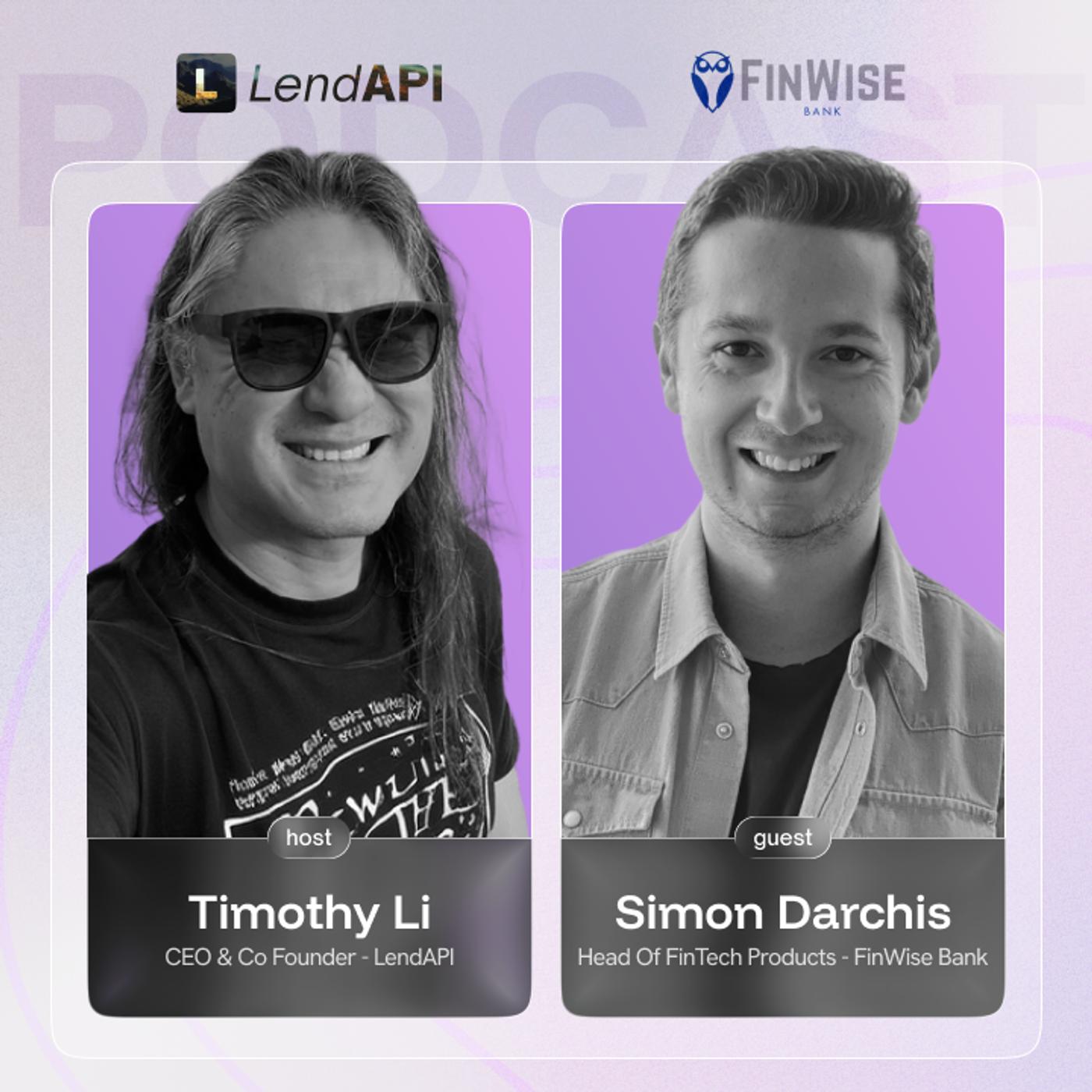
Timothy Li: Good morning. This is Tim Lee, founder and CEO of Len API. Today we have a special guest from FinnWise Bank, FinnWise Bank Corp, Simon. really great to have you on this podcast. we finally made it to have a proper bank to join our podcast. that said, before
Simon: Ha ha.
Timothy Li: we we start, there's a couple of statements I want to read for the audience. The views and opinions expressed by today's guest, Simon, are there of their own, do not necessarily reflect the official policy position or financial endorsement of FinnWise Bank, its affiliates, andor Len API. nothing discussed today constitutes financial investment or legal advice. Also, Len API and myself does not have any holdings of FinnWise Bank or their stock or equity. currently we don't work with FinnWise Bank, which is a shame. but that's okay. I just want to make sure that those are all property disclosed for our audience. That said, Simon, welcome. before the show started, your your your summary exotic based on American standards.
Simon: Ha.
Timothy Li: Where are you? Where are you today?
Simon: B based on American standard, for me it's just it's
Timothy Li: Yes.
Simon: just called home. I am recording this from the sunny south of France.
Timothy Li: my word. Yeah, it's a dream. I I think everybody wants to go a vacation south of France. So what was it like growing up there, Simon?
Simon: So actually I grew in Paris, but I I spent all of my summers growing up in the in the south of France. look it's for me, you know, if to everyone that I speak to, everyone is like, You're so lucky, you get to go to Paris so often, or you get to go to the south of France so often. and it's just home,
Timothy Li: Sure.
Simon: right? That that's kind of where I spent my my childhood, where I get to be funny in my own language and that feels really, really good. but since moving to since moving to North America, you know, be before the US I was in Canada, I definitely have a renewed appreciation for the country and the culture and the architecture and all of those things. I think I I do tend to look at everything through those American eyes now. so no, it's a it's fun. It's fun to get to be with with family for a bit.
Timothy Li: Okay. Yes. Well the the running joke is that you your your country have parking lots older than our country, so there's a lot of history and culture very im in front.
Simon: That that that is true.
Timothy Li: my my wife There you go. We were tight we're bros, you know, back in the the eighteen
Simon: Mm-hmm.
Timothy Li: hundreds and seventeen hundreds. But y my wife
Simon: Exactly, exactly.
Timothy Li: is French Canadian. So she speaks French in that Canadian way. So when we go to
Simon: Mm-hmm.
Timothy Li: go to France, you know, people are like, You're from Canada, aren't you? I can't tell.
Simon: Th y you know there there there's a funny saying. so actually I went to school in Quebec. I went I went to Miguel for for college.
Timothy Li: Miguel University, yes.
Simon: Yeah, and th there's a very funny saying and it it is that Quebec and France are two countries separated by the same language.
Timothy Li: that's right. Quebecwas are very independent. You go across the border, you must well be a different country. we
Simon: A hundred percent.
Timothy Li: did a little bit of a yeah, coastal visit last year with the kids and all that stuff. It's it's built differently. The people are a little bit different, very friendly. the the the architecture and everything else looks out of this world.
Simon: Mm-hmm.
Timothy Li: It's doesn't look anything like North America. So and
Simon: That that's true.
Timothy Li: yeah. And Miguel University, that's like the MIT of Canada, isn't it? Or am I g I'm getting that wrong? Arbor of Canada, my god, how dare
Simon: The Harvard of Canada. It's a it's it's the Harvard of Canada.
Timothy Li: I
Simon: You know, it's funny, I I went to school, I I started McGill right when that I think it was a New York Times article that came out and called it the Harvard of Canada. so went to school
Timothy Li: Yes.
Simon: that year or that summer and everyone was buying those t shirts, you know, with the McGill logo and then the subtext was The Harvard of Canada. but yeah, no it it
Timothy Li: Arbor Canada. It is. It is.
Simon: It was a it was a fun experience for sure. It was you know, it was my first step in North America. Kind of felt good to have the safety of French, right? You you kind of I was very young. I w I was sixteen and a half when I went to McGill. So I like, it's it's good to have
Timothy Li: Right.
Simon: the safety of French if anything happens. and then kind of immersing myself in that North American collegiate mindset. It was it was a fun experience. I was in Montreal a lot. I you know was in Montreal for half the week and I was in New York for the other half of the week
Timothy Li: Yeah.
Simon: because I was working at Cross River at the same time that I was going to college. and that
Timothy Li: Right.
Simon: is yeah, that that is how I made my first steps in into FinTech.
Timothy Li: Right. Yeah. I mean you study finance at McGill, right? arts and finance, so that's that's a perfect perfect fitting. And of course Cross River Bank is a very respected bank out there on the East Coast. very well. what what was what was what was the most shocking fac shocking fact when you arrived in North America, Canada? were you able to get by with French only, or did you have to be forced to learn this awful language that we I speak here?
Simon: No, look it it it was no it was very easy to get by with with French. Not that I didn't speak English when I got to Canada, I was already speaking English very, very well when when I got there. I think the the the most shocking thing was the way the way we look at education. you know, friends being friends, you know, the the the country of the arts and the country of literature and and loving to tell anyone that we're the country of human rights. i is very focused on on making very well rounded individuals. So n not to go into a lecture of the French educational system, but when I was in the French educational system, it's changed a little bit since then. You had to choose a curriculum. And there were three available literature, science, or economics. I went into science, that's what generally the the good students did, right? She went into the scientific track. but even while being in the scientific track, I had to take history classes, geography classes, Spanish classes, English classes, French, literature, philosophy, all of those things. And then you get to a North American school and you realize that we're not necessarily looking to make well-rounded individuals, but we're looking to make experts in their fields, right? We're looking to make the best of the best in one specific vertical. It has pros, it has cons, right? Like in in my day to day life, I'm super happy to have had the French educational system. I I can debate, you know, Descartes and all of those philosophers. but at the same time I'm very happy that I went to a North American system where like I can go in depth about very, very specific topics, which you you don't necessarily get through the French through the French system. So yeah, they I think it was the most shocking thing probably, but one that I expected.
Timothy Li: Right. Sure. Yes. Yes. We We're we're a very capitalistic society. Everything's gotta be commercialized. So even that our education system needs to have outcomes, right? And every school is measured by that. the
Simon: Yes.
Timothy Li: other extremes, if you look at China, right, they eliminated, you know, ten thousand different degrees that aren't you can find a job, you know, in that kind of a sense. That that creates a different type of human. I I totally get it. But I'm glad that you have the best of both worlds.
Simon: Yeah, no, it was it was fun. I I look fondly on on my my educational years for sure.
Timothy Li: Yeah, love it. what what a great experience. I've been to McGow University's campus. It's like it's a beautiful place to be. nothing like what we have here is just a concrete jungle. You know, the architecture, the way, the layout is very inducive for for that kind of a development. well let's talk about FinTech real quick. You've you've basically spent your entire career in fintech. at a couple of really pivotal moments, just from your personal perspective, individual perspective. is fintech still relevant today?
Simon: FinTech is 100% relevant today.
Timothy Li: Yeah.
Simon: You know, we we live with fintech every day. No, no matter what what socioeconomic group you belong to, no matter what educational group you belong to, everyone uses fintech. you know, and it's funny because when people hear fintech, they they expect something extremely complex, right? Some some kind of very vague concept that they can't grasp. and it's we it's when you tell them, well, Venmo is a fintech and Cash App is a fintech. They're like, yeah, that's right. so yeah, no, I think FinTech is is more relevant than than ever. you know, I do think there's definitely some some forces being applied to it right now that's kind of reshaping the industry. you know, not to fall into cliches, but AI is definitely one, right? AI will most likely change the way we interact with our finances and the way we interact with financial products.
Timothy Li: Sure.
Simon: I think there is definitely the pressure being applied of what's going on with the regulatory world, right? We we were very clear on what regulations looked like prior to the Trump two administration. Now it's a little bit of a of a stab in the dark, right? You don't really know what's gonna be enforced, you don't really know what's not gonna be enforced. so yeah,
Timothy Li: Right.
Simon: it's you know, and and to go back to AI, ultimately I I I do believe that AI will change the way we interact with our devices.
Timothy Li: Right.
Simon: Right and our devices is where we use FinTech. so how will the the industry get get reshaped by all of this is is gonna be very interesting and I think it's gonna be happening very quickly, right? I don't think this is like a a very far in the future type of thing. I think in the next three to five years we'll we'll know how that has how that has changed the way we we interact in our financial lives.
Timothy Li: Right. With your previous background at cross crossover and your current position here, you you probably work with I don't know two three hundred fintechs by now, right? Really worked with them. from my personal perspective, there's like two dichotomies. There's fintechs are serving I guess the upper middle class or upper c upper class of people. And there are fintechs that are I wanna say have a wave a flag of serving the unbanked, the underbanked, whatever the terminology
Simon: Mm-hmm.
Timothy Li: is, right? Sounds offensive. What what are you seeing? What are some of the things, products out there, that's not named names, that are truly sort of uplifting those that don't have the information or that pathway to financial success and things like that. Are there any fintechs product out there that you you said, wow, this is actually really cool out of all the things that you've seen out there.
Simon: You know, it's it it's it's interesting that you asked this question because it's actually one I ask myself very often, right? With with the underbanked or what we generally call the subprime population, right? we very much have a a ton of tools to cater to their short term needs. now, like i if you just type, you know, low credit score loan, like you you'll hit hundreds of of hits on on Google, right?
Timothy Li: Right.
Simon: and those are ex expensive loans, but they actually do they actually do help, right? It's I you know it's it's a funny little anecdote. Before we went into the world of of subprime at at FinWise, I had my my grievances with it, right? I I again coming from France, I come from a country where the user rate is eight percent. so now I'm being presented with with interest rates that are sixty percent, seventy percent, a hundred percent, a hundred and ninety-nine percent. Like what are we doing here guys? Like we we're robbing those customers. And then you dive into
Timothy Li: Mm-hmm.
Simon: the math, you dive into the create risk, but you also dive into the customer the customer stories, right? And you realize that those are products that have a very tremendous impact that you can feel, right? And that those customers feel in their lives. You know, I think one story that that I remember very, very distinctly was This woman that took a very high interest loan, one that I think most of the listeners here would never have to get. and she was saying that she took the loan because she needed to pay for a babysitter to be able to get to a job interview. Job that she ended up getting, improving her financial life and now kind of graduating out of this subprime world. Right? So th that is how those products are helping. Th those short term financial
Timothy Li: my god. Right.
Simon: needs is not something that we need to look down on, especially Again, people like us coming from like the the near prime, prime, super prime type demographics, they are actually helping customers in their lives and it's almost a byproduct that their financial lives improve, right? It's what that money helped them to do that ends up helping them in in the longer run, right? And when we think of of the underbanked.
Timothy Li: Right.
Simon: Or at least that that's what it was at the very beginning of FinTech, right? When we're talking about the underbanks were like, the people that don't have access to the financial system. everyone can go open a bank account. If someone wants to go open a bank account, they'll walk to a branch, they'll go online, they'll open up a bank account. If they don't have one, it's that they don't want one and you're not necessarily going to capture them. The real underbanks are the ones that cannot get access to financing or that do not have enough cash flow to support their their financial needs and and that is to me why the lending side of the underbank is a lot more interesting than the deposit side of of the underbank.
Timothy Li: What would what would have been that lady that we talked about that really need to borrow some money to get a babysitter so she can uplift herself and find a real job or a a job? What would have been her options had it not been a
Simon: She
Timothy Li: lender that catered to her needs? What would what would she do?
Simon: So you you you see a few a few pathways, right? Unfortunately the most common one, again without trying to fall into the cliches, is that it's someone that's gonna say, Well, I just cannot go to my job interview, right? And
Timothy Li: Mm-hmm.
Simon: and end up kind of getting stuck in that situation and this continuous loop of of bad financial health. you have the the luckier people that have a community and a system that they can rely on and that will step in and help. Right. that is something that you see in in certain demographics. There's even certain demographics that kind of pull the money from the community to help people in that kind of situations, right? Sometimes it's a loan, sometimes it's a gift, but that's also not very common. one other area where people, you know, where where people would would turn is the overdraft. and look, I don't I don't necessarily hate overdrafts, but I do think the way they are structured today do not necessarily help customers, right? It's kind of, well you have a 10 cent overdraft, here's a $49 overdraft fee. And so th those are not, you know, they they're not products that are particularly user-friendly as opposed to a loan or a line of credit where it is very, very clear how much you're borrowing, how much you're gonna repay every single month or every two weeks or every week, and how much it will have cost
Timothy Li: Mm-hmm. Right.
Simon: you in in total. I think Unfortunately in in the US, right, I I don't want to make this conversation a a Europe versus US type conversation, but I do think that there's some value in it. we have very
Timothy Li: Sure.
Simon: poor financial education in this country, right? Most people will not be able to tell you what an interest a what an interest rate is. Most people will not be able to tell you what an APR is. You have to speak to them in terms that they understand. So regulators try to solve for this by creating the the Truth in Lending Act. Right, or the truth and lending statement that shows you an APR and that shows you a finance charge. Those are concepts are not very graspable by most people, right? If you have a very nice fintech that shows you this is your payment, this is how much you're paying in total, that is a much more comprehensible product and much more tangible product. i especially in that demographic, right? That that generally tends to not be very financially savvy. So yeah, it's those are the products that they generally turn to. They they're not particularly friendly and and they don't necessarily help, right? You you want to avoid those products that trap you in in that cycle of debt.
Timothy Li: Right. Well, I know generally speaking, right, banking as a service bank or these partner banks work with a lot of loan large nations partners, right? Based on the responsibility, right, things that you you just talked about, what are some of the things you you you personally would look for that say, you know what, I really want to work with that team. I do the right product for the right consumer. We wanna work with them. The framework, the compliance, you know, the understanding of risk and And user experience is all there. Give us a couple of bullet points t to the audience.
Simon: It's a it's a very loaded question, because b you really w
Timothy Li: Your dream partner.
Simon: you or a dream partner, when when you look at a potential fintech, you look at them from from end to end, right? You're not only just looking at the product that you will adopt as your own product, you're also looking at at the team, at the staff, the founding team experience, their financial backing, their access to capital, especially in the d in the lending side, right, or on the in the lending world. So When I look at the user experience, I want something that is very friendly, that does not take advantage of customers, and that is through having the proper hardship programs, that is through having the proper
Timothy Li: Right. Right.
Simon: disclosures again that are understandable by the customer, right? I'm not just talking about the regulatory mandatory disclosures. I'm talking about the way the product is being presented. a product that is easy to use and a product also that is tailored.
Timothy Li: Right. Right.
Simon: To the demographic it's trying to capture, right? And I'm I'm looking at that point for two main reasons. The first one, obviously, is that I want to make sure I don't get a crazy high level of complaint. but the second one is that I also want the product to be successful, right? When we work with those companies, I think a lot of fintechs
Timothy Li: Sure.
Simon: almost forget that point. My success is very tight to theirs, right? I want this product to be successful.
Timothy Li: Right. I see. Right. That's right.
Simon: when I look at a fintech, it is as if I am investing in that fintech. Or when I started working with the fintech, it is as if I'm I may not be writing a check, right? But they're taking a fintech slot. I'm spending time adopting the product as my own. I am extremely vested in in the d the success of the of the product, right? So it is critical for us to to look at products that make sense for the market that they're trying to that that they're trying to capture. Then
Timothy Li: Right. Yeah, you
Simon: On the funding.
Timothy Li: can't
Simon: Yeah, I was gonna say on the on the funding side, you know, or the funding team side, we obviously love entrepreneurs that have a a history of success or that have worked in the space, but that's not necessarily a a a disqualifier, right? We've some of the best companies that we've worked with came from people that had nothing to do with the financial space. They just had the right vision. but on the on the compliance and regulatory side, we obviously look for expertise, right? This is that that's the area where a bank can get hit really, really hard. and we do work hand in hand with the compliance teams of the fintechs that that we work with. So that that compliance team is is critical. And then you know on the on the financial side, you you want a fintech that's gonna be in business a year from now, two years from now, three years from now. You don't want a fintech that is going to be leaving their customers high and dry. receiving a notice from a backup servicer saying, Hey, whoever you got a loan from went under, so please remit your payments to us now. and
Timothy Li: Right. Yeah.
Simon: and you you want them to have access to the right kind of capital to be able to to grow their balance sheet, right? When you think of the the fintech space and the fintech sponsorship space, banks will step in for the origination, adopting the fintech product as our own. Really the fintech is here to give us advice on product management, right? And and collections management. But at the end of the day, it's the bank's product. that you so and generally the way it works is that the bank will originate those loans, will keep it on balance sheet, or we may sell it. And you want to make sure that there is an investor lined up to be able to to buy that paper. So that is also part of what we what we look at as part of as part of the due diligence. So my ideal my ideal
Timothy Li: That's right. That's right.
Simon: product or my ideal fintech is one that kind of checks all of those boxes.
Timothy Li: Yes, a lot of we talk to a lot of fintechs and oftentimes they they they need to be reminded of that this is actually the bank product, right? the fintech team is you know, have some responsibility in marketing, customer service, product development. But ultimately it's the bank's promissory note, bank's underwriting, bank's pricing. that transparency, collaboration is key. And when banks do take on partners such as, you know, there's 120 questions you gotta answer properly, you know, in addition to the right insurance, right protocol, right monitoring, third party monitoring, all that stuff needs to be needs to be there as well. Let's switch gears to the other more popular product, which is credit cards, debit cards, right? any self-respecting bank partners will issue bins or a bank bank identify bank identification number, issuing cars, coal-branded cars on behalf of Intex. Do you think it's sort of oversaturated a little bit? I feel like everybody has a card now. You know, there's some good ones, big ones, and lots of bank partnerships. What's happening in that space? Is it that easy to do a card, Simon?
Simon: Y you you you you would think so, right? I
Timothy Li: Mm-hmm.
Simon: I do think so look i if the question is is there a market gap that is yet to be filled by someone, I I kind of don't believe so, right? I think the the market is is is very tapped. But I think what there is, yeah,
Timothy Li: huge. Right.
Simon: it's i d the market is huge and and the market is is very tapped, especially you know, you you looped credit card and debit cards together, but really they they serve two different purposes. So on the credit
Timothy Li: Mm-hmm.
Simon: hard side. if you look at the change in consumer behavior, people don't tend to carry balances on their cards anymore. That that is where that is an area where financial education works a little bit, right? It's people know that it is it is tough to get out of that that cycle of debt, right, that that could come with with a revolving type product. But
Timothy Li: Sure, yeah. Right.
Simon: there is still room for for innovation in my opinion. It's it's It's innovation that is a little bit more limited than it's been in the past, and maybe a better user experience, and maybe a better reward system. and maybe a card that is helping you build your credit, right? That doesn't require you to fully secure the the line of credit amount or the the amount that you make available to the customer. So that the there's it it's th the response is interesting because it's not necessarily that there's more market to grab, but there's some market to replace, right? I think it's more of a replacement. replacement technique and then acquiring you know customers that never had that never had a card. Then on the debit card side, it's kind of the same story, right? In but you you have to look at the the the history of fintech as a whole. eight, nine happens, no bank in the country is giving loans anymore. Boom, you have the rise of marketplace lending, right? At the time called peer-to-peer lending. Then why did people keep their banks? It's because they wanted to have that relationship, right? I have like a financial shortcoming, I'm gonna go to the bank and apply for a loan. I need a house, I'm gonna go to the bank and apply for a loan. That financial relationship was extremely important. But then 0809 happens, you don't necessarily need to go to the bank anymore to get a loan. Like you can just do it online. at first it was only personal loans. Now virtually you can get any sort of loan online. So now you look at what is really
Timothy Li: Right.
Simon: engaging customers to stay within their legacy bank relationships, right? Well, if you have some customers that have a bunch of cash or they have businesses that are cash intensive, well th those customers are gonna stay with the legacy bank, right? They have they need to have a way to deposit to deposit cash. And those customers generally don't trust going into a seven eleven and and depositing cash, right? That's what a lot of of fintechs do. but you do have The majority of customers that would not feel a change by going to a bank that was a hundred percent digital. And as a matter of fact, they would get more features out of a bank that was a hundred percent digital. Just look at early pay access, right? Or early wage access. Legacy banks, not a whole lot of them give you a paycheck two days ahead. On the digital bank side, it's become an expected feature. the risk is the same, by the way, for both the legacy bank.
Timothy Li: Right.
Simon: or the the fintech bank and true that is a feature that is appreciated whether you're making a hundred and twenty thousand dollars a year or whether you're making thirty grand a year. Everyone loves having their paycheck early, right? So you you do have kind of those those limited additional features that are engaging people
Timothy Li: Yeah. Right.
Simon: into moving to moving digital. Now there are some people that are never gonna trust, you know, the d the digital space, they'll keep going to the Bank of America to the Bank of America's and the Wells Fargo's of the world. But I do think there's a good chunk, especially of Gen Z that is now entering the workforce and and making a pretty good living, that will
Timothy Li: Right. Right.
Simon: bank a hundred percent digitally.
Timothy Li: Right. well cool FinnWise Bank is is Finwise Bank itself, it's a it's a big commercial bank. and I've I've noticed that a lot of bank partnership partnership banks, they're all right, deeply entrenched in commercial lending, maybe real estate, and maybe, you know, SBA type of loans, right? So, and there's like with a new what is it, the big beautiful bill, right, with some of the new features that they they came up with on writing off equipments and and c and trucks and all that stuff. What is what is your perspective on doubling down on commercial lending, maybe commercial real estate, and some of the equipment leasing startups are coming on out of woodworks because of some of the new legislation coming on the pike. What is your position on serving the 30 million, I guess, small businesses out there in America?
Simon: Look, we I I love commercial lending personally, right? I do think that the S VA has has a place in in a bank portfolio, but I do think that more traditional unguaranteed working capital loans also have a place. So we always look for fintechs that are working in the space. this is definitely an area or vertical of fintech that we're We're very passionate about and and for selfish reasons because it's also easy on the regulatory side. but you you know the same it's almost the same narrative as the the unbanked or underbanked portfolios on the consumer side. you can see the impact of a working capital loan very well, right? It's a it's a very tangible impact. Those are loans that truly help. that really help businesses grow and when businesses grow it's it's always beneficial for the overall economy, right? So we're not necessarily doubling down but we're kind of keeping the the course of action which is to look for those platforms that make sense on on the commercial side. But you know you're you're mentioning the the big beautiful bill of of the Trump two administration. the the equipment write offs and all of those tax incentives are not the only thing that is in there, right? You also kind of have those caps that were placed on student lending. everyone is gonna have a different opinion of it, but the the point is you now have students that are not able to get federal funding or federal financing to be able to go to school. And that is developing very interesting frameworks in the student lending space, right? Some certain lenders that were struggling to get more business. you know, some certain lenders that are now trying to capitalize on that on that gap creating by the Trump two administrations are actively working on it. And so I'm I'm seeing some some really interesting stuff coming out of the the student lending industry.
Timothy Li: Okay. Okay. That's a hint for the market. let the best, most creative folks to to get in. You're you're absolutely right. I sit on a couple of boards at local universities and it is doing a number to their matriculation numbers and things like that. So they need to need to be creative, work with private financial services companies to bring the student body back. I you know we we sometimes talk to sponsor banks you know in conjunction with our with our clients, some sponsor banks will onboard 10, maybe 20 fintechs a year. Some does two, maybe three, very selective, very opaque, very mysterious. Why is that something? Just from your personal perspective, it's a capacity issue. What's going on there? You know? Yeah.
Simon: You y i it's I think it's a it's a lot of different factors. it so, you know, I you when you were asking me about my my ideal fintech, I told you I look at all of those things, right? Well, all of those things translate into a ton of work. it it's not as easy as as, you know, looking as fig at figmas screens and saying, Yeah, I wanna I wanna work with those guys. so you do
Timothy Li: Right.
Simon: you know, i i it it does take a lot of time. to to
Timothy Li: Yeah.
Simon: get a fintech in and then it takes even more time to onboard the product and adopt that product as as your own. So for some banks, you know, they they do want to be very careful in their approach to implementation onboardings and they'll do a few a year, right? They they'll do less than 10 a year, call it. There's also you you you kind of touched on it, some banks want to be very selective in terms of the fintechs they work with. and Kennedy rightfully so. We saw we saw some pretty horror stories coming out of the fintech industry in the past couple of years. So you do want to be careful who you get in bed with. It's a fintech bank relationship, you know, to make it just very tangible for people, is a marriage. You you wanna make sure you're marrying the right person and you wanna make sure that if you have to divorce, it's not gonna be an ugly one.
Timothy Li: Well, yep. That's
Simon: So you you do want to be selective on on who you're gonna be on who you're gonna be working with. Now the the banks
Timothy Li: true. Right, that's true.
Simon: that yeah, the the the banks that on board, you twenty, thirty, forty fintechs a year, to me they fall in two groups. The first one are the humongous banks that have a ton of staff and that can support quite safely that that sort of growth. I think there may be one or two that fall in that bucket. and the rest are the the The banks are looking at FinTech as a gold mine, right? You you did really see I th especially in like twenty twenty, twenty twenty one, you saw banks looking at fintech as the new gold rush in America, right? It was like so easy money, it was quick money, I don't have to go out of my way to get a customer, the customer comes to me or is brought to me. they went all in not thinking that it is actually an extremely expensive business to run. And it is a very risky business to run. You you are you are being held responsible for anything that happens within that that fintech product, even if you don't host the website, right? Because at the end of the day, the only thing that you don't do is is host the website of the fintech that you're working with, or host the app of the fintech that you're working with. and those banks missed that that risk, right? And and are still missing that risk, unfortunately. It's
Timothy Li: That's right.
Simon: I I read a post on LinkedIn recently that was like long gone are the days of of banks starting a bank sponsorship business with a hundred grand of of budget. Well that that day never existed. You thought it did, but it it never did or it never should have. and and that is valid on the lending side the same way that it's valid on the deposit side. Right on the on the deposit side, especially now, especially a few years ago,
Timothy Li: Yeah. Yeah. That's right.
Simon: Banks are funding for deposits, right? So a lot of those banks kind of saw this fintech as being an easy way to get out of broker deposits or borrowed deposits and get their own core and their own core deposits. Well, come to find out, those banks are not able to hold the sub ledger, right? The ledger of the actual individual's accounts. and then the fintech goes bust and they don't know who is owed what. Well that that's a pretty big problem, right? And You know, we we haven't spoken about Finwise specifically on on that front, but one of the products that I've been working on for the past couple of years is is a product that we call Money Rails. Money Rails is a payment hub fully API enabled, you can access payment rails via API essentially. one core component that I was not willing to compromise on was the ledger part of this payment hub. A lot of banks could have said, Hey, as long as I hold the FBO balance and as long as I can track the FBO balance. I don't really care about the rest. That doesn't fly anymore. The bank needs to have a ledger of record, right? Which is why we implemented a way to have the FBO balance tracking as well as the sub-ledger tracking. So it's banks that want to play in this space have to stop thinking that they're just FIs or that they're just a charter that they're just giving out to people. They're the real bank, they're gonna be held responsible that way. And they need to have the tech stack to support that product offering that they're getting into. That's you know, we we
Timothy Li: Right.
Simon: talk about the regulatory side, but the tech stack is also critical to serve the regulatory side.
Timothy Li: Yes. That's right. I mean, every transaction, every debit, credit, beginning balance, ending balance of any partner should be real time ledgered within the bank, because that's bank's business. And unfortunately, a lot of consumers, we don't have to talk about that particular incident, are still looking for wounds and couldn't find their deposits, their savings. Sometimes
Simon: Absolutely.
Timothy Li: they're thirty, forty thousand dollars just lost in transaction. I mean
Simon: Absolutely.
Timothy Li: That's a different podcast, but I'm glad you guys have this system to track everything down to the T. But talk about other some some other technology. I've heard so much about the the Fin the FinView Analytics program, if if we can
Simon: Ha.
Timothy Li: if you can talk about that at all, right? To to actually,
Simon: So yeah.
Timothy Li: you know, not just ledger and technology, but actually help these programs to thrive, right?
Simon: Yeah, that that was one of the core principles when we went into this this sponsorship business now close to ten years ago, we wanted to have the right tech stack to support those those fintechs, right? I kind of if you if you look at what happened prior to ten years ago, for bank sponsors that were playing in the in the lending space. That's what most people were doing at the at the time. they were getting spreadsheets of loans, right? And they were just saying like, does the print spreadsheet look good? Great. I'll fund everything. well you're a lender, so you should probably on the right every single loan that you're gonna be funded that you're gonna be funding. and you also need to make sure that you have the right reconciliation processes in place, etc. So when we went into the space, It was with the idea that we would graduate from the Excel spreadsheet and actually be API based, right? And receive all of the data that we needed to conduct our day-to-day operations via API. The secondary benefit of it, it's it's one that we had considered but not necessarily spent a whole lot of time on, is that we ended up collecting quite a bit of data on customers that could be served, on customers that couldn't be served. so you know that that data is is safeguarded at the bank and is looked at by by the relevant teams. but that that that was definitely a a benefit of being you know so tech forward ten years ago. and now you you fast forward you know ten years later, when we decided to go into the payment space, into the the deposit space, we went in with the exact same mindset of we'll build a tech stack, we'll build a compliance stack. when we feel that both are really, really good, that's when we'll go to market. And and that's what we did and it's proven to be it's proven to be a good journey so far.
Timothy Li: I could just feel that, you know, w when it when it go when it comes to securitization, it's it's it's probably a dream. You could probably maybe just press the button as opposed to
Simon: They
Timothy Li: juggling ten years worth of Excel files and promissory nodes.
Simon: N not having a whole lot of data debt is is always good to have.
Timothy Li: Yes. Well we'll switch gears a little bit on BMPL, but by now pay later, but let's talk about a f from from the perspective of some of the bigger, I guess, third party BM BMPL players are now applying for their own banking licenses, sometimes in a hurry. And you know, we just read that I think why is the payment process payment platform got their charter application denied. Why is there a rush, I guess another rush to get their own bank and charter. And obviously somebody's so some of them are doing okay, some got their charter declined. What's the rush? Is there a window of opportunity appear somewhere for these fintechs to become banks themselves? And personally I I always thought that they don't want to be a bank. That's gonna be a whole other regulatory headache they had to carry on while managing their business. What's your perspective on this?
Simon: Th there's a short answer and there's a long answer to it.
Timothy Li: Okay.
Simon: the the the short answer is that there's never probably gonna be another time like today, to get a bank charter. Right. It is th realistically, it has never been as easy as it is today to get a de novo, or to even be approved for the for the acquisition of of an existing charter. I think the the longer answer
Timothy Li: Right. Right.
Simon: is that fintech sponsorship or fintech bank relationships are not frictionless. Right? You you buttheads a little bit, but that's because you have a company that is tech forward and generally companies or tech forward want to push the limits of what is acceptable by law and and kind of love that grey area of the law. If something is not exp expressly prohibited, then it's fair game. Then you have banks that by nature have to be very conservative, right? Because again, they're the ones that are gonna get dinged at the end of the day if if anything goes wrong. So I think a lot of fintechs, you know, kind of taking that that or keeping that history in mind and and those memories of friction and and not being able to not being allowed to do certain things, are like, you know what? Getting a bank is gonna give me is gonna put me in control of my own destiny. I'm not gonna have to rely on someone else to tell me what I can and cannot do. the the fintech and the bank will be almost one and the same and we'll figure it out that way and we'll see if those banks were right all along. I do think that this carries and again I think you know if you look at the the history of of fintech again, fintech bank relationships, bring yourself back twelve years ago, kind of when I first started in in the space.
Timothy Li: Right. Right. Right.
Simon: At the time we were talking about a fintech charter, right? The OCCU was gonna put out this fintech charter so that FinTechs could have access to to payment rails, could be able to issue loans nationwide, and all of those things would essentially be an MSB and a and a and a lending license kind of done at the federal level, right? Very similar to the MTL that you have in Europe. Well that never penned out, that never materialized into anything.
Timothy Li: Right. Right. Right.
Simon: But I do think some of those fintechs went into bank relationships or bank partnerships
Timothy Li: Right.
Simon: still having that thought in the back of their head, right? Of well, we were promised that charter, a and now it's feasible. Right? Now what what do I think will happen in the future? And if I have any partners of mine that are listening to this and that are applying for a charter, I love you guys, but I do not think it's necessarily the the right the right path right now. Those fintechs are gonna go into into those de novo charters with a much lessened or very lessened regulatory upside because of everything that we talked about, right? It's the the current administration is the way it is. So I think they they're going to build their banks under the premise that this is how it's gonna be, forever.
Timothy Li: Right.
Simon: It it's probably not, right? Like the the the administrations and and regulatory oversight is a pendulum. It swings pretty constantly. So are they setting th themselves for for success, you know, by getting a devo
Timothy Li: Right.
Simon: license, for which the sole purpose is gonna be to serve the interests of the fintech? I don't think so, right? Like leave the banks to the banks. And you know, y you focus on the on product and marketing and and optimizing credit. again, this is not something that is gonna be seen right now, right? Like I think they have like three or four more years of of bliss. but if there's a a pretty sudden administration change, th that's something that they're gonna feel pretty pretty quickly. You know, again, this is all very anecdotal, but we as banks are expected to have a an impact on our communities, right? We're not expected to be single trick ponies. They our regulators expect us to have a business plan that is well rounded and that serves as many customers as possible. And to that end there's a ton of regulations, right? when you have a fintech that is applying for a bank charter today for the sole purpose of serving their existing product stack, that's a one trick pony, right? And in some cases Does fintechs don't even take deposits? So it's gonna be banks that get broker deposits to fund loans of the fintech. Like it doesn't work, it's not a well-rounded bank, right? Again, we may have another conversation again in four years, Tim, and you may tell me, Simon, you were completely off base. But I do think that this I I could see it happen, let's say. So, yes, you want to capitalize on the moment.
Timothy Li: Right. Sure. Right.
Simon: I I fill you, you want to live in the present and and capitalise on what could be given to you. It only makes sense. Now
Timothy Li: Mm-hmm.
Simon: make sure that you craft a s if that is the path that you're gonna go down, make sure that you craft a strategy that can withstand the regulatory tests of three years ago, but also the ones of today. Right? Don't don't think that today's situation
Timothy Li: Right.
Simon: is is going to be permanent.
Timothy Li: Right. Yeah. It it they may think that this is a de risking strategy, but it's gonna come back and rear his ugly ahead, you know, in two, three, four, five years or whatever it might be. Hmm.
Simon: Right. To t to me the biggest risk in business is is not knowing what the future holds, right? And in that very specific situation, I do think that a risk is is very much exists, right? It is not something that that you can turn a blind eye a blind eye on. You you the
Timothy Li: Yep.
Simon: chances are things will look very different four years from now than they do today. And you don't want to get into a position where your
Timothy Li: Right.
Simon: DeNova license is now getting MOUs or consent orders, all of those things are public, right? And some of those fintechs that are getting bank charters are also publicly traded. So like d does this whole strategy make sense? Like d does carrying that risk make sense for your long term equity incentive? I I I fall into the school of thought that it it doesn't, right? Like I I don't
Timothy Li: Yeah. Yeah.
Simon: think I would take that risk if I were in in those fintech shoes. Those FinTechs could criticize me and tell me that I'm biased because I work for a sponsor bank. So I I I would hear the argument as well.
Timothy Li: Yeah, I mean American Airlines has has been doing their coal brand of cars for 50, 60 years. They never became a
Simon: Exactly.
Timothy Li: bank. You know, I don't think they ever want to be. Their business is
Simon: right.
Timothy Li: already complex as is. Yeah.
Simon: Right.
Timothy Li: my word, I mean, almost an hour has gone by, Simon. We can talk about this for the rest of your evening, which is already an evening time. So thank you so much for staying
Simon: Yeah.
Timothy Li: on. Past the regular working hours in South of France on your vacation. Thank you so much. And it's a truly pleasure to have you on board this podcast. We'll get us all tuned up. any parting words for new fintechs that wants to get into the space? you know, g give him s give him give him some hoorah, Simon, if you will, for all the entrepreneurs listening to this call.
Simon: Be innovative, be compliant, you know, definitely embrace what current innovation is throwing at you. I'm I'm unfortunately not seeing a whole lot of FinTech taking advantage of those new tools that are made available, right? They're they're using it for back office functions and whatnot, but I'm not seeing it become part of the front end user experience. embrace it, right? And
Timothy Li: Right.
Simon: and yes, banks will have questions, but As I said, if you're successful, we're successful, so we we have the right incentive to to work hand in hand.
Timothy Li: That's right. Yeah. we heard it. There's a lot of opportunities in that space. We haven't touched upon crypto, we haven't talked about USDC, we haven't talked about anything around payments. We'll save that
Simon: Ha ha
Timothy Li: for next time, next episode, Simon. But thanks for again, thanks for being on the podcast. I appreciate you.
Simon: Thanks for having me, Tim.
Simon: Ha ha.
Timothy Li: we we start, there's a couple of statements I want to read for the audience. The views and opinions expressed by today's guest, Simon, are there of their own, do not necessarily reflect the official policy position or financial endorsement of FinnWise Bank, its affiliates, andor Len API. nothing discussed today constitutes financial investment or legal advice. Also, Len API and myself does not have any holdings of FinnWise Bank or their stock or equity. currently we don't work with FinnWise Bank, which is a shame. but that's okay. I just want to make sure that those are all property disclosed for our audience. That said, Simon, welcome. before the show started, your your your summary exotic based on American standards.
Simon: Ha.
Timothy Li: Where are you? Where are you today?
Simon: B based on American standard, for me it's just it's
Timothy Li: Yes.
Simon: just called home. I am recording this from the sunny south of France.
Timothy Li: my word. Yeah, it's a dream. I I think everybody wants to go a vacation south of France. So what was it like growing up there, Simon?
Simon: So actually I grew in Paris, but I I spent all of my summers growing up in the in the south of France. look it's for me, you know, if to everyone that I speak to, everyone is like, You're so lucky, you get to go to Paris so often, or you get to go to the south of France so often. and it's just home,
Timothy Li: Sure.
Simon: right? That that's kind of where I spent my my childhood, where I get to be funny in my own language and that feels really, really good. but since moving to since moving to North America, you know, be before the US I was in Canada, I definitely have a renewed appreciation for the country and the culture and the architecture and all of those things. I think I I do tend to look at everything through those American eyes now. so no, it's a it's fun. It's fun to get to be with with family for a bit.
Timothy Li: Okay. Yes. Well the the running joke is that you your your country have parking lots older than our country, so there's a lot of history and culture very im in front.
Simon: That that that is true.
Timothy Li: my my wife There you go. We were tight we're bros, you know, back in the the eighteen
Simon: Mm-hmm.
Timothy Li: hundreds and seventeen hundreds. But y my wife
Simon: Exactly, exactly.
Timothy Li: is French Canadian. So she speaks French in that Canadian way. So when we go to
Simon: Mm-hmm.
Timothy Li: go to France, you know, people are like, You're from Canada, aren't you? I can't tell.
Simon: Th y you know there there there's a funny saying. so actually I went to school in Quebec. I went I went to Miguel for for college.
Timothy Li: Miguel University, yes.
Simon: Yeah, and th there's a very funny saying and it it is that Quebec and France are two countries separated by the same language.
Timothy Li: that's right. Quebecwas are very independent. You go across the border, you must well be a different country. we
Simon: A hundred percent.
Timothy Li: did a little bit of a yeah, coastal visit last year with the kids and all that stuff. It's it's built differently. The people are a little bit different, very friendly. the the the architecture and everything else looks out of this world.
Simon: Mm-hmm.
Timothy Li: It's doesn't look anything like North America. So and
Simon: That that's true.
Timothy Li: yeah. And Miguel University, that's like the MIT of Canada, isn't it? Or am I g I'm getting that wrong? Arbor of Canada, my god, how dare
Simon: The Harvard of Canada. It's a it's it's the Harvard of Canada.
Timothy Li: I
Simon: You know, it's funny, I I went to school, I I started McGill right when that I think it was a New York Times article that came out and called it the Harvard of Canada. so went to school
Timothy Li: Yes.
Simon: that year or that summer and everyone was buying those t shirts, you know, with the McGill logo and then the subtext was The Harvard of Canada. but yeah, no it it
Timothy Li: Arbor Canada. It is. It is.
Simon: It was a it was a fun experience for sure. It was you know, it was my first step in North America. Kind of felt good to have the safety of French, right? You you kind of I was very young. I w I was sixteen and a half when I went to McGill. So I like, it's it's good to have
Timothy Li: Right.
Simon: the safety of French if anything happens. and then kind of immersing myself in that North American collegiate mindset. It was it was a fun experience. I was in Montreal a lot. I you know was in Montreal for half the week and I was in New York for the other half of the week
Timothy Li: Yeah.
Simon: because I was working at Cross River at the same time that I was going to college. and that
Timothy Li: Right.
Simon: is yeah, that that is how I made my first steps in into FinTech.
Timothy Li: Right. Yeah. I mean you study finance at McGill, right? arts and finance, so that's that's a perfect perfect fitting. And of course Cross River Bank is a very respected bank out there on the East Coast. very well. what what was what was what was the most shocking fac shocking fact when you arrived in North America, Canada? were you able to get by with French only, or did you have to be forced to learn this awful language that we I speak here?
Simon: No, look it it it was no it was very easy to get by with with French. Not that I didn't speak English when I got to Canada, I was already speaking English very, very well when when I got there. I think the the the most shocking thing was the way the way we look at education. you know, friends being friends, you know, the the the country of the arts and the country of literature and and loving to tell anyone that we're the country of human rights. i is very focused on on making very well rounded individuals. So n not to go into a lecture of the French educational system, but when I was in the French educational system, it's changed a little bit since then. You had to choose a curriculum. And there were three available literature, science, or economics. I went into science, that's what generally the the good students did, right? She went into the scientific track. but even while being in the scientific track, I had to take history classes, geography classes, Spanish classes, English classes, French, literature, philosophy, all of those things. And then you get to a North American school and you realize that we're not necessarily looking to make well-rounded individuals, but we're looking to make experts in their fields, right? We're looking to make the best of the best in one specific vertical. It has pros, it has cons, right? Like in in my day to day life, I'm super happy to have had the French educational system. I I can debate, you know, Descartes and all of those philosophers. but at the same time I'm very happy that I went to a North American system where like I can go in depth about very, very specific topics, which you you don't necessarily get through the French through the French system. So yeah, they I think it was the most shocking thing probably, but one that I expected.
Timothy Li: Right. Sure. Yes. Yes. We We're we're a very capitalistic society. Everything's gotta be commercialized. So even that our education system needs to have outcomes, right? And every school is measured by that. the
Simon: Yes.
Timothy Li: other extremes, if you look at China, right, they eliminated, you know, ten thousand different degrees that aren't you can find a job, you know, in that kind of a sense. That that creates a different type of human. I I totally get it. But I'm glad that you have the best of both worlds.
Simon: Yeah, no, it was it was fun. I I look fondly on on my my educational years for sure.
Timothy Li: Yeah, love it. what what a great experience. I've been to McGow University's campus. It's like it's a beautiful place to be. nothing like what we have here is just a concrete jungle. You know, the architecture, the way, the layout is very inducive for for that kind of a development. well let's talk about FinTech real quick. You've you've basically spent your entire career in fintech. at a couple of really pivotal moments, just from your personal perspective, individual perspective. is fintech still relevant today?
Simon: FinTech is 100% relevant today.
Timothy Li: Yeah.
Simon: You know, we we live with fintech every day. No, no matter what what socioeconomic group you belong to, no matter what educational group you belong to, everyone uses fintech. you know, and it's funny because when people hear fintech, they they expect something extremely complex, right? Some some kind of very vague concept that they can't grasp. and it's we it's when you tell them, well, Venmo is a fintech and Cash App is a fintech. They're like, yeah, that's right. so yeah, no, I think FinTech is is more relevant than than ever. you know, I do think there's definitely some some forces being applied to it right now that's kind of reshaping the industry. you know, not to fall into cliches, but AI is definitely one, right? AI will most likely change the way we interact with our finances and the way we interact with financial products.
Timothy Li: Sure.
Simon: I think there is definitely the pressure being applied of what's going on with the regulatory world, right? We we were very clear on what regulations looked like prior to the Trump two administration. Now it's a little bit of a of a stab in the dark, right? You don't really know what's gonna be enforced, you don't really know what's not gonna be enforced. so yeah,
Timothy Li: Right.
Simon: it's you know, and and to go back to AI, ultimately I I I do believe that AI will change the way we interact with our devices.
Timothy Li: Right.
Simon: Right and our devices is where we use FinTech. so how will the the industry get get reshaped by all of this is is gonna be very interesting and I think it's gonna be happening very quickly, right? I don't think this is like a a very far in the future type of thing. I think in the next three to five years we'll we'll know how that has how that has changed the way we we interact in our financial lives.
Timothy Li: Right. With your previous background at cross crossover and your current position here, you you probably work with I don't know two three hundred fintechs by now, right? Really worked with them. from my personal perspective, there's like two dichotomies. There's fintechs are serving I guess the upper middle class or upper c upper class of people. And there are fintechs that are I wanna say have a wave a flag of serving the unbanked, the underbanked, whatever the terminology
Simon: Mm-hmm.
Timothy Li: is, right? Sounds offensive. What what are you seeing? What are some of the things, products out there, that's not named names, that are truly sort of uplifting those that don't have the information or that pathway to financial success and things like that. Are there any fintechs product out there that you you said, wow, this is actually really cool out of all the things that you've seen out there.
Simon: You know, it's it it's it's interesting that you asked this question because it's actually one I ask myself very often, right? With with the underbanked or what we generally call the subprime population, right? we very much have a a ton of tools to cater to their short term needs. now, like i if you just type, you know, low credit score loan, like you you'll hit hundreds of of hits on on Google, right?
Timothy Li: Right.
Simon: and those are ex expensive loans, but they actually do they actually do help, right? It's I you know it's it's a funny little anecdote. Before we went into the world of of subprime at at FinWise, I had my my grievances with it, right? I I again coming from France, I come from a country where the user rate is eight percent. so now I'm being presented with with interest rates that are sixty percent, seventy percent, a hundred percent, a hundred and ninety-nine percent. Like what are we doing here guys? Like we we're robbing those customers. And then you dive into
Timothy Li: Mm-hmm.
Simon: the math, you dive into the create risk, but you also dive into the customer the customer stories, right? And you realize that those are products that have a very tremendous impact that you can feel, right? And that those customers feel in their lives. You know, I think one story that that I remember very, very distinctly was This woman that took a very high interest loan, one that I think most of the listeners here would never have to get. and she was saying that she took the loan because she needed to pay for a babysitter to be able to get to a job interview. Job that she ended up getting, improving her financial life and now kind of graduating out of this subprime world. Right? So th that is how those products are helping. Th those short term financial
Timothy Li: my god. Right.
Simon: needs is not something that we need to look down on, especially Again, people like us coming from like the the near prime, prime, super prime type demographics, they are actually helping customers in their lives and it's almost a byproduct that their financial lives improve, right? It's what that money helped them to do that ends up helping them in in the longer run, right? And when we think of of the underbanked.
Timothy Li: Right.
Simon: Or at least that that's what it was at the very beginning of FinTech, right? When we're talking about the underbanks were like, the people that don't have access to the financial system. everyone can go open a bank account. If someone wants to go open a bank account, they'll walk to a branch, they'll go online, they'll open up a bank account. If they don't have one, it's that they don't want one and you're not necessarily going to capture them. The real underbanks are the ones that cannot get access to financing or that do not have enough cash flow to support their their financial needs and and that is to me why the lending side of the underbank is a lot more interesting than the deposit side of of the underbank.
Timothy Li: What would what would have been that lady that we talked about that really need to borrow some money to get a babysitter so she can uplift herself and find a real job or a a job? What would have been her options had it not been a
Simon: She
Timothy Li: lender that catered to her needs? What would what would she do?
Simon: So you you you see a few a few pathways, right? Unfortunately the most common one, again without trying to fall into the cliches, is that it's someone that's gonna say, Well, I just cannot go to my job interview, right? And
Timothy Li: Mm-hmm.
Simon: and end up kind of getting stuck in that situation and this continuous loop of of bad financial health. you have the the luckier people that have a community and a system that they can rely on and that will step in and help. Right. that is something that you see in in certain demographics. There's even certain demographics that kind of pull the money from the community to help people in that kind of situations, right? Sometimes it's a loan, sometimes it's a gift, but that's also not very common. one other area where people, you know, where where people would would turn is the overdraft. and look, I don't I don't necessarily hate overdrafts, but I do think the way they are structured today do not necessarily help customers, right? It's kind of, well you have a 10 cent overdraft, here's a $49 overdraft fee. And so th those are not, you know, they they're not products that are particularly user-friendly as opposed to a loan or a line of credit where it is very, very clear how much you're borrowing, how much you're gonna repay every single month or every two weeks or every week, and how much it will have cost
Timothy Li: Mm-hmm. Right.
Simon: you in in total. I think Unfortunately in in the US, right, I I don't want to make this conversation a a Europe versus US type conversation, but I do think that there's some value in it. we have very
Timothy Li: Sure.
Simon: poor financial education in this country, right? Most people will not be able to tell you what an interest a what an interest rate is. Most people will not be able to tell you what an APR is. You have to speak to them in terms that they understand. So regulators try to solve for this by creating the the Truth in Lending Act. Right, or the truth and lending statement that shows you an APR and that shows you a finance charge. Those are concepts are not very graspable by most people, right? If you have a very nice fintech that shows you this is your payment, this is how much you're paying in total, that is a much more comprehensible product and much more tangible product. i especially in that demographic, right? That that generally tends to not be very financially savvy. So yeah, it's those are the products that they generally turn to. They they're not particularly friendly and and they don't necessarily help, right? You you want to avoid those products that trap you in in that cycle of debt.
Timothy Li: Right. Well, I know generally speaking, right, banking as a service bank or these partner banks work with a lot of loan large nations partners, right? Based on the responsibility, right, things that you you just talked about, what are some of the things you you you personally would look for that say, you know what, I really want to work with that team. I do the right product for the right consumer. We wanna work with them. The framework, the compliance, you know, the understanding of risk and And user experience is all there. Give us a couple of bullet points t to the audience.
Simon: It's a it's a very loaded question, because b you really w
Timothy Li: Your dream partner.
Simon: you or a dream partner, when when you look at a potential fintech, you look at them from from end to end, right? You're not only just looking at the product that you will adopt as your own product, you're also looking at at the team, at the staff, the founding team experience, their financial backing, their access to capital, especially in the d in the lending side, right, or on the in the lending world. So When I look at the user experience, I want something that is very friendly, that does not take advantage of customers, and that is through having the proper hardship programs, that is through having the proper
Timothy Li: Right. Right.
Simon: disclosures again that are understandable by the customer, right? I'm not just talking about the regulatory mandatory disclosures. I'm talking about the way the product is being presented. a product that is easy to use and a product also that is tailored.
Timothy Li: Right. Right.
Simon: To the demographic it's trying to capture, right? And I'm I'm looking at that point for two main reasons. The first one, obviously, is that I want to make sure I don't get a crazy high level of complaint. but the second one is that I also want the product to be successful, right? When we work with those companies, I think a lot of fintechs
Timothy Li: Sure.
Simon: almost forget that point. My success is very tight to theirs, right? I want this product to be successful.
Timothy Li: Right. I see. Right. That's right.
Simon: when I look at a fintech, it is as if I am investing in that fintech. Or when I started working with the fintech, it is as if I'm I may not be writing a check, right? But they're taking a fintech slot. I'm spending time adopting the product as my own. I am extremely vested in in the d the success of the of the product, right? So it is critical for us to to look at products that make sense for the market that they're trying to that that they're trying to capture. Then
Timothy Li: Right. Yeah, you
Simon: On the funding.
Timothy Li: can't
Simon: Yeah, I was gonna say on the on the funding side, you know, or the funding team side, we obviously love entrepreneurs that have a a history of success or that have worked in the space, but that's not necessarily a a a disqualifier, right? We've some of the best companies that we've worked with came from people that had nothing to do with the financial space. They just had the right vision. but on the on the compliance and regulatory side, we obviously look for expertise, right? This is that that's the area where a bank can get hit really, really hard. and we do work hand in hand with the compliance teams of the fintechs that that we work with. So that that compliance team is is critical. And then you know on the on the financial side, you you want a fintech that's gonna be in business a year from now, two years from now, three years from now. You don't want a fintech that is going to be leaving their customers high and dry. receiving a notice from a backup servicer saying, Hey, whoever you got a loan from went under, so please remit your payments to us now. and
Timothy Li: Right. Yeah.
Simon: and you you want them to have access to the right kind of capital to be able to to grow their balance sheet, right? When you think of the the fintech space and the fintech sponsorship space, banks will step in for the origination, adopting the fintech product as our own. Really the fintech is here to give us advice on product management, right? And and collections management. But at the end of the day, it's the bank's product. that you so and generally the way it works is that the bank will originate those loans, will keep it on balance sheet, or we may sell it. And you want to make sure that there is an investor lined up to be able to to buy that paper. So that is also part of what we what we look at as part of as part of the due diligence. So my ideal my ideal
Timothy Li: That's right. That's right.
Simon: product or my ideal fintech is one that kind of checks all of those boxes.
Timothy Li: Yes, a lot of we talk to a lot of fintechs and oftentimes they they they need to be reminded of that this is actually the bank product, right? the fintech team is you know, have some responsibility in marketing, customer service, product development. But ultimately it's the bank's promissory note, bank's underwriting, bank's pricing. that transparency, collaboration is key. And when banks do take on partners such as, you know, there's 120 questions you gotta answer properly, you know, in addition to the right insurance, right protocol, right monitoring, third party monitoring, all that stuff needs to be needs to be there as well. Let's switch gears to the other more popular product, which is credit cards, debit cards, right? any self-respecting bank partners will issue bins or a bank bank identify bank identification number, issuing cars, coal-branded cars on behalf of Intex. Do you think it's sort of oversaturated a little bit? I feel like everybody has a card now. You know, there's some good ones, big ones, and lots of bank partnerships. What's happening in that space? Is it that easy to do a card, Simon?
Simon: Y you you you you would think so, right? I
Timothy Li: Mm-hmm.
Simon: I do think so look i if the question is is there a market gap that is yet to be filled by someone, I I kind of don't believe so, right? I think the the market is is is very tapped. But I think what there is, yeah,
Timothy Li: huge. Right.
Simon: it's i d the market is huge and and the market is is very tapped, especially you know, you you looped credit card and debit cards together, but really they they serve two different purposes. So on the credit
Timothy Li: Mm-hmm.
Simon: hard side. if you look at the change in consumer behavior, people don't tend to carry balances on their cards anymore. That that is where that is an area where financial education works a little bit, right? It's people know that it is it is tough to get out of that that cycle of debt, right, that that could come with with a revolving type product. But
Timothy Li: Sure, yeah. Right.
Simon: there is still room for for innovation in my opinion. It's it's It's innovation that is a little bit more limited than it's been in the past, and maybe a better user experience, and maybe a better reward system. and maybe a card that is helping you build your credit, right? That doesn't require you to fully secure the the line of credit amount or the the amount that you make available to the customer. So that the there's it it's th the response is interesting because it's not necessarily that there's more market to grab, but there's some market to replace, right? I think it's more of a replacement. replacement technique and then acquiring you know customers that never had that never had a card. Then on the debit card side, it's kind of the same story, right? In but you you have to look at the the the history of fintech as a whole. eight, nine happens, no bank in the country is giving loans anymore. Boom, you have the rise of marketplace lending, right? At the time called peer-to-peer lending. Then why did people keep their banks? It's because they wanted to have that relationship, right? I have like a financial shortcoming, I'm gonna go to the bank and apply for a loan. I need a house, I'm gonna go to the bank and apply for a loan. That financial relationship was extremely important. But then 0809 happens, you don't necessarily need to go to the bank anymore to get a loan. Like you can just do it online. at first it was only personal loans. Now virtually you can get any sort of loan online. So now you look at what is really
Timothy Li: Right.
Simon: engaging customers to stay within their legacy bank relationships, right? Well, if you have some customers that have a bunch of cash or they have businesses that are cash intensive, well th those customers are gonna stay with the legacy bank, right? They have they need to have a way to deposit to deposit cash. And those customers generally don't trust going into a seven eleven and and depositing cash, right? That's what a lot of of fintechs do. but you do have The majority of customers that would not feel a change by going to a bank that was a hundred percent digital. And as a matter of fact, they would get more features out of a bank that was a hundred percent digital. Just look at early pay access, right? Or early wage access. Legacy banks, not a whole lot of them give you a paycheck two days ahead. On the digital bank side, it's become an expected feature. the risk is the same, by the way, for both the legacy bank.
Timothy Li: Right.
Simon: or the the fintech bank and true that is a feature that is appreciated whether you're making a hundred and twenty thousand dollars a year or whether you're making thirty grand a year. Everyone loves having their paycheck early, right? So you you do have kind of those those limited additional features that are engaging people
Timothy Li: Yeah. Right.
Simon: into moving to moving digital. Now there are some people that are never gonna trust, you know, the d the digital space, they'll keep going to the Bank of America to the Bank of America's and the Wells Fargo's of the world. But I do think there's a good chunk, especially of Gen Z that is now entering the workforce and and making a pretty good living, that will
Timothy Li: Right. Right.
Simon: bank a hundred percent digitally.
Timothy Li: Right. well cool FinnWise Bank is is Finwise Bank itself, it's a it's a big commercial bank. and I've I've noticed that a lot of bank partnership partnership banks, they're all right, deeply entrenched in commercial lending, maybe real estate, and maybe, you know, SBA type of loans, right? So, and there's like with a new what is it, the big beautiful bill, right, with some of the new features that they they came up with on writing off equipments and and c and trucks and all that stuff. What is what is your perspective on doubling down on commercial lending, maybe commercial real estate, and some of the equipment leasing startups are coming on out of woodworks because of some of the new legislation coming on the pike. What is your position on serving the 30 million, I guess, small businesses out there in America?
Simon: Look, we I I love commercial lending personally, right? I do think that the S VA has has a place in in a bank portfolio, but I do think that more traditional unguaranteed working capital loans also have a place. So we always look for fintechs that are working in the space. this is definitely an area or vertical of fintech that we're We're very passionate about and and for selfish reasons because it's also easy on the regulatory side. but you you know the same it's almost the same narrative as the the unbanked or underbanked portfolios on the consumer side. you can see the impact of a working capital loan very well, right? It's a it's a very tangible impact. Those are loans that truly help. that really help businesses grow and when businesses grow it's it's always beneficial for the overall economy, right? So we're not necessarily doubling down but we're kind of keeping the the course of action which is to look for those platforms that make sense on on the commercial side. But you know you're you're mentioning the the big beautiful bill of of the Trump two administration. the the equipment write offs and all of those tax incentives are not the only thing that is in there, right? You also kind of have those caps that were placed on student lending. everyone is gonna have a different opinion of it, but the the point is you now have students that are not able to get federal funding or federal financing to be able to go to school. And that is developing very interesting frameworks in the student lending space, right? Some certain lenders that were struggling to get more business. you know, some certain lenders that are now trying to capitalize on that on that gap creating by the Trump two administrations are actively working on it. And so I'm I'm seeing some some really interesting stuff coming out of the the student lending industry.
Timothy Li: Okay. Okay. That's a hint for the market. let the best, most creative folks to to get in. You're you're absolutely right. I sit on a couple of boards at local universities and it is doing a number to their matriculation numbers and things like that. So they need to need to be creative, work with private financial services companies to bring the student body back. I you know we we sometimes talk to sponsor banks you know in conjunction with our with our clients, some sponsor banks will onboard 10, maybe 20 fintechs a year. Some does two, maybe three, very selective, very opaque, very mysterious. Why is that something? Just from your personal perspective, it's a capacity issue. What's going on there? You know? Yeah.
Simon: You y i it's I think it's a it's a lot of different factors. it so, you know, I you when you were asking me about my my ideal fintech, I told you I look at all of those things, right? Well, all of those things translate into a ton of work. it it's not as easy as as, you know, looking as fig at figmas screens and saying, Yeah, I wanna I wanna work with those guys. so you do
Timothy Li: Right.
Simon: you know, i i it it does take a lot of time. to to
Timothy Li: Yeah.
Simon: get a fintech in and then it takes even more time to onboard the product and adopt that product as as your own. So for some banks, you know, they they do want to be very careful in their approach to implementation onboardings and they'll do a few a year, right? They they'll do less than 10 a year, call it. There's also you you you kind of touched on it, some banks want to be very selective in terms of the fintechs they work with. and Kennedy rightfully so. We saw we saw some pretty horror stories coming out of the fintech industry in the past couple of years. So you do want to be careful who you get in bed with. It's a fintech bank relationship, you know, to make it just very tangible for people, is a marriage. You you wanna make sure you're marrying the right person and you wanna make sure that if you have to divorce, it's not gonna be an ugly one.
Timothy Li: Well, yep. That's
Simon: So you you do want to be selective on on who you're gonna be on who you're gonna be working with. Now the the banks
Timothy Li: true. Right, that's true.
Simon: that yeah, the the the banks that on board, you twenty, thirty, forty fintechs a year, to me they fall in two groups. The first one are the humongous banks that have a ton of staff and that can support quite safely that that sort of growth. I think there may be one or two that fall in that bucket. and the rest are the the The banks are looking at FinTech as a gold mine, right? You you did really see I th especially in like twenty twenty, twenty twenty one, you saw banks looking at fintech as the new gold rush in America, right? It was like so easy money, it was quick money, I don't have to go out of my way to get a customer, the customer comes to me or is brought to me. they went all in not thinking that it is actually an extremely expensive business to run. And it is a very risky business to run. You you are you are being held responsible for anything that happens within that that fintech product, even if you don't host the website, right? Because at the end of the day, the only thing that you don't do is is host the website of the fintech that you're working with, or host the app of the fintech that you're working with. and those banks missed that that risk, right? And and are still missing that risk, unfortunately. It's
Timothy Li: That's right.
Simon: I I read a post on LinkedIn recently that was like long gone are the days of of banks starting a bank sponsorship business with a hundred grand of of budget. Well that that day never existed. You thought it did, but it it never did or it never should have. and and that is valid on the lending side the same way that it's valid on the deposit side. Right on the on the deposit side, especially now, especially a few years ago,
Timothy Li: Yeah. Yeah. That's right.
Simon: Banks are funding for deposits, right? So a lot of those banks kind of saw this fintech as being an easy way to get out of broker deposits or borrowed deposits and get their own core and their own core deposits. Well, come to find out, those banks are not able to hold the sub ledger, right? The ledger of the actual individual's accounts. and then the fintech goes bust and they don't know who is owed what. Well that that's a pretty big problem, right? And You know, we we haven't spoken about Finwise specifically on on that front, but one of the products that I've been working on for the past couple of years is is a product that we call Money Rails. Money Rails is a payment hub fully API enabled, you can access payment rails via API essentially. one core component that I was not willing to compromise on was the ledger part of this payment hub. A lot of banks could have said, Hey, as long as I hold the FBO balance and as long as I can track the FBO balance. I don't really care about the rest. That doesn't fly anymore. The bank needs to have a ledger of record, right? Which is why we implemented a way to have the FBO balance tracking as well as the sub-ledger tracking. So it's banks that want to play in this space have to stop thinking that they're just FIs or that they're just a charter that they're just giving out to people. They're the real bank, they're gonna be held responsible that way. And they need to have the tech stack to support that product offering that they're getting into. That's you know, we we
Timothy Li: Right.
Simon: talk about the regulatory side, but the tech stack is also critical to serve the regulatory side.
Timothy Li: Yes. That's right. I mean, every transaction, every debit, credit, beginning balance, ending balance of any partner should be real time ledgered within the bank, because that's bank's business. And unfortunately, a lot of consumers, we don't have to talk about that particular incident, are still looking for wounds and couldn't find their deposits, their savings. Sometimes
Simon: Absolutely.
Timothy Li: they're thirty, forty thousand dollars just lost in transaction. I mean
Simon: Absolutely.
Timothy Li: That's a different podcast, but I'm glad you guys have this system to track everything down to the T. But talk about other some some other technology. I've heard so much about the the Fin the FinView Analytics program, if if we can
Simon: Ha.
Timothy Li: if you can talk about that at all, right? To to actually,
Simon: So yeah.
Timothy Li: you know, not just ledger and technology, but actually help these programs to thrive, right?
Simon: Yeah, that that was one of the core principles when we went into this this sponsorship business now close to ten years ago, we wanted to have the right tech stack to support those those fintechs, right? I kind of if you if you look at what happened prior to ten years ago, for bank sponsors that were playing in the in the lending space. That's what most people were doing at the at the time. they were getting spreadsheets of loans, right? And they were just saying like, does the print spreadsheet look good? Great. I'll fund everything. well you're a lender, so you should probably on the right every single loan that you're gonna be funded that you're gonna be funding. and you also need to make sure that you have the right reconciliation processes in place, etc. So when we went into the space, It was with the idea that we would graduate from the Excel spreadsheet and actually be API based, right? And receive all of the data that we needed to conduct our day-to-day operations via API. The secondary benefit of it, it's it's one that we had considered but not necessarily spent a whole lot of time on, is that we ended up collecting quite a bit of data on customers that could be served, on customers that couldn't be served. so you know that that data is is safeguarded at the bank and is looked at by by the relevant teams. but that that that was definitely a a benefit of being you know so tech forward ten years ago. and now you you fast forward you know ten years later, when we decided to go into the payment space, into the the deposit space, we went in with the exact same mindset of we'll build a tech stack, we'll build a compliance stack. when we feel that both are really, really good, that's when we'll go to market. And and that's what we did and it's proven to be it's proven to be a good journey so far.
Timothy Li: I could just feel that, you know, w when it when it go when it comes to securitization, it's it's it's probably a dream. You could probably maybe just press the button as opposed to
Simon: They
Timothy Li: juggling ten years worth of Excel files and promissory nodes.
Simon: N not having a whole lot of data debt is is always good to have.
Timothy Li: Yes. Well we'll switch gears a little bit on BMPL, but by now pay later, but let's talk about a f from from the perspective of some of the bigger, I guess, third party BM BMPL players are now applying for their own banking licenses, sometimes in a hurry. And you know, we just read that I think why is the payment process payment platform got their charter application denied. Why is there a rush, I guess another rush to get their own bank and charter. And obviously somebody's so some of them are doing okay, some got their charter declined. What's the rush? Is there a window of opportunity appear somewhere for these fintechs to become banks themselves? And personally I I always thought that they don't want to be a bank. That's gonna be a whole other regulatory headache they had to carry on while managing their business. What's your perspective on this?
Simon: Th there's a short answer and there's a long answer to it.
Timothy Li: Okay.
Simon: the the the short answer is that there's never probably gonna be another time like today, to get a bank charter. Right. It is th realistically, it has never been as easy as it is today to get a de novo, or to even be approved for the for the acquisition of of an existing charter. I think the the longer answer
Timothy Li: Right. Right.
Simon: is that fintech sponsorship or fintech bank relationships are not frictionless. Right? You you buttheads a little bit, but that's because you have a company that is tech forward and generally companies or tech forward want to push the limits of what is acceptable by law and and kind of love that grey area of the law. If something is not exp expressly prohibited, then it's fair game. Then you have banks that by nature have to be very conservative, right? Because again, they're the ones that are gonna get dinged at the end of the day if if anything goes wrong. So I think a lot of fintechs, you know, kind of taking that that or keeping that history in mind and and those memories of friction and and not being able to not being allowed to do certain things, are like, you know what? Getting a bank is gonna give me is gonna put me in control of my own destiny. I'm not gonna have to rely on someone else to tell me what I can and cannot do. the the fintech and the bank will be almost one and the same and we'll figure it out that way and we'll see if those banks were right all along. I do think that this carries and again I think you know if you look at the the history of of fintech again, fintech bank relationships, bring yourself back twelve years ago, kind of when I first started in in the space.
Timothy Li: Right. Right. Right.
Simon: At the time we were talking about a fintech charter, right? The OCCU was gonna put out this fintech charter so that FinTechs could have access to to payment rails, could be able to issue loans nationwide, and all of those things would essentially be an MSB and a and a and a lending license kind of done at the federal level, right? Very similar to the MTL that you have in Europe. Well that never penned out, that never materialized into anything.
Timothy Li: Right. Right. Right.
Simon: But I do think some of those fintechs went into bank relationships or bank partnerships
Timothy Li: Right.
Simon: still having that thought in the back of their head, right? Of well, we were promised that charter, a and now it's feasible. Right? Now what what do I think will happen in the future? And if I have any partners of mine that are listening to this and that are applying for a charter, I love you guys, but I do not think it's necessarily the the right the right path right now. Those fintechs are gonna go into into those de novo charters with a much lessened or very lessened regulatory upside because of everything that we talked about, right? It's the the current administration is the way it is. So I think they they're going to build their banks under the premise that this is how it's gonna be, forever.
Timothy Li: Right.
Simon: It it's probably not, right? Like the the the administrations and and regulatory oversight is a pendulum. It swings pretty constantly. So are they setting th themselves for for success, you know, by getting a devo
Timothy Li: Right.
Simon: license, for which the sole purpose is gonna be to serve the interests of the fintech? I don't think so, right? Like leave the banks to the banks. And you know, y you focus on the on product and marketing and and optimizing credit. again, this is not something that is gonna be seen right now, right? Like I think they have like three or four more years of of bliss. but if there's a a pretty sudden administration change, th that's something that they're gonna feel pretty pretty quickly. You know, again, this is all very anecdotal, but we as banks are expected to have a an impact on our communities, right? We're not expected to be single trick ponies. They our regulators expect us to have a business plan that is well rounded and that serves as many customers as possible. And to that end there's a ton of regulations, right? when you have a fintech that is applying for a bank charter today for the sole purpose of serving their existing product stack, that's a one trick pony, right? And in some cases Does fintechs don't even take deposits? So it's gonna be banks that get broker deposits to fund loans of the fintech. Like it doesn't work, it's not a well-rounded bank, right? Again, we may have another conversation again in four years, Tim, and you may tell me, Simon, you were completely off base. But I do think that this I I could see it happen, let's say. So, yes, you want to capitalize on the moment.
Timothy Li: Right. Sure. Right.
Simon: I I fill you, you want to live in the present and and capitalise on what could be given to you. It only makes sense. Now
Timothy Li: Mm-hmm.
Simon: make sure that you craft a s if that is the path that you're gonna go down, make sure that you craft a strategy that can withstand the regulatory tests of three years ago, but also the ones of today. Right? Don't don't think that today's situation
Timothy Li: Right.
Simon: is is going to be permanent.
Timothy Li: Right. Yeah. It it they may think that this is a de risking strategy, but it's gonna come back and rear his ugly ahead, you know, in two, three, four, five years or whatever it might be. Hmm.
Simon: Right. To t to me the biggest risk in business is is not knowing what the future holds, right? And in that very specific situation, I do think that a risk is is very much exists, right? It is not something that that you can turn a blind eye a blind eye on. You you the
Timothy Li: Yep.
Simon: chances are things will look very different four years from now than they do today. And you don't want to get into a position where your
Timothy Li: Right.
Simon: DeNova license is now getting MOUs or consent orders, all of those things are public, right? And some of those fintechs that are getting bank charters are also publicly traded. So like d does this whole strategy make sense? Like d does carrying that risk make sense for your long term equity incentive? I I I fall into the school of thought that it it doesn't, right? Like I I don't
Timothy Li: Yeah. Yeah.
Simon: think I would take that risk if I were in in those fintech shoes. Those FinTechs could criticize me and tell me that I'm biased because I work for a sponsor bank. So I I I would hear the argument as well.
Timothy Li: Yeah, I mean American Airlines has has been doing their coal brand of cars for 50, 60 years. They never became a
Simon: Exactly.
Timothy Li: bank. You know, I don't think they ever want to be. Their business is
Simon: right.
Timothy Li: already complex as is. Yeah.
Simon: Right.
Timothy Li: my word, I mean, almost an hour has gone by, Simon. We can talk about this for the rest of your evening, which is already an evening time. So thank you so much for staying
Simon: Yeah.
Timothy Li: on. Past the regular working hours in South of France on your vacation. Thank you so much. And it's a truly pleasure to have you on board this podcast. We'll get us all tuned up. any parting words for new fintechs that wants to get into the space? you know, g give him s give him give him some hoorah, Simon, if you will, for all the entrepreneurs listening to this call.
Simon: Be innovative, be compliant, you know, definitely embrace what current innovation is throwing at you. I'm I'm unfortunately not seeing a whole lot of FinTech taking advantage of those new tools that are made available, right? They're they're using it for back office functions and whatnot, but I'm not seeing it become part of the front end user experience. embrace it, right? And
Timothy Li: Right.
Simon: and yes, banks will have questions, but As I said, if you're successful, we're successful, so we we have the right incentive to to work hand in hand.
Timothy Li: That's right. Yeah. we heard it. There's a lot of opportunities in that space. We haven't touched upon crypto, we haven't talked about USDC, we haven't talked about anything around payments. We'll save that
Simon: Ha ha
Timothy Li: for next time, next episode, Simon. But thanks for again, thanks for being on the podcast. I appreciate you.
Simon: Thanks for having me, Tim.
