

WEBVTT
00:00:34.679 --> 00:00:42.039
The thing that has convinced me, really, more than anything else, about the value of in-class writing has been what they say about it.
00:00:42.039 --> 00:00:51.000
100% of the 60 students said they prefer the in-class essay to the essay at home.
00:00:51.879 --> 00:00:59.959
Welcome to Intentional Teaching, a podcast aimed at educators to help them develop foundational teaching skills and explore new ideas in teaching.
00:00:59.959 --> 00:01:02.039
I'm your host, Derek Bruff.
00:01:02.359 --> 00:01:16.120
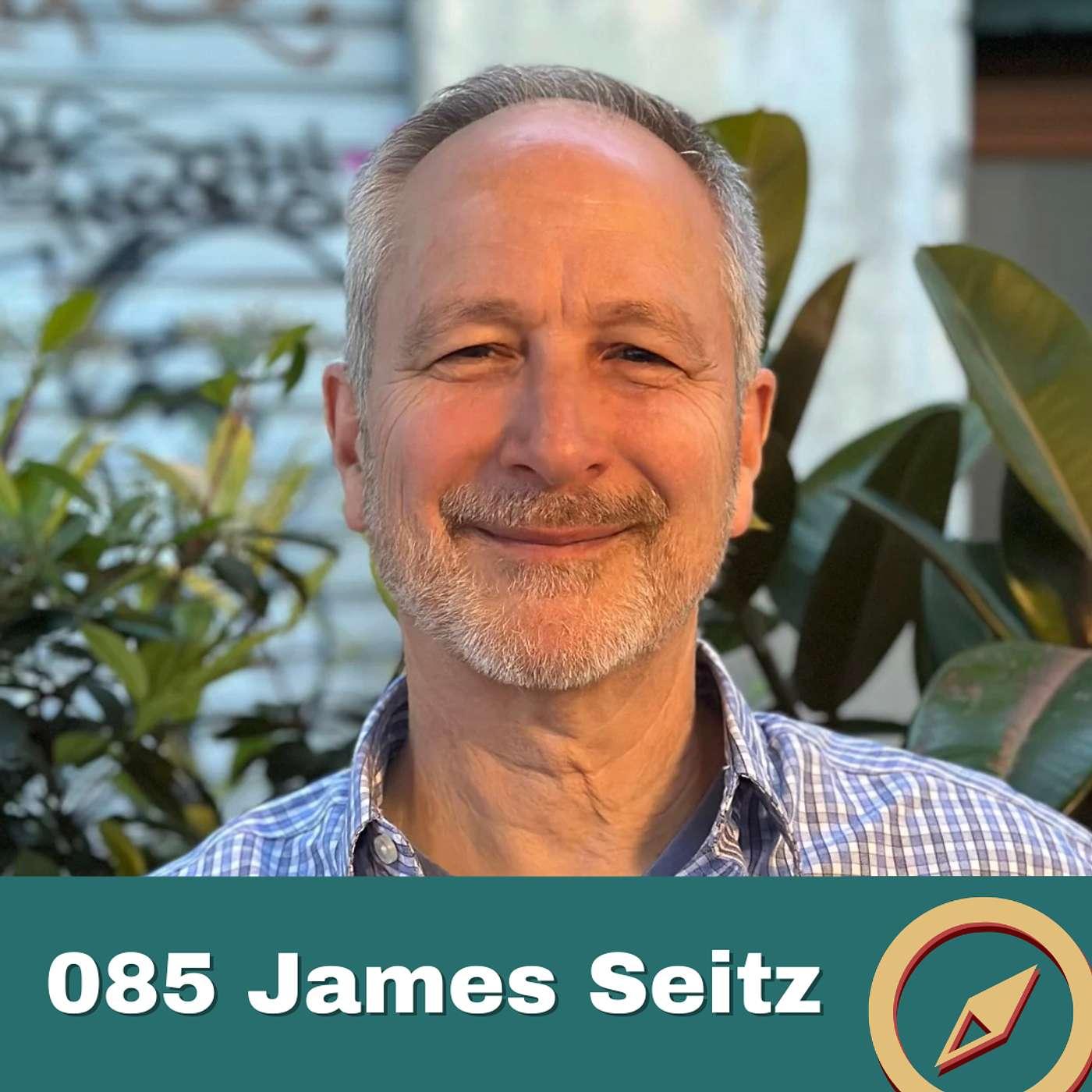
Last November, University of Virginia English professor James Seitz offered a workshop through the UVA Center for Teaching Excellence titled Teaching in the Age of AI: How Students Can Do All Their Writing in a Classroom.
00:01:16.120 --> 00:01:22.120
When I saw the workshop announcement, I have to admit that my initial reaction was not a positive one.
00:01:22.120 --> 00:01:31.000
Was this another call to return to the days of blue books with high-stakes essay exams depending on students being able to practice the lost art of handwriting?
00:01:31.000 --> 00:01:39.000
I wasn't able to attend the session, but when I read some notes on the workshop from a colleague who attended, my attitude changed completely.
00:01:39.400 --> 00:01:46.200
I'm excited to have Jim Seitz on the podcast today to share how he has moved the writing his students do into the classroom.
00:01:46.200 --> 00:02:01.159
This move is a response to generative AI's disruption of writing instruction, yes, but it's also the latest in a series of teaching choices Jim has made to teach his students writing as a way of thinking and to change their relationship with writing.
00:02:01.159 --> 00:02:07.400
Jim takes a very thoughtful and intentional approach to his in-class writing days, as you'll hear in our conversation.
00:02:07.400 --> 00:02:12.680
For one thing, and this is maybe what sold it for me, he's not asking students to write on paper.
00:02:12.680 --> 00:02:19.319
They're welcome to use their laptops as long as they've turned off their Wi-Fi and turned on their word processors' focus mode.
00:02:19.639 --> 00:02:25.240
Jim's story has really convinced me of the value of creating AI-free experiences for our students.
00:02:25.240 --> 00:02:29.159
And perhaps more importantly, distraction-free experiences.
00:02:29.159 --> 00:02:35.959
If you've been thinking about moving some of the cognitive work your students do into the classroom, Jim has a lot of wisdom to share.
00:02:47.319 --> 00:02:48.120
Great to be here.
00:02:48.120 --> 00:02:49.400
Thanks for inviting me.
00:02:50.280 --> 00:02:58.919
And we'll get into all things AI and writing here in a minute, but um I like to start my conversations with my guests looking backwards a little bit.
00:02:58.919 --> 00:03:04.199
Um, can you tell us about a time when you realized you want to be an educator?
00:03:05.639 --> 00:03:06.199
Sure.
00:03:06.199 --> 00:03:13.319
Um it was, I can remember it quite clearly actually because it happened in my uh senior year of high school.
00:03:13.319 --> 00:03:21.960
Um I was fortunate enough to go to a pretty rigorous private high school in Albuquerque, New Mexico on scholarship.
00:03:21.960 --> 00:03:24.840
My family wouldn't have been able to afford it otherwise.
00:03:24.840 --> 00:03:32.199
Um, and um the grading was tough, uh, the curriculum was tough, and the teachers were tough.
00:03:32.199 --> 00:03:41.960
And the last thing I thought I would ever do was become a teacher myself until um my 12th grade year when I had two really remarkable teachers.
00:03:41.960 --> 00:03:47.479
And part of what's interesting about it is they were completely the opposite pedagogically.
00:03:47.479 --> 00:04:02.840
One of them was a kind of know-it-all lecturer who was an English teacher, and uh he also could do Greek and Latin and knew philosophy and history, and he just seemed like a complete know-it-all.
00:04:02.840 --> 00:04:05.319
And but I was charmed by him.
00:04:05.479 --> 00:04:15.719
Uh, but the teacher who really influenced me was a humanities teacher that I had that year, and we read a bunch of um things in psychology and philosophy and so on and so forth.
00:04:15.719 --> 00:04:31.879
And he was just a marvelous leader of discussion, um, really did well with a kind of Socratic method, not the Socrates who tries to pin you in a corner, but more like the Socrates who's really interested in what his interlocutor thinks.
00:04:31.879 --> 00:04:39.080
And we often came away not sure at all what our teacher thought of things, but he had really elicited a lot from us.
00:04:39.080 --> 00:04:43.560
And that ended up influencing the way I wanted to go about things.
00:04:43.560 --> 00:04:52.120
And I can remember that you were sitting in class at one point thinking, wow, this wouldn't be such a bad thing to spend the rest of your life in the classroom.
00:04:52.120 --> 00:04:55.000
The classroom is a pretty good space to be.
00:04:55.399 --> 00:04:56.120
That's great.
00:04:56.120 --> 00:04:56.759
That's great.
00:04:56.759 --> 00:05:03.559
So you saw a potential future for yourself, thinking, I I'm I might like to create these types of discussions.
00:05:04.039 --> 00:05:04.840
Exactly.
00:05:05.159 --> 00:05:06.279
That's great.
00:05:06.279 --> 00:05:18.679
Well, um speaking of uh what happens in class, um, I'm I I'd like to start this kind of unpacking of how you're responding to AI fairly concretely.
00:05:18.679 --> 00:05:27.879
Um and so uh what what would a what does a typical class session in one of your writing courses look like right now as you're teaching it?
00:05:28.759 --> 00:05:29.159
Sure.
00:05:29.159 --> 00:05:34.360
Um I'm actually teaching a first-year writing course this semester, so it's fresh on my mind.
00:05:34.360 --> 00:05:37.879
Um I was just in class yesterday and we'll be there again tomorrow.
00:05:37.879 --> 00:05:41.000
And we really have two kinds of classes there.
00:05:41.000 --> 00:05:46.279
Um one is uh a class that's based on something they've read.
00:05:46.279 --> 00:05:56.279
And I assign no more than one essay per class, and it's usually relatively short, anywhere from 10 to 20 pages, and no more than that.
00:05:56.279 --> 00:06:14.840
And that's kind of part of a strategy I've developed recently, which is kind of that uh less is more, I think, when it comes to homework, particularly at least in, you know, if you're going to examine language and think about how something is written, then I don't want to give them uh too much to read.
00:06:14.840 --> 00:06:21.240
I want us to really be able to zero in on a single piece per class and talk about it in depth.
00:06:21.240 --> 00:06:23.559
So they'll read an essay.
00:06:23.559 --> 00:06:27.000
It's in a course packet that's printed out.
00:06:27.000 --> 00:06:34.759
Um, they don't read online, and I don't give them access to the articles online, though I'm sure they could find them that way if they wanted to.
00:06:34.759 --> 00:06:49.080
And uh we come in and we talk about it, and at some point we take 15 minutes to write about the essay, either right at the start of class so that they have some things to say to the questions I have in mind, or sometimes they lead discussion.
00:06:49.080 --> 00:06:58.360
I'll appoint two students to kind of come in with some questions, and then at the end of class, we'll write about what they feel that they've learned from that discussion.
00:06:58.360 --> 00:07:01.960
Um, so that's one kind of class, a discussion of the reading.
00:07:02.039 --> 00:07:08.360
And then another kind of class is the we spend the whole 75 minutes uh drafting an essay.
00:07:08.360 --> 00:07:19.320
And uh we do that a few times during the course of the term, and then at the end, there's another class where they get to choose one of the essays they've drafted and revise it in class.
00:07:19.320 --> 00:07:27.960
So, again, other than reading one essay outside of class, all of the work for the class really happens in the classroom.
00:07:27.960 --> 00:07:33.080
And that was the change that I brought about more recently as a result of AI.
00:07:34.120 --> 00:07:34.440
Okay.
00:07:34.440 --> 00:07:38.120
So um take me into that writing day.
00:07:38.120 --> 00:07:40.200
What are your students doing?
00:07:40.200 --> 00:07:41.399
What are you doing?
00:07:41.399 --> 00:07:43.960
What is the classroom setting like?
00:07:44.440 --> 00:07:45.080
Yeah.
00:07:45.080 --> 00:07:59.240
The one thing that happens that's different is that rather than us sitting in a circle with me sort of up toward the front of the room, um, they do sit in rows on that day.
00:07:59.240 --> 00:08:04.519
And I sit at the back of the class where I can see what's going on on their screens.
00:08:04.519 --> 00:08:16.919
And we begin by I ask them to go offline and then to go into Microsoft uh focus mode, which you know sets up a black border around the white page in the middle.
00:08:16.919 --> 00:08:20.440
It looks as if you're sitting down at a typewriter, basically.
00:08:20.440 --> 00:08:24.519
Um, and so, you know, they're not receiving notifications.
00:08:24.519 --> 00:08:27.879
They don't have apps down at the bottom of the screen or anything.
00:08:27.879 --> 00:08:33.000
It's just like all they're looking at are their words that they're typing onto the page.
00:08:33.000 --> 00:08:39.000
So it's pretty old school in that way, except that I'm not having them write by hand.
00:08:39.000 --> 00:08:41.559
They are actually doing it at the computer.
00:08:41.720 --> 00:08:45.240
And I found that they can get some pretty good flow going there.
00:08:45.240 --> 00:08:49.799
I asked them to write a minimum of 750 and 50 words.
00:08:49.799 --> 00:08:54.600
So that's, you know, roughly three pages, a little bit less than that.
00:08:54.600 --> 00:09:01.080
Um, and all of them really, my UVA students tend to write well over a thousand without any problem.
00:09:01.080 --> 00:09:07.720
I've had some students who write over 2,000 words in 75 minutes, they really get moving.
00:09:08.200 --> 00:09:21.639
Um, the other thing that I do is I tell them that I'm not looking for a kind of polished argument of the sort where, you know, they've identified some thesis in the first paragraph and then they're going to support it the rest of the way through.
00:09:21.639 --> 00:09:25.720
I tell them that this is an exercise in thinking on the page.
00:09:25.720 --> 00:09:43.960
And so that even if they start by thinking one way about whatever the subject is, if they've changed their minds and they think something else by the end, I want them to say that and sort of so that I see the development of that thought rather than, you know, worrying about inconsistency.
00:09:43.960 --> 00:09:48.120
It's not about um showing a final polished document.
00:09:48.120 --> 00:09:54.360
That seems to relax them, to get a sense that, oh, I can just kind of think about this.
00:09:54.360 --> 00:09:57.240
And I tell them to use a conversational voice.
00:09:57.240 --> 00:10:02.840
They don't have to sound like a scholar or, you know, pretend that they know it all.
00:10:02.840 --> 00:10:10.840
Just, you know, um the way they would talk to a friend or a family member about this thing that I've asked them to think about.
00:10:11.000 --> 00:10:26.040
And then I do a couple of other things, which I dim the lights in the class and um I bring in snacks, everybody gets uh something to eat, and um I put on soft jazz or classical music, so it has a kind of cafe atmosphere.
00:10:26.040 --> 00:10:32.759
And the first time around they do this, some of them say that, you know, they they still felt kind of nervous about the whole thing.
00:10:32.759 --> 00:10:36.600
But by the time we get to the second one, they've kind of gotten the idea.
00:10:36.600 --> 00:10:57.480
And particularly when I've shared with them excerpts from their classmates' work, and I highlight the ones that sound conversational, that show a change of thinking, that show a kind of relaxation there in terms of the way they're going about it, instead of like what I think of as AP exam writing.
00:10:57.480 --> 00:11:05.560
Um, these students, the ones that I have, tend to be quite proficient at AP exam writing and eager to show it off.
00:11:05.560 --> 00:11:12.920
And when I'm not sharing examples of that, but something else, that kind of gives them a sense of how else they might go about it.
00:11:14.200 --> 00:11:23.160
So there's a lot to unpack here, but I I know this is this this approach to using your class time is in part a response to generative AI.
00:11:23.160 --> 00:11:25.240
So I'm gonna back us up a little bit.
00:11:25.399 --> 00:11:25.720
Yeah.
00:11:25.879 --> 00:11:33.960
Um how did you what was your response when when we we learned about Chat GPT and these other tools back in 22 and 23?
00:11:33.960 --> 00:11:37.560
How what was your initial response as a teacher to to these tools?
00:11:37.560 --> 00:11:40.120
And and maybe how has that changed over time?
00:11:40.519 --> 00:11:41.800
Yeah, that's a great question.
00:11:41.800 --> 00:11:44.519
And I'll just say I was slow to respond.
00:11:44.519 --> 00:11:51.639
And in part it was because um I have these sort of highly personalized assignments that I give.
00:11:51.639 --> 00:12:05.240
And I thought that the fact that students were writing about themselves, or I always give them the option of writing about someone they know well if they want to apply the assignment to that instead of to their own personal life.
00:12:05.240 --> 00:12:19.240
But I just thought that this was some, I could imagine, you know, that chat, GPT, and whatnot were going to help students uh uh write academic arguments, but I thought that I was getting around that by personalizing things.
00:12:19.240 --> 00:12:26.360
And I think to some degree I was, because a lot of students, I think, wanted to write about themselves.
00:12:26.360 --> 00:12:31.560
They not often not given that opportunity, and so they found that engaging.
00:12:31.560 --> 00:12:49.399
But I don't doubt, and I'm I've gone back and I mean, certainly I was alerted along the way in 2023 to essays that sounded uh not so not so personal after all, or in or kind of ham-fisted in their attempt to be that way.
00:12:49.560 --> 00:13:03.320
And so it wasn't until I was on sabbatical in fall of 2024, so about a year and a half ago, I started feeding my personal writing assignments into chat and saw what it was doing with them.
00:13:03.320 --> 00:13:13.879
And I thought, wow, it's actually producing, you know, it's pretending to be a person, it's creating past experiences, it's uh pretending to have emotions.
00:13:13.879 --> 00:13:17.639
Um, it's really doing a fairly decent job of this.
00:13:17.639 --> 00:13:21.160
And I can imagine students being tempted to use it.
00:13:21.160 --> 00:13:32.519
So as I was planning for my spring of 2025 classes, so like the classes I taught a year ago, I thought, I've got to find a way around this.
00:13:32.519 --> 00:13:40.360
And the more I thought about it, the more I couldn't see a way out that wasn't like all the way out.
00:13:40.759 --> 00:13:43.720
It was, you know, I couldn't find a way to do this.
00:13:43.720 --> 00:13:55.240
And I talked to various uh colleagues about it, and many of them were saying, well, you know, we we start the assignment in class and then I send them home to finish it at home.
00:13:55.240 --> 00:14:04.600
And I would think, yeah, and so then they have chat finish it for them, or rewrite the whole thing, and you don't even know what they started in class.
00:14:04.600 --> 00:14:19.080
And just pretty much every version of things that I heard colleagues talk about that were sort of halfway measures seemed to me to not answer up to what's going to happen once they got home.
00:14:19.080 --> 00:14:21.240
There was a lot of trust there.
00:14:21.240 --> 00:14:30.360
And actually, I do trust most of my students to uh sort of uh follow the guidelines of the course.
00:14:30.360 --> 00:14:44.200
But I don't know, the more I read about examples, there are some pretty alarmist essays out there by like that one that Hua Hsu published in The New Yorker, the end of the essay, that came out while I was on sabbatical.
00:14:44.200 --> 00:14:58.279
And I was like, my God, he's going out talking to these students at NYU and other, you know, um high, I don't know, where students, there's a lot of uh, you know, high engagement on the part of students you would think.
00:14:58.279 --> 00:15:04.680
And they were talking about how they wrote their term papers in five minutes using chat and this sort of thing.
00:15:04.680 --> 00:15:12.200
And um, I don't think things are probably quite as bad as they're often presented, but they could get that bad.
00:15:12.440 --> 00:15:17.080
And I just didn't want to be thinking about it when I was reading students' pieces.
00:15:17.080 --> 00:15:20.680
I didn't want to be wondering where did this come from?
00:15:20.680 --> 00:15:26.279
I thought, I want to know where this came from, and I want to be right there seeing it happen.
00:15:26.279 --> 00:15:31.800
So I realized there's a lot of problems with that position, and I'm not always comfortable with it.
00:15:31.800 --> 00:15:35.000
But it was the best I could come up with at the time.
00:15:35.000 --> 00:15:40.759
And um I'll I'll tell you later how I'm starting to change uh my thinking about this.
00:15:40.759 --> 00:15:47.000
But at first, you know, for the last year and a half, it's just been like, let's get them away from it entirely.
00:15:47.560 --> 00:15:56.200
So moving the writing into the classroom like this, does it change the has it changed the nature of the writing assignments you give students?
00:15:56.200 --> 00:16:00.040
Like they can't, they can't, if they're writing 750 words, right?
00:16:00.040 --> 00:16:04.120
They're not doing that 10 to 15 page term paper, right?
00:16:04.120 --> 00:16:06.920
They're they're is that something you did before?
00:16:06.920 --> 00:16:10.680
Like, like how do how does how do the writing assignments look different?
00:16:10.680 --> 00:16:13.879
And maybe what does that say about your goals for this course?
00:16:14.519 --> 00:16:17.800
Yeah, um, AI didn't really change that.
00:16:17.800 --> 00:16:24.120
I had, oh, six or seven years ago, already moved to shorter assignments.
00:16:24.120 --> 00:16:30.519
I had lost faith in the long assignment as actually being that valuable for the students.
00:16:30.519 --> 00:16:47.320
And um, I don't know, there's nothing like finishing the semester and going home with a stack of 15 to 20 page papers and reading through most of them and thinking, oh my God, I am so bored and how boring must this have been to produce?
00:16:47.320 --> 00:16:56.360
And um, you know, this could just reflect on the fact that my assignments weren't as good as they should have been.
00:16:56.360 --> 00:17:05.319
Or uh maybe I'm misjudging the pleasure that the students might have taken in them versus the what they were like for me to read.
00:17:05.319 --> 00:17:20.039
But I just knew that I just started thinking, I think I can get a lot more to happen in a shorter version that doesn't put so much emphasis on the end of the semester, but puts emphasis on what happens throughout the semester.
00:17:20.440 --> 00:17:30.599
So I really started going toward more in terms of uh um, you know, less is more in terms of reading and less is more in terms of writing for my class.
00:17:30.599 --> 00:17:35.400
I'm not even necessarily recommending that for anybody else, but this is the way I ended up going.
00:17:35.400 --> 00:17:37.480
So AI didn't really change that.
00:17:37.480 --> 00:17:45.960
It was easy enough to move from the shorter assignments I was asking students to write at home to just shift those into the classroom.
00:17:45.960 --> 00:17:54.920
I do see, though, and talk with colleagues all the time who want to continue doing longer assignments, and they're freaked out by AI.
00:17:54.920 --> 00:17:58.680
You know, they're just not quite sure how they're supposed to keep doing this.
00:17:58.680 --> 00:18:05.000
Um, and so uh, you know, I still think you can do that by spreading it out across the semester.
00:18:05.000 --> 00:18:17.400
Um, but you know, they're still having students do a lot of the work at home, and I think that at least puts the temptation in front of students, whether they're whether they actually act on it or not.
00:18:17.400 --> 00:18:22.200
But the temptation is certainly going to be there to have um, you know, AI help them.
00:18:22.519 --> 00:18:37.960
Hey, this is Future Derek jumping in to say that if you're looking for a model for moving a longer writing assignment into the classroom, spreading out the work over multiple class sessions, you should check out what University of South Florida philosophy professor Lily Abadal is doing.
00:18:37.960 --> 00:18:45.240
See the show notes for an interview with Professor Abadal on Notre Dame University's Design for Learning podcast, hosted by Jim Lang.
00:18:45.240 --> 00:18:51.559
So, what how how do you describe your course goals to your students?
00:18:51.559 --> 00:18:56.519
Uh you're you're helping them learn to write, but what does that mean in this instance?
00:18:57.079 --> 00:19:05.880
Yeah, that's a great question because I would say that that's another reason why my assignments changed uh long before AI came on the scene.
00:19:05.880 --> 00:19:16.039
Uh the other thing that I realized was that I had lost faith in trying to help them improve individual papers.
00:19:16.039 --> 00:19:21.319
I thought, why am I putting so much emphasis on this?
00:19:21.319 --> 00:19:29.160
And why are they having to work so hard at improving this particular piece of writing?
00:19:29.160 --> 00:19:39.960
What will ever happen with that piece of school writing that they did in October, you know, just before midterm or even at the end of the semester or whatever?
00:19:39.960 --> 00:19:46.039
I don't know the same thing that happened to all of my college papers, as you know, they eventually ended up in the trash.
00:19:46.039 --> 00:19:52.360
Um, it's not that I wasn't uh advancing as a writer through working on them.
00:19:52.360 --> 00:20:06.440
It was just that I thought the thing that really matters here is the advancement as a writer, the development of the writer, not the writing in terms of that particular piece of writing.
00:20:06.920 --> 00:20:29.799
Um and I also rarely, almost never, in you know, 40 years of teaching, I could probably count the students on two hands that I felt that in 15 weeks made a change that was really visible, or that I felt thought, wow, something dynamic really happened here to this student's writing.
00:20:29.799 --> 00:20:33.880
Most of the time, I don't see that much difference.
00:20:33.880 --> 00:20:39.240
Um, and again, maybe that's my shortcoming as a teacher or my assignments.
00:20:39.240 --> 00:20:42.600
I don't know, but I tried a lot of different ways of going about this.
00:20:42.600 --> 00:20:44.200
I'm pretty serious about it.
00:20:44.200 --> 00:20:50.360
And I just I've also seen very few examples from colleagues.
00:20:50.360 --> 00:21:09.799
And when I talk to colleagues about revised papers and whatnot, what we mostly end up seeing are students who are trying so hard to make the paper better that actually they, you know, they edit and they they're confined by the draft that they initially wrote.
00:21:09.799 --> 00:21:19.000
Um, so I did start doing this thing with uh long ago with revision, where I would just say, look, you have to change at least 50% of the paper.
00:21:19.000 --> 00:21:23.000
And what I really want you to do is change 100% of it.
00:21:23.000 --> 00:21:31.079
I'd like you to just throw away what you wrote so it won't confine you as you think about what you could produce next.
00:21:31.559 --> 00:21:46.920
So it was a thing of both going away from longer papers, from um thinking so much about the paper being the thing, and also uh pulling back from revision as being this kind of sacred cow in uh writing studies.
00:21:46.920 --> 00:21:48.839
I don't see it that way as all.
00:21:48.839 --> 00:21:53.000
I see the first draft as the place where the real action is.
00:21:53.000 --> 00:21:55.960
That's where the thinking on the page tends to take place.
00:21:55.960 --> 00:22:03.559
And so, yes, I let them, my nod to revision is to let them revise something at the end of the semester if they want to.
00:22:03.559 --> 00:22:05.240
I make it totally optional.
00:22:05.240 --> 00:22:09.640
They can write a fourth new draft if they want, and some go that way.
00:22:11.079 --> 00:22:15.319
You had asked me, you know, how do I explain my goals to them?
00:22:15.319 --> 00:22:29.319
And I think, you know, what I was trying to build toward is that I tell them that what I'm interested in is not the quality of their papers per se, or improving those papers.
00:22:29.319 --> 00:22:35.799
That's what I want to change, if possible, is their relationship to writing.
00:22:35.799 --> 00:22:43.079
Not the specific pieces of writing themselves, but their relationship to writing.
00:22:43.079 --> 00:23:02.920
And there, I think their relationship to writing has really been corrupted by the influence of AP exams and various kinds of formulaic writing that place these strictures and rubrics and so on and so forth on what the writing outcome should be.
00:23:02.920 --> 00:23:06.759
I would like that outcome to actually be unpredictable.
00:23:06.759 --> 00:23:23.079
And I would like it to be their experience on the page to be a matter of discovery, as opposed to trying to, you know, abide by preordained rules that the teacher has given them for what a good paper will be.
00:23:23.079 --> 00:23:34.279
And so, my in my experience, the the way I go about changing their writing, I'm not saying other people should do that, is to have them want to have a personal stake in it.
00:23:34.279 --> 00:23:57.480
So that has really been the reason why I've moved from first-year writing classes that are based in academic writing to first-year classes that are based in personal writing, because I've found that they develop a personal stake in their writing and their relationship to writing much more quickly through that method than they do uh through academic uh methods.
00:23:57.480 --> 00:24:02.200
I also know they're gonna get a lot of academic assignments during the course of their college career.
00:24:02.200 --> 00:24:05.559
So it feels like, hey, this is a place where something else could happen.
00:24:05.559 --> 00:24:06.519
Yeah.
00:24:06.759 --> 00:24:07.079
Yeah.
00:24:07.079 --> 00:24:11.720
So I'm gonna ask the uh maybe obvious question.
00:24:11.720 --> 00:24:15.400
How how do you grade and how do you grade for that?
00:24:16.120 --> 00:24:16.360
Yeah.
00:24:16.360 --> 00:24:28.680
Yeah, my grading had to change when I moved to this because you can't ask people, I don't think, um, to take risks on the page and then punish them for taking them.
00:24:28.680 --> 00:24:41.079
So um the thing about taking risks and experimenting with your writing and exploring and seeing where your thinking takes you is that sometimes it doesn't work or it falls flat or whatever.
00:24:41.079 --> 00:24:45.559
And then I feel like, well, I can talk with the student about why.
00:24:45.559 --> 00:24:59.240
We can have a conversation about what went, why did this go off track or run aground or what questions might lead you to, you know, get back on your feet with this line of thinking that you were taking.
00:24:59.480 --> 00:25:14.839
Um, and so I actually use a version of specifications grading, though I would call it much less specific in a sense that, you know, I just basically students have to come to class.
00:25:14.839 --> 00:25:19.400
Um, I mean, I really want 100% attendance aside from illness.
00:25:19.400 --> 00:25:20.920
And I generally get it.
00:25:20.920 --> 00:25:24.920
I would say about 90% of my students come to every class.
00:25:24.920 --> 00:25:29.319
And um, and I want that because that's where the work takes place.
00:25:29.319 --> 00:25:33.559
And then I want them to do complete all the assignments.
00:25:33.559 --> 00:25:35.640
I want them to complete them on time.
00:25:35.640 --> 00:25:43.960
And if they don't, they have to actually, if they're not there to do one of their writings, they have to come in on Saturday morning early to meet me in my office to make it up.
00:25:43.960 --> 00:26:07.079
So I found that that ends up being pretty um uh motivating for them to um and so you know, I'm contributing to grade inflation for sure by having students um, you know, complete the assignments at a certain level of requirement and um and thereby get a good grade.
00:26:07.079 --> 00:26:11.960
But I mean, this goes along with my what I would really like to see happen.
00:26:12.039 --> 00:26:22.200
I saw recently that Harvard is um, you know, going to start trying to set up a thing where only um a certain number of students can get A's in class and so on.
00:26:22.200 --> 00:26:29.559
I I just want us in humanities classes, or at least the kinds of classes I teach, just go to credit, no credit.
00:26:29.559 --> 00:26:32.519
Uh I just don't want to give grades anymore.
00:26:32.519 --> 00:26:37.559
Um and I mean, who won't uh giving grades is, you know, people have complained about that for decades.
00:26:37.559 --> 00:26:45.000
But particularly in a class like this, where the point is to engage in the process.
00:26:45.000 --> 00:26:48.360
And I'm a real believer in process now.
00:26:48.360 --> 00:26:52.039
AI has made me even more of a believer in process than it used to.
00:26:52.039 --> 00:26:56.360
I think it's actually a boon to process-oriented education.
00:26:56.360 --> 00:27:07.160
Um and uh now I just believe in it more than ever, but I also believe that process isn't something to be graded in the typical ABC kind of way.
00:27:07.160 --> 00:27:10.519
Um, so it has changed my grading in that respect.
00:27:10.519 --> 00:27:15.240
I used to be quite the stickler as a grader, and I'm not anymore.
00:27:15.240 --> 00:27:19.960
And um, there are gains and losses that come with that, but I'll I'll take them.
00:27:20.440 --> 00:27:20.759
Okay.
00:27:20.759 --> 00:27:30.600
So then what um uh I I I'm gonna let the the voices over here are complaining about grade inflation.
00:27:30.600 --> 00:27:32.120
They can go talk to the wall for a minute.
00:27:32.120 --> 00:27:32.839
Yeah, thank you.
00:27:32.839 --> 00:27:40.200
I'm gonna I'm curious what your role is in this process that you're having the students engage in.
00:27:40.200 --> 00:27:41.960
What do you do during class?
00:27:41.960 --> 00:27:45.559
And then what happens after a writing class like that?
00:27:45.559 --> 00:27:51.240
Because presumably, like you said, it's not that they they turn in the essay and then it goes in the trash, right?
00:27:51.240 --> 00:27:54.279
There's a there's there's there's something that happens after the writing too.
00:27:54.519 --> 00:27:55.160
Yeah.
00:27:55.160 --> 00:28:06.680
So I go home and I read through all of them first at once, and um, I find that a very pleasant experience, you know, just seeing what they've what they've written.
00:28:06.680 --> 00:28:11.640
The other thing is that when students are writing about themselves as you learn about them.
00:28:11.640 --> 00:28:13.960
And uh so I find it very informative.
00:28:13.960 --> 00:28:22.759
I know my I know my students now so much better than I ever used to know them, and um in large part because of their writing.
00:28:22.759 --> 00:28:46.440
Um, and then, you know, I write back also in a very conversational way to them about, you know, um generally trying to first of all really appreciate whatever work they've done on the page, whatever thinking they've done to try to tackle a problem or work through an issue.
00:28:46.440 --> 00:28:51.640
And then to say, you know, have you considered this perspective?
00:28:51.640 --> 00:28:56.600
You know, something that is beyond the way they've been looking at it.
00:28:56.600 --> 00:29:00.360
Uh maybe it would be useful to think about X or Y.
00:29:00.360 --> 00:29:07.799
And again, my comments are not uh directed toward here's how you would improve this paper next time.
00:29:07.799 --> 00:29:12.279
It's here's where you could, where you might want to take your thinking.
00:29:12.279 --> 00:29:21.559
Here are some questions that you haven't considered yet that it were you to expand on this, this would be a direction you could go.
00:29:21.559 --> 00:29:34.200
And then I ask them to write back to me about what I've written to them, you know, like um uh well, what do you think of that suggestion, or what what comes to mind as a result of what I've said?
00:29:34.200 --> 00:29:38.200
So that I it's not just like I respond and that's the end of it.
00:29:38.200 --> 00:29:38.600
Yeah.
00:29:38.600 --> 00:29:38.920
Yeah.
00:29:38.920 --> 00:29:40.279
So that's kind of what happens.
00:29:40.279 --> 00:29:47.960
And then they also look at each other's papers anonymously because this is, you know, because of the personal nature of the subject matter.
00:29:47.960 --> 00:29:56.440
I just group them together and give them three papers from uh those in their group uh that are anonymous, and they read them.
00:29:56.440 --> 00:30:08.200
And instead of giving feedback to the writers, they then write to me about what they've learned about their own writing as a result of reading what, uh reading their peers' papers.
00:30:08.200 --> 00:30:11.799
And a lot of times they'll say, Wow, so-and-so did X.
00:30:11.799 --> 00:30:13.559
I didn't know I could do that.
00:30:13.559 --> 00:30:16.519
Like this person cracked a joke in their paper.
00:30:16.519 --> 00:30:18.279
You mean we can be funny?
00:30:18.279 --> 00:30:20.039
Oh, yeah, of course.
00:30:20.039 --> 00:30:21.480
You know, that sort of thing.
00:30:21.799 --> 00:30:23.079
Yeah, yeah, I love that.
00:30:23.079 --> 00:30:29.880
Because I I do feel like, you know, a lot of college students it's just a lack of imagination or experience.
00:30:29.880 --> 00:30:32.279
They don't know the moves that they can make as writers.
00:30:32.519 --> 00:30:32.839
Yeah.
00:30:33.000 --> 00:30:37.319
Um, and so and they're not always great at giving each other feedback to begin with.
00:30:37.319 --> 00:30:42.519
So why not let let the input go like the way that it maybe is most fruitful?
00:30:42.839 --> 00:30:43.400
Yes.
00:30:43.720 --> 00:30:44.039
Yeah.
00:30:44.039 --> 00:30:55.799
So does that um those later stages when you have them read and respond to other students or they're responding to your comments, does that also happen during class?
00:30:57.079 --> 00:30:59.960
That um that does not.
00:30:59.960 --> 00:31:04.440
My my comments, of course, are happening at home as I'm reading.
00:31:04.440 --> 00:31:07.799
And then let's see, I guess I have done it two ways.
00:31:07.799 --> 00:31:16.600
I've both said, hey, do you uh just send me, send me back by Sunday night, send me a reply to my comment.
00:31:16.600 --> 00:31:20.680
But I guess I have on a couple of occasions done it in class too.
00:31:20.680 --> 00:31:23.559
I've said, hey, why don't you pull my comment up and write here?
00:31:23.559 --> 00:31:28.279
I'm realizing, of course, that they could have Chat GPT respond to my comment.
00:31:28.279 --> 00:31:30.839
Um, it doesn't appear that they are though.
00:31:30.839 --> 00:31:33.240
They don't have to write that much to begin with.
00:31:33.240 --> 00:31:35.640
I'm really just asking for a paragraph.
00:31:35.640 --> 00:31:35.960
No.
00:31:35.960 --> 00:31:40.440
And um I think uh they can usually bang that out pretty quickly.
00:31:40.440 --> 00:31:44.440
So um probably not too much of a hazard there, I hope.
00:31:44.759 --> 00:31:45.160
Right.
00:31:45.160 --> 00:31:58.519
And if they have indeed put some of themselves in their writing, yeah, having done that in class in this environment that's conducive to that, and then you as a reader have attended to that, right?
00:31:58.519 --> 00:32:01.960
Have have have read them and thought about it and responded.
00:32:01.960 --> 00:32:05.799
I feel like there's a kind of human connection there that you wouldn't want to let go of at that point.
00:32:05.799 --> 00:32:07.559
You're like two links in the chain at that point.
00:32:07.559 --> 00:32:09.640
So why why let the robot take over now?
00:32:09.880 --> 00:32:11.000
Yes, exactly.
00:32:11.319 --> 00:32:11.799
Yeah.
00:32:11.799 --> 00:32:14.120
So what do you do during a writing class?
00:32:14.120 --> 00:32:16.519
Are you just sitting at the back of the room the whole time?
00:32:17.640 --> 00:32:18.279
I am.
00:32:18.279 --> 00:32:20.039
I'm uh I'm sitting there.
00:32:20.039 --> 00:32:24.600
I'm I'm you know, sometimes they'll call me over for a question about something.
00:32:24.600 --> 00:32:28.920
Again, it's usually on the uh order of can my can I do this?
00:32:28.920 --> 00:32:31.160
Am I allowed to do X?
00:32:31.160 --> 00:32:33.559
Well, yeah, you're allowed to do it, you know.
00:32:33.559 --> 00:32:36.120
There's there's a lot of this, I don't know.
00:32:36.120 --> 00:32:47.880
I feel with first year students, especially, because they just come out of high school, they don't quite realize that uh they're adults in college and that that comes with a lot more agency than they used to have.
00:32:47.880 --> 00:32:54.200
And so learning about their agency can can be something that the course is also about.
00:32:54.200 --> 00:33:01.400
And I noticed that Annette uh Vee, my former colleague at Pitt, talks a lot about student agency in very interesting ways.
00:33:01.400 --> 00:33:07.240
And I'm very much behind that notion that we should treat students as adults.
00:33:07.240 --> 00:33:14.680
Even though I can see how, you know, you could say, well, you're Jim, you're not treating them as an adult because you're forcing them to write in class.
00:33:14.680 --> 00:33:17.079
You should just have them do that at home.
00:33:17.079 --> 00:33:27.799
But I see it more as uh uh taking temptation away from the, and I should add, even more so than temptation, distraction.
00:33:28.200 --> 00:33:36.759
So what my students say, the thing that has convinced me really more than anything else about the value of in-class writing has been what they say about it.
00:33:36.759 --> 00:33:47.799
So I've taught about, um, I guess I've had about, if I include my students this semester, I've had about 90 students who have been doing all their writing in class now.
00:33:47.799 --> 00:33:58.839
And of the 60 who I've talked with about it, both in one-on-one conferences, which you could say, oh, they're talking with you, maybe they're afraid to tell you what's what they don't like about it.
00:33:58.839 --> 00:34:03.480
But then in anonymous course evaluations, where it's one of the questions.
00:34:03.480 --> 00:34:12.599
100% of the 60 students said they prefer the in-class essay to the essay at home.
00:34:12.599 --> 00:34:14.519
And I was like, why?
00:34:14.519 --> 00:34:15.880
What are the reasons?
00:34:15.880 --> 00:34:18.119
And these are the reasons that they give.
00:34:18.279 --> 00:34:27.319
The first one is if they have to write an essay at home, they feel guilty about how long it takes them to actually sit down and do it.
00:34:27.319 --> 00:34:30.679
So it's kind of anxiety provoking.
00:34:30.679 --> 00:34:32.920
They're like, wow, I should be working on my essay.
00:34:32.920 --> 00:34:35.159
I know I should be working on it, I'm not working on it.
00:34:35.159 --> 00:34:37.959
Wait till the last minute, et cetera, et cetera.
00:34:37.959 --> 00:34:40.599
Second, this is the one I think is most important.
00:34:40.599 --> 00:34:48.279
I remember this one student saying, you know, in the course of writing my first paragraph, I would check my phone 20 times.
00:34:48.279 --> 00:34:51.639
So I can't get any momentum going.
00:34:51.639 --> 00:34:53.480
And many students have said that.
00:34:53.480 --> 00:34:58.199
The distractions abound and they just can't get moving on it.
00:34:58.199 --> 00:35:11.159
And then the third thing that they say is that it turns out that some of them feel anxious about the kind of writing solo, and that there's a communal atmosphere of writing together in the classroom.
00:35:11.159 --> 00:35:15.399
And they all say they love, of course, getting it done in 75 minutes.
00:35:15.399 --> 00:35:18.279
You know, doesn't hang over their head anymore.
00:35:18.279 --> 00:35:19.559
It's done.
00:35:19.559 --> 00:35:27.959
But the main thing they, you know, it's this issue of focus, that they can focus in class without the distractions.
00:35:27.959 --> 00:35:45.799
And that has made me a believer that there's something here that may not mean that we never give them any at-home writing, but it does mean to me that there's value in some substantial periods of in-class writing that they will find valuable because the distractions aren't there.
00:35:48.359 --> 00:35:54.759
Do you see this as a strategy that could work in just about any course or should be in any course?
00:35:55.959 --> 00:36:09.000
Yeah, I mean, uh if I were teaching any other course, if I were teaching anthropology, if I were teaching history, whatever, I would be doing something like this during at least, let's say 50% of the writing.
00:36:09.000 --> 00:36:16.439
I would want to have, let's have it take place in class and um and see what comes of that.
00:36:16.439 --> 00:36:33.000
Um and I think, as you know, that I've proposed something at UVA called focus courses, where you know, students would know in advance that when they signed up for a course, that it would be a focus course, and that that would mean we're gonna basically be doing things analog.
00:36:33.000 --> 00:36:39.399
Um and uh I think the university needs to preserve room for that.
00:36:39.399 --> 00:36:45.079
I'm not one of these people who thinks that AI should be banned from the university or it's all bad or anything like that.
00:36:45.079 --> 00:37:02.599
I just think that some courses, and writing is particularly an important one, need to protect that space uh from distractions and also from AI stepping in to do the work that students uh need to learn how to do themselves.
00:37:03.239 --> 00:37:08.119
Are there students who take issue with the environment that you've created?
00:37:08.119 --> 00:37:10.679
I mean, students learn and write in very different ways.
00:37:10.679 --> 00:37:15.959
Are there ones who've pushed back a little bit on the like the lighting or the music or anything like that?
00:37:16.679 --> 00:37:24.119
I had actually for the first time, I had a student this semester after they wrote their first paper a couple of weeks ago.
00:37:24.119 --> 00:37:27.399
Um, I asked them, uh, what did you think?
00:37:27.399 --> 00:37:34.839
Uh they I had them write a little comment after they finished, and then like, A, what were the, what do they think of what they just did?
00:37:34.839 --> 00:37:39.719
And what did they think of the environment of writing in class, et cetera, et cetera?
00:37:39.719 --> 00:37:50.279
Out of the 16 students, um, one said, uh, I actually don't like writing in class because I really like to have more time.
00:37:50.279 --> 00:38:03.079
He said, I'm I'm kind of slow in what I produce, and I feel like I really like to take more than one session before I show share my writing with someone.
00:38:03.079 --> 00:38:04.199
And I get that.
00:38:04.199 --> 00:38:19.879
I I actually would be more like that student than I would be like uh the others I've been describing, because I do tend to uh, you know, take my time with writing, and I don't like sharing it unless I've gone over it a number of times.
00:38:19.879 --> 00:38:26.279
Um so I related to what he said, but um that has been uh that was a minority opinion for sure.
00:38:27.399 --> 00:38:35.239
Sure, but uh and I guess part of this is helping perhaps that student see some value in more in earlier sharing.
00:38:35.239 --> 00:38:37.719
It is more vulnerable, perhaps.
00:38:37.719 --> 00:38:41.879
Um, but it's something they could grow into maybe and get some value out of.
00:38:42.199 --> 00:38:42.759
I hope so.
00:38:42.759 --> 00:38:47.480
I'm very interested in seeing what that student says at the end of the semester, what they think.
00:38:47.480 --> 00:38:52.919
If having done it uh at least four times, they come away thinking, oh, you know what?
00:38:52.919 --> 00:38:55.959
Um that's not as bad as I thought it was at the start.
00:38:56.279 --> 00:38:56.599
Right.
00:38:56.679 --> 00:38:57.319
Yeah.
00:38:57.639 --> 00:39:00.279
Well, um, I do want to look ahead a little bit.
00:39:00.279 --> 00:39:00.919
Sure.
00:39:00.919 --> 00:39:02.679
What's what's next for you?
00:39:02.679 --> 00:39:05.159
Are you are you changing up the strategy?
00:39:05.159 --> 00:39:07.799
Are you trying out new approaches this spring?
00:39:08.279 --> 00:39:09.639
I'm going, I'm going to be.
00:39:09.639 --> 00:39:19.879
Well, this spring I did one thing that I regret, which uh is that I regressed even further, and I've been having my students do their um all their in-class writing.
00:39:19.879 --> 00:39:24.599
We we write responses every day and sometimes do sentence exercises and whatnot.
00:39:24.599 --> 00:39:30.439
And I I bought them uh little notebooks and I've been having them do those with you know pen and paper.
00:39:30.439 --> 00:39:39.799
The essays, I'm still allowing them to write on their computer because they they kind of lose momentum uh if they don't uh have the the keyboard.
00:39:39.799 --> 00:39:45.000
But I'm regretting having gone to the uh to the pen and paper.
00:39:45.000 --> 00:39:53.079
There's to my mind, there's only well, there are a couple of advantages, but the one, the big one is that it's just quieter.
00:39:53.079 --> 00:40:09.239
People aren't clacking away, and you don't have to listen to, you know, if you're a sort of slower writer, you don't have to listen to the person next to you who's racing away and making you potentially feel like, oh my god, I'm not doing anything here.
00:40:09.239 --> 00:40:15.000
And um, but so it's quieter, and I know they're doing it.
00:40:15.000 --> 00:40:18.279
There's no way they can fool me with AI here.
00:40:18.279 --> 00:40:19.000
Right.
00:40:19.000 --> 00:40:21.879
Um so those are the two advantages.
00:40:22.039 --> 00:40:24.679
The disadvantages are uh significant though.
00:40:24.679 --> 00:40:33.239
One is that I found they really do write quite a bit less than um they were able to bang out in 15 minutes on the keyboard.
00:40:33.239 --> 00:40:39.719
And so less, it just feels to me like I'm slowing down their thinking, and that doesn't seem to be a good thing.
00:40:39.719 --> 00:40:40.439
Right.
00:40:40.439 --> 00:40:49.000
The second thing is that, you know, some of them have abysmal handwriting, and I just find it really, really difficult to read.
00:40:49.000 --> 00:40:57.719
And then the third thing is that since it's not online, I can't fit it into like the course uh grading and record keeping system.
00:40:57.719 --> 00:41:04.919
So I have to do that by hand on the side, and I write back to them by hand, and I don't like it either.
00:41:04.919 --> 00:41:09.879
It slows me down and gives me cramps in my uh, you know, hand and so on.
00:41:09.879 --> 00:41:20.679
So I'm gonna maybe after spring break, I may just change mid-stride here and go right back to having them write on the computer for even their shorter responses.
00:41:20.679 --> 00:41:29.959
Now, I know I have colleagues here at UVA who absolutely swear by having students do handwriting for the whole semester, but I'm finding it's not for me.
00:41:31.079 --> 00:41:34.519
Oh, and then you know, you asked me what's next though in the future.
00:41:34.519 --> 00:41:56.199
Like basically getting ready for this interview and uh looking uh through, listening to some of the podcasts you've done and looking up pieces by things like my colleague, uh, you know, former colleague Annette V, or things that uh Ethan King, my current colleague, does, um, and others at UVA, Heidi Noble's, etc.
00:41:56.199 --> 00:42:06.119
I'm I really am beginning to see that there there is potential for AI to do some very interesting things with students in regard to writing.
00:42:06.119 --> 00:42:12.039
Um, and I'm I don't feel like such the Leadite about it anymore.
00:42:12.039 --> 00:42:25.399
Um, I still think I'm gonna have a lot of the writing be done in class, but I'm very curious about the kind of responses they might get to their writing from AI and then compare those to human responses.
00:42:25.399 --> 00:42:29.959
I mean, what's what could be bad with getting more feedback about your writing?
00:42:29.959 --> 00:42:31.879
That seems like a good thing.
00:42:31.879 --> 00:42:37.959
Um, and to compare it with and see the differences between what human beings say back.
00:42:38.919 --> 00:42:39.799
Yeah, yeah.
00:42:39.799 --> 00:42:45.639
I think the risk that some faculty see is that students will ascribe too much authority to the AI.
00:42:45.799 --> 00:42:45.959
Yeah.
00:42:46.119 --> 00:42:52.599
So I think as long as you're careful to try to mitigate that and help them understand this is one source of input, but it's a flawed source.
00:42:52.599 --> 00:42:53.000
Yes.
00:42:53.000 --> 00:42:56.359
Just like other sources of input are flawed and complicated, right?
00:42:56.759 --> 00:42:57.559
Exactly.
00:42:57.559 --> 00:42:58.279
Yeah.
00:42:58.279 --> 00:42:59.159
Yeah.
00:42:59.480 --> 00:43:02.039
Well, I look forward to hearing about that at some point.
00:43:02.039 --> 00:43:03.480
Um, thank you, Jim.
00:43:03.480 --> 00:43:04.439
This has been really great.
00:43:04.439 --> 00:43:08.439
I appreciate you taking us into your classroom a little bit and pulling back the curtain.
00:43:08.439 --> 00:43:17.799
Um, I think you've given our listeners lots to think about, about what the purpose of a college education is and what the structures are we use to achieve that purpose.
00:43:17.799 --> 00:43:18.839
Thank you for being here.
00:43:19.159 --> 00:43:21.159
Derek, thanks so much for inviting me.
00:43:21.159 --> 00:43:23.159
I really enjoyed the conversation.
00:43:24.519 --> 00:43:28.599
That was James Seitz, Associate Professor of English at the University of Virginia.
00:43:28.599 --> 00:43:31.159
I really appreciate Jim coming on the show.
00:43:31.159 --> 00:43:34.919
He has one of the most thoughtful takes on resisting AI that I've heard.
00:43:34.919 --> 00:43:38.039
I'm glad I could share it with my podcast audience.
00:43:38.039 --> 00:43:41.639
For more on Jim and his work, see the show notes for a few links.
00:43:41.639 --> 00:43:49.879
I'll also link to a couple of workshop recaps I've written recently, featuring other faculty sharing their approaches to minimizing their students' use of AI.
00:43:50.839 --> 00:44:00.039
I know the discourse about AI in higher education says that there are two camps: faculty who refuse or resist AI, faculty who engage or embrace it.
00:44:00.039 --> 00:44:11.159
I find that the reality is more nuanced, with most faculty who spend time rethinking their teaching in response to AI, landing on some mix of AI resistance and AI engagement.
00:44:11.159 --> 00:44:23.559
That's why I was excited to share Jim's story with my listeners who are all in on AI, and why I'm excited that Jim is exploring potential roles for AI generated feedback for his students' writing.
00:44:23.879 --> 00:44:29.239
Intentional teaching is sponsored by UPCEA, the Online and Professional Education Association.
00:44:29.239 --> 00:44:37.879
In the show notes, you'll find a link to the UPCEA website where you can find out about their research, networking opportunities, and professional development offerings.
00:44:37.879 --> 00:44:43.799
This episode of Intentional Teaching was produced and edited by me, Derek Bruff.
00:44:43.799 --> 00:44:51.879
See the show notes for links to my website and socials, and to the Intentional Teaching newsletter, which goes out most weeks on Thursday or Friday.
00:44:51.879 --> 00:44:57.959
If you found this or any episode of Intentional Teaching useful, would you consider sharing it with a colleague?
00:44:57.959 --> 00:44:59.399
That would mean a lot.
00:44:59.399 --> 00:45:01.879
As always, thanks for listening.
