


1
00:00:24,064 --> 00:00:27,605
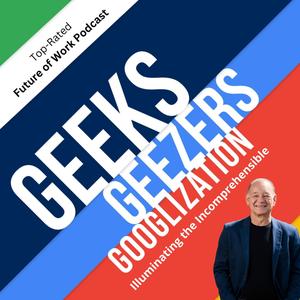
Welcome back to another deep dive episode of Geeks, Geezers and Googlization.
2
00:00:28,370 --> 00:00:31,890
I'm once again thrilled to turn over the mic to my
3
00:00:31,890 --> 00:00:35,510
special co host. Let's give a big warm welcome
4
00:00:35,730 --> 00:00:39,410
to Eli and Casey. You know, you sent us over a
5
00:00:39,410 --> 00:00:43,085
really interesting piece this week from Ira s Wolf,
6
00:00:43,225 --> 00:00:47,065
the future of work global thought leader, which is quite a title.
7
00:00:47,065 --> 00:00:50,905
It certainly is. Sets a high bar. Right. And the the core idea
8
00:00:50,905 --> 00:00:54,664
he puts forward, it really grabbed my attention. He's arguing that the biggest
9
00:00:54,664 --> 00:00:58,350
danger facing businesses isn't, you know, some external threat out
10
00:00:58,350 --> 00:01:02,190
there. Not the usual suspects then, like tech disruption or a
11
00:01:02,190 --> 00:01:05,870
new competitor? No. Not primarily. He says it's more of an
12
00:01:05,870 --> 00:01:09,535
internal blind spot, this, delusion almost that
13
00:01:09,535 --> 00:01:13,295
they've already adapted enough to everything that's changing. Okay. So the
14
00:01:13,295 --> 00:01:16,975
threat is internal perception. That's compelling. We're often so focused
15
00:01:16,975 --> 00:01:20,575
outwards, aren't we? Looking for the next big wave. Exactly. And Wolf's pointing the
16
00:01:20,575 --> 00:01:23,970
finger right back inside saying the real weakness is how we see see our own
17
00:01:23,970 --> 00:01:27,330
adaptability. And he's actually coined a term for
18
00:01:27,330 --> 00:01:31,090
adaptive perception disorder, APD. APD. Okay.
19
00:01:31,090 --> 00:01:34,690
Yeah. It's basically this gap. The gap between how much change is really happening out
20
00:01:34,690 --> 00:01:38,335
there and how much an organization thinks it's keeping up. They underestimate
21
00:01:38,475 --> 00:01:42,255
the change and overestimate their own response. So it's a mismatch.
22
00:01:42,875 --> 00:01:46,655
A dangerous one, presumably. Totally. It's like a self imposed limit on growth,
23
00:01:46,715 --> 00:01:50,480
on survival even. And what's really tricky, I imagine, is
24
00:01:50,500 --> 00:01:54,220
that this APD could look like, well,
25
00:01:54,220 --> 00:01:57,660
like business as usual, maybe even like strength. That's the really
26
00:01:57,660 --> 00:02:01,340
counterintuitive part he highlights. Things that look like stability or
27
00:02:01,340 --> 00:02:05,034
resilience maybe might actually be masking this disorder. It's
28
00:02:05,034 --> 00:02:08,634
hiding in plain sight. Almost paradoxical. Right. And he uses this
29
00:02:08,634 --> 00:02:12,255
quote from, doctor Ava Shiffman to really drive it home. She says,
30
00:02:12,555 --> 00:02:15,675
APD is like being in the eye of a hurricane and calling it a light
31
00:02:15,675 --> 00:02:19,450
breeze. Wow. That paints a picture a massive disconnect
32
00:02:19,450 --> 00:02:23,050
from reality. Doesn't it? Just sticks with you, that level of, well,
33
00:02:23,050 --> 00:02:26,650
potentially dangerous underestimation. It really does. It speaks volumes about
34
00:02:26,650 --> 00:02:30,090
complacency. Yeah. So okay. If APD is the subtle
35
00:02:30,090 --> 00:02:33,795
internal thing, what are the signs? What are the, you know, symptoms Wolf points
36
00:02:33,795 --> 00:02:37,474
out that we might actually recognize day to day? Well, he lists a
37
00:02:37,474 --> 00:02:40,855
few things that felt, pretty familiar. One that jumped out at me was
38
00:02:40,915 --> 00:02:44,355
outdated strategy decks. Ah, yes. The
39
00:02:44,355 --> 00:02:48,050
PowerPoint graveyard. Exactly. Specifically, ones that haven't
40
00:02:48,050 --> 00:02:51,570
really changed much since, say, before the pandemic, like Yeah.
41
00:02:51,730 --> 00:02:54,790
2019 thinking driving 2025 decisions.
42
00:02:55,489 --> 00:02:59,075
That's a big one given everything that's happened. Digital acceleration,
43
00:02:59,455 --> 00:03:03,135
work changes, consumer shifts, using a pre 2020
44
00:03:03,135 --> 00:03:06,735
map now seems Risky. Right? Yeah. It suggests those massive shifts
45
00:03:06,735 --> 00:03:10,495
just haven't fully sunk in at a strategic level. Makes you really question the shelf
46
00:03:10,495 --> 00:03:13,555
life of strategy these days. It needs to be much more dynamic.
47
00:03:13,900 --> 00:03:17,740
Absolutely. And then there's this other one that, kinda made me raise an eyebrow. He
48
00:03:17,740 --> 00:03:21,500
talks about leaders maybe in 2025 still congratulating themselves
49
00:03:21,500 --> 00:03:25,200
on handling 2020. Like dwelling on past glories.
50
00:03:25,260 --> 00:03:28,905
Yeah. It's celebrating that past when, well, maybe,
51
00:03:28,905 --> 00:03:32,665
just maybe, ignoring the brand new challenges right in front of them. It's looking backward
52
00:03:32,665 --> 00:03:35,785
when you need to be looking forward. That's a good point. Does that past success
53
00:03:35,785 --> 00:03:39,480
even guarantee future agility? Weathering one storm doesn't
54
00:03:39,480 --> 00:03:43,160
mean you're ready for the next totally different one. Are they building capacity now?
55
00:03:43,160 --> 00:03:46,920
Right. Are they resting on laurels? And then there are those, you know, company wide
56
00:03:46,920 --> 00:03:50,505
meetings or town halls. Lots talk like, we're on track.
57
00:03:50,665 --> 00:03:54,505
Uh-huh. Vague positivity. Super vague. But
58
00:03:54,505 --> 00:03:58,185
if you press for details, like, what is the track? How are we
59
00:03:58,185 --> 00:04:01,785
measuring it against, you know, today's reality? Yeah. Often, there's no
60
00:04:01,785 --> 00:04:05,405
clear answer. It's just confidence without substance.
61
00:04:05,810 --> 00:04:09,430
That lack of clear metrics, clear definitions, that's telling.
62
00:04:09,569 --> 00:04:13,330
It suggests either they don't really grasp the changes needed or maybe
63
00:04:13,330 --> 00:04:16,769
they just don't wanna face the hard specifics. Easier to say north without a
64
00:04:16,769 --> 00:04:20,610
compass. And Wolf just nails it, I think. Mhmm. He says these are signs
65
00:04:20,610 --> 00:04:24,235
of strength. It's change blindness dressed up as
66
00:04:24,235 --> 00:04:27,915
confidence. Oh, I like that phrasing. Change blindness dressed up as
67
00:04:27,915 --> 00:04:31,615
confidence. It implies the organization is so convinced it's okay,
68
00:04:31,835 --> 00:04:35,490
it literally can't see the warning sign. Pretty much. So, okay, those are the
69
00:04:35,490 --> 00:04:39,250
general symptoms. But he also breaks APD down further into these,
70
00:04:39,970 --> 00:04:43,810
telltale subtypes, more specific ways it shows up. Okay. Interesting. What are those? He's
71
00:04:43,810 --> 00:04:47,650
got four. The first is perceptual change deficiency, PCD. This is the don't
72
00:04:47,650 --> 00:04:51,275
worry. It's just temporary mindset. The this too shall pass approach
73
00:04:51,275 --> 00:04:54,875
even when it's clearly not passing. Exactly. His analogy is
74
00:04:54,875 --> 00:04:58,715
brilliant. Facing a tidal wave with just an umbrella. You feel like
75
00:04:58,715 --> 00:05:02,400
you're doing something, but you fundamentally misjudged the scale of the threat. That
76
00:05:02,400 --> 00:05:06,000
really hits the denial aspect, doesn't it? Refusing to see that the change might be
77
00:05:06,000 --> 00:05:09,780
permanent. What drives that, I wonder? Wishful thinking,
78
00:05:10,640 --> 00:05:14,080
lack of data. Could be all of those. Then there's change blindness
79
00:05:14,080 --> 00:05:17,824
syndrome, CBS. This is where the signs have been obvious. Ages.
80
00:05:17,824 --> 00:05:21,664
Wolf says, like, three years loudly and with neon
81
00:05:21,664 --> 00:05:25,505
signs. Okay. So really unmissable signs. You'd think. But the reaction
82
00:05:25,505 --> 00:05:29,345
is still, woah, where did that come from? Like, they genuinely didn't see
83
00:05:29,345 --> 00:05:32,969
it. They're so stuck in their ways. They're blind to the new reality right there.
84
00:05:32,969 --> 00:05:36,590
CBS, that points to a failure in environmental scanning, maybe.
85
00:05:36,969 --> 00:05:40,750
We're just not connecting the dots internally. Why miss the neon signs?
86
00:05:40,810 --> 00:05:44,595
Information overload perhaps or just nobody listening? Good question.
87
00:05:44,815 --> 00:05:48,655
The third one is adaptive overconfidence disorder, AOD. This
88
00:05:48,655 --> 00:05:52,495
is the classic, oh, we're great at change, always have been.
89
00:05:52,495 --> 00:05:55,950
The legacy argument, we handled y two k. We can handle anything.
90
00:05:56,030 --> 00:05:58,850
Exactly. But Wolf pushes back hard.
91
00:05:59,470 --> 00:06:03,310
Really? When was the last big adaptation? 02/2008. That
92
00:06:03,310 --> 00:06:07,150
one software upgrade. He points out it's often based on
93
00:06:07,150 --> 00:06:10,575
isolated, maybe outdated examples, not proof of current
94
00:06:10,575 --> 00:06:14,095
capability. Yeah. AOD sounds dangerous because it creates this
95
00:06:14,095 --> 00:06:17,855
false security blanket. Past success in a different world
96
00:06:17,855 --> 00:06:21,615
doesn't mean you're fit for today's race, like a marathoner thinking they're ready for a
97
00:06:21,615 --> 00:06:25,310
sprint, as you said. Nicely put. And the final subtype,
98
00:06:25,610 --> 00:06:28,910
strategic narcissism, s n. Strategic narcissism.
99
00:06:29,210 --> 00:06:33,050
Sounds serious. It is. This is the belief that, the market
100
00:06:33,050 --> 00:06:36,890
will come back to us eventually. They're so convinced of their own inherent brilliance, their
101
00:06:36,890 --> 00:06:40,705
product's superiority. But they refuse to see the market has just moved on, found
102
00:06:40,705 --> 00:06:44,305
something faster, cheaper, better. Precisely. It's this internal
103
00:06:44,305 --> 00:06:47,745
arrogance, this belief that history guarantees future relevance. Even when
104
00:06:47,745 --> 00:06:51,585
everything's changed, you see it with established players sometimes, dismissing the new kids on
105
00:06:51,585 --> 00:06:55,020
the block. Right. Until it's too late. Okay. So
106
00:06:55,020 --> 00:06:58,080
PCD, CBS, AOD, SN,
107
00:06:58,540 --> 00:07:01,980
different flavors of the same basic problem. But what are the
108
00:07:01,980 --> 00:07:05,820
actual, like, tangible consequences? Why should a business leader or
109
00:07:05,820 --> 00:07:09,465
even an employee really care about spotting this
110
00:07:09,465 --> 00:07:13,305
APD? What's the real cost? Well, Wolf spells out
111
00:07:13,305 --> 00:07:16,985
some pretty stark outcomes. He says companies with APD end up building
112
00:07:16,985 --> 00:07:20,745
their whole systems, their processes, everything on assumptions that
113
00:07:20,745 --> 00:07:24,210
are just obsolete. So building on shaky ground.
114
00:07:24,270 --> 00:07:27,490
Totally. Think about pouring money into tech that's about to be irrelevant
115
00:07:27,949 --> 00:07:31,470
or training people for jobs that won't exist soon. It's a huge
116
00:07:31,470 --> 00:07:35,310
misdirection of effort and money. Wasted resources, investing in horse drawn
117
00:07:35,310 --> 00:07:39,115
carriages when cars are taking over as you mentioned earlier. Exactly that. And
118
00:07:39,115 --> 00:07:42,735
he also talks about how these organizations tend to stick to their comfort zones,
119
00:07:43,035 --> 00:07:46,715
familiar processes, familiar tech, even if it's actually holding them back. That
120
00:07:46,715 --> 00:07:50,475
resistance to leaving the familiar, it strangles innovation, doesn't it?
121
00:07:50,475 --> 00:07:54,250
Prevents them from building the new muscles they need. They get stuck
122
00:07:54,250 --> 00:07:57,610
in an echo chamber, reinforcing the old ways. Yeah. And the image he uses to
123
00:07:57,610 --> 00:08:01,210
capture the end result is chilling. He quotes the
124
00:08:01,210 --> 00:08:05,055
doctor Eli Burnham. Organizations with APD don't burn out.
125
00:08:05,134 --> 00:08:08,115
They rot quietly. Rot quietly.
126
00:08:09,134 --> 00:08:12,435
That's powerful. Not a big explosion, but a slow internal
127
00:08:12,495 --> 00:08:16,255
decay. Right. An insidious decline that might not be obvious until it's
128
00:08:16,255 --> 00:08:20,014
very, very advanced. It really highlights those unseen long term
129
00:08:20,014 --> 00:08:23,760
costs of just failing to keep up. Incredibly impactful.
130
00:08:23,760 --> 00:08:27,280
Okay. So the picture of the problem is clear. The symptoms, the
131
00:08:27,280 --> 00:08:31,040
types, the grim potential costs. What's the solution
132
00:08:31,040 --> 00:08:34,880
then? What's Wolf's antidote to this adaptive perception disorder? He
133
00:08:34,880 --> 00:08:38,544
calls it radical AQ, adaptability intelligence. AQ,
134
00:08:38,764 --> 00:08:42,524
like IQ or EQ, but for adaptability. Exactly. It's not just reacting to
135
00:08:42,524 --> 00:08:46,365
change. It's proactively building the ability to adapt, making it a
136
00:08:46,365 --> 00:08:50,080
core competency, almost like a muscle you have to constantly exercise. Makes sense. So
137
00:08:50,080 --> 00:08:53,200
how do you build that muscle? What are the key parts of building or maybe
138
00:08:53,200 --> 00:08:57,040
rebuilding this AQ? He lays out a few critical things. First, you have to actively
139
00:08:57,040 --> 00:09:00,400
challenge your existing knowledge. To question everything. Pretty much. It
140
00:09:00,400 --> 00:09:04,015
requires, intellectual humility. Being willing to
141
00:09:04,015 --> 00:09:07,695
say, maybe what we know isn't true anymore. Being open to new
142
00:09:07,695 --> 00:09:11,215
data, even if it's uncomfortable or contradicts current
143
00:09:11,215 --> 00:09:14,755
beliefs. That sounds like a major cultural shift for many places.
144
00:09:15,149 --> 00:09:18,670
Admitting you might not have all the answers, that the old ways aren't sacred. It
145
00:09:18,670 --> 00:09:22,029
really is. It demands continuous learning, a healthy dose of
146
00:09:22,029 --> 00:09:25,629
skepticism about the status quo. Second, he says,
147
00:09:25,629 --> 00:09:28,529
push beyond the comfort zone. Get uncomfortable. Liberally.
148
00:09:29,345 --> 00:09:33,125
Seek out new experiences, try new approaches, experiment,
149
00:09:33,584 --> 00:09:37,345
embrace a bit of calculated risk to actually build those adaptive skills. So not just
150
00:09:37,345 --> 00:09:41,105
talking about agility, but actually doing things that require it. Learning by doing,
151
00:09:41,105 --> 00:09:44,250
essentially. Exactly. And third, and this feels crucial,
152
00:09:44,950 --> 00:09:48,250
actively seek out and listen to uncomfortable truths.
153
00:09:48,870 --> 00:09:51,850
Oh, the stuff people might be hesitant to say. Yeah.
154
00:09:52,390 --> 00:09:56,230
Foster a culture where it's okay to disagree, where critical feedback is
155
00:09:56,230 --> 00:09:59,865
actually welcomed, not punished, where leaders genuinely wanna hear
156
00:09:59,865 --> 00:10:03,385
perspectives that challenge their own views. Creating psychological safety,
157
00:10:03,385 --> 00:10:07,165
basically, so people can point out the blind spots without fear. Absolutely.
158
00:10:07,545 --> 00:10:11,305
And ultimately, Wolf says, building AQ boils down to
159
00:10:11,305 --> 00:10:15,120
constantly asking that really tough question. What if we're not as ready as
160
00:10:15,120 --> 00:10:17,940
we think we are? Constant self assessment.
161
00:10:18,640 --> 00:10:22,180
Relentless improvement. Yes. A fundamental commitment to evolving,
162
00:10:22,480 --> 00:10:26,160
not stagnating. Okay. So wrapping it
163
00:10:26,160 --> 00:10:29,675
all up then, the big takeaway from Ira Wolf's Wolf's piece
164
00:10:30,135 --> 00:10:33,595
isn't about some monster under the bed, some external disruptor.
165
00:10:33,815 --> 00:10:37,035
No. The biggest threat, he argues, is internal.
166
00:10:37,495 --> 00:10:41,255
It's that, that fantasy, the fantasy that we've already adapted
167
00:10:41,255 --> 00:10:44,960
enough. That's such a vital point. It shifts the focus dramatically. It's about self
168
00:10:44,960 --> 00:10:48,800
awareness, about looking inward first. Well, it really makes you think, doesn't it, about
169
00:10:48,800 --> 00:10:52,560
your own company or places you observe. Are they truly evolving? Are they
170
00:10:52,560 --> 00:10:56,320
meeting the pace of change? Or are they just confidently narrating their own decline
171
00:10:56,320 --> 00:11:00,035
completely unaware? Yeah. Are they mistaking routine for readiness? That's the
172
00:11:00,035 --> 00:11:03,875
critical question Wolf leaves us with. Because as he says, in this age of
173
00:11:03,875 --> 00:11:07,635
nonstop change, the real risk isn't just disruption itself. It's
174
00:11:07,635 --> 00:11:11,329
the delusion that you're immune, that you're already prepared. Exactly. And, you know,
175
00:11:11,329 --> 00:11:14,769
if this whole deep dive into APD has struck a chord, if listeners are
176
00:11:14,769 --> 00:11:18,370
thinking, maybe this applies here. Wolf actually mentions a
177
00:11:18,370 --> 00:11:21,970
tool in his article, their AQ team audit. So a way to
178
00:11:21,970 --> 00:11:25,625
potentially measure this to get beyond just gut feeling? Seems like
179
00:11:25,625 --> 00:11:29,385
it. A way for organizations to try and objectively assess their actual
180
00:11:29,385 --> 00:11:33,065
adaptability intelligence, their AQ level. Interesting. A call to action
181
00:11:33,065 --> 00:11:36,745
then. Move from assumption to assessment. Yeah. So we really just encourage
182
00:11:36,745 --> 00:11:40,370
everyone listening to mull over these ideas. Think about your own experiences,
183
00:11:40,370 --> 00:11:43,750
what you see around you. Do these symptoms, these subtypes, and APD
184
00:11:44,690 --> 00:11:47,750
resonate at all? It's definitely, definitely food for thought.
185
00:11:48,450 --> 00:11:51,513
Thanks for watching Geeks, Geezers, and Googolization.
186
00:11:52,613 --> 00:11:55,913
Be sure to listen to the podcast and follow us on YouTube.
