

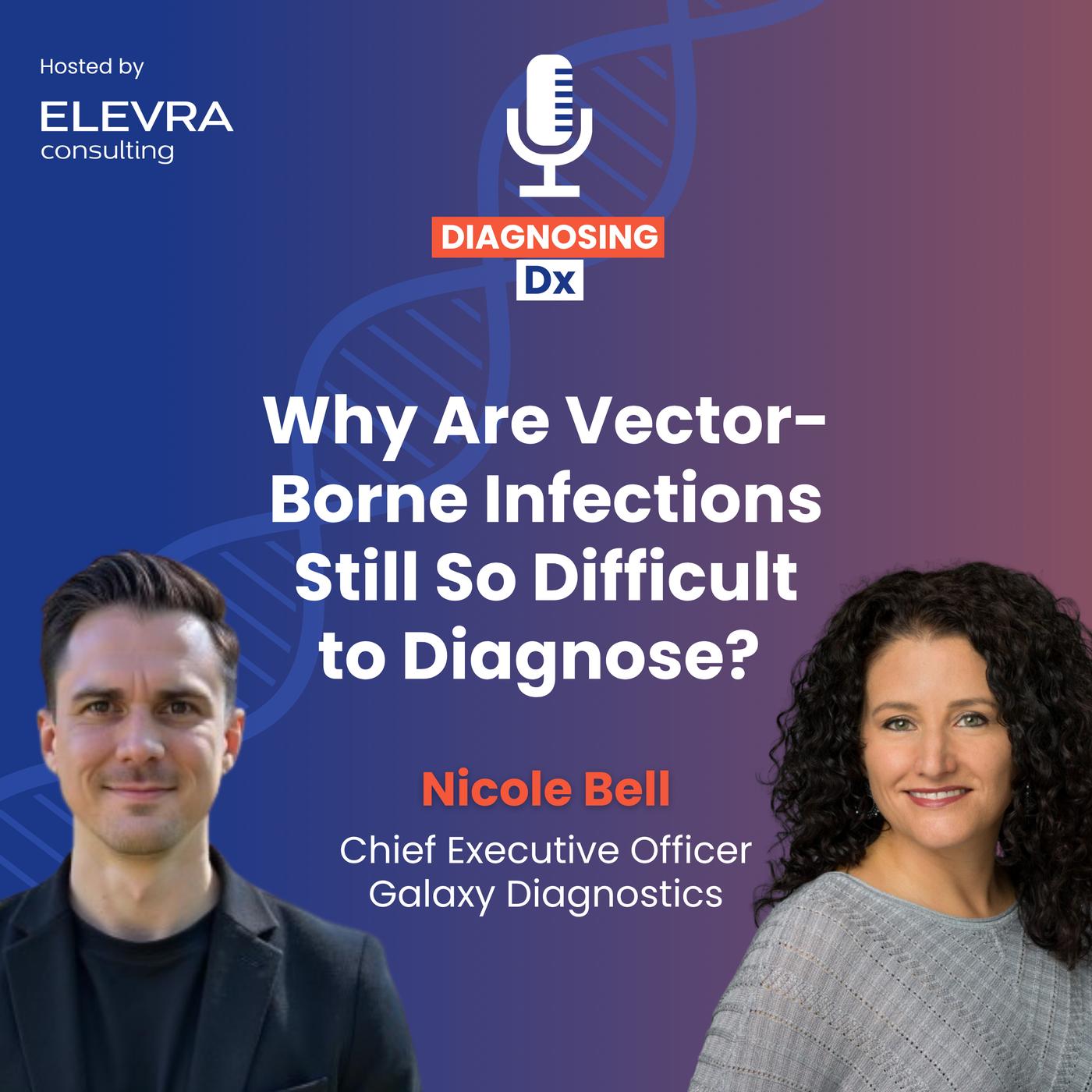
David Filby: Welcome to the show this week, Nicole. How are you?
Nicole Bell: I'm doing well, thanks. Thanks for having me.
David Filby: Besides a delayed flight, everything's fine. Where in the world are you?
Nicole Bell: we are based in Raleigh Durham, North Carolina, and proud to call that home.
David Filby: And how long has that been home for?
Nicole Bell: Let's see. So it was 2006, so it's been about 20 years at this point.
David Filby: So you've witnessed huge amounts of change because there's actually quite a few diagnostics founders that we've had on the show based out of Raleigh, but obviously it's a much bigger ecosystem across, pharma, biotech, tech and CROs especially, but it's gone through incredible investment.
Nicole Bell: Yeah, there's been a lot of growth in the area. I think when I first came and joined, the medical devices community was relatively limited they had a few successful companies, but when they were successful, they would generally get acquired and then kind of redistributed to other places. But I think that's no longer the case. We've got a solid nucleus and with such a strong university culture around here, it's a fantastic place to be and is really growing and becoming a biotech center.
David Filby: Yeah, great. North Carolina, they're doing really well economically to invite these companies in and offering them sort of favourable landscapes to grow. The talent, like you said, it's a great place to be. So, before we get into Galaxy, 'cause there's some really exciting stuff to go into and I'm really keen to hear about where you are in the journey and your progress. It'd be great to hear a bit more about you first. If you'd be able to introduce yourself, your background and your career, that woud be great.
Nicole Bell: Yeah, so I grew up in the Boston area and I'm actually an engineer by training. So I did my undergraduate and master's degree at MIT in material science. And I caught the entrepreneurial bug early. Actually my MIT professor started a company and recruited me to join. And from then on I really fell in love with the startup environment, right? The ability for the CEO to be everything from CEO to male clerk and sometimes janitor and so forth is really an environment that I love. I was more in the materials and semiconductor industry actually at that point because of my undergraduate training and graduate training. And so mid-career I made a decision to go back to school. And I actually went and got a second master's at Duke University and studied biomedical engineering. And since then I've been in medical devices, medical diagnostics, and that was also what brought me to the triangle in Research Triangle Park, North Carolina. So really love solving challenging problems. And I kind of got into where I am now at Galaxy through a personal experience, right? So at Galaxy we test for vector-borne or tick and flea-borne diseases. And I got interested in that sector when that hit my family. So my husband was misdiagnosed with several vector-borne infections. And he was given a diagnosis of early onset Alzheimer's disease, which really didn't make a lot of sense to me. And as an engineer who likes root causes, I kept digging and I couldn't understand why he was getting this diagnosis because he had no genetic predisposition towards early onset Alzheimer's. He was otherwise very healthy. And actually he tested negative for Lyme disease at our first doctor's appointment. It was one of the first things I asked about just because of some exposures that he had had. And then to make a long story short, about 15 months after his initial doctor's visit, we returned to the possibility of tick-borne illness, at which point I figured out that not only did he have Lyme disease, but he also had two common co-infections, specifically Babesia and Bartonella. And that really opened my eyes to how serious these pathogens can be and to the challenges that there are in diagnosis. And on the other end of that journey, unfortunately it didn't end well. So because of such a late diagnosis, he ended up progressing in his dementia, and he went into resident care in 2019 and he passed away in 2022. And you really can't walk away from an experience like that. You know, I kept going back to that initial doctor's appointment and saying, what would have happened and where would we be if we had gotten the right answers at that first doctor's visit? And so I started digging in and researching, and I came across Galaxy and reached out to the founders and eventually learned that I really loved what they were doing and solving the right problem and I took over as CEO about two years ago.
David Filby: Wow, so there's so much to unpack, isn't there? And I think it's a really profound story. so before the misdiagnosis in your family, how close were you to the diagnostics industry at all? Had you touched on it at all before that point?
Nicole Bell: Yeah, so right after I graduated from Duke, I worked in a small diagnostic startup that was really a liquid handling platform. And so we were covering all sorts of different diagnostics, immunoassays, PCR, sequencing, and it was really looking at distributed and point of care applications. And so that company ended up getting acquired by Illumina so I worked in that company for several years, and then I transitioned more into surgical devices and worked in that arena, ended up transitioning the company from a manual laparoscopic tool into a robotic platform and worked in surgical robotics for quite some time. And so I had had exposure to diagnostics, but my most recent experience was a little bit different. But that experience had me take several products through the FDA and really looking at complex electromechanical systems. So there's a lot of analogs that I think are relevant to the world that, you know, going back into the diagnostic sector.
David Filby: When you then had this personal reason, this personal motivation and drive to find a solution, obviously it ties back to your engineering mind, right? Which is probably really helpful in terms of, analytics and the journey an engineer goes through from root cause to solution. Were you shocked when you started to unpack it to find obviously you'd had this personal experience, but there was no way for you to know the tech, the standard of care, the sensitivity, the specificity, all the things that we talk about in diagnostics. Were you shocked when you started unpacking it all to find how much of a lack of high quality novel and progressive tech there was or diagnostics there were with regard to tick borne disease.
Nicole Bell: Yeah, I really was because if you think about the testing in tick borne disease, and I often say vector borne disease because it's more than just ticks, it's also fleas and other biting insects and vectors. These are challenging pathogens, right? So they hide, they're in low abundance, they actively evade the immune system, they suppress the immune system, and they're really not detectable by conventional methods. And so we're using technology, I mean we're using Western blots, which is decades old technology. And it's an antibody-based approach, which is really frowned upon across infectious disease, because any physician or technologist that works in diagnostics, you know that antibodies indicate exposure. They don't indicate active infection. But this is really all that we've had in this sector. And so clinicians are kind of really muddling along using techniques that have shown to miss 70% or more of early cases, right? When the treatment is the most effective. And they're making a clinical diagnosis, and that's a challenge because a lot of the clinical symptoms, one, aren't equal in people. So if you just think about Lyme disease and the traditional bullseye rash, right, that occurs in about 14% of people, right? That classic bullseye rash. A lot of people have other types of rashes, and then about 30% of people have no rash at all. And then when you get to disseminated disease, the symptoms are really nonspecific, fatigue. You know, neurological disorders, brain fog, it's really difficult and there's a lot of overlap. And so when you really dig in at the clinical picture and what we're asking providers to do, it's immensely challenging. And so providing better, more accurate, high sensitivity tools to really give doctors the answer to what infections are these patients you know suffering with right now, is really a key gap, and it's where a lot of patients, including my husband, fall through the cracks.
David Filby: Yeah, incredible. And so you mentioned that actually you reached out to the founder of Galaxy Diagnostics to come on board. You've been with them sort of three and a half years, but how how's that looked in terms of when you joined the company? What were you doing for them and how's your role evolved?
Nicole Bell: Well, when I reached out, it was really just to learn more, right? I had done a project with the Center for Lyme Action where we were summarizing the state of Lyme disease research and all of the innovations that have happened across the space, including prevention, diagnostics, and therapies. And of course, because of my background in medical devices and diagnostics, I was really honing in on the diagnostic piece and kind of went even further to understand what are the better solutions out there. And I looked at all the specialty laboratories, I looked at the universities and tried to figure out where I thought some of the most promising advances were. And so I really just came across the research and the publications that Galaxy and their research partners had in this space and became really interested because it was again solving the right problem where you're figuring out how to do direct detection. How to make the techniques like PCR and antigen detection sensitive enough so that they're accurate. So you can determine if the pathogen is present right now. And so when I first reached out, it was really more just curiosity, like, hey, I like what you're doing, I'd like to learn more. And also I was sharing my story. I wrote a book about what happened to my family to raise awareness, and the founder, the CEO, was very gracious in helping me connect with the advocacy community. But then as I dug in, I ended up, you know, becoming a consultant to the company because I realized that the science was sound and amazing, but they really needed commercialization help and a path to figure out well, how can we take this really innovative technology and change the standard of care? Right? Because getting something out to the market is very different from getting it, to become and to change what's happening on a day-to-day basis in primary care. And I've had a lot of experience in commercializing new technologies. And so that seemed like a good area for me to help. And as we developed the business plan, as we developed the path forward, then that was when we decided to figure out how to get investors and to really then take over the leadership of the company with the full support of the founders, which has been fantastic.
David Filby: Are the founders are they from the scientific side?
Nicole Bell: Yeah, so we have three co-founders. Two have full-time academic appointments over at NC State and still maintain that role and we regularly collaborate with them as research partners. And then one of the founders was this the full-time CEO but she also had an academic appointment teaching entrepreneurship at Babson. And so we worked together to develop a transition plan and two of those founders are still actively on our board of directors.
David Filby: That makes sense. And so give us the intro to Galaxy Diagnostics then. So who are you and what are you doing?
Nicole Bell: Yeah, so we're really focused on changing the standard of care for vector-borne disease. And again, I say vector-borne disease because everybody focuses on ticks, but if you look at the top infections in North America, the three pathogens that are the most prevalent and that we cover, one of them is Bartonella. And Bartonella is primarily spread by fleas and lice and other, kind of biting vectors. And so I like people to think beyond ticks. Ticks are a huge problem, but there's more that we need to explore. And again, changing that standard of care because if you go to the doctor today, you're gonna get antibody-based testing. And that's gonna miss early infection. It's going to miss people like my husband who are immune-compromised. Some people just don't. develop an antibody response because again these pathogens are very immune evasive and actively manipulate the immune system. So it's kind of ironic that we know and there's hundreds of papers that talk about the immune evasion capabilities of these pathogens, yet what do we use to measure it? And a marker of the immune system in antibodies. And so there's like a lot of patients again fall through the cracks. And then the other thing that's really challenging about antibodies is that if you live in an endemic area and you've had Lyme at any point, or some of these other infections at any point in your history, that's not really diagnostic, right? Like the example I give is I have COVID antibodies, but I don't have COVID right now, right? It just indicates that you've been exposed. It doesn't tell
David Filby: Right.
Nicole Bell: you, is that pathogen affecting my symptoms and my health right now? And so what we're about at Galaxy is solving the difficult problem of direct detection. How do you make the tests and the approach sensitive enough so that you can get direct evidence of whether or not the pathogen's present? So for Lyme disease, we use technology that was developed at George Mason University and then now Virginia Tech and Northwestern, which is actually looking at antigens that are shed by the pathogen and then they're filtered by the kidney and excreted in urine. So we use a Lyme urine antigen test, which has been demonstrated in the research to detect the disease very shortly after infection, so weeks before antibodies will peak. And so it's a great tool for early diagnosis. And right now, we do a lot of diagnosis in later stage disease because you have patients that live in endemic areas. They know they've had Lyme disease, they have symptoms. And then they take the urine antigen test and they test positive, and it's like, well, you're still having an active infection. Something's going on. And it helps doctors discern why a person is sick, right? Because you can have Lyme disease, you can get treated, and you can still have symptoms. And the question is, why? Are you still symptomatic because the pathogen was never fully treated by the antibiotics and you still have the bacteria in your system? Are you still sick because you have an undiagnosed coinfection, which is also quite common, and that's why we test for things like Bartonella and Babesia. Are you still symptomatic because you have immune dysregulation or other things? And so, having that direct detection is a great way to discern what's going on and what's currently contributing to symptoms. And so we're solving that problem. We have our lyme urine antigen test. We also have a blood-based co-infection panel where we use enrichment and high sensitivity PCR techniques to essentially detect common co-infections like Babesia and Bartonella. We also test for borrelia, which tends to be like a relapsing fever borrelia. And so there's a lot of things that we're doing to help doctors really navigate these muddy waters.
David Filby: Super interesting. So I understand the need in terms of the lack of quality testing. What about the size of the problem in terms of how well estimated I assume because so much of it goes undiagnosed. But how big a problem is this across the country and is it a problem that's expanding?
Nicole Bell: Yes. Very much so. I think that tick populations are on the rise and they're much more prevalent in our daily life. It used to be just a thing where you walk out in the woods, but the reality is that the exposures are really more in parks and in your backyard and even in things than in your day to day living. And so if you just look at Lyme disease, there are 476,000 patients that are diagnosed every year, right? They're in the system, they're in the insurance models. And as we had just talked about, the diagnosis tools are not that great. So I think those of us who work in the Lyme space, we think the numbers are much higher because a lot of patients are not diagnosed properly. Just think of my husband and there's unfortunately all too many patients like him. And co-infections like Babesia, we really don't know exactly what the prevalence rate is. We're still discovering new species that we never really thought infected humans. And then a lot of people just aren't tested. And so I always like to say it's always rare if you don't test for it, right? And I think we're finding as we dig into really chronic disease populations that the numbers are a lot higher than was initially thought. And the incidence is spreading. So places, states in the United States like Ohio and North Carolina, as researchers do tick drags, they're finding in Ohio there's regions that have 50% of the deer ticks have borrelia on board, where 10 years ago that was about 2%. They did some tick drags in western North Carolina that was not, you know, really thought to be an endemic area, and a third of the ticks of the deer ticks had lyme on board and so it's a rapidly emerging problem and we really need better tools to help doctors navigate it.
David Filby: Interesting. And so with the 'cause the exposure thing's difficult, isn't it? Because like you say, I think people would assume that there's certain places or you have to have put yourself in a certain situation to have been exposed to let's go just for ticks in my head, you know. But in reality, you're saying exposure is so much more common and casual, in fact that it could just be in your backyard. Where do you see the test fitting into workflows? Is this something that When somebody is, coming into the ER with certain symptoms and it's assumed at the moment something else is happening that this is a test that's used then or how do you expect it to be used?
Nicole Bell: Yeah, I think that it's really going to be relevant in both acute settings, like in your primary care, you know, physicians and people that either know that they have a tick bite or they have regular exposures or maybe they get the summer flu and you want to test them. But it's also growing within chronic disease states, right? People, you know, over half of Americans have some sort of chronic illness. And many of them, go to dozens of doctors trying to figure out what's wrong with them. And to just put an emphasis on what you just said about exposures are everywhere, you know, as I said earlier, we talk about vector borne disease, not just tick-borne disease. Bartonella is one of the pathogens that we deal with. And it's been shown in the literature to be linked to neuropsychiatric illnesses like schizophrenia and anxiety and PANS, PANDAS and OCD and other kinds of neurological manifestations in both kids and adults. And one of the most common exposure mechanisms for Bartonella is household cats, right? So if you Google Bartonella, you'll see cat scratch fever, which is the acute form of the disease. But I think what we're learning in the research is that, some people don't have, just like in Lyme, some people don't have that really strong acute reaction and then it can develop into complex chronic symptoms. And so the exposure, like a flea exposure in your house if you adopt an animal, that's an exposure. And so doctors who are seeing patients with chronic illness, and we see a lot of patients with you know, neuropsychiatric illnesses that are sudden onset, or their neuropsychiatric symptoms and they're accompanied by other symptomology like maybe joint pain or fatigue. Those are the types of patients where we really need to get some of these vector borne pathogens on the differential.
David Filby: Wow. And so where are you guys up to in terms of the life cycle now of development, capital raised and what sort of phase are you in as a company and bringing the test to life?
Nicole Bell: Yeah, so we have a CLIA laboratory in Research Triangle Park and we have launched tests. So we have university partnerships with some of the researchers that have really invented and published on these new technologies. We take that information, we validate it, we make it, you know, we put in the quality controls and systems in place to do testing on a daily basis. So our CLIA laboratory is regularly doing testing for providers. And we're generally focused on the US just because that's where we are and in shipping and logistics are a little bit easier, but we have done some international testing as well, and that's readily available. Kind of the next phase of growth for the company is to take some of our novel assays and then distribute them more broadly, really again to change that standard of care. And so our Lyme urine antigen test is the first that we're targeting through that pipeline. We started our pilot clinical study this spring and summer, and we'll continue that next year to target submission to the FDA in the second half of 2027 and then FDA approval in 2028. And so, and that would allow us to really partner with the larger. Clinical laboratories to bring the technology to the mainstream because one of the things I've learned about working in medical devices and diagnostics is you want to leverage the existing infrastructure, right? You don't want to change testing behavior, you don't want to change testing location if you don't have to. And so we're really working within that. We have key advisors from both Labcorp and Quest on our scientific advisory board. Our goal is to empower them to use our technology to 1 make this really a new standard.
David Filby: I like that. I like that a lot because everything about this story, there's so many classic diagnostics challenges that every diagnostics company has to face, you know, reimbursement and everything else. But one of the biggest ones that we come across, which people sort of maybe don't prioritize as much, but is once people have commercialised or FDA approved products, is how do you raise awareness? How do you educate people? Patients and physicians that these tests exist and are necessary and those things create adoption. So the chance to have Quest and Lab Corps come in with their distribution, their strong relationships with obviously thousands of points of care. I think is a really smart way to do it. Is that s is that the sort of way you see it? Utilising them to ensure that the message gets out there.
Nicole Bell: Yeah, it's really mostly about leveraging existing infrastructure. So one of the things
David Filby: Hm.
Nicole Bell: I learned working in my previous diagnostics company, because we were really focused on point of care. And as I studied a lot of comps in the point of care space, you know, everybody kind of assumes that moving stuff closer to the patient is the way to go because it sounds great. But one of the things I learned as I dug into different market cases and different historical you know, precedents is that the only things that really survived in the point of care, or even survived just changing infrastructure or changing instrumentation, is if there's a huge value in doing that, right? Like for point of care settings, the results matter in minutes, right? Or hours in order for it to change. Because the infrastructure, if it's set up as a central lab based industry, That's a lot of inertia and a lot of infrastructure that's set up in order to do that. And so if you change that, you need to have a really good reason why. And for us, you know, Lyme diagnostics, it's a central lab-based test. And in moving it to the point of care would be convenient, but if you can work within the infrastructure, the current testing cycle is more than sufficient. And so to lower the barriers to adoption, you want to leverage that, you want to utilize that. And also big companies don't want to change the instruments that they use. They are workhorses that run dozens of assays. And so our strategy is really working to fit within that and to work on that existing infrastructure and instruments that are currently being used in high volume. And so, you know, only change things if it's absolutely necessary. And in our case, we're working really hard to make sure that we don't need to change it because that's not where the value comes from.
David Filby: Yeah. It makes complete sense. I love it when I speak to early diagnostics companies that understand how they're gonna get out there and actually make this test accessible and used. It's great to hear. You mentioned about your study kicking off and the direction towards FDA approval. How's that being funded?
Nicole Bell: Yeah. So we have done mostly funding through angel investors and kind of angel groups. We did when I first took over as CEO, we closed a convertible note that helped to fund the transition of the company and really hire the team that we needed in order to be successful in that next phase. We used that to kind of restructure the business. You know, I like to say, you know, let's release the things that no longer serve us. and kind of think towards the future. We made a lot of those adjustments and then we raised our series A. We're actually just at the end of that raise. So we had targeted a six million dollar series A. We are currently at about 5.6 of that and I'm working to close that off in the next few months. And that will kind of fund us through our clinical trials and really get us to the point where we've got a fresh set of data that we can use to take it over the finish line and get to FDA approval.
David Filby: Amazing. You've raised a series A or almost raised a series A in one of the toughest capital environments that we've seen in a long time. So that's admirable in its own right. Has that been a new experience for you and some lessons learnt?
Nicole Bell: Yeah, I mean, as I said, I've done startups pretty much my whole career and I think a couple of the things I've learned is one, this is the toughest environment that I've had to contend with. But it's also been the first time I've been at the helm, right? I've always supported fundraising initiatives, but it's my first opportunity to raise funds as CEO. And also diagnostics is just you know, honestly, is not a sexy sector for investors, right? There's a lot of war wounds and challenges and I can't tell you how many times I would speak to an investor and the first thing they would do is tell me the diagnostics companies that they've been burned by, right? And the mistakes and why they're no longer open to the sector. And I really think that that gives the sector a bad rap because it is such an important part of our medical care. I mean, you know, so many decisions are made based upon the diagnostic tools that we're developing and that others are leveraging. and also, if you look at the ones that have failed, there's kind of some well established traps. It's trying to change infrastructure without the value proposition. It's trying to shift instrumentation in and maybe not understanding where the current testing is done and why that's important. And so I think it's an opportunity to learn from those issues and then to use it to make sure that you're successful. And and that includes everything from the entire ecosystem. It's not just about the test, but it's about reimbursement and education and getting into this, you know, the standard and and into a lot of the guidelines that drive testing in you know in the the you know care community. And so really understanding how decisions are made and making sure you have the plans for that from the beginning.
David Filby: How does the reimbursement side of of this test look and where are you with that journey?
Nicole Bell: Yeah, so we've got some really favorable reimbursement decisions that we've already achieved for particularly for our blood-based assay. We were able to successfully, even before I joined, they got a gap fill decision for our blood-based test for Bartonella, and we're in the process of submitting that to extend because right now that's a three-plex panel that also includes borrelia and babesia. We've also done a reimbursement analysis for our urine antigen test, and I think we have a good pathway there, and we'll be submitting for coding next year. And so we're right in the realm of again direct detection, you know, with PCR testing and antigen testing, there's price points that are a little bit higher than what you see in serology, and we're right in line with the market. So I feel like that will be a successful process for us. But it's slow, you have to kind of go through the stepwise approach and get the coding and then proceed to payer coverage. And so, laying the seeds for that early and then continuing to advance so that you can get the adoption that you forecasted is something that's always on our minds.
David Filby: And so Nicole, there's a few really exciting milestones coming up in the future. What are the big ones that we should look out for the people that want to follow along the Galaxy journey?
Nicole Bell: Our focus is on the clinical studies for our Lyme Urine antigen test, which will feed into our FDA submission next year. So that's obviously a big piece of our journey. But we're also continuing to expand our CLIA menu and really bring new technologies to the market and partner with leading universities. So just at the end of last year, we announced a partnership with Virginia Tech. To you know, take, we are all about urine antigen testing for Lyme. And at Virginia Tech, and the inventor is now at Northwestern, they have a really novel marker for Lyme urine antigen testing called peptidoglycan, which is kind of an interesting and very promising approach that can lead to early stage diagnosis. And so we have licensed that technology and we're in the process of You know, validating it to bring it to the market. And I think that one of the things that's really important and interesting about our business model is that we're learning through that CLIA model, right? It's it's a way to get the technology onto the market, and it's a way to learn, it's a way to get early access to revenue, it's a way to get access to samples. All of that can be really expensive if you're only able to do it after FDA approval. And so That's kind of feeding our business model and as we take some of these newer technologies and bring them through the pipeline that will allow us to continue to innovate without having to raise exorbitant amounts of money from equity investors, which as you said is a challenging environment.
David Filby: That's awesome. There's so much to be excited about with you guys over the next 12-18 months with the studies, the FDA approval, Series A, the partnerships that you're collecting. and obviously you've mentioned that it's a harsh environment to be doing this, but you're doing so much, which is fantastic. What's your outlook on the diagnostics industry as a whole and the outlook you think we we start to see more positive turns and easier access to capital in the future?
Nicole Bell: I think for the diagnostics industry as a whole, there are some interesting trends that I'm happy about. I mean, I see some of the bigger companies like LabCorp and Quest investing in functional medicine and kind of newer solutions to finding root causes of illness. I see a lot of private equity interest in diagnostics and kind of rolling up technologies and companies that are serving some of these, you know, functional medicine and more innovative healthcare models. And so I think that there are trends that are very promising. But again, making that transition to mainstream and getting it into the standard of care is something that really takes a lot of discipline and effort. And so you know, I think only some will make that transition and you have to really be deliberate about it. but diagnostics is such an important part of the healthcare system, right? And we need to make sure that we're continuing to innovate. I don't necessarily see a lot of venture funds kind of steered towards that space, but I think that through strategics and through kind of more innovative models, I think that there's going to be a lot of benefit that happens over the next decade or so.
David Filby: That's awesome, yeah. I think you've hit the nail on the head, to be honest. I think it's such an important industry, it's full of great people, exceptional science, it's not going anywhere, but we just need a bit more evolution, let's say, in terms of how we're gonna bring this novel science to market. And it's one of those industries that you can get 9/10 things right and fail. And that's just the reality. Yeah,
Nicole Bell: Yeah. Yeah, you just have to get a little creative.
David Filby: absolutely. Nicole, thank you so much for coming on and telling the story. I know it has this deep personal meaning to yourself, but the product and you know in its own right and the unmet need is worthy of speaking about so I hope we've done it justice because I think it's a really exciting stage in the company what you've already achieved and also what feels attainable and realistic in the next short term future as well. So thank you for coming on and sharing the story.
Nicole Bell: I appreciate the opportunity.
