
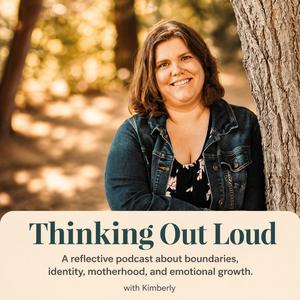

Kimberly: When does influence or a deeply held belief become indoctrination? When we hear the word indoctrination, what do you picture? A cult? propaganda? A government controlling what the people are allowed to think? Someone standing in a room telling you what to believe? Those are obvious examples, but what if indoctrination doesn't always look like control? What if it sounds like advice? Tradition morality. Love. Or because we're family. That's just how things are. Good people believe this. you don't question your faith. Everyone knows that's wrong. You need to see the world the way I do. I don't think the answer is simply when someone influences you, that's indoctrination. We're influenced constantly. Our parents influence us. Cultures, friends, religions, teachers, communities. They all influence us. Even the media we consume influences us. That's not automatically a bad thing. Education is influence. Parenting is influence. Culture is influence. Religion can be influential. inclusion isn't indoctrination simply because someone is being exposed to a different way of understanding the world. Where is the line? I think this has something to do with what happens to our ability to question, because there's a difference between being taught this is what we believe and being taught this is the truth. And anyone who disagrees with us is wrong, dangerous, moral, or stupid. there's a difference between giving someone a belief and demanding that belief become their entire identity. Welcome back to Thinking Out Loud. Hi, it's me, Kimberly. Before we go any further, quick note. This podcast is for reflection and conversation, not professional advice. Take what resonates and leave the rest. Here we slow down and we explore life's great areas, especially in relationships and behavior patterns we can observe and reflect on. I am not here to tell you what to think. I am here to offer framework to help you understand your relationships, Strengthen your thinking and hold space for complexity. Let's get to thinking out loud. Let's start with the definition. Indoctrination is the process of teaching someone to accept beliefs, ideas, or ideologies uncritically. that last word matters. Uncritically. being taught something isn't automatically indoctrination. Being influenced isn't automatically indoctrination. Having a belief. Isn't automatically indoctrination. Even strongly believing something isn't automatically indoctrination. The problem begins when questioning becomes unacceptable. UNacceptable! When you're not being taught how to think, you're being taught what to think, when information is deliberately narrowed so that one conclusion feels like the only possible conclusion. When disagreements become betrayal, when curiosity becomes disrespect, when changing your mind becomes weakness, when people are taught that there is one acceptable reality and And everyone outside of it is the enemy. That's where I think we need to start paying attention. Indoctrination doesn't require someone to say, I'm indoctrinating you. It happens through repetition, through fear, through shame, through social pressure, through isolation, through authority, through rewards, through belonging, and sometimes through genuinely well intended people. Parents may think they're protecting their children. Teachers may think they're educating you. Religious leaders may believe they're guiding people towards morality, towards heaven. Political groups may genuinely believe they're improving society. Good intentions doesn't automatically preventing harmful outcomes. I also want to be careful here. If we aren't careful, we can turn the word indoctrination into another weapon. and then we're doing exactly what we're criticizing. If I tell you what I believe, that's influence. If you listen to me and disagree, that's okay. if I explain why I believe it and you give me room to question that's a conversation. if I teach you about a religion and including what its followers actually believe, it's history, it's different interpretation, the way people within the faith understand it differently, that's education. if I expose you to people who live differently from you, that is not automatically mean indoctrination either. That's exposure, that's inclusion, that's learning that your experiences isn't the only human experiences. The line gets much more concerning when the goal becomes you must believe this or you must live this way. Or even everyone else needs to believe this too. especially if you question this, something's wrong with you. Shame, shame. That's where beliefs can become control. Now, we're no longer simply talking about someone's right to hold a belief. We're talking about their attempt to make their belief the required reality for everyone else. I think religion is especially important place to have this conversation because people can hear the word indoctrination and immediately assume the argument is religion is indoctrination. That's not what I'm saying. Freedom of religion matters. People should be allowed to practice their religion. They should be allowed to teach their children their beliefs. They should be allowed to organize their communities Around those beliefs. They should be allowed to say, This is what I believe. One person does not get to become the unquestionable spokesman for an entire faith. One congregation doesn't necessarily represent every person within that religion. One interpretation doesn't automatically become the only interpretation. One person behavior doesn't automatically tell us what entire faith actually teaches. this is where I think we need to be honest about difference between a religion itself and what individual people choose to do with it. if we're going to criticize a belief system, we should actually learn what it teaches. Not one angry person on the internet saying what it teaches, not one extremist who does it in the name of, not one person cherry-picking because it supports the argument they're trying to make. Not what we wish the religion taught so we can win a debate. If we're going to talk about indoctrination while refusing to understand the things we're criticized, we are not practicing critical thinking we're practicing our version of certainty. of our reality healthy education makes it harder, not easier, for indoctrination to spread. The more people understanding history, context, variations within traditions, competing interpretations, the difference between fact and belief, the harder it becomes for one person to simply declare, this is what everyone believes. that's why I keep coming back to certainty. Not because certainty is always bad. Sometimes we can be certain about things. Complexity gets dangerous when we flatten it with slogans. Breast is best. Abstinence is the best type of birth control. It's common sense. Boys will be boy It's just biological. It's tradition. It's just how things are. A slogan can contain pieces of a truth. That's often what makes it persuasive. When the slogan replaces the conversation, we stop asking, what context am I missing? Who doesn't fit in this model? What happens in this expectations? What evidence would change my mind? Who benefits from everyone believing this? Maybe most importantly, am I allowed to disagree? If the answer is no, we have a problem. We have Indoctrination I don't think the opposite of indoctrination is rebellion. I think it just leaves us to worse things. Like pulling freaking weeds out and you expecting the soil to be okay. Sometimes those weeds were feeding a whole microorganisms in the dirt that you had no idea and now you have left room for something worse to grow. and I don't think believing nothing really matters. Anyone can see. Nothing really matters at all. Anyways, I think the opposite might be curiosity. The ability to say, Why do I believe this? Who taught me this? What evidence supports it? What context am I missing? What do other people within this system believe? What happens when someone disagrees? Am I choosing this belief freely or am I afraid of what will happen if I don't? Because critical thinking doesn't require us to abandon every belief we've inherited. Sometimes we discover that something we were taught is still true to us. Sometimes we discover that it isn't. Sometimes we discover that there is some partial truths we hold on to. sometimes we discover that a belief wasn't the problem. The problem was what someone demanded we do with it. that's why unlearning doesn't have to mean everything I was taught was a lie. Sometimes it means some things helped me, some things harmed me, some things need revelation. Back to the question. When do opinions or even beliefs become indoctrination? I don't think it's when someone has strong opinions. I don't think it's when someone teaches their children their religion. I don't think it's when someone shares their values. I don't think it's when someone exposes another person to a different perspective. I think we get closer to indoctrination when beliefs stop being something a person is allowed to examine and become something they are expected to accept without question. When curiosity is discouraged, when disagreement is punished, when information is controlled. When fear or shame keeps people compliant, when someone moves from this is what I believe to this is what everyone must believe and I get to decide what happens if you don't. That's the line I'm interested in examining, and I'm interested in saying no to. Influence is unavoidable. Education is influence, culture, people, parenting, religion, communities, We cannot create a world where nobody's influenced by anybody, good or bad. We can create environments where people are allowed to think, to question, to disagree, to learn, to change their minds, to encounter information that challenges them and to decide what they actually believe in. Maybe the healthiest systems aren't the ones demanding perfect agreements. Maybe they're the ones strong enough to survive honest questions. You don't have to have all this figured out immediately, and you can start by noticing, by asking yourself, what do I believe in? Why do I believe it? Am I allowed to question this belief? What happens if I change my mind? maybe most importantly, am I holding on to a belief for myself? Or am I expecting someone else to live inside of my reality? whether you leave me a comment, send me a message, or simply sit with this question, I hope this conversation stays with you. Thank you for slowing down and thinking out loud with me. And until next time, take care of yourself. And remember, your beliefs deserve examinations, not automatic obedience. other people's beliefs deserve room to exist even when you disagree. And you don't have to abandon your reality to make room for someone else's. I'll see you in the next episode.
TENTANG EPISODE INI
EP46: When Does Influence Become Indoctrination?
Welcome back to Thinking Out Loud! I’m Kimberly, and today we’re diving into a topic that often stirs up strong emotions: When does influence or a deeply held belief cross the line into indoctrination?
We often picture indoctrination as a black-and-white scenario involving cults or strict regimes, but what if it manifests more subtly in our daily lives? What if indoctrination is wrapped in the guise of advice, tradition, or even love? When someone tells you, “This is just how things are” or “Good people believe this,” it might not feel like control, but it raises important questions.
In this episode, we’ll explore:
- The Fine Line Between Influence and Indoctrination: Understanding that being influenced is a part of life. Parents, cultures, communities, and media all shape our beliefs. When does this become an uncritical acceptance of ideas?
- The Role of Curiosity: How questioning our beliefs is essential for growth. We’ll tackle the dangers of an environment where questioning is discouraged, and explore what happens when curiosity is replaced by conformity.
- Recognizing Healthy Influence: Discussing how education, diverse perspectives, and exposure to different beliefs can enrich our understanding without crossing into indoctrination.
- Navigating the Gray Areas: We’ll uncover the complexities involved in discussing religion and beliefs, emphasizing the importance of understanding context and respecting diverse interpretations.
Join me as we move beyond binary thinking, unpack the nuances of thought and influence, and encourage a space where asking questions is celebrated. Let’s get to thinking out loud!
This podcast is for reflection and conversation, not professional advice. Take what resonates, leave the rest, and remember influence isn't the same thing as indoctrination.
Subscribe & Follow
www.facebook.com/thinkingoutloud.kimberly/
Blog
For questions, collaborations, or guest inquiries:
📧 thinkingoutloudkimberly@gmail.com
Inggris
Amerika Serikat
TRANSKRIP 🔗
CARI EPISODE TERDAHULU
Cari episode sebelumnya dari Thinking Out Loud | Kimberly.
Sanggahan: Podcast dan karya seni yang disematkan pada halaman ini berasal dari Kimberly, yang merupakan milik pemiliknya dan tidak berafiliasi atau didukung oleh Listen Notes, Inc.
Sunting
Terima kasih telah membantu agar basis data podcast tetap terbaru
