
Aaron Baker: Well that's that's nice for you, Aaron, but I don't know w what I can trust and what I can't trust from these systems. It may be right ninety percent of the time, but I don't know when it's wrong.
Aaron Lee: Aaron, through your career in tech, you've said that you made some achievements based on what you've been able to do, but now you're shifting from doing the work directly to multiplying and enabling others to do that work and how you how you expand your influence into others. Talk me through that mental shift and what it's taking for you to learn. what to do on Tuesday to bring that to life, to actually put this into practice now to shift into a management role.
Aaron Baker: Yeah. You know, part of it is you know, I'm a consulting so it's a kind of a fluid environment which has a lot of positive benefits. But it also means that since my role is less defined, I I kind of found myself sort of moving in that direction where I was being more of an enabler than a doer, without a strict role change or title change even prior to my recent promotion to being a senior manager. And so it kind of snuck up on me, if you will. It kinda, you know, I kind of realized, I'm I'm actually just kind of like handing out work, not not alone, I'm still hands-on keyboard. But kinda handing out work now, I'm kind of giving people things to do. I'm I'm distributing stuff and it it kinda came to a clear head when I just realized I had way too much on my plate and I needed to hand some of the initiatives and internal things that I was a part of off to other people, particularly in the past say six months. And then I realized that all the work I've done in building out a a strong network internally in the company really Really paid off because I knew person A, B, C, D, I was they'd be great for that. They could do this. And I connected a lot of people to a lot of different opportunities. And I've done that before, but never quite so consistently or in massive have for the past six months or so, where it seemed like there was some kind of watershed moment where all of a sudden I was a conduit for my department for handing out initiatives and being a part of the process of helping. Helping get the right people in positions to kind of help out with our internship program or help out with our boot kit program or help out with this internal pro proof of concept we're building out. And like I mentioned to you before the podcast, part of it is absolutely that I invested in knowing people and I've invested in my network internally but also externally. But a large part of it is that people know that I know people. Someone that one of our leaders, who I didn't get permission, so I won't name, was at an event with me and I was just talking with people, and I've very happily come to the place where When I walk into event in the Richmond area, I walk in and I certainly don't know most people's faces, but I always know twenty or so faces. I know who they are and where they're working at and I feel very comfortable and very familiar with the location space. I've I've just invested that much time into it and that much to meaning into it for me. And and a captecker who was in a space like that with me said, Aaron, I think, you know, you might be the most sort of well networked person in the Richmond area for our company. You know, and I'm not sure if that's strictly true or not, but the point is is that people know that I know people and therefore they know to reach out to me. And so I'm getting lots of requests for support. if it's not my time, it's it's the time to find out who we should put in places and positions and so that's been a a great privilege. I am I'm honored, frankly And thankful to have that opportunity. but it it came from years of investment in knowing people externally and internally, but also people knowing that I know people, and that caused people to recognize that value and use me in that way to build up my network. And because of that, I've gotten all these opportunities to enable people and to help build out value, and and that's exciting. It's weird for me because I always want to jump in and I feel a little bit like I'm how do I put it like I'm cheating a bit when I don't dive in and do something. like there was a recent internal initiative to try to pitch some work and I got a few people to help me out with it and they did most of the work and I felt a little guilty like you know I'm kinda cheating
Aaron Lee: Yeah.
Aaron Baker: a bit here. but I I th I think that was a a bad perception per se. You know, I kinda realized it was incorrect, but also at the same time couldn't shake it. So, you know, I there there's this internal shift of the the matrix of judgment as to what your role is that I haven't fully twisted. to th maybe the the way it is currently in my my current sort of position and and way that I work for CapTech.
Aaron Lee: What you've just laid out, there's a lot of magic in there. And we talk about magic around our team all the time. And one of the things we've said about the magic that each person has, the skill sets, the gifts, talents, abilities, is that we often overlook them, diminish them, we'll maybe say, you just need to do and fill in the blank. It's that just word that signifies because it comes so naturally to us. I'm sure you say, Aaron, you just need to talk to so and so. you just need to come to this event. You said this to me as we kicked off today. You're like, you just need to come to this event in a couple weeks. how walk me through that journey that you've been on of discovering that you know people and that people know you know people. How long have
Aaron Baker: Mm.
Aaron Lee: you known that to be true about yourself?
Aaron Baker: You know, that's an interesting question. You know, part of it is luck and opportunity where I didn't fully realize the value until later. I've always been a people person. Terrible names to be fair, but I love people. They really make me light up. I know I'm not the only one that's like that by any means, but I love knowing people and especially if you come from a different background. I just I I wanna hear all about it. I wanna learn from you. I think it's super exciting. But what happened was, and you're aware of this of course, I'm the chair for the Data and AI Summit, and I didn't start there. I was on the committee for two years before I became the chair and actually co-chair with Todd Duby. He's over at CarMax for three of those years where I was chair. But what happened was is actually my current coach, and he wasn't my coach at the time My current coach, as it stands, he was on the committee and he's like, you know, I I'm not really getting a lot out of this committee. We have a kind of a spot on it to some degree. Would you like to be on it, Aaron? And I was like, sure. And I'll be honest, I didn't fully understand what I was signing up for. Like I knew it was a committee for an event that was data related. And I was like, sure, you know, why not? And you know, I got in there and do what I always do, and this is kinda key. I I do stuff, I execute, I I go full bore you know, I I hold on and I I I do stuff and if I'm gonna be there, I'm gonna be there, you know, and I d I probably do too much. That's probably one of the biggest problems, but for sure, you know, I was active and committed and consistent. And the end result was that after two years when the current chair stepped down, they decided to put me in Todd Duby as chair. Now at the time, I think I was a senior consultant level, I believe, maybe manager. I can't remember now. I think it was senior consultant. And Todd Duby, he's a director over at CarMex. It makes total sense. But I I think it's pretty rare for them to put someone at like a senior consultant level as co chair of any event. But I I think that speaks to the fact that the prior chair trusted me and knew that I would be reliable I had a lot to learn. Still do, of course. And I've learned a lot. But through being a part of that committee and engaging with a wide variety of people, speakers, but of course also the attendees and the committee members, I I grew to have a much bigger understanding of the value of networks. I always knew the value of networks, but now I know the value of networks, right? And The past few years I've also realized one of the sad parts of value is that there are a lot of people that add a lot of value to their companies, to their organizations, but people don't know about it. And I don't like being a a braggart, and I I don't think that I am, but I do think it's important that you you get the word out and that you tell people and people are aware of the value, particularly the leadership in your company, right? So I've had not all the time, but some strategic discussions with leaders of my company and so they're aware of what I'm doing and they're aware of what I'm talking about. And once a month I publish a list of like networking events in Richmond for my company. And that's self motivated and, you know, just I push that out. And because of that, people know that I, you know, am part of networking. People know that I connect with people. And and the fact that yes, I know people, but also people know that I know people is where you know, that that value really became clear to me. But it was definitely a process of the the privilege and opportunity and i honestly again I didn't fully appreciate the value of what I was stepping into until now. But but having that opportunity to to learn like yeah this really is a big deal and this really is valuable to understand what's going on in Richmond and the broader area and it's it's definitely added a whole new element and and maybe better at at communicating and building relationships and and all kinds of things that has made me s sort of stand out. We have other data scientists and they're all great. I I'm I'm a good one. I'm not gonna put myself above anybody else in my company but I'm I'm good at what I do technically but no one else is the data and AI summit chair. That's that's only me and that what makes me different and stand out and uniquely valuable to my company and I hope also of course to the the broader tech community as well.
Aaron Lee: Take me back earlier in your career or in your life. You talked about making those connections in the recent years, but do you see any of that inclination earlier in earlier chapters?
Aaron Baker: you know, like most people and and you of course I only say this about myself, although I just put most people in, so that may be a bit of a foe all there. I was kind of a foolish young person, right? I I was very gregarious, very outgoing. I liked people, but I I've definitely been on a a growth and maturity curve. You know, prior to finishing my graduate degrees, I was very focused on on that kind of education. And and fair enough, right? I mean that's what I was doing. But I wasn't growing a lot maturity as an individual in terms of character or the softwares. Certainly, you know, shall we say contact with the business world helped develop that. my first job that I had post college I I loved. I don't get in the details because they're not necessarily too important, but I made a few mistakes in the relationships that I had. And I learned from those mistakes. I I offended a director. I'll leave it at that. And it was over something that technically I was right, but the way I went about it was probably not the smoothest, right? And should have had a little more wisdom in my life at that point in time. But I learned, right? I learned, that's not how you can deal with a director. You have to have a different approach when there are two levels above you, and you're delivering it. information. And and so it definitely started there where I learned a little bit through the hard way of the value of investing in in connections the right way and doing it with relationships being the first principle, or at least coequal with being right with your solution or whatever it might be. And I learned. I'm a book reader, as I mentioned, and I picked up you know, how to win friends and influence people and psychology books, I I don't know how many, a number of them and and I learned communication and I I practiced it and I got a lot better at it over time and even at my time at CapTech, my current coach who I mentioned prior, he even noted that, you know, from the time he he was on my first project at CapTech. He was the the manager of that project. He noted that from there to here, there's been a large increase in my, as he called it, executive presidents, right? But it it it it it started, I suppose, with mistakes. I guess is the answer. The the the growth and the real maturity start with making some mistakes in my first job. And in how I dealt with those relationships and learning from those.
Aaron Lee: We say it's a continuous learning process. And if you ever stop learning, then that's that might be the end of your growth trajectory. So anytime we keep learning, that's that's a good thing. Coach Martelli from VCU was on the podcast a few episodes ago and one of the lines that he said that I just can't get out of my head is that he's obsessed with the idea of failure and reading about it, learning about it, how people react and respond to failure. And how that propels them to take the next step. And how you get back on your feet is just as important as or more important than than where you started, what you learned from the failure. As you think about this leadership shift that you're making, what are the internal mental barriers and hurdles that you're having to push through as you exercise a new muscle, do something in a different way, and have to make decisions about do I do this or do I have somebody else do this?
Aaron Baker: Yeah, there is a underlying feeling of guilt of not doing it myself. of having someone else do it. It feels like for me it's for the project, but to me it feels like for me, right? especially with data science. Like if you're doing a a task, it's like data engineering and I could do that in theory, but there's many people can do it better. And I'm totally more or less okay with handing that off to somebody else who's got more expertise than me. But you know there's a number of data science leaders we have, but typically I'm not working on the same project. Typically they kind of spread us out. Typically I'm working with more junior data scientists and I I feel a little like I'm throwing them to the wolves a bit. When I'm not like doing it with them and kind of letting them go and take on the process. The other thing I need to get better at is getting everything in my head out. You know, the current project I'm on, I am guiding a more junior data scientist on the process of building out this model. I don't get in the details of it. But I communicate and I think I'm communicating clearly. But and often I am, but there are occasions where I didn't explicitly mention something and like, that shouldn't be an input and it it that was super clear to me, but it wasn't super clear to them. And being more explicit and less assumption based in my communication, is something that I n I need to do better. you know, it's it's kinda funny. one of the guiding principles I have that I tr that I aim for is to be precise. It's it's in my email tagline. but at the same time, there's something I struggle with. It's actually a goal of mine more than something I've mastered where y there's always a detail that you forget, right? Or another facet. And I need to develop currently the the ability to explicitly think about like, okay, I'm not doing this so based on their level of understanding, what do I need to make sure they know? And and I will say that the current Junior Data Scientist has been very gracious about it, but I am learning at their Slight cost, not a huge cost, to to how to be more explicit in my communication of exactly how we need to do XYZ.
Aaron Lee: W one of the things we've noticed and recognized is in our heads it feels like, I just need to hand this off. But in reality, there's a process of handing off that sometimes needs to go through multiple iterations. It's not simple as not as simple as one conversation. We need to explain it. We need to walk it through. We need to show you. We need to watch you do it. And I I'm amazed every time I w get to the point of watching someone else do something. I'm like, yeah, yeah. I hadn't even thought about these three steps in the middle that comes so naturally to me, but when I watched you do it, that's when it it jumped out to me.
Aaron Baker: Yeah, absolutely, that is true. And another thing that I need to do more explicitly, I suppose, is helping them understand what is a suggestion versus a a direction. You know, I d I speak with a sense of authority. I'm used to more speaking as a a partner, so to speak, and I need to make it more clear when I say, hey, you know, this is something you could do, th that I'm clear that it's like an avenue of opportunity to explore when that's the case or when it's no we really need to do it this way and this is like this is a direction that like, you know, you can explore other opportunities, but like this is something that's specific and is a requirement of sorts. And I am an ideas guy and so my ideas sometimes just kinda like you know they kinda come out and and the more explicit again directions affected what it comes down to, but particularly in the idea of like idea you can explore versus requirement you must do. That that's something that I need to work on as well, particularly with how we do that that process. But you're right, there's like those three steps in the middle that you just kind of know and you don't think about, but then someone else does it and it's like, well hold on, no wait
Aaron Lee: A as you look back through your career, who are the the mentors or the individual leaders who you watched and started to model some of your leadership style after?
Aaron Baker: boy. You know, it's a great question. I mean someone that definitely inspired me. I I was planning to be an engineer, but then I had a math teacher named Dr. Tosh and Don Tosh and he was a stats guy. And it wasn't it wasn't even a stats class, it was a math class, for engineering. But he loved stats so much. and he was one of those professors that really connects with students, you know, and and spent time with students and built a relationship with you even while he was teaching and and however th that magical way those great professors do it and persuaded me to kinda go down the road of statistics and the road more of of of that side of of career opportunities as a pathway and I you know went to to do that, you know, with masters in mathematics and stats and and and so that really changed my career projection trajectory completely and is why I'm doing what I'm doing now. in terms of today, you know one thing I really honestly lack, I'll be honest, Aaron And that I really would love is to have have more of a clear mentor. You know, I I don't really have a clear mentor in my life right I mean I'm a coach, he's great, I don't wanna discount him. He's he's a great guy, but he's not a data scientist per se. but I I don't have that I really wish I did. there's some great people in my company that I look up to. Andrew Novokotney is definitely on him that comes to mind and not just mind. He's a great individual in our company who's a leader in the data science space. and has been a proponent of me and invested in me some here or there. But as I mentioned to you, I I really wish we had as a culture a better sort of mentorship value structure. on the flip side, I know this is a little bit outside the question, but I I've been trying to actually reverse that process where I wish I had a more clear mentor. I have coaches which are, you know, kind of my direct reports, but I also have other people that I invest in and I'm trying to help learn and grow in the data science pathway. I I'm invested in training and helping people and even in my local community I I'm invested in a few youth and and other opportunities where the ability and the opportunity to mentor people, young men in tech and out tech, it's something gets really dear to me. I think in part because I have been hacking at it with books and and learning the hard way more more or less. and I I passionately want that not to be the case. I see these youth and younger people in their career and I I s very so much want to help them not offend a I in their in their purview as part of their their their growth pathway.
Aaron Lee: I I think that's such an important point you make. And I I do think it goes back to your shift from being a doer to being an enabler of others who are doing. At the same time there's a shift that I think a lot of us are resistant to take from looking to a mentor to recognizing I mean, as as soon as you're in middle school or high school There are people a few steps behind you who you can invest in. And so there's no shortage of people we can turn around and mentor. But when our posture is forward thinking, hey, where can I go? What can I accomplish? What can I do? Who can I learn from? It is a shift to turn around and think about what we can give to someone else. But as they always say, that's one of the greatest opportunities to learn is by handing it off and teaching it and as we were just describing, walking somebody else through the steps and seeing it through their eyes illuminates certain dynamics or specific things that we do naturally or maybe we see reflected back that we don't do very well and
Aaron Baker: Mm-hmm.
Aaron Lee: opportunities for all of us to learn
Aaron Baker: Before you move on real quick, I I there's two names I should mention that have come to me that Again, not direct mentors, so to speak, although one arguably so, but that are in the area that I think deserve a a great call out and you may know both of them. I sure h hope you do. Todd Duby was my co chair and like I said, he was a director and and still is at CarMax. and having him as my co chair was great. And you know, I leaned on him very heavily in the first few years to honestly he kind of took the the lead lead, which I was totally good great with, and helped me grow as a leader. And then even being on that committee, I met a guy named Steve McLaughlin. He's awesome. Do you know Steve? I hope you do. but he's he's great. And he's working over Virginia State Police now. He's the chief data officer and he's he's a great guy that I look up to as well and and the oper the networking and the committee has given me the opportunity to meet some people that I can definitely say I look at them and go, Yeah, those are great people And I like to be more like them and and and learn from them. And I explicitly especially learn from Todd Dube. Doobie. I just called him Todd Dube as term. Todd Duobie. I know just your name is Todd. I'm sorry. because he was there and we we talked all the time and we made decisions together and that was a great experience and I'm very thankful for his leadership and having him alongside me during that process.
Aaron Lee: You know, it's interesting as you as you say that, even as you talk about Todd and describe your relationship with Todd, I think about Norm Gold, who I I wrote about in in a book and the power of having someone who's ahead of you on the journey, working alongside Norm. He was the chair, I was the co chair, vice chair, kind of dynamic sounds Very similar to how you described your working relationship with Todd. so many things I learned from him. and such an such a pivotal time, a learning opportunity for me, and I'm I am so grateful for that time. I'm gonna ask you a question in a few minutes, that actually came from Norm. But before I do, in the realm of data and AI. I feel like we can talk about leadership. We can talk about personal management coaching lessons that we're picking up throughout our careers, but How do you frame this? I don't even know how to frame this question to you, Aaron. Because the advances are coming at us so fast. Things are changing so fast in front of us. there's kind of this pull and this tug to do more. What do you say to leaders today who you encounter who maybe aren't as well versed in the the data and AI world as you are, how do you encourage them to keep taking steps forward and not get overwhelmed in the process?
Aaron Baker: Yeah, it is overwhelming. I mean, I'm not sure if it's more or less overwhelming because I can't compare where I said to other people. But even as someone that is the AI lead from a department and I have a deep background in stats and math and I understand how these things work at a relatively deep level, There's so much going on all the time I can't keep up with it. I just I just I can't. You know, there's so many things that I want to do. I I'd love to pursue a a clawed clawed code anthropic certification right now. I'd love to do that. That's one of the things that I would love to do right now and I'm considering. But there's like other stuff and all these different opportunities. You cannot possibly keep up it's it's beyond the capability of a human to do so, so y one thing I would say is you You're in great company. you know, even the people including the the influencers on LinkedIn don't believe them, they th no one is up to date and everything. There is a small percentage of the population that is more or less up to most things and but yeah, even where I sit, I don't I don't know everything and there's so much to learn, there's always more to learn. The the key is not to get overwhelmed and the key is to ask the question, where can I find value? in the process, right? Where can I find value in in learning? So recently I read a book. It's architected intelligence, that's the name of book. it was all about the different systems you need to put in place in order to have a a really well designed mature system. It's a great book. I do recommend picking it up. I forget the author's name, which is terrible, but I'm terrible at names, I apologize. but it was it was great because it was sort of evergreen, where it didn't go in the details of how it works, those are changing every six minutes. But talked about the the the structures you need to have in place, human and computer to have organization that performs well and is robust with AI. And I think that's is about as evergreen as you're gonna get with any kind of book. And you know, I for that reason I I wanted to dig into that because that's a a stake on the ground of knowledge that I don't think is gonna get old. And so one question or one way to answer the question of, you know So how do I pick up value? Don't necessarily chase the newest tool. Look for the knowledge in the core that is going to be the stake in the ground of of value for you. For where I sit and I build systems, that was that. It's probably different where you sit. But whatever that is, find that and you know, maybe talk to someone like me to help you find that a bit, because you maybe you don't have enough knowledge to find it. But find that place of value that's not gonna be a sifting shifting sand for you, but instead is going to be a a core place where It's about the business process, it's about the application, it's about whatever it might be that's relatable to you, that's going to be something that you can learn about and you're not feeling like you're you're fighting with the newest news update every two days of the latest model that comes out. or or or system or application. So that that's something. You are definitely not alone. even the people in AI feel the same way. And find that place that core non-shifting sand where you can apply yourself and learn something that's going to provide value and insight for your business or your role consistently no matter if Claude you know comes up with a a new system that does Zed you know so to speak.
Aaron Lee: I think that shifting sand analogy is really powerful because every headline, every f shiny object is so appealing and the salespeople want us to pick up on on each of those new fun things. but there's a a picture of a mountain range that we use to help organizations frame up where are you headed? And some of us are focused on the tree line right at the front of the picture. I, for one, it sounds like you would be similar, focus on the mountain range. Where are we headed out in the distance? But my favorite thing about this picture is, speaking of shifting sand, there's a landslide right in the middle of the picture. Like just over the next ridge. The the ground is washing away. And I think that's such a great analogy of what we're facing if we're not careful, if we don't have our GPS out figuring out what's our guiding North Star, what are the principles, what's the direction we're headed in, why are we doing this? Whatever it is that we're doing, whatever business we're in, the headlines could easily knock us off the path. Whether we're talking AI and tech headlines or any other geopolitical headlines, it's easy to get distracted, but Let's get on solid ground. That's such a great recommendation.
Aaron Baker: Yes, absolutely. And a little beyond that there there's a book by see, I'm terrible with with titles by by Liz Baker, she's a friend of mine, but she just put it out. And it's about how to use AI systems without sort of like forfeiting your human soul effectively. And without over reliance on AI. As a adjunct for VCU, I've seen students use AI in many different ways, right? some to replace their their learning, right? And some to augmented and some effectively refused to almost use it. I always required them to turn in their AI prompts and scripts so I could read through them, just you know, just to make sure, you know, that they're using in appropriate ways. And occasionally some students didn't turn in any and I'd I'd email them, like, hey, where's your whatever? And they'd like, I just didn't use AI for this. And there's all kinds of approaches to this, but what's really important to getting value out of AI you can't you can't allow it to make the decisions for you. And that's why expertise I think is so it's always been important, but it's almost more important, maybe, now because One one of my students told me this and it was a a sort of a revelation moment for me. I was encouraging, like, listen guys, I'll answer any questions you have. But you can go to ChatGPT or Claude and and they'll answer it and with like the simple stats stuff that they're it's safe. You know, and to do it faster. So ask me any questions you want, by all means. But like you can also get help from these systems and it's usually great. And he said, Well that's that's nice for you, Aaron, but I don't know w what I can trust and what I can't trust from these systems. It may be right ninety percent of the time, but I don't know when it's wrong. And there is a There's research on this, I don't remember the exact results of it, but there if you're an expert in a subject, you use AI very differently than someone who's not an expert, right? If I say, How do I do X and I don't really know, I just accept what the LM says. Right. And Depending on the the the risk associated, that can be okay. but when it comes to business decisions, that's not acceptable for most of time. You you need to be the one making the decision of how things happen for important execution stuff. You have to be the expert. And not on everything, but it is true that expertise is going to be more and more and more valuable and we need to be the experts so that we can make the The judgment on top of the LOMs to know what is the right and what isn't the right solution. so definitely keep that in mind when you're trying to apply AI. It's not if you're using it to replace your brain, whether it's in education or in your business, you're doing it wrong. But if you're using it to get rid of the brainless activities, then you're using it right. And or even in my case, I use it almost as if like a second data scientist. I'll chat with it and I'm like, What do you guys idea? I'll I'll wait with that. But because I know enough, I'm an expert in that, I can do that. But if it was like data engineering or like building out like a serverless API, I would just be like, sure, LLM, I I guess I guess you're right on that.
Aaron Lee: Let's do that.
Aaron Baker: Let's just let's go with that. That sounds good And that's not a great place to be, if you're building out something that's that's important to you.
Aaron Lee: That's a great great insight. Well, Aaron, I I recognize even in this conversation, you have been connecting thoughts and ideas, people and resources. We'll drop the the titles and links to the books you've mentioned in the show notes of the episode. I do have one final question for you. As you look back through your career, you've you've learned a lot, you've gone through that continuous improvement journey. But what's something you've learned here recently that you wish you had known? Earlier in your career.
Aaron Baker: Huh, recently. You know, after my graduate years so graduate school years I wasn't in a a grand place I was okay. There's been worse, but like I I was kinda I I I I I was exhausted, we'll put it that way. Mentally exhausted, right? And I needed to rebuild myself. And because of that exhaustion I I fell on like learning through books. I got My own faux psychology degree. And like a lot of psychology majors, they get into it because they want to figure out themselves, right? At least what they say. and that was my motivation. But what I realized, you know, I've been learning because someone told me to learn, you know, and what to do, and the the the the homework schedules and all that stuff. And I learned a lot. Like I I it's great, but it really opened up a new world where it's like, I can learn stuff that's really valuable because I want to learn it, you know? And it's one super recent, but if I was twenty years old I would tell myself to always have a growth goal. A a concrete growth goal, right? Where whether it's through books, maybe books aren't for you, fine. W take a take a course or just have a set of goals. Whatever it is, right? There's any number of ways. you can and will grow. have a concrete goal. I I know so many twenty year olds or roughly twenty year olds, and including my old self. that don't if you ask what are you trying to grow in? they'll be like, they don't they don't have any answer whatsoever, like zero. I I quite frequently ask young people what a question they probably find annoying and probably don't quite understand. I'm like, so where do you wanna be in five years? Not even like job, just like who do you wanna be? And like, do you wanna have your own house? Do you wanna live in an apartment? Is that cool with you? you know, do you wanna have a a nice car or a car at all? Like, where do you wanna be in five years? Because if you don't even have like an idea of what that is, you're you're you're just gonna be doing whatever comes your way, you know, and working at a a a a beginner style job, which is a great place to start. But you're not gonna move forward from that. You've got to have that clear, targeted growth goal for yourself. for me now, obviously that is leadership. I need to grow in that. I think I've grown a lot in that already, but I'm stepping up in a a large way recently in that space and realigning my matrix of evaluation as to what my role is and where where I add value. And also and how I do a good job of enabling the other people is where that is for me now. But to to every twenty year old, including myself, find a goal for yourself that you want to be someone in five years or or maybe a shorter time frame. That's okay too. But you've gotta have a target and then a and then enjoy the learning process, whatever that means for you. You know, if it's with a saw and a bench, you know, a tool bench, great. You know, just have a goal. and and work towards it. You gotta do that. I mean I didn't have that twenty. I was just in college hanging out with friends playing Halo. Halo two, to be precise.
Aaron Lee: And then that chapter closed and then he looked around and wondered, What am I doing now? What am I reading now? wait, just me? No, just me. Yeah. D each chapter I've found every chapter all the way down to every season of the year. Like when we change seasons of the year, chapters, the kids go back into school rhythms. I always find those transitions are pivotal moments to restart my for myself. What's my goal for this next season? Where am I headed? How do I how do I get my head wrapped around being organized, being goal oriented and growth minded and recast a vision for this next chapter? So great reminder. Thanks for thanks for sharing that. what's the best way for people to connect with you and follow along with your work, Aaron.
Aaron Baker: yeah, absolutely. So find me on LinkedIn. For sure, yeah. Aaron Baker, if you put CapTech on the end of that, the the Aaron Baker with my face will show up. I'm usually pretty active on there, honestly. I have been recently because I've been very busy at my my my current r role, but I I I would do check in there pretty often for sure. So that's a great place to connect with me. especially if you're interested in speaking at the Data NAI Summit or getting connected to it in any way, shape, or form. Or do you want to get involved? with the Richmond Network. I I know the people to connect you with and I am very happy to do that. So love that opportunity to connect with everybody and to get their get their value and and and be a part of my network as well. So that's where to find me for sure and I'll I won't be leaving there any time soon
Aaron Lee: Well, we're still working on plans for the first annual conference of the Arons. keep keep an eye out for that.
Aaron Baker: Ha ha ha
Aaron Lee: Coming here sometime sometime, maybe. Might just be a coffee meetup, but
Aaron Baker: Was it is it only Aaron's that are allowed to come? 'Cause that's gonna be pretty restrictive or is it well maybe only Aaron speakers, you know, maybe c we we could work on it, Aaron, we'll figure it out.
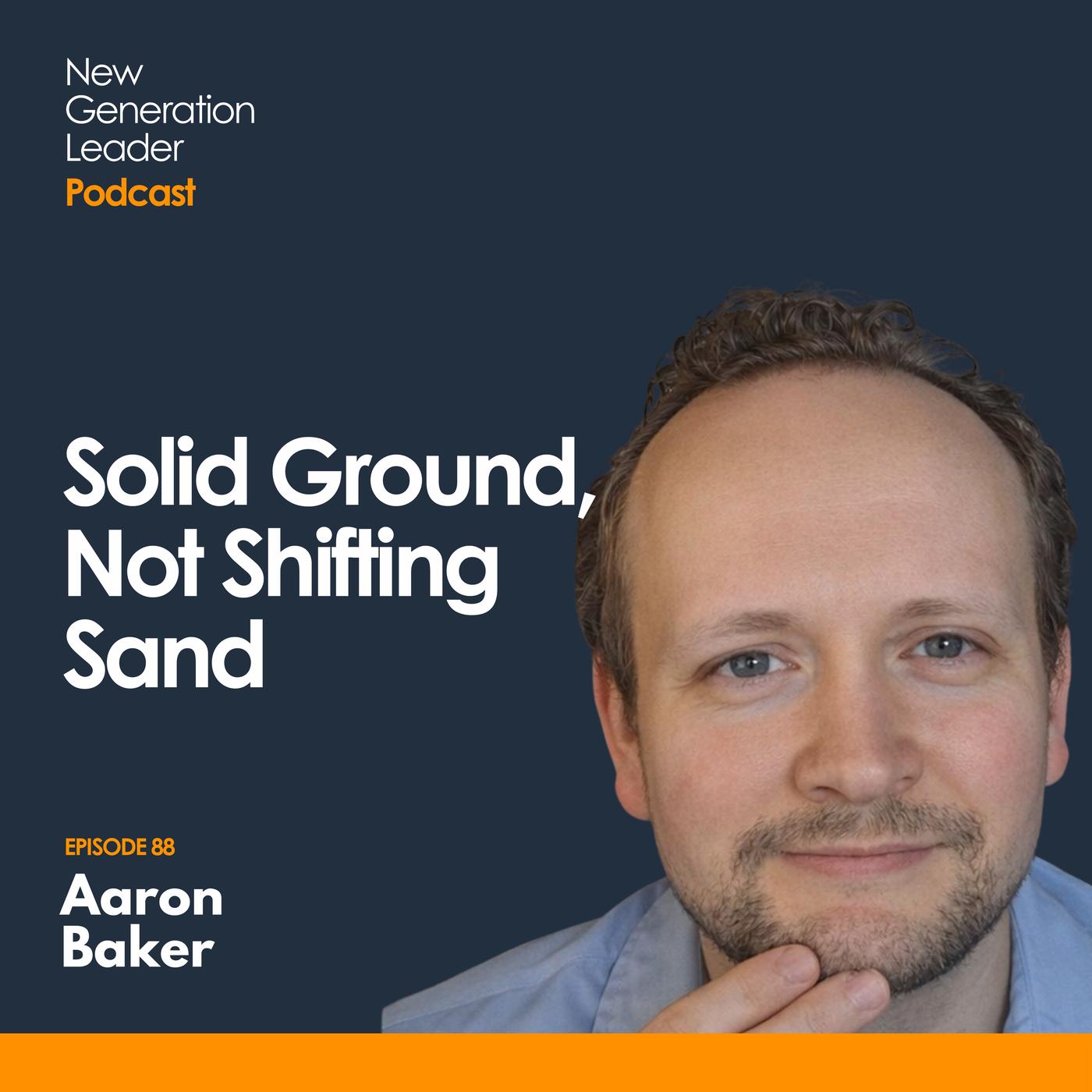
Aaron Lee: there we go. There we go. Well, Aaron, thanks for the conversation today. I I know we could have gone a thousand additional directions. but I appreciate the conversation. Thanks for sharing what you shared and for everybody listening. Hope you take your next step on solid ground, not on shifting sand. And we'll see you next time. Yeah.
Aaron Lee: Aaron, through your career in tech, you've said that you made some achievements based on what you've been able to do, but now you're shifting from doing the work directly to multiplying and enabling others to do that work and how you how you expand your influence into others. Talk me through that mental shift and what it's taking for you to learn. what to do on Tuesday to bring that to life, to actually put this into practice now to shift into a management role.
Aaron Baker: Yeah. You know, part of it is you know, I'm a consulting so it's a kind of a fluid environment which has a lot of positive benefits. But it also means that since my role is less defined, I I kind of found myself sort of moving in that direction where I was being more of an enabler than a doer, without a strict role change or title change even prior to my recent promotion to being a senior manager. And so it kind of snuck up on me, if you will. It kinda, you know, I kind of realized, I'm I'm actually just kind of like handing out work, not not alone, I'm still hands-on keyboard. But kinda handing out work now, I'm kind of giving people things to do. I'm I'm distributing stuff and it it kinda came to a clear head when I just realized I had way too much on my plate and I needed to hand some of the initiatives and internal things that I was a part of off to other people, particularly in the past say six months. And then I realized that all the work I've done in building out a a strong network internally in the company really Really paid off because I knew person A, B, C, D, I was they'd be great for that. They could do this. And I connected a lot of people to a lot of different opportunities. And I've done that before, but never quite so consistently or in massive have for the past six months or so, where it seemed like there was some kind of watershed moment where all of a sudden I was a conduit for my department for handing out initiatives and being a part of the process of helping. Helping get the right people in positions to kind of help out with our internship program or help out with our boot kit program or help out with this internal pro proof of concept we're building out. And like I mentioned to you before the podcast, part of it is absolutely that I invested in knowing people and I've invested in my network internally but also externally. But a large part of it is that people know that I know people. Someone that one of our leaders, who I didn't get permission, so I won't name, was at an event with me and I was just talking with people, and I've very happily come to the place where When I walk into event in the Richmond area, I walk in and I certainly don't know most people's faces, but I always know twenty or so faces. I know who they are and where they're working at and I feel very comfortable and very familiar with the location space. I've I've just invested that much time into it and that much to meaning into it for me. And and a captecker who was in a space like that with me said, Aaron, I think, you know, you might be the most sort of well networked person in the Richmond area for our company. You know, and I'm not sure if that's strictly true or not, but the point is is that people know that I know people and therefore they know to reach out to me. And so I'm getting lots of requests for support. if it's not my time, it's it's the time to find out who we should put in places and positions and so that's been a a great privilege. I am I'm honored, frankly And thankful to have that opportunity. but it it came from years of investment in knowing people externally and internally, but also people knowing that I know people, and that caused people to recognize that value and use me in that way to build up my network. And because of that, I've gotten all these opportunities to enable people and to help build out value, and and that's exciting. It's weird for me because I always want to jump in and I feel a little bit like I'm how do I put it like I'm cheating a bit when I don't dive in and do something. like there was a recent internal initiative to try to pitch some work and I got a few people to help me out with it and they did most of the work and I felt a little guilty like you know I'm kinda cheating
Aaron Lee: Yeah.
Aaron Baker: a bit here. but I I th I think that was a a bad perception per se. You know, I kinda realized it was incorrect, but also at the same time couldn't shake it. So, you know, I there there's this internal shift of the the matrix of judgment as to what your role is that I haven't fully twisted. to th maybe the the way it is currently in my my current sort of position and and way that I work for CapTech.
Aaron Lee: What you've just laid out, there's a lot of magic in there. And we talk about magic around our team all the time. And one of the things we've said about the magic that each person has, the skill sets, the gifts, talents, abilities, is that we often overlook them, diminish them, we'll maybe say, you just need to do and fill in the blank. It's that just word that signifies because it comes so naturally to us. I'm sure you say, Aaron, you just need to talk to so and so. you just need to come to this event. You said this to me as we kicked off today. You're like, you just need to come to this event in a couple weeks. how walk me through that journey that you've been on of discovering that you know people and that people know you know people. How long have
Aaron Baker: Mm.
Aaron Lee: you known that to be true about yourself?
Aaron Baker: You know, that's an interesting question. You know, part of it is luck and opportunity where I didn't fully realize the value until later. I've always been a people person. Terrible names to be fair, but I love people. They really make me light up. I know I'm not the only one that's like that by any means, but I love knowing people and especially if you come from a different background. I just I I wanna hear all about it. I wanna learn from you. I think it's super exciting. But what happened was, and you're aware of this of course, I'm the chair for the Data and AI Summit, and I didn't start there. I was on the committee for two years before I became the chair and actually co-chair with Todd Duby. He's over at CarMax for three of those years where I was chair. But what happened was is actually my current coach, and he wasn't my coach at the time My current coach, as it stands, he was on the committee and he's like, you know, I I'm not really getting a lot out of this committee. We have a kind of a spot on it to some degree. Would you like to be on it, Aaron? And I was like, sure. And I'll be honest, I didn't fully understand what I was signing up for. Like I knew it was a committee for an event that was data related. And I was like, sure, you know, why not? And you know, I got in there and do what I always do, and this is kinda key. I I do stuff, I execute, I I go full bore you know, I I hold on and I I I do stuff and if I'm gonna be there, I'm gonna be there, you know, and I d I probably do too much. That's probably one of the biggest problems, but for sure, you know, I was active and committed and consistent. And the end result was that after two years when the current chair stepped down, they decided to put me in Todd Duby as chair. Now at the time, I think I was a senior consultant level, I believe, maybe manager. I can't remember now. I think it was senior consultant. And Todd Duby, he's a director over at CarMex. It makes total sense. But I I think it's pretty rare for them to put someone at like a senior consultant level as co chair of any event. But I I think that speaks to the fact that the prior chair trusted me and knew that I would be reliable I had a lot to learn. Still do, of course. And I've learned a lot. But through being a part of that committee and engaging with a wide variety of people, speakers, but of course also the attendees and the committee members, I I grew to have a much bigger understanding of the value of networks. I always knew the value of networks, but now I know the value of networks, right? And The past few years I've also realized one of the sad parts of value is that there are a lot of people that add a lot of value to their companies, to their organizations, but people don't know about it. And I don't like being a a braggart, and I I don't think that I am, but I do think it's important that you you get the word out and that you tell people and people are aware of the value, particularly the leadership in your company, right? So I've had not all the time, but some strategic discussions with leaders of my company and so they're aware of what I'm doing and they're aware of what I'm talking about. And once a month I publish a list of like networking events in Richmond for my company. And that's self motivated and, you know, just I push that out. And because of that, people know that I, you know, am part of networking. People know that I connect with people. And and the fact that yes, I know people, but also people know that I know people is where you know, that that value really became clear to me. But it was definitely a process of the the privilege and opportunity and i honestly again I didn't fully appreciate the value of what I was stepping into until now. But but having that opportunity to to learn like yeah this really is a big deal and this really is valuable to understand what's going on in Richmond and the broader area and it's it's definitely added a whole new element and and maybe better at at communicating and building relationships and and all kinds of things that has made me s sort of stand out. We have other data scientists and they're all great. I I'm I'm a good one. I'm not gonna put myself above anybody else in my company but I'm I'm good at what I do technically but no one else is the data and AI summit chair. That's that's only me and that what makes me different and stand out and uniquely valuable to my company and I hope also of course to the the broader tech community as well.
Aaron Lee: Take me back earlier in your career or in your life. You talked about making those connections in the recent years, but do you see any of that inclination earlier in earlier chapters?
Aaron Baker: you know, like most people and and you of course I only say this about myself, although I just put most people in, so that may be a bit of a foe all there. I was kind of a foolish young person, right? I I was very gregarious, very outgoing. I liked people, but I I've definitely been on a a growth and maturity curve. You know, prior to finishing my graduate degrees, I was very focused on on that kind of education. And and fair enough, right? I mean that's what I was doing. But I wasn't growing a lot maturity as an individual in terms of character or the softwares. Certainly, you know, shall we say contact with the business world helped develop that. my first job that I had post college I I loved. I don't get in the details because they're not necessarily too important, but I made a few mistakes in the relationships that I had. And I learned from those mistakes. I I offended a director. I'll leave it at that. And it was over something that technically I was right, but the way I went about it was probably not the smoothest, right? And should have had a little more wisdom in my life at that point in time. But I learned, right? I learned, that's not how you can deal with a director. You have to have a different approach when there are two levels above you, and you're delivering it. information. And and so it definitely started there where I learned a little bit through the hard way of the value of investing in in connections the right way and doing it with relationships being the first principle, or at least coequal with being right with your solution or whatever it might be. And I learned. I'm a book reader, as I mentioned, and I picked up you know, how to win friends and influence people and psychology books, I I don't know how many, a number of them and and I learned communication and I I practiced it and I got a lot better at it over time and even at my time at CapTech, my current coach who I mentioned prior, he even noted that, you know, from the time he he was on my first project at CapTech. He was the the manager of that project. He noted that from there to here, there's been a large increase in my, as he called it, executive presidents, right? But it it it it it started, I suppose, with mistakes. I guess is the answer. The the the growth and the real maturity start with making some mistakes in my first job. And in how I dealt with those relationships and learning from those.
Aaron Lee: We say it's a continuous learning process. And if you ever stop learning, then that's that might be the end of your growth trajectory. So anytime we keep learning, that's that's a good thing. Coach Martelli from VCU was on the podcast a few episodes ago and one of the lines that he said that I just can't get out of my head is that he's obsessed with the idea of failure and reading about it, learning about it, how people react and respond to failure. And how that propels them to take the next step. And how you get back on your feet is just as important as or more important than than where you started, what you learned from the failure. As you think about this leadership shift that you're making, what are the internal mental barriers and hurdles that you're having to push through as you exercise a new muscle, do something in a different way, and have to make decisions about do I do this or do I have somebody else do this?
Aaron Baker: Yeah, there is a underlying feeling of guilt of not doing it myself. of having someone else do it. It feels like for me it's for the project, but to me it feels like for me, right? especially with data science. Like if you're doing a a task, it's like data engineering and I could do that in theory, but there's many people can do it better. And I'm totally more or less okay with handing that off to somebody else who's got more expertise than me. But you know there's a number of data science leaders we have, but typically I'm not working on the same project. Typically they kind of spread us out. Typically I'm working with more junior data scientists and I I feel a little like I'm throwing them to the wolves a bit. When I'm not like doing it with them and kind of letting them go and take on the process. The other thing I need to get better at is getting everything in my head out. You know, the current project I'm on, I am guiding a more junior data scientist on the process of building out this model. I don't get in the details of it. But I communicate and I think I'm communicating clearly. But and often I am, but there are occasions where I didn't explicitly mention something and like, that shouldn't be an input and it it that was super clear to me, but it wasn't super clear to them. And being more explicit and less assumption based in my communication, is something that I n I need to do better. you know, it's it's kinda funny. one of the guiding principles I have that I tr that I aim for is to be precise. It's it's in my email tagline. but at the same time, there's something I struggle with. It's actually a goal of mine more than something I've mastered where y there's always a detail that you forget, right? Or another facet. And I need to develop currently the the ability to explicitly think about like, okay, I'm not doing this so based on their level of understanding, what do I need to make sure they know? And and I will say that the current Junior Data Scientist has been very gracious about it, but I am learning at their Slight cost, not a huge cost, to to how to be more explicit in my communication of exactly how we need to do XYZ.
Aaron Lee: W one of the things we've noticed and recognized is in our heads it feels like, I just need to hand this off. But in reality, there's a process of handing off that sometimes needs to go through multiple iterations. It's not simple as not as simple as one conversation. We need to explain it. We need to walk it through. We need to show you. We need to watch you do it. And I I'm amazed every time I w get to the point of watching someone else do something. I'm like, yeah, yeah. I hadn't even thought about these three steps in the middle that comes so naturally to me, but when I watched you do it, that's when it it jumped out to me.
Aaron Baker: Yeah, absolutely, that is true. And another thing that I need to do more explicitly, I suppose, is helping them understand what is a suggestion versus a a direction. You know, I d I speak with a sense of authority. I'm used to more speaking as a a partner, so to speak, and I need to make it more clear when I say, hey, you know, this is something you could do, th that I'm clear that it's like an avenue of opportunity to explore when that's the case or when it's no we really need to do it this way and this is like this is a direction that like, you know, you can explore other opportunities, but like this is something that's specific and is a requirement of sorts. And I am an ideas guy and so my ideas sometimes just kinda like you know they kinda come out and and the more explicit again directions affected what it comes down to, but particularly in the idea of like idea you can explore versus requirement you must do. That that's something that I need to work on as well, particularly with how we do that that process. But you're right, there's like those three steps in the middle that you just kind of know and you don't think about, but then someone else does it and it's like, well hold on, no wait
Aaron Lee: A as you look back through your career, who are the the mentors or the individual leaders who you watched and started to model some of your leadership style after?
Aaron Baker: boy. You know, it's a great question. I mean someone that definitely inspired me. I I was planning to be an engineer, but then I had a math teacher named Dr. Tosh and Don Tosh and he was a stats guy. And it wasn't it wasn't even a stats class, it was a math class, for engineering. But he loved stats so much. and he was one of those professors that really connects with students, you know, and and spent time with students and built a relationship with you even while he was teaching and and however th that magical way those great professors do it and persuaded me to kinda go down the road of statistics and the road more of of of that side of of career opportunities as a pathway and I you know went to to do that, you know, with masters in mathematics and stats and and and so that really changed my career projection trajectory completely and is why I'm doing what I'm doing now. in terms of today, you know one thing I really honestly lack, I'll be honest, Aaron And that I really would love is to have have more of a clear mentor. You know, I I don't really have a clear mentor in my life right I mean I'm a coach, he's great, I don't wanna discount him. He's he's a great guy, but he's not a data scientist per se. but I I don't have that I really wish I did. there's some great people in my company that I look up to. Andrew Novokotney is definitely on him that comes to mind and not just mind. He's a great individual in our company who's a leader in the data science space. and has been a proponent of me and invested in me some here or there. But as I mentioned to you, I I really wish we had as a culture a better sort of mentorship value structure. on the flip side, I know this is a little bit outside the question, but I I've been trying to actually reverse that process where I wish I had a more clear mentor. I have coaches which are, you know, kind of my direct reports, but I also have other people that I invest in and I'm trying to help learn and grow in the data science pathway. I I'm invested in training and helping people and even in my local community I I'm invested in a few youth and and other opportunities where the ability and the opportunity to mentor people, young men in tech and out tech, it's something gets really dear to me. I think in part because I have been hacking at it with books and and learning the hard way more more or less. and I I passionately want that not to be the case. I see these youth and younger people in their career and I I s very so much want to help them not offend a I in their in their purview as part of their their their growth pathway.
Aaron Lee: I I think that's such an important point you make. And I I do think it goes back to your shift from being a doer to being an enabler of others who are doing. At the same time there's a shift that I think a lot of us are resistant to take from looking to a mentor to recognizing I mean, as as soon as you're in middle school or high school There are people a few steps behind you who you can invest in. And so there's no shortage of people we can turn around and mentor. But when our posture is forward thinking, hey, where can I go? What can I accomplish? What can I do? Who can I learn from? It is a shift to turn around and think about what we can give to someone else. But as they always say, that's one of the greatest opportunities to learn is by handing it off and teaching it and as we were just describing, walking somebody else through the steps and seeing it through their eyes illuminates certain dynamics or specific things that we do naturally or maybe we see reflected back that we don't do very well and
Aaron Baker: Mm-hmm.
Aaron Lee: opportunities for all of us to learn
Aaron Baker: Before you move on real quick, I I there's two names I should mention that have come to me that Again, not direct mentors, so to speak, although one arguably so, but that are in the area that I think deserve a a great call out and you may know both of them. I sure h hope you do. Todd Duby was my co chair and like I said, he was a director and and still is at CarMax. and having him as my co chair was great. And you know, I leaned on him very heavily in the first few years to honestly he kind of took the the lead lead, which I was totally good great with, and helped me grow as a leader. And then even being on that committee, I met a guy named Steve McLaughlin. He's awesome. Do you know Steve? I hope you do. but he's he's great. And he's working over Virginia State Police now. He's the chief data officer and he's he's a great guy that I look up to as well and and the oper the networking and the committee has given me the opportunity to meet some people that I can definitely say I look at them and go, Yeah, those are great people And I like to be more like them and and and learn from them. And I explicitly especially learn from Todd Dube. Doobie. I just called him Todd Dube as term. Todd Duobie. I know just your name is Todd. I'm sorry. because he was there and we we talked all the time and we made decisions together and that was a great experience and I'm very thankful for his leadership and having him alongside me during that process.
Aaron Lee: You know, it's interesting as you as you say that, even as you talk about Todd and describe your relationship with Todd, I think about Norm Gold, who I I wrote about in in a book and the power of having someone who's ahead of you on the journey, working alongside Norm. He was the chair, I was the co chair, vice chair, kind of dynamic sounds Very similar to how you described your working relationship with Todd. so many things I learned from him. and such an such a pivotal time, a learning opportunity for me, and I'm I am so grateful for that time. I'm gonna ask you a question in a few minutes, that actually came from Norm. But before I do, in the realm of data and AI. I feel like we can talk about leadership. We can talk about personal management coaching lessons that we're picking up throughout our careers, but How do you frame this? I don't even know how to frame this question to you, Aaron. Because the advances are coming at us so fast. Things are changing so fast in front of us. there's kind of this pull and this tug to do more. What do you say to leaders today who you encounter who maybe aren't as well versed in the the data and AI world as you are, how do you encourage them to keep taking steps forward and not get overwhelmed in the process?
Aaron Baker: Yeah, it is overwhelming. I mean, I'm not sure if it's more or less overwhelming because I can't compare where I said to other people. But even as someone that is the AI lead from a department and I have a deep background in stats and math and I understand how these things work at a relatively deep level, There's so much going on all the time I can't keep up with it. I just I just I can't. You know, there's so many things that I want to do. I I'd love to pursue a a clawed clawed code anthropic certification right now. I'd love to do that. That's one of the things that I would love to do right now and I'm considering. But there's like other stuff and all these different opportunities. You cannot possibly keep up it's it's beyond the capability of a human to do so, so y one thing I would say is you You're in great company. you know, even the people including the the influencers on LinkedIn don't believe them, they th no one is up to date and everything. There is a small percentage of the population that is more or less up to most things and but yeah, even where I sit, I don't I don't know everything and there's so much to learn, there's always more to learn. The the key is not to get overwhelmed and the key is to ask the question, where can I find value? in the process, right? Where can I find value in in learning? So recently I read a book. It's architected intelligence, that's the name of book. it was all about the different systems you need to put in place in order to have a a really well designed mature system. It's a great book. I do recommend picking it up. I forget the author's name, which is terrible, but I'm terrible at names, I apologize. but it was it was great because it was sort of evergreen, where it didn't go in the details of how it works, those are changing every six minutes. But talked about the the the structures you need to have in place, human and computer to have organization that performs well and is robust with AI. And I think that's is about as evergreen as you're gonna get with any kind of book. And you know, I for that reason I I wanted to dig into that because that's a a stake on the ground of knowledge that I don't think is gonna get old. And so one question or one way to answer the question of, you know So how do I pick up value? Don't necessarily chase the newest tool. Look for the knowledge in the core that is going to be the stake in the ground of of value for you. For where I sit and I build systems, that was that. It's probably different where you sit. But whatever that is, find that and you know, maybe talk to someone like me to help you find that a bit, because you maybe you don't have enough knowledge to find it. But find that place of value that's not gonna be a sifting shifting sand for you, but instead is going to be a a core place where It's about the business process, it's about the application, it's about whatever it might be that's relatable to you, that's going to be something that you can learn about and you're not feeling like you're you're fighting with the newest news update every two days of the latest model that comes out. or or or system or application. So that that's something. You are definitely not alone. even the people in AI feel the same way. And find that place that core non-shifting sand where you can apply yourself and learn something that's going to provide value and insight for your business or your role consistently no matter if Claude you know comes up with a a new system that does Zed you know so to speak.
Aaron Lee: I think that shifting sand analogy is really powerful because every headline, every f shiny object is so appealing and the salespeople want us to pick up on on each of those new fun things. but there's a a picture of a mountain range that we use to help organizations frame up where are you headed? And some of us are focused on the tree line right at the front of the picture. I, for one, it sounds like you would be similar, focus on the mountain range. Where are we headed out in the distance? But my favorite thing about this picture is, speaking of shifting sand, there's a landslide right in the middle of the picture. Like just over the next ridge. The the ground is washing away. And I think that's such a great analogy of what we're facing if we're not careful, if we don't have our GPS out figuring out what's our guiding North Star, what are the principles, what's the direction we're headed in, why are we doing this? Whatever it is that we're doing, whatever business we're in, the headlines could easily knock us off the path. Whether we're talking AI and tech headlines or any other geopolitical headlines, it's easy to get distracted, but Let's get on solid ground. That's such a great recommendation.
Aaron Baker: Yes, absolutely. And a little beyond that there there's a book by see, I'm terrible with with titles by by Liz Baker, she's a friend of mine, but she just put it out. And it's about how to use AI systems without sort of like forfeiting your human soul effectively. And without over reliance on AI. As a adjunct for VCU, I've seen students use AI in many different ways, right? some to replace their their learning, right? And some to augmented and some effectively refused to almost use it. I always required them to turn in their AI prompts and scripts so I could read through them, just you know, just to make sure, you know, that they're using in appropriate ways. And occasionally some students didn't turn in any and I'd I'd email them, like, hey, where's your whatever? And they'd like, I just didn't use AI for this. And there's all kinds of approaches to this, but what's really important to getting value out of AI you can't you can't allow it to make the decisions for you. And that's why expertise I think is so it's always been important, but it's almost more important, maybe, now because One one of my students told me this and it was a a sort of a revelation moment for me. I was encouraging, like, listen guys, I'll answer any questions you have. But you can go to ChatGPT or Claude and and they'll answer it and with like the simple stats stuff that they're it's safe. You know, and to do it faster. So ask me any questions you want, by all means. But like you can also get help from these systems and it's usually great. And he said, Well that's that's nice for you, Aaron, but I don't know w what I can trust and what I can't trust from these systems. It may be right ninety percent of the time, but I don't know when it's wrong. And there is a There's research on this, I don't remember the exact results of it, but there if you're an expert in a subject, you use AI very differently than someone who's not an expert, right? If I say, How do I do X and I don't really know, I just accept what the LM says. Right. And Depending on the the the risk associated, that can be okay. but when it comes to business decisions, that's not acceptable for most of time. You you need to be the one making the decision of how things happen for important execution stuff. You have to be the expert. And not on everything, but it is true that expertise is going to be more and more and more valuable and we need to be the experts so that we can make the The judgment on top of the LOMs to know what is the right and what isn't the right solution. so definitely keep that in mind when you're trying to apply AI. It's not if you're using it to replace your brain, whether it's in education or in your business, you're doing it wrong. But if you're using it to get rid of the brainless activities, then you're using it right. And or even in my case, I use it almost as if like a second data scientist. I'll chat with it and I'm like, What do you guys idea? I'll I'll wait with that. But because I know enough, I'm an expert in that, I can do that. But if it was like data engineering or like building out like a serverless API, I would just be like, sure, LLM, I I guess I guess you're right on that.
Aaron Lee: Let's do that.
Aaron Baker: Let's just let's go with that. That sounds good And that's not a great place to be, if you're building out something that's that's important to you.
Aaron Lee: That's a great great insight. Well, Aaron, I I recognize even in this conversation, you have been connecting thoughts and ideas, people and resources. We'll drop the the titles and links to the books you've mentioned in the show notes of the episode. I do have one final question for you. As you look back through your career, you've you've learned a lot, you've gone through that continuous improvement journey. But what's something you've learned here recently that you wish you had known? Earlier in your career.
Aaron Baker: Huh, recently. You know, after my graduate years so graduate school years I wasn't in a a grand place I was okay. There's been worse, but like I I was kinda I I I I I was exhausted, we'll put it that way. Mentally exhausted, right? And I needed to rebuild myself. And because of that exhaustion I I fell on like learning through books. I got My own faux psychology degree. And like a lot of psychology majors, they get into it because they want to figure out themselves, right? At least what they say. and that was my motivation. But what I realized, you know, I've been learning because someone told me to learn, you know, and what to do, and the the the the homework schedules and all that stuff. And I learned a lot. Like I I it's great, but it really opened up a new world where it's like, I can learn stuff that's really valuable because I want to learn it, you know? And it's one super recent, but if I was twenty years old I would tell myself to always have a growth goal. A a concrete growth goal, right? Where whether it's through books, maybe books aren't for you, fine. W take a take a course or just have a set of goals. Whatever it is, right? There's any number of ways. you can and will grow. have a concrete goal. I I know so many twenty year olds or roughly twenty year olds, and including my old self. that don't if you ask what are you trying to grow in? they'll be like, they don't they don't have any answer whatsoever, like zero. I I quite frequently ask young people what a question they probably find annoying and probably don't quite understand. I'm like, so where do you wanna be in five years? Not even like job, just like who do you wanna be? And like, do you wanna have your own house? Do you wanna live in an apartment? Is that cool with you? you know, do you wanna have a a nice car or a car at all? Like, where do you wanna be in five years? Because if you don't even have like an idea of what that is, you're you're you're just gonna be doing whatever comes your way, you know, and working at a a a a beginner style job, which is a great place to start. But you're not gonna move forward from that. You've got to have that clear, targeted growth goal for yourself. for me now, obviously that is leadership. I need to grow in that. I think I've grown a lot in that already, but I'm stepping up in a a large way recently in that space and realigning my matrix of evaluation as to what my role is and where where I add value. And also and how I do a good job of enabling the other people is where that is for me now. But to to every twenty year old, including myself, find a goal for yourself that you want to be someone in five years or or maybe a shorter time frame. That's okay too. But you've gotta have a target and then a and then enjoy the learning process, whatever that means for you. You know, if it's with a saw and a bench, you know, a tool bench, great. You know, just have a goal. and and work towards it. You gotta do that. I mean I didn't have that twenty. I was just in college hanging out with friends playing Halo. Halo two, to be precise.
Aaron Lee: And then that chapter closed and then he looked around and wondered, What am I doing now? What am I reading now? wait, just me? No, just me. Yeah. D each chapter I've found every chapter all the way down to every season of the year. Like when we change seasons of the year, chapters, the kids go back into school rhythms. I always find those transitions are pivotal moments to restart my for myself. What's my goal for this next season? Where am I headed? How do I how do I get my head wrapped around being organized, being goal oriented and growth minded and recast a vision for this next chapter? So great reminder. Thanks for thanks for sharing that. what's the best way for people to connect with you and follow along with your work, Aaron.
Aaron Baker: yeah, absolutely. So find me on LinkedIn. For sure, yeah. Aaron Baker, if you put CapTech on the end of that, the the Aaron Baker with my face will show up. I'm usually pretty active on there, honestly. I have been recently because I've been very busy at my my my current r role, but I I I would do check in there pretty often for sure. So that's a great place to connect with me. especially if you're interested in speaking at the Data NAI Summit or getting connected to it in any way, shape, or form. Or do you want to get involved? with the Richmond Network. I I know the people to connect you with and I am very happy to do that. So love that opportunity to connect with everybody and to get their get their value and and and be a part of my network as well. So that's where to find me for sure and I'll I won't be leaving there any time soon
Aaron Lee: Well, we're still working on plans for the first annual conference of the Arons. keep keep an eye out for that.
Aaron Baker: Ha ha ha
Aaron Lee: Coming here sometime sometime, maybe. Might just be a coffee meetup, but
Aaron Baker: Was it is it only Aaron's that are allowed to come? 'Cause that's gonna be pretty restrictive or is it well maybe only Aaron speakers, you know, maybe c we we could work on it, Aaron, we'll figure it out.
Aaron Lee: there we go. There we go. Well, Aaron, thanks for the conversation today. I I know we could have gone a thousand additional directions. but I appreciate the conversation. Thanks for sharing what you shared and for everybody listening. Hope you take your next step on solid ground, not on shifting sand. And we'll see you next time. Yeah.