
TENTANG EPISODE INI
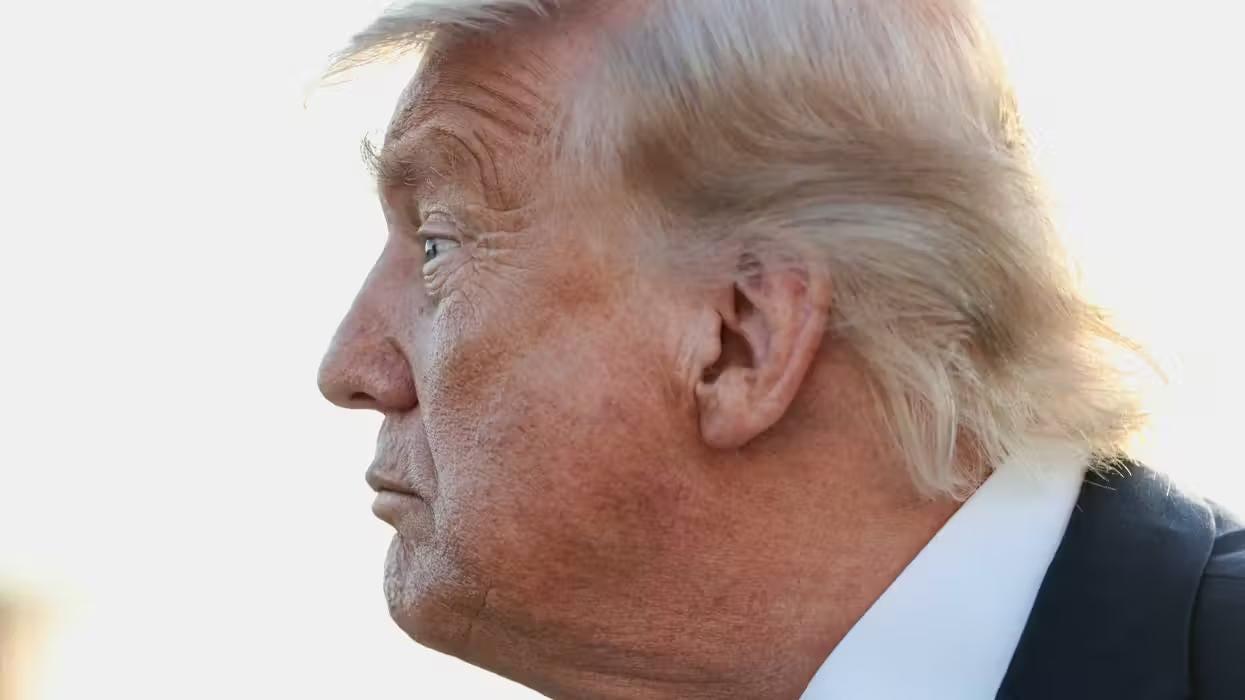
REUTERS Evelyn Hockstein
The Loyalty Test Was the Government
Chaos Was the Design
Anthony Scaramucci’s brief White House tenure exposed an administration divided into hostile camps: Reince Priebus’s Republican establishment, Steve Bannon’s far-right faction, and the family operation around Ivanka Trump and Jared Kushner. They leaked against one another, blocked rivals from gaining access, and treated federal appointments as weapons in an internal contest for proximity to Donald Trump.
That is enough context. The political significance lies not in Scaramucci’s humiliation, but in what the episode reveals about how power operated.
Help fuel the work. Independent analysis doesn’t fund itself:☕ Buy us a coffee
Access Replaced Governance
Trump held the decisive institutional power. Priebus, Bannon, and Kushner exercised delegated power by controlling appointments and access. Their conflict was not a clash over effective administration; it was a competition to shape the president’s environment and eliminate competing influences.
Calling this “chaos” risks making deliberate conduct sound accidental. These officials chose intrigue over coordination. They leaked, obstructed appointments, and maneuvered against colleagues because influence inside the White House was treated as a scarce personal asset. The dysfunction followed from incentives created at the top: access mattered more than process, and loyalty mattered more than competence.
The President Who Resented the Constitution
The clearest episode concerns Russia sanctions. When Trump considered vetoing legislation passed by his own party, Scaramucci warned that Congress could override him. Trump reportedly answered, “They can’t do that. I’m the president of the United States.” White House counsel Don McGahn then confirmed the elementary constitutional fact that a congressional supermajority can override a veto.
Trump’s ignorance was serious. The response to its exposure was worse. According to Scaramucci, Kushner warned him that he had embarrassed the president and would probably be fired. The governing lesson was unmistakable: correcting the president carried greater professional risk than the president misunderstanding the limits of his office.
That is institutional cowardice in operational form. Advisers did not merely flatter an insecure executive socially. They enforced a system in which accurate information became insubordination whenever it contradicted his preferred image of unlimited authority.
Scaramucci Was an Enabler Before He Was a Witness
Scaramucci now presents his experience as a moral and psychological reckoning. That may be sincere, but sincerity does not erase agency. He accepted Trump’s offer, sought a place inside the administration, and continued defending Trump until 2019, long after the internal culture had revealed itself.
His eventual break matters because insiders can document mechanisms hidden from public view. But the familiar redemption arc also misdirects attention toward one man’s damaged career and recovered conscience. Scaramucci was not the principal victim of the system he joined. He was a willing participant who lost an internal power struggle and only later confronted what he had helped legitimize.
The important question is not whether he “almost lost himself.” It is how many officials recognized the degradation, accommodated it, and remained useful until the personal cost became intolerable.
The Party Was Not Stolen Without Assistance
Scaramucci describes Trump’s takeover of the Republican Party as a corporate acquisition of a vulnerable institution. The metaphor identifies Trump’s opportunism but softens the responsibility of those who enabled it.
A political party is not an inert company waiting to be purchased. Its officials, donors, lawmakers, operatives, and media allies make choices. Scaramucci contrasts departing establishment figures with Marco Rubio going “all in.” That distinction is the story: Trump acquired power because Republican actors decided that submission offered more rewards than resistance.
Trump demanded obsequiousness. Others supplied it. He punished contradiction. Others learned to conceal facts. He recast cruelty and grievance as partisan loyalty. Others amplified them because the arrangement preserved their offices, audiences, or influence.
Personal Ruin, Public System
The source frames much of this history through Scaramucci’s mistakes, fame, family damage, and eventual self-knowledge. Those consequences are real, but they are politically secondary. The public consequence was an executive branch in which factional sabotage displaced administration and presidential vanity disciplined those charged with conveying reality.
This is the larger pattern: authoritarian habits do not require a government staffed entirely by committed ideologues. They thrive on ambitious people who treat proximity as power, humiliation as a management tool, and obedience as the price of remaining relevant. The central failure was not that Trump proved difficult to “read.” It was that an entire political apparatus learned to read him accurately—and adjusted itself accordingly.
Thanks to Alter Net
Source: Former aide details the exact moment he realized Trump was destructive
Systemic Error is a reader-supported publication. To receive new posts and support my work, consider becoming a free or paid subscriber.
We warned them.We told them.We shouted from the rooftops.We plead.We begged.They didn’t listen.Now, we all will suffer.Y’all know what to do, right?VOTE BLUE! 💙Vote as if your life — nay, our country — depend on it.Because, this time, and every time, it does.
This is a public episode. If you'd like to discuss this with other subscribers or get access to bonus episodes, visit paulstsmith.substack.com/subscribe