WEBVTT
00:00:00.959 -->
00:00:02.080Welcome everybody.
00:00:02.160 -->
00:00:05.280I'm super excited for another episode of Looped In.
00:00:05.679 -->
00:00:15.119Today, my guest is a force of energy that I had the luck of getting to know over the last weeks.
00:00:15.359 -->
00:00:22.719It is a CSO specialist and a consumer climatech specialist, I want to say, that connected us very early on.
00:00:22.879 -->
00:00:25.679I'm talking about Danielle from the CSO shop.
00:00:25.920 -->
00:00:26.960Welcome to the show.
00:00:27.359 -->
00:00:28.320Thank you, Carl.
00:00:28.399 -->
00:00:29.760I'm so excited to be here.
00:00:29.920 -->
00:00:30.719Thanks for having me.
00:00:31.039 -->
00:00:51.200When we met, we had such a beautiful energetic conversation about consumer climatech and what all needs to change and your experiences at L'Oreal and at many other different companies with your own, you know, advisory firm, the CSO shop.
00:00:51.439 -->
00:01:00.799So why don't you help us understand a little bit where you're coming from and what your expertise is and your learnings and what drives you into that space?
00:01:01.359 -->
00:01:01.920Sure.
00:01:02.159 -->
00:01:06.319You know, I've been in sustainability for almost three decades now.
00:01:06.640 -->
00:01:12.959And um, I was in it probably like you before it was something that was an official job.
00:01:13.200 -->
00:01:18.640And, you know, we were trying to figure out what is this career that we are choosing?
00:01:18.879 -->
00:01:26.560Um, and how do we help corporations evolve and transform to be a better version of themselves?
00:01:26.799 -->
00:01:40.079I think sustainability, the word, it doesn't really do justice to what we do, which is really operational efficiency through the lens of climate change and human rights, right?
00:01:40.239 -->
00:01:53.840Is ensuring uh we identify the corporate risks and opportunities to build resilience uh for corporations in a changing world and uh with a human-centered approach, right?
00:01:54.159 -->
00:01:59.680So I think that um you don't really get all that from just the one word of sustainability.
00:01:59.840 -->
00:02:05.760And also I think sometimes I say the word sustainability and people's eyes glaze over at this point.
00:02:05.920 -->
00:02:31.039And so I'm trying to think of what is the next iteration of this word, you know, that we that we need to start using to describe what we're doing so we can bring more people along on the journey and not um make them feel bored, which I feel like sometimes they feel bored.
00:02:31.280 -->
00:02:37.360And that's a bummer because what we're doing is so nuanced and innovative and cool.
00:02:37.680 -->
00:02:49.599And um, you know, when you look at it through the lens of certainly like, you know, data and metrics, sometimes people just you're not hitting people where they, you're not meeting people where they are, right?
00:02:49.680 -->
00:02:50.960To to join the fight.
00:02:51.120 -->
00:02:54.000And so that's why I like to focus on consumer goods.
00:02:54.159 -->
00:03:02.479Um, because to me, that's a very intimate decision that people are making every single day, right?
00:03:02.879 -->
00:03:10.240The the clothing that I choose, the fabric that I choose to wear is a really specific decision.
00:03:10.400 -->
00:03:12.080I don't like to wear polyester.
00:03:12.479 -->
00:03:14.560That's good because it's made of plastic, right?
00:03:14.719 -->
00:03:31.439So I don't, I write, I so it's like those kinds of considerations are really important, especially when you work in um beauty and personal care and you are in people's like most intimate moments, right?
00:03:31.680 -->
00:03:38.400In their shower, in their brushing their teeth, putting their makeup on, you know, in their bathrooms.
00:03:38.479 -->
00:03:51.919And so I think it's like a unique, it's a unique sector to be able to connect with people on a daily basis if you're messaging your products correctly.
00:03:52.319 -->
00:04:07.039I have learned so much in the past, you know, uh three decades of doing this work in terms of what makes people excited about uh this work and what makes people not care.
00:04:07.759 -->
00:04:11.680And frankly, the closer you can get to them, right?
00:04:11.759 -->
00:04:23.680It's like they say in marketing, it's like the priority, the order of operations for how people prioritize dis consumer decision making is what goes in me, what goes on me, what's around me.
00:04:23.839 -->
00:04:38.879And so that's why when you talk about food, beverage, when you talk about, you know, your personal care products and things that go on your skin, there's a really unique opportunity there that I think we haven't even scratched the surface of.
00:04:38.959 -->
00:04:42.480Um, and that's why I like focusing my work uh on there.
00:04:42.720 -->
00:05:01.920Um, but I also have been working with organizations that are um shifting culture, you know, like live events companies and uh sports associations where we have 20,000 people in one space at the same time.
00:05:02.399 -->
00:05:12.480And, you know, there's like this untapped opportunity there to be a part of somebody's most valuable memories, most treasured memories.
00:05:12.639 -->
00:05:16.000And it's like even that, I don't think we've scratched the surface of.
00:05:16.240 -->
00:05:22.000So um, that's kind of what I focus on today in my work with the CSO shop.
00:05:22.240 -->
00:05:25.600CSO, of course, stands for Chief Sustainability Officer.
00:05:25.759 -->
00:05:32.079It's an acronym, of course, an acronym in sustainability, because we have that's all we do is talk in acronyms.
00:05:32.319 -->
00:05:54.879And um uh I am a fractional or part-time uh advisor for companies that want to make this transformation, either embedding it from the beginning at startup level or um at the Fortune 500 level where they still need to figure out how to crack that code on transformation and connecting it to the end consumer.
00:05:55.199 -->
00:06:01.759So it's not marketing BS because I have the deep supply chain transformation expertise.
00:06:01.920 -->
00:06:09.120Um, but I also, because of the companies that I've worked at, have been trained to make it consumer-centric.
00:06:09.279 -->
00:06:15.680And so um, so hopefully these two things like marry in an interesting way for my clients.
00:06:16.639 -->
00:06:22.639What do we need for more adoption of more sustainable circular trades?
00:06:23.040 -->
00:06:34.000Is it more a push from the consumer side and more education on the consumer side that they are more aware of what they're consuming and what impact that has?
00:06:34.319 -->
00:06:42.800Or do we need more incentives and a push and innovation on the on the company level?
00:06:43.199 -->
00:06:45.759You know, I think it's a both and, honestly, Carl.
00:06:45.920 -->
00:06:56.879I think brands can only be as sustainable and products today can only be as sustainable as their suppliers have solutions for them, right?
00:06:57.199 -->
00:07:12.639There are not, there's only a handful of, you know, Fortune 500 companies that have innovation hubs or accelerators to really um invest in the solutions that can scale up.
00:07:12.879 -->
00:07:20.639And um, and so it's it is there need this incentive structure needs to come from somewhere else.
00:07:20.879 -->
00:07:40.000I keep hearing, you know, I mean, VCs are great, they do a great job, but my understanding, and please correct me if I'm wrong, is that investors really want to invest in like the cool thing, not like the thing that we already know that works to deepen and scale it.
00:07:40.079 -->
00:07:40.879You know what I mean?
00:07:41.120 -->
00:07:45.439And so um that's like uh that's limited.
00:07:45.600 -->
00:07:55.600We're limited by by that because we have a lot of solutions that just need the money to scale and the willpower to scale.
00:07:56.319 -->
00:08:01.839And I think it takes discipline and it takes long-term vision.
00:08:02.000 -->
00:08:11.439Um, and it's not something that's built around, you know, a short, um, a short investment timeline.
00:08:11.600 -->
00:08:15.920And so, you know, I think it's both of those pieces, but it's also policy.
00:08:16.079 -->
00:08:22.079We need policy that it can scale that can scale things quicker than anything.
00:08:23.279 -->
00:08:24.000I agree.
00:08:24.160 -->
00:08:34.000Policy is super important, and as you know, I'm also super involved with politics and and regulation in Brussels and here in California as well.
00:08:35.039 -->
00:08:41.200However, I also always say a business model should never rely only on regulation.
00:08:41.600 -->
00:08:53.919So while I try to, you know, support a lot of innovation and startups with capital and and with bringing their innovative solutions into the market.
00:08:55.360 -->
00:09:04.240You have so much experience with medium companies to large companies, as you mentioned, Fortune 500 companies.
00:09:04.480 -->
00:09:05.759What are your learnings here?
00:09:05.919 -->
00:09:12.240Like what do you feel is the biggest leverage you can help them with?
00:09:13.919 -->
00:09:17.840So I think really it there's two pieces.
00:09:18.000 -->
00:09:26.559And one of them is such a core circularity principle, is um is the product design in the first place, right?
00:09:26.799 -->
00:09:39.519It's like if we're designing more sustainable products from inception, we don't have to come up with solutions on the back end on waste and emissions.
00:09:39.759 -->
00:09:45.519And, you know, so design is one of the most critical opportunities.
00:09:45.840 -->
00:09:53.200I'm not seeing design schools in the US design for sustainability in the way that I would like them to be.
00:09:53.519 -->
00:10:00.960In regards to design schools in Europe, do you know if there's like circular design programs or sustainable design programs?
00:10:01.200 -->
00:10:07.120Maybe in fashion there is more than anything else, but I would imagine it's like Central St.
00:10:07.279 -->
00:10:08.080Martin's.
00:10:08.240 -->
00:10:21.600It's like, you know, it's a few schools throughout Europe that are the elite of the schools versus like hitting the masses, you know, which is is the same kind of of how it is here, you know.
00:10:22.399 -->
00:10:29.840Yeah, I mean, you have a lot of programs and you know, education, they're not that easily accessible.
00:10:30.159 -->
00:10:35.200People would also need to make the effort in in finding out what would be the right course for them.
00:10:35.600 -->
00:10:40.960And then what I find is the applicability in real life.
00:10:41.120 -->
00:10:45.519Like, how do you implement circularity in your company?
00:10:45.759 -->
00:10:47.200Because that's where it gets tricky.
00:10:47.279 -->
00:11:00.000Um, and that's what I've been building over the last 15 years, is you can't change an entire ecosystem from the standpoint of one company, right?
00:11:00.159 -->
00:11:03.120Like you need to build an ecosystem, and everybody talks about it.
00:11:03.279 -->
00:11:11.840We we need to build ecosystems and new value chains, and we need to partner up with each other, but then when you actually bring these people together, it's it's slow, right?
00:11:11.919 -->
00:11:15.200It's like and I think that's what frustrates people.
00:11:15.440 -->
00:11:22.720It's a big investment on that sense, without any knowledge of what they will get out as a return of investment.
00:11:22.960 -->
00:11:28.080So it and that I think just blocks a lot of people in actually doing something.
00:11:28.480 -->
00:11:30.080Yeah, I I agree with that.
00:11:30.240 -->
00:11:31.759I think it is very slow.
00:11:32.000 -->
00:11:45.519I think also the gap between sort of theoretical sustainability and like academic sustainability and practical sustainability is really wide, right?
00:11:45.759 -->
00:12:05.519And the people on the ground who are making these decisions in inside corporations or inside city government maybe didn't take the classes or read cradle to cradle or like read, you know, they don't maybe have the same sort of knowledge base to uh, you know, an example is my class.
00:12:05.679 -->
00:12:07.679I teach circularity at Columbia.
00:12:07.840 -->
00:12:10.559I've taught it for about the past six years.
00:12:10.720 -->
00:12:15.759It's like I teach it every fall, and it is uh it's great.
00:12:16.000 -->
00:12:21.759But the the first thing I do on the first day is burst a bubble, right?
00:12:21.919 -->
00:12:27.120Burst the misconception that circularity and recycling are synonyms.
00:12:27.519 -->
00:12:28.000They're not.
00:12:28.559 -->
00:12:36.240Circularity and circularity is a systems design approach to zero waste, right?
00:12:36.480 -->
00:12:39.919And optimizing um material use.
00:12:40.240 -->
00:12:49.279Uh utilize that's what the the definition is, is is um ensuring we're using materials that's highest utility for as long as possible.
00:12:49.759 -->
00:12:58.720That's literally circularity, but that's not a that's not a pithy way or a clean way to get at some or a practical way.
00:12:58.799 -->
00:13:00.799How do you make that practical, right?
00:13:01.279 -->
00:13:04.159We're not talking to economists day in and day out.
00:13:04.240 -->
00:13:09.440We're talking to people who work in operations, who work in product design, who work in marketing.
00:13:09.759 -->
00:13:18.639And for them to understand really what we're getting at at the heart of circularity is it takes some explaining.
00:13:18.799 -->
00:13:23.519And I'm not obviously saying these people are not smart, they're capable people.
00:13:23.840 -->
00:13:27.759They just don't have the exposure in the same way, right, that we do to this information.
00:13:27.919 -->
00:13:34.720And so I think there's a really big knowledge gulf to bridge still.
00:13:35.679 -->
00:13:38.720When you teach those people, what do you teach them?
00:13:38.799 -->
00:13:45.600And and do you have any feedback on how they can or cannot apply these things in real life?
00:13:46.000 -->
00:13:50.240My whole class is balancing the theoretical with the practical.
00:13:50.480 -->
00:13:56.240So I will introduce a high-level concept on circularity.
00:13:56.399 -->
00:14:03.759We'll do the, you know, the readings and the the thought leadership work.
00:14:04.000 -->
00:14:08.320And then we will figure out how do we apply this day to day, right?
00:14:08.399 -->
00:14:10.720Like biomimicry is a great example.
00:14:10.960 -->
00:14:13.519People love the topic of biomimicry.
00:14:14.080 -->
00:14:30.559And also it takes some dedication to really understand what we're getting at when we talk about um, you know, designing products to have solutions that are inspired by nature, right?
00:14:30.720 -->
00:14:32.960It's like it's very broad.
00:14:33.120 -->
00:15:02.080And so, and then you make that super concrete, like the trains or that were uh, you know, um uh the the design and shape was changed to be more aerodynamic, uh, inspired by I think it was the Kingfisher bird and and how it dives and through the air, and you know, all of these uh great uh materials that are being innovated today that are inspired by nature and how nature functions.
00:15:02.960 -->
00:15:07.440And so, you know, that's just one example of how I take that.
00:15:07.600 -->
00:15:32.559Oh, so we we take these like very theoretical things and then the whole premise of the course is you have to take something that's linear, design, take a product, any product that's linear, and um and let's die, let's unpack what the system it's existing in, and then let's redesign it to be more circular.
00:15:32.799 -->
00:15:34.879So pick up anything around you, Carl.
00:15:34.960 -->
00:15:36.720We're gonna do one of my exercises.
00:15:36.879 -->
00:15:38.720Pick up anything around you on your desk.
00:15:39.120 -->
00:15:39.919Pick something up.
00:15:40.080 -->
00:15:44.159Anything you bought, my my my here, my my water cup.
00:15:45.840 -->
00:15:46.399That's a great one.
00:15:46.480 -->
00:15:46.960That's a great one.
00:15:47.120 -->
00:15:49.759So what's your so for the listeners?
00:15:49.840 -->
00:15:51.919It's like a Stanley water cup, right?
00:15:52.000 -->
00:15:54.639It has let's talk about what is it made of?
00:15:55.120 -->
00:15:58.559What are the materials that go into making the Stanley water cup?
00:15:59.200 -->
00:16:00.559What's a steel?
00:16:00.799 -->
00:16:01.200Yeah.
00:16:01.519 -->
00:16:08.720Some some plastic or rubber for the straw, uh, and for the lid, um, some colors.
00:16:09.200 -->
00:16:09.679Mm-hmm.
00:16:10.240 -->
00:16:10.639Yeah.
00:16:10.720 -->
00:16:18.639So it's like there's some pigmenting, there's a maybe steel or aluminum, maybe there's some insulation in between the layers.
00:16:18.799 -->
00:16:19.279I don't know.
00:16:19.440 -->
00:16:21.759I've never like chopped one open.
00:16:21.919 -->
00:16:27.360Uh, there's the plastic um lid and then the plastic straw.
00:16:27.600 -->
00:16:29.360Maybe those are two different types of plastic.
00:16:29.519 -->
00:16:30.159We don't know.
00:16:30.320 -->
00:16:35.120Uh, there's the silicone that goes around the lid to make sure it fits snugly.
00:16:35.360 -->
00:16:40.960So just in one item, we have five or six different materials, um, right?
00:16:41.120 -->
00:16:51.039Because of so you when you start to like go backwards, you start to understand the complexity of the products that we, you know, take for granted every single day.
00:16:51.200 -->
00:17:02.240And then we start to um really do a deep dive on those supply chains and trace it back to its raw material and figure out, okay, where in the world did this come from?
00:17:02.399 -->
00:17:09.680What is the complexity around the supply chain for aluminum or steel or PET plastic or HGPE plastic?
00:17:09.839 -->
00:17:15.119Like what where what are the origins of these materials and what are the value chains?
00:17:15.200 -->
00:17:19.440And then what is the downstream value, right?
00:17:19.680 -->
00:17:23.680So it's like once you're done with that Stanley cup, what do you do with it?
00:17:24.319 -->
00:17:28.880Unfortunately, you throw it away because there's no way to recycle it at curbside.
00:17:28.960 -->
00:17:29.119Right.
00:17:29.519 -->
00:17:31.599Unless Stanley wants Stanley, call me.
00:17:31.759 -->
00:17:34.079Let's come up with a circular solution.
00:17:34.240 -->
00:17:45.680But it's like, unless there's that system that's designed to take it back and recycle it and reintegrate it into their future products, that's a linear product, right?
00:17:45.920 -->
00:17:52.960And so every single thing around you, us, needs to be redesigned for circularity.
00:17:53.119 -->
00:17:55.839And so that's why circularity is complicated.
00:17:56.720 -->
00:17:58.160No, I and and I totally agree.
00:17:58.240 -->
00:18:25.359And I I did this probably with one of the hardest products to do it with uh in the footwear industry, where you have around 50 different materials and layers and so on, and and obviously you a biodegradable shoe sole is not worth anything as long as the shoe sole is you know knit together with the upper of the shoe, and um you would need to put it into a special environment, and you know, like it it's not happening.
00:18:25.519 -->
00:18:31.680And and that's when I realized in the footwear industry, you you need to change everything, right?
00:18:31.759 -->
00:18:32.880How do you design your product?
00:18:33.039 -->
00:18:36.160Where's your pro like what is your product made of?
00:18:36.319 -->
00:18:46.880But not only in sustainable material, but in recyclable material, in a production in a product design that you can actually dismantle a different kind of material or components.
00:18:47.279 -->
00:18:58.240And then even if you do all of that, how do you incentivize your customers to actually return or bring back the product so that you can actually close the loop again?
00:18:58.480 -->
00:19:05.119Because if the most sustainable recyclable product ends up in our trash bin, nothing really happens.
00:19:05.359 -->
00:19:08.960Um so and then I think that's where it gets really complicated.
00:19:09.279 -->
00:19:16.480But um, I'm sure you realize it every single day with all the customers and clients you're working with.
00:19:16.640 -->
00:19:19.920Do you have some cool examples?
00:19:20.799 -->
00:19:21.440I do.
00:19:21.599 -->
00:19:25.680So, well, there's a couple of cool examples on circularity.
00:19:25.920 -->
00:19:34.240Um, one of my favorite examples is a current client that I'm working with called Aora, uh, Aora Mexico.
00:19:34.319 -->
00:19:38.720They are a color cosmetics brand from uh Mexico City.
00:19:39.039 -->
00:19:46.799And they're spelled A-O-R-A, but also like a play on words like Aora, meaning now, like we need to change now.
00:19:47.039 -->
00:19:52.799The whole concept of the brand was founded on 100% zero plastic.
00:19:53.039 -->
00:19:57.440And so the innovation on plastic packaging was real.
00:19:57.920 -->
00:20:08.319I mean, if you are familiar with um any cosmetic packaging, it's riddled with plastic and uh it's not monomaterial.
00:20:08.400 -->
00:20:09.920It's you cannot recycle it.
00:20:10.000 -->
00:20:15.599A lot of it is carbon black plastic, it's like an ore, it's been metallized.
00:20:15.839 -->
00:20:29.359And so this company wants to solve for that problem because I think it's a a billion because don't quote me on this, but it's like an exorbitant number, like a billion, 10 billion, something like this.
00:20:29.599 -->
00:20:33.440Every year is sold of new beauty products.
00:20:33.680 -->
00:20:41.119But if you can understand because of the lack of circularity, every beauty product that's ever been made on earth is still on earth, right?
00:20:41.359 -->
00:20:49.359So they make all of their packaging in monomaterial in materials that are recycled at curbside.
00:20:49.440 -->
00:21:02.640So aluminum or tin or noble, what they call noble materials, like materials that are actually valuable to um to purchasers uh to buy it and and uh move it forward.
00:21:02.720 -->
00:21:09.279And even in the compact, you know how sometimes you have a mirror inside the compact, which is glass.
00:21:09.599 -->
00:21:17.599They innovated a new mirror that's actually made of metal, and it's clearer than any mirror I've ever I've ever looked at.
00:21:17.759 -->
00:21:25.680And so it ends up being um just a monomaterial palette and that can be put right in in your curbside recycling.
00:21:25.839 -->
00:21:45.519So it's that kind of like uh, and also I will say they've cracked like how to make sustainability cool in a way that their products are beautiful and functional and stand like head above the their competitors, um, but they're also sustainable.
00:21:45.680 -->
00:21:49.839And so I think that's the other piece is like making sustainability cool.
00:21:50.000 -->
00:21:59.680Um, in LA, there where you are, there's a very cool um clothing design brand called Sway Social.
00:22:00.160 -->
00:22:01.519Shop, S-U-A-Y.
00:22:01.920 -->
00:22:04.480If you're ever in downtown LA, go visit Sway.
00:22:05.279 -->
00:22:06.559They're incredible.
00:22:06.799 -->
00:22:11.680They have come become more like a community center than a brand in a way.
00:22:11.839 -->
00:22:23.039You know, during the wildfires, I mean, they played a huge part in um clothing uh donations and like, you know, giving people what they what they need.
00:22:23.200 -->
00:22:29.839Um, but what they do is they design into products that are made from many different styles and products.
00:22:29.920 -->
00:22:33.599And if you ever see me speak, I usually just uh speak publicly.
00:22:33.680 -->
00:22:40.720I will wear their clothing like on stage because it's a very cool, it has like a streetwear kind of aesthetic.
00:22:40.880 -->
00:22:42.799I always get compliments of it on it.
00:22:42.880 -->
00:22:48.319And then I tell people that it's like actually made from this jacket's made from 12 different garments or whatever.
00:22:48.559 -->
00:22:50.880And people just love it, they think it's very cool.
00:22:51.039 -->
00:23:06.799So, you know, there's a way to do it to make it chic, to make it feel um fashionable and to align with, you know, what we can't people can't make feel like they have to give something up in order to be more sustainable.
00:23:06.960 -->
00:23:08.480Like that's just it.
00:23:08.960 -->
00:23:25.599And I think for so long, sustainability, at least at the beginning, was built around going without, you know, and I think we've like evolved to understand the consumer mindset that they want sustainability.
00:23:25.759 -->
00:23:28.079They want sustainable products, they truly do.
00:23:28.240 -->
00:23:33.440Um, and also NYU just put out an interesting study that I can send you.
00:23:33.519 -->
00:23:36.559Um, and maybe you can post it when you post this podcast.
00:23:36.640 -->
00:23:50.720But basically, the gist is it's like consumers want more sustainable products, and there isn't that say due gap that it's they want to buy, especially Gen Z consumers, right?
00:23:50.880 -->
00:23:57.119There's just a limit to what they can purchase, and so they're bummed out that they can't make every purchase a sustainable purchase.
00:23:57.359 -->
00:23:58.000Um, right.
00:23:58.160 -->
00:24:03.599But anyway, you know, that's I think I think kind of gets to the heart of your question.
00:24:04.240 -->
00:24:06.400Two really cool examples.
00:24:06.480 -->
00:24:17.759And I like about Aura that they don't have to take back their sustainable or recyclable packaging, but you know, it's curbside recycling is possible.
00:24:18.000 -->
00:24:18.960So that's great.
00:24:19.200 -->
00:24:30.559I'm sure you have a lot of other clients that are not from its core business envision um so sustainable and circular in their core identity.
00:24:31.039 -->
00:24:33.039How do you deal with those kind of clients?
00:24:33.119 -->
00:24:36.319A Fortune 500 company that asks you to turn things around.
00:24:36.400 -->
00:24:48.720Do you do you really have the opportunity to really make a huge impact, or is it also just like trying to, you know, solve fee in there a little bit?
00:24:48.880 -->
00:25:00.400Like how how what a cool example that you can share um where you could see a big impact in a company that has not sustainability in its core purpose?
00:25:01.279 -->
00:25:13.039It's a great question because ultimately when you're a consumer of sort of these, like even Fortune 100 companies, you always feel like they're not doing enough, right?
00:25:13.440 -->
00:25:20.160Um and and it's so frustrating, especially when you get their packaging and you're like, this isn't sustainable.
00:25:20.240 -->
00:25:26.880Like, I don't understand how why can this biggest company, food company in the world not figure this out?
00:25:27.039 -->
00:25:28.960This is stupid and annoying.
00:25:29.119 -->
00:25:30.160And I get it.
00:25:30.400 -->
00:25:55.279And also, I will say from the inside, they're trying to build roadmaps that don't fully up and that make impact in the parts of the systems that are weak or underfunded or underrepresented and improve the system overall, but it feels incremental at the consumer level.
00:25:55.519 -->
00:26:00.640However, I'll give you an example for shampoo bottles, shampoo and conditioner bottles, right?
00:26:00.799 -->
00:26:17.279It's like you there's a uh Ellen MacArthur Foundation had a roadmap that 100% of products would be recyclable, refillable, or reusable by 2030, I think it is, and it's like four years away.
00:26:17.359 -->
00:26:25.279So it's like products that are being designed today need to have one of those attributes built into it in order to fit into this goal, right?
00:26:25.519 -->
00:26:30.880And this is one of the goals that I think companies are gonna have a hard time meeting.
00:26:31.119 -->
00:26:34.880However, it's all on how we like define these things, right?
00:26:34.960 -->
00:26:40.160So it's like recyclable and integrating recycled materials.
00:26:40.559 -->
00:27:05.839Um, you know, when a company like a L'Oreal or a Unilever or Estee Lauder or a PNG, right, purchases, makes a commitment to integrate post-consumer recycled plastic into their bottles, that changes the market of it's so powerful that it changes the market demand.
00:27:06.079 -->
00:27:15.519It sends demand signals into the recycled PET market to, hey guys, this is valuable material.
00:27:15.759 -->
00:27:17.599We need to figure this out.
00:27:17.759 -->
00:27:20.400And so it feels incremental.
00:27:20.720 -->
00:27:32.400However, the hope was that it changed the economics of the material so that it is then a valuable material upstream in the supply chain.
00:27:32.640 -->
00:27:37.119And it changes, it does that sort of systems change that we were talking about.
00:27:38.319 -->
00:28:01.680When companies like that make these goals that feel incremental to consumers, once they are able to integrate post-consumer recycled content across their product portfolio, we're talking about tons and tons and tons of virgin plastic that's been offset, right?
00:28:01.839 -->
00:28:03.039It's not small.
00:28:03.200 -->
00:28:16.400You know, Aura is doing an amazing, amazing job in terms of product innovation, but they're and even Noor, the founder, says this that their impact today is small because they're a small brand.
00:28:16.559 -->
00:28:17.519Now I believe in them.
00:28:17.680 -->
00:28:20.799I think that they're going to grow to be a billion-dollar brand.
00:28:21.039 -->
00:28:24.079And I hope one day everyone has our products.
00:28:24.319 -->
00:28:33.119But today, if they are seen as sort of the innovator at small scale.
00:28:33.279 -->
00:28:40.319And now it's about how do we take those learnings and apply them to bigger brands to make that impact at larger scale.
00:28:40.559 -->
00:28:52.880And hopefully that's the relationship, the dialogue that can happen between small brands and big companies is really learn that these big companies are learning from the small brands who can be very nimble.
00:28:53.039 -->
00:28:55.440They can test and learn, they can fail.
00:28:55.599 -->
00:29:05.599They, you know, when you're a Fortune 500 company who has public disclosures and investors, uh, it's harder to fail at stuff, right?
00:29:05.759 -->
00:29:06.319Openly.
00:29:06.559 -->
00:29:07.440It really is.
00:29:07.680 -->
00:29:10.480And um without consequence.
00:29:10.640 -->
00:29:26.319And so I think also creating a culture where we can innovate on sustainability and we can tolerate failure and celebrate failure as like one learning, one proof point along the way, you know, I think that's important.
00:29:26.480 -->
00:29:30.559And I think that's part of the culture change that we need to shift, right?
00:29:30.880 -->
00:29:33.279Is that it doesn't have to just all be a headline.
00:29:33.440 -->
00:29:37.039It has to be part of a learning experience and a process.
00:29:38.240 -->
00:29:39.599Oh, yeah, yeah, you're absolutely right.
00:29:39.680 -->
00:29:42.720It's it's similar, like in the startup scene, right?
00:29:42.799 -->
00:29:48.960Uh in in the US, I feel you kind of are only respected once you've failed once or twice as a founder.
00:29:49.200 -->
00:29:52.960And then there are investors who only invest in people who already failed.
00:29:53.119 -->
00:29:56.559Um, in Europe, we still need to learn a little bit of that attitude.
00:29:56.640 -->
00:30:00.480But I totally agree we should apply this as well to the impact world.
00:30:02.240 -->
00:30:02.880Yeah.
00:30:04.079 -->
00:30:12.480Where do you see your role um as a fractional CSO going towards?
00:30:12.640 -->
00:30:18.480Like with now more regulation coming in, more climate goals that we need to achieve.
00:30:19.359 -->
00:30:23.680Um do you see that there's more and more demand?
00:30:23.839 -->
00:30:28.319I mean, the role of a CSO is already out there for a while.
00:30:28.480 -->
00:30:41.519Um sometimes now you even have a chief circularity officer, or like how how or at one point do we even need it because maybe I mean that's the ideal dream that every CEO is kind of the CSO as well, right?
00:30:41.599 -->
00:30:55.119Like, so where do you see, is there a trend, or do you where how do you predict this to be in in five or ten years from now when all the younger generation come into the leading positions?
00:30:56.000 -->
00:31:14.079You know, I think if I had a crystal ball, like the whole reason why I started this company was because understanding that Fortune 100 and Fortune 500 companies are making goals that include a transformation of their supply chain, right?
00:31:14.559 -->
00:31:22.400Um, and their suppliers who are sometimes small and they can't afford a full-time headcount for this work.
00:31:22.559 -->
00:31:31.279Um, knowing that that system needed to change, I wanted to innovate on a different way of working for sustainability.
00:31:31.599 -->
00:31:37.279We had embedded sustainability professionals and we had consulting companies.
00:31:37.519 -->
00:31:48.400There weren't a lot of people with execution level experience who were making themselves available to small to medium-sized businesses.
00:31:49.119 -->
00:32:18.960And um, and so three and a half years ago when I started the CSO shop, that was my premise, is I really wanted to work with the suppliers of L'Oreal or the suppliers of, you know, Ulta Beauty or whatever, and help all of those uh small to medium-sized companies get aligned around their scope three emissions, their energy, water waste, um, their reporting, their data.
00:32:19.920 -->
00:32:39.440The problem is, well, and I'll tell you that once I started doing it and connecting with people, there was an interesting sort of dynamic that was emerging with that there was a few people that had my same similar expertise that we had this kind of same realization around the same time.
00:32:39.599 -->
00:32:41.519And then we thought, you know what?
00:32:41.839 -->
00:32:47.440We really need like a professional association because we're stronger together.
00:32:47.680 -->
00:32:49.519There's we're not competing.
00:32:49.680 -->
00:32:53.200I mean, there's just so many businesses out there that need help.
00:32:53.440 -->
00:32:55.759It's about reaching those businesses.
00:32:56.000 -->
00:33:02.720And we thought that we would have more success reaching those businesses if we teamed up as an association.
00:33:02.880 -->
00:33:11.440And so a few of us started uh what's called the Fractional Sustainability Leaders Collective or the FSL Collective.
00:33:11.680 -->
00:33:13.440So follow us on LinkedIn.
00:33:13.599 -->
00:33:34.720Um, and the idea here is that it's about proactively reaching out to um function uh associations that support different functions, like HR professionals or procurement professionals or chief offer operating officers and letting them know, hey, by the way, there's a different way of working out there.
00:33:34.880 -->
00:33:55.039This might be easier for you to uh to embed in the short term while we come in and build your company or set your company up uh in the first, you know, 12, 24 months to then have a full-time hire or to continue on a fractional basis.
00:33:55.200 -->
00:33:59.440And so um, so that's the premise, and that's what we're doing.
00:33:59.599 -->
00:34:07.119There's now about 18 of us as part of the Fractional Sustainability Leaders Collective doing this work uh together.
00:34:07.359 -->
00:34:09.280And, you know, we're in the process.
00:34:09.440 -->
00:34:10.559We have a whole strategy.
00:34:10.639 -->
00:34:14.880This is only our we just finished our first one-year anniversary.
00:34:14.960 -->
00:34:16.559We launched last April.
00:34:16.800 -->
00:34:37.840Um, but we are now uh have put together an outreach strategy to really um make sure that people know we exist, other fractional associations, other business associations, um, and that there's other ways of working out there besides just a full-time hire or no one.
00:34:38.159 -->
00:34:44.159Um, you know, we have to innovate, we have to innovate how we do this work too.
00:34:44.480 -->
00:34:47.440And not just, you know, the solutions, right?
00:34:47.599 -->
00:34:50.719And so that's this is an attempt of doing that.
00:34:50.960 -->
00:35:02.159Um and so hopefully we're meeting a moment in a way um that you know we'll be able to help continue to transform the private sector.
00:35:02.639 -->
00:35:02.800Right.
00:35:02.880 -->
00:35:09.519And as you mentioned, there are so many fractional positions um and and there's a room for it.
00:35:09.599 -->
00:35:16.159So I think it's great that you position yourself in that area as well with the focus of sustainability.
00:35:16.559 -->
00:35:26.159Now, as a closing question, um I would love to hear from you some suggestion on how we can all make a difference.
00:35:26.559 -->
00:35:46.639Everybody who's listening to this is very deeply interested in circularity and probably an expert in circularity, but you made it your purpose to change businesses and to help people and teach people and students in order to make a change as well.
00:35:47.039 -->
00:35:49.679So I would have two questions for you.
00:35:49.920 -->
00:35:55.679One is how can we all make a change within our organizations regardless of our position?
00:35:55.920 -->
00:36:05.280And the other one is what are maybe the three things that we as consumers can change or should change to have the biggest impact.
00:36:05.679 -->
00:36:06.320Great.
00:36:06.639 -->
00:36:20.800You know, I think the first thing in the as it relates to people who are working in companies, large or small, every job is a sustainability job.
00:36:20.880 -->
00:36:30.559We are in an era where every job is a sustainability job, and people have to feel empowered to make different decisions uh day in and day out.
00:36:30.719 -->
00:36:41.199Even when I was inside, you know, I don't know the ins and outs of procurement the way like a someone who does plastic procurement every single day knows, right?
00:36:41.360 -->
00:36:45.199So I would lean on them and tell them, like, you know your job better than I do.
00:36:45.360 -->
00:36:47.599Like, here's the objective we're trying to get to.
00:36:47.679 -->
00:36:50.480Let's work together to figure out how, right?
00:36:50.719 -->
00:36:55.199And so I think it's important that people feel empowered.
00:36:55.440 -->
00:37:01.760Um, and there's things that you can do, and every single person uh who's listening knows this.
00:37:01.920 -->
00:37:04.320There's things that they can do without permission.
00:37:04.480 -->
00:37:08.719Um, so just start doing it, build something, see what happens.
00:37:08.960 -->
00:37:14.320Um and so that's the first thing is that everyone should feel empowered to make these changes.
00:37:14.480 -->
00:37:20.079We are we are past we are past waiting for for permission to do this.
00:37:20.480 -->
00:37:34.480Um the second piece is, you know, as citizens, there's a lot that we can do if we live in democratic countries and also if we don't, right?
00:37:34.639 -->
00:37:38.480And I think the first thing is talking.
00:37:39.280 -->
00:37:40.639We need to talk to each other.
00:37:40.800 -->
00:37:44.400We need to talk about climate change all the time.
00:37:44.800 -->
00:38:00.400There's studies that out of Yale Climate School that or Yale Climate School Communications put out studies that say when people don't hear about climate change in their day-to-day life, they don't think it's they forget that it's a problem.
00:38:00.559 -->
00:38:08.400And so we have to talk about it over coffee, over picking up your kids from school, over whatever.
00:38:08.639 -->
00:38:10.000You know, we have to talk about it.
00:38:10.159 -->
00:38:12.239And so um, so that's number one.
00:38:12.400 -->
00:38:19.199Number two is, I mean, especially in the US and in Europe, a lot of European countries, is voting.
00:38:19.360 -->
00:38:20.880This year is a big voting year.
00:38:20.960 -->
00:38:35.599We're in the midterm elections in the US, making sure you're voting, making sure uh you're registered to vote early, and making sure you're helping and enabling a democratic system to flourish is critical.
00:38:35.760 -->
00:38:44.559I'm right now living in Nashville, Tennessee, where we are actively eroding voting rights um, you know, at the state level.
00:38:44.719 -->
00:38:54.320And so it's up, it's incumbent upon every citizen of this state and this other states that are going through this to figure out how to fight back.
00:38:54.400 -->
00:39:00.079And obviously not through violent means, but through the system itself.
00:39:00.320 -->
00:39:06.320Um, and so we have to, we have to know what that system um enables us to do.
00:39:06.400 -->
00:39:07.679And we can't give up.
00:39:08.400 -->
00:39:22.400And um, you know, I think the third thing is just be uh be a conscious person, um, be understand you're part of a community and just wake up every day and like actively try and make your community community better.
00:39:22.639 -->
00:39:33.679And I think everyone has, even if that's just a smile or asking someone how they're feeling today, I think uh these these sort of acts of kindness go a long way, even if they feel simple, you know.
00:39:33.920 -->
00:39:37.760Um, so those are my those are the things that I try to do.
00:39:38.000 -->
00:39:38.400Yeah.
00:39:38.559 -->
00:39:39.119And that's it.
00:39:39.360 -->
00:39:40.159I really like them.
00:39:40.320 -->
00:39:40.480Yeah.
00:39:40.960 -->
00:39:41.599Thank you so much.
00:39:41.760 -->
00:39:48.159Um uh everybody should really listen to this and write this down and and implement that in everyday life uh as well.
00:39:48.320 -->
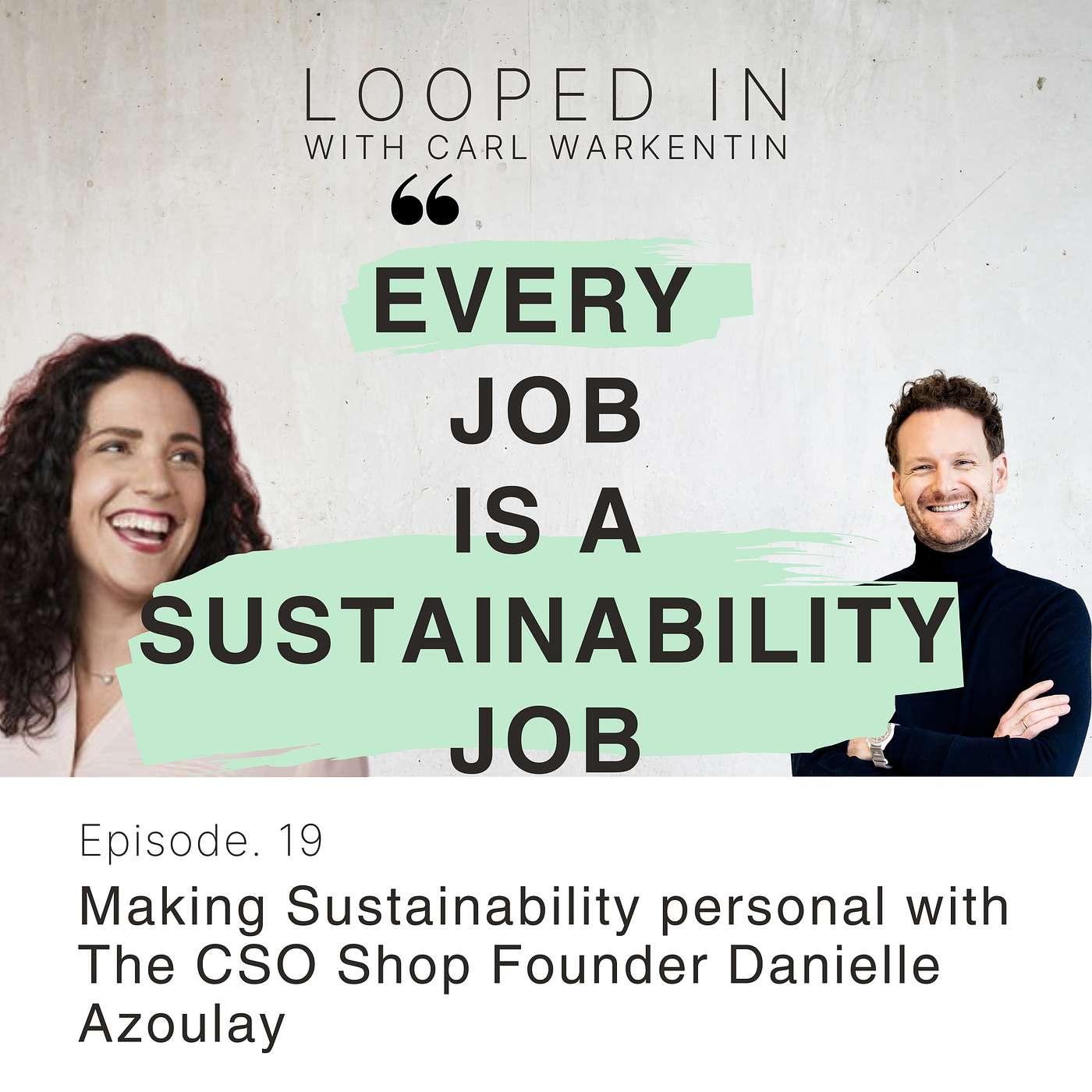
00:39:56.400Like for I love those three three things that we can do individually, and I love um how you say every job is sustainability job.
00:39:56.480 -->
00:39:58.320I think that's um the punchline.
00:39:58.559 -->
00:40:01.599It's um thank you so much for putting it out there.
00:40:01.840 -->
00:40:04.079Um and thank you so much for your energy.
00:40:04.159 -->
00:40:05.840I really always enjoy talking to you.
00:40:06.480 -->
00:40:07.280Likewise.
00:40:07.840 -->
00:40:09.519Uh yeah, thanks for being here today.
00:40:09.840 -->
00:40:10.719Thank you, Carl.
00:40:10.800 -->
00:40:11.599Thanks for having me.
00:40:11.679 -->
00:40:13.039I really enjoyed it.