
इस एपिसोड के बारे में
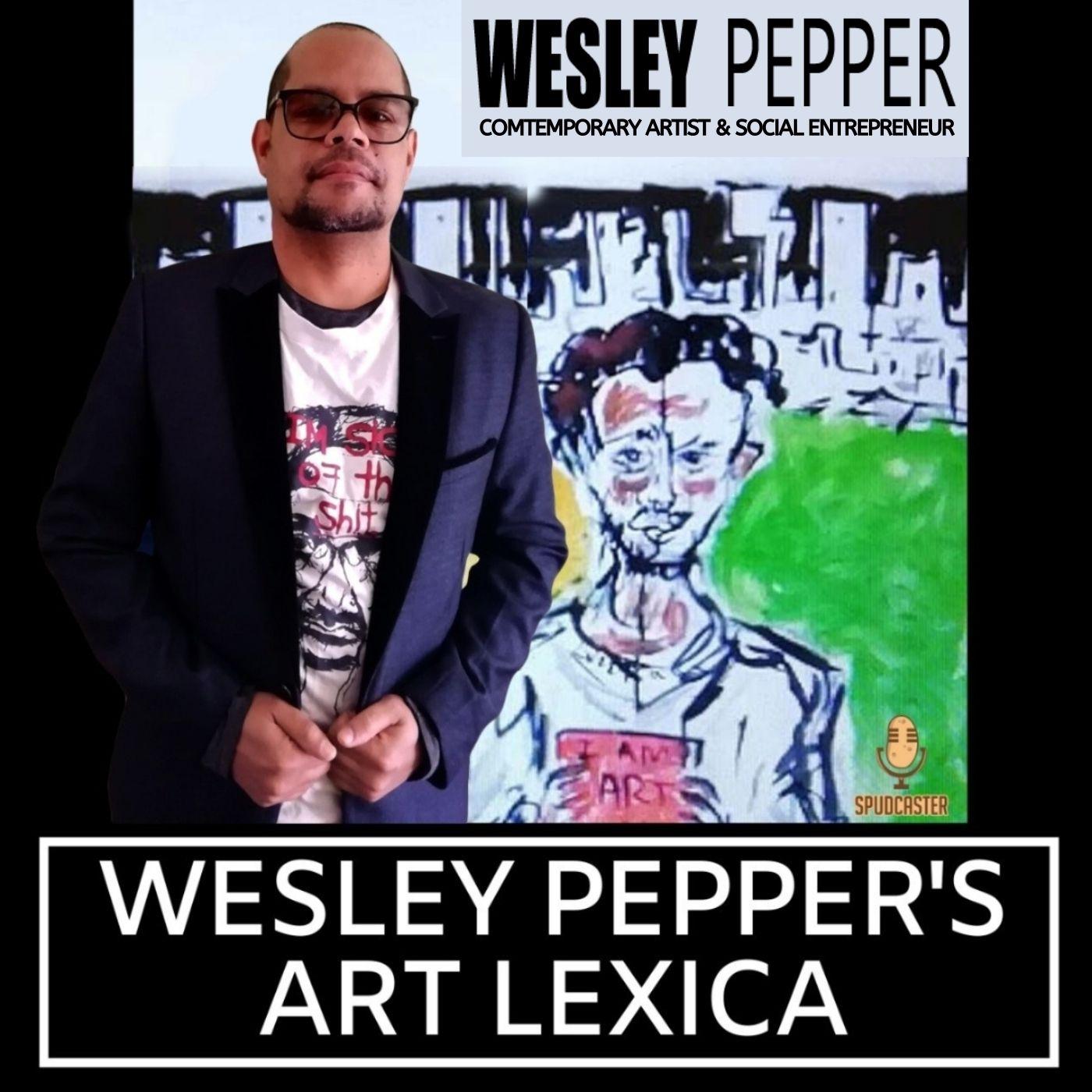
In today's episode we talk Pretoria based visual artist Mpho Nkadimeng. We will look at the process behind his technique, subject matter, working at August House and how the artists are coping or adapting in this post-covid world
Transcript
Wesley: [00:00:00] Hey everybody wesley pepper here. And you're tuned into my podcast Wesley Pepper’s art Lexica, which is brought to you by spudcaster and baobulb. Yes. Hi everybody. Uh, to all my new and returning listeners. Thank you for everyone for tuning in, you know, Everybody from tuning in, from all over the world on whatever device you're listening to this, uh, broadcast for.
[00:00:29] I'm thinking, man, I highly appreciated, you know, and it's kind of humbling too. Um, yeah, man. So yeah, let's get straight into it, man. Um, recap on last week’s episode, uh, big up thank you so much, so much, to siza nkosi for coming through, um, I really enjoyed speaking to her and I thought we really touched on some.
[00:00:47] Pretty relevant, um, issue, uh, issues, man, and topics. And, um, if you guys wanna know more about it, please, um, um, you can, you can go check out episode 63. It was really, really cool, man. And, um, remember to, um, if you guys want more information on, on, on any of my previous guests, you know, um, and just remember to give me a shout out.
[00:01:06] You know, um, yeah. And I can forward you the information, because I think the artists that we featured on this platform are really speaking to the times that we are living in. You know, I think that's really important from a content creating, uh, from a content creating perspective and, um, yeah, man. So moving on to today's episode today, I'm talking to.
[00:01:28] Uh, an artist based in Pretoria, I'm talking to Mpho Nkadiment, uh, he's a visual artist. Uh, so he paints he draws, et cetera. Um, we were talking about his processes. Um, he's got some really interesting work, man. He's got a really crazy technique. And we're going to be unpacking that, bit by bit, but then talking about how he's been adapting, you know, to the current climate we're living in, because yeah, I mean guys, and as you know, you know, I've been covering this, uh, uh, topic consistently throughout the whole year and it's becoming a real thing, man.
[00:02:00] It's now woven into our social fabric. Uh, people now, uh, I've actually heard of some crazy shit, man. I've actually heard this week that in the Northern Cape, um, there's a group, there's a church group or group of people that, um, I don't, I can't verify how they got information, but it was either, probably was probably through WhatsApp that these people are drinking.
[00:02:23] Fucking hair peroxide, you know, uh, um, uh, you know, to cure COVID yo man, and, but they won't take the jab in the arm so crazy times, man. Um, yeah, I just, I, to put that on this platform, cause that was the most. Outlandish news. I've heard all year. And it is the 2021. Um, so I'm want to be, so I'm going to be asking you a little bit about that.
[00:02:50] Maybe he added some old, crazy stories and finding out what your perspective is on that, because I think it's very important. Uh, because it's becoming a better, real, a real major, um, major thing. And, um, yeah, man. So look forward to that guys. Um, and I'll talk to you at the end of the, um, you know, in the outro and I'll tell you about future episodes.
[00:03:09] Cause it's really cool stuff coming your way, you know? Um, yeah. So look forward to that and um, yeah guys, um, just don't take hair peroxide, you know, rather get a jab and I'll speak to you, uh, after this.
[00:03:22] Spudcaster: [00:03:22] baobulb.org is a podcasting platform and a medium for storytelling. This podcast is also available on all the major podcasting apps, including apple and Google podcasts, podcasts your life with baobulb.org.
[00:03:40] Wesley: [00:03:40] Okay. Uh, yeah, let's go, man. How you doing?
[00:03:46] Mpho: [00:03:46] I'm good, bro. How’s it?
[00:03:48] Wesley: [00:03:48] Yeah, man. Uh, I always tell my listeners it's never a black and white line with me.
[00:04:02] I’m okay but I’m not really okay. Just a little bit of both. Um, and I’ve been having actually an absolutely crazy, um, anyway, uh, so let's just jump into, uh, like it's just, COVID COVID-19 stories is blowing my mind. I'm getting more everyday. I'm getting one more crazy, like really fucking crazy stories. And, um, Yeah. And then I'm also, I'm also making art as well. So I'm working on this new technique man and it’s not coming together
[00:04:31] every time I think it is. You know? Um, so, um, yeah,
[00:04:46] but anyway, uh, my brother, um, tell us a little bit about your background. Um, and I know you can like you and your studio there, so, uh, yeah. Tell my listeners a little bit about, uh, you know, where did you start off art and that type of thing and we'll take it from there.
[00:05:08] Mpho: [00:05:08] Um,
[00:05:12] how I started with art basically I went to school in PTA. Um, , that's basically the first time I’d actually been in contact with artists. Before then I was just drawing and I was just doing all that stuff, um, when I was at home. That was in Mpumalanga, uh, but the reason why I thought. Is because I was always in isolation, isolated myself because, well, there were social situation that really couldn’t
[00:05:59] allow me to be part of the younger kids growing up. So I just, um, found, um, consolation in art. I just found a friend, um, So after matric, um, I started by passing university and 2012
[00:06:27] that's when I left and I had a two man show in the Pretoria Art Museum. Um, it was okay. Um, in 2013 and 2014 and 2015 it was really tough, um, that was actually when my life was upside down,
[00:06:57] I had to go ask for a place to live
[00:07:03] from a few friends. So basically I've been squatting in different. Um, So like 2014 and 2015. 2016 I got a job at a retail store. Um, but from, uh, from 2014, from 2016, up until 2020 when I was working at, uh, that retail store, but then I never actually stopped producing art each and every time when I come back from work. I start off with art I just continue working basically up until three or four in the morning.
[00:07:45] I have to be at work again. Yeah.
[00:07:50] Wesley: [00:07:50] Yeah, man. Um, just a few things that I've picked up on what you said. Um, and I think it resonates with, um, that resonates with all my guests. Um, Yeah. Um, there was just a bit of a break now in, um, in what, uh, in what we're doing, um,
[00:08:10] Mpho
[00:08:10] Wesley: [00:08:10] actually is based in his studio he actually had people coming in asking
[00:08:15] to have his work in one of their music videos or in a music video is actually quite interesting. So that's actually something I'm active. Yes. Talking about a little bit later to see where is the studio based? Because you know, like at like an August house, there's so many other of our studios, that's kind of the setup,
[00:08:39] you know, we'll talk about that later, but it's really cool. Yeah, man. That was, that was pretty. That was exciting.
[00:08:54] Yeah. Like, uh, want to touch base on that. So that's like where you are, like, where's your studio and that type of thing. But before we get there and let's just take a few steps back then you were saying earlier, How about you? Um, sort of being very isolated growing up. Um, that's a narrative. I mean, basically every one of my guests has a very similar upbringing, um, I think it’s really interesting that most creatives I know I think myself included
[00:09:29] that, um, isolation or feeling isolated, you know, that our energy just doesn't resonates with, with people. That's just a consistent thing, bro. Like, uh, and I think. You know, the more and more, especially that I’ve been talking about it more and more on this platform I think one must actually look into that man
[00:09:50] from a different perspective, from a possibly a psychological perspective. Just other academic perspective. Because I think it resonates with every dope ass artist man. That feeling of
[00:10:03] you just don't resonate with everybody. You just don't.
[00:10:15] Yeah.
[00:10:21] Mpho: [00:10:21] Okay. A lot of my friends, um, and all of them, they've got like different stories to tell about their upbringing. I just find that their stories and my story, they are similar, um, in sort of a way. Um, most of them that grew up either in isolation or they grew up, um, you know, problematic, um, environment and a way to run away from it.
[00:10:53] Um, so yeah, I just found it quite um, interesting. That they face problems
[00:11:01] And they run away from, they don't actually run away. They, they find solace in art.
[00:11:11] Wesley: [00:11:11] Yeah, no, that's true. And that also musicians and everybody, um, you were saying early on, like eventually, like you got this, you know, this part time job
[00:11:32] like you were drawing in your spare time. That’s also something that I find very interesting because I know to do that is actually. I think that's actually a talent on its own because once you’re sucked up into a job, you know, the reason why its 9-5 is to sort of stop any creativity from manifesting after work because you’re tired
[00:11:51] And you've got other things to do so in order to so like switch it on and switch it off, I think that's also something. So, um, just, just, um, do you think that that system of you being able to, uh, To balance. I think all of that, you know, you could work for something that is not creative at all
[00:12:16] so it had its own politics to come home to sort of centre yourself and then get back into the, can you just explain to me that process over there. Do you still use a similar discipline
[00:12:28] in your work today?
[00:12:29] Mpho: [00:12:29] Yeah. I still use that discipline, although, um, back then it wasn’t a matter of balance
[00:12:39] um, It was just havoc like emotionally mentally, everything was just a mess
[00:12:51] and I could not sleep without, or I could not feel better without creating art. Well in a way for me to find conflict. So, um, I would wake up at seven. I wake up, I take a bus and then I have to be at work at seven and I knock off at 4. Probably sometimes I knock off at seven o’clock. And my ju I walk to work. So when I get back, you know I’m just so stressed, Um, I’m just you know, drowning in a whole lot of emotions and all I want to do create is create an art work.
[00:13:41] Um, cause I know like, um,
[00:13:46] it was like, I have a friend that I can tell how I'm feeling too, you know? So,
[00:14:03] so, yeah. Um, that's
[00:14:09] Wesley: [00:14:09] Interesting
[00:14:12] Mpho: [00:14:12] what happened in that process was because I got used to working at night. Um, even today that I'm not, I'm no longer working at that retail store. Uh, I can only work from 9 o’clock or 7 o’clock until, um, in the morning or until 5 or 6 in the morning but during the day I can’t do, you know, my work.
[00:14:42] Wesley: [00:14:42] That's interesting. That's super interesting. Um, um, just before I actually want to take that point a little bit further, uh, but just before we get there, what, what, what type of art will you be creating? So I would assume they were drawings right or mixed media. And what was the subject matter
[00:15:07] Mpho: [00:15:07] The subject matter was basically depression
[00:15:12] Finding solace in the work. So I would, create an artwork that actually, that I can have a conversation with the canvass and every time it leaves me whole
[00:15:23] dealing with me. Um, So, um, yeah, there were times where I just create pretty artworks beautiful artworks, but
[00:15:38] in most cases I’m about what I am going through, what I am facing, because sometimes my, my palms just come crashing down my brain, you know? Have all those emotions. I need to talk to someone about them and I just use my artworks. So in most case it’s all about uplifting myself. Or uplifting other people cause it’s tough out there
[00:16:14] unemployment,
[00:16:19] you know, everything though. People are just having a tough time. They've got nothing. They've got no one to talk to about all those. Yeah. So everyone is just in the same situation
[00:16:39] Wesley: [00:16:39] interesting stuff that you're saying there, man. And I want to. Yo, uh, firstly, firstly, I started,
[00:16:49] um, off sort of working out. I think that's actually quite a, that's a, that's a possibly I know, I know it's a skill. I'm not sure what but I know its a hectic skill. Myself I can I can relate to that myself as well. Um, especially in my early twenties. I, I did, uh, I did a similar thing where all the shit in my head and making sure that I feel so, um, that's actually quite beautiful, and I know, with other artists.
[00:17:23] And I know, I know there's a saying that goes, you know, you can only make art through pain or something like that. I know a lot of. You know, even, even though it's a heavy topic and it's very personal, which is another layer to it. But like I know there's also a lot of beauty, a lot of beauty can come out of that more as an aesthetic and just how other people see it because people also love seeing inside an artist’s soul.
[00:17:51] They, they, they get some form of comfort out of it. So that actually has another process, which is very interesting. But, um, I don't want to dwell too much on that because there’s a bunch of other things, That's a beautiful,
[00:18:07] um, you were saying like, um, which I also find interesting is that like you work at night, so I know of many creatives that can be the opposite.
[00:18:27] Yeah, I’m productive in the day. Day time is my time
[00:18:32] Mpho: [00:18:32] I think it's about how you, um, you know, how you got your system to be, to get you to a certain method or a certain schedule or routine
[00:18:52] Yeah, because where my studio is
[00:18:58] it's two people. Wow. Okay. Can you hold on a bit?
[00:19:09] Wesley: [00:19:09] Yeah.
[00:19:12] Mpho: [00:19:12] I’m sorry about that. So, um,
[00:19:16] It's me and others who actually work at night. And I know that, you know, when we meet somewhere around seven or eight at night, Like on the hallway, um, go like ja, the nightshift is starting now and, you know,
[00:19:42] four or five o'clock in the, um, in the morning I see his lights go off or he's
[00:19:51] knocking off time. Um, time to rest and then from there 10 o’clock or so we wake up, we go about,
[00:20:03] Wesley: [00:20:03] uh, your sound
[00:20:07] Um, yeah, yeah.
[00:20:11] Uh, just for my listeners tell me where is your studio based?
[00:20:13] Mpho: [00:20:13] August House in Johannesburg.
[00:20:35] Wesley: [00:20:35] Oh August House! Mmm, Mmm. Mmm. Yeah. I've collaborated with artists there. Um,
[00:20:55] yeah. Yeah. I know August House well. Let's talk a little bit about that. Um, Yeah, as I say it’s in the Joburg CBD, um, it's, uh, it's an artist studio sort of hub and the set up these artists can live and work or sleep in their studios around the city and like what happened. You know, people walk in and out of artist studios while they work and stuff like that.
[00:21:32] So it's also as a commercial element to it. So, um, yeah. Tell us about your experience there bro, How long have you been at August House?
[00:21:41] yeah.
[00:21:50] Mpho: [00:21:50] Being at August House is it’s okay. Having a studio is one of the greatest achievements of my art career basically.
[00:21:56] Um,
[00:22:00] because I think when you've got, when you're not working from home, when you're not working from your room, you get the freedom to explore, however you want. You've got no limits. Um, so when I got here, uh, I just realised that my mindset actually changed. I'm more open, you know, I can just think of something and do it, or I can just try to do something while I'm doing it.
[00:22:36] Um, I see a loophole
[00:22:43] to something, and then from there I run with it as well
[00:22:52] and my artworks have drastically changed since I got here.
[00:22:54] Wesley: [00:22:54] how long have you been at August House?
[00:23:03] Mpho: [00:23:03] Yeah, I've got a year. I've got a year now.
[00:23:08] Wesley: [00:23:08] Okay. Um, what part of the building are your studios are you at the bottom are you at the top?
[00:23:22] Mpho: [00:23:22] um, it’s the north wing and it’s third floor, um, studio number is studio 10.
[00:23:34] Wesley: [00:23:34] Okay. Um, so, um, like that’s interesting you say you’ve been there since July that’s since the pandemic started because
[00:23:46] one of the, one of the, one of the things that, um, agh that these developers did with August House and with other
[00:23:57] art studios there in theory me I’m very critical about it but I don’t think I’ll express those views because other cats from august house will most probably listen to this.
[00:24:10] Uh, yeah. Yeah. Anyway. Um, but I know that the developers wanted well
[00:24:20] in theory, it was for artists and their potential market or their demographic. To actually physically meet and have this energy
[00:24:29] You know, so, um, I know that, um, so I think I explained to my listeners, so yeah.
[00:24:50] Like, how has the COVID protocol changed that? So like these guests that came in earlier on, were they wearing masks, let’s start off there
[00:25:00] Mpho: [00:25:00] yeah, no one entered the building without a mask, and, um, there’s a sanitiser near the elevator. So basically when you enter through the door, you are faced with an elevator, and you will see a sanitiser over there before you even, press the button or do anything you're going to have to sanitise first. And there's, um, there's