


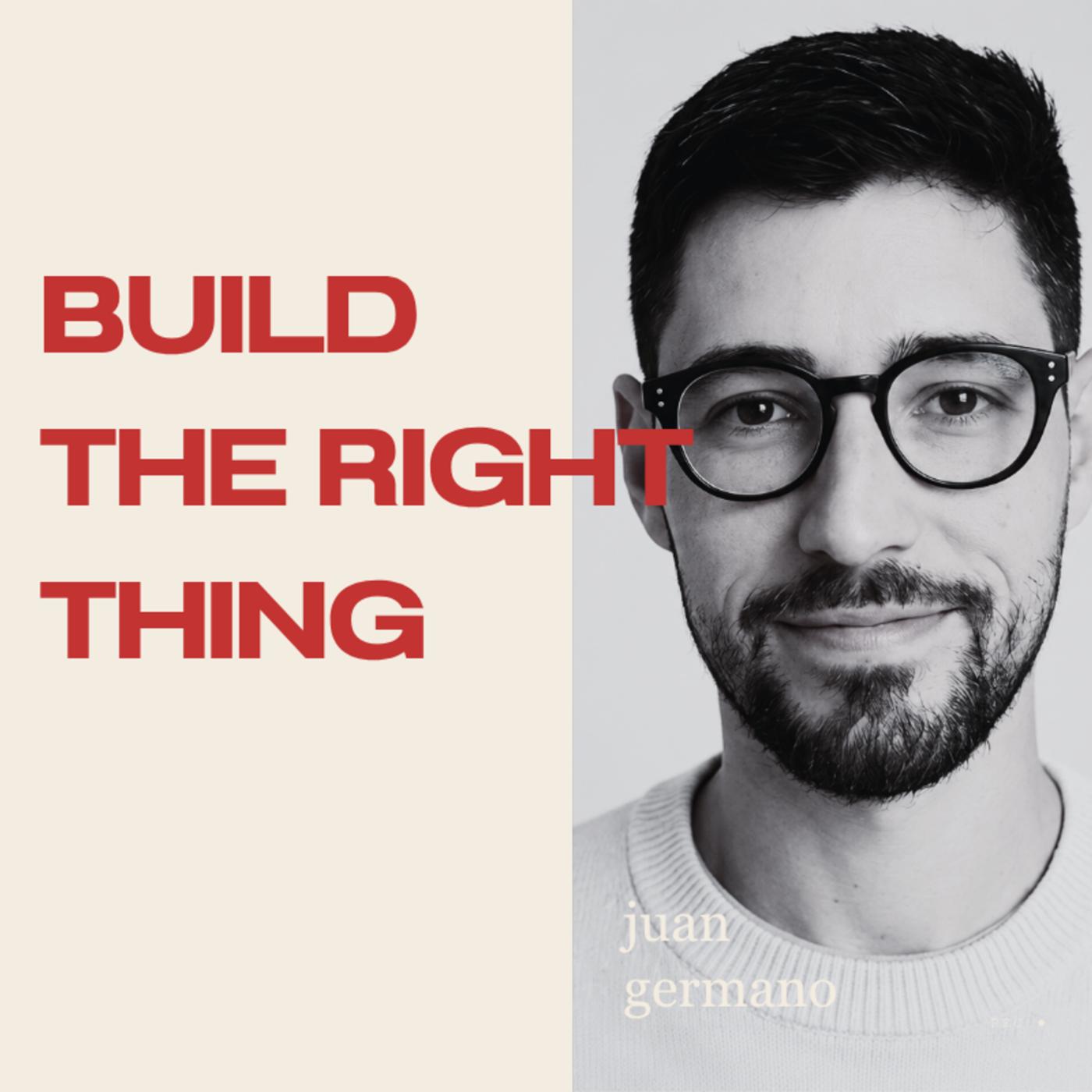
Anna: Hi there, welcome to Sounds Good, how's it going?
Juan Germano: All good. How are you?
Anna: Yeah, good well trying to make sense of all of it, just like everyone else. But
Juan Germano: okay.
Anna: I mean I have to, you know, I have to introduce it in in in some way, right? And I'm thinking like, are you you know a a representative of a dying craft? Like what what is going on? You are building, you know, apps and products for people.
Juan Germano: Yeah. Yeah. Yeah.
Anna: Tell me more. you know, let's jump right in. How how are you still alive?
Juan Germano: Maybe maybe it's a dying craft. It's it's funny because I I was I literally yesterday wrote like a 200 little word micro article for a collaboration post that Miro is putting together and it's being put together by multiple creatives, designers, you know, developers. And the main discussion is, hey, now that our jobs are being repurposed. What are we doing? Like what's what's gonna be valuable in the next months and years to come? And how are we gonna be charging for our job? It's gonna be token based or hourly rate based or value-based or whatever. so it's it's definitely changing for sure. I think so. Yeah, I I build apps and I get this question all the time, like, hey, like are you surviving? What's going
Anna: Yeah.
Juan Germano: on? What's next for you? And the The idea around being a a strategist, like a product strategist and and knowing what will actually add any kind of value to the business is becoming more and more important. And it's every day less about how cool your UI design can look or how good your software can be. Sadly. But yeah.
Anna: Yeah, it's it's interesting what what you just said, because we have all kinds of products conver product conversation here on the podcast, and one of the like super interesting thoughts I heard very recently is now product people also have to figure out who they're building for. And so the dilemma, and I I think it was wonderfully put by by my guest, is are you building for UI for or for the API use. So like are you building for people or are you building for bots or like agents or call it whatever? So like is it coming already? Is it something also that that you were dealing with already?
Juan Germano: Yeah, a little bit. Not directly us yet. I think we will get there. But I am noticing people around me offering me MCPs or APIs as a complement to other stuff. And so I think I think this will relate to you as well, but we're all using AI on a daily basis, right? Some people use GPT, Gemini, Claude, other people use clock code, other people actually, you know, build things with AI on a daily basis. And I'm starting to get offers from people around me saying, like, hey, you should use my MCP for XYC. You use clock code already, so just put it in your frame in your in your own workflow, you know. and then they come back and they say, like, what's your feedback? Is it good? Like are you getting anything out of it? You know? and Maybe not, you know, maybe it's just it's not really a a big difference. but I think ultimately what's happening is that is is people I'm I'm seeing that people have like a core service or product and then they're adding they wanna add that MCP or API layer so that others can consume that, beyond what they already do. and I don't know if that's gonna become like a new business unit for them or a new revenue model for them, or they're actually going to replace the entire business with that. But but that's happening a lot. to give you an example, it's like super relevant, I've seen a coach, a one-to-one super expensive coach, adding like combining all the written resources he he did for the community and adding an AI to it and an MCP layer and telling everyone use the MCP on a daily basis because it's like having me but on your terminal or on your clock code session. And he's constantly pushing everyone to give feedback around if it's worth it or not. And it's super useful on many levels, but at the same time I'm like, I think people are paying you for coaching, not for an MCP, right? so I
Anna: Yeah.
Juan Germano: don't have a clear answer yet, but it's it's a bit confusing in many levels, I think.
Anna: Yeah. Yeah yeah. That that's what that's what I told you at the beginning. Like I d I'm I'm just trying to figure it out 'cause like it's so It's so interesting that, you know, even even for me, like I I I tell it time and time time again, I'm not a technical person, but like in the last just couple of days for this new conference that I'm building, I was able to like ship a website, you know, make sure everything works, you know, there are booking links and you know, I I get all the information from like sponsors and guests. And it was just like that. Right. I I will admit I used Lovable. I I did go to a developer. It's just you know, kind of a new new thing that that I'm doing 'cause like everyone says also you don't really own the code and you don't really own what's what's inside. So just, you know, is another another layer of confidence. I always go to a developer and ask, okay, does it all make sense? At least you know the key, the key points. But that's that's my main point here is that I was able to do that. That's obviously nothing to do with the product. That's just like basically a landing page, right? But it works and it's already changing in my job as well as probably jobs of like millions of marketers out there. I wonder how it translates into product because again, you can build a lot of stuff and like for example if we s if we can go from the beginning first, like if I'm a new founder and I have an idea, I can build a prototype really fast. Like why why is it dangerous?
Juan Germano: Is it? That's a great question. So
Anna: I dunno, I think for me, yes, I I I I I I think it can be 'cause like then you're suddenly all in love with it. Like it kinda works. It's kinda it's kinda there.
Juan Germano: Yeah, yeah.
Anna: but I don't know. Tell me.
Juan Germano: Yeah, so I think that's super interesting in the sense that I think I I always try to look at this from two different angles because you will have a lot of founders who are already running something that exists and is making money and and it has a bunch of problems because of that. And they need technology. Everyone does pretty much these days, or most businesses at least. And It's awesome that they now have tools to be able to, you know, put all their their ideas out of their brain and translate that into a prototype. That they can feel good or bad and say, cool, like now my my my new ideas for my business are being a tangible thing that I can I can see and touch and try out. So they are getting one step closer to a potential solution. That's one bucket of the discussion, but then you have a lot of founders who don't have anything yet. They are as they're as aspiring founders or They want to start a company, they want to start a product-based company or some kind of a service and business that needs technology as well, they come with the idea and they launch the famous MBP minimum valuable product, whatever. So I think it's worth looking at both from a separate group. and then what I would say is the word product is super important because what is product, right? Originally I think a lot of discussion around what a product is was okay, so a product is a digital product. It's like a an a app, it's like an app based business or a web app, mobile app, whatever it is. but then you're you're setting up a conference. What is the product there? It's the actual conference, right? It's the experience that people go through when they get into the venue and when they go to the talks or when they go to one-on-one conversations, right? And that experience obviously starts with the digital touch points. It will start with the website. It will start with the, you know, how they get the ticket. What happens like pre-onboarding or on the email sequences before getting there. Right. It's the during the event experience and then the post-event experience. That is the product itself. So I think that's ultimately what is very hard to get right. and even for a founder who is now able to say, just like that I can you know get a prototype together. Well, you st you're still missing two things. Number one, you still need to get that into actual production, like for real. Maybe you can do it yourself is if it's a simple thing or if you're willing to spend, you know, a bunch of nice amount of hours doing it. But then number two, you still have to get it right. You still have to get to the right product for the specific context or problem you're dealing with, right? And I don't think we're there yet. I don't even know if we're gonna get there at some point. it's interesting to see business owners coming up with prototypes and ideas and even potential production tools, but they still they they they still can't sleep at night thinking like, Okay, how can I solve this problem or like how can I grow the company? How can I reduce a cost? How can I fire this person that's not working fine? How can I hire
Anna: Mm.
Juan Germano: an A player? etcetera, you know.
Anna: Yeah. So if we if we take it up a notch, okay, the the the newbies, you know, like me, we're playing around and you know the worst thing that happens if we we we go through all our talk tokens and we spend twenty-five bucks. if we're taking it to, you know, a founder who's already there, somebody you're working with, like we we had this conversation a little bit previously, too before we started recording. If somebody you're working with thinks, okay, now there is AI and you know I can go and play around and I want to add something to the product and then I go and ask AI for a feature, for a strategy, for a roadmap, or whatnot. Now how's the level of danger there?
Juan Germano: it's big. I mean, it's big in the sense this happened to us exactly about two, three months ago. luckily for us, we it happened with a past client whom we have a great relationship with. So we were able to, you know, solve it in a very friendly way. But it's a client of ours that had hour long sessions, like very deep sessions with Claude, coming up with this huge product idea. Roadmap and the entire like AI scope. It was a an AI first app, different like benchmarks around the existing competition. He came to us with a pro like a work not not working prototype, it was a a a good like looking prototype that represented the idea and an insane amount of documentation to read. And he's like, here's the scope. We're gonna build this, come up like come up with a plan for it, but I really want you to stick to this. This is what we have to build. So there are two problems there. Number one, I can't say yes to that because I didn't come up with that scope. Claude did it, and Claude did it with the with the assumptions that the client initially wrote. Right. And the second problem with that is that Claude is now going to tell the the stakeholder how long a task should take or feature. And Claude's gonna say, Yeah, you can build this thing is ten minut in 10 minutes, or you can build this thing in two hours, or a senior developer will be able to ship this feature in three hours. It's like, okay. So I can't really commit to that, you know? So ultimately what I had to do was to sit with my client and say, like, listen, this is awesome. Because it really is. Like he put a lot of work into that. Keep in mind, I'm going to sit with this, analyze it with the team, and we're gonna we're gonna come up with our own version of it based on what we think is right. And what we think is right is gonna be a combination of Our own experience building products design and development wise, but also our own products experience in the sense of, okay, what's the best way to launch a V1 to market? Right? Your project with Claude is going to be an input, but keep in mind we're going come up with something different. We had a little bit of you know, a weird negotiation at first because like our first prototype I remember was like, hey guys, this is great, but it's very far from the Claude one. And we were like, okay, here we go. We gotta convince him again. So we had, you know, a lot of back and forth conversations, but eventually we came up with a good outcome, you know, because he saw that he was actually hiring us for our expertise, not to do exactly what Claude was saying, you know. so I think again, we we we just briefly discussed this before the conversation, but these are all new skills we have to learn. We have to learn a new skill, which is What do we do with twenty five thousand lines of a markdown file that now has a a lot of, you know, docs and and and scopes around what to do? and how do we deal with that? How do we have those hard conversations, you know? So that's where we are.
Anna: I think there are two very different messages now in SAS. One is AI is truly amazing with coding, engineering, product, whatever. And it's really shitty in marketing and content. I don't know how you know marketers were kicking and screaming long enough, I guess, to push that through. But like now, if you go to LinkedIn, everyone's like, no. If anything, AI for content, this is cringe. But there's still so much conversation about like, okay, engineering teams don't need, I don't know. junior engineers, then you know, middle
Juan Germano: Yeah.
Anna: level engineers. And now it's it's basically just going to okay, we need one senior and then just AI. And I think it's very interesting how it translated into what's going on. But I wanna come back to to what you said about the expectations in terms of time from your client because I know that that you really like shape up as as as a concept, right? And in Shape Up, six weeks was the kind of the the sprint. I don't know if if it's legal to say sprint and shape up in the same sentence, but correct me if I'm wrong. but a cycle, yes.
Juan Germano: Cycle as the same.
Anna: And yeah, so now how is six weeks still relevant at all or is it down to six hours now?
Juan Germano: I think the f time frame is the same, because what Shape Up does really well, and a a lot of people don't agree with it, but I think it's interesting. Shape Up does really well. the idea of saying what can we actually get done in six weeks that's gonna be valuable for the project or for the product or for the business? what bet can we make around that? the difference today is that you're gonna be able to ship way more things in those six weeks and you know as you used to in the past. To give you an example, the project I was just talking about that we had this this discussions and negotiations, we've been almost four weeks into the project itself and we already deployed twenty-six iOS versions. So it's moving super fast. Like we've built twenty-six test flight versions in four weeks. the dev that is assigned to the project, who is super senior, is pretty much deploying new iOS builds daily. And that was not the case six months ago for us or a year ago, you know? So yes, expectations are that things will take less, definitely. Like People are now expecting you to do something in a week instead of a month. and that's why there's also more pressure around pricing. Like clients are coming with this initial idea of like, hey, like why this should cost 10? Maybe it should be five. Maybe it shouldn't be four weeks, maybe it should be one. You know? I think ultimately, and this is this is a very important point to me around product. It will still take time to build a great product. It's not gonna That's not gonna change. And it's It's still not gonna change at all. You're still gonna have to go through the process of finding product market fit and you know getting c feedback from customers or users and then eventually making the right decisions as until you start seeing the traction you need. That's still gonna take whatever it takes. And and it it you know, it's different for every case. I think what what's different is you're now able to do ten X more iterations in the way. you know, 10x more decisions, 10x more changes, 10x more ideas. So yeah, you're you're you're you're putting out more things, not necessarily better, but more things in the same amount of time. So I think that eventually allows you to get there a bit faster and in in a way better shape, for sure. You know? You mentioned Shape Up. I was listening to DHH from from thirty seven signals yesterday on a podcast that he did with David Senra. I still have the idea that those guys, they've always nailed something in a very smart way, which is they've always worked on like with small teams, as senior as possible, who could move as fast as possible. I don't know if if if that really changed for them. So now maybe the senior dev working on a project can actually ship faster, maybe, you know, but you still have you still need the very senior person doing the right thing at the right time with the right quality, you know. And I think that was true for tw for thirty seven signals fifteen years ago as it is today, you know.
Anna: Yeah. I and you know, just to that point that, you know, now a senior deaf can can chip so much more. you know, my question is like when do you know where to stop? Like how do you like 'cause now I I think a lot of people just over complicate and overthink a lot of things, especially when you're a senior because When you're a junior, like I'll I have to tell you, like when when I do something like the website with the eye, the first, maybe the second result is like, okay, perfect, amazing, let's go. Like, I don't have to think about this because I frankly don't give a rat's ass what's underneath. It's working, you know, if something breaks, I have a buddy, he'll take a look. but if You know, if you're a senior and like I do the same with copy, for example, whenever I I try to, you know, brainstorm or code whatever with AI, I'm like, my god, like do I do I change this? Do I change that? And I I wonder, like what what you're saying with with Basecamp and 37 Signals, if if it's better to just like give people time to think about something very clearly and then just do it and like, you know Pull the plug because with AI I think one of the things that it created is just this FOMO. my god, is it is there something else? Like tell me if
Juan Germano: Mm-hmm.
Anna: you know, you're as a developer sometimes want to do a little bit more just because it's there.
Juan Germano: I think it it primarily it has to do with the stakeholder input who wants more because they were playing around with an app last night and they saw this awesome feature and they know it's fast to implement, so they want it. Or something that happened to us about six months ago with pretty much every single client. We were super close to launching, and then they're like, no, no, no, no, we actually need to reframe the launch because The app needs to be AI first. Otherwise, we're sending the wrong message to the market. It can't not have AI. So let's actually take more time. Let's add an AI agent built in, and then we launch later. by the way, I mentioned DHH with David Sendra. They they actually talk about this, so I'm I'm ripping off a few ideas for for for for what's next. You need to set the right constraints for a product and you need to make it as simple as possible so that you're not overcomplicating it and you can actually launch fast. Why you want to launch fast? Because you want people to tell you what they think. Period. It's it's not obviously yes, there's time to market, there's there's an actual competition going on and you actually want to move at the right time for the market you're trying to penetrate. Yes. Or there's you're you're building something for your existing business and you actually you're wasting time and money The more you wait until launching. Yes, that exists, but the reason why you want to go out fast is because you want people to tell you what they think. That's the the number one reason why you actually need to put something out there. Developers, designers and primarily clients, like stakeholders, business owners they want to have the perfect version in front of their customers. They They're not willing to waste a golden bullet. It's like There're one shot to shock the right person and they want to make sure everything is perfect. My approach is a little bit more raw. I'm like, I'm very similar to you. It's like, hey, I put this thing together. It looks decent. It says what it what it needs to say and it has the right actions. Let's put it out there. Let's see what happens. You know? I love this concept by a guy named Jonathan Courtney. He runs a company called AG and Smart. I recommend everyone listening to his his podcast on Schedule CEO. He he has this idea of doing things in one sitting. You wanna build a conference, do it in one sitting. It has to be a six hour sitting, do it do it in six hours. But don't spread it around in the week in different chunks of time because it's gonna take forever and you're never gonna stop adding new things. It's never gonna be ready. But if you say, Okay, it's Tuesday, I'm gonna work for the rest of the day on this one conference project. And the goal is to launch it to the world before going to bed. I have to do it in one sitting. I love that. And it goes back to shape up as well. Guys, you have six weeks to get something done. So figure out what's you know, figure out what's good what that's gonna look like so that it fits the timeline and that it's done. And done means it's good enough, it can launch, people can use it, and they can solve a problem with it. This is super hard to sell. And to convince people to actually say, Okay, you know, I'm in. Let's do it because they eventually want more. That's how humans are built. But I think it's it's eventually can mean like, you know, being dead or being alive as a product, I think.
Anna: Yeah, that's that's a great point and I s support you a hundred percent. The you know, the reason also why I asked is because yes, I mean, building fast is possible and like for me I'm just thinking like six weeks is a lot and I I I t talked about this story on LinkedIn and I got so much shit for it. but we were building a a product with my partner and he's a developer and in my head you know it it was a very simple one. you know it's a directory but you know there are profiles and it's it's also AI powered and blah blah blah. But Like it looked simple. And in my head, it should have been done like over the weekend, like everyone promises. And he took I think something like six weeks. And you know, with every week it was like, No, you were the worst. And you know, it should have been done already. but yeah, then you know, when I started digging deeper and I kind of started to understand what's underneath and what kind of guardrails we should have there because it's AI run and what kind of guidelines we should have for users and you know, so many moving parts. And then I talked about that experience on LinkedIn, like I said, and a few CTOs just came raging into into the comments saying that it's no it's total bullshit and it should have been done in a weekend. But yeah, I don't think good things shouldn't shouldn't take longer. But I think if you're working on something super small, like for me, six weeks is eternity. Like you said, do a conference in one sitting. I think I did it in two, but fair enough.
Juan Germano: Yeah. Yeah, I mean I think probably CTOs got angry because they are trying to defend a very old school way of working. And it's funny, when you listen to DHH from from Basecamp, he is old school in the sense that he's been doing software for twenty-five years, but he's always been a contrarian thinker. Like he's always operated Basecamp in a different way, always Small teams, you know, very also a very contrarian thinker around what tech stack to use, like Ruby on Rails is like super niched, and still been doing this for 25 years. So he is old school. But I think a lot of old school enterprise CTOs or devs are gonna get angry at that because they are used to everything being big and long and slow. So it's like, okay, we're gonna build a a directory app. With AI. my god, we need an analyst and a QA analyst, and then we need a Scrum Master, and we need the front end developer and a back end developer and a tech lead and a design lead. And we need eight people on the room, plus the stakeholder with all the ceremonies, and yeah, we know it's gonna take nine months. They come from that world where things are huge and s and and slow, you know. and When you get the right people on the on the room and you give them the tools they need and and a real constraint, they're gonna get a ton done in a weekend. People do people build businesses in hackathons in nine hours. I mean that is true. You know, that exists. So
Anna: Yeah.
Juan Germano: I think I think that definitely has to do with the mindset, not necessarily with AI versus not AI, you know. AI is now a leverage, obviously. Because you can definitely do more in a weekend than you you used to. but again, it you still need the right people in the right room with the right constraints, you know. but I I'm a big fan of going for the least amount of time as possible. Not only for speed, it's not it's not just about six weeks is a lot. I think it it also comes down to this idea of okay. We're literally forcing ourselves to build less. We have no excuse because we only have a week or two weeks or six weeks. We have no more than that. So we can either be us, like you and I, we can build something in two weeks. Or we if we want more done, we can actually hire, you know, twenty-five developers who can work for two weeks for us and then we can build something insanely big. Or now we can actually have twenty-five agents doing different things. Whatever, whatever is the the metaphor. You still have two weeks. And there's there's not a lot you can do in two weeks. So better use that as a constraint and say, okay, let's be super smart. Maybe the directory should be just one feature. but we can put it out there, we can launch it, and we can start adding value to some group of people and get, you know, get feedback.
Anna: Yeah. Yeah, it's it's interesting. Like co co-founder relationship is something that maybe we discuss next time 'cause I actually wanted to ask you about something else because you know, products is great. and allegedly you can now build very fast and and put it out there. but let's face it, so many people are doing it now. Like so many people there with like g gazillion new products on product hunt every week. when it used to be 30 and distribution is now a huge problem. So I wonder how you work with it from a product perspective and if there are any distribution loops that you can design into the product.
Juan Germano: Yeah. This is definitely a a huge challenge for us because I I'm personally a designer myself, that's my background, and I've been working with designers and devs and product people for ten years. We've never really considered distribution. It wasn't even a a sexy term at the time, you know. but it wasn't really part of our conversation at all. And now it's funny because it's not only a feature, it's actually by design, you need to consider it from from scratch. How are you going to distribute this product? What's going to be the traction? a very simple exercise that I do every single time that I start a conversation with someone who wants a new product, obviously a product that's gonna launch to market and and and have a you know a penetration in a in an industry. The first thing I ask is like, all right, you have this idea, cool. How are you going to get your first 10 users? Not even a hundred. It's like just the first ten. When they can't answer that, my first conclusion is, okay, you're clearly you clearly have this idea in your head. You want to build, you want to pull it out, put it out there. You don't really know exactly what what's going to happen later at once you launch. Maybe start there before you actually commit all this money or all this time or all this resources to actually, you know, build this thing. And then if they have an an answer, which is what I'm looking for, great. Because that allows me to then go to the next step, which is okay, let's actually start thinking about this app we want to build or this product we want to build from the distribution perspective, and let's start thinking about the features that that will help distribution happen. So to give you a dumb example, we are working with a sort of marketplace project directory. focused in Argentina in the logistics industry. In Argentina we have a a a big truck driver industry. It's huge. And what you have is a ton of truck drivers available to move around and and move cargo around the country. And then you have a certain amount of companies of different sizes deploying this this loads that need to be moved around the country, right? So they saw that all these drivers and and logistics agencies, they communicate mainly on Facebook groups and WhatsApp groups. That's all they have. and they're like literally improvising like, hey, I'm driving from the north of the country to the main centre of the country tomorrow. I'm leaving in the morning. I have my entire vehicle empty. Who has some load that I can take with me? You know? and they're doing all this these conversations back and forth. So from day zero, the conversation was, guys, we we know we can do something here. one of the co-founders has experience in the logistics industry. He has connections. let's figure something out. They they didn't come to us saying, like, we want to build this app. It it should have this specific features. We have this problem in this industry. What can we do to you know improve the connection between Agencies and and you know transfer drivers. so we started from day zero leveraging Facebook groups, WhatsApp groups, period. And that was the main distribution channel or strategy on top of what we started building initially. it's not rocket science, but it starts with a very hard question: how are you going to get your first 10, 20, 100, whatever users? You know, and if you don't have an answer for that. Maybe you're a little bit l early in the game, maybe you need to figure that out first. And if you do have an answer, stop talking to Claude about all the features you can come up with and and you know, the roadmap that that Claude's gonna help you build. Start just open a whiteboard and start drawing what things you can do to actually help the existing network solve a specific problem and then design your product around that. That's what I think it needs to needs to be addressed primarily.
Anna: Yeah, perfect. I was having a a conversation here on the podcast with a founder and he was like, Yeah, some some things changed like with the distribution and like how you approach building and everything, but like the fundamentals of what you need to do. before you build something successful haven't changed. And what you just said really reminded me of that. Cause I I agree. Like you you find the customer, you find find out what they need, where they need it, and why they need you specifically. And then you just go from there and it's like then you figure out everything else. I I wanted to because you know w what I started thinking about it a few days ago. I I'm originally from Russia and like I've been I've been talking about sauce for the last four years, like every week. And I realized I don't know one sauce product from Russia. Like unl okay,
Juan Germano: Wow.
Anna: fair enough, there there are like you know a Netflix competit
Juan Germano: Yeah.
Anna: I don't know if you can call it competitors.
Juan Germano: Yeah, something like that.
Anna: Netflix is not allowed. So anyway, but alternatives, right? But we we don't think about them. They're big. I except for them, I don't know even one. And I actually have a few friends who live in Argentina, and I know that SAS is also not very big there, but
Juan Germano: Mm.
Anna: has it been changing lately? Like with AI, is it a big leap?
Juan Germano: No, no, with AI no. I mean, it has been changing in the past five years or so, in the sense that there's a new generation of builders, creators, founders, who started seeing potential in the country in the past I would say eight years, five to eight years. And they started getting inspired from Silicon Valley, obviously, reading all these books and Started seeing problems in the local industry and thinking, how can I help small businesses? So that has been a trend. I think AI is simply, you know, accelerate accelerating that a little bit. but it's not that in the past year we have, you know, 20 more SaaS products in different industries. That that did not happen. What does happen in Argentina a lot is so we have certain industries that are pretty strong. for the country economy and they've been strong for a long time. and they are crowded. And we have a lot of legacy software. That is a fact. To give you an to give you the most basic example, ERPs. Like business management or sort of business management invoicing accounting tools. They've been out there forever. and it's very, very common to, you know, talk to a business owner who's been doing it for thirty-five years in an old school industry. They are super successful, they drive a ton of revenue, they're profitable, they have employees, they they you know, they are totally contributing to the society of this country working and they run on the oldest, you know, worst SaaS ERP out there. Which is not even a SAS. Maybe it's like some kind of SAS but it's running on a local machine in their office. And if the light goes out, it stops working. That that happens actually. so there is opportunity in different industries for new founders to obviously leverage AI and not only build fast, but primarily I I don't think it's only about speed. To me the most important thing is How can you actually add AI into the SaaS products, like AI loops, AI agents, conversational tools you can actually use to add more value to the businesses? So that you can not only give them better ERPs or better whatever SaaS tools they use, but you know, agenc tools as well. I think there's still opportunity. you're still seeing new fo new upcoming founders. Like I think like two months ago I had a founder's dinner here in Buenos Aires. A guy is building A SaaS for one specific workflow in the payments process. So it's not an accounting tool. Like they're not competing with ERPs, they're not competing with accounting software, with like QuickBooks. That's not their thing. They're actually working primarily with like payments, a fraction of the process of you know managing payments. I can't even explain it myself. and they're like Super compromised to that. They're talking to founders every single day, trying to help them out. and their ideal customer is like a 20 people business from Argentina doing decently well, having different problems around payments, you know, money coming in, money money coming out, and they just built this great modern SaaS tool to solve all these issues. and you know they have a lot of growth ahead for sure. So yeah, there's definitely opportunity
Anna: Okay.
Juan Germano: in this market. And A lot of the problems that happen in Argentina also happened in the rest of Latam and Latin America. So the typical path that most small Argentine startups follow is they first solve a very specific niche problem locally and then they start looking for the same problem in Chile, in Mexico, in Colombia, in Uruguay, different different markets around the country, you know.
Anna: Okay,
Juan Germano: So yeah.
Anna: so keeping an eye on Argentina, which is, you know
Juan Germano: Yeah, it's promising. But it but it's because we are we are, you know, a very third world country developing. we have a lot of currency payment economics, financial problems for businesses. So there's a lot of startups to be made around that, you know. Yeah.
Anna: lot to solve. Huh. Yes. I I just I wanna come back to what you said about like the using the oldest CRPs and stuff. I already asked one other designer on on the podcast about that, but what's your prediction? What happens to WordPress in five years?
Juan Germano: My God. I'm a bit biased because my heart is in WordPress. I started with WordPress ten years ago. I I opened my first agency. It was me and my best friend freelancing. And someone came to us and said, We want to build this e-commerce that does XYZ. And I didn't know anything about code. And WordPress was my first love because it allowed me to do all these things. without knowing how to write code. so I I love it. To be fair, besides my bias, I do think WordPress has a future because Matt Mullenwood has been very smart about distributing the products both as an open source and as a you know non open source tool. he's always been super pro dev community. And I think that eventually, you know, pays forward. you can literally leverage AI to you know clone a a WordPress repo and build your own version of it or or build software on top of it. People are building plugins easily to solve a specific problem they couldn't before. People are building their own plugins. Instead of like simply distributing them, they're just doing them for themselves. And love it or hate it. A very big chunk of the web is powered by WordPress. And I don't think that that's gonna change very fast because legacy exists for a reason. People hate migrating. People hate I mean, Riverside, we're using Riverside to record this conversation, you know, and suddenly there's gonna be a promising designer saying, like, we should rethink the interface and you're gonna change you're gonna change the you know muting button from the bottom of the page to a different section and then suddenly I'm gonna get frustrated because I've been clicking on the same thing for five years and suddenly it's gone. Where is it? If you ask a a person doing customer service and doing invoices in a company using an ERP who's been doing that for three years to migrate this software, they're gonna hate you for a few months. You know? So if a business is running on WordPress and it's working fine. And it's profitable, why would they change? Especially today, if you can actually use AI to make the WordPress website even better because it's open source and you have access to the code and you can add plugins and you can do whatever you want with it. So my prediction is because of how smart Matt has been with always being pro dev community, pro-open source, plus WordPress is one of the largest tools in the world and has a ton of traction. I think in five years it's gonna be alive. I don't know how. I don't know what's that gonna look like, but I do trust it's gonna be out there for some reason. Yeah. Plus I'm biased because my heart is in WordPress.
Anna: Cool. Yes. And I mean, I I'll be honest with you, you know, I've seen so many like cool quote unquote companies, tools out there, that you think are on edge, like doing something so amazing and new era and blah blah. that are actually built on WordPress. that you know you you'd be surprised. Like it's it's fascinating.
Juan Germano: Yeah. Yeah.
Anna: you know, it talking to founders sometimes, you know, you get into this bubble like, my God, everything is doomed and everything is AI. But at the same time, it's it's also very humbling, because a lot of them come and they're like, we're WordPress, we're we're amazing. So, you know, yeah.
Juan Germano: Yeah. Yeah. Yeah.
Anna: Okay. I Want to ask you one very simple thing, right? Cause I think the narrative is very clear, right? People try to kind of maybe out of stress and unpredictability of the situation we're at, to kind of compare people to AI or like butt their heads. Heads. what what do you think like if it's not you against a eye, but if somebody comes to you to work with you, not with AI, how to in this new era to work with a company that does your development?
Juan Germano: okay, so you're asking I'm trying to come up with the right thought. So what if someone Yeah.
Anna: Yeah, if somebody, you know, if somebody decides to go to you and not use AI, like because, you know, allegedly it's easier, then like what is the best way to now work with you? Like what to prepare, where to start, you know, do we come to
Juan Germano: Mm-hmm.
Anna: you with an idea? Like what what do you think is the best process for the new founders that
Juan Germano: Yeah.
Anna: in a way want to leverage AI, but also want the expertise?
Juan Germano: think one thing is becoming more true every day, no matter how technical, technical, or sorry, not technical, how AI friendly a person is. I think in the end we should assume that people spend a very nice amount of hours sharing ideas with Claude or with GPT. I don't care their age or their background or their context, they just talk to AI. So people running product teams or agencies like I like I am running, we have to assume that they're gonna do their due diligence with AI. They're gonna ask a bunch of questions. When they have a conversation with me and I give them my opinion, they're gonna take the transcript and go to Claude and say, is this person right or wrong? And they're gonna question my my my ideas. So I try to assume that that's true already. and then I think I think using AI as a as a tool to translate your ideas and your vision is awesome. Because it it it will allow you to get things done in a way that maybe six months ago you didn't consider. to give you one real example from an actual client, we started talking to this local company. Old company needs some, you know, modernization internally. They're doing a lot of manual pen and paper style things. They come to us saying that, hey, we want to build this thing to you know give our employees a new tool to move faster and do things more productively. It's a 40 people company, very profitable. this was this was in February. The project didn't move forward because they weren't really convinced if it was the right investment to do at the time. And they were like, okay, good, I think you guys can do it, but we're gonna use this budget for something else now. Five months. Five, four or five months passed, and I reached out by saying, like, hey, what's going on? And he's like, dude, let's talk. I built this huge prototype about the product that I discussed with you. And I think that now was the right time to do it. I was super happy because when I when I hopped on a call, I was able to get a very nice you know image of what they were actually thinking and what they were dealing with primarily. And then we used that. that specific prototype they built to continue working together. We're actually building a the app nowadays. So I think as long as you can rely on the AI as a tool, the same way you would use a whiteboard to write down your ideas or draw different things or you know sketch something, it's great to use AI to create a presentation or to create a a memo or a PDF, one pager, or an actual prototype, landing page, whatever you actually can create to Translate all you all the things you have in your brain to something tangible. Because when you see it, it starts becoming you know more real and your feedback is gonna be way easier. You know, kind of like going back to that show, show, not tell, or show and tell concept. So that's super important, but I still need to be careful and I still need to ask people to be careful about how much you trust the AI. Because you always need to consider that the answers and the solutions that the AI will come up with, they will be super biased by your initial input. hence the super famous, you are totally right answer that Claud RGBT will always give you. They always say you're right. And even when you ask the AI to push back on you, they're still gonna come up with this master plan or this perfect solution about anything you you give them. Because they initially have your input. So Use your judgment, use your brain. you're super smart. You're As a human, you are very, very smart and you have way more experience at what you do than AI. So I think as long as people can use it as just a complimentary creative tool to translate ideas into something tangible, that's a very smart way to use it. And then yeah, go to the expert. hire the expert. You're gonna do it in the end. trust their own you know. competence, and both things combined might be a a good approach these days.
Anna: Awesome. I love that answer, to be honest. I was thinking about what you said, like how how visual it is. And I think it's it's such a help because like especially if you're a visual person, right? Like for me, sometimes people would be telling me like what what they want or what they what they feel something should be, and I'll be like you know, just kind of blinking very slowly, and not really having an idea of what what they were talking about. And then, you know, we transcribe that, we put that in in Chat GPT or whatnot, and it just comes live and you're like, wow, okay, amazing. That's like that's exactly what I had in mind. But also tell me if getting anywhere, but I'll I'll share with you this one tiny hack that I use for myself because you said you know AI is usually very like biased and
Juan Germano: Yeah.
Anna: it will you need to learn how to talk to it. So because you know AI is great at coding, right? And it it does know the developer lingo. It was always so fascinating to me. so when I go to AI. I would say something like in the in the apply for the conference ticket. change this link to this link so it goes to that, you know, very
Juan Germano: Yeah.
Anna: kind of you know normal human being.
Juan Germano: Step by step, yeah.
Anna: yes, yes. But also like this kind of explanation, how you would explain it to your mom. Then my partner would come over and he's he would say something like. Integrate this new link into our application flow and blah blah blah. And I would be like, that's you know, that's so much simpler and probably way more understandable for it. And it actually maybe it's a coincidence, but I feel like I need to iterate and like tell it what to do and like to get to the core of my ask faster. So now what I do, because I learned about this. I go to AI, like say Chat GPT, and I blab what I need. And then I ask it, hey, can you rewrite it in nice developer language? And then I go with that into lovable and post it there. And then it's so much better. But tell me if you know, if it's load of crap.
Juan Germano: I I've done that multiple times, especially when I am actually executing something. So I I I run local claw code on a terminal. That's my my daily driver, let's say, for AI. Sometimes what happened. So I have a like a second brain project that I just type in Claude early in the morning. I have a skill so that it sort of tells me what's going on for the day, what happened yesterday, blah, blah, blah. and sort of my main to-dos. And Sometimes I am working on, for example, a website. Let's say I'm putting together, you know, a conference website like you are. Like a in my case, it would be a secondary website for my agency where I'm focusing on a niche and I want to launch a specific landing page with some blog posts, right? So that would be a second clock go session. And what I'm basically doing is linking them together. Not linking them together. They're different workspaces, but I might have a a setup, you know, a specific amount of files on one project that are linked up on the other one as instructions or context or knowledge base. So what I will do is exactly the same as you said. It's like, listen, I'm running a separate clock host session where we're actually building the code or we're actually designing the website or doing this thing. let's do the planning in here around XYZ tasks and help me prompt. Exact that's exactly The same thing I do. The the benefit of doing it in in like one computer where I have multiple folders, one folder for each project, and then running different sessions is that I can simply by authorizing claw code to get into a a folder, I can very quickly give it access to a a knowledge base or a document for context. And then it's easier for Claw to understand what's going on and then give me the prompt or give me an answer, you know. but that's that's definitely what I do. It's like this is what I want to do back and forth conversation. Sometimes I even use whisper flow to just you know speak out loud with whatever I have in my brain and then let the AI translate. And then once I reach the actual outcome I want, I'm like, okay, now give me the prompt for the separate clock go session. And I keep both things sort of clean, you know. What I noticed though, which is very funny, sometimes I I'm like working on something that requires a lot of input or prompting from me. And what what happens is that I sort of end up journaling. You know, like my my my prompts are super big because I'm thinking as I write. and I even contradict myself on the prompt. It's like, no no, actually I changed my mind. Let's actually do this. So it's gonna be a huge message. Every time I have that conversation with Claude, I I come back to this idea that sometimes we suck. At prompting in general. Like we we can't really articulate a very specific phrase or sentence around something we want to get done. So I think talking to AI is is a very good way to practice in that sense because you need to get better at giving instructions to someone. And this applies also to humans. Like when you interact with a co founder or with a colleague or with an employee, with a client, you wanna be as clear as possible with what what you're writing. You know, you don't want to send a a huge Bible. You just want to send a very specific message with a very specific sentence that is very clear, you know. So I think it's worth also whisper flow helps because you start like rambling and you know, talking out loud for like a minute, and then you're like, Hold on, maybe this maybe this could have been twenty five words. So let's actually go back to that and let's rewrite it. but it's it's it's important
Anna: Yeah.
Juan Germano: to stay to stay aware. around that and and you know, iterate all the time.
Anna: Absolutely. Yeah, you you said how we can use it in real life and I I had like fireworks in my brain going, How can I tell my little one to like wash the dishes, take take the socks away from from the floor and you know, in AI well
Juan Germano: Yeah.
Anna: like I don't know. Maybe I'll I'll build a tiny tool for that. That would be fun.
Juan Germano: Yeah.
Anna: but okay, well I only have one question, right? Because we're always in this tech AI-ish bubble. And
Juan Germano: Yeah.
Anna: I wonder if there is something we're missing. There is something exciting left on the internet that is not AI. So I want to ask you, what was the last thing that on the internet made you super excited and wasn't really AI powered?
Juan Germano: That's a hard one because the last exciting tools were
Anna: huh.
Juan Germano: all AI-based. I'm I'm using paper to design a lot instead of Figma. That's AI-based. You can you can't not use AI, but it's it's to leverage AI. The team is super excited with an open source framework from Vercelle called Eve to build agents, so it's also AI. to give you a very Honest, brutally honest answer. I am super excited when I see a new podcast come up from someone like David Sembra. he's a guy who created the founders podcast and is now doing like a one-to-one conversation podcast under his name. Because yeah, they obviously talk about AI because it's like the main topic in the world, but it's always always primarily about being a founder. You know, in being a creator, being a creative, doing good stuff, doing things for the long term. They talk about the past. They talk about like super long term concepts that never change. So I'm I'm generally excited when I see something like that coming up on the internet. I open Spotify and I see that live and I'm like, cool. David Senra is an example. I also really appreciate I mentioned him before, Jonathan Court's unscheduled CEO. He's a guy who runs a company in in Germany and he has a podcast that's super improvised. It's him, long hair, long beard in studio. He just talks about a topic, but he's super relaxed. And maybe the the episode is an hour long, but the main thing he wanted to talk about is like 15 minutes, you know? And then the rest he's like just talking about general stuff. so yeah, it's funny because sometimes I go into Twitter. And I see all the things I'm missing now, like all this new tools and frameworks and AI agents and blah blah blah. And Twitter is now like a new university. It's full of videos saying like, listen from the anthropic engineer who came up with this super prompt. It's gonna change how you use AI. Watch the forty five minute video now instead of watching a Netflix show. My my Twitter feed is that nonstop. And it gives me FOMO. Like I go in and I'm like, my god, I'm missing out so bad. And then I'm like, no, I can't deal with this. I just want to go back and listen to a Rick Rubin episode on on the David Senra podcast. Like I wanna talk about, I want to listen to philosophy. I wanna listen to timeless ideas that I can take with me on a journaling session and you know come up with something cool for the for the next days or months of my life. So boring answer, but true to my
Anna: Yeah.
Juan Germano: heart. I am genuinely excited about that kind of stuff. Like I see a good conversation between people and I'm like, Cool, I'm down for this. Let's let's hear it and let's avoid some
Anna: Yeah.
Juan Germano: AI innovation for for a little bit.
Anna: Yeah, yeah. I mean to again totally agree. And I I think that's also another topic that we've been rambling about here. Like, you know, everything's being automated. So now in a way you've got more time for like building relationships and talking to people. So, you know, the secret is just to like go and do it, right? And but
Juan Germano: Yeah.
Anna: like you said there is so much FOMO. Like, my God, what am I missing? And that's why I keep asking people like what do you think? How how do we stop with AI? Because this, you know, slot machine kind of mentality, it's not going anywhere. Like, I mean, I find myself doing that all the time. And it's like, you know, I have to drag myself by the hair to like do something else because it's there. You can do it. It's more stuff and more stuff. And you feel so productive. but yeah, it's at the end of the day, go watch that Netflix show. Come on, just unclench little bit. It's not all EI.
Juan Germano: Of course. Yeah. Yeah, but also and that that's actually something I wanted to ask you, like, don't you see that there's even way more space for communities and conferences and like outdoor stuff and people gathering in person? Because eventually
Anna: Yes.
Juan Germano: we're so like we we feel s the dopamine the dopamine hitting every single day. Maybe we're not even getting anything done. We just feel like we're doing things, we're getting things
Anna: Mm.
Juan Germano: done, but maybe not a lot. It's just the AI creating that effect because of how immediate the response is and how productive it feels. And then we're just gonna get out of the office and go surf, you know, or go to a conference or go to an event or go to a meetup.
Anna: Yeah. I mean that's kind of a perfect case scenario, right? But I was asking quite a few founders here, like, what do you think people are doing? Like, allegedly everything's now automated. So now you can do what you used to do in eight hours in three hours. Do people actually leave and go surf? I don't think so. I actually think people work more, just like we did in COVID, because A, there's FOMO. There is AI, we can do more. What if I move the needle? You know, it's gonna be me, I'm going to do something spectacular. Second, my god, AI is coming for my job. So what if somebody sees that I'm not there? So I should do more with AI or not. third, it's just, you know, the dopamine, like you said, we can do more. And I think that in combination. You know, I love communities and that's that's why I I built the conference. But I just don't believe people are there yet. Although there is definitely a lot of AI fatigue now. Cause like people are like, okay, it's just there, but but because of this uncertainty, okay, what do we do with it now? Are we there yet to kind of, you know, relax a little bit and it's not actually taking our jobs or at least not everywhere. we're not at it yeah, it's it's still hard. I think people are confused, me included.
Juan Germano: Yep. Yeah, I agree. it's interesting because I do think that the industries and the markets are pushing for people to actually keep executing more because now that you can do things in three hours instead of eight, let's use the mid the the rest of the day to actually get more done. Because now that's that's how fast we can move. I think it's gonna take a while until companies shrink or grow to the right size. according to how much they can actually produce. You're gonna have large enterprises shrinking because now they're realizing they had way more people than they actually needed in the first place. Why that why they got to that point is a different discussion, but that's where they are, so they need to shrink because there's not enough work for everybody. That's true. And then on the other side, small businesses will probably grow a little bit because they now can output so much. That their clients or the market they're in is asking for more. It's like, dude, you're good at this. Give me more. How can you give me more? Well, I need to hire people. But I think that's it's gonna take a while until until those things balance. And we can go back to the same fundamentals. Good, productive, deep focused eight hours per day are enough to do great work and then go live your life, you know. So yeah.
Anna: Amen. That's
Juan Germano: Yeah, amen to that.
Anna: that's yeah, yeah. I mean I'm I'm a sucker for, you know, good old work. I I you know, don't get me wrong again, love AI, but I hate this mentality that, you know, I'll just I'll just automate everything, you know, and and and content and brand and product and and then there is nothing from me, no original thought, and it's just kind of like me
Juan Germano: Yeah.
Anna: running the tokens. I don't know how far is it g it's going to get you. So I'm I'm all for, you know, just kind of using your brain and as as the as soon the sooner sorry the sooner we get there, like to okay
Juan Germano: Yeah.
Anna: we're we're fine, we're safe, the the better.
Juan Germano: Yeah. I'm a little bit of an optimist in the sense that I think the market always gives the right the the the the final answer in the sense of what people consume. When people consume something, there's traction and that will keep working. And when people don't consume something, it dies, right? I am a little bit of an optimist in in the idea that we consume real human authentic stuff. And we're gonna keep doing that. And we saw what happened on LinkedIn. We started seeing, you know, AI generated content and people hate it. People crucify you for that. And we we it's like we learned a lesson, right? And now you open up Instagram and Meta is trying to push you on AI generated content and people hate it. It's like, no, I don't want to see this fake video of a climber that is not even real. You know, it's like that I don't want to see that. I want the actual raw old school. you know, video of a climber in the nineties doing something real, you know. So if we keep consuming the real stuff and we keep asking for that and demanding that, then that's that's gonna probably, you know, still be relevant in the next 10 years. Maybe I'm super wrong. Maybe we will all end up with universal basic income doing nothing. Hopefully not, but but I am optimist in the sense that we're still consuming the real stuff. It's not gonna change. We still want this one on one conversations. We wanna see real humans for dinner. We wanna go to the movies. We wanna go to the conference and see other humans. So I'm also assuming that we wanna read books written by actual people. We wanna watch real movies. we wanna listen to real music as well. You know, maybe. So yeah, hopefully that keeps happening. I don't know.
Anna: Yeah, balances itself out. It's very interesting. I I I I told you I'm I'm Russian and it was so fascinating. I'll just tell you in one minute. the story that I heard. there is a very famous artist that made a song and people found out that the chorus is AI generated and they gave him so much shit. It was just like, you know, an avalanche of, you know, hate. Because we don't want that. We don't want to go into that era and you're better than that. And you know, you should kind of, you know, give more respect to your listeners than that. And I was like, wow, that's really interesting. Because like, I don't know, again People are saying AI is everything in the future and apparently people are actively against it. At least in case of music.
Juan Germano: Love to hear that. I didn't know that story, but it's awesome. It's funny that if he didn't say the core is his AIMA, then no one no one would know. But you know, whatever. That happened, so
Anna: Yeah.
Juan Germano: deserved. Yeah.
Anna: Yeah. They they they killed themselves. Anyway, well, thank you so much for the conversation. It was amazing. You know, I really wanted to talk to somebody who builds stuff for h themselves or for other people because I I want to know a bit more behind the hype. So yeah, thank you for your honest opinion. I am collecting, you know, all the predictions for the future. So Let's see how it lives on. But yeah,
Juan Germano: For sure. Yeah.
Anna: how to g to do it again sometime.
Juan Germano: All right. Thank you, Anna. It's been great. We'll be in touch.
Anna: Yeah, amazing. Take care.
Juan Germano: Bye.
Juan Germano: All good. How are you?
Anna: Yeah, good well trying to make sense of all of it, just like everyone else. But
Juan Germano: okay.
Anna: I mean I have to, you know, I have to introduce it in in in some way, right? And I'm thinking like, are you you know a a representative of a dying craft? Like what what is going on? You are building, you know, apps and products for people.
Juan Germano: Yeah. Yeah. Yeah.
Anna: Tell me more. you know, let's jump right in. How how are you still alive?
Juan Germano: Maybe maybe it's a dying craft. It's it's funny because I I was I literally yesterday wrote like a 200 little word micro article for a collaboration post that Miro is putting together and it's being put together by multiple creatives, designers, you know, developers. And the main discussion is, hey, now that our jobs are being repurposed. What are we doing? Like what's what's gonna be valuable in the next months and years to come? And how are we gonna be charging for our job? It's gonna be token based or hourly rate based or value-based or whatever. so it's it's definitely changing for sure. I think so. Yeah, I I build apps and I get this question all the time, like, hey, like are you surviving? What's going
Anna: Yeah.
Juan Germano: on? What's next for you? And the The idea around being a a strategist, like a product strategist and and knowing what will actually add any kind of value to the business is becoming more and more important. And it's every day less about how cool your UI design can look or how good your software can be. Sadly. But yeah.
Anna: Yeah, it's it's interesting what what you just said, because we have all kinds of products conver product conversation here on the podcast, and one of the like super interesting thoughts I heard very recently is now product people also have to figure out who they're building for. And so the dilemma, and I I think it was wonderfully put by by my guest, is are you building for UI for or for the API use. So like are you building for people or are you building for bots or like agents or call it whatever? So like is it coming already? Is it something also that that you were dealing with already?
Juan Germano: Yeah, a little bit. Not directly us yet. I think we will get there. But I am noticing people around me offering me MCPs or APIs as a complement to other stuff. And so I think I think this will relate to you as well, but we're all using AI on a daily basis, right? Some people use GPT, Gemini, Claude, other people use clock code, other people actually, you know, build things with AI on a daily basis. And I'm starting to get offers from people around me saying, like, hey, you should use my MCP for XYC. You use clock code already, so just put it in your frame in your in your own workflow, you know. and then they come back and they say, like, what's your feedback? Is it good? Like are you getting anything out of it? You know? and Maybe not, you know, maybe it's just it's not really a a big difference. but I think ultimately what's happening is that is is people I'm I'm seeing that people have like a core service or product and then they're adding they wanna add that MCP or API layer so that others can consume that, beyond what they already do. and I don't know if that's gonna become like a new business unit for them or a new revenue model for them, or they're actually going to replace the entire business with that. But but that's happening a lot. to give you an example, it's like super relevant, I've seen a coach, a one-to-one super expensive coach, adding like combining all the written resources he he did for the community and adding an AI to it and an MCP layer and telling everyone use the MCP on a daily basis because it's like having me but on your terminal or on your clock code session. And he's constantly pushing everyone to give feedback around if it's worth it or not. And it's super useful on many levels, but at the same time I'm like, I think people are paying you for coaching, not for an MCP, right? so I
Anna: Yeah.
Juan Germano: don't have a clear answer yet, but it's it's a bit confusing in many levels, I think.
Anna: Yeah. Yeah yeah. That that's what that's what I told you at the beginning. Like I d I'm I'm just trying to figure it out 'cause like it's so It's so interesting that, you know, even even for me, like I I I tell it time and time time again, I'm not a technical person, but like in the last just couple of days for this new conference that I'm building, I was able to like ship a website, you know, make sure everything works, you know, there are booking links and you know, I I get all the information from like sponsors and guests. And it was just like that. Right. I I will admit I used Lovable. I I did go to a developer. It's just you know, kind of a new new thing that that I'm doing 'cause like everyone says also you don't really own the code and you don't really own what's what's inside. So just, you know, is another another layer of confidence. I always go to a developer and ask, okay, does it all make sense? At least you know the key, the key points. But that's that's my main point here is that I was able to do that. That's obviously nothing to do with the product. That's just like basically a landing page, right? But it works and it's already changing in my job as well as probably jobs of like millions of marketers out there. I wonder how it translates into product because again, you can build a lot of stuff and like for example if we s if we can go from the beginning first, like if I'm a new founder and I have an idea, I can build a prototype really fast. Like why why is it dangerous?
Juan Germano: Is it? That's a great question. So
Anna: I dunno, I think for me, yes, I I I I I I think it can be 'cause like then you're suddenly all in love with it. Like it kinda works. It's kinda it's kinda there.
Juan Germano: Yeah, yeah.
Anna: but I don't know. Tell me.
Juan Germano: Yeah, so I think that's super interesting in the sense that I think I I always try to look at this from two different angles because you will have a lot of founders who are already running something that exists and is making money and and it has a bunch of problems because of that. And they need technology. Everyone does pretty much these days, or most businesses at least. And It's awesome that they now have tools to be able to, you know, put all their their ideas out of their brain and translate that into a prototype. That they can feel good or bad and say, cool, like now my my my new ideas for my business are being a tangible thing that I can I can see and touch and try out. So they are getting one step closer to a potential solution. That's one bucket of the discussion, but then you have a lot of founders who don't have anything yet. They are as they're as aspiring founders or They want to start a company, they want to start a product-based company or some kind of a service and business that needs technology as well, they come with the idea and they launch the famous MBP minimum valuable product, whatever. So I think it's worth looking at both from a separate group. and then what I would say is the word product is super important because what is product, right? Originally I think a lot of discussion around what a product is was okay, so a product is a digital product. It's like a an a app, it's like an app based business or a web app, mobile app, whatever it is. but then you're you're setting up a conference. What is the product there? It's the actual conference, right? It's the experience that people go through when they get into the venue and when they go to the talks or when they go to one-on-one conversations, right? And that experience obviously starts with the digital touch points. It will start with the website. It will start with the, you know, how they get the ticket. What happens like pre-onboarding or on the email sequences before getting there. Right. It's the during the event experience and then the post-event experience. That is the product itself. So I think that's ultimately what is very hard to get right. and even for a founder who is now able to say, just like that I can you know get a prototype together. Well, you st you're still missing two things. Number one, you still need to get that into actual production, like for real. Maybe you can do it yourself is if it's a simple thing or if you're willing to spend, you know, a bunch of nice amount of hours doing it. But then number two, you still have to get it right. You still have to get to the right product for the specific context or problem you're dealing with, right? And I don't think we're there yet. I don't even know if we're gonna get there at some point. it's interesting to see business owners coming up with prototypes and ideas and even potential production tools, but they still they they they still can't sleep at night thinking like, Okay, how can I solve this problem or like how can I grow the company? How can I reduce a cost? How can I fire this person that's not working fine? How can I hire
Anna: Mm.
Juan Germano: an A player? etcetera, you know.
Anna: Yeah. So if we if we take it up a notch, okay, the the the newbies, you know, like me, we're playing around and you know the worst thing that happens if we we we go through all our talk tokens and we spend twenty-five bucks. if we're taking it to, you know, a founder who's already there, somebody you're working with, like we we had this conversation a little bit previously, too before we started recording. If somebody you're working with thinks, okay, now there is AI and you know I can go and play around and I want to add something to the product and then I go and ask AI for a feature, for a strategy, for a roadmap, or whatnot. Now how's the level of danger there?
Juan Germano: it's big. I mean, it's big in the sense this happened to us exactly about two, three months ago. luckily for us, we it happened with a past client whom we have a great relationship with. So we were able to, you know, solve it in a very friendly way. But it's a client of ours that had hour long sessions, like very deep sessions with Claude, coming up with this huge product idea. Roadmap and the entire like AI scope. It was a an AI first app, different like benchmarks around the existing competition. He came to us with a pro like a work not not working prototype, it was a a a good like looking prototype that represented the idea and an insane amount of documentation to read. And he's like, here's the scope. We're gonna build this, come up like come up with a plan for it, but I really want you to stick to this. This is what we have to build. So there are two problems there. Number one, I can't say yes to that because I didn't come up with that scope. Claude did it, and Claude did it with the with the assumptions that the client initially wrote. Right. And the second problem with that is that Claude is now going to tell the the stakeholder how long a task should take or feature. And Claude's gonna say, Yeah, you can build this thing is ten minut in 10 minutes, or you can build this thing in two hours, or a senior developer will be able to ship this feature in three hours. It's like, okay. So I can't really commit to that, you know? So ultimately what I had to do was to sit with my client and say, like, listen, this is awesome. Because it really is. Like he put a lot of work into that. Keep in mind, I'm going to sit with this, analyze it with the team, and we're gonna we're gonna come up with our own version of it based on what we think is right. And what we think is right is gonna be a combination of Our own experience building products design and development wise, but also our own products experience in the sense of, okay, what's the best way to launch a V1 to market? Right? Your project with Claude is going to be an input, but keep in mind we're going come up with something different. We had a little bit of you know, a weird negotiation at first because like our first prototype I remember was like, hey guys, this is great, but it's very far from the Claude one. And we were like, okay, here we go. We gotta convince him again. So we had, you know, a lot of back and forth conversations, but eventually we came up with a good outcome, you know, because he saw that he was actually hiring us for our expertise, not to do exactly what Claude was saying, you know. so I think again, we we we just briefly discussed this before the conversation, but these are all new skills we have to learn. We have to learn a new skill, which is What do we do with twenty five thousand lines of a markdown file that now has a a lot of, you know, docs and and and scopes around what to do? and how do we deal with that? How do we have those hard conversations, you know? So that's where we are.
Anna: I think there are two very different messages now in SAS. One is AI is truly amazing with coding, engineering, product, whatever. And it's really shitty in marketing and content. I don't know how you know marketers were kicking and screaming long enough, I guess, to push that through. But like now, if you go to LinkedIn, everyone's like, no. If anything, AI for content, this is cringe. But there's still so much conversation about like, okay, engineering teams don't need, I don't know. junior engineers, then you know, middle
Juan Germano: Yeah.
Anna: level engineers. And now it's it's basically just going to okay, we need one senior and then just AI. And I think it's very interesting how it translated into what's going on. But I wanna come back to to what you said about the expectations in terms of time from your client because I know that that you really like shape up as as as a concept, right? And in Shape Up, six weeks was the kind of the the sprint. I don't know if if it's legal to say sprint and shape up in the same sentence, but correct me if I'm wrong. but a cycle, yes.
Juan Germano: Cycle as the same.
Anna: And yeah, so now how is six weeks still relevant at all or is it down to six hours now?
Juan Germano: I think the f time frame is the same, because what Shape Up does really well, and a a lot of people don't agree with it, but I think it's interesting. Shape Up does really well. the idea of saying what can we actually get done in six weeks that's gonna be valuable for the project or for the product or for the business? what bet can we make around that? the difference today is that you're gonna be able to ship way more things in those six weeks and you know as you used to in the past. To give you an example, the project I was just talking about that we had this this discussions and negotiations, we've been almost four weeks into the project itself and we already deployed twenty-six iOS versions. So it's moving super fast. Like we've built twenty-six test flight versions in four weeks. the dev that is assigned to the project, who is super senior, is pretty much deploying new iOS builds daily. And that was not the case six months ago for us or a year ago, you know? So yes, expectations are that things will take less, definitely. Like People are now expecting you to do something in a week instead of a month. and that's why there's also more pressure around pricing. Like clients are coming with this initial idea of like, hey, like why this should cost 10? Maybe it should be five. Maybe it shouldn't be four weeks, maybe it should be one. You know? I think ultimately, and this is this is a very important point to me around product. It will still take time to build a great product. It's not gonna That's not gonna change. And it's It's still not gonna change at all. You're still gonna have to go through the process of finding product market fit and you know getting c feedback from customers or users and then eventually making the right decisions as until you start seeing the traction you need. That's still gonna take whatever it takes. And and it it you know, it's different for every case. I think what what's different is you're now able to do ten X more iterations in the way. you know, 10x more decisions, 10x more changes, 10x more ideas. So yeah, you're you're you're you're putting out more things, not necessarily better, but more things in the same amount of time. So I think that eventually allows you to get there a bit faster and in in a way better shape, for sure. You know? You mentioned Shape Up. I was listening to DHH from from thirty seven signals yesterday on a podcast that he did with David Senra. I still have the idea that those guys, they've always nailed something in a very smart way, which is they've always worked on like with small teams, as senior as possible, who could move as fast as possible. I don't know if if if that really changed for them. So now maybe the senior dev working on a project can actually ship faster, maybe, you know, but you still have you still need the very senior person doing the right thing at the right time with the right quality, you know. And I think that was true for tw for thirty seven signals fifteen years ago as it is today, you know.
Anna: Yeah. I and you know, just to that point that, you know, now a senior deaf can can chip so much more. you know, my question is like when do you know where to stop? Like how do you like 'cause now I I think a lot of people just over complicate and overthink a lot of things, especially when you're a senior because When you're a junior, like I'll I have to tell you, like when when I do something like the website with the eye, the first, maybe the second result is like, okay, perfect, amazing, let's go. Like, I don't have to think about this because I frankly don't give a rat's ass what's underneath. It's working, you know, if something breaks, I have a buddy, he'll take a look. but if You know, if you're a senior and like I do the same with copy, for example, whenever I I try to, you know, brainstorm or code whatever with AI, I'm like, my god, like do I do I change this? Do I change that? And I I wonder, like what what you're saying with with Basecamp and 37 Signals, if if it's better to just like give people time to think about something very clearly and then just do it and like, you know Pull the plug because with AI I think one of the things that it created is just this FOMO. my god, is it is there something else? Like tell me if
Juan Germano: Mm-hmm.
Anna: you know, you're as a developer sometimes want to do a little bit more just because it's there.
Juan Germano: I think it it primarily it has to do with the stakeholder input who wants more because they were playing around with an app last night and they saw this awesome feature and they know it's fast to implement, so they want it. Or something that happened to us about six months ago with pretty much every single client. We were super close to launching, and then they're like, no, no, no, no, we actually need to reframe the launch because The app needs to be AI first. Otherwise, we're sending the wrong message to the market. It can't not have AI. So let's actually take more time. Let's add an AI agent built in, and then we launch later. by the way, I mentioned DHH with David Sendra. They they actually talk about this, so I'm I'm ripping off a few ideas for for for for what's next. You need to set the right constraints for a product and you need to make it as simple as possible so that you're not overcomplicating it and you can actually launch fast. Why you want to launch fast? Because you want people to tell you what they think. Period. It's it's not obviously yes, there's time to market, there's there's an actual competition going on and you actually want to move at the right time for the market you're trying to penetrate. Yes. Or there's you're you're building something for your existing business and you actually you're wasting time and money The more you wait until launching. Yes, that exists, but the reason why you want to go out fast is because you want people to tell you what they think. That's the the number one reason why you actually need to put something out there. Developers, designers and primarily clients, like stakeholders, business owners they want to have the perfect version in front of their customers. They They're not willing to waste a golden bullet. It's like There're one shot to shock the right person and they want to make sure everything is perfect. My approach is a little bit more raw. I'm like, I'm very similar to you. It's like, hey, I put this thing together. It looks decent. It says what it what it needs to say and it has the right actions. Let's put it out there. Let's see what happens. You know? I love this concept by a guy named Jonathan Courtney. He runs a company called AG and Smart. I recommend everyone listening to his his podcast on Schedule CEO. He he has this idea of doing things in one sitting. You wanna build a conference, do it in one sitting. It has to be a six hour sitting, do it do it in six hours. But don't spread it around in the week in different chunks of time because it's gonna take forever and you're never gonna stop adding new things. It's never gonna be ready. But if you say, Okay, it's Tuesday, I'm gonna work for the rest of the day on this one conference project. And the goal is to launch it to the world before going to bed. I have to do it in one sitting. I love that. And it goes back to shape up as well. Guys, you have six weeks to get something done. So figure out what's you know, figure out what's good what that's gonna look like so that it fits the timeline and that it's done. And done means it's good enough, it can launch, people can use it, and they can solve a problem with it. This is super hard to sell. And to convince people to actually say, Okay, you know, I'm in. Let's do it because they eventually want more. That's how humans are built. But I think it's it's eventually can mean like, you know, being dead or being alive as a product, I think.
Anna: Yeah, that's that's a great point and I s support you a hundred percent. The you know, the reason also why I asked is because yes, I mean, building fast is possible and like for me I'm just thinking like six weeks is a lot and I I I t talked about this story on LinkedIn and I got so much shit for it. but we were building a a product with my partner and he's a developer and in my head you know it it was a very simple one. you know it's a directory but you know there are profiles and it's it's also AI powered and blah blah blah. But Like it looked simple. And in my head, it should have been done like over the weekend, like everyone promises. And he took I think something like six weeks. And you know, with every week it was like, No, you were the worst. And you know, it should have been done already. but yeah, then you know, when I started digging deeper and I kind of started to understand what's underneath and what kind of guardrails we should have there because it's AI run and what kind of guidelines we should have for users and you know, so many moving parts. And then I talked about that experience on LinkedIn, like I said, and a few CTOs just came raging into into the comments saying that it's no it's total bullshit and it should have been done in a weekend. But yeah, I don't think good things shouldn't shouldn't take longer. But I think if you're working on something super small, like for me, six weeks is eternity. Like you said, do a conference in one sitting. I think I did it in two, but fair enough.
Juan Germano: Yeah. Yeah, I mean I think probably CTOs got angry because they are trying to defend a very old school way of working. And it's funny, when you listen to DHH from from Basecamp, he is old school in the sense that he's been doing software for twenty-five years, but he's always been a contrarian thinker. Like he's always operated Basecamp in a different way, always Small teams, you know, very also a very contrarian thinker around what tech stack to use, like Ruby on Rails is like super niched, and still been doing this for 25 years. So he is old school. But I think a lot of old school enterprise CTOs or devs are gonna get angry at that because they are used to everything being big and long and slow. So it's like, okay, we're gonna build a a directory app. With AI. my god, we need an analyst and a QA analyst, and then we need a Scrum Master, and we need the front end developer and a back end developer and a tech lead and a design lead. And we need eight people on the room, plus the stakeholder with all the ceremonies, and yeah, we know it's gonna take nine months. They come from that world where things are huge and s and and slow, you know. and When you get the right people on the on the room and you give them the tools they need and and a real constraint, they're gonna get a ton done in a weekend. People do people build businesses in hackathons in nine hours. I mean that is true. You know, that exists. So
Anna: Yeah.
Juan Germano: I think I think that definitely has to do with the mindset, not necessarily with AI versus not AI, you know. AI is now a leverage, obviously. Because you can definitely do more in a weekend than you you used to. but again, it you still need the right people in the right room with the right constraints, you know. but I I'm a big fan of going for the least amount of time as possible. Not only for speed, it's not it's not just about six weeks is a lot. I think it it also comes down to this idea of okay. We're literally forcing ourselves to build less. We have no excuse because we only have a week or two weeks or six weeks. We have no more than that. So we can either be us, like you and I, we can build something in two weeks. Or we if we want more done, we can actually hire, you know, twenty-five developers who can work for two weeks for us and then we can build something insanely big. Or now we can actually have twenty-five agents doing different things. Whatever, whatever is the the metaphor. You still have two weeks. And there's there's not a lot you can do in two weeks. So better use that as a constraint and say, okay, let's be super smart. Maybe the directory should be just one feature. but we can put it out there, we can launch it, and we can start adding value to some group of people and get, you know, get feedback.
Anna: Yeah. Yeah, it's it's interesting. Like co co-founder relationship is something that maybe we discuss next time 'cause I actually wanted to ask you about something else because you know, products is great. and allegedly you can now build very fast and and put it out there. but let's face it, so many people are doing it now. Like so many people there with like g gazillion new products on product hunt every week. when it used to be 30 and distribution is now a huge problem. So I wonder how you work with it from a product perspective and if there are any distribution loops that you can design into the product.
Juan Germano: Yeah. This is definitely a a huge challenge for us because I I'm personally a designer myself, that's my background, and I've been working with designers and devs and product people for ten years. We've never really considered distribution. It wasn't even a a sexy term at the time, you know. but it wasn't really part of our conversation at all. And now it's funny because it's not only a feature, it's actually by design, you need to consider it from from scratch. How are you going to distribute this product? What's going to be the traction? a very simple exercise that I do every single time that I start a conversation with someone who wants a new product, obviously a product that's gonna launch to market and and and have a you know a penetration in a in an industry. The first thing I ask is like, all right, you have this idea, cool. How are you going to get your first 10 users? Not even a hundred. It's like just the first ten. When they can't answer that, my first conclusion is, okay, you're clearly you clearly have this idea in your head. You want to build, you want to pull it out, put it out there. You don't really know exactly what what's going to happen later at once you launch. Maybe start there before you actually commit all this money or all this time or all this resources to actually, you know, build this thing. And then if they have an an answer, which is what I'm looking for, great. Because that allows me to then go to the next step, which is okay, let's actually start thinking about this app we want to build or this product we want to build from the distribution perspective, and let's start thinking about the features that that will help distribution happen. So to give you a dumb example, we are working with a sort of marketplace project directory. focused in Argentina in the logistics industry. In Argentina we have a a a big truck driver industry. It's huge. And what you have is a ton of truck drivers available to move around and and move cargo around the country. And then you have a certain amount of companies of different sizes deploying this this loads that need to be moved around the country, right? So they saw that all these drivers and and logistics agencies, they communicate mainly on Facebook groups and WhatsApp groups. That's all they have. and they're like literally improvising like, hey, I'm driving from the north of the country to the main centre of the country tomorrow. I'm leaving in the morning. I have my entire vehicle empty. Who has some load that I can take with me? You know? and they're doing all this these conversations back and forth. So from day zero, the conversation was, guys, we we know we can do something here. one of the co-founders has experience in the logistics industry. He has connections. let's figure something out. They they didn't come to us saying, like, we want to build this app. It it should have this specific features. We have this problem in this industry. What can we do to you know improve the connection between Agencies and and you know transfer drivers. so we started from day zero leveraging Facebook groups, WhatsApp groups, period. And that was the main distribution channel or strategy on top of what we started building initially. it's not rocket science, but it starts with a very hard question: how are you going to get your first 10, 20, 100, whatever users? You know, and if you don't have an answer for that. Maybe you're a little bit l early in the game, maybe you need to figure that out first. And if you do have an answer, stop talking to Claude about all the features you can come up with and and you know, the roadmap that that Claude's gonna help you build. Start just open a whiteboard and start drawing what things you can do to actually help the existing network solve a specific problem and then design your product around that. That's what I think it needs to needs to be addressed primarily.
Anna: Yeah, perfect. I was having a a conversation here on the podcast with a founder and he was like, Yeah, some some things changed like with the distribution and like how you approach building and everything, but like the fundamentals of what you need to do. before you build something successful haven't changed. And what you just said really reminded me of that. Cause I I agree. Like you you find the customer, you find find out what they need, where they need it, and why they need you specifically. And then you just go from there and it's like then you figure out everything else. I I wanted to because you know w what I started thinking about it a few days ago. I I'm originally from Russia and like I've been I've been talking about sauce for the last four years, like every week. And I realized I don't know one sauce product from Russia. Like unl okay,
Juan Germano: Wow.
Anna: fair enough, there there are like you know a Netflix competit
Juan Germano: Yeah.
Anna: I don't know if you can call it competitors.
Juan Germano: Yeah, something like that.
Anna: Netflix is not allowed. So anyway, but alternatives, right? But we we don't think about them. They're big. I except for them, I don't know even one. And I actually have a few friends who live in Argentina, and I know that SAS is also not very big there, but
Juan Germano: Mm.
Anna: has it been changing lately? Like with AI, is it a big leap?
Juan Germano: No, no, with AI no. I mean, it has been changing in the past five years or so, in the sense that there's a new generation of builders, creators, founders, who started seeing potential in the country in the past I would say eight years, five to eight years. And they started getting inspired from Silicon Valley, obviously, reading all these books and Started seeing problems in the local industry and thinking, how can I help small businesses? So that has been a trend. I think AI is simply, you know, accelerate accelerating that a little bit. but it's not that in the past year we have, you know, 20 more SaaS products in different industries. That that did not happen. What does happen in Argentina a lot is so we have certain industries that are pretty strong. for the country economy and they've been strong for a long time. and they are crowded. And we have a lot of legacy software. That is a fact. To give you an to give you the most basic example, ERPs. Like business management or sort of business management invoicing accounting tools. They've been out there forever. and it's very, very common to, you know, talk to a business owner who's been doing it for thirty-five years in an old school industry. They are super successful, they drive a ton of revenue, they're profitable, they have employees, they they you know, they are totally contributing to the society of this country working and they run on the oldest, you know, worst SaaS ERP out there. Which is not even a SAS. Maybe it's like some kind of SAS but it's running on a local machine in their office. And if the light goes out, it stops working. That that happens actually. so there is opportunity in different industries for new founders to obviously leverage AI and not only build fast, but primarily I I don't think it's only about speed. To me the most important thing is How can you actually add AI into the SaaS products, like AI loops, AI agents, conversational tools you can actually use to add more value to the businesses? So that you can not only give them better ERPs or better whatever SaaS tools they use, but you know, agenc tools as well. I think there's still opportunity. you're still seeing new fo new upcoming founders. Like I think like two months ago I had a founder's dinner here in Buenos Aires. A guy is building A SaaS for one specific workflow in the payments process. So it's not an accounting tool. Like they're not competing with ERPs, they're not competing with accounting software, with like QuickBooks. That's not their thing. They're actually working primarily with like payments, a fraction of the process of you know managing payments. I can't even explain it myself. and they're like Super compromised to that. They're talking to founders every single day, trying to help them out. and their ideal customer is like a 20 people business from Argentina doing decently well, having different problems around payments, you know, money coming in, money money coming out, and they just built this great modern SaaS tool to solve all these issues. and you know they have a lot of growth ahead for sure. So yeah, there's definitely opportunity
Anna: Okay.
Juan Germano: in this market. And A lot of the problems that happen in Argentina also happened in the rest of Latam and Latin America. So the typical path that most small Argentine startups follow is they first solve a very specific niche problem locally and then they start looking for the same problem in Chile, in Mexico, in Colombia, in Uruguay, different different markets around the country, you know.
Anna: Okay,
Juan Germano: So yeah.
Anna: so keeping an eye on Argentina, which is, you know
Juan Germano: Yeah, it's promising. But it but it's because we are we are, you know, a very third world country developing. we have a lot of currency payment economics, financial problems for businesses. So there's a lot of startups to be made around that, you know. Yeah.
Anna: lot to solve. Huh. Yes. I I just I wanna come back to what you said about like the using the oldest CRPs and stuff. I already asked one other designer on on the podcast about that, but what's your prediction? What happens to WordPress in five years?
Juan Germano: My God. I'm a bit biased because my heart is in WordPress. I started with WordPress ten years ago. I I opened my first agency. It was me and my best friend freelancing. And someone came to us and said, We want to build this e-commerce that does XYZ. And I didn't know anything about code. And WordPress was my first love because it allowed me to do all these things. without knowing how to write code. so I I love it. To be fair, besides my bias, I do think WordPress has a future because Matt Mullenwood has been very smart about distributing the products both as an open source and as a you know non open source tool. he's always been super pro dev community. And I think that eventually, you know, pays forward. you can literally leverage AI to you know clone a a WordPress repo and build your own version of it or or build software on top of it. People are building plugins easily to solve a specific problem they couldn't before. People are building their own plugins. Instead of like simply distributing them, they're just doing them for themselves. And love it or hate it. A very big chunk of the web is powered by WordPress. And I don't think that that's gonna change very fast because legacy exists for a reason. People hate migrating. People hate I mean, Riverside, we're using Riverside to record this conversation, you know, and suddenly there's gonna be a promising designer saying, like, we should rethink the interface and you're gonna change you're gonna change the you know muting button from the bottom of the page to a different section and then suddenly I'm gonna get frustrated because I've been clicking on the same thing for five years and suddenly it's gone. Where is it? If you ask a a person doing customer service and doing invoices in a company using an ERP who's been doing that for three years to migrate this software, they're gonna hate you for a few months. You know? So if a business is running on WordPress and it's working fine. And it's profitable, why would they change? Especially today, if you can actually use AI to make the WordPress website even better because it's open source and you have access to the code and you can add plugins and you can do whatever you want with it. So my prediction is because of how smart Matt has been with always being pro dev community, pro-open source, plus WordPress is one of the largest tools in the world and has a ton of traction. I think in five years it's gonna be alive. I don't know how. I don't know what's that gonna look like, but I do trust it's gonna be out there for some reason. Yeah. Plus I'm biased because my heart is in WordPress.
Anna: Cool. Yes. And I mean, I I'll be honest with you, you know, I've seen so many like cool quote unquote companies, tools out there, that you think are on edge, like doing something so amazing and new era and blah blah. that are actually built on WordPress. that you know you you'd be surprised. Like it's it's fascinating.
Juan Germano: Yeah. Yeah.
Anna: you know, it talking to founders sometimes, you know, you get into this bubble like, my God, everything is doomed and everything is AI. But at the same time, it's it's also very humbling, because a lot of them come and they're like, we're WordPress, we're we're amazing. So, you know, yeah.
Juan Germano: Yeah. Yeah. Yeah.
Anna: Okay. I Want to ask you one very simple thing, right? Cause I think the narrative is very clear, right? People try to kind of maybe out of stress and unpredictability of the situation we're at, to kind of compare people to AI or like butt their heads. Heads. what what do you think like if it's not you against a eye, but if somebody comes to you to work with you, not with AI, how to in this new era to work with a company that does your development?
Juan Germano: okay, so you're asking I'm trying to come up with the right thought. So what if someone Yeah.
Anna: Yeah, if somebody, you know, if somebody decides to go to you and not use AI, like because, you know, allegedly it's easier, then like what is the best way to now work with you? Like what to prepare, where to start, you know, do we come to
Juan Germano: Mm-hmm.
Anna: you with an idea? Like what what do you think is the best process for the new founders that
Juan Germano: Yeah.
Anna: in a way want to leverage AI, but also want the expertise?
Juan Germano: think one thing is becoming more true every day, no matter how technical, technical, or sorry, not technical, how AI friendly a person is. I think in the end we should assume that people spend a very nice amount of hours sharing ideas with Claude or with GPT. I don't care their age or their background or their context, they just talk to AI. So people running product teams or agencies like I like I am running, we have to assume that they're gonna do their due diligence with AI. They're gonna ask a bunch of questions. When they have a conversation with me and I give them my opinion, they're gonna take the transcript and go to Claude and say, is this person right or wrong? And they're gonna question my my my ideas. So I try to assume that that's true already. and then I think I think using AI as a as a tool to translate your ideas and your vision is awesome. Because it it it will allow you to get things done in a way that maybe six months ago you didn't consider. to give you one real example from an actual client, we started talking to this local company. Old company needs some, you know, modernization internally. They're doing a lot of manual pen and paper style things. They come to us saying that, hey, we want to build this thing to you know give our employees a new tool to move faster and do things more productively. It's a 40 people company, very profitable. this was this was in February. The project didn't move forward because they weren't really convinced if it was the right investment to do at the time. And they were like, okay, good, I think you guys can do it, but we're gonna use this budget for something else now. Five months. Five, four or five months passed, and I reached out by saying, like, hey, what's going on? And he's like, dude, let's talk. I built this huge prototype about the product that I discussed with you. And I think that now was the right time to do it. I was super happy because when I when I hopped on a call, I was able to get a very nice you know image of what they were actually thinking and what they were dealing with primarily. And then we used that. that specific prototype they built to continue working together. We're actually building a the app nowadays. So I think as long as you can rely on the AI as a tool, the same way you would use a whiteboard to write down your ideas or draw different things or you know sketch something, it's great to use AI to create a presentation or to create a a memo or a PDF, one pager, or an actual prototype, landing page, whatever you actually can create to Translate all you all the things you have in your brain to something tangible. Because when you see it, it starts becoming you know more real and your feedback is gonna be way easier. You know, kind of like going back to that show, show, not tell, or show and tell concept. So that's super important, but I still need to be careful and I still need to ask people to be careful about how much you trust the AI. Because you always need to consider that the answers and the solutions that the AI will come up with, they will be super biased by your initial input. hence the super famous, you are totally right answer that Claud RGBT will always give you. They always say you're right. And even when you ask the AI to push back on you, they're still gonna come up with this master plan or this perfect solution about anything you you give them. Because they initially have your input. So Use your judgment, use your brain. you're super smart. You're As a human, you are very, very smart and you have way more experience at what you do than AI. So I think as long as people can use it as just a complimentary creative tool to translate ideas into something tangible, that's a very smart way to use it. And then yeah, go to the expert. hire the expert. You're gonna do it in the end. trust their own you know. competence, and both things combined might be a a good approach these days.
Anna: Awesome. I love that answer, to be honest. I was thinking about what you said, like how how visual it is. And I think it's it's such a help because like especially if you're a visual person, right? Like for me, sometimes people would be telling me like what what they want or what they what they feel something should be, and I'll be like you know, just kind of blinking very slowly, and not really having an idea of what what they were talking about. And then, you know, we transcribe that, we put that in in Chat GPT or whatnot, and it just comes live and you're like, wow, okay, amazing. That's like that's exactly what I had in mind. But also tell me if getting anywhere, but I'll I'll share with you this one tiny hack that I use for myself because you said you know AI is usually very like biased and
Juan Germano: Yeah.
Anna: it will you need to learn how to talk to it. So because you know AI is great at coding, right? And it it does know the developer lingo. It was always so fascinating to me. so when I go to AI. I would say something like in the in the apply for the conference ticket. change this link to this link so it goes to that, you know, very
Juan Germano: Yeah.
Anna: kind of you know normal human being.
Juan Germano: Step by step, yeah.
Anna: yes, yes. But also like this kind of explanation, how you would explain it to your mom. Then my partner would come over and he's he would say something like. Integrate this new link into our application flow and blah blah blah. And I would be like, that's you know, that's so much simpler and probably way more understandable for it. And it actually maybe it's a coincidence, but I feel like I need to iterate and like tell it what to do and like to get to the core of my ask faster. So now what I do, because I learned about this. I go to AI, like say Chat GPT, and I blab what I need. And then I ask it, hey, can you rewrite it in nice developer language? And then I go with that into lovable and post it there. And then it's so much better. But tell me if you know, if it's load of crap.
Juan Germano: I I've done that multiple times, especially when I am actually executing something. So I I I run local claw code on a terminal. That's my my daily driver, let's say, for AI. Sometimes what happened. So I have a like a second brain project that I just type in Claude early in the morning. I have a skill so that it sort of tells me what's going on for the day, what happened yesterday, blah, blah, blah. and sort of my main to-dos. And Sometimes I am working on, for example, a website. Let's say I'm putting together, you know, a conference website like you are. Like a in my case, it would be a secondary website for my agency where I'm focusing on a niche and I want to launch a specific landing page with some blog posts, right? So that would be a second clock go session. And what I'm basically doing is linking them together. Not linking them together. They're different workspaces, but I might have a a setup, you know, a specific amount of files on one project that are linked up on the other one as instructions or context or knowledge base. So what I will do is exactly the same as you said. It's like, listen, I'm running a separate clock host session where we're actually building the code or we're actually designing the website or doing this thing. let's do the planning in here around XYZ tasks and help me prompt. Exact that's exactly The same thing I do. The the benefit of doing it in in like one computer where I have multiple folders, one folder for each project, and then running different sessions is that I can simply by authorizing claw code to get into a a folder, I can very quickly give it access to a a knowledge base or a document for context. And then it's easier for Claw to understand what's going on and then give me the prompt or give me an answer, you know. but that's that's definitely what I do. It's like this is what I want to do back and forth conversation. Sometimes I even use whisper flow to just you know speak out loud with whatever I have in my brain and then let the AI translate. And then once I reach the actual outcome I want, I'm like, okay, now give me the prompt for the separate clock go session. And I keep both things sort of clean, you know. What I noticed though, which is very funny, sometimes I I'm like working on something that requires a lot of input or prompting from me. And what what happens is that I sort of end up journaling. You know, like my my my prompts are super big because I'm thinking as I write. and I even contradict myself on the prompt. It's like, no no, actually I changed my mind. Let's actually do this. So it's gonna be a huge message. Every time I have that conversation with Claude, I I come back to this idea that sometimes we suck. At prompting in general. Like we we can't really articulate a very specific phrase or sentence around something we want to get done. So I think talking to AI is is a very good way to practice in that sense because you need to get better at giving instructions to someone. And this applies also to humans. Like when you interact with a co founder or with a colleague or with an employee, with a client, you wanna be as clear as possible with what what you're writing. You know, you don't want to send a a huge Bible. You just want to send a very specific message with a very specific sentence that is very clear, you know. So I think it's worth also whisper flow helps because you start like rambling and you know, talking out loud for like a minute, and then you're like, Hold on, maybe this maybe this could have been twenty five words. So let's actually go back to that and let's rewrite it. but it's it's it's important
Anna: Yeah.
Juan Germano: to stay to stay aware. around that and and you know, iterate all the time.
Anna: Absolutely. Yeah, you you said how we can use it in real life and I I had like fireworks in my brain going, How can I tell my little one to like wash the dishes, take take the socks away from from the floor and you know, in AI well
Juan Germano: Yeah.
Anna: like I don't know. Maybe I'll I'll build a tiny tool for that. That would be fun.
Juan Germano: Yeah.
Anna: but okay, well I only have one question, right? Because we're always in this tech AI-ish bubble. And
Juan Germano: Yeah.
Anna: I wonder if there is something we're missing. There is something exciting left on the internet that is not AI. So I want to ask you, what was the last thing that on the internet made you super excited and wasn't really AI powered?
Juan Germano: That's a hard one because the last exciting tools were
Anna: huh.
Juan Germano: all AI-based. I'm I'm using paper to design a lot instead of Figma. That's AI-based. You can you can't not use AI, but it's it's to leverage AI. The team is super excited with an open source framework from Vercelle called Eve to build agents, so it's also AI. to give you a very Honest, brutally honest answer. I am super excited when I see a new podcast come up from someone like David Sembra. he's a guy who created the founders podcast and is now doing like a one-to-one conversation podcast under his name. Because yeah, they obviously talk about AI because it's like the main topic in the world, but it's always always primarily about being a founder. You know, in being a creator, being a creative, doing good stuff, doing things for the long term. They talk about the past. They talk about like super long term concepts that never change. So I'm I'm generally excited when I see something like that coming up on the internet. I open Spotify and I see that live and I'm like, cool. David Senra is an example. I also really appreciate I mentioned him before, Jonathan Court's unscheduled CEO. He's a guy who runs a company in in Germany and he has a podcast that's super improvised. It's him, long hair, long beard in studio. He just talks about a topic, but he's super relaxed. And maybe the the episode is an hour long, but the main thing he wanted to talk about is like 15 minutes, you know? And then the rest he's like just talking about general stuff. so yeah, it's funny because sometimes I go into Twitter. And I see all the things I'm missing now, like all this new tools and frameworks and AI agents and blah blah blah. And Twitter is now like a new university. It's full of videos saying like, listen from the anthropic engineer who came up with this super prompt. It's gonna change how you use AI. Watch the forty five minute video now instead of watching a Netflix show. My my Twitter feed is that nonstop. And it gives me FOMO. Like I go in and I'm like, my god, I'm missing out so bad. And then I'm like, no, I can't deal with this. I just want to go back and listen to a Rick Rubin episode on on the David Senra podcast. Like I wanna talk about, I want to listen to philosophy. I wanna listen to timeless ideas that I can take with me on a journaling session and you know come up with something cool for the for the next days or months of my life. So boring answer, but true to my
Anna: Yeah.
Juan Germano: heart. I am genuinely excited about that kind of stuff. Like I see a good conversation between people and I'm like, Cool, I'm down for this. Let's let's hear it and let's avoid some
Anna: Yeah.
Juan Germano: AI innovation for for a little bit.
Anna: Yeah, yeah. I mean to again totally agree. And I I think that's also another topic that we've been rambling about here. Like, you know, everything's being automated. So now in a way you've got more time for like building relationships and talking to people. So, you know, the secret is just to like go and do it, right? And but
Juan Germano: Yeah.
Anna: like you said there is so much FOMO. Like, my God, what am I missing? And that's why I keep asking people like what do you think? How how do we stop with AI? Because this, you know, slot machine kind of mentality, it's not going anywhere. Like, I mean, I find myself doing that all the time. And it's like, you know, I have to drag myself by the hair to like do something else because it's there. You can do it. It's more stuff and more stuff. And you feel so productive. but yeah, it's at the end of the day, go watch that Netflix show. Come on, just unclench little bit. It's not all EI.
Juan Germano: Of course. Yeah. Yeah, but also and that that's actually something I wanted to ask you, like, don't you see that there's even way more space for communities and conferences and like outdoor stuff and people gathering in person? Because eventually
Anna: Yes.
Juan Germano: we're so like we we feel s the dopamine the dopamine hitting every single day. Maybe we're not even getting anything done. We just feel like we're doing things, we're getting things
Anna: Mm.
Juan Germano: done, but maybe not a lot. It's just the AI creating that effect because of how immediate the response is and how productive it feels. And then we're just gonna get out of the office and go surf, you know, or go to a conference or go to an event or go to a meetup.
Anna: Yeah. I mean that's kind of a perfect case scenario, right? But I was asking quite a few founders here, like, what do you think people are doing? Like, allegedly everything's now automated. So now you can do what you used to do in eight hours in three hours. Do people actually leave and go surf? I don't think so. I actually think people work more, just like we did in COVID, because A, there's FOMO. There is AI, we can do more. What if I move the needle? You know, it's gonna be me, I'm going to do something spectacular. Second, my god, AI is coming for my job. So what if somebody sees that I'm not there? So I should do more with AI or not. third, it's just, you know, the dopamine, like you said, we can do more. And I think that in combination. You know, I love communities and that's that's why I I built the conference. But I just don't believe people are there yet. Although there is definitely a lot of AI fatigue now. Cause like people are like, okay, it's just there, but but because of this uncertainty, okay, what do we do with it now? Are we there yet to kind of, you know, relax a little bit and it's not actually taking our jobs or at least not everywhere. we're not at it yeah, it's it's still hard. I think people are confused, me included.
Juan Germano: Yep. Yeah, I agree. it's interesting because I do think that the industries and the markets are pushing for people to actually keep executing more because now that you can do things in three hours instead of eight, let's use the mid the the rest of the day to actually get more done. Because now that's that's how fast we can move. I think it's gonna take a while until companies shrink or grow to the right size. according to how much they can actually produce. You're gonna have large enterprises shrinking because now they're realizing they had way more people than they actually needed in the first place. Why that why they got to that point is a different discussion, but that's where they are, so they need to shrink because there's not enough work for everybody. That's true. And then on the other side, small businesses will probably grow a little bit because they now can output so much. That their clients or the market they're in is asking for more. It's like, dude, you're good at this. Give me more. How can you give me more? Well, I need to hire people. But I think that's it's gonna take a while until until those things balance. And we can go back to the same fundamentals. Good, productive, deep focused eight hours per day are enough to do great work and then go live your life, you know. So yeah.
Anna: Amen. That's
Juan Germano: Yeah, amen to that.
Anna: that's yeah, yeah. I mean I'm I'm a sucker for, you know, good old work. I I you know, don't get me wrong again, love AI, but I hate this mentality that, you know, I'll just I'll just automate everything, you know, and and and content and brand and product and and then there is nothing from me, no original thought, and it's just kind of like me
Juan Germano: Yeah.
Anna: running the tokens. I don't know how far is it g it's going to get you. So I'm I'm all for, you know, just kind of using your brain and as as the as soon the sooner sorry the sooner we get there, like to okay
Juan Germano: Yeah.
Anna: we're we're fine, we're safe, the the better.
Juan Germano: Yeah. I'm a little bit of an optimist in the sense that I think the market always gives the right the the the the final answer in the sense of what people consume. When people consume something, there's traction and that will keep working. And when people don't consume something, it dies, right? I am a little bit of an optimist in in the idea that we consume real human authentic stuff. And we're gonna keep doing that. And we saw what happened on LinkedIn. We started seeing, you know, AI generated content and people hate it. People crucify you for that. And we we it's like we learned a lesson, right? And now you open up Instagram and Meta is trying to push you on AI generated content and people hate it. It's like, no, I don't want to see this fake video of a climber that is not even real. You know, it's like that I don't want to see that. I want the actual raw old school. you know, video of a climber in the nineties doing something real, you know. So if we keep consuming the real stuff and we keep asking for that and demanding that, then that's that's gonna probably, you know, still be relevant in the next 10 years. Maybe I'm super wrong. Maybe we will all end up with universal basic income doing nothing. Hopefully not, but but I am optimist in the sense that we're still consuming the real stuff. It's not gonna change. We still want this one on one conversations. We wanna see real humans for dinner. We wanna go to the movies. We wanna go to the conference and see other humans. So I'm also assuming that we wanna read books written by actual people. We wanna watch real movies. we wanna listen to real music as well. You know, maybe. So yeah, hopefully that keeps happening. I don't know.
Anna: Yeah, balances itself out. It's very interesting. I I I I told you I'm I'm Russian and it was so fascinating. I'll just tell you in one minute. the story that I heard. there is a very famous artist that made a song and people found out that the chorus is AI generated and they gave him so much shit. It was just like, you know, an avalanche of, you know, hate. Because we don't want that. We don't want to go into that era and you're better than that. And you know, you should kind of, you know, give more respect to your listeners than that. And I was like, wow, that's really interesting. Because like, I don't know, again People are saying AI is everything in the future and apparently people are actively against it. At least in case of music.
Juan Germano: Love to hear that. I didn't know that story, but it's awesome. It's funny that if he didn't say the core is his AIMA, then no one no one would know. But you know, whatever. That happened, so
Anna: Yeah.
Juan Germano: deserved. Yeah.
Anna: Yeah. They they they killed themselves. Anyway, well, thank you so much for the conversation. It was amazing. You know, I really wanted to talk to somebody who builds stuff for h themselves or for other people because I I want to know a bit more behind the hype. So yeah, thank you for your honest opinion. I am collecting, you know, all the predictions for the future. So Let's see how it lives on. But yeah,
Juan Germano: For sure. Yeah.
Anna: how to g to do it again sometime.
Juan Germano: All right. Thank you, Anna. It's been great. We'll be in touch.
Anna: Yeah, amazing. Take care.
Juan Germano: Bye.
