

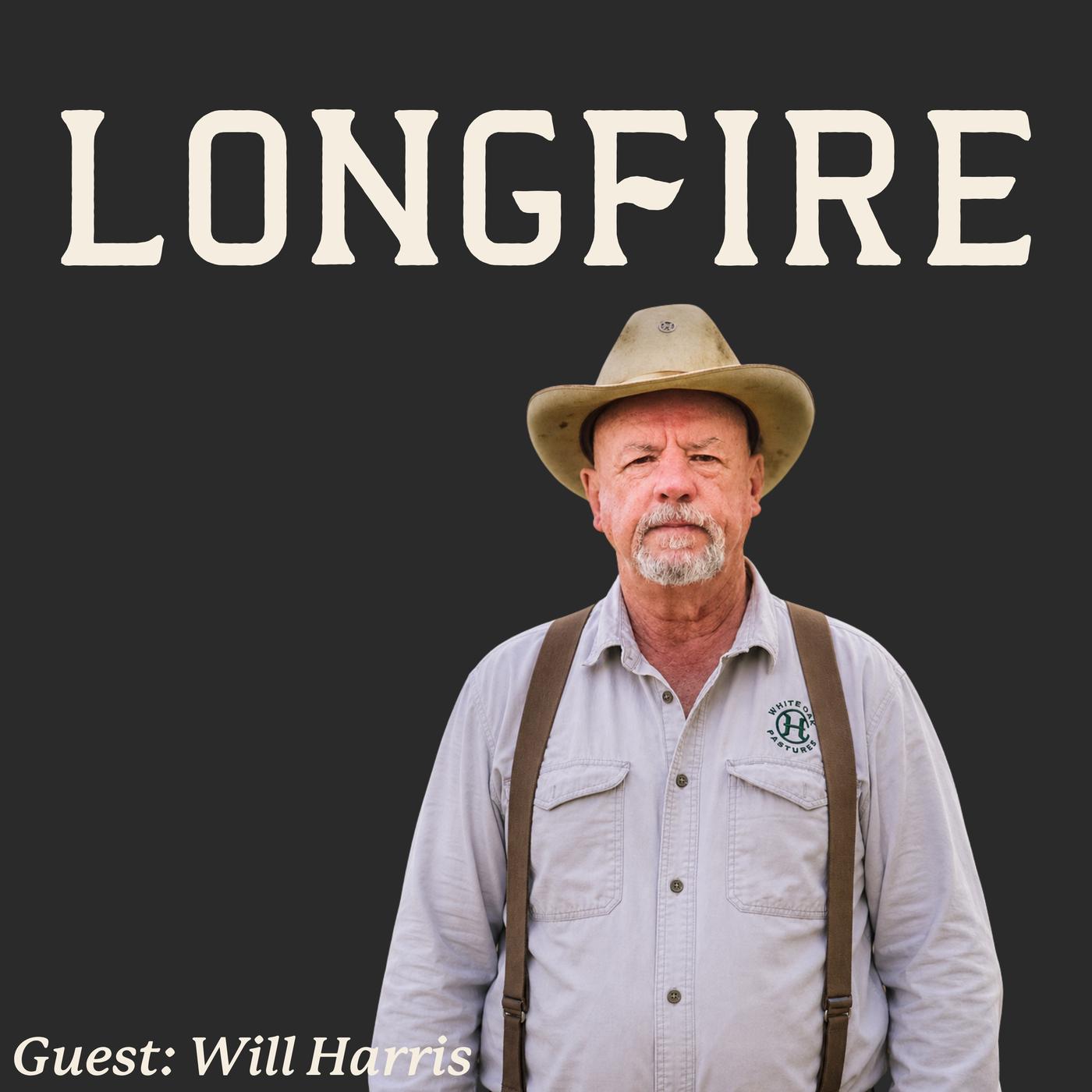
Steve Seger: Mr Harris, I appreciate you doing this. Welcome to Longfire.
WILL HARRIS: Thank you for having me. I look forward to it myself.
Steve Seger: Yeah, this will be fun. I was I was looking at the map this morning. and I thought this would be a fun place to start. So my family has been traveling down to Port St. Joe as often as we can and down not too far from you. And I realized that I've probably driven by your farm more times than I can count throughout my life. And I the next time I'm driving by, I I am going to stop, but I recognize your sign and I was blown away that I Haven't stopped yet. and I was wondering, have you are you have you been down to Port St. Joe at all before in that area?
WILL HARRIS: years ago. It it would not be the same Port St. Joe that I went to so many years ago. But but the farm is on Highway 27, which is a a U.S. highway. It was a major artery prior to the inner state system being built in the fifties and sixties. And that that pretty much dried it up. So it's and actually I'm sitting in Clay County, Georgia. Bluffton, Georgia, Cleake County, Georgia. That was the poorest county in America in 2020. Not Georgia, America.
Steve Seger: Mm-hmm. Is was so I've I've read a little bit about Saint Joe Company and Ed Ball when he was buying a lot of that land. Was he buying that far north or was he farther south?
WILL HARRIS: No, no, the St. Joe holdings are all south of us. You know, that was that
Steve Seger: Okay. I gotcha. Yeah, well
WILL HARRIS: was that was timberland and this is this was established in the 1700s as a as as farming country. Little
Steve Seger: Mm-hmm.
WILL HARRIS: little better land for farming than what you find down in the port St. Joe area.
Steve Seger: Yeah. Can you take me back to when your it was Captain James Edward Harris, I believe, was his full name, right? When he came to the land after the Civil War. What did the land
WILL HARRIS: Mm-hmm. Sure. So
Steve Seger: and the farm look like then and like how did he come to acquire the land?
WILL HARRIS: of course all I know he that was my great-grandfather and I know a good bit about that from family law, but it's only from family law. You they they didn't have access to to cameras and and probably weren't real literate people back then but my great-grandfather had a farm about sixty miles north of here when the Civil War broke out. he was a senior at Mercer University in Macon and he and his classmates quit school to join the army to defeat the Union Army and everything would be happy they ever after. the it didn't work that way. they thought they had a deal with the Southern Army to be kept together like a band of brothers. And the Southern Army desperately needed the people who could read and write. And he could read and write. He was a college student, so he was an officer. captain fought the fought the war as a cavalry officer caval cavalry captain and after the war somehow the the family law is he they they lost the farm in the war. And that's that's not quite right. I don't know what the truth is, but there there was no bite there was no fighting down here this far south.
Steve Seger: Mm-hmm.
WILL HARRIS: So, but they lost the farm. he was fortunate. He had an uncle who was a medical doctor here in Bluffton who started him over farming here in 1866. So he ran the farm all his life, followed by his son, my grandfather, followed by his son, my dad, followed by me. And I have two daughters, and their spouse is helping me run the farm today. And they've got seven children, so Hopefully there'll be another generation or sixth generation.
Steve Seger: Yeah. Yeah. It sounds like, in some ways, and I I think I heard you echo this on other conversations you've had, but it seems like White Oak then was run more similarly as it is today than it was kind of in between there, maybe when your your dad was running it and maybe even when you were there too. Is that right?
WILL HARRIS: You got you got that exactly right. The when my great grandfather and grandfather ran the farm, it was a excuse me, it was a local food production system. They raised livestock primarily, cows, hogs, sheep, goats, etc. And every day, six days a week before day, they and their employees would slaughter something. It might be a cow, it might be two or three hogs, it might be three or four sheep, but they would slaughter something, load the meat onto a mule drawn wagon and bring it to Bluffton and pedal it. they that's before refrigeration, before internal combustion engines, before USDA inspection. So it was sell it or smell it. And they they but they they that's the way they ran the farm for a couple of generations and then it was successful. It grew.
Steve Seger: Mm-hmm.
WILL HARRIS: my dad was born in nineteen twenty. He took over the pond post-World War II, 1946. And he he is the guy that really modernized the farm. Under his on his watch, it became a monocultural cattle operation. And they sold calves to go to the feedlots in the Midwest. He had a feed a small feedlot of his own here, but mostly mostly sold live calves. When my great grandfather grandfather had it, it was very cyclical. Under my dad's watch it became very linear. He just occupied a space in that chain, the beef chain.
Steve Seger: Mm-hmm.
WILL HARRIS: But he and he was successful. I was born in nineteen fifty four. I never wanted to do anything except run the farm as a monocultural, industrial, beef, beef operation, just like my dad. I loved it. Never one day wanted to do anything else. when the University of Georgia majored in animal science. By the way, animal science had previously been called animal husbandry. But it bec it had become animal science. And similar to the other situation, science is very linear, husbandry is very cyclical. But
Steve Seger: Makes sense.
WILL HARRIS: I and I came home and I ran the farm very industrially as a monocultural cattle operation. And and and it was successful. I I never made a lot of money, but we paid taxes every year. It was a a consistently profitable business. And I did that for twenty plus years and thought I would always do that, but I became increasingly disillusioned with it and rethought things. And and we're that was twenty five years ago, we're still rethinking things and and implementing things and we we change things every every year. We we we seldom do things the same way twice.
Steve Seger: Yeah. Was there a a turning point where you kind of had that moment where you wanted to change the way things had been going before?
WILL HARRIS: Yeah, yeah, yes. it was a a disillusionment, you know, I I became I was just becoming increasingly dissatisfied with the excesses of that production model. But it really it really came to me one morning we were loading up a load of calves to ship to the Midwest. You can put about a hundred, five hundred pound calves on one of those double deck eighteen wheelers. And I I'd loaded those trucks like that dozens of times in my life. But that morning it just hit me wrong. You know, that you know those calves that we had nurtured from birth, nurtured their mothers from birth, were gonna be on that truck for thirty hours without food or water or rest. The ones on top urinating and defecating on the ones on the bottom. And it just for the first time it suddenly seemed very wrong to me.
Steve Seger: Mm. Yeah. I there was when I was prepping for this, I was kind of and I'm learning as I go too about your guys' business and it's really cool. But most customers want the steak and the prime cuts, but the animal leaves you a lot more than that. So as you w were pivoting, were you looking for different ways to make sure that like you said, you were wasting parts of that animal that you took care of and raised.
WILL HARRIS: You know that that really y yes, but that came later. You know, initially it was the the production model of the live animals.
Steve Seger: Yeah.
WILL HARRIS: I started I decided I would start selling meat, not live animals. I did not have a processing plant, processing center, slaughterhouse.
Steve Seger: Mm-hmm.
WILL HARRIS: So I was using outside slaughter and that that fell apart pretty quickly. I there was not enough infrastructure here to to slaughter the amount of cattle I was raising. Like I just couldn't get it done. They we I was done constant argument with my processors about how many I could send that week. I needed to send twenty, they would take two. And it it was it was a in I couldn't make it work. So I ultimately built a slaughterhouse which I did not want to do. I still don't enjoy
Steve Seger: Mm-hmm.
WILL HARRIS: that part of the business. It's it's necessary, it's okay, but it's I mean it's not the it's not the slaughter part of it, it's the the regulatory it's so regulated, highly regulated that it's not just not much fun. But the other part of my business is a lot of fun and it's necessary that I get the animals slaughtered so I can monetize them. So
Steve Seger: Yeah. There was a story I heard you tell about right after World War II, there was a fertilizer salesman that came through and you guys bought a bunch of it and your your grass was taller, greener. could could you share that story and then maybe talk a little bit about the the cost and help me understand what what is the long term cost of that decision
WILL HARRIS: Mm.
Steve Seger: and how has it been unwinding that? Potentially.
WILL HARRIS: Yeah, yeah, sure. So that that story is you know, World War Two had a lot of ramifications on agriculture. fertilizer, ammoniated fertilizer was discovered in Germany in like eighteen eighty something. It w it was not new when World War Two broke out. But it was very, very expensive to produce it, so farmers didn't use it. They still continued to use manure and other natural fertilizers. World War Two c caused caused a lot of growth in the munitions production business. They people need the the war alpha needed things that exploded. And a lot of factories were built when the war was settled, surrendered. those factories were sitting there without a function and some entrepreneurial person or people figured out they could produce ammoniated fertilizer in those bomb plants, bomb bomb factories, weapons factories. And so suddenly ammoniated fertilizer was very available and very cheap compared to what it had been. And they hired young men, the companies hired young men to go out into rural areas and and train farmers to use ammoniated fertilizer. One came to Bluffton, Georgia, where I'm sitting. In fact it was right next door. The the building's not there anymore. There was a a farm center. And they the salesman had fried fish or barbecue or pork or whatever he had to draw the crowd. And he gave all those farmers, my dad being one of a bag of ammoniated fertilizer, ammonium nitrate. And with the with the ask that they go home, put it out on their pasture in a certain in some some known location, and not look at it for three or four days. So my dad did that. And when he came back, the gr where he put the fertilizer was this much taller than the rest of it. It just exploded. Those would have been virgin soils with a lot of c organic matter, a lot of microbial life. And that fertilizer was just like a like cocaine. It was just everything exploded. So he decided he would use ammoniated fertilizer on every acre every year in perpetuity and he did. I went to the University of Georgia, I majored in in animal science. I took I took a lot of soils courses and I came back and used it myself for years. And we my dad did not know and I did not know how much harm we were doing our soil by putting that ammoniated fertilizer on it. You can't see it. You can't see you can't see the damage. But it's there. And when I made the change in the way I treat my animals, I changed the way I treat my land. I ceased to use ammoniated fertilizer or any any chemical fertilizer. And it was horrible, economically horrible for years. My product t production just sh plummeted. But it it reached a point that we did some we used manure and co compost and other natural remedies. And now it's fantastic. I mean I my my soil is five and a half percent organic minor. There are places that organic matter gets higher than that, but that's about as good as it gets here. When I started, it was about a half a percent organic matter. So it's a 10x increase in in organic matter. And organic matter is not all that matters in the soil, but it's a great indicator of soil health.
Steve Seger: Mm. What's pretty standard for I mean, like I'm in Ohio. There's a lot of farms in Ohio. Is a half percent pretty standard for organic matter?
WILL HARRIS: In Ohio ha half percent's probably low, but I wouldn't be surprised one percent. But in Ohio it could be, you know, much higher than five percent, six, seven, eight percent. You know, the differ different ecosystems have different abilities to build organic matter. Here in I'm in the co coastal plains, the the the the Gulf of Mexico is about three hours south of here. You know that we get a lot of rain, a lot of heat, a lot of microbial activity, and it's hard to build it up as high as we'd like to. Champaign County, Illinois is probably as good as there is on the planet.
Steve Seger: How close is that to Chicago? I don't know my Illinois geography that well.
WILL HARRIS: I've been there but I don't either. Well yeah, I I don't I know that.
Steve Seger: So the Gulf isn't that far away. you mentioned Apalachicola Bay when you were on the Joe Rogan podcast. I thought that was cool because I've eaten those oysters my whole life and they're fantastic. so I wanted to explore with you too. You you pointed out in that conversation that the water that leaves your farm eventually reaches that bay itself, too. which blew my mind. I I didn't know that that it was connected that far south. So how how do you think about the responsibility, I guess, as a farmer for those places downstream too? I know they've got a lot going on with shutting down the oyster beds.
WILL HARRIS: Yeah. You know, one of the one of the most horrible things of of this destruction that we're that we're doing with our industrial farming is the fact that we perpetrators are the ones that pay the cost for the ecological damage. You know, we, I'm including myself, that's that put out countless tons of chemical fertilizer and sprayed pesticides and d did all the other things that we do that harm the environment. Don't pay those costs. Those costs are are are passed on to someone else. And then you you picked a great example, you know, we farmers like the way I used to farm and the way people still farm here, all those pesticides, you know Side means kill, homicide, right? Homicide is kill people. Pesticide
Steve Seger: Mm-hmm.
WILL HARRIS: is kill pests. And those pesticides that we put out to kill pests, pests being insects or weeds or nematodes or whatever, all that stuff follows the water downstream.
Steve Seger: Mm-hmm.
WILL HARRIS: all that perpetual use since World War II of pesticides caused one of the best oystering grounds on the planet to to not not they don't they didn't allow oystering anymore. I think they started back on a very limited basis, but it was a rich oyster production area and we c we kill the oysters. And and those of us that put out those pesticides aren't paying for that. Everybody pays for it.
Steve Seger: Mm-hmm. That downtown Appalachia Cola area is beautiful. Have you been down there?
WILL HARRIS: Years ago, yeah. Yeah.
Steve Seger: Yeah. The the Gibson Inn is one of my favorite places to stop over that way. and yeah, those oysters, they they rock. I was down there in February for most of the month, and they had just begun to slowly, I think, start opening back up the bay for harvesting. so that was cool. It was a bummer though when they did shut it down a while back. I think that was twenty twenty-ish, maybe, but
WILL HARRIS: So yeah.
Steve Seger: mm-hmm. So Rather than defining what regenerative agriculture is, I thought it would be cool to take a different angle and maybe could you tell me about a moment where you could actually see because you made this change and you said it was painful and hard. Was there a moment where you could see that change in the farm begin to heal? I guess. And what was that?
WILL HARRIS: Yeah, well there's there's not a moment that I saw at Hill. There were many moments. first
Steve Seger: Mm-hmm.
WILL HARRIS: of all it took a while. I mean it was painful. It when I stopped using those tools, those chemical fertilizer and pesticides and the other tools, the Redeeming the land did not happen immediately. It was very slow, very slow to come. But it did come and I could tell you many moments. You know, I can remember seeing we call to tow tow frogs, they're land land dwelling frogs, not bull frogs that go in the water. And, you know, I as a kid we capture and play with them and torture and they were just everywhere. you know, and I I I didn't see for a long time and I didn't miss I mean I didn't think. I don't see frogs anymore. but it happened. And when I started using pesticides, not all of a sudden, but I started seeing again. And other species, a number of other species. And I think that that that's when I really had a concrete evidence I could view that What I was doing was was beneficial. Things the good things were happening. You know, when I was farming industrially and I sprayed every acre of my pastures every year with a herbicide I call grazone P and D. Graysone Picoram and Dicambia. That's what the P and D stands for. And it's highly efficacious herbicide with a very long life to it. It it lasts a long time in the soil.
Steve Seger: Mm-hmm.
WILL HARRIS: I use it every year and and I wanted nothing in my pastures except Tifton eighty-five Bermuda grass. If you were a plant growing in my pasture and you weren't Tifton eighty five Bermuda grass, I would spray you with grazone P and D and kill you. And I did that because Tifton eighty five Bermuda grass is a very efficient very efficient utilization of chemical nitrogen and I put out a lot of chemical nitrogen every year that I paid money for and I wanted something that would really benefit. So establishing a monoculture is something I worked at very hard. I went to my pastures every day and looked for something to kill. I wanted nothing out well but 185 Bermuda grass and cattle. If you weren't
Steve Seger: Mm-hmm.
WILL HARRIS: one of those two species, I was really good at killing you. And took pride in having that knowledge and took pride in being maybe better at it than my neighbors were and that sort of thing. All these ego egotistical things that we do. And I bring that up because today I still go to my pastures every day. I've already I've already been out this morning. I'm going back out when we get through talking with this interview. And I'm looking for ways to keep things alive. I want I want all these creatures living in my pasture, some of them I benefit from monetarily, some of whom I don't know exactly how I'm benefiting from it, but I bet I am. I I I believe that every species of plant or animal or microbe in an ecosystem, if it's a if it's a naturally occurring part of that ecosystem, has a role, has a benefit. It's doing something that needs to happen in the cycle of life. And
Steve Seger: Mm-hmm.
WILL HARRIS: in the industrial farming model, we humans, we farmers had decided that we were so smart that we knew what needed to be out there. And the fact is, I don't think any science any scientist understands, you know, all the benefits that a creature in an ecosystem brings. You know, we know that bees pollinate flowers and make honey. So we we we love bees. We know that. Everybody knows that. I think that every single creature has a role in that ecosystem. I think that the ecosystem by nature produces a bounty. And the bounty is what we live on. That's wealth. That you know all all that all that coal and oil and gas in the ground that we've been living on for the last hundred years was the bounty of nature during the era of the dinosaur. when the cycles of nature were rocking and rolling and every acre was producing an abundance and that abundance ultimately ultimately became fossil fuel. And I think that's that's happening now, well could be happening now, but I think we break the cycles of nature which impede it from happening now.
Steve Seger: How many years did it take to really start to notice that change and really kind of gain some traction?
WILL HARRIS: Sho I should have kept better books. Not not not one or two, you know, like five or ten.
Steve Seger: Yeah. Mm-hmm. When did rebuilding Bluffton sort of come into the picture as an intentional part of your work rather than just a side effect of rebuilding your farm too?
WILL HARRIS: Yeah, that came later. when we when I was farming industrially I had three or maybe four minimum wage employees and you know, they were from here so I I didn't k had you know, other than paying them every Friday, it w I didn't have a problem maintaining my employee base. when I changed the farm and and integrated and diversified. We went from three or four employees to a hundred and seventy today. And and that again, that's on a very sparsely populated, impoverished part of the world. So we brought people in. luckily for me, what we were doing, this this way of farming attracted people, made them want to come here. A lot of people moved here to work on white oak pastures because they were interested in this kind of of food production and land management. So I I started buying houses Blu Bluffton was an impoverished town. there was nothing here except a post office. It was open about just a few hours a day. I I never could catch open. There were a lot of houses that were abandoned and vacated and and I started buying and fixing up for employees with no intention of bringing the town back. I was just trying to accommodate the operation of my farm and which needed people, which needed houses, so I I did that. And bought quite a few of And one day I had a and we opened a s and and a and these employees that were bringing in needed a place to eat and shop and play and drink and whatever young people want to do. So we we built a store and a restaurant and some other things. And but I I when I was doing that, Fixing Bluffton was not on my mind. I was just feeling a need that I had on the farm. I had a meeting one morning with a salesman that wanted to sell me something and I didn't buy it. But when we got through with our discussion, he said, This is a nice little town. And I I was waiting for the punchline, and he met it. And it's it caused me to think, This is nice. And And that's become a a passion of mine. We we own twenty something houses and you know the the only the only s store, restaurant, laundromat, whatever else is here is you know we we put it in and it's not real profitable, but it's It accommodates a lifestyle that me and my family and my employees all enjoy a lot.
Steve Seger: What's it been like watching your your family in the next generation really find their role at White Oak?
WILL HARRIS: Well th that's been great. You know, I I told you I all my life I never wanted to do anything but run this farm. Never wanted to do anything else. It was a problem between my father and I because he didn't want me to do that and that's all I wanted to do. So that was a little bit of a But I had three daughters and they never r indicated they wanted to farm and I never considered they would farm. I I'm not such a sexist. I didn't think they c didn't think they could. I just they didn't show that interest. And so when when they started, when my middle daughter wanted to come back after college, it was it was a surprise to me. she didn't come back immediately. She went to Atlanta, got a job, did good And one day she announced she wanted to come back and and I really didn't didn't want her to. I remember those times with my dad, you know, I didn't I I didn't want to do that anymore, but it hadn't been that way. It's been very different. two of my daughters came back with their spouses and we have a great relationship. We have a a meeting at one o'clock today. We meet every Friday and it's it's a business meeting. You know, it's
Steve Seger: Yeah. Your guys marketing is brilliant. I love your website. have you guys always really leaned into that or is that something that your daughter's marketing instincts have really kind of taken over with?
WILL HARRIS: pu purely my daughter. I didn't I I had I had a website because the I was selling to Whole Foods Market and Publix and they were I started this business out purely as a wholesale provider. You know, I didn't sell any meat to anybody. I sold to Whole Foods Market and Publix and some others and thought that's what I would always do. And they I s I fo I started the website I created the website. Hired somebody to create the website because they I that's what you're supposed to do. But you couldn't buy anything on it. it was not until Jenny came home that she really went to work on it. And she's our marketing manager. And she started the online store. And the online store was, you know, it it did about a million dollars a year, maybe less than that. And we we were doing thirty million dollars at that time. So it was just insignificant and and wasn't profitable. And I allowed her to do that because she wanted to and and and it didn't cost much. But when the pandemic hit, it really took off. And today And w over half our business is online and all of our profit comes from online.
Steve Seger: Really. What's your primary customer look like today?
WILL HARRIS: You know, she could tell you that. I can't. It's just it's just a an email address to me, but she knows a lot about it. And we're we're opening a store in Atlanta. In fact, we opened a store last week in Atlanta. It's
Steve Seger: cool.
WILL HARRIS: yeah. a company from Austin, Texas is in the business of establishing farmers markets in different citi they've got in New York. in Seattle Boston and a number of Chicago, a num a number of across the country, but they they bought an old abandoned, literally abandoned, poultry processing plant inside two eighty five in Atlanta in the northwest quarter quadrant.
Steve Seger: Mm-hmm.
WILL HARRIS: And it it it it it was closed down in the sixties and looked awful and they bought it and We were the first people that they appro farmers that they approached about leasing and w Jenny wanted to do it, so we leased two sections in there and it took them over a year to get it fixed. It's beautiful now. It went from being really ugly, bad to being beautiful. And we have a store there, white oak pastures and we're optimistic of having another way of getting our product to the customer. Right now I told you we make our money on the online segment and that's fine. But UPS and FedEx just scare the heck out of me. I mean I
Steve Seger: Ha ha.
WILL HARRIS: if I I mean if I if they if they don't come get it, you know, then I I got a problem. And
Steve Seger: Yeah.
WILL HARRIS: and having a way of getting my product to consume was without being so dependent upon those carriers is very attractive to me.
Steve Seger: Yeah. Mm-hmm. How far are you from Atlanta?
WILL HARRIS: About three hours.
Steve Seger: Three hours. Did you guys always go by the name White Oak Pastures, or was there ever like a switch at some point?
WILL HARRIS: Yeah, that's that's my my dad, granddad, great granddad called it Tunnock Oak Farm. T E N A C Tunnock Oak. And when I needed to set up a website, I went to this is this is in the late this is in the late nineties, not nineteen nineties. And web I mean websites, you couldn't just get one set up, you can do it yourself today, but back then you had to get somebody to do it for you. And and the I don't go to church, but the Baptist preacher's wife was a young woman who knew how to set up a website. So I went to see her to get her to set it up, and she said, Okay, what we're gonna call it? I said, Tunnec Oak Pastures. It was called Tunnecoak Farm, as we call that that Tunnecoke Pastures. She said, How do you spell tunic? I said, Well, some people spell it T E and A K. We spell it T E N A C. She said, What what's a Tnock Oak? I said, This is the old name for white oak. If you get f if you get very far from here, people don't know what a white oak is. I mean what a tunic oak is. She said, Why don't you call it white oak, pastors? I said, Well, it's been called Tunnock Oak for over a hundred years. She said, Do you want to spend the rest of your life spelling tunic? I said, white oak pastures.
Steve Seger: that's awesome.
WILL HARRIS: Best best spur of the moment decision I ever made. Most of my spur of the moment decisions are not too good, but that one really was was good.
Steve Seger: Yeah. You were you've talked a couple of times about the process of writing your your book and those Friday afternoons that you spent for it sounds like about a year. It sounds like you loved it. That seems like one of your favorite things. You you must have had a r a lot of fun with that. What was that process like?
WILL HARRIS: Yeah, I I love the young woman that th we hired to to help me write the book. she was a sweetheart. She just she's the same age as my daughters and we just got along famously. I I hated those sessions. she she while I while I was crazy about her, i we we'd every Friday afternoon We'd have the call and go through the little social pleasantries. And then she said, Okay, let's go and she would have questions that she'd ask. And and they were just hard questions, you know, thought invoking, had to really dig deep to come up with it. And that was not much fun. I would I would be exhausted. Those calls would last one to three hours and I was exhausted when we get through.
Steve Seger: Was there anything you left out of the book that you kind of wish you didn't or were you did she squeeze it all out of ya?
WILL HARRIS: Well I it's just things that there's some things I left out of the book because I had to. Yeah, that
Steve Seger: Yeah. How
WILL HARRIS: that's there's not th there's a thing called statute of limitations.
Steve Seger: Yeah. That's funny. You you I've also listened to you talk about how you don't want the farm to get bigger simply for the sake of growing. And I guess this is like more of a a a deeper question, but like after a lifetime of what you've done at your farm, how how do you know what enough looks like to you?
WILL HARRIS: So you're right. I I don't in in in modern business philosophy it's it seems as though when a business is successful, by successful I mean profitable. The the intention is to create bigger and bigger and bigger and We we have no desire to do that. we we have no hired executive management. Me and my family we got we got hired managers that are not related to us, but but but there there's no executive level here and by design, if we you know, if we got much bigger, we would need to hire a CEO. we we're not
Steve Seger: Mm-hmm.
WILL HARRIS: capable of doing it. You know, my me and my family and none of my existing employees have the business acumen to manage a business much bigger than this. This this business will do thirty something million dollars this this year. And and that's not huge, but it's it's you you know when something's big enough. and if we hired a CEO By design, he or she would be focused on profitability for the month, the quarter, the year. That's what that's what they get hired to do. And the fact is, we don't think about profitability for the month, the quarter, the year. We we gotta be profitable because I gotta I gotta write a hundred and fifty thousand dollars worth of payroll checks every Friday. But
Steve Seger: Uh-huh.
WILL HARRIS: But we think about it generationally. We we don't think if we say, Okay, we need to spend X thousand dollars to build this building or improve the what something or a piece of equipment. We don't think about the impact that's gonna have for the month, the quarter, the year. We think about long term, generationally. How's that gonna affect how's that
Steve Seger: Yeah. Mm-hmm.
WILL HARRIS: gonna affect the way we perform? you know, I'm I'm seventy one years old, Still very active in managing this business, we're not focused on my lifetime. My children are 30-something years old. We're not focused on their lifetime. We're focused on it it won't, this farm will not go into perpetuity, but as much as towards perpetuity as we possibly can.
Steve Seger: What do you hope it looks like for your grandchildren? I think is that the sixth generation of your family?
WILL HARRIS: That'd be the sixth. That'd be the sixth. And you know, it would be presumptuous of me to to give much thought to what I want it to look like for them. And it's is because it's so out of my control. You know, I you know, I they I t I tell them, I tell my family, you do what you gotta do to make this survive. You know, I'm a I'm a cow guy. I love of all the things we do, producing cattle is the thing I love the most. But if we if you need to sell all the cows and grow daffodils, sell S you know, you don't you can't you cannot run a business focus purely on the past. You gotta focus on today and what's gonna happen tomorrow.
Steve Seger: Mm-hmm. You've lived it too. You've you've done that. You've focused on what was important to you. I think that's really cool. Do you do you have
WILL HARRIS: Well I yeah, an example of that is my dad my dad was born in nineteen twenty. And he his formative years were during the Depression. And he had and and he and his family held on to this land when most of the landowners lost out, went broke. They they
Steve Seger: Mm-hmm.
WILL HARRIS: they did not. They held on to it. And they did it by being just very Frugal, hard working, whatever, just just just pure will, force of will. Not my name, the willpower. and then he he he feared debt. He would never borrow money and he tell me, Don't ever borrow money on the land. And I said, No, sir, I won't. But I did. And then I'm glad I did. But th things changed, you know.
Steve Seger: What a if if you're not gonna look at what the farm will look like, I'm curious for your grandkids and your kids, if there's one thing you could leave them with, a piece of advice, what would what would it be?
WILL HARRIS: Mm. Yeah, wow. I I I wouldn't expect that question.
Steve Seger: It could be business related, it could be family related even too.
WILL HARRIS: Yeah the y y they gotta decide what's important and serve what's important. You know, the the the land is the most important thing we have here. And
Steve Seger: Uh-huh.
WILL HARRIS: that's that's priority one. The herds and flocks are the second most important thing. That's priority two. Y you know if you if you have to sell the herds and flocks to maintain the land, do it. But you got to know And then I can go down the list, but you d you gotta decide what's important and and be and perpetuate what's most important.
Steve Seger: Well, Mr. Harris, this was a blast. Thank you for taking the time to where can my audience here find you and White Oak Pastures?
WILL HARRIS: You know, all that social media stuff. You know, White Oak Pastors dot com is the website and is you know, is Instagram and Facebook and all that stuff. But I think everything I think everything's White Oak Pastors.
Steve Seger: Yeah, I'll link it all in the description here too, so everyone can go check it out. And hopefully next time I'm heading down to Port St. Joe, I'll be driving right on by. Maybe I'll it'll line up where I can swing by and check out the farm too.
WILL HARRIS: Wait, let me let me let me know when you're coming. We got a we got a restaurant I'd love to buy you at breakfast or lunch or dinner and I'd love to show you I'd love to get you get in Jeep and I'll show you the farm.
Steve Seger: Look forward to it. Thank you, Mr. Harris.
WILL HARRIS: Thank you for having me.
WILL HARRIS: Thank you for having me. I look forward to it myself.
Steve Seger: Yeah, this will be fun. I was I was looking at the map this morning. and I thought this would be a fun place to start. So my family has been traveling down to Port St. Joe as often as we can and down not too far from you. And I realized that I've probably driven by your farm more times than I can count throughout my life. And I the next time I'm driving by, I I am going to stop, but I recognize your sign and I was blown away that I Haven't stopped yet. and I was wondering, have you are you have you been down to Port St. Joe at all before in that area?
WILL HARRIS: years ago. It it would not be the same Port St. Joe that I went to so many years ago. But but the farm is on Highway 27, which is a a U.S. highway. It was a major artery prior to the inner state system being built in the fifties and sixties. And that that pretty much dried it up. So it's and actually I'm sitting in Clay County, Georgia. Bluffton, Georgia, Cleake County, Georgia. That was the poorest county in America in 2020. Not Georgia, America.
Steve Seger: Mm-hmm. Is was so I've I've read a little bit about Saint Joe Company and Ed Ball when he was buying a lot of that land. Was he buying that far north or was he farther south?
WILL HARRIS: No, no, the St. Joe holdings are all south of us. You know, that was that
Steve Seger: Okay. I gotcha. Yeah, well
WILL HARRIS: was that was timberland and this is this was established in the 1700s as a as as farming country. Little
Steve Seger: Mm-hmm.
WILL HARRIS: little better land for farming than what you find down in the port St. Joe area.
Steve Seger: Yeah. Can you take me back to when your it was Captain James Edward Harris, I believe, was his full name, right? When he came to the land after the Civil War. What did the land
WILL HARRIS: Mm-hmm. Sure. So
Steve Seger: and the farm look like then and like how did he come to acquire the land?
WILL HARRIS: of course all I know he that was my great-grandfather and I know a good bit about that from family law, but it's only from family law. You they they didn't have access to to cameras and and probably weren't real literate people back then but my great-grandfather had a farm about sixty miles north of here when the Civil War broke out. he was a senior at Mercer University in Macon and he and his classmates quit school to join the army to defeat the Union Army and everything would be happy they ever after. the it didn't work that way. they thought they had a deal with the Southern Army to be kept together like a band of brothers. And the Southern Army desperately needed the people who could read and write. And he could read and write. He was a college student, so he was an officer. captain fought the fought the war as a cavalry officer caval cavalry captain and after the war somehow the the family law is he they they lost the farm in the war. And that's that's not quite right. I don't know what the truth is, but there there was no bite there was no fighting down here this far south.
Steve Seger: Mm-hmm.
WILL HARRIS: So, but they lost the farm. he was fortunate. He had an uncle who was a medical doctor here in Bluffton who started him over farming here in 1866. So he ran the farm all his life, followed by his son, my grandfather, followed by his son, my dad, followed by me. And I have two daughters, and their spouse is helping me run the farm today. And they've got seven children, so Hopefully there'll be another generation or sixth generation.
Steve Seger: Yeah. Yeah. It sounds like, in some ways, and I I think I heard you echo this on other conversations you've had, but it seems like White Oak then was run more similarly as it is today than it was kind of in between there, maybe when your your dad was running it and maybe even when you were there too. Is that right?
WILL HARRIS: You got you got that exactly right. The when my great grandfather and grandfather ran the farm, it was a excuse me, it was a local food production system. They raised livestock primarily, cows, hogs, sheep, goats, etc. And every day, six days a week before day, they and their employees would slaughter something. It might be a cow, it might be two or three hogs, it might be three or four sheep, but they would slaughter something, load the meat onto a mule drawn wagon and bring it to Bluffton and pedal it. they that's before refrigeration, before internal combustion engines, before USDA inspection. So it was sell it or smell it. And they they but they they that's the way they ran the farm for a couple of generations and then it was successful. It grew.
Steve Seger: Mm-hmm.
WILL HARRIS: my dad was born in nineteen twenty. He took over the pond post-World War II, 1946. And he he is the guy that really modernized the farm. Under his on his watch, it became a monocultural cattle operation. And they sold calves to go to the feedlots in the Midwest. He had a feed a small feedlot of his own here, but mostly mostly sold live calves. When my great grandfather grandfather had it, it was very cyclical. Under my dad's watch it became very linear. He just occupied a space in that chain, the beef chain.
Steve Seger: Mm-hmm.
WILL HARRIS: But he and he was successful. I was born in nineteen fifty four. I never wanted to do anything except run the farm as a monocultural, industrial, beef, beef operation, just like my dad. I loved it. Never one day wanted to do anything else. when the University of Georgia majored in animal science. By the way, animal science had previously been called animal husbandry. But it bec it had become animal science. And similar to the other situation, science is very linear, husbandry is very cyclical. But
Steve Seger: Makes sense.
WILL HARRIS: I and I came home and I ran the farm very industrially as a monocultural cattle operation. And and and it was successful. I I never made a lot of money, but we paid taxes every year. It was a a consistently profitable business. And I did that for twenty plus years and thought I would always do that, but I became increasingly disillusioned with it and rethought things. And and we're that was twenty five years ago, we're still rethinking things and and implementing things and we we change things every every year. We we we seldom do things the same way twice.
Steve Seger: Yeah. Was there a a turning point where you kind of had that moment where you wanted to change the way things had been going before?
WILL HARRIS: Yeah, yeah, yes. it was a a disillusionment, you know, I I became I was just becoming increasingly dissatisfied with the excesses of that production model. But it really it really came to me one morning we were loading up a load of calves to ship to the Midwest. You can put about a hundred, five hundred pound calves on one of those double deck eighteen wheelers. And I I'd loaded those trucks like that dozens of times in my life. But that morning it just hit me wrong. You know, that you know those calves that we had nurtured from birth, nurtured their mothers from birth, were gonna be on that truck for thirty hours without food or water or rest. The ones on top urinating and defecating on the ones on the bottom. And it just for the first time it suddenly seemed very wrong to me.
Steve Seger: Mm. Yeah. I there was when I was prepping for this, I was kind of and I'm learning as I go too about your guys' business and it's really cool. But most customers want the steak and the prime cuts, but the animal leaves you a lot more than that. So as you w were pivoting, were you looking for different ways to make sure that like you said, you were wasting parts of that animal that you took care of and raised.
WILL HARRIS: You know that that really y yes, but that came later. You know, initially it was the the production model of the live animals.
Steve Seger: Yeah.
WILL HARRIS: I started I decided I would start selling meat, not live animals. I did not have a processing plant, processing center, slaughterhouse.
Steve Seger: Mm-hmm.
WILL HARRIS: So I was using outside slaughter and that that fell apart pretty quickly. I there was not enough infrastructure here to to slaughter the amount of cattle I was raising. Like I just couldn't get it done. They we I was done constant argument with my processors about how many I could send that week. I needed to send twenty, they would take two. And it it was it was a in I couldn't make it work. So I ultimately built a slaughterhouse which I did not want to do. I still don't enjoy
Steve Seger: Mm-hmm.
WILL HARRIS: that part of the business. It's it's necessary, it's okay, but it's I mean it's not the it's not the slaughter part of it, it's the the regulatory it's so regulated, highly regulated that it's not just not much fun. But the other part of my business is a lot of fun and it's necessary that I get the animals slaughtered so I can monetize them. So
Steve Seger: Yeah. There was a story I heard you tell about right after World War II, there was a fertilizer salesman that came through and you guys bought a bunch of it and your your grass was taller, greener. could could you share that story and then maybe talk a little bit about the the cost and help me understand what what is the long term cost of that decision
WILL HARRIS: Mm.
Steve Seger: and how has it been unwinding that? Potentially.
WILL HARRIS: Yeah, yeah, sure. So that that story is you know, World War Two had a lot of ramifications on agriculture. fertilizer, ammoniated fertilizer was discovered in Germany in like eighteen eighty something. It w it was not new when World War Two broke out. But it was very, very expensive to produce it, so farmers didn't use it. They still continued to use manure and other natural fertilizers. World War Two c caused caused a lot of growth in the munitions production business. They people need the the war alpha needed things that exploded. And a lot of factories were built when the war was settled, surrendered. those factories were sitting there without a function and some entrepreneurial person or people figured out they could produce ammoniated fertilizer in those bomb plants, bomb bomb factories, weapons factories. And so suddenly ammoniated fertilizer was very available and very cheap compared to what it had been. And they hired young men, the companies hired young men to go out into rural areas and and train farmers to use ammoniated fertilizer. One came to Bluffton, Georgia, where I'm sitting. In fact it was right next door. The the building's not there anymore. There was a a farm center. And they the salesman had fried fish or barbecue or pork or whatever he had to draw the crowd. And he gave all those farmers, my dad being one of a bag of ammoniated fertilizer, ammonium nitrate. And with the with the ask that they go home, put it out on their pasture in a certain in some some known location, and not look at it for three or four days. So my dad did that. And when he came back, the gr where he put the fertilizer was this much taller than the rest of it. It just exploded. Those would have been virgin soils with a lot of c organic matter, a lot of microbial life. And that fertilizer was just like a like cocaine. It was just everything exploded. So he decided he would use ammoniated fertilizer on every acre every year in perpetuity and he did. I went to the University of Georgia, I majored in in animal science. I took I took a lot of soils courses and I came back and used it myself for years. And we my dad did not know and I did not know how much harm we were doing our soil by putting that ammoniated fertilizer on it. You can't see it. You can't see you can't see the damage. But it's there. And when I made the change in the way I treat my animals, I changed the way I treat my land. I ceased to use ammoniated fertilizer or any any chemical fertilizer. And it was horrible, economically horrible for years. My product t production just sh plummeted. But it it reached a point that we did some we used manure and co compost and other natural remedies. And now it's fantastic. I mean I my my soil is five and a half percent organic minor. There are places that organic matter gets higher than that, but that's about as good as it gets here. When I started, it was about a half a percent organic matter. So it's a 10x increase in in organic matter. And organic matter is not all that matters in the soil, but it's a great indicator of soil health.
Steve Seger: Mm. What's pretty standard for I mean, like I'm in Ohio. There's a lot of farms in Ohio. Is a half percent pretty standard for organic matter?
WILL HARRIS: In Ohio ha half percent's probably low, but I wouldn't be surprised one percent. But in Ohio it could be, you know, much higher than five percent, six, seven, eight percent. You know, the differ different ecosystems have different abilities to build organic matter. Here in I'm in the co coastal plains, the the the the Gulf of Mexico is about three hours south of here. You know that we get a lot of rain, a lot of heat, a lot of microbial activity, and it's hard to build it up as high as we'd like to. Champaign County, Illinois is probably as good as there is on the planet.
Steve Seger: How close is that to Chicago? I don't know my Illinois geography that well.
WILL HARRIS: I've been there but I don't either. Well yeah, I I don't I know that.
Steve Seger: So the Gulf isn't that far away. you mentioned Apalachicola Bay when you were on the Joe Rogan podcast. I thought that was cool because I've eaten those oysters my whole life and they're fantastic. so I wanted to explore with you too. You you pointed out in that conversation that the water that leaves your farm eventually reaches that bay itself, too. which blew my mind. I I didn't know that that it was connected that far south. So how how do you think about the responsibility, I guess, as a farmer for those places downstream too? I know they've got a lot going on with shutting down the oyster beds.
WILL HARRIS: Yeah. You know, one of the one of the most horrible things of of this destruction that we're that we're doing with our industrial farming is the fact that we perpetrators are the ones that pay the cost for the ecological damage. You know, we, I'm including myself, that's that put out countless tons of chemical fertilizer and sprayed pesticides and d did all the other things that we do that harm the environment. Don't pay those costs. Those costs are are are passed on to someone else. And then you you picked a great example, you know, we farmers like the way I used to farm and the way people still farm here, all those pesticides, you know Side means kill, homicide, right? Homicide is kill people. Pesticide
Steve Seger: Mm-hmm.
WILL HARRIS: is kill pests. And those pesticides that we put out to kill pests, pests being insects or weeds or nematodes or whatever, all that stuff follows the water downstream.
Steve Seger: Mm-hmm.
WILL HARRIS: all that perpetual use since World War II of pesticides caused one of the best oystering grounds on the planet to to not not they don't they didn't allow oystering anymore. I think they started back on a very limited basis, but it was a rich oyster production area and we c we kill the oysters. And and those of us that put out those pesticides aren't paying for that. Everybody pays for it.
Steve Seger: Mm-hmm. That downtown Appalachia Cola area is beautiful. Have you been down there?
WILL HARRIS: Years ago, yeah. Yeah.
Steve Seger: Yeah. The the Gibson Inn is one of my favorite places to stop over that way. and yeah, those oysters, they they rock. I was down there in February for most of the month, and they had just begun to slowly, I think, start opening back up the bay for harvesting. so that was cool. It was a bummer though when they did shut it down a while back. I think that was twenty twenty-ish, maybe, but
WILL HARRIS: So yeah.
Steve Seger: mm-hmm. So Rather than defining what regenerative agriculture is, I thought it would be cool to take a different angle and maybe could you tell me about a moment where you could actually see because you made this change and you said it was painful and hard. Was there a moment where you could see that change in the farm begin to heal? I guess. And what was that?
WILL HARRIS: Yeah, well there's there's not a moment that I saw at Hill. There were many moments. first
Steve Seger: Mm-hmm.
WILL HARRIS: of all it took a while. I mean it was painful. It when I stopped using those tools, those chemical fertilizer and pesticides and the other tools, the Redeeming the land did not happen immediately. It was very slow, very slow to come. But it did come and I could tell you many moments. You know, I can remember seeing we call to tow tow frogs, they're land land dwelling frogs, not bull frogs that go in the water. And, you know, I as a kid we capture and play with them and torture and they were just everywhere. you know, and I I I didn't see for a long time and I didn't miss I mean I didn't think. I don't see frogs anymore. but it happened. And when I started using pesticides, not all of a sudden, but I started seeing again. And other species, a number of other species. And I think that that that's when I really had a concrete evidence I could view that What I was doing was was beneficial. Things the good things were happening. You know, when I was farming industrially and I sprayed every acre of my pastures every year with a herbicide I call grazone P and D. Graysone Picoram and Dicambia. That's what the P and D stands for. And it's highly efficacious herbicide with a very long life to it. It it lasts a long time in the soil.
Steve Seger: Mm-hmm.
WILL HARRIS: I use it every year and and I wanted nothing in my pastures except Tifton eighty-five Bermuda grass. If you were a plant growing in my pasture and you weren't Tifton eighty five Bermuda grass, I would spray you with grazone P and D and kill you. And I did that because Tifton eighty five Bermuda grass is a very efficient very efficient utilization of chemical nitrogen and I put out a lot of chemical nitrogen every year that I paid money for and I wanted something that would really benefit. So establishing a monoculture is something I worked at very hard. I went to my pastures every day and looked for something to kill. I wanted nothing out well but 185 Bermuda grass and cattle. If you weren't
Steve Seger: Mm-hmm.
WILL HARRIS: one of those two species, I was really good at killing you. And took pride in having that knowledge and took pride in being maybe better at it than my neighbors were and that sort of thing. All these ego egotistical things that we do. And I bring that up because today I still go to my pastures every day. I've already I've already been out this morning. I'm going back out when we get through talking with this interview. And I'm looking for ways to keep things alive. I want I want all these creatures living in my pasture, some of them I benefit from monetarily, some of whom I don't know exactly how I'm benefiting from it, but I bet I am. I I I believe that every species of plant or animal or microbe in an ecosystem, if it's a if it's a naturally occurring part of that ecosystem, has a role, has a benefit. It's doing something that needs to happen in the cycle of life. And
Steve Seger: Mm-hmm.
WILL HARRIS: in the industrial farming model, we humans, we farmers had decided that we were so smart that we knew what needed to be out there. And the fact is, I don't think any science any scientist understands, you know, all the benefits that a creature in an ecosystem brings. You know, we know that bees pollinate flowers and make honey. So we we we love bees. We know that. Everybody knows that. I think that every single creature has a role in that ecosystem. I think that the ecosystem by nature produces a bounty. And the bounty is what we live on. That's wealth. That you know all all that all that coal and oil and gas in the ground that we've been living on for the last hundred years was the bounty of nature during the era of the dinosaur. when the cycles of nature were rocking and rolling and every acre was producing an abundance and that abundance ultimately ultimately became fossil fuel. And I think that's that's happening now, well could be happening now, but I think we break the cycles of nature which impede it from happening now.
Steve Seger: How many years did it take to really start to notice that change and really kind of gain some traction?
WILL HARRIS: Sho I should have kept better books. Not not not one or two, you know, like five or ten.
Steve Seger: Yeah. Mm-hmm. When did rebuilding Bluffton sort of come into the picture as an intentional part of your work rather than just a side effect of rebuilding your farm too?
WILL HARRIS: Yeah, that came later. when we when I was farming industrially I had three or maybe four minimum wage employees and you know, they were from here so I I didn't k had you know, other than paying them every Friday, it w I didn't have a problem maintaining my employee base. when I changed the farm and and integrated and diversified. We went from three or four employees to a hundred and seventy today. And and that again, that's on a very sparsely populated, impoverished part of the world. So we brought people in. luckily for me, what we were doing, this this way of farming attracted people, made them want to come here. A lot of people moved here to work on white oak pastures because they were interested in this kind of of food production and land management. So I I started buying houses Blu Bluffton was an impoverished town. there was nothing here except a post office. It was open about just a few hours a day. I I never could catch open. There were a lot of houses that were abandoned and vacated and and I started buying and fixing up for employees with no intention of bringing the town back. I was just trying to accommodate the operation of my farm and which needed people, which needed houses, so I I did that. And bought quite a few of And one day I had a and we opened a s and and a and these employees that were bringing in needed a place to eat and shop and play and drink and whatever young people want to do. So we we built a store and a restaurant and some other things. And but I I when I was doing that, Fixing Bluffton was not on my mind. I was just feeling a need that I had on the farm. I had a meeting one morning with a salesman that wanted to sell me something and I didn't buy it. But when we got through with our discussion, he said, This is a nice little town. And I I was waiting for the punchline, and he met it. And it's it caused me to think, This is nice. And And that's become a a passion of mine. We we own twenty something houses and you know the the only the only s store, restaurant, laundromat, whatever else is here is you know we we put it in and it's not real profitable, but it's It accommodates a lifestyle that me and my family and my employees all enjoy a lot.
Steve Seger: What's it been like watching your your family in the next generation really find their role at White Oak?
WILL HARRIS: Well th that's been great. You know, I I told you I all my life I never wanted to do anything but run this farm. Never wanted to do anything else. It was a problem between my father and I because he didn't want me to do that and that's all I wanted to do. So that was a little bit of a But I had three daughters and they never r indicated they wanted to farm and I never considered they would farm. I I'm not such a sexist. I didn't think they c didn't think they could. I just they didn't show that interest. And so when when they started, when my middle daughter wanted to come back after college, it was it was a surprise to me. she didn't come back immediately. She went to Atlanta, got a job, did good And one day she announced she wanted to come back and and I really didn't didn't want her to. I remember those times with my dad, you know, I didn't I I didn't want to do that anymore, but it hadn't been that way. It's been very different. two of my daughters came back with their spouses and we have a great relationship. We have a a meeting at one o'clock today. We meet every Friday and it's it's a business meeting. You know, it's
Steve Seger: Yeah. Your guys marketing is brilliant. I love your website. have you guys always really leaned into that or is that something that your daughter's marketing instincts have really kind of taken over with?
WILL HARRIS: pu purely my daughter. I didn't I I had I had a website because the I was selling to Whole Foods Market and Publix and they were I started this business out purely as a wholesale provider. You know, I didn't sell any meat to anybody. I sold to Whole Foods Market and Publix and some others and thought that's what I would always do. And they I s I fo I started the website I created the website. Hired somebody to create the website because they I that's what you're supposed to do. But you couldn't buy anything on it. it was not until Jenny came home that she really went to work on it. And she's our marketing manager. And she started the online store. And the online store was, you know, it it did about a million dollars a year, maybe less than that. And we we were doing thirty million dollars at that time. So it was just insignificant and and wasn't profitable. And I allowed her to do that because she wanted to and and and it didn't cost much. But when the pandemic hit, it really took off. And today And w over half our business is online and all of our profit comes from online.
Steve Seger: Really. What's your primary customer look like today?
WILL HARRIS: You know, she could tell you that. I can't. It's just it's just a an email address to me, but she knows a lot about it. And we're we're opening a store in Atlanta. In fact, we opened a store last week in Atlanta. It's
Steve Seger: cool.
WILL HARRIS: yeah. a company from Austin, Texas is in the business of establishing farmers markets in different citi they've got in New York. in Seattle Boston and a number of Chicago, a num a number of across the country, but they they bought an old abandoned, literally abandoned, poultry processing plant inside two eighty five in Atlanta in the northwest quarter quadrant.
Steve Seger: Mm-hmm.
WILL HARRIS: And it it it it it was closed down in the sixties and looked awful and they bought it and We were the first people that they appro farmers that they approached about leasing and w Jenny wanted to do it, so we leased two sections in there and it took them over a year to get it fixed. It's beautiful now. It went from being really ugly, bad to being beautiful. And we have a store there, white oak pastures and we're optimistic of having another way of getting our product to the customer. Right now I told you we make our money on the online segment and that's fine. But UPS and FedEx just scare the heck out of me. I mean I
Steve Seger: Ha ha.
WILL HARRIS: if I I mean if I if they if they don't come get it, you know, then I I got a problem. And
Steve Seger: Yeah.
WILL HARRIS: and having a way of getting my product to consume was without being so dependent upon those carriers is very attractive to me.
Steve Seger: Yeah. Mm-hmm. How far are you from Atlanta?
WILL HARRIS: About three hours.
Steve Seger: Three hours. Did you guys always go by the name White Oak Pastures, or was there ever like a switch at some point?
WILL HARRIS: Yeah, that's that's my my dad, granddad, great granddad called it Tunnock Oak Farm. T E N A C Tunnock Oak. And when I needed to set up a website, I went to this is this is in the late this is in the late nineties, not nineteen nineties. And web I mean websites, you couldn't just get one set up, you can do it yourself today, but back then you had to get somebody to do it for you. And and the I don't go to church, but the Baptist preacher's wife was a young woman who knew how to set up a website. So I went to see her to get her to set it up, and she said, Okay, what we're gonna call it? I said, Tunnec Oak Pastures. It was called Tunnecoak Farm, as we call that that Tunnecoke Pastures. She said, How do you spell tunic? I said, Well, some people spell it T E and A K. We spell it T E N A C. She said, What what's a Tnock Oak? I said, This is the old name for white oak. If you get f if you get very far from here, people don't know what a white oak is. I mean what a tunic oak is. She said, Why don't you call it white oak, pastors? I said, Well, it's been called Tunnock Oak for over a hundred years. She said, Do you want to spend the rest of your life spelling tunic? I said, white oak pastures.
Steve Seger: that's awesome.
WILL HARRIS: Best best spur of the moment decision I ever made. Most of my spur of the moment decisions are not too good, but that one really was was good.
Steve Seger: Yeah. You were you've talked a couple of times about the process of writing your your book and those Friday afternoons that you spent for it sounds like about a year. It sounds like you loved it. That seems like one of your favorite things. You you must have had a r a lot of fun with that. What was that process like?
WILL HARRIS: Yeah, I I love the young woman that th we hired to to help me write the book. she was a sweetheart. She just she's the same age as my daughters and we just got along famously. I I hated those sessions. she she while I while I was crazy about her, i we we'd every Friday afternoon We'd have the call and go through the little social pleasantries. And then she said, Okay, let's go and she would have questions that she'd ask. And and they were just hard questions, you know, thought invoking, had to really dig deep to come up with it. And that was not much fun. I would I would be exhausted. Those calls would last one to three hours and I was exhausted when we get through.
Steve Seger: Was there anything you left out of the book that you kind of wish you didn't or were you did she squeeze it all out of ya?
WILL HARRIS: Well I it's just things that there's some things I left out of the book because I had to. Yeah, that
Steve Seger: Yeah. How
WILL HARRIS: that's there's not th there's a thing called statute of limitations.
Steve Seger: Yeah. That's funny. You you I've also listened to you talk about how you don't want the farm to get bigger simply for the sake of growing. And I guess this is like more of a a a deeper question, but like after a lifetime of what you've done at your farm, how how do you know what enough looks like to you?
WILL HARRIS: So you're right. I I don't in in in modern business philosophy it's it seems as though when a business is successful, by successful I mean profitable. The the intention is to create bigger and bigger and bigger and We we have no desire to do that. we we have no hired executive management. Me and my family we got we got hired managers that are not related to us, but but but there there's no executive level here and by design, if we you know, if we got much bigger, we would need to hire a CEO. we we're not
Steve Seger: Mm-hmm.
WILL HARRIS: capable of doing it. You know, my me and my family and none of my existing employees have the business acumen to manage a business much bigger than this. This this business will do thirty something million dollars this this year. And and that's not huge, but it's it's you you know when something's big enough. and if we hired a CEO By design, he or she would be focused on profitability for the month, the quarter, the year. That's what that's what they get hired to do. And the fact is, we don't think about profitability for the month, the quarter, the year. We we gotta be profitable because I gotta I gotta write a hundred and fifty thousand dollars worth of payroll checks every Friday. But
Steve Seger: Uh-huh.
WILL HARRIS: But we think about it generationally. We we don't think if we say, Okay, we need to spend X thousand dollars to build this building or improve the what something or a piece of equipment. We don't think about the impact that's gonna have for the month, the quarter, the year. We think about long term, generationally. How's that gonna affect how's that
Steve Seger: Yeah. Mm-hmm.
WILL HARRIS: gonna affect the way we perform? you know, I'm I'm seventy one years old, Still very active in managing this business, we're not focused on my lifetime. My children are 30-something years old. We're not focused on their lifetime. We're focused on it it won't, this farm will not go into perpetuity, but as much as towards perpetuity as we possibly can.
Steve Seger: What do you hope it looks like for your grandchildren? I think is that the sixth generation of your family?
WILL HARRIS: That'd be the sixth. That'd be the sixth. And you know, it would be presumptuous of me to to give much thought to what I want it to look like for them. And it's is because it's so out of my control. You know, I you know, I they I t I tell them, I tell my family, you do what you gotta do to make this survive. You know, I'm a I'm a cow guy. I love of all the things we do, producing cattle is the thing I love the most. But if we if you need to sell all the cows and grow daffodils, sell S you know, you don't you can't you cannot run a business focus purely on the past. You gotta focus on today and what's gonna happen tomorrow.
Steve Seger: Mm-hmm. You've lived it too. You've you've done that. You've focused on what was important to you. I think that's really cool. Do you do you have
WILL HARRIS: Well I yeah, an example of that is my dad my dad was born in nineteen twenty. And he his formative years were during the Depression. And he had and and he and his family held on to this land when most of the landowners lost out, went broke. They they
Steve Seger: Mm-hmm.
WILL HARRIS: they did not. They held on to it. And they did it by being just very Frugal, hard working, whatever, just just just pure will, force of will. Not my name, the willpower. and then he he he feared debt. He would never borrow money and he tell me, Don't ever borrow money on the land. And I said, No, sir, I won't. But I did. And then I'm glad I did. But th things changed, you know.
Steve Seger: What a if if you're not gonna look at what the farm will look like, I'm curious for your grandkids and your kids, if there's one thing you could leave them with, a piece of advice, what would what would it be?
WILL HARRIS: Mm. Yeah, wow. I I I wouldn't expect that question.
Steve Seger: It could be business related, it could be family related even too.
WILL HARRIS: Yeah the y y they gotta decide what's important and serve what's important. You know, the the the land is the most important thing we have here. And
Steve Seger: Uh-huh.
WILL HARRIS: that's that's priority one. The herds and flocks are the second most important thing. That's priority two. Y you know if you if you have to sell the herds and flocks to maintain the land, do it. But you got to know And then I can go down the list, but you d you gotta decide what's important and and be and perpetuate what's most important.
Steve Seger: Well, Mr. Harris, this was a blast. Thank you for taking the time to where can my audience here find you and White Oak Pastures?
WILL HARRIS: You know, all that social media stuff. You know, White Oak Pastors dot com is the website and is you know, is Instagram and Facebook and all that stuff. But I think everything I think everything's White Oak Pastors.
Steve Seger: Yeah, I'll link it all in the description here too, so everyone can go check it out. And hopefully next time I'm heading down to Port St. Joe, I'll be driving right on by. Maybe I'll it'll line up where I can swing by and check out the farm too.
WILL HARRIS: Wait, let me let me let me know when you're coming. We got a we got a restaurant I'd love to buy you at breakfast or lunch or dinner and I'd love to show you I'd love to get you get in Jeep and I'll show you the farm.
Steve Seger: Look forward to it. Thank you, Mr. Harris.
WILL HARRIS: Thank you for having me.
