

WEBVTT
00:00:00.000 --> 00:00:07.679
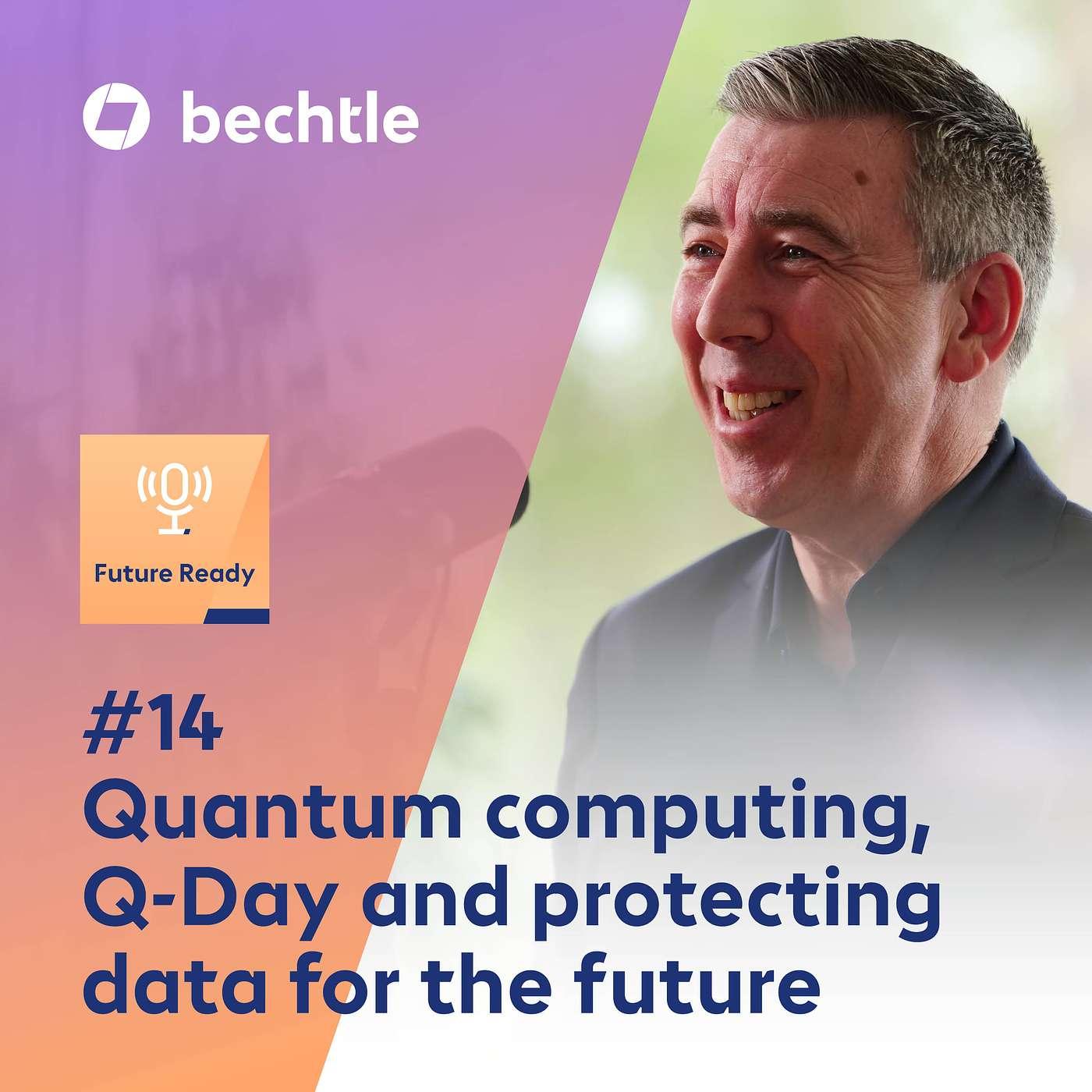
This time on Future Ready with Beckler, I'll be speaking with Lee Aylesbrook, Beckler UK's very own quantum shaman.
00:00:11.759 --> 00:00:26.719
We'll be speaking about quantum computing and how mature that technology is, what Q Day is and when we might expect it, and what steps we need to take today to protect our data tomorrow when that Q Day actually arrives.
00:00:26.879 --> 00:00:36.000
This is a fantastic episode if, like me, you've heard of quantum computing but aren't sure what the technology is and what its implications will be.
00:00:36.159 --> 00:00:37.600
I hope you enjoy the episode.
00:00:37.679 --> 00:00:39.679
Remember to like and subscribe.
00:00:42.960 --> 00:00:46.079
So Lee, welcome to Beckler's Future Ready Podcast.
00:00:46.240 --> 00:00:47.439
Or welcome back, I should say.
00:00:47.920 --> 00:00:48.240
Good morning.
00:00:48.479 --> 00:00:59.759
Lee, you're uh a business development manager in our hybrid infrastructure team, but you're also our very o quantum shaman in the UK.
00:01:00.880 --> 00:01:03.600
Um we're gonna talk about all things quantum computing.
00:01:03.840 --> 00:01:08.400
Um I think it's fair to say that it's been seen as the next big thing for a little while.
00:01:08.480 --> 00:01:10.959
We've seen a little bit of it in the press.
00:01:11.120 --> 00:01:15.599
Um, but really, what is the state of play with quantum computing today?
00:01:15.920 --> 00:01:20.719
Okay, so we're gonna try very hard not to turn this into a GCSE science lesson, haven't we?
00:01:20.799 --> 00:01:24.959
Yeah, we're not gonna talk about qubits and and everything else going on in the world.
00:01:25.280 --> 00:01:44.719
Um probably uh uh do you want to just sort of like start with the differences between quantum computing and and what people would be helpful because uh people hear the hear the uh the the buzzword and hear the phrase quantum computing, but but I I think even within the industry, I I think it's fair to say that we, you know, it's not very well understood.
00:01:45.040 --> 00:01:45.280
Correct.
00:01:45.359 --> 00:01:46.400
Yeah, yeah, definitely.
00:01:46.560 --> 00:01:50.640
So um in terms of computing today, we know computers and and love them.
00:01:50.799 --> 00:01:56.560
They are uh relatively simple machines, uh, they have an on-off state, as simple as that.
00:01:56.640 --> 00:02:05.519
It's like a light switch, and we record bits of information in either ones or zeros, and that's been the same for decades since computers were invented.
00:02:05.680 --> 00:02:07.840
Um, and that's what we call a bit.
00:02:08.800 --> 00:02:21.759
Quantum is uh working in qubits rather than bits, and qubits can hold multiple states, so we're not just one zero anymore, we are a varying degree between one and zero.
00:02:21.919 --> 00:02:31.120
And much the way our minds work, these bits can hold multiple uh different um states in the same way that our brains can, right?
00:02:31.199 --> 00:02:33.120
Our brains aren't just simply on off.
00:02:33.599 --> 00:02:39.599
And that brings the power to computing uh in in these terms.
00:02:39.759 --> 00:02:49.199
So um it's able to handle much faster and much more scalable mathematics than the ones and zeros could.
00:02:49.360 --> 00:02:57.599
So you're talking about a an exponential jump in computing power once we get this up and running and stable.
00:02:57.759 --> 00:03:03.120
Stable's the keyword, because these things are notoriously at the moment very difficult to keep stable.
00:03:03.199 --> 00:03:09.680
They need to operate at very cold temperatures in very controlled environments, so they only exist in the lab today.
00:03:10.000 --> 00:03:18.560
So it's not not the sort of thing that people are investing in in terms of buying hardware off the shelf and and you know using them to do encryption or decryption, that kind of thing.
00:03:18.800 --> 00:03:25.120
We are nowhere near going down to your local store and buying a quantum computer, no matter what size of business you are.
00:03:25.599 --> 00:03:35.840
And I suppose that's the the challenge at the moment for everybody in in you know in the boardroom looking at this is going, okay, so you know, where is it on the maturity scale?
00:03:36.000 --> 00:03:38.800
When is it likely to arrive?
00:03:38.879 --> 00:03:43.039
Um, I I think it's the first question, followed by, well, okay, well, what does that mean?
00:03:43.439 --> 00:03:57.919
So uh I think we're probably looking somewhere to sort of the 10-15 year mark before they're actually capable of being stable and being used in or sorry, outside a lab environment.
00:03:58.879 --> 00:04:04.800
And the key there is is the fact that with in in terms of your boardroom question, yeah.
00:04:05.439 --> 00:04:09.759
Um when we shouldn't be talking to customers about, okay, what's your plan for quantum?
00:04:09.840 --> 00:04:11.199
How are you going to implement it?
00:04:11.520 --> 00:04:17.120
This is very much a a case of a security question in terms of are you prepared for it?
00:04:17.600 --> 00:04:30.800
So all of that computing power that we talked about at the start will be available uh to let's say governments, to big business in the next 10 to 15 years.
00:04:31.199 --> 00:04:40.639
So, what are we doing now to ensure that our data is protected the day that uh quantum becomes publicly available?
00:04:40.800 --> 00:04:42.480
And that's the Q day, as they call it.
00:04:42.800 --> 00:04:49.519
I was gonna say you keep hearing kind of Q day and and uh as almost kind of an apocalyptic uh uh prediction.
00:04:49.680 --> 00:05:01.360
I suppose the risk there is is is that all of a sudden this technology becomes available to state actors and and suddenly the encryption and the protections that we've got today fall away.
00:05:01.439 --> 00:05:01.920
Is that true?
00:05:02.000 --> 00:05:07.040
That's all of that computing power means that they can decrypt at a rate that that's just not possible today.
00:05:07.279 --> 00:05:16.480
So a lot of state actors at the moment and a lot of uh nefarious people are operating a harvest now, decrypt later principle.
00:05:16.720 --> 00:05:24.800
So you know that they are just trawling the internet, trawling VPN traffic, which of course is completely protected right now.
00:05:25.360 --> 00:05:37.040
But if they can harvest all of that information and just store it waiting for Q Day, the minute Q Day happens and those quantum computers are let loose on all of that data, it it becomes readable.
00:05:37.120 --> 00:05:39.040
Yeah, encryption is a complete waste of time.
00:05:39.199 --> 00:05:46.480
So we need to start talking to companies right now and saying, you know, what is your strategy for the next for 10 years' time?
00:05:46.800 --> 00:05:54.240
There's no point in, let's say, having a house, there's no point in changing your the locks on your house in nine and a half years' time.
00:05:54.399 --> 00:05:56.480
Oh, we'll leave we'll leave that for nine and a half years' time.
00:05:56.720 --> 00:05:58.000
Change the locks now.
00:05:58.160 --> 00:06:06.079
Get yourself protected so that all of your data from henceforth is encrypted in a in a format that quantum computers can't decrypt.
00:06:06.319 --> 00:06:08.079
So do those formats exist today?
00:06:08.240 --> 00:06:09.839
Is that something that we we're still developing?
00:06:10.079 --> 00:06:11.519
No, they've existed for a long time.
00:06:11.920 --> 00:06:16.000
So I worked with a customer probably three or four years ago.
00:06:16.079 --> 00:06:20.639
Um, they had um uh traffic to a data center.
00:06:20.800 --> 00:06:24.000
They have several data centers that they were exchanging traffic to.
00:06:24.079 --> 00:06:31.279
Um and they were on um legacy type, I would say legacy crumbs, the encryption that we still use today, and it's wide known.
00:06:31.439 --> 00:06:38.399
In fact, if you look at the business in town, it's good, it's it's you could ask yourself the question, you know, SSL certificates, how often are they changed?
00:06:38.560 --> 00:06:38.720
Yeah.
00:06:38.879 --> 00:06:41.759
Well, once a year, maybe once every five years, right?
00:06:41.839 --> 00:06:47.759
If you've got a publicly available one, well, why would you have the same encryption algorithm for five years, right?
00:06:47.920 --> 00:06:50.079
And the same was true with with routers.
00:06:50.240 --> 00:06:56.720
You know, you'd have uh you'd encrypt on a router that became well you before that you typically encrypt on a on an encryptor.
00:06:56.879 --> 00:06:57.199
Yeah.
00:06:57.439 --> 00:06:57.759
Okay.
00:06:58.079 --> 00:07:02.800
Um, and that would encrypt your traffic over a VPN link or over an MPLS link, whatever you had.
00:07:03.040 --> 00:07:07.839
And then we moved to uh, well, actually, routers are now capable of military grade encryption.
00:07:08.240 --> 00:07:10.560
So let's use the router to to encrypt.
00:07:11.120 --> 00:07:14.639
But how often are businesses going around and changing those keys?
00:07:14.800 --> 00:07:15.040
Yeah.
00:07:15.199 --> 00:07:15.439
Right?
00:07:15.519 --> 00:07:23.439
So if you're not changing the key every typically you're going to change them every year, for example, yeah, that's not often enough to beat a quantum computer.
00:07:23.519 --> 00:07:29.199
You need to be changing that key every day, every hour, and in some cases, every minute.
00:07:29.439 --> 00:07:32.639
So is that and forgive me because this is definitely not my field.
00:07:33.279 --> 00:07:38.160
Um is that the is that the key when we talk about um the key, the key to encryption?
00:07:38.639 --> 00:07:39.759
That's a terrible fun, isn't it?
00:07:39.920 --> 00:07:44.240
Yeah, it was surprised to me that it was back in the with the old encryptors, they were actual physical keys.
00:07:44.399 --> 00:07:44.560
Yeah.
00:07:45.120 --> 00:07:56.879
But but is that but is that the the the the key step that people need to make is it's not necessarily that the algorithms, you know, oh we're not talking, you know, are we still talking 256 AES or whatever it may be?
00:07:57.040 --> 00:08:02.240
But we're now talking about changing the key on a much more frequently uh basis to be able to protect against that.
00:08:02.480 --> 00:08:03.199
That's exactly right.
00:08:03.279 --> 00:08:06.720
Yeah, you're making things a lot harder for the quantum computer to crack, basically.
00:08:07.120 --> 00:08:11.120
We're not upgrading our R256 encryption at all.
00:08:11.279 --> 00:08:15.600
Um it's it's changing the frequency in which you encrypt your traffic.
00:08:15.839 --> 00:08:24.160
And there are tools that that I put into that customer, I say I think it's about three years ago, um, that uh we actually used a hardware version.
00:08:24.240 --> 00:08:37.120
So there are um encryption companies out there that develop either a hardware version on the hardware itself will re-key every minute and it can get it to actually re-key every packet.
00:08:37.360 --> 00:08:37.759
Gotcha.
00:08:38.000 --> 00:08:40.879
Which is crazy, crazy complicated to decrypt.
00:08:41.039 --> 00:08:44.159
And then there are alternative companies that also offer a software version.
00:08:44.240 --> 00:08:57.840
So you could either run a VM that obviously generates keys very, very quickly, or they do a cloud version, again, generating keys and passing that down to even still the router and just telling the router to change the key every cycle.
00:08:58.159 --> 00:09:06.720
And so I suppose uh part of the determination that that business leaders need to make at the moment is you know, how sensitive is that data going to be in the future?
00:09:07.200 --> 00:09:18.240
Because if you're if this data is is is sensitive but only for a short period of time, then then it's probably not quite the same level of worry than it is in the future, or is that wrong?
00:09:18.559 --> 00:09:22.799
Well, if you to some extent, yes, but look at the companies that we work with, right?
00:09:22.879 --> 00:09:26.480
They're they're going to be finance, they're going to be healthcare, they're going to be government.
00:09:26.639 --> 00:09:32.960
And these people have compliance and governance regulations that have to keep data for 10 years or more, right?
00:09:33.279 --> 00:09:44.720
So we are, if if we work on my 10-year prediction, you're already today in a state where you need to be encrypting that data so that in 10 years' time, it's not easy to decrypt.
00:09:45.200 --> 00:09:53.360
So any business, any industry that is dealing with regulatory data and has to keep it for any period of time, this is a conversation we need to have today.
00:09:53.759 --> 00:09:54.159
That's right.
00:09:54.240 --> 00:10:11.039
I think that's a real key insight because I I don't think that uh business leaders and and and perhaps even CIOs, CTOs truly appreciate right now that these are the steps that we need to make today to protect us in 10 years' time and it will still be relevant.
00:10:11.360 --> 00:10:12.159
Absolutely that.
00:10:12.320 --> 00:10:13.039
Yeah, definitely.
00:10:13.200 --> 00:10:19.200
So and it doesn't have to be overcomplicated and it doesn't have to be hugely expensive either.
00:10:19.360 --> 00:10:24.320
We're still, in a lot of cases, we can still use the same physical infrastructure that you have today.
00:10:24.559 --> 00:10:29.919
We just you just need a better key management, oversimplifying, honestly, right?
00:10:30.080 --> 00:10:35.360
But yeah, you just need better key management that will take that human element away from rekeying.
00:10:35.679 --> 00:10:38.000
So at the moment, a lot of rekeying is done.
00:10:38.080 --> 00:10:38.240
Yeah.
00:10:38.399 --> 00:10:41.600
A human logging onto a device or it's a test for IT, right?
00:10:42.639 --> 00:10:53.039
I I remember when we so previously, the the customer I was speaking about, they've got if uh two data centers, uh obviously two on-site locations where they transverse a lot of traffic.
00:10:53.200 --> 00:11:01.279
And that involved me sending an engineer physically with a key to all four locations, which are conveniently not located anywhere near each other, right?
00:11:02.480 --> 00:11:03.919
Why would you need to connect them, right?
00:11:04.320 --> 00:11:05.440
Exactly that, right?
00:11:05.600 --> 00:11:07.840
So yeah, they physically have to re-key them.
00:11:07.919 --> 00:11:13.840
And then how many, how often is is is an IC department going to do that realistically today?
00:11:14.080 --> 00:11:18.960
Um, and in some cases, we're quite fortunate that that that customer was obviously based in the UK.
00:11:19.039 --> 00:11:21.039
There was no international borders or anything like that.
00:11:21.120 --> 00:11:36.799
But if you're an international company and you've got facilities all over the world, or to another point, if you're uh a defense contractor or you're all the defense industry, you may have um encryption devices in locations that are actually very difficult to physically get to.
00:11:37.039 --> 00:11:37.279
Right.
00:11:37.360 --> 00:11:37.600
Yeah.
00:11:37.759 --> 00:11:39.679
And that becomes a real, real concern.
00:11:39.759 --> 00:11:51.600
And they are the same devices, these military device style um encryptors that that are available at a price that corporate and um um public private sector companies can use are exactly the same device.
00:11:51.759 --> 00:11:55.120
The only difference is the military ones have a self-destruct button, which is cool.
00:11:57.279 --> 00:11:59.519
But uh it's a really, really interesting point.
00:11:59.600 --> 00:12:02.240
I'm just thinking who who this is most important uh to.
00:12:02.480 --> 00:12:09.600
As you said, any regulated industry, any healthcare, compliance, financial um uh uh business, that's going to be key.
00:12:09.759 --> 00:12:14.399
When you start to talk about military, I suppose it you know people think, oh, you know, I don't deal with it military.
00:12:14.480 --> 00:12:15.759
Well, it's the supply chain, isn't it?
00:12:15.919 --> 00:12:17.679
That's what becomes relevant for that.
00:12:17.919 --> 00:12:25.200
Because you know, the investments that we make in in hardware today from a military point of view are still relevant for 10, 20, 30 years.
00:12:25.440 --> 00:12:30.320
You know, the F-35, for example, is going to have a life cycle that's going to last some time.
00:12:30.559 --> 00:12:30.799
Absolutely.
00:12:31.279 --> 00:12:38.799
So it's it's important that we start thinking uh a little bit further ahead than we than than I think IT has sometimes been guilty of.
00:12:39.200 --> 00:12:45.759
You know, there's a tendency to to worry about you know the next 18 months, the next two years because something will change.
00:12:46.240 --> 00:12:48.960
Well, the fact is we know this is going to change.
00:12:49.120 --> 00:12:51.039
We know this is going to come.
00:12:51.440 --> 00:12:51.919
Oh, absolutely.
00:12:52.000 --> 00:12:53.200
It's going, it is going to happen.
00:12:53.440 --> 00:12:54.879
So Q day, as they call it.
00:12:55.039 --> 00:12:55.200
Yeah.
00:12:55.360 --> 00:12:59.919
Yeah, that that is a that is a fixed point in time where everything's going to change.
00:13:00.000 --> 00:13:03.759
And you're not going to get you're not going to get a warning about it.
00:13:03.919 --> 00:13:11.360
You're not going to get that, okay, industry, you've got five months, let's say, or five years to to prepare.
00:13:12.240 --> 00:13:13.360
How do I put this differently?
00:13:13.440 --> 00:13:14.080
Sorry, Stephen.
00:13:14.159 --> 00:13:19.039
So if you to industry, you would you're not going to get that sort of in five months' time, this is going to happen.
00:13:19.360 --> 00:13:20.720
You need to prepare because this is going to happen.
00:13:20.879 --> 00:13:29.600
Yeah, you're not going to get like the it goes end of service alert that you get with Windows Server, you know, 2012, for example, um, it's going to be on this date, you're going to have a problem.
00:13:29.840 --> 00:13:31.919
No, it's just it's just going to happen overnight.
00:13:32.080 --> 00:13:33.519
One day somebody will have it.
00:13:33.919 --> 00:13:35.279
Today's encryption will work.
00:13:35.519 --> 00:13:36.799
Today's encryption will work.
00:13:36.960 --> 00:13:40.879
And and the following day, today's encryption will just be useless.
00:13:41.440 --> 00:13:44.960
Are there any signs at all that people can look for to see it see it's coming down the line?
00:13:45.039 --> 00:13:46.000
Is there certain technologies?
00:13:46.240 --> 00:13:52.960
Is there certain things that you know breakthroughs that with somebody starts announcing that that that should start ringing those alarm bells?
00:13:53.600 --> 00:13:56.480
Um no, because it's all happening behind closed doors.
00:13:56.559 --> 00:13:56.720
Yeah.
00:13:58.639 --> 00:13:59.279
That's the thing.
00:13:59.440 --> 00:14:03.039
I mean, we get so uh if you look at uh IBM.
00:14:03.919 --> 00:14:09.200
So if you look at IBM, they've got uh obviously their version of uh of their quantum computing.
00:14:09.440 --> 00:14:15.039
Every major manufacturer has their one, but the IBM one is the one that's certainly most popular and publicised online.
00:14:15.600 --> 00:14:17.440
That doesn't mean to say that's the only one.
00:14:17.600 --> 00:14:19.679
And that doesn't mean to say that's the only one.
00:14:19.759 --> 00:14:22.320
There isn't one in uh in public sector hands.
00:14:22.480 --> 00:14:23.519
No, no, absolutely.
00:14:23.679 --> 00:14:25.200
And I suppose that's the thing, isn't it?
00:14:25.279 --> 00:14:35.360
You know, we've we've seen when we talk about development of uh large language models and generative AI, we've seen solutions come out of all almost nowhere, right?
00:14:35.440 --> 00:14:37.440
So like it does, it just appears, doesn't it?
00:14:37.679 --> 00:14:39.279
And and it and it happens really quickly.
00:14:39.360 --> 00:14:43.200
So that that acceleration's uh uh uh definitely happening.
00:14:43.440 --> 00:14:49.600
So if you if you could give one message to the to the guys in the boardroom, because I'm really conscious that we've kind of we've geeked out a little bit.
00:14:49.919 --> 00:14:51.759
Yeah, we have sorry it's hard not to.
00:14:52.080 --> 00:14:56.799
Yeah, you know, two to two two IT heads in a room talking about something exciting in the future, you know.
00:14:56.879 --> 00:15:01.120
They will who knew that who's surprised that's where the conversation's gone.
00:15:01.360 --> 00:15:06.159
But not everybody um uh is necessarily living that technical world.
00:15:06.559 --> 00:15:17.919
Um, you know, what are the things that that leaders in the boardroom right now um should be thinking about and should be asking their security teams and their uh and their IT teams?
00:15:18.399 --> 00:15:24.480
So uh first of all, uh I draw attention to the fact that I was working with customers on this three years ago, right?
00:15:24.559 --> 00:15:26.720
So we're already three years down the line.
00:15:26.960 --> 00:15:36.080
Um I I'm projecting it's gonna be 10 to 15 years before quantum is is really publicly of publicly available to state actors.
00:15:36.559 --> 00:15:41.840
Um but we all know the speed of development in the IT industry is rapid.
00:15:42.159 --> 00:15:46.879
Uh and when those initial projections were put in place, AI didn't necessarily exist.
00:15:47.039 --> 00:15:51.279
And AI is going to help drive the momentum considerably.
00:15:51.600 --> 00:15:56.240
So, in terms of the boardroom today, we just need you need to take a look at your data.
00:15:56.320 --> 00:16:00.960
This is a security data question, not a quantum question at all.
00:16:01.600 --> 00:16:06.159
How secure is your data potentially going to be when quantum is released?
00:16:06.480 --> 00:16:18.080
And what steps can you take today, because it does need to happen today, in order to protect the data that you are holding on behalf of your company and in some cases on behalf of your patients and your customers.
00:16:18.240 --> 00:16:20.159
And come and talk to Beckler.
00:16:20.559 --> 00:16:29.120
Uh, we have the skills available in-house to be able to um provide the equipment, the services, and the solutions to protect your data from Q Day.
00:16:29.279 --> 00:16:29.440
Yeah.
00:16:29.600 --> 00:16:30.559
And get future ready.
00:16:30.799 --> 00:16:31.600
And get future ready.
00:16:31.679 --> 00:16:31.919
Yeah, yeah.
00:16:32.320 --> 00:16:33.360
That's a very cheesy way to do that.
00:16:34.879 --> 00:16:35.120
Absolutely.
00:16:35.360 --> 00:16:39.360
But I mean, and just to wrap that up nicely, and it doesn't have to be hugely technical.
00:16:39.519 --> 00:16:41.360
It's not a hugely technical problem.
00:16:41.679 --> 00:16:44.799
The solutions exist and have existed for several years.
00:16:45.120 --> 00:16:51.519
We can put in a hardware solution, uh, which is typically where you would get your military grade, if you like, type style encryption.
00:16:51.679 --> 00:16:57.440
Or there are software solutions available which are easily accessible to any industry today.
00:16:57.679 --> 00:16:58.159
Marvellous.
00:16:58.720 --> 00:17:08.400
It's been really fascinating to explore an area of computing that I'll be honest, I'm aware of on the periphery, like many people, but uh, but I'm not living in the world of qubits.
00:17:09.920 --> 00:17:11.440
We should have a science lesson one Monday.
00:17:11.599 --> 00:17:12.079
That would be fun.
00:17:12.319 --> 00:17:12.880
That would be really cool.
00:17:13.119 --> 00:17:14.400
Not sure who would watch it.
00:17:15.200 --> 00:17:21.680
But look, it's been a real pleasure having you having you uh with us and and hopefully making that a little bit clearer to everybody.
00:17:21.920 --> 00:17:27.920
Um, if you if you are looking for that solution, you are looking to plan, then obviously get in touch with Beckler.
00:17:28.319 --> 00:17:29.200
Lee it's been a pleasure.
00:17:29.279 --> 00:17:29.759
Thank you very much.
00:17:30.000 --> 00:17:31.359
Thanks for having me, Stephen.
