


इस एपिसोड के बारे में
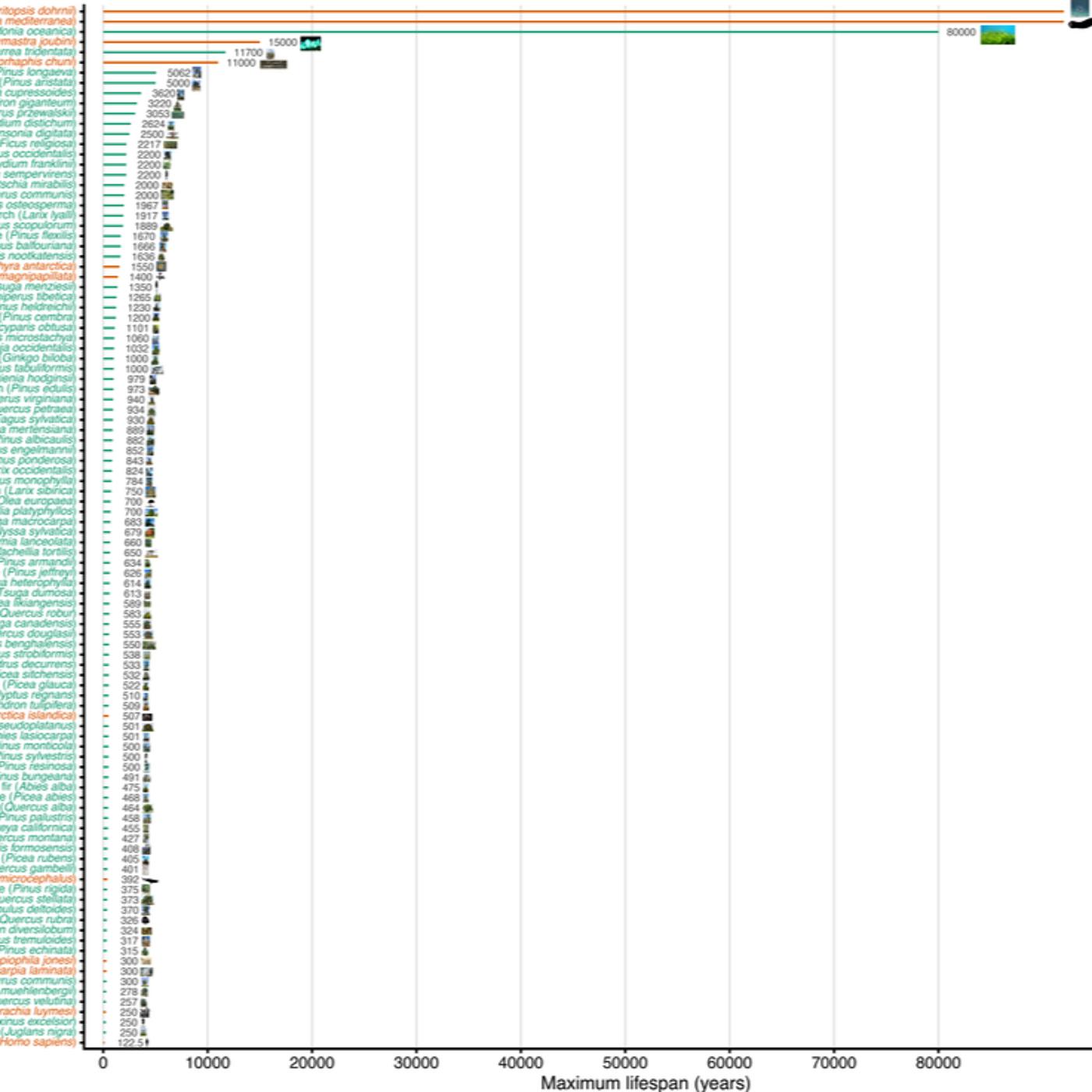
BUFFALO, NY — September 24, 2026 — A new #review was #published in Volume 18 of Aging on September 8, 2026, titled “How to live for centuries: common denominators of organisms with exceptional longevity.”
The review examines what some of the world’s longest-lived organisms may reveal about the biology of exceptional longevity.
The review was led by first author Stefania E. Kapsetaki from the Institute of Molecular Biology and Biotechnology, Foundation for Research and Technology-Hellas (FORTH), in Heraklion, Crete, Greece. Corresponding author Nektarios Tavernarakis is affiliated with the same institute and with the Division of Basic Sciences, School of Medicine, University of Crete.
Kapsetaki and Tavernarakis surveyed molecular and cellular evidence from 101 multicellular species with maximum lifespans of at least 250 years, including 90 plants and 11 animals. Some reach only slightly beyond 250 years, while others may persist for thousands or even tens of thousands of years. The freshwater planarian Schmidtea mediterranea and the jellyfish Turritopsis dohrnii are even considered potentially immortal.
Rather than looking only at why certain species live longer than others, the authors compared two dimensions of longevity: variation within exceptionally long-lived species and variation between long- and shorter-lived species. Their analysis covered genetic, genomic, transcriptomic, proteomic and metabolomic findings, as well as telomere maintenance, stress resistance, regeneration and tumorigenesis.
Full press release - https://www.aging-us.com/news-room/exceptional-longevity-across-species-linked-to-dna-maintenance-stemness-and-stress-resistance
DOI - https://doi.org/10.18632/aging.206419
Corresponding author - Nektarios Tavernarakis - tavernarakis@imbb.forth.gr
Abstract video - https://www.youtube.com/watch?v=VvzjvzQj-Qk
Sign up for free Altmetric alerts about this article -
https://aging.altmetric.com/details/email_updates?id=10.18632%2Faging.206419
Subscribe for free publication alerts from Aging - https://www.aging-us.com/subscribe-to-toc-alerts
Keywords - aging, healthspan, interspecific variation, intraspecific variation, stemness
To learn more about the journal, please visit https://www.Aging-US.com and connect with us on social media at:
Bluesky - https://bsky.app/profile/aging-us.bsky.social
ResearchGate - https://www.researchgate.net/journal/Aging-1945-4589
X - https://twitter.com/AgingJrnl
Facebook - https://www.facebook.com/AgingUS/
Instagram - https://www.instagram.com/agingjrnl/
LinkedIn - https://www.linkedin.com/company/aging/
Reddit - https://www.reddit.com/user/AgingUS/
Pinterest - https://www.pinterest.com/AgingUS/
YouTube - https://www.youtube.com/@Aging-US
Spotify - https://open.spotify.com/show/1X4HQQgegjReaf6Mozn6Mc
MEDIA@IMPACTJOURNALS.COM
The review examines what some of the world’s longest-lived organisms may reveal about the biology of exceptional longevity.
The review was led by first author Stefania E. Kapsetaki from the Institute of Molecular Biology and Biotechnology, Foundation for Research and Technology-Hellas (FORTH), in Heraklion, Crete, Greece. Corresponding author Nektarios Tavernarakis is affiliated with the same institute and with the Division of Basic Sciences, School of Medicine, University of Crete.
Kapsetaki and Tavernarakis surveyed molecular and cellular evidence from 101 multicellular species with maximum lifespans of at least 250 years, including 90 plants and 11 animals. Some reach only slightly beyond 250 years, while others may persist for thousands or even tens of thousands of years. The freshwater planarian Schmidtea mediterranea and the jellyfish Turritopsis dohrnii are even considered potentially immortal.
Rather than looking only at why certain species live longer than others, the authors compared two dimensions of longevity: variation within exceptionally long-lived species and variation between long- and shorter-lived species. Their analysis covered genetic, genomic, transcriptomic, proteomic and metabolomic findings, as well as telomere maintenance, stress resistance, regeneration and tumorigenesis.
Full press release - https://www.aging-us.com/news-room/exceptional-longevity-across-species-linked-to-dna-maintenance-stemness-and-stress-resistance
DOI - https://doi.org/10.18632/aging.206419
Corresponding author - Nektarios Tavernarakis - tavernarakis@imbb.forth.gr
Abstract video - https://www.youtube.com/watch?v=VvzjvzQj-Qk
Sign up for free Altmetric alerts about this article -
https://aging.altmetric.com/details/email_updates?id=10.18632%2Faging.206419
Subscribe for free publication alerts from Aging - https://www.aging-us.com/subscribe-to-toc-alerts
Keywords - aging, healthspan, interspecific variation, intraspecific variation, stemness
To learn more about the journal, please visit https://www.Aging-US.com and connect with us on social media at:
Bluesky - https://bsky.app/profile/aging-us.bsky.social
ResearchGate - https://www.researchgate.net/journal/Aging-1945-4589
X - https://twitter.com/AgingJrnl
Facebook - https://www.facebook.com/AgingUS/
Instagram - https://www.instagram.com/agingjrnl/
LinkedIn - https://www.linkedin.com/company/aging/
Reddit - https://www.reddit.com/user/AgingUS/
Pinterest - https://www.pinterest.com/AgingUS/
YouTube - https://www.youtube.com/@Aging-US
Spotify - https://open.spotify.com/show/1X4HQQgegjReaf6Mozn6Mc
MEDIA@IMPACTJOURNALS.COM
अंग्रेज़ी
संयुक्त राज्य अमरीका
अनुलिपि 🔗
Are you the producer of this podcast?
Add a podcast transcript
Need Audio-to-Text?
Transcribe with Listen411 in Just 60 Seconds
इस पॉडकास्ट के अन्य एपिसोड

A research paper recently published in Aging, titled “Human-relevant Ptpn6 mutation alters immune and hepatic functions during aging,” investigated how a human-relevant mutation in the PTPN6 gene, which encodes the immune and metabolic regulator SHP-1, affects immune and liver function during aging…
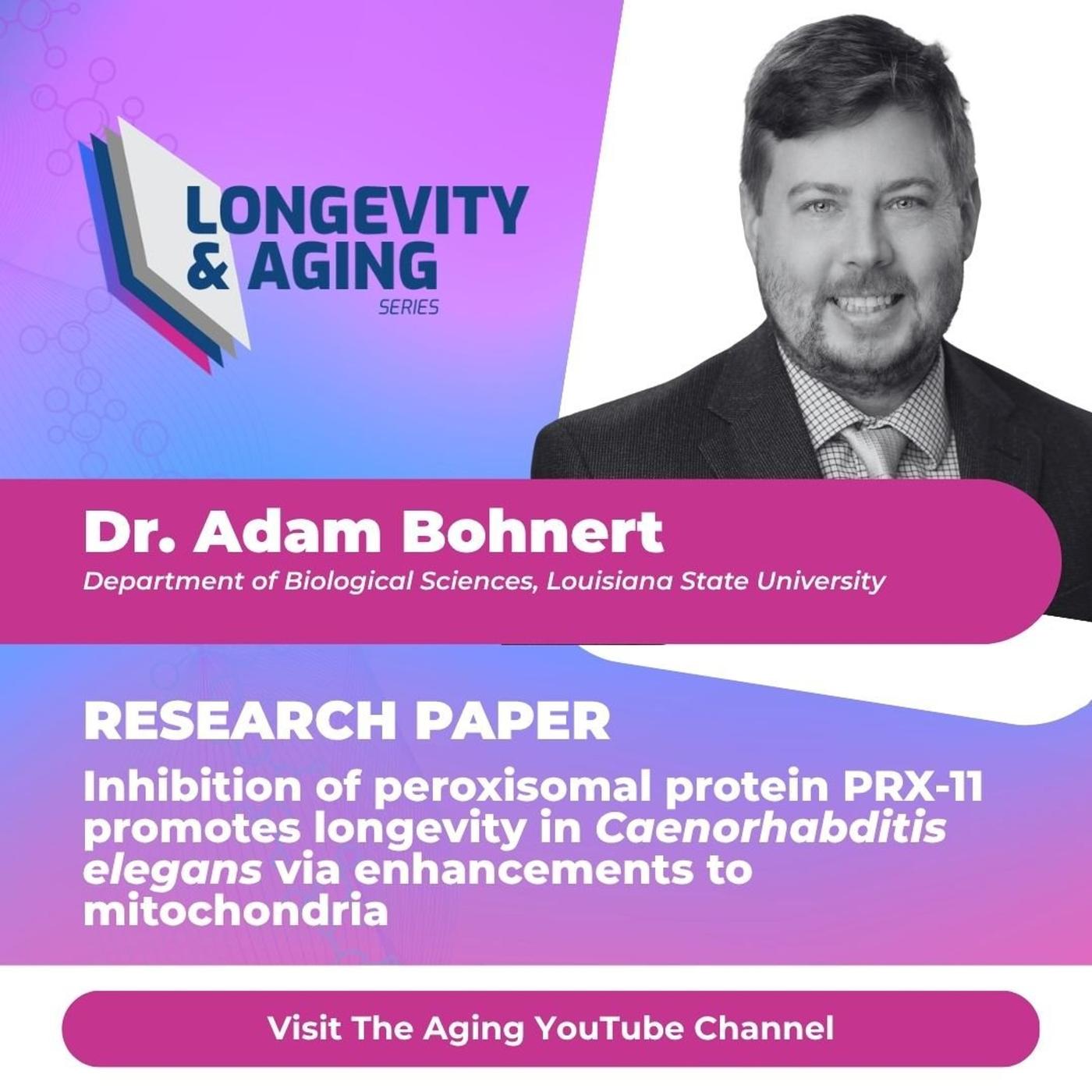
In this episode of the Longevity & Aging Series (S4, E6), Dr. Adam Bohnert from the Department of Biological Sciences at Louisiana State University (Baton Rouge, LA) joins host Dr. Yuan Zhao to discuss the research paper he co-authored in Volume 18 of Aging, titled “Inhibition of peroxisomal pr…
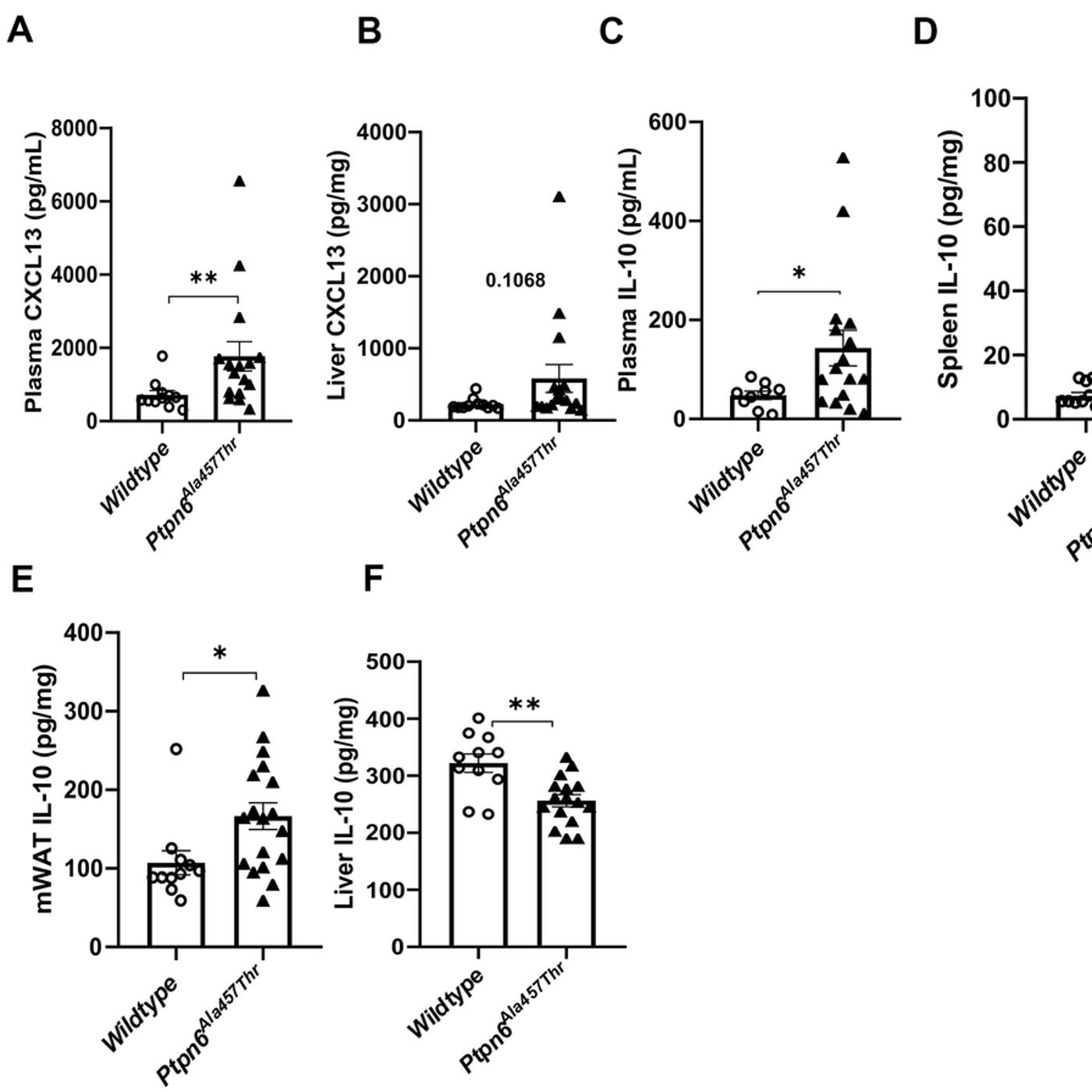
BUFFALO, NY — September 16, 2026 — A new #research paper was #published in Volume 18 of Aging on August 28, 2026, titled “Human-relevant Ptpn6 mutation alters immune and hepatic functions during aging.”
The study examines how a mutation affecting the immune and metabolic regulator SHP-1 reshapes l…
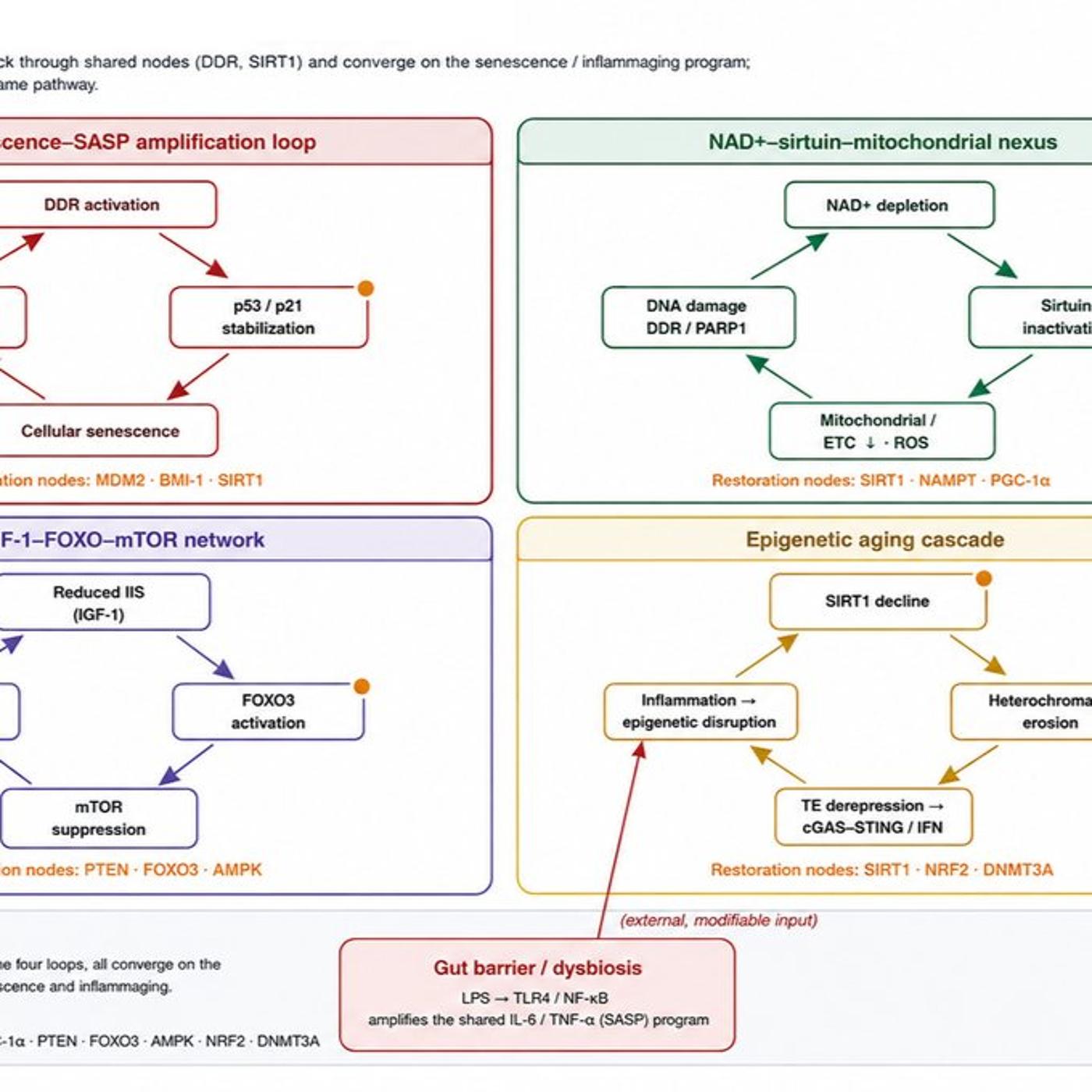
BUFFALO, NY — September 21, 2026 — A new #review was #published in Volume 18 of Aging on August 31, 2026, titled “The guardian paradox: DNA damage response overactivation as an integrative driver of aging – a tumor suppressor–negative regulator framework.”
The review presents a new framework propo…
अस्वीकरण: इस पृष्ठ पर एम्बेडेड पॉडकास्ट और कलाकृति Aging Podcast से हैं, जो इसके मालिक की संपत्ति है और Listen Notes, Inc. से संबद्ध या समर्थित नहीं है।
संपादित करें
पॉडकास्ट डेटाबेस को अपडेटेड रखने में मदद के लिए धन्यवाद।
