

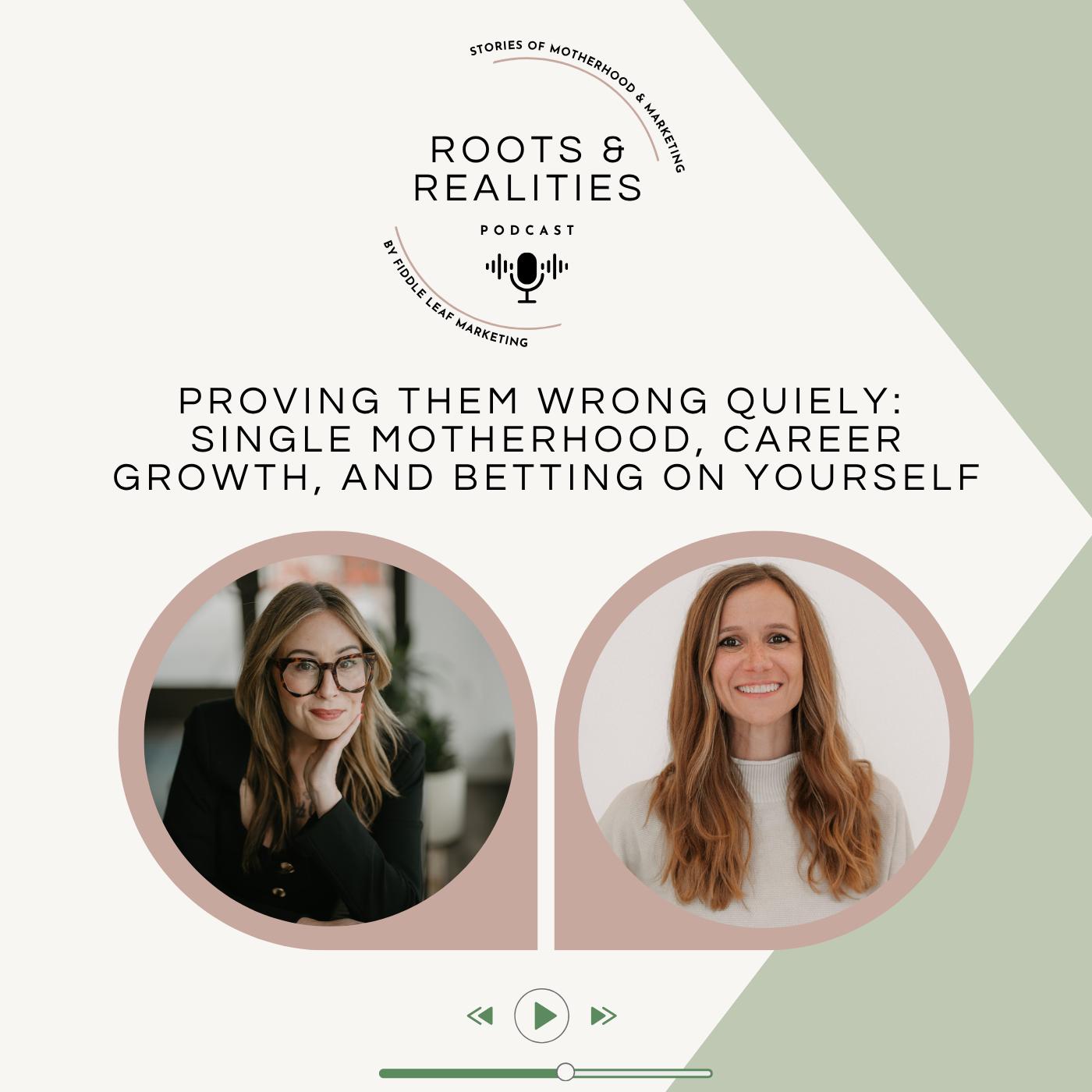
Emma: Welcome to today's episode of Roots in Realities, where I sit down with guests to talk about marketing, motherhood, and entrepreneurship. I am so excited to introduce you to today's guest, Kristen Johnson. I met Kristen through Bond, a private professional club for accomplished women, and once I heard her story, I knew I needed to help share it. Kristen Johnson was born in a small town in Indiana where no one expected much from anyone, least of all a baby born to an 18 year old in a bit of a scandal. She became a single mom herself at 21 in the years. That followed were a mix of hard and joyful, surviving, barely getting by, and dreaming about business ideas she hoped to one day make real. She spent years climbing the ranks in hospitality, eventually leading fine dining locations and consulting on the side. Hospitality is where she learned what it really takes to lead well. Then COVID hit. Restaurants shut down, and her son had cancer, scancer scare as they reopened, forever altering her perspective on work-life balance and ultimately becoming the catalyst for leaving the industry. From there, she moved into SaaS project management, where her skills grew until she was let go. That setback led her into the nonprofit world, where she now serves as executive director of a National Scientific Medical Research Association. Through it all, she kept her dream alive. Over the years, she's launched many ventures that didn't quite take. This year, that has seen a shift with two new ventures. Yourn Studio, a consultancy that helps creatives and makers with the business side of their practice, providing entrepreneurial. education that even art schools don't often teach, and made by Meridian, a line of analog thinking tools designed for high functioning women in leadership. The first product, the Meridian Planner, is in the final stages of development and will launch later this year. Kristen, welcome to Roots and Realities.
Kristin: Hi, thanks for having me.
Emma: Absolutely. I'm so excited to dive in. You have so many exciting things going on. But I'd love to kind of have you take me from the, you know, very beginning of what was life like when you became a mom and what did you think your future was going to look like at that point.
Kristin: Yeah, so I had my son in twenty seventeen. I got pregnant when I was twenty. And you know, my mom was also a very young single mom. She had me at 18. I was actually at her high school graduation, just a couple days later. so they let her out of the hospital to go graduate. So I had already seen someone. do it. That's how I grew up, you know, and it she worked full time, went to school at night. I would, you know, walk down the street to my grandparents' house to get whatever I needed because it it wasn't at our house, that's for sure. so that makes you resourceful as a kid. And I think that that really ingrained something in me and being a young single mom kind of further reinforced it. so Back then, I was actually in art school when I found out I was pregnant. And you know, that whole reality kind of hits that you're gonna be responsible for someone else. And I pretty much knew I would mostly be doing it alone. of course, I had hope that it would work out differently, but unfortunately I was right. so It was kind of a, you know, I was studying fashion design here in Indiana, which is not a hotbed for that, that kind of thing. And I was like, who am I kidding? lots of outside voices were kind of voicing the same thing. So it was like you need to make money and maybe you can dream later. once you're in a you know, have a little bit more stable footing. So I left art school and the quickest way to make money was to start in restaurants. So yeah, I started, that's what kicked all that off. serving obviously you most places back then anyway, you walked away with cash every night. So it was a great way
Emma: Mm-hmm, mm-hmm.
Kristin: to make sure I had a little bit of money on me to get
Emma: Mm.
Kristin: formula and diapers and all that stuff. So just means to an end really is where all that
Emma: Yeah.
Kristin: began.
Emma: Yeah. Wow. Just i incredible, first of all, that you, you know, made I can't even imagine n how difficult of a decision to, you know, start with art stop with art school, but also to just do what you needed to do and to to make money serving, which is a fantastic rule. I I spent a lot of days actually growing up in Indiana serving and like you said, you a means to an end and doing
Kristin: Well yeah.
Emma: what you had to do. Yeah, I'm from Indiana as well. I know we talked about that at one point.
Kristin: I forgot. Yeah. Yeah, we did talk about that before.
Emma: Yeah, yeah. So very familiar when you mention all things Indiana. but I would love to hear, you know, what's something about being a young and single mom that you wish more people understood?
Kristin: Well, I think the conversation has changed a lot. The you know, back then it was I'm I mean it's not like it was nineteen seventy-five, but things have changed a lot since then. There's
Emma: Absolutely.
Kristin: a lot more discussion about you know, the mental load of managing a house and the the work that goes into that. So being young, being twenty one, Often working two or three jobs because with people that don't know in restaurants, it's short shifts. So if you really need to some well, a lot of places it's short shifts. So you can have a couple jobs and kind of work two shifts in a day and hopefully double your money, you know. Some some shifts are bad,
Emma: Mm, mhm.
Kristin: but a lot of times I'd have two or three jobs and you know, go home and have to do all that stuff too. completely exhausted with a toddler or an infant, you know.
Emma: Mm.
Kristin: And I don't think people I didn't really let people know that. so just thinking about all of the things that young single mom or single dad even, what they're dealing with, they're not always gonna tell you. so just
Emma: Mm-hmm.
Kristin: checking in, offering help. And if you just say, What do you need? Well, they're probably not gonna know. Just do something
Emma: Mm, mm hmm. Yeah, absolutely.
Kristin: nice, you know, thoughtful.
Emma: Yeah, yeah, yeah. Absolutely. And I think, you know, at least to the experience I've had either myself or even with friends that have been single moms is just like you said, just really hard to ask for help, you know, as as a woman, especially, but even as a mom. so to just I love that, just proactively do something, you know, to to kind of lend a hand because more than likely, even if they're not asking for it or admitting it, they are, you know, needing that additional support. what feels different about you now versus the version of you back then?
Kristin: a lot. I'm certainly a lot more confident than I was. I was knew I, you know, everything always felt pretty figure outable, I think,
Emma: Mm-hmm.
Kristin: just from that innate resourcefulness that I kind of grew up needing. but As you do all these things that feel difficult or hard, and they don't always pan out, right? But you do gain a little bit of confidence in yourself. Like, okay, I can handle things, I can make hard
Emma: Mm-hmm.
Kristin: choices, I can I can do the thing that needs to be done. so in that way, I think I've grown a lot. I'm also a lot more responsible. I mean, having a kid really raises it raises you.
Emma: Mm-hmm, mm-hmm.
Kristin: very quickly also. but because I had him so young, I've also, you know, he's almost 19. He'll be 19 in a couple weeks. So I've also been able to 40 and I kind of have this freedom in the last few years
Emma: Mm.
Kristin: to get out and enjoy myself. So I've been able to kind of find myself again. You do lose yourself as a mom for a while. so I think I'm returning to myself now. and obviously that takes takes a long time. I've heard a lot lately of people saying, you know, like life begins at 40 or, you know, the 40s for women are really special. I mean, we're obviously going through a lot at that time, but it feels true. Like I just heard
Emma: Yeah.
Kristin: 40 in May and it does it does feel different.
Emma: I love that. I love that. And happy belated birthday. And ha congratulations
Kristin: Thank you.
Emma: and a happy birthday to your son, almost nineteen. I
Kristin: Yeah.
Emma: think that's just incredible. Again, having I had my daughters at thirty and thirty one or thirty two and you know, where I was as a person then versus in, you know, when I was twenty in my early twenties. like you said, just the confidence and the maturity that is forced when you become a mother that, you know, I feel like as I was thirty, I, you know, I still have matured and probably have more maturing to do. But, you know, just a complete different conversation. And I, like I said, I know some some young moms that I've seen, you know, just you step up, right? You have no choice and you step up and you become the incredible mother that you were meant to be, just maybe, you know, not exactly when you had planned. but again, I think it's just incredible that you were able to to experience that. And now, like you said, going into 40 and, you know, feeling back to to yourself, but maybe even a complete new woman as you start start your 40s. And I've been hearing the same thing too. I'm 35, a few more years before 40, but I absolutely, it seems like the conversation shifting that it's you know, really a a new opportunity in your forties as a woman.
Kristin: Yeah, I think that, you know, there's a lot more positive to it than maybe we were told or, you
Emma: Mm-hmm. Mm-hmm.
Kristin: know, exposed to as kids, especially when you and I were younger. I mean, when we were kids,
Emma: Mm-hmm.
Kristin: I don't recall my mom or my grandma ever talking about paramenopause. I'm not sure anybody knew what it was. Like I don't know why
Emma: Mm. I don't think it was discussed. Yeah, yeah. Mm-hmm.
Kristin: we're just now hearing about it.
Emma: Mm.
Kristin: the last couple of years, but I think the perspective has just changed a lot and that there's all the stats on like women building their own businesses and when people
Emma: Mm.
Kristin: actually, you know, make it and most of those
Emma: Mm-hmm.
Kristin: point to your mid to early forties. so yeah, I think there's more good
Emma: Mm-hmm. Absolutely.
Kristin: in it than bad.
Emma: Hundred percent. I couldn't agree more. And I was thinking that when you said that too of kinda what we saw growing up is like I just saw us saw a stat the other day that said like the majority of businesses started like this year and last year have been by women and like how incredible of this like evolution that's happening of empowerment of women in in starting their own thing. And I think it's been a shift kind of like you mentioned in like the mental load and and just societal expectations that women have felt, you know, kinda tired tired of the st
Kristin: Yeah.
Emma: you know, status quo and are now kind of taking control and in power in a lot of ways. And it's just such an incredible time. And I know we've obviously bonded over bond in in that amazing community of just you know like-minded women and again how incredible that this is you know something we get to experience and you know connect
Kristin: Yeah.
Emma: with with like-minded women
Kristin: Yeah, there's you know, in truth, when I grew up or where I grew up with the people I grew up with, it was it wasn't cool to be girly. It wasn't cool to, you know, love being a girl. So
Emma: Mm.
Kristin: you know, I was kind of a a tomboy, which I think was kind of just there anyway, but it was also just Kind of pounded in your head, like it's not
Emma: Yeah.
Kristin: cool to be very feminine, at least where I was. And maybe you had the same experience wherever you were in Indiana. Where where were you again?
Emma: Right. Mm hmm. Mm-hmm. Mm-hmm. Mm hmm. Angola, northeast corner, north of Fort Wayne.
Kristin: That's right. That's right. Okay. So yeah, I was I was in LaSantville, which is like I don't not even on a map usually.
Emma: Mm-hmm.
Kristin: it's not it's like you blink and you miss it. but it's almost Ohio, like kind of out like
Emma: Mm-hmm. Okay.
Kristin: 30, 40 minutes from Richmond. but out there it's like farm country, you
Emma: Mm.
Kristin: had to be tough. You you weren't supposed to be emotional, you couldn't be too girly. so like the shift, speaking of bond, to you know, community with other women, that is something that I haven't really had. And so
Emma: Mm.
Kristin: Bond was a big decision for me in trying
Emma: Mm.
Kristin: to get away from this like battle with
Emma: Mm.
Kristin: being a woman.
Emma: Mm-hmm, mm hmm. Absolutely.
Kristin: I was kinda tired of that. I'm like, what do you mean? Women are awesome and they're so cool and funny. And like even in comedy, like they don't get enough credit, you know. So yeah, Bond was a big part
Emma: Mm-hmm. Absolutely. I love it.
Kristin: of of trying to rediscover that or find it, I guess, for the first time for me.
Emma: I was gonna say discover and and and find that community. I I completely agree. And it's I have two daughters, you know, t three and four and a half. And we have, I was just thinking as you were saying that this like girl power book. And like, you know, I have all these like feminist books that I read to them, and it's like kind of exactly what you're
Kristin: Yeah.
Emma: saying is like from an early age, I want to make it clear like it's okay to be emotional, you know, use that as an advantage we have is our emotional intelligence as women and our passion, and you know, there's just so many powerful things. Things that are innate to women that, like you said, I feel like in so many areas, either of the country or just families, it suppresses and and don't, you know, empower girls. And that obviously starts at such a young age. And then obviously
Kristin: Yeah.
Emma: how much harder it is to build that confidence and step into that power, you know, once you become a woman. so I I completely agree. And it's just so cool to see again, like books about, you know, like for my littles. And one of them's a Sesame Street book. Like we grew up with that, right? Like that's been around forever,
Kristin: That's incredible.
Emma: and like it's this awesome. I'll send you a link to it. It's a really cute book. there's like affirmations
Kristin: That's awesome.
Emma: at the end. It's just like all things amazing. And so I'm I know, and that's
Kristin: Can't imagine growing up that way. Like that's so incredible.
Emma: And that's what's so my my mom was also a single mom for part of my upbringing and just seeing her work her her butt off to, you know, provide food for my brother and I and, you know, such a comfortable lifestyle for being a s you know, we were we didn't know
Kristin: Yeah.
Emma: any different and we were just happy and having fun and dancing in the kitchen, you know. So it's just those type of things that it's like, how can I take now what I'll look at as like my privilege of not being a single mom and you know, having two, you know, income households to still bring, you know, this empowering, you know, boss, mom, and and woman vibe to to my girls. So anyways, just yeah, it's it's kind of cool that we
Kristin: That's awesome. So the closest thing for me as far as like books like that was a book called Harriet the Spy. That was this little girl.
Emma: I gosh, that sounds so familiar.
Kristin: She they're they made it into a movie later, so it might be because of that. I'll highly recommend that.
Emma: Okay, it might be the movie.
Kristin: Like that movie with your girls is so fun. the book's incredible, but it's probably like fourth, third, fourth, fifth grade, maybe. I don't really know.
Emma: Mm-hmm.
Kristin: But yeah, that was my favorite book growing up. and it was just about this little girl who was very curious and decided she was gonna be a spy and like solve mysteries in her neighborhood. and I just loved it so much.
Emma: Mm-hmm. Mm-hmm. Because again, those are the stories that like kind of broke out of the norm, right? As scrolls and like things that that we can do. I love it. Speaking of, like, let's talk about the career and how your career actually
Kristin: Yeah.
Emma: started and what do you feel like your was your first like real foot in the door with, you know, building your career.
Kristin: Yeah, I mean so much of it was hospitality, right? And a lot of people don't think of that as really a a career. Those are like means to an end jobs to a lot of people. but you can make a career out of it if that's what you want. so yeah, I think the the career side of it kind of started with my first GM role, I think, general manager position,
Emma: Mm.
Kristin: which didn't feel great at the time because it's actually counterproductive in a lot of locations, restaurant locations to go from server to GM because you lose all the tip money and you don't make tip money anymore.
Emma: Mm, mhm.
Kristin: And often the salary does not keep up. but it came with benefits and that was a big deal for me at the time. so I made the jump and I turned out to be pretty good at it. and I was kind of addicted to the learning side of it. because it's not just running the show for the day. It's navigating a lot of backgrounds. whatever people have going on at home in a restaurant. You usually don't really check that at the door. You do to a degree to deal with customers, but
Emma: Mm.
Kristin: It really comes to work with you a lot because these feel like very tight knit circles that you can lean on each other. so figuring out how to navigate all of that, really it was I can't imagine a more intense, more rigorous leadership training than all of that. it's
Emma: Mm-hmm. I I absolutely believe it. Yeah, absolutely.
Kristin: Yeah, it's I learned a lot and I'm glad that I did it for the time
Emma: Yeah. Mm-hmm.
Kristin: period that I did. without it, I don't think I'd be ready now to do these
Emma: Mm.
Kristin: other things.
Emma: I love that. I love that. It all leads to where you, you know, where you end up. I I fully believe that. And it's, you know, funny if you started that with like at the moment you maybe weren't as excited about it. But now like reflection and hindsight, you're like, Wow, that really, you know, helped me. And I can only imagine, you know, from working in restaurants, both back b in the kitchen and you know, front of house, just the dynamics of like you said, it is like a a big blended family, but there's just so many, you know, personalities and experiences and you know We'll call it baggage, whatever you want call it, coming into
Kristin: Yeah.
Emma: that. And to manage that you know, variety of age ranges and families and needs that to have that experience to then deal with people in any capacity, I think is is huge. And just like you said, I'm sure it's been a huge driver to to your success with the rest of your career. Do you feel you had anything to prove that maybe other people didn't at that time in your career or even after that?
Kristin: I mean, I think so. I even like being a woman managing other people came into it a little bit. Not everybody liked dealing with
Emma: Mm-hmm. Mm-hmm.
Kristin: that. so there was for me something to prove there, I think. And also that, you know, I had dropped out of school. I did go back multiple times. And as a single mom, you can't really put yourself first. So when something came along and there was always something that took priority, I'd have to take a step back again. And so just proving that those failures weren't you know, indicative of who I am or what I'm capable of. Like I I felt very driven to dispel any notions of that that anyone might
Emma: Mm-hmm, mm-hmm.
Kristin: have. And I don't know if I really did or not, but I I recall
Emma: Mm-hmm.
Kristin: that being important to me.
Emma: I think you absolutely did. because just like you said, I mean, those things are challenging regardless, but especially with having a little one at home that you were taking care of and it seems like no matter what you didn't back down or give up, which I can only imagine how hard that was in a lot of those moments. And you know, especially just like you said, as a woman and as a leader and managing people, we already I've absolutely experienced that. We already kind of come in with doubts either of ourselves or that others are are putting on us, because of all the things we talked about leading up to that. so that's incredible. And I'm I I know you proved it. I can tell that you did, even even though I wasn't there. was there a turning point where maybe you stopped trying to fit the mold and started owning your own path? And kind of even just based off of what you just said, it sounds like that confidence was really grow growing. So was there like any turning points you feel in your career that you started to really own that?
Kristin: Yeah, I think there were several, but like the biggest, most recent one was definitely COVID and leaving hospitality finally. a lot went into that, but you know, COVID happening, my son's cancer scare happening, all of that. it just I'd stayed in hospitality that long because I was moving up and I was getting you know, a lot of growth and learning out of it. It was advancing. Personally too. so those were incentives to stay. But that cancer scare with my son, it was just like I've lost so much time to this
Emma: Mm-hmm.
Kristin: industry. You know, when everyone else is getting together with their family, you're there making sure they can get together with their family. You're not with yours.
Emma: Mhm. Mm.
Kristin: so holidays, weekends, evenings. I just I lost so much time with him out of necessity,
Emma: Mm-hmm.
Kristin: you know, and then it just kind of became habit because that's where I could go and make money and keep us fed. so I decided to leave shortly after everything reopened, which I think was I don't know, May. I think it was around my birthday in twenty twenty. So I left and managed to find a new job in project management in software as a service. I was lucky to find an opening with some crossover so that my restaurant experience was viewed as a positive.
Emma: Mm-hmm.
Kristin: it was for a point of sale company, and I was working specifically with restaurants. So it allowed me to learn something else, kind of use what I already knew, and also have a normal schedule.
Emma: Mm.
Kristin: so that was like the first big leap that I took.
Emma: Mm-hmm.
Kristin: and I think it ended up being the Kickstarter for everything else that's happened since. because when I got laid off from that job, I ended up getting the job I have now. as an executive
Emma: Mm-hmm.
Kristin: director in the nonprofit sector, which I never would have expected. But again,
Emma: Mm-hmm, mm-hmm.
Kristin: laid off, it took me three months to find a job. and my son was older, but that's still scary as a single mom.
Emma: Yeah.
Kristin: So that was the offer that came in and I took it.
Emma: Mm.
Kristin: and I've learned a lot there too. It's just been like inching closer and closer. to something this whole time. And I
Emma: Mm-hmm. Absolutely.
Kristin: I will say that since 2020 it's been kind of fast and furious, like what how much
Emma: Mm.
Kristin: has changed and how far I've come.
Emma: Mm. That's incredible. I love that. And it sounds like yet another kind of part of your journey that was just unexpected, but you kind of took that leap and then just like you said, it's led you where you are. I'd love to talk a little bit more about motherhood and work. And I think you started, you know, what you were just saying of leaving hospitality, of kind of having it sounds like, you know, a little bit of a wake-up call or whatever it may be of where your priorities were, which I think a lot of people
Kristin: Mm.
Emma: can relate to. so let's tie that into like how is your son shaped the way you work and lead, which again, I think you kind of at least with that comment had said, you know, at least priority. Wise of your hours and your time and your holidays and your weekends. But how would you say it's shaped the way you work and lead in general?
Kristin: Well, having him young, I kind of had to get better at asking for help to a degree. You know, you don't tell everybody everything that you're struggling with, right? You don't tell everybody that you don't know how you're gonna pay whatever bill, you know. but I could, you know. reasonably convince myself to collaborate long enough to get help with pickup from school or babysitter or you know stuff like that. that did soften me a little bit to asking for help. that kind of translated into how I lead people now. I'm very comfortable not knowing the answer. I'm fine with that. Like I will lean on the person that does. It doesn't ever need to be me. and I think that has served me well the last five years, especially five, six years. my son is also just through and through in his bones an artist. So it the his the his brain is very different. his approach to things. taught me a lot. He just doesn't see things like other people do. And an openness came from that. That I think if he was a different kid, I know kids do that in general. Everybody says that, but if he was a different kid, I don't think it would have been quite to this degree.
Emma: Mm-hmm, mm-hmm, mm-hmm. What a beautiful thing. And to to learn so much
Kristin: Yeah.
Emma: from him and that experience, you know, I think even just with what you're saying of how his mind works, like how incredible that you're his mother and to support that, you know, rather than obviously, you know, any anything else or try to change him to be like other people. But to learn from that is is just again beautiful. And what you said about you know, really learning how to like check your ego as a leader and not have to have all the answers and learning that like early as a leader because
Kristin: Yeah.
Emma: I do think with my experience, you know, I felt like when I became a leader, I still needing to prove myself. And again, this were all doubts I had. And then it was like, okay, I need to act like I know everything because I don't think I deserve to be in this role. You know, so it's almost like I had to learn as I went along that like, wait a second, this is actually I'm a better leader when I, you know, check that ego or at least you know, like you said, kind of embrace everyone around you. So again, what an incredible thing you've learned very early with your experience as a mother. what's the hardest part of doing this as a single mom that maybe doesn't get talked about enough? So throughout your experience, you know, kind of what we mentioned earlier of things that maybe people don't realize with single moms, but maybe what's something you know, with your growth, especially maybe more in the recent years, that you think don't doesn't get talked about enough?
Kristin: moms in general, and I again I think the conversation is changing, right? People are talking about this before, but moms in general. Incredible. It's insane the the amount of things that a woman can do in a day and take care of kids and not sleep. And you know, you you lose all this sleep when you have your kids, they grow up, and then you age and you stop sleeping again, which is where I'm at in my life. Like I just cannot sleep. yet we persist and we still nobody knows from the outside that. it's taking everything that we have. We just get it done. but there's a lot that happens internally that people don't don't see. And you flex a lot of little weird muscles as a mom, a single mom especially. It's just a constant orchestration of a million little things, you know, plan to the minute every day, day after day. So, you know, that conversation is changing. I'm not saying anything
Emma: Mm-hmm.
Kristin: you know, new here, but just the recognition of
Emma: Mm.
Kristin: like just how smart and capable moms are. you know, I just can't say enough about it.
Emma: Mm, mm.
Kristin: It's incredible.
Emma: I couldn't agree more. And you are saying new things because it's from your lens and your experience. And it's exactly why I'm doing this podcast is to share, you know, what you just said of of just how capable and incredible women and moms are with that experience and in who better to be leading teams and leading businesses than, you know, what you just said of like what is happening on any in any given second in a mother's brain and day versus, you know, we'll we'll say and we don't need to get in to women versus men but I mean we are just so extremely capable and to just like you said I'm just so happy the conversation's changing because I think we've been underestimated for so long and it's finally feels like it's finally our time and it's finally happening and I and yeah I just couldn't agree more with with everything you said.
Kristin: Yeah, I just the the notion that women are too emotional to lead and that's just such garbage. You know
Emma: Absolutely. Yeah. No, absolutely. And it's I I could go and pour anybody that has to be around me when I get on my tangents about this. but I I couldn't agree more. And it's it's again, I think it's just such an advantage that we have of our emotional capacity and our empathy that are again just so innately part of who we are. again, I feel who better to lead and to to be in charge of of conversations. And we also just, you know, part of who we are is we communicate, right? And we just need conversation and we talk through things especially with like like other women and you know kind of get to conclusions and and solve problems, you know, with two-year-olds we'll call them terrorists, you know, c crazy toddlers, to like, you
Kristin: Yeah. Yeah.
Emma: know, leading leading rooms and and to be able to have skill sets that can carry from newborn and keeping a human alive to, you know, leading rooms of, you know, I'm sure you've led people older than you and men that are questioning, you know, your your your experience and your role, but but to be able to have the skill set to do all of that in one person is again, I yeah, clearly
Kristin: We truly contain multitudes, you know?
Emma: A thousand percent. And we deserve and belong in the room and at the table. what boundaries or routines or non-negoti no non-negotiables have protected you and your peace? Clearly I just went out on mine. I need some things to protect my piece, but
Kristin: Yeah.
Emma: what would you say, you know, any of those, you know, boundaries or routines that have maybe helped in your experience as a working mom?
Kristin: Hmm. well, I, you know, you can't always control who you're working with or on what. so I gave up a long time ago trying to, you know, have any boundary or well, I won't say no boundaries, that's crazy, but trying to have any control over that part of life and work. what I instead try to control and keep boundaries around is what happens outside of work. that's not to say I don't have any at work. I do, but
Emma: Mm-hmm.
Kristin: the ones that protect me aren't really happening there. It's a different part of life. So I Yeah, I'm a big reader. I can't, I can't survive without reading a lot. if I go too long, like it, it literally is like an addiction. I'll start getting cranky. Like I just need to check out and go like time travel somewhere else for a little while.
Emma: Mm.
Kristin: so that's one. I have my little bedtime routines that I will not give up on no matter what. Do not get my way. They have to happen. And they're not even working right now with this not sleeping thing, but I'm doing them anyway. and then I have my little like mental routines that I do. I try to work on aware like self-awareness every day. in some way that does happen at work, you know, again that whole not. needing to know the answer.
Emma: Mm.
Kristin: my teams typically really appreciate that because that means I'm leaning on their expertise and I'm, you know, letting their expertise be seen and noticed by other people. I think a boundary I have at work is that A couple things. I will not micromanage you. If you require that, that's not the right fit. I will not do it. I hate being micromanaged. I don't even know how to do it. and sometimes that doesn't work out very well, but it is what it
Emma: Mm, mhm.
Kristin: is. and then I won't solve the problem for you. What do you think should happen? What's your gut
Emma: Mm, mm-hmm.
Kristin: say? What would you like to try? And giving you know, safe failure. Obviously, if it's
Emma: Mm-hmm.
Kristin: like a huge thing, I'm not gonna let somebody just wing it,
Emma: Mm-hmm.
Kristin: but I like to empower people to give it a shot. I'm not gonna make the decision for you.
Emma: Mm-hmm. Mm-hmm. I love that. I love that. All of that, you know, the both the routines and the control the controllables, you know, kind of personally and at home is I think just so powerful because again it comes back to like I said, controlling the controllables. And there's things that, you know, in the the workspace that are just, you know, happen and not to kind of let that bring you down. but also the the comment on not micromanaging, I am so similar, that is how I lead. As soon as I have you know, someone I'm working with or reporting to me, it's like first thing I say is I am the opposite of a micromanager and you know more hands off. and just like you said, you know, I I struggle with the people that need more of that because just like you said, it it sounds like we lead very similarly and probably why we get along so well is, you know, I like to empower people to like that's that's how you grow, right? Is like doing and experiencing and being trusted to do your job and to like you
Kristin: Yeah.
Emma: said, fail, of course not unlike the biggest thing, but you know, really kind of make mistakes and then have to figure it out. And that's how I know I learn best. Is being trusted to do my job and figuring it out and trial and error. And the more you know someone I think controls that or tells you how to do it or kind of saves you or rescues you from that flop is then you're you're eventually gonna figure it out. Unfortunately, it's just gonna take longer because you're always being rescued. So I kind of think about that with my kids too. sorry, go ahead.
Kristin: Yeah. It's interesting. Yeah, I was just gonna say it's interesting. I'm very okay with you know, all of all of that at work. I've
Emma: Mm.
Kristin: admittedly done a terrible job with that with my son. Like I save him way too often.
Emma: Mm.
Kristin: And I'm sure a lot of people can relate, but if you have a younger child, I recommend That you don't fix it every time. Cause I did. And we are actively trying to undo that with a nineteen year old, which is tough.
Emma: Mm-hmm. Yeah, yeah, yeah. Yeah, yeah. And that is so relatable. And again, mine are little and I and I appreciate that advice because I find myself way too often, you know, just like you said, just fixing whatever they need and being, you know, immediately and I and I think it's this balance. And again, I know moms will relate to this of, you know, it feels like a literally a part of your heart is just like out in the world. So it's like you don't want them to feel any negative like pain or hurt or sadness. So you just want to fix everything. But and my mother is a good reminder of this, even at thirty. five of they have to they have to experience those things to be able to learn just like we're talking about with team members to be able to cope because they're going to be hurt in the real world they're going to be sad they're going to be hurt you know mad and they have to be able to cope and deal with that and we can't just always rescue them. So I love that we both just walk
Kristin: Yeah.
Emma: through like some leadership tactics that we both seem to be very strong at to maybe you know where we can apply those as as mothers too. So it's it's you learn both ways, right? Like you've learned
Kristin: Yeah. Yeah, especially as a single mom, young single moms especially, it's The situation, you know, there's so much you can't shelter your kid from in that situation. like, you know, my son Everett knew I think he could feel some of like the frenetic energy that there was sometimes of just like shuffling him back and forth and like, who am I gonna be with today? Like I
Emma: Mm-hmm. Mm-hmm.
Kristin: you know, I couldn't keep him from all of that and also keep him alive. So obviously I chose to make it so we would survive instead. but that really kind of made me feel guilty for a long time. but kids are so, so adaptable, you know,
Emma: Mm-hmm.
Kristin: and especially when you're doing it for the right reason, you're leaving them with people that you trust. Like I've learned over the years that that probably wasn't a bad thing. maybe
Emma: Mm, mm.
Kristin: not ideal. If I could do it over, I'd probably do it different. But I think it's not so much something to feel guilty about because that guilt is what made me try to shelter him so much from all
Emma: Mm. Mm.
Kristin: these other things. so yeah, that was my experience.
Emma: Right. Yeah. No, I I I can only really I was a child being shuffled, you know, between my parents divorced when I was, I think around one. And but I I truly believe, you know, that experience, you know, growing up just made me so much more resilient and, you know, determined and self reliant and confident because of, you know, th those experiences, because it's, you know, it was I was loved, but it wasn't always, you know, this picture perfect, you know, scenario. And I do think that has taught me, like I said, resilience. resiliency and another a level that I I do think not everyone has and has absolutely helped get me where I am today. So I hope you realize that you know your your son will as well, obviously 19
Kristin: Yeah.
Emma: and especially as a boy, I'm sure is a whole nother conversation right now. But I'm sure you know as he gets into his 20s and and that maturity is there, he will absolutely, you know, thrive with that with that upbringing as well.
Kristin: Yeah, it does take longer with boys, I'll tell ya.
Emma: Yeah, I that's what I hear. That's what I hear. We'll see when my teenage girls are fighting over everything, how I'm surviving, but you know, we all we all have our battles, right? so let's talk about your new ventures, which I'm so excited
Kristin: Yeah.
Emma: to to hear more about. So let's talk about what you're building and who it's for.
Kristin: Yeah, so in the last probably three, four months, I've been fleshing out this idea for a consultancy, a business consultancy, specifically for creatives and makers. you're from Indiana. I, you know, there's things have changed here just like anywhere else, but there's a this idea that general small business advice works. with creatives and makers and it just doesn't, whether it's because their brain works differently like my son's or because the business isn't the same. It's very different. There's often, you know, many different income streams from many different sources. there's a lot to navigate that they don't most art schools don't even teach. Skills, which is crazy, but it's true. at least here in Indiana. And I the research I did, that's the case a lot of places. so you know, I spent all these years building up these skills and Truthfully, I don't like working with stuffy business people. You know, I've always been a little bit more of a free spirit and
Emma: Mm-hmm. Yeah.
Kristin: I've gotten to the point now where it's not really survival mode anymore and all that dreaming up of stuff
Emma: Mm.
Kristin: I did over the years, I'm finally in a spot where I can make some of that happen. so that's called Yarn Studio, Y O R N, which I'm sure many people Have a background like I do, small town. my family literally from the haulers in Appalachia, if you go back a couple generations. so yarn is just like an all-time old-timey word for yours, your own thing.
Emma: Mm.
Kristin: yeah, so I'm really excited to
Emma: Amazing.
Kristin: help some people with that. I've got a couple. longer term contracts going already. And
Emma: Congratulations.
Kristin: thank you. I've I've dreamed up a lot of ideas over the years and kind of like tried to do stuff on the side and whatever. Nothing's ever really taken off this way. So
Emma: Mm-hmm, mm-hmm.
Kristin: I think it's the right place and the right time. And everyone I talk to is very excited about it. So yeah.
Emma: That's amazing. I love it. I love it. And I know we have creators that I know I know I've told you makers and creators that that follow. So I'm definitely gonna make sure we link, you know, your your website and your contact information in the show notes because I absolutely
Kristin: Yeah.
Emma: think there's some people in in the community that would be very excited to chat with you. And I love, you know, kind of my next question, which you've already answered, you know, in a in a way, but the gap that you saw when making the decision to build this. And I think what you said of like, you know, the the the brains of creators and makers are just wired differently. So I'd love to hear like where was that, you know, it seems like in even as you know, mothering your son and his the way his brain is wired and the way yours functions and and thinks. So what was that gap that you saw and it made you help lead to this decision to build this?
Kristin: well, you know, going back way back, I was in art school, right? And that's what I I envisioned a creative life for myself. And I, you know, of course that's not really how it panned out. so this all came to me really just trying to think of honestly, how am I gonna stop working for someone else? I joke. That I have never been a good employee. I do a good job. I do the job well, but I am not a good employee.
Emma: Yeah.
Kristin: so just been working on my my out and what do I feel good enough about to bet on myself with it. And
Emma: Mm, mm.
Kristin: that's kind of where all of this came from. I My ex, my ex-in-laws owned a gallery, an art gallery. And that kind of reinvigorated my interest in art and, you know, artists and kind of keeping up with that realm a little bit. and it really feels like a full circle moment. Like I'm getting back
Emma: Mm.
Kristin: to this thing I always wanted to do. It might be different, it might look different
Emma: Mm.
Kristin: than I'd originally planned, but I think it's still you know, just how it was supposed to be. And
Emma: Just something.
Kristin: it's a it's a a good time, especially in Indiana. There's this whole push right now to support the creative economy more. it's much more a part of the discussion here than it has been in a long time. and the creative economy is I mean, it's putting a lot of money into states and
Emma: Mm.
Kristin: you know, what creatives are paid,
Emma: Mm.
Kristin: their ability to go full time with it, like it's just not keeping pace. So I
Emma: Mm.
Kristin: think a big reason for that is that the business fundamentals aren't there.
Emma: Mm, mm.
Kristin: So yeah, that's just where I think I
Emma: Yeah.
Kristin: can help and kind of get back to where I'd hoped to be in the first place.
Emma: I love it. I love it. And like just like you said, it seems like it's just perfectly coming full circle with all of your experience and interest and passion just coming into this amazing, you know, service that you're gonna be able to offer. So I'd love to, you know, let listeners hear what you'd like creators and makers to walk away with that they maybe can't get anywhere else when working with you.
Kristin: Sure. So there's the the business legitimacy aspect. You know, there's a lot of people that, you know, you'll find them at markets on the weekends and stuff like that. and they're not going full time with it yet either. Maybe they're still using PayPal friends and family to accept payment. Maybe they haven't registered their LLC, maybe they don't have a business bank account. so helping people just figure out those first steps to get the the business legitimacy in place. and then there's added layers of like invoicing, collecting payment for artists. There's how do you talk about yourself and your work professionally? There's a whole communication piece that most people don't feel confident in. that's I I There was a survey done. I wish I could remember who did it, but it was of creatives in the Midwest, and it was something like 49, 50% do not feel confident communicating professionally. So helping people write their artist statement, helping people with, you know, templates for grant applications, because grant money is a big deal in the creative space. And then there's all kinds of considerations around intellectual property and licensing, contracts, what language to look for, what language to, you know, the red flag language to stay away from.
Emma: Mm. Mm.
Kristin: you can get in trouble really easily with something that you signed that you didn't really understand. So I think there's a a lot of opportunity there to kind of fine-tune things for. folks in a way that they don't dread it because a lot of this stuff a creative is going to be like administrative stuff I don't want to do that I want to be in the studio so finding a way that works with their brain that kind of makes it just a just part of the process repeatable
Emma: Mm.
Kristin: easy It's not a one size fits all solution. So just working with that individual and their unique practice and designing something that is sustainable for them is that's my main goal. Something that they will continue to use that they can build on later.
Emma: Incredible. And there's so many things you mentioned even as a business owner that like, you know, and I'm not in the creative space, but absolutely things that like I, you know, haven't explored or haven't been familiar with just, you know, even in my two and a half years in business that seems like, you know, some specific to creators or just in general, like you said, business best practices and kind of that foundational piece that I think is a huge reason why so many people don't write, don't do it, is because there are the all of
Kristin: Yeah.
Emma: those unknowns and and elements of like I don't even know what I need to do or how to do it. To have an expert to kind of help through that. Amazing. I like I said, we'll definitely link that in the show notes because just
Kristin: Thank you.
Emma: an awesome service that I think will be huge in changing lives. So to wrap up, I have one more question for you. And it's one of my favorite questions to ask people. But what would you tell the younger version of yourself when you were just trying to figure it out?
Kristin: I have the perfect thing for this. it's a thing I've been saying to myself lately. you know, even with things going really well, it's really easy to let like the one negative thing creep in and let that take over a little bit, despite all the good things, right? So for me, I've been Trying to look at things differently, trying to retrain my brain. and it does go way, way back, right? So Trying to remind myself that we see we don't see things as they are, we see things as we are. Something I read recently. And so when I catch myself, you know, focusing on the negative thing, that's because I am being negative. Not because the negative thing happened to me. It's because I'm letting the negative thing take over. so that is what I would tell myself. And also You know, it's it's gonna be fine. Most things, it's gonna be fine. Like all of those things that seemed like the end of the world, it's gonna be fine. And usually if you've truly done your best, the best that you could in the moment with what you had, there's not much to regret, you know.
Emma: I love that. It's just perfect way to wrap this up. Thank you so much for sharing that. And thank you, Kristen, so so much for joining me. This was such an incredible conversation.
Kristin: First.
Emma: Really, really excited to share with our listeners. And like I said, we'll make sure to link, you know, and we didn't get to your planner, but we'll make sure to link that in the show notes as well as yarn and and some and where people can find you. But thank you again for joining me.
Kristin: Thank you. It was so fun. It was nice to talk to you again.
