

Ryan Does: Well, hello everyone. We are about to jump into a conversation about The Descent, a fantastic movie that I was introduced to very, very recently, a bloody claustrophobic gore fest about friendship and hugs and ⁓ how ⁓ friendships maybe aren't as resilient as we might think. And this conversation is something that ⁓ my friend James Gerber and I have been looking forward to having for a long time. We've been talking about, we've been talking about. Talking about the descent for over a year now. And I want to ⁓ introduce you to James. He'll tell you a little bit about himself and the master's program ⁓ thesis that he wrote on community, and we're gonna kind of use that as our lens to look at the descent through. I'm I'm very, very excited for this conversation, not only because I finally get to check it off my my little project bucket list. ⁓ but also James truly loves this movie. And I know we're gonna have a fun exchange of perspective with this ⁓ film. But James, can you tell people a little bit about yourself, your work, and how you were first introduced to the descent? Yeah. ⁓ hi everyone. My name is James, as established. I have a master's of arts and theology and culture from the A little school called St. Stephen's University, which is in New Brunswick, Canada, I guess I should specify. A lot of people listening to this probably did go to the American public school system, so that would be really good to establish. Right. So yeah, New Brunswick, which is a very small province in the eastern part of Canada, is home to a school called St. Stephen's University. They have a deep focus on sort of like theology programs and things, but through the angles of practical nonviolence, justice, even like inter religious communications and dialogues. They were very they're very interested in the idea of peace and justice in the world. Love it. At least as I was studying it and stuff like that. I did my program with them over the COVID years, for lack of a better term. Not a lot of in class projects together, I assume. No, it was funny. So it was it was like twenty nineteen and I was working part time retail and basically wasn't doing much. And my dad was like, Hey, here's a program, take a look at it. And it was a certificate program for ⁓ their IRP J program, which is religion, peace and justice. Yeah. So that was just short of the thing. I did that. I was like, that was fun. I'd be cool to maybe go deeper in theology stuff. I reached out to one of professors, Hey, like, I'm thinking about pursuing this further, like You know, if I could get like a reference, a recommendation letter, if I'm gonna like apply to places, that'd be great. My professor was like, just do it here. You can move your courses from your diploma from your diploma over. we'll count it towards your credit and you can just keep going. And I was like, sick. Fantastic. Love it. Yeah. So this leads to I ended up writing my thesis on a guy named Sorrin Kierkegaard. ⁓ the actual full title was a collective call to individual action. ⁓ Sword in Kierkegaard and Authentic Community in Christendom. I have a physical copy next to me. Yeah. And it ⁓ was kind of a focus on ⁓ originally it was gonna be about Kierkegaard and Bonhoeffer, but the scope was getting too big, so Bonhoeffer had to take a backseat. I still love the guy to death, but that's for another paper. It did pick two guys that did a lot. Yeah, no kidding. Well, yeah. And so the original thing was like Kierkegaard's kind of a hard nut to crack because he was kind of like Really down on the idea of like groups of people together, at least on the surface. He grew up in an era in Denmark that was kind of known as like an era of Christendom, which was basically where the ruling forces of Denmark were like, We're a Christian nation now. Everybody in this nation is Christian. You don't really get to say anything or anything. Yeah. And you know, the church loved this because they were like, Great, now we can teach to everybody, and there's not any problems. And Kierkegaard hated it because he was like, No, that's not how Christianity works. Christianity is a job, it is a duty, is a thing that you have to work towards and actually pursue. You don't just get to sit in a room and have people tell you that, yes, this is how you be a good person, this is how you be a bad person. You need to find that path for yourself. How that wraps around the kind of community stuff kind of comes more from looking at I mean, I had a lot of influence from my advisor on the paper, which was Steven Backhouse, who's written a lot on the subject of I love me some Stephen Backhouse, James. Yeah. So a great guy and was very strongly helpful in I guess criticizing the white evangelical church of North America in terms of the way that they kind of teach these days. By which I mean they have big groups of people that are brought into massive churches taught by the same guy who basically tells them this is how we live our lives, this is what we do and you're surrounded by a bunch of people who think that's right. So you naturally start to think that's right. And in the process your scope of understanding narrows until you're part of the crowd. As Kierkegaard would say. His kind of thought was no, you as a Christian need to be actually consciously making decisions about what this looks like every single day. And that means self sacrifice. That means sometimes being hated by the people that are around you. But ultimately, that like you as a person have to have a relationship with God that isn't what somebody else is telling you. Okay. And so while he didn't write specifically about community stuff. For me, there was some really deep value to that about the idea of, you know, instead of sort of like a classic hegemonic structure, how do we like try to build churches and build communities where people are encouraged to be themselves and encouraged to bring their own experiences and reflections to it? ⁓ and that Paris was kind of this other idea, which is the like, you know, to love someone is sacrifice. So in order for you to be the person for other people. You need to be indebted to them and you need to consciously constantly feel like you are indebted to them. Okay. Yeah. I feel I feel like we're we're already almost talking about the descent. We're we're we're sliding gracefully into it for sure. The comment that I did make and I will make again because I think it's good radio, is I think Kierkegaard would loved Twitter. That's my like weird take at the moment. Kierkegaard was all about criticizing like the powers that be that were around him. This dude was like made fun of by his local paper. For just like hobbling, like he was not always the most physically fit. So he had like a cane he hobbled around on. There were some like cartoons I think people drew of him. Like he was like they really tried to lambass this guy for being like, you know, adequately different, which may have influenced a lot of his own interpretations and stuff. ⁓ but this new one of loved to just like intellectually challenge people. This is a guy who would have had like a burner account as like a 75-year-old man from like a different village who like Is making fun of somebody like intentionally and like if you're in on the joke it's hilarious and if you're not it's just like super confusing. ⁓ of a burner extract. He may have argued with himself. Yeah. ⁓ yeah. So I mean all this is kinda to say this leads to I found the descent through friends of mine that I met on the internet, I believe. ⁓ you know. Especially when you're trying to find ways to engage with people through distances. One of those ways is like movie nights and stuff like that. And someone was like, Let's watch the descent. And at this point I'm still like feeling my way around horror movies and what I'm interested in about them. Takes us a long time to get there. ⁓ and it's like, sure, let's give it a shot. Let's see how it goes. And it is a fascinating film. Yeah. ⁓ And as I've like expanded my like approach to the genre, like it really does stand out as this like kind of interesting this thing that just like it's scary for sure, but like not when you expect it to be. And like when it is trying to be scary, you kind of are getting different impressions from it. ⁓ I mean, I kind of like I think the thing for me is like the the dissensive movie about spelunking and like cave diving and The cave diving part of that movie is the scariest part of that movie. Okay. At least to me. Maybe I'm maybe I'm being general about this, but it's like, you know, the building a road bridge over a bottomless chasm, the getting squashed like tightly within a cave and needing to like have people like actively maneuver to try and pull you out of it. Like the real horror of like being in a situation like that really shakes me. And then we meet like. the monster and I'm like, okay, I know the rules now. Everything is fine again. Like we've reestablished what's happening here. The jacked up golem creatures don't show up until well over half the movie. And until then it's just like we're just tightening the the the the tunnel through which we're seeing these women well Yeah. Well it it's funny too, because it starts off with the classic like, ⁓ we're walking to our destination and like ⁓ there's a hollowed out deer carcass. And like ⁓ there's like Some suspicious omens that are floating around. And it's like, but surely that's not a problem. And then we get into the canyon, but it's like, ⁓ everything is tight. There's paints everywhere. We're low on resources. We might, you know, be off the path and people may not be able to find us. And then like halfway through, someone was like, Hey, remember when we were like setting up monsters? And it was like, ⁓ yeah, right. Yeah. That's what we were going for. Well, I mean, I love that you said that ⁓ it was through friends on the internet. That you discovered this movie because it was through you that I discovered this movie. So I watched it for the first time, was completely blown away by it. And it's so visceral and intense. And I agree with you. Like the the scariest parts of the movie to me were the the atmosphere is terrifying. But ⁓ but before we before we digress too much into the details of the movie, we're I mean, we're definitely gonna get our money's worth out of this ⁓ chat about a movie we've been looking forward to talking about for a while. I'm gonna give some details about the movie for those maybe haven't seen it yet, or they are coming to this conversation for maybe more of the topic than the film itself. ⁓ just to get a baseline for everybody. This is the film we're talking about, The Descent. It is a British horror movie that was released ⁓ wide on July 8th, 2005. It's directed by Neil Marshall. And it stars Shauna McDonald, Natalie Mendoza, Alex Reed, Saska Mulder, Nora Jane Noni. Miana, Burring, and here is our synopsis. Now, towards the end of the synopsis, I will branch off into both the US version and the UK version. One of them is definitely more hopeful. And listen, I'll I'll let you figure out which one it is. A year after a tragic car accident accidentally kills her husband and daughter, Sarah, played by Shauna McDonald, joins her friend Juno and four others on a survivalist caving expedition in the Appalachian Mountains. The trip turns into a nightmare when Juno reveals that she led them into an uncharted cave system, trapping the group after a tunnel collapse. As they search for an exit, they are hunted by crawlers, blind humanoid predators. The group is systematically slaughtered until only Sarah and Juno remain. During the chaos, Sarah discovers that Juno had been having an affair with her late husband and And that she also abandoned their friend Beth earlier on in the expedition. This leads Sarah to wound Juno and leave her to the creatures. Now here's where the film versions branch off. The US version, the one that I watched. Sarah climbs out of the cave through a pile of bones and frantically reaches the surface. She runs to her car and starts speeding away, only to be startled by a bloody vision of Juno in her passenger seat. She screams and then this and she screams and then the screen cuts to black and credits roll. Now, the UK version, which James saw. I mean, James has seen both versions, but this I saw both both, yeah. I did not know about this other version until after I'd seen the happier version. The UK version, the original version. Though Sarah briefly hallucinates a successful escape, the reality is far bleaker. She remains trapped in the dark, retreating into a final comforting vision of her daughter as the predators close in. Now, James, there's lot in this movie, and there's a lot in your thesis. We are gonna we're gonna stick more to the the theme of relationships and community and how these women, especially Juno and Sarah, they offer us an example, not always the most positive example, but learn from them and what the descent can teach us. So I just want to kick off our conversation with ⁓ with an opening thought of Juno's choice to prioritize her personal glory of getting to name this uncharted cave system. They didn't they didn't need to let park rangers know that where they were going because technically they're going off the map. She prioritizes that potential glory over the group's safety. And a community cannot thrive and survive when a leader remains stuck in self-interest. What what do we think of Juno's decision? To prioritize her personal goal to the really the detriment of the of the group. Well, I think the funny thing about Gino in this film is that it really feels like she is doing everything in her power to make it like everything is okay and that like nothing is like nothing has changed. Like even the cave motivation is like her being like I wanted us to do this so that she could get over this. And the big thing the movie kind of obviously hints at is like is Juno doing this for Sarah or is she doing this because she herself feels like guilty or yeah affected by this in a way that she can't share with other people. So I think the interesting part about this too is like there's a lot of there's a lot of conflicting feelings happening in this like group of people, obviously. It's like a main underlying feeling that I had watching this. I was like, do you guys love each other or hate each other? I don't know. And like I think the awkward part about it is like That is sometimes what relationship is. It's kind of messy and complicated. And like everyone is both trying to ensure that like the status quo maintains between them as like a group of friends while also trying to like justify their own self-interests, satisfy other people in their own kind of way. I think the thing that's kind of I think the telling part about this is like no one asks Sarah what she wants. There's a lot of like there's a lot of like we're gonna do this to like be the people that we were before the tragedy happened. There's not a lot of like a very devastating thing happened to a really close friend of ours that had a very serious effect on her. And I think it's like we have one character who is like, Hey, maybe we should like like I think it's Mary who's like the one person who's like, Hey, maybe we should maybe we should check this out before we like dive into it. Yes, you kinda have this weird because you have this weird kind of double thing where it's like Sarah doesn't want to claim that anything is doesn't want things to be wrong and doesn't want things to be bad, so she would try and let things be normal. And in the process, she's enabling Gino to be like, We're gonna go do this thing that's gonna let us be the people that we used to be. ⁓ There's not a lot of acknowledging of like somebody was hurt and somebody's hurting and instead of I'm gonna pour myself out to this person to try and s assist and do whatever it it takes, not necessarily to get back to normal, but to allow us to move forward, whatever that looks like. Yeah, it it it it almost feels like, correct me if I'm wrong, if I'm if I'm off base here, that Juno is it it would appear on the outside, Juno is doing a selfless thing to try and build back up her friend. And I don't want to completely discredit their friendship, but I believe somewhere there probably is that. But also she has the guilt of Having been in the middle of an affair with Sarah's husband at the time of his death. So no one is more interested in Sarah moving on than Juno. Than her. Exactly. And Beth is the only one that knows about it, too, because Beth suspects something at the beginning of the movie. And I find Beth compelling as well because she's she's playing both sides. She's like trying to hold Juno's feet to the fire. But then also to Sarah, she says at one point in the movie, she's like, the worst thing already happened to you. Like no worse thing is gonna happen to you if she's trying to build Sarah back up that way. ⁓ just I'm just curious, like if that if that thought about Juno doing something that is outwardly facing selfless is internally, it's not so much about the group or the community. Yeah. And so I think that's I think that's what makes the descent so interesting is like I don't think you know I don't think Juno's a bad person in the definition of whatever that means. Like she's a complic all of them are complicated people who are living lives who all still have this like you know, it's almost like they have this like memory of what they are supposed to be together. And then there is this wound that affects that community by hurting one of their own like severely. And instead of like adapting and like leaning into that, And being like, let us like bear burden, let us share that burden of pain with you. There's a like, we want us to be this thing again. We want to be this like bubble that we were in where we were just a bunch of, you know, a bunch of young women who had a shared hobby, were passionate about doing exciting and interesting things again. So you have people like I think Juno does have a selfish intent here. Like she does want to kind of She go she wants to make this great achievement to kind of satisfy herself that she's like, I guess, you know, you can interpret a lot, like that she's not at fault, that she's like personally. Yeah, that she's like this. You know. ⁓ but also, like, Sarah is trying her hardest to not be the weak one. She's trying not to be the one that's kind of like, you know, she doesn't want to be the one holding them back. She's not asking questions. And like Juno's like. I mean, this is where you look at I have the names of characters 'cause I'm bad at remembering names. This is where like Holly's interesting. 'Cause Holly is the like wild card. Yeah. And like Holly's Holly's the new one, but she's like she admires Juno because she thinks Juno is this like super cool like action like acting start. Yeah. Yeah. Like she's doing with like steel stuff. It's like but she's also like you know, she's the one who brings up when they go there. She's like, I don't think this is the right direction. She's like, I think we're I think we're going to the wrong place where we're like doing a whole bunch of like other stuff here. Yeah, she's kind of the wild code. She's thrown in there, she mixes things up, and she also kind of I wouldn't say she throws people on edge because it doesn't seem to be her case, but it's clear she has a connection with Juno. She doesn't have with everybody else. Right. It's the friend, the friend that came with you that's not used to your other friend group, and you're gonna throw in this weird dynamic that's not bad. It's just it's just it's different. And ⁓ yeah, and if we want to like interrogate a like Juno about this further. It's also like did Juno bring somebody who would like likely enable her in her thought process on this. Yeah. I like that because Holly does Holly does seem like the character that is going to side with Juno in the like, you know, ⁓ well this cave system isn't is uncharted. Well let's let's just go for it, guys. Yeah. Well especially 'cause especially because the first half of the movie, she's like, I'm bored, this is gonna be so boring. Like this is like an easy cave. Like handrails. Handra. Exactly. And then they get in it and Holly's like, no, you screwed up real bad, which is the fun part about this. It suddenly Juno doesn't have that that support she was looking for, which is like someone to back me up when we find out this crazy decision. There is this you mentioned this earlier, and and I wanna kinda I wanna as best as we can bring Kierkegaard into this ⁓ a little bit. That there is this sense where Juno and and Sarah, all of them to a degree. Beth, I'm sure, as well, being the third friend that we see at the beginning of the movie, they they had this sentimentality, this n this nostalgia of the things they things way the things how things were before Paul and I believe Cassie is the name of the of the daughter died. They were okay putting themselves in danger, but then something tragic happened. Came along that they had no control over. So they want to go back to the the way that it felt where they were doing things as a as a as a team, as a group, as friends. They were having this bond, this sense of community around a shared passion. I mean, how how many of us love having a shared community around a similar passion? But because they so badly want the nostalgia, it helps them avoid the transparency that is vital in this situation. Yeah. Is there a way you you mentioned at the beginning that Kierkegaard valued this individuality and not this passivity of the group? I feel like we're seeing here a passivity of the group. I it's I always come back to I remember there's one thing I mean this leaves into Kirkgird a little Like Kierkegaard talks about the dangers of self-reflection. Not in the like the tense that we tend to use reflection, but in the like ⁓ you know, you can kind of wobble yourself back and forth like away from the things that like might actually be like important or like pertinent to you. ⁓ I was thinking about like ⁓ in my studies one thing that came up when we were talking about like interreligious peace building and like stuff is like it's actually really important that you are confident in your own faith before you go into conversations with people of other faiths. And it's not a it's not a it's not as a like I'm better than you way as in a like Because if you get wandered into w we leads and stuff like that, it thinks really hard for you to kind of stick on your own opinions if you aren't already sure of what it is that you believe in. And that can make conversations difficult because then it's hard to meet someone on the same level. And it's hard to like, you know, that's where insecurity comes in and you start to be like hyper defensive instead of like what you what we're looking for, which is like healthy conversation between people with different beliefs. And so like it's it's a thing I think about here where it's like I think if I were to think about this from like the way I was writing about stuff, you know, the problem is that they are being blinded by that nostalgia. They are so hungry for a thing they can't have anymore that it ends up becoming dangerous. And so they lean back on the things they're familiar with, which is here's a person who, you know, we're all good at doing dangerous things. The person who planned stuff is going to plan something that will be challenge us but also be like safe, more or less. But no one is doing the hard hitting of like, hey, are you okay? Like Yes. You know, you like, you know, they're all they all they all really dance around the subject. And I'm sure you've been in the situations where it's like something's really tough has happened to someone and it's like, I don't know what to say here. I don't know what somebody's looking for. And sometimes like the best solution, or at least I think in this case too, a better solution would been like, Are we actually okay to do this? Like, are you Are you making choices like, you know, we are a group of people here together and should all be making like we should be collaborating about this and not coming to understandings about this. Are you unilaterally making decisions for us because you think that's good for us? And if it that's the case, we need to talk about it. Or are you doing it to satisfy some other part of yourself? In which case we still need to stay to set back, slow down, and figure this out. Because Sarah and Juno don't talk about it until It's too late. And the way they frame Juno is she's like actively distant. ⁓ they mentioned that they mentioned that Juno hasn't seen Sarah to the same degree that everybody else has. She left right after the accident. Yeah, exactly. She left immediately after it happened. We don't see her again until the cave happens. Because if I remember correctly, Sarah comes off with Beth. Like they drive up together. And they maintained Or it's heavily implied that Beth has been walking with Sarah through this. Yeah. And it's why What happens to Beth becomes kind of the sort of the crux point of the film, which we're talking. We c we're talking about all the would've and should'ves, but we should probably talk about what ends up actually happening, right? Which is yeah. It goes disasterally bad. The adventure falls off its hinges almost immediately. you know, we were kind of loosely talking, I guess before we started, like This movie is that it's scariest when they're in the dark alone with no guarantee that they will ever find safety. Which is, you know, funny because we see examples of all the sort of, I guess, not right behaviors, but like when they're in the crisis situations, they seem to manage. Right. Sarah gets stuck and she has people next to her, like, you know, Beth saying, like, the worst thing that's ever happened to you has already happened. You know, it's on one hand it's On one hand, it is kind of a little offhanded, but also it's like she's about to be crushed by rocks, and we need we need her to focus on the now. And Beth looks her in the eye and says, like, this is what I need to tell you so that you can get through this because I know you can. ⁓ and it's it's you know, it's inspiring and kind of powerful while also being terrifying, you know? Yeah. The sound sound of the rope coming out of a rock and a metal cliff hitting the rock, hitting the wall. is scarier to me than whatever the crawlers are doing later. The inhuman like clicking and growling of these monsters off in the shadows. I'm not gonna lie, that one that may not be real, but ⁓ holy cop got me. But you're right, like the very, very real things. ⁓ you know, when I believe it's Becca, one of the sisters, when Juno falls falls from one of the clips in the the top of the the of the cave ⁓ dome. It like burns through her hands, and you see the agony on her face. And Juno, like f she she thinks she's a goner. Like, like you said, all those very real things that happen. Yeah. Like, they are terrifying because they're so real. And these women are going through so much external terror, but it's effectively mirrored by the internal terror of like. Being honest with each other would be just as terrifying. Like for Juno to admit to Sarah that she did this terrible thing to her family would be just as terrifying. She's like, I'd I'd rather fight off mutated. Yeah. Yeah. It's like, you know what? Yeah. And like it's the way she frames it too. She's like, ⁓ Sarah needs this. He needs us to do something that no one else has done before. We need to do this as a group to like become To like get over this essentially. Like this achievement is going to outshine all of the stuff that's kind of like ahead of us. And it's like, yeah, except now you have to not only travel through a complicated cavern of mazes that is the cave, but also that is these relationships that you've left kind of, I don't want to say hollow, but like, you know, no one is getting to the no one is getting to the crux of what the problem is. No one is no one is interrogating each other on this stuff. They're just trusting that. they could do it because they've done it before, though that slowly starts to kind of fade away when they start to understand that in a sense they have changed. They aren't the same people they were before. So the group can't be the same as it was either. Can I can I just hit on that for for a second? Because I feel like that's the kind of the crux of the movie in its in its simplified form is wanting to go back to the thing the way the things were can't it can't happen. Like so much of what like the world, what our real world is, is kind of built on this idea of like if we could just get back to this, like if this group of people could get back to this, or if if these groups could go back to where they agreed on this thing, then things would be better, things would be perfected, things would be more ideal. And that's what these women are carrying with them into the cave. The only problem is the cave does not play by their rules. just like the real world doesn't play by the rules we wish to impose upon it. Community is much more messy and it is like it's it's so much more forward facing than we would like we would like for it to be. Yeah, and it you know requires us to acknowledge that we are all individual people. You know, kind of getting back to some of the other stuff, like to your point, you know, there's who knows how many. There's a handful of very powerful people that are convincing everyone else that they can get them back to the life that they used to have. and that life doesn't exist and it can't exist. Yeah. It is in the past. It's a thing of antiquity at this point. Yeah, it's the you know, it's the you know, people are like, I wanna live in you know, white men are in a world where they're like, I wanna live in a world where I'm important again. It's ⁓ you know, you're sort of evangelical Christians like I really want God to be important, and all these like freaks are preventing me for having that space that I want. and someone is seeing that and going, I can get you there. You just need to join with a bunch of other people who think the same way and listen to me, and I will tell you how we can get to that position. But that person is alive and can't get us there because we know that's impossible. Right. Yeah. They could promise it any any which way they want. But the very fact that that is the past is it makes it inaccessible. Exactly. Yeah, it's a you know, and like this is actually anquire I kind of want to like I don't think Juno is like a grand master manipulator or anything. I don't think she has like a genius evil plan that everyone's following. I think she is someone who's hurt, who is relying on what she thinks she's good at to convince other people that he knows what's going on. and the problem is that the others are so discomforted by the position that they're in that they're willing to let her play the rule play the game because they don't want to make the boost herself. Yeah. Cheese. And even Sarah is kind of at fault for this too because she doesn't want she also wants that. She wants things to be the way they were. ⁓ but she probably understands better than anybody else that that can't happen. That like, you know, it doesn't matter how well this ex it doesn't matter how well this expedition goes. Her husband and her daughter still aren't with us. She could have they could have gone on this cave jumping expedition and had a great day and come back out completely unfazed, and it would not change, it wouldn't change that. So I I find it interesting that this movie in a very visceral, gross, gory way, it proposes that we take we take into the cave. the things that we had outside of the cave. Like we we take in the the damages, the hurts, the messiness, and we go with others. So many of us, you know, we have friends, we have families, we have acquaintances, we have coworkers, we have ⁓ communities that we are a part of. We take the messiness into those communities. And wherever those things go, wherever those groups go, we take our messiness with it. And it kind of becomes just a a group of people. with their own individual like going back to Kierkegaard, the our own individual things existing in close relationship with each other. What I find in a in a quick mirroring the the difference between the the women that walk into this cave and their messiness with the crawlers is the crawlers Have been living in this darkness, living in this place of complete the sensory, the sensory ⁓ effects of the cave are completely off. They've been eating each other. They've been mutated to the point of no return. They've been reduced to their base emotions, their base fears, and they become inhuman at that point. That there is no sense of community. There is no sense of friendship. And I think the ladies that we walk into this cave with, if left to their own devices, without that. transparency with each other would have eventually been reduced to this simplistic, fear-based, blind, mutated state. But they so yeah. Yeah. So it's interesting interesting that you think about the animalistic like nature of these things. What do you do with the scene where one seems to mourn its child then? Yeah. Like you're right. They become creatures for lack of a better sense. They're led by hunger. They're affected they're literally blind. Like they can't see literally because they've grown so accustomed to living in like the darkness essentially. ⁓ so they have to rely on their other senses. So the mirror kind of exists there where you have people who are relying on things to stay the same in front of them, but aren't really feeling each other, aren't listening to each other, and aren't trying to understand each other in anything kind of beyond that. ⁓ now not to say that there's a sense of understanding with the way these creatures operate. But you know, the people who manage against them for lack of a better term learn pretty quickly that you have to be quiet and still. You have to avoid making noise and drawing attention because that's what's going to end up being your demise. And like you're right, like at a certain case the lack of humidity drives your cast to becoming this. Juno strikes and kills A friend by accident because she's so intent on removing the obstacle in front of her that she can't she isn't paying attention. A goal a thing that was meant to lift Sarah up, at least according to people around her, ends up bringing her down to the same bloody mess that everybody else is in. ⁓ and yeah. I don't know where to go from there other than like, yeah, I mean well and you know. We can debate I mean, I feel like a lot of people would love to debate like endings and the qualities and stuff, but it's like, yeah, the UK ending is kind of we never get out. Yeah. And like that compared to the other ending, which is like kind of in my opinion, the American ending kind of misses like the point a little bit. 'Cause it's like I mean, that's not true. In some ways it's like, ⁓ congratulations, you are now being haunted by more than just two ghosts, you're being haunted by potentially five. But also I as a viewer have to go, I don't think Sarah asked for any of this. I think the moment with Juno was Sarah was told not to trust her by someone who got killed by her later. ⁓ or previously got wounded by her. ⁓ and, you know, to your point, Beth was the person who was there for Sarah when everything was wrong. So, you know, it's I it it's interesting. It's an interesting choice to be made between both of them. I I think and just to like you know ⁓ I James, I I see a little bit of a of a bright light towards the top of the the tunnel or the top of the cave. I hope it's not phosphorus. ⁓ because if not on screen, nothing for no reason. But just as you kind of like crawl towards ⁓ the light here with a movie that is so messy and complex and yeah does not give you a lot of clear like Here is the moral lesson of this fairy tale, boys and girls. In the context of your work and Kierkegaard's views of community and how individuals function within community, we've gotten a lot of character study out of this conversation, which I've absolutely loved digging into Juno, digging into Sarah, digging into Beth a little bit. As those who are ⁓ checking this out and viewing this and they've gotten to this point, is there's maybe like a something you would leave them with from Kierkegaard that speaks to how we can function better as individuals within a a community that actively wants individuals to be individuals, if that makes sense. Yeah. So kind of reading my own conclusion before this, trying to wrap my head around stuff I'd written a while ago. There is a something about radical vulnerability that I think assists in these moments. ⁓ I kind of like just read a bit where it's like in Works of Love, which is a work by Kierkegaard. Kierkegaard constantly talks about the idea of the emptying of the self to serve someone else. ⁓ he talks about ⁓ the idea that we should seek to be indebted to the people that are around us. Because if we are indebted to them, we will constantly try to pay off that debt. In this case, we're talking about emptying yourself in order to love your neighbor, which is scary because it's vulnerable, it's painful sometimes, it requires work. ⁓ I think that, you know. The risky line to walk here is that that vulnerability doesn't mean I'm going to fall in line with you or anything. In fact, often I think it means that, you know, you have to have the hard conversations with people. You have to have the statement where it's like, listen, I love you and I'm really messed up about this. Or, you know I wanted us to have a good time while we're here. And I thought that this is how we could do it. But now I'm standing on the precipice and thinking, am I actually helping us or am I just trying to grasp that thing that doesn't exist anymore? The path feels like a community built of individuals is us constantly both understanding that we ourselves are united. We're united By the thing that matters in this, I mean, in a faith context, I should probably specify, but it's like in a faith context, the thing that only matters, the thing that makes us the same, is our belief in God, our understanding of faith or our understanding of like resurrection or whatever you want to call it. But that doesn't mean the rest of the stuff is consistent. That doesn't always mean we have the same approaches to that solution. You know, but sometimes you have to actively seek to be friends with the people that you don't understand, and you have to be honest about where you're. dis misunderstandings lie so that you can actually discuss it and actually build it and actually move towards something. In the context of this film, you know, we do need a Beth to sit there and be like you have already gone through the worst thing you have ever gone through. Yeah. And someone who is willing to risk their self and their reputation and their everything to try and be there for the other person. that's kind of the like energy we're looking for. Like I feel really bad for Holly, who's the first person who rushes to try and save someone and slips. But also everyone else is so caught up and they're in the trying to in that dream essentially that no one's there to grab her when she starts slipping. And so, you know, I think the way I kind of propose it is like, yes, you as an individual need to constantly be emptying yourself with the other people that are around you. Yeah. But that is only because you know that those other people are doing the same. I love that. I love I I love the focus on Beth there at the end. I love the focus on Holly there at the end. The characters that seem ancillary, secondary even, but really are the ones bridging the gaps and holding these other two very front and center personalities together. I mean, Beth is trying to do ⁓ she's trying to be a friend. She's trying to bridge to repair a broken bridge. So I love that summation, James. Thank you so much for us finally talking about the descent. Yeah. And then like you said, this this film has so many other ways that we can look through it. And so maybe in the future we'll we'll take another ⁓ point of view from this. But I appreciate the conversation. I loved this. ⁓ and I hope that ⁓ those of you that are listening and maybe you were you're wanting more, ⁓ this we're gonna be having another conversation with James. ⁓ it'll be out ⁓ in maybe a few weeks, maybe a month. I I don't really know, to be honest. But if you want more Kierkegaard ⁓ I can recommend our video that we did with Josh Patterson about the first Saw movie. We looked at Saw through the lens of Soren Kierkegaard, and that was that was a different kind of visceral. ⁓ but ⁓ we looked at the value of life through Kierkegaard's lens and the jigsaw killer in Saw. So if you want more of that, we have more ⁓ available here on the channel. James Thank you for this chat and ⁓ viewer, we'll see you in the next video.
אודות פרק זה
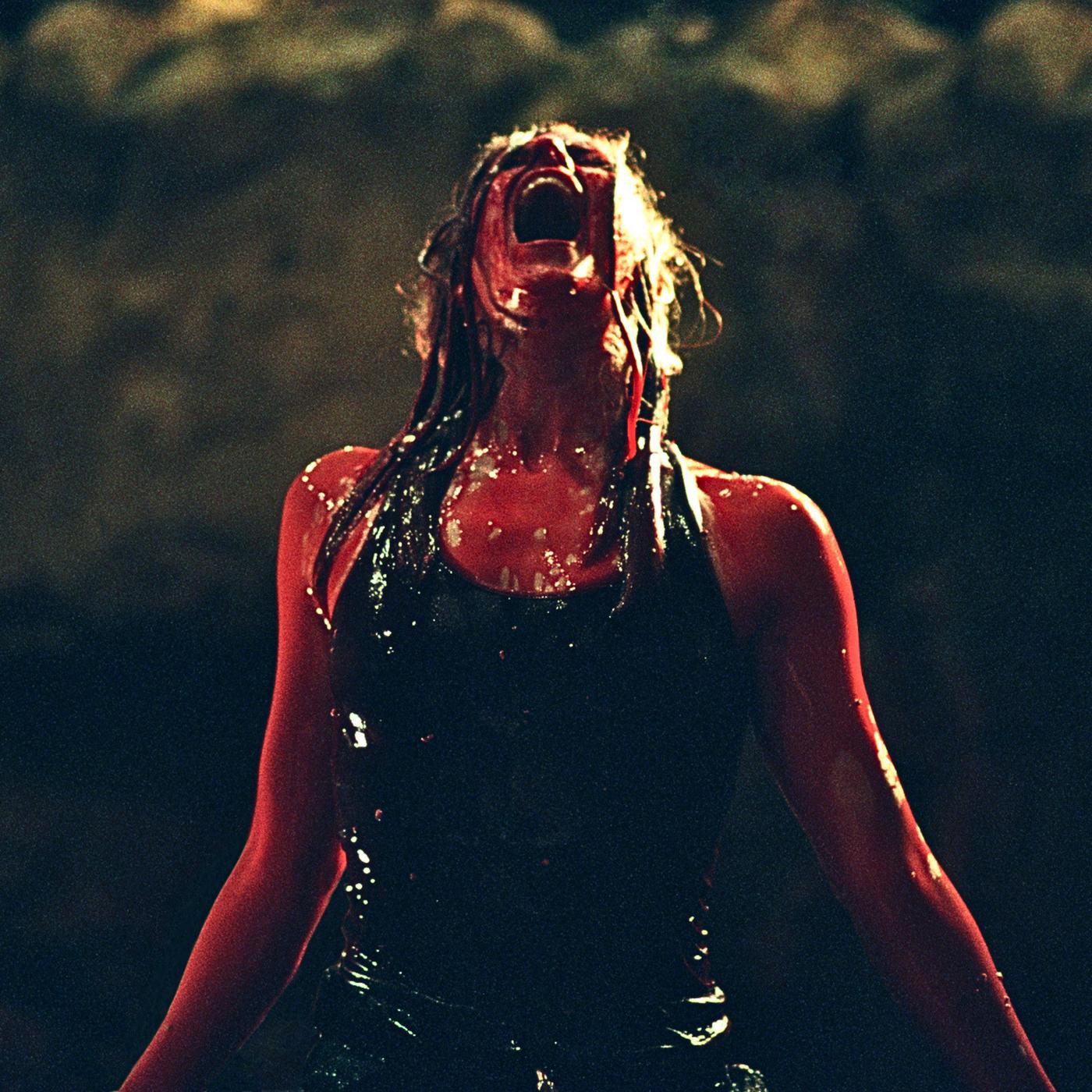
Why does The Descent (2005) still terrify us? In this deep-dive horror film analysis, Ryan Does sits down with film lover and philosophy student James Gerber for an intense discussion exploring the psychological and philosophical depths of Neil Marshall's cult classic. Together, they unpack how the film applies Søren Kierkegaard's philosophy to themes of community, individualism, and trauma.
If you love film philosophy, deep movie character studies, and understanding human nature under extreme crisis, this interview breaks down exactly how the cave’s darkness mirrors our internal psychological terror. We analyze the impact of trauma on human behavior, community dynamics, and why Juno's self-interest leadership failed the group.
Discover how Kierkegaard’s concept of self-emptying and the importance of vulnerability in community redefine the film's alternate endings.
⏱️ Chapters (Timestamps)
00:00 - Introduction to The Descent (2005)
02:33 - James Gerber's Background and Thesis on Horror Film Analysis
05:17 - Exploring Themes of Community and Individualism in Horror
08:09 - The Horror of The Descent: Atmosphere vs. Monsters
10:43 - Synopsis and Different Versions of The Descent (Alternate Endings)
13:29 - Juno's Leadership, Self-Interest, and Psychology
16:30 - Complex Relationships and Trauma Among the Characters
19:27 - Nostalgia and the Desire for Community Dynamics
22:07 - Kierkegaard's Philosophy Applied to The Descent
24:39 - Crisis, Human Nature, and the Reality of Fear
26:15 - Internal and External Terror: Psychological Breakdown
29:03 - The Complexity of Human Relationships in Crisis
31:49 - The Messiness of Community and Individual Isolation
אנגלית
ארצות הברית
תעתיק 🔗
הצהרה: הפודקאסט והגרפיקה המוטבעים בדף זה הם מ-Ryan Does, שהוא רכושו של בעליו ואינו קשור או מאושר על ידי Listen Notes, Inc.
