
אודות פרק זה
One morning in April 2026 a US fighter pilot was supposedly pulled out from behind enemy lines in Iran. At night. That is the story we were told. We do not really know what happened. The likelier reading is that the United States military made an astonishingly unsuccessful attempt to steal nuclear material from Iran, then concocted a story about a fallen aircraft, the loss of many jets, and a heroic escape for a pilot nobody has yet seen. Some of us remember the cacophony of that week, which was then succeeded by all sorts of other stuff. On that very day Donald was circling the ceremonial axis of the Republic outside Arlington National Cemetery. He had his motorcade drive slowly round a traffic circle. He was focusing on a patch of grass in the middle of a roundabout, while the supposed airman, who may or may never have existed, struggled under unspecified injuries, rescued, it was reported, by hundreds of other heroic US military.
Part 2 of this two-parter is available here (though this is stand-alone and one of my best podcasts.
He wants to put an arch on that grass. A triumphal arch, like the one in Paris, 250 feet high, concrete wrapped in granite, with a 60-foot gold Liberty on top, wings on her back and golden eagles either side. Six months before, in the Oval Office, a reporter had pointed at the model and asked him who it was for. The russian mafia Don answered: me.
Continued:
This week’s podcast is about an arch act of trolling: installing the monarch archetype at the ceremonial axis of the Republic, perhaps the greatest republic humanity has ever experienced, and probably now in its closing stages.
A duty to retain the Republic
All of us have a duty, and especially the Americans amongst us, to fight to retain the Republic in the jurisdiction of the United States. France has had five or six republics. There is no reason why there cannot be a second American republic, one that takes account of all the errors the Don and his enablers, the eparchy, have brought to the fore of so many minds.
It must be said what it is like, at this point, to read the august commentators upon whom I and many others used to rely, in the Washington Post, the New York Times and the other great institutions of the Republic. They take the ballroom at face value. They write serious pieces about the arch. They write sniffy, snobby pieces about gold in the White House. They share the memes the White House releases, to express their disapproval, and in sharing them they keep them alive. That is one of the sadder aspects of all this.
Last week a senior US Army officer in Canada pooh-poohed a very competent Canadian journalist who asked him the straight question. What would you do if the commander-in-chief ordered you to invade Canada? I do not impugn the integrity of ordinary soldiers. I do impugn the integrity of commanders who would rather keep their jobs than state clearly to Canada, a NATO ally and one of the United States’ strongest supporters, that under no circumstances would they obey an unlawful order to invade it. That lack of integrity, that lack of professionalism, is exactly what has led to the catastrophic war in Iran, in which America has expended most of its available munitions and all of its political capital in the Middle East, and has made a superpower of the mullah-led, undemocratic regime in Tehran. The US Army is engaged in the most heinous war crimes in an unlawful war. The Navy feeds its sailors starvation rations on ships without proper sanitation. Meanwhile the bombing goes on. Full kudos to the brave officers who resigned, or were fired by the russian mafia-led administration, rather than follow unlawful orders. We can say that this is just Don and his russian mafia enablers. It is on all of us that it is happening.
My speciality is to look for the folkloric archetypes in the everyday stories that some people call news and I call Disinfolklore, or Infolklore. So while all that was going on in Iran, or not going on, and we may never know, Donald, the Don, the russian mafia Don, was looking at a patch of grass.
The straight line
The spot where he stopped his motorcade is the western end of a straight line. Pierre L’Enfant, the French engineer George Washington hired to lay out the capital, drew it across a marsh in 1791. The McMillan Commission carried it west over reclaimed river flats in 1902. It runs from the Capitol down the Mall, past the Washington Monument, along the Reflecting Pool to the Lincoln Memorial, over Memorial Bridge, which I crossed many times as a postgrad at Georgetown, and up the hill to the old house at Arlington. Americans call it the ceremonial axis. It is the straightest line the Republic draws. Focus on that word. Straight. And everything the Republic does on that line is a turning. A power is handed on at one end of it. A parade wheels at the Capitol and comes back. A cortege turns off the bridge into the cemetery.
We have written evidence of this institution from India and from Ireland, the two ends of the Indo-European world, going back thousands of years. When the same institution turns up at the extreme ends of a language family, scholars like me take it to come from a common source. The institution is the inauguration of the king. The monarch rides along a straight line, on a horse that is later sacrificed, or in a chariot driven by a charioteer who represents the military function. The straight line wheels around what would become, in Buddhism, the stupa.
So back to Washington, DC, an Indo-European community. The arch is to stand in a turn at the end of a straight line. The whole of what follows is in those two shapes. Turning, T-R-. Straight, R-T-. The R-T- of right, writ and truth is in straight. In the Indo-European languages, the family English belongs to, the human who draws the straight line is the monarch. The one who turns you is the troll.
Hitchens’s evidence
Antonia Hitchens in The New Yorker has written the fullest account anyone has of what has been done to that line, and to the house at the other end of it. Her piece, “Donald Trump’s Capital Makeover” (4 September 2026), is excellent. It is patient. It is fair to everyone in it. It is just. It assembles more of the facts than anything else in print. The ballroom. The arch. The paved-over Rose Garden. Has anyone here read Oscar Wilde’s tales about what happens when you cut the rose? The gold. The East Wing, knocked down in three days, for anyone looking for a symbol of what has happened to the First Republic. The drained pool, the donors, the money, the fired commissioners. Everything I read here as evidence is in it. If you have not read it, perhaps this piece will send you to it.
What follows is my reading of that evidence. From 2015 to 2018, just as MAGA was unfurling its war magic on the American people, I was in the tiger’s den, in russia-occupied Luhansk, as a diplomat. I read russian Combat Propaganda every day. I watched what it did to the minds around me. And I was, unwillingly but unavoidably, a participant in the stories I would learn to call Disinfolklore, archetypal stories that infect our minds with a meanness we could not have imagined a few moments earlier. Washington in 2026, I am afraid, reads the same way. It is ten years on, and the lessons of russia-occupied Ukraine, even before the full-scale invasion, were learned by only a handful of Westerners who lived there and lived to tell the tale. I was one of them. Had we been more vocal at the time, we might have persuaded people that this was coming for us all. The AfD. Brexit. Donald. The National Rally. What almost happened in Romania. Every one of our countries is being subjected to what I called, in my Munich speech of February 2025, the Disinfolklore galaxies being impressed upon our minds.
What Hitchens’s piece does not have is a name for what all those facts are evidence of. Nor, frankly, does anyone else. America’s political culture has been talking about the gold trimmings, the ballroom and the arch for a year, sniffily, appalled, entertained, memeing it into existence while criticising its gaucheness, as it has always done with Donald. If you are a russian mafia Don, part of you wants to be in the in-group. You can go to an Ivy League school, the same one my grandfather went to. You can send your daughter there. You can try to make it with the old money in Manhattan. Or you can build a movement that attracts some of them. But ultimately you do not care, because you are adjacent to the russian mafia and you look down on all those other people.
So while a war goes badly in Iran, nobody in the conversation has named what the gold is doing. They think it is taste. They think Donald cares that they are sniffing at his taste. While we critique it from the perspective of aesthetics and interior design, we miss what it actually is. It is an installation of archetypal Disinfolklore in our minds. Not in any part of our mind. In our inner minds.
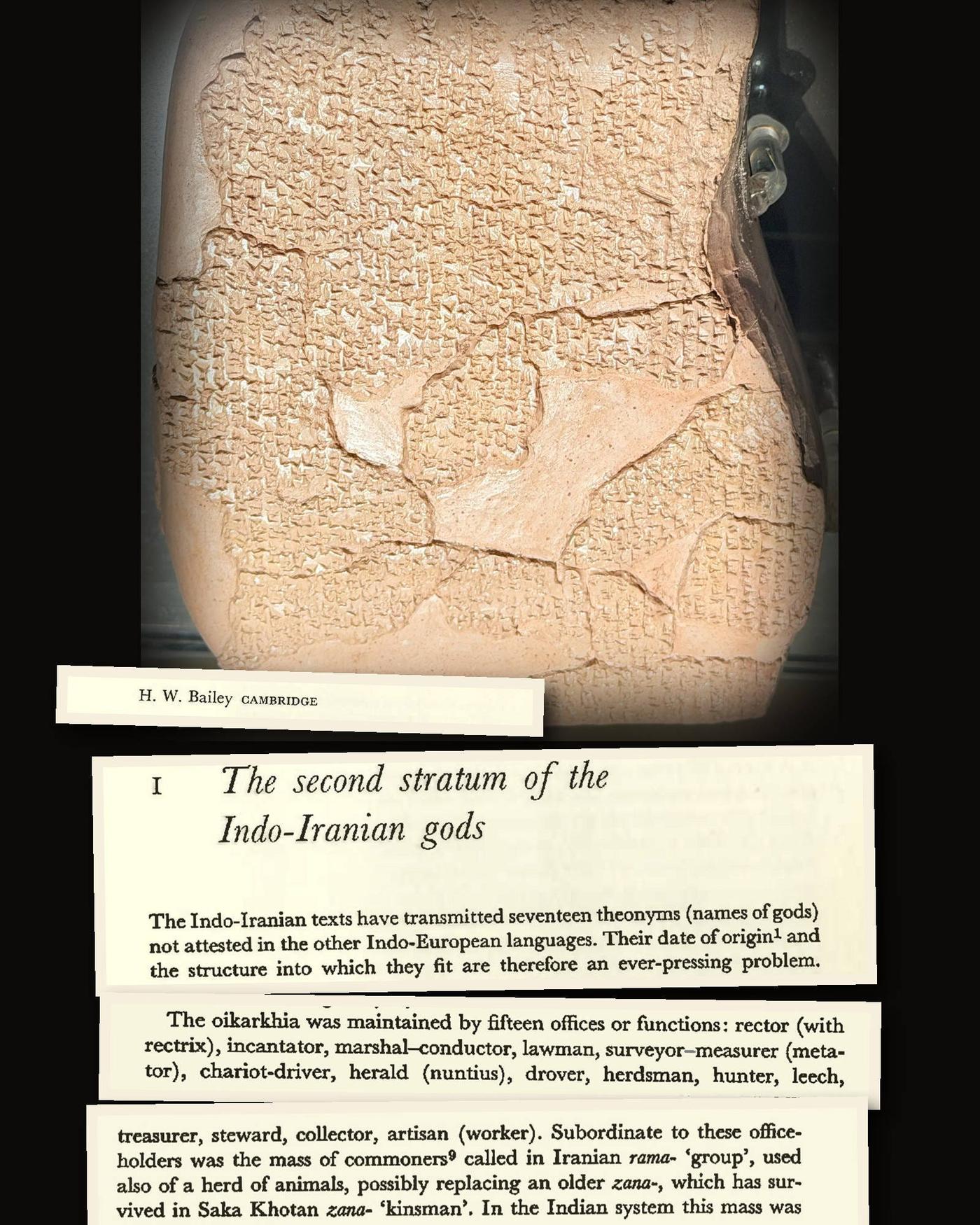
Don, to give him the name I use, because I refuse to use the second one, is installing a Monarch archetype in architectural form on the ceremonial axis of the Republic, the wheel around which the whole Republic spins. Note the arch in archetype, the arch in monarch, the arch in architectural. And it is worse than that. Donald is only acting the part of the monarch. He is taking the accoutrements of Louis XIV and adding them wherever he can, because that is the stage set. It is not who he is or what he cares about. He is the front. The front man. The front of house. The shop window. Behind the actor is an eparchy, a board that rules from behind the man who appears to rule. Eparchy carries the same R-C-H sound, and it is a very old institution in Indo-European society. We have written evidence of it, dealt with brilliantly by Harold Bailey in his work on the second stratum of the Indo-Iranian gods. And that eparchy, in case any of us have not noticed, is rinsing the Republic dry. Of its weapons. Of its soldiers. Of its Mana. Of its fiscal rectitude, its reputation, its beauty, its truth, its people. While we watch the gold and say, gosh, that’s so gauche.
Two sounds
Three words. Arch. Archetype. Monarch. And a fourth, eparchy. The same three letters sit inside each of them, R-C-H, and they carry the same meaning in each, below the level of the dictionary. Rule. The Right pattern. The one who is in charge, who has the right, who traces the straight line.
Our Indo-European languages have carried that meaning in that sound for 6,000 years. The root the linguists reconstruct is written reǵ-, and glossed to stretch out a rod, to make straight, to rule. From it English has right and rule and reign and regulate and correct and direct and region and rector, and a million other words. German has Reich, or Donald’s Unified Reich. French has droit, its word for law, which is also its word for straight, with the R-T- still in it. Latin had rex, the king, and regula, the straight-edge a builder lays along a wall, which is our ruler in both of its senses, the schoolroom’s and the monarch’s. Émile Benveniste, the great French Indo-Europeanist, whom I studied as an international lawyer at Cambridge, devoted a chapter to that root in 1969 and showed how it spread through the vocabulary of government across the Indo-European world. Beside those words sit others that the dictionaries file under different headings. Sanskrit ṛta, cosmic order, the way things rightly are. Old Persian arta, truth and right order, which the Achaemenid kings set against drauga, the Lie. Darius, their king of kings, a true emperor, names the Lie again and again on the cliff at Behistun, 500 years before the Common Era. Greek archē, beginning and rule, the arch in monarch and in archetype, where it is the Right pattern. The ear hears the R and the guttural and knows what it is being told.
That kind of hearing has a name. Benjamin Lee Whorf, the great American linguist, who sometimes taught at Yale, coined the word cryptotype in a paper printed in 1945, after his death, for a pattern of meaning that a language carries without its speakers knowing it is there. A cryptotype is a sound-meaning bundle. It is not just the sound, R-C-H. It is the bundle between that signifier and what it means, and it works beneath awareness. The Rch is one. It runs under right and reign and Reich and archetype and monarch and arch, whichever drawer the etymologist keeps each word in, whichever etymon each is traced to, and it says one thing. This is the straight pattern, the Right one, the one that rules.
The measurement
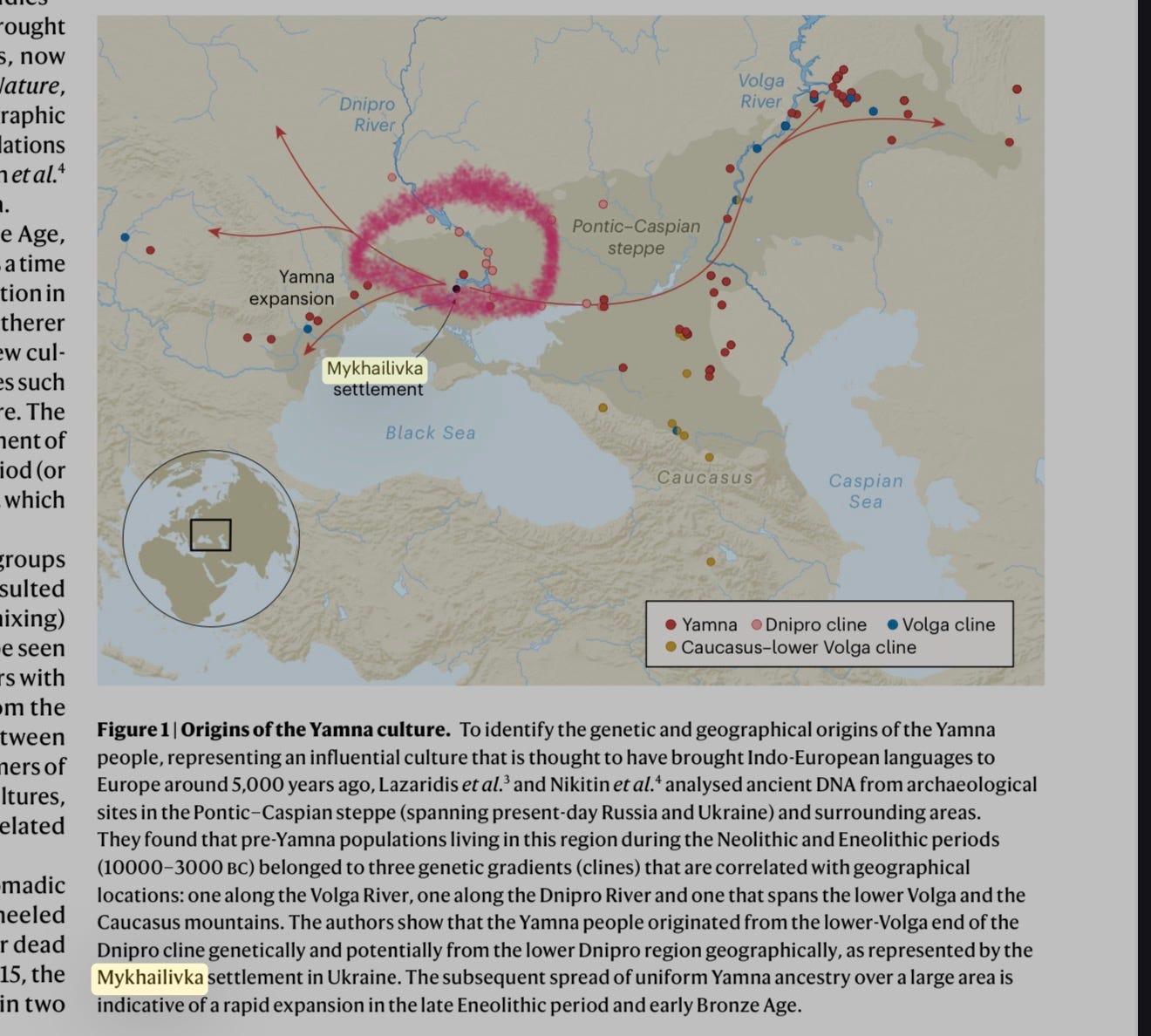
I have measured this. In my monograph The Frame and the Field, in chapter nine, I ran the words for straight, right, correct, true and rule in the living Indo-European languages through a data-analytic instrument and asked how often they carry the r-sound. The answer was an odds ratio of 2.47. A word on that field carries the r at two and a half times the odds of a word taken at random from the language. The same instrument run on the neighbouring families returned Uralic at 0.77, Mongolic at 0.58 and Dravidian at 0.49. Those families sit at or below parity, which is one. In their languages the straight and the right do not share a sound. In ours they do. And if you can listen to this, or read it, in an Indo-European language, then when I say ours, you are one of ours, whether or not your genes carry the steppe ancestry that most of the half of humanity who speak an Indo-European language carry, from the Yamna community at Mykhailivka village in eastern Ukraine, according to Nikitin et al.’s paper in Nature of February 2025.
In most other languages on planet Earth, the straight is just straight. Ours is right as well. It has a moral element. I contend we made that decision in a particular window, after the Anatolian branch, the ancestors of the Hittites, had left the steppe around 4000 BCE, and that we have been living inside it ever since. Anatolian sadly died. Every living Indo-European language carries this aspect of straightness. It means moral rightness, rectitude and rule.
The turn
The straight line has a partner, and it is the other sound in this piece. Under the straight, in every language I have looked at, sits the turn. The r of wheel and rotate and turn and troll. Picture it as an axis. At one end is writ, R-T-, the sound-meaning bundle in all its costumes. At the other end is T-R-. Remember the inscription at Behistun, where Darius the Great had carved into stone, in cuneiform, in three languages, the opposition of arta, the truth of the rightful sovereign, to drauga, the Lie, the attitude of the sovereign who usurps. That D-R comes, through recognised sound changes, to T-R-. So the axis runs from R-T- to T-R-. Almost every language I looked at, using the NorthEuraLex database, has the pair that every language has, turn and straight. One family moralised it. In Indo-European the straight became the right, the true and the lawful. The turned became the crooked, the twisted, the deceiver, the drauga, the usurper. I did not find the T-R- signifier in an Eskimo language, or in a couple of Native American languages, but it is in practically every language on earth. That is human. Then one family, ours, took the sound and its meaning and made of it a moral axis: the right, R-T-, and its reversal, T-R-.
So our languages carry two sounds for one axis. The R-T- of right, straight, truth and rule is the line itself. It is the Rch by another spelling. The root’s last consonant surfaces as g, k, ch or t in the daughter languages, rex, Reich, arch, right, and the ear files them together, whichever Indo-European language we are speaking. The T-R- of turning is what moves along the line and across it. A triumph is a procession that turns through a gate, and the word carries the T-R- of turning in its first syllable. So does the surname of the man who wants the gate. None of this is coincidence. Trying to understand what he did in the autumn of 2019 is what sent me on this turning, this journey, six years through thousands of texts in every living Indo-European tradition, back as far as texts go and, before that, to what remains in almost every sentence we speak today. Standing on the shoulders of giants, I can discern from them much of what I am telling you here. The sound says movement: travel, transit, trans. It does not say which way.
Benveniste read the rex exactly. The rex, he wrote, is not so much the sovereign as the one who traces out the line, and the line he traces is also what is right. Regere fines is to draw the boundaries straight. Regio is the point reached by a straight line. The title named the man who drew the line, and the line was the law.
The ceremonial axis is the straightest line our republic draws, or any republic draws. A man who sets a 250-foot arch on it, and says me when asked who it is for, is performing the oldest act of kingship our languages know. He is tracing the line. He does not need to know he is doing it. Neither do we. A cryptotype works whether or not anyone is listening.
An arch is a curve. The Latin arcus is a bow. The sound carries the kingship. The shape helps it. A triumphal arch is a gate. The straight line runs through it, and the conqueror, who has lost in Iran, rides the line through the curve, and the curve frames him. The axis of the Republic is to pass through one man’s gate, and the gate is to stand in a roundabout.
Monarch carries two sounds of its own. The dictionary gives mono, one, and archē, rule: one ruler. Under that sits a second bundle, measured in the same book. The M-N- of mind, moon, measure, man and name. The moon was the first measurer, of months, and this very week Donald claimed the moon. The sound of the measurer runs through Mana too. Across the living Indo-European languages, m and n keep company in the words of that field at eight times the odds of chance. A monarch, at the level of the sound, is the moon-ruler, the one who measures and rules. Archetype is a Right pattern. An arch is the Rch cast in stone. Three surfaces. One sound. To put a triumphal arch on the axis of a republic is to write the word for king across the Republic’s own line, in granite, in letters 250 feet high, in a script the conscious mind cannot read and the unconscious cannot fail to.
The Right and the right
That Rch sound has been arriving in our political talk for a couple of years. I marked my noticing of Unified Reich, in a video posted to Donald’s own account in May 2024, with a considered post at the time. Everything that is happening today was signalled in the past, and some of us picked up the signals and did our best to amplify them. We are where we are. Arch. Archetype. Monarchy. Oligarchy. Right, and the Reich. The words are entering our most serious political discourse because the sound inside them does a job, and the job is the oldest fight our languages record.
The struggle to define what is Right is the struggle. In every Indo-European community since the Yamna first spoke the ancestor of our languages on the Dnipro, whoever controls who gets to carry the word Right, and its meaning, has had the advantage over everyone else competing for that community’s people, resources and territory. Darius knew it. In his inscription, drauga, the Lie, is the attitude of the usurper, the man who pretends to be the monarch in place of the rightful one. Remember that D often turns to T. The sound shift between D-R and T-R is a documented one. And this is from 500 BCE, carved in stone. It is not something that began on 6 January.
In America, we the people are the monarch. L’état c’est nous. The definition of democracy is the identity of sovereign and subject. It is not the identity of a monarch with sovereignty. It is the identity of the people with sovereignty. That is what Donald is trying to usurp, and the eparchy that supports and controls him is trying to usurp it with him.
The Irish knew it too. The Audacht Morainn, the Testament of Morann, written down around 700 CE but from much further back, warns that when a sovereign tells untruths, plague and pestilence and invasion come to ruin his land and turn it into a waste land. That motif, the waste land that follows a lying ruler, entered European literature by way of Ireland and Wales and Chrétien de Troyes’ first version of the Grail tales, and from there came back onto the island of Britain, into Monty Python, into our minds, and into T.S. Eliot.
In a healthy community the political Right, the legal right and the moral right are one thing, or aspire in good faith to be. A Margaret Thatcher quotation was going round this week, and it reminds one that the political Right used to have our backs. It used to stand for what is lawful, what is morally right, the protection of territorial integrity. In our time the Right has a text. It is the post-1945 legal order: the United Nations Charter, the laws of war, the human rights conventions, the Genocide Convention, and at its centre the public’s human right to take part in the decisions, which the eparchy wishes to take away from us. That right is inalienable and universal. It is not yet realised everywhere on earth. But nobody has the right to take it away, and that was the result of the Second World War. French keeps the memory in a single word. Droit is law, and droit is right.
In March 2025, when Giorgia Meloni in Italy and Friedrich Merz in Germany, both of the political Right, held to Ukraine’s right to its sovereignty, security, territorial integrity, prosperity and fertility against MAGA, I wrote that they were acting as a dam, and might yet be the saviours of what is right in the global Right. Friedrich Merz carries the Rch sound twice, in Friedrich and in Merz, and the sound is in sovereignty, in security, in territorial integrity, in prosperity, in fertility. Volodymyr Zelenskyy held a sceptre in his right hand at his inauguration, and shook it in the Verkhovna Rada, the parliament of Ukraine, as the rightful sovereign. The King of England held the rod at his coronation. Look at the photographs. A straight rod, stretched out, in his right hand.
The battle of our age is whether the lawful and moral Right can be recoupled with the political Right, or whether a russia-sponsored right, MAGA in America, Reform in Britain, the AfD in Germany and their kin, keeps the word and empties it. They claim to be Right. Inside is the energy of unrightfulness, the energy of the usurper, the energy of someone who takes the straight line of the Republic and puts on it a triumphal arch dedicated to me. At the moment we are losing that battle. Many of us are helping to fight it. This is part of what I can do: try to show the seriousness of what is going on under all these stories about ballrooms and arches and planning permissions and Congress.
Acquiring a monarch
I first wrote that the United States was acquiring a monarch on 6 July 2024. Five days earlier its Supreme Court had granted the President immunity for his official acts and forbidden the courts to examine his motives. In a common-law system the motive is the mens rea, the guilty mind, the energy in the act. I call that energy Mana, with its M-N-. A ruler whose Mana may not be examined is a ruler whose Mana is, by definition, Right. That is a monarch. This is essentially establishing a monarchy, I wrote that week, in which the Mana of the Monarch is necessarily Rch, or Right. L’état c’est moi, the state is me, the line our culture gives Louis XIV. I called it oligarchy’s monarchist turn, publicly, time-stamped on somebody else’s clock, and I described the man at the front of it as a cartoonish entertainer promoted by twenty oligarchs through every media outlet as a cartoonish aspirant monarch. That was two years ago. The East Wing came down fifteen months later. We cannot say we were not warned. The signs were there, and the signs are there today. In two years, where will we be, unless we read them properly?
Trolls
Trolling, in my work, is any emotion-moving activity of body, speech or mind. It is turning. A troll turns you. T-R-, troll. T-R-, turn. These are not plays on words. They are immanences in the Indo-European languages.
The word first caught me in December 2018, reading the reports on the social media campaign the russians ran to get Donald elected in 2016. My project began in earnest in the spring of 2020, when I read my way through some 64,000 uses of the words troll and trolling in the Dow Jones Factiva database of 33,000 media sources going back to 1970, to see what our culture had been doing with the word before and after the internet took it. The received story is a fishing metaphor, a baited line trailed behind a boat, crossed with the creature under the bridge. Trailed carries the T-R- too. What came back from the press was not fishing. It was turning. The troll turns an audience. The troll spins a room. The troll works a crowd around. Then I found George Cornewall Lewis, a Victorian scholar and politician, writing in The Classical Museum in January 1844 on the verb to tirl, saying it flatly in a footnote and going no further: to troll means to turn or roll. By November 2020 the chain was written out in one line in a notebook, time-stamped by Microsoft OneNote. Pierce, trowel, drill, twirl, spiral, turn around, hole, move around, wander, roll, control, baiting, trolling, thrill, enthralled, singing, trill, passing the bowl around, troll. Yeats’s perne in a gyre, the spool turning in that poem we learned at school, sits beside the chain in a letter of the same autumn. The songbird’s trill is in the chain, and it is the mouth doing the turning. So is the thrill, which is an audience’s feelings being moved around.
The first time the words Trump and trolling met in the Factiva archive was on 31 March 1990, in the Boston Globe, in the angler’s sense. TRUMP IS TROLLING, the headline ran. HOPES TO LURE JAPANESE BUYER FOR LUXURY YACHT PRINCESS. He was trailing a line, while complaining about the Japanese buying up American bonds.
The Code of Positive Trolls
A turn has a direction, and direction carries the Rch too. The direction is everything. Move a mind toward the Right pattern and you are a Positive Troll, and what you make is Infolklore, folklore that moves a mind toward what is truly right, what is in concert with the post-war legal order. Move it away, toward fabrication, and you are the other kind, and what you make is Disinfolklore. You are the usurper Darius wrote about 500 years before the Common Era. Trolling itself is neither. It is neutral. It is movement, and nothing more. So we need a means of deciding whether a given movement is positive or negative. Does it promote the post-war legal order, or demote it and promote the social and legal conditions of Germany in the 1930s? Trolling is the movement across the axis between the turn and the line.
To tell the two apart I use a six-part test, the Code of Positive Trolls, which I trademarked at the European Union Intellectual Property Office in February 2020. Its six criteria are old. They are the six perfections of the Buddhist path, carried onto information warfare. Generosity. Have you ever heard Donald being generous? Right, which is ethical discipline, śīla. Patience. How quickly are they knocking down these buildings? How quickly is he trying to erect this arch? Energy, which is Mana, the affective charge. Read the Mana. He claims to be a monarch. Is he going to be one? Not in a republic. And the eparchy is behind him anyway, the Epstein class, the Brighton Beach mafia class. Focus. Insight. Right is the second perfection, and it carries our sound. Energy is the fourth, vīrya, which Dale S. Wright, the American scholar of Buddhism, in his Oxford study of the six perfections, traces back to the warrior’s power and glosses as the energy of accomplishment, the effort, courage and power to see a spiritual endeavour through. In my work that energy is Mana. The Code asks what the charge in a meme is, visual or linguistic, and which way it moves a mind. Look for the Mana in the meme is one of my mantras. Even the act of looking, before deciding anything, is a practice of patience, and it keeps us from mistakes. The mistake of sharing one of Donald’s memes, even to say we disagree with it, when the act of sharing is what keeps it alive, and is precisely why he unleashed it.
The troll’s history
The creature itself has a history worth keeping. Thomas Keightley, the Irish folklorist who wrote The Fairy Mythology in 1828, records that the trolls of Scandinavia once had kings over them, and that they lived in fantastically rich dwellings inside their hills. The rich are the right. If you have wealth, you are right. Rich, right. Does that sound like Bessent? Does he sound like a man who thinks he is right, even though he is in the Epstein files, when he bangs on as if he spoke for all Americans? He may be very rich. He is not at all right. We need to recouple richness with rightness. Every child who has heard Grieg knows the hall of the Mountain King. Gradually, Keightley says, the trolls’ status sank to that of the peasants who believed in them. Trolls are a mirror. They are as grand as the minds that hold them, and no grander. A troll-king’s rich hall under a hill is one more thing every child already knows, and it is exactly what is going up on the ceremonial axis of our republic.
Archetyping
By Archetyping I mean an aspect of cognition. We model the world, not with architectural models but with mental ones. We form ideals of things and navigate by them. The more open we are, the more we re-archetype the archetypes that guide us, and out of that continuous process comes movement, turning, whose direction the Code of Positive Trolls can judge. Aggregates of experience get archetyped as this or that, and new data is bounced off the archetype, which in most cases is fluid and updates. Sometimes it does not. Sometimes we form what I call a data-resistant archetype, a mental model that refuses the evidence. That Donald is our monarch, say. That MAGA is good. Values, reputations, stereotypes, mental architectures, characters: all of these are forms of Archetyping. Defining something is a form of it too.
I began writing about Archetyping under that name in December 2024. The thing itself I first saw in Luhansk, in 2016. One day a story landed on my desk and I noticed that it had been built. It was inorganic. It was a meme. It was as if a russian propagandist had a manual of the primordial archetypes and had constructed the tale to make sure every element was in it. The Mother and the Maiden. The Bridge Troll. The Wise Counsellor. The Trickster. That was the day Disinfolklore was born, though the word came later, on 15 February 2023. Disinfolklore is disinformation married to folklore. It is folklore-like archetypes in ordinary news. Gold in the White House is a folklore archetype, but the archetypes are so familiar to us from the news and from films about Washington that we miss their archetypal value, their folklore-like immanence, the White House as something out of a folktale. The lies are the surface. Under them the operator, the manipulator, the turner, the troll, is reaching for narrative structures 6,000 years old, because those structures do cognitive work that a plain lie cannot.
MAIM
The work they do is this. Every informational unit that enters your mind can alter your Moods, your Attitudes, your Intentions and your Motivations. I abbreviate the four as MAIM. It is how a mind is turned. It is the model I use for how trolls turn our minds and manipulate our Mana, our inner energy. Take the disappointment you feel when you open the Washington Post in the morning and find one more story about Donald and a ballroom, and people arguing seriously over the plans and whether Congress should intervene. Meanwhile an archetype is being installed in your mind. Your mood is altered. Your attitude is altered. Your intentions: maybe you had planned to go to the Kennedy Center that day, and now you decide not to. Your motivations: you begin to give up. We must not give up. This is our republic, and the second republic will be our republic too.
The game is accumulative. It is worked over months and years, through daily artefacts that tell us we are small and humiliate us, and then the operators, the eparchy, Donald, pose as our saviours. First they distress the damsel. Then they claim the right to assuage the distress. I saw it again and again, at the micro and the macro level, in russia-occupied Ukraine. They occupy a place. They get rid of the jobs. They export the metal and the factories. They imprison people, kill people, torture people. And then there is nothing left for the people to do but appeal to their ruler, their imprisoner. The merciless sovereign poses as the merciful sovereign, and the source of all our pain becomes the only person we can appeal to. Does that sound familiar, to anyone who followed what the DOGE firings did? Really arch stuff, DOGE.
The inner realm
Folklore studies has a geography for this. The Inner Realm is the known, the safe, the domestic. The Outer Realm is where the Mexicans live, in Donald’s universe, or the people who eat their dogs, or the immigrants, or the Democrats, or the Europeans, or the Canadians. The Outer Realm is the unknown, the dangerous, the foreign. The bridge is the threshold between them, and the troll sits under the bridge. Every mind has the same geography, and its sense of what is Right is kept in the Inner Realm. A well-built archetype passes the gates without being inspected. It does not argue. It resembles. Sir James Frazer, whose Golden Bough, first published in 1890, surveyed magic and religion across every culture he could reach, came to call the principle the Law of Similarity. Things that look alike affect each other. A doll that looks like the enemy harms the enemy. A politician who looks like a monarch is a monarch. A politician who looks strong is strong, in the minds of those who behold the image. That is the law of sympathetic magic. A deepfake does not need to be believed to work. It needs only to look like the real thing. The similarity activates the archetype. The Mana does the rest.
Mana is my name for the energy immanent in an archetype, the charge it carries, its power to move a mind from one state to another. It is the Energy of the Code, and the Code’s question about it is always the same: which way? Anyone can Archetype. The power belongs to all of us. But if you own the means of cultural production, the platforms, the outlets, the channels, the memes and the algorithms that distribute them, then you can Archetype at scale. Only an oligarch can do that. I do it at a very small scale.
Part two: the russian state’s own dramaturg names the operation, a child reads the ballroom, what the gold is for, and what is to be done.
Get full access to Decoding Trolls at www.decodingtrolls.net/subscribe