


Sergey Leshchenko: We had this one individual, and he was a director of cybersecurity, so we had access to the keys to the kingdom. He came up onto our radar screen because of foreign travel. He wanted to take ⁓ a trip to Belarus, which is odd, you know. And most Americans don't take a weekend trip to Belarus ⁓ just for fun. You're coming from the other side. I had James Lawler. Who actually was recruiting spies? He also gave me these ⁓ main motivators for people to betray their countries. I'm curious, do you have some antidote? Jim and I were two sides of the same coin. He was on the human intelligence side, I'm on the counterintelligence side. He's trying to recruit spies, and we're trying to, you know, pre ⁓ prevent that. And so what we tried to do from an education standpoint. Is teach them what an approach will look like. It's very subtle. there's a lot of elicitation that happens. Who are more prone to giving up ⁓ intellectual property secrets? In American culture, ⁓ one of the the best elicitation techniques that anybody can use is Welcome to the Be Yourself Podcast, the podcast on expressing our true selves. Today my guest is Ryan Rambo, who's a 26-year Army Counterintelligence veteran who runs a corporate space with IXM Solutions. He's also a host of CI Press podcast that talks all things counterintelligence. Ryan, welcome to the show. Sergey, thank you so much for having me. My honor. I'm very, very interested in knowing more. So can you tell me? What have you done for the most part? What was the ⁓ mission of your work as a counterintelligence officer? Yeah, so there's a lot to counterintelligence. Actually, there's five primary functions of counterintelligence. I'm I'm not gonna name them this morning because I haven't had all of my coffee yet. ⁓ but the one that I was most ⁓ involved in ⁓ really were operations and investigations on the defensive counterintelligence side. So what does counterintelligence mean? ⁓ because people have this, you know, mystical thought process of counterintelligence and it's scary to a lot of people, but Honestly, ⁓ the best ⁓ definition I've ever seen was by an author named Robert Baer. And he's and he defined counterintelligence as the discipline of protecting against adversaries outside your walls while catching the enemies inside. And so really, if you're taking a look at intelligence disciplines, there's the human intelligence who are trying to use people to steal information, and from a counterintelligence side. We're trying to protect that information so it doesn't get stolen. So it's the cat and mouse game of the intelligence community. But what a fascinating career. I love talking about it. ⁓ I've been involved in counterintelligence now for over 25 years. And it's just as exciting today as the first day that I became a counterintelligence professional. What is the most exciting thing about counterintelligence? Well, I I love the history of it. I mean, espionage has is the second oldest profession known to man. I mean, it it's been happening for seven thousand years. And ⁓ so there's a lot of similarities in the way that espionage has historically been done, but each new addition of technology, ⁓ like AI and the internet back in, you know, twenty, thirty years ago, so every new iteration of technology just changes it just a little bit. But fundamentally, it's about people. And so counterintelligence to me ⁓ is fascinating because of the people that are involved with it. And I guess as I've gotten older Sergei, yeah, I start to appreciate people and the uniqueness of people more every day. And ⁓ it's just fascinating to me the psychology of it, ⁓ the the intrigue of it and the history of it. I've just become I've fallen in love with. Counterintelligence as a discipline. Okay, so 26 years. Can you tell us a story that maybe stand out the most and that you tell to your buddies that ⁓ impress people the most? Well, I won't talk about my government time. No, because some of that's still hidden behind a secrecy veil, and I don't want to get in trouble. Why? ⁓ but in the In the corporate space, the closest thing that I can relate counterintelligence to is there's two different disciplines actually. Protective intelligence is what some people call it. And then the other one is insider threat programs. And so I was working for a major corporation. I was about a $43 billion corporation with 28,000 employees and 165 locations worldwide. And so I would start in the morning, and since we were a global company. My mornings would start with ⁓ dealing with Middle East ⁓ issues, you know, the Persian Gulf, Iran, Saudi Arabia, Kuwait, UAE. Then in the afternoon or late morning, I would deal with European issues. ⁓ then during the ⁓ like afternoon time, I would deal with the United States, and then in the evening I would be working India and Pacific region issues. So a great, great job. I had to be well rounded and well versed on all of the geopolitical activities that were taking place at the time. So it's fascinating. I mean, it was never a dull moment. But we had this one individual, and he was a director of cybersecurity. So he had access to the keys to the kingdom. And one of the things that ⁓ we discovered through the course of our investigation, ⁓ and he and he popped he came up onto our radar screen because of foreign travel. He wanted to take ⁓ a trip to Belarus, which is odd, you know. And most Americans don't take a weekend trip to Belarus ⁓ just for fun. And ⁓ through the course of having this conversation with him as he's telling me about this trip that he's about to take, ⁓ he's he says, Yes, I I had a pen pal ⁓ who worked at the Russian embassy during the nineteen eighties, which again pe ⁓ typical Americans don't have Russian pin pals. and so, you know, as he's telling me this story, and he's and you know, finally, twenty, twenty-five years after he met this pin pal, he's finally gonna go meet her in Minsk, Belarus. Well, that sounds a lot like espionage to me, or at least the beginnings of espionage. ⁓ and and so of course I alerted the community and said, Hey, I think this is a problem. I think this guy is either one, a recruited asset and he doesn't know it. Or he's about to become a recruited asset and may be kidnapped whenever he travels overseas. And so just an example of understanding how espionage unfolds over time, understanding the psychology of this person at that moment. I mean, he was just going to meet a girlfriend in his mind. He he didn't see any danger in this at all. but then putting all the pieces together and then involving the right government agencies to make sure that one, we prove prevent him from getting kidnapped or even worse. And then also protecting sensitive information, the American citizen, ⁓ from those who may wish to do him harm. So that that's one of the most interesting cases I've run, yeah in the corporate space. Now there's been some great ones in the government space, but ⁓ like I said, each case is different. Each case unfolds differently and it's just fun to to be involved in In this business. So I'm curious, you were a part of the organization, or you were like a contracted specialist? You were a look, so you were a full-time ⁓ employee who was responsible for the counterintel intelligence support, right? Yeah, and it was very unique at the time. ⁓ it was around the two seven 2017 time frame. So counterintelligence in corporate America. hadn't really evolved yet. I mean, everybody was still focused on cybersecurity. There was a lot of focus on counterterrorism. I mean, because we were just coming out of the global war on terrorism at 9-11, and you know, we're starting to transition from counterterrorism to counter espionage. And so it I was in a unique position where I had the opportunity to build this counterintelligence program inside, you know, a 43 billion dollar company, ⁓ which was unique at the time. And Boy, I'll tell you our HR ⁓ professionals were very nervous about it. Our legal team was very nervous about it, cybersecurity, physical security, our culture teams, believe it or not, were very, very nervous about having a organic in-house counterintelligence team. Until we we went around and had these conversations to say, look, guys, I'm here to protect you for from the bad things happening. And that's my only role. But you were using things like polygraft, which wasn't pleasant, I assume, right? Not in the corporate space. ⁓ we we really didn't do that in the corporate space. ⁓ I think that would probably be a little bit too far to to take a program. Now of course it's available to to companies these days. ⁓ however, in in my situation, we didn't do that. So we leveraged more. one of the primary things that we did is training and awareness, you know. Making sure that every un everybody understood the threat that we were facing and also what it looks like when somebody makes the approach to try to collect and gather information from you. And then there was a a whole liaison campaign that I did with each one of the different elements and leaders with inside the corporate environment to make sure that one, they they could trust me. Yeah, I wasn't gonna go Tell stories behind people's back. I wasn't trying to s be sneaky or or anything like that. So they had to get a level of comfort with me. ⁓ and so it spent I it took me about six months to really build those real trusting relationships. And then the the next key was was to set up oversight and control of the program. And to accomplish that, I I gave oversight and control to HR and legal and said, Hey, I'm not gonna do anything involving an employee. and unless you approve me doing it. And and they immediately got buy-in and they started to see the way that we went about our business and they absolutely loved it. And what they found out was that it actually strengthened culture because now we have a security team that's down at the individual level, hey, making sure this employee is safe. It's hard to do for 28,000 employees. You know, but I mean that that's kind of the ⁓ the approach that you have to take It and and you have to be a real person, you have to be authentic, you have to care for people, while at the same time protecting a high-level organization. You know what's interesting because you're coming from the other side. I had James Lawler, who actually was recruiting spies, so that he was interested in ⁓ people associated with the government, ⁓ with from the other countries that the United States were interested in. So ⁓ and he Name he listed like 10 qualities of highly efficient case officers. He also gave me these ⁓ motivators for people to betray their countries. I'm curious, do you have some antidote? How do you prepare a person? How do you train ⁓ an HR team to you know to train the people or whoever to not give away sensitive stuff. Do you have any mechanisms that can yeah, can can can defend the the organization and its culture? Yeah, 100%. So first Jim Lawler, who I love and I consider a really good friend. Yeah. And a great author. And so Jim and I were two sides of the same coin. He was on the human intelligence side, I'm on the counterintelligence side. So there's this cat and mouse game. ⁓ that these two intelligence disciplines pay. And and I love it. I he actually came to my hometown and we we gave a joint kind of presentation together. I just love that guy. He's so brilliant and such a talented person and a wonderful friend. So ⁓ but you know from a different perspective, I mean he's trying to recruit spies and we're trying to, you know, pre ⁓ prevent them. And so what we tried to do from an education standpoint, is teach them what an approach will look like. You know, it it and it's not ⁓ it's very subtle. ⁓ there's a lot of elicitation that happens. ⁓ it's almost like a business transaction. It looks like a salesperson coming up to you and they're asking you different questions to identify those personality traits, motivations, vulnerabilities. And so through the course of our education process, we say, okay, look, these are this is what it looks like. when somebody like Jim Lawler approaches you and starts asking you questions. And in Jim, in Jim's world, what he's always trying to do is get to that second date and third date and fourth date. So I so whenever he makes the approach, I mean, after he talks to you for a few minutes, if he ever gets to the point it's like, would you like to go have dinner or coffee or something like that, a person should automatically ⁓ associate that with I'm on the road to becoming a spy. And so ⁓ so casual conversations usually are just casual conversations. But if it if it feels like you're being dated or hit on, you probably are. And so ⁓ we teach employees to be noncommittal. You know, it's not it's like, yeah, coffee sounds great, you know, but can we maybe do that in a couple of weeks, three weeks next month or something like that. ⁓ so that they have time to come back and report it to counterintelligence professionals so that we can kind of craft the scenario to put people like Jim in a bind. Yeah it that's the whole point of that that process, the counterintelligence process is to identify that human case officer and then identify, exploit and neutralize, which funny enough, our company's name is IXN Solution. I XN identify exploit neutralize. That's what it all stands for. ⁓ But you want to identify someone who's already been converted in a way, right? So you're looking for rats, sorry for but like this strong word, but in a in a way. Well, I it's not just that. We want to identify the person that's trying to recruit our people. So you're trying to identify and find people like Jim, exactly. Wow. Yes, exactly right. We wanna identify that person as a foreign human intelligence officer. He's trying to to cause harm either to our people, our technology, our companies, our country. So we want to identify him and then either exploit him. Know it's like, ⁓ okay, so you you're looking for inform. Well, let's let's exploit that game within a game. Yeah. Right. Or or neutralize, you know, is shut it down. Like, nope, this is you're not going to get this information. So, I mean, from a counterintelligence ⁓ perspective, once we identify somebody trying to collect information, now we have all kinds of options available to us. ⁓ but it really starts with identifying, and that's what we train. ⁓ our employees to to be very mindful of is like, okay, there are people out there that are trying to collect information on you. And as counterintelligence professionals, we see the world through your eyes and we're looking to identify those people that are are, you know, nefarious or trying to collect information. Have you ever had instances where you successfully identify a case officer and ⁓ your employee was working with you to exploit them? Yeah, so it happens absolutely. I mean that's the whole point of the game. And ⁓ I was in an overseas location, not gonna name it, ⁓ and we had, you know, a foreign government official who was assigned to ⁓ one of their consulates, ⁓ who it had approached one of our employees and that employee, ⁓ believe it or not, was properly chain trained, knew who to knew how to react to it, knew who to report it to. And within 17 days of that approach by a foreign national to one of our employees, ⁓ we were able to neutralize. So we identified that that person was not who they said they were, ⁓ that they posed a threat. ⁓ to the United States government and to one of our employees. And working with, you know, the the host nation, a country that we were in, their their security and intelligence services, we were able to get that person kicked out of the country. ⁓ which is a win for us. I mean, so there was no there was no opportunity to exploit the relationship, but neutralizing is just as effective. ⁓ because when you ⁓ it When you're a foreign country and one of your human case officers ⁓ gets PNG'd as what we call it, persona non grata and kicked out of the country, it sends ri ripple effects through that organization. Now they have to look at every operation that they run. You know, are they compromised or you know, are is anybody has anybody penetrated our our office building? I mean, so now they have to really do their due diligence and assessment. To see if they're operating in a secure manner. And so from a counterintelligence perspective, it was a huge win. And that those are the types of things that we're constantly trying to do. And I don't know, you probably read in the newspaper every day there's a spy or there's, you know, somebody being caught across the globe. It happens in Europe all the time. ⁓ it happens in the United States all the time. ⁓ and Yeah, it's like I said, it's the second oldest profession in the world. I mean people commit espionage daily. Yeah. This is fascinating. Because the temptation to earn ⁓ money or as Jim told me, a lot of people want to pay vengeance to to s you know, like ⁓ a lot of people are not feeling that they ⁓ are treated fairly or something and they just want to snap back. So and it's just interesting how there are people like you who ⁓ on a human level and on a legal level let them understand that it's not the best that's the best idea. Yeah. Well Jim said it best ⁓ I I was having a conversation with him ⁓ and he said it best he said happy employees Don't steal your shit and commit espionage. Well. And he's very right. And so when if we go into an organization and we talk about culture a lot, because happy employees don't leave the company, they don't steal your stuff, ⁓ they don't sell it for you know money and and all of that. They don't take it to a competitor. And so whenever we go in from a counterintelligence perspective, one of the things I like to do is give me your organizational ⁓ surveys. Show me where the bad leaders are. Toxic leaders are because if I can identify a toxic leader, I can almost guarantee you where your next insider threat's going to come from. ⁓ I would also take a look at teams and ⁓ figure out who has the highest turnover rate in a team. ⁓ I would I I was having a conversation with a client the other day, and he said, Well, what are the statistics for insider threats? And we we gave them the standard Gallup poll, you know, 30% here, 30% there, 20%. And I just looked at him, I said, What's your turn what's your turnover rate? He said, Well, you know, in our management and executive team, it's about 10%. He said, But from our individual contributors to our middle lip management, it's about 25% annually. I said, Well, there's your insider threat statistics that are very specific to your company. I those are the people that are gonna leave your organization or unhappy, and they're going to steal your information, either give it to a competitor, start their own company. Or sell it on the open market to the highest bidder. And so it it's a way of from an HR standpoint to really drill down and take a look at your organization and assess do I have an insider throw program or problem or not? Let's talk more about your company IXN solutions. Who are your customers right now? And ⁓ what are the types of requests that you help ⁓ right now? What is the the pre prevailing one right now? So we have we have two different sides of the company. ⁓ we have our government side where we provide ⁓ training and awareness and services to the United States government, which is fun. I mean, it's our opportunity as a bunch of old, you know, gray beard guys to go and give back and teach from our experiences to the next generation and help build them up. which is something that we're totally committed to do and and we love doing. And then on the commercial side, we actually have four different pillars that we we offer as our offerings. The first one is training and awareness. Again, from a counterintelligence standpoint, that's our bread and butter. We want to get in front and train as many people as we can about threats and risk, how to react or recognize, react, and report. R three is what we call it. ⁓ and so that's that's number one, training and awareness. The second one. Is our fractional insider threat program or fractional counterintelligence offering? And so what I found in the corporate space, once you build the program, and it takes about a year to 18 months to fully build out a relevant functioning coun ⁓ insider threat program or counterintelligence program, after that twelve months to 18 months, there's you're in maintenance mode and you probably don't need a full time employee. And so what we do from a fractional entire threat program is go and build it. And then you call us when you need us. ⁓ and we teach people how to monitor it. So it saves the company money and it saves them from having a full-time employee that over time is not going to have that much to do. The third thing that we do ⁓ is we have a technology that we call 351X. ⁓ what what I experienced whenever I was in the commercial space is that we didn't we were managing these security programs through spreadsheets. shared drives, emails, ⁓ and it was horrible. And counterintelligence ⁓ incidents and insider threat incidents aren't, you know, immediate red flag moments. It's not a like a cybersecurity, it builds over time and you start to see indicators and patterns and that sort of stuff over time. And then you piece that together to identify an insider threat. So ⁓ 351x is that case management tool that allows us to to document and store information to tell that story over time. And then the fourth thing that we do is our thought leadership pillar. And that's where we have the CI Press podcast where we, you know, yeah. And so that's part of that thing. It's where we're trying to d demystify counterintelligence, to share the stories of the legends that were in counterintelligence. And then also do special topic discussions where, you know, if new relevant news events come out or case studies or We dive deep into that to educate the next generation on a this is what you should be looking at from a counterintelligence perspective. Well, I'm curious to know because you you you mentioned that you had a unique chance to build the entire branch or division from ground up in that big company. And what makes a great counterintelligence ⁓ leader? So what do you pass on? to the next generation of people who want to get into this space. Well, I would tell you, ⁓ you know, with technologies, you if you're gonna advance a ⁓ a technology, a car, an airplane, whatever you just layer on more technology. Yeah, you you add a better radar, you add ⁓ full self driving mode and and stuff like that. Before ⁓ a counterintelligence professional, a human, ⁓ the best way to to get better is through training, through reading. That sort of thing. So ⁓ I if if I was to pass on some knowledge to a ⁓ a ⁓ next generation counterintelligence professional, I would say read. And it doesn't have to be nonfiction books, which sometimes can be a little bit dry. It can be fish fiction books. We mentioned Jim Lawler. Jim's written three books and they're all fiction, but they tell a great story. And the reason why he writes fiction, because if he told the true story, You'd probably get put in jail for violating security law and secrecy law. So read your read your fiction, read your nonfiction, and really go and seek that training and awareness to get better. Now, within an organization, when you're building a program, it's the same thing. I mean, it's going out and having the ability to communicate with people, ⁓ to build trusting and lasting relationships. giving up control where needed so that people can, you know, actually look over your shoulder and see what it is that you're trying to do. And ⁓ have a clear understanding of what it is that you're trying to accomplish. So if you have all of those things, one, you could be a well-rounded counterintelligence professional or insider threat professional. ⁓ and then you'll build a a program that people trust. But they can't wait to have a conversation with you. They think you're the most interesting guy in the room and normally you're not, but it you you fake it to the point that you are. ⁓ and then and you make it fun for everybody. And I think that's the the key to success from a counterintelligence standpoint. I think I think one of the things that's really hurt the counterintelligence community is that we become too secretive, that we we hide behind our our vault doors in a building with no windows and we're And so people are like they have no idea what you're doing. And so they don't trust you. ⁓ and we have to change that mindset, that culture of counterintelligence, to where, yes, come and talk to us. You know, we're here to help you. Help us, help you, protect you. You know what I mean? So hackers become more and more let's put it creative. And with and with the AI, I'm guessing. Things can really become difficult. but I think this is a different top topic. It's it's a topic of protecting data. Is this an an adjacent kind of thing? How how are you guys you know balancing this out? Yeah. Wonderful, great question. And there was a recent statistic that came out that said all ⁓ of 60% of all. cybersecurity intrusions and data breaches actually involved a human somewhere. ⁓ so there was somebody on the inside who comp compromised their credentials, are allowed access. So what we're finding today in the corporate world especially, and probably in the government as well, is that cybersecurity tooling has become so advanced ⁓ because they're leveraging AI too. And they're really ⁓ the the firewalls, the the security is in place, that most adversaries can't do like a blunt force penetration of a network. And so I have to give it to the cybersecurity community. They have done all most of the hard work to build that perimeter defensive approach and a layered approach to make sure that they stop most breaches. What we do find though is that ⁓ like I said, 60% of breaches now involve a human. And so our adversaries, understanding that cybersecurity tooling has gotten so advanced, have tried to to go around the wall and and penetrate those systems by, you know, unsolicited correspondence. That's people, you know, reaching out to you through LinkedIn. Yeah. ⁓ doing that. Yeah. Yeah. So you won a lottery or something, yeah. Yeah. And and it's easier to manipulate and find vulnerabilities in humans. than it is in the cyber security systems these days. So ⁓ so I think, you know, finding that disgruntled employee. I and I think Reddit might be one of the the more interesting social media platforms that hackers are using these days because people get on Reddit and really, really air all of their grievances. I it and for whatever reason, they're the ones. Yeah. And and I think if if I was a a really Yeah, a kind of aggressive hacker. Reddit would be the platform that I would seat my targets out. ⁓ and and form those relationships and say, Yeah, you're really pissed off. You're really mad at that company. Great. Let's do something about it. You know, give give me your password. Give me access to the network and let me do some real damage to let me let's get back at them together. I've never ⁓ thought about, you know. protecting anything before I got something. You know, so it seems like in life, you know, I I even make this Joe that you, you know, when you're not rich, you don't have this problem of ⁓ trying to protect your ⁓ your fortune. So what is the general advice ⁓ that you give to people who are building businesses or building companies, hiring more people Is there any best practice or the philosophy that a founder like me, I'm growing my media agency right now? ⁓ we're in this really hockey stick growth right now, and I'm hiring a lot of people. So, what are the things that maybe you ⁓ advise people who grow businesses and who deal with lots of people and whose information could be potentially interesting to some parties? Well, it start now. It's one the number one start today. You know, start and and really it's a a two-pronged problem, right? And so you're gonna have data ⁓ and you're gonna have intellectual property. So there's the data classification side, you know, that this is all of the the things that make my company great, you know, and categorize it like if I lose this, my company is over. Yeah, and then tear it down from there. And then on the the other side of that is personnel security. Who do I trust the most? Who do I trust a little bit less? Who's who are the people I don't trust at all, but I still need them to do work? And then you marry those two together. So the people that you trust the most, you give them the most access to information. And then you tear it down. ⁓ and so I always tell companies, I mean, first, well, a lot of times I'll ask them, like, do you have a data classification system? They're like, no, what's that? I said, well, how can you, you know, if you don't understand your own intellectual property, your own data, and what's sensitive or not, then there's no way that we can protect it. So you got to go through the data classification piece, then the personnel security piece. you know, and as you're growing, it's a real challenge. I mean, because you have you have to get that information out. You have to bring people into the organization to help you grow. You don't have a lot of time to vet those people, to check their backgrounds and and all of that. There's some laws that prevent you from really doing that due diligence in a pre-hire scenario. But once they're onboarded, ⁓ you you can do some more, you know, you can do some deeper dives. ⁓ but what happens in most companies these days? As soon as you go through the hiring process and you hire an employer on day one, they get issued their company laptop, they get issued a company phone. And then they gain access to the network. So before you even know an employee, you're already giving them the keys to the kingdom. And Tesla had a really good case. So it's probably about four years ago. And it involved a Russian, ⁓ a Russian immigrant. And he came to the United States and applied and got hired at Tesla specifically to steal the full self or the full self-driving technology. It was that important to him. So he was tasked. by somebody, we think the Russian government potentially to get hired at Tesla to steal that technology and then leave and go back. And within a month of him being hired and issued his laptop, you could already start to see him do that ex exfiltration events on the network. He was stealing that code, that technology to bring it to somewhere. And so so I would I would again so just ⁓ to kind of summarize data classification. Personnel security married those two up. So it should be trust levels, you know. ⁓ and then be careful how you onboard people. And you know, maybe maybe give them a period to kind of test out ⁓ how much you can trust them over time. You know, maybe in a ninety day probationary period where you give them access to this much information and then after ninety days you give ⁓ a little bit more. And as they build trust and and you start to see them as a person. Then give them the keys to the kingdom. It's what I would recommend if you can do it. I just it's interesting because I just granted an access to ⁓ to files from my new big client to my new hires. So these are people who I hired who are who I had a number of conversations and they look trustworthy, but you you might never know. I don't want to be paranoid, Ram Ryan. I think. This is this is the ⁓ line that you have to walk. I mean, being paranoid and being ⁓ adequate with your people. But I actually I sent them a message saying, Hey guys, don't try anything. And they replied, ⁓ because ⁓ in a way they're like a team who I subcontracted, right? So ⁓ they're not exactly on my squad because in media production sometimes you hire more personnel. But yeah, they said that we're interested in long term relationships. So I'm more of a human type of leader. So I want to trust people. But I I once I I already had a pretty bad case ⁓ when ⁓ I was in my first business. ⁓ like I was not careful enough to sign something, you know, and that cost me a business pretty much. So right now all these things I I I pay much more attention to them. And yeah, and what you're saying is that yeah, if you ha if this you've been through button sweat and tears with this person, give them the access, right? But again, I think they might work with someone. So you gotta teach them how to hire so so this sprinkles down through the organization. Yeah, and hiring is hard. I mean, because you really I mean, you know, there there was a comedian, I don't know who it is, but it's funny. He said we never show anybody our real person. We show everybody our representative. You know, it's it's you know, it's the person that we want everybody to think that we are. ⁓ and so, especially during the hiring process, and and I think that we do a very poor job of interviews ⁓ because we don't use enough elicitation. And I'll give you an example. And I'll say, hey Sergey, are you a loyal employee? What are you going to what's your answer? Yes. Well of course I am. I'm loyal. I mean, I I I would be a ri ⁓ an idiot to say not that no, I'm not loyal at all. I mean, so you really can't get a true sense of a person by asking them that direct question. But you can say in an elicitation, kind of style is, hey Sergey, how long have you been with your company now? Yeah. Yeah. And then you can say, and if you said, hey, I was with my company for five years, I say, well, that's very loyal of you to stay with that company for five years. I mean, most people don't do that. And if you respond back, well, yeah, loyalty is important to me. I mean, I I I that's why I've been married for 30 years and I work with companies for five years. And I now you're getting a true sense. Of how loyal a person is. So direct questions, bad. That's what everybody uses today in an interview format, which is just not great. But elicitation and understanding how to ask a question without asking a question can actually get you a better, more honest, truthful answer and get past a representative that they're trying to portray to you and really dig down into personality traits and motivations and all of that stuff. So I would love to change the way we do it. Who are more prone to giving up ⁓ intellectual property secrets? ⁓ quiet people or loud people? Or is there some kind of an indicators without the term in terms of temper? ⁓ I would say American people. No. I I would Yeah. I I will tell you that in a in American culture, ⁓ one of the the best elicitation techniques that anybody can use is to make a wrong statement. And and it can involve anything. Yeah. If if I was to take a look at a car or or something like that, and I'm like, well, that car, you know, that that car, it can go a thousand miles an hour, can it? An American must correct you. It's like, ⁓ no, that car only can go 120 miles an hour on a good day. And then because it has a four point five, you know, liter engine inside, And and they will tell you all of the intellectual property. Other people that are like that are educators, like professors, academics, scientists. They they cannot engineers, they can't help but correct you. And so from an espionage standpoint, I'll just make a wrong I'll just make a wrong statement and and just let you correct me. And I'll sit back and be like, wow, that's really I had no idea. You know, tell me more. Yeah, what about this? What about that? And and feeding their ego. Yeah. Exactly right. And so I don't think it's really ⁓ quiet person versus wild person, even though they both can be manipulated in different ways. ⁓ but you know, one of the one of the techniques that I love from an elicitation standpoint is play that that kind of dumb person, you know, like, wow, that's so fascinating. Tell me more. You know, and and and people Thrive it. They can't wait to correct you. They can't wait to give you all of the information to show you how smart they are. Ryan, let's wrap up. What was your what would be your final message to our audience and where can people get in touch with you? Yeah, I I would tell you that everybody, whether it's you know, government level or corporate level, we're facing espionage, foreign intelligence, insider threats every day. Yeah, and it ⁓ everybody's looking for an automated solution. It scales faster. They're looking for a cybersecurity tool, an AI tool that's going to solve all of their challenges. Well, I'll tell you what you need is a a person that understands how espionage works and how to deal with other people. So take a look at counterintelligence. I know it's scary, it it sounds horrible, but corporate counterintelligence programs are uniquely suited to be the glue that binds all of your other security programs together. Whether it's cyber, physical, physical, personnel, operations, compliance, cyber ⁓ counterintelligence can sit in the middle and make sense of all of it for you and really protect your company. To learn more about it, though, I would encourage you to go and listen to our podcast, ⁓ CI Press. We just published, I think, episode 119. ⁓ so we have over a hundred episodes of you know, the legends that have done this business. telling their stories. One, it's really funny and and enjoyable, but they can also give you insight on how this whole game plays out. So with that, ⁓ and by the way, I'd love to mentor people. I love to have conversations and help people along in their career. ⁓ you can reach out to me on LinkedIn, ⁓ Ryan Rambo, ⁓ and I'll connect with you. I don't vet anybody. I mean, please, if you're a spy, you don't waste your time. I I'll catch you. ⁓ but By all means, connect with me and I I look forward to seeing your post on on LinkedIn. Thanks, Ryan. That was a blast. Yeah, man. Well, Sergei, this was a great conversation. Thanks for having me again on the show. Absolutely.
אודות פרק זה
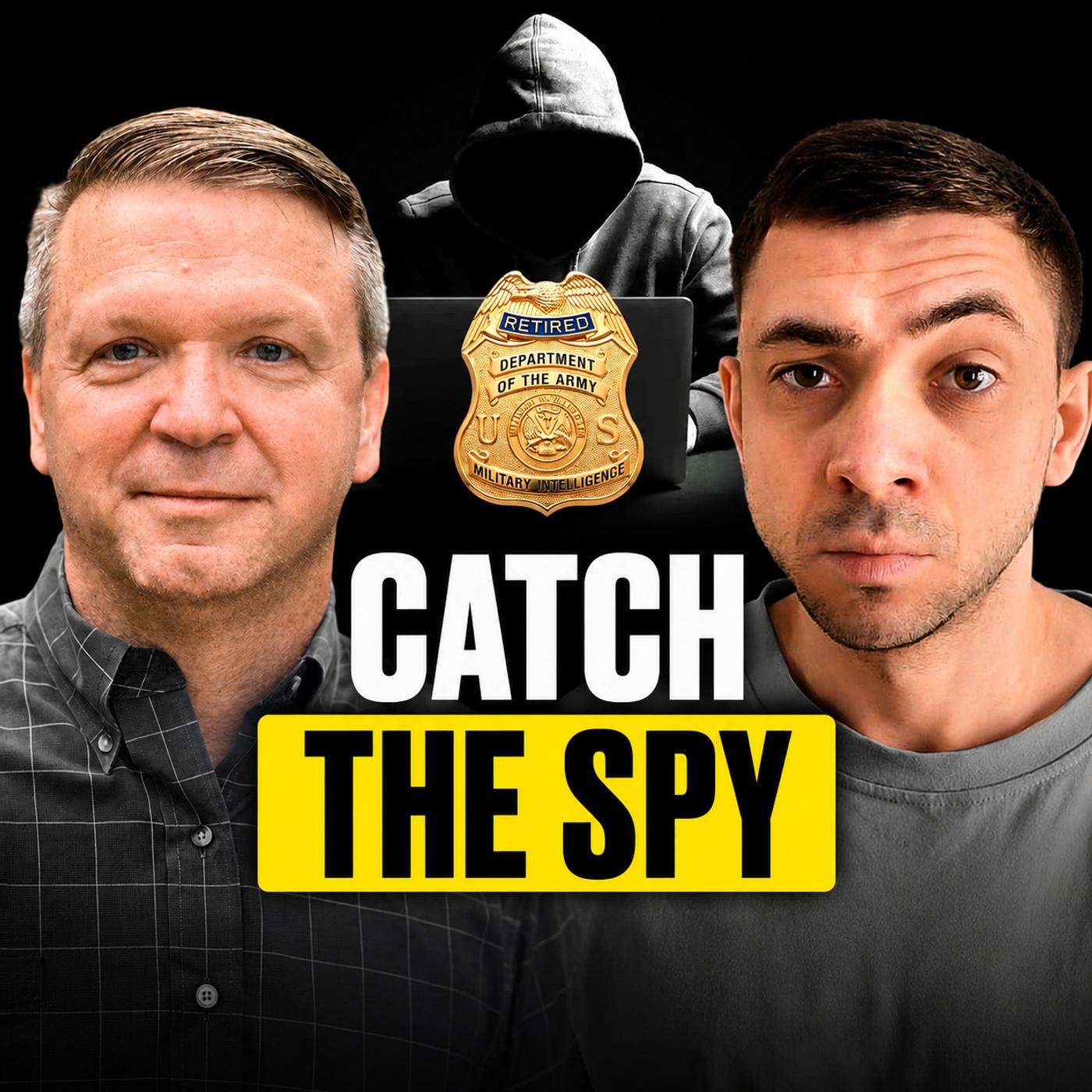
In this episode of Be Yourself Podcast I am sitting down with Ryan Rambo, a 26-year army counterintelligence veteran and expert in corporate espionage. We dive deep into his transition from military service to the private sector, where he now helps organizations navigate the complex world of modern intelligence. Ryan shares gripping stories from his career, including how to identify a potential Russian spy and the psychological tactics used to manipulate targets.
Our conversation explores the vital role of insider threat prevention in safeguarding a company's future. Ryan explains how building trust within a team is actually a primary defense mechanism against those looking to steal trade secrets. We also discuss practical elicitation techniques that professionals can use to uncover hidden risks before they manifest into a crisis. This episode is a masterclass for anyone interested in protective intelligence and the high-stakes reality of global security. Don’t miss these expert insights into the "cat and mouse" game of international spying.
0:00 - Episode Intro
01:42 - What is Counterintelligence?
03:20 - What is so Intoxicating about Espionage
04:30 - Counterintelligence Stories
08:59 - Building Counterintelligence Programs
11:44 - How NOT to Become a Spy
15:25 - Identifying and Exploiting Threats
19:28 - Preventing Corporate Espionage
22:03 - Counterintelligence Services
25:25 - What Makes a Great Counterintelligence Specialist
28:33 - Cybersecurity and Data Breach
31:30 - Advice to Business Owners
37:45 - How to Hire Trustworthy Employees
39:40 - Best Elicitation Method
41:43 - Contact Ryan
Ryan's Resources ~
LinkedIn: https://www.linkedin.com/in/ryanrambo/
Company: https://ixnsolutions.com/
YouTube: https://www.youtube.com/@IXNSolutions
-- -- --
If you're interested in cooperation of any kind, feel free to drop a line: serhiy@beverlyen.com
LinkedIn: https://www.linkedin.com/in/sergey-leshchenko-81371198/
Instagram: https://www.instagram.com/serhiybeverly
Tik-Tok https://www.tiktok.com/@serhiybeverly
My Video Production & YouTube Agency: https://beverlyen.com/production
אנגלית
ארצות הברית
תעתיק 🔗
הצהרה: הפודקאסט והגרפיקה המוטבעים בדף זה הם מ-Serhii, שהוא רכושו של בעליו ואינו קשור או מאושר על ידי Listen Notes, Inc.
