

TRANSCRIPTION 🔗
Matt: Welcome to The Difference, the podcast. I'm Matt Stevenson Dodd.
Helen: And I'm Helen Gregg.
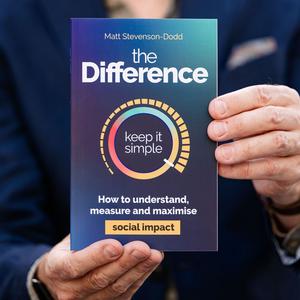
Matt: This podcast is all about taking a deeper dive into the stories and case studies contained in my book, The Difference, How to Understand, Measure and Maximize Social Impact. We want to get behind each of the case studies in the book, meet the people involved and find out more about these amazing organizations and how they set out to understand, measure and maximize the difference they make in the world.
Helen: And I should just say that The Difference by Matt Stevenson Dodd is of course available to order in all Good Book Shops now.
Matt: Thank you. Today, we are delighted to be joined by René Mann from the Refugee Council. René has extensive experience across the refugee and migration sector, spanning frontline support, service development and influencing work, and is currently the Executive Director of Services for Refugee Council. Welcome, René.
Renae Mann: Thanks so much for having me. Great to see you both.
Helen: And to get us started, Renee, we always like to ask our guests to tell us two truths and a lie about themselves. And then Matt and I will use the rest of the podcast to either plant deliberate questions to find out which one is the lie or just try and ascertain which ones we think is likely to be the lie. And at the end, we'll have a guess. So would you like to tell us your two truths and a lie about yourself?
Renae Mann: Absolutely, this sounds like lot of fun. I am a expert on cricket, I've run a marathon and I'm trying to learn Italian.
Helen: Okay, well Matt is marathon man here,
Matt: That's quite tough actually.
Helen: Yeah, they're all entirely feasible.
Matt: Brilliant. So René, what was your marathon time?
Renae Mann: It was four hours 17.
Helen: That's good.
Matt: I just did Paris in exactly the same time on Sunday. Yeah.
Renae Mann: High five.
Matt: Boom. So, welcome. We're delighted to have you with us. Can you just give us sort of your background in 30 seconds, please?
Renae Mann: Absolutely. So I've been working in social justice sphere for about 25 years now with a specialism in working in the refugee and migrant justice field in particular. I'm social work trained and community development trained as well and my passion is around transformation so systems change, how we can build movements, support people and enable them to live lives of meaning and the impact they want to have in the world.
Helen: we're talking about the Refugee Council and it was a long time the Trust Impact were involved and we should of course say shout out to Hannah Woods who did a lot of the work with you. But what was the pivotal moment for you that you realised you weren't focused enough on the impact?
Renae Mann: When I arrived, so I've been in the organization now for five years. And when I arrived, the organization does brilliant work, absolutely fantastic work. But what I saw was a lot of great outputs and outcomes that made a lot of
Load full transcript
sense when you were thinking about specific services, but an inability to join all of that up into a single joined up story about the impact that we want to have for refugees and with refugees. so myself and Enver Solomon, our former chief executive, sat down and thought actually we need to sit down and find an overarching framework and way of being able to tell that story of impact. So what does all of those, that chain of outputs and outcomes join up together in terms of that ultimate impact that we want to have with refugees and how it ties then back up to our mission.
Matt: Yeah, it's interesting, isn't it? Because you were clearly doing brilliant work, but trying to get that North Star of the story was quite tricky. And I think a lot of organizations get into that space, don't they, where there's so many outputs and everybody's measuring so many different things, but nobody ever really looks up and thinks, what is this actually all leading to?
Renae Mann: Mm-hmm, exactly. And I think that's so true when you work in such complex spaces where social justice organizations are really in the mud with people and the complexity of their lives that have been created by unjust policies and practices. And so it's hard to be able to get that space to be able to step back and really think about like, what are we here for? If we were to have achieved our goal, had the ultimate impact. What's the story that we would have told to be able to end the evidence we have pointed to to be able to demonstrate that and I think that's the challenge of being able to create that space in organisations to really think about that. What's the key information, what's the key data that's going to help us to be able to move forward and how do we reflect on that to be able to focus on what really matters.
Matt: Yeah.
Helen: Have you seen that in other organizations you've worked at, Renee?
Renae Mann: Yeah, when I was at Refugee Action, we certainly did lot of work on this. And then in my previous roles as a consultant myself, working with other organisations, thinking about strategic reviews and focusing when you're having to make tough decisions about what's the most impactful thing that you could be doing now. And you have to make tough choices about limited resources and constraints of capacity. What's the most impactful thing that you can be doing now? And what's the data that's going to evidence that? So, yes, I have had been part of those conversations in different roles in different organisations.
Matt: Yeah, well, I mean, we'd love to get into sort of the outcomes and what we came to in the end, but could you just talk us through sort of what happened in the process? Because it was slightly different, wasn't it? We started in like the delivery area and then we decided
Renae Mann: Mm-hmm.
Matt: that we'd do something broader and then we did some of our data. I wondering if you could just talk us through the process and the thinking internally as to how that came about.
Renae Mann: Yeah, absolutely. I mean, I guess we started from where we saw the greatest need because the biggest area of work and activity in the organisation, although it might not look like from the outside, is our service delivery. It's the bulk of what we do. And so that's where we felt we needed to start the work. We'd been separately doing from our work with Trust Impact work on our theory of change. And so we started the work with Trust Impact and Hannah's was absolutely brilliant in this bringing together all of our services teams, my heads of services at the time. to really think about what is the impact of our work, what are we trying to achieve, what are the outcomes that would really enable us to be able to achieve our mission. And that was, it wasn't easy. know, it was difficult to be able to get those unifying outcomes or agree on what those core outcomes were. There's lots of secondary outcomes. There's really important outputs right along the way. So that's where we started. And then we thought about, okay, so how does this then link together with the rest of the organization? So we do the other key area of activity for us is around our external affairs and communication, changing hearts and minds, changing policy. and process and then trying to then identify key outcomes that would unify us as an organization. And we quickly realized actually we need to take a step back and revisit our theory of change, which was again a really interesting piece of work bringing together the whole of the organization to really think about, know, what is our theory of change? How are we going to get and what is our ultimate impact statement and how we're going to achieve that. So then that enabled us to then bolt together both the outcomes on our external affairs and communication side with the outcomes that we had for our services and also our practice development work into a complete journey towards ultimate impact that aligned with our mission. So but what I've just summarized there is like three years of work and then
Matt: You're evident.
Renae Mann: and then underneath all of that is all of the vital work about okay what is the data that we need to collect to evidence that and how then do we then present that in a way that that then makes sense and that we can regularly review in real time the impact that we're having and interrogate that as an organization. But I think that that process of really getting the organization and I think it was valuable to start where we started actually, where we are engaging in impact every day, but perhaps not stepping back and thinking about that on a regular basis, what those outputs and outcomes then amount to in the longer term or what we're trying to achieve in the longer term. We also, when we came to do the work, so I think that was really helpful to do that and have those conversations. And then we went back to the theory of change, then sense checking that with refugees as well, to make sure
that all of our impact was absolutely centred on the change that we're wanting to make to their experience, because that is ultimately our impact objective. So I think that all then enabled the whole of the organisation to see the golden thread and that it was then reflected back in the conversations that we then had and then helped us to then align our activities to able to collect the data we needed.
Helen: we get a lot of our clients come to us who've already got a theory of change and they don't want to revisit it. but your experience clearly indicates there's real value in that. Is there any advice you would give to an organization who's starting out on an impact journey around either what order to do things or about the value of taking that time with the theory of change?
Renae Mann: think it is useful to revisit your theory. It's a theory, you know, and it's always useful and you know, we'll revisit ours shortly too in line with our new strategy. I do think it's useful to revisit it. I do feel it's really important though that it's seen as a whole of organization activity and it's bottom up and not top down. And so I think that really matters and that it's user centered. So And I think that was the learning from our experience that the key moment with the theory of change process that really unlocked the conversation was when we had finally had the conversations with refugees, which I think we should have started with, revisited and then had a sense check, you if I were to do it over again. But I think that was the moment then we then able to bring the whole of the organisation around a joined up framework. But it was never. But I still stand by what I said earlier that it was still useful to have got into the detail and really lifted the hood on what are we currently collecting, how do we currently understand our outcomes and impact within services because it warmed us up to the bigger conversation which is what is the ultimate impact we want to have and what's our theory about how we're to achieve it together through the theory of change work. But I think in an ideal situation you'd start with that theory of change work but it's the how of how it's done that really really matters and starting with those who are the ultimate focus in terms of the user experience and then building out from that in terms of those who are then tasked with then delivering on those outputs and those outcomes to build out the theory of change I think would be my reflections on how that would work well if I were to do it again.
Matt: It's a really good question, because a lot of the time you're not starting with a perfect blank sheet of paper, you're starting with where the organisation already is and the priorities and the resources and all of the things that you've really outlined there, Renee. It's quite tricky. So sometimes it is good to sort of reflect back, isn't it, and say which way around would you have done it? My big takeaway, I think, and you mentioned the sort of split in the organisation in terms of services, you've got the direct delivery services. which is the part you head up. And then there's the sort of external communications and trying to change government policy and those sort of things. And I really, really clearly remember as looking at strategic tension in the room and saying, do you think refugee council would make more impact if you focused on direct delivery at one end or you tried to change government policy at the other? I'm sure you remember this, but I remember that people were split along that line as to where they felt the most resource should be put or the most emphasis should be put. And there's some lovely conversations that came out of that. don't know if you can reflect on that from your perspective.
Renae Mann: Yeah, it's really rich and I think you see those tensions always in like both social change movements and organizations who are tasked with organizing around, you know, achieving them. And I think it's really natural in an organization that's so focused on direct service delivery that you see that split and the resources. And also, I think in this particular field where change is really difficult to secure when it comes to influencing. So the thing that you have the most control over often is the person that's sitting in front of you and the work that you can directly do with them to be able to materially change their life, whether it's being able to get them access to a house or being able to improve their access to financial resources, etc. Whereas the ability to change government policy, which the amount of legislation we've had or hearts and minds in the febrile context that we live in at the moment around social media, it can feel really disempowering or like that's too far. away or too difficult or less tangible change but ultimately recognising that in order to achieve our mission which is to be able to enable refugees to rebuild their lives, to integrate in their communities, to be able to play their part in Britain, the policies and legislation does need to change and so there was that real tension in the room of people's lived and learned experience of what we can change versus what needs to change and I think that's the tension. I think theories of change is about setting that ambitious goal, long-term goal about what is going to change people's lives materially in a sustainable way. Not what can we do tomorrow or what can we do today, but what can we achieve in the longer term and both what can this group of people in this room and organisation do, but how do we do that and amplify that in our work with others. And I think that's the key to a really effective I think theory of change conversation. framing.
Matt: One thing I do remember is we asked you, if you were going to be completely at the end of working directly with refugees, would you therefore be chasing every refugee contract in the country? And there was a lovely discussion,
wasn't there, about actually, no, that's not what we want to do. We want to learn and amplify the
Renae Mann: No. Yeah.
Matt: experience and the voices of refugees, but don't want to take over everything.
Renae Mann: No, no, no, no, absolutely. you know, that's still I maintain the approach that this organisation needs to have is that we know we have a particularly unique position within our ecosystem of refugee and migrant justice in the UK. We're the oldest, oldest single refugee charity in the country. just having our 75th birthday this year in line with the convention. We are very privileged to have a lot of recognition of the work that we do both with decision makers and members of the public. And we have deep roots in particular parts of the country and particular areas of refugees journey. And that's where we can have the greatest impact. Now there is a tension there in that, you know, it's a really difficult fundraising environment. So we have to have regular decisions about what we choose to go for and what we don't. But it has to be aligned with the impact that we want to have. And also thinking about the mix between service delivery around collective impact building with other partner organisations to improve the quality of services and practice and then around influencing policy and procedure and there are different resources or availability of resources for those depending on how you know the fundraising or commissioning environment shifts, government policy shifts and it's particularly challenging in this field where more than any other you know the availability of funding for services really depends on priorities for government both at a central government in particular level and local government. So it's a really live tension for not just our organisation but for others. But we need to stay focused on what our mission is and what the impact it is that we need to deliver and what's the best route to achieving that, which isn't necessarily being the single provider of all services in the organisation. It's about having the right level of impact and insight leaning into our areas of expertise, working with partners to be able to amplify both the outcomes for people through our direct services. but also their messages and their insight as well in order to be able to achieve that collective goal.
Helen: So for those who haven't read the book, I suppose that tension is really quite an interesting one. As Matt said, there was a real split across it. What was the outcome?
Renae Mann: We remain a system change organization, an organization that is committed to both influencing policy and procedure, as well as being a specialist provider of integration and support services with refugees, as well as building collective impact with other organizations where we have the expertise to do so. So in our case, that's in terms of working with separated children in particular and around the integration of people once they've got their refugee status
or their leave to remain. and that's where we continue to be positioned. We've got particular geographies where we work at great depth, but we stick to that as an organisation. And that gives us both the insight, but also the relationships that are needed to be able to create and build that impact that we want to have in the long term.
Matt: yeah. And I was just thinking about the other end of the spectrum where we were talking about, you know, what is your external affairs, you know? focus to be because I don't want one of the things you were contending with was being asked to comment on literally anything and everything to do with refugees because you are you know you are that well established organization and just that you know the stress that places on an organization in terms of resources how do you respond and I think we had a really lovely conversation about well what does it mean to actually be campaigning what are we actually trying to to do here and I think we landed on this idea it was really about trying to change government policy because that would really have the biggest impact on refugees coming to this country if it was more open and accepting policy.
Renae Mann: Absolutely. So, know, in alignment again with our mission, it's about how focusing on those key policies that are going to enable people to be able to rebuild their lives in the UK, to be able to get access to protection in the UK. So we've been doing a lot of work on access to safe and legal routes, but also preventing those barriers to enable people to integrate and access the services that they need in the UK. So moving away from country specific programmes to having a more inclusive approach, know, challenging issues around and delaying access to leave to remain and citizenship as key barriers to being able to rebuild your life. really focusing in on what are the key issues that we need to be talking about and influencing when we're speaking with both the public but also with decision makers as well.
Helen: So we've talked a little bit about some of the things that went well through the process. What was the hardest bit for the organization? Because I'm conscious you are big.
Renae Mann: yeah.
Helen: And obviously, the more people involved, trying to get a collective approach towards impact is so important. But the bigger you are, the harder that can be. So in reflection, what do you consider the hardest part of that journey?
Renae Mann: I mean, I would say we're still on a journey, so it's a constant practice. But I
Helen: Yep.
Renae Mann: think from that early period, one of the first pieces is that we did have established cultures and tools of measuring outcomes, which we were continuing to use. And some of those were quite close or similar to the impact data that we wanted to collect to evidence our long-term impact. And it was some of the negotiations around why we needed to be able to collect this information as well. as and how they complemented each other. So
getting into some of the weeds of that with people, also talking about where it was appropriate or not appropriate to be asking some of this information, so based on where people were at in their refugee protection journey, so for example if people were in the midst of crisis that that was probably not the best time to be asking those questions, but also the the length of support that we were having and relationship with people in order to be able to genuinely be able to ask questions around impact where we had one. off or very short-term intensive pieces of support with people. So I think that was a challenge as well and our teams will always put people's well-being at the centre as well, like are we asking questions that are trauma-informed and are culturally relevant and being able to sense check that and really work closely with Hannah and the Trust Impact team to get some input back from refugees to think about how we could change the language without losing the impact and the rigour of the data that needed as well. So being able to kind of circle back and take with people with us on that journey. And then I think that so that was the first piece just really getting people on board with the why, like why do we have to answer these questions and what are these questions and are they the right questions for us to be asking with our client group in terms of the ways and when we're working with them. The other think then challenge was then implementation. So then busy teams adding another thing that we're asking for them to do and for them to see the value of that work and building it into their programs and ways of working. And so was a constant rolling program of engaging with the teams about why this adds value, why this matters to refugees, why this matters to Refugee Council, how this is going to help us with our mission, how it's going to help us both improving the quality of our support but also with the quality of support or the level of support that we have for the organisation. organization too. So I think having the opportunity to deliver that training, hear people's questions and also celebrate as well that when people were gathering the data being able to share with them what we can now see in terms of the impact of our work and lots of thanks and celebration as we went along as well really helped. But I think they were the two key points I would say that I think were a challenge of just getting us moving us along in terms of the change journey.
Matt: Yeah, I don't think you're alone with those challenges. They exist in lots of organizations. mean, you are operating in a very complicated environment and there's lots going on and the organization's having to deal with lots and lots of different things. So trying to then embark on a, on a change journey like that is, really quite tricky. I mean, you meant, you mentioned the data and it was a lovely moment, wasn't it? Where we were able to sort of bring the dashboard to the group and say, you know, this is, this is the change that you're making. And I just remember the, the sort of feeling in the room was, was lovely, but I was really struck by this idea of safety being at the heart of a lot of what the refugees themselves were saying was really important to them. How safe do I feel in my
Renae Mann: Mm. Mm. Mm-hmm.
Matt: community where I am comparatively?
Renae Mann: Mm-hmm.
Matt: I wonder if you might comment on that as a kind key outcome.
Renae Mann: Absolutely. mean, the whole need for refugee protection is because of lack of safety in your home country, whether it's because of your identity or your beliefs, you know, your family connections, the work that you've done. And so being able to come to the UK and secure your international right for protection is a fundamental principle. But then your treatment, depending on how you've come to the country, really determines what your actual experience of that can be. And our data has really shown the massive split between the experience of feeling safety, whether that be psychological or material safety in the country based on whether or not you're seeking protection and you're in the asylum system or you've been brought to the country by government through a safe route. And I think that really highlights that uncertainty, how that uncertainty not knowing whether or not you are actually safe. Can you stay in the UK? Can you rebuild your life? Is the UK going to protect you versus do I feel safe in my community? Recent impacts of hate crime have really damaged and impacted on everybody within that journey, but you still see this marked difference based on whether or not people have that intrinsic ability to stay here and know that they can stay and start to build their lives and be able to engage with that local community and get the support that they need to overcome things like hate crime and other risks versus that really that fundamental right to being safe and being able to stay here in the UK which people who've got status have already got.
Helen: I think it's really interesting because safety is, I did a workshop this morning and safety was a big part of the conversation and that we had as part of a completely different client group. And it's so interesting. I think the political climate in the UK since the Brexit vote, I mean, we're 10 years, it's coming up for the 10 year anniversary, isn't it?
Renae Mann: Mm-hmm. Mm-hmm.
Helen: and that has such a difference. I know you've worked in the refugee sector. Have you seen a difference in the landscape and in terms of, do you feel that the impact you measure now would be different from the impact you measured 10 years ago, for example, as a result of that?
Renae Mann: Absolutely and I think people's experience of seeking protection in the UK has really changed in last 10 years. I mean 10 years ago when you know Europe and you know in particular really woke up to the refugee crisis across the Mediterranean as a result of the
war in Syria and the mass movement of people across the the meaner countries into Europe was a real period of hope and you know I don't want to diminish the fact that it wasn't full welcome, know, there was resistance but there was more welcome at a government level and there was more provision and support if you just think about what happened in Germany and the welcome that was provided there but also in this country, you know, we had dedicated programs supporting people, we also had bigger complementary programs for people coming from around the world, from refugee camps and other sources of first country of asylum as well to get protection in the UK, that has changed fundamentally since then. that's both the way that we, I mean, we're talking about, you some countries are talking about withdrawing from the convention, which was just unthinkable 10 years ago, just questioning whether or not that is something that we do as states is to offer protection to people who aren't safe in their own country. That would never have happened 10 years ago. Whereas now that is being opened up by some countries. And so it's really fundamental. that we hold onto that principle, Rwanda, that whole policy, the Rwanda Act coming in, we didn't have an asylum system for a number of months because of the introduction of that particular act. But at the same time, we have growing awareness and commitment within the public to the principle that we should protect people who aren't protected by their states. And so I think the question has kind of been intersected with the pressures that we've all had across the world, globally in particular, COVID around scarce resources, pressure on infrastructure, institutions not being able to meet the needs of their citizens and really thinking about how are we able to both provide welcome but also be able to sustain and support our communities. so I think we need, rather than seeing those as united, seeing those as mutually exclusive and I think the work task now is how do we bring that together again and not see those as competing but joint objectives. who do we want to be as a country, what are the community, what does it look and feel like to live well in the UK, regardless of how you came to be here and how do we achieve that, how does everybody have access to quality health education, health care and live in safety and dignity and achieve their objectives and thrive, regardless how they came to be here in the UK. And I think there's a real distortion as well around numbers which I think distorts us away from actually what our duties are and responsibilities are to human beings who need support and safety in the UK. And I'd always point to civil society who has what seems like an endless capacity at some times to be able to support with the right support from central government and local government as well to maintain that quality support for people locally, whether it's hosting schemes or it's providing, you know, befriending clubs or what have you, but you still need those specialist services around healthcare and housing. and wraparound support as well.
Matt: We've been asking a lot of our guests about risk. You're probably operating probably one of the more risky ends of the sector, but we're quite interested in, and this is covered in the book, in how charities, how organisations should take more risk really to try and make
Renae Mann: Hmm.
Matt: more social change.
Renae Mann: Hmm.
Matt: And a lot of the time I don't think it's, you the environment and the ability for charities to do that isn't always there.
Renae Mann: Mm.
Matt: But, you know, one of the key themes in the book is that taking that risk allows you to do more and allows you to learn
Renae Mann: Mm. Mm.
Matt: new things. What's your view on risk in the, particularly in the refugee space and in the
Renae Mann: Mm.
Matt: context of the fact that you're operating in quite a risky end of the sector?
Renae Mann: Yeah, I mean I absolutely agree with the principle at the heart of your question which is if you want to create big change you're going to have to make big, take big risks but I think risk has a, risk can create fear. And I think maybe it's bold action, maybe we need to reframe it, but recognising that if you don't act with really clear, bold intention, you're only going to achieve incremental change. And actually what we need is the bold change. We need to be ambitious. We need to be willing to try things and learn from them. We might not always hit the mark, but that requires really robust governance and leadership and psychologically safe cultures as well in order to be able to do that. come back to the know there's questions of safety people need to feel like they've got the permission to do that and the backing of their institutions and movements actually as well to be able to try to do those bold things and I'm not sure that we always have those conditions in the charity space in particular that I think can limit the ability to take that bold action it encourages incrementalism.
Helen: think you're absolutely right. I really like that phrase, bold action instead of risk, because I think you're right. Sometimes words carry connotations. In a funding environment, how easy is it to have conversations with your funders around things that might constitute bold action in this world?
Renae Mann: Yeah, that varies hugely and it's a very competitive environment. and there are a lot of organisations who are really hungry for resource and I think that whenever you get into funding you start getting into conversations about power and power sharing but I would say there are some funders who are much more up for trying new ways of working so I would point to JRF, would point to the Lottery, some of their big funds like Solidarity Fund that's coming out Paul Hamlin, there are a number of others that I would point to who are, wanting to learn and support movements to learn together, to be able to share
power, to be able to take some bold action together. But I don't feel like there is nearly enough resource, particularly in a space like Refugee and Migrant Justice, where you're operating in a space where the states are questioning whether or not they have responsibilities to the people that you're you're wanting to work with and for and I think there needs to be much more support particularly for those organisations to try new things without like I would also point to as an example the No Recourse Public Funds Coalition which has got funding from a number of different organisations but started with very small amount of funding enabling an organisation to go out and start to do some inquiry with organisations and then from that build a program of aligned funding that they would then share collectively and make collective decisions about how it was used in line with their theory of change they built together. And I think that's a really great example about how you invest in the seed of the idea, the intention to share power from the beginning and the forming of alliances of different organisations in order to be able to achieve that big long-term goal. Now, I think the funding is definitely multi-year. wouldn't want to say here exactly how long but I think it's probably about it's either three or five years it's going to take longer than that to be able to achieve the theory of change but the fact that they've been able to develop and co-produce in this way with the backing of those funders says everything about how you then really build that that bold change together is by being able to imagine and dream with the backing without any necessarily and a defined outcome beyond that no one should be made destitute and therefore how do we work back from that. and enable people to live with dignity.
Matt: Yeah, when do you think the work of Refugee Council will be done?
Renae Mann: when we have well I mean, the Refugee Council, think, will probably always need to exist in some form whilst there are still wars and conflict in the world where we need to make sure that there is a door open that enables people to be able to seek refuge in the UK. We will always be here to hold the government to accountable to honour their commitments under the Convention. Where I would see change is where our mission as written at the moment around enabling people to rebuild their lives, to be able to integrate. into communities and play their part in Britain. Where all of that is able to happen once they're here, we would be reducing our mission to a much narrower focus on accountability enabling people to be here in the UK because once they're here, they're treated like everybody else. They get a quick decision. They get quality support. They're able to integrate like everybody else and live their lives in the UK. And they're no longer defined by what should be a short term process. They're able to just move on with their lives, with their to live here in the UK. for me
it's all of those conditions that are getting in the way of people being able to rebuild their lives and their communities, know, get access to skills, get access to housing, health, education, etc. You know, legal status to be able to be here and live safely. Until that's done, our work will continue.
Helen: And you mentioned war. Are you starting to see environmental refugees as well coming through?
Renae Mann: I mean, some people talk about Syria as the first climate change war. So the drought that happened and desertification in the centre of the country moved a lot of people off of farms and into communities, which then led to lots of pressure in terms of urban communities, as well as quite a complicated political situation at the time as well under the Assad regime. So, yes, I would say that we would be seeing more of that. I mean, we live in a world where there's more conflict than we've ever seen since World War Two. wars in like most parts of the majority world. So we need to be as a country but also as a globe making sure that we have as frictionless pathways to safe places so that people can rebuild their lives rather than being stuck in a position of uncertainty, lack of safety, not able to use their skills and you know rebuild their lives in those countries as well and it makes us a poorer country. less able to benefit from those skills, those experiences, that passion to rebuild in our countries as well. It's in everyone's interest to make that as frictionless as possible for people.
Matt: Yeah. René, just listening to you talk during this podcast, it's lovely to hear the clarity of the mission, the clarity of the purpose, what you're trying to do. It feels that the theory of change work that we undertook has been... sort of become part of the DNA of the organisation, but how has it been received since? What's the sort of, what's been the follow up? Because we always sort of do some work and then leave and it might not be, you it might just have been shelved and forgotten about, but what's
Renae Mann: Yeah.
Matt: your reflection on sort of what happened?
Renae Mann: Well, I think the proof point for me is that we've got data for over 50,000 people now, I think it is. That's
Helen: Wow.
Renae Mann: both indicator data, but also outcome data. So the outcome data is smaller. So the data is continuing to be gathered. We're continuing to analyse that data and think about use cases that's still being embedded in the organisation about how we use that to build support for our work, to be able to reflect on our models and interventions and ways of working, whether it's it might be in terms of service models and engage with other partners or equally in terms of the asks that we're making of decision makers and engage in terms of storytelling as well. It really helped us when we starting to, when we rebranded last year as well and being able to align this data with that story and really made that a much more powerful communication as well. And it's also helped us as we've been going through change like every charity over the last couple of years have been really clear about what our golden thread is in terms of impact that we want to have as an organisation and therefore what we want to be able to preserve with the constraints of those resources and really focus on and prioritise and then what we want to build out over time as well. I would say that it's as I say an ongoing practice, you know, it's something that we need to keep revisiting and thinking about what are our priorities. for the current year in terms of how we embed the work and use the data to be able to strengthen our work. But I would say that is definitely part of the ongoing internal and external storytelling. There's almost always more that we can do to be particularly externally, I think to be sharing more about the impact of our work, what we're learning, what we're curious about, what we'd like to share with others and explore with others, which I hope will be part of the story that we'll be sharing over the coming years.
Helen: Amazing. To follow up from Matt's question in terms of the embedding of impact in the organization and understanding those stories, how if you continue to use user voice and people with lived experience to help you tweak and continue developing that story?
Renae Mann: Yeah, and I would say this is a practice too, always within organisations. And I'm really proud of the work that we've done to build our capability to make sure that we are informed and centring our work on refugees, know, lived experience, both of our work, but also the change that we want to create with them. So I think one of the things I'm really proud of that we did when we were making changes to the way that we were delivering our services last year, we held, we have a number of refugees that we've recruited who are willing to engage with us around these sorts of conversations. So we had a number of conversations with them about both to map out our current user journey, so what client experience is of our services and to get their critical feedback about what their experience has been, what they think we should be prioritizing, if we have to make changes, where to make those changes and what is most important for refugees right now. And that's really helped us then to make those decisions. And then what I would like to see going forward is with the impact data is to be able to join that back up again and say, well, based on your input, this is what we've been able to do in terms of reconfiguring or reprioritizing some of our activities. But this is also the impact that we're seeing from those activities and that those collection of activities working together. Because, for example, we know now through the impact data that by bringing together both casework, therapy, community development and volunteer support, you get far better outcomes for people who are coming through safe routes and reintegrate. integrating into
the UK than those people who have only maybe one of those services. And so that really then helps us to make a really strong argument when we start to talk with partners and commissioners or we're designing our services about what does a holistic mean from a refugee's perspective and what are the kinds of activities we need to build around to be able to achieve that impact.
Matt: I love that though, isn't it? You're kind of using the data to inform the service and how you adapt and change the services and you're using the voice of the refugees that you're working with to directly influence what's going on. That's the dream for every organisation really, isn't it?
Renae Mann: Absolutely.
Matt: Well, René, thank you so much. We're now going to return to the start of the podcast and look at your two truths and a lie. Let me just recap and then I'm going ask Helen to tell me what you think. So, number one was that you are an expert on cricket. Number two is that you've run a marathon. And number three is that you're learning Italian. Helen, what do reckon?
Helen: Well, obviously we got the marathon time So obvious answer here is that you're not an expert at cricket. However...
Renae Mann: See you.
Helen: So, yeah. Okay, I'm going to stick with that then. The lie is that you're an expert at cricket. And Matt needs to guess as well.
Matt: Yeah, I would have gone with the same I think the expert of cricket but yeah this was a hard one. is a hard one. I
Helen: Yeah.
Matt: could believe all of these.
Helen: And I couldn't get any cricket references in because I am not a cricket person myself. So we've done some lovely work with the Lord's Taverners previously and I've been at a cricket event and had absolutely no idea who I was talking to, much to my colleagues' dismay. So can you reveal the answer please, Renee?
Renae Mann: I can reveal that to my shame as an Australian born and bred that I do not know very much at all about cricket.
Matt: you
Helen: course, to add into the fact that you're Australian.
Renae Mann: People often assume that I do, but I don't. can play backyard cricket, that's the extent of it.
Helen: Do know much about rugby? Because that's the other one.
Renae Mann: Not so much football, yes. Exactly. No, it's a bit
Helen: are the sport they don't play.
Matt: Well.
Renae Mann: of a... Actually, that's a misnomer. It's the most played game in Australia is football.
Helen: Is it really? I didn't know that.
Renae Mann: We are a nation of migrants.
Helen: Renee, thank you so much for your time today. We've absolutely loved learning a little bit more about where you're at on your journey now. Refugee Council have always been a fascinating... client of ours and certainly for the whole time I've been at Trust Impact. We've had conversations as an amazing case study you kindly did for us on our website and there's been so much conversation around the work you do and the power of it. It's just been such a privilege to be involved with that journey and it's been lovely to hear your take on everything this afternoon. So thank you very much.
Renae Mann: no, reflected back, I mean there's no way we would have been able to achieve that without Trust Impact's expertise and insight and just, I I think I said that in the case study as well, just the care for these conversations because we're having conversations in charities where people are there because they care about the mission and they care about the work and so they really want to preserve that work and anything that might feel like we're moving away from what they feel matters most. So being able to have those really delicate conversations. actually to get us aligned with measuring what matters most and really focused on that long-term goal and Trust Impact has really held us and worked alongside with us and adapted processes to enable us to get to where we needed to. So just a massive thank you back to you all