

TUNGKOL SA EPISODE NA ITO
In 2014-2015, a group of researchers across various disciplines gathered at the Caltech Keck Institute for Space Studies (KISS) to explore whether recent advances in multifunctional, reconfigurable, and adaptive structures could enable a microenvironment control to support space exploration in extreme environments. The workshop series spawned multiple working groups and project ideas for pushing the state-of-the-art in space exploration, colonization and infrastructure. One such project, called the Multi-planetary Smart Tile, explores the possibility of creating a multi-functional power grid for the solar system that is capable of distributed computation, renewable power generation, and power beaming to remote locations. In this podcast, Dr. James Edmondson discusses his work to bring distributed artificial intelligence to a next generation, renewable power grid in space. Listen on Apple Podcasts.
Ingles
Estados Unidos
SA EPISODE NA ITO
KOPYA NG SALIN 🔗
Are you the producer of this podcast?
Add a podcast transcript
Need Audio-to-Text?
Transcribe with Listen411 in Just 60 Seconds
I-SEARCH ANG MGA NAKARAANG EPISODE
I-search ang mga nakaraang episode ng Software Engineering Institute (SEI) Podcast Series.
IBA PANG MGA EPISOD SA PODCAST NA ITO
On November 7, the Department of War released an acquisition transformation strategy that seeks to remove bureaucratic hurdles and streamline acquisition processes to enable even more rapid adoption of technologies, including artificial intelligence. Getting AI into the hands of warfighters require…
Cybersecurity staffing shortages are a major concern in the government given the increasingly sophisticated cyber attacks on the nation's critical infrastructure. In the FY2023 National Defense Authorization Act (NDAA), Congress tasked the Pentagon with finding flexible options to address cyber sta…
In October 2025, CyberPress reported a critical security vulnerability in the Redis Server, an open-source in-memory database that allowed authenticated attackers to achieve remote code execution through a use-after-free flaw in the Lua scripting engine. In 2024, another prominent temporal memory s…
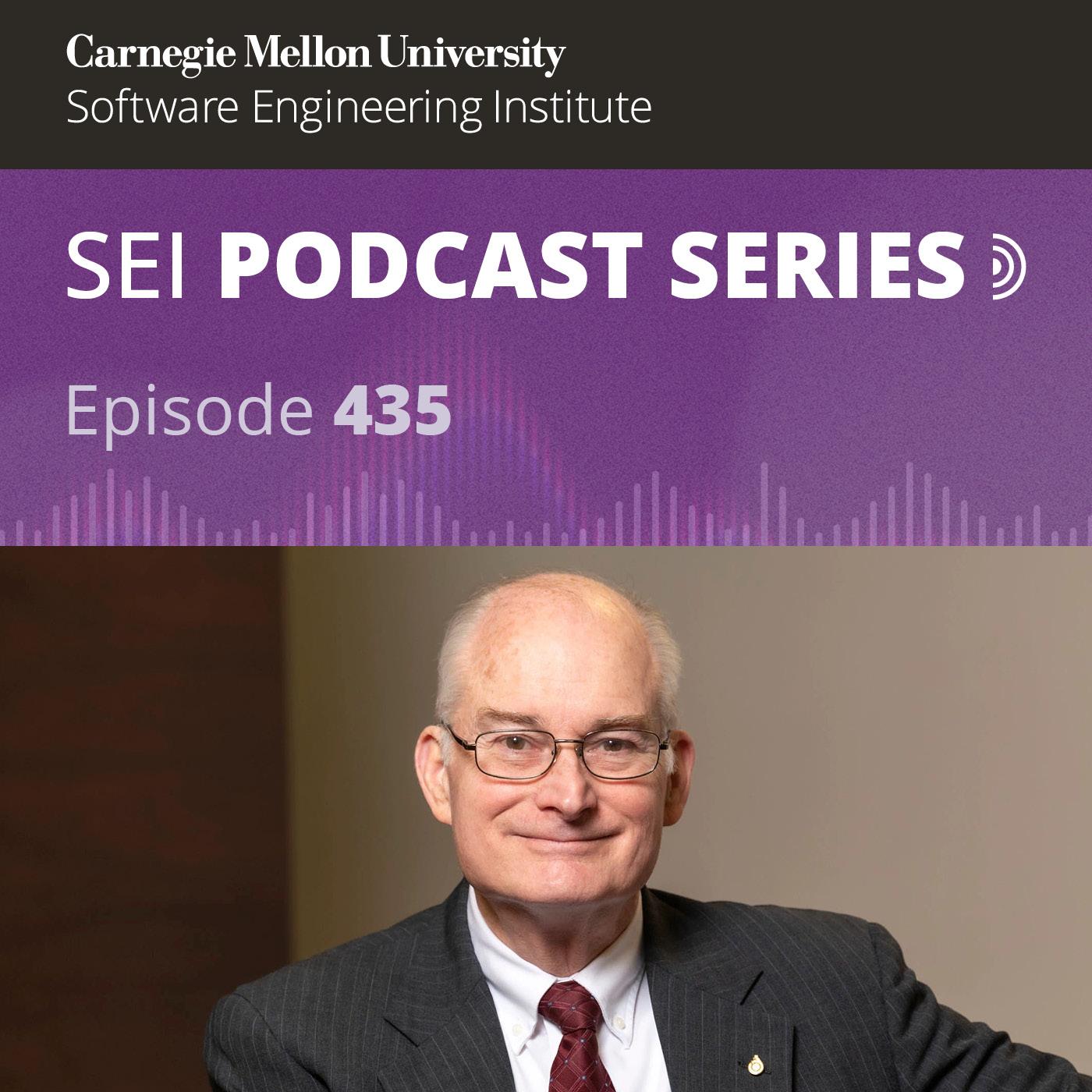
In February 2026, Paul Nielsen announced that he will transition out of his role as director and chief executive officer of the Software Engineering Institute (SEI) at Carnegie Mellon University. During Nielsen's tenure, the SEI has marked major institutional milestones that underscore its enduring…
While Stanford University found that AI investments, optimism, and accessibility are rising, a recent MIT report suggests that 95 percent of organizations are realizing no returns on their generative AI investments. Research from Accenture found that only 8 percent of companies are scaling AI at an…
Paunawa: Ang podcast at artwork na naka-embed sa page na ito ay mula sa Members of Technical Staff at the Software Engineering Institute, na pag-aari ng may-ari nito at hindi kaakibat o ineendorso ng Listen Notes, Inc.
I-EDIT
Salamat sa pagtulong na mapanatiling naka-update ang database ng podcast.
