

Judy Minot: I was just going ask you, do you think you're consistent with your practicing? No, I'm completely inconsistent. am like completely inconsistent, erratic and undisciplined. Welcome to the podcast, Best Practice for Musicians, where we discuss how to practice more efficiently and play with more joy. I'm Judy Minot, and it's my pleasure today to talk with fiddler Martin Hayes. Martin's distinctively evocative playing has helped Irish music reach new audiences all over the world. Martin is one of the few Irish musicians I know of who can captivate an audience for an hour and a half playing solo violin. In addition to his solo playing, Martin is known for his long-standing creative partnership with guitarist Dennis Cahill and is a member of the Irish superband The Gloaming. Martin has continued to push, gently, the boundaries of the traditional in Irish music with groups like the Common Ground Ensemble and the Martin Hayes Quartet. Martin, it is great to see you. Good to be here. Good to see you again, Judy. I want to say one of the reasons I wanted to speak to you is that you often give workshops about playing Irish fiddle and I know you've thought deeply about how musicians can develop their personal style even as they improve their technique. I use the word evocative to describe your playing and listening to you play there's something really welcoming and inclusive about it. It sort of draws you in as a listener. So how do we get there? How did you get there? For those of us who are struggling to play better How can we bring out that element in our playing? Yeah, I mean, I think one of things that I've been thinking about recently is the idea of like purpose and intent when you decide to play music or perform. Like in other words, do you actually have a goal? And like other than, course, quote unquote, playing very well or something like that. Which in a way, when I think about that as an objective, It doesn't seem like a whole lot. mean, yes, certainly we want to play very well and we want to sound good, look good, seem like we know what we're doing, all of those things that can happen when you have to perform. But they don't really amount to much in terms of what an audience are generally expecting to experience. So I think it's important to... kind of know why you're on that stage and understand who's sitting in front of you and what they might wish to experience. having said all of that, it looks like I'm setting up a of a situation where one might be pandering to an audience, in other words, figuring out what they want to hear and giving them that, which is... which is something that I don't agree with. It's not really how I would like to see this music performed. mean, it's a struggle in this particular form of music where, ⁓ going back into my childhood, it was strongly suggested that this was not in fact a performance music at all. That the act of going on the stage itself was probably a mistake or an error. on some level. So I mean I've been grappling with that. I've been grappling with the idea of having purpose when one gets on the stage and I've been grappling with the idea of one's own personal musical integrity and trying to see is it possible that all of those things can actually be that you can tread the needle in such a way that all of that is possible all at once. So that's really been kind of like the dance that I've been dancing for a while. But anyway, of course, I'm straying from your question, which was like, I suppose, which like be prepared for that. But I suppose you were trying to get at the idea of like one's voice in music. But I do have thoughts on that and one of them is that if you try to make a personal voice, like if you say I'm going to make my voice, you'd be confronted with a few things like what should it be, what are you going to make it up out of and you know are you going to construct this mechanically, are you going to like figure it, you know and all of it leads to a dead end really as soon as you start like that. that effort to do that. But I think on the other hand, if you trust your own instinct to produce something that is appealing to you and that speaks to you and that consequently speaks for you, then you are on the pathway to having your own voice in a certain sense and you inevitably end up with it even if you don't like... ⁓ You know, like I never had the mission to have my own voice musically, wasn't something that had occurred to me. But it did happen, ⁓ I think, over time. And I think over time maybe being the operative word there as well, know, like gradually, but gradually, but gradually you try to, you know, get to the sound that's most appealing to you, to the way you imagine this music best speaking for you. And... And it begins the slow process of style formation. Now that's not to say that you make the style completely out of 10A or you don't. There are musical influences everywhere and musicians and that feed into this. like I like to imagine that they kind of feed in like at a deeper level where it's kind of almost unconscious. You're sometimes unaware that you're drawing upon people and that you're drawing upon influences and that you're drawing upon ideas that you didn't necessarily create either. A lot of our ideas are borrowed too, you know. So, but anyway, that's the summary of the whole thing there. Sorry for giving you the very long-winded answer and the detour in the middle. No, that's completely what I hoped for. Well, you know, I was thinking about how you You often talk about feeling. Some people talk about musicality. I, like you, I sort of chase, I chase this sort of disappearing rabbit of what is, what am I evoking? What am I doing? What am I trying to? And people would always say, well, you should be more musical. Make that more musical. And you talk about feeling, and I find that a little more relatable. Yeah, musical like is kind of like, it sounds like a word that's just one step removed from the actual thing, you know, that like, it means it's good and I like it, okay. But what does that actually mean? ⁓ Feeling is a word that like I heard all through my childhood, you know, from these older players, you know, this is the kind of concept that was driving people like Tony McMahon or... or Junior Crayon or Martin Bratschford or many of the great musicians. They wouldn't be shy about that and about the need for music to be governed by... They would say music with heart or playing from the heart or playing with feeling. I mean, they're all various attempts at saying the same thing, I suppose. there's probably a part of that that you can't teach as such, but you can point at it and you can encourage people to kind of go there. And there is a kind of a letting go and a surrender to the feeling that then shapes the tune, if you know what I mean, which then like makes the expression of that feeling gradually more fluid and easier each time you play it like so. So you let feeling kind of shape the phrase in a way, you and then you never really get to the end of this because like you're always in a dance because at first it's hit and miss, you get in there sometimes, sometimes you don't. Then after that you realize that almost anything you do if you can be in that zone will sound good. But how do you get into that zone? How do you make that something that you can kind of... habitually visit and that's where like a vast world opens up in front of you because it could be meditation, could be contemplation, it could be Zen, it could be you name it and ⁓ a huge amount of it reflects back upon yourself kind of philosophically and psychologically where you have to kind of ⁓ set self-concern and ego somewhere aside. because they keep interfering with the natural flow and process of this. So you have to work on yourself, work on getting that to not be a factor anymore, I suppose. And that's a lifelong effort, an absolute lifelong effort. Yeah. But not to say you can't play well with a big ego. Plenty of people do. I heard a great somebody, I don't know who said this now but I've never forgotten it nevertheless, what the message was, the point was you only need to be able to play when you're not actually in the zone, you know? Like when you're not in the zone of playing and you're on stage then you really need to have good technique and you need to have a lot of pizzazz in order to get through what could ordinarily be very boring. You need to be a very good player. to hold an audience interested while there's no feeling and expression in your music. You know what I mean? That's when you need technique. You don't need too many things actually if you can kind of visit the other part. You don't need as much. And that is why, from my observation, that's why I've been able to observe quote unquote, Musicians that are technically not that proficient sometimes are not flashy or not technically competent yet. I could hear them make music that got to the other side, you know, that really actually translated and was actually a communication of feeling, a change of atmosphere, a change of mood and like and very often the kind like that's a moment of for a musician a moment of like focus on the one hand. and self-forgetting on the other hand, you know? And that can happen irrespective of your skill level on the fiddle or on any instrument for that matter. ⁓ so that's like, if you can kind of like tap into that, then you are really onto something. But as I said before, like I'm no expert on that area. It's up to each and everyone's individual journey to figure out. how to approach that, know, like how to find that lack of self-concern, you know? One of the things that bounces me right out of the zone is mistakes, you know, or a bowing pattern that didn't go as well as I thought it did, you know? And I think that I've heard you talk about ways to teach yourself technique, technique in a way that does help to keep you from running into those snags? Yeah, I mean, think maybe there's two things there. One is you're talking about kind of bow patterns where a lot of people try to figure out a pattern on the fiddle how to bow. And then lo and behold, you got it wrong and you found yourself backed into the corner you'd been desperately trying to avoid. So I definitely have bowing techniques. like to kind of ensure that that doesn't happen to you, you know, or at least to learn how to do slurred bowing that gets you out of any corner at any time, like, you know, I get out a jail cart, like, so that you never actually ⁓ run into that problem. And when you know that that's never going to be a problem, it just disappears as an element. to ever be concerned about again and you never think about it. so you just, like a lot of it is, there's some parts like of a bowing in a tune that can be like tricky and difficult and awkward. And what you really have to do there is you just have to go in and do it. Do the awkward thing. Like figure out the awkward thing instead of avoiding it like and... and then figured out a way of bowing, like maybe a slurred way of bowing that awkward thing or maybe a very tight little staccato way of bowing it. And like you can have that irrespective of whichever bow direction you land on, you know, that's the key point. And then that's eliminated. Now the other point like, you know, mistakes in general are kind of like something that the old players didn't think about, you know. that really wasn't like, you know, like they're inevitable kind of, you know, and to error is to be human, you know. Okay, so that like, let's get that straight, okay. Next thing is like the fear and anxiety of making mistakes and the need to avoid them creates the kind of scenario and situation where mistakes occur, you know, so you're, you know, the avoidance of them almost creates them, you know. ⁓ So, so... Letting go of that is important. The other thing is like if you do and you will make a mistake Just smile like and keep going like sure. It's completely you. I I I have things like that happen In big concert halls sometimes where I'm completely exposed and I'll just do something stupid I just laugh, you know, I laugh at it like, you know, like because there's only one fundamental mistake really in performance as far as I'm concerned, which is do I get into it or not? That's the only error. The only error is that I play a concert and I do not ever get into it and never get on the inside. And that is the only mistake. Because the other ones, like if you're already in the zone and you're already making feeling and you're feeling music and stuff like that, some kind of technical error slip like that is just a joke, know? Like it's not something to really take seriously, you know? ⁓ It's not important, you know? So, well, you must have had, perhaps in your life, one or two times when you were on the stage and you weren't in the zone, you know? What... Every night. Every night that's some part of the concert where I'm not in the zone, So, yeah, so where do you... What's the... What's the... You know, what's your secret sauce to get... Yeah, well, like the first thing is, I suppose, recognizing when that's happening, you know? And then there is kind of like an actual mental conversation that goes on, in which I am saying to myself, let go, let go, just let go of this, you know? And forget and just... surrender into the process. So every now and again, you know, I get jolted out of it and I have to kind of kick myself back in, you know, and I do all kinds of things like, you know, like to actually say the word surrender, you know, it's kind of like breathe out and let go, you know, and it might take me half the tune before that happens again, you know, like I mean it's not like instant, you know, but like... but I do, or it might require me waiting until the next selection maybe to kind of reconnect properly. But yeah, there's that. there's even kind of like thinking about other musicians and thinking about other players from the past, like even imagining, wildly invoking the spirit of other great players in a moment of desperation. And not that one actually invokes it, because what actually happens is by invoking somebody or something else, you actually implicitly step aside. That's the nature of it. So it's that effort to step aside, as it were, that I think is important. Yeah, that's lovely. I didn't mean to get all deeply into the inner self so quickly. is all deep. There's no other way around it. So often people ask about stage fright and that's sort of the meat of it. It is that thing where you get outside of yourself really quickly and think about the other world and all the people and the posterity. If it's any consolation to listeners, I should... start out by saying like from age 12, 13, 14, I walked onto all kinds of stages with like a degree of fearlessness, you know. However, post pandemic, when I came back after the pandemic to play, I think the first concert with an audience was at the Irish Art Centre in New York. I think that might have been there. And I tried to play and some of the things that I took for granted, like all my life performing, were not at my disposal. and I went into a moment of panic that I couldn't actually deliver technically what had always been second nature to me. So began a period of stage fright. Now for the person who understands how to play without ego and all of these things, this was quite an undermining thing because ⁓ it wasn't so much that I was... ⁓ like the fear... We'll go into the FDR thing here. There's nothing to fear but fear itself. So what I was fearing was the fear. Because it came up and bit me unaware. It's been a long journey since the end of the pandemic to actually put that to rest, to set the stage fright apart. It got pretty bad on occasions. Like when I'm out there and I'm kind of almost like my hands are shaking a bit and I'm in a bit of terror. But I'm faced with two options here, like completely collapse and surrender and go home, push through. know, like so I know I'm going to try to push through. So I did push through like some very difficult moments on the stage. And ⁓ like up until recent times, I was still struggling with this. But like recently, I had like some big concerts, you know, and like like I had a Carnegie Hall concert, you know? Yeah, I heard it was sold out. Yes, but when this thing was first floated, you know, I was going, will I have stage fright? Like, what would stage fright be like in Carnegie Hall? Like, I mean, if I'm ever going to get it, I'll get it there. But you know what? I've been kind of in conversation with myself for quite a while. up to that point, about that letting go, about that not giving a damn, about just not giving a damn on some level, on another level, caring utterly, you know. ⁓ But learning to kind of at least let go of the ego level, I actually did walk onto that stage and I just was relaxed and comfortable and played it without any moment of terror, which was a great relief, I have to say. But anyway, in all recent concerts, at least all concerts this year, I've managed to play without going through any of that terror. So that's been a great thing. I think it's a comfort to everyone who's had that experience to know that all kinds of people go through it, but also to know that you can get past it. can get past it. Yeah, yeah. Well, like those things are like challenges and you can kind of like you can back down or you can plow ahead, you know. So the thing is, like a career in music has like umpteen moments of like, okay I've had enough, I've got to give up. know, like this will hit you over and over and over. And so like many times and time and time again you will face that like split in the road like, know, do I just get off the track here, you know, or do I still plow ahead, you know? So I've... stubbornly plowed ahead all my life. But you know, that's in many measures like there isn't really a career strategy other than that. ⁓ be, okay I'm going to plow ahead, like plow ahead, you know. Well so far it's working right? Yeah. Let's talk a little about how you practice, is that okay? Yeah sure. Tell your secrets. Since I talk to people lot about practicing, I mean there's this element of performing but there's also the part you do at home which is a good part of the time that you spend playing an instrument. It's not that final bit out on the stage, it's all those hours. Yeah. So do you make a distinction between practicing and playing or do you think of them as one and the same? The only distinction I make is like when I'm trying to figure out something. like whether it's a tune or whether there's an arrangement where I'm figuring out when I come in, when I go out, when I'm trying to learn pieces of music, I'm trying to understand like, you know, how I'm going to play a piece of orchestrated music or something like that, know, or working out set lists and working out, you know, like that's working out stuff, yeah, for sure. But like... But practice, as in practice something on the fiddle, I never do that. That has to be playing. So when I play then, that's what that's about. I don't practice, practice in that sense. So playing for me is, the practice is very much about practicing the feeling of the expression of music. It's very much about getting into the experience that I want. So in other words, there isn't a technical replica of the playing that I later inject feeling into. It's one thing. ⁓ So I practice the feeling of expression. I practice playing with feeling so that I don't learn how to play without feeling. Because I've often said this before, if you practice without feeling, you're learning how to play without feeling. So be careful of it. You know, it's not entirely incidental, like, and habits build up and you can find yourself locked outside this very easily. So that's one part of it. The other part is like with any piece of music, ⁓ I spend time imagining. and lulling it over in my mind and kind of singing it to myself and kind of like experiencing it like and that's actually in a way where I can actually have a deeper kind of feeling an emotional connection with the piece of music where I can really imagine it unbounded by the obstacles of my fingers and my hands you know and I can really see the potential shape of the piece of music as I would have it. And that, in a sense, that image of a piece of music created in that way becomes something out front, that I walk towards. Eventually my playing catches up with it, gets close to it somehow. And so, in other words, there now is something to walk towards when you're playing. There's something you're moving forward towards, which... like makes a big difference because like indiscriminate practice you know like where I'm just going to work on my music is kind of like in what way how like towards what end you know so like because it's very difficult to know what to do then like when it becomes that kind of I'm just going to I've got my hour of practice and I'm just going to practice you know so I prefer personally to have some vision for some piece of music that I'm walking towards, that I'm getting ⁓ gravitationally pulled towards, because I've created that image in my mind of how I want to hear that piece of music ultimately expressed. You talk about imagining. How specific is it? Are you really lilting the tune out loud? Are you really imagining it fully in your head as you... Well, you can lilt it completely, fully in detail without ever, like, letting it out of your head. I can lilt it to this very second. just like there and you never heard it, right? And like the phrase can be completely unimpeded. What I mean by the phrase, the phrase can be just like free and open and as expressive as I might ever want it to be. And that imagined phrase of music becomes something that like I actually even unconsciously will try to recreate on the fiddle, you know? That's really the nuts and bolts of my practice. And I'm anything but disciplined when it comes to that, you know. And it is entirely sporadic and intermittent. And I can go days without touching the fiddle. And then I can get involved in something. And I can spend time listening to music and imagining music and doing all kinds of things, you know. I was just going to ask you, do you think you're consistent with your practicing or? No, I'm completely inconsistent. I am like completely inconsistent, erratic and undisciplined, yeah. So when you do sit down, ⁓ what is usually the first thing you do? I sound the instrument. And I couldn't overemphasize how important this is, like how it is to find the sound. Because you have to find it every time. You can't have some kind of indiscriminate bowing method that you just simply take up the fiddle, grab the bow and play, as if like somehow, like I have my technique and I bow this way and that's it and voila. No, there's a search involved. There's a little coaxing involved. There's a little like trying to find your way into the sound of the instrument. So I play like, you know, everyone has a few kind of catch phrases that there are a few little arpeggios or something or bits of tunes and things that you just noodle through every time you grab the fiddle. And in that, while I'm doing that, I'm looking for two things. One is I'm looking for the most glorious sound I can ever hear. And so the intensity of my bow hand is kind of like continually adjusting itself till I find the sweet spot where it does actually speak out beautifully without any crass overtones or like scratchy sounds or anything like that so that it actually does sing out. And while I'm at it I might as well see if I can have like... completely beautiful, perfect intonation. Now don't always have that but like in my imagination that's what I'm going for. So when I take the fiddle out of the case that's where I first go. And many times, many times, I don't go anywhere else. I just play around in that and enjoy it and get the sense of it and you know what? I sometimes just put the fiddle back. I've never even played a tune. But I've reconnected with the instrument and I've reconnected with the subtleties involved in getting it to really sing. That's lovely. That's lovely. A lot of folk music, ⁓ certainly Irish music, is related very strongly to dancing and also to singing. I know that you've been using dancers in your performances more and more. And you were... fortunate to play with the Tulloch-Haley band when you were younger, ⁓ which your father and your uncle also were founding members. ⁓ And that was at a time when people actually came out to dance instead of people standing on a stage, there was a lot more dancing going on. So what do you think is the best way for a musician nowadays, ⁓ maybe who doesn't get to play for dancers that much, to learn to bring out those elements of, you know, the danceability? Yeah, that's a good question. ⁓ Because, yeah, I mean, I did have that experience. I grew up with that interaction with dancers as part of what I did. I feel like I learned a lot from the dancers. you know, the dancers, when they were good and uninhibited, were doing non-performance dance. Like, they're just dancing in the joy of the music. They're just dancing in response to the phrase of the melody as well. Like when they were good dancers, they knew the tunes and they could experience the tunes. And also obviously the rhythm. And the rhythm that the dancer gave you back was like information about where the real pulse in the music was, where the natural inclination of pulse and rhythm is. And like you can absorb, I could absorb that as a player then in a way, you know? So it kind of gave me access to that. ⁓ The singing, can refer back to my previous answer where I'm imagining it, where I'm actually singing tunes to myself. And our diddling, our whistling, our humming, our just putting all of those into one thing and doing it quietly in my head, you know, which causes, you know, less head turning, you know, when you're just like... When you're on a walk with the Yeah, yeah, exactly. I can privately go through the tune. But so those things are important. Now, the... The dance rhythm, yeah, mean like ideally you might get the opportunity to play for dancers. Now you can play for dancers and completely miss the point, you know. You have to be open to let it influence you. You have to be open to let it impact how you play. And that goes for playing with anybody at any time, in any situation. Like there's no point in playing with anybody if you're going to like, hey, this is my thing, I do it this way, blah, blah, blah. you know, join in or get off my ship here, you know, but like, you know, it's about responding and it's about allowing the person beside you, whether it's the dancer or the other musician, to actually impact you and to actually allow yourself to kind of absorb what they're doing so that you can respond to that in a certain way. So, ⁓ I think, you know, if you have the opportunity to play with other dancers, that's good. If you have the opportunity to play with other musicians who have good rhythm, you will learn it there equally. So in that sense, you need to maybe seek that out and find that opportunity. I mean, you can also, by listening to recordings of musicians where you're looking for that pulse, you can also play along there, listen along, kind of get it in your body, because the other thing is like... is like with all rhythm and pulse, like it can't be intellectual, it can't be something that your head just simply processes. Your body has to process this and like rhythm has to reside within your physicality, know, so that I can go and I'm playing a reel right now. So that groove, that movement is completely in my body. and the body is in a sense then the metronome and the body in that sense by being locked into that groove helps monitor all of the physical motion involved in playing the instrument and it kind of locks everything into that pattern of rhythm and groove you know so it's important irrespective of where you gain that access to those rhythm and pulses is to allow them to gradually and eventually become more embodied you know, in yourself. So you need your physical body to be free and you need it to allow that into your body. So like stiff mental playing without the body experience of music, find like disembodied music lacks a lot of power, I think. It lacks a lot of, you know, you need that behind your music, I think. Although I'm just reminded of ⁓ A bunch of people got together recently here in Dublin to celebrate John Kelly, who ⁓ had a hardware store and used to invite a lot of people into play. And apparently he didn't like people moving around too much and told Paul Brady, we'll have none of those head waggers in here. Yeah, well, I know that too. But on the other hand, if you go back and listen to his playing... ⁓ you'd hear like plenty of the rhythm and pulse like of the dance like and I was sure he I'm certainly sure he had no objection to set dancers at a good house dance and I'm probably certainly sure he knew well how to do it himself but yeah like I would say the rhythm and pulse of the music changed quite a bit in the 70s yeah and there was a kind of a you know kind of like you know, different kind of grooving that was going on to music. And I don't think the old players found that very attractive. And I don't think they were too happy about that particular response. You know, but there you go. Actually, that brings up another thing I wanted to ask you about, which is that, of course, this is a very old tradition. And you are, I know, very respectful of that tradition and the musicians who, you know, have influenced you and many others. And yet your music is so modern ⁓ and you have not shied from adding that modernity. You've got two or three others in the Common Ground Ensemble who improvise quite a bit. So there's that balance between the old and the new, but there's also the fact that, at least in the States, ⁓ a lot of musicians I've met, they are playing so much folk music of different traditions. They don't really distinguish necessarily between whether it's an Irish tune or a New England tune or a Québécois tune. How do you think we can navigate that, know, sort of respecting the traditions, bringing in the new, knowing what we're doing? Yeah, it's a tricky thing, because you mentioned a few things there. example, you don't actually hear me play Cape Breton music, Scottish music, or Québécois music, or Breton music at all. I say with me, because I find they're too close and I don't like the incestuous nature of it. So we need to keep those bloodlines straight, you know. you know, like so they can still, I mean, like obviously they have influence in each other and are connected to each other deeply. But I think that's all the more reason to not interfere. So then when I collaborate and interfere, I go far afield. I look for contemporary composers and jazz musicians and all kinds of like I go far far far afield and then but I keep the core like you know which is in all this all this in my case it's like you know this is the only thing I actually know how to do I mean I tamper around with other things but the only thing I really really know how to do is actually to play these tunes like in a way that's meaningful to me that has been informed by all I've experienced and on some fundamental level how I played the tunes hasn't changed a whole lot since I was 14, you know. But my ability to kind of reach out and connect and find ways of bringing people in and ways of reaching out to connect with others has grown quite a lot over the years. ⁓ I can trace most of the pieces of music I know, you right back to the cradle like from me musically. Like for example with the Common Ground Ensemble I play the Glen of Arlo you know. Now that was recorded like by my father and my uncle like in 1959 and I listened to that record like as a young child and I learned those tunes from the LP even though my father was in the next room I still learned them from the LP and but so like Like I can go back and absolutely play that exactly as I heard it, you know, and I still do But I also come with let's put it over in this other track here. Let's try this thing completely You know free and just see what how far I like if I know if I know the thing so deeply I will have a lot of freedom with it, you know So that's the theory like I know it so deeply that yes, I could actually try all these other things But I also do that in the sure knowledge that I'm not actually trying to define the music, I'm not doing this saying this is how you got to play this, I'm just doing it, you know, and that's it. Because the next day I can turn around and just play the tune, you know, and love it. So I try to keep that perspective on it, if that makes any sense. In other words, yeah, I... I push all the boundaries as far as I can and then I just come home and play again, you know? Well, so that's ⁓ another thing that I often think about, ⁓ which is that you grew up with this rich experience of music all around you in East Clare with your uncle, your father, know, other people coming over to the house, know, storytelling, singing, whatever. And we now have many people playing Irish traditional music who, you know, aren't very Irish at all in terms of their heritage. How do you feel, you know, it's not that they can't play authentically, but how, what do you think is the part of playing authentically that's hard to catch? Well, I think it's always worth remembering that it's always a different time. Like, it was always a different time. Like 1920 was a different time, 1950 was a different time, 1970 was a different time. It's a different time every time, you know. And there's a different challenge and a different situation and a different generation of people thinking in a different way, interacting with it, you know. So that's all I was going to go on. I've thought about that question you brought up quite a bit because I encounter a lot of students from all kinds of cultures and backgrounds I play in all kinds of situations in Japan or wherever, you know, and it's important for me to kind of understand well where is the universal in this music like and is it universal and a lot of people would look to somebody like me okay so you grew up in the house with your your fiddle your father was the fiddler your uncle was a fiddler lots of your neighbors played you grew up like seeing Tony McMahon at close quarters knowing Tommy Potts you know all of this like so they go okay so you you you had it very easy like but in reality ⁓ There is no dare-dare, you know, in the tradition. There is no one person who has all the answers. There is no one group of people in the culture that say they own it and they got it and they got it figured out and the rest of you can back off. So ⁓ I figure, I've come to this other notion which is that the only authority in the music, the real authority, is actually the melody. And that respecting the melody is the key. Understanding the melody is the key. Allowing yourself to appreciate the beauty of the melody is key. Allowing yourself to experience the pulse and the rhythm, which is freely available on many recordings and many places, like... All of these are kind of universal things. And if you see the beauty in the melody and you simply try to bring out the beauty of the melody, I can't see that you can go too wrong, actually, in a way. And so I do think that, like, in a way, it's respect for the actual music itself, you know, is a good guidepost in a world where you can be playing this in Japan or in Argentina. You know what mean? Like in culture far flung. I just got together with a group in Kuala Lumpur. Playing Irish traditional music. the other thing is in terms of access ⁓ to people playing, hearing people play, access to tunes, access to master classes, access... Like anybody on the planet has more access than I had. I had access, alright. you know, a number of musicians all around me. But like, now you have access to everything. That of course poses its own problems because you're trying to navigate your way and figure out and like, you can get sidelined very easily into something silly or stupid like, you online for sure, you know, trying to find things. But the real truth is that you can hear more of Tommy Potts now than I did, you know. Sure. You can hear all of Tony McMahon. You don't need to be near a good record shop now. You have, you can stream everything. You know, you can find everything and anything. So, you know, like in a way the moment is set for it to be that universal music form. There's little standing in the way of somebody in Kuala Lumpur, you know, doing this. So playing with others, what do you think? is the importance of that. What does it bring to a musician's life or to their music? Well, playing with others, like Dennis used to have a great comment about some people he played with, he'd say like, yeah, I was playing alongside them. know, like in other words, we were moving forward, but we were not bumping off each other or interacting as such. So playing alongside is different from playing with somebody, which is In playing with somebody, you have a desire to connect musically, to merge your sound in the other person's sound, to merge the tunes. And in wishing to do that, you can only do that if you are also receptive. If you have... you need two receptive people, like who are willing to be influenced and impacted by the person they are with. You know, in other words... Like, yeah, I will surrender some autonomy here and you will surrender some autonomy and we will be able to come together. And if that doesn't happen, there's no coming together, really. And then it becomes incalculably like enjoyable and pleasurable to play with somebody else when you have that kind of flow of rhythm and phrase and... and that kind of, you know, common feeling. like, my advice to people when they're playing with others is to devote at a minimum 50 % of their attention and hearing to the other, if not more. You know, perhaps more attention to the other person than to yourself. And I think that's a good starting point for you to kind of begin to merge your playing, you know. Do you think it's a sort of a necessary part of... being a musician to do that? I do, yeah, I do, because I think what it does is it kind of broadens your own playing. Like every time you kind of share some tunes with somebody else and you invite them in and you connect with them, your own capacity to play is increased, your own understanding of how a tune might be played is increased. Your technical capacity is increased and stretched. in that process, I think. I think it's fair to say that you made it okay to play Irish music at a more reasonable pace. ⁓ But you certainly can play fast. ⁓ How important do you think it is for a learner to work on being able to play faster? ⁓ yeah, well like I mean, the key to playing fast is playing slowly. You know, so like it's a... I think one can embrace playing slowly, but not as a restriction, not as a compromise, but as a goal in itself. Because slower tempoed music allows for kind of... the expression of the melody, you know, in full clarity. Like when you condense a melody with speed sometimes, a lot of the nuance of the melody and a lot of the beauty of it can kind of just begin to evaporate. Like in other words, any melody at any speed is not the same melody. You up the tempo of a melody and suddenly ⁓ something can be lost. No, something can be gained as well. That can be kind of like... pulse and drive and rhythm gained but there will very often be a loss. So when I was younger I played slowly intentionally and I embraced it as an idea ⁓ and used to play like you know I would play like I'm used to play the grass B but I would play it at this kind of tempo You know, so I could really make the tune speak at those tempos. The other thing was the old players were going on and on and on about the speed of the music because, you In a good way? They didn't like it? In a bad way, in a very bad way. They didn't like it. They were still complaining up in Clare. like about Michael Coleman when I was a kid, he was too fast. It was too fast. ⁓ Because something was being lost in some ways at the higher speeds. so Junior Crehan and Bobby Casey and Petty Kenny and Martin Bratchford and Tony McMahon, you name them, they were all talking about this. It was really an issue that the music was getting faster and faster and faster. getting faster and losing rhythm and power at the same time. Because you can actually lose the real pulse of this music at higher speed. In fact it's actually when you have lost the pulse that the impulse to speed up comes. Because you can go... ⁓ So that's the example of it there, know, getting as much drive and power but at slower tempos, you know, because that actually makes sense to the dancer, it makes sense to the listener and it makes sense for the player. Like I understand, like from a male point of view, the young man testosterone high speed drive it to the limit kind of stuff happens. But that's, as you can recognize, very one-dimensional. And it doesn't come without a cost. And the cost is like, what was that tune you actually played? Or did it matter? Which tune you played? Because they're all going at massive hyper speed. And so the only message to pick up here is adrenaline and high speed. And that's... That can be fun. It can be fun for the player at times. I wonder if it's fun for the listener all the time. Like if every tune is fast, if you play fast, fast, fast, fast, fast, a little while, fast is no longer fast. Fast is just numbed out. So it's up to the player to decide how fast is fast, how slow is slow, what is the medium in between, you know. Because like it's really about It should really be about the contrast between those things, to use the contrast instead of just finding yourself, you know, peddled in the metal, like which often happens. I understand it happens in a session and the weird thing about it is that once the speed barrier is broken, people find it very hard to come back, you know, like once they start playing at a certain speed, that's it. Once the genie is out, can't put it back. Right, that's right. So Irish music is known for the ornamentation and a lot of people spend a lot of time ⁓ focusing on obsessing over their ornamentation, where to put it, how to do it, is it right, is it timed right? Where do you come down on all that ornaments? Why are they there? Are they functional? Are they stylistic? I think they work better when they're functional. because then you don't have to figure out where they're supposed to go. They should actually make the tune flow a little easier and so when they fulfill that functional role they also have like their functional and decorative all at the one time. And the other thing I would say about it is that like less is more. So they don't need to be like they don't need to happen every time they can happen. you know, like that's not necessary. Thirdly, they're not all that important, not as important as you think. They look like they're definitive because they're very much, ⁓ they're kind of like specific to the music style, you know, and so you think they're definitive, but they're not definitive actually. Like phrasing and rhythm and flow are much more definitive. So one of the exercises I often do when I'm teaching students is I play a tune. But I get the phrase and the rhythm and the flow and I go... You know, and I play the tune and people... and I go, did you notice anything? And they didn't. And what I will have done in that situation is play the tune with no ornaments at all. Just to show that actually they are far from definitive. So like one of the keys... making rolls and triplets flow in a tune is knowing that they're not definitive actually makes you relax I think because there's one thing that makes ornaments really difficult to play and that is like tension around making them happen you know so like like like it's hard to make triplets with tension although there is implicitly tension in the creation of them but not that kind of tension and and the same with rules and stuff so so like the thing is you know Like my uncle, Paddy Canney, said to me when I asked him how to make triplets one time, I think he wasn't up for it at the time, said, ⁓ Jemers, they'll come to you. And I go, ⁓ OK. All right. So I took that as, you know, you'll get them eventually. Don't worry about it. Relax. One day you're in a situation, you play a triplet, and you go, ⁓ I did it. Yeah, exactly. They're elusive in that like when we try really hard to do them, like we kind of just get in the way of them actually happening. Yes, yes. This has been such a great hour spent talking to you. What are we going to see next from Martin Hayes? I have a number of records I need to make, because I'm actually bad at doing this. Some people are much more organized and efficient. So I want to make a record with the Quartet. I want to make a record with the Common Ground Ensemble. record to be made with the Irish National Symphony Orchestra, ⁓ a program I did with them before. ⁓ There's a record that I'm going to try and make with a classical violinist by the name of Daniel Pioro in London and we're getting together pretty soon to kind of work on stuff now. We don't know actually what this is going to turn out to be. And I also actually just want to make a straight up solo unaccompanied fiddle album at some point. So somewhere along, I don't know the sequence of any of these things, of what will happen first, or if they will all happen, or when they will all happen. Well, I'll look forward to them very much, I'm sure. It's been really, really wonderful to hear your perspective. Thank you so much. I'm sure a lot of people will really enjoy listening to this. Thanks so much and take care. Thank you, Judy. Hayes, wonderful Irish fiddler. ⁓ Thanks for listening to Best Practice for Musicians, where we hope to provide inspiration for musicians who want to practice more effectively and play with more joy. I'm Judy Minot, author of the book Best Practice, Inspiration, and Ideas for Traditional Musicians. For links to anything that was discussed in the podcast, to sign up for the newsletter, or to find my blog, you can find all of that in the podcast notes. And if you have friends who are musicians, why not let them know about this podcast? A special thanks to all my Patreon supporters. You helped make this possible. you ⁓
TUNGKOL SA EPISODE NA ITO
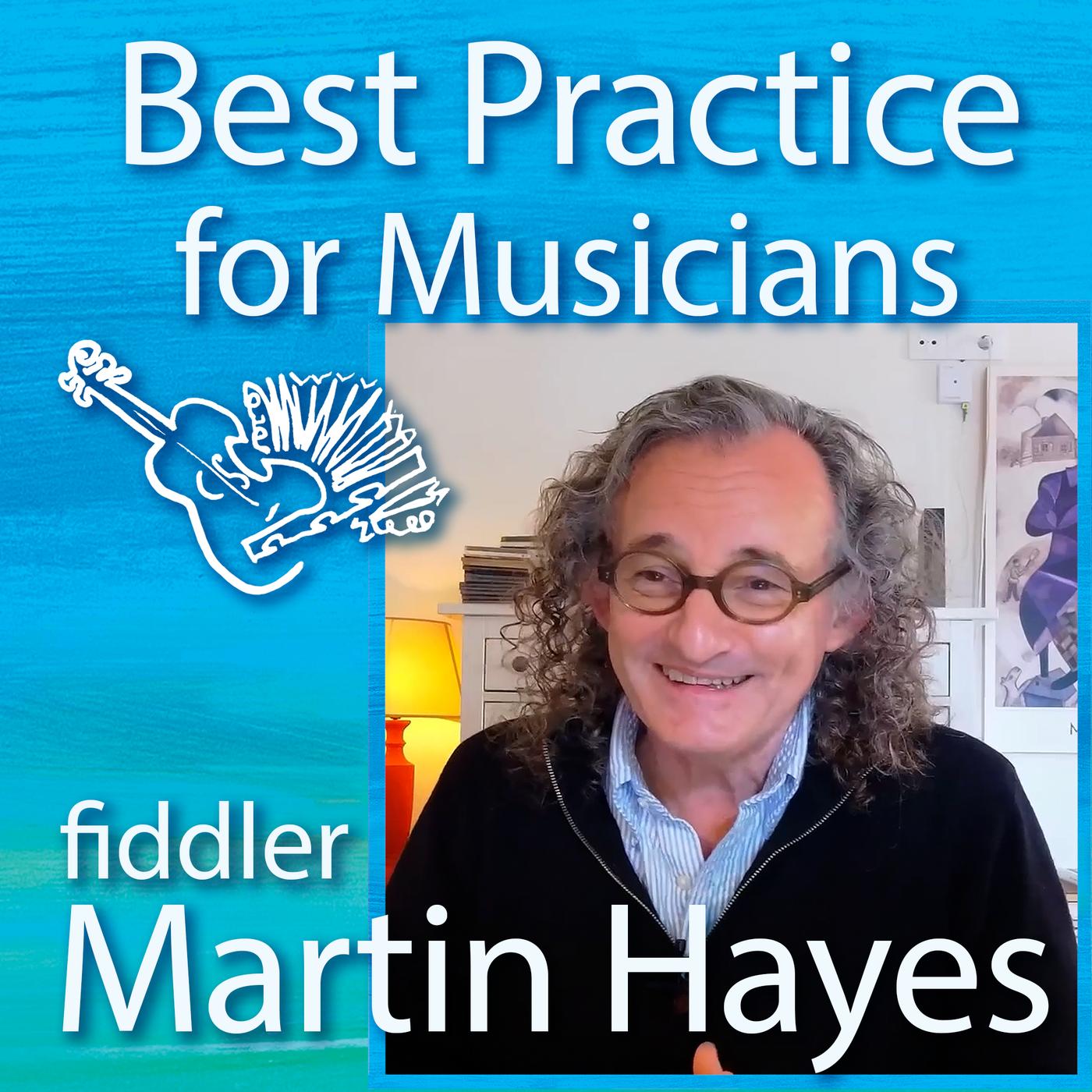
In this interview, renowned Irish Fiddler Martin Hayes shares his deep understanding of musical expression, personal style, and creating a beautiful sound in this interview with author Judy Minot. Martin offers practical tips on practicing, playing with feeling, balancing tradition with innovation in Irish music and conquering stage fright.
Memorable Quotes:
"There's only one fundamental mistake really, in performance as far as I'm concerned, which is do I get into it or not?"
"It is all deep. There's no there's no other way around it."
"The only authority in the music, the real authority, is actually the melody. Respecting the melody is the key."
"It's actually when you have lost the pulse that the impulse to speed up comes."
Guest Martin Hayes is regarded as one of the most significant talents in the world of Irish traditional music. His unique sound, his mastery of the violin, his acknowledgement of the past and his shaping of the future of the music, combine to create a formidable artistic intelligence. He has drawn inspiration from many musical genres, but remains grounded in the music he grew up with in East County Clare. In addition to his solo playing, Martin is known for his longstanding creative partnership with guitarist Dennis Cahill, and as a member of the Irish "superband" The Gloaming. Martin has continued to push the boundaries of the "traditional" in Irish music with groups like the Common Ground Ensemble and the Martin Hayes Quartet.
Podcast host Judy Minot is a music educator and musician, and the author of the award-winning book Best Practice, Inspiration and Ideas for Traditional Musicians. Judy is an evangelist for the power of trad/folk/roots music to bring richness to our adult lives. Judy herself has never been a professional musician. She enjoyed a long and successful career in broadcast television and in digital marketing, picking up two platinum records and a platinum video, multiple awards. She holds a 4th degree black belt in the martial art of aikido, is a certified yoga teacher, a regular contributor to Acoustic Guitar Magazine, and has sung on the stage of Carnegie Hall. She teaches Best Practice concepts online and in person around the world.
If you enjoy Best Practice for Musicians, subscribe now so you don't miss an episode.
Start transforming the way you practice - and play.
Rate, like, comment, and share.
Resources
Martin Hayes Official Website - https://www.martinhayes.com/
The Gloaming - https://thegloaming.com/
Ingles
Estados Unidos
SA EPISODE NA ITO
KOPYA NG SALIN 🔗
I-SEARCH ANG MGA NAKARAANG EPISODE
I-search ang mga nakaraang episode ng Best Practice for Musicians.
Paunawa: Ang podcast at artwork na naka-embed sa page na ito ay mula sa Judy Minot, na pag-aari ng may-ari nito at hindi kaakibat o ineendorso ng Listen Notes, Inc.
I-EDIT
Salamat sa pagtulong na mapanatiling naka-update ang database ng podcast.
