


WEBVTT
00:00:05.759 --> 00:00:14.640
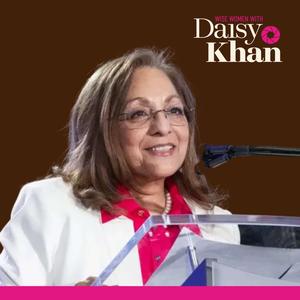
You're listening to Wise Women with Daisy Khan, where faith rolls up its sleeves as a force for good, and where women define the future with wisdom and wonder.
00:00:14.800 --> 00:00:23.519
I'm Daisy Kahn, author, speaker, and a Muslim woman who spent her life wrestling with a messy, miraculous collision of faith and real life.
00:00:23.600 --> 00:00:27.120
And kindly subscribe wherever you get to your podcast.
00:00:32.719 --> 00:00:38.880
Today we will discuss Juneteenth, which marks the emancipation of enslaved people in America.
00:00:39.119 --> 00:00:47.520
You may be wondering why dig up these painful stories, because today some of these chains are still rattling away.
00:00:47.759 --> 00:01:03.280
In a way that people are held back, in how voices are being silenced, and in how we continue to fight for human dignity, we really need to understand the past so that we can draw some lessons from inspiring luminaries who have fought these battles before us.
00:01:03.600 --> 00:01:16.480
So I'm gonna take us back to the journey of seventh century Arabia, where a young man named Muhammad, who was not a prophet yet, discovered that his surrogate mother, Barak, had been enslaved.
00:01:16.719 --> 00:01:21.120
He was so horrified by this that he declared her free as a wind.
00:01:21.200 --> 00:01:22.319
He said, Go, go.
00:01:22.480 --> 00:01:28.480
But of course Baraka was not going to leave him, so she stayed with him until she died.
00:01:29.519 --> 00:01:36.959
At the age of forty, when he became a prophet, as he received revelations from Angel Gabriel, the message was very simple.
00:01:37.200 --> 00:01:41.680
There's only one God and all human beings are created equal.
00:01:42.640 --> 00:01:47.040
His message shook the foundations of Meccan society.
00:01:48.640 --> 00:01:54.560
But with his wife, who was a wealthy merchant, he sowed the seeds of emancipation within his home.
00:01:55.280 --> 00:01:58.719
And they treated their slaves not as property but as family.
00:02:00.000 --> 00:02:04.719
And one day, while he was walking, he witnessed a man being flogged by his master.
00:02:05.680 --> 00:02:10.800
So he intervened and offered to double the man's price to secure this man's freedom.
00:02:11.759 --> 00:02:23.680
And when he learned, as he started becoming conscious of this issue, when he learned that a lot of enslaved people were stolen as children, stripped of their dignity, he told them, Speak.
00:02:27.360 --> 00:02:33.919
One of his earliest followers, as he was now a prophet and spreading his message, was Sumaya bin Kayat.
00:02:34.879 --> 00:02:37.039
She was also an enslaved Yemeni woman.
00:02:37.759 --> 00:02:45.680
She accepted Islam immediately, and then she went door to door banging on the doors, urging women to reject female infanticide.
00:02:45.840 --> 00:02:49.039
And she told other enslaved people to think for themselves.
00:02:49.280 --> 00:02:54.319
Her master Amar was so angry that he demanded she renounce her faith.
00:02:54.560 --> 00:02:56.479
And of course, she refused.
00:02:57.039 --> 00:03:02.400
And he then in turn bound her and buried her in the sand with her head up.
00:03:02.560 --> 00:03:11.919
And while he was towering over her body, she continued to defy him, and she said, You don't control my mind nor my heart, they all belong to my God.
00:03:12.240 --> 00:03:16.000
And that's when he plunged a spear in her heart and killed her.
00:03:16.240 --> 00:03:20.080
Thus Sumea became Islam's first martyr.
00:03:20.319 --> 00:03:24.319
And there's even a verse that was revealed right after her death.
00:03:24.479 --> 00:03:32.240
The Quran affirms her sacrifice, never say those who are who are martyred in God's cause are dead.
00:03:32.400 --> 00:03:33.840
They are very much alive.
00:03:34.080 --> 00:03:38.479
Meanwhile, Prophet Muhammad's followers grew, but so did the backlash.
00:03:38.800 --> 00:03:47.439
So one day he left town to seek some refuge, and there he met this man named Bilal, an enslaved African shepherd.
00:03:47.759 --> 00:03:55.199
He asked Bilal to come sit next to me, and it was the first time that Bilal felt like he was an equal.
00:03:55.439 --> 00:03:58.159
Of course he immediately became a Muslim.
00:03:58.560 --> 00:04:11.759
And of course his master also tortured him, dragged him across Mecca in the hot sand because he wanted to make an example out of him in the hot sand, and as Bilal was crying, God is one, God is one.
00:04:12.000 --> 00:04:20.240
The Prophet was so grieved by this that he asked his friend and companion, Abu Bakr, to buy Bilal's freedom.
00:04:20.319 --> 00:04:22.160
And of course Bilal was freed.
00:04:22.319 --> 00:04:27.360
The Quran declared emancipation as a path of spiritual excellence.
00:04:27.600 --> 00:04:35.600
Khadija and Abu Bakr spent all their fortunes liberating thousands of slaves who then became the Prophet's followers.
00:04:35.839 --> 00:04:46.480
Centuries later, across the Atlantic, America's promise of life, liberty, and pursuit of happiness rang hollow for many enslaved Africans.
00:04:50.639 --> 00:04:58.079
They carried Islam in their hearts, praying in secret and finding solace in the Quran's message of liberation.
00:04:58.879 --> 00:05:00.800
Today we're honoring Juneteenth.
00:05:01.439 --> 00:05:08.720
But we're also reclaiming a truth that long before 1865, Islam's earliest teachings call for abolition.
00:05:08.879 --> 00:05:16.079
The Prophet freed slaves, he elevated them as leaders and declared he who enslaves a person is not one of us.
00:05:17.279 --> 00:05:22.079
And so how does this legacy intersect with American story of emancipation?
00:05:22.240 --> 00:05:24.959
How did enslaved Muslims preserve their faith?
00:05:25.040 --> 00:05:29.839
And why does Juneteenth matter for us all, whether a Muslim or not?
00:05:30.079 --> 00:05:34.160
Okay, to unpack this, I'm thrilled to welcome Quran Shakir.
00:05:34.800 --> 00:05:42.720
Madame Q, as she's affectionately called, is passionate about education, training young people to advocate, lead, and serve.
00:05:42.879 --> 00:06:06.240
In addition to being certified as a JEGNA, master educator, she is a radio talk show host, and the show is called The Power of Educating Our Own, a Freelance Writer, a Leader in Interfaith Relations, a Called Upon Motivational Speaker, and co-owner of Celebrating Sacred Connections, an agency for honoring the scriptural beauty and power of women.
00:06:06.480 --> 00:06:09.839
Madam Q, let's start at the very beginning.
00:06:10.079 --> 00:06:21.600
I mentioned to people that uh there are only roughly three to six million Muslims in America, and 40% of them are African American.
00:06:21.759 --> 00:06:24.319
So I'd like to go back to the very early days.
00:06:24.480 --> 00:06:29.120
Are there any stories of how they preserved their faith under uh enslavement?
00:06:29.279 --> 00:06:33.360
And were there any specific rituals or resistance practices tied to Islam?
00:06:33.759 --> 00:06:34.399
Absolutely.
00:06:34.560 --> 00:06:44.399
And we cannot discount the horrific experience that the enslaved movement caused for the African and the African American.
00:06:44.560 --> 00:06:53.839
And one of those that the enslaver worked really hard to do was to erase Islam from the souls of those people.
00:06:54.240 --> 00:06:57.360
Came here with the Quran on their tongues and in their hearts.
00:06:57.600 --> 00:07:08.879
Many of them, because of our religious practices, were those who believed in what Allah has revealed to us about not eating pork, um, fasting, praying.
00:07:09.120 --> 00:07:29.839
So when you look at what the enslaved African has to do, they had to sneak, go into the woods to make salat, because the enslaver made it forbidden for the um enslaved to read, to worship in their natural way, to speak their language, or to even dress in their cultural traditions.
00:07:30.000 --> 00:07:31.439
All of that was forbidden.
00:07:31.759 --> 00:07:36.800
They were beaten for um using the language of Quran or speaking Arabic.
00:07:36.959 --> 00:07:46.000
The Muslims worked really, really hard to maintain those um traditions, speaking these words into the children at night.
00:07:56.959 --> 00:08:02.639
And he was a Muslim who was brought and uh captured and brought here to the country.
00:08:02.800 --> 00:08:04.639
So I did not know any of this history.
00:08:04.879 --> 00:08:12.800
When I saw Roots, it was the first time I actually realized what had happened with African Americans.
00:08:13.120 --> 00:08:16.399
It was extremely powerful at that time.
00:08:16.720 --> 00:08:20.079
And I did not know that Kunta Kinte was a Muslim.
00:08:20.240 --> 00:08:25.360
That was not made very clear in the in in the Roots uh series, if I remember correctly.
00:08:25.600 --> 00:08:34.399
I have heard stories of women's role in in kind of like bringing certain things with them that have that have become staples in America.
00:08:34.559 --> 00:08:36.159
Can you describe some of that?
00:08:36.480 --> 00:08:37.039
Absolutely.
00:08:37.120 --> 00:08:40.879
So we're geniuses, number one, and that's not talked about enough.
00:08:41.039 --> 00:08:42.399
And even well, let's talk about it.
00:08:42.480 --> 00:08:42.799
We're here.
00:08:43.200 --> 00:08:43.519
That's right.
00:08:43.679 --> 00:08:44.720
We're gonna talk about it.
00:08:46.960 --> 00:08:50.960
You know, you said you didn't see that clear distinction of kunta being a Muslim.
00:08:51.039 --> 00:08:53.360
But when you read the book, it's clear in there.
00:08:53.440 --> 00:09:05.039
They they so for the women who were coming in, women were really the the the ones who brought salvation really to the experiences, because women have a way of nurturing.
00:09:05.279 --> 00:09:13.919
But it was so wise and smart because um, not knowing where we were going, we wanted to take a part of the land with us.
00:09:14.159 --> 00:09:27.200
And so we would take the grains of rice, we take the seeds of hibiscus, take the seeds of okra, take the seeds of many of the plants that we have here in America, we think just happened.
00:09:27.360 --> 00:09:27.919
It didn't.
00:09:28.000 --> 00:09:28.879
We brought that.
00:09:29.039 --> 00:09:30.559
How did we get it here?
00:09:30.799 --> 00:09:38.559
Since there was so much um, oh my goodness, oppression and so much opposition to us.
00:09:38.799 --> 00:09:41.440
The women would braid these seeds in the hair.
00:09:41.600 --> 00:09:54.240
And even when you think about um enslaved when they were running away, they they would want to take some of the seeds with them so that they can reproduce life wherever they were going.
00:09:54.399 --> 00:10:00.960
Well, sometimes we look at these cornrows and these hairstyles as just hairstyles, it's more than that.
00:10:01.200 --> 00:10:11.039
When you look at these styles, there were certain um cornrows styles that what became a roadmap for those who were seeking liberation.
00:10:11.840 --> 00:10:19.440
Or if we have the the braids that became close together, they represented there's a railroad in this area here.
00:10:19.679 --> 00:10:27.440
So that the style of the hair became a roadmap to your freedom as you're going out.
00:10:27.600 --> 00:10:39.279
They would make quilts that also had maps on them and they told a story, or they would make the quilt and be able to slide things inside of the quilt to be able to use it as they were escaping.
00:10:39.519 --> 00:10:44.879
The quilt itself, they would hang it on a fence so people could come by and look at it and see.
00:10:45.679 --> 00:10:46.799
Jesus, right?
00:10:47.120 --> 00:10:49.679
Yeah, spy masters, spy masters.
00:10:50.799 --> 00:10:51.679
Absolutely.
00:10:52.000 --> 00:10:58.399
So, how did we go from the early Muslims preserving whatever they could, elements of their culture?
00:10:58.720 --> 00:11:00.080
How did they find their roots?
00:11:00.320 --> 00:11:08.240
So, you know, in Islam there's oral tradition anyway, but also in the West African tradition is oral traditions where we pass those stories down verbally.
00:11:08.480 --> 00:11:18.799
Kunta told his daughter Kizzy the story, and Kizzy told her son the story, and it kept going like that for generation after generation.
00:11:18.960 --> 00:11:20.320
It may get watered down.
00:11:20.399 --> 00:11:20.559
Yeah.
00:11:20.799 --> 00:11:22.080
You may miss some of it.
00:11:22.320 --> 00:11:30.639
So there were halal traditions like we wash our food and we make sure that when we're cooking, that we're cooking to please Allah.
00:11:30.799 --> 00:11:37.200
We say bismillah over our food, uh, the dress, even in wearing modest clothing.
00:11:37.440 --> 00:11:52.000
So even in the enslavement movement, when we were forced to read the Bible, some would um read Quran and and give Quran in that reading of the Bible and make sure that it was understood.
00:11:52.240 --> 00:12:00.639
There is a church in Savannah that has pews, and on the back of the pews is inscribed Quranic ayat.
00:12:01.200 --> 00:12:06.799
And they, even though they rebuilt that church, they saved those pews to be able to tell that story.
00:12:06.960 --> 00:12:16.960
Even in the naming of the children, the naming of the children had in it traditions that maintained the Islam and the culture of the people.
00:12:17.200 --> 00:12:27.279
When uh Kunta named his daughter Kidzi, they thought that it was after something that was on the land, but it was uh a name that meant you stay put.
00:12:27.679 --> 00:12:28.080
Right.
00:12:28.240 --> 00:12:38.559
So if we would just to broaden this, because although we are focused on the Muslims right now, just to understand that, there's the whole broader African community that has come here.
00:12:38.720 --> 00:12:47.039
What is the contribution, the cultural contribution, the leftovers or whatever they brought from their homeland, whatever's part of their DNA, what contributions did they make?
00:12:47.200 --> 00:12:51.200
What did they bring that has become like part of American fabric right now?
00:12:51.519 --> 00:12:54.799
I think the first thing we would talk about would be music.
00:12:55.679 --> 00:12:56.799
So yes.
00:12:57.039 --> 00:13:06.320
So one of the soul music, we have hip hop and we have language where we tell stories in our music.
00:13:06.480 --> 00:13:13.519
So even when you look at country music, the telling of the story in the music, that's a part of the American tradition, but it comes from us.
00:13:13.759 --> 00:13:16.559
So a simple thing like a cowry shell.
00:13:17.120 --> 00:13:19.519
And I told my granddaughter the other day, you see these?
00:13:19.600 --> 00:13:25.039
These are cowrie shells, and these shells come from West Africa, and we use them for money.
00:13:25.279 --> 00:13:36.240
So to be able to tell those kinds of stories, even in um our dance movements, how we oh yeah, Michael Jackson, that was probably all you know.
00:13:36.320 --> 00:13:40.639
We used to we used to call each other with drums from village to village.
00:13:40.720 --> 00:13:42.240
We use drums to call each other.
00:13:42.399 --> 00:13:48.320
So if you see an uh an African or African-American child beating on their desk, it's in their DNA.
00:13:48.480 --> 00:13:56.879
And I always say, oh, don't punish the child because he's just calling back his roots a few weeks ago, and I was the only African American in the room.
00:13:57.120 --> 00:14:08.000
And one young woman said, I never understood why black people talk like they do until she read this book that we were looking at.
00:14:08.159 --> 00:14:14.720
And it was, we we had to, we were beaten if we spoke our language.
00:14:14.960 --> 00:14:18.960
And then we have a certain way that our tongues are made to speak.
00:14:19.600 --> 00:14:27.440
We have to condition ourselves to use this European language, which is different for us, and everybody is not able to do that.
00:14:27.759 --> 00:14:30.080
So all of that was a part of those traditions.
00:14:30.159 --> 00:14:32.639
But even the foods we eat.
00:14:33.120 --> 00:14:36.879
You know, um, who was cooking for the enslaver?
00:14:37.120 --> 00:14:38.080
It was us.
00:14:38.399 --> 00:14:39.519
We were their cooks.
00:14:40.480 --> 00:14:41.919
Yeah, you were the farmers too.
00:14:42.080 --> 00:14:42.639
You were farming.
00:14:43.279 --> 00:14:46.159
Yes, we farmed the land and we took the food.
00:14:46.320 --> 00:14:49.039
We sold, we made the clothes.
00:14:49.200 --> 00:14:50.240
That's who we were.
00:14:50.399 --> 00:14:51.840
We built the White House.
00:14:51.919 --> 00:14:52.639
Let's say that.
00:14:52.879 --> 00:14:54.480
Oh, you did build the High White House?
00:14:54.559 --> 00:14:55.519
Okay, so I did not know that.
00:14:55.600 --> 00:14:57.279
Can we just like give you a look at it?
00:14:57.360 --> 00:14:58.000
Yes, yes.
00:14:58.080 --> 00:15:01.120
It was so when we talk about what did we leave to America?
00:15:01.279 --> 00:15:02.879
We built the White House.
00:15:03.039 --> 00:15:07.120
And that was one of the things that um former First Lady Michelle Obama mentioned.
00:15:07.200 --> 00:15:10.159
She's in this house that my ancestors built.
00:15:10.639 --> 00:15:18.559
We made the bricks, we were the architects of structures, the architects of language.
00:15:18.799 --> 00:15:23.200
So we brought all of that with us and we leave that here in this country.
00:15:23.360 --> 00:15:25.360
So we are woven into the fabric.
00:15:25.440 --> 00:15:28.799
So when they say go back to your homeland, this is my homeland.
00:15:29.039 --> 00:15:30.240
I built this place.
00:15:30.480 --> 00:15:31.600
You made this place.
00:15:31.840 --> 00:15:32.399
That's right.
00:15:32.720 --> 00:15:33.200
That's right.
00:15:33.279 --> 00:15:33.600
Yes.
00:15:33.679 --> 00:15:46.000
And I mean, you just have to look around, you just have to look around the gallas and see how many African Americans are successful in whether it's in sports or whether it's in entertainment, how much contribution they are making.
00:15:46.159 --> 00:16:13.200
So going back to the let me just say one thing too, because you know, even when we look at a holiday like Memorial Day, Memorial Day began because the uh formerly enslaved, after the Civil War, they wanted to celebrate the the African Americans who fought in the Civil War who were not honored.
00:16:13.519 --> 00:16:14.159
Oh, I see.
00:16:14.399 --> 00:16:23.679
And so there was a big celebration for them that our community had, and that the broader country began to pick up.
00:16:24.080 --> 00:16:26.480
And that's how Memorial Day became a holiday.
00:16:26.720 --> 00:16:27.440
Oh, wonderful.
00:16:27.840 --> 00:16:30.399
Celebrate the warriors in the Civil War.
00:16:30.639 --> 00:16:47.360
So going back to like Muslims who now uh found their roots, you know, contemporary Muslims, can you just name a few that that you know for the American public so we can just remember who they are, what they're contributing, just a few people that come to your mind.
00:16:47.600 --> 00:16:47.840
Yes.
00:16:48.080 --> 00:16:54.320
Whenever people talk about uh black Muslims in America, the first ones they mention, Muhammad Ali.
00:16:54.879 --> 00:16:57.919
So he's one of the most popular that we have.
00:16:58.000 --> 00:17:03.519
And I love to also mention some of our contemporary, so even Most Deaf.
00:17:03.600 --> 00:17:04.400
I don't know if you know him.
00:17:04.559 --> 00:17:05.519
Oh, yes, of course most Def.
00:17:06.480 --> 00:17:07.599
Most Deaf is Muslim.
00:17:07.759 --> 00:17:07.839
Yeah.
00:17:10.319 --> 00:17:12.880
And you have um so many like Bilkis.
00:17:13.279 --> 00:17:17.599
She is a basketball player, a famous basketball player here.
00:17:17.920 --> 00:17:25.759
And then you even have most recently Brock, uh, the sister, who um has produced a lot of soap operas.
00:17:25.839 --> 00:17:33.119
And one of my favorite sister Clara Mohammed, who changed the state of education in our country because homeschool was considered illegal.
00:17:33.200 --> 00:17:40.240
And Sister Clara Mohammed stood her ground and made and that's how homeschool became legalized in our country in the 1950s.
00:17:40.480 --> 00:17:41.359
So what was it?
00:17:41.599 --> 00:17:48.079
She just started a movement because she she wanted to homeschool, and then what was the resistance for that?
00:17:48.400 --> 00:17:51.039
Oh, and it's beautiful, it's rooted just in what we're talking about.
00:17:51.119 --> 00:18:00.160
When we talk about Juneteenth and we talked about this idea of liberation, her children were going to public school, which was considered the way to educate American children.
00:18:00.319 --> 00:18:00.400
Right.
00:18:00.640 --> 00:18:13.279
They were going there and they were hearing things like, you know, we rescued you uh in Africa because you were just monkeys swinging on trees, and you had no sense of intellect, and we brought you here.
00:18:13.440 --> 00:18:16.960
Her children would come home crying and complaining about that.
00:18:17.039 --> 00:18:19.680
And Sister Clara Mohammed didn't want that for her children.
00:18:19.839 --> 00:18:22.799
She wanted them to understand their real history.
00:18:22.960 --> 00:18:31.279
She wanted them to appreciate their blackness and have joy in being who they are and their history as people of genius.
00:18:31.440 --> 00:18:35.839
And so what she did was she kept them home and decided to teach them herself.
00:18:36.000 --> 00:18:41.200
The police came to her house and said to her, You are breaking the law and you will go to jail.
00:18:41.359 --> 00:18:44.559
And we have these famous words that we love to say of Sister Clara Mohammed.
00:18:44.720 --> 00:18:50.400
She grabbed hold of the doorknob and said, I'll be dead as this doorknob before I let my children go to your school.
00:18:50.640 --> 00:18:54.960
And that became her stance, her her big move.
00:18:55.200 --> 00:19:01.839
And with that, that's how was born the uh Muhammad schools that you find all over the country today.
00:19:02.079 --> 00:19:09.680
But it began in the home of Sister Clara Mohammed and that fight that she um initiated in the 1930s.
00:19:10.240 --> 00:19:10.880
Wow.
00:19:11.119 --> 00:19:12.000
Who knew that?
00:19:12.240 --> 00:19:13.680
Another little factoid.
00:19:13.920 --> 00:19:14.960
Thank you so much.
00:19:15.200 --> 00:19:16.880
So let's go to Juneteenth now.
00:19:17.039 --> 00:19:19.440
When did the emancipation movement begin?
00:19:19.680 --> 00:19:24.480
When I heard the word Juneteenth, it was it just surfaced as a holiday for me, right?
00:19:24.640 --> 00:19:26.079
One day it became official.
00:19:26.160 --> 00:19:27.039
It was a holiday.
00:19:27.200 --> 00:19:28.559
We had to take the day off.
00:19:28.720 --> 00:19:32.559
And so I'd also like you to just explain how it got obscured and what happened.
00:19:32.640 --> 00:19:34.000
Why did it disappear?
00:19:34.559 --> 00:19:46.319
So we all know the story of the the um Civil War and that battle between the North and the South, and how President Lincoln had a big decision to make.
00:19:46.480 --> 00:19:52.079
And I often will explain President Lincoln didn't make that decision because he was a great man who cared about the enslaved.
00:19:52.160 --> 00:19:54.319
He had his own enslaved Africans.
00:19:54.640 --> 00:19:56.640
He did it as a political move.
00:19:56.799 --> 00:19:59.279
He needed to find peace in his country.
00:19:59.599 --> 00:20:05.039
And so he signed the Emancipation Proclamation January 1, 1863.
00:20:05.920 --> 00:20:11.440
Well, you know, we're fighting this battle, this war, this this the country is torn.
00:20:12.319 --> 00:20:22.480
So in this fighting, the word, we didn't have social media, we didn't have telephones, we didn't have a way to get the word out really quickly.
00:20:22.640 --> 00:20:34.480
And so there were men on horses who rode across the country to go and tell every plantation you got the war is over, there's no more enslavement.
00:20:34.720 --> 00:20:40.160
And some of them graciously honored it, and some like, ah no, we're not doing that.
00:20:40.319 --> 00:20:51.200
So it took them a while, it took them two and a half years to get to Texas to tell the enslaved, the enslavers in Texas, war is over.
00:20:51.359 --> 00:20:59.680
And so they they made it there two and a half years later, on June 19th, 1865.
00:21:00.319 --> 00:21:06.559
And that is the um the day that the enslaved people in Galveston, Texas were informed of their freedom.
00:21:07.359 --> 00:21:19.519
And um the delay was due to resistance of the um enslavers and to lack of federal enforcement as well, and the systematic communication suppression.
00:21:19.759 --> 00:21:25.039
So when they get there, now they're like, oh wow, this is great, and it's a celebration.
00:21:25.359 --> 00:21:32.480
And that's how Juneteenth was born because of the celebration that these enslaved Africans had.
00:21:32.559 --> 00:21:40.960
Like, we're free, oh my God, hallelujah! Glory, glory, Allahu Akbar, and all the great things that come with being liberated.
00:21:41.200 --> 00:21:43.279
So it represents a delay justice.
00:21:43.440 --> 00:21:52.960
Juneteenth is this holiday that says this is delayed justice, this is resilience, this is community celebrating our liberation.
00:21:53.440 --> 00:21:56.720
So this began in the late 1800s, right?
00:21:56.960 --> 00:21:58.160
1865.
00:21:58.640 --> 00:21:59.680
And they um die.
00:22:00.160 --> 00:22:02.960
Got their freedom and they wanted to do more.
00:22:03.039 --> 00:22:09.839
So they were raising funds, they were cooking meals, they were sewing, having sewing classes and gathering their communities to mark this sacred day.
00:22:09.920 --> 00:22:13.920
So that's how the Juneteenth happened, because it was the 19th.
00:22:14.079 --> 00:22:16.880
That's how we got the word for Juneteenth.
00:22:17.039 --> 00:22:20.400
And I know even then they called it Jubilee Day.
00:22:20.559 --> 00:22:21.759
It wasn't Juneteenth.
00:22:21.839 --> 00:22:23.519
It was called Jubilee Day.
00:22:24.000 --> 00:22:29.599
And the freedom that came with that was the joy also that came with that.
00:22:29.759 --> 00:22:42.079
So there was one story from Houston where a group of women in the 1870s organized their Jubilee Day celebration where they got together to cook and raise money.
00:22:42.240 --> 00:22:54.880
And then they did this year after year until they were able to purchase Emancipation Park, which is a 10-acre plot of land, so that their people would always have a place to remember.
00:22:55.359 --> 00:23:08.880
And even when Jim Crow Laws tried to silence the public celebrations, it was women, grandmothers, school teachers, church mothers who kept the tradition alive in their backyards and in their basements.
00:23:09.599 --> 00:23:15.039
So these are the unsung heroines that just kept spreading the news of freedom.
00:23:15.279 --> 00:23:19.599
So then why did you june teams fade from public memory?
00:23:19.920 --> 00:23:26.240
Like I said, because of the um things that we had in our country.
00:23:29.200 --> 00:23:42.319
So we had Jim Crow, we had um laws that prohibited the enslaved, well, the formerly enslaved from being happy about their freedom, from celebrating or even finding success.
00:23:42.480 --> 00:23:47.759
There was so much that was done just to denigrade and to hold back.
00:23:48.000 --> 00:23:53.119
So that's even when we look at what's going on today, we look at how our country operates.
00:23:53.279 --> 00:24:03.680
A lot of things were put in place just to erase and to hold back and to hold on to trauma for the um African-American um people.
00:24:04.000 --> 00:24:06.640
And sometimes we think, well, why can't they get ahead?
00:24:06.960 --> 00:24:10.559
Because the way our system is set up, we can't get ahead.
00:24:10.720 --> 00:24:15.839
So all of that was to suppress the holiday itself and the celebration.
00:24:16.000 --> 00:24:19.839
I left Georgia to go to school in Texas, and I had not heard of Juneteenth.
00:24:20.000 --> 00:24:28.960
And when I went to school in Dallas, that's when I heard of it, and that was in the 70s, and they were celebrating it then on my campus.
00:24:29.039 --> 00:24:32.400
I was at HBCU, a historically black college and university.
00:24:32.480 --> 00:24:38.640
So I'm there celebrating with them, and they're explaining this story to us.
00:24:39.119 --> 00:24:43.519
You know, we talked about the shackles that still hold us back.
00:24:43.920 --> 00:24:49.920
I mean, what uh how how does this Juneteenth legacy inform today's struggle for racial justice?
00:24:50.480 --> 00:25:03.599
In many ways, when we look at the the battle that we have for racial justice, we have first of all to understand what happened.
00:25:03.920 --> 00:25:10.960
So we have Jim Crow laws, like I said, we have violence and intimidation.
00:25:11.599 --> 00:25:23.920
Um white supremacists um were white supremacists were terror groups that invaded the communities and instilled fear in people.
00:25:24.079 --> 00:25:33.200
So when you look at a Emmett Thiel, who was just a a boy before he could even get to his teens, who um he was really an example.
00:25:33.599 --> 00:25:41.279
When when we're lynched and hung from trees, the the hanging from the trees is a reminder.
00:25:41.759 --> 00:26:07.519
So as a teacher, I had my students reading this book and uh understanding this story of how the uh enslaved Africans were looking for liberation and they formed a a coup to escape, and they were doing really good with the escaping, but there was one and they trained us to go against one another.
00:26:08.000 --> 00:26:13.039
And one went and told his enslaver, this is what's happening.
00:26:13.200 --> 00:26:30.960
And so then they spread the word, and once they heard it, then they got all of the ones who organized, chopped their heads off, hung their heads on fences so that anybody who sees it would think twice before they think about trying to be liberated.
00:26:31.119 --> 00:26:43.359
All of that contributes to the DNA today of how we honor the enslaver over our own history, over our own selves.
00:26:44.000 --> 00:26:55.599
And we had the the movements where they took land, even after, you know, we were promised 40 acres and a mule, and some people got it, it was taken.
00:26:55.839 --> 00:27:07.200
So, with that black communities being pushed off of land that they actually owned, that contributes today to very few of us own our own land.
00:27:07.920 --> 00:27:11.599
But even have the ability to purchase our own land.
00:27:11.680 --> 00:27:14.559
It's not in our families anymore.
00:27:14.799 --> 00:27:18.880
Even in our, I talked about Sister Clara Muhammad in education.
00:27:19.039 --> 00:27:28.720
So even in our educational system, the public schools and the textbooks often ignored or distorted the history of black resistance and emancipation.
00:27:28.960 --> 00:27:34.160
So enslavement was often minimized or romanticized, even.
00:27:34.480 --> 00:27:43.759
And so it wasn't taught of how you know, like if you look at a holiday like Juneteenth, it was not taught.
00:27:44.000 --> 00:27:47.599
And the stories of black self-liberation were omitted.
00:27:47.839 --> 00:27:50.240
All of that contributes to what we have today.
00:27:50.400 --> 00:27:56.880
And one of the biggest things that we have would be the commercialization of the 4th of July.
00:27:57.200 --> 00:28:08.799
That was a big thing because as July 4th became a national holiday, a national spectacle, so to speak, Juneteenth was seen as unpatriotic.
00:28:08.880 --> 00:28:09.039
Yeah.
00:28:09.519 --> 00:28:11.279
It was quote unquote redundant.
00:28:11.440 --> 00:28:21.839
So when we look at today, the resistance that we're showing, despite this erasure, black families and black churches, we kept Juneteenth alive.
00:28:21.920 --> 00:28:30.319
And we look at what do we do today to find our liberation, to elevate ourselves, to build unity amongst ourselves.
00:28:30.480 --> 00:28:34.160
And it's all in these traditions that we have formed with Juneteenth.
00:28:34.240 --> 00:28:41.279
So Juneteenth has in it several traditions that we can talk about when we're looking at what is it?
00:28:41.359 --> 00:28:52.079
So you see certain colors, you see the red, the black, the green, all of that goes into us preserving our history and our culture.
00:28:52.400 --> 00:29:04.000
Even when we look at like the January 1st, when we are um eating our foods, we have the black-eyed peas and the rice.
00:29:04.160 --> 00:29:07.519
That's from us, and it's designed to say to bring good luck.
00:29:07.680 --> 00:29:13.200
But that we brought that tradition because we were looking for any kind of thing that's gonna bring us some joy.
00:29:13.359 --> 00:29:15.200
You know, we were never complacent.
00:29:15.359 --> 00:29:17.200
Not ever were we complacent.
00:29:18.240 --> 00:29:23.599
So it must have brought you a lot of hope when Juneteenth became a federal holiday.
00:29:23.759 --> 00:29:25.759
It was recognized as a federal holiday.
00:29:26.079 --> 00:29:28.720
Yeah, so a lot of things to say, well, it's about time.
00:29:29.200 --> 00:29:40.559
But the the idea of the federal federal holiday, though, I think was more beneficial for America and those who were not African and African American.
00:29:40.880 --> 00:29:41.440
Yeah.
00:29:41.839 --> 00:29:52.079
So personally, with all the dehumanization that has been going on in so many different ways, how do you use your faith to resist that dehumanization?
00:29:52.319 --> 00:29:53.359
I love Allah.
00:29:54.160 --> 00:29:58.640
And I love how Allah in the Quran says, be sure we would test you.
00:29:58.880 --> 00:30:00.000
That's number one.
00:30:00.319 --> 00:30:03.599
So we we understand that we're going to be tested.
00:30:03.759 --> 00:30:08.480
And it is in the testing that we find our faith.
00:30:08.640 --> 00:30:11.599
So for me, I hold on to that.
00:30:11.759 --> 00:30:16.640
I also hold on to my family and my community.
00:30:17.039 --> 00:30:22.240
And we find ways to find joy and celebration amongst ourselves.
00:30:22.480 --> 00:30:28.400
And in that, this this um love of Quran links us together.
00:30:28.559 --> 00:30:31.359
So we're able to pray together.
00:30:31.599 --> 00:30:35.680
And in our praying, then our praying is not just words.
00:30:35.839 --> 00:30:37.119
We pray with action.
00:30:37.359 --> 00:30:42.960
We teach Quran as a part of mathematics, as a part of social studies, as a part of the English class.
00:30:43.279 --> 00:30:47.119
It's a part of, is weaved into everything we do.
00:30:47.440 --> 00:31:01.039
When we start to tell the story of my people, the African and the African-American people, people of color, I always like for us to be mindful of the language that we use in telling the story.
00:31:01.279 --> 00:31:07.440
In telling this story, I think we discussed Juneteenth and the road to liberation.
00:31:07.599 --> 00:31:13.759
We have to choose words that affirm the full humanity of our ancestors.
00:31:13.920 --> 00:31:16.000
No one was born a slave.
00:31:16.240 --> 00:31:17.759
They were enslaved.
00:31:17.920 --> 00:31:20.960
So we don't want to use the languages the slaves.
00:31:21.119 --> 00:31:22.559
They were enslaved.
00:31:22.880 --> 00:31:32.799
Because these were scholars, these were farmers, these were builders, these were healers and believers long before they were forced into bondage.
00:31:32.960 --> 00:31:34.799
That's what we want people to remember.
00:31:34.960 --> 00:31:39.440
That's the thing that drives my actions personally.
00:31:39.599 --> 00:31:43.920
So those who claim ownership over them were not masters.
00:31:44.319 --> 00:31:49.279
No, they were violators of God's law and human dignity.
00:31:49.519 --> 00:31:55.359
And I love the words of Imam WD Muhammad, who said to us, words make people.
00:31:56.000 --> 00:31:57.279
We believe this.
00:31:57.519 --> 00:32:09.440
We choose this to be intentional in our language, and we urge all of you, your viewers and your listeners, who really want to make a difference, to be intentional in their language choices as well.
00:32:09.599 --> 00:32:14.960
And so I'd say that the guiding principle has to be that no human being is a slave.
00:32:15.200 --> 00:32:20.160
People were enslaved by force, and others illegally claimed ownership over them.
00:32:20.400 --> 00:32:23.200
So the language centers human dignity and truth.
00:32:23.359 --> 00:32:29.440
The words we use shape the way we understand history every day.
00:32:29.839 --> 00:32:36.799
We choose language that honors that their humanity, honors their agency, and honors their legacy.
00:32:37.039 --> 00:32:45.279
So we say to you, no, not slave, enslaved, or African in bondage, because this centers the personhood.
00:32:45.519 --> 00:33:11.519
We say, don't say slavery, say system of enslavement or forced labor system, because it names it as a system, not a condition of being, and not slave master, enslaver, or captor, because that strips away the false authority and the ownership, not slave owner, because that's a person who claimed ownership.
00:33:11.599 --> 00:33:13.039
That was an exploiter.
00:33:14.079 --> 00:33:20.319
No one can truly own another human, not a plantation, a forced labor camp.
00:33:20.559 --> 00:33:28.880
Imagine the difference that makes when we call it that over a plantation, a forced labor camp, an enslavement site.
00:33:29.119 --> 00:33:30.559
Imagine the difference.
00:33:30.799 --> 00:33:34.960
Or instead of a runaway slave, a freedom seeker.
00:33:35.279 --> 00:33:36.720
Isn't that empowering?
00:33:36.960 --> 00:33:44.960
A freedom seeker, a self-liberated person, and instead of a freed man or a freed woman, let's do this.
00:33:45.039 --> 00:33:52.000
How about self-emancipated person, formerly enslaved person, and even formerly enslaved person?
00:33:52.319 --> 00:33:53.680
Formerly enslaved person.
00:34:05.759 --> 00:34:06.720
That's what it was.
00:34:06.960 --> 00:34:11.199
Human trafficking or the transatlantic kidnapping.
00:34:11.360 --> 00:34:15.920
That reflects the violent and the criminal nature of what happened.
00:34:16.079 --> 00:34:18.639
So all of that grounds me.
00:34:19.039 --> 00:34:20.400
It keeps me going.
00:34:20.639 --> 00:34:21.920
It gives me hope.
00:34:22.079 --> 00:34:30.000
It makes it easy for me to practice my faith and to be a woman of color, making a difference, inshallah, in this world.
00:34:30.239 --> 00:34:30.800
Yeah.
00:34:31.119 --> 00:34:40.639
Well, I remember when I first said slaves, I was reprimanded immediately by an African-American sister of mine who I hold in high regard.
00:34:40.880 --> 00:34:42.960
And she said to me, We don't say that.
00:34:43.119 --> 00:34:44.480
We say enslaved.
00:34:44.559 --> 00:34:47.760
And since then I've been changing my language too.
00:34:47.920 --> 00:34:49.199
You know, we're all learning.
00:34:49.360 --> 00:34:49.679
Yes.
00:34:49.840 --> 00:34:52.320
And that's part of part of why we're here.
00:34:52.480 --> 00:34:55.119
You're an educator, you're from this community.
00:34:55.280 --> 00:35:00.000
This is about showing the true reality of what people experienced.
00:35:00.400 --> 00:35:14.000
And and, you know, one of the things that's always been bothering me about this whole movement and about this enslavement is that um people who are religious, who understand where we all come from.
00:35:14.480 --> 00:35:18.000
And yet the church is kept quiet for so long.
00:35:18.159 --> 00:35:22.719
They never said anything about people being enslaved, right?
00:35:23.360 --> 00:35:25.440
I I've never really understood that.
00:35:25.679 --> 00:35:34.880
I mean, why did they if they had just raised their voices and said this was wrong or this is a sin, things would have changed a lot earlier.
00:35:35.199 --> 00:35:36.320
Absolutely.
00:35:36.719 --> 00:35:55.599
Um when you were talking, one of the things that came to my mind, you know, that the enslaver he changed the language of the the Bible, the book he was trying to bring to us to make it seem like this is the right thing to do.
00:35:56.719 --> 00:36:04.480
Um, so you have in religion people who believed it to be okay.
00:36:05.280 --> 00:36:09.280
And then they also were afraid for their own lives.
00:36:09.360 --> 00:36:21.039
There were people who had more power, more strength, and more abilities to keep the people down, and so the people didn't rise up and speak as they should have.
00:36:21.280 --> 00:36:23.039
But you did have some who did.
00:36:23.199 --> 00:36:24.880
They were called abolitionists.
00:36:25.199 --> 00:36:32.880
And they were the people who supported the Underground Railroad, and they supported this process in their way.
00:36:33.280 --> 00:36:50.559
It was just a big battle, and that's a part of the the Civil War, even, because there were people inside of the Civil War who believed this is inhumane and they worked to make a difference and and work toward that that even even that battle to do that.
00:36:50.719 --> 00:36:59.280
So I I don't want to disregard those workers, but we do know that it could have been a whole lot more.
00:36:59.679 --> 00:37:15.119
The overseer used to sit at the churches to make sure that the preacher was delivering the message of stay in this space of enslavement over liberation.
00:37:15.760 --> 00:37:22.079
So everything had to be done in secret in order for us to be able to get to where we are today.
00:37:22.320 --> 00:37:31.039
Well, that's why we're having this conversation because, you know, we know that we are speaking to a lot of people that are people of conscience.
00:37:31.280 --> 00:37:37.440
And we know in every wrong that has been done, there are people that rise up against that wrong.
00:37:37.599 --> 00:37:37.760
Yes.
00:37:37.920 --> 00:37:47.280
And this is why we're trying to bring this conversation to people so that we can stir their heart and so they can do whatever they can in their own capacity.
00:37:47.440 --> 00:37:55.519
So, how can non-black allies, especially, you know, Muslims, non-Muslims, honor this Juneteenth legacy meaningfully?
00:37:55.679 --> 00:37:58.719
What can we do as communities to promote this unity?
00:37:58.960 --> 00:38:00.400
There's so many things we can do.
00:38:00.639 --> 00:38:06.960
Let's begin just by speaking that language and affirming with people of color.
00:38:07.199 --> 00:38:10.480
I I see you, I hear you, I understand, I appreciate it.
00:38:10.639 --> 00:38:31.440
We also need to, as we're looking at ways to um, if you're um not African American and you're learning the full story, you're reading these books, you're watching documentaries, attending educational events, and then also support and it live uplift black joy.
00:38:31.679 --> 00:38:33.920
So attend these events that we have.
00:38:34.079 --> 00:38:36.639
That helps you to understand a little bit more.
00:38:36.800 --> 00:38:39.760
Um, attend as a guest and a learner.
00:38:40.079 --> 00:38:45.119
Amplify black voices online and in real life, like you're doing now.
00:38:45.360 --> 00:38:46.000
Do this.
00:38:46.239 --> 00:38:48.000
More of this has to be done.
00:38:48.159 --> 00:38:52.239
And then there's a lot of unfinished work, have those conversations.
00:38:52.400 --> 00:38:55.039
And then, if you have the means, donate.
00:38:55.679 --> 00:39:02.480
Support causes that address black education, maternal health, housing, or entrepreneurship.
00:39:02.719 --> 00:39:06.880
And then reflect on your role in liberation.
00:39:07.199 --> 00:39:16.880
Ask the question: how can I challenge racism in my workspace, in my schools, or in my institutions beyond Juneteenth?
00:39:17.039 --> 00:39:28.400
You can volunteer, offer your time to these events, to these organizations, and ask first what's needed, not what you assume is helpful.
00:39:28.639 --> 00:39:29.920
Ask what is needed.
00:39:30.159 --> 00:39:31.599
Wow, thank you so much.
00:39:31.840 --> 00:39:34.800
That is so much, you know, so needed.
00:39:34.880 --> 00:39:44.159
And to hear it directly from you, because I know you're such a great activist as well as a community leader, and you have actually put these things in practice.
00:39:44.320 --> 00:39:52.719
So this is not just words, these are words that are matched by actions, and I know that personally, and that's why I asked you for all this.
00:39:52.880 --> 00:40:05.920
I also think that people could support black-owned businesses because there's so many women that have started incredible businesses, and we could support those, not just women, but just you know, uh local businesses.
00:40:06.159 --> 00:40:06.480
Absolutely.
00:40:07.920 --> 00:40:09.119
Is there anything else?
00:40:09.280 --> 00:40:11.519
Oh, yeah, I I just wanted to ask you.
00:40:11.760 --> 00:40:18.480
So, um, Madam Q, do you have one word of wisdom that you'd like to part with us?
00:40:18.800 --> 00:40:20.480
First of all, thank you.
00:40:20.800 --> 00:40:21.920
That's most important.
00:40:22.159 --> 00:40:22.960
Thank you.
00:40:23.360 --> 00:40:26.719
Because this is major what you're doing.
00:40:26.880 --> 00:40:27.840
This is major.
00:40:28.079 --> 00:40:37.760
And I think if I had to leave uh one word of wisdom, it may be for us to remember that Juneteenth is not just a date, it's a doorway.
00:40:38.239 --> 00:40:45.519
And it is a doorway into memory, into mourning, and also into movement.
00:40:46.000 --> 00:40:50.480
So it reminds us that freedom was delayed but never denied.
00:40:50.800 --> 00:41:10.639
Our foremothers and forefathers, they braided maps into their daughter's hair, they hung directions into lullabies and planted seeds for liberation, tucked into their scalps, sung in hushed harbors, stitched into freedom quilts, all of that is major.
00:41:10.960 --> 00:41:13.599
And I think I want all of us to remember that.
00:41:13.840 --> 00:41:27.519
And as a Muslim woman, I honor the legacy of African American Muslim women, African Muslim women who were taken and renamed, silenced, but never erased.
00:41:27.760 --> 00:41:35.119
Their dua still lingers in the soil, and their resistance still rises in our own bones.
00:41:35.280 --> 00:41:45.360
And Allah subhanahu wa ta'ala tells us, and indeed, we will surely test you with something of fear and hunger and loss of wealth and lives and fruits.
00:41:45.679 --> 00:41:55.679
But give good tidings to the patient that patience is not passive, it's powerful, it's an act of spiritual defiance.
00:41:55.920 --> 00:42:09.280
So to every one of your listeners, every one of your viewers, I want you to remember that your joy is a form of resistance, your rest is a strategy, and your prayers are powerful.
00:42:09.599 --> 00:42:16.800
Your voice, your sacred, vibrant voice, is one your ancestors fought for.
00:42:17.119 --> 00:42:30.159
Let us not forget, let us not falter, and let us walk in freedom with our fists raised, our heads high, and our faith rooted deep.
00:42:30.480 --> 00:42:31.360
Eming.
00:42:31.920 --> 00:42:32.559
Wow.
00:42:32.960 --> 00:42:34.320
Thank you, Madam Q.
00:42:34.639 --> 00:42:39.199
That was not just words of wisdom, that was a template, a blueprint.
00:42:39.840 --> 00:42:48.639
I really want to thank you for helping us not just see Juneteenth as a date, but as a doorway, a call to action.
00:42:48.880 --> 00:42:55.840
And this is why I go back to Sumaya, that beautiful Sumaya whose defiance still inspires us today.
00:42:56.320 --> 00:43:05.360
And as the Quran said, you know, sometimes the uh your action can bear fruits years later, right?
00:43:05.519 --> 00:43:16.960
I mean, like those seeds that were that were woven into the caps are fields and fields of okra and gumbo and all the things that we take for granted.
00:43:17.119 --> 00:43:28.320
So, our listeners, how do these legacies uh of resistance speak to your current struggles, whatever your struggles might be, and how will you carry this legacy forward?
00:43:28.639 --> 00:43:36.159
So I think that if we just honor one another as fellow human beings, that would be a really great start.
00:43:36.400 --> 00:43:40.480
So until next time, stay wise and stay brave.
00:43:41.039 --> 00:43:42.000
Thank you.
00:43:45.599 --> 00:43:47.840
Thank you for joining me on Wise Women.
00:43:48.239 --> 00:43:52.159
If something stirred in you today, don't let it stop here.
00:43:52.400 --> 00:44:01.440
Share this episode with someone who needs it, reflect on what resonated for you, and definitely plant one seed of change, however small.
00:44:01.679 --> 00:44:03.679
Remember, you do matter.
00:44:03.840 --> 00:44:06.480
And your actions have a ripple effect.
00:44:06.800 --> 00:44:08.719
But none of us can rise alone.
00:44:08.960 --> 00:44:15.440
To explore more resources and ways to get involved, do visit my website, daisycon.com.
00:44:15.519 --> 00:44:23.599
And don't forget to subscribe, rate, and leave a review, because every click is your way of amplifying this message to others.
00:44:23.840 --> 00:44:26.639
Wisdom isn't just herd, my friends, it's lived.
00:44:26.800 --> 00:44:28.000
So let's live it.
00:44:28.239 --> 00:44:32.320
Until next time, stay wise and stay rooted.
