
Melanie Cole (host):
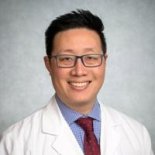
Welcome to UAB MedCast. I'm Melanie. Today we're highlighting deep brain stimulation, past, present, and future. Joining me is Dr. Victor Sung. He's the division Director for Movement Disorders Division at UAB Medicine. Dr. Sung, thank you so much for joining us today. I'd like you to start by telling us a little bit about DBS evolution from a technology standpoint. How did this surgery come about? Give us a little evolution of it.
Dr Victor Sung:
Yeah, I think the history is actually really fascinating. So back in the late eighties, early nineties, we noticed that people who had diseases like Parkinson's disease who developed strokes in certain parts of the brain, in their recovery from their stroke, their Parkinson's symptoms would be better. And people thought, oh, that's interesting. Maybe there's something to that. And then they started with surgeries like going in and tying off blood vessels and causing strokes to try to make people's Parkinson's better. But that was obviously varied, difficult and hard to control, and created a slew of other problems. And then the next generation was really inserting probes into the brain with radiation capability at the end of it, and they would basically do radiofrequency ablation. But again, radiation is very difficult to control once you turn it off. There's this kind of domino effect like Chernobyl and similarly, that was not great for a lot of reasons. And then when electrical pacing technology came about, like for cardiac pacemaker, someone had the idea, what if we did that, inserted probes that could do high frequency electrical stimulation that would kind of stun the cells into silence without killing them? And that's really how deep brain stimulation came about. And the first DBS surgery, there's a lot of argument about who did it first, but there were some teams in France and in Germany that kind of competed and did the first DBS surgery in the early nineties. And then we actually did our first DBS surgery in 1997. It's a long time ago; that's the year that I graduated from high school. But we started doing DBS then, and we had one surgeon and one neurologist who were doing it, and over the intervening years from then to now, we've done thousands of cases, and now we've built it up to the point where we have four functional stereotactic neurosurgeons. That's the core of what they do is DBS surgery. We have 12 movement disorders neurologists in our group that I'm the new director of, and then we refer patients to that and work with the surgeons and then manage the patients afterwards too. And then now from one maker—there was one maker of the DBS system for about 20 years—and then in the last five or six years two other makers have entered the market, and that's really driven a lot of innovation, not just from cost but also from a technological standpoint. And we're really poised to head into the future of DBS now, with three competitors kind of constantly seeking the edge. I think we and patients all benefit.
Host:
Thank you for sharing that. It is a fascinating procedure now, as you've given us the history of the procedure itself and how UAB really is utilizing this to become one of the top five programs in the country by volume, and you mentioned the exciting technology and now the competitors. How has that progressed since those old devices? What technology is being used currently? Dr. Sung, what are you excited about as the way that it's going now?
Dr Victor Sung:
Yeah, I think compared to burning holes in people's brains with radiation or tying off things like that, the advantage of DBS has always been what we call kind of this reversibility and adjustability over time, so worst-case scenario, we can always take the electrode out and the brain will heal around that and be fine. But also best-case scenario, we can control the patient's symptoms, whether it's Parkinson's disease or essential tremor, very well with the stimulator. Now, as the disease continues to progress, right? DBS does not stop the progression of Parkinson's disease. The advantage is that we can continue to adjust with the pacemaker device that's implanted in the patient's chest to turn up the stimulation, to kind of constantly stay on top of the patient's symptoms. So that's the exciting part of DBS in general. But those are the areas where the innovation has really made a difference. So we have innovations both in the wire that's implanted and in the pacemaker device that's in the patient's chest. For example, the innovations in the wire, all three companies that make the device now are offering what we call directional stimulation. The target that we use for Parkinson's disease is about the size of a green pea, so very small. And if we're just a fraction of a millimeter off, we may be getting some side effects when we try to do stimulation. But now with the directional stimulation, if you envision the wire in the brain and rings on the wire from which the electricity kind of emanates like a sphere, the new technology is that the rings, if you imagine like a ring on your finger, having three different diamonds on the ring, then we can beam the electricity out just from one of those nodes, or like a diamond on a ring, instead of the whole ring all at once. So we can angle the electricity towards one part of the brain and away from another part of the brain to kind of really shape the field in a three-dimensional way that can provide a lot more benefit with fewer side effects of the stimulation itself. So that is a really sophisticated innovation there. And then a lot of the innovations in the pacemaker device itself, besides just being thinner, smaller, longer battery life—that's already great—but there's a lot of computational technology that's built-in now. So one of the makers has built into their device the ability to not only stimulate the brain but to read the firing of the brain cells around the wire itself. And we know from taking these recordings that there are certain things that happen in the brain that indicate that symptoms are getting worse in the patient. And so the device in the patient's chest, which we call the implanted pulse generator, can sense those changes and adjust the patient's stimulation to meet the changes that we're seeing in the brain. So almost like a self-driving car, it will adjust itself and continue to maintain control of the patient's symptoms over time. So that's another cool innovation. Another one of the makers has the ability, using Bluetooth and wifi capability of the pacemaker device itself, where we can adjust a patient's stimulator via telemedicine as in the patient's at home, and we are in our office here at UAB and we can make changes on our tablet and the changes will go across wifi and via Bluetooth to the patient's stimulator and adjust it while the patient is sitting at home on their couch without them having to come into clinic. So that's a really cool innovation too. And then the third company, they have a really interesting innovation where basically a three-dimensional map of the patient's brain is loaded into the pacemaker device and it can utilize that to suggest to us what settings of the stimulation would work best to control the symptoms based on the patient's three-dimensional anatomy. So, just a lot of things there. And then each iteration of the battery for each of the three companies is thinner, lasts longer, things like that. So we're getting eight to twelve years of battery life now with these new batteries, whereas when we first started, the battery life was kind of more one to three years. So we've come a long way, and it's just an exciting time for DBSI.
Host:
Exciting time, and as we think of all these exciting advances that you've just been telling us about, what do you see on the horizon? How do you see this impacting patients? What do you hope will happen? And interestingly, where do you feel AI and such like that will be involved in these advances?
Dr Victor Sung:
I think with the technologic advances, then we need to harness how we utilize them. The thing that we're all looking for is, in addition to these technological advances, if we can get the batteries small enough. Right now they're about, gosh, three inches across and then about a half inch thickness. But if we could get the batteries even smaller, to the size of like a flash drive, that would be the ideal. Right now we put the battery in the chest and there's an extension wire that goes to the brain, the wire that goes into the brain. But if the battery could get small enough, then potentially we could install the battery under the scalp and at the base of the skull so that everything is contained in the head and neck area without having to go down into the chest. And the shorter path would make the surgical recovery easier for the patient and less distance on which something could get messed up. So I think those are the kinds of surgical innovations that we'd like to see going forward. We've seen all sorts of interesting rechargeable things. If we could get a rechargeable battery that's the size of a flash drive and is implanted into the head without going into the chest, what we've seen is that they have a baseball cap that has recharging capabilities and you wear the baseball cap and it recharges your battery. And a rechargeable battery would never have to be replaced and could live in there forever. So those kinds of things I think would be really cool for the future. Already, the technology's great, it really significantly benefits the patient's symptoms, but a lot of the patient's bulk at the surgical aspect of it. So if we could make the surgical procedure itself slicker, easier to recover, things like that, then I think we have some traction there.
Host:
It also helps to build confidence and patient satisfaction because they move through the system more quickly, more efficiently. You're all working together and with those kinds of numbers and that kind of volume and the outcomes looking so good, it really does help to build that really great reputation that you enjoy. And so Dr. Sung, as we get ready to wrap up here, tell us about your vision for the future of the Movement Disorders Division and the new division director that you are. How does DBS fit into that vision?
Dr Victor Sung:
I think DBS is a big part of that. But in my vision as the new division director, it's really about being the comprehensive movement disorders program. So a lot of the things that we're looking forward to: neuromodulation is the big umbrella in which DBS is the biggest player. But there are other aspects of neuromodulation as well, including focused ultrasound. We are working really hard to get a focused ultrasound machine purchased in this next year. To be able to add that, it would really complement our DBS program in that certain patients are not surgical candidates for DBS, but they could have focused ultrasound or vice versa. Patients that would come wanting focused ultrasound may not be a candidate and they would be a good candidate for DBS. So I think adding that service would be really complementary. We're looking at adding a rapid access clinic for movement disorders. I know our wait times can be long, but we look forward to building that out over the next year. We have two positions posted for new faculty and are going to hire two more faculty to make fourteen in our group to really get patients in, and get patients all across the state of Alabama access to all these exciting therapy options like DBS.
Host:
Thank you so much Dr. Sung for joining us today and sharing your expertise with this exciting topic and procedure of DBS. Thank you again for joining us and for more information, please visit our website at uabmedicine.org/physician.org slash physician. That concludes this episode of UAB MedCast. I'm Melanie Cole. Thanks so much for joining us today.
Welcome to UAB MedCast. I'm Melanie. Today we're highlighting deep brain stimulation, past, present, and future. Joining me is Dr. Victor Sung. He's the division Director for Movement Disorders Division at UAB Medicine. Dr. Sung, thank you so much for joining us today. I'd like you to start by telling us a little bit about DBS evolution from a technology standpoint. How did this surgery come about? Give us a little evolution of it.
Dr Victor Sung:
Yeah, I think the history is actually really fascinating. So back in the late eighties, early nineties, we noticed that people who had diseases like Parkinson's disease who developed strokes in certain parts of the brain, in their recovery from their stroke, their Parkinson's symptoms would be better. And people thought, oh, that's interesting. Maybe there's something to that. And then they started with surgeries like going in and tying off blood vessels and causing strokes to try to make people's Parkinson's better. But that was obviously varied, difficult and hard to control, and created a slew of other problems. And then the next generation was really inserting probes into the brain with radiation capability at the end of it, and they would basically do radiofrequency ablation. But again, radiation is very difficult to control once you turn it off. There's this kind of domino effect like Chernobyl and similarly, that was not great for a lot of reasons. And then when electrical pacing technology came about, like for cardiac pacemaker, someone had the idea, what if we did that, inserted probes that could do high frequency electrical stimulation that would kind of stun the cells into silence without killing them? And that's really how deep brain stimulation came about. And the first DBS surgery, there's a lot of argument about who did it first, but there were some teams in France and in Germany that kind of competed and did the first DBS surgery in the early nineties. And then we actually did our first DBS surgery in 1997. It's a long time ago; that's the year that I graduated from high school. But we started doing DBS then, and we had one surgeon and one neurologist who were doing it, and over the intervening years from then to now, we've done thousands of cases, and now we've built it up to the point where we have four functional stereotactic neurosurgeons. That's the core of what they do is DBS surgery. We have 12 movement disorders neurologists in our group that I'm the new director of, and then we refer patients to that and work with the surgeons and then manage the patients afterwards too. And then now from one maker—there was one maker of the DBS system for about 20 years—and then in the last five or six years two other makers have entered the market, and that's really driven a lot of innovation, not just from cost but also from a technological standpoint. And we're really poised to head into the future of DBS now, with three competitors kind of constantly seeking the edge. I think we and patients all benefit.
Host:
Thank you for sharing that. It is a fascinating procedure now, as you've given us the history of the procedure itself and how UAB really is utilizing this to become one of the top five programs in the country by volume, and you mentioned the exciting technology and now the competitors. How has that progressed since those old devices? What technology is being used currently? Dr. Sung, what are you excited about as the way that it's going now?
Dr Victor Sung:
Yeah, I think compared to burning holes in people's brains with radiation or tying off things like that, the advantage of DBS has always been what we call kind of this reversibility and adjustability over time, so worst-case scenario, we can always take the electrode out and the brain will heal around that and be fine. But also best-case scenario, we can control the patient's symptoms, whether it's Parkinson's disease or essential tremor, very well with the stimulator. Now, as the disease continues to progress, right? DBS does not stop the progression of Parkinson's disease. The advantage is that we can continue to adjust with the pacemaker device that's implanted in the patient's chest to turn up the stimulation, to kind of constantly stay on top of the patient's symptoms. So that's the exciting part of DBS in general. But those are the areas where the innovation has really made a difference. So we have innovations both in the wire that's implanted and in the pacemaker device that's in the patient's chest. For example, the innovations in the wire, all three companies that make the device now are offering what we call directional stimulation. The target that we use for Parkinson's disease is about the size of a green pea, so very small. And if we're just a fraction of a millimeter off, we may be getting some side effects when we try to do stimulation. But now with the directional stimulation, if you envision the wire in the brain and rings on the wire from which the electricity kind of emanates like a sphere, the new technology is that the rings, if you imagine like a ring on your finger, having three different diamonds on the ring, then we can beam the electricity out just from one of those nodes, or like a diamond on a ring, instead of the whole ring all at once. So we can angle the electricity towards one part of the brain and away from another part of the brain to kind of really shape the field in a three-dimensional way that can provide a lot more benefit with fewer side effects of the stimulation itself. So that is a really sophisticated innovation there. And then a lot of the innovations in the pacemaker device itself, besides just being thinner, smaller, longer battery life—that's already great—but there's a lot of computational technology that's built-in now. So one of the makers has built into their device the ability to not only stimulate the brain but to read the firing of the brain cells around the wire itself. And we know from taking these recordings that there are certain things that happen in the brain that indicate that symptoms are getting worse in the patient. And so the device in the patient's chest, which we call the implanted pulse generator, can sense those changes and adjust the patient's stimulation to meet the changes that we're seeing in the brain. So almost like a self-driving car, it will adjust itself and continue to maintain control of the patient's symptoms over time. So that's another cool innovation. Another one of the makers has the ability, using Bluetooth and wifi capability of the pacemaker device itself, where we can adjust a patient's stimulator via telemedicine as in the patient's at home, and we are in our office here at UAB and we can make changes on our tablet and the changes will go across wifi and via Bluetooth to the patient's stimulator and adjust it while the patient is sitting at home on their couch without them having to come into clinic. So that's a really cool innovation too. And then the third company, they have a really interesting innovation where basically a three-dimensional map of the patient's brain is loaded into the pacemaker device and it can utilize that to suggest to us what settings of the stimulation would work best to control the symptoms based on the patient's three-dimensional anatomy. So, just a lot of things there. And then each iteration of the battery for each of the three companies is thinner, lasts longer, things like that. So we're getting eight to twelve years of battery life now with these new batteries, whereas when we first started, the battery life was kind of more one to three years. So we've come a long way, and it's just an exciting time for DBSI.
Host:
Exciting time, and as we think of all these exciting advances that you've just been telling us about, what do you see on the horizon? How do you see this impacting patients? What do you hope will happen? And interestingly, where do you feel AI and such like that will be involved in these advances?
Dr Victor Sung:
I think with the technologic advances, then we need to harness how we utilize them. The thing that we're all looking for is, in addition to these technological advances, if we can get the batteries small enough. Right now they're about, gosh, three inches across and then about a half inch thickness. But if we could get the batteries even smaller, to the size of like a flash drive, that would be the ideal. Right now we put the battery in the chest and there's an extension wire that goes to the brain, the wire that goes into the brain. But if the battery could get small enough, then potentially we could install the battery under the scalp and at the base of the skull so that everything is contained in the head and neck area without having to go down into the chest. And the shorter path would make the surgical recovery easier for the patient and less distance on which something could get messed up. So I think those are the kinds of surgical innovations that we'd like to see going forward. We've seen all sorts of interesting rechargeable things. If we could get a rechargeable battery that's the size of a flash drive and is implanted into the head without going into the chest, what we've seen is that they have a baseball cap that has recharging capabilities and you wear the baseball cap and it recharges your battery. And a rechargeable battery would never have to be replaced and could live in there forever. So those kinds of things I think would be really cool for the future. Already, the technology's great, it really significantly benefits the patient's symptoms, but a lot of the patient's bulk at the surgical aspect of it. So if we could make the surgical procedure itself slicker, easier to recover, things like that, then I think we have some traction there.
Host:
It also helps to build confidence and patient satisfaction because they move through the system more quickly, more efficiently. You're all working together and with those kinds of numbers and that kind of volume and the outcomes looking so good, it really does help to build that really great reputation that you enjoy. And so Dr. Sung, as we get ready to wrap up here, tell us about your vision for the future of the Movement Disorders Division and the new division director that you are. How does DBS fit into that vision?
Dr Victor Sung:
I think DBS is a big part of that. But in my vision as the new division director, it's really about being the comprehensive movement disorders program. So a lot of the things that we're looking forward to: neuromodulation is the big umbrella in which DBS is the biggest player. But there are other aspects of neuromodulation as well, including focused ultrasound. We are working really hard to get a focused ultrasound machine purchased in this next year. To be able to add that, it would really complement our DBS program in that certain patients are not surgical candidates for DBS, but they could have focused ultrasound or vice versa. Patients that would come wanting focused ultrasound may not be a candidate and they would be a good candidate for DBS. So I think adding that service would be really complementary. We're looking at adding a rapid access clinic for movement disorders. I know our wait times can be long, but we look forward to building that out over the next year. We have two positions posted for new faculty and are going to hire two more faculty to make fourteen in our group to really get patients in, and get patients all across the state of Alabama access to all these exciting therapy options like DBS.
Host:
Thank you so much Dr. Sung for joining us today and sharing your expertise with this exciting topic and procedure of DBS. Thank you again for joining us and for more information, please visit our website at uabmedicine.org/physician.org slash physician. That concludes this episode of UAB MedCast. I'm Melanie Cole. Thanks so much for joining us today.